• Our Blogger

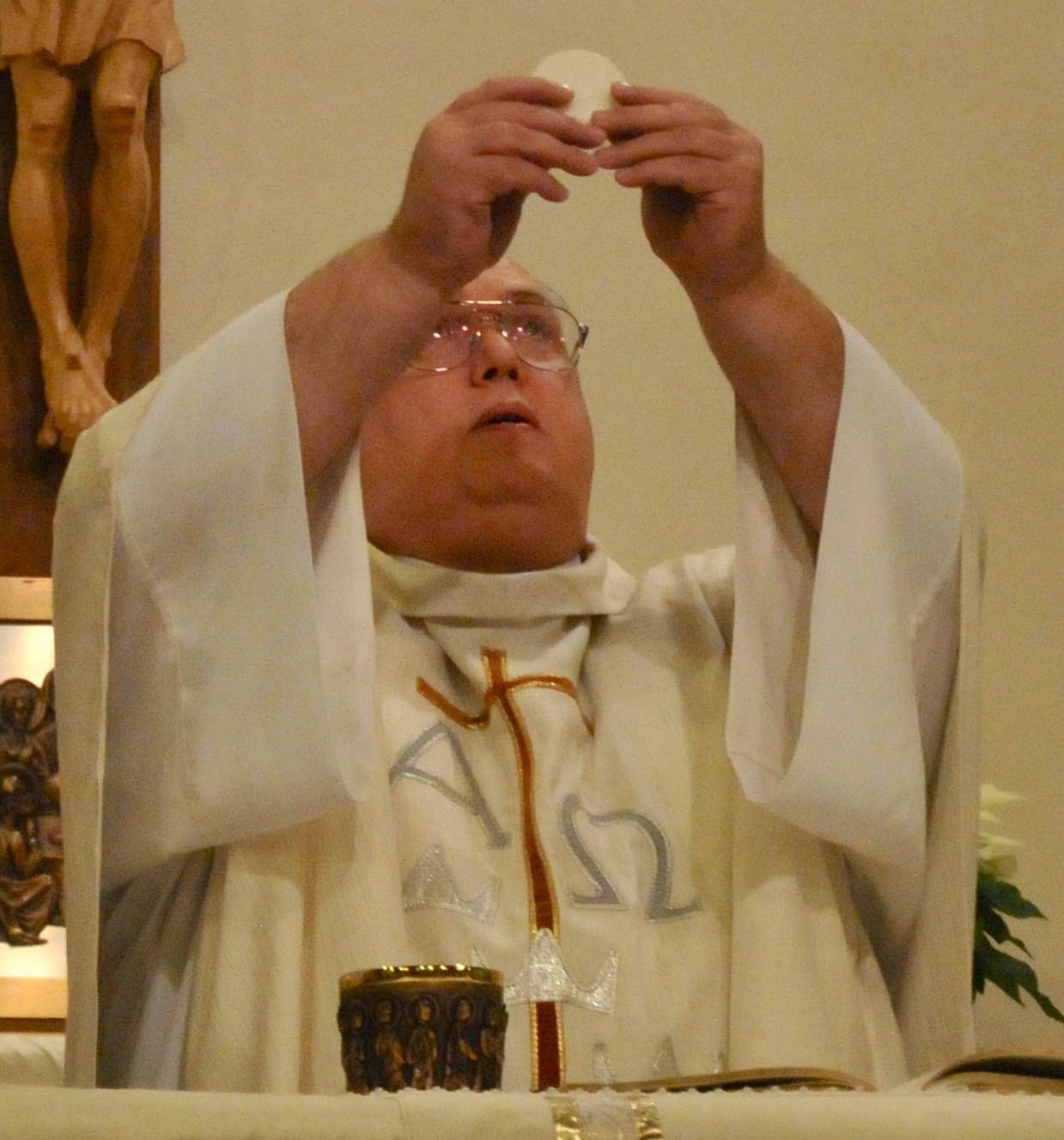
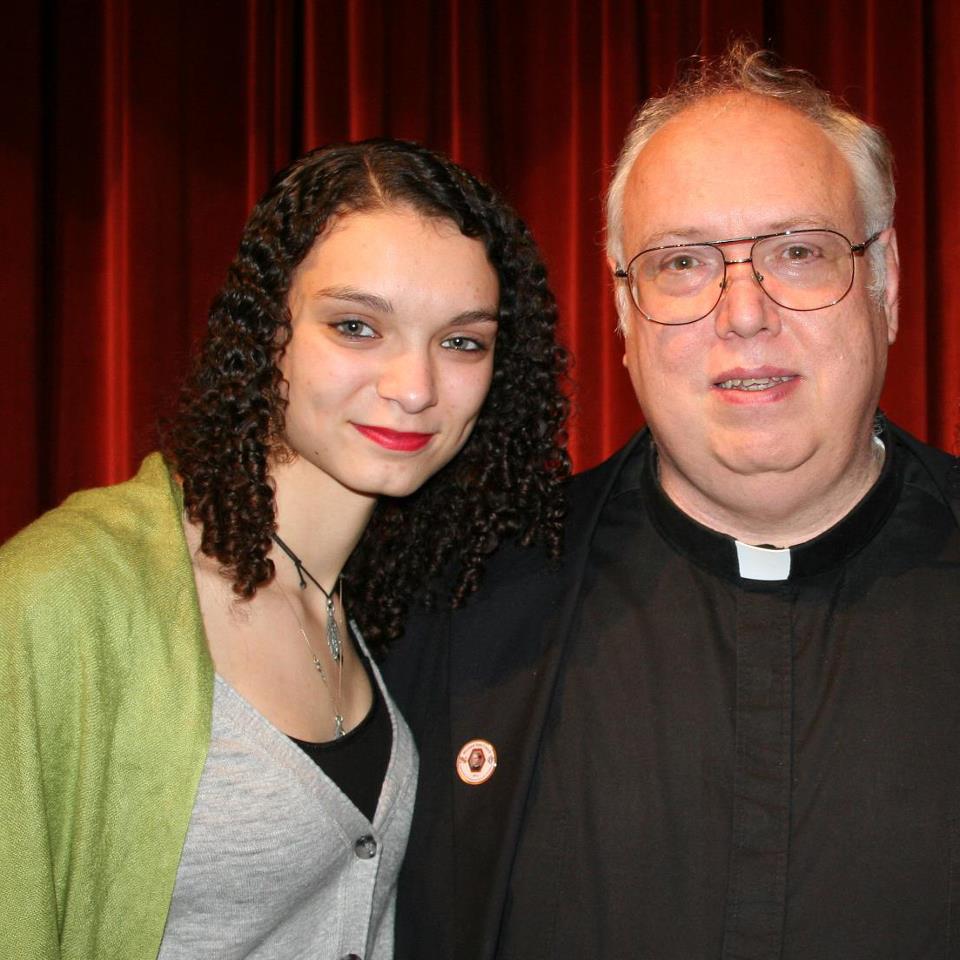
    Fr. Joseph Jenkins

  • The blog header depicts an important and yet mis-understood New Testament scene, Jesus flogging the money-changers out of the temple. I selected it because the faith that gives us consolation can also make us very uncomfortable. Both Divine Mercy and Divine Justice meet in Jesus. Priests are ministers of reconciliation, but never at the cost of truth. In or out of season, we must be courageous in preaching and living out the Gospel of Life. The title of my blog is a play on words, not Flogger Priest but Blogger Priest.

  • Archives

  • Categories

  • Recent Posts

  • Recent Comments

    Anonymous's avatarAnonymous on Ask a Priest
    Michael J's avatarMichael J on Ask a Priest
    Jeremy Kok's avatarJeremy Kok on Ask a Priest
    Mike Zias's avatarMike Zias on Ask a Priest
    Jeremy Kok's avatarJeremy Kok on Ask a Priest

Married Out of the Church

MARIA:

I would like to know if a person married in civil rites to a non-Catholic 40 years ago, then separated after five years of marriage and with 3 children needs an absolution from the Pope even if the person after separating confessed her sin and received absolution from a priest?

FATHER JOE:

It may be that you are confusing “absolution” with “annulment” but in either instance the Pope would not normally enter the picture. Given that the person who married a non-Catholic is a Catholic, the civil marriage ceremony would have no standing in the Church. A simple declaration of nullity would be all that is required should that person want to marry in the Church. The amount of time that has passed since the attempted marriage and separation, even the instance and number of children, would be inconsequential to the ecclesiastical grounds against it being licit. Church law requires that Catholics have their marriages witnessed by a deacon or priest unless the appropriate dispensations have been granted. The absolution of a priest after a divorce or separation is a separate matter; however, if a Catholic should cohabitate with a civil law spouse, absolution could not be given.

If the person who married a non-Catholic were also a non-Catholic at the time of the civil ceremony, then the Church would consider that marriage as lawful and binding. If there were a divorce and either party wanted to marry in the Catholic Church, a formal annulment case would have to be entered and adjudicated by a Church Tribunal to determine the true validity of the prior bond. If the first marriage is shown to be binding and genuine, no second marriage could be permitted until the death of one of the spouses.

MARIA:

Further to my question, since you said that the Catholic/non-Catholic couple who entered into marriage through civil rites and have separated, only requires nullification, who will perform this then? The Catholic woman has no intentions of getting married but is guilty of the mortal sin she committed against God so wants to have an absolution from the Pope if possible.

FATHER JOE:

A declaration of nullity comes from the Tribunal and the Bishop. The application and supporting documentation is sent to the Chancery. A copy of the civil license, divorce decree and the baptismal certificate is part of the package. There is little other documentation because a civil union of a Catholic outside the Church is NO MARRIAGE. The declaration of nullity is NOT an annulment strictly speaking. A formal case ANNULMENT regards a bond that fulfills the external norms of the law: two witnesses, before a priest and deacon, proper dispensations, and jurisdiction. If a Catholic marries in the Church then the presumption is that the marriage is genuine. A formal case requires testimony by people who saw problems early on and an essay by the petitioner.

If the person you are talking about does not intend to get married (again), she should simply see a priest and receive absolution. The Pope has nothing to do with her case. There is nothing more to be done. As for the previous marriage, if it were out of the Church, then forget about it. As far as the Church is concerned, it never happened… sacramentally, that is.

MATT:

Indeed Father Joe is correct, making a good confession and receiving absolution is all that is required. Sure, it would be great to see the Holy Father, but make that trip after you have seen your parish priest. Make it a joyous trip rather than an act of penance. See a priest, make a good confession and allow the joy and peace of Christ to return to your heart. Know too that my prayers are with you.

JULIA:

Father Joe, thanks for your insights.

I am dealing with a marriage related situation, too, but not of me.

My sister is being married at 54 for the first time. She has cohabitated with the gentleman she is marrying (whom I know) for about 15 years. They even bought a house together about 7 years ago. The man is divorced. No decree of nullity is being sought. They are being married at a facility which has set ups for both a wedding ceremony and a reception. A minister (not sure who or the denomination or if they are of a mainline denomination or one of the more flexible type) is presiding. To top it all off the whole matter is happening on Holy Saturday. They consider themselves proud to be Catholic but not in agreement with all parts of the Church’s law. For example, they are as outraged as are the majority of us re: the President’s ongoing smackdown on religious freedoms. I love my sister, but am really torn. There are so many situations here where I feel I will be witnessing to illegality if I go to the ceremony or the reception. “Keeping the peace” is not my main concern, as there are many young nieces and nephews whom I feel are subtly “taught” in this situation (that one just does what one wants). Do you have thoughts on this matter? Ugh, to put it colloquially!

FATHER JOE:

I have sometimes urged participation for family peace. But there are way too many elements that are wrong in this situation. She is not proud enough to be a Catholic given that she spurns basic Catholic values and practice. Marriages are NOT permitted on Holy Saturday. Of course, her attempted marriage will not be in the Church. Let us call the situation what it really is: after years of fornication, cohabitation and adultery, she now wants a piece of worthless paper to say they are married. Tell her you love her but let her know that you are exercising your RELIGIOUS LIBERTY in not participating in such a farce.

Biblical Principles of Marriage

On Saturday, March 24, I gave a talk on the Biblical Foundations of Marriage at the PreCana Classes held at St. Mary of the Assumption in Upper Marlboro, MD. Some of the notes are give in the immediately previous posts. There is a joke that if you get two ministers in a room, you will get three different interpretations of Scripture. Given that biblical interpretation is so volatile these days, I first gave the gathering my five basic presuppositions. Next, I gave the ten basic principles of marriage from Scripture.

Presuppositions As we Begin

1. The Scriptures are inspired by God and teach truth.

2. We must have the mind of the Church in how Scripture is interpreted.

3. The Bible is not a marriage manual.

4. Better understanding of Scriptural truth comes through a contextual approach.

5. The truth about marriage in the Bible is revealed in a progressive way, culminating in the New Testament.

A Few Basic Biblical Principles

While the Bible is not a manual for marriage, there are some basic principles we can derive from God’s inspired Word. Here are a few:

1. Men and women were made for each other. Most men and women are called to marriage.

2. Marriage is a covenant between a man and a woman. They pledge themselves to each other in vows made in the sight of God.

3. The husband is the head of the home and the wife is its heart.

4. While the Bible speaks of the wife’s submission to her husband, there is mutuality in this surrender since the husband is commanded to practice sacrificial love for her, even offering his life as Christ did on the Cross.

5. The husband and wife are dependent co-creators with God.

6. The spouses are called to be helpmates to one another in grace and holiness.

7. Marriage is a vocation that takes precedence over other preoccupations. Your attention and energies must first be focused toward one another.

8. Marriage is a sexually intimate relationship between a man and woman.

9. Christian marriage infers a third in the marriage, Christ. Couples enter into the mystery of Christ and his Church. Our Lord identifies himself with the beloved.

10. Couples should come to the marriage bed undefiled. All sexual activity outside of marriage was regarded by the Jews as a violation of the commandment against adultery.

How Catholic are You?

We can test to see how badly infected our people are with doubt and faithlessness. Here are some sample questions:

1. Do you believe that deliberately missing Sunday Mass is a mortal sin, as detailed in the precepts of the Church?

2. Do you believe that premarital sex and/or cohabitation is a mortal sin?

3. Do you believe that a Catholic can get married validly outside the Church and how can this be if it is a sacrament?

4. Are you for or against the legal choice for abortion even though the Church calls it the murder of ensouled human beings?

5. Do you believe that the marital act must always be that type of act that is open to mutual self-giving and the generation of new human life or do you favor the use of artificial contraception?

6. The Church teaches that same-sex attraction is a disorder and that its pursuit is a violation of the natural law and is seriously sinful. Do you believe this?

7. Is the Eucharist a symbolic presence using bread and wine, a nostalgic remembrance or the actual Risen Christ (divinity and humanity, body and blood)?

8. Do you ever go to Confession? Do you believe that the priest has the power to forgive sins? Do we really need the priest for this at all?

9. Is the Mass a real sacrifice just as the death and oblation of Jesus on the Cross?

10. Does it really matter what one believes as long as he or she is a good person? Is one Church pretty much as good as another? Is it intolerant to insist that the Catholic Church is the one true Church established directly by Christ?

11. Do you believe that the Pope as Vicar of Christ has universal jurisdiction and is given the gift of infallibility in teaching about faith and morals?

12. Do you pray daily and if so how do you pray? Do you really think someone is listening? Do you remember the various types of prayer?

Gay Sex & the Law

I can recall when sodomy was not a “protected right” but a “perverse crime.” It was that way not too long ago. Indeed, any sexual activity, even with a woman, if outside of marriage, was often judged as criminal and there were set penalties. There is division in the Church on the subject and it may be that some have too closely aligned themselves with the American Psychiatric Association which redefined homosexuality from a mental illness to an acceptable sexual orientation.
One of my favorite television programs was DRAGNET. There is one episode where Joe Friday (Jack Webb) is railing against the sins of the city. Among them he lists “sodomy.” When the episode was repeated recently on television, the sound failed precisely when he moved his lips to say the word that is no longer politically correct. In another episode, The Big Kids, there is a dialogue which shows the change in secular morality:

Capt. Lou Richey: It’s not just a problem of law enforcement, it’s a community problem.

Sergeant Pearson: Trouble is there is no community captain. These people come piling in here from every where. They dont know each other and don’t want to. They come out here, make a down payment on a house and move in with a couple of kids. That doesn’t mean they made a home no more than givin’ a name to a place makes it a community.

Sergeant Joe Friday: Yeah and you get a littele weary of hearing every kid give you the same excuse when you tag them. You don’t understand, I just wanna to belong thats why I did it. Belong to what?

Capt. Lou Richey: What it boils down to is the new morality, doesn’t it, a whole new sense of values. The kids see it on television, in magazines. Even hear it from the pulpit. God is dead. Drug addiction is mind expanding. Promiscuity is glamorous. Even homosexuality is praiseworthy. How you gonna fight that?

Officer Bill Gannon: It ain’t easy.

Capt. Lou Richey: What you got to remember that, the vast majority of the juveniles you’re handling are the kids next store. They’re not hard core criminals. It’s just that for them it’s a great deal more important to be accepted by the other kids than to please their parents.

Today, the “love that dare not speak its name” (citing Lord Alfred Douglas) is proclaimed a civil right and thrown into our faces where ever we look, even in Cowboy movies… I know John Wayne is rolling in his grave!

The Church in Boston had to shut down its adoption services because the government made it illegal to discriminate against gay couples. The Archdiocese of Washington has done likewise. Catholic Charities in Los Angeles was almost shut down by a law mandating benefits and insurance (analogous to a spouse in marriage) to the bed-partners of homosexual men and lesbians. Renters are being compelled to permit gay men and women to live and commit mortal sin in their premises.

My faith in our society and the legal system is much shaken. I cannot say that I would generally trust activist judges or spineless legislators to make decisions that would please me or others with traditional values. I concur with the Church that homosexuality is “disorientation” and that to live it out is a grievous offense to God and a corruption of others.

Our compassion and love for them should not translate as utter toleration and/or approbation. We should encourage chastity and celibacy. While it is controversial, where possible, we should pursue proven treatments that have helped thousands to adjust to a heterosexual orientation (as in the work of Dr. Fitzgibbons). This issue is very emotionally charged. We are sorely tempted to look the other way and give homosexual advocates what they want. They insist that not to accept their form of sexuality is a denial of them as persons of worth. But such is not the case. The old cliché still holds, “Love the sinner but hate the sin.” Both natural law and the Scriptures condemn same-sex activity. Sexual expression is restricted to marriage and such is only between a man and a woman. No judge, legislator or shrink can truly change the truth about this. Going through the motions will not make vice into virtue or that which is false into something real. The pendulum is swinging. While gay sex was once illegal; it is now legally protected. Indeed, those who reject it are being subjected to charges of discrimination. I would err on the side of preserving our traditional values but not pursuing matters which would intrude into the privacy of people’s homes. I guess you could say that I would favor bringing back the proverbial closet.

Of course, even if we were willing to leave such people in peace, there will be no peace today for those who oppose the homosexual agenda.

The Commandments

Our Relationship to God

1. You shall not worship false gods.
2. You shall not take the name of the Lord, your God, in vain.
3. Remember to keep holy the Sabbath day.

Our Relationship to Each Other

4. Honor your father and your mother.
5. You shall not kill.
6. You shall not commit adultery.
7. You shall not steal.
8. You shall not bear false witness against your neighbor.
9. You shall not covet your neighbor’s wife.
10. You shall not unjustly desire what belongs to your neighbor.

The Greatest Commandment

Jesus asked, what is the greatest commandment? His answer echoes the pattern in the Decalogue of our relationship to both God and to neighbor. Christ says that we are to love God with our whole heart, with all our mind, and with all our soul. Loving ourselves as precious in God’s eyes, he reminds us to love our neighbor as ourselves. This is not a static kind of love; it means forgiving and not rendering evil for evil.

Reflection on the Decalogue

The first commandment reminds us that ours is a jealous God; there is no other before him. He is the one and only! He does not want us wasting our lives on false gods or empty superstitions. Even though there may not be many traditional worshipers of idols cast in stone or bronze, or of figures from nature like the sun or animals, this prohibition is still violated. We see this in dangerous occult toys, like tarot cards and Ouija boards. These things are hazardous to our souls because they sidestep God’s dominion over his will for us. They might even invite spiritual evil to penetrate our lives. This commandment also condemns sacrilege whereby persons, places, or things sacred to God are defiled. Even interest in the popular horoscopes can sometimes escalate beyond simple curiosity and become habitual false guides. God wants us to follow him alone.

The second commandment urges us to treat God’s name respectfully. This necessarily prohibits blasphemy, making false oaths in God’s name, and cursing.

The third commandment tells us to make the Sabbath day holy. For Christians, this obligation is transferred to Sunday. (It is interesting that most Protestant religions accept at least this one precept or legislation of the Roman Catholic Church. Otherwise, along with our Jewish brethren, they would respect it on Saturday.) We sanctify this day by prayer, worship, avoiding unnecessary work, rest, and joy. Therefore, something like failing to participate at Mass on Sunday is not merely a violation of the laws of the Church, but in a very direct manner, an infringement upon this commandment to give God his due.

The fourth commandment exhorts us to respect our parents by loving and helping them, especially when they are in need. While young and under their immediate authority, children must obey their parents. Reciprocally, parents must give a Catholic education to the children entrusted to them. Their spiritual and material welfare is essentially in their hands. The parents may extend or endow school teachers and others with something of their own authority. This commandment speaks to us in a less direct way about authority in general. All just authority comes from God. We are called to obey spiritual and civil authorities when they make legitimate demands. However, if there is a conflict between the laws of human beings and those of God, God comes first.

The fifth commandment prohibits us from either harming our own bodies or those of others. This commandment expands beyond murder or suicide to the various partial degradations: including such things as mutilation, striking another, harmful drugs, drunkenness, and carelessly taking risks with our lives. Abortion is a direct violation of this commandment. Our right to choose should never be deemed a higher priority than another person’s right to life.

The sixth commandment, taken alone, forbids all external sins against chastity. Once sexual activity is condoned outside marriage, as in fornication, it is logically difficult to confine afterwards, as in adultery. The premise is already adopted. Some fifty percent of the couples who live together prior to marriage eventually get divorced. The seed for failure is already planted. Sin is a mighty poor preparation for the nuptial sacrament. Considered with the ninth commandment, all interior sins against chastity are likewise condemned. The human sexual powers are given for the propagation of children and for the fidelity of a man and woman in marriage. Outside of marriage, it is a great evil to exercise these powers, which are not simply expressions of our flesh, but of our very persons— who we are! Inside of marriage, these powers must not be distorted in their purpose or in the motivation of two people in love drawn to union. Lust, even in marriage, is a sin and degradation to what it means to be truly human. It re-categorizes the beloved from a personal subject to an impersonal object. Instead of self-sacrifice and surrender— thinking of the other’s needs and happiness— we selfishly treat the other as a disposable thing with which we can seek our own gratification. If the beloved is no more than an object, then the stage is set for adultery because objects are interchangeable. This is the antithesis of the Gospel. Marriage is called to be a permanent union. Adultery is a gross violation of that permanent union which is to reflect the fidelity between Christ and his bride, the Church. The adulterer plays the role of Satan who would lure us away from our divine groom and from the wedding banquet of heaven.

The seventh commandment rejects stealing and unjust dealings with another. Even if we accept stolen goods, we have broken this commandment. All sorts of things fall under this heading: idling, charging unfair interest, not paying debts, not giving a just salary, and stealing someone’s good name. Restitution is demanded in cases where we have stolen or damaged the goods of others. This last matter draws this commandment to the eighth.

The eighth commandment would have us be a people of truth and good will. We are not to lie or to slander others. If we stumble into this sin, then we need to repair the damage caused by our falsehoods.

The ninth commandment, as mentioned under the sixth, requires us to be mindful of our thoughts. To occupy ourselves with sexual fantasies regarding others, not only breaks down our will in reference to actions, but degrades the one whom we are imagining. This is destructive to the dignity of the person who is reduced to an impersonal object, as in obscene films and other pornography.

The tenth commandment, like the ninth, reminds us that God wants our conversion, both in external action and in our internal disposition. To be open to the grace of his presence, we must free ourselves from within, of those persons or things which we might covet before God. In actuality, we might not explicitly commit a sin against justice, but we might “want” to do it. Even this needs to be weaned away. We need to reach a point in our spiritual life where we do not WANT to steal from or to hurt another.

We Are Shown the Way

There is much which could be discussed in the life of the Christian that falls under discipleship. Jesus shows us the way to the Father. His Mother hears the Word of God and it bears fruit in her very flesh, as the Woman of Faith. Like new Christs, the Twelve and all the followers of Jesus in history reveal something of what it means to be a disciple. During the course of any Christian study, commandments, confession, communion, baptism, and the sacrament of the sick deserve their own attention. All these things speak to our following the call of Christ. We pursue him out of love and obedience.

Precepts of the Church

1. To keep the day of the Lord’s Resurrection holy by worship at Mass on Sundays and on Holy Days of Obligation. We are also to avoid activities which would hinder renewal of soul and body, e.g., needless work and business activities, unnecessary shopping, etc.

2. To lead a sacramental life: to receive Holy Communion frequently and the Sacrament of Reconciliation regularly.

  • Minimally, to receive the Sacrament of Penance at least once a year if in serious sin.
  • Minimally, to receive Holy Communion at least once a year, between the First Sunday of Lent and Trinity Sunday. (However, weekly Sunday Mass attendance is still required.)

3. To study Catholic teaching in preparation for the sacrament of Confirmation, to be confirmed, and then to study and to advance the cause of Christ.

4. To observe the marriage laws of the Church; to give religious training by word and example to one’s children; and to use parish schools and/or religious education programs.

5. To strengthen and support the Church. This consists in assisting one’s own parish community and parish priests, as well as the worldwide Church and the Holy Father.

6. To do penance, including abstaining from meat and fasting from food on the appointed days.

7. To join in the missionary spirit and apostolate of the Church.

The Beatitudes (Matthew 5:3-10)

  1. Blessed are the poor in spirit; the reign of God is theirs.
  2. Blessed are the sorrowing; they shall be consoled.
  3. Blessed are the lowly; they shall inherit the earth.
  4. Blessed are they who hunger and thirst for holiness; they shall have their fill.
  5. Blessed are they who show mercy; mercy shall be theirs.
  6. Blessed are the single-hearted; they shall see God.
  7. Blessed are the peace-makers; they shall be called sons of God.
  8. Blessed are those persecuted for holiness’ sake; the reign of God is theirs.

Corporal Works of Mercy

1. To feed the hungry.
2. To give drink to the thirsty.
3. To clothe the naked.
4. To visit the imprisoned.
5. To shelter the homeless.
6. To visit the sick.
7. To bury the dead.

Spiritual Works of Mercy

1. To admonish the sinner.
2. To instruct the ignorant.
3. To counsel the doubtful.
4. To comfort the sorrowful.
5. To bear wrongs patiently.
6. To forgive all injuries.
7. To pray for the living and the dead.

Responding to an Attack Upon Catholicism

PAUL:  You people are very sick.

FATHER JOE:  You are very angry and judgmental about Catholicism.  Are you a fallen-away Catholic?  Many Catholics find comfort and helpful guidance in Catholic faith and values.  You are too quick to tear down and attack that for which you seem to lack authentic understanding. Sin is the sickness, not religious faith.  You are no better than the people you ridicule.  You are also a weak sinner who needs Jesus and his mercy. 

PAUL:  The Catholic Church has made so many “rules” that do not even exist in the Bible.

FATHER JOE:  The Catholic Church has rules for good order, but the commandments and the ecclesial precepts find their basis in the Decalogue given to Moses and the two commandments of love from Christ.  We also believe in natural law.  God gave us reason to appreciate the harmony and order of his creation.  Values that reflect divine positive law and natural law are not capricious.

PAUL:  Since when do “men” speak for God or Christ?

FATHER JOE:  As for men speaking for God, such is the witness of the Old Testament prophets and the New Testament apostles.  Our Lord, himself, while critical of the hypocrisy of Pharisees, admonished the Jewish people to do as they say and not as they do.  Jesus establishes a new covenant people and gives the Church’s leadership something of his authority.  The Church is entrusted with the Gospel and even collects the books and letters that would constitute the New Testament and the complete Christian Bible.  Men in the Church have also been responsible for the translation of the Scriptures.  Apart from the community, and men wise in the ways of God, you would not even know God’s Word.  If men and women did not pass on the faith, you would not know Jesus or the story of salvation.  The Catholic Church was preaching the Good News before there was a complete Christian bible and while the Gospels were only an oral tradition.  

PAUL:  Where in the Bible does it say one should confess sins to another man, say a few Hail Marys, Our Fathers (and of course put some $$$ in the box!) to be forgiven? PLEASE show me this. IT does not exist.

FATHER JOE: 

Jesus, being God, knew the hearts of men.  Nevertheless, sinners still needed to repent and believe.  Priests have the authority to forgive sins, but few have the power to read souls or minds.  That is why the confession of sins is crucial, making possible an adequate penance and counsel.  The prayers or acts of penance and/or mortification show God our thankfulness for his mercy and make a certain degree of reparation for temporal punishment due to sin.  There is precedent for confession in the Old Testament: Leviticus 5:5, Leviticus 26:40-42, Hosea 5:15, Job 33:27-28, Joshua 7;19, Jeremiah 3:13, and Proverbs 28:13.

Tithing or support for the Church is a Christian obligation; however, it is not normally an element of penance arising from the Sacrament of Confession.  The Lord gives priests something of his authority so that they might perpetuate his ministry of reconciliation. We read in 2 Corinthians 2:10-11:  “Whomever you forgive anything, so do I. For indeed what I have forgiven, if I have forgiven anything, has been for you in the presence of Christ, so that we might not be taken advantage of by Satan, for we are not unaware of his purposes.”  St. Paul goes on to write:  “And all this is from God, who has reconciled us to himself through Christ and given us the ministry of reconciliation, namely, God was reconciling the world to himself in Christ, not counting their trespasses against them and entrusting to us the message of reconciliation” (2 Corinthians 5:18-19). Another important text is 1 John 19: “If we acknowledge [confess] our sins, he is faithful and just and will forgive our sins and cleanse us from every wrongdoing.”   There is also James 5:16: “Therefore, confess your sins to one another and pray for one another, that you may be healed. The fervent prayer of a righteous person is very powerful.”  Looking at the Gospels, texts like Matthew 16:19 and Matthew 18:18 are important.  Often cited is John 20:21-23:  “(Jesus) said to them again, ‘Peace be with you. As the Father has sent me, so I send you.’ And when he had said this, he breathed on them and said to them, ‘Receive the Holy Spirit. Whose sins you forgive are forgiven them, and whose sins you retain are retained.’”

PAUL:  What good does it do me to pray to Mary? She cannot save ANYONE. Only Christ can forgive your sins. Pray to him, not some guy in a fancy box who will then give you his recommended “Penance.” How ridiculous!

FATHER JOE:  Yes, only Christ can forgive sins, but the ministry of Jesus is perpetuated and mediated within the saving community of the Church.  Penitents receive absolution from a priest, but the proper object of the prayers is always God.  Indeed, even prayers to Mary and the other saints, while they invoke intercession and solidarity, are still directed to God.  Those who have already made it to the promised shore continue to love and pray for us.  The graces from the deposit of the saints can also be accessed.  Nothing is lost.  Christ is present and his saving work is active in his Mystical Body, the Church.  Confession is a sacrament that can be conducted behind a screen or face-to-face.  There is nothing ridiculous about this.  Indeed, it is beautiful.  God loves us and gives us all we need for spiritual perfection.

PAUL:  Catholics need to read their own Bible and quit making up their own human rules!

FATHER JOE:  Catholics have wonderful bibles and the Scriptures are proclaimed at and substantiate the Mass and Reconciliation.  Human rules or disciplines in the Church amplify the law of God and give order to our Christian discipleship.  Such is the mandate given to the apostles and their successors as our lawful shepherds.

PAUL:  Please tell me where in the Bible sins are labeled as “mortal”? — MORE Catholic rubbish.

FATHER JOE:  For someone who argues “sola scriptura,” you seem to be in great ignorance of biblical truths.  It is sad that someone who claims to be a Christian would insult learned believers who take their faith seriously.  The Bible teaches degrees to sin.  All sin, even “venial” or lesser sin, is disobedience and a failure to love as we should.  However, certain sins are most grave and bring upon us the sentence of death, in other words, these are “mortal” sins which kill the soul and breech our relationship with God.  The Old Testament admits to degrees of sin (see Genesis 18:20).  The New Testament amplifies this truth (see John 19:11).  Just as our Lord could raise the dead, the absolution in the sacrament of penance can restore a contrite soul back to life.  “If anyone sees his brother sinning, if the sin is not deadly, he should pray to God and he will give him life. This is only for those whose sin is not deadly. There is such a thing as deadly sin, about which I do not say that you should pray. All wrongdoing is sin, but there is sin that is not deadly” (1 John:16-17).

PAUL:  Just step into our church, sit down and let us read you a few verses, then we’ll pass the basket around again for a few more of your hard earned dollars… I have been to Rome and viewed all the wealth the Catholic Church has managed to gather from “devout Catholics.”

FATHER JOE:  Participation at church is more than just going through the motions.  Most parishes and Catholic pastors struggle to be good stewards of the resources given us by God’s good people.  We do not preach a prosperity gospel but witness in a way that brings the truth to ignorance, healing to the hurting and hope to the oppressed.  The Church is a treasury of the Western world’s history and culture.  But she is also the refuge of a billion people in this world and many more in the next who count Jesus Christ as both their personal and corporate Savior.  The Pope intervenes annually for the poor and collections are taken the world over to cover the shortfall.  Would you have us sell all our churches for secular condos and for shopping malls?  Your bigotry betrays your reason.

PAUL:  My wife was refused entry into the famous “Vatican” because her shoulders were not completely covered. Christ said bring ALL sinners, He has no Dress Code for his house! I found it very funny how a young girl in line ahead of us (most likely 8 years of age and obviously a virgin) was allowed in without her shoulders covered at all, yet a married woman was not! MORE Catholic B.S.!

FATHER JOE:  The dress code for the Vatican and meeting the Pope is well documented.  The problem was that you and your wife did not respect the Holy Father enough to make proper preparations.  Comparing the status of an adult woman with a child and then making a comment about her sexual condition shows the great depth of your spiritual sickness and moral depravity.  All churches have dress codes of one sort or another, the same for synagogues and mosques.  Would you have churches allow people to enter with vulgar tee-shirts or naked?  As for our Lord, he told a parable that you have evidently forgotten:   “But when the king came in to meet the guests he saw a man there not dressed in a wedding garment. He said to him, ‘My friend, how is it that you came in here without a wedding garment?’ But he was reduced to silence. Then the king said to his attendants, ‘Bind his hands and feet, and cast him into the darkness outside, where there will be wailing and grinding of teeth.’  Many are invited, but few are chosen” (Matthew 22:11-14).  Every Mass is a sacramental participation in the heavenly marriage banquet.  Our dress and posture should show the proper respect, not simply to the Pope, but to almighty God.  Tell your wife to cover up next time.   

PAUL:  NO ONE could ever convince me that this cult called Catholicism is true followers of Christ. The weak minded will believe ANYTHING these “men” tell them and empty their pockets if they are convinced it will get them to Heaven.

FATHER JOE:  If you believed Catholicism was a cult then why would you even try to enter the Vatican?  Were you up to no good?  The weakness of argument and mind is yours.  You throw out straw man arguments that are parroted from old anti-Catholic sources.  I hear a lot of prejudice and anger speaking, but little in the way of reasoned argument.  Typical of your type, you falsely characterize Catholic beliefs and then you attack what you yourself have fashioned.  No one can buy his or her way into heaven.  The Catholic Church has taught for 2,000 years that Jesus is the Way and the Truth and the Life.  Jesus is the anointed one or Christ.  He is the Lamb of God who takes away the sins of the world. 

PAUL:  All people really need to do is READ THE BIBLE THEMSELVES and understand that ALL MEN ARE CREATED EQUAL!

FATHER JOE:  The Bible was once used in arguments for slavery.  You cannot use the Bible like a moral manual.  However, I will admit the there is much in the Scriptures, particularly in the message of Christ, which stresses the inherent worth and dignity of all men and women.  St. Paul makes mention that in Christ there is neither free nor slave, Jew nor Gentile, male nor female… all are called to the saving grace of our baptismal faith.  Man was made in the image of God.  The forgiveness of sins restores our full likeness.

PAUL:  Just because some guy wears a fancy robe (and a KKK hat) doesn’t make him (or her) any “holier” than anyone else on this planet. Nor does it give him (them) the divinity to make some “new heavenly rules”!

FATHER JOE:  The racist KKK is also historically anti-Catholic and you are mouthing many of their old slanders against the Catholic Church.  The robes do not give our shepherds their authority.  It is given to them by Christ.  They share in the apostolic succession that keeps us in both historical and spiritual unity with Christ.  The apostles passed on their authority and we still proclaim the ancient faith.  Christianity did not begin as a book religion.  As I have written before, the Church was proclaiming the Gospel and baptizing new believers even before there was a New Testament.  The Magisterium does NOT invent new heavenly rules.  Rather, the Church passes on what she has been given.  The problem is not that Catholicism added anything; rather, it is that anti-Catholic fundamentalists like you have subtracted out elements of the faith given us by Jesus Christ.

PAUL:  Personally I follow the guidance delivered by The Bible, not a bunch of men and women who think they are “cleaner than the rest” because they supposedly don’t have sex (let’s not talk about the altar boy molestation that has occurred time and time again and mostly hidden or covered up by the Great Catholics!)

FATHER JOE:  The scandal of abuse by clergy is indeed a terrible business.  But most priests are good men who love the Lord and try to make a positive difference in the lives of the people they serve.  Speaking for myself, my one great ambition is to go to heaven and I would like to take a few of my friends with me.  We have different roles to play in the body of the Church.  We need each other.  We all need Jesus.  Priests do not imagine themselves as “holier than thou.”  Even the Pope regularly goes to confession.  We acknowledge in the sacrament, and at the beginning of every Mass, that we are sinners in need of a redeemer.  LORD, HAVE MERCY ON US.  CHRIST, HAVE MERCY ON US.  LORD, HAVE MERCY ON US.  A priest who hears confessions and offers absolution is humbled that God would make him into an instrument of healing and mercy for others.  The priest Confessor counts himself as the first among sinners.  He is not perfect either.  That is why all priests are to be guarded about hypocrisy and self-righteousness.  As for the Bible, you speak as if I and all Catholics are ignorant about God’s Word.  That is not true.  Of course, we could all know it better.  I think you have a long way to go before you can make a claim upon teaching biblical truth.  Why do I say this?  Not only do you show your lack of biblical formation again and again, you demonstrate nothing of the heart of Christ’s message.  There is nothing of charity in what you say.  Without charity, you have nothing.  I tell you this because, even though you have upset me, I am required to forgive and share the sacrificial love of Jesus.  I want you to be in good standing with the Lord.  You do not seem to have any awareness that attacking the Church, which is all the Christian people and not just buildings or clerics, you attack Jesus Christ.  

PAUL:  Jesus said it is good if a man CAN abstain, he never said you MUST abstain to spread his word, another Catholic “invention.”

FATHER JOE:  No, it is your invention.  One does not have to be a celibate priest in order to spread God’s Word.  The Roman Catholic Church prefers a celibate priesthood, although various Eastern rites of the Catholic Church have married clergy.  Our deacons are also given Holy Orders and the vast majority of these Catholic ministers are married men.  They witness marriages, perform baptisms, offer funeral services, work as chaplains and bring Holy Communion to people.  They do the very things we see Protestant ministers doing and more.  We also have religious brothers, sisters and members of the laity who teach the faith and proclaim the Gospel by word and witness in the larger community.  Further, there are growing numbers of Catholic lay evangelists, who are married and single.

PAUL:  I have also never seen anything in the Bible that said masturbation is a “Mortal Sin.” Wow! I guess this means that about 99% of all men will rot in Hell— ANOTHER Catholic rumor.

FATHER JOE:  Do you have a hang up about sex, Paul?  Sexual sins are serious because we are corporeal beings.  Our bodies are not robotic appendages or extensions, but are intimate elements of our identity as persons.  Masturbation as a sin constitutes serious matter, but all good confessors also give weight to issues like habit, passion, an erotic society and media, etc.  Anything that takes away freedom necessarily affects the consent.  As a priest my concern about any of the sins is not to steer people toward hell but to direct them to heaven.  You may have passed over into the dark area of blaspheming against the Holy Spirit.  I would plead that you be careful about this.  The Old Testament and the rabbinic tradition placed a great emphasis upon fertility and the blessing of posterity.  Masturbation is a trespass against this good of God.  Masturbation or Onanism is condemned by God (see Genesis 38:9).   Complicating matters further, it is a matter of course that masturbation is inextricably connected to lust and adultery in the heart.  Such is also condemned by God (see Matthew 5:28-29).           

PAUL:  I am sorry, but the God I believe in would rather a man touch himself then take advantage of another.

FATHER JOE:  This is why I am worried about you.  Men can struggle with chastity and still not take advantage of others.  The lines of dichotomy that you draw are false.

PAUL:  All the Catholic Church wants is MORE Money. You have to make your monthly payment to get to their heaven…

FATHER JOE:  Up until a few months ago, I was driving a 1995 used car.  Now I have moved up to a 2002 used car… still nine years old!  I wear shoes until there are holes in them.  I think I live fairly simply.  Compared to the Protestant ministers in my neighborhood, I am probably the poorest man among them.  Most Catholic priests would be in this category.  Yes, we ask for donations, but to pay the bills.  We also feed the poor and help those who are hurting.  Money is raised not to buy anyone’s way into heaven but to help relieve the hell that people suffer here on earth.  You have it all wrong.  Your false judgment against “all” the Catholic Church is nothing less than a sin.

PAUL:  I went to Catholic school for the first five years of my education. It finally reached a point where my mother could not afford the tuition. She was told by the clergy that she would go to hell because she removed my sister and I from the school… Pretty cool huh? What a bunch of sickos….

FATHER JOE:  Given how you have misrepresented so much else, I have a hard time believing what you write about this anonymous priest.  The poor man may have had a bad day or what you say is an exaggeration, but such a tale is hardly a good reason to turn against the Church.  I was turned down for Catholic school entirely.  Sister told my mother that I was “sickly and stupid,” and so I went to public schools all the way through High School.  I failed first grade and the public school teacher wanted to send me away to a special school for “retarded” children.  Yes, that was the word she used.  Another teacher came to my rescue and helped me to stay in the school the following year.  I did not give up on life or learning.  Neither did I turn away from the Church.  I became a priest.  I am sorry that you did not have such strength of conviction or faith.

PAUL:  Oh and one more thing (sorry, I forgot!). The God I believe in would rather a couple use a condom to prevent the spread of disease and an unwanted child. There are enough sick people and starving children on this planet.

FATHER JOE:  Men and women are not simply animals in heat.  The marital act is non-contraceptive intercourse between a husband and wife.  Regardless of age and fertility, it is that TYPE OF ACT that is open to the generation of new human life.  Condomistic intercourse is not the marital act.  Not only is it closed to the gift of children, it also places a barrier between the spouses in terms of their mutual fidelity.  The natural law is circumvented in regards to the giving and receiving between spouses.  They are to surrender everything they are to the other and become one flesh… not one flesh divided by a piece of latex.  This is not simply a mechanistic reservation, condomistic intercourse is an entirely different TYPE OF ACT from the marital act, an act that renews the marital covenant, a covenant elevated by Christ to a sacrament which points to his unity with his bride, the Church.  If marital couples are faithful to each then there is no chance of HIV or other sexually transmitted diseases.  As for the contraceptive intent, it is the handmaid of abortion.  You display this slippery slope in your language about “an unwanted child.”  No child should be unwanted.  Once we start thinking like that, we become enemies of the Gospel of Life proclaimed by Jesus and the Church.  If couples hate, or do not want children, then they should not get married.  Couples who are not married have no right to the sex act.  Our Lord prophesied during his passion about such an attitude as you display.  “A large crowd of people followed Jesus, including many women who mourned and lamented him. Jesus turned to them and said, ‘Daughters of Jerusalem, do not weep for me; weep instead for yourselves and for your children, for indeed, the days are coming when people will say, ‘Blessed are the barren, the wombs that never bore and the breasts that never nursed.’ At that time people will say to the mountains, ‘Fall upon us!’ and to the hills, ‘Cover us!’ for if these things are done when the wood is green what will happen when it is dry?’” (Luke 23:27-31).    

PAUL:  Sex is a wonderful experience shared between two people in love. But according the Catholic’s way of thinking you need to have a newborn at least once a year because birth control is a MORTAL SIN… How stupid is that?! They just want MORE Catholics to send them more money!

FATHER JOE:  The marital act is indeed a beautiful expression of love between a husband and wife; however, not every form of sexual expression is legitimate or worthy of our humanity.  But I guess you have a problem with any restrictions.  Once again, though, you falsify the Catholic stance toward the propagation of the species.  Natural family planning can help couples space births and to have children.  As long as it is used unselfishly, such family planning has value.  Artificial contraception is deemed immoral but there is no Church requirement that people reproduce like rabbits.  Next, you connect the matter of sex to money… the two topics that seem to obsess you.  The Church embraces millions upon millions who have little voice except that of the Church seeking justice.  She does not write them off or give preference to the rich.  Indeed, despite how they tax the resources of the Church, the late Pope John Paul spoke about the vast multitudes of the poor as the true treasure of the Church.  The Church has a preferential option for the poor.   

PAUL:  I pity you all for being so brainwashed. But then again look at the other cults of the world (including the one run by Jim Jones) who have convinced weak minded individuals to follow them!

FATHER JOE:  You would compare the Church to a cult where a madman murdered his followers?  The Church does not brainwash people or seduce weak minds.  But the enemies of the Church do precisely this, and it appears to me that you are one of their victims. 

PAUL:  Stand up for yourselves people and pray. God WILL listen to you. Some people do need a little guidance along the way but NEVER believe things “men” speak of. There is no need to obey rules made up by a cult intent on controlling your life. Read your Bible and you will learn what GODS will is, not some guys making up the rules as they go…. Catholicism = The Earth’s Greatest Cult (good luck with that!)

FATHER JOE:  Our good Catholic people do pray, sometimes standing and sometimes on their knees.  Catholics are increasingly knowledgeable of their bibles and have the wisdom of the saints, the Church fathers and theologians and biblical exegetes.  We are not afraid of learning.  Ours is an informed faith.  These sources of Christian doctrine are far more reliable than that of one ignorant and angry anti-Catholic fundamentalist.  You offer no reasons why anyone should follow you over the 2,000 year old institution established by Christ.  Do you belong to a church or are you a cult of one.  If Catholics read the Bible and study their faith, then the ignorance, prejudice and treachery of men like you is immediately exposed.  Catholicism = Christianity, pure and simple!  

Veneration (Worship?) of Images

ANTI-CATHOLIC ASSERTION

Catholics venerate or worship images. The Pope himself bows before statues of Mary. Similarly, they worship Christ in the Eucharist. They also possess statues, candles, and other such religious objects in their homes and churches. All these things violate the commandments and are offensive to God.

[The fashioning and veneration of images is forbidden as idolatry] “You shall not carve idols [any graven image] for yourselves in the shape of anything in the sky above or on the earth below or in the waters beneath the earth; you shall not bow down before them or worship them. For I, the Lord, your God, am a jealous God, …” (Exodus 20:4-5).

CATHOLIC TRUTH

No, Catholics do not “worship” images. Veneration is different from the kind of exclusive worship and adoration owed to God alone. Rather, we honor and treat with respect those things which remind us of God and those in whom the Lord has done wondrous things. The honor we show the Blessed Virgin Mary is particularly pronounced; however, it is not the same kind of worship which we render to God. Unlike the ancient idol worshippers, the honor is paid not to the physical representation, but to the one who is signified. Definitions are very important. Holy objects often serve the same function as mementos and photographs in our homes; they remind us of our friends and family. Similarly, religious statues, pictures, and all the rest bring to mind our spiritual family of faith and our identity as part of it.

Candles are symbolic of Jesus himself. The smoke rises as prayer is taken into heaven. They give off light and Jesus is the Light of the World, dispelling the darkness of sin and death. They give off heat, and Jesus gave the warmth of healing and forgiveness to others. Like the candle which exhausts itself for our benefit, Jesus surrenders his life that we might be redeemed. Turning to the Eucharist, Jesus himself told us that it was his flesh and blood, the living sacrament of his presence. We can worship this divine mystery because it is Jesus and Jesus is God.

Fundamentalist anti-Catholics are not consistent on this score about graven images. Come Christmas, they usually have statuary-nativity scenes like everyone else. Also, if they were to be consistent in their strict observance of this commandment, it would also include the toy dolls they buy their children. Some cults actually do this! The Catholic view of images is based on the permissible symbolic use of them in the Old Testament and the fact that Christ himself through the incarnation reveals the transcendent God. God allowed images which symbolically pointed to our ultimate salvation in the Lord. The historical fact of the God-Man, Christ, ushers in a new “economy” of images [CCC #2131].

[To be healed from the poisonous bites of serpents] So Moses prayed for the people, and the Lord said to Moses, “Make a seraph and mount it on a pole, and if anyone who has been bitten looks at it, he will recover.” Moses accordingly made a bronze serpent and mounted it on a pole, and whenever anyone who had been bitten by a serpent looked at the bronze serpent, he recovered (Numbers 21:7-9). {See also Wisdom 16:6-8}

[Jesus’ humanity is a healing image of God] “And as Moses lifted up the serpent in the desert, even so must the Son of Man be lifted up, that those who believe in him may not perish, but may have life everlasting” (John 3:14).

[Regarding the ark of the covenant] “Make two cherubim of beaten gold for the two ends of the propitiatory, fastening them so that one cherub springs direct from each end. The cherubim shall have their wings spread out above, covering the propitiatory with them; they shall be turned toward each other, but with their faces looking toward the propitiatory” (Exodus 25:18-20). {See also 1 Kings 6:23-28}.

Is the Roman Catholic Church Christian?

One of the most unintelligible and repugnant of slurs is the accusation that the Roman Catholic is not a Christian. Such a mentality fails to appreciate the historical evidence which details the Catholic Church as the first and the legitimate Christian community established by Christ. The alternative to such thinking would be that Christianity disappeared entirely for 1,500 years only to reappear with the Protestant Reformation. Would our Lord abandon his Church and allow the truth to be eclipsed throughout the centuries? Of course not— there is no logic to such a view. The Lord promised that he would never abandon his Church, even unto the end of the world.

One anti-Catholic proponent declared that practically all the “precepts” of the Roman Catholic faith contradict the Scriptures. However, a thoughtful reading of the Bible will reveal that quite the opposite is true: the Bible validates the Catholic religion. While the critic uneducated to Catholic terminology and faith might use the word “precept” to include all things Catholic, it is actually understood in the Church as an ecclesial positive law. Just as civil society needs laws by which civilization may be maintained, so too does the community of the Church need laws for good order and to insure the furtherance of the Christian life.

The first precept stipulates: “You shall attend Mass on Sundays and holy days of obligation.” It is very much related to the commandment to keep holy the Sabbath Day. Coincidentally, it was the Catholic Church which transferred the commemoration of this day from Saturday to Sunday. Thus, there is at least one matter where many anti-Catholics acknowledge the authority of the Pope over their lives and religious observance. We are called to worship on the Lord’s Day. What is so terrible about this? Nothing! Those who hate the Mass forget that Jesus told his friends at the Last Supper to repeat it in memory of him.

The fourth precept is very much like it: “You shall keep holy the holy days of obligation.”

The second precept stipulates: “You shall confess your sins at least once a year (if you are in serious sin).” Coincidentally, it was the Catholic Church which allowed such repeated penance to be practiced so that fallen away Christians might be allowed reentry into the faith community. Initially, serious sin after baptism cast a member from the community as not one of the elect. Thus, the practice of Catholics in repentance and seeking reconciliation with God and with the Church after conversion and initiation can be traced back to the Catholic leadership’s use of the keys to the kingdom. What is so terrible about encouraging a prodigal son or daughter to come home? Nothing! Those who hate Confession forget that Jesus gave the power to forgive sins to his Church.

The third precept stipulates: “You shall humbly receive your Creator in Holy Communion at least during the Easter season.” Coincidentally, even the narration of the Last Supper in 1 Corinthians is a recounting of the manner in which the Pauline Eucharist was celebrated. Did the Lord not say that unless you ate his flesh and drank his blood, you could have no part of him? Thus, the renunciation of the Lord’s Supper by many anti-Catholics is disobedience to a direct command from Christ and is a rejection of an apostolic testimony from the Scriptures. What is so terrible about fulfilling a mandate from Christ? Nothing! Those who ridicule the host as a “wafer God” blaspheme against the Lord.

The fifth precept stipulates: “You shall observe the prescribed days of fasting and abstinence.” Did the Lord not fast? Did not John the Baptizer mortify his flesh? They most certainly did. Knowing the value of discipline as a help to Christian character and as an inducement to selfless prayer, the Church recommends such austerity. What is so bad about imitating our Lord? Did he not say that a day was coming when the bridegroom would be taken away– a time for fasting? He sure did. Those who reject such penance are often the first to run away from any suffering inherent in following Christ.

The Catholic faithful are also duty bound to support the Church, materially and spiritually. Do not even non-Catholic churches take up donations and free-will offerings? Sure they do. Most of what is collected in Catholic Churches goes back into the work of the Gospel.

Anti-Catholic cults have some nerve calling the universal Church of Christ a cult. The so-called compassion such enthusiasts exhibit in stealing away Catholic membership is merely a symptom of their egoism. Instead of conforming themselves to Christ, they refashion Christ to themselves and to their message. Theirs is often a messianic cult of personality. Beware if such people tell you that they really care. The true prophet is humble and is always alert not to allow his own message to displace or overshadow that of Christ– even when it is a truth we personally would rather not hear. The Good News of Christ can be consoling; however, it can be very challenging as well. Sometimes the Church is attacked, not for what she believes but for what individuals and/or groups within her did in the name of religion. Often the abuses of the Inquisition or Crusades are listed as prime examples. Much of the Inquisition was the work of various governments and in some cases the Holy See pleaded for clemency and mercy. Further, many Protestant groups were also quite good at killing Catholics when they happened to stand in the way of their objectives– as in England. Such is not just the failure of religion; it is the failure to give Christianity a chance. Many figures for the death tolls are thrown around but they are also largely exaggerated. We must not lose sight of the fact that there were also positive objectives to movements which might have gotten out of hand. The threat of Islam was very much like that of Communism during the Cold War. The Inquisition was to insure that the Catholic Christian faith was safe in Western Europe. The Crusades were to give free access to the Holy Land for Christian pilgrims. The latter task met with limited success but resulted in an agreement where such pilgrimages continued into modern times. Another consequence of the Crusades, now recognized in Israeli law, is the right of Christians, albeit Catholics, to maintain many of the important religious sites in the Holy Land. All are welcome to these sites. Many missionaries and the Franciscans in particular have sacrificed much to insure this right of Christians. Long before the non-Catholic churches and cults came into existence, the Catholic Church was conducting operations which would come to the benefit of all Christians. It should also be noted that the Catholic Church is today at the forefront for the defense of human and religious rights. The understanding of such liberties, as with many doctrinal matters, sometimes only becomes clear over time and after a certain development. The greatest holocausts in all history are happening right now, especially with abortion; we are hardly in a position to pass judgment on the past. While suffering and death was once counted in hundreds and thousands, it is now numbered in the millions. The mindset of both Catholics and Protestants in days gone by was that the murder of the soul was as serious, if not more so, than the murder of the body. This perspective was what led to a severity toward which we would cringe today. Oddly enough, the love of God and the desire for the salvation of others was often still an ingredient. Hopefully, Catholics and Protestants can learn from the past; however, such has yet to be demonstrated.

Of course, anti-Catholic critics only want to fight the old battles all over again. One of their heroes is John Wycliffe (c. 1325-1384). He challenged the property rights of well-to-do clerics who fell from a state of grace, claiming that such resources then fell to the secular prince or monarch. Such anticlerical views ironically made him popular with poor priests. However, he got into real hot water over unorthodox views toward the Eucharist. He never meant to deny the doctrine of the Real Presence of Christ in Holy Communion, as the anti-Catholics do as a matter of course. Many of his views were ultimately judged heretical; but, he could hardly be the poster boy for the fundamentalists today. Indeed, he was quite devout until he had a stroke while at Mass. He believed in an ordained priesthood along Catholic lines but insisted upon evangelical simplicity. Another of their heroes is William Tyndale (c. 1494-1536). Leaning toward the humanism of Erasmus, he engaged in several debates with St. Thomas More over Christianity and the Catholic faith. More was a devout Catholic and Tyndale, while he had started out that way, had gravitated toward Protestantism. Both men would find themselves facing execution. Influenced by Martin Luther, Tyndale made a translation of the New Testament. It is interesting that Tyndale’s views were so unorthodox that not only did Catholics find him suspect, but the Lutherans forced him to leave England for Germany. He was not above breaking the law to bring about reformation. Regarding many matters, the views of these two men would be closer to Catholicism than to any anti-Catholic fundamentalism.

The issue with these two men and the Catholic faith was not their stress on the Scriptures, but upon interpretations which ran contrary to the consensus of the Church throughout the centuries. This is still the state of affairs; although anti-Catholics often paint a stark picture of deviation between Scriptural revelation and doctrinal truth.

Images: Statues & Pictures

Exodus 25:18: “And you shall make two cherubim of gold; of hammered work shall you make them, on the two ends of the mercy seat.”

Numbers 21:8-9: And the Lord said to Moses, “Make a fiery serpent, and set it on a pole; and everyone who is bitten, when he sees it, shall live.”

John 3:14: “And as Moses lifted up the serpent in the wilderness, so must the Son of Man be lifted up, that whoever believes in him may have eternal life.”

1 Kings 6:29: He carved all the walls in the house roundabout with carved figures of cherubim and palm trees and open flowers, in the inner and outer rooms. (Also verses 32 and 35).

The prohibition against images was never absolute. Further, there is a new economy of images due to the incarnation. Jesus is the revelation of the Father. Our very humanity becomes reflective of God. The Scriptures show that God often used images to deepen religious commitment and understanding. The prohibition against “graven images” applies to idolatry, the sin of giving the adoration reserved to God alone to some mere thing. It is peculiar that some critics will oppose the Church’s use of sacred art and yet they often have trophies, statuary, toy dolls, photographs, and paintings in their homes. Images that inspire faith and remind us of particularly holy and courageous members of our faith are no more wrong than such pictures of family and friends in our homes.

For more such reading, contact me about getting my book, DEFENDING THE CATHOLIC FAITH.

Commanded to Keep Traditions

2 Thessalonians 2:15: So then, brethren, stand firm and hold fast to the traditions which you were taught by us, either by word of mouth or by letter.

2 Timothy 2:2: . . . and what you have heard from me before many witnesses entrust to faithful men who will be able to teach others also.

If these statements did not appear in the Bible, I would suspect that “bible alone” believers would immediately pounce upon them as distortions of the truth by Catholics. Most ministers actually avoid such passages, perhaps with the hope that if ignored, they might go away? The Catholic Church is the most literal bible Church of all in that she makes the entirety of Scripture her own. We keep alive the faith and traditions which come down to us from the Apostolic Church.

A number of years passed before the final composition of the New Testament. Some say the Book of Revelation may have been finished as late as 100 AD. And yet, there is a letter from Clement, the bishop of Rome, in other words, a Catholic Pope, written to the Corinthians in 93 AD. The Catholic Church was teaching and preaching even before the Bible was completed. This is a historical fact! The first complete compilation of the New Testament was not officially completed until the Third Council of Carthage in 397 AD. This runs smack in the face of those who claim only private interpretation of the Scriptures. The Bible, from beginning to end, is the Catholic Church’s BOOK. It was only after the persecution of Christians and the peace given by Constantine in 313 AD that the Church could share the inspired documents preserved by various congregations. The bishops would then have to authenticate the writings, deeming which ones were doctrinally sound and also inspired. If this decision were deemed infallible and such is implicit by our acceptance of the New Testament books, then this Church is still infallible. If not, then the New Testament can be disregarded as inconclusive. Non-Catholics are unable to go back to review the work of Catholic scholars and bishops since the source documents have long returned to dust. Catholic monks throughout the centuries copied the original papyruses. Protestants must, on this account, TRUST that the Catholic Church worked under divine inspiration. Given that this is the past case— then why not now? This also casts dispersion on any theory of private bible-alone interpretation.

Before the invention of the printing press (1440 AD), bibles were scarce and the cost was prohibitive. Most people were not literate. The Church made recourse to ritual and art to get across the Scriptural message. Any bible alone notion would have excluded the majority from any real comprehension of the truths of Christ and our stories of faith. This would have been ludicrous! To insure that the Bible was not lost, they were often secured in churches so that the unscrupulous would not steal or destroy them. Faith-filled religious spent their whole lives copying the Scriptures by hand. Such care and self-sacrificing devotion is a sure rebuttal against those bigots who insist that Catholics tried to destroy the Bible.

For more such reading, contact me about getting my book, DEFENDING THE CATHOLIC FAITH.