• Our Blogger

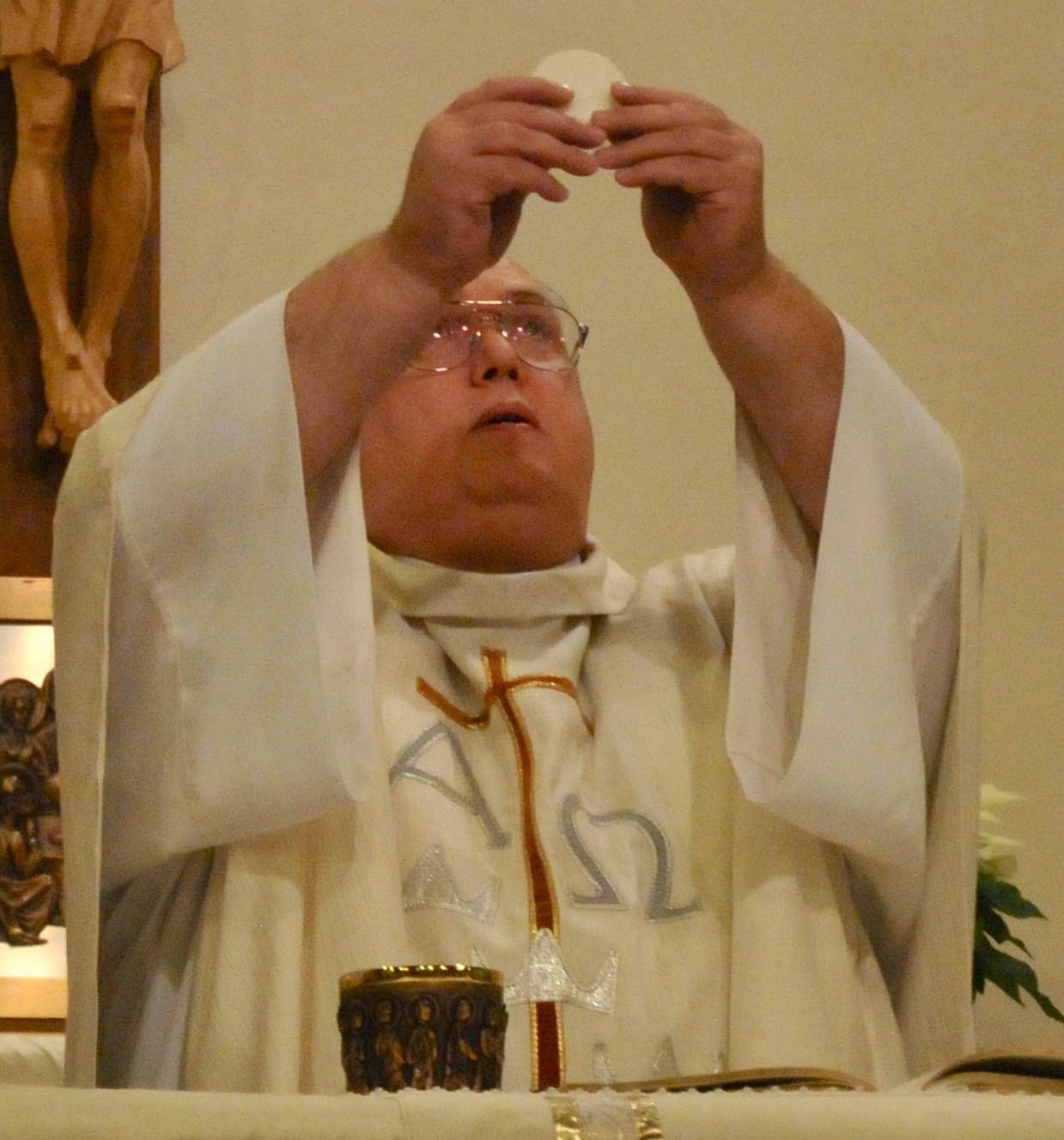
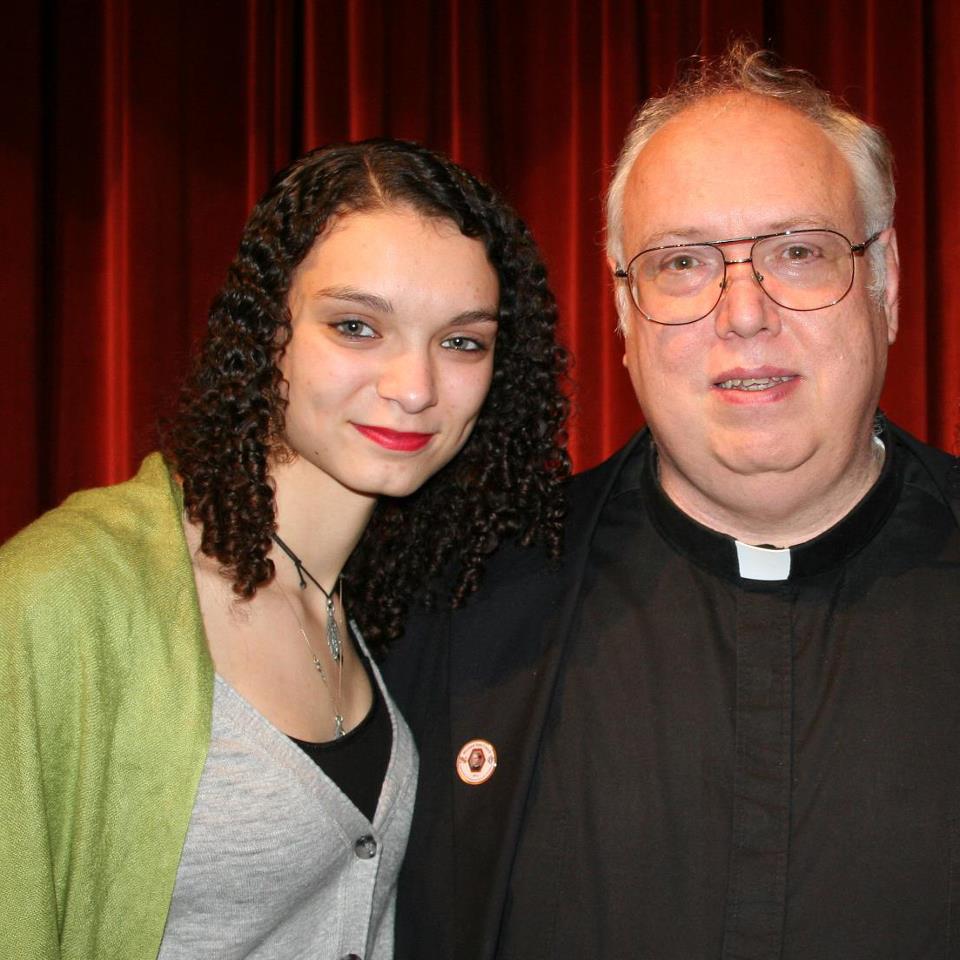
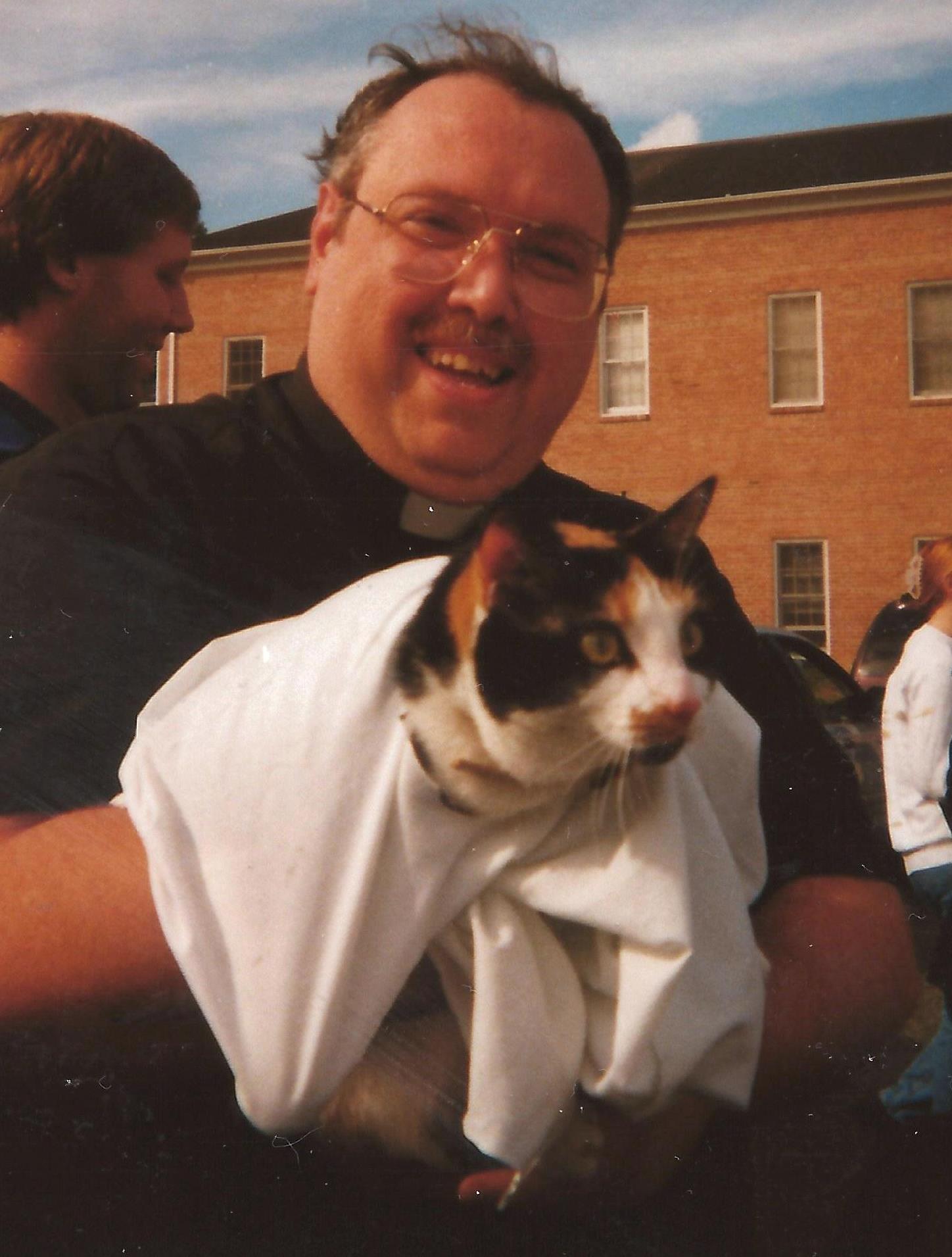
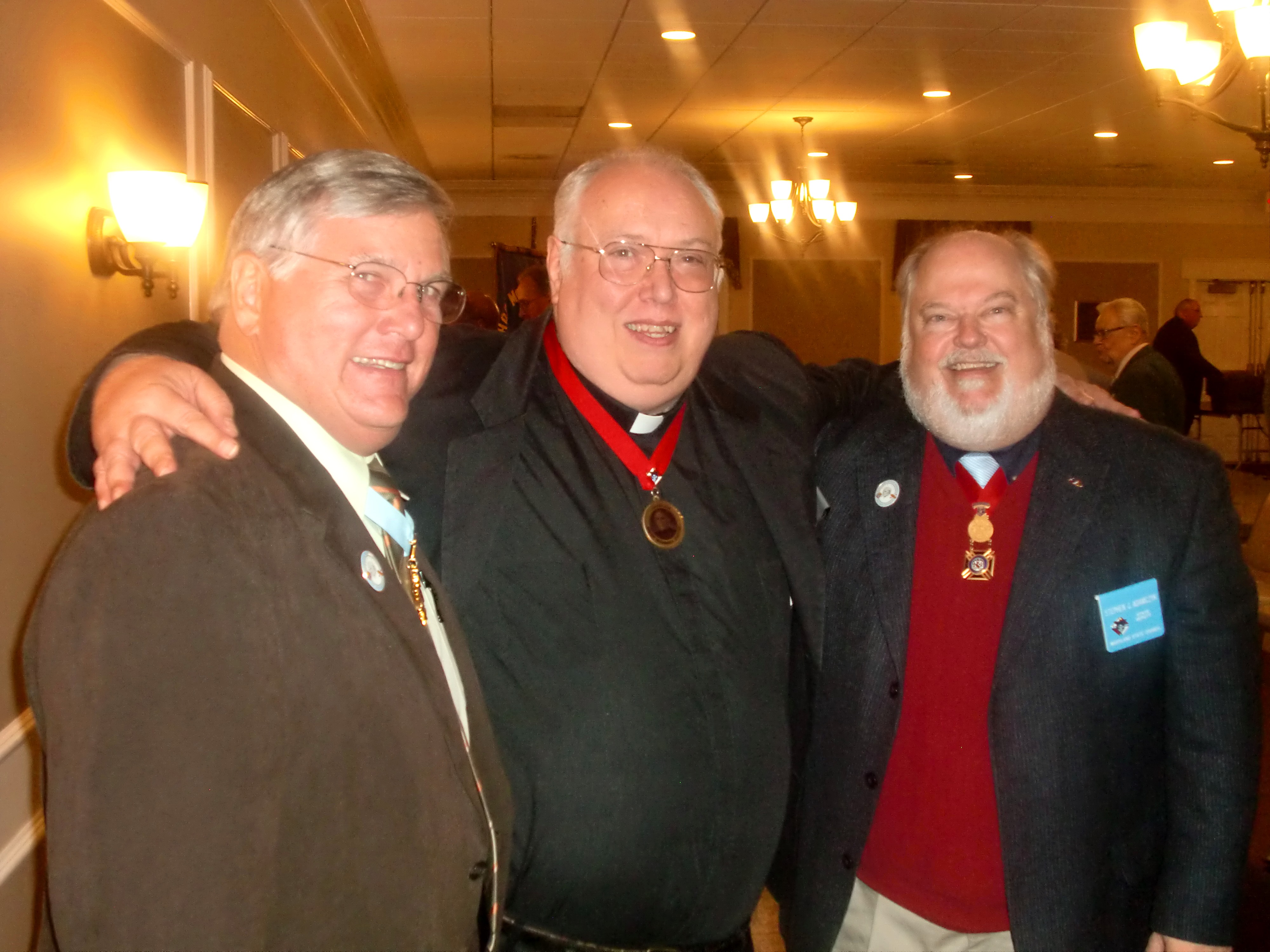
    Fr. Joseph Jenkins

  • The blog header depicts an important and yet mis-understood New Testament scene, Jesus flogging the money-changers out of the temple. I selected it because the faith that gives us consolation can also make us very uncomfortable. Both Divine Mercy and Divine Justice meet in Jesus. Priests are ministers of reconciliation, but never at the cost of truth. In or out of season, we must be courageous in preaching and living out the Gospel of Life. The title of my blog is a play on words, not Flogger Priest but Blogger Priest.

  • Archives

  • Categories

  • Recent Posts

  • Recent Comments

    Barbara King's avatarBarbara King on Ask a Priest
    Ben Kirk's avatarBen Kirk on Ask a Priest
    Jeremy Kok's avatarJeremy Kok on Ask a Priest
    Barbara's avatarBarbara on Ask a Priest
    forsamuraimarket's avatarforsamuraimarket on Ask a Priest

How can Dead Saints Pray for Us?

QUESTION (from Mina):

Why do we ask saints to pray for us if they are dead?

RESPONSE:

Why do we believe that Jesus can save us if he is dead? It all comes down to the resurrection. We believe that Jesus conquered sin and death and that he gives us a share in his risen life. The dead are not really dead, but alive.

Notice that even prior to his redemptive work, Elijah and Moses appeared with Jesus in the transfiguration. We read in Mark 12:26-27: “As for the dead being raised, have you not read in the Book of Moses, in the passage about the bush, how God told him, ‘I am the God of Abraham, [the] God of Isaac, and [the] God of Jacob’? He is not God of the dead but of the living. You are greatly misled.”

Christians believe that the redemptive work of Christ merits a place for the saints in heaven with God. The whole meaning of the communion of the saints is that they (as the Church in heaven) are alive, loving and praying for the pilgrim Church on earth. They are still apart of us.

Prejudice Against Jesuits & Catholicism

THOMAS:

It’s hilarious how either you are completely indoctrinated about the history of the Jesuits/Catholic church and their many atrocities toward humanity or just an agent of disinformation. I suspect the latter. The Nazis modeled the SS from your precious Jesuits.

“Above all I have learned from the Jesuits. And so did Lenin too, as far as I recall. The world has never known anything quite so splendid as the hierarchical structure of the Catholic Church. There were quite a few things I simply appropriated from the Jesuits for the use of the [Nazi] Party.–Adolph Hitler

FATHER JOE:

It may be that Hitler envied the organization of the Jesuits and the Church. However, he planned to replace Catholicism and Christianity with a church of his own making, one based upon his racist ideology. Again, I am surprised that you would give him so much attention and credibility.  What is your source for this quote?

It amazes me that there are still people who swallow anti-Catholic bigotry and parade their ignorance as legitimate scholarship and learning. Christians are just as much sinners as anyone else and in the history of the world there is plenty of blame to go around. The late Pope John Paul II offered his “mea culpas” as a magnanimous gesture from the Church for healing. However, instead of reciprocity, the world is still in denial and the atrocities of the third millennium are much as they were before. However, in the face of injustice and a culture of death, the Church is frequently the lone voice crying out for the oppressed and the unborn. At a time when religious liberty is threatened, she is the advocate for the poor and the hurting. The Church proclaims the Gospel of Life and Catholic believers even sacrifice their lives in the cause of freedom and in the defense of human dignity. Your blindness to this reality is what makes your apologetic so very tragic and disappointing. You inadvertently place yourself on the side of a darkness that seeks to overwhelm the light.

Heinrich Luitpold Himmler was raised a Catholic and yet he turned his back on the Church and Christianity. Focusing on a Germanic mythology, he embraced the occult while trying to strip away elements of Catholicism to make his new religion. While some claim that the Society of Jesus (Jesuits) was his model for the SS, it was actually the ancient Teutonic Knights. Hitler, himself a superstitious man, placed little confidence in Himmler’s mysticism and may have made a joke of calling him his “Ignatius of Loyola.” This may be where the confusion with the Jesuits started. But other than the elements of order and obedience, there were no similarities. The Jesuits defended the papacy and the Catholic faith. Himmler’s SS was the start of a so-called humanistic religion which worshipped Hitler.

THOMAS:

Since you are obviously educated in the art of logical fallacies, I was wondering if you will use ad hominem, guilt by association, begging the question or straw man. Maybe a combination of these and others? My guess is you will delete this post.

FATHER JOE:

Logical reasoning is not fallacious. You rely upon the actual tactics of the Nazis, telling the BIG LIE with the expectation that gullible people will believe it. There is no need for me to resort to an “ad hominem” argument in that you have sufficiently disgraced yourself without my assistance. I am unsure with whom you associate, but I can well imagine given the venom of your attack and style. The straw man is entirely yours. You create a false caricature of Catholicism (and the Jesuits) which you immediately impugn or tear down. I have read your quotes, and yet many of them are attributed to men who shared your uniformed biases against Catholicism. You even cite Hitler, as if a man who orchestrated the art of deception and murder could be trusted in anything he says.

THOMAS:

Here are a few quotes for you to deny.

“The Jesuits are a MILITARY organization, not a religious order. Their chief is a general of an army, not the mere father abbot of a monastery. And the aim of this organization is power – power in its most despotic exercise – absolute power, universal power, power to control the world by the volition of a single man. Jesuitism is the most absolute of despotisms – and at the same time the greatest and most enormous of abuses.”–Napoleon Bonaparte

FATHER JOE: Napoleon, like you, would also have his issues with the Church. He falsely viewed the Jesuits in terms of the very things which he coveted: power and empire. Napoleon was keenly concerned about the loyalty of hearts and minds. He dreaded competition from the Jesuits or the Church. The Jesuits were not a military organization, but a religious order founded by a former military man who put aside the sword.  What is your source for this quote?

THOMAS:

“It is my opinion that if the liberties of this country – the United States of America – are destroyed, it will be by the subtlety of the Roman Catholic Jesuit priests, for they are the most crafty, dangerous enemies to civil and religious liberty. They have instigated MOST of the wars of Europe.”–Marquis de Lafayette

FATHER JOE: Lafayette shared the prejudices of many in France against the Jesuits. Indeed, such biases would lead Rome to suppress the Jesuits. All 23 priests in the thirteen colonies were former Jesuits. The irony was that they were defenders of the papacy. Lafayette was impressed by the Protestants in America and successfully worked for their co-existence with Catholics in France.  What is your source for this quote?

THOMAS:

“The Jesuit Order at last reached the pinnacle of its power and prestige in the early eighteenth century [i.e., the early 1700s]. It had become more influential and more wealthy than any other organization in the world. It held a position in world affairs that no oath-bound group of men has ever held before or since… ‘Nearly all the Kings and Sovereigns of Europe had only Jesuits as directors of their consciences[i.e., as confessor-priests], so that the whole of Europe appeared to be governed by Jesuits only.’” (1927 / using a short quote by Jesuit Cordara)–Boyd Barrett (Ex-Jesuit)

FATHER JOE:

The situation with the ex-Jesuit Boyd Barrett was tragic because he very much believed in the Church and in his priesthood. He expressly wrote against condemning the Jesuit order and the Church as you and other anti-Catholics delight in doing. However, he suffered at the hypocrisy he found and in the hardness of hearts which can afflict the men placed over us. His book, The Jesuit Enigma (New York, 1927) both celebrates the saintly achievements of his order as well as laments its failures. Given his testimony, this would also include the shabby treatment shown its loyal sons. He writes (page 335-36): “Twenty years had passed since I had entered the Society of Jesus, believing in the description given of it by the Jesuit General Roothan, as ‘a splendid abiding-place of science, piety and virtue ; an august temple extending over the earthy consecrated to the glory of God and the salvation of souls’ I had given the best years of my life to the Society, striving as faithfully as I could to realize the ideal of the perfect Jesuit, ‘one who, having shed all personal interests and affections, clothes himself with Christ, and shows himself in labor, patience, charity and the love of truth the servant of God, fighting with the arms of Justice through days of ill-fame and days of honor.’”

You should note that The New York Times would carry a beautiful story about him, entitled, “EX-PRIEST EXPLAINS RETURN TO CHURCH; Dr. E. Boyd Barrett Says 22 Years of Brother’s Prayers Brought Reconciliation.” The article begins, “Dr. E. Boyd Barrett, who left the Roman Catholic Church and the Jesuit Order in 1924 after twenty years of education for and in the priesthood, publicly announced his reconciliation with the church yesterday.” Praise God!

THOMAS:

“All these things cause the Father-General [of the Jesuits] to be feared by the Pope and sovereigns… A sovereign who is not their [the Jesuits’] friend will sooner or later experience their vengeance.” (1852)–Luigi de Sanctis (Official Censor of the Inquisition)

FATHER JOE: Luigi de Sanctis left the priesthood and got married. As an Italian Protestant, he co-founded the Evangelical Christian Church and became a leading anti-Catholic apologist. I would hardly regard his criticisms of the faith as wholly credible. He leagued with the Waldensians. The pertinent book here is Popery and Jesuitism at Rome in the 19th Century, published in London, 1852. He found a market in Protestant England for speaking against the Church, the Jesuits and sacraments like Confession. He was a scandal to all those Jesuits martyred because they ministered and brought the faith back to England.

Phil Robertson & St. Paul Banned from A&E Network

A&E says it is a supporter of the LGBT community and will not tolerate a negative view about homosexuality.  Because of this, Phil Robertson is no longer welcome on the show “Duck Dynasty” and has been cast out from his television family.  But what the network is really saying is that upon this issue there can be no freedom of speech and that while gays are welcome, traditional Christians are NOT.

ph

We should not go out of our way to be mean-spirited or hateful; but the issue here is with inspired Scripture and Christianity.  The faith and God’s Word might challenge us on many subjects.  We might personally have hoped that Scripture or Church teaching were different on this or that subject.  But the creature cannot dictate to the Creator what should or should not be.

What the article should have been labeled is this:  “St. Paul Banned from A&E for His Homophobic Remarks!” Or, to take it one step forward,

MSN News – ‘Duck Dynasty’ star suspended over anti-gay comments

The Raw Story –  Conservatives rally around suspended ‘Duck Dynasty’ star

FOX News – A&E suspends ‘Duck Dynasty’s’ Phil Robertson

NBC – Catholic Governor Defends Robertson

“Duck Dynasty” star Phil Robertson has been suspended from the A&E reality series, following anti-gay remarks he made in an interview with GQ magazine.

Robertson caused controversy with his comments, in which he grouped gays with “drunks” and “terrorists,” and said that they won’t “inherit the kingdom of God.”

Asked what he considered sinful, Robertson told the magazine, “Everything is blurred on what’s right and what’s wrong. Sin becomes fine,” he said in the interview. “Start with homosexual behavior and just morph out from there. Bestiality, sleeping around with this woman and that woman and that woman and those men.”

New American Bible (Catholic Translation):

1 Corinthians 6:9-10

“Do you not know that the unjust will not inherit the kingdom of God? Do not be deceived; neither fornicators nor idolaters nor adulterers nor boy prostitutes nor sodomites nor thieves nor the greedy nor drunkards nor slanderers nor robbers will inherit the kingdom of God.”

Romans 1:26-27

“Therefore, God handed them over to degrading passions. Their females exchanged natural relations for unnatural, and the males likewise gave up natural relations with females and burned with lust for one another. Males did shameful things with males and thus received in their own persons the due penalty for their perversity.”

1 Timothy 1:8-11

“We know that the law is good, provided that one uses it as law, with the understanding that law is meant not for a righteous person but for the lawless and unruly, the godless and sinful, the unholy and profane, those who kill their fathers or mothers, murderers, the unchaste, sodomites, kidnapers, liars, perjurers, and whatever else is opposed to sound teaching, according to the glorious gospel of the blessed God, with which I have been entrusted.”

A Rebuttal to Sex and the Single Priest

priest_1THE NEW YORK TIMES, December 1, 2013

Sex and the Single Priest by BILL KELLER

Given that he long ago quit the Church, it is more than disingenuous for Bill Keller to cite the ancient corpse of his own Catholicism as grounds for critiquing priestly ministry or to belittle the celibate love realized by the majority of our clergy.  He admits that he surrendered “citizenship” in the Catholic kingdom and is no longer “subject to [the Church’s] laws.  Nevertheless, he would urge change to a law that speaks to priestly character and service like no other.  It would seem to me that he forfeited long ago any right to participate in this inner-church discussion about priestly celibacy and the prospect of married priests.

The catalyst for his article is his tenuous tie to a religious sister from his school days; and not surprisingly one that met and married a priest.  She gave up her veil and he took off his collar 41 years ago.  The writer of the editorial is very sympathetic to them and their story.  He is far less so to good priests and nuns who kept their vows.  While he contends that the couple remained within the embrace of Catholicism while he did not; I would argue that both defected, although his was the more honest breech.  John and Roberta Hydar simply went from being young dissenters to elderly ones.  He remarks that they participate in a spin-off community where priests are married, same-sex marriages are solemnized and women are ordained.  In other words, theirs is a faith community which claims a false Catholic pedigree and lives a lie— women playing priests, defrocked clergy feigning legitimacy without faculties, and blessing what God has deemed as perversion.  This is his ideal for the Church, even though he has personally stopped believing.  Note how quickly the spurning of the Church’s authority leads not only to violations of discipline but also to heretical teachings and practices.

Keller categorizes faithful Catholic priests as lonely men.  Certainly the celibate must be comfortable with “aloneness,” but this is not the same as loneliness.  Married men and women are not exempt from sometimes feeling lonely.  Such feelings are part of the human condition.  The Hydars recognize that change will not come in time for them.  However, I would argue that the types of change they anticipate will never occur.  The Church will never rewrite the moral code.  Such subjectivism flies into the face of divine sovereignty.  Further, their ecclesiology is not one of humility or dialogue but of arrogance and intimidation.  They and their associates mold themselves into their own magisterium, albeit without any protection from the Holy Spirit.  Roberta employs the jargon-expression that exposes their hypocrisy.  She says that “there is no stopping Her by the institutional church.”  One can make distinctions, but there is no real division between the Church as an institution and as a community of saving fellowship.  The Pope, cardinals, bishops, priests, deacons, men and women religious and the laity are all part of a single pie.  It cannot be sliced or diced.  There is no dissection.  Separated from Peter or the Pope and we have no Church.  The true “sensus fidelium” is not found in dissenters but rather in the men and women who give religious assent and filial obedience.

Despite words and symbolic gestures, the writer is not optimistic that Pope Francis will bring about substantial changes.  Given that he means a reversal to Church stances, I think he is correct.  Ultimately the progressive voices will be disappointed.  Artificial contraception, homosexual relations and priestesses will never find acceptance in the Church of Christ.  That is not to say that they will fail in finding a home somewhere else.  There are plenty of faith institutions founded by men and swayed by the fads of the day.

But next Keller hits the nail on the head when he states that celibacy is a separate case.  As a discipline this could be changed.  It may not be retroactive and these men would still have to profess an orthodox faith.  That would exclude many of the dissenters; but, they still have the freedom to jump ship for the passing raft of Anglicanism.

He speaks about the urgency to change the discipline without any appeal to the supernatural.  Rather, he references that mandatory celibacy is driving away good prospects, that the shortage is immediate and dire, that we need clergy with firsthand experience with family issues, and that we must counteract the clericalism that has enabled and sought to cover-up pedophilia.  After colluding with an ex-nun and an ex-priest, Keller next quotes Thomas Groome, another former priest, who observes that celibate priests are viewed by most people as “peculiar” and “not to be trusted.”  He says that of the hundreds of priests he has known; only three or four have lived a rich and “life-giving” celibacy.  Of course, the problem may have been that as an unhappy priest, himself, he hanged around with other discontents.  Most priests I know are happy and faithful to their promises.  This article is biased or tilted against orthodoxy from the very beginning.

Keller then tells us that celibacy is not a doctrine (true) but blasts it instead as “a cultural and historical aberration.  Nothing could be further from the truth.  Historical studies reveal that many early priests lived in perfect continence with their wives.  The periodic celibacy of the Jewish priests became perpetual for Catholic priests.  Except for the national churches of the East, celibacy quickly became the ideal in the West.  We see decree after decree in its favor reaching a climax with the First Lateran Council (1123 AD).  Priestly celibacy was no oddity but the norm and a signature element in priestly character or identity.  It signified total dedication to God and to his Church.  His very flesh became an eschatological sign.  Celibacy was not a refusal to love but a more expansive way of loving, close to the heart and witness of Christ.  The aberration was the married priest, but without any negative judgment against the validity of his share in holy orders.  The crimes and scandals of our times are not due to celibacy but rather to a refusal to be faithful to this solemn promise or vow.  The charge that celibacy was instituted simply to safeguard Church properties against children and inheritance is a slur with only isolated substance.  The resources of the Church had to be protected, for sure, but the greater possession of the Church was the priest, himself.  Why demand celibacy only to those men who would be candidates for the episcopacy?  Roman Catholicism requires and both God and his people deserve such a single-hearted loving from all priests.

Keller says that the Church looks the other way in regard to priests who attempt marriage in parts of Africa and Latin America.  I cannot say for sure if there is a hesitance to censure these reprobates; but regardless, they are not free to marry and they place both themselves and their love-interests in mortal sin.  Why should we reward rebellion and sin?  The truth and objective morality is not open to the democratic process or human capriciousness.  This is not dissimilar from the “everyone’s doing it” argument that we so often hear in regard to fornication, cohabitation and artificial contraception.  It has also been employed in regard to self-destructive behaviors like drug use.  It is the poorest possible argument.  Indeed, it is no argument at all.

Archbishop Pietro Parolin could certainly state that priestly celibacy would be open for discussion; however, this should not imply that any change is in the offering.  Indeed, I would not be surprised if there is a tightening regarding future Catholic Anglican-use priests (particularly sons of the current married clergy) and a reiteration that the Catholic Eastern rites should not ordain married men for priestly service in this hemisphere.  Pope Francis is all about poverty; celibacy more than any other trait points to the rich man who was asked to put aside everything to follow Jesus.  Like the apostles, we leave everything and everyone else behind.  This mandated a special suffering for the married apostles.  In light of Christ’s example and the preference of St. Paul, the Church would spare its priests from struggling with divided loyalties and hearts.  It is sufficient that we have many married deacons.  There is no need to open the priesthood to married men. It is a fallacious assertion that it will turn around the shortage in vocations.  Many Protestant communities have married clergy and they also suffer from a lack of good vocations.  Married ministers have also not preserved them from scandals.

Keller returns to his dissenting couple and John (the ex-priest) says that most of those who left ministry would have stayed if celibacy had been made optional.  However, even in the Eastern model, men are married before ordination, not afterwards.  Had it been permitted, he and the thousands who left with him could still not get married and continue to serve as priests.  Note that the married Episcopalian priests who become Catholic clergy are ordained “absolutely” because Anglican orders are neither accepted by Catholicism as valid nor licit.  Priests who promised celibacy would be expected to keep their promises; just as married men would be required to keep their nuptial vows as they entered holy orders.  It would not be retroactive.  Another wrinkle in John Hydar’s contention is that a majority of those priests who left ministry for marriage have since divorced and many are remarried.  Why should we think that men who cavalierly break one promise will keep another?  In any case, John and many like him also espouse a false ecclesiology where legitimate authority is undermined.  They campaign for doctrinal heresies like priestesses.  Some of these men who left have seen their wives ordained so that they can feign the sacraments beside them.  There is no way for them to come back.  There is no viable path for them, except after a heartfelt repentance demonstrated by public renunciation of their falsehoods and their counterfeit ministry.  Such might allow them back into the pews but they would never again stand before the altar.  That ship has forever sailed.

Optional celibacy and married priests may become a future eventuality; but I hope not.  The writer laments that Roberta Hydar passed from cancer.  She will never see that day.  We can pray for her soul.  However, I would submit that most of the priests and the women for whom they left are elderly now.  It may be the wisdom of the Church that they pass away and their small pseudo-churches with them before the Church further explores this issue.  If we see optional celibacy, the candidates with be committed and obedient Catholics, homeschoolers, with large families, filled with traditional piety and practicing timeless objective morality.  They will be the right kind of men.  Their wives will accept the headship of their husbands and suffer much in knowing that their husbands belong more to the Church than to them.

The history of celibacy in the Church is no aberration.  Rather, it is a calling intimately connected with the vocation of priesthood.  It is a discipline that has doctrinal implications in the bridal imagery of Christ the groom to his bride the Church.  Every priest at the altar enters into this mystery.  Celibacy best preserves its meaning and realizes it.  Celibacy is not a man-made construct.  As with the transmission of the deposit of faith and the efficacy of the sacraments, the legacy of priestly celibacy represents a significant movement of the Holy Spirit in the life of the Church.  Christ does not fight his Church.  If a man is truly called, God will give him the gift of celibacy.

Happy All Hallows’ Evening

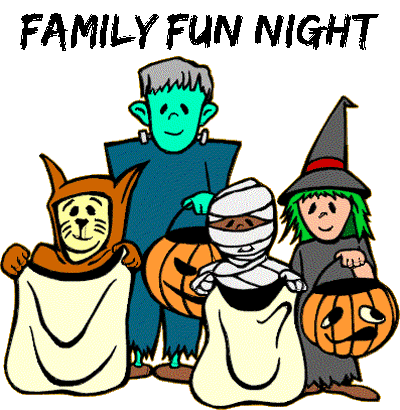
FamilyFunNight03

I was recently involved with a FACEBOOK discussion on the topic of Halloween.  A college student was challenged by his roommate that the celebration was “evil.”  His friend was a “born again” Christian.  He asked friends to shed light on the question.

A Catholic Reflection on Halloween

Halloween in a pluralistic society means various things to different people.  Indeed, given the contemporary fascination with vampires, werewolves, witches, ghosts and zombies, it might seem that Halloween is now a year-long celebration.  But the question at hand is a narrow one, does Halloween place superstition above authentic faith?  The dialogue is not only between Christians but must confront the values and meanings imposed by a liberal secular humanism and the emergence of modern paganism.

Questions of sectarian faith aside, we have also connected Halloween to the fall harvests, thus the symbols of pumpkins, apple bobbing, corn mazes, hay rides, scarecrows, owls, etc. Such a feast provides a fun dress up for children and the giving of candy, which reinforces the joy of childhood and the solidarity of the community in caring for them.

The Tension over Halloween

Certain reformed Protestants often object to Halloween because of its apparent preoccupation with the dead and their souls.  Remember, such believers reject purgatory and prayers for the dead. Other groups deny even the soul and hell, like Seventh-day Adventists.  Obviously, as Catholics, we cannot play along with arguments focused against our holy faith.  While we might regard ghosts as souls in purgatory, in their estimation the whole business is either a fantasy or a devilish deception.  Since Christ has destroyed death, any preoccupation with it is negatively judged as “popery.”  But Catholicism stresses both a personal and a corporate faith.  The saints live in a communion with Christ and one another.  The souls in purgatory are still part of the Church.  We pray for the poor souls just as we ask the heavenly saints to pray for and with us.  The bond of our unity is Christ, himself.

The so-called pagan foundation of Halloween (as in Samhain) is a modern exaggeration. The roots are actually Christian, or Catholic. The name Halloween is a derivation of All Hallows’ Evening or Eve. Neo-pagan religion, perverse occultists, and New Age believers would attempt to make it something else.  Catholic immigrants from countries like Mexico are also introducing the similar “Dia de los Muerto.”

Some have the peculiar notion that All Hallows’ Eve is a night where spirits or ghosts enact violence.  This is nonsense!  It is the made-up stuff of the occult and/or horror movies.  It probably has roots in the pranks played by juveniles while dressed up and moving from house to house.

Puritans and/or Calvinists associated prayers for the dead with witchcraft and necromancy.  Their religious descendants are still among us.  Today when we think of Puritans, the legacy of Plymouth Rock is tarnished by the legendary Salem Witch Trials.  Religious hysteria brought about the condemnation and execution of innocent women.  Each year witches, real and imaginary, pilgrimage to Salem, Massachusetts. Tourism soars as revelers come to celebrate the holiday.  This has even precipitated seasonal tension between Wicca or naturalistic pagans and those who perpetuate the caricature of witches on brooms. I recall that the Salem Knights of Columbus hall had to cancel contracts when they realized that renters were using their facility for genuine witchcraft, not the make-believe variety.  It is precisely because of such fears that a number of Christian communities have now utterly rejected Halloween.  Of course, certain Christian cults reject any holiday or special day that is not clearly scripturally based.  Others object just to be different from Catholics or to illustrate their disdain for Rome’s authority.  That means that a number of these faith communities do not celebrate Christmas, Easter or the Sunday Observance.

The fundamentalist Christian critic insists that Halloween is a capitulation of the Christian commission.  This seems to be a bit of a stretch, at least in terms of boys dressed as cowboys and girls as princesses.  My only regret is that I would have children yearn for Holy Communion as much as they race to fill their Halloween bags with candy.

While some Protestants politely agree to disagree with Catholicism and about the celebration of Halloween; other Christian groups condemn the festive day as devilish and pass out anti-Catholic “Chick Tracts” to the trick-or-treaters.  Still other Christians, like most Catholics, see nothing inherently wrong with children dressing up and collecting candy.  Certain Catholics and Protestants will pass out alternative treats, like crosses, prayer books, religious stickers, etc.  Concerned about the direction that Halloween is taking, a number of Catholic families and churches urge the children to dress up as saints.  I recall one little boy who was quite upset when Sister at school told him that he could not dress as a monster.  When Halloween came she pulled him aside, angry with his costume.  She lamented, “I thought I told you that you had to be a saint?”  He answered, “I am a saint, Sister— I’m John the Baptist… after the beheading!”

The weekend of our Halloween Party at Holy Family Parish, a lady rebuked me after Mass for celebrating the “devil’s holiday.”  If such were true then Christians could have no part of it.  But the case cannot currently be made.  Baptist and Catholic churches both have Halloween parties and trunk-or-treat activities in their parking lots.  As Christians our strength is in the Lord.  The children of light are in conflict with the darkness.  But the game is fixed.  There may be casualties who reject the Lord but the victory over sin and death is already accomplished.  We need no longer be the devil’s property.  We have been redeemed or purchased at a great price.  Jesus dies that we might live.  Prayer and the life of charity are the essential ways that we confront darkness.  God made the pumpkins, the spiders, the bats, the owls and us.  He made candy sweet and gave innocence to children.  God gave us the day and the night. Halloween belongs to God.

The negative critic feels that Halloween gives the devil a foothold in the lives and hearts of Christians.  However, as in our recent parish Halloween party, I saw selfless volunteers running games, cooking, and distributing goodies to children out of a Christian love for youth and their families.  The devil will have nothing to do with real love.

A Christian Understanding of the Symbols of Halloween

Some authorities trace the carved pumpkin to Irish folklore about a drunk who trapped the devil in a tree and carved a cross upon it.  Having made a deal with the devil never to be tempted again by drink, Jack was denied entry into heaven.  He was given a cinder of fire in a turnip for light.  Supposedly the turnip became a pumpkin in America.  The jack-o’-lantern became a visible against compromise with the devil.  It also serves the same function as the gargoyles on the Gothic cathedrals of Europe. They became a type of sacramental to invoke divine protection.

Scary costumes, like the carved pumpkins, fulfill a similar purpose.  These were cultural or folkloric ways in which simple people sought to ward off evil.  While it may be a bit silly, the notion that people had was that evil or dark spirits would be encouraged to pass over their homes and leave their communities undisturbed.  The assumption was that the demons might be fooled by the caricatures of themselves (kids in costume) into supposing that the area was already infested or occupied.  There is no real doctrinal weight to such a practice… just a desire to be holy and not molested by evil.  Today most people just dress up for fun.

The practice of trick-or-treating probably finds its roots in All Souls Day.  There used to be processions or parades on November 2nd.  Christians would beseech “soul cakes” (dried raisin/square bread) in return for saying prayers for dead family members.  They were mostly collected by children and the poor.  Each cake represented a soul being released from purgatory.  Dressing up and singing was often parting of “souling” from house to house.

Some Christians are unhappy with the symbolism of Halloween.  I recall one person angrily upset about skulls or skeletons.  However, this prejudice fails to appreciate that the skull is embraced by Catholicism as both an immediate sign of death and of our dependence upon God. It is used by the Knights of Columbus, in depictions of the crucifixion and even decorates certain European churches.   We do not worship death but are ever mindful of the price paid for our redemption.  Further, our time in this world is short.  The theme of death or mortality is one to which we return on Ash Wednesday. “Remember, O man that thou art dust and unto dust thou shalt return.”

It is unfortunate that venerable Christian symbols should be confused by the ignorant and bigoted as satanic.  I was in one parish where a shrine to St. Peter was vandalized, not by crazy kids or occultists, but by Christian fundamentalists.  They ripped the inverted cross from the ground and argued that it was a sign of Satan and of the antichrist.  You still hear such foolishness about the upside-down cross on the back of the papal chair.  But the bigots misinterpret an ancient symbol of martyrdom.  St. Peter did not feel worthy to die like his Lord so he asked his executioners to crucify him with his feet in the air and his head toward the ground.  Critics make a mockery of an inspiring witness to Christ.

Catholics also venerate the relics of the holy dead, wear medals and scapulars, carry and say rosaries and use holy water.  These are not talismans or the accidentals for magic.  Rather, they are visible signs of our faith in the incarnate God, the God made visible in Jesus Christ.

Keep Christ in Halloween

We read in Philippians 4:8-9:  “Finally, brothers, whatever is true, whatever is honorable, whatever is just, whatever is pure, whatever is lovely, whatever is gracious, if there is any excellence and if there is anything worthy of praise, think about these things. Keep on doing what you have learned and received and heard and seen in me. Then the God of peace will be with you.”  Christians are committed to the pure and the good.

This might make us reflective of the spiritual elements attached to the secular commemoration of Halloween. We cannot buy the entire package. However, it may yet be reclaimed for Christ. The Christian effort is to Christianize the world, not to run away or hide in a spiritual ghetto. Certainly, there is innocence about children dressing up and finding delight in sweets. My growing reservation is about where adults are taking the festivity. Catholics and significant numbers of other Christians offer alternatives to trick-or-treat and spend All Hallows’ Eve at church worshipping God and recalling the witness of the saints in Christ. I agree with the criticism that there are sinister undercurrents that are seeking to hijack the expanding season of Halloween. As a child I dressed as a clown, a cowboy, an astronaut and as a superhero. It troubles me to see children attired today as characters from “R” rated horror movies. Why do they even know anything about these murderous and blasphemous characters? I am repulsed “personally” by the sleazy costumes that cast derision upon priests and nuns. Adult costumes, especially for females, increasingly celebrate vulgarity and eroticism. If Christians cannot redirect the fun away from these elements then it is true (I would agree) we might have to opt out entirely. It may be that Halloween is escalating in the direction of the occult and vulgarity.  Maybe we as good Catholics and Knights need to campaign for Halloween as we would for Christmas?  We also need to keep Christ in Halloween.  All Saints’ assures us that we can have a share in Christ’s life and in the kingdom.  All Souls’ reminds us that while we are sinners, God is infinitely merciful.  What he has started in us, he will finish.

Popes Opposed Slavery against Dissenters

138092815772350

Medallion from 1787 Wedgwood Anti-slavery Campaign

We often think that dissent from the Holy See and the teaching Church is a new phenomenon. However, just as the land of “life, liberty and the pursuit of happiness” silences any reference to God in her schools and promotes the mass murder of the unborn in the womb, so too did our land, and even her Catholic citizens, dissent from papal admonitions against slavery. Catholic churchmen held large parcels of land and like their Protestant fellows, maintained the institution of slavery. The Maryland colony first founded as a haven for Catholics would later facilitate in Baltimore Harbor a central commercial trade in slaves. People were bartered as nothing more than animals or property. Personhood was denied. Human rights were trampled upon. The rights of landowners and the “choice” of European stock immigrants were made preferential over the needs and wants of people kidnapped from the African shores.

Slavery as practiced by the Jews or later by Christians in the ancient world did not compare to it. Slaves were taken from conquered peoples and indentured servants would be used well into the colonial period of America. After a period of service, and even restitution, such slaves were freed. However, we are the ones (European colonialism) who invented perpetual racial slavery– a foul business that could be passed on from generation to generation. Families could be separated. Torture and death could be implemented without any care or worry about censure. Great Britain would renounce slavery many years prior to the Civil War (ended 1865) when the issue would be forced in the United States. Here is the irony. If the Revolutionary War had gone the other way, blacks would have known freedom many generations earlier.

  • 1778 – Slavery outlawed in Scotland.
  • 1807 – British slave trade outlawed.
  • 1833 – All British slaves freed.

Reserving ourselves to the Catholic community, it must be admitted that Catholics often catechized and had their slaves baptized. However, the churches would be segregated and later their schools. It is interesting that Cardinal O’Boyle in Washington, DC would order the desegregation of parochial schools in the 1950′s prior to similar efforts by the federal government. But, past injustice must not be excused because of later enlightenment.

Today many of our people and liberal Catholic theologians and bishops argue for abortion, artificial contraception and active homosexuality. They are the spiritual heirs to the Catholic dissenters on the matter of slavery.

Pope Eugene IV ordered that black slaves be freed in the Canary Islands back in 1435. Columbus was not even born yet! He demanded that “these peoples are to be totally and perpetually free” (Sicut Dudum). Slaveholders who refused the order were excommunicated.

Indians from the New World would be brought to the Pope with the absurd question as to whether or not they were human beings. It was hoped that if the Holy Father deemed them subhuman or animals, that this would legitimate the slave trade and the confiscation of their lands.

Pope Paul III (1537) condemned slavery in the New World, saying, “The Indians and all other peoples … who shall hereafter come to the attention of Christians … are not to be deprived of their liberty and their possessions” (Sublimis Deus).  While in regard to the mistreatment of Native Americans, this condemnation of slavery was absolute.  Slavers were rebuked as minions of the devil and rationalizations for slavery denounced as without any value.  Pastorale Officium  imposed automatic excommunication for any who tried to enslave the Indians or take their possessions.

The Holy Office of the Inquisition responded to a question on March 20, 1686 about the practice of enslaving innocent blacks.  The Church rejected such actions and argued that they had to be freed and restitution made for the injustice against them.

The later popes spoke with one voice. Pope Gregory XVI (1839) stipulated that no one should “dare to bother unjustly, despoil of their possessions, or enslave Indians, Blacks, or other such peoples” (In Supremo). He decried the traders for their “sordid gain” and the slave trade as an “inhuman traffic.”  Even the defending of such slave trade was ordered forbidden.

Nevertheless, the Catholic bishops met in Baltimore in 1840 and contended that the Pope was only condemning the slave trade, not domestic slavery in the U.S.  Is there a similarity between the position of the bishops (for which Bishop John England was a major spokesman) in 1840 and the position of certain Churchmen today in excusing U.S. military intervention around the world or pampering pro-abortion Catholic politicians here at home?

Toward the end of the nineteen century, Pope Leo XIII, the great pope who wrote about the dignity and rights of workers, also deplored the remnants of slavery in Africa and parts of South America.

Supreme Court Justice Clarence Thomas (a Catholic and former seminarian) argues from natural law that the situation of slavery in America and abortion today are analogous– both strip human beings of personhood, liberty and life.

Where is the prophetic voice? What will future generations, if a culture of life should supplant one of death, think of this generation and her leaders– civil and religious?

This topic is revisited in many ways.  It would also regard how we treat the immigrants.  Some would invite them to work here but deprive them of the benefits given our citizens.  The rise of labor unions and Catholic social teaching responded to the needs and rights of American laborers.  Further, what about the sweat shops where workers are exploited so that we might buy cheaper goods?  Many of the identical concerns attached to slavery are encountered here.

I would direct readers to Fr. Joel Panzer’s excellent book, The Popes and Slavery. Those who would fault the Church on this question would have to further impugn the apostles and Christ.  However, Christianity, while it did not eradicate this social institution, did create a new mindset in its regard.  One had to share the faith with servants and treat them in a manner that would recognize them as brothers and sisters in the Lord.  There are numerous documents from Popes and churchmen, and even in the journal of the much maligned Christopher Columbus, that spoke of a temporary bondage so that civilization and faith might be shared with the pagans. This is not to make excuses for what we know today as repugnant; but the Church and faith is given to us in human history and culture, not purely as something from outside.  Those well-versed in historiography would appreciate what I am trying to say.  The Bible and the Church were not privy to an immediate, complete and definitive Christian Anthropology.  The truth required time and reflection.

It is untrue that the Church was silent on the evils of certain forms of slavery until after the Civil War.  As I said before, American “chattel” or “traditional” slavery would not pass the moral litmus test of the Church.  However, there were other forms of servitude.  Our country also saw the employment of indentured servants.  After the debt was paid or the contract satisfied, the servant was given his freedom.  Such would be a form of “slavery,” would find a parallel with prison chain gangs and prisoners of war.

Slavery under pagan Roman law was brutal and stripped the person of basic rights.  While Christianity did not eradicate the institution, believers were rightfully conflicted and challenged as to how the institution might be maintained.  The treatment of individual slaves necessarily changed and the seed which was the spirit of the Gospel would work toward its eventual abolition. All men were reckoned children of God and brothers and sisters to one another, regardless of social standing or class.  Given St. Paul’s command that slaves should obey their masters, it was argued by many authorities that certain forms of slavery or servitude were in accordance with natural law.  Distinctions were made about voluntary and involuntary servitude.  Immoral acts could not be required of anyone, even a slave.  Temporary versus perpetual slavery was debated and delineated.  Chattel slavery was condemned for treating the human being as an animal and not respecting personhood.  The master was also morally obligated.  He had to clothe, shelter, and feed the slave.  He had to give him a Christian upbringing.  The servant could not be tortured, killed or given inhuman working conditions.  The master could not separate families. I am not saying that everyone followed the rules; but there were rules. Indeed, given that the rules for Christians were so often broken, later moralists rejected the whole notion of slavery as justifiable, either with natural law or with the spirit of the Gospel.  Slavery had to be abolished if people were to have genuine freedom and a sense of self-respect.

Priestly Celibacy: Relating to Women

How should the celibate priest relate to women? This question is not simple given that there is an active national debate about how men behave (or misbehave) around women. Some guys treat every woman as chiefly a sexual object. We see this in the proliferation of pornography which focuses upon the desires of men. The sin of fornication is increasingly regarded as a necessary rite of passage and the way to measure the success of the dating experience. Cohabitation now statistically outnumbers married couples. Adultery is a chief cause for separation and divorce. Women complain about harassment, gender stereotypes and abusive and/or forced seduction. It is into this environment that celibate priests are called to respect women, who usually make up the majority of their congregations; however, there can be no romantic associations.

As an effort to safeguard or to insure celibacy, a number of priests in the past were trained to keep women at a distance. This did not mean that they hated women; however, they may have looked upon females with suspicion and tagged them as dangerous. It has been known that some priests have narrowed their friendships to other priests or a few men while treating their flocks (men and women alike) as souls to save but nothing more. We might say that they have attempted to strip gender from the perception of their congregations; but in truth, they have endeavored to neuter themselves. I have never known it to work well.

Priests must acknowledge they are men, not robots. Men relate to women differently than they do to other men. This does not have to be a bad element. Women can bring out a sensitive and courteous side in men. Look at how gentlemen treat their mothers and daughters. Women by their witness and interaction can assist the priest in extracting or bringing to the surface his sympathetic side and gentleness. The failure to properly acknowledge and treat women will result in a coarsening of priestly manners. He becomes distant, authoritarian and legalistic.

While celibate, priests are increasingly surrounded by women. Women are both employees of the Church and volunteers. I am not speaking here simply of housekeepers and cooks. Married and single women are catechists, youth ministers, liturgical musicians, readers, extraordinary ministers of Holy Communion, altar servers, secretaries, parish business managers, parish associates, etc. This is in addition to traditional service in altar guilds, rosary groups, sodalities, etc. Women work and are present in rectories, parish schools, and in our churches (both in the pews and assisting the priest at the altar). Most parish priests find themselves more surrounded by females than males. Women among the laity have increasingly taking up the slack from the diminishing numbers of women religious, although nuns and sisters will always have an important part to play in the life of the Church. I make these lists to demonstrate that the priest does not and cannot escape the presence of women. They are integral components of the Church. The celibate priest, as the Church’s man, must be comfortable working with and for them. They will be his coworkers and friends. Having said all this, he should be ever cognizant of the boundaries that must never be crossed. He has to be prepared to exhibit a certain distance or even coldness if a certain boundary line of intimacy is skirted. Some women will fall in love with priests. He must let them know by word and manner that he is not interested. Priests will also find themselves falling in love; it is here that clergy need to be reminded of their celibacy so as to create the necessary space for fidelity in their vocation. His priestly work and the life of prayer and worship are his shield from falling. Nurturing his friendships within the presbyterate is also encouraged; there is a certain solidarity and understanding among men who share the same life and dedication to the Lord.

Priestly Celibacy: Evolution of a Sacrament

If the celibate priesthood represents the providential development of this sacrament, would not the general allowance for married priests represent a denial of this grace-filled trajectory? We are creatures who live in time and it is only in the fullness of time that the mysteries of God and of his Church are unraveled. The deposit of faith is fixed but not stagnant. The priesthood must be understood within the context of its purpose and history. I personally fail to see how a reversal can be permitted. It would seem to be a movement against the stream of history and the retrogression of holy orders to an earlier stage of development or appreciation. Our thoughts these days are so much about what the Church and the priesthood used to be. It may be that some critics are so desperate for the damage to be repaired that they would risk further harm by making more radical shifts. Pope Benedict XVI ardently sought to restore balance and to give an interpretation of Vatican II through the eyes of tradition and not modernity. As to what approach we are now taking, only time and prayer will show. However, whatever we do, the needs of the Church and the value of the priesthood should be given full measure over self-seeking desires and personal or particularized relationships. Marriage might make a priest very happy but it would probably cost the Church. I am not convinced by arguments that it would enrich this vocation in any significant manner to offset what would be lost.

Priestly Celibacy: Obligatory or Optional?

We are repeatedly reminded that the Eastern rites have both married and celibate priests. But the fact that most Catholic laity in the United States seem unaware of this is evidence that this witness is largely off the radar. Instead, it is the preference for marriage among the many visible Protestant clergy that catches our notice. It is here that most will make the comparison. Some denominations will not even commission or ordain men unless they are already married. Such is viewed as a divine command and a source for both maturity and stability. It is for this reason that it makes national headlines when married Episcopalian and Lutheran ministers are received and ordained in the Catholic Church. A new model of ministry is being introduced into Catholicism and one that is both condoned by modernity and challenging to our accepted vision of the priesthood. Some find this prospect exciting. Others find in it an ominous and frightening omen. Speaking for myself, I usually err on the side of human freedom; but about this issue, I may not seem consistent. There are certain basic values and rights about which human freedom is limited. What is the will of God in all this? What is best for the Church? I would keep matters as they are with a priestly celibacy that is both mandatory and absolute.

Priestly Celibacy: Changing More Than Rules

It seems to me that the discussion about married priests is too quick to dismiss the depth of meaning given the celibate priesthood. Celibacy is more than a discipline; it is the chief modifier and visible component to the priesthood in the Roman Catholic Church. Indeed, mandatory celibacy has come to personify our priesthood. This is why we must approach this debate very carefully. Most of our priestly men identify themselves— their personality, their station as they face God, their place in both the secular and faith communities— by their stance with celibacy. In other words, it might be a discipline, but it has come to permeate and inform everything that makes them priests. While thousands of men left the priesthood in the 1960’s and 1970’s to get married, realizing that the discipline was not changing any time soon; now we run the risk of a new exodus should celibacy become optional. A tiny few married priests from the Episcopalian church is one thing; a wholesale batch of married men and the return of men who left to get married (unlikely) would be another. It would shake the priesthood as we know it to its very foundation. As I wrote before, I also fear that we would needlessly hurt good men who remained at their posts as celibate sentinels, even when such was a terrible and costly sacrifice. Heartstrings were tugged, they fell in love, and yet, they remained faithful to their promises. Celibacy can be a great joy but it can also be a source of heart-rending tears. Whatever the Church decides to do, we must not be blind or insensitive to the cost paid by the diocesan priesthood. We would be changing more than rules.