• Our Blogger

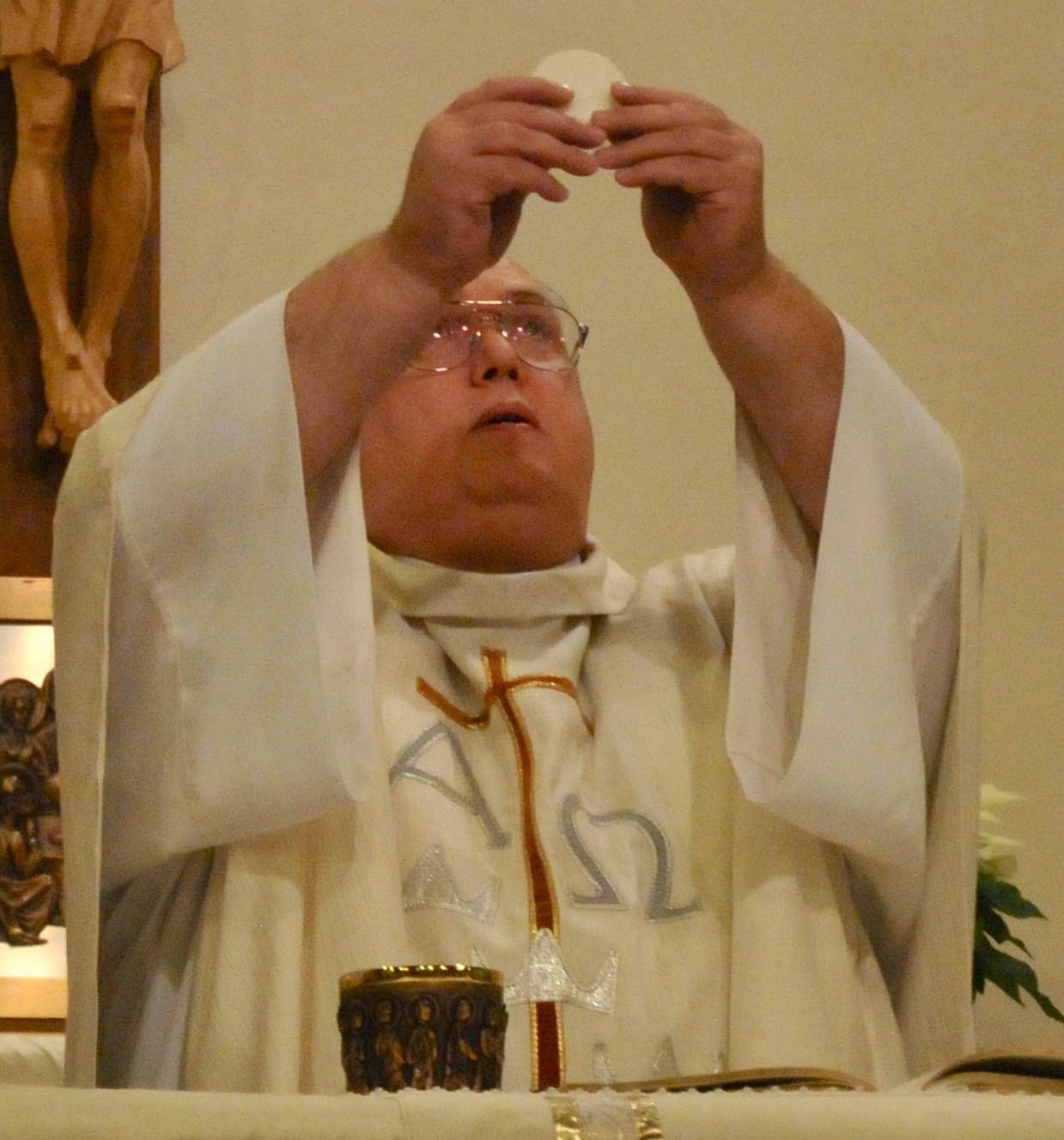
    Fr. Joseph Jenkins

  • The blog header depicts an important and yet mis-understood New Testament scene, Jesus flogging the money-changers out of the temple. I selected it because the faith that gives us consolation can also make us very uncomfortable. Both Divine Mercy and Divine Justice meet in Jesus. Priests are ministers of reconciliation, but never at the cost of truth. In or out of season, we must be courageous in preaching and living out the Gospel of Life. The title of my blog is a play on words, not Flogger Priest but Blogger Priest.

  • Archives

  • Categories

  • Recent Posts

  • Recent Comments

    Jeremy Kok's avatarJeremy Kok on Ask a Priest
    Barbara's avatarBarbara on Ask a Priest
    Josh's avatarJosh on Mixed Signals about Homosexual…
    gjmc90249's avatargjmc90249 on Marian Titles & the Mantle…
    Jeremy Kok's avatarJeremy Kok on Ask a Priest

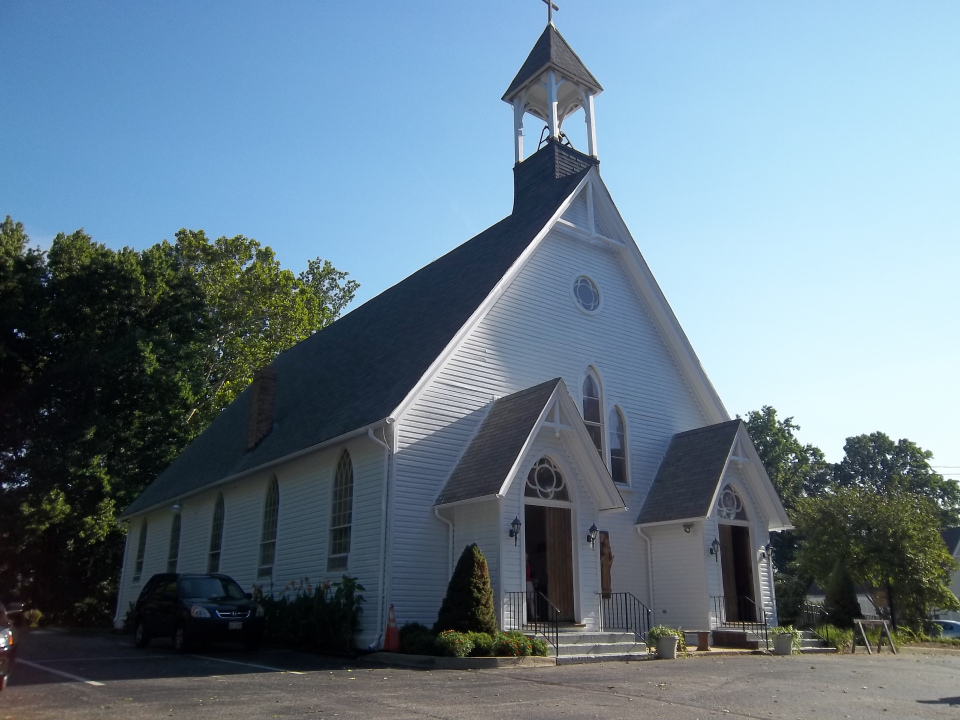
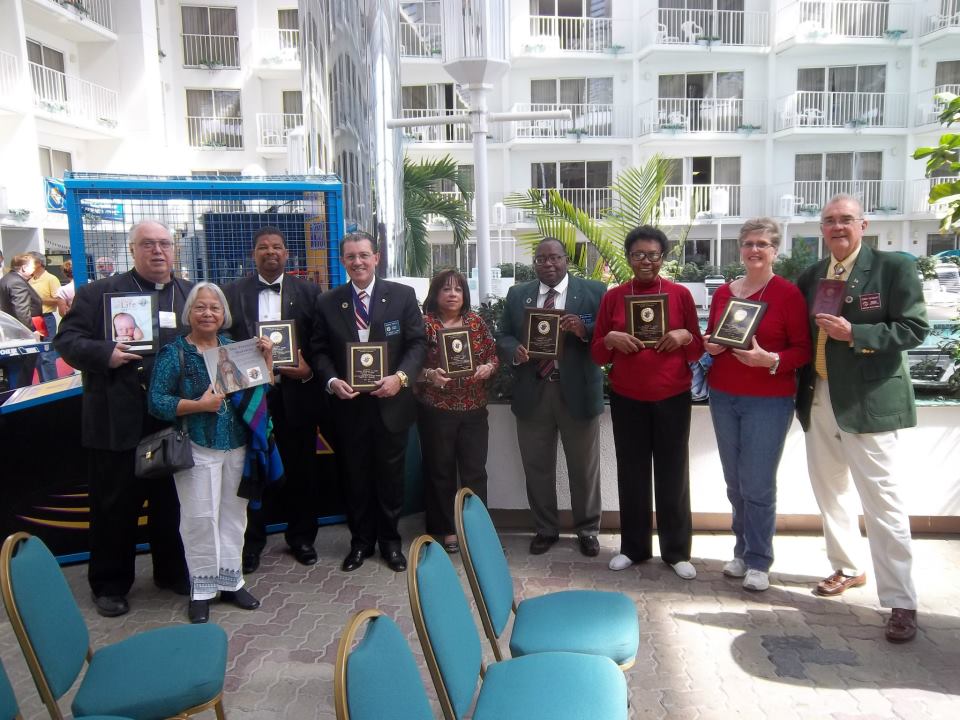
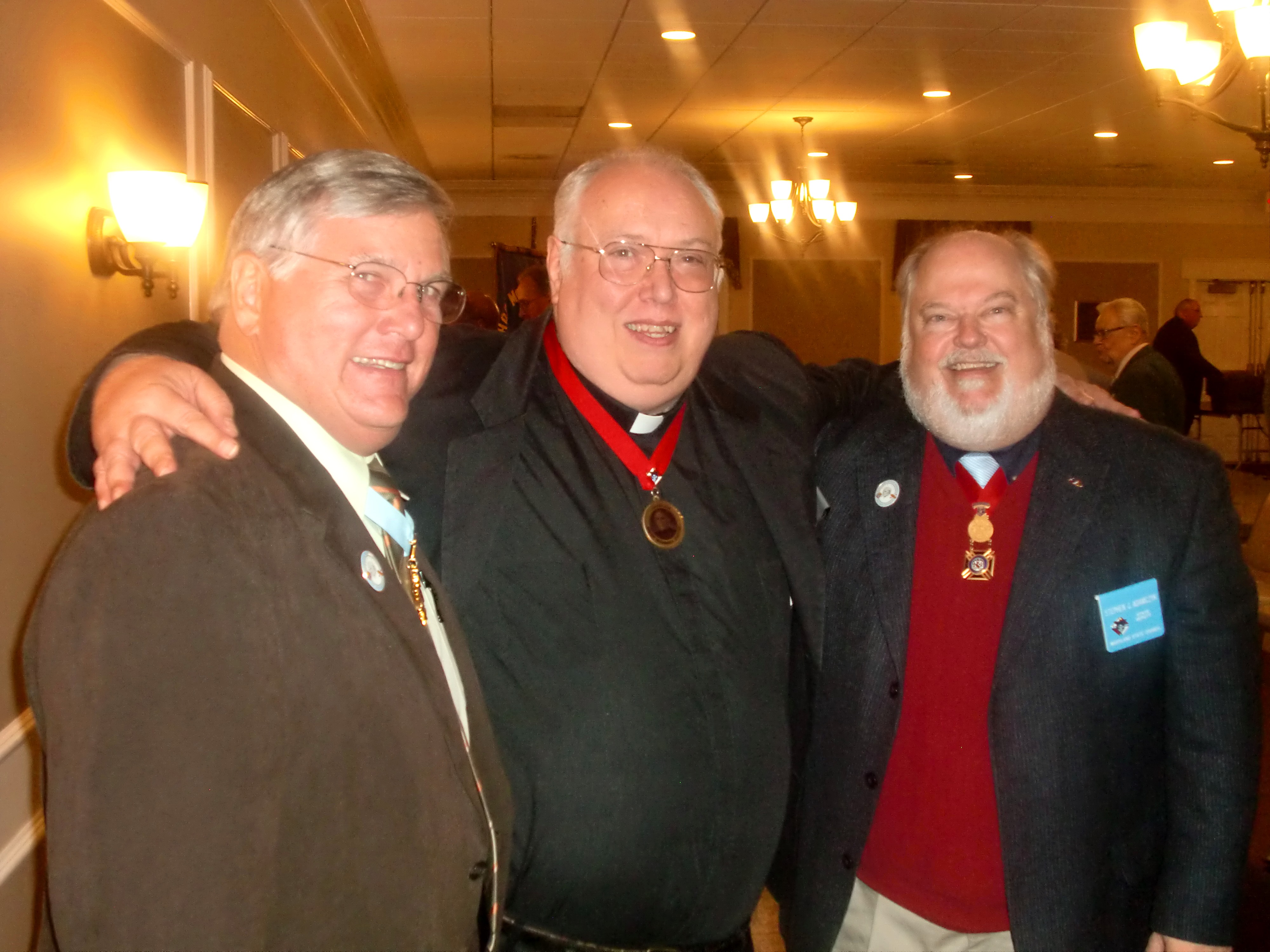
Father Kidd Council Awarded at State K of C Convention

945712_10151430838208435_1228412055_n

Father Kidd Council won first place in the following activities: Council, Family, Youth, Community Service, and the Culture of Life. Our pro-life award also won as representative for MD to the Supreme Convention in Texas. We won 2nd place in Church, and congratulate St. Mary of the Assumption (also district 3!) for their first place win! More important than awards, just think of all the good works performed! God bless all our Knights, their ladies and families!

Faith & Values in the News

Mom Screams for Clinic to Call 911 When Baby Born Alive After Abortion

There is so much complicity in this type of homocide. I recall as a seminarian a great controversy when some of the guys with holy communion were obliged to visit women in hospitals who were abortion patients. They were told not to be judgmental. Here is a woman who regrets her decision, but too late.

Three fake nuns arrested with 12 pounds of cocaine

The fact that they were dressed as nuns was probably the give-away, now if they were in polyester pant-suits, they might have gotten away with it. Goodness!

Kentucky woman ordained as priest by dissident Roman Catholics

I can say that I am a ballerina or a space alien, but saying it will not make it so. The poor lady is just one more fake wannabe priest.

At Boston’s bombing scene: Catholic priests need not apply

But it is a poignant irony that Martin Richard, the 8-year-old boy who died on Boylston Street, was a Catholic who had received his first Communion just last year. As Martin lay dying, priests were only yards away, beyond the police tape, unable to reach him to administer last rites…

Archbishop prays while topless gay activists shout curses and douse him with water

It could have been worse. I recall a bishop several years ago being spat upon and purportedly doused with urine by protestors. We will see more of this as our clash with the modern world intensifies.

Baby girl sacrificed on bonfire after sect leader says tot is the Antichrist, Chile cops say

Tell me again there is no hell. Such monsters will not escape divine justice!

Arabic mandatory at city public school

Not Spanish, despite their high numbers of immigrants and their birthrate? Hum, could it be because they are mostly Catholic? Arabic is necessary for the proper reading of the Koran and the required prayer chants. While there are translations, traditional Islam frowns upon them and only the original text is regarded as “inspired” or authoritative. Such would make language education a vital ingredient to the expansion of Islam. I vote for compulsory Latin… it will open up the classics of Western civilization, help restore dignity to Catholic worship and make a big difference in understanding basic grammar.

How many public schools teach compulsory Hebrew? Israel is also a big part of the world-peace struggle, too. Of course, Judaism does not tend to be as proactive in making converts as is either Islam or Christianity.

The article includes the quote, “Soon, Arabic will be a global language like French and Spanish. These kids are like sponges. It’s amazing to see their progress.” What is not said is that Arabic is not really a secular language but is one rooted in a particular culture and faith. I am not saying that I am opposed to such instances of education, as long as schools provide other languages and teach the classics. However, many schools no longer teach Latin and Greek. The Christian worldview, along with its culture, is being ecclipsed by a secular humanism that is ill-equipped for the ideological wars and faith conflicts which are pressing upon us.

Pope Francis reaffirms the CDF’s assessment of the LCWR

This was never in question, popes may change, doctrine does not.

Pope Francis clear on denying Communion to those who facilitate abortion

A true consistent life-ethic.

Limbo in Limbo, or Suburb of Hell?

nurp-playground.gifCan children, and notably infants, go to hell?

It seems that St. Augustine (354-430 AD) and some of the early fathers of the Church thought so and for this reason they mandated infant baptism. While they were not guilty of personal sin, they still suffered from the effects of unremitted original sin. St. Augustine’s opinions held sway at the Council of Carthage (418 AD) which rejected even a limbo existence or place of happiness for unbaptized children. The Catholic Encyclopedia states: “St. Augustine thought that unbaptized infants went to hell, although he conceded that, due to their lack of personal responsibility and guilt for original sin, the pains of hell were in some way diminished for them” (vol. 8, p. 590). St. Anselm (1033-1109) sided with St. Augustine on the matter of “positive suffering” in hell for unbaptized children. Origin challenged the notion. But the problem was Jesus commanded that unless we were born again of water and the Spirit we could have no part of him.

A sentiment for infant damnation has been revisited in some of the Protestant churches, especially those with a Calvinistic flavor. We recall that Thomas Hardy’s TESS in literature was turned down by an Anglican clergyman when she begged for her child to have a Christian burial. Similarly, the Puritan Johnathan Edwards in his fiery sermons and Sir Isaac Wattes’ in song declared that “the floor of hell is paved with the skulls of unbaptized children.”

After the fathers, as the Church continued her reflection on this matter, the scholastics detailed their own theory of a LIMBO PUERORUM. St. Thomas Aquinas (1226-1274) conjectured that this limbo was a middle state of perfect natural happiness; however, they would be deprived of the Beatific Vision. Italian Jansenists would return to St. Augustine’s view at the Synod of Pistola (1786) and argue as revealed doctrine that unbaptized children are damned to the eternal fires of hell. Pope Pius VI came out with Auctorem Fidei (1794) siding with the more moderate scholastics and condemned the view that unbaptized infants suffer hell fire.

Those of us who cherished and memorized our Baltimore Catechism, remember limbo, from the Latin “limbus” meaning hem or border, as a teaching that preserved the necessity of baptism while excluding unbaptized babies from the full severity of God’s justice, since they had committed no personal sin. The universal catechism today says nothing about limbo. Rather, it states: “As regards children who have died without Baptism, the Church can only entrust them to the mercy of God, as she does in her funeral rites for them. Indeed, the great mercy of God who desires that all men should be saved, and Jesus’ tenderness toward children which caused him to say: ‘Let the children come to me, do not hinder them’ (Mark 10:4), allow us to hope that there is a way of salvation for children who haved died without Baptism. All the more urgent is the Church’s call not to prevent little children coming to Christ through the gift of holy Baptism” [CCC 1261]. 

baby4.gifThe subject of LIMBO was in the news about six years ago with a report from the Vatican’s International Theological Commission. Like so much else, it was being misreported. Various news organizations wrongly said that the Pope and the Vatican were officially nixing Limbo and yet the Holy Father was simply signing off with allowing the commission to publish its findings after years of investigation. Further, the commission did not totally close the door to the long-held theory, only that it was unlikely and seemed an overly “restrictive view of salvation”. The commission contended that there were good reasons to hope that babies who die without the benefit of baptism (might) go to heaven.

John Thavis of the CATHOLIC NEWS SERVICE reports:

http://www.catholicnews.com/data/stories/cns/0702216.htm

In a document published April 20, the commission said the traditional concept of limbo — as a place where unbaptized infants spend eternity but without communion with God — seemed to reflect an “unduly restrictive view of salvation.”

The church continues to teach that, because of original sin, baptism is the ordinary way of salvation for all people and urges parents to baptize infants, the document said.

But there is greater theological awareness today that God is merciful and “wants all human beings to be saved,” it said. Grace has priority over sin, and the exclusion of innocent babies from heaven does not seem to reflect Christ’s special love for “the little ones,” it said.

“Our conclusion is that the many factors that we have considered … give serious theological and liturgical grounds for hope that unbaptized infants who die will be saved and enjoy the beatific vision,” the document said.

“We emphasize that these are reasons for prayerful hope, rather than grounds for sure knowledge,” it added.

nurple-mothersmilk.gifThe document is not very large, only 41 pages and is entitled, THE HOPE OF SALVATION FOR INFANTS WHO DIE WITHOUT BEING BAPTIZED. Thirty experts from around the world sit on the international commission. It only has an advisory role and such documents do not represent “authoritative” teaching that mandates assent.

The question is increasingly important given that more and more couples are laxed or dismissive of baptism and because of the holocaust of abortion. Limbo was never defined Church teaching but was a highly regarded theory taught in old catechisms. It is not in the official Catechism of the Catholic Church.

The CNS article states:

The Church’s hope for these infants’ salvation reflects a growing awareness of God’s mercy, the commission said. But the issue is not simple, because appreciation for divine mercy must be reconciled with fundamental Church teachings about original sin and about the necessity of baptism for salvation, it said.

The document traced the development of church thinking about the fate of unbaptized children, noting that there is “no explicit answer” from Scripture or tradition.

“God can…give the grace of baptism without the sacrament being conferred, and this fact should particularly be recalled when the conferring of baptism would be impossible,” it said.

In this and other situations, the need for the sacrament of baptism is not absolute and is secondary to God’s desire for the salvation of every person, it said.

This does not deny that all salvation comes through Christ and in some way through the Church, it said, but it requires a more careful understanding of how this may work.

How might unbaptized babies be united to Christ?

  • A “saving conformity to Christ in his own death” by infants who themselves suffer and die.
  • A solidarity with Christ among infant victims of violence, born and unborn, who like the holy innocents killed by King Herod are endangered by the “fear or selfishness of others.”
  • God may simply give the gift of salvation to unbaptized infants, corresponding to his sacramental gift of salvation to the baptized.

Later we read:

The findings of this report should not be used to “negate the necessity of baptism, nor to delay the conferral of the sacrament.”

“Rather, there are reasons to hope that God will save these infants precisely because it was not possible to do for them that what would have been most desirable — to baptize them in the faith of the church and incorporate them visibly into the body of Christ.”

“It must be clearly acknowledged that the church does not have sure knowledge about the salvation of unbaptized infants who die,” it said.

*************************

ORIGINAL SIN
Catholic Belief by J. Faa Di Bruno, D.D.

nurple-devilchild.gifORIGINAL sin is distinguished from actual, or personal, sin in this — that actual or personal sin is the sin which we personally with our own free will commit whilst original sin is that which our human nature committed with the will of Adam, in whom all our human nature was included, and with whom our human nature is united as a branch to a root, as a child to a parent, as men who partake with Adam the same nature which we have derived from him, and as members of the same human family of which Adam was the head. The difference between original and personal sin is that the latter is committed with our own personal will, whilst original sin was committed with the will of another, and only morally our own, because it forms with that other (Adam, who is our head) one moral body — humanity.

If our hand strike a fellow-creature unjustly, though the hand have no will of its own, yet it is considered guilty, not indeed as viewed in itself, but inasmuch as it is united to the rest of the body, and to the soul, forming one human being; and thus sharing in the will of the soul with which it is connected.

In the same manner the sin committed inwardly by the human will, by a bad desire, belongs to the whole human being.

Of original sin, in which we are born, we are not personally guilty with our own personal will, but our nature is guilty by the will of Adam our head, with whom we form one moral body through the human nature which we derive from him.

It is a point of Catholic faith that original sin does not consist in what is called concupiscence, which is a propensity to evil of the inferior part of the human soul.

Sin, to be a sin in the strict sense of the word, must be within the sphere of morality, that is, must depend upon free will; and hence the noted principle in moral philosophy and theology, that there is no sin where there is no will.

Concupiscence, therefore, which is not will, but a blind, involuntary inclination of our lower nature (and therefore an irresponsible tendency to evil), is not of itself sinful unless it be consented to by the will, or rendered strong by bad and unrestricted habit.

Concupiscence is indeed sometimes called sin in Holy Scripture (Romans 7:7; Galatians 5:24), but it is called so as the holy Council of Trent explains, not in a strict, but in a wide sense, that is, inasmuch as it is a consequence of original sin, and an incentive to actual sin.

This concupiscence, or inclination to evil, still remains in those from whom the guilt and stain of original sin has been entirely washed away by the Sacrament of Baptism. Moreover, strictly speaking, no one is regarded as a sinner merely because he feels tempted to sin. This miserable propensity to evil excites the compassion rather than the anger of God; who said to Noah: “I will no more curse the earth for the sake of man; for the imagination and thought of man’s heart are prone to evil from his youth” (Genesis 8:21).

The Catholic Church teaches that Adam by his sin not only caused harm to himself, but to the whole human race; that by it he lost, the supernatural justice and holiness which he received gratuitously from God, and lost it, not only for himself, but also for all of us; and that he, having stained himself with the sin of disobedience, has transmitted not only death and other bodily pains and infirmities to the whole human race, but also sin, which is the death of the soul.
The teaching of the Council of Trent (Session 5) is confirmed by these words of St. Paul: “Wherefore as by one man sin entered into this world, and by sin death; and so death passed upon all men, in whom all have sinned” (Romans 5:12).

The Royal Psalmist (Psalm 1:7) says: “For behold I was conceived in iniquities and in sins did my mother conceive me.” (In the Hebrew text it ia in the singular, i.e., conceived me in sin.)

Upon this text St. Augustine says: “David was not born in adultery, for he was born from Jesse, a just man, and his wife. Why does he say that he was conceived in iniquity, unless because iniquity is derived from Adam?”

That the early Christians believed in original sin, can be gathered from what St. Augustine said to Pelagius: “I did not invent original sin, which Catholic faith holds from ancient time; but thou, who deniest it, thou without doubt, art a new heretic” (De Nuptiis, Book 11, Chapter 12).

It may be said that this belief is as old as the human race, for traces of this ancient tradition are spread among all nations, insomuch that Voltaire had to confess that “The fall of man is the base of the theology of nearly all ancient people” (Philosophie de l’Histoire, chapitre 17).

Besides the guilt of original sin, which is the habitual state of sinfulness in which we are born (because our human nature is justly considered to have consented in Adam to the rejection of original justice), there is also in man the stain of original sin, entailing in the human soul the privation of that supernatural luster which, had we been born in the state of original justice, we all should have had.

As neither Adam nor any of his offspring could repair the evil done by his sin, we should have always remained in the state of original sin and degradation in which we were born, and have been forever shut out from the beatific vision of God in heaven, had not God, in His infinite mercy, provided for us a Redeemer.

COMMENTS

Anita Moore OPL

Here, for what they are worth, are my own speculations on the fate of infants who die without the Sacrament of Baptism.

As for whether children can go to Hell, with or without Baptism, St. Faustina recounts in her Diary a vision in which Jesus asks her to intercede on behalf of children, because children were offending Him very much. (I wish I could cite to the exact section, but the index to the Diary is far from exhaustive.)

In an age when we assume children go to Heaven, despite the greater and greater evils perpetrated by them, should this not give us pause?

Susan

I do not believe infants cause evil. A two week old cannot commit an evil, but alas a 5 year old may be able to. It has to do with reason. A newborn infant does not have that ability. Faustina may have had to intercede on behalf of children, not infants. There is a difference.

Father Joe

Children make first penance and communion in second grade, with the Church judging that by seven to eight years old they have reached the age of reason. No one ever suggested in the debate that infants had committed personal sin. The problem was original sin (passed on from Adam and Eve) and the necessity for faith (even if from parents and godparents) and baptism. Remember, salvation is purely a gift that left to our own devices we cannot deserve or merit apart from Christ.

Susan

In my previous response I was responding to what Anita said, just clarifying that infants do not commit personal sin.

The report said, ““God can…give the grace of baptism without the sacrament being conferred, and this fact should particularly be recalled when the conferring of baptism would be impossible,” I particularly believe this to be true with the unborn that die before they even take their first breath. God is merciful and loving and as our Father I believe he welcomes these little ones who never got the chance.

Anita Moore OPL

I never said infants are guilty of personal sin. I was referring to children who have reached the age of reason.

The reality is that we do not know for certain what happens to infants who die without baptism. Maybe the reason God has kept this knowledge from us is because if we knew for certain that all who die in infancy go to heaven, we might not bother to have infants baptized.

Father Joe

Did not mean to imply you did. I was just trying to be comprehensive.

Donald E. Flood

Father Joe, the ITC report never cited, even as a reference, the Papal Bull “Effraenatam” from Pope Sixtus V, which stated the following:
“Noticing that frequently by various Apostolic Constitutions the audacity and daring of most profligate men, who know no restraint, of sinning with license against the commandment ‘do not kill’ was repressed; We who are placed by the Lord in the supreme throne of justice, being counseled by a most just reason, are in part renewing old laws and in part extending them in order to restrain with just punishment the monstrous and atrocious brutality of those who have no fear to kill most cruelly fetuses still hiding in the maternal viscera. Who will not detest such an abhorrent and evil act, by which are lost not only the bodies but also the souls? Who will not condemn to a most grave punishment the impiety of him who will exclude a soul created in the image of God and for which Our Lord Jesus Christ has shed His precious Blood, and which is capable of eternal happiness and is destined to be in the company of angels, from the blessed vision of God, and who has impeded as much as he could the filling up of heavenly mansions, and has taken away the service to God by His creature?”

http://iteadjmj.com/aborto/eng-prn.html

Clearly, Pope Sixtus V, taught, from the Chair of Peter, that abortion excludes an infant’s soul from Heaven, the Beatific Vision.

Father Joe

The document was a condemnation and censure against abortion.  Peripheral issues are connected but the issue for the Vatican is what the Pope intended to say and to define.  Not everything that Popes include in such documents have the same weight.  It is an exercise of the ordinary authority of the Holy See.  Certain juridical elements would be altered by a later pontificate.   

Latin in the Revised Roman Missal

At the Archdiocesan blog, Msgr. Charles Pope shares his “pet peeve” about the absence on the Latin prayers in the new Roman Missal. Here are my thoughts about it:

I suspect the issue was the bulk of the new Roman Missal or “sacramentary.” It is already an imposing book, swelled in size by the alternative Eucharistic Prayers and the many saints added to the calendar by Pope John Paul II. While I also love the doctrinal precision and riches of the “corrected” translation, my criticism is precisely the size and weight of the book. Spines are already breaking in certain editions and many young altar servers are straining to hold it at the celebrant’s chair. A number of pastors have thus added a missal stand next to the chair to remedy this problem. It is my understanding that the American bishops requested breaking the Roman Missal into two volumes; however, this request was denied by the Holy See. Similarly, there is no edition which includes only the Collects and Prayers After Communion for use at the chair as there was for the previous ritual book.

If I have a “pet-peeve” it is the alternating with and without musical settings for prefaces and other prayers. It is enough to have the musical setting without the confusion of the same text inserted without notation. The eye does not know where to look.

The Latin of the old sacramentary was in microscopic print squeezed into the back of the book. It was handy but tough on the eyes. Fortunately, there is available a Latin version of the Roman Missal, third edition. I would urge pastors to add this book to their sacristy collections for use in full or in part. Speaking for myself, I would like to see a multi-volume English-Latin (side-by-side) edition of the complete Roman Missal.

Papal Foot Washing Controversy

pope francis feet

Liturgical traditionalists are increasingly expressing their dismay with the new Pope. They shutter in horror at online videos of his time as an Archbishop with his Misa de Ninos featuring dialogue with children, clapping and life-sized puppets.

Now, critics are decrying his washing the feet of youth at a retention facility, and among these are young women, one of whom was a Muslim.

A directive from the Congregation for Divine Worship in 1988 specified that “the washing of the feet of chosen men … represents the service and charity of Christ, who came ‘not to be served, but to serve.’” The rule in the West is that only the feet of men can be washed, with an associated sacramental meaning pointing to the priesthood of the apostles.

The current law does allow local bishops to dispense from the law, as is done here in the Archdiocese of Washington, and some are suggesting that the Pope merely acted as the Bishop or Patriarch of Rome and not as the universal shepherd. However, the papacy is not like a hat that one can put on or take off with ease. The Pope is the Roman Rite. The late Pope John Paul II regularly broke the rubric about raising the host over the paten, preferring the chalice instead. Now it is a legitimate option in the Roman Missal. We might not like it, but the Pope has indeed called into question the rubric regarding the washing of the feet. However, as an optional rite, I would not see it as a genuine cause for controversy. Further, while associated with the priesthood, certain Church fathers, like St. Augustine connected the ritual instead to Christian baptism. It may be that this somewhat suppressed tradition is again breaking the surface.

Having said this, what are we to make “theologically” of Pope Francis washing the feet of a Muslim girl? The solution comes with the Pope’s own words, if only we will listen. He says, “This is a symbol, it is a sign. Washing your feet means I am at your service. …Don’t lose hope, understand? With hope you can always go on.” When a boy asked why he had visited them, he simply responded that it was to “help me to be humble, as a bishop should be.” Pope Francis said this visit and the ceremonial gesture emerged “from my heart. Things from the heart don’t have an explanation.”

I suspect the Pope is expressing a theme which emerges immediately from the Scriptures. The one who would lead must be the servant of all. Our Lord did not minister only to Jews but to all who came to him. So too, in these perilous days, must the papacy be a vehicle for peace and charity in a world mad with intolerance and greed.

Liturgical traditionalists often celebrate beautiful liturgies. But dialogue with them is frequently difficult. The issue is deeper than anti-Semitism, but a belligerence with any and all, inside or outside the Church who disagree with them. The most rigid among them desire more than a place of their own in the universal Church; rather, they demand that all others surrender their places to them. This will not happen. Some of the traditionalists like the SSPX will probably not be coming home. The rhetoric will get nastier. The longer they remain juridically distinct, the more Sedevacantism will take hold.  The breakaway traditionalists really do not recognize either the priesthood or the Mass of what they call the Novus Ordo. Indeed, the use the term “Novus Ordo” as if it were a derogatory slur. If they did not like Pope Benedict XVI then the proverbial writing was certainly on the wall with Pope Francis. The washing of the feet on Holy Thursday has renewed cries of modernism on one side and the defense of his humility and simplicity on the other.

Here are a few of the messages I have received:

“If the SSPX are upset then it is entirely their fault. They could have regularized and bishops and maybe even an additional Cardinal or two from their alliance could have been added to the mix. Standing outside they forfeited their voice. Pope Benedict tried to help them, now they deserve what they get!”

“The SSPX can complain but refused to be part of the solution to liturgical abuses and excess. Maybe this is the Holy Spirit’s way of pushing their noses into what they see as a mess.”

“Did Jesus wash the feet of Catholics or Jews?”

“Who does this guy think he is? Oh wait, he is the Pope. Okay, I guess he can do as he pleases.”

“Some of you talk as if the SSPX were really part of the Church. They go through the motions, but have no standing and no say. They do not represent a legitimate option. Pope Francis is the Pope. Get used to it!”

“Could it be that this Pope Francis is what God wants and that we traditionalists have been wrong from the start?”

“Do you think the Pope was set up and someone slipped this Mohammedan gal into the mix without him knowing?”

“This Pope has taken the name of a deacon, not a priest. He has embraced the mendicant Francis. He is on the record that the Church should be reduced to poverty. Priests get ready to see your rectories exchanged for roach-filled apartments and bus tickets for the cars you once owned. Here is a man who takes seriously the charge of Jesus to the rich man!”

“One of the boys at the feet washing had a foot covered in gang-related and possibly obscene tattoos. I can see that photograph being splashed around the world. Here is the Vicar of Christ, bowing down and kissing the foot of a vulgar criminal. This makes me so mad. There hasn’t been something as scandalous as this since Jesus allowed his feet to be washed and dried in a prostitute’s hair!”

“This matter of the new Pope has merely unveiled the unyielding disobedience and disrespect that has been hiding behind traditionalist intransigence all along!”

Anointing & Faith Healing

JOANA:  Father, my question is about faith healers and quack doctors.  Are they considered genuine or given the power to anoint a sick person?

FATHER JOE:

Only Catholic bishops and priests have the authority to offer the official Anointing of the Sick. It is a sacrament of the Church and very closely connected to the priestly charge over the sacraments of Penance and the Eucharist. It is an element of the priest’s power to forgive sins or function as a minister of reconciliation. God is at liberty to grant or to facilitate physical restoration and yet the most important element is spiritual healing.

The definition of a “quack doctor” is that he is a fraud. There are too many of those around.

The issue of “faith healers” is more complicated as they include both Catholics and Protestants. There might be an anointing or just the laying on of hands and prayer. God can use whomever he wills. A constant theme of mine is that we should not seek to stifle or ridicule where the Holy Spirit might be active. We can discern something of the truth by the fruits but must be ever on our guard against deception.

I recall an expose several years ago where a minister used a portable receiver in his ear to learn about attendees at the revival or meeting.  The information was whispered to him from a pre-show interview with volunteers. It gave the appearance that the minister was somehow clairvoyant and knew their ills before they came forward. Some of those healed were plants and others had been sent to a special hospital where they were treated but told to keep quiet about the medical intervention. Others got caught up in the euphoria of the moment, claimed healing, only to find themselves still belabored by pain or crippled when the meeting was over and the cameras were off. There was one minister who used to berate those not healed, saying that it was their own fault and that they did not have sufficient faith.  Of course, the organizers were still very quick to pass the money basket to the assembled throng. 

However, with all this said, the miraculous sometimes happens. Miracles of healing are often reported and investigated in the process of canonizing saints. The late Fr. John Lubey here in Washington, DC, (and the priest who married my parents and baptized me), regularly offered healing services along with Mass. People would sometimes collapse (sleeping in the Spirit) when he placed his hands on their heads. He told me that the ministry started in the late 1950’s when he blessed a woman who suffered from a disintegrated hip.  She returned a week later walking with ease and holding x-rays that showed a perfectly formed hip. He was a very humble man and regarded ALL priests as “healing” priests.  He gave all credit to our Lord and never asked for any money for his services.

Another Upset Woman About Married Priests, WHY?

CATHY: It is impossible to make such assumption that having a wife and children would be distraction to priests, bishops, cardinals and the pope when they were never allowed to have a family in the first place and many have fooled around anyway. To make people choose against a holy sacrament of marriage is to break the first commandment in the bible which is to be fruitful and multiply. You would take away some of the supposed scandal from the church if you would allow for men and women (nuns) to serve and be married. How can ministers of the word even begin to identify with parishoners if they have not lived through some of their circumstances especially since ministry begins in the home. Sex is not vile if done within marriage. It is a God sanctioned act. This not being married is a man sanctioned decree. Every prophet and most of the apostles including St. Peter were married. Their trials were due to the times they were living in. Now, unless you are living in pagan or atheist parts of the world, no one is trying to burn or stone you for being Catholic.

FATHER JOE:

You assert several serious falsehoods:

First, the Church in the West once had a married clergy and determined that celibate clergy best served the Lord and the Church. In other words, we have “been there and done that.”

Second, most Catholic ministers are faithful to their promises and do not “fool around” as you put it. You malign me and many good priests. How dare you do this?

Third, the command in Genesis is given to the species, not to every individual. Otherwise, you would have to force people to get married and mandate that all fertile females get pregnant. Such would be absolutely silly. Our Lord did not get married and neither did St. Paul. Deacons represent both married and unmarried clergy in the Catholic Church. Most priests and all bishops are celibate. We did not “choose against marriage” but rather “chose a spiritual marriage to Christ’s Church.” You minimize the sacrifice and the value of such single-hearted love. You should be ashamed of yourself for that.

Fourth, please, do not be silly; sick and unfaithful people are still sick and unfaithful if they are married. A majority of men who left priesthood for marriage subsequently divorced. Protestant churches may not have their dirty laundry paraded on the news, but they have their own scandals with married clergy. A Methodist minister and friend of mine had a large and vibrant church in Washington, DC. He had an affair with a lady in the choir and got himself fired and defrocked. A married clergy would only amplify the possibility of scandal, albeit with divorce, abuse, incest, etc. There is nothing unnatural or wrong with celibacy. The answer to our problems is not a married priesthood. Allowing nuns to marry violates the very nature of their calling.

Fifth, the family may be the little Church but there is no requirement that every man be an ordained priest. Priests deal with many families. There is marriage preparation, counseling, and confession. We see and hear it all. We know the plight of our people. Our celibacy makes us available to them. We might not have our own wives and families, but we belong to our many parish families. Priests are not fools.

Sixth, a celibate priesthood is no condemnation of human sexuality and marriage. Do you know nothing about Pope John Paul II’s theology of the body? The marital act must remain within marriage as the consummation and renewal of the marital covenant. But there is no requirement that we collect as many sacraments as possible. Most men will never be priests. Most Western priests will never be married. I will never have a child. But few men can stand at the altar and make Christ present with the words of consecration. The Priesthood with Mass and Confession are enough for me.

Seventh, celibacy is a discipline of the Church. But our Lord gave such authority to his Church and it is not for you or me to impugn or spurn it. The Church has the mind of Christ in this matter.

Eighth, the Jewish and Christian view of marriage was not the same. Jews tended to see God’s blessings in progeny, wealth and land. Christians are urged to embrace a poverty of spirit. It is in this light that St. Paul recommends celibacy as the better way. You would be hard-pressed to show a married background for all the prophets. St. Paul and certain others were not married. There is evidence that the early Church had a preference for perfect continence on the part of married men who became priests. Strict celibacy would relieve the tension caused by such a situation.

Nine, while I not entirely sure how this fits into the debate about priesthood and marriage, we are facing terrible trials today, too. I have parishioners with family members suffering violence and death in Asia and Africa. Churches are being bombed and Christians are being martyred. The news here at home is filled with daily assaults upon the Church and our religious liberty. Indeed, the government is seeking to shut us down or compromise our moral message. Sorry, but you really do not know what you are talking about. Not having a wife and family might free a priest from fears of retaliation against them or intimidation through them.  Men often feel that they must make compromises to secure their families.  Are you married Cathy? Does your husband agree with you about mandating married priests?

Cathy, you really know very little about men as priests or what matters to us. We have men and women friends but we save our intimacy for God. Marriage is a wonderful thing, but so is celibate love. Do you find that hard to believe? We do not need to be married. We do not want to be married. We are happy. Why is it that people like yourself want to mess with our lives? If a man is called to holy orders then God will give him the graces for this state of life.

Peace!

Faith Formation: The Challenge Ahead of Us

Sharing a few personal thoughts…

We must not fool ourselves. The challenges we face are tremendous. Too long have we allowed the parameters of religious debates or the understanding of the Church, herself, to be defined by those who either hate the Church or who have a greater love for the world. Our voyeuristic society is enamored with  the shocking, scandalous and inordinate pleasure. Look at all the nonsense and analysis that was given to the Pope’s resignation. It did not matter that the Pope had a bad heart, was blind in one eye and was having mobility issues common to 85 year old men. The news anchors gave long discourses on the pedophile scandals that devastated the Church. They pointed fingers to the document leaks in the Vatican and problems with finances. Others closed their eyes to his many incredible accomplishments and argued that his was a failed papacy because he refused to bend on married priests or women priests or same-sex marriage, or divorce and remarriage, or on contraception and abortion, or because millions of Muslims still want holy war, or on what have you. They droned on and on. They are the blind who say they see but are really blind. Indeed, they are the blind leading the blind. We cannot surrender the formation of our people’s faith and values to these fools! We are surrounded by all sorts of voices. Many of these voices are shouting. Most of them are lying or have mixed truth and falsehood to the point that they cannot be unraveled. We have to do all we can to open the ears of our people to the whispering of Christ, the real Christ, not the popular false portrait of a passive and tolerant “wimp Jesus” who makes no demands and has no power to save. We have to help our people to see beyond the false presentations and rationalizations to the perennial faith and values which emerge from the sacred deposit. This is the challenge we face in every element of faith formation through proclamation, catechesis, evangelization and witness. We must fight to reclaim the reins of faith— defining for ourselves by the light of God’s grace and the apostolic legacy— the faith and the real issues that confront us.

We need more than a catechetical policy that would give prudential and organizational guidance. Rather, the proposed policy and much else during this Year of Faith should reach beyond a failed “business as usual” mentality to make something old ever new again, the message of mercy, life and unity in Christ. We need a manifesto for faith formation that will reach beyond rules and administration in becoming a clarion call for the New Evangelization?

Faith Formation: Getting the Right Media to our People

Sharing a few personal thoughts…

When media products on faith topics first started appearing, there were often the questions of distribution and cost. There are very few Catholic bookstores and gift shops. Unless the catalogue came in the mail or something was offered in the back of church, people had little access to sacramental and Catholic reading materials. When I was a boy, the parish kept good Catholic books near the entryway that you could acquire with a small donation and take home. We need to make every church a place where bibles, prayer books, personal missals, catechisms, and sacramental like rosaries, religious medals, scapulars, holy cards and crucifixes are available. Plaques with the Sacred Heart of Jesus and the Immaculate Heart of Mary should adorn every Catholic home, preferably as part of a house blessing.

Audio cassettes and videotapes have given way to CDs and DVDs and these in turn are being slowly replaced by downloaded digital videos and mp3s. When Catholic media products first came into the market, it was somewhat staggering what they cost. A tape with a 15 minute video might cost thirty to forty dollars. Things are somewhat cheaper today but Protestant resources are often less expensive as our own. While real costs must be paid by someone, I think we need to give more emphasis upon the free nature of the faith. If the legal rights for certain programs and talks might be surrendered, cheap cd-r and dvd-r discs can be stocked in churches for parishioners to watch at home or listen in the car while driving the road. Mp3s can be burned to CDs or placed on flash memory for easy playback. There are already companies like Lighthouse Catholic Media (http://www.lighthousecatholicmedia.org/) which are trying to make a difference with cheaper CDs on the faith, available in bundles of 20 or 50 or 100. The Archdiocese has so many teaching avenues that we could probably end up giving CDs away. At 20 cents a CD, we could give an hour talk by the Cardinal for every parishioner to take home with the request to pass it on afterwards. Many people take an hour or more driving to or from work. Such an program would quickly bring the Church’s message to people who would otherwise be listening to questionable music or angry politicized talk-radio.

Faith Formation: Correlation & Permeation of Religious Formation

Sharing a few personal thoughts…

The revised policies should address a plan for religious formation that would entail a correlation of the various areas of Church life focusing both on the content of Christian faith and morals as well as the various means for its promulgation or transmission. Every parish committee should be grounded in the Christian kerygma. We educate children on many subjects, but religious education is the reason we have parish programs and schools. We want to help the poor, protect human life, promote justice and defend human rights. But we are not social workers, philosophers or secular humanists. The faith is the axis around which everything else rotates. Looking to the Archdiocese, the faith and its formation should permeate our various departments and operations: Communications (online communications, computers, television, radio, phone and fax, newspapers, flyers, books, booklets, flyers, lectures, etc.), Catechesis (adult and child), Evangelization and Mission (bringing back the prodigals and looking outward), Worship (allowing ourselves to be formed by the Word and the Eucharist), Sacramental Preparation (emphasizing the meaning of Christian Baptism, Confession, Eucharist, Confirmation, Marriage, etc.), Social Services and Outreach (extending the healing ministry of Jesus), Youth Ministry (preparing young people who are NOT simply the Church of tomorrow but PART OF the Church of TODAY!) and Parochial Schools (a necessary alternative to public schools which no longer teach many of our values).

There are many people who “think they know” what the Church teaches and yet such knowledge is often juvenile, inexact, tainted with errors and stereo-types, and judged by the prism of a hedonistic and relativistic society. We have the truth. We have the great mystery. We know the meaning of life. But how do we connect the Greatest Story Ever Told to the lived stories of our people and the legacy of the saints? The Bible is God’s Word given to humanity, but only if it is opened and PROCLAIMED. How do we get the Good News to our people and their neighbors? What manner of presentation can we offer so that it will not get lost with all the half-truths and selfish pursuits of the environment where we find ourselves? Can we get our people to place a higher price and joy in going to Mass than to a sports game or a musical concert? Can we get our people to open their bibles on a daily basis in preference to the latest bestselling erotic novel like Fifty Shades of Grey? A buried treasure remains just something that is buried or lost. We do not want to bury the Good News of Christ and of his Church. The policies should speak to the various media we can use as well as traditional outreach. Years ago we had a project in various parishes where volunteers went door-to-door. We left neighbors a little bag with a parish bulletin, a pencil stamped with a faith message, and a brochure or booklet about the Catholic faith. We did not seek to steal the congregants of other churches. If someone was a good Baptist or Lutheran, we prayed with them as a fellow Christian and let them know that we shared a love for Jesus. Of course, we leave our doors open to all. We focused principally on fallen-away Catholics and the large number of unchurched. Of course, if we are going to have such outreach or missionary activity, we had better make sure we have something to which to keep them once they come home to the Catholic house that Christ built.