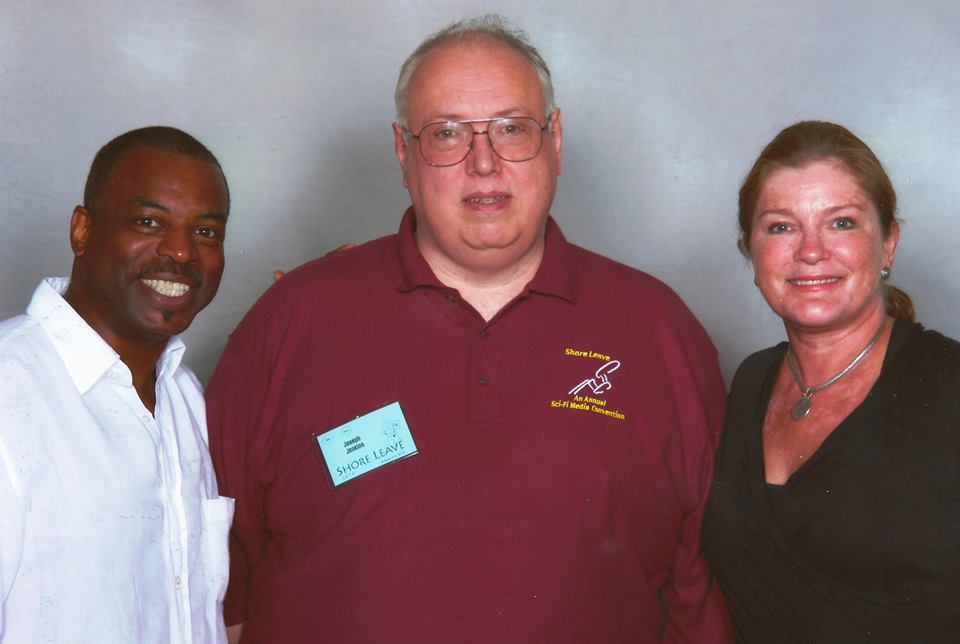
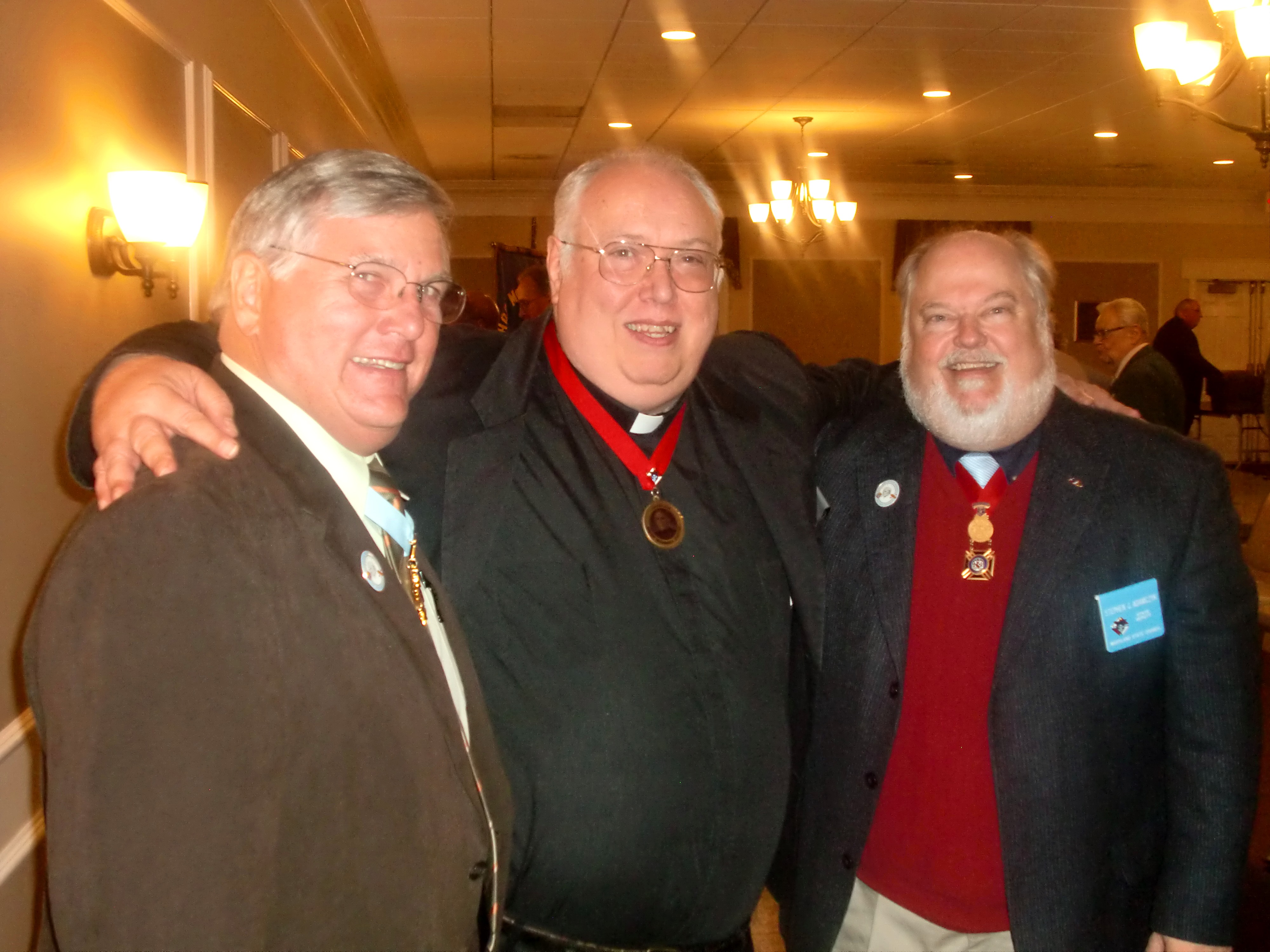
Father Joe with Julie Caitlin Brown who starred on Babylon 5 as Na’Toth. I have inserted a pic of her in makeup. She was one of the guests at this year’s Shoreleave Convention in Baltimore, MD.
Filed under: Aside, Personal | Leave a comment »
Fr. Joseph Jenkins
 | GA210286 on Impotence & Marriage |
 | Anonymous on Ask a Priest |
 | jbg on An Appeal to Reconciliation fo… |
 | Inveilis on Ask a Priest |
 | Mihaela Ghenea on Ask a Priest |
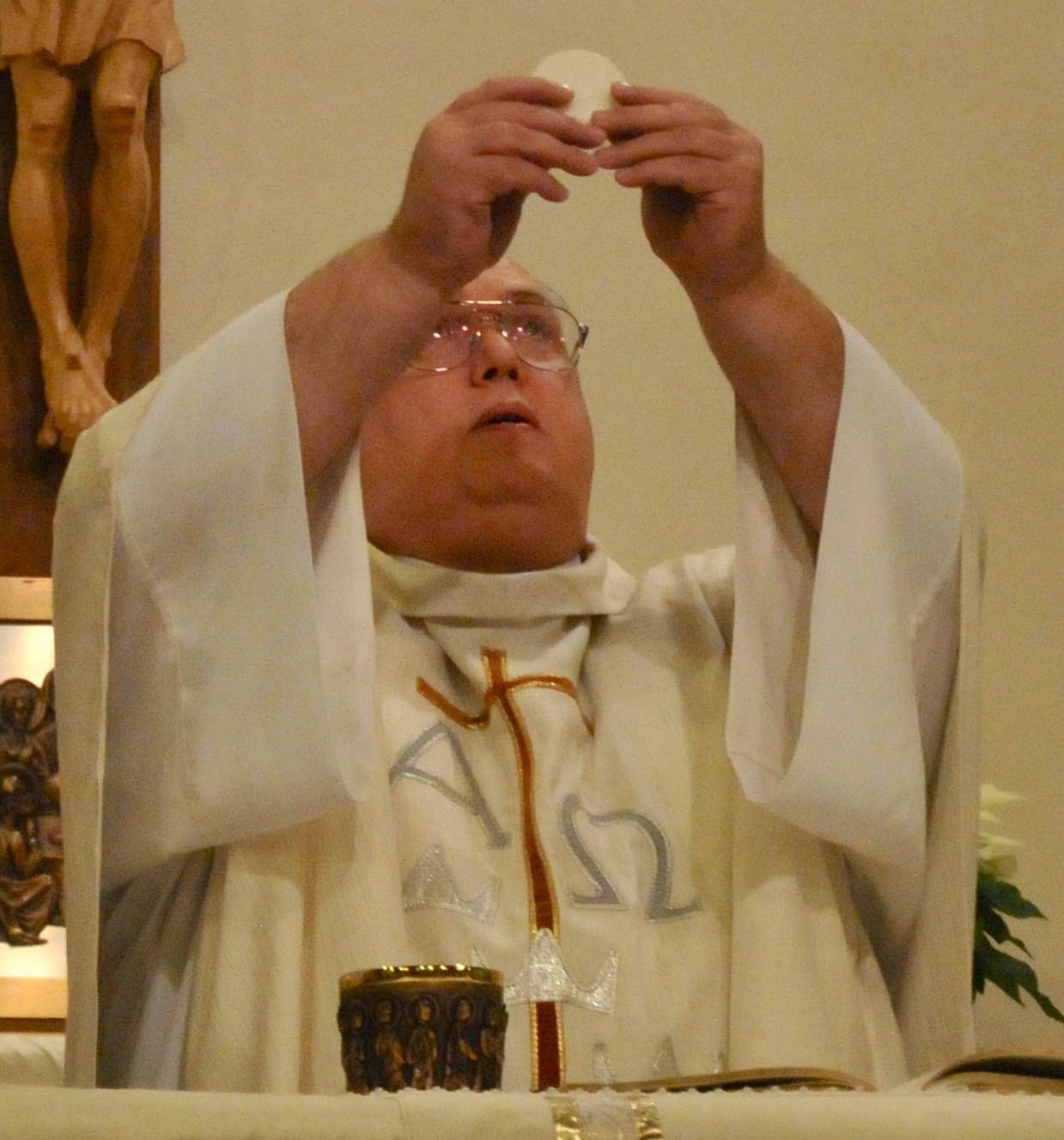


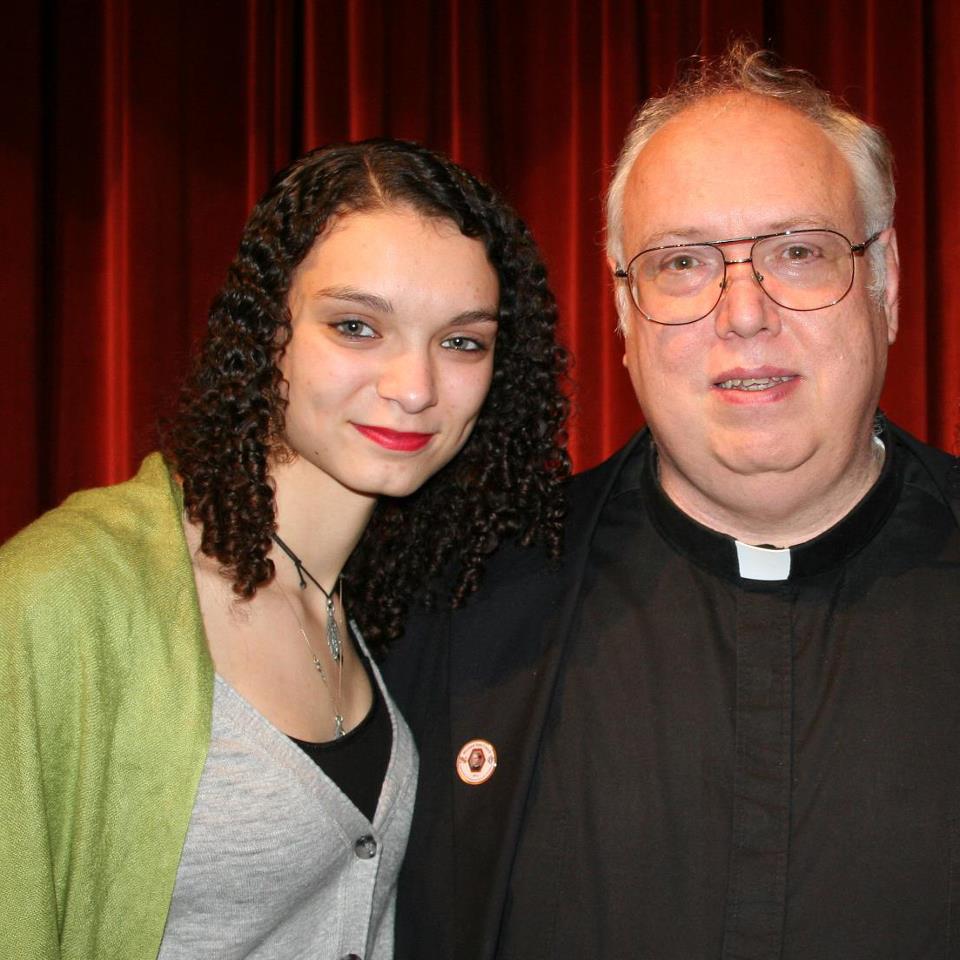




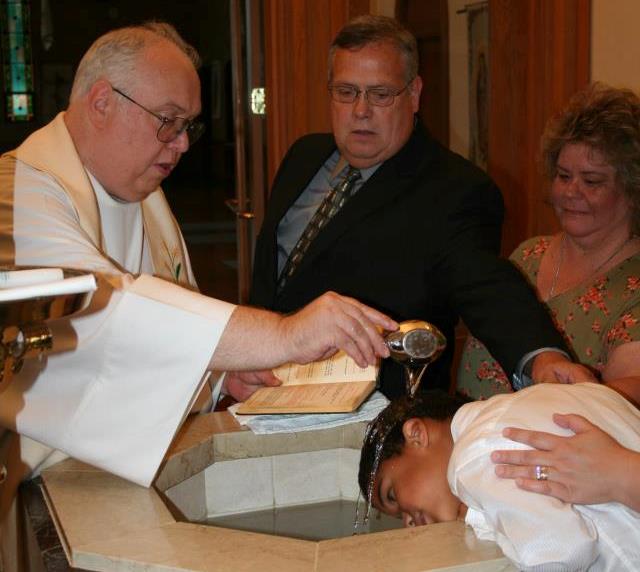
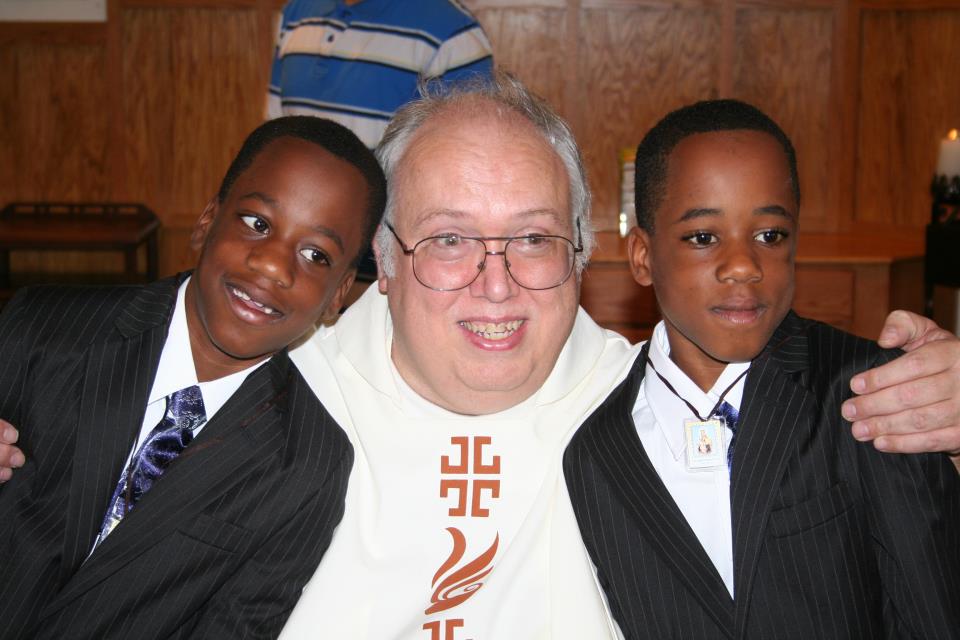


Father Joe with Julie Caitlin Brown who starred on Babylon 5 as Na’Toth. I have inserted a pic of her in makeup. She was one of the guests at this year’s Shoreleave Convention in Baltimore, MD.
Filed under: Aside, Personal | Leave a comment »
People fail to appreciate that they are their bodies. A body without a soul is a corpse. A soul without a body is a ghost. The whole person is a spiritual-corporeal composite. There is a profound unity that Catholic morality and sacramentality respects but which many dissenters have rejected. If the body is not really “you” then it no longer matters what is done with the body. Pleasure is pursued, fertility is destroyed and the sacrament of marriage becomes mute. Marriage only makes sense if we see ourselves as animated bodies, one male and the other female. Once this distinction is dismissed, the immorality of our age comes rushing in.
Genuine celibacy appreciates our bodily nature. We are not angels. Even resurrected men and women will be restored body and soul. The celibate is in tune with his own flesh, and by God’s grace, seeks to master his passions. He does so not because he hates the body but because he wants to offer himself entirely to the Lord. God in Jesus Christ took to himself a human body. Christ is still God and man. It is a permanent expression of his identity. The incarnation makes possible the divinization of humanity. Indeed, the body (particularly upon a cross), is immediately reflective of the Lord and his saving mystery. Jesus gives a human face to God. He is the revelation of the Father. The celibate priest, standing alone before his people, is a powerful symbol of this mystery. Like Christ, he surrenders his body in fidelity to his mission and to the needs of God’s people.
The prospect of virginity and/or celibacy seriously upsets some people. They may be resentful because they forfeited their own purity and cannot go back or because they know full well that they were the instruments that despoiled others of their gift of innocence. Many cannot stand evidence of these chaste callings because they know all too well their own weaknesses, the out-of-control rapture of lust and the bondage of sexual addiction. They resent that there might be a few who could tame the beast when they could not or gave up trying.
Church authorities need to reprimand but can be excessively severe with men who violate their promises and succumb to temptation. Of course, we should remember the old saying, “it takes two to tango.” Everyone is aware of salacious reports chronicling how priests were pursued by the “cassock chasers,” women viewing celibate men of the cloth as singular challenges and as forbidden prizes. Priests are human. A man might turn to cold showers, fervent prayer, distance to certain females and support from brother priests; and yet, he remains a man struggling with sin and weakness. He might stumble in his discipleship. If so, the Church needs to respond appropriately to his contrition and remorse. When a priest is forced out of ministry, it is the end of his world. The priesthood is not his job; it is who he is. The dismissal and laicization of a priest strikes me as a form of capital punishment, a sentence of death. He can go on and maybe start over, but there is an important part of his identity that we have buried. When priests learn of a brother in their ranks who has fallen for female charms, we often hear remarked, “There but for the grace of God go I.” When priests concelebrate the funeral for a brother in holy orders, we breathe a sigh of relief for one who ran the course and did not stumble terribly and get lost along the way. I have often thought that the powers-that-be are far more harsh with a fallen priest than with the ordinary laymen who regularly visit the Confessional. The latter might commit the most egregious moral trespasses and get off with a few Hail Marys and Our Fathers; but the former in priest’s collar is frequently disowned and ruined. Sexual attraction can be almost overwhelming and those good men who fall, not the reprobates who hide their sinful lifestyles, are often immediately consumed by guilt and regret. The priest preaches a higher standard that much of the world rejects; however, if the priest should stumble, then he is ridiculed as a hypocrite and stripped of his vocation, even if he still wants to be a good and holy priest. Fallen nature seems to have a mind of its own. Some embrace a life of sin and are excused by our society; others fight sin and the devil knowing all the time that if they should lower their shield even for a moment, the enemy might get the upper hand. The celibate priest is a crucial sentinel. Armed with the authority to absolve sin and to confect the Eucharist, he does battle. A few married priests are in the ranks but the celibate men are at the front of the assault. It may be that some of them will play the part of Uriah the Hittite.* Their celibacy is an extreme that shows that we need not be mastered by the world, the flesh and the devil. They might be wronged, even by just authority; but they remain loyal. They fight where the confrontation is most fierce. It is likely that a few will pay a frightful price. The more that one has been given, the more one will be held accountable. The priest knows the truth and cannot feign ignorance. Many people fall but only as if from a few feet off the ground. When a priest falls, it is as from the roof of a skyscraper. The fall will likely kill him.
*(David sought to disguise his sin with Bathsheba by sending her husband to her chambers; but Uriah took his rest with the other fighting men. Angered by this, David ordered that Uriah should be placed at the front of battle and abandoned. This effectively murdered the loyal soldier.)
Filed under: Anti-Catholicism, Apologetics, Catholic, Celibacy, Discipleship, Marriage, Morality, Priests, Religion, Sacraments, Sexuality, Sin | 1 Comment »
Marriage and celibacy as symbols both reveal and conceal. When properly realized they reflect unity in God, divine creativity, and foreshadow the kingdom. When disfigured by sin and weakness, they place the very mysteries they are suppose to reflect into doubt and become a kind of anti-symbol: manifesting chaos or confusion, human and natural destruction and earthbound hopelessness.
No Christian symbol should utterly eclipse or disguise another. The married couple need not look down upon celibacy as unnatural or impoverished. The celibate should not see himself as radically disconnected or specially enlightened to married couples with their sexual lives and families. He is human and celibacy is a natural human lifestyle. Just as the “everything goes” hedonist violates the boundaries of decency; the prudish might develop a disgust for the physical and sexual. The way certain rigorists speak about their celibacy, it sounds a little bit like science fiction. It is as if they imagine themselves as inhuman aliens stranded on a planet with pathetic creatures more preoccupied with sensual and erotic pleasure than rational thought and spiritual pursuits. A literary reference for this might be Dr. Henry Higgins in the play Pygmalion. He coldly uses people and postures being a superior human, above most men and all women, along with their pointless pursuits at romance. Such an attitude might lead to a harsh bachelor’s life but would not be conducive to true Christian celibacy. No one should hate his humanity. This is particularly true for the celibate priest given that he participates in the one priesthood of Christ Incarnate. He signifies God-made-man. He gives a Eucharist that is the body and blood of a divine person, but offered to us in the Lord’s risen humanity. Disgust toward our human nature is hatred of Christ.
Celibacy has significant meaning largely due to the fact that marriage and sexual love are deemed to have tremendous value. Take away this value and the cost of sacrifice goes along with it. The modern hedonist may not be all that far from his opposite, the restrained woman-hater. How is this? While there is a contemporary preoccupation with the flesh, there is a disconnect with the human psyche. We see this quite clearly in the contraceptive mentality. The essential “you” is reduced to something invisible that is pushing the buttons and yanking the gears to the robotic body that gives pleasure but is regarded as somehow extraneous to the person. Life becomes like the playing of a full-time video game. We become voyeurs even over ourselves. This separatist thinking has become contagious; the escape to fantasy and sex without consequences are the fruits.
Filed under: Anti-Catholicism, Apologetics, Catholic, Celibacy, Discipleship, Marriage, Priests, Religion, Sacraments, Sexuality | Leave a comment »
If we are to properly appreciate priestly celibacy then we must first correctly understand the extensive meaning of marriage. This may sound like a “no brainer” and yet what many think they understand, they really do not. Sex outside of marriage essentially says that the matrimonial institution is expendable. It is not. Legislation permitting so-called same-sex marriage gives the impression that we have charge to redefine marriage and that its meaning is infinitely expandable. It is not. Marriage is often defined by conservative voices as the necessary institution to insure propagation, secure family life, and to safeguard civilization from the anarchy of the beast. It is more. God leaves his fingerprints upon creation. While there may be no Platonic world soul, we find emanations of the cosmic in the particular or small. Every good father reflects something of the Fatherhood of God. Mothers find their paradigm in Mary and in Mother Church. The creative focus of motherhood even touches the image of the Jesu-Pelican caring for her chicks with flecks of its own flesh and blood. We are also reminded of the Holy Spirit as personified Love. This Spirit hovered over the waters of creation, made possible the miracles and resurrection of Christ, preserves the Church in the truth, and gives efficacy to the sacraments. The triune nature of the family: father, mother and child is a figure for the divine Trinity. The love of husband and wife signifies the relationship of Christ, the divine bridegroom, to his bride, the Church. Husband and wife are figures for the dynamism and tension we find in nature. But the two become one flesh, the creative poles of the universe are joined. As Christians we do not subscribe to an Oriental or pagan dualism. The apparent ying-yang in vogue within Eastern philosophies has no quarter in the concept of the Judeo-Christian deity.
God is good. Evil is a privation and it has no place in God. God always takes the initiative and has infinite power or jurisdiction. The devil is a creature and by definition not creative. Evil cannot be creative, only corruptive. The initiative of God is most evident first in creation itself and then in the new creation made possible by Christ. God comes into the world and joins himself to his creation in a holy virgin. The Creator and creation are made one. The course of salvation history changes. While a child is usually conceived though sexual congress; in this case the Holy Spirit conceives the Christ in an immaculate virgin. Indeed, Mary becomes the most famous virgin in the history of the world. This creative act gives a special consecration to virginity and celibate love, realized in Mary, then in good St. Joseph and finally in the ultimate model of Jesus Christ.
Filed under: Anti-Catholicism, Apologetics, Catholic, Celibacy, Discipleship, Marriage, Priests, Religion, Sacraments, Sexuality, Sin | 1 Comment »
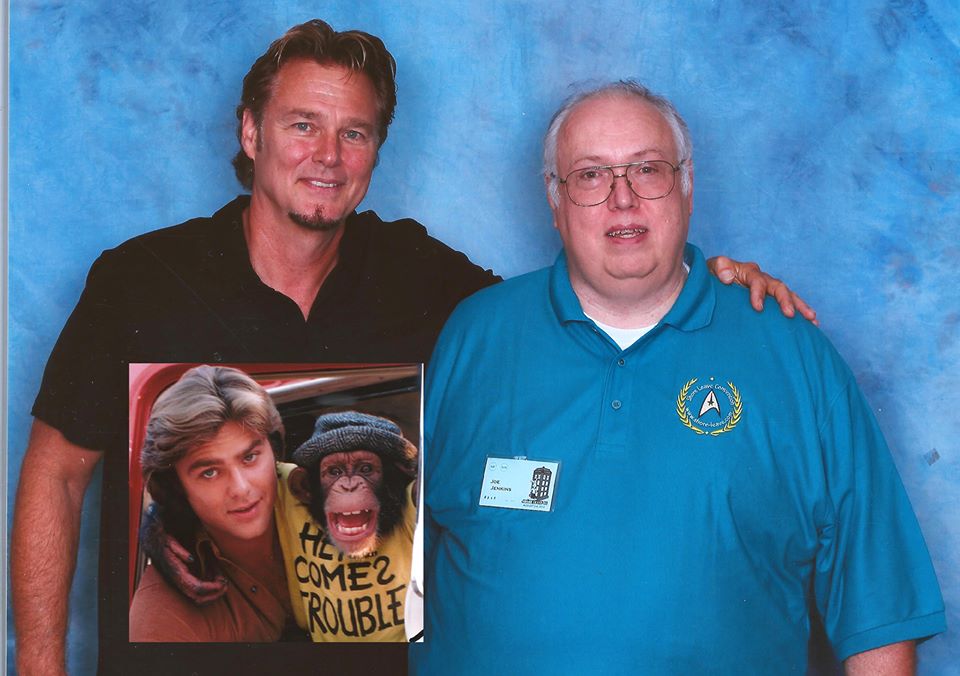
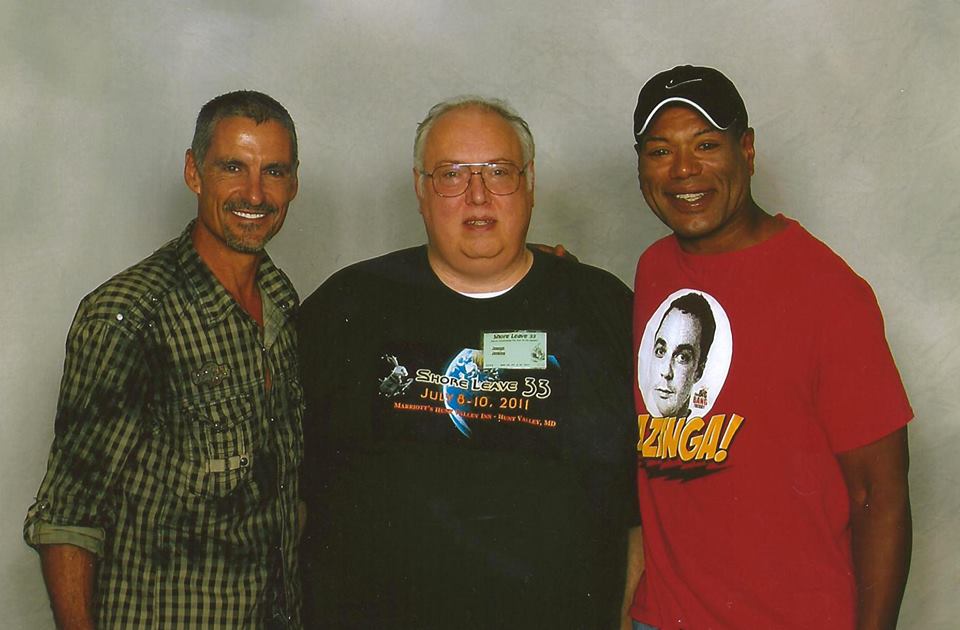
No, it is not a reunion of the B.J. and the Bear cast, shave or no shave! Greg also starred in Shatner’s Tek War.
I mentioned that I did not know he was so tall… he is 6 foot, 3 inches. During questions and answers, people wanted to know what happened to the chimp. He said that he’s dead. Tourists used to love visiting the chimp and forget the rest of the cast. Bear would bite, liked to smoke and throw poo at people for fun.
Filed under: Aside, Personal | Leave a comment »
The ritual used for the consecration of virgins praises marriage as a great natural blessing that points to the union of Christ with his bride, the Church. This acknowledgment in such a ceremony might seem strange but it illustrates the sensible attitude that celibacy is not a repudiation of the goodness of marriage. Marriage is a sacrament, a mystery foreshadowing and yet also participating in something unseen and greater than itself. By comparison, is it proper to treat consecrated virginity as something equivalent to a sacrament? Unlike marriage, celibacy is not ranked as a sacrament of the Church, at least not as something that hangs by itself. The woman virgin pledges herself to her groom, Christ. The priest signifies Christ bonded to his spouse, the Church. It is only when connected to holy orders or to consecrated religious life that virginity and/or celibacy seems to take to itself a quasi-sacramental quality. This is actually a core reason why some of us strenuously want to keep the association in priesthood as absolute as possible, with few exceptions.
Is a spiritual marriage in any way a real marriage? It should be noted, that while the formal consecration of virgins has been restored, the ritual was suppressed for some time. The ceremonial for a consecration of virginity resembles a wedding. One of the difficulties with this institution of virgins (outside of a religious house) was accountability. How does the Church insure their past, present and future virginity. These women live and work in the word. They take secular jobs and have to pay their own bills. There is no religious community to help sustain them. The Church worried that these women might have settled for virginity because of a lack of opportunity or because a tragedy left them as spinsters. Note that spiritual or moral virginity after violation would not satisfy the requirements for this consecration of virgins. If I recall correctly, the woman must be physically intact, never having had sexual intercourse. Given modern promiscuity, this consecration is very rare today, indeed. This is where the similarity with priestly celibacy breaks down. Indeed, this material or physical virginity is not mandated for sisters and nuns, either; there is a history of widows entering religious life. St. Mother Seton would be among these. She was a wife and mother. Many convents celebrate a ritual akin to a marital ceremony; the young woman approaches the altar in a bridal dress, makes her promises, is given the habit of the community and her hair is cut. Some traditional communities will place the cut hair in a wooden box. I knew parents who cherished one of these cases as a remembrance of their daughter pledging herself to Christ. Women religious, as I said, need not be physical virgins, although many of them are, and they embrace a life of celibate love and obedience to their religious superior. While we would hope that our candidates for the priesthood are virgins, such is not mandatory. They might be widowers. If they were “bad boys,” they might still be invited into the celibate priesthood, as long as they exhibit repentance and make recourse to the Sacrament of Penance.
I read one authority who suggested that marriage between a man and woman and the spiritual marriage of a consecrated virgin or a female religious or possibly a celibate priest or deacon were varying forms of the sacrament of marriage. I find this argument problematical. The sacrament of marriage overlaps or is transposed over the natural bond. A man and woman witness marriage with their vows and with their bodies. Just as we argue that only a man can marry a woman, rejecting same-sex unions, there is just no getting around the issue of physicality and complementarity. Marriages are consummated, not before a judge or before a priest and altar. They are consummated and made real or permanent in the marriage bed. The chief purpose of marriage has frequently been listed as propagation. This was not to malign the good of fidelity but there has always be a high level of awe connected to human participation in the act of creation. While there is an element of physicality in virginity or celibacy, it is only as negation or in the suppression of this faculty. Spiritual marriage, either to Christ or to the Church, may have all sorts of intangible benefits; but it remains a mystery analogous to matrimony, not materially equivalent. Further, while this analogy is often applied to nuns as brides of Christ and to priests wedded to the Church, the language becomes more strained for religious brothers outside the priesthood. It is true that if the priest is one with the groom Christ, then the congregation (men and women) collectively play the role of bride. This is tolerated of the Church but not of the minister. As a matter of fact, it plays into the argument against women priests or priestesses. As a female she cannot signify Christ the groom, and thus the realization of priestesses would usher forth a kind of sacramental lesbianism.
Filed under: Anti-Catholicism, Apologetics, Catholic, Celibacy, Discipleship, Homosexuality, Marriage, Morality, Religion, Sacraments, Sexuality, Women Priests | 2 Comments »
The Mass or Service for Marriage speaks of matrimony as the one blessing or gift given to mankind that was not forfeited by original sin or washed away in the flood. Those with noble and loving spouses regularly testify to their great joy. Just as this vocation has a great capacity for happiness and contentment; if something goes wrong, it conversely has the potential for devastating sadness and pain. One might argue, in this sense, that the sacrament of matrimony is more precarious than celibacy and entails sacrifices that it avoids. Indeed, it might seem that marriage can be more difficult than the life of a celibate priest. As one opens himself (or herself) to intimacy with another, the capacity for joy and sorrow increases. You cannot know true pain until you begin to love. If you want to avoid the worst sufferings, then the answer is to stop loving and caring. Of course, it would also mean that one would have to turn his back on living.
Any good mother will tell you that her child’s sufferings are her own. She is always afraid for her children. Spouses are called to a total offering of self for the beloved. But what happens when one gives and the other only takes? How can we really measure the pain that comes with coldness from a spouse, or worse yet, betrayal or infidelity? It takes two to make a marriage work. But the celibate priest has only himself. If he fails to keep his promises or stops loving as he should, he has no one to blame but himself. Of course, his vocation is informed by his celibacy as a particular way of loving. Celibacy is not a refusal to love but a way of loving unique to itself.
Every day the priest’s love must spill over like a waterfall in his loving service and prayer for others. Good priests try desperately to be holy so that they might be faithful to their charges and effective instruments for the perpetuation of Christ’s saving work. But, just as love brings both joy and sorrow to marriages; so too does it in his spiritual marriage to the Church and the family of faith. The priest laments his sins before the God he is supposed to love and to honor before all else. The priest weeps as he prays for his people, knowing both their sinfulness and indifference. The laity can be very cavalier about Mass attendance and the faith formation of their children. These attitudes wound the priest because he loves them. He wants them happy and holy. He wants them in right relationship with God. He gave up wife and family for them; and yet, sometimes it seems that they could not care less. Indeed, when asked about it by the media, they criticize the discipline and assert that the Church might be better off with married priests. Instead, their response should have been thankfulness that men loved the Lord and them so much, that they were willing to make real and perpetual sacrifices in love on their behalf.
Filed under: Anti-Catholicism, Apologetics, Catholic, Celibacy, Discipleship, Morality, Priests, Religion, Sacraments, Sexuality, Sin | 1 Comment »
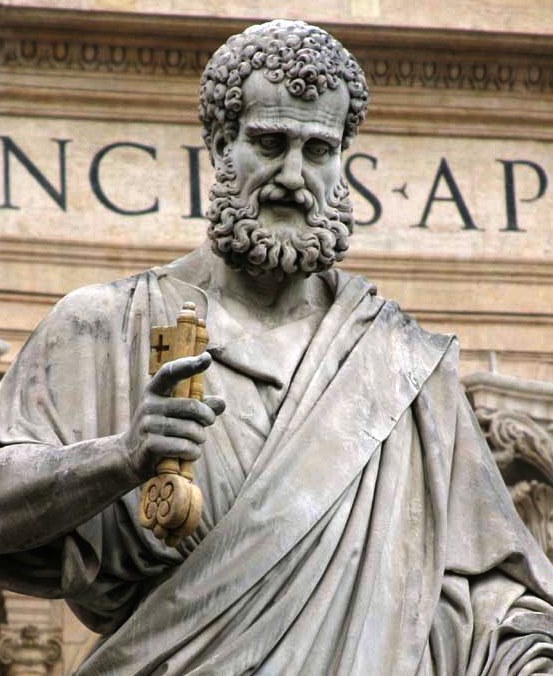
Regarding the first council of the Church in Jerusalem, note that after the debate about ritual circumcision, it is Peter who resolves the matter. The mere fact that Paul and Barnabas had come to Jerusalem illustrated their confidence in the apostolic authority there. As in any council, there was debate and dialogue; however, in the end it was Peter who stood up and supported Paul in his refusal to impose the Mosaic Law upon the Gentiles– they would not have to become Jews before becoming Christians. Citing the work of God’s Spirit in Cornelius and his household, whom they knew and accepted, Peter summarizes the core proclamation of salvation: “My brothers, you are well aware that from early days God made his choice among you that through my mouth the Gentiles would hear the word of the gospel and believe. And God, who knows the heart, bore witness by granting them the Holy Spirit just as he did us. He made no distinction between us and them, for by faith he purified their hearts. Why, then, are you now putting God to the test by placing on the shoulders of the disciples a yoke that neither our ancestors nor we have been able to bear? On the contrary, we believe that we are saved through the grace of the Lord Jesus, in the same way as they” (Acts 15:7-11). We are told that the whole assembly was reduced to silence. The issue was resolved. Paul and Barnabas then enthusiastically recounted how God had used them as instruments to reach the Gentiles.
Many distinctions need to be made about Peter. He is certainly much altered after the Christ has suffered, died, and risen. The Holy Spirit on Pentecost grants him a special charism of authority and infallibility. This did not mean that either Peter or his successors would be impeccable and unable to sin. The miraculous truth in the long history of the Church is that even weak and sinful men have seemed changed by the office of Peter. Without such an authority, we would suffer from the same endless fragmentation and deviation from Gospel truth that other religious communities experience. We believe we have Christ’s Rock to preserve and protect the deposit of faith. Given to Peter, this gift of infallibility is for the entire Church. This forum demands brevity, but we see it observed when the Holy Father makes a formal proclamation of dogma as the universal shepherd (the Vicar of Christ) on a matter of faith or morals. Neither the Pope, nor the bishops, nor an ecumenical council can manufacture new beliefs– they define something which has always been taught and believed, but reformulate it in a more concise and solemn way. A papal declaration along these terms is an exercise of his Universal Extraordinary Magisterium.
The unanimous teaching of all the world’s bishops in union with the Pope is called the Universal Ordinary Magisterium. This latter expression of infallibility is much more common. The laity and the religious of the Church also enter into this mystery. The Sensus Fidelium (sense of the faithful) among Catholics who have informed their consciences according to Church teaching and who live out the faith also touch upon this mystery of faith. (Admittedly this latter aspect is usually only mentioned by dissenters these days; however, they cite people who have largely rejected the deposit of faith and the Christian life– the ones to whom it does not really apply.)
The question arises, what is the significance of James’ input? As the bishop of the Jerusalem Church, he rose after Peter and directed that a letter be written and promulgated to the other churches. While a special charge is recorded as given to Peter, the apostolic community also respected the familial relationship of John and James to Jesus. James, John and Peter accompanied our Lord when Jesus raised Jairus’ daughter from the dead. These three also witnessed the Transfiguration. These “sons of thunder” remained close to Jesus in the Garden of Gethsemane. Peter’s unique authority was real and yet the structure by which authority was exercised was much more fluid during the apostolic period. Peter did not remain with the Jerusalem church but traveled elsewhere in exercise of his universal charge. James remained with the Jewish community in Jerusalem and became its bishop. Jerusalem is viewed as the Mother Church and James operated the council since it was within his jurisdiction.
Peter is listed as first among the apostles; he is given the new name Rock and our Lord said that he would build his Church upon this Rock; and he is named the chief shepherd by name. Jesus prays for him by name in order that his “faith may not fail” and that in turn he might “strengthen your brethren” (Luke 22:32).
Filed under: Anti-Catholicism, Apologetics, Apostles, Bible, Catholic, Discipleship, Pope, Religion | Leave a comment »
Restored in 1970 and attributed to Pope Leo the Great, our esteem for priestly celibacy can be amplified by a parallel ritual and promise made by women who are consecrated as perpetual virgins. We read:
“You have poured out your grace upon all peoples. You have adopted as heirs of the new covenant sons and daughters from every nation under heaven, countless as the stars. Your children are born, not of human birth, nor of man’s desire, but of your Spirit. Among your many gifts you give to some the grace of virginity. Yet the honor of marriage is in no way lessened. As it was in the beginning, your first blessing still remains upon this holy union. Yet your loving wisdom chooses those who make sacrifice of marriage for the sake of the love of which it is a sign. They renounce the joys of human marriage, but cherish all that it foreshadows. Those who choose chastity have looked upon the face of Christ, its origin and inspiration. They give themselves wholly to Christ, the son of the ever-virgin Mary, and the heavenly Bridegroom of those who in his honor dedicate themselves to lasting virginity.”
Pledged to say the Liturgy of the Hours and to regularly participate at Mass, these wonderful women must make their own way in the world while vowing themselves as brides of Christ. Suppressed for a time, it is fitting that this vocation should be restored in a day and age when most do not prize virginity. Much that is said about it could also be said of priestly celibacy, although the priest is signified on the male or groom side of the analogy. Those who fault priestly celibacy would even more ruthlessly attack consecrated virgins. However, this opposition is more the reason why both celibacy and virginity must be preserved as constitutive features for callings in the Church.
Note that virginity is accented as a great honor or benefit. It makes possible an elevation of dignity. If celibacy were a miserable sacrifice, one would hardly know it from the joyous ritual. The young woman is dressed in a wedding gown. She will be presented with a ring and a veil. I recall recently seeing photographs of a beautiful young woman being consecrated to perpetual virginity. Her friends and family were excited and happy for her. Others objected to the ceremony and what it would entail. Controversy was bred because many really no longer believe. They thought she was wasting her life. She would never marry and from that day forward would never date or pursue a romantic interest. All her talk about a spiritual spouse in Christ angered the critics. Did she hate men? What was wrong with her maternal instinct? Jesus was no where to be seen, if he even still existed, how could he be a husband to her? Their practical atheism was full in force: invisible equals absent. Hers was a relationship with the Lord that had blossomed; theirs, if they ever believed, had been aborted or feigned altogether. Those who did not understand were said to pity her and women like her. The same negative sentiment is held out for priests who are faithful to their celibacy. But the happy priest views it as a treasure, a great prize, yes, even as an exultation. The traditional warning for the celibate was to guard against pride.
It cannot be denied that there were abuses in the traditional negativity toward marriage. While it is a great mystery that signifies the unity of Christ with his Church and an awesome participation in the creative work of God; the mechanics of the marital act externally resemble the sexual congress of animals. The Church counsels that passion and not lust should accompany the act, but this admonition falls largely on deaf ears. Human bodies are objectified and made interchangeable. Viagra facilitates erections and contraception insures infertility. Sex is separated from marriage, first in fornication and cohabitation, and second in adultery. Pornography makes possible a voyeurism over interaction; indeed, it establishes a virtual adultery. Critics fail to understand virginity and priestly celibacy just as they generally confuse the meaning of sexual love in marriage.
A Christian culture and society has collapsed all around us into a neo-pagan one. Values have not merely shifted but in some cases, reversed. Virginity was once regarded as such a premium that theologians had to make concerted efforts to protect and support matrimony. But today it is virginity that is spurned while marriage, or at least sexual congress, is paraded as essential and in unqualified demand.
Filed under: Apologetics, Apostles, Catholic, Celibacy, Discipleship, Marriage, Morality, Priests, Religion, Sacraments, Sexuality | 7 Comments »
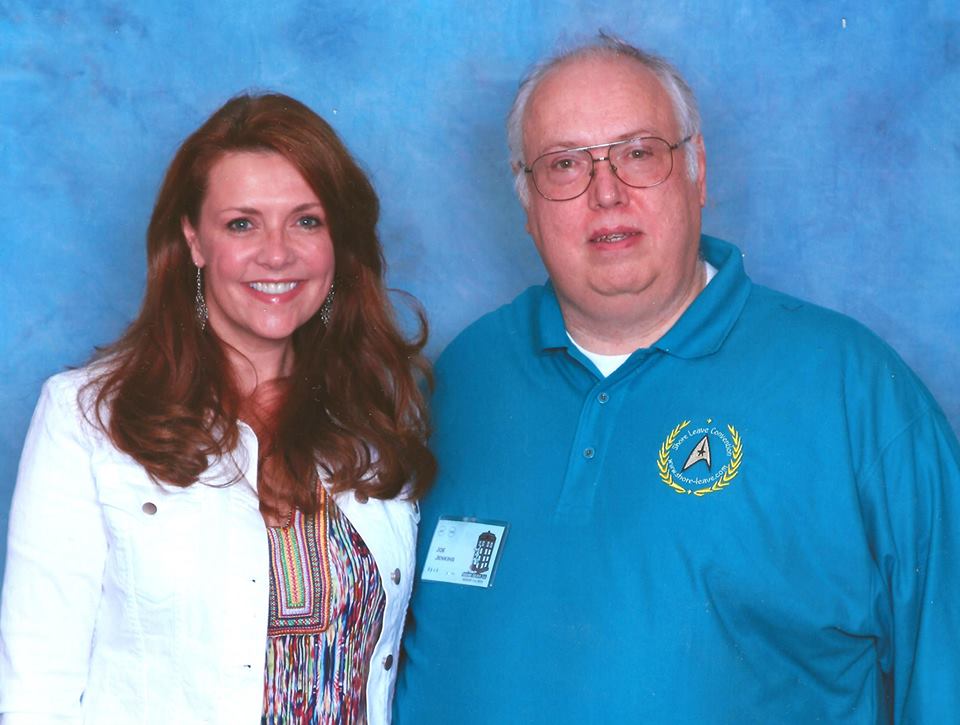
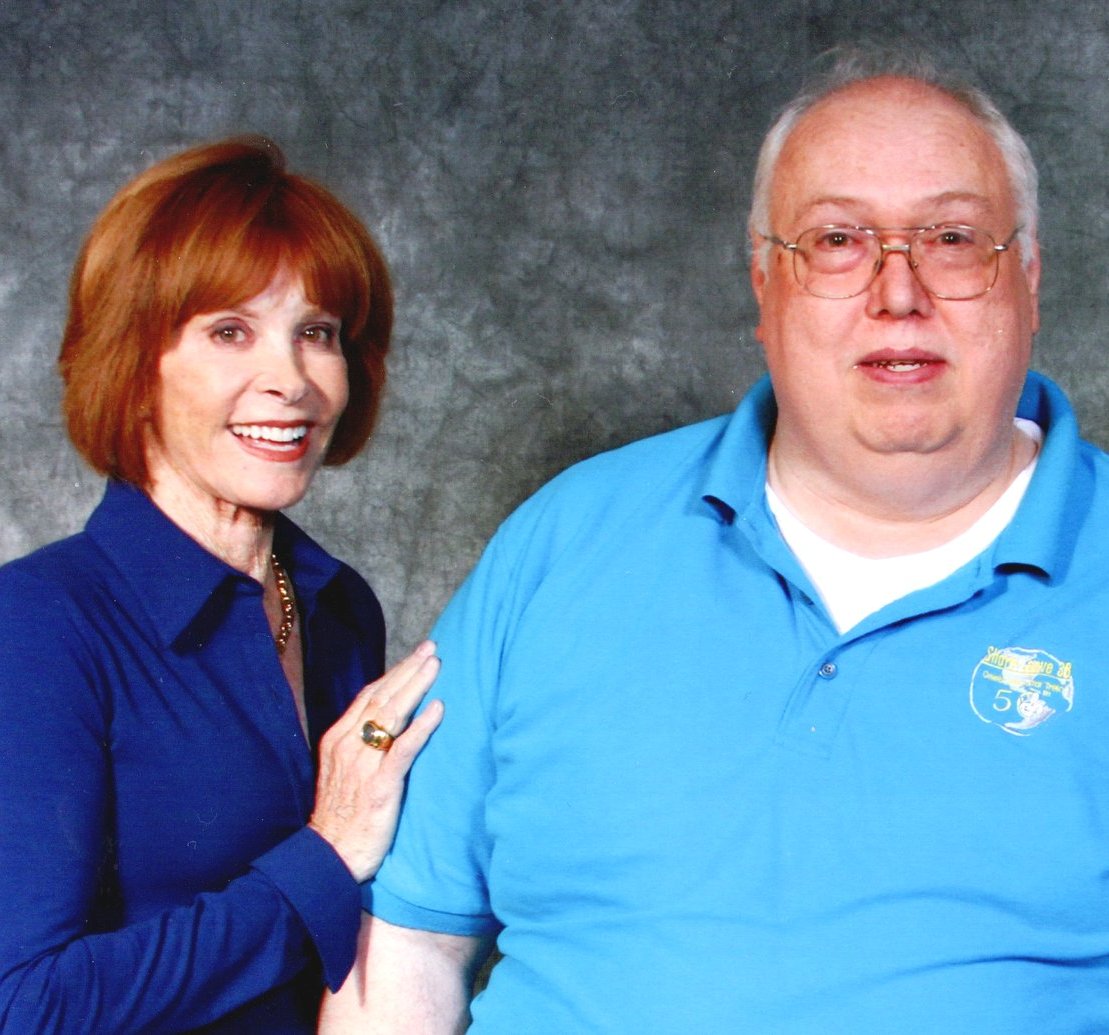
Here is Father Joe with Amanda Tapping who plays Samantha Carter on Stargate SG-1 and Helen Magnus on Sanctuary.
Filed under: Personal | 1 Comment »