• Our Blogger

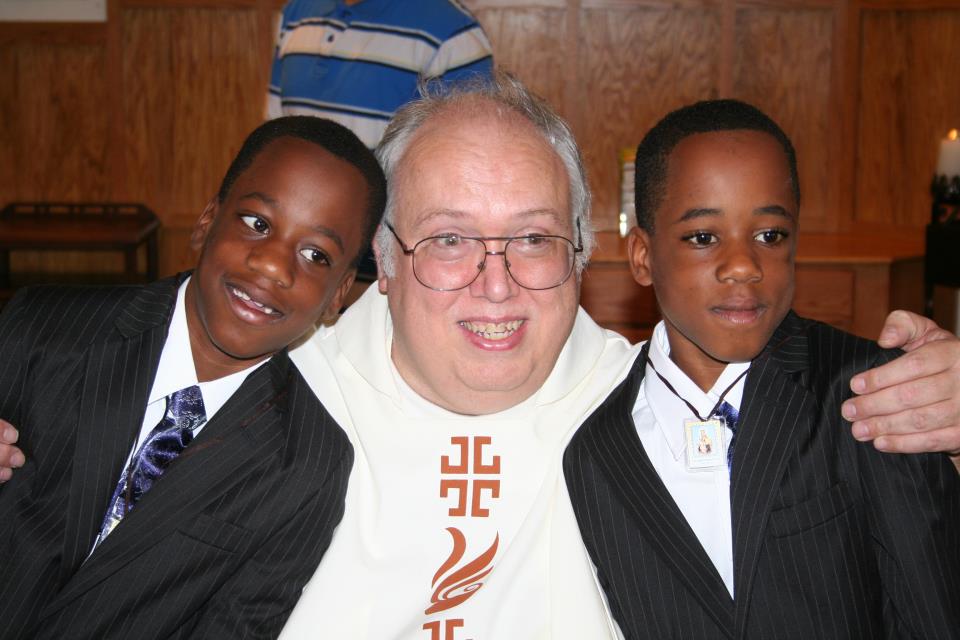
    Fr. Joseph Jenkins

  • The blog header depicts an important and yet mis-understood New Testament scene, Jesus flogging the money-changers out of the temple. I selected it because the faith that gives us consolation can also make us very uncomfortable. Both Divine Mercy and Divine Justice meet in Jesus. Priests are ministers of reconciliation, but never at the cost of truth. In or out of season, we must be courageous in preaching and living out the Gospel of Life. The title of my blog is a play on words, not Flogger Priest but Blogger Priest.

  • Archives

  • Categories

  • Recent Posts

  • Recent Comments

    Anonymous's avatarAnonymous on Ask a Priest
    Michael J's avatarMichael J on Ask a Priest
    Jeremy Kok's avatarJeremy Kok on Ask a Priest
    Mike Zias's avatarMike Zias on Ask a Priest
    Jeremy Kok's avatarJeremy Kok on Ask a Priest

How Catholic are You?

We can test to see how badly infected our people are with doubt and faithlessness. Here are some sample questions:

1. Do you believe that deliberately missing Sunday Mass is a mortal sin, as detailed in the precepts of the Church?

2. Do you believe that premarital sex and/or cohabitation is a mortal sin?

3. Do you believe that a Catholic can get married validly outside the Church and how can this be if it is a sacrament?

4. Are you for or against the legal choice for abortion even though the Church calls it the murder of ensouled human beings?

5. Do you believe that the marital act must always be that type of act that is open to mutual self-giving and the generation of new human life or do you favor the use of artificial contraception?

6. The Church teaches that same-sex attraction is a disorder and that its pursuit is a violation of the natural law and is seriously sinful. Do you believe this?

7. Is the Eucharist a symbolic presence using bread and wine, a nostalgic remembrance or the actual Risen Christ (divinity and humanity, body and blood)?

8. Do you ever go to Confession? Do you believe that the priest has the power to forgive sins? Do we really need the priest for this at all?

9. Is the Mass a real sacrifice just as the death and oblation of Jesus on the Cross?

10. Does it really matter what one believes as long as he or she is a good person? Is one Church pretty much as good as another? Is it intolerant to insist that the Catholic Church is the one true Church established directly by Christ?

11. Do you believe that the Pope as Vicar of Christ has universal jurisdiction and is given the gift of infallibility in teaching about faith and morals?

12. Do you pray daily and if so how do you pray? Do you really think someone is listening? Do you remember the various types of prayer?

Is the HHS Compromise Really a Compromise?

CLICK HERE to read Cardinal Wuerl’s response to compromise.

CLICK HERE to read Cardinal Dolan’s letter to fellow bishops.

Who is the architect of this fiasco with the HHS?

The buck stops with the President and the head of the department, which he appointed: Kathleen Sebelius. What is her background as a “Catholic”?

When she was governor, Archbishop Joseph Naumann of Kansas City, Kansas told her that she “should stop receiving Communion until she publicly repudiates her support of abortion.” More recently, Archbishop Raymond F. Burke, former archbishop of St. Louis but now prefect for the Apostolic Signatura, the Vatican’s highest court, ruled that Mrs. Sebelius should not approach the altar for Communion in the United States.  Despite pastoral admonition, she obstinately persists in serious sin and now she would entice the bishops and the rest of the Church to join her.

In 2008, Sebelius vetoed House Substitute for Senate Bill 389, titled the Comprehensive Abortion Reform Act by its sponsors. Proponents of the bill claimed the legislation would strengthen late-term abortion laws and prevent “coerced abortions” particularly with respect to minors.

She has been given high ratings and endorsement from Planned Parenthood, the biggest abortion provider around. It has made a financial “killing” in destroying unborn children under the banner of women’s rights.

The administration was SHOCKED into making a compromise… not because religious liberty was esteemed as an important value in itself. 

The Obama administration hopes that the U.S. bishops will accept its proposed compromise (February 10, 2012). However, while we are still awaiting word from our shepherds, I still have serious reservations. The administration was shocked that even liberal Catholic voices were joining the chorus in deploring the initial policy as encroachment upon religious liberty. It was certain that there would be no movement of the Obama Whitehouse away from the giving women free access to contraception. But as Republicans picked up on the issue, election strategists urged an immediate counter-strategy.  The offer of a year of grace was insufficient.  Is this the best for which we can hope? Might this merely be a ploy to defuse the situation while really changing very little? Catholic parishes, schools, charities, and hospitals should not be forced to provide birth control to employees since such would violate Catholic teaching against artificial contraception.  That is the bottom line!

Even if the institution is protected; what about the rights of individual believers? What about individuals and organizations that are not part of the Church administration but are Catholic in values? EWTN, for instance, is a lay organization with a lay board.

The sentiments of Catholics and other pro-life Christians would not be respected by this change. The Church is more than the institution but is found in her membership. Their personal religious rights and conscience would not be respected. I know a doctor who runs her own practice and refuses to prescribe birth control. Now, she would still be forced to pay for it as a health benefit for employees! That is wrong and the Church needs to be a voice for people like her. Similarly, I know a man who refused to take a vaccine because there was the remote use of embryonic material from an abortion. He would rather close shop than add his money to the purchase of abortifacients.

The First Amendment protects not only the rights of churches but the individuals who make up those faith communities. Even if Catholics should themselves personally dissent, continued membership implies that they still respect (on some level) the teachings and the authority of the Church. I suspect that President Obama miscalculated in thinking that Church teaching was subject to polls or that liberal Catholics could force further passivity upon the bishops. This new measure might protect Church institutions and pamper dissenters, but it would hang faithful Catholic citizens out to dry. Their rights would not be respected.

Nothing has really changed, what we have here is only magical sleight-of-hand.

The revised rule says that religious organizations would not have to offer or pay for contraception. So far, so good; but then it stipulates that health insurers would have to take up the cost and provide it directly to women for free. Does this really leave the employer out of the equation? It seems to me that what we have here is a new version of the old shell game. Nothing is really free. The money is going to have to come from somewhere. What will happen is that premiums will go up and people will pay more for a sick person’s needed antibiotic to make up for a promiscuous woman’s contraceptive.

What about those dioceses which are self-insured? Would this force us out of the insurance business?

Another wrinkle, and I see this as very problematical in my own Archdiocese, is that we are self-insured. There is no absolutely independent insurance entity to which we can give the dubious honor of providing contraception. I suppose such a measure would also make it hard for practicing Catholics to function at the leadership level or as CEOs of insurance agencies.

Where do we go from here?

It is not clear to me that the Obama administration really wants to go to the bargaining table. However, the bishops have suggested that this newest offer is a sign that he is willing to make some kind of compromise. It is my interpretation and I admit to being fallible, that there remains a serious hurdle and that we must take to heart Archbishop Timothy Dolan’s remarks in The Wall Street Journal, “Coercing religious ministries and citizens to pay directly for actions that violate their teaching is an unprecedented incursion into freedom of conscience.”  This really says it all and is the line from which we must not retreat.

The U.S. Conference of Catholic Bishops has made this statement: “The only complete solution to this religious liberty problem is for HHS to rescind the mandate of these objectionable services.” The statement continues, “We will therefore continue–with no less vigor, no less sense of urgency–our efforts to correct this problem through the other two branches of government.”

We must urge Congress to pass the Respect for Rights of Conscience Act!

Never Mind Your Wishes, We Know Better

In England, doctors would like to make the choice between life and death. Here is a report from back in 2006. It is still relevant today:

A High Court judge on Wednesday refused a request from doctors to turn off a ventilator keeping alive an 18-month-old boy with incurable spinal muscular atrophy. The boy’s parents had opposed their request, arguing that although he was severely physically disabled, the boy could still enjoy spending time with his family . . . The case was believed to be the first in which doctors had asked to allow a patient who is not in a persistent vegetative state to die.

Under England’s NHS, I imagine the doctors were trying to protect their financial interests. It’s certainly not cost effective to pay for the care of the severely disabled. (Never mind that the funding comes from the sky-high taxes of their very own patients!)

In this case, the request was denied, but the fact that the doctors felt themselves within their medical right to make such a request has far-reaching and grotesque implications. How can anyone in England feel safe in the hands of these arrogant holier-than-thous?

Not much of a leap from abortion to infanticide, the slippery slope has already been realized in our own country.

Remember the newborn child with an obstruction in the throat that prevented feeding? Because the child also suffered from Down’s Syndrome and most likely retarded, an easy surgery to correct the feeding problem was dismissed. The baby starved to death.

There have been several similar cases since, and of course, we always have Partial Birth Abortion which is really a form of Infanticide.

The ethicist Singer suggests that infanticide should be allowed at least until about three years of age– arguing that they are not viable without assistance and not “full” persons.

The brave new world resembles the old world more and more every day. The ancient Romans allowed babies to die from exposure and abandonment. If any of you ever saw the old movie HAWAII dealing with early colonization and missionary work, you may remember the scene where the girl baby is thrown off a cliff. I wonder if it would still shock audiences today?

Activist Judges and Moral Questions

U.S. Supreme Court Justice Antonin Scalia has objected to the era of the “moralist” judge, arguing that they are not qualified to decide moral questions like gay marriage and abortion. He places the gravity for such things with the elected legislators and points as an example to the constitutional amendment of 1920 that gave women the right to vote. Given that activist judges with a leftist bent gave us Roe vs. Wade, reading something into the Constitution that was not there, Justice Scalia has a point. Who is to say that activist judges cannot be just as abusive when they come from the other side of the ideological spectrum? While a few judges like Clarence Thomas have an extensive philosophical and ethical formation; many judges would not consider possible moral absolutes and the natural law. Unfortunately, I am not sure that voters, and least of all elected representatives, would possess the necessary formation and personal integrity to deal coherently with the major questions of the day, either.

Speaking for myself, I like judges, who prefer long-standing precedent; who have a vast respect for the inalienable rights of “life, liberty and the pursuit of happiness,” and who are somewhat unoriginal and literal in their thinking. Creativity is great in the artist and poet, I am not so sure about judges.

The large Catholic presence on the Supreme Court is quite amazing. Even Judge Bork, denied a place on the Court, was baptized by my dear spiritual father, Msgr. William Awalt, at the Catholic Information Center in DC. He is now a Christian and a Catholic. Justice Clarence Thomas was received back into the Catholic Church through the ministry of another brother priest in Washington. While Scalia sometimes attends his son’s Masses in Virginia, he and Thomas often attend the Tridentine Latin Mass at Old St. Mary’s in Chinatown, DC. Pat Buchanon, although a parishioner at Blessed Sacrament, is also a regular there.

Frozen Embryo Adoption, part 2

Good Intent, No Morally Licit Solution

DIGNITATIS PERSONAE was released from the Congregation for the Doctrine of the Faith (September 2008) and the verdict about embryonic adoption was negative, making any satisfactory or positive solution dubious for these children in frozen limbo. A strict reading of the few words said about the matter would imply that it still falls under the same prohibition as regular IVF. The instruction states:

It has also been proposed, solely in order to allow human beings to be born who are otherwise condemned to destruction, that there could be a form of “prenatal adoption”. This proposal, praiseworthy with regard to the intention of respecting and defending human life, presents however various problems not dissimilar to those mentioned above (in regard to IVF).

If these problems are deal-breakers, then my initial sympathies on the issue, as were those of Professor May are wrong and Msgr. Smith was right. There is nothing we can do.

  • Propagation outside of the conjugal act is immoral.
  • The IVF process (the intervention of a technician) and the destruction of excess embryos is immoral.
  • The freezing of embryos is immoral.

All this is granted, but where do we go from here? The instruction goes on to say:

All things considered, it needs to be recognized that the thousands of abandoned embryos represent a situation of injustice which in fact cannot be resolved. Therefore John Paul II made an “appeal to the conscience of the world’s scientific authorities and in particular to doctors, that the production of human embryos be halted, taking into account that there seems to be no morally licit solution regarding the human destiny of the thousands and thousands of ‘frozen’ embryos which are and remain the subjects of essential rights and should therefore be protected by law as human persons.”

I guess that pretty much takes orthodox Catholics out of the embryonic adoption business. The prohibition may not be absolute, but it certainly weighs against it.

DISCUSSION

ROBERT: Speaking from a purely biological perspective, the static or frozen human embryo is not technically alive. There are certain biological prerequisites that it would need to possess in order to meet that definition. There must be (and is no) movement (or ability to detect and respond to internal or external stimulus), capacity for reproduction or heredity, growth or development, metabolism, or ability for that person to maintain homeostasis while frozen. The frozen person is cellular and highly organized – and therefore exhibits only one criterion of living things, but unfortunately it is impossible to differentiate that particular trait of the frozen embryo from a fully grown, and then deceased and frozen person. The difference between a frozen embryo and a corpse lies in a potential for life – a potential which is – even under the best of conditions for the embryo – both certainly uncertain and unable to be predicted.

FATHER JOE: Taking the question of the soul aside, the Church and many moral philosophers and various scientists regard the embryo as a human life from the first moment of conception. Any subsequent stasis or slowing down of the metabolic processes does not make a life suddenly cease and then reappear after a thawing or quickening process. If at any time it is permitted to continue its developmental trajectory, and survives the freezing, thawing and implantation, it will reveal that it was a certain type of living organism all along. If any of this species do not survive, the few that do will illuminate their identity as well. The biological traits of life must be viewed not from any one temporal moment but from the entity’s entire chronology. Children for instance cannot reproduce; but after puberty and sexual development, this deficit is usually overcome. However, this trait of a living organism is not present in every individual. Some living and true human beings are defective in their natural powers. However, it should be admitted, that the freezing of either embryos or fully developed human beings can result in the death of these entities. If the moral concerns of IVF apply to embryonic adoption, then there is no viable moral recourse to reanimate the embryos and to allow them to mature into full-term babies.

ROBERT: A frozen embryo, therefore, is a real person who is not really alive – the frozen embryo, while not a “potential person” is only potentially alive.

FATHER JOE: I cannot see how one who is alive can become “potentially alive.” There is life and there is death. In between are various levels of health or viability.

ROBERT: The post-IVF implantation of the embryonic person into a surrogate mother is in and of itself both against natural law and intrinsically evil. Just as with contraception, (but in the opposite direction) it separates the two-fold purpose of the conjugal act. Because the cart is truly before the horse here, the frozen person has already been created – a person who is, however, only potentially alive.

FATHER JOE: Where do you get this notion of “potentiality” in living? Did I miss it in any papal clarification or in the definition from the Congregation for the Faith? Is freezing really a limbo between life and death? Is that what you mean? A sperm and an egg signify potential personhood and a potential particular life. But can a person only be potentially alive? I cannot fathom how it could be so. We might regard persons as living composites of body and soul. If life is lost, the soul flies to its Maker and the body is reduced to an inanimate corpse. While the freezing process certainly affects animation, the embryo still suffers a continuing degradation. That is a type of movement I suppose. After only a few years, it is difficult to reclaim many of the embryos in implantation. Although there is currently no viable technology, would you argue that any futuristic cryogenics whereby adult human beings could be suspended for decades or centuries and then revived would only constitute “potential” life? They are not really dead. They would not be akin to reanimated vampires or walking zombies if permitted to be resuscitated.

ROBERT: The implantation of the IVF-created embryo carries forward the task of bringing about his or her actual life.

FATHER JOE: Here again I am troubled by a phrase, this time that of “actual” life. I am not convinced one can make such distinctions. It may simply be a case, as the Pope seems to be saying, that there are some living embryonic human beings (although frozen) that we cannot save.

ROBERT: It fulfills this necessary step at the cost of the self-donative intimacy intrinsic to the conjugal act itself and is thus innately disordered.

FATHER JOE: Yes, that seems to be the Vatican position and was held by the late Msgr. Smith of Dunwoodie.

ROBERT:

No person can participate in such an act without sin – a sin that is not diminished by arguing from a position of utilitarianism or consequentialism.
From a more theological perspective, although we esteem Mary, Virgin and Mother, as a perfect model for Christian life, this does not mean that we should ourselves deign to overshadow the conjugal nature of the procreative act, for in so doing we deign to establish ourselves as God and hold ourselves above the natural law that He established.

Again, in order for a valid Sacrifice of the Mass, there is a necessary form and substance. It would not be acceptable to start with the Eucharistic Person prior to the act of consecration. Nor could a priest place bread and wine in the tabernacle and have it be God without first consecrating the Transubstantiative Sacrifice on the altar. Just so, it is out of place for those of the married vocation to approach the procreative altar of their marriage bed, not with bread and wine (sperm and ova), but with the preconceived presence of a person who was brought about without the necessary and donative sacrifice of self. A non-spousal participation (the technician effecting the implantation of the embryo that the surrogate parents bought) adds further to the disorder wreaked by not having the donative and free gift come from within the sacramental bounds of the marriage.

FATHER JOE: Although Dr. William May argued for embryonic adoption as an act of sacrifice and heroism, what you say here, he taught me over 25 years ago.

ROBERT: As was stated in Dignitas Personae, this is a true moral quandry, one which presents no possible solution. Those who act on the supposition that the adoption and implantation of embryos is a morally good or heroic act should know that they do so at the peril of their souls.

See comments for a follow-up.

Frozen Embryo Adoption, part 1

A few years ago I grappled with the topic of FROZEN EMBRYO ADOPTION. Prior to the definitive decision of the Holy See, I examined the various arguments on both sides of the debate. This was an argument between men and women counted within the orthodox Catholic camp. It did not directly regard a controversy with liberal dissenters. The inspiration for the reflection was a paper prepared by a close friend for her ethics class.

chickenelephantegg.jpg

Dr. Germain Grisez (a philosopher), Dr. William May (a theologian), and Fr. Thomas Williams were on one side and on the other was the late Msgr. William Smith, a moral theologian and Thomist who was known as tough and very traditional. The Holy See would eventually side with Msgr. Smith.

If nothing can be done to avert the death sentence facing frozen embryos, then what purpose would embryonic adoption serve? One critic remarked that the adoption was okay but not the thawing and implantation. Is there something contradictory to this logic? Is it not disingenuous to declare such adoption morally licit while condemning any attempted thawing and implantation?

It would seem to me that embryonic adoption by necessity refers to the whole process (from adoption to implantation) and that any particular distinctions remain simply helpful abstractions. What constitutes embryonic adoption other than the implantation of thawed out embryos? The first part cannot be defined as something distinct from the necessary operation. The whole sequence (adoption, implantation and birth) is either morally right or it is immoral.

But maybe the contradiction is mine? Msgr. Smith might contend that the “whole process” that must be considered begins with the initial egg harvesting and fertilization, which the Church clearly teaches is wrong and immoral. Msgr. Smith would claim that if any part of this series of events is illicit, then the whole business is forbidden.

The very word, “adoption,” signifies several things: that the embryos are human persons (not a commodity) and that there is a maternal bond, albeit juridical and not biological. As far as natural law is concerned, which could be argued to prohibit such adoption, one might make contrary correlations. There is hardly anything natural about sustaining human embryos in frozen cocktails. It would seem more in tune with natural law to restore the embryos to a natural unfrozen state and to deposit them into the type of place where the Creator intended them to exist, in the womb. If half of the frozen embryos survive the thawing process, and still fewer undergo a successful implantation; does this not parallel the natural course of things? After all, many embryos are regularly lost and reabsorbed by the woman’s body, often without her awareness.

A serious charge is made, that the doctor who thaws out and implants the embryo is guilty of murder. I would hesitate to say this unless he and his clients were also the ones who originally harvested and fertilized them. A declaration of guilt toward those seeking to adopt embryos seems to ignore their pro-life sympathies and efforts.

Further, if our emphasis is upon the shortcomings of current science and the insistence of a 100% thawing survival rate, then authorities argue that frozen embryos must be left in cryopreservation. This is unreasonable. A 100% success rate is statistically impossible, no matter what technology might develop. Some of the embryos themselves may never have been viable. Similarly, no such success rate can be achieved for implantation. Normal pregnancies sometimes have complications and there is even a mortality rate for mothers. This last fact shows something of the courage that women possess in wanting to adopt these embryos rejected by their biological parents.

It seems overly pragmatic to base its legitimacy upon feasibility statistics and failure rates. There might be some weight to the “wait” argument, if embryos could be frozen indefinitely without harm. However, we know that this is not the case. There is a definite shelf-life, maybe as short as five years. There is no intent in embryonic adoption to kill the embryos. Indeed, it might be argued that the loss of some or even most of them in a desperate attempt to save them would be an application of the Catholic principle of double-effect.

Father Thomas Williams says that

Given the current state of medical science, the only thing that can be done to save the lives of those persons is gestation in a woman’s womb. Most women aren’t called to make this sacrifice, but those who feel called should not be discouraged from doing so. . . . An ethical analysis of embryo adoption cannot be based principally on the consequences we foresee. We must ask ourselves what the right thing is to do for these little persons. Sometimes doing the right thing carries with it unpleasant consequences, or mixed results. But to condition our treatment of persons by the possible effects that it will have on others would be to reduce those persons to a means, and our morality would decay into a utilitarian calculus. In fact, speaking of negative consequences, the condemnation of embryo adoption sends out a very inconsistent message regarding the sanctity of human life. On the one hand, we denounce abortion as the killing of innocent human persons; on the other hand, we refuse to help those embryonic persons already in existence. We simply can’t have it both ways (ZENIT Interview 050605).

Msgr. William Smith must immediately change the terms of the debate. He does not believe there is any such thing as embryonic adoption. He classifies this as just a slightly different kind of surrogate pregnancy which has been condemned by the Church (see Donum Vitae). While one critic contended that Msgr. Smith does not extend moral culpability far enough, I think a more extensive reading of his view would show that he would place the doctor in the same circle of culpability with the would-be parents.

While it sidesteps the philosophical discussion to some degree and relies upon Church authority, the instruction, Donum Vitae (1987) taught that “The fidelity of the spouses in the unity of marriage involves reciprocal respect of their right to become a father and a mother only through each other.” A great deal depends upon interpretation because the document addressed the problem of couples having eggs harvested and fertilized which is at variance with those who simply want to “receive” and give a “home” to a child already conceived.

While Msgr. Smith uses Latin terms for his distinctions and appeals to St. Thomas; however, I can assure the reader that Dr. William May is also a friend of the perennial philosopher of the Church. Much depends upon what they associate with the terms. Msgr. Smith, notes the finis operas as “the wife becom[ing] a nine-month surrogate” and the finis operantis as the so-called “adoption”. Along the lines of his reasoning, it does not matter how pro-life or loving or generous these prospective parents might be— surrogate motherhood is everywhere and always wrong and the adoption is a farce because they have no right to the embryo.

The categorization of the adoptive mother as a surrogate is crucial to Msgr. Smith’s argument. He defines the proper mother as strictly the biological one, not an adoptive parent. But, if a juridical relationship is indeed possible, then the new parent would still be receiving her own “adopted” embryos into her womb. There is also the question of the medical personnel who would do the implantation.

If any of these three elements is immoral, then the whole business is wrong. Applied to the doctor, my friend and Confirmation god-daughter claimed that the finis operas is the embryonic implantation and that this is condemned by Donum Vitae. However, it is precisely IVF (in vitro fertilization) that is denounced, the stage that happened prior to the adoption, thawing, and implantation. While implantation would sometimes follow, the fact it does not always is the reason for this question of adoption. We must not force Church documents to say more than they actually do say.

Targeting the doctor further, my friend makes note of the consequences that flow from the thawing process and makes the high fatality rate “the crux of the problem”. It is true that Donum Vitae condemns the cryopreservation of embryos; however, this is a bad situation that we have inherited. We are presuming that those involved with the adoption process also find this practice abhorrent, and by thawing out the embryos, hope to return some normalcy. We are seeking now, not to freeze embryos, or to perpetuate their arctic limbo, but to give those that survive a chance and those that do not, peace and dignity. It is not clear that Donum Vitae would have condemned adoptive parents of embryos and those assisting them of the kind of “manipulation” that the congregation wanted halted. The intention throughout this process is not to destroy the embryos but to assure their survival and life. The late Pope Paul VI was very clear that we did not have to use every extraordinary means to maintain human life. I cannot imagine anything more extreme than freezing human beings in a mixture cooled by liquid nitrogen. Thus, a high mortality rate in an attempt to save them, while unfortunate, might be justified.

Keeping the embryos frozen is not a real answer, as it constitutes in itself an offense against human dignity and the person. The embryo has a right to life befitting its inherent teleology. The genuine object of the moral act here is to make possible the embryo’s development to its proper end, birth into a human family. While the original parents used a few embryos and abandoned the rest, an unlawful utilitarian approach, the adoptive parents seek to give all the embryos a chance at a normal life, even if that chance is slim.

Surrogate motherhood is wrong because it breaches the expression of corporeal love between spouses from the natural transmission of human life. It cheapens and clouds the real meaning of being a parent and the family. Once the damage is done, and the embryos are created, there is a moral obligation to transfer them to their mother’s womb as soon as possible. Despite the artificial intervention at the beginning, the womb is the embryo’s proper home and the only place where it has a chance of survival. However, and this is very important, the embryo has a right to life independent from the receptivity or acceptance of parents. This is true in the case of abortion and this remains true in the sad case of stored embryos.

Transferring the embryo to an adoptive mother, when the natural one is unwilling or unable to do so, must be distinguished from surrogate motherhood if it is to be a legitimate option. Granting that prenatal adoption is possible, there is arguably no detriment to the marital unity or any disruption to the family relationships. It would express their generous and selfless openness to human life in respects to children whose parents were diseased or who had abandoned their responsibilities.

Maurizio P. Faggioni, O.F.M. writes:

This solution, suggested as an to save embryos abandoned to certain death, has the merit of taking seriously the value of the embryo’s life, found in such jeopardy, and of courageously accepting the challenge of cryopreservation. It seeks to check the evil effects of a disordered situation; however, the disordered situation itself within which ethical reason must enter to function in this case profoundly colours the attempts at a solution. In fact, there are serious questions which cannot be concealed: in the first place, the fear that such a singular adoption might not be able to avoid the dehumanizing criteria of efficiency which govern the technology of artificial reproduction.

Is it possible to exclude all forms of selection? Is it possible to avoid the situation in which embryos are produced in order to be adopted? Is it possible to foresee a transparent relationship between those centres which illicitly produce embryos and those in which they are licitly transferred into adoptive mothers? Do we not run the risk of legitimizing and even promoting, unwittingly and paradoxically, a new form of objectification and manipulation of human embryos, and more generally, of the human person?

I have differed from my friend on the object of the moral act, but as for the finis operantis, we can agree that the intention is good or, at least, indifferent. (Of course, this would not be the case if the woman merely saw her pregnancy as a means to an end, with no enduring relationship or bond with the child. She will have the flesh and receptive womb of a mother; but she must also have a mother’s mind, heart and soul.) Circumstances aside, Msgr. Smith says that the whole business of adopting embryos collapses because the finis operis is evil (implantation and thawing). However, I suggested that it was IVF proper and the freezing itself that were condemned as immoral by the Church. In any case, the real moral object of the action is to insure the embryo’s natural development to its proper end as a member of a family, albeit through adoption. This differs somewhat from Geoffrey Surtrees in that he considers the object of the act to be the “home” that the woman makes of her womb for the embryonic child. Germain Grisez notes that there is more to it: the object is the woman having the embryo removed from cryopreservation, implanted in her womb, and then nurturing that child there as any mother would. The woman who adopts and carries an embryo is not simply an instrument to save a child’s life; she becomes the child’s mother. There is a metaphysical or ontological transformation. A bond is created that will remain throughout this life, and forever in the next.

I argued, apparently wrongly, that there may be both a legitimate type of embryonic adoption and an illegitimate form. The external actions may be the same, but an errant motivation could make a permissible act, at least according to some, seriously wrong and akin to surrogate motherhood. If a woman did not have it as her object to start a bond as a mother to a child, a perpetual relationship with dire responsibilities, then she would fall under the condemnations of Donum Vitae against surrogate parentage. It would be an affront to the child’s innate human dignity. Indeed, it would also corrupt her own dignity as a parent. Such motherhood must not be understood as a means to an end. Embryonic adoption, if it is to be legitimate, requires a maternal disposition and change of the whole person.

My friend argued that frozen embryo adoption, and I would object to narrowing the focus of adoption to the ownership of a tray of frozen embryos, incurs “serious moral condemnation.” Do you really think this would incite punishment from God’s justice? While a verdict has since been given, at the time this discussion first took place, the voice of the Church was ambiguous and those who worked at the John Paul II Pontifical Institute seemed to gravitate to the other side of the debate, yes, even commending those who would make the sacrifice.

Are the frozen embryos simply to be surrendered to their fate? My friend argued, and the Holy See confirmed, the answer is yes. The embryos must be left in cryopreservation indefinitely. The heart-breaking problem remains: freezing does not preserve them indefinitely. Unless there is a major leap in technology, and I suspect that voices from critics like Msgr. William Smith will also object against the use of these (like artificial wombs), then we are condemning the embryos, human beings, to certain death. This is more than an abstract moral debate. Some lives will be saved if we act; however, all will die if we do not. Knowing the full implications, we are destined to suffer in conscience about this matter?

Given the difference of opinion about the morality of embryonic adoption, and I must admit that prior to the Holy See’s negative verdict, I leaned in its favor, I was troubled about the possible material cooperation in evil. Throughout, I had a nagging concern about the intrusion of a third party in the process of marital fecundity, the true nature of motherhood (as more than a receptacle or home for the embryo) and on how exactly embryonic adoption expresses the full giving of the spouses to one another. Obviously the principle of appropriation that applies in the transplant of organs could not apply to the implantation of a human being who is a distinct being.

Let me rehash and clarify some of the most pertinent points, as I see them:

1. Magisterial ethicists and theologians are agreed that the frozen embryos came to exist through an immoral and illicit intervention on the part of medical personnel and parents.

2. As to whether or not Donum Vitae, issued by the Congregation for the Doctrine of the Faith (headed by Cardinal Ratzinger, now Pope Benedict XVI), forbade embryonic adoption, there was some disagreement. As the congregation so often did, it was proposing guidance on a specific question and was not seeking to promulgate a negative law that would rule universally over every case and those involved. Donum Vitae was directed to the problem of harvesting eggs, artificially inseminating them, and keeping them in cold storage if not used with implantation. It would seem that the first half of this problem does not apply; although Msgr. Smith refuses to allow this distinction, claiming in some sense, that the biological parents are made direct agents for those potential parents who want to adopt unused embryos. Father Williams, Dr. May and Dr. Grisez would no doubt argue that the culpability ends with the first couple and while it is wrong for a mother to spurn her child; still those wishing to adopt would not be contaminated with any culpability. If what the adoptive parents desire to do is judged appreciably different (in species) from the natural parents, then the central point argued by Msgr. Smith would be compromised. Further, the full consideration of the question of frozen embryos had not been considered when the instruction was released and it could hardly immediately rule out something like embryonic adoption that was not yet a scrutinized or perfected avenue of action.

3. Every human being is a gift from God, even the recently conceived embryo. Does not every child have a right to be born? Msgr. Smith seems to put the gravity on procreation and the conjugal act. Critics would argue that we are dealing with a human being already conceived and in need of assistance. It sounds to me as if the sides are talking at cross-purposes. There is a debate, but they are not entirely on the same page.

4. The object of choice for the one couple is adoption, something that is perfectly licit. The object of choice for the other couple is artificial insemination and reproduction which is illicit and wrong. It involves third-party intervention and the side-stepping of the conjugal act, thus alienating procreation from the good of fides, the unitive dimension.

5. It may one day be possible to remove an embryo from a womb, offer DNA repair, and return it safely into the mother. A general prohibition against embryonic adoption might also have the sad consequence of preventing medical intervention to save and/or to treat unborn children in the womb. Another question that is already being discussed is the morality of transferring a child from a diseased womb to a healthy one when an emergency arises. How we decide on embryonic adoption will have far-reaching consequences. Msgr. Smith insists that there is no such thing as embryonic adoption and that the distinctions made represent a kind of slide-of-hand.

Statistics show that Ectopic pregnancies are 17 times greater for the implantation of frozen over fresh embryos. This can be quite problematic for the mother and the fact that she knows the risk demonstrates something of the courage it takes to make this decision. While 50% of the embryos survive thawing, live births of previously frozen embryos only have a 16.8% survival rate over 29.7% for fresh embryos. The procedure, which is not certain, also costs between $6,000 to $9,000; not cheap by any means. We did not have unlimited time to make a decision about this question. It would seem that a high statistical failure rate would not in itself make embryonic adoption morally prohibitive.

Even though there may be 400,000 frozen embryos available, not all of them can be legally adopted. Most couples oppose the donation of embryos and either keep them cryogenically frozen, or if too expensive, have them destroyed in a saline solution and cremated. What we see here is the same mentality that we observe in abortion. Women will make the nonsensical statement that “They could never allow their children to be raised by strangers,” and thus prefer to terminate the pregnancies, thus robbing their children of any life at all— the height of selfishness!

I am not going to get into a big discussion of ectogenesis, as it will take us away from the topic at hand. However, if such should ever leave the sphere of science fiction, it will raise its own serious concerns. Many possibilities are even now being explored. A means may be achieved where a uterus from a cadaver might be transplanted to an animal or DNA re-sequencing might provide a womb capable of sustaining an embryo to birth. Professor Carl Wood actually implanted human embryos into sheep as part of an experiment that fortunately failed. An artificial womb capable of supporting implantation and supporting embryonic development is being theorized by researchers. Except for the most serious emergencies, such methods if perfected would seem to offer excessive danger to the embryo and raise too many questions for children who would look to an animal or a machine as their birth-mother.

For Embryonic Adoption

I have borrowed these citations and information “for” and “against” from Human Life Review, “Where Do Frozen Embryos Belong?” by Brian Caulfield.

My old professor, Dr. William May is one of the chief defenders of embryonic adoption and has a whole section on it in his most recent book:

I believe that the moral object specifying the human act of a woman who seeks to rescue a frozen embryo is not an act of surrogacy, nor (is it) to substitute for the relation to the father a mere arrangement with a technician. What precisely is the object? (It is) the adoption of a frozen embryo, a human child abandoned by those who have generated it. (It) is to give the adopted child a home.

Bishop Elio Sgreccia, of the Pontifical Academy for Life, said that embryo adoption has “an end which is good” and cannot be dismissed as illicit. But given the high failure rate of implantation and the fact that the process of freezing and thawing may cause many embryos to suffer genetic damage, he concludes, “Can we really counsel women to do this? It would mean counseling heroism . . . The issue is one big question mark. The point is we should never have gone down this road to begin with.”

Against Embryonic Adoption

Mary Geach, an English philosopher, as well as a wife and mother, could not disagree more. Dr. May summarizes her argument,

She claims that if a woman makes her womb available to the child of strangers and allows herself to be made pregnant by means of a technical act of impregnation, she shares in the evil of in vitro fertilization . . . she ruins reproductive integrity… By allowing herself to be made pregnant by the technician’s art a woman engages in a highly defective version of the marital act.

Brian Caulfield writes:

To me, the choice of adopting an embryo makes a woman redefine herself in terms of something that is at the root of her being: her ability to get pregnant, bear new life, become a mother. To separate this inherent capacity from the intimacy of conjugal relations goes too far. It not only separates a wife from her husband, by interposing another impregnating party; it separates a woman from herself if she uses her womb merely as an instrument for the good end of saving a life.

Names of some in favor of embryonic adoption: Dr. William E. May, Fr. Thomas Williams, Dr. Jerome Lejeune, Dr. Charles Rice, Dr. Germain Grisez, Fr. Philip Boyle, Geoffrey Surtees and Dr. Dianne Irving.

Names of some against embryonic adoption: Msgr. William Smith, Dr. Daniel Sulmasy, O.F.M., Mary Geach and Brian Caulfield.

DISCUSSION

FATHER JOE:

I spent time praying about this subject of embryonic adoption. Several inherent problems nagged me from the very first. The doctor or technician is a third party and such involvement is generally forbidden when we are speaking about the subject of human fertility. The act by which women become pregnant is naturally the marital act: sexual intercourse between a husband and wife. Several years ago there was a program called GIFT which permitted a husband and wife to engage in the sexual act and then, immediately afterwards, doctors intervened to facilitate the meeting of the sperm and an egg cell. While some thought it would pass muster, it was still criticized for the problem of artificial manipulation. Here, in embryonic adoption, there is no marital act at all. Indeed, some are saying that a woman need not be married to undergo the implantation procedure. That brings with it a whole set of additional problems.

Can she remain blameless, just because the embryo is not from her egg and the sperm that joined with it is not from her husband?

ANNIE:

I have been reading many thoughts on both sides of the frozen embryo issue and I would like to share my thoughts. First, I want to make clear the distinction between adopting a frozen embryo already created and requesting a donor to create a frozen embryo. Clearly the request for the creation falls under IVF and/or surrogacy. Now, regarding embryonic adoption, the act of adopting and implanting the frozen child could not be considered surrogate motherhood. If it is then one could easily argue that normal adoption is a form of surrogacy; another womb carries the child for the couple which has removed “the child’s right from being born from a father and mother known to him and bound to each other by marriage.” This also poses that the act of a normal adoption betrays the couples right of becoming parents only through each other (CCC 2376). We, of course, know that the Church approves the adoption of an abandoned child (CCC 2379).

So, we must remove surrogacy from the argument; but what about IVF? We know that the method or techniques required for IVF are morally unacceptable for two reasons: it undermines the dignity of the child while allowing another dominion over the sacred union of husband and wife (CCC 2377) and it creates extra ‘unwanted’ embryos. Now it is in the term ‘abandoned’ where I believe the adoption of the embryos should be allowed by the Church. According to issue 2379 in the Catholic Catechism, infertile couples have two choices, they can express their generosity by offering themselves to a life of service to others or they can “adopt abandoned children”. Are these embryos not abandoned? Yes, they are; they are no longer desired by their biological parents and are left to die. One person argued that because the act of the original IVF was a sin, the act of adopting the embryos becomes a moral wrong. But was the act that produced the child adopted in a legitimized way not a sin, referring to either sex outside of marriage or the act of rape? Here too we can argue that the ends does not excuse the means, for we offer women and men an option to rid themselves of their responsibility to care for a child produced through the act of sex, allowing them to continue without care for the consequences of their sin. The issue also addresses the possibility of the adoption of the embryos to facilitate a demand; but in America the legitimizing of adoption has created an inflated demand for white babies in which many women will get pregnant just to sell their child. This makes the adoptive parents culpable of the sin by facilitating the demand. We have to remember that there are many who do not follow the law of the Church and will do as they please, but we who do follow the laws will not contribute to the sin by having the embryo created. The issue is not in the creation once the child is created but in the dignity, worth and the status of the life of that child, whether he/she is at the end of fetal development or at the beginning. In actuality, by adopting these abandoned children, we are returning the will of God over their lives to them. If I am wrong in my thinking, please guide me properly to the will of God.

KEVIN:

I have a question to which I legitimately don’t know the answer.

First, I am a new parent of a baby girl (Abigail) who started life as an embryo that my wife and I adopted (we don’t know the parents to this day). Since a part of the process is at the root of my question, let me tell you a piece of our story:

We adopted 5 frozen embryos from the biological parents. They were frozen (as is customary) in ‘strips’- one strip had 3 embryos on it (the one we thawed), the other has 2 (still ‘in the freezer’).

Of the 3 embryos we thawed, 1 died as part of the thawing process. It’s my understanding that when a frozen embryo dies at this stage, the root cause is actually imperfections in the outer cells that get exacerbated by the freezing process. (They actually get irreparably damaged as part of the freezing process; we just don’t know about the damage until thawing).

This left us with 2 to implant. One took hold and grew into Abby, the other died/was passed ‘naturally’.

My understanding is that these statistics are perfectly in line with broad-based averages: 33% die during the thawing process; 50% of those left die/pass/miscarriage after being implanted; the rest are born 9 months later.
Finally, my question: Has my immediate desire for children contributed to putting the embryos (kids) in my charge at additional risk?

What if, in the future, a thawing process is discovered that kills less than 33%? What if there are fertility drugs discovered that increase the odds of implantation to something greater than 50%?

Now I am operating under the assumption that the embryos can remain in a frozen state indefinitely (e.g. a woman in Israel recently delivered twins from 12 year old frozen embryos). So is leaving the embryos frozen for now the safest course of action FOR THEM?

FATHER JOE:

Some ethicists would argue that leaving them frozen might be the only immediate course of action. However, I am not sure how long they can be kept frozen. There is also evidence that this process and the length of cryogenic preservation also degrade the odds for later success with thawing and implantation. As you could see in the post, some argue against embryonic adoption altogether while others contend that it is a selfless and noble pro-life effort, no matter what the odds.

(That is why many of us waited for a definitive answer about it from the Magisterium. The Church had already given a negative verdict to surrogate pregnancy as such, but of course, this was argued as a different question. Now the Holy See has spoken and embryonic adoption is not an option at all for faithful Catholics.)

That makes my earlier speculation rather mute. Rather than directly address your questions, what I can do is praise God for the precious child that survived the process for your little family. Abby is still a miracle of God and I will keep you all in my prayers.

NOT A JOKE:

Have you heard about celebrities wearing frozen embryos in lockets?

http://swiftreport.blogs.com/news/2005/08/more_celebritie.html

FATHER JOE:

I was curious to see how long it took for someone to pick that up. But I am assured that it is a joke. The fake news story reports that certain movie stars and celebrities (like Lindsay Lohan) have embraced the fad of embryonic adoption, but wear them in lockets around their necks, still in cryogenic suspension. Such would reduce human beings to jewelry! If true it would have been all over the news, the biggest thing since the Nazis made lampshades and soap out of Jewish people.

See part 2 of this discussion and the Verdict from ROME.

The Slippery Slope of Abortion

Someone wrongly argued the following with me: “And the slope between abortion and infanticide is only slippery if you accept that fertilized egg or a partially-developed fetus is in fact a human being. As most abortion-rights supporters claim the opposite, I fail to see the threat.” The discussion dealt with how artificial contraception degraded into an acceptance of abortion and that now it was reaching the new low of outright infanticide.

Actually, most abortion-rights supporters in the vast crowd make no “explicit” claim at all about the unborn, avoiding the discussion about the beginning of human life and personhood— with the possible exception of bloggers and paid advocates. However, particularly given modern tools for viewing the child in the womb, some die-hard promoters of abortion are admitting “it” is human, but not a person with rights. Others are arguing that the rights of the mother would outweigh even the rights of another person, should that person be unborn and “parasitical.”

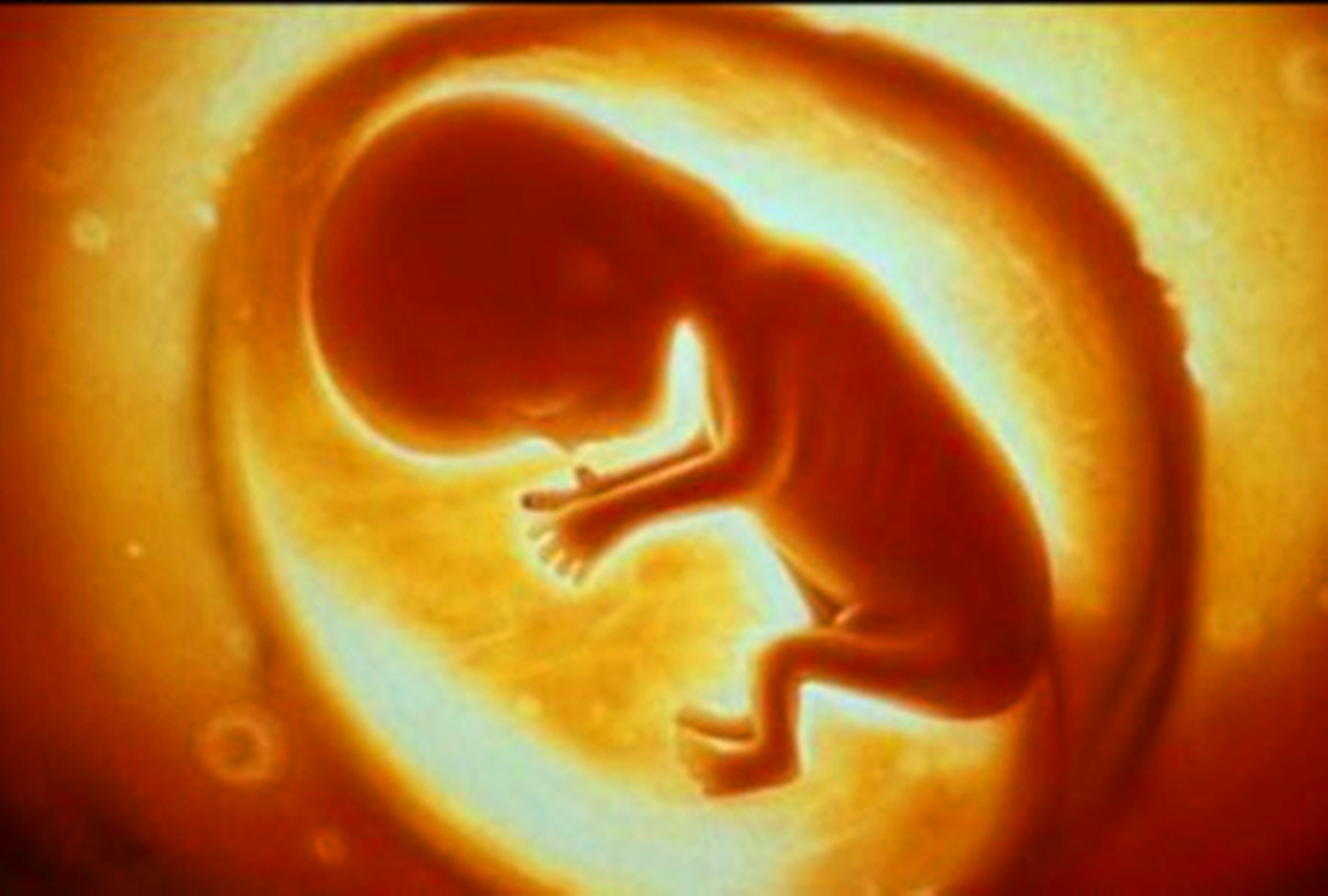
Many deal with their pro-abortion stand with an avoidance of the biological truth, the real reason why plastic imitation fetuses are forbidden on network TV news. Obviously, the implication is that they do not “recognize” a life having value there; but many people remain pro-abortion no matter whether the child is in the embryonic or late term stages. The slippery slope is not a theory. It has been realized.

Fetal development occurs much faster than people appreciate and is so often misunderstood. There are no partial human beings. There is a child who grows, just as he would grow outside the womb. Certainly the growth changes in the womb are unmatched by anything after birth; but even a newborn infant only vaguely resembles a mature man or woman. They cannot talk, see properly, or walk. Without constant maintenance, they would most certainly expire within a very short period.

The late Pope spoke about this at length when he talked about a culture of death versus one of life. Concern about the “slippery slope” pervades the encyclical EVANGELIUM VITAE. Indeed, one of the reasons Pope John Paul II objected to the death penalty was because he believed a comprehensive and generous response in the cause for life had to be made against the current climate of death. In other words, a society that murders its own innocent children does not have the moral standing to judge over the mortal lives of convicted felons. We become desensitized to the taking of human life.

I should say that the “slippery slope” applies even if one should think there is only life “in potency.” Embryonic human life has all the components necessary for the formation of “fully developed” human beings. The Church insists that once the soul is infused, the subject is a human person with an eternal destiny. But, even more, the slipping and sliding goes back further to the issue of contraception.

While we certainly do not see the person in the sperm and the woman simply as a receptacle, as did St. Thomas Aquinas, nevertheless, a contraceptive mentality is inherently anti-life. If contraception fails, people will now say, “Well, there is always abortion.” Next, maybe they will say, “Well, the doctor says he has a thirty percent chance of heart disease based upon DNA sampling. Why don’t we just get rid of this one and try again, with the doctor’s help?”

Obviously, even the most hardened pro-abortion advocate has trouble with infanticide, once they SEE and HOLD a child. This was the case in Roe versus Wade when Norma held her baby that previously she had tried to abort. That is why many curse GE for their new viewer that shows the child or fetus, with great clarity. It makes avoidance of the real question increasingly difficult. But what if women should give birth while unconscious? Then doctors or husbands or significant others or just prior standing instructions could order the termination of a new born. As in Partial Birth Abortion, once allowed, what does a few inches in the womb or out of the womb matter? The fact that there were as many as 4,000 Partial Birth Infanticides last year (full term babies) is ample evidence of where things have been sliding.

And what if the newborn is not attractive? I used to help out at a facility for the mentally retarded (or “challenged” as it is rendered today). Tommy had a cleft face. His parents wanted him destroyed but the doctor said no. He was quickly abandoned. He had pins holding his eyes from falling into the cavities where cheeks should have been. He had no nose and only a rudimentary mouth. Everyone presumed he was retarded. He moaned and growled. No one could make any sense of it. His best friend was a boy with Down’s Syndrome called Mike. One day Mike came forward and said that Tommy wanted water. What? It turned out that Tommy was speaking, but so unclearly that only Mike could decipher it. Later, despite the odds, it was suspected that Tommy was not even retarded. When I left, the doctors were taking parts of his body and trying to build him a face. I prepared both of these boys for their first communion. Over and over again, I stressed that the host was Jesus and that Jesus was God. The bishop said that was all they needed to know. They both had value, independent of public opinion, or arguments about the quality of life, or the ramblings of pro-abortion politicians.

I have noticed that sometimes young people fail to appreciate the trail of dominoes we have already knocked over. Maybe age and exposure are important to seeing more of the whole picture?

SLIPPING OR FALLING OFF THE SLOPE?

  • 1930 – Anglicans became first Christian church to permit contraception (condoms).

CASTI CONNUBII is the Pope’s strong response.

  • 1960 – Introduction of the Pill.
  • The so-called sexual revolution.

HUMANAE VITAE is the Pope’s strong response.

  • 1972 – Roe vs. Wade legalized abortion.
  • Series of cases and incidents have expanded so-called abortion rights, partial birth infanticide, and euthanasia.

EVANGELIUM VITAE is the pope’s strong response.

The movement against life is not smooth, particularly since pro-life people are fighting such trends. The slipping happens in fits, stops-and-goes.

I have already gone on too long, but I would like to finish with an extended citation from Msgr. Elio Sgreccia of the PONTIFICAL ACADEMY FOR LIFE at the Vatican:

“It is also said that the argument of the slippery slope is a weak one: in my opinion, however, it shows that its perverse efficiency functions unavoidably because it implies the absence of absolute values that are to be upheld and is accompanied by an obvious moral relativism. It functions in the context of euthanasia as in various other fields of public ethics, regardless of whether it is a question of abortion (in this case, one begins with the case of anencephaly and ends up with the case of the child conceived before a holiday), or a matter of procreation (here, the first step is the request for the legalization of the homologous insemination, that ends up with the matter of the authorization of therapeutic cloning). / Once on the slippery slope, not only the logical slant comes into play but also economic interests, and then the slipperiness becomes fatal and inexorable.”

Dr. Stephen Hawking & Life After Death

I am increasingly amazed and impressed by Msgr. Charles Pope’s expertise and the range of his wisdom on the ADW Blog.  As someone who has long been intrigued by the complementarity of truth between science, philosophy and theology, I read with great interest his response to Dr. Stephen Hawking’s atheistic and mechanistic view of creation and reality.  Dr. Hawking is very much in the news because he has pontificated that there need be no God and no afterlife.  He suggests that religious believers are just poor people who are afraid of death.  It should be noted that there is no evidence that he has studied religion with any depth and neither is he a philosopher.  Dr. Hawking is a scientist.  His world is that of numbers and that which can be viewed in a telescope.  Msgr. Pope rightly suggests that he is no more qualified to speak on religious questions than the good priest would be to lecture on string theory.  Dr. Hawking has jumped to a conclusion without sufficient study and reflection.  Coincidentally, the great expert on black holes has suffered professional setbacks lately for espousing scientific opinions (within his field and about evaporating black holes and alternative dimensions) with little or no hard science to back up his claims.  He looks impressive in his chair and linked to a computer and voice synthesizer, but the researcher may be slipping more and more into science fiction and fantasy.  What I am trying to say is what Msgr. Pope says so much clearer than I could; Dr. Hawking is not infallible and has a personal opinion about religious faith that should not muster great weight or concern.  The media treats him much in the way they reported on the late Dr. Albert Einstein– with exaggeration and almost cultic worship.

Msgr. Pope notes that the famous scientist views his brain much as a computer and that when it stops functioning, that will be the end of him.  This is not so much a scientific view (as it cannot be proven) but a philosophical one.  Here too Dr. Hawking is outside his area of expertise.  I would also suggest that something of his fatalism is due to his personal condition.  He has remarked that he feels like a brain trapped in a useless and dying body.  Separatists identify the person with the mind and view it  (much like a computer) in opposition to the rest of the “robotic” body.  This is not a true Christian or Catholic perspective.  We regard the human person as a whole and the mind is not merely “thinking meat.” The Church speaks of human beings as spiritual-corporeal-composites.  The body breaks down but the soul has no parts and is immortal.  God has promised us restoration of the body and soul.  While it is true that some fear death, Christians also believe that love is stronger than death and place their confidence in a personal and corporate relationship with Christ.  The Church proclaims that Christ is risen and that he desires to share his life with us.  God has even planted a desire in us for happiness, reunion and life.  This yearning is neither accidental nor capricious.

Dr. Hawking has given a heroic witness of living and working through terrible adversity.  But his answer that people should live their full potential and forget about an afterlife is no real answer.  It is unfortunate that a man who has pursued truth would dismiss the genuine journey of others to find ultimate meaning.  If the good doctor had lived at an earlier time in history there would not have been the technology to keep him alive and to allow him to work or communicate.  Others in our own time have disabilities of both the mind and body.  If human life is only valued in terms of utility and there is no higher value then the recourse of people with his mindset would be a massive campaign of euthanasia and suicide.  Those suffering severe retardation and in coma could not actively engage in any effort for the good life or for any potential, earthly rational or otherwise.  Indeed, dissenters have argued to strip the title “human” from any entity that does not have a clearly rational potential.  Does the media really understand what kind of nightmare world that Dr. Hawking’s views would create?  Msgr. Pope sees these very same danger signs.  Such ideas were tested before by the likes of Margaret Sanger and Adolf Hitler; ironically they would result in a eugenics that would have cost Dr. Stephen Hawking his mortal existence.

Can Catholics Kill Protestants? And Other Fables

There are some charges beyond ridiculous. One of these is that the Canon Law of the Catholic Church advocates the killing of Protestants. Again, the anti-Catholic loves sensationalism and scare tactics. It is not unlike the BIG LIE tactics of the WWII Nazi propaganda machine. The Church is not only blamed for the Dark Ages and the Inquisition but probably for everything from bad breath to smelly feet. Instead of pictured as a loving mother, the anti-Catholic calls the Church of Rome a “monster,” “the beast” or “the harlot.” He cannot tolerate her authority or the possibility that there is a claim to truth beyond his control. Such a belligerent stance often puts the anti-Catholic bigot in the embarrassing position of castigating even those policies and persons with whom he would have an affinity, if he truly loves the Lord. Thus, he takes public positions against pro-life endeavors which he probably favors all because they originate with the Catholic Church. He also suggests that the likes of Mother Teresa are burning in hell because they did not espouse fundamentalist propositions; indeed, Mother Teresa closely associated the Eucharist with her charity endeavors. He becomes the very thing he says he hates about the Catholic Church, intolerant and dishonest.

EXCOMMUNICATION – Turning his attention to this subject, the anti-Catholic denies the Church any authority to discipline her membership. However, he ignores the fact that many Protestant communities shun and expel those who do not follow the party line. In ancient days banishment was preferred to taking the life of an unbeliever. Communion in the Catholic Church implies uniformity in worship and belief. If such a unity is imperiled by heresy and/or irregular worship, the Church has the obligation to protect the integrity of the faith. One critic compared this policy to the work of Hitler or the Red Scare. However, there is no comparison. The substance of what is being protected is the truth, not egregious deceits as in totalitarianism. Further, one may still dissent, but one may not do so upon a serious matter and pretend to be a good Catholic Christian. The two matters which bring automatic excommunication are harming the person of the Pope and deliberately procuring an abortion. Would the anti-Catholic argue contrarily for violence or for excusing the murder of babies? I hope not.

PROSCRIPTION FROM OFFICES – This only pertains to ecclesiastical offices these days as most governments in the West are secular. Should a person continue as a pastor of souls if he is leading them into error or causing scandal by his conduct? I think not. In ancient days, this concern was tied up with the tension with kings over authority and interference in Church matters. While this point is now more historical than current, the Pope has insisted that Catholic priests and male and female religious not hold political positions in civil governments. Would the anti-Catholic who feels this infringes upon private rights really want a Catholic clergyman as his Senator or President? I doubt it. He makes a lot of noise for nothing!

CONFISCATION OF GOODS – This notion is quite archaic and no longer applies except in cases where goods belonging to the Church have been illicitly procured. Would the anti-Catholic want a disgruntled pastor to sell his church from under him or leave it to children with no interest in religion? No. It was the same issue with the Catholic faith. The temporal goods of the Church belong to the People of God. I would readily compare the few hundred dollars a month most of our priests get to the high salaries of many evangelical and fundamentalist ministers any day! Who is it who is really getting rich on religion? On top of this most priests have to maintain their own car, pay insurance, and pay the same taxes as all the rest of us. Religious clergy even take a vow of poverty. Mother Teresa’s sisters only possess two habits each and a bucket to wash them in. Millions upon millions go to charity and the Vatican often suffers a short-fall in funds. Where is this rich Vatican government that anti-Catholics shout about? Should the Church sell off her holdings of art to private collectors and deprive the world of what she safeguards for all humanity? The argument of the anti-Catholic bigot on this score is a tumbling house of cards.

EXECUTION – Anti-Catholics play this tune for all they can get out of it. Again, nations, Protestant, Catholic, Moslem, and Secular have often used religion to their own ends. The complicity of certain ones in the membership (or in leadership) is not grounds for damning the entire Church fellowship. In ancient times, the people themselves would often drag out and lynch heretics. The Church encouraged the rule of law to bring order and justice to the situation. Oftentimes confiscation of property and banishment was the punishment. However, over time the death penalty did encroach upon the scene. Further, until recent times, the Papacy actually retained a substantial territory, the Papal States. Consumed by the Italian unification movement, all that remains is the small Vatican City. The civil legislation of the old Papal States must be reckoned on the same level as other nations. Countries in the past and in the present have sometimes allowed the death penalty for threats to society. Records indicate that such executions in papal lands dealt with capital crimes like murder. Today, the Church has discerned a development in doctrine that would rescind this right of the state to take life since it adds to the current culture of death. Incarceration and rehabilitation are preferred avenues for criminals. However, this is again in reference to what we would all discern to be crimes against society. The irony here is that while many fundamentalists side with Catholics against abortion, they are frequently strong advocates of capital punishment in our own nation. This brings us back to the ludicrous assertion that Catholics are given liberty to kill Protestants. It just is not so. Alongside fundamentalists who want free access to the people inside the old Soviet Union, the Catholic Church has joined her voice in defending the sanctity of conscience and religious liberty as a constitutive right of the human person.

Development along these lines does not impinge upon the charism of infallibility regarding faith and morals given the Church. While the Church is holy because of the abiding presence of Christ, her members are always sinners in need of their redeemer, Christ. Regarding matters of science and practical matters of government, the Church has had to feel her way through time just like other organizations. The Church may be infallible, but she is not always impeccable. Anti-Catholics often fail to make this distinction.

One anti-Catholic had to go all the way to Gratian’s Decretals of the 12th century (one of the earliest attempts to codify the laws of Christendom) in order to discredit the Catholic Church. His own denomination did not yet exist; indeed, the Protestant Reformation had yet to happen. Nevertheless, he belittles the Church for oppressing his compatriots during that time.

Utterly desperate to show that Catholics can kill Protestants with impunity, one anti-Catholic bigot cites the St. Bartholomew Day Massacre. The king’s sister, Margaret of Valois, married an important Protestant leader, Henry of Navarre. Her mother and her family secretly arranged for his assassination. When it failed, they convinced the king that there would be a Huguenot reprisal. They decided to strike first but the government could not retain the violence. Religious war broke out and upon his conversion to Catholicism, Henry of Navarre became king, himself. Unfortunately, another religious war would follow. The anti-Catholic bigot gives few of the facts and condemns the whole Catholic Church for what was a French civil war.

The typical bigoted anti-Catholic’s views which I have largely reviewed here always end with a terrible bluntness. He says that unless one leaves the Catholic Church, one must be damned to hell. He tells the Catholic to run, but only gives him a religion which judges itself by its hate of Catholicism. That is no choice. The Catholic should stay home and explore his own spiritual roots. Our history may have some blemishes, but it also contains many jewels. It is the Church of the saints and the family of God established by Jesus.

From President Bush to President Obama

PRESIDENT OBAMA 2011

Today marks the 38th anniversary of Roe v. Wade, the Supreme Court decision that protects women’s health and reproductive freedom, and affirms a fundamental principle: that government should not intrude on private family matters.

I am committed to protecting this constitutional right. I also remain committed to policies, initiatives, and programs that help prevent unintended pregnancies, support pregnant women and mothers, encourage healthy relationships, and promote adoption.

And on this anniversary, I hope that we will recommit ourselves more broadly to ensuring that our daughters have the same rights, the same freedoms, and the same opportunities as our sons to fulfill their dreams.

PRESIDENT GEORGE W. BUSH 2001

Good afternoon, friends and fellow citizens. Two days ago, Americans gathered on the Washington Mall to celebrate our Nation’s ideals. Today, you are gathered to remind our country that one of those ideals is the infinite value of every life. I deeply appreciate your message and your work. You see the weak and the defenseless, and you try to help them. You see the hardship of many young mothers and their unborn children, and you care for them both. In so many ways, you make our society more compassionate and welcoming. We share a great goal: to work toward a day when every child is welcomed in life and protected in law. We know this will not come easily, or all at once. But the goal leads us onward to build a culture of life affirming that every person, at every stage and season of life, is created equal in God’s image.

The promises of our Declaration of Independence are not just for the strong, the independent, or the healthy. They are for everyone– including unborn children. We are a society with enough compassion and wealth and love to care for both mothers and their children, to seek the promise and potential in every human life. I believe that we are making progress toward that goal. I trust in the good hearts of Americans. I trust in the unfolding promise of our country– an expanding circle of inclusion and protection. And I trust in the civility and good sense of our citizens– a willingness to engage our differences in a spirit of tolerance and good will.

All of you marching today have never tired in a good cause. Thank you all for your conviction, your idealism, and your courage. May God bless you all.