


• Our Blogger

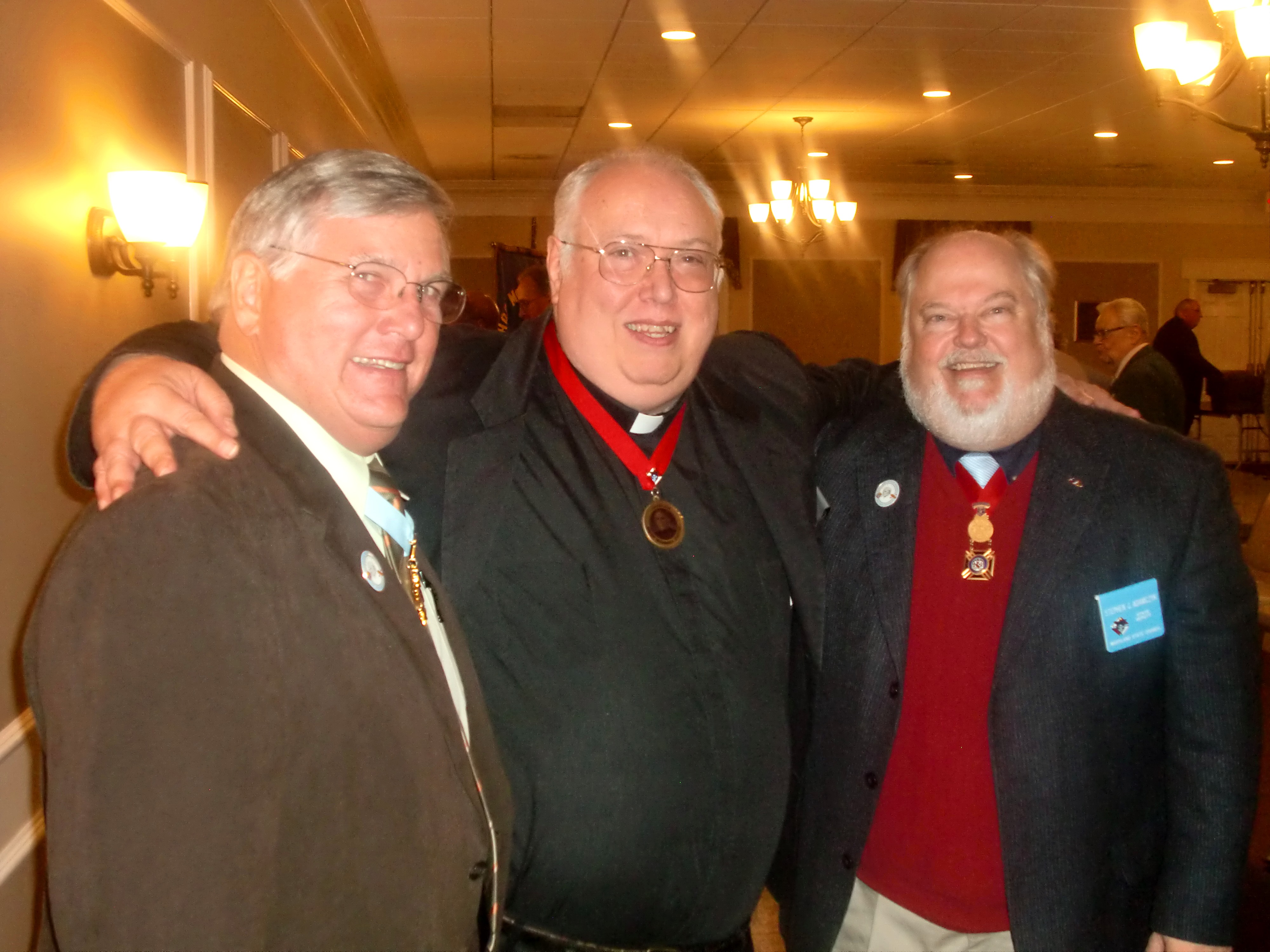
    Fr. Joseph Jenkins

  • The blog header depicts an important and yet mis-understood New Testament scene, Jesus flogging the money-changers out of the temple. I selected it because the faith that gives us consolation can also make us very uncomfortable. Both Divine Mercy and Divine Justice meet in Jesus. Priests are ministers of reconciliation, but never at the cost of truth. In or out of season, we must be courageous in preaching and living out the Gospel of Life. The title of my blog is a play on words, not Flogger Priest but Blogger Priest.

  • Archives

  • Categories

  • Recent Posts

  • Recent Comments

    Barbara King's avatarBarbara King on Ask a Priest
    Ben Kirk's avatarBen Kirk on Ask a Priest
    Jeremy Kok's avatarJeremy Kok on Ask a Priest
    Barbara's avatarBarbara on Ask a Priest
    forsamuraimarket's avatarforsamuraimarket on Ask a Priest

Frozen Embryo Adoption, part 1

A few years ago I grappled with the topic of FROZEN EMBRYO ADOPTION. Prior to the definitive decision of the Holy See, I examined the various arguments on both sides of the debate. This was an argument between men and women counted within the orthodox Catholic camp. It did not directly regard a controversy with liberal dissenters. The inspiration for the reflection was a paper prepared by a close friend for her ethics class.

chickenelephantegg.jpg

Dr. Germain Grisez (a philosopher), Dr. William May (a theologian), and Fr. Thomas Williams were on one side and on the other was the late Msgr. William Smith, a moral theologian and Thomist who was known as tough and very traditional. The Holy See would eventually side with Msgr. Smith.

If nothing can be done to avert the death sentence facing frozen embryos, then what purpose would embryonic adoption serve? One critic remarked that the adoption was okay but not the thawing and implantation. Is there something contradictory to this logic? Is it not disingenuous to declare such adoption morally licit while condemning any attempted thawing and implantation?

It would seem to me that embryonic adoption by necessity refers to the whole process (from adoption to implantation) and that any particular distinctions remain simply helpful abstractions. What constitutes embryonic adoption other than the implantation of thawed out embryos? The first part cannot be defined as something distinct from the necessary operation. The whole sequence (adoption, implantation and birth) is either morally right or it is immoral.

But maybe the contradiction is mine? Msgr. Smith might contend that the “whole process” that must be considered begins with the initial egg harvesting and fertilization, which the Church clearly teaches is wrong and immoral. Msgr. Smith would claim that if any part of this series of events is illicit, then the whole business is forbidden.

The very word, “adoption,” signifies several things: that the embryos are human persons (not a commodity) and that there is a maternal bond, albeit juridical and not biological. As far as natural law is concerned, which could be argued to prohibit such adoption, one might make contrary correlations. There is hardly anything natural about sustaining human embryos in frozen cocktails. It would seem more in tune with natural law to restore the embryos to a natural unfrozen state and to deposit them into the type of place where the Creator intended them to exist, in the womb. If half of the frozen embryos survive the thawing process, and still fewer undergo a successful implantation; does this not parallel the natural course of things? After all, many embryos are regularly lost and reabsorbed by the woman’s body, often without her awareness.

A serious charge is made, that the doctor who thaws out and implants the embryo is guilty of murder. I would hesitate to say this unless he and his clients were also the ones who originally harvested and fertilized them. A declaration of guilt toward those seeking to adopt embryos seems to ignore their pro-life sympathies and efforts.

Further, if our emphasis is upon the shortcomings of current science and the insistence of a 100% thawing survival rate, then authorities argue that frozen embryos must be left in cryopreservation. This is unreasonable. A 100% success rate is statistically impossible, no matter what technology might develop. Some of the embryos themselves may never have been viable. Similarly, no such success rate can be achieved for implantation. Normal pregnancies sometimes have complications and there is even a mortality rate for mothers. This last fact shows something of the courage that women possess in wanting to adopt these embryos rejected by their biological parents.

It seems overly pragmatic to base its legitimacy upon feasibility statistics and failure rates. There might be some weight to the “wait” argument, if embryos could be frozen indefinitely without harm. However, we know that this is not the case. There is a definite shelf-life, maybe as short as five years. There is no intent in embryonic adoption to kill the embryos. Indeed, it might be argued that the loss of some or even most of them in a desperate attempt to save them would be an application of the Catholic principle of double-effect.

Father Thomas Williams says that

Given the current state of medical science, the only thing that can be done to save the lives of those persons is gestation in a woman’s womb. Most women aren’t called to make this sacrifice, but those who feel called should not be discouraged from doing so. . . . An ethical analysis of embryo adoption cannot be based principally on the consequences we foresee. We must ask ourselves what the right thing is to do for these little persons. Sometimes doing the right thing carries with it unpleasant consequences, or mixed results. But to condition our treatment of persons by the possible effects that it will have on others would be to reduce those persons to a means, and our morality would decay into a utilitarian calculus. In fact, speaking of negative consequences, the condemnation of embryo adoption sends out a very inconsistent message regarding the sanctity of human life. On the one hand, we denounce abortion as the killing of innocent human persons; on the other hand, we refuse to help those embryonic persons already in existence. We simply can’t have it both ways (ZENIT Interview 050605).

Msgr. William Smith must immediately change the terms of the debate. He does not believe there is any such thing as embryonic adoption. He classifies this as just a slightly different kind of surrogate pregnancy which has been condemned by the Church (see Donum Vitae). While one critic contended that Msgr. Smith does not extend moral culpability far enough, I think a more extensive reading of his view would show that he would place the doctor in the same circle of culpability with the would-be parents.

While it sidesteps the philosophical discussion to some degree and relies upon Church authority, the instruction, Donum Vitae (1987) taught that “The fidelity of the spouses in the unity of marriage involves reciprocal respect of their right to become a father and a mother only through each other.” A great deal depends upon interpretation because the document addressed the problem of couples having eggs harvested and fertilized which is at variance with those who simply want to “receive” and give a “home” to a child already conceived.

While Msgr. Smith uses Latin terms for his distinctions and appeals to St. Thomas; however, I can assure the reader that Dr. William May is also a friend of the perennial philosopher of the Church. Much depends upon what they associate with the terms. Msgr. Smith, notes the finis operas as “the wife becom[ing] a nine-month surrogate” and the finis operantis as the so-called “adoption”. Along the lines of his reasoning, it does not matter how pro-life or loving or generous these prospective parents might be— surrogate motherhood is everywhere and always wrong and the adoption is a farce because they have no right to the embryo.

The categorization of the adoptive mother as a surrogate is crucial to Msgr. Smith’s argument. He defines the proper mother as strictly the biological one, not an adoptive parent. But, if a juridical relationship is indeed possible, then the new parent would still be receiving her own “adopted” embryos into her womb. There is also the question of the medical personnel who would do the implantation.

If any of these three elements is immoral, then the whole business is wrong. Applied to the doctor, my friend and Confirmation god-daughter claimed that the finis operas is the embryonic implantation and that this is condemned by Donum Vitae. However, it is precisely IVF (in vitro fertilization) that is denounced, the stage that happened prior to the adoption, thawing, and implantation. While implantation would sometimes follow, the fact it does not always is the reason for this question of adoption. We must not force Church documents to say more than they actually do say.

Targeting the doctor further, my friend makes note of the consequences that flow from the thawing process and makes the high fatality rate “the crux of the problem”. It is true that Donum Vitae condemns the cryopreservation of embryos; however, this is a bad situation that we have inherited. We are presuming that those involved with the adoption process also find this practice abhorrent, and by thawing out the embryos, hope to return some normalcy. We are seeking now, not to freeze embryos, or to perpetuate their arctic limbo, but to give those that survive a chance and those that do not, peace and dignity. It is not clear that Donum Vitae would have condemned adoptive parents of embryos and those assisting them of the kind of “manipulation” that the congregation wanted halted. The intention throughout this process is not to destroy the embryos but to assure their survival and life. The late Pope Paul VI was very clear that we did not have to use every extraordinary means to maintain human life. I cannot imagine anything more extreme than freezing human beings in a mixture cooled by liquid nitrogen. Thus, a high mortality rate in an attempt to save them, while unfortunate, might be justified.

Keeping the embryos frozen is not a real answer, as it constitutes in itself an offense against human dignity and the person. The embryo has a right to life befitting its inherent teleology. The genuine object of the moral act here is to make possible the embryo’s development to its proper end, birth into a human family. While the original parents used a few embryos and abandoned the rest, an unlawful utilitarian approach, the adoptive parents seek to give all the embryos a chance at a normal life, even if that chance is slim.

Surrogate motherhood is wrong because it breaches the expression of corporeal love between spouses from the natural transmission of human life. It cheapens and clouds the real meaning of being a parent and the family. Once the damage is done, and the embryos are created, there is a moral obligation to transfer them to their mother’s womb as soon as possible. Despite the artificial intervention at the beginning, the womb is the embryo’s proper home and the only place where it has a chance of survival. However, and this is very important, the embryo has a right to life independent from the receptivity or acceptance of parents. This is true in the case of abortion and this remains true in the sad case of stored embryos.

Transferring the embryo to an adoptive mother, when the natural one is unwilling or unable to do so, must be distinguished from surrogate motherhood if it is to be a legitimate option. Granting that prenatal adoption is possible, there is arguably no detriment to the marital unity or any disruption to the family relationships. It would express their generous and selfless openness to human life in respects to children whose parents were diseased or who had abandoned their responsibilities.

Maurizio P. Faggioni, O.F.M. writes:

This solution, suggested as an to save embryos abandoned to certain death, has the merit of taking seriously the value of the embryo’s life, found in such jeopardy, and of courageously accepting the challenge of cryopreservation. It seeks to check the evil effects of a disordered situation; however, the disordered situation itself within which ethical reason must enter to function in this case profoundly colours the attempts at a solution. In fact, there are serious questions which cannot be concealed: in the first place, the fear that such a singular adoption might not be able to avoid the dehumanizing criteria of efficiency which govern the technology of artificial reproduction.

Is it possible to exclude all forms of selection? Is it possible to avoid the situation in which embryos are produced in order to be adopted? Is it possible to foresee a transparent relationship between those centres which illicitly produce embryos and those in which they are licitly transferred into adoptive mothers? Do we not run the risk of legitimizing and even promoting, unwittingly and paradoxically, a new form of objectification and manipulation of human embryos, and more generally, of the human person?

I have differed from my friend on the object of the moral act, but as for the finis operantis, we can agree that the intention is good or, at least, indifferent. (Of course, this would not be the case if the woman merely saw her pregnancy as a means to an end, with no enduring relationship or bond with the child. She will have the flesh and receptive womb of a mother; but she must also have a mother’s mind, heart and soul.) Circumstances aside, Msgr. Smith says that the whole business of adopting embryos collapses because the finis operis is evil (implantation and thawing). However, I suggested that it was IVF proper and the freezing itself that were condemned as immoral by the Church. In any case, the real moral object of the action is to insure the embryo’s natural development to its proper end as a member of a family, albeit through adoption. This differs somewhat from Geoffrey Surtrees in that he considers the object of the act to be the “home” that the woman makes of her womb for the embryonic child. Germain Grisez notes that there is more to it: the object is the woman having the embryo removed from cryopreservation, implanted in her womb, and then nurturing that child there as any mother would. The woman who adopts and carries an embryo is not simply an instrument to save a child’s life; she becomes the child’s mother. There is a metaphysical or ontological transformation. A bond is created that will remain throughout this life, and forever in the next.

I argued, apparently wrongly, that there may be both a legitimate type of embryonic adoption and an illegitimate form. The external actions may be the same, but an errant motivation could make a permissible act, at least according to some, seriously wrong and akin to surrogate motherhood. If a woman did not have it as her object to start a bond as a mother to a child, a perpetual relationship with dire responsibilities, then she would fall under the condemnations of Donum Vitae against surrogate parentage. It would be an affront to the child’s innate human dignity. Indeed, it would also corrupt her own dignity as a parent. Such motherhood must not be understood as a means to an end. Embryonic adoption, if it is to be legitimate, requires a maternal disposition and change of the whole person.

My friend argued that frozen embryo adoption, and I would object to narrowing the focus of adoption to the ownership of a tray of frozen embryos, incurs “serious moral condemnation.” Do you really think this would incite punishment from God’s justice? While a verdict has since been given, at the time this discussion first took place, the voice of the Church was ambiguous and those who worked at the John Paul II Pontifical Institute seemed to gravitate to the other side of the debate, yes, even commending those who would make the sacrifice.

Are the frozen embryos simply to be surrendered to their fate? My friend argued, and the Holy See confirmed, the answer is yes. The embryos must be left in cryopreservation indefinitely. The heart-breaking problem remains: freezing does not preserve them indefinitely. Unless there is a major leap in technology, and I suspect that voices from critics like Msgr. William Smith will also object against the use of these (like artificial wombs), then we are condemning the embryos, human beings, to certain death. This is more than an abstract moral debate. Some lives will be saved if we act; however, all will die if we do not. Knowing the full implications, we are destined to suffer in conscience about this matter?

Given the difference of opinion about the morality of embryonic adoption, and I must admit that prior to the Holy See’s negative verdict, I leaned in its favor, I was troubled about the possible material cooperation in evil. Throughout, I had a nagging concern about the intrusion of a third party in the process of marital fecundity, the true nature of motherhood (as more than a receptacle or home for the embryo) and on how exactly embryonic adoption expresses the full giving of the spouses to one another. Obviously the principle of appropriation that applies in the transplant of organs could not apply to the implantation of a human being who is a distinct being.

Let me rehash and clarify some of the most pertinent points, as I see them:

1. Magisterial ethicists and theologians are agreed that the frozen embryos came to exist through an immoral and illicit intervention on the part of medical personnel and parents.

2. As to whether or not Donum Vitae, issued by the Congregation for the Doctrine of the Faith (headed by Cardinal Ratzinger, now Pope Benedict XVI), forbade embryonic adoption, there was some disagreement. As the congregation so often did, it was proposing guidance on a specific question and was not seeking to promulgate a negative law that would rule universally over every case and those involved. Donum Vitae was directed to the problem of harvesting eggs, artificially inseminating them, and keeping them in cold storage if not used with implantation. It would seem that the first half of this problem does not apply; although Msgr. Smith refuses to allow this distinction, claiming in some sense, that the biological parents are made direct agents for those potential parents who want to adopt unused embryos. Father Williams, Dr. May and Dr. Grisez would no doubt argue that the culpability ends with the first couple and while it is wrong for a mother to spurn her child; still those wishing to adopt would not be contaminated with any culpability. If what the adoptive parents desire to do is judged appreciably different (in species) from the natural parents, then the central point argued by Msgr. Smith would be compromised. Further, the full consideration of the question of frozen embryos had not been considered when the instruction was released and it could hardly immediately rule out something like embryonic adoption that was not yet a scrutinized or perfected avenue of action.

3. Every human being is a gift from God, even the recently conceived embryo. Does not every child have a right to be born? Msgr. Smith seems to put the gravity on procreation and the conjugal act. Critics would argue that we are dealing with a human being already conceived and in need of assistance. It sounds to me as if the sides are talking at cross-purposes. There is a debate, but they are not entirely on the same page.

4. The object of choice for the one couple is adoption, something that is perfectly licit. The object of choice for the other couple is artificial insemination and reproduction which is illicit and wrong. It involves third-party intervention and the side-stepping of the conjugal act, thus alienating procreation from the good of fides, the unitive dimension.

5. It may one day be possible to remove an embryo from a womb, offer DNA repair, and return it safely into the mother. A general prohibition against embryonic adoption might also have the sad consequence of preventing medical intervention to save and/or to treat unborn children in the womb. Another question that is already being discussed is the morality of transferring a child from a diseased womb to a healthy one when an emergency arises. How we decide on embryonic adoption will have far-reaching consequences. Msgr. Smith insists that there is no such thing as embryonic adoption and that the distinctions made represent a kind of slide-of-hand.

Statistics show that Ectopic pregnancies are 17 times greater for the implantation of frozen over fresh embryos. This can be quite problematic for the mother and the fact that she knows the risk demonstrates something of the courage it takes to make this decision. While 50% of the embryos survive thawing, live births of previously frozen embryos only have a 16.8% survival rate over 29.7% for fresh embryos. The procedure, which is not certain, also costs between $6,000 to $9,000; not cheap by any means. We did not have unlimited time to make a decision about this question. It would seem that a high statistical failure rate would not in itself make embryonic adoption morally prohibitive.

Even though there may be 400,000 frozen embryos available, not all of them can be legally adopted. Most couples oppose the donation of embryos and either keep them cryogenically frozen, or if too expensive, have them destroyed in a saline solution and cremated. What we see here is the same mentality that we observe in abortion. Women will make the nonsensical statement that “They could never allow their children to be raised by strangers,” and thus prefer to terminate the pregnancies, thus robbing their children of any life at all— the height of selfishness!

I am not going to get into a big discussion of ectogenesis, as it will take us away from the topic at hand. However, if such should ever leave the sphere of science fiction, it will raise its own serious concerns. Many possibilities are even now being explored. A means may be achieved where a uterus from a cadaver might be transplanted to an animal or DNA re-sequencing might provide a womb capable of sustaining an embryo to birth. Professor Carl Wood actually implanted human embryos into sheep as part of an experiment that fortunately failed. An artificial womb capable of supporting implantation and supporting embryonic development is being theorized by researchers. Except for the most serious emergencies, such methods if perfected would seem to offer excessive danger to the embryo and raise too many questions for children who would look to an animal or a machine as their birth-mother.

For Embryonic Adoption

I have borrowed these citations and information “for” and “against” from Human Life Review, “Where Do Frozen Embryos Belong?” by Brian Caulfield.

My old professor, Dr. William May is one of the chief defenders of embryonic adoption and has a whole section on it in his most recent book:

I believe that the moral object specifying the human act of a woman who seeks to rescue a frozen embryo is not an act of surrogacy, nor (is it) to substitute for the relation to the father a mere arrangement with a technician. What precisely is the object? (It is) the adoption of a frozen embryo, a human child abandoned by those who have generated it. (It) is to give the adopted child a home.

Bishop Elio Sgreccia, of the Pontifical Academy for Life, said that embryo adoption has “an end which is good” and cannot be dismissed as illicit. But given the high failure rate of implantation and the fact that the process of freezing and thawing may cause many embryos to suffer genetic damage, he concludes, “Can we really counsel women to do this? It would mean counseling heroism . . . The issue is one big question mark. The point is we should never have gone down this road to begin with.”

Against Embryonic Adoption

Mary Geach, an English philosopher, as well as a wife and mother, could not disagree more. Dr. May summarizes her argument,

She claims that if a woman makes her womb available to the child of strangers and allows herself to be made pregnant by means of a technical act of impregnation, she shares in the evil of in vitro fertilization . . . she ruins reproductive integrity… By allowing herself to be made pregnant by the technician’s art a woman engages in a highly defective version of the marital act.

Brian Caulfield writes:

To me, the choice of adopting an embryo makes a woman redefine herself in terms of something that is at the root of her being: her ability to get pregnant, bear new life, become a mother. To separate this inherent capacity from the intimacy of conjugal relations goes too far. It not only separates a wife from her husband, by interposing another impregnating party; it separates a woman from herself if she uses her womb merely as an instrument for the good end of saving a life.

Names of some in favor of embryonic adoption: Dr. William E. May, Fr. Thomas Williams, Dr. Jerome Lejeune, Dr. Charles Rice, Dr. Germain Grisez, Fr. Philip Boyle, Geoffrey Surtees and Dr. Dianne Irving.

Names of some against embryonic adoption: Msgr. William Smith, Dr. Daniel Sulmasy, O.F.M., Mary Geach and Brian Caulfield.

DISCUSSION

FATHER JOE:

I spent time praying about this subject of embryonic adoption. Several inherent problems nagged me from the very first. The doctor or technician is a third party and such involvement is generally forbidden when we are speaking about the subject of human fertility. The act by which women become pregnant is naturally the marital act: sexual intercourse between a husband and wife. Several years ago there was a program called GIFT which permitted a husband and wife to engage in the sexual act and then, immediately afterwards, doctors intervened to facilitate the meeting of the sperm and an egg cell. While some thought it would pass muster, it was still criticized for the problem of artificial manipulation. Here, in embryonic adoption, there is no marital act at all. Indeed, some are saying that a woman need not be married to undergo the implantation procedure. That brings with it a whole set of additional problems.

Can she remain blameless, just because the embryo is not from her egg and the sperm that joined with it is not from her husband?

ANNIE:

I have been reading many thoughts on both sides of the frozen embryo issue and I would like to share my thoughts. First, I want to make clear the distinction between adopting a frozen embryo already created and requesting a donor to create a frozen embryo. Clearly the request for the creation falls under IVF and/or surrogacy. Now, regarding embryonic adoption, the act of adopting and implanting the frozen child could not be considered surrogate motherhood. If it is then one could easily argue that normal adoption is a form of surrogacy; another womb carries the child for the couple which has removed “the child’s right from being born from a father and mother known to him and bound to each other by marriage.” This also poses that the act of a normal adoption betrays the couples right of becoming parents only through each other (CCC 2376). We, of course, know that the Church approves the adoption of an abandoned child (CCC 2379).

So, we must remove surrogacy from the argument; but what about IVF? We know that the method or techniques required for IVF are morally unacceptable for two reasons: it undermines the dignity of the child while allowing another dominion over the sacred union of husband and wife (CCC 2377) and it creates extra ‘unwanted’ embryos. Now it is in the term ‘abandoned’ where I believe the adoption of the embryos should be allowed by the Church. According to issue 2379 in the Catholic Catechism, infertile couples have two choices, they can express their generosity by offering themselves to a life of service to others or they can “adopt abandoned children”. Are these embryos not abandoned? Yes, they are; they are no longer desired by their biological parents and are left to die. One person argued that because the act of the original IVF was a sin, the act of adopting the embryos becomes a moral wrong. But was the act that produced the child adopted in a legitimized way not a sin, referring to either sex outside of marriage or the act of rape? Here too we can argue that the ends does not excuse the means, for we offer women and men an option to rid themselves of their responsibility to care for a child produced through the act of sex, allowing them to continue without care for the consequences of their sin. The issue also addresses the possibility of the adoption of the embryos to facilitate a demand; but in America the legitimizing of adoption has created an inflated demand for white babies in which many women will get pregnant just to sell their child. This makes the adoptive parents culpable of the sin by facilitating the demand. We have to remember that there are many who do not follow the law of the Church and will do as they please, but we who do follow the laws will not contribute to the sin by having the embryo created. The issue is not in the creation once the child is created but in the dignity, worth and the status of the life of that child, whether he/she is at the end of fetal development or at the beginning. In actuality, by adopting these abandoned children, we are returning the will of God over their lives to them. If I am wrong in my thinking, please guide me properly to the will of God.

KEVIN:

I have a question to which I legitimately don’t know the answer.

First, I am a new parent of a baby girl (Abigail) who started life as an embryo that my wife and I adopted (we don’t know the parents to this day). Since a part of the process is at the root of my question, let me tell you a piece of our story:

We adopted 5 frozen embryos from the biological parents. They were frozen (as is customary) in ‘strips’- one strip had 3 embryos on it (the one we thawed), the other has 2 (still ‘in the freezer’).

Of the 3 embryos we thawed, 1 died as part of the thawing process. It’s my understanding that when a frozen embryo dies at this stage, the root cause is actually imperfections in the outer cells that get exacerbated by the freezing process. (They actually get irreparably damaged as part of the freezing process; we just don’t know about the damage until thawing).

This left us with 2 to implant. One took hold and grew into Abby, the other died/was passed ‘naturally’.

My understanding is that these statistics are perfectly in line with broad-based averages: 33% die during the thawing process; 50% of those left die/pass/miscarriage after being implanted; the rest are born 9 months later.
Finally, my question: Has my immediate desire for children contributed to putting the embryos (kids) in my charge at additional risk?

What if, in the future, a thawing process is discovered that kills less than 33%? What if there are fertility drugs discovered that increase the odds of implantation to something greater than 50%?

Now I am operating under the assumption that the embryos can remain in a frozen state indefinitely (e.g. a woman in Israel recently delivered twins from 12 year old frozen embryos). So is leaving the embryos frozen for now the safest course of action FOR THEM?

FATHER JOE:

Some ethicists would argue that leaving them frozen might be the only immediate course of action. However, I am not sure how long they can be kept frozen. There is also evidence that this process and the length of cryogenic preservation also degrade the odds for later success with thawing and implantation. As you could see in the post, some argue against embryonic adoption altogether while others contend that it is a selfless and noble pro-life effort, no matter what the odds.

(That is why many of us waited for a definitive answer about it from the Magisterium. The Church had already given a negative verdict to surrogate pregnancy as such, but of course, this was argued as a different question. Now the Holy See has spoken and embryonic adoption is not an option at all for faithful Catholics.)

That makes my earlier speculation rather mute. Rather than directly address your questions, what I can do is praise God for the precious child that survived the process for your little family. Abby is still a miracle of God and I will keep you all in my prayers.

NOT A JOKE:

Have you heard about celebrities wearing frozen embryos in lockets?

http://swiftreport.blogs.com/news/2005/08/more_celebritie.html

FATHER JOE:

I was curious to see how long it took for someone to pick that up. But I am assured that it is a joke. The fake news story reports that certain movie stars and celebrities (like Lindsay Lohan) have embraced the fad of embryonic adoption, but wear them in lockets around their necks, still in cryogenic suspension. Such would reduce human beings to jewelry! If true it would have been all over the news, the biggest thing since the Nazis made lampshades and soap out of Jewish people.

See part 2 of this discussion and the Verdict from ROME.

The Slippery Slope of Abortion

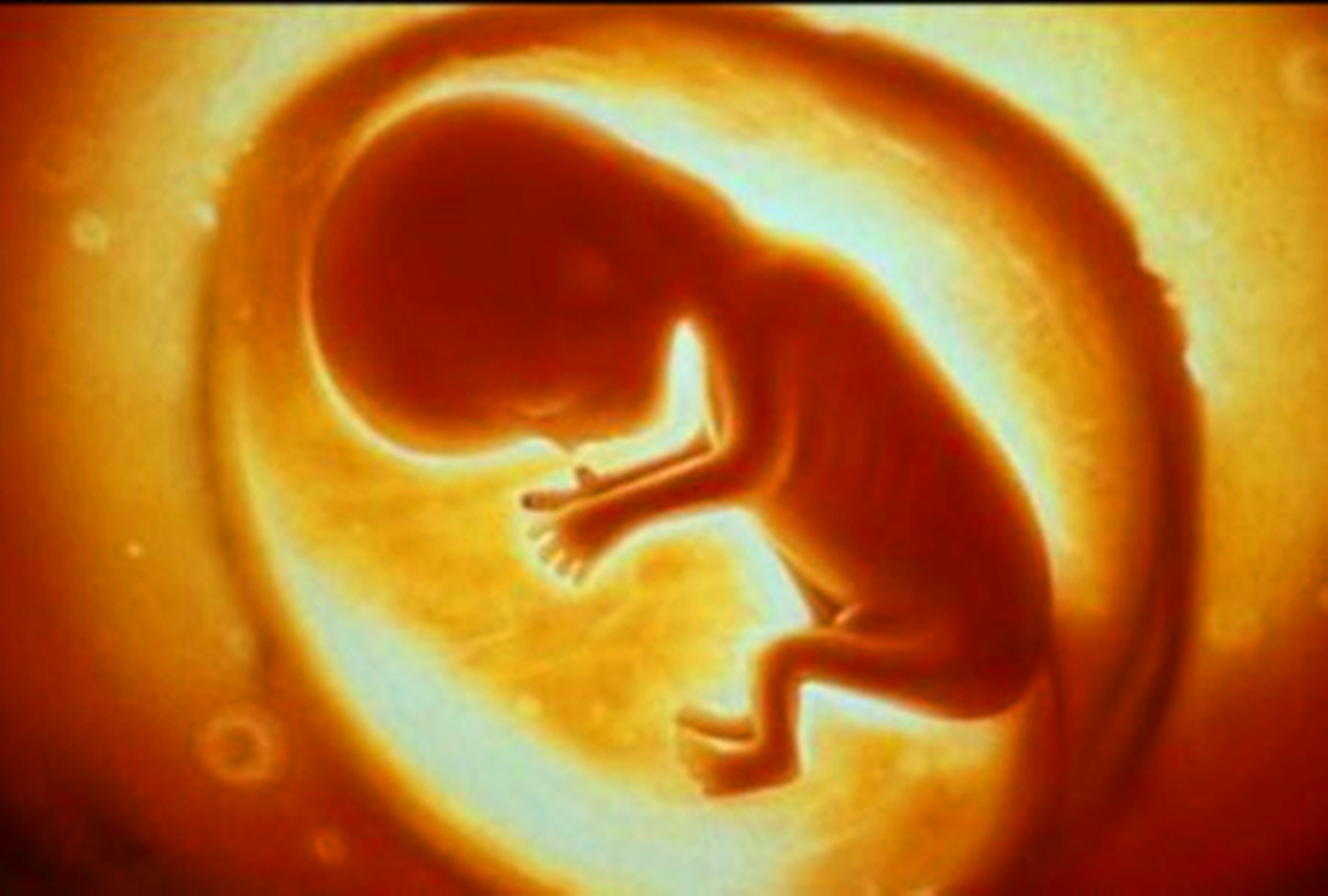
Someone wrongly argued the following with me: “And the slope between abortion and infanticide is only slippery if you accept that fertilized egg or a partially-developed fetus is in fact a human being. As most abortion-rights supporters claim the opposite, I fail to see the threat.” The discussion dealt with how artificial contraception degraded into an acceptance of abortion and that now it was reaching the new low of outright infanticide.

Actually, most abortion-rights supporters in the vast crowd make no “explicit” claim at all about the unborn, avoiding the discussion about the beginning of human life and personhood— with the possible exception of bloggers and paid advocates. However, particularly given modern tools for viewing the child in the womb, some die-hard promoters of abortion are admitting “it” is human, but not a person with rights. Others are arguing that the rights of the mother would outweigh even the rights of another person, should that person be unborn and “parasitical.”

Many deal with their pro-abortion stand with an avoidance of the biological truth, the real reason why plastic imitation fetuses are forbidden on network TV news. Obviously, the implication is that they do not “recognize” a life having value there; but many people remain pro-abortion no matter whether the child is in the embryonic or late term stages. The slippery slope is not a theory. It has been realized.

Fetal development occurs much faster than people appreciate and is so often misunderstood. There are no partial human beings. There is a child who grows, just as he would grow outside the womb. Certainly the growth changes in the womb are unmatched by anything after birth; but even a newborn infant only vaguely resembles a mature man or woman. They cannot talk, see properly, or walk. Without constant maintenance, they would most certainly expire within a very short period.

The late Pope spoke about this at length when he talked about a culture of death versus one of life. Concern about the “slippery slope” pervades the encyclical EVANGELIUM VITAE. Indeed, one of the reasons Pope John Paul II objected to the death penalty was because he believed a comprehensive and generous response in the cause for life had to be made against the current climate of death. In other words, a society that murders its own innocent children does not have the moral standing to judge over the mortal lives of convicted felons. We become desensitized to the taking of human life.

I should say that the “slippery slope” applies even if one should think there is only life “in potency.” Embryonic human life has all the components necessary for the formation of “fully developed” human beings. The Church insists that once the soul is infused, the subject is a human person with an eternal destiny. But, even more, the slipping and sliding goes back further to the issue of contraception.

While we certainly do not see the person in the sperm and the woman simply as a receptacle, as did St. Thomas Aquinas, nevertheless, a contraceptive mentality is inherently anti-life. If contraception fails, people will now say, “Well, there is always abortion.” Next, maybe they will say, “Well, the doctor says he has a thirty percent chance of heart disease based upon DNA sampling. Why don’t we just get rid of this one and try again, with the doctor’s help?”

Obviously, even the most hardened pro-abortion advocate has trouble with infanticide, once they SEE and HOLD a child. This was the case in Roe versus Wade when Norma held her baby that previously she had tried to abort. That is why many curse GE for their new viewer that shows the child or fetus, with great clarity. It makes avoidance of the real question increasingly difficult. But what if women should give birth while unconscious? Then doctors or husbands or significant others or just prior standing instructions could order the termination of a new born. As in Partial Birth Abortion, once allowed, what does a few inches in the womb or out of the womb matter? The fact that there were as many as 4,000 Partial Birth Infanticides last year (full term babies) is ample evidence of where things have been sliding.

And what if the newborn is not attractive? I used to help out at a facility for the mentally retarded (or “challenged” as it is rendered today). Tommy had a cleft face. His parents wanted him destroyed but the doctor said no. He was quickly abandoned. He had pins holding his eyes from falling into the cavities where cheeks should have been. He had no nose and only a rudimentary mouth. Everyone presumed he was retarded. He moaned and growled. No one could make any sense of it. His best friend was a boy with Down’s Syndrome called Mike. One day Mike came forward and said that Tommy wanted water. What? It turned out that Tommy was speaking, but so unclearly that only Mike could decipher it. Later, despite the odds, it was suspected that Tommy was not even retarded. When I left, the doctors were taking parts of his body and trying to build him a face. I prepared both of these boys for their first communion. Over and over again, I stressed that the host was Jesus and that Jesus was God. The bishop said that was all they needed to know. They both had value, independent of public opinion, or arguments about the quality of life, or the ramblings of pro-abortion politicians.

I have noticed that sometimes young people fail to appreciate the trail of dominoes we have already knocked over. Maybe age and exposure are important to seeing more of the whole picture?

SLIPPING OR FALLING OFF THE SLOPE?

  • 1930 – Anglicans became first Christian church to permit contraception (condoms).

CASTI CONNUBII is the Pope’s strong response.

  • 1960 – Introduction of the Pill.
  • The so-called sexual revolution.

HUMANAE VITAE is the Pope’s strong response.

  • 1972 – Roe vs. Wade legalized abortion.
  • Series of cases and incidents have expanded so-called abortion rights, partial birth infanticide, and euthanasia.

EVANGELIUM VITAE is the pope’s strong response.

The movement against life is not smooth, particularly since pro-life people are fighting such trends. The slipping happens in fits, stops-and-goes.

I have already gone on too long, but I would like to finish with an extended citation from Msgr. Elio Sgreccia of the PONTIFICAL ACADEMY FOR LIFE at the Vatican:

“It is also said that the argument of the slippery slope is a weak one: in my opinion, however, it shows that its perverse efficiency functions unavoidably because it implies the absence of absolute values that are to be upheld and is accompanied by an obvious moral relativism. It functions in the context of euthanasia as in various other fields of public ethics, regardless of whether it is a question of abortion (in this case, one begins with the case of anencephaly and ends up with the case of the child conceived before a holiday), or a matter of procreation (here, the first step is the request for the legalization of the homologous insemination, that ends up with the matter of the authorization of therapeutic cloning). / Once on the slippery slope, not only the logical slant comes into play but also economic interests, and then the slipperiness becomes fatal and inexorable.”

Gay Sex & the Law

I can recall when sodomy was not a “protected right” but a “perverse crime.” It was that way not too long ago. Indeed, any sexual activity, even with a woman, if outside of marriage, was often judged as criminal and there were set penalties. There is division in the Church on the subject and it may be that some have too closely aligned themselves with the American Psychiatric Association which redefined homosexuality from a mental illness to an acceptable sexual orientation.

One of my favorite television programs was DRAGNET. There is one episode where Joe Friday (Jack Webb) is railing against the sins of the city. Among them he lists “sodomy.” When the episode was repeated recently on television, the sound failed precisely when he moved his lips to say the word that is no longer politically correct. In another episode, The Big Kids, there is a dialogue which shows the change in secular morality:

Capt. Lou Richey: It’s not just a problem of law enforcement, it’s a community problem.

Sergeant Pearson: Trouble is there is no community captain. These people come piling in here from every where. They dont know each other and don’t want to. They come out here, make a down payment on a house and move in with a couple of kids. That doesn’t mean they made a home no more than givin’ a name to a place makes it a community.

Sergeant Joe Friday: Yeah and you get a littele weary of hearing every kid give you the same excuse when you tag them. You don’t understand, I just wanna to belong thats why I did it. Belong to what?

Capt. Lou Richey: What it boils down to is the new morality, doesn’t it, a whole new sense of values. The kids see it on television, in magazines. Even hear it from the pulpit. God is dead. Drug addiction is mind expanding. Promiscuity is glamorous. Even homosexuality is praiseworthy. How you gonna fight that?

Officer Bill Gannon: It ain’t easy.

Capt. Lou Richey: What you got to remember that, the vast majority of the juveniles you’re handling are the kids next store. They’re not hard core criminals. It’s just that for them it’s a great deal more important to be accepted by the other kids than to please their parents.

Today, the “love that dare not speak its name” (citing Lord Alfred Douglas) is proclaimed a civil right and thrown into our faces where ever we look, even in Cowboy movies… I know John Wayne is rolling in his grave!

The Church in Boston had to shut down its adoption services because the government made it illegal to discriminate against gay couples. The Archdiocese of Washington has done likewise. Catholic Charities in Los Angeles was almost shut down by a law mandating benefits and insurance (analogous to a spouse in marriage) to the bed-partners of homosexual men and lesbians. Renters are being compelled to permit gay men and women to live and commit mortal sin in their premises.

My faith in our society and the legal system is much shaken. I cannot say that I would generally trust activist judges or spineless legislators to make decisions that would please me or others with traditional values. I concur with the Church that homosexuality is “disorientation” and that to live it out is a grievous offense to God and a corruption of others.

Our compassion and love for them should not translate as utter toleration and/or approbation. We should encourage chastity and celibacy. While it is controversial, where possible, we should pursue proven treatments that have helped thousands to adjust to a heterosexual orientation (as in the work of Dr. Fitzgibbons). This issue is very emotionally charged. We are sorely tempted to look the other way and give homosexual advocates what they want. They insist that not to accept their form of sexuality is a denial of them as persons of worth. But such is not the case. The old cliché still holds, “Love the sinner but hate the sin.” Both natural law and the Scriptures condemn same-sex activity. Sexual expression is restricted to marriage and such is only between a man and a woman. No judge, legislator or shrink can truly change the truth about this. Going through the motions will not make vice into virtue or that which is false into something real. The pendulum is swinging. While gay sex was once illegal; it is now legally protected. Indeed, those who reject it are being subjected to charges of discrimination. I would err on the side of preserving our traditional values but not pursuing matters which would intrude into the privacy of people’s homes. I guess you could say that I would favor bringing back the proverbial closet.

Of course, even if we were willing to leave such people in peace, there will be no peace today for those who oppose the homosexual agenda.

Discussion About Priestly Service, Scandal & the Church

GH: (initial statement)

The Church has brainwashed you and you are a mere puppet of this institution! It is like a cult, if you do not OBEY or agree with every belief and precept 100%, you are OUT!

I walked away from the church after 25 years of trying to be a good Catholic because all I witnessed were MANY priests leaving to get married. (I knew of 12— that’s a LOT in such a time period!) Several others stayed and had women on the side. Oh yeah, these guys heard my confessions too and had the power to take my sins away— what a joke!

I suppose you think that when they die they will burn in hell, the ones who left and were laicized, I mean. Is this a loving reaction, BANISH them forever? (Their love is disordered, unholy and they all end up divorced, too.)

You wrote that there were only a FEW rascals? You sir are deluded! You try to maintain a facade of good and holy priests; I do not doubt there are some, and in fact pray there are, as we need them. Sadly, I think that it is the exception and not the norm.

You blame the individual men themselves (who left to get married). They wanted to serve God but perhaps after a while felt their heartstrings pulled one time too many? Or maybe they just gave into what you regard as the great sin of falling in love and wanting to be with a woman. Therein rests the conflict of wanting to serve God and wanting to love one of his creations. Why does there have to be a choice and why is the punishment from the church so final and damning?

But there is something wrong with a church hierarchy that claims to have the only true pipeline to God and to the truth while insisting on celibacy that apparently so few can truly live out.

FATHER JOE: (immediate response)

You might like to think that people like me are brainwashed, but nothing could be further from the truth. I was a public school kid. I was even kicked out of Sunday high school CCD. No, I was not stupid; rather, my teacher said I knew too much. It was embarrassing my slower classmates. Actually, I think it was correcting my teacher a few times that was the last straw! Because of ill health and asthma, I read a great deal on my own. Religion fascinated me, but I was no one’s robot. I became convinced of the Church’s claims and tried to appreciate them, not simply from authority but from my reasoning.

If people do not clearly understand their faith, we do not kick them out of the Church. We invite them to read the catechism, adult formation classes, and bible study.

If you left the Church because of hypocrisy then you placed greater faith in men than in God. It is no wonder you defected. You are just making excuses for yourself. You could have stayed in the Church and supported those priests who were faithful to their promises. Instead, you joined the crowd of bad priests and womanizers. How can you complain about them when you aligned yourself with them against the Church and her faithful ministers? You join the chorus of those who mock Catholic priests and their ministry of reconciliation. You should be ashamed.

You are another one presuming that priests like me damn the defectors and others to perdition. Where do you get such ideas? We preach about the mercy of Jesus and yes, about his justice. But God will judge you and me. We are all sinners. The posture of any good priest is to pray for others, especially for those who leave the Catholic fold.

I am not deluded, I am a priest and I know my brother priests. Most are good and holy men. While you falsely depict me as damning others; you have judged me and my brother priests. A few have disgraced themselves and have made headlines. The most publicity many of us will ever have will be our obituaries.

You have been away from the Church and yet you think you know the truth about her priests. You should not sin by such presumption.

Promises are made to be kept. No one forced their hand. I am responsible for my priesthood and so are they for theirs.

Would you excuse a married man who fell in love and left his wife for another woman? I can well understand sinfulness, weakness and passion. All priests over time have their heartstrings tugged; but that is when we embrace celibacy as a true sacrifice.

But what punishment is so final and damning for those who leave? A priest who wants to get married may eventually get laicized. He leaves ministry. However, if he marries in the Church then he can return to the sacraments. He can form his children in the Church. He remains a priest forever but in practice is reduced to the lay state. No one says that he must be consigned to hell.

The deposit of faith is made permanent with the death of the last apostle. No new doctrines are invented although there is organic development. Jesus institutes the Catholic Church and establishes a teaching authority. These are the facts as the Church sees them. Anyone can encounter our Lord in Scripture, prayer and in the Church. The hierarchy shepherd the Church and the Magisterium has a charism to preserve the truth in every generation. Over the centuries, the Church discerned that a celibate priesthood best served the needs of God’s people. I believe this is still the case and I trust God’s grace to help priests in being faithful to their commitments. Yes, there have been some bad apples. But you wrong many good priests. About this you should be ashamed and ask pardon.

I will pray for the healing of your hurt and anger. God bless you!

Subsequent Dialogue

GH: That is the Catholic way, to put shame and guilt on people. I should be ashamed?

FATHER JOE: I do not know what you did. If you did something wrong, then yes, you should feel guilty and ashamed of yourself. Feeling guilty is not a bad thing, when you are guilty. Such remorse moves a person to repentance and to reforming his or her life. The trouble today is that many people no longer know shame and people tolerate all sorts of nonsense. Children and young women dress immodestly. People use bad language without so much as saying they are sorry. Couples cohabitate and fornicate and then get mad when the priest challenges them to either separate or get married. Yes, such people should be ashamed of themselves, not simply because they have destroyed their reputations, but because they have dishonored God by their disobedience.

GH: The ones that should be ashamed are those priests I speak of— I have seen repeated sin and hypocrisy and men masquerading as true priests; they are the ones who MOCK the sacrament of reconciliation, Father, not me.

FATHER JOE: Hopefully bad priests do feel sorry for their poor witness. But there are also good priests who should not have their faithfulness mocked or their ministry invalidated by the failures of others. In any case, we are all sinners; there is enough blame to go around. Just because the shepherds sometimes fall short is no license for the sheep to get lost as well.

GH: Yet they will not leave because they are afraid to; so they live a double life.

FATHER JOE: If you know of priests living double-lives then tell the authorities. They will put an end to it. If this is too drastic, then tell a good priest in confidence and ask him to talk to a rascal in the ranks. I have read the riot act to men and some will listen. But as I said, most priests I know are faithful to their promises and ministry.

GH: I am not wronging the good priests. Where did I say that?

FATHER JOE: Look at your words. You lump us all together and contend that there are more bad apples than good. Such has not been my experience and I have been an active priest for 25 years and in the seminary for 8 years before that. On top of it all, you said that the poor witness of priests caused you to leave the Church. That means you saw nothing worthwhile enough in the work and character of good priests to remain in the fold of Christ’s Church.

GH: I said that there are some true and holy priests, yourself one indeed, but I feel they are in the minority.

FATHER JOE: And, while I appreciate the commendation, I sincerely believe good priests are in the majority. Sure the Church went through some hard times. Many priests defected in the 1960′s and 70′s. Some had trouble with the reformed liturgy. Others thought the rule of celibacy was going to be relaxed and they wrongly got ordained with this false expectation. The 1980′s and 90′s brought the almost unbelievable scandal of child abuse. Homeschoolers and other die-hard Catholics kept the faith and now their children are entering the seminaries in droves. This new generation of clergy is very traditional and serious about their commitments. They are joining ministry with those who remained faithful and steadfast in priestly work. Yes, there were some womanizers and misbehaving homosexuals hiding in the ranks; but as they have been identified they have also been expelled from the active presbyterate. Some men with problems, as with a woman or alcohol, have sought counseling, reconciliation and moral reform. This deserves mention in any evaluation of the Church, too. There are real signs of hope, today.

GH: Yes, this is sad. Perhaps, I have been unfortunate enough to have been exposed to far too many of the so called “few bad apples”?

FATHER JOE: This may be the case. Not every diocese is the same and some formation programs were more successful than others.

GH: I don’t see a long line of potential men answering the call either. Why do you suppose that is? There has been much damage done and a great need for healing in the Church. I unfortunately am one of the casualties.

FATHER JOE: I am not sure how you would see the new men coming forward for priestly ministry, given that you have exiled yourself from the Church. Numbers could be better and worldwide; many missionaries are coming from the Third World to reconvert Europe and the West. The dissenting and progressive Catholic families either had no children or a few who were secular and uninterested in vocations. Our more traditional homes are having large families and encouraging their children to be priests and nuns. This is where the next generation of vocations is emerging. The dissenters have contracepted and aborted themselves out of existence. The youth symbolized by the thousands that celebrate World Youth Day with the Pope are serious about their faith. Indeed, they seem more fervent than their parents. The Holy Spirit is not done with the Catholic Church, yet!

GH: I have read in other topics on your blog that you feel such men are “risking their soul to hell.”..You may as well say they will go there.

FATHER JOE: All mortal sin is risking hell. You cannot fault me for a basic teaching of the catechism. But God will be their judge. He will also be the judge of you and me.

GH: It is all semantics and how you word things.

FATHER JOE: No, such should not be the appreciation of Christians. After all, we follow the living Word and his testimony should never be regarded as confusing semantics. Do not be like Pilate who said back to Jesus, “What is truth?” Jesus is the WAY and the TRUTH and the LIFE. It is still the message and person and saving activity of Christ that is proclaimed and made manifest in the Church. The ministry of priests who participate in his high priesthood is still essential to this Good News.

GH: Then you try to put even more Catholic guilt on me because I have walked away from an institution that makes no sense to me anymore. I have not walked away from God, only the Catholic Church. And we all know that the Catholic Church feels those who do that are also— you got it— “risking their souls to hell.”

FATHER JOE: Jesus established his Church as the living sacrament of salvation. It is a new People of God. Our personal salvation comes within this community of faith. That is why Jesus gave us the sacraments. He extends his work through the ministry of priests. I am sorry if I increase your unhappiness. While I cannot control what you would do, my hope is that you would come home to the safe harbor of faith. If anyone hurt or abused you, I am truly sorry. But that is not what the priesthood and the Church are really about. My work as a priest centers upon teaching the truth, celebrating the Eucharist and bringing healing to others. I would have you seek the sacrament of penance and absolution. You would still have a right to be upset with those priests or churchmen who disgraced themselves. But if they were about the work of the devil then who wins if you should be forever alienated from Christ’s Church? Don’t let the devil win in your life. You say that you still have faith in Jesus; then seek out a good priest. Share your whole story and even your anger with him. Return to the sacraments. You might even think that the discipline of compulsory celibacy should be reviewed. But we need humility and acceptance about such things. We need good people to build the Church up again. Maybe God wants you to be one of those people?

GH: The church exerts her absolute power over her priests that leave… even the ones who are laicized; they are not even permitted to read God’s word or act as any type of lay minister. This to me is unjust punishment.

FATHER JOE: Were you a priest? The priesthood is a ministry that belongs to the Church. She has the right and the authority to regulate it as she sees fit. No man was forced to become a priest. Every man who made a perpetual promise of celibacy had six or eight or twelve years of formation to think about it. I believe that God would give the good candidate all the graces he needs to live out this promise. But we are sinners. A few fail. Often they were remiss in their prayer-life and various duties. One person began to mean more to them than the many over which they were given charge. All the Church asks is that we keep our promises. Laicization is the best that the Church can do. It allows a man to rebuild his life while protecting the ministries of the Church from further scandal. The men themselves often ask for it, particularly if they want to remain within the bosom of Mother Church. The restrictions also help to protect the good name and the authority of the priests who keep their promises and remain on the job.

GH: A priest who leaves is a disgrace and an anathema in the eyes of the church. I said the eyes of the Church, NOT God.

FATHER JOE: Here I would disagree. Such a priest made promises or solemn vows. Yes, they were made to the bishop or superior, but also to Almighty God. Breaking our promises to God is a genuine tragedy. God is the one who gives the initial call. The Church later affirms that divine summons.

GH: The analogy that priests are wed to the church is also overused and makes no sense if the church does not in turn use that same analogy with regards to divorce when priests are laicized.

FATHER JOE: Analogies are not exact, but the comparison of things that share some likeness. The marriage analogy would not make married priests impossible. After all, we have some licitly married priests already. The marriage analogy flows from the meaning of the Eucharist. It participates and manifests something of the marriage banquet of heaven. It is not the same as an earthly and carnal marriage which is dissolved by death. The priest participates in the priesthood of Christ who is the groom to his bride, the Church. This relationship is eternal. The new laicization process makes the laicization stages similar to a Church annulment. However, he remains a priest. He does have to argue that he should never have been ordained. Just as the Church does not recognize divorce between married couples, Jesus will never divorce himself from his Church. The laicized priest will always be a priest, even if he can no longer function. A laicized priest who wanted to get married and have sexual relations would still require a permissorial releasing him from his promises.

GH: True, they may receive the sacraments, but why are they not permitted to be a lector or EMC? Divorced people who had their marriages annulled are permitted to be such lay ministers, but laicized priests are not? Again the church exercises her authority with a heavy hand.

FATHER JOE: There is always a scandal when a priest leaves ministry to get married. It advertises hypocrisy and a double-life. A man should not be rewarded for his sins and for breaking his promises. Allowing such a man to continue some form of ministry is also an insult to good men who did what they were supposed to do. Our actions have consequences. If there is any man who should know better, it is the priest! He is held to a higher standard and must pay a more severe price for disobedience. (Having said this, Church law does sometimes permit laicized clergy to function as teachers of religion, although usually in another diocese where their former priestly ministry is not known. Such is up the local bishop’s discretion.)

GH: And the Church wonders why so many Catholics are disgruntled, confused, hurt and angry? We don’t have enough priests to serve anymore because no one wants to join— churches are closing and the remaining priests are burnt out. Something has to give somewhere.

FATHER JOE: You would be ill served by flooding the ranks of the clergy with disobedient priests. The faithful remnant support and love their priests. My little church is filled with such wonderful and happy people. Many of the Masses are so packed that I have people standing up in the back and along the walls. We may not be wealthy, but the faith is alive. I hope and pray that you will know healing and find this joy once more. God bless you!

GH: Father Joe, I want to wish you the very best in your ministry as a priest of the Most High God. I am wounded and confused. I keep in touch with many Catholic friends and read our local Catholic newspapers and unfortunately still am privy to stories of those priests who have left or caused scandal. Sadly it continues. I know there are good and true apostles of our Lord and I will continue to pray for more. God bless you!

The Holy Spirit & Magisterium Say No to Priestesses

While some conservative critics would disparage all forms of feminism, I am of the opinion that a distinction can be made between a Christian and Catholic feminism and the more radical or liberal or Marxist variety. The days are long gone when women were denied the vote and found the doors to academia and business closed to them. I think most sensible people believe in equal pay and benefits for men and women doing the same job. I would also contend that men and women should be held to the same moral standard. Of course, I would raise the bar for men instead of lowering it for women. The many sins that afflict our culture are no step forward. Further, the rights of women who become mothers should not be deemed as automatically cancelling out the rights of fathers or of the children they carry in the womb. There are also occupations that are gender specific. Men might enter the field of dance but all eyes are upon the graceful ballerina. Motherhood and fatherhood are distinct. Various occupations and vocations may share similarities but they are not the same. Women can enter religious life as nuns or sisters. Men can become monks or priests. It is the contention of Catholicism that priesthood is gender specific.

Some critics of a male-only priesthood might argue that they are not in league with the radical feminists; and yet, their basic assumptions are embraced to get to the revisionist conclusions. Freedom of choice, equal rights in all things, unencumbered self-possession and self-determination, an indeterminate sexual nature, an arrogant presumption of the will of God as identified with their own narcissistic goals, pragmatic reasoning from utility that disregards ontic questions of reality, interchangeable gender, avoidance or reinterpretation of unsupportive data, anger and belligerence– all these are elements in their opposition to the status-quo, be it regarding women’s ordination or any other topic.

The late Holy Father, Pope John Paul II writes in his book, Crossing the Threshold of Hope:

“I think that a certain contemporary feminism finds its roots in the absence of true respect for woman. Revealed truth teaches us something different. Respect for woman, amazement at the mystery of womanhood, and finally the nuptial love of God Himself and of Christ, as expressed in the Redemption, are all elements that have never been completely absent in the faith and life of the Church. This can be seen in a rich tradition of customs and practices that, regrettably, is nowadays being eroded. In our civilization woman has become, before all else, an object of pleasure” (p. 217).

Do we see the irony in all this? Remove the unique significance of gender and its all important difference to our personhood and we begin to make impersonal objects of one another. The radical feminists, by their calculated destruction of structures and customs deemed as sexist, have created a situation in which the truly feminine is disfigured and the woman is knocked from the pedestal of the sacred to be profaned as but a source of transitory pleasure. Objects can be interchangeable, human persons cannot. There was a time when good women called forth what was best in men. Now that things have been reduced to mathematical equality, we are worse off than cattle. We can see the gender differentiation on the level of genitalia but refuse to admit that such distinction goes any deeper. Our technological world has, in a sense, reduced the human to identical mechanical parts. Such runs contrary to the Christian teaching that everyone is irreplaceable and precious. A woman is desired for her flesh, not for her soul. This should not be. To some extent, the same derogation of our nature can be seen in many women’s preoccupation with men’s back-sides and hairy chests. The radical feminists talk about personhood, but they have essentially redefined it. For them the person is not who you are but what you want.

These feminists of the wrong kind must displace the marriage analogy of Christ the groom to the Church his bride in both the Mass and in the way we understand ecclesial structure and dynamics. This runs contrary to revelation and tradition. If signifying Christ’s full identity, including his maleness, is not important in the Mass then gender is logically qualified as insignificant. This is the contention of moral separatists who acknowledge a role for the two genders in mutual physical “recreational” stimulation; but, who disavow that it signifies any communication of core identity. Capitulation on this issue, allowing priestesses, would be the most controversial change in Church teaching since her foundation two millennium ago. More than a new reformation, it would signify the beginning of a new faith and a new cultus.

In May of 2011, Pope Benedict XVI removed Australian Bishop William M. Morris from office for suggesting that women should be ordained priests. Not only would such ordinations go against 2,000 years of sacred tradition, guided by the protective hand of the Holy Spirit; the bishop entirely dismissed the solemn declaration of Pope John Paul II. The late Pope said as universal teacher that the Church does not have the authority to change the priesthood by opening it up to women. Indeed, the current Pope spoke about the teaching as settled and infallible. The case is closed.

POPE JOHN PAUL II: “I declare that the Church has no authority whatsoever to confer priestly ordination on women and that this judgment is to be definitively held by all the Church’s faithful” (Ordinatio Sacerdotalis).

Women Priests or Priestesses?

Maybe we should stop using the phrase, “woman priest”? It seems to me that the modern abhorrence of the word “priestess” is a telling fact. Even our unconscious psyches are uncomfortable with the possibility and this Orwellian word game is somehow an attempt to bypass our revulsion and the theological absurdity. Fr. George Rutler remarked in his Episcopalian days: “. . . and to say ‘woman priest’ is semantically as androit as saying ‘female rooster.'” Perhaps we avoid the word priestess because it tears to shreds any conception of this notion as fresh and modern? The word may even be older than “priest.” (See the book Priest and Priestess by Fr. George W. Rutler.)

The new Episcopalian priestesses are not so much one with true Catholic priests as they are with their western European and Mesopotamian forebears who rendered sybilline declamations over animal entrails.

Critics of the Catholic exclusion often quote the universality of baptism and faith in Christ, “There is neither Jew nor Greek, there is neither slave nor free, there is neither male nor female; for you are all one in Christ Jesus” (Galatians 3:28). They confuse Catholic soteriology (that salvation is available to all) with the tradition of a male-only priesthood instituted by Christ and maintained by the apostles.  A favorite verse of mine is this one: “But I want you to know that Christ is the head of every man, and a husband the head of his wife, and God the head of Christ” (1 Corinthians 11:3). Paul addresses himself in the subsequent text to some of the lesser and changeable traditions (like Mass veils), but his theological underpinnings are what constitutes the revealed truth. More exactly, he is talking about Christian anthropology and the sacrament of marriage. A woman cannot signify the groom, Christ the head. An even greater scandal erupts if such a priestess were literally married. She who is subject to her husband would then seek the submissiveness of the Church, including her husband, to her. A contradiction would emerge. Those who do not like this analogy have an argument, not with me, but with St. Paul and the Holy Spirit which inspired him.

If critics can cast aside the teachings of popes and apostles, how can they be so sure that they have the mind of Christ regarding women’s ordination?

ALSO READ:

Bishop Kenneth Untener on Women Priests

Polygamy OUT, Monogamy IN

Msgr. Pope writes a good post on his blog about the seeming conflict between the monogamous plan of creation in Genesis and the practice of polygamy by the ancient patriarchs.

Msgr. Pope’s Blog Article: Don’t Do Polygamy

In passing, he notes that marriage is defined by God as a relationship between a man and a woman. The core purposes of marriage are also espoused:

  1. Adam is lonely and is given a helpmate who complements him in a shared nature.
  2. Adam and Eve are told to be fruitful and multiply.

The unitive meaning (fidelity) and procreation are stressed. There is nothing capricious about this bond. It is expected that it will be lasting and life-long. They are no longer two, but one.

But as we hear from our Lord in the Gospel of Matthew, there is a problem with their hardness of hearts. The early believers are much like their pagan neighbors. The marriage bed is compromised with many would-be spouses and Moses would even allow a writ of divorce. This is not the way things were supposed to be.

It may be that primitive men of faith lacked the capacity to receive the fullness of truth and God tolerated or even used a situation that would later be remedied. Further, as with various Islamic men today, such extended households were usually reserved to the wealthy and/or to the leadership. Most men had their hands full caring for one wife and family. By the time of Jesus, polygamy was frowned upon and the sin of adultery was attached to any who would compromise a singular union. We must learn from God’s Word, not by extracting isolated proof texts but by an integral approach which respects progressive revelation. The people of God grow in the ways of God and the fullness of truth.

Msgr. Pope argues that the rivalries between the wives and the place of their children are illustrative that polygamy was always frowned upon by God. It is fraught with problems. I would concur, although even having one wife can be a source of both joy and heartache, going back to Adam, the first man. When ladies lament that they feel sorry for priests and wish we could get married, I often respond (somewhat tongue-in-cheek), “Why would I want to get married; I have enough penance in my life!”

Today, our society is indeed returning to the transgressions and abuses of the past. Divorce and remarriage, or the practice of cohabitation and fornication, is essentially serial or successive polygamy. Similarly, just as certain Greeks tolerated and institutionalized homosexual liaisons, there are efforts today to condone and legalize same sex civil unions. When will we learn?

Pic:  Adapted from National Catholic Register Blog, America’s Most Complete Catholic News Source.

Priests Forbidden to Marry

ANTI-CATHOLIC ASSERTION

Any prohibition against the good of marriage is from the devil!

Now the Spirit explicitly says that in the last times some will turn away from the faith by paying attention to deceitful spirits and demonic instructions, through the hypocrisy of liars with branded consciences. They forbid marriage and require abstinence from foods that God created to be received with thanksgiving by those who believe and know the truth. For everything created by God is good, and nothing is to be rejected when received with thanksgiving, for it is made holy by the invocation of God in prayer (1 Timothy 14:1-4).

CATHOLIC TRUTH

These words refer to a false asceticism and not to the practices of Catholic Christianity. The early Church, well into the Patristic period, had to deal with cults and movements which made all sorts of exaggerated claims and required various austere practices. Some urged a return to Jewish dietary laws. Others wanted to go even further with fasting and abstinence, perpetually destroying joy in the goods of creation. There were even movements which urged strict celibacy upon all the members as the only way to enlightenment and salvation. The Catholic position is quite different. Our use of fasting and abstinence is not perpetual and it is not a rejection of certain foods as unclean or unworthy of man. Rather, their absence, to coin a cliché, is to make the heart grow fonder. It is precisely because something like meat is good that we might temporarily abstain. Jesus himself fasted and prayed in the desert and alluded to it in the future as something his followers would do. As for marriage, Catholics believe that Christ raised it up to the level of a sacrament, a special sacred sign of his relationship as the bridegroom to his bride, the Church. It is a mysterious means of encountering the Lord himself and receiving grace. Obviously, if such is the Catholic view, we would not be seeking to degrade it by our practice of celibacy. Priests and religious vow celibacy freely, not because marriage is bad, but because it is very good. Celibacy becomes a wonderful gift, freely embraced, as a sacrifice for God and his holy people. Jesus was celibate. St. Paul not only practiced it but encouraged it. The celibate priest becomes a sign of contradiction reflecting the kingdom of Christ to a hedonistic world. It is not a rejection of love, but a selfless abandonment to divine love as manifested in service to God’s people, the Church. It is not a calling for everyone, just as not everyone is called to priesthood or consecrated life. The majority of people seek holiness in marriage and family life.

ANTI-CATHOLIC ASSERTION

The Catholic Church claims its apostolic line through Peter and yet he was married, something not allowed for popes today.

And when Jesus had come into Peter’s house, he saw Peter’s mother-in-law lying in bed, sick with a fever (Matthew 8:14). Now Simon’s mother-in-law was keeping her bed sick with fever, and they immediately told him about her (Mark 1:30). But he rose from the synagogue and entered Simon’s house. Now Simon’s mother-in-law was suffering from a great fever, and they besought him for her (Luke 4:38).

CATHOLIC TRUTH

These references to Peter’s mother-in-law do indicate that Peter was married; although her absence from these texts might lead one to think that she experienced some mishap or might have been away. 1 Corinthians has Paul discussing his power to lead about a wife like Cephas (Peter) and there is a tradition that she was an early Christian martyr. But there is really very little we know about her. Be this as it may, the Catholic Church has never hidden the fact that Peter and other religious leaders of the Church were married. Indeed, the Catholic Church had a selective married clergy all the way up to the 12th century. The Fourth Lateran Council was quite decisive in mandating compulsory celibacy for any who would be priests of the Roman or Western Rite. The Eastern rites of the Catholic Church, to this very day (in Europe and the Far East) have an optional married clergy. These priests are in full union with Rome. Also, in our own nation many Protestant clergy, Lutheran and Episcopal, have entered into the Roman Catholic priesthood, even though they are married and have families. Those who are raised in the Western rite realize that celibacy is a special gift and a particular charism of our priestly experience. It is a sign of a wondrous single-hearted love. One of the fruits of this sacrifice is the availability that a priest can give to his prayers, study, and service. Any indication that Peter’s married state would affect apostolic succession is a low blow. Those who followed Peter had a spiritual and not a physical affinity to the great apostle. While the Church has known nepotism, such is the exception and not the rule. No one forces a young man to become a priest or brother. There is no coercion for a woman to become a nun. They know that vows of poverty, obedience, and celibacy are part of the package. If God gives a person a vocation in the Catholic Church, we believe that he will give him the graces and gifts to follow this life. The majority of men who leave the priesthood to get married ultimately have failed marriages. Promises are made to be kept. The problem is not the Church or God; the dilemma is people who are unwilling to surrender their lives fully to Christ. Marriage is also a sacrifice, amidst the joys. However, if we trust God and walk with him, he will guide our path.

ANTI-CATHOLIC ASSERTION

Paul was single but thought we should have the freedom to marry. Catholics are too strict.

Do we not have the right to take along a Christian wife, as do the rest of the apostles, and brothers of the Lord, and Kephas? (1 Corinthians 9:5).

CATHOLIC TRUTH

The Catholic Church also recognizes the right of people to get married. However, the Church has a right of her own to regulate her ministries. Permanent deacons, Extraordinary Ministers of Holy Communion, Catechists, Lectors, Acolytes, and Lay Evangelists and Ministers all serve the Church and may be married. Would the anti-Catholic demand compulsory matrimony? I hope not. Those who opt for priesthood in the Roman Rite also freely embrace celibacy. This is no less than what St. Paul did. After listing all the various rights that a follower in Jesus possesses, he acknowledges that he has chosen not to use these rights for himself.

After listing the right to marry among many other freedoms, St. Paul says:

Yet we have not used this right. On the contrary, we endure everything, so as not to place an obstacle to the Gospel of Christ. … I have not used any of these rights, … (1 Corinthians 9:12,15).

After speaking about marriage:

This I say by way of concession, however, not as a command. Indeed, I wish everyone to be as I am, but each has a particular gift from God, one of one kind and one of another. Now to the unmarried and to widows, I say: It is a good thing for them to remain as they are, as I do, … (1 Corinthians 7:6-8).

Advice to virgins and widows:

Now in regard to virgins, I have no commandment from the Lord, but I give my opinion as one who by the Lord’s mercy is trustworthy. So this is what I think best because of the present distress: that it is a good thing for a person to remain as he is. Are you bound to a wife? Do not seek a separation. Are you free of a wife? Then do not look for a wife. If you marry, however, you do not sin, nor does an unmarried woman sin if she marries; but such people will experience affliction in their earthly life, and I would like to spare you that. I tell you, brothers, the time is running out. From now on, let those having wives act as not having them, those weeping as not weeping, those rejoicing as not rejoicing, those buying as not owning, those using the world as not using it fully. For the world in its present form is passing away (1 Corinthians 7:25-31).

More on virginity:

So then, the one who marries his virgin does well; the one who does not marry her will do better (1 Corinthians 7:38).

About a widow:

She is more blessed, though, in my opinion, if she remains as she is, and I think that I too have the Spirit of God (1 Corinthians 7:40).

Celibacy as a sign of the kingdom:

His disciples said to him, “If the case of a man with his wife is so, it is not expedient to marry.” And he said, “Not all can accept this teaching; but those to whom it has been given. For there are eunuchs who were born so from their mother’s womb; and there are eunuchs who were made so by men; and there are eunuchs who have made themselves so for the sake of the kingdom of heaven. Let him accept it who can” (Matthew 19:10-12).

Divorce & Remarriage is Adultery

1 Corinthians 7:10-11: To the married I give charge, not I but the Lord, that the wife should not separate from her husband (but if she does, let her remain single or else be reconciled to her husband) — and that the husband should not divorce his wife.

Mark 10:11-12: And he said to them, “Whoever divorces his wife and marries another, commits adultery against her; and if she divorces her husband and marries another, she commits adultery.”

Luke 16:18: “Every one who divorces his wife and marries another commits adultery, and he who marries a woman divorced from her husband commits adultery.”

Matthew 19:9: “And I say to you: whoever divorces his wife, except for unchastity [actually incest] and marries another, commits adultery; and he who marries a divorced woman, commits adultery.”

The meaning in Matthew is not that the innocent party is guilty if a spouse commits adultery. When circumstances are out of control, the wronged party may be allowed by the Church to live apart from the adulterous spouse. However, if truly married, neither can marry another validly as long as one of them lives.

For more such reading, contact me about getting my book, DEFENDING THE CATHOLIC FAITH.

Concerns About the e5 Movement

SEE THE NEW NOTES AT END OF POST

fullofhimself.jpgBefore I begin, I have to acknowledge that the tragedy of the Macfarlane breakup and Habisohn’s involvement (he is the founder of e5) has colored my remarks about the e5 movement. I am a hardliner against divorce and have an immediate knee-jerk reaction to anyone or anything that seems to compromise the indissolubility of marriage.

Here is an email that has become part of the record (which elicited a response from Cardinal George and his theological advisor, Rev. Lodge):

I have a friend whose husband regularly corresponds with Habisohn and has signed up for his e5 group. My friend is having serious marital problems and in a personal message from Habisohn to my friend, he wrote, “Stop with the selfish pursuits of your own desires. Your desires might just be the worst thing for you. And ultimately its his [your husband’s] duty under God to discern such things. He has to answer to God for you.” (7/3/03)

The “e5” fasting program is taken from Ephesians 5: “Husbands, love your wives as Christ loved the Church and gave himself up for her.” Here is how this regimen from Steve Habisohn is explained by Bud MacFarlane, Jr.: “Jesus gave up his body for his bride, the Church, and we give up our bodies for our brides through fasting. It’s a perfectly chivalrous act, and it will make the woman in your life feel like a princess.”

It is not clear how such a penance “directly” builds up or supports a marriage. While certainly there are benefits to fasting as part of our mortification and penance as Catholics, many of us are left scratching our heads as to how it can cause a drastic transformation or how it signifies “a man taking on suffering to help a woman.” The middle term in all of this seems to be missing. The sacrifices to which the Letter to the Ephesians alludes come with ordinary fidelity and human mortality– these are connected with the cross of Jesus. The husband is told that he should be as willing to lay down his life for his wife as Christ did for his Church. However, this does NOT deny reciprocity on the wife’s behalf. St. Paul’s understanding of the wife’s subjection or submission is a reminder that she must also be willing to sacrifice everything for her beloved. The teaching about the husband’s headship does not deny the wife’s complementary sacrifices for her husband. It is an important point where I find the purported e5 perspective to be somewhat shallow and one-sided. In any case, if we are only talking about once-a-month fasting, then it seems to be a harmless business; but, is it more than this?

Macfarlane cites a series of themes in the e5 movement:

NO TALK – He contrasts this step with being a man of action.

I would submit that men should both talk and act. Action can be misconstrued without clear communication, first. Men err in removing themselves from their wives and in trying to solve their problems unilaterally. This almost never works. While we certainly need quiet time for prayer, do not underestimate constructive talking (dialogue) with the spouse. Many times marriages fail because of poor communication skills.

We should avoid the “passive-aggressive” route in dealing with our shared problems. An example of this is when one spouse is silent because of rage or disappointment. One can also “punish” the spouse in indirect ways. Imagine a response like this: “Having a wife like you forces me to do extra penance and fasting just to stay with you!” Dialogue that does not tear down the other, sometimes orchestrated by a third party counselor, can be quite helpful in opening the lines of communication for healing and growth. It is okay to be a man of action, but the action must be appropriate. The man of action is also one who communicates clearly and appropriately– with the beloved and with God.

I am a big fan of married couples praying together, offering up petitions of love and caring for one another. Why not?

When I went to the e5 Website, I read this:

“Do I tell my wife? There are two answers No and Yes. It really depends on your situation. By telling one’s wife one might risk spiritual pride or she may even discourage you. However, in other situations by telling one’s wife you are allowing her to participate in the e5 Women part of e5 Men. She can actively pray to receive God’s graces merited for her. Often wives are greatly encouraged and gain new hope by knowing that their husband is laying down his body for her. I’m sure there are infinite reasons for both approaches depending on the situation. These are just examples to help you start thinking of the specifics of your situation. It’s ultimately your call.”

Isn’t this a bit crazy? What about the family supper table, the meal that in a Christian home is a “figure” pointing to the Eucharist? What about the wife’s concern over the details of that meal and her concern for her family?

CALLING ALL MEN – I would acknowledge that most of us have hurt the women in our lives but is the e5 strategy really a comprehensive curative? As I said before, fasting as part of our prayer life is fine, but it is not in itself sufficient to heal marital problems and there is no direct or immediate tie-in with Ephesians 5.

threedandies.jpgBANDS OF BROTHERS – Maybe I am misconstruing this movement, but as I read Macfarlane’s article I am increasingly anxious with the rationalization that fuels it. Is it merely an all boys’ club of men fasting for their wives, future wives, and girlfriends? Fasting may sometimes be the easy road out and not a true scaling of the cross at all. You can fast all you want and still let your women down.

TENS OF THOUSANDS – Macfarlane becomes a virtual cheerleader for the e5 Men. He writes, “Imagine the power of having such a vast army suffering for your bride.” It may be an exageration on my part, but he speaks as if a marriage can be saved by supernatural intervention alone.

Marriages are saved neither by committee nor by warfare. They are saved by love, mutual respect, and genuine interpersonal sacrifice. Suffering means loving your spouse even when he or she does not seem all that lovable. It means working long hard hours to keep a roof over your heads, clothes on your bodies, and food in the stomachs of your children. For the husband, his joy is his wife’s happiness and the wellbeing of his children. You do not need an army of men suffering and fasting for your wife. You need one man, husband and father, to sit at the table with her for dinner and thank the good Lord for all that he has done for you.

FORTRESS OF FLESH – Fasting can mean a degree of suffering, but so can dieting. What changes their meaning is the intention.

The devil hates true mortification and prayer. We sacrifice in the flesh to live more in the spirit. But, it is not magic. Further, the devil can take advantage of this mentality and reverse matters if we are not careful—urging us to hate our flesh or to substitute fasting for other obligations in our faith and family life.

Macfarlane writes: “When you fast, you and Christ form a fortress that protects the woman you love.” It is a sweet sentiment, but theologically how does it work? I still do not see it. How does it protect her? If anything, the way this e5 business is explained in the article, it seems to cut her out of the equation.

SUPERNATURAL FIREPOWER – Yes, adopting the military analogy in vogue here, we do need spiritual ammo. As Catholics this armory is replenished by God from many sources: fruitful prayer, the depository of grace merited by the saints, the sacramental life, and ultimately the redemptive sacrifice of Christ on Calvary. We are alerted to the dangers posed by the devil, the flesh and the world. As with his books, Macfarlane sees things in sweeping apocalyptic terms. This is okay as one element, however, the personal battles we face are rooted in the practical here-and-now.

We must be careful not to focus our attention so deeply into the metaphysical and eternal that we lose sight of the physical and temporal. Practically speaking, too often, lacking what one needs in him- or herself, we look elsewhere.

Yes, we trust in God’s protection and we cooperate with it. But look at what he says in his article:

“Our Lord did not merely suggest that some demons can only be driven out by prayer and fasting. Guys, listen up. As a man you will find it extremely satisfying to pull back that bolt, calmly load a Wednesday of bread and water into the chamber, then start pumping round after round into the soft white underbelly of the Dragon of Death. This is war, and you and I were made for war. It never gets easy, but that soft thud you are going to hear is the sweet sound of the dragon, which has been hurting your wife, hitting the ground.”

Cough…swallow…say, what? He concludes by saying that this dragon might be either your anger or the devil; however, until he makes this qualification, one might wonder if he is talking about his wife?

I have done a lot of counseling over the years and can attest that not all dragons are demonic, many of them are human, male and female. Admittedly, I am perplexed how Macfarlane’s own public actions toward his wife and family can be reconciled with what he says here. But enough has been said about that, if not too much.

As a seminarian, my friends and I used to fast on Monday nights. However, we never saw it in such violent and militant terms. We called our efforts a FASTING FOR PEACE. We remembered all those who were suffering injustice and we prayed for the right to life of the unborn. We fasted for holiness, praying that God might wean us away from his gifts so that we might better focus upon the giver.

Macfarlane sees everything in Apocalyptic terms—even his marriage—and the enemy are “the forces of evil”. Many Catholics, including dear friends, were caught up in this but assuredly relieved when the “three days of darkness” hailed for the millennium failed to materialize, a peculiar fascination that reminded me of the faulty timetable espoused by the Jehovah Witness cult.

Imagery and symbolic language has great value but can sometimes be used for avoidance and misdirection. Many disappointed fans, for instance, are quick to suggest that Macfarlane is under demonic oppression and may need exorcism. His own personal family tragedy seems utterly unbelievable to them. While we can never totally discount the work of Satan, I find that concupiscence and selfishness are the essential culprits in our lives. I can offer no real explanation to soothe their concern for a man so admired and for whom we all care about. What we can do is pray, that at least, is one intrusion that our Lord does allow us into the personal lives of others.

Conversely, I shudder to think that being critical of e5 might get me charged with demonic entanglement. Other than the struggle with my own venial sins, I can assure the reader that I am not involved with the conspiracy of cosmic powers and evil men who seek to keep men of faith “impotent”.

Forget the dragon for a moment. Forget the loaded gun. Marriages are not principally about powers and principalities, they are about dirty diapers, crying babies, doctors’ bills, making beds, fixing the car, going to church as a family, sleeping as husband and wife naked together under the covers, and so much more. There, I have said it.

missterese.jpgSPECIAL FORCES – Other than the first Wednesday of the month, he argues that men can fast for other women on subsequent Wednesdays.

The connection to Scripture is still sketchy and the benefits inconclusive. I am surprised that this article remains on his site given his own witness. Again, notice the military view– fasting men are compared to military special forces, as if a SWAT team is the answer to marriage problems.

It might sound silly, but some wives might just prefer to have their husband at the family dinner table. I have found that wives and mothers are acutely concerned about the bodies of their charges, the husband and children. A wife might readily become concerned, if her husband’s fasting practices expanded and he risked his health. It seems to me that the e5 regimen is something about which a husband and wife must agree and should not be adopted by men unilaterally. Would not a weekly family fast be better, even if not as severe as that proposed by e5?

RECEIVING THE BODY – Notice once more how the spouse is discussed as someone who up to now has been excluded from this regimen of fasting and supposedly prayer, although the article does not mention it so far. He writes: “Your wife will soon discover that a major change is taking place and will want to know how she can be a part of e5 Men.”

This is very presumptuous to say the least. He says that their contribution is profound and complimentary, but what is it? He writes: “Many e5 Women therefore attend Mass on the first Wednesday to mystically receive the sacrifice of our body [e5 Men] by receiving Christ in the Eucharist.”

As a priest, I offer the Mass every day and yet this is an odd twist I have never encountered before. I would suggest that men and women alike would do better to more frequently attend Mass and receive Holy Communion. Both can fast when they would like and do so for each other, while safeguarding their health. The strange business here is that Macfarlane says that the women are receiving the body of these e5 fasting men when they receive our Lord in Holy Communion. I would not say that. They receive Jesus, body, soul, humanity and divinity. The sacramental presence is real. Any kind of “mystical” reception of others, even the husband, clouds the issue and does not have Church sanction as Catholic teaching. The closest thing to it is from St. Augustine when he says that in holy communion we receive our own mystery. But, he is talking about our membership in the the mystical body of Christ.

The sacrifice of the flesh in marriage is in the toil that family life entails. Ideally, any spiritual donation of the body should come along with the physical union of the spouses. Sexual union of husband and wife signifies the true self-donation. They are saying to each other, “I belong to you. I am yours. These arms and hands, these legs and feet, these locks of hair, these eyes that adore you, these lips that hunger to kiss you– everything that I am– is yours.” Our Lord identifies himself with the beloved so that the love of husband and wife finds true sacramental expression. It is raised to the level of prayer.

BEAUTIFUL CREATURES – MacFarlane says something that critics might judge as sexist, but such is a charge that has been leveled at me, too: “The truth is women are the most beautiful creatures in God’s universe. We men know it. Women need our strength and protection.”

This is all fine and dandy, but would not a mother of a son say that her baby boy is the most beautiful creature in the universe? Assuredly so and thus it is best to avoid this kind of general license. Scholastic philosophers judged males as better reflecting an ideal humanity. Such claims do not fare well when examined objectively. They depend upon subjective aesthetics and changeable worldviews. Further, I have known some strong women who defended their husbands and nurtured and protected their children against great odds. Women may be even more capable and thus beautiful beyond the measure of skin and figure, than readily appreciated.

warriorprincess.jpg

Yes, it is true that men and women are not the same, and as much as society tries to lie about it, everything from clothing to books to perfume to movies to home-decorating makes it preeminently true that we are not. However, there is a common humanity and God-given dignity. We know equality in grace and are all called to holiness. Yes, the Scriptures speak of the man as the head of the home, but as Dr. Scott Hahn reminds us, the wife and mother is its heart.

YOU ARE A KING – Macfarlane writes: “The fact is, through baptism you were adopted into a royal family.” This is true, but not just men, but women, too.

We are anointed, “priest, prophet and king.” All of us are called to offer sacrifice, to witness and proclaim the truth, and to recognize the sanctity of life and our dignity as adopted sons and daughters of the Father, brothers and sisters to Christ the King.

A man may be appointed lord of his home, but his wife is the Queen. All families should be modeled upon the Holy Family. Husbands should show the same respect and offer the same support that Joseph gave Mary. Joseph was going to divorce Mary quietly until the meaning of the child of promise was explained to him by an angel in a dream. Mary and Joseph raised their Son in their home, together.

The Macfarlane divorce is a teaching moment. But it is important that we take from this public tragedy the right message.

  • Can you imagine Joseph trying to take Jesus away from Mary?
  • Would he forbid Mary to witness to her Son the lessons she knew as a daughter of Israel?
  • Would he abandon her and then strip her of dignity with a divorce that faulted her for “extreme cruelty” and “gross neglect of duty”?

Definitely not, and neither are these grounds for an annulment.

Couples who marry in the Church make a promise before God to remain faithful, for better or worse, for richer or poorer, until death do they part.

  • A real EPHESIANS 5 MAN does not follow a cult interpretation of inspired Scripture.
  • A real EPHESIANS 5 MAN knows that life is sometimes messy and that true love can bring joy and take us to the cross.
  • A real EPHESIANS 5 MAN lets his wife know every minute of every day that she belongs to him and he belongs to her.
  • A real EPHESIANS 5 MAN does not simply fight “for” his wife but “WITH” HIS WIFE—to make their marriage last and to help their children grow healthy, holy and wise.
  • A real EPHESIANS 5 MAN does not commit physical or verbal adultery with women or spiritual adultery with a ban of brothers.
  • A real EPHESIANS 5 Man does not seek to divorce his wife and the mother of his children– particularly against her will.

Men do not need an army of Kings, as the e5 men call themselves. Rather, they need to know that they share their crowns with their wives, one as king and the other as queen. There may be many thorns in those crowns, but if a marriage is real, none may take them off while there is still life. Even the crown of thorns worn by Jesus was not removed until he had breathed his last. And yet, the kingdom of Jesus is everlasting. We find some glimpse of it in every Christian home because the family is the little Church.

Macfarlane speaks of “men crucified with Christ for the women we love.” But men and women can also play the wrong part in the Greatest Story Ever Told.

Jesus was betrayed with a kiss and abandoned by those he loved. How many marriages have a spouse abandoned, even after public acclamations of affection?

Our Lord was cursed and called all sorts of names. Are not cruel and defaming charges part of the ordeal when marriages fail?

Jesus is stripped of his clothes and is virtually naked upon the cross. How many spouses have been reduced to poverty by divorce and large settlements?

Has not even Bai Macfarlane, for whatever reason, suffered the loss of her children? It is because of her situation that there is a tentative appraisal of e5 from the Church, albeit the Archdiocese of Chicago. Here are those documents as well as a few remarks from a brief interview.

Archdiocese of Chicago / Office of the Archbishop (Selection)
http://users.ameritech.net/webdocs/FrancisCardinalGeorge.htm

January 16, 2004

“Anyone can post information on the Internet – without any license or check for accuracy. This applies to interpretations of Scripture and to information about Church teaching as much as it applies to products that are advertised for sale. I am glad that you are asking about Mr. Habisohn’s ideas, since the fact that they are being communicated over the Internet give’s them no special credibility. Your letter was referred to me by Mrs. Else Radtke of our Family Ministries office, who has also spoken with the wife of the friend to whom you refer in this letter. I am very sorry to hear that a Catholic who claims to follow Mr. Habisohn’s way of living is now in the process of seeking a divorce from his spouse. I believe that the Holy Father’s commentary on Ephesians 5 makes it very clear that St. Paul’s intention was to draw husbands and wives closer to one another and to Christ in his Church, not to drive them apart. In this case, the harm done to spouse and children by divorce is far greater than any damage that could be done by a disagreement over a passage of Sacred Scripture.”

Sincerely yours in Christ,
Francis Cardinal George, O.M.I.
Archbishop of Chicago

REV. JOHN G. LODGE Responds at Cardinal George’s Request
http://users.ameritech.net/webdocs/Notes.htm

Should a wife orient her will to her husband’s will?

Most exegetes of Ephesians 5 — including Pope John Paul II — would not speak of an orientation of wills that was one way. The Pope is careful to discern the difference between the Church’s relationship to Christ and the wife’s relationship to her husband (Mulleris Dignitatem, 24):

This is especially true because the husband is called the “head” of the wife as Christ is the head of the Church; he is so in order to give “himself up for her” (Eph 5:25), and giving himself up for her means giving up even his own life. However, whereas in the relationship between Christ and the Church the subjection is only on the part of the Church, in the relationship between husband and wife the “subjection” is not one-sided but mutual.

A bit further on in the same section the Pope continues:

The apostolic letters are addressed to people living in an evironment marked by that same traditional way of thinking and acting. The ‘innovation’ of Christ is a fact: it constitutes the unambiguous content of the evangelical message and is the result of the Redemption. However, the awareness that in marriage there is mutual “subjection of the spouses out of reverence for Christ”, and not just that of the wife to the husband, must gradually establish itself in hearts, consciences, behavior and customs. This is a call which from that time onwards, does not cease to challenge succeeding generations; it is a call which people have to accept ever anew.

The Pope, then, is very careful to show how Eph 5:21 teaches an innovation in the relationship between men and women, a new way of reciprocity which has yet to fully take hold in many of today’s cultures. Any ‘orienting of wills’ should be reciprocal and mutual.

Is Steve Habisohn correct in that it is a husband’s duty to discern if his wife’s desires are good for her?

No. The gist of the argument in Ephesians 5 and in the thought of the Pope is that husband and wife should have a mutual sense of care for one another. At times that might mean respectfully and lovingly challenging or questioning the other, but neither spouse has a greater responsibility here than the other.

Mr. Habisohn has simply put out his shingle on the Web and asked for money. He has no special training or background other than his personal study of the Pope’s ideas surrounding the theology of the body. On the one hand, I agree with Mrs. Radtke that, when one looks over the material on his sites, there doesn’t seem to be too much with which to argue. He promotes material related to the Pope’s “Theology of the Body” and Natural Family Planning. Still, if (OMITTED) are accurate in their reporting of Habisohn’s letter to their friend, he over stepped his bounds. He should stay out of the marriage counseling business. Furthermore, his language in the letter he wrote their friend is no where supported in either Ephesians 5 or in the writings of John Paul.

ZENIT Interview with Steve Habisohn on the e5 Men’s Movement

In his interpretation of Ephesians 5. Habisohn states “In a complementary response of total self-gift, the wife orients her will to her husband’s to allow for his gift of self to be given freely. She becomes submissive — which literally means ‘under’ his ‘mission’ — to serve her needs.”

There you have it, I gave the founder of e5 the last word.

********************

My remarks about the Macfarlane matter, the issue of divorce, and an article about e5 have caused a flood of comments that I cannot continue to monitor. Some of them have called me irresponsible and in league with Satan. I am going to save a previous comment in the body of the post, but disable the comment feature. You can still send me emails, but I am increasingly uncomfortable with this discussion. It amazes me that people would fault Bai Macfarlane for fighting for her sacramental marriage and against the evil of divorce, particularly the no-fault variety.

As for the e5 business, it may have its merits, but I took “honest” exception to some things I read about it. I would certainly be willing to revisit the matter or even post honest and sympathetic material that would show how it is usually effective and in agreement with Catholic teaching. But, frankly, there is little information to be found and much of it dating back to 2003.

forrealfamily.jpgI will share with you one exceptional article about it that I discovered on the web. Published in a small area newsletter, it is the best that I have read on e3 so far.
PLEASE KNOW, that while I may come across as overly critical of e5, it is mostly because I am unhappy with how it is explained in the few sources nationally available. However, there is a beautiful essay by Dennis Murphy in LIFE CYCLES that presents a picture of e5 with which I could whole-heartedly accept and make my own.

He writes:

“We join our small suffering with the sufferings of Christ on the cross not only for the intention of being chaste for our wives but for being chaste for other good reasons. I, for example, also offer my fasting for the intentions of Mary, the Mother of Jesus. I try to follow the example of Saint Louis De Montfort by giving all to Mary, especially being chaste. I thought it was good to do something simple, and I knew that something like the fasting was coming for me…I wanted to participate in something meaningful especially regarding the sacredness of intimacy, which so much in our culture wants to trivialize. I struggle some Wednesdays more than others, but I don’t find it difficult to do especially when I think of Jesus suffering and crucified. My fasting is such a drop of water in His infinite ocean of love, but it is still my drop of love. It’s amazing that the Son of God and His Mother would even notice it, and they do.”

This is not only beautiful but spiritually meaty. Here is the substance and the middle term that I could not find clearly enunciated either by its founder or by Macfarlane. It also reflects something of simplicity and humility, which makes theology and a true appreciation of faith possible.

He goes on to say:

“As I have offered up my simple 24 hours of fasting on bread and water, I think of those not only in e5, but anyone who has fasted because the Lord said that some healings need prayer and fasting. The Lord also said that when He was gone, there would be time for fasting. Certainly the assault against chastity in our own wounded culture demands the response of prayer and fasting in order to beg healing from our most chaste Lord and His most chaste Mother. I believe that the e5 men and women who quietly offer up their little suffering join in God’s plan to counter the scandal of evil against chastity.”

This perspective upon e5 is one upon which I can whole-heartedy concur. He convinces me of its utility, at least in the manner that he understands and pursues it:

“Certainly the focus and motivation for any acts are rooted in the gifts of the sacraments, especially in the Eucharist and confession. I go to Confession weekly and Mass or Adoration of the Blessed Eucharist daily as does my wife, Mary Grace. I don’t know what I would do without the blessedness of the Eucharist and the forgiveness of Confession.”

I am tearing as I read this. This is the stuff that should be posted on the e5 website. There is nothing here of men imaged as SWAT teams, but as sinners who seek to be holy men and beter helpmates to their wives as fellow pilgrims. He gives a short but convincing explanation about how the mortification dynamic works with prayer, the sacraments, and in the larger context of a community of faith. There is nothing here of an eletist group or a boy’s club. Whatever he read, this man filled in the gaps for himself, and now he does it for us.

He closes by saying:

“It was so great to read about e5 and the direct defense against all these atrocities against women [attacks on our virtue of chastity] through fasting especially to foster respect for the wife that I love, even though in my weak humanity I fail, the children whom we conceived, who have taught me to understand the depth of the need for maturity and holiness in all areas of life and the Church, without whom I would be lost and overcome in the struggle against sin, and the people of God, whom I am called to humbly serve one person at a time.”

If you want to read the whole article, here is the link:
http://mysite.verizon.net/vzeoqpd6/pnfpn/lifecyc/Lifecycles4-18.pdf

Those wanting to read more about e5 men can follow these links:

e5 Men Website
http://www.e5men.org/pages/

Habisohn: How Real Men Sacrifice for Their Brides
http://www.catholicity.com/commentary/e5men1.html

Macfarlane: Husbands Crucified
http://www.catholicexchange.com/vm/index.asp?vm_id=2&art_id=17344

OSV: A Fast way for Husbands to Pray for Their Wives
http://www.osv.com/periodicals/show-article.asp?pid=786

Belief Net: The Fasting Masters of the 21st Century
http://www.beliefnet.com/story/122/story_12233_1.html

New Oxford Review: Sensitivity for Sensitive Guys
http://www.newoxfordreview.org/note.jsp?did=0703-notes-sensitive

COMMENTS

Eric Scheidler | squarezero.org |

To lay this [Macfarlane] debacle at the feet of Steve Habisohn and the e5men is shockingly unfair. Thousands of men (BTW, I am not one of them) have been participating for several years in the e5 program of fasting and prayer. The marital woes of one of these men hardly constitute a case against the entire program.

Steve Habisohn has never suggested that fasting alone is enough to secure a strong marriage. He has never suggested to men that they not communicate with their wives or share a family dinner. And is one day of fasting per month really destructive of the family meal?

There may be criticisms to be made about the e5 approach, but you offer nothing but a caricature. If you had contacted Habisohn yourself, you might have gotten a more nuanced perspective on what his group is about, including the many men — and women — who have benefited from the once-a-month fast.

Instead you re-hash the attacks against Habisohn and e5 that Bai Macfarlane has already offered far and wide, including the response of a diocesan official to a series of leading questions.

Eric Scheidler | squarezero.org |

Father, I want to make a further comment about your criticism of the e5 Men program. First, I should disclose that I am good friends with Steve Habisohn. He would be the first to agree that he and I do not see eye to eye on all matters, including the headship issue. Indeed, I am disappointed to see a critique of Habisohn’s approach so flawed by bias and sloppy documentation.

The evidence you present here is, in my view, deeply flawed. First, the e-mail quoted at the top or your article. We have NO CONTEXT for this e-mail message whatsoever. We do not know who the “friend” is, or what that person’s relationship may have been to Steve Habisohn — what he may know or believe about the situation which informs his words.

Absent any context, his words look like irresponsible, even misogynistic counsel. They are given the color of grand generalizations about the authority of a husband. But he may very well have intended those words to a particular women about whose situation he knew something WE do not.

Which again points to the singular character of this whole business: what the public knows about the Macfarlanes it knows from only one of them. How, for example, did this e-mail fall into the hands of Bai Macfarlane or her associates? Was permission granted by Habisohn for what clearly is a private communication to be broadcast far and wide on the Internet? Could it be that the “friend” is none other than Bai herself?

Likewise, the critique from Cardinal George’s assistant Fr. John Lodge: How was the e5 Men organization presented to Fr. Lodge? Were, as it appears, statements made to one particular person construed as general laws advocated by Habisohn? Who is the “wife of the friend” involved in this communication? Why were these letters made public, and again, was permission given to do so?

A final remark on the question of demons and marital strife. There is the legitimate problem of a certain kind of pious Catholic seeing a demon behind every challenge or squabble. It’s particularly unsettling to have one’s own role in a dispute attributed to demonic influence!

You say that “Marriages are not principally about powers and principalities, they are about dirty diapers, crying babies, doctors’ bills, making beds, fixing the car, going to church as a family, sleeping as husband and wife naked together under the covers, and so much more.”

I put it to you that you are presenting here a FALSE DILEMMA. These simply aspects of marital life are the very plain upon which the battle between good and evil takes place, where one’s guardian angel and those devils whose special task it is to seek the ruin of one’s soul struggle for decisive influence.

Satan hates marriage, just like he hates each one of us, and he’s going to try to break through every chink and crack he can. Changing diapers! How easy it is for a man to leave this to his wife — selfishly. And how easy for a wife to resent him for it — bitterly. Even this seemingly mundane thing can be matter of real spiritual battle.

To say that a paritcular issue doesn’t involve the “cosmic battle” is, in fact, to say that it doesn’t involve grace. If the battle between good and evil doesn’t involve diapers, then there’s no GRACE involved in diapers, and any mother or father could tell you — and I speak here as the father of seven — that it’s ONLY through grace that you survive the diaper years.

Fixing the car! I know all too well how Satan tempts me when I’m working on a mechanical repair. He would love nothing more for me to lose my temper, swear, rudely rebuke the son who’s too slow getting me the wrench I need. Doctor bills! A man is a fool not to pray for patience before discussing doctor bills with his wife; and no, not because she tries his patience, but because he is a hot-headed fool whose real worry for his families financial state is perverted all too easily into angy words.

And is it necessary to say that the spiritual battle is waged in the midst of that nakedness between the sheets. Pope John Paul II of happy memory said just that — “Becoming one as husband and wife, they find themselves in the situation in which the powers of good and evil fight and compete against each other” (Wed. Audience, 6/27/84).

He connects this fight directly to the marital embrace itself, noting the prayer of Tobiah before lying together with Sarah as her husband.

John Paul II knew that Satan wants nothing more than to undermine the harmony of husband and wife in the marital bed. Tobiah knew it. You ought to know it too.