• Our Blogger

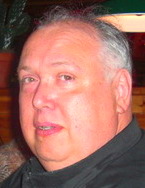
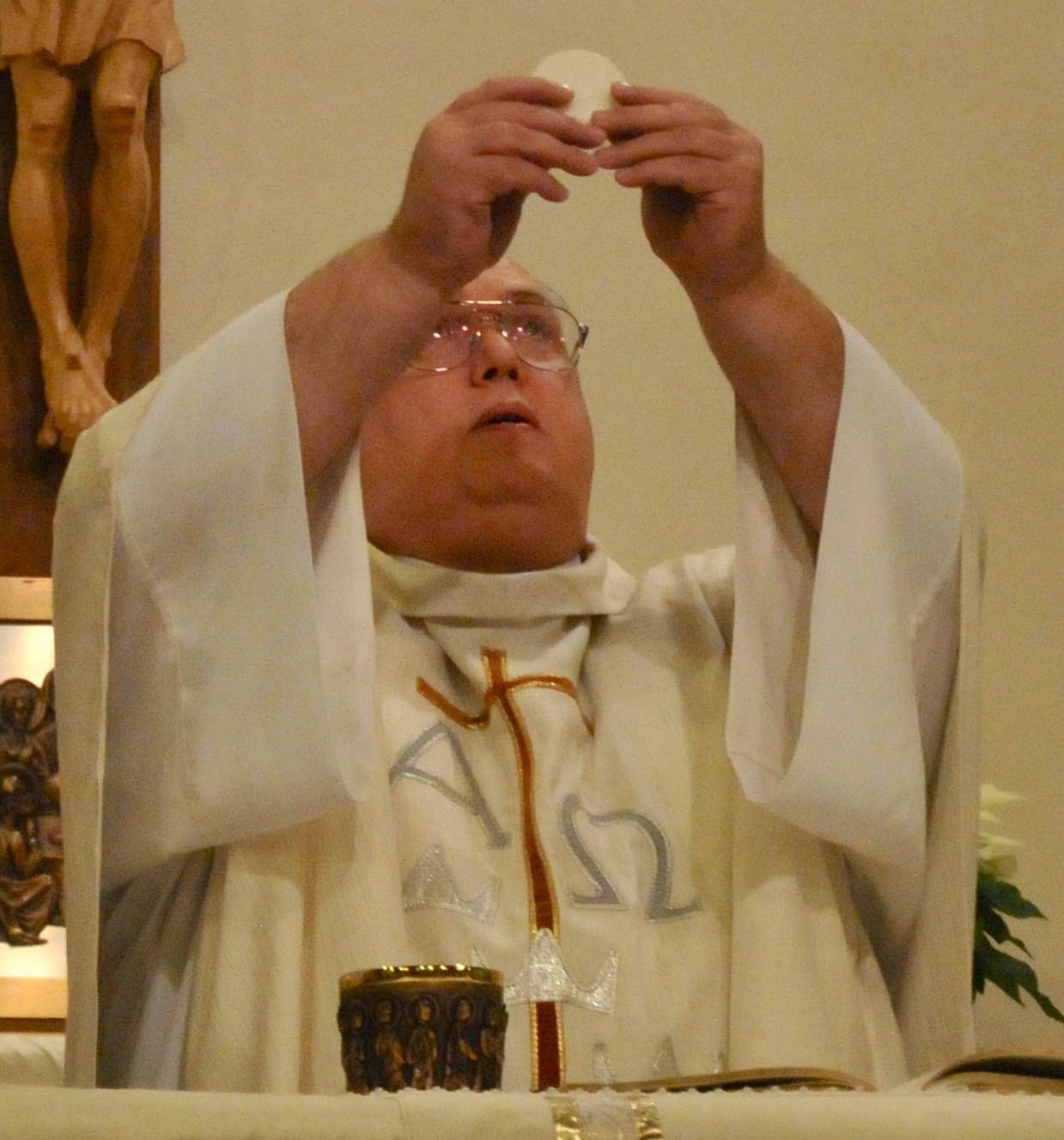
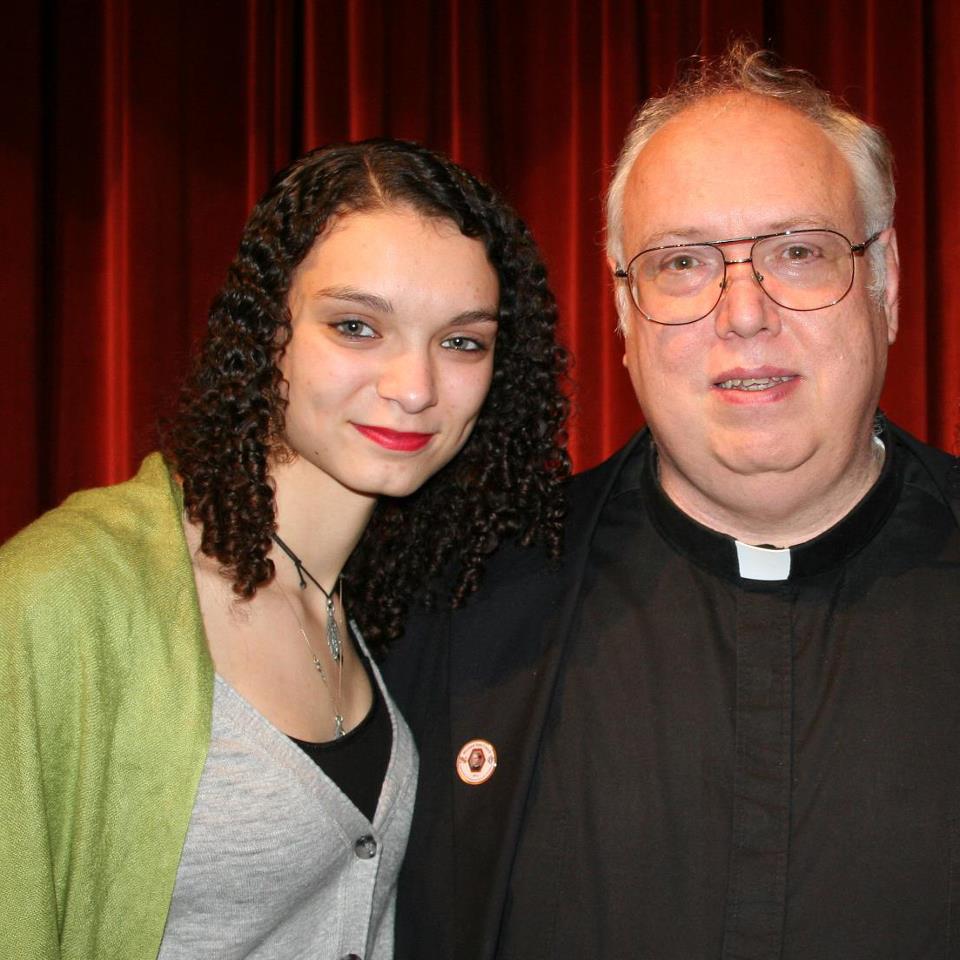
    Fr. Joseph Jenkins

  • The blog header depicts an important and yet mis-understood New Testament scene, Jesus flogging the money-changers out of the temple. I selected it because the faith that gives us consolation can also make us very uncomfortable. Both Divine Mercy and Divine Justice meet in Jesus. Priests are ministers of reconciliation, but never at the cost of truth. In or out of season, we must be courageous in preaching and living out the Gospel of Life. The title of my blog is a play on words, not Flogger Priest but Blogger Priest.

  • Archives

  • Categories

  • Recent Posts

  • Recent Comments

    Jeremy Kok's avatarJeremy Kok on Ask a Priest
    Gary Joseph's avatarGary Joseph on Old Mass or New, Does It …
    Barbara's avatarBarbara on Ask a Priest
    Anonymous's avatarAnonymous on Ask a Priest
    forsamuraimarket's avatarforsamuraimarket on Ask a Priest

We Will Never Exhaust the Divine Mystery

151051890275679

The souls of the dead in heaven are divinized as saints by grace but by nature are still human.  We will have a share in the risen life of Christ.  However, we will always be finite creatures.  There can be no boredom in heaven because by intellect and will we can never fully exhaust the divine mystery.  We will be drawn eternally into the depths of knowing and loving God.  This process begins in this world.  We come to the Lord with a faith realized in loving obedience.  God gives us sanctifying grace and we are made sons and daughters to the Father, kin to Christ, children of Mary and inheritors of the kingdom of heaven.  Death makes this orientation permanent.  We encounter Christ, not as strangers but as friends.  Indeed, restricting ourselves to this world, we find that all the saints of the Church demonstrated great holiness while many of their ideas, even in reference to religious faith, often fell short or were erroneous.  Error will certainly end when we pass through the door from this world to the next; but our capacity to understand and to contain the mystery of God will always be limited by our nature.  This truth applies to both angelic and human spirits.

I do suspect there is a profound openness to truth and the gift of love in heaven.  This would conflict with hell where the demons and lost souls know something of the truth but place a limit or barrier upon their knowing and loving.  We experience in this world a similar type of division and adversity where someone says, “I want nothing to do with you!  I don’t want to know anything more about it!  You mean nothing to me!  I disown you!”  The damned probably have a comparable mentality and stagnation of the heart.

Here on earth we receive the risen Lord in the Eucharist.  God feeds us.  There are no sacraments in heaven as there is no need for sacred signs.  The saints see God and the mystery directly.  There is no more faith because the saints see and know God (as well as his truths) in an immediate fashion.  There is no more hope because every aspiration has been realized.  The only theological virtue that can cross the threshold of heaven with us is love or charity.  This love draws us into the Trinitarian life.  The banquet of heaven is literally one course after another.  The pattern is established with the Pilgrim Church.  God will continue to feed us with himself.

As I said in my first paragraph, there can be no boredom in heaven.  This is a far cry from the popular image of lazy angels sitting on clouds playing harps.  The mystery of God can never be diminished.  There will always be more to know.  The more we know, the more we will love.  The more we love, the more we will want to know.  This is the pattern of the finite creature to the infinite Creator.

I can well appreciate that secular critics deny the soul and view the intellectual life as the operation of our brains.  Romantics might speak of the heart as the source of love, but in truth the brain is the place where material memories and thinking takes place.  As a Christian, I would suggest that as a composite of flesh and spirit, the efforts of the brain mimic the powers of the soul.  Brains are not all the same and all of them have limits in regard to learning and to the physical senses.  Brains can also become diseased, causing people to struggle with thinking and remembering the most basic of facts and relationships.  The brain is physical and like the rest of the body, it has parts that can break down.  Parallel to this, the human soul has no parts and is indestructible.  It grants us a self-reflective knowledge that goes beyond the ability of the brain.  We are more than thinking meat.  Memories are not merely stored as electrochemical processes used by neurons but also make lasting impressions upon the human soul.  Just as we are often surprised by the detail of dreams; I suspect we will also be surprised as to what the soul retains after death.  What would a human being be if he was never to forget and we were to ponder matters with perfect clarity?  I suspect that the material brain both enables rational knowing and reflection as well as impedes it.  (In any case, I would not want to define the soul as simply a hard drive or cloud backup of what is in our brains.  There is a constant interworking that is part of the mystery of the human mind as understood by Christian believers.)  What we now see as through a fog or veil, we will see clearly.

151051890275679 (1)

What and who we know, as well as love, survives the grave.  Indeed, it gives us our eternal orientation.  We are either like the wise virgin bridesmaids at the door with the burning lamps or like the foolish one who walk away looking for more oil.  When Christ, the divine bridegroom comes for us, he should find us alert and ready to enter into the nuptial banquet.   If we fail to remain steadfast and prepared, we might hear those terrible words of damnation, “Amen, I say to you, ‘I do not know you.’”

If pride is the overriding sin of the devils, then a lasting humility is the posture of the saints.  Compared to God we may seem insignificant, literally as nothing.  And yet, Almighty God has looked upon us as his children.  I would argue that the prayer that Jesus gave his apostles will have an eternal significance.  The word for “Father” that is used by Jesus is literally the one used by little children.  I suppose we would render it as “papa” or “daddy.”  All of us, even the greatest doctors of the Church like Augustine and Aquinas, may be counted among the babes of heaven.  We are summoned to know and to love God while in this world.  All we know is still just scratching the surface.  Eternity will allow us to continue this exploration of knowing and loving.  Humility is not just the approach of men and women in this world, but of the saints and angels in the next.  We must become like little children if we want a place in the kingdom.  Those who are bloated with pride, feeling that they are all grown up and know enough already will find themselves in hell.  Similarly, all those who place limits on love will also know the loss of heaven.


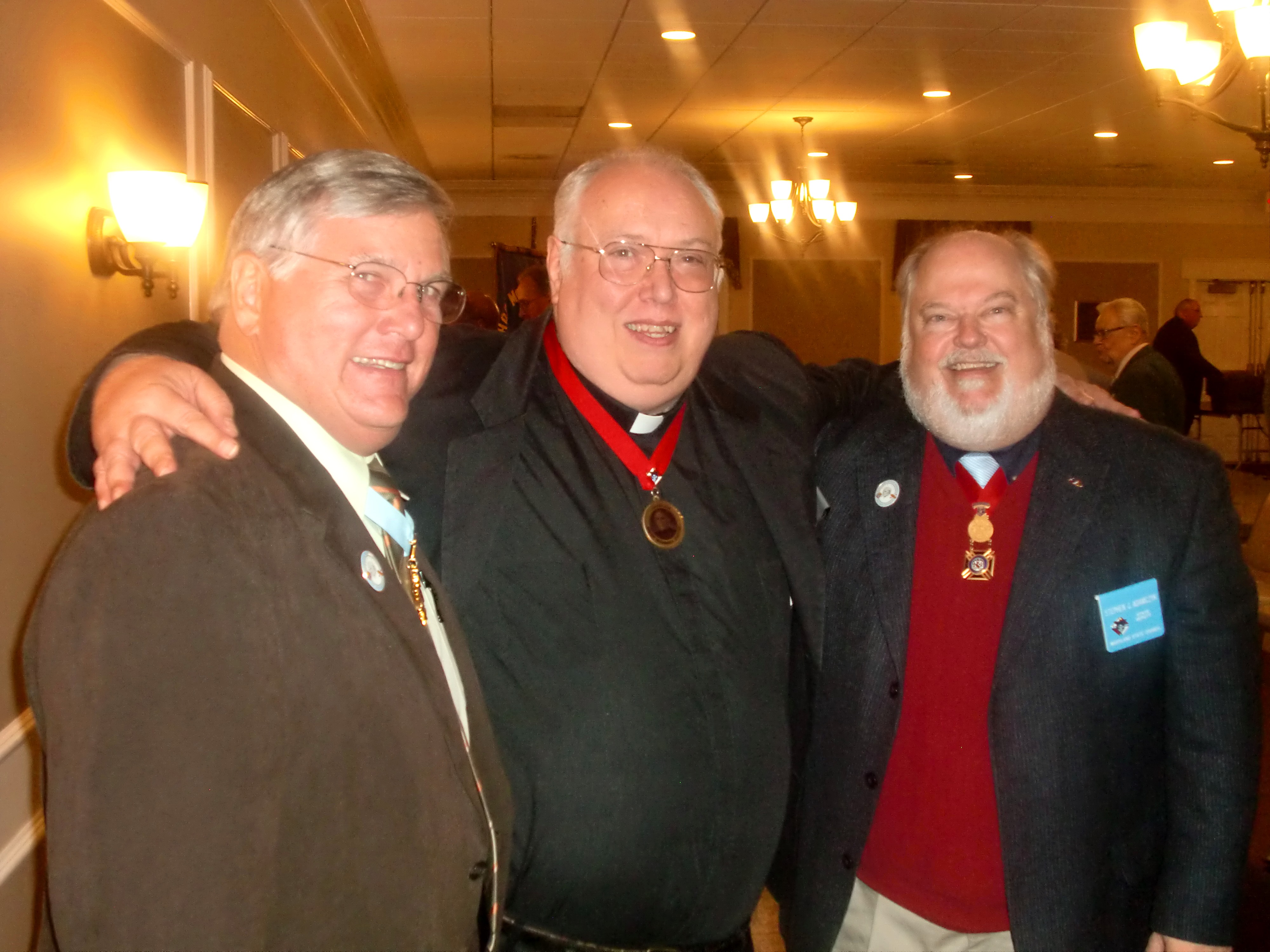
Community, Intercession & Apostolic Men

candid1

CHARLES:

You are simply ridiculous!

Only God can forgive sin. The only way a person can get God to forgive his sins is through God’s Son and perfect sacrifice, Jesus. The way to the Father is through the Son. There is nowhere is Scripture that says priests can forgive sin. It is quite clear when Jesus healed the paralytic that only God and the Son could forgive sin.

FATHER JOE:

Yes, since sin is an offense against almighty God, it belongs to God to forgive sin. This is not contended. Where we disagree is about how goes about pouring his mercy upon us. The incarnation is a theme that runs through Catholic doctrine. God is made present in Jesus Christ. Jesus who is God is made present in his Word. Jesus who is God is made present in his Church. Jesus who is God is active in his ministers or priests. Jesus who is God is present and saving in his sacraments. The Mass offered by ordained priests is understood as a re-presentation of the saving oblation of Jesus. The ordained presbyter participates in the one (high) priesthood of Jesus Christ.

Christ is the center of everything. He is the divine pontifex or bridge to the Father. There is no way to the Father except through the Son. All this is Catholic teaching. None are saved apart from Christ. Your assertion that the Scriptures do not support the ministry of reconciliation cannot be substantiated. Indeed, it would make no sense for Jesus to establish a Church and then to make her impotent to extend his forgiveness. The work of Jesus is the work of the Church— the forgiveness of sins and the salvation of souls.

Here are some pertinent Scriptures:

Matthew 16:19 – “I will give you the keys to the kingdom of heaven. Whatever you bind on earth shall be bound in heaven; and whatever you loose on earth shall be loosed in heaven.”

John 20:23 – Jesus said to them again, “Peace be with you. As the Father has sent me, so I send you.” And when he had said this, he breathed on them and said to them, “Receive the holy Spirit. Whose sins you forgive are forgiven them, and whose sins you retain are retained.”

2 Corinthians 5:17-20 – So whoever is in Christ is a new creation: the old things have passed away; behold, new things have come. And all this is from God, who has reconciled us to himself through Christ and given us the ministry of reconciliation, namely, God was reconciling the world to himself in Christ, not counting their trespasses against them and entrusting to us the message of reconciliation. So we are ambassadors for Christ, as if God were appealing through us. We implore you on behalf of Christ, be reconciled to God.

James 5: 16 – Therefore, confess your sins to one another and pray for one another, that you may be healed. The fervent prayer of a righteous person is very powerful.

James 5: 19-20 – My brothers, if anyone among you should stray from the truth and someone bring him back, he should know that whoever brings back a sinner from the error of his way will save his soul from death and will cover a multitude of sins.

CHARLES:

In Mark 2:5-12, with the healing of the paralytic, Jesus did not correct the scribes because there was nothing to correct. No one but God and the Son can forgive sin.

FATHER JOE:

Twice you have made a distinction between “God and the Son.” You do understand that Jesus is God, right? God in Jesus Christ is revealed as “Father, Son and Holy Spirit.”

Actually, the scribes are questioned for their “reasoning about these things” in their “hearts.” They are not only desperately trying not to believe but not to love. Jesus heals the paralytic to prove that he has the power to both heal and forgive. The physical operation points to the spiritual. We will later see similar miracles in the ministry of his apostles. They will be imbued with Christ’s power and something of his authority.

CHARLES:

Secondly in John 20:23, Jesus was not speaking about priests. He was speaking about Apostles and their special authority that was given to them. Nothing in Scripture says “Apostle Authority” can be passed down, e.g. the authority to forgive sin and to write Scripture. However it does mention appointing elders. Priests are being ordained as elders not as Apostles. They did not inherit any special “Apostle Authority” and frankly there is nothing to suggest they did.

FATHER JOE:

Actually, it was only with the reformation some 1,500 years later that this succession in authority and transmission of power was questioned. The Apostles would lay hands upon their successors, the Episcopoi or Bishops and they in turn would ordain Presbyters (Priests) and Deacons. We find this truth fully realized in the early Church, especially during the Patristic Period. You speak from a severe ignorance of history. Indeed, even within the period of the Acts of the Apostles, the numbers of apostles expands beyond the dozen that followed Christ. Christ established a Church and gave men to shepherd in his name. It would make no sense to do so and then strip that Church of his saving presence and power.

CHARLES:

The simple fact of the matter is the Catholic Church is corrupt and “gave” itself the “authority” to forgive sin in order to fund its coffers through indulgences and encourage men to sign up for the Crusades and go to Heaven.

FATHER JOE:

There is no fact here at all, just a bigoted opinion. Our Lord called sinners to himself and the Church does the same. The Church is holy because Christ is holy. Indulgences were abused by some but reflected our sense of communion with the saints. The merits of Christ have lasting value, both those performed by him and those made possible with him in others. As for the Crusades, they were an attempt to keep the Holy Land open to pilgrims and to defend the Christian faith. Again, there were abuses, but this was the central thrust. The Western world is again threatened by a radical militant Islam; but this time will there be any Christian Knights to defend it?

CHARLES:

Since only God can forgive sin, praying to God is all the matters. Priests, the saints or Mary are not needed as intermediaries. Thinking of them in any such way (besides people whose actions should be emulated) clouds the direct link between people, God, and the forgiveness of sin through his Son.

FATHER JOE:

Your religion collapses under numerous contradictions. You deny the Church any legitimacy, and along with it reject true fellowship in Christ, the communion of the saints, priestly ministry, and the sacraments. You would not even have a Bible were it not for the Church that collected the books, translated the texts and transmitted it down through the centuries. Christ said that he came to establish a Church and yet you seem to miss that important biblical truth. Just as the Jews needed each other and even made atonement for the dead; so do Catholic Christians. Devotion goes way beyond hero worship or simple imitation. We are bonded to them in love and love is always active. Love always has a role. When our Lord tells us to abide in LOVE, this is precisely what he means. Love is more than sentiment or empty words. Love is always realized in prayerful intercession and acts of charity. Otherwise, it is not really love. It is foolish and arrogant to think otherwise.

CHARLES:

Also praying to God doesn’t change anything except for forgiveness from sin. God is perfect and as such never changes his mind. How could we trust a covenant with Him if he changed his mind? God may use prayers as a mechanism of miracles but they did not “convince” God to do anything. He was already planning on doing it. So intercession from a horde of saints and Mary has no effect. This isn’t a democracy. More or less voices in support a person don’t change anything. Praying to saints doesn’t make it more or less likely that a miracle will happen.

FATHER JOE:

You miss the whole point. Prayer is never about changing God but about transforming us. God is the source and the fruit of our prayer. The Holy Spirit gives us faith and makes prayer possible. God is perfect but we are sinners. While the Scriptures speak in an anthropomorphic way about God, Catholicism appreciates the philosophical concept of God as the Unmoved Mover. In other words, in God as Spirit there is no potency. It is peculiar that you have borrowed these Catholic principles given that they are not clearly found in Scripture but rather in Church tradition and philosophy.

God knows what we need and yet he wants us to call upon him. It may seem that he anticipates our requests, because from our perspective he answers— God always answers. Prayer or dialogue with God is not about changing God’s mind but about conforming our own hearts and minds more closely with Christ’s. It is in Christ, a divine Person incarnate, that we experience the revelation of God that makes a supernatural faith possible. If we pray with faith, we are told that trees can be uprooted and mountains moved. Would you deny the Bible on this? We can join with one another in our prayers— both the living in pilgrimage on earth and the living in glory within heaven. Prayer like sacraments have efficacy because the Spirit of God has power. Catholics do not view God as a genie in a lamp upon which we can press our wishes. When we pray to God it is always approach from the posture of humility. The Catholic stance always echoes, “Thy will be done.”

CHARLES:

Prayer is meant to form a more personal relationship with God and for people to find forgiveness with God. By praying to Mary or Saints this goal is obscured and misconceptions regarding the truth of forgiveness and salvation are formed. This is why Protestants don’t do it. The only way to salvation is through the Son. All this other hogwash is just obscuring and confusing this fact.

FATHER JOE:

Your reductionism of prayer is pathetic. Before you would try to teach others, you need to be better informed. Otherwise, the blind will lead the blind. I know informed Protestants who would be embarrassed by your caricatures of Catholicism and by statements that conflict with teachings in their own denominations.

As I said before, Christ and his redemptive work opens the gates of heaven to us. He makes possible our approach to the Father. This is Catholic and Protestant belief. Protestants disagree (in some cases) about intercessory prayer because of views about justification or the status of the saints in heaven. How would I as a Catholic priest explain prayer?

Prayer, at its heart, is communication with God. All true prayer, even intercessory prayer, has as its proper object— almighty God. Prayer is both personal and communal. We approach God as individuals and as members of a faith family. The prayer we first learn as children is the GIMME prayer. Some adults never learn any other type of prayer. This is sad, even tragic. It can make us selfish, concerned with “self” instead of with “other.”

There is nothing wrong with petition but it is not sufficient by itself. We submit our needs before God knowing that he loves us and will provide for us. All prayer acknowledges the basic dependence of the creature upon the Creator.
The most important oration is that of the saints and angels. It should also be ours— the prayer of praise or adoration. We honor God just for being God. He is the source of our existence. Something of his majesty shines back to us through the order and beauty of creation. We praise God, yes even if nothing should be received in return. He is all perfect, all knowing, all loving, and all good. Glory be to God! Hosanna in the Highest! Alleluia!

There are also prayers of contrition where we approach God with sorrow over sin, desiring his mercy. Imperfect contrition would have us fear the loss of heaven and the pains of hell; perfect contrition would have us grieve in love over how our sins afflicted the Sacred Heart, literally the source for our Lord’s Passion and Death. It saddens us that we have offended God when we should have loved him above all things. Christ, have mercy! Lord, have mercy!

There is also a place for Thanksgiving. Indeed, the word EUCHARIST means to give thanks. Catholics thank the Lord in their morning offerings and evening prayers. We thank God before meals. We thank him at the Eucharist or Mass, the great communal prayer that has within it all the forms of prayer.

The Eucharist is viewed as our opportunity to enter into the prayer or saving action of Christ. It is are-presentation of Calvary. We encounter both the saving REAL PRESENCE of Christ in Holy Communion, but also his oblation that makes true atonement for all the sins of the world. It is a command performance. The Lord told his apostles at the Last Supper to “do this in remembrance of me.” The word that helps us to understand here is “amnesis,” meaning that which is remembered is made present. Jesus refers to himself at the Supper as the Lamb of God. He shares the cup of his covenant. A covenant cannot be established with fake blood— only real blood. There is a great mystery given believers. Lamb of God who takes away the sins of the word, have mercy on us! Grant us peace!

CHARLES:

The “Church” is rotten to the core: centuries of corruption, war, theft, distortion of Scripture, and the covering up of sexual abuse of children. Continually chanting that “the Catholic Church” is the only true Church changes nothing. I can safely say Jesus would be disgusted by the Pope sitting on his golden throne as children starve across the world and lack basic education and medicine.

FATHER JOE:

The Church was instituted by Christ and preserved by the Holy Spirit. Condemnation of the Church is blasphemy against God’s handiwork. Your criticism also trespasses into the area of sinful calumny. It is one thing to be critical; it is another to be prejudiced. You are the latter. The history of the Church is the history of the world. The legacy of the Church is the testimony and witness of the saints. We still live in a world of corruption, war and greed. Often the Church is the one voice which speaks out for healing, peace and charity. You would silence this voice; or worse yet, to allow the sins of a few to negate the blessings and miracles she has brought into the world. The Catholic Church is the Mother of the Bible. The distortion belongs to those who dismiss her life you. You define yourself by your hatred of all things Catholic. The Catholic Church has done more to protect children and to care for the world’s poor than any other non-governmental institution. I bet you have done little or nothing for the poor and hurting, either at home or around the world. We run thousands of schools and hospitals and yet you condemn the Church for leaving people in ignorance and sickness. Hypocrite, deal with the plank in your own eye before condemning the Church and others for the splinter in theirs!

Argument Over Jesus & Intercession

Georgios argues:

The primary role and purpose of the devil is to take the believer’s attention as far away as possible from the truth and the blue-prints or foundations of Christians, which is the Bible.

He would have us compromise them with unbiblical diatribes so that the believer loses focus upon JESUS.

He would have the Christian weakened by diminution from 100% fidelity to the doctrine of JESUS.

JESUS is the Way and the Truth and the Life— the only way toward the Father-God.

JESUS taught with parables and he is our answer to all intentions in the spiritual process.

The parable of the sinful rich man and poor Lazarus is sufficient to verify that the saints who died are in a place where intercession for people on earth is impossible! What this means is that only the living saints have the right to do so.

God does not give exemptions to the prohibition of acting outside his Word, which is JESUS.

If Mary can intercede for us, then God is lacks constancy with his Word and that is something that God will not do. He will not oppose his Word. If God made such exceptions then he would not be God at all.

Receive this revelation of the Spirit of God— what he is saying to you Now in the mighty NAME OF JESUS!

Father Joe responds:

The devil’s primary aim is one of eternal spite. He would have us corrupted so as to offend God. He would have us embrace selfishness and a disordered love.

The devil knows well the Bible. The trouble is that what he knows, he utterly rejects. While the devil is certainly involved with error, this in itself is not his primary purpose. Good men and women might be confused or ignorant about many matters of faith. They may yet be saved. The devil places an emphasis upon the will. HE especially delights in one who comes close to the truth and then rejects it. The more you know the more that you will be held accountable.

Much of the confusion and fracturing of the Church after the Reformation has to do with men and a rejection of the shepherds appointed by Christ. You seem to infer that the Bible is self-sustaining and interpreting. This is simply not the case— historically or theologically. I suspect that the “diatribes” you condemn are efforts within the Church to prayerfully reflect upon the saving kerygma.

If you have rejected the sacraments and the teachings of the Catholic faith then you have quite literally separated yourself from elements of the revelation received from Jesus Christ. The Church follows the Lord and his two sources for Christian revelation: Sacred Scripture and Sacred Tradition. Only the reformation churches, and not all of them, would utterly reject the second tier established by Christ.

Jesus is also one with the Mystical Body or the Church. That is why the early Church spoke about Christ and our life in the Church as the WAY.

Jesus taught in many ways. Yes, his parables give us insight into the kingdom of God. But he also prophesied, made commands, and witnessed the message of the Gospel.

The parable of the rich man and Lazarus does indeed speak to life after death, although there is some question as to whether Lazarus was in heaven or the limbo of the fathers. Similarly, was the rich man in hell or in purgatory? The gates of heaven are only opened by Christ, and at the telling of this parable, Jesus had yet to undergo his saving trial. Further, the parable does not offer us an instance of attempted intercession as understood by the Church. He requests that Abraham send a message to the living or make an appearance to warn them. The intercession of the saints is directed, not to another saint, but to almighty God. We pray that they will add their prayers to ours in asking God for his mercy and favor.

Actually, the trouble here is you have a very narrow notion of how the Word operates. The Word is written upon human flesh in the incarnation. The Word is breathed into the Scriptures. The Word becomes one with his Holy Church. The Word is given perpetual efficacy through the sacraments. The Word takes to himself a human mother, sanctifies her and gives her to us as a model of the Church. The Word conquers death and all who are alive in Christ can pray for themselves and others, including the saints of heaven.

Who are you to tell God his business? Who are you to make yourself the interpreter for all Christianity, including attacking a Church that was instituted by Christ, gave us the Bible and is the Mother of all the breakaway Protestant denominations? Mary can do as she did at Cana… intercede when the wine runs out.

I would caution you again hubris. You are not God’s special messenger or prophet. You are just one poor confused soul putting on airs to others.

ATHEIST COMMANDMENT 9

“There is no one right way to live.”

Eye-3372-largeAnd what is this supposed to mean? Would the atheist tolerate a radical Islam that covered a woman’s face and body, reducing her to property, denying her an education and life outside the home? Would they turn a blind eye to a pre-civil war south where slavery allowed a genteel life for some and one of brutal servitude for others? This so-called commandment is actually nonsense. The truth is that while there are many different states of life and a certain cultural diversity; nevertheless, there are ways of living that countermand human decency and the laws of God. Keeping harems or same-sex partners would also fall within prohibited acts; however, I suspect the atheist critic wants to make room for deviancy. Once more there is a problem with specificity. Who decides what an appropriate lifestyle is and is not? Failure to make any judgment will lend legitimacy to anything and everything.

The Christian would argue that there is a right way to live and that is to live in right relationship with God and man. Sex outside of heterosexual marriage is a sin. A lifestyle that depends upon the oppression of others is a sin. A life that is addicted to booze and drugs is one that faces imminent destruction. Commercialism and materialism will ultimately fail to satisfy the longing of the soul. We live in such a way, in accordance with our nature, so that we can draw out the best that makes us human. We are social creatures which need to interact with each other in a manner that both preserves human freedom and insures the healthy functioning of society. Putting it bluntly, there are right “ways” of living and there are wrong ways, too.

I am somewhat surprised that that a man who promotes science would suggest this dictum. The Mythbusters devote each episode at dispelling myths and trying to ascertain the truth. There is little truth in this so-called new commandment. As with the proper fuel for a car a protocol before a dangerous experiment or explosion— there is a right way and a wrong or dangerous way to proceed.

This new law is really just an excuse for liberality and unhampered toleration. Not that I think he really means it because I suspect there are elements to the Christian life that he would find personally objectionable. In other words, the rule here is biased with unspoken exceptions. He would stretch the definition of marriage and family. Marriage, itself, might be viewed as an unnecessary human construct. Obviously, the atheist critic would not interpret it as a sacrament configured to give grace.

Man is not the final arbiter of right and wrong. The rejection of this truth is at the heart of many contemporary problems. Everything is politicized, even human behavior. If the law says something is right, many presume that it must be okay. The war against drugs goes badly, so advocates argue for their legalization and taxation. When the prostitution situation resists resolution, there is a lobby that suggests making it legal with defined health or safety standards. Assault against children, even in the womb was reckoned as manslaughter and a war crime but now it is regarded as a right of women to choose. Within living memory homosexuality goes from being criminalized to being protected and promoted as a basic civil right. No matter what the issue or behavior, people no longer turn to ministers or philosophers but to lawyers and politicians.

This process promotes a lie… about human nature, about God and his commandments… and about our sphere of influence. The subjective eclipses the objective. The relative dominates over point of permanence. The end result is that we damage ourselves and all our associations. Not only is there a loss of a sense of sin but also of any concrete definition.

ATHEIST COMMANDMENT 8

“We have the responsibility to consider others, including future generations.”

landscape-with-a-tree-swirl-cloud-4545-largeWhy? God is out of the picture, so why care? No matter what we do, top scientists tell us that the universe is doomed. It is hard enough to care for ourselves and find happiness. Does it really make sense to care for others and generations unborn? We already abort half a million unborn children in the U.S. each year. If the living does not matter then caring about prospective people seems arbitrary and meaningless. Cold and honest atheistic logic cries out: “Maybe it would be better to let the poor and the defective die outright? If we eliminate the world’s refuse, then there will be more for us and the Western elite. We can make the world safe for endangered species by subtracting overcrowding populations of humans. Do we have any more right to the earth than the animals? Show me scientifically that we have an obligation to others and the future! Prove it or give it up. Our personal world might be better off if there were a few less mouths to feed.”

Anyway, we are all such hypocrites. Look at all the stuff we buy these days that comes from slave labor and where people are oppressed. If it is cheaper, it is better… that is today’s mantra. We take advantage of the poor and the worker. The host of Mythbusters can make up this commandment… but even his television show bobble heads and DVDs are manufactured in Chinese sweatshops. We can thus avoid paying local workers at all and pay others a non-livable wage. The rich get richer and the poor get poorer! Yeah, we really care about others… NOT!

As a Christian, I believe that every person has an incommensurate worth. All human life is sacred and we are called to be good stewards of creation. I believe that there is something immortal and lasting about every person conceived into this world. We are all God’s children and God loves you no more or less than he does me. I believe there is an order and a divine plan. It is important to play our part as instruments of divine providence.

ATHEIST COMMANDMENT 7

“Treat others as you would want them to treat you, and can reasonably expect them to want to be treated. Think about their perspective.”

creepy-guy-pointing-6790-largeEarlier I spoke about how there is a certain Christian spillage into the non-theistic environment. There is no table rasa for the atheist in the creation of his godless Decalogue. Here he has essentially borrowed THE GOLDEN RULE from Jesus: “Do to others whatever you would have them do to you. This is the law and the prophets” (Matthew 7:12). Stripped from the commandment is the underpinning of a divine imperative. Also missing is the unique appreciation of sacrificial love espoused by Christ. Our Lord tells us to lend without expecting repayment. He urges us to love those who hate us. He says we must forgive those who hurt and persecute us. This means that we would treat others with compassion and generosity and not measure the cost. Without this appreciation, the Golden Rule might be interpreted as a quid pro quo situation: you rub my back and I will rub yours. There is no bartering when it comes to the quality of love. Once again, there is an element of uncertainty. What can we “reasonably” expect? We might want someone to show us charity and mercy, but in earthly terms are they obliged to do so? Similarly, how far do we put ourselves out for others? Each of us has his own problems and debts. I have heard hard men say, “I ask nothing of others and in return I would like to be left alone by all the panhandlers!” In a cold and cruel way this might be applied to the rule here. I have also heard people say, “Nobody ever gave me a free lunch so why should I have to buy for everyone else?” This reductionism can reach a level where the rule is no more than this: “Don’t try to kill me and I won’t kill you!” The rule is echoed in many cultures and among many religions. However, the full meaning and truth comes clear within the Christian dispensation. God has been good and generous to us. We need to extend this generosity to others.  The matter is deeper than “their perspective” but rather how does God see it?

ATHEIST COMMANDMENT 6

“Be mindful of the consequences of all your actions and recognize that you must take responsibility for them.”

Praying-Skeleton-4870-largeThis is not so much a commandment as it is a quality of good character. All of us need a level of integrity in how we approach the world and behave. This does not tell us what to do. Rather, it is a premeditation and a later resolve to carry through and accept what comes. I was surprised to see this one on the list because it is the edict that atheists and secularists so often seek to escape.

Notice what is left unsaid.

1. How does one judge the consequences?

2. How far can one go to change the consequences?

3. Should the weight of the consequences upon the agent and others be equally measured?

4. Do others have a right to weigh in upon the consequences of acts that one proposes to perform?

5. As long as one will accept responsibility for acts, what determines that these acts are good and moral?

6. What exactly does it mean to take responsibility… obedience, dissent, not getting caught?

The Church urges this dictum when it comes to sexual activity between men and women. Couples should first be married and they should be mindful that this activity is how lovers become mothers and fathers. Sexual intercourse is geared to fecundity and fertility. Of course, the critic objects to this necessary connection. He would prefer a reflection so that an escape clause or out might be found. Thus, as an example, sexual acts might be manipulated or the faculty of generation destroyed through contraception. Instead of avoiding such acts that are inherently life-giving, the act is distorted into one where bonding and pleasure are now the only ends. If the contraception should fail, the traditional believer would say then the child should be welcomed. However, here the so-called commandment is violated or expanded again to include abortion. In truth, responsibility for acts is avoided.

As a Catholic, a difficulty I see is the ingredient of atheism itself. What if Christians should be right about the last things: death, judgment, heaven and hell? Then there are obviously consequences for our actions that the non-believer has failed to evaluate. The tragedy here is that there will be an eternity to suffer remorse.

ATHEIST COMMANDMENT 5

“God is not necessary to be a good person or to live a full and meaningful life.”

priest-10214-largeWhat does it mean to be a good person? What makes life meaningful or worth living? It seems to me that God is like the paper upon which we write. Without him we do not even have the tools or perspective to answer satisfactory either question. The atheist critic contends that the believer is greedy and wants a better deal than the universe gives. Unhappy with a broken world, he argues that theists imagine another world where there is a God who cares and an order that will make sense of the present mess. Karl Marx made much of this “pie-in-the-sky” interpretation of religion. These critics contend that eternal life and the joys of heaven are imaginary rewards fabricated to placate those who are currently suffering or doing without. Note that the rise of American atheism has followed the fall of Soviet communism and the red threat. Many Americans once viewed socialist leanings and atheism as stripes belonging to the same animal. In contradiction, we still find a lingering merger of faith to patriotism. It is almost always the atheist or secularist who throws down the gauntlet: challenging “under God” in the pledge, public prayer, the Bible in schools, the teaching of intelligent design along with evolution and civic toleration of religious symbols.

It is true that sinners and the godless can know good fortune and a level of earthly happiness. But what happens when things do not go our way? The believer finds consolation in his faith, particularly in the face of disappointments, suffering and struggle. Other than taking a mood pill, what does the atheist do when he is facing the prospect of failure, pain and death? What is the meaning of life when everything must be defined in terms of limited mortality? Apart from God, do we even know what it means to be a good person? Why be charitable or self-sacrificing when it costs us and this is the only life we will ever know? Are fornication and homosexuality good? Is adultery only bad when you are caught? Is it okay to steal if you think you can get away with it and there will be no negative consequences? If life gets too hard is it good to take an overdose of pills and end it all? If drugs make you happy then should it not be a personal decision to take them? Is it good to help a scared girl to have an abortion even if believers contend it is the murder of a child? Christians are confused about such matters, too. Many think that simply being good will save them or that following their conscience, even an erroneous one, absolutely frees them from culpability. It does not.

People who reject God might stumble upon being good persons, and there are such things as natural virtues, but I suspect it is usually because they have been touched or “contaminated” by the faith of people around them. It is hard to argue for supernatural virtue or ethical principles or defined commandments when there is no belief in God. It strips the law of any genuine imperative. Precepts become arbitrary or capricious. We see this with the current transition of homosexuality from a crime and defect to a right and gift. Instead of civil laws backing up the laws of God, the laws of men become the final authority and they can change at any moment with the current fads and fashions. Politicians become the new priests and prophets, demanding that vice be regarded as virtue and that moral evil be rendered as good. Morality becomes a matter for vote and legislation, not something imposed by a God in Scripture or from a principal agent behind nature and creation.

Liberalism might rule the day at present, but views can change and we may see an atheistic secular world fighting itself over what is right and wrong. A person might tolerate sodomy but condemn pederasty. The pederast or pedophile might object to bestiality. The bar is increasingly lowered but not every atheist may find he can bend so low in reference to certain indignities. Killing the child in the womb might earn his or her remarks of gratitude as a feminist for women’s rights; but kill a three year old that no one wants might make the same critic puke in disgust. Such is the brave new world we are creating. What we have forgotten is that even Hitler and his Nazis thought they were good persons doing good work with eugenics and holocaust. Today we would stamp them as evil although many of their stratagems against the innocent have been put back into place. I will say it again and again. Without God, we do not know how to be good. Of course, this is a different question than, are Christians actually good? The believer acknowledges that he is a sinner who has fallen short. We need the mercy of Jesus. While God’s grace can make us saints; his law reveals how much we have fallen short and how much conversion we still require. If there is no God then there is no sin and no need for forgiveness. We must also then face a universe that could not care less about us. We can live for a few seconds of a hundred years, but eventually the world will get its way and we will die. We are children of nature and we are destined to die. A fallen world will kill us. We will get cancer or diabetes or heart trouble or something else. The atheist says he is not afraid to live and die. I suppose those who feel they have achieved something might feel this way. But what if you are a “nobody” with nothing going right in your life? Suppose you think that nobody loves you. No one wants you. You might conclude, “I would be better off dead,” and if the atheists are right then you would probably be right. In any case, you will get your wish. You will die. We all do. The atheist has to face the prospect that he will be forgotten. It will be as if he never were. Nothing he did will have any permanent significance. How can one be really happy when the transitory is all that one believes to exist? The story of Job was in response to such concerns. The ancient Jews gave little thought to an afterlife. They saw God’s reward in earthly success: wealth, property and family. But what if evil men should flourish and good or innocent people should suffer? Where is the justice in that? Here is the conundrum and it leaves us with one of two possibilities. Either there is no God or at least none that cares a damn for us or there is a good God who will balance the scales in another life where some will be rewarded and others punished. The former argues that we live in a universe where ultimately there is neither justice nor mercy— a prospect that many of us find too terrible to conceive. The latter claims that there is more to reality than we know and that a just God has given us an innate desire for life and happiness that he will satisfy— not in this world but in the kingdom of Christ.

ATHEIST COMMANDMENT 3

“The scientific method is the most reliable way of understanding the natural world.”

scientist-mad-man-laboratory-experiment-cartoon-15403-large

I have a profound respect for the utility of the scientific method; however, it would be the height of hubris for one to place it alone on the dais of truth. It has very significant limitations. I am not surprised that this “new” commandment is proposed by one of the renowned television Mythbusters. One of my favorite shows, the premise is that a “myth” or hypothesis must be testable through experiments or observations that are repeatable. The program gives one of three answers: Confirmed, Plausible or Busted. Despite a desire from certain cast members to tackle “religious myths,” the Discovery Channel has said no, if not to avoid the mockery of faith at least to preserve a large faith-based audience.

Such an approach to the natural world is often best with particularized or tightly delineated questions. The topics that concern philosophers and theologians are generally beyond the parameters of the scientific method. For instance, string theory might make good math but how would one go about proving experimentally a theory “about everything”? When researchers try, the experiments, by necessity become increasingly expansive. Astronomers and astrophysicists want telescopes that see further into the universe and into bands of light or energy that we could not normally perceive. We now think we have detected the cosmic radiation present after the Big Bang. Physicists peer in the opposite direction, looking for the God particle or the infinitesimally small, as with the massive (17 miles long) Hadron Collider. However, after all the number crunching and investigation, there is still no good science that demonstrates either a doomed or self-perpetuating cosmos without a Creator. This should force even the most hardened cynic to agnosticism, not to an atheist’s absolute denial of a deity. They will argue that the burden of proof is upon the believer. And yet, the believer looks around and sees proof everywhere; he is shocked that the atheist cannot see it. Nothing comes from nothing. If there is no Creator, then nothing should exist— not a butterfly or a smiling child— not a tick of the clock or the movement of an electron and proton— nothing, no time, no space, no matter, and definitely nothing that should be asking these questions or reflecting upon existence. But here we are. Are we just a cheap accident? That is no answer. If being and non-being is a flip of the coin, then I want to know who is supplying the change!

While the Catholic already accepts the existence of God and even says that he has intervened in human history as a caring God; nevertheless, he wants to make sense of the natural world. God can use miracles and suspend his laws but usually he does not. Otherwise, creation would be capricious and God would seemingly curse the very order he put into place. The Catholic notion of intelligent design looks at the patterns in the natural order and philosophically deduces a knowing agent. Schools often refuse to admit the view, even though it respects the scientific data associated with theories of creation and evolution. There is no empirical test to prove or disprove the existence of a divine being. Public schools, in particular, will make room for experiential science, but increasing reject not only religion but the benefits of natural reason and philosophy. This throws out the best of Western civilization and represents a type of intellectual reductionism. The same philosophy that would allow for intelligent design would also promote logical reasoning and a study of the virtues. It is no wonder, that vice and actions are increasingly separated from the concern of culpability or objective morality. Schools become hell holes because we have subtracted everything of heaven out of them.

The scientific method is a useful tool, but it is only that.  It has led to discoveries that have both improved and endangered the world.  Knowledge is gained but often without the wisdom as to how to use it properly.  Understanding the atom has made possible new sources of energy and medical treatment; it has also made possible the Bomb and the prospect of nuclear holocaust.  It is truly a two-edged sword.

It falls short in teaching us values and in answering the question about the origin of the natural order. Even if there were an infinite sequence, and eternal regression and progression, (which Thomists regard as an absurdity), the question could be raised as to whom or what put it into place. Similarly, if creation has a beginning and an end then questions emerge that beg for an answer. When the last of the energy evaporates from the one remaining black hole, what happens next? Or looking to the very beginning, where did the point or singularity come from? Compared to the claims of science, those of religion are looking more credible, even if still inscrutable. God lives outside of time and space. Even though he is the source for the natural world, there is a wall between experiential knowledge and a dimension without matter or temporal and spacial extension. He is existence or the source of all being. He creates everything from nothing. While no one is compelled to believe in a deity, similarly the notion should not be ridiculed or banned. As a believer, I contend he shares with creation the perfections that he has in infinite measure as their source. God by definition would defy being placed under the microscope or being reduced to mathematical formulae. He has called us to know him, but only the surface of this “knowing” can be scratched. The mystery remains and the response of believers is gratitude and praise. I suppose the lack of thankfulness is what most infuriates believers about atheists.

ATHEIST COMMANDMENT 2

“Strive to understand what is most likely to be true, not to believe what you wish to be true.”
man-enthusiastic-arms-15696-large

What seems “likely true” might not always be the case. The pagan worldview had to surrender to the Judeo-Christian. Many presumed that the world was flat, that the earth was central with a revolving sun, etc. The majority held a view that was challenged by Copernicus and later by Galileo, both Catholics and the former, a monk. When science widely advocated spontaneous generation, Louis Pasteur discerned a small invisible world where contamination and vaccination was possible. When science took for granted a Newtonian view of the world, modern physics would largely rewrite the book. We strive to understand what is true, but that which is most likely can shift and change.

I am not convinced that all atheists are so objective. It seems to me that some of them fervently resist any and all assaults against their denial of a God and/or Creator. In other words, while they would applaud the rejection of God by believers; they would not permit any data on their radar that would imply his existence. Science is a wonderful area of investigation and knowledge; but scientists (religious and atheists) can and do battle with each other over what they “believe” and “wish” to be true. Indeed, these arguments can become very passionate: everything from a closed to an open universe to warm-bloodied dinosaurs over cold reptilian. Data is interpreted in a way that favors their views or hypotheses.

Nevertheless, Catholic believers are also called to be rationalists. We do not subscribe to the faulty proposition held by certain Protestants of a “blind faith” or “faith over reason.” Indeed, it is because of this philosophical demarcation that certain Fundamentalists hate and attack Catholicism. Catholicism proposes “faith seeking understanding.” While the fundamentalist argues for a literal six days of creation and a world that is six thousand years old; Catholicism accepts the reckoning of time from archeologists and physicists, unperturbed at the prospect of millions of years of evolution and a cosmos that is 13.8 billion years old, as long as one might posit intelligent design. The difference with the atheist is that the informed Catholic has a profound respect for divine revelation and refuses to invalidate his subjective experience of a relationship with a living God. Indeed, he feels that we are wired for God and have an inherent capacity to acknowledge the divine transcendent… a reality he tries to convey not only in Scripture and ritual but in poetry and art. I suppose we would argue that there is something measured here that is just as real as in the scientist’s mathematical formulae and in Hubble’s distant astronomical images. There is a sense of awe which many of us refuse to associate with chaos or chance but rather see the finger of God and providence. The proposition here seems to imply that it is a matter of “either/or” while the Catholic Christian would say it is a matter of “and.” Catholicism is the religion of the “great and.” It is not faith alone or the Bible alone or Jesus alone or even empirical science alone. Catholicism is the religion that speaks to faith and works; the Bible and sacred tradition; Jesus and Mary and the saints, etc. She is the religion that fostered great scientists, even as she stumbled sometimes to see the tapestry where science might be interwoven with faith. She embraces all that is good and true and claims it for her own. That is why the Church has the Vatican Advanced Technology Telescope (VATT) on top of Mount Graham in Arizona. That is why our universities foster some of the best scientific research in the world. That is why the Pontifical Academy of Sciences includes believers and non-believers alike who further the advancement of the mathematical, physical and natural sciences and the study of related epistemological problems.

I suppose we need that child-like faith which trusts that what we believe can also be true. Atheists sometimes witness to this truth in their romantic liaisons and families. Cold science might argue for finding the optimum physical specimen for reproduction. However, most fall in love and embrace a mystery with their hearts even as their heads insist it is all just chemistry and sparking synapses. I suspect the transcendent shows itself even as certain critics contend that it cannot exist.