• Our Blogger

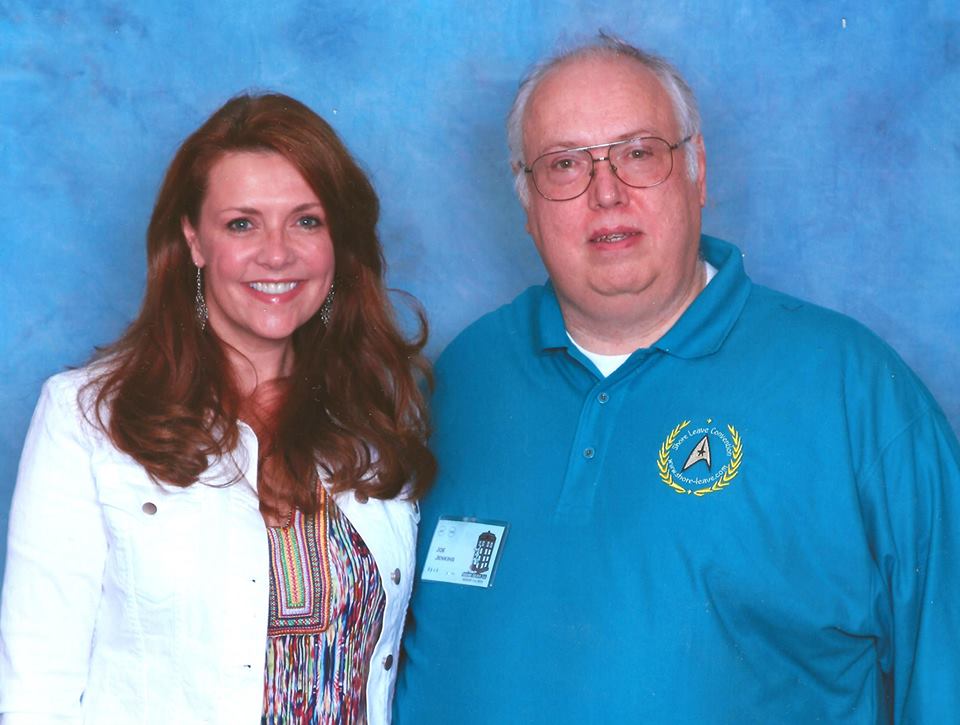
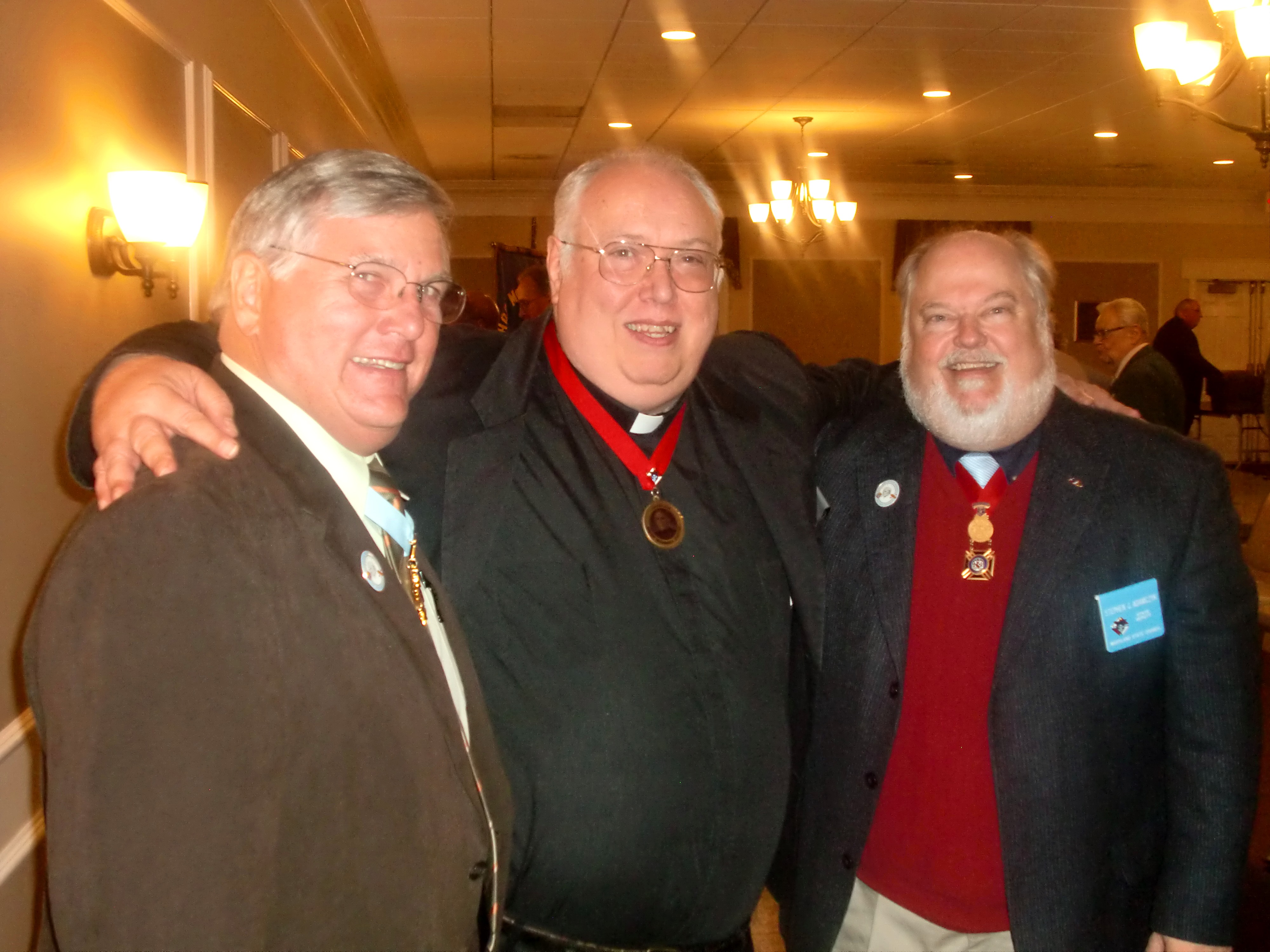
    Fr. Joseph Jenkins

  • The blog header depicts an important and yet mis-understood New Testament scene, Jesus flogging the money-changers out of the temple. I selected it because the faith that gives us consolation can also make us very uncomfortable. Both Divine Mercy and Divine Justice meet in Jesus. Priests are ministers of reconciliation, but never at the cost of truth. In or out of season, we must be courageous in preaching and living out the Gospel of Life. The title of my blog is a play on words, not Flogger Priest but Blogger Priest.

  • Archives

  • Categories

  • Recent Posts

  • Recent Comments

    Anonymous's avatarAnonymous on Ask a Priest
    Michael J's avatarMichael J on Ask a Priest
    Jeremy Kok's avatarJeremy Kok on Ask a Priest
    Mike Zias's avatarMike Zias on Ask a Priest
    Jeremy Kok's avatarJeremy Kok on Ask a Priest

Parthenogenesis: Babies Without Sex & Males

It Takes One To Tango
By William Saletan
Sunday, June 10, 2007; Page B02

The article states:

“Still, the process hadn’t been proved in sharks or mammals. And there seemed to be a good reason why. An egg that fertilizes itself makes two identical sets of chromosomes, including sex chromosomes. In birds, snakes and most lizards, two identical sex chromosomes make a male. That allows parthenogenesis to function as a DNA survival mechanism, because an isolated female — close your ears, kids — can produce a son and mate with him. But in sharks and mammals, this wouldn’t work, because two identical sex chromosomes — XX — make a female.”

Virgin birth happens statistically with one in every 10,000,000 human births. The offspring is always a girl, which is further verification of how miraculous was the Christ as a boy. Such was only supernaturally possible.

Goodness, can you imagine the headache and reproach if suddenly a chaste Catholic girl found herself pregnant, without even the benefit of a man and the enjoyment of mortal sin? Who would believe her? As a nun in the cloister she would be forced to surrender her child to adoption. As a layperson, she would face the stigma of being a single mother or racing around to find some noble man willing to marry her and to believe her story, accepting the public blame for a child he did not help conceive.

The article goes on to say:

“Mammals are different. We have a mechanism called imprinting, which foils parthenogenesis. But we’ve also developed an organ that can foil imprinting: the human brain. A few years ago, scientists produced 10 mice, two of them apparently normal, by manipulating a couple of genes so that eggs could fertilize each other. The scientists predicted “even greater improvements in the efficiency of parthenogenetic development in mice,” and they vowed to try next with pigs.”

I am not sure if there are any moral problems with parthenogenetic research in animals. But as for human beings, the notion of taking sperm and genetic DNA material from two females to create a embryo (for research purposes) seems highly suspect and wrong. There are a host of serious questions. One might contend that such efforts at reproduction foil the natural law which requires one man and one woman and the marital act.

However, if parthenogenesis (the fusion of two eggs) already exists in human-beings (although quite rare) then might one argue that enabling such a process is just a promotion of a rare naturally occurrence. Of course, those who terminate pregnancies also claim that they merely do what sometimes happens naturally, miscarriages. My contention would be that a rare statistical event of this sort (parthenogenesis) represents an abnormality and that which is the usual and most frequent instance of reproduction must be considered normative. Further, while human science can change all sorts of parameters, this in itself does not make such research moral. Men can act against their nature and this includes the reduction of human life to a commodity or to a curiosity for medical research and experimentation.

“Will we try parthenogenesis in humans? We already have. Biotech companies are rushing to industrialize it, with one claiming “a dominant patent position in the production of human embryonic stem cells by parthenogenesis.” The stem-cell version of parthenogenesis can’t make babies, but the mouse version might be able to. Theoretically, it would make it possible for two women to create a child together — not a clone, but a mixture of genes from each parent, just like you or me.”

Women might be able to have children together? Given that a number of women only rank the importance of men based upon their abilities to perform from the waist down, this possibility seems to make men largely disposable. Technologies give women devices for various forms of masturbation and now reproductive schemes would grant them “female” offspring. Socially, many women have already made the break, particularly in the households of female single parents. I recall in a liberal minority congregation years ago being told by a woman getting federal and state assistance: “What do I need a man for? I already have my babies!” Men provided entertainment and a stud-service, but nothing else.

Lesbian couples would not have to adopt but could now have children from their own combined DNA. This is a jump from the fusion of two egg cells in a single woman to the forced sharing of genetic material between two. Indeed, there is no scientific reason why genetic information could not be shared from many individuals. Of course, this would quickly represent a new eugenics with designer children. Men could participate, but would be completely optional, unless one wanted a male child.

I see no significant reason why such research should be pursued. The race is not facing immediate extinction.

Never Mind Your Wishes, We Know Better

In England, doctors would like to make the choice between life and death. Here is a report from back in 2006. It is still relevant today:

A High Court judge on Wednesday refused a request from doctors to turn off a ventilator keeping alive an 18-month-old boy with incurable spinal muscular atrophy. The boy’s parents had opposed their request, arguing that although he was severely physically disabled, the boy could still enjoy spending time with his family . . . The case was believed to be the first in which doctors had asked to allow a patient who is not in a persistent vegetative state to die.

Under England’s NHS, I imagine the doctors were trying to protect their financial interests. It’s certainly not cost effective to pay for the care of the severely disabled. (Never mind that the funding comes from the sky-high taxes of their very own patients!)

In this case, the request was denied, but the fact that the doctors felt themselves within their medical right to make such a request has far-reaching and grotesque implications. How can anyone in England feel safe in the hands of these arrogant holier-than-thous?

Not much of a leap from abortion to infanticide, the slippery slope has already been realized in our own country.

Remember the newborn child with an obstruction in the throat that prevented feeding? Because the child also suffered from Down’s Syndrome and most likely retarded, an easy surgery to correct the feeding problem was dismissed. The baby starved to death.

There have been several similar cases since, and of course, we always have Partial Birth Abortion which is really a form of Infanticide.

The ethicist Singer suggests that infanticide should be allowed at least until about three years of age– arguing that they are not viable without assistance and not “full” persons.

The brave new world resembles the old world more and more every day. The ancient Romans allowed babies to die from exposure and abandonment. If any of you ever saw the old movie HAWAII dealing with early colonization and missionary work, you may remember the scene where the girl baby is thrown off a cliff. I wonder if it would still shock audiences today?

The Slippery Slope of Abortion

Someone wrongly argued the following with me: “And the slope between abortion and infanticide is only slippery if you accept that fertilized egg or a partially-developed fetus is in fact a human being. As most abortion-rights supporters claim the opposite, I fail to see the threat.” The discussion dealt with how artificial contraception degraded into an acceptance of abortion and that now it was reaching the new low of outright infanticide.

Actually, most abortion-rights supporters in the vast crowd make no “explicit” claim at all about the unborn, avoiding the discussion about the beginning of human life and personhood— with the possible exception of bloggers and paid advocates. However, particularly given modern tools for viewing the child in the womb, some die-hard promoters of abortion are admitting “it” is human, but not a person with rights. Others are arguing that the rights of the mother would outweigh even the rights of another person, should that person be unborn and “parasitical.”

Many deal with their pro-abortion stand with an avoidance of the biological truth, the real reason why plastic imitation fetuses are forbidden on network TV news. Obviously, the implication is that they do not “recognize” a life having value there; but many people remain pro-abortion no matter whether the child is in the embryonic or late term stages. The slippery slope is not a theory. It has been realized.

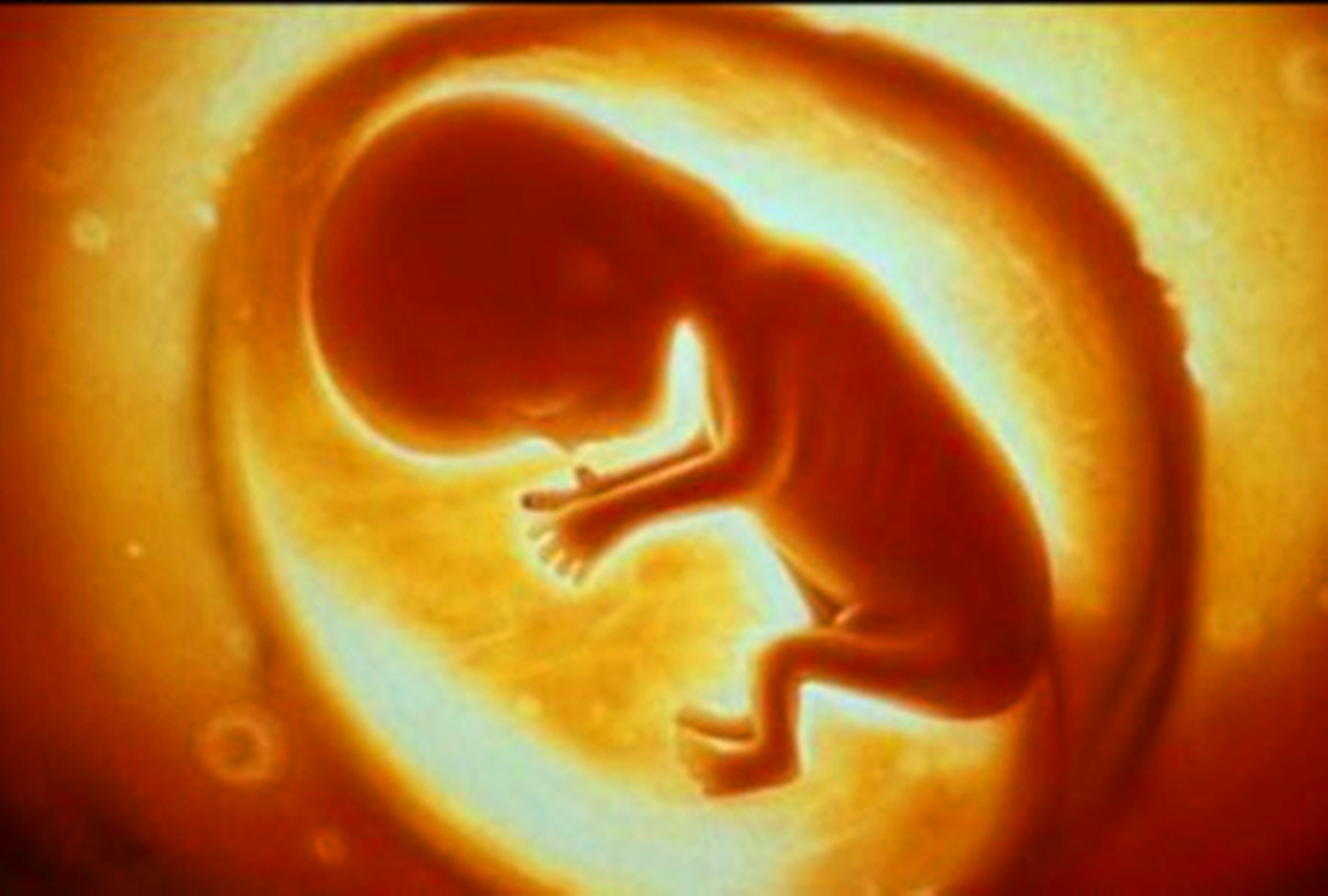
Fetal development occurs much faster than people appreciate and is so often misunderstood. There are no partial human beings. There is a child who grows, just as he would grow outside the womb. Certainly the growth changes in the womb are unmatched by anything after birth; but even a newborn infant only vaguely resembles a mature man or woman. They cannot talk, see properly, or walk. Without constant maintenance, they would most certainly expire within a very short period.

The late Pope spoke about this at length when he talked about a culture of death versus one of life. Concern about the “slippery slope” pervades the encyclical EVANGELIUM VITAE. Indeed, one of the reasons Pope John Paul II objected to the death penalty was because he believed a comprehensive and generous response in the cause for life had to be made against the current climate of death. In other words, a society that murders its own innocent children does not have the moral standing to judge over the mortal lives of convicted felons. We become desensitized to the taking of human life.

I should say that the “slippery slope” applies even if one should think there is only life “in potency.” Embryonic human life has all the components necessary for the formation of “fully developed” human beings. The Church insists that once the soul is infused, the subject is a human person with an eternal destiny. But, even more, the slipping and sliding goes back further to the issue of contraception.

While we certainly do not see the person in the sperm and the woman simply as a receptacle, as did St. Thomas Aquinas, nevertheless, a contraceptive mentality is inherently anti-life. If contraception fails, people will now say, “Well, there is always abortion.” Next, maybe they will say, “Well, the doctor says he has a thirty percent chance of heart disease based upon DNA sampling. Why don’t we just get rid of this one and try again, with the doctor’s help?”

Obviously, even the most hardened pro-abortion advocate has trouble with infanticide, once they SEE and HOLD a child. This was the case in Roe versus Wade when Norma held her baby that previously she had tried to abort. That is why many curse GE for their new viewer that shows the child or fetus, with great clarity. It makes avoidance of the real question increasingly difficult. But what if women should give birth while unconscious? Then doctors or husbands or significant others or just prior standing instructions could order the termination of a new born. As in Partial Birth Abortion, once allowed, what does a few inches in the womb or out of the womb matter? The fact that there were as many as 4,000 Partial Birth Infanticides last year (full term babies) is ample evidence of where things have been sliding.

And what if the newborn is not attractive? I used to help out at a facility for the mentally retarded (or “challenged” as it is rendered today). Tommy had a cleft face. His parents wanted him destroyed but the doctor said no. He was quickly abandoned. He had pins holding his eyes from falling into the cavities where cheeks should have been. He had no nose and only a rudimentary mouth. Everyone presumed he was retarded. He moaned and growled. No one could make any sense of it. His best friend was a boy with Down’s Syndrome called Mike. One day Mike came forward and said that Tommy wanted water. What? It turned out that Tommy was speaking, but so unclearly that only Mike could decipher it. Later, despite the odds, it was suspected that Tommy was not even retarded. When I left, the doctors were taking parts of his body and trying to build him a face. I prepared both of these boys for their first communion. Over and over again, I stressed that the host was Jesus and that Jesus was God. The bishop said that was all they needed to know. They both had value, independent of public opinion, or arguments about the quality of life, or the ramblings of pro-abortion politicians.

I have noticed that sometimes young people fail to appreciate the trail of dominoes we have already knocked over. Maybe age and exposure are important to seeing more of the whole picture?

SLIPPING OR FALLING OFF THE SLOPE?

  • 1930 – Anglicans became first Christian church to permit contraception (condoms).

CASTI CONNUBII is the Pope’s strong response.

  • 1960 – Introduction of the Pill.
  • The so-called sexual revolution.

HUMANAE VITAE is the Pope’s strong response.

  • 1972 – Roe vs. Wade legalized abortion.
  • Series of cases and incidents have expanded so-called abortion rights, partial birth infanticide, and euthanasia.

EVANGELIUM VITAE is the pope’s strong response.

The movement against life is not smooth, particularly since pro-life people are fighting such trends. The slipping happens in fits, stops-and-goes.

I have already gone on too long, but I would like to finish with an extended citation from Msgr. Elio Sgreccia of the PONTIFICAL ACADEMY FOR LIFE at the Vatican:

“It is also said that the argument of the slippery slope is a weak one: in my opinion, however, it shows that its perverse efficiency functions unavoidably because it implies the absence of absolute values that are to be upheld and is accompanied by an obvious moral relativism. It functions in the context of euthanasia as in various other fields of public ethics, regardless of whether it is a question of abortion (in this case, one begins with the case of anencephaly and ends up with the case of the child conceived before a holiday), or a matter of procreation (here, the first step is the request for the legalization of the homologous insemination, that ends up with the matter of the authorization of therapeutic cloning). / Once on the slippery slope, not only the logical slant comes into play but also economic interests, and then the slipperiness becomes fatal and inexorable.”

Polygamy OUT, Monogamy IN

Msgr. Pope writes a good post on his blog about the seeming conflict between the monogamous plan of creation in Genesis and the practice of polygamy by the ancient patriarchs.

Msgr. Pope’s Blog Article: Don’t Do Polygamy

In passing, he notes that marriage is defined by God as a relationship between a man and a woman. The core purposes of marriage are also espoused:

  1. Adam is lonely and is given a helpmate who complements him in a shared nature.
  2. Adam and Eve are told to be fruitful and multiply.

The unitive meaning (fidelity) and procreation are stressed. There is nothing capricious about this bond. It is expected that it will be lasting and life-long. They are no longer two, but one.

But as we hear from our Lord in the Gospel of Matthew, there is a problem with their hardness of hearts. The early believers are much like their pagan neighbors. The marriage bed is compromised with many would-be spouses and Moses would even allow a writ of divorce. This is not the way things were supposed to be.

It may be that primitive men of faith lacked the capacity to receive the fullness of truth and God tolerated or even used a situation that would later be remedied. Further, as with various Islamic men today, such extended households were usually reserved to the wealthy and/or to the leadership. Most men had their hands full caring for one wife and family. By the time of Jesus, polygamy was frowned upon and the sin of adultery was attached to any who would compromise a singular union. We must learn from God’s Word, not by extracting isolated proof texts but by an integral approach which respects progressive revelation. The people of God grow in the ways of God and the fullness of truth.

Msgr. Pope argues that the rivalries between the wives and the place of their children are illustrative that polygamy was always frowned upon by God. It is fraught with problems. I would concur, although even having one wife can be a source of both joy and heartache, going back to Adam, the first man. When ladies lament that they feel sorry for priests and wish we could get married, I often respond (somewhat tongue-in-cheek), “Why would I want to get married; I have enough penance in my life!”

Today, our society is indeed returning to the transgressions and abuses of the past. Divorce and remarriage, or the practice of cohabitation and fornication, is essentially serial or successive polygamy. Similarly, just as certain Greeks tolerated and institutionalized homosexual liaisons, there are efforts today to condone and legalize same sex civil unions. When will we learn?

Pic:  Adapted from National Catholic Register Blog, America’s Most Complete Catholic News Source.

Did Jesus Renounce His Mother?

Anti-Catholics often misunderstand or narrowly interpret passages so as to ridicule Catholic teachings. They are quite fond of doing this in regard to the Virgin Mary. A favorite such passage is Matthew 12:46-50:

While he was still speaking to the crowds, his mother and his brethren were standing outside, seeking to speak to him. And someone said to him, “Behold, thy mother and thy brethren are standing outside, seeking thee.” But he answered and said to him who told him, “Who is my mother and who are my brethren?” And stretching forth his hand towards his disciples, he said, “Behold my mother and my brethren! For whoever does the will of my Father in heaven, he is my brother and sister and mother.”

The anti-Catholic proponent will make many claims which run against the traditional understanding of this incident and which find little if any support from the text itself. He will suggest that these “brethren” are children of Mary, even though she is never called their mother and extended families of that time would usually include many cousins given the honor of being called a brother. Indeed, the linguistic limitations of these people would require such a designation. The critic will also contend that Mary and the family are aggravating Jesus by their attempted interruption. Instead, it seems that Jesus uses their appearance as a special opportunity to speak about a spiritual kinship which is superior to that of blood. Further, the religious bigot will suggest that Jesus is discounting the intercessory role and honor due to Mary. They will say that Jesus stretches forth his hand toward his disciples and not toward Mary, as if this supports their claim. What they fail to appreciate is the very real possibility that Mary and the brethren are counted among his many followers and/or disciples. Note that the crowd recognizes Mary and the brethren. They are familiar faces. Why have they come? They accompany Mary, who like any good mother is concerned about her Son. From Bethlehem to Calvary, she will not abandon him. Things are heating up. Not everyone is happy with Jesus. He has chastised his listeners as “an evil and adulterous generation” and the Pharisees for “blaspheming against the Holy Spirit.” They will almost certainly seek to retaliate. She does not come to silence him, but to be in solidarity with him.

Those who hate the Mother of Jesus will deny that Jesus is praising her. They refuse to understand that Mary was the first disciple of her Son. As the handmaid of the Lord, she affirmed the message of an angel and received the Savior into her womb. She is the precursor of all the disciples in hearing and doing God’s will. Oddly enough, there is another passage which proves this point and yet it is also used by certain fundamentalists to belittle Mary, Luke 11: 27-28:

Now it came to pass as he was saying these things, that a certain woman from the crowd lifted up her voice and said to him, “Blessed is the womb that bore thee, and the breasts that nursed thee.” But he said, “Rather, blessed are they who hear the word of God and keep it.”

Jesus does not mean to be demeaning of Mary’s maternity. Indeed, he is again elevating her status as the one in whom the Word has come to true fruition. It is in this regard that she is a model to others. If we receive the Good News, then we too can give birth to Jesus in each and every generation. Others will see him and know that he is really alive and meaningful through our discipleship. Also, note that as the fruit of Mary’s womb, the ultimate honor that the woman is giving is directed toward Jesus. The humility of Christ will not allow himself any idle and empty admiration. During his mortal life, he will be lifted up, not by flattery, but by our sins— and then upon a cross. He redirects their focus to his true meaning and reality, the living Word of God. He calls the crowd to receptivity and obedience.

Such questions as the relevance and role of Mary are often deliberately distorted in anti-Catholic bible study. Stock answers are prepared to beguile gullible Catholics and ignorant Protestants. Despite the widespread re-emphasis upon the Scriptures under Catholic auspices today, they will assert that such endeavors are neither serious nor encouraged. This is one of their many deceits. Lacking any definite teaching authority, they reduce the meaning of bible passages to that of personal interpretation, contend that it should be obvious to all, and then bitterly fight with their fellow fundamentalists who, with the same sincerity, disagree with them on certain texts and doctrines— so much for crystal clarity.

When rumors were flying that the Holy Father might declare Mary the co-redemptrix, anti-Catholic opponents became particularly virulent. (By the way, it was revealed that the rumors had no foundation.) However, the truth of such a teaching, even without a formal definition, is improperly defined by critics. The foes of truth contend that this title would make her an additional author of salvation. This is not the Catholic position. Rather, Mary’s role is subservient to that of her Son. Because of her unique position as the one first touched by the redemptive power of Christ’s Cross, her sinless maternity resonates with the saving work of her Son. She offered herself to God as the vessel of our salvation. She surrenders her Son at Calvary. His pain is her pain. She was intimately united to her Son in faith, hope, and love. One could even contend that she died a kind of vicarious martyrdom at the crucifixion. The knife long prophesied, pierced her heart. Her participation in the saving work of her Son was quite unique. Further, she continues to perform a role as our Spiritual Mother, given to us through our emissary John at the Cross. The Mother of the redeemer became the Mother of the redeemed. While on a different level, we are also called to participate in extending the message and work of Christ.

Concerns About the e5 Movement

SEE THE NEW NOTES AT END OF POST

fullofhimself.jpgBefore I begin, I have to acknowledge that the tragedy of the Macfarlane breakup and Habisohn’s involvement (he is the founder of e5) has colored my remarks about the e5 movement. I am a hardliner against divorce and have an immediate knee-jerk reaction to anyone or anything that seems to compromise the indissolubility of marriage.

Here is an email that has become part of the record (which elicited a response from Cardinal George and his theological advisor, Rev. Lodge):

I have a friend whose husband regularly corresponds with Habisohn and has signed up for his e5 group. My friend is having serious marital problems and in a personal message from Habisohn to my friend, he wrote, “Stop with the selfish pursuits of your own desires. Your desires might just be the worst thing for you. And ultimately its his [your husband’s] duty under God to discern such things. He has to answer to God for you.” (7/3/03)

The “e5” fasting program is taken from Ephesians 5: “Husbands, love your wives as Christ loved the Church and gave himself up for her.” Here is how this regimen from Steve Habisohn is explained by Bud MacFarlane, Jr.: “Jesus gave up his body for his bride, the Church, and we give up our bodies for our brides through fasting. It’s a perfectly chivalrous act, and it will make the woman in your life feel like a princess.”

It is not clear how such a penance “directly” builds up or supports a marriage. While certainly there are benefits to fasting as part of our mortification and penance as Catholics, many of us are left scratching our heads as to how it can cause a drastic transformation or how it signifies “a man taking on suffering to help a woman.” The middle term in all of this seems to be missing. The sacrifices to which the Letter to the Ephesians alludes come with ordinary fidelity and human mortality– these are connected with the cross of Jesus. The husband is told that he should be as willing to lay down his life for his wife as Christ did for his Church. However, this does NOT deny reciprocity on the wife’s behalf. St. Paul’s understanding of the wife’s subjection or submission is a reminder that she must also be willing to sacrifice everything for her beloved. The teaching about the husband’s headship does not deny the wife’s complementary sacrifices for her husband. It is an important point where I find the purported e5 perspective to be somewhat shallow and one-sided. In any case, if we are only talking about once-a-month fasting, then it seems to be a harmless business; but, is it more than this?

Macfarlane cites a series of themes in the e5 movement:

NO TALK – He contrasts this step with being a man of action.

I would submit that men should both talk and act. Action can be misconstrued without clear communication, first. Men err in removing themselves from their wives and in trying to solve their problems unilaterally. This almost never works. While we certainly need quiet time for prayer, do not underestimate constructive talking (dialogue) with the spouse. Many times marriages fail because of poor communication skills.

We should avoid the “passive-aggressive” route in dealing with our shared problems. An example of this is when one spouse is silent because of rage or disappointment. One can also “punish” the spouse in indirect ways. Imagine a response like this: “Having a wife like you forces me to do extra penance and fasting just to stay with you!” Dialogue that does not tear down the other, sometimes orchestrated by a third party counselor, can be quite helpful in opening the lines of communication for healing and growth. It is okay to be a man of action, but the action must be appropriate. The man of action is also one who communicates clearly and appropriately– with the beloved and with God.

I am a big fan of married couples praying together, offering up petitions of love and caring for one another. Why not?

When I went to the e5 Website, I read this:

“Do I tell my wife? There are two answers No and Yes. It really depends on your situation. By telling one’s wife one might risk spiritual pride or she may even discourage you. However, in other situations by telling one’s wife you are allowing her to participate in the e5 Women part of e5 Men. She can actively pray to receive God’s graces merited for her. Often wives are greatly encouraged and gain new hope by knowing that their husband is laying down his body for her. I’m sure there are infinite reasons for both approaches depending on the situation. These are just examples to help you start thinking of the specifics of your situation. It’s ultimately your call.”

Isn’t this a bit crazy? What about the family supper table, the meal that in a Christian home is a “figure” pointing to the Eucharist? What about the wife’s concern over the details of that meal and her concern for her family?

CALLING ALL MEN – I would acknowledge that most of us have hurt the women in our lives but is the e5 strategy really a comprehensive curative? As I said before, fasting as part of our prayer life is fine, but it is not in itself sufficient to heal marital problems and there is no direct or immediate tie-in with Ephesians 5.

threedandies.jpgBANDS OF BROTHERS – Maybe I am misconstruing this movement, but as I read Macfarlane’s article I am increasingly anxious with the rationalization that fuels it. Is it merely an all boys’ club of men fasting for their wives, future wives, and girlfriends? Fasting may sometimes be the easy road out and not a true scaling of the cross at all. You can fast all you want and still let your women down.

TENS OF THOUSANDS – Macfarlane becomes a virtual cheerleader for the e5 Men. He writes, “Imagine the power of having such a vast army suffering for your bride.” It may be an exageration on my part, but he speaks as if a marriage can be saved by supernatural intervention alone.

Marriages are saved neither by committee nor by warfare. They are saved by love, mutual respect, and genuine interpersonal sacrifice. Suffering means loving your spouse even when he or she does not seem all that lovable. It means working long hard hours to keep a roof over your heads, clothes on your bodies, and food in the stomachs of your children. For the husband, his joy is his wife’s happiness and the wellbeing of his children. You do not need an army of men suffering and fasting for your wife. You need one man, husband and father, to sit at the table with her for dinner and thank the good Lord for all that he has done for you.

FORTRESS OF FLESH – Fasting can mean a degree of suffering, but so can dieting. What changes their meaning is the intention.

The devil hates true mortification and prayer. We sacrifice in the flesh to live more in the spirit. But, it is not magic. Further, the devil can take advantage of this mentality and reverse matters if we are not careful—urging us to hate our flesh or to substitute fasting for other obligations in our faith and family life.

Macfarlane writes: “When you fast, you and Christ form a fortress that protects the woman you love.” It is a sweet sentiment, but theologically how does it work? I still do not see it. How does it protect her? If anything, the way this e5 business is explained in the article, it seems to cut her out of the equation.

SUPERNATURAL FIREPOWER – Yes, adopting the military analogy in vogue here, we do need spiritual ammo. As Catholics this armory is replenished by God from many sources: fruitful prayer, the depository of grace merited by the saints, the sacramental life, and ultimately the redemptive sacrifice of Christ on Calvary. We are alerted to the dangers posed by the devil, the flesh and the world. As with his books, Macfarlane sees things in sweeping apocalyptic terms. This is okay as one element, however, the personal battles we face are rooted in the practical here-and-now.

We must be careful not to focus our attention so deeply into the metaphysical and eternal that we lose sight of the physical and temporal. Practically speaking, too often, lacking what one needs in him- or herself, we look elsewhere.

Yes, we trust in God’s protection and we cooperate with it. But look at what he says in his article:

“Our Lord did not merely suggest that some demons can only be driven out by prayer and fasting. Guys, listen up. As a man you will find it extremely satisfying to pull back that bolt, calmly load a Wednesday of bread and water into the chamber, then start pumping round after round into the soft white underbelly of the Dragon of Death. This is war, and you and I were made for war. It never gets easy, but that soft thud you are going to hear is the sweet sound of the dragon, which has been hurting your wife, hitting the ground.”

Cough…swallow…say, what? He concludes by saying that this dragon might be either your anger or the devil; however, until he makes this qualification, one might wonder if he is talking about his wife?

I have done a lot of counseling over the years and can attest that not all dragons are demonic, many of them are human, male and female. Admittedly, I am perplexed how Macfarlane’s own public actions toward his wife and family can be reconciled with what he says here. But enough has been said about that, if not too much.

As a seminarian, my friends and I used to fast on Monday nights. However, we never saw it in such violent and militant terms. We called our efforts a FASTING FOR PEACE. We remembered all those who were suffering injustice and we prayed for the right to life of the unborn. We fasted for holiness, praying that God might wean us away from his gifts so that we might better focus upon the giver.

Macfarlane sees everything in Apocalyptic terms—even his marriage—and the enemy are “the forces of evil”. Many Catholics, including dear friends, were caught up in this but assuredly relieved when the “three days of darkness” hailed for the millennium failed to materialize, a peculiar fascination that reminded me of the faulty timetable espoused by the Jehovah Witness cult.

Imagery and symbolic language has great value but can sometimes be used for avoidance and misdirection. Many disappointed fans, for instance, are quick to suggest that Macfarlane is under demonic oppression and may need exorcism. His own personal family tragedy seems utterly unbelievable to them. While we can never totally discount the work of Satan, I find that concupiscence and selfishness are the essential culprits in our lives. I can offer no real explanation to soothe their concern for a man so admired and for whom we all care about. What we can do is pray, that at least, is one intrusion that our Lord does allow us into the personal lives of others.

Conversely, I shudder to think that being critical of e5 might get me charged with demonic entanglement. Other than the struggle with my own venial sins, I can assure the reader that I am not involved with the conspiracy of cosmic powers and evil men who seek to keep men of faith “impotent”.

Forget the dragon for a moment. Forget the loaded gun. Marriages are not principally about powers and principalities, they are about dirty diapers, crying babies, doctors’ bills, making beds, fixing the car, going to church as a family, sleeping as husband and wife naked together under the covers, and so much more. There, I have said it.

missterese.jpgSPECIAL FORCES – Other than the first Wednesday of the month, he argues that men can fast for other women on subsequent Wednesdays.

The connection to Scripture is still sketchy and the benefits inconclusive. I am surprised that this article remains on his site given his own witness. Again, notice the military view– fasting men are compared to military special forces, as if a SWAT team is the answer to marriage problems.

It might sound silly, but some wives might just prefer to have their husband at the family dinner table. I have found that wives and mothers are acutely concerned about the bodies of their charges, the husband and children. A wife might readily become concerned, if her husband’s fasting practices expanded and he risked his health. It seems to me that the e5 regimen is something about which a husband and wife must agree and should not be adopted by men unilaterally. Would not a weekly family fast be better, even if not as severe as that proposed by e5?

RECEIVING THE BODY – Notice once more how the spouse is discussed as someone who up to now has been excluded from this regimen of fasting and supposedly prayer, although the article does not mention it so far. He writes: “Your wife will soon discover that a major change is taking place and will want to know how she can be a part of e5 Men.”

This is very presumptuous to say the least. He says that their contribution is profound and complimentary, but what is it? He writes: “Many e5 Women therefore attend Mass on the first Wednesday to mystically receive the sacrifice of our body [e5 Men] by receiving Christ in the Eucharist.”

As a priest, I offer the Mass every day and yet this is an odd twist I have never encountered before. I would suggest that men and women alike would do better to more frequently attend Mass and receive Holy Communion. Both can fast when they would like and do so for each other, while safeguarding their health. The strange business here is that Macfarlane says that the women are receiving the body of these e5 fasting men when they receive our Lord in Holy Communion. I would not say that. They receive Jesus, body, soul, humanity and divinity. The sacramental presence is real. Any kind of “mystical” reception of others, even the husband, clouds the issue and does not have Church sanction as Catholic teaching. The closest thing to it is from St. Augustine when he says that in holy communion we receive our own mystery. But, he is talking about our membership in the the mystical body of Christ.

The sacrifice of the flesh in marriage is in the toil that family life entails. Ideally, any spiritual donation of the body should come along with the physical union of the spouses. Sexual union of husband and wife signifies the true self-donation. They are saying to each other, “I belong to you. I am yours. These arms and hands, these legs and feet, these locks of hair, these eyes that adore you, these lips that hunger to kiss you– everything that I am– is yours.” Our Lord identifies himself with the beloved so that the love of husband and wife finds true sacramental expression. It is raised to the level of prayer.

BEAUTIFUL CREATURES – MacFarlane says something that critics might judge as sexist, but such is a charge that has been leveled at me, too: “The truth is women are the most beautiful creatures in God’s universe. We men know it. Women need our strength and protection.”

This is all fine and dandy, but would not a mother of a son say that her baby boy is the most beautiful creature in the universe? Assuredly so and thus it is best to avoid this kind of general license. Scholastic philosophers judged males as better reflecting an ideal humanity. Such claims do not fare well when examined objectively. They depend upon subjective aesthetics and changeable worldviews. Further, I have known some strong women who defended their husbands and nurtured and protected their children against great odds. Women may be even more capable and thus beautiful beyond the measure of skin and figure, than readily appreciated.

warriorprincess.jpg

Yes, it is true that men and women are not the same, and as much as society tries to lie about it, everything from clothing to books to perfume to movies to home-decorating makes it preeminently true that we are not. However, there is a common humanity and God-given dignity. We know equality in grace and are all called to holiness. Yes, the Scriptures speak of the man as the head of the home, but as Dr. Scott Hahn reminds us, the wife and mother is its heart.

YOU ARE A KING – Macfarlane writes: “The fact is, through baptism you were adopted into a royal family.” This is true, but not just men, but women, too.

We are anointed, “priest, prophet and king.” All of us are called to offer sacrifice, to witness and proclaim the truth, and to recognize the sanctity of life and our dignity as adopted sons and daughters of the Father, brothers and sisters to Christ the King.

A man may be appointed lord of his home, but his wife is the Queen. All families should be modeled upon the Holy Family. Husbands should show the same respect and offer the same support that Joseph gave Mary. Joseph was going to divorce Mary quietly until the meaning of the child of promise was explained to him by an angel in a dream. Mary and Joseph raised their Son in their home, together.

The Macfarlane divorce is a teaching moment. But it is important that we take from this public tragedy the right message.

  • Can you imagine Joseph trying to take Jesus away from Mary?
  • Would he forbid Mary to witness to her Son the lessons she knew as a daughter of Israel?
  • Would he abandon her and then strip her of dignity with a divorce that faulted her for “extreme cruelty” and “gross neglect of duty”?

Definitely not, and neither are these grounds for an annulment.

Couples who marry in the Church make a promise before God to remain faithful, for better or worse, for richer or poorer, until death do they part.

  • A real EPHESIANS 5 MAN does not follow a cult interpretation of inspired Scripture.
  • A real EPHESIANS 5 MAN knows that life is sometimes messy and that true love can bring joy and take us to the cross.
  • A real EPHESIANS 5 MAN lets his wife know every minute of every day that she belongs to him and he belongs to her.
  • A real EPHESIANS 5 MAN does not simply fight “for” his wife but “WITH” HIS WIFE—to make their marriage last and to help their children grow healthy, holy and wise.
  • A real EPHESIANS 5 MAN does not commit physical or verbal adultery with women or spiritual adultery with a ban of brothers.
  • A real EPHESIANS 5 Man does not seek to divorce his wife and the mother of his children– particularly against her will.

Men do not need an army of Kings, as the e5 men call themselves. Rather, they need to know that they share their crowns with their wives, one as king and the other as queen. There may be many thorns in those crowns, but if a marriage is real, none may take them off while there is still life. Even the crown of thorns worn by Jesus was not removed until he had breathed his last. And yet, the kingdom of Jesus is everlasting. We find some glimpse of it in every Christian home because the family is the little Church.

Macfarlane speaks of “men crucified with Christ for the women we love.” But men and women can also play the wrong part in the Greatest Story Ever Told.

Jesus was betrayed with a kiss and abandoned by those he loved. How many marriages have a spouse abandoned, even after public acclamations of affection?

Our Lord was cursed and called all sorts of names. Are not cruel and defaming charges part of the ordeal when marriages fail?

Jesus is stripped of his clothes and is virtually naked upon the cross. How many spouses have been reduced to poverty by divorce and large settlements?

Has not even Bai Macfarlane, for whatever reason, suffered the loss of her children? It is because of her situation that there is a tentative appraisal of e5 from the Church, albeit the Archdiocese of Chicago. Here are those documents as well as a few remarks from a brief interview.

Archdiocese of Chicago / Office of the Archbishop (Selection)
http://users.ameritech.net/webdocs/FrancisCardinalGeorge.htm

January 16, 2004

“Anyone can post information on the Internet – without any license or check for accuracy. This applies to interpretations of Scripture and to information about Church teaching as much as it applies to products that are advertised for sale. I am glad that you are asking about Mr. Habisohn’s ideas, since the fact that they are being communicated over the Internet give’s them no special credibility. Your letter was referred to me by Mrs. Else Radtke of our Family Ministries office, who has also spoken with the wife of the friend to whom you refer in this letter. I am very sorry to hear that a Catholic who claims to follow Mr. Habisohn’s way of living is now in the process of seeking a divorce from his spouse. I believe that the Holy Father’s commentary on Ephesians 5 makes it very clear that St. Paul’s intention was to draw husbands and wives closer to one another and to Christ in his Church, not to drive them apart. In this case, the harm done to spouse and children by divorce is far greater than any damage that could be done by a disagreement over a passage of Sacred Scripture.”

Sincerely yours in Christ,
Francis Cardinal George, O.M.I.
Archbishop of Chicago

REV. JOHN G. LODGE Responds at Cardinal George’s Request
http://users.ameritech.net/webdocs/Notes.htm

Should a wife orient her will to her husband’s will?

Most exegetes of Ephesians 5 — including Pope John Paul II — would not speak of an orientation of wills that was one way. The Pope is careful to discern the difference between the Church’s relationship to Christ and the wife’s relationship to her husband (Mulleris Dignitatem, 24):

This is especially true because the husband is called the “head” of the wife as Christ is the head of the Church; he is so in order to give “himself up for her” (Eph 5:25), and giving himself up for her means giving up even his own life. However, whereas in the relationship between Christ and the Church the subjection is only on the part of the Church, in the relationship between husband and wife the “subjection” is not one-sided but mutual.

A bit further on in the same section the Pope continues:

The apostolic letters are addressed to people living in an evironment marked by that same traditional way of thinking and acting. The ‘innovation’ of Christ is a fact: it constitutes the unambiguous content of the evangelical message and is the result of the Redemption. However, the awareness that in marriage there is mutual “subjection of the spouses out of reverence for Christ”, and not just that of the wife to the husband, must gradually establish itself in hearts, consciences, behavior and customs. This is a call which from that time onwards, does not cease to challenge succeeding generations; it is a call which people have to accept ever anew.

The Pope, then, is very careful to show how Eph 5:21 teaches an innovation in the relationship between men and women, a new way of reciprocity which has yet to fully take hold in many of today’s cultures. Any ‘orienting of wills’ should be reciprocal and mutual.

Is Steve Habisohn correct in that it is a husband’s duty to discern if his wife’s desires are good for her?

No. The gist of the argument in Ephesians 5 and in the thought of the Pope is that husband and wife should have a mutual sense of care for one another. At times that might mean respectfully and lovingly challenging or questioning the other, but neither spouse has a greater responsibility here than the other.

Mr. Habisohn has simply put out his shingle on the Web and asked for money. He has no special training or background other than his personal study of the Pope’s ideas surrounding the theology of the body. On the one hand, I agree with Mrs. Radtke that, when one looks over the material on his sites, there doesn’t seem to be too much with which to argue. He promotes material related to the Pope’s “Theology of the Body” and Natural Family Planning. Still, if (OMITTED) are accurate in their reporting of Habisohn’s letter to their friend, he over stepped his bounds. He should stay out of the marriage counseling business. Furthermore, his language in the letter he wrote their friend is no where supported in either Ephesians 5 or in the writings of John Paul.

ZENIT Interview with Steve Habisohn on the e5 Men’s Movement

In his interpretation of Ephesians 5. Habisohn states “In a complementary response of total self-gift, the wife orients her will to her husband’s to allow for his gift of self to be given freely. She becomes submissive — which literally means ‘under’ his ‘mission’ — to serve her needs.”

There you have it, I gave the founder of e5 the last word.

********************

My remarks about the Macfarlane matter, the issue of divorce, and an article about e5 have caused a flood of comments that I cannot continue to monitor. Some of them have called me irresponsible and in league with Satan. I am going to save a previous comment in the body of the post, but disable the comment feature. You can still send me emails, but I am increasingly uncomfortable with this discussion. It amazes me that people would fault Bai Macfarlane for fighting for her sacramental marriage and against the evil of divorce, particularly the no-fault variety.

As for the e5 business, it may have its merits, but I took “honest” exception to some things I read about it. I would certainly be willing to revisit the matter or even post honest and sympathetic material that would show how it is usually effective and in agreement with Catholic teaching. But, frankly, there is little information to be found and much of it dating back to 2003.

forrealfamily.jpgI will share with you one exceptional article about it that I discovered on the web. Published in a small area newsletter, it is the best that I have read on e3 so far.

PLEASE KNOW, that while I may come across as overly critical of e5, it is mostly because I am unhappy with how it is explained in the few sources nationally available. However, there is a beautiful essay by Dennis Murphy in LIFE CYCLES that presents a picture of e5 with which I could whole-heartedly accept and make my own.

He writes:

“We join our small suffering with the sufferings of Christ on the cross not only for the intention of being chaste for our wives but for being chaste for other good reasons. I, for example, also offer my fasting for the intentions of Mary, the Mother of Jesus. I try to follow the example of Saint Louis De Montfort by giving all to Mary, especially being chaste. I thought it was good to do something simple, and I knew that something like the fasting was coming for me…I wanted to participate in something meaningful especially regarding the sacredness of intimacy, which so much in our culture wants to trivialize. I struggle some Wednesdays more than others, but I don’t find it difficult to do especially when I think of Jesus suffering and crucified. My fasting is such a drop of water in His infinite ocean of love, but it is still my drop of love. It’s amazing that the Son of God and His Mother would even notice it, and they do.”

This is not only beautiful but spiritually meaty. Here is the substance and the middle term that I could not find clearly enunciated either by its founder or by Macfarlane. It also reflects something of simplicity and humility, which makes theology and a true appreciation of faith possible.

He goes on to say:

“As I have offered up my simple 24 hours of fasting on bread and water, I think of those not only in e5, but anyone who has fasted because the Lord said that some healings need prayer and fasting. The Lord also said that when He was gone, there would be time for fasting. Certainly the assault against chastity in our own wounded culture demands the response of prayer and fasting in order to beg healing from our most chaste Lord and His most chaste Mother. I believe that the e5 men and women who quietly offer up their little suffering join in God’s plan to counter the scandal of evil against chastity.”

This perspective upon e5 is one upon which I can whole-heartedy concur. He convinces me of its utility, at least in the manner that he understands and pursues it:

“Certainly the focus and motivation for any acts are rooted in the gifts of the sacraments, especially in the Eucharist and confession. I go to Confession weekly and Mass or Adoration of the Blessed Eucharist daily as does my wife, Mary Grace. I don’t know what I would do without the blessedness of the Eucharist and the forgiveness of Confession.”

I am tearing as I read this. This is the stuff that should be posted on the e5 website. There is nothing here of men imaged as SWAT teams, but as sinners who seek to be holy men and beter helpmates to their wives as fellow pilgrims. He gives a short but convincing explanation about how the mortification dynamic works with prayer, the sacraments, and in the larger context of a community of faith. There is nothing here of an eletist group or a boy’s club. Whatever he read, this man filled in the gaps for himself, and now he does it for us.

He closes by saying:

“It was so great to read about e5 and the direct defense against all these atrocities against women [attacks on our virtue of chastity] through fasting especially to foster respect for the wife that I love, even though in my weak humanity I fail, the children whom we conceived, who have taught me to understand the depth of the need for maturity and holiness in all areas of life and the Church, without whom I would be lost and overcome in the struggle against sin, and the people of God, whom I am called to humbly serve one person at a time.”

If you want to read the whole article, here is the link:
http://mysite.verizon.net/vzeoqpd6/pnfpn/lifecyc/Lifecycles4-18.pdf

Those wanting to read more about e5 men can follow these links:

e5 Men Website
http://www.e5men.org/pages/

Habisohn: How Real Men Sacrifice for Their Brides
http://www.catholicity.com/commentary/e5men1.html

Macfarlane: Husbands Crucified
http://www.catholicexchange.com/vm/index.asp?vm_id=2&art_id=17344

OSV: A Fast way for Husbands to Pray for Their Wives
http://www.osv.com/periodicals/show-article.asp?pid=786

Belief Net: The Fasting Masters of the 21st Century
http://www.beliefnet.com/story/122/story_12233_1.html

New Oxford Review: Sensitivity for Sensitive Guys
http://www.newoxfordreview.org/note.jsp?did=0703-notes-sensitive

COMMENTS

Eric Scheidler | squarezero.org |

To lay this [Macfarlane] debacle at the feet of Steve Habisohn and the e5men is shockingly unfair. Thousands of men (BTW, I am not one of them) have been participating for several years in the e5 program of fasting and prayer. The marital woes of one of these men hardly constitute a case against the entire program.

Steve Habisohn has never suggested that fasting alone is enough to secure a strong marriage. He has never suggested to men that they not communicate with their wives or share a family dinner. And is one day of fasting per month really destructive of the family meal?

There may be criticisms to be made about the e5 approach, but you offer nothing but a caricature. If you had contacted Habisohn yourself, you might have gotten a more nuanced perspective on what his group is about, including the many men — and women — who have benefited from the once-a-month fast.

Instead you re-hash the attacks against Habisohn and e5 that Bai Macfarlane has already offered far and wide, including the response of a diocesan official to a series of leading questions.

Eric Scheidler | squarezero.org |

Father, I want to make a further comment about your criticism of the e5 Men program. First, I should disclose that I am good friends with Steve Habisohn. He would be the first to agree that he and I do not see eye to eye on all matters, including the headship issue. Indeed, I am disappointed to see a critique of Habisohn’s approach so flawed by bias and sloppy documentation.

The evidence you present here is, in my view, deeply flawed. First, the e-mail quoted at the top or your article. We have NO CONTEXT for this e-mail message whatsoever. We do not know who the “friend” is, or what that person’s relationship may have been to Steve Habisohn — what he may know or believe about the situation which informs his words.

Absent any context, his words look like irresponsible, even misogynistic counsel. They are given the color of grand generalizations about the authority of a husband. But he may very well have intended those words to a particular women about whose situation he knew something WE do not.

Which again points to the singular character of this whole business: what the public knows about the Macfarlanes it knows from only one of them. How, for example, did this e-mail fall into the hands of Bai Macfarlane or her associates? Was permission granted by Habisohn for what clearly is a private communication to be broadcast far and wide on the Internet? Could it be that the “friend” is none other than Bai herself?

Likewise, the critique from Cardinal George’s assistant Fr. John Lodge: How was the e5 Men organization presented to Fr. Lodge? Were, as it appears, statements made to one particular person construed as general laws advocated by Habisohn? Who is the “wife of the friend” involved in this communication? Why were these letters made public, and again, was permission given to do so?

A final remark on the question of demons and marital strife. There is the legitimate problem of a certain kind of pious Catholic seeing a demon behind every challenge or squabble. It’s particularly unsettling to have one’s own role in a dispute attributed to demonic influence!

You say that “Marriages are not principally about powers and principalities, they are about dirty diapers, crying babies, doctors’ bills, making beds, fixing the car, going to church as a family, sleeping as husband and wife naked together under the covers, and so much more.”

I put it to you that you are presenting here a FALSE DILEMMA. These simply aspects of marital life are the very plain upon which the battle between good and evil takes place, where one’s guardian angel and those devils whose special task it is to seek the ruin of one’s soul struggle for decisive influence.

Satan hates marriage, just like he hates each one of us, and he’s going to try to break through every chink and crack he can. Changing diapers! How easy it is for a man to leave this to his wife — selfishly. And how easy for a wife to resent him for it — bitterly. Even this seemingly mundane thing can be matter of real spiritual battle.

To say that a paritcular issue doesn’t involve the “cosmic battle” is, in fact, to say that it doesn’t involve grace. If the battle between good and evil doesn’t involve diapers, then there’s no GRACE involved in diapers, and any mother or father could tell you — and I speak here as the father of seven — that it’s ONLY through grace that you survive the diaper years.

Fixing the car! I know all too well how Satan tempts me when I’m working on a mechanical repair. He would love nothing more for me to lose my temper, swear, rudely rebuke the son who’s too slow getting me the wrench I need. Doctor bills! A man is a fool not to pray for patience before discussing doctor bills with his wife; and no, not because she tries his patience, but because he is a hot-headed fool whose real worry for his families financial state is perverted all too easily into angy words.

And is it necessary to say that the spiritual battle is waged in the midst of that nakedness between the sheets. Pope John Paul II of happy memory said just that — “Becoming one as husband and wife, they find themselves in the situation in which the powers of good and evil fight and compete against each other” (Wed. Audience, 6/27/84).

He connects this fight directly to the marital embrace itself, noting the prayer of Tobiah before lying together with Sarah as her husband.

John Paul II knew that Satan wants nothing more than to undermine the harmony of husband and wife in the marital bed. Tobiah knew it. You ought to know it too.

From President Bush to President Obama

PRESIDENT OBAMA 2011

Today marks the 38th anniversary of Roe v. Wade, the Supreme Court decision that protects women’s health and reproductive freedom, and affirms a fundamental principle: that government should not intrude on private family matters.

I am committed to protecting this constitutional right. I also remain committed to policies, initiatives, and programs that help prevent unintended pregnancies, support pregnant women and mothers, encourage healthy relationships, and promote adoption.

And on this anniversary, I hope that we will recommit ourselves more broadly to ensuring that our daughters have the same rights, the same freedoms, and the same opportunities as our sons to fulfill their dreams.

PRESIDENT GEORGE W. BUSH 2001

Good afternoon, friends and fellow citizens. Two days ago, Americans gathered on the Washington Mall to celebrate our Nation’s ideals. Today, you are gathered to remind our country that one of those ideals is the infinite value of every life. I deeply appreciate your message and your work. You see the weak and the defenseless, and you try to help them. You see the hardship of many young mothers and their unborn children, and you care for them both. In so many ways, you make our society more compassionate and welcoming. We share a great goal: to work toward a day when every child is welcomed in life and protected in law. We know this will not come easily, or all at once. But the goal leads us onward to build a culture of life affirming that every person, at every stage and season of life, is created equal in God’s image.

The promises of our Declaration of Independence are not just for the strong, the independent, or the healthy. They are for everyone– including unborn children. We are a society with enough compassion and wealth and love to care for both mothers and their children, to seek the promise and potential in every human life. I believe that we are making progress toward that goal. I trust in the good hearts of Americans. I trust in the unfolding promise of our country– an expanding circle of inclusion and protection. And I trust in the civility and good sense of our citizens– a willingness to engage our differences in a spirit of tolerance and good will.

All of you marching today have never tired in a good cause. Thank you all for your conviction, your idealism, and your courage. May God bless you all.

Reflection Upon the Holy Family

Although I offered a reflection upon the Holy Family at the beginning of my book on prayer, I would like to return to this subject in this post. Reflecting upon the Holy Family, we are not only guided as to what a Christian family should be, but stand convicted in our lives over what it is not. While the modern concept of liberty is often moral license, theirs was responsibility and fidelity. We cater to individualism and a preoccupation with self that runs counter to the claims of familial bonds. The immediate family in the time of Christ was expanded to include aunts, uncles, cousins and others. (Indeed, the brethren of Christ were precisely these other relations.) Catholics realize, or at least should, that our relationship to God and to one another is in the context of family. We are not alone.
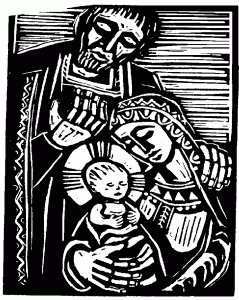
While these brief words can only offer a quick brush-stroke on the subject of “family,” a few thoughts might be beneficial. Something is wrong. No amount of beating around the bush or a pretense at greater enlightenment can take away this nagging perception in all segments of society. Determining what is wrong, and for that matter right, is where public debate becomes quickly frozen and polarized.

Politicians clamor about “family values” and then argue about what this means in a pluralistic society. Advocates of alternative lifestyles seek through the media and legislatures to socially engineer the family into something past generations would think unimaginable. It is in the midst of this confusion that we come to terms with that most central of human relationships. If it were not hard enough, even our traditional family units are plagued by communication that is absent or dysfunctional.

God sends his Son that repentant children might be added to his family and given eternal life. And yet, in our sinfulness, we can and often do offer a counter-witness to this truth. I know a couple whose girl ran away at seventeen. She eventually realized her foolishness and sought to return home. However, she discovered the locks changed. Her father had told her that if she went out the door she would not be welcome back. He gave away her clothes and personal things to charity. He would not allow his wife to display her picture. It was as if she had never been born. This couple, with their older daughter, were active in the parish and regularly at Sunday Mass. When their youngest returned to Mass, they refused to sit beside her. They even maligned her to neighbors. I overheard one of her father’s parish friends tell her, “You did it to yourself. You made your own mess, now you have to live with it! This is what tough love means!” Well, yes and no. Tough love means discouraging selfishness and nurturing self-reliance. This was not that at all; it was cruelty. The girl, as it turned out, was not only a foolish teenager, she suffered from bipolar disorder. When I first met her, she was just out of a mental institution and living with her boyfriend and his grandmother. It was either this or the streets. She had nowhere else to go. She had no job because employers did not want a “crazy” girl working for them. When informed of an upcoming family reunion, she decided to attend. Her mother dismissed her at the back door: “You will just embarrass us. I planned long and hard for this party and I will not have you ruin it. Go away.” When her boyfriend smacked her around, she again tried to go home. But they were gone to Europe. The wife confided that with the younger daughter gone, they had regained their freedom, and could finally live for themselves.

As a pastor of souls I have heard many variations of this story. The happy ending of the prodigal son parable is not always revisited in the lives of those who claim to be Christian, and yet, it is precisely the witness that our Lord gave us from the Cross. We read in Colossians, “Because you are God’s chosen ones, holy and beloved, clothe yourselves with heartfelt mercy, with kindness, humility, meekness, and patience . . . Forgive as the Lord has forgiven you” (Colossians 3:12-13). This is the challenge and the transformation for those who would truly be Christian. Neglectful parents today might have astonished the worst sinners and unbelievers of yesterday. Our Lord says, “What father among you, if his son asks for a fish, will instead of a fish give him a serpent; or if he asks for an egg, will give him a scorpion? If you then, who are evil, know how to give good gifts to your children, how much more will the heavenly Father give the Holy Spirit to those who ask him!” (Luke 11:11-13; see also Matthew 7:9-11). A rhetorical question is now a frighteningly real one.

Among those who call upon the saving name of Jesus are those who engage in unlawful sexual activity and infidelity, destroy children in the womb, and discard those labeled defective. Instead of a forgiving love, they harden their hearts against those who share their blood and their name. This is the way it is, not the way it should be, and definitely not the way true believers should want it to remain.

Sirach 3:2-6,12-14 points, not to the parents’ obligations, but to those of children, particularly regarding the 4th commandment stipulation of honoring (obeying) one’s father and mother. But increasingly preachers are forced to confront parents. How can a child honor parents if they are dishonorable? When Jesus demanded, “Call no man your father,” (Matthew 23:9), he precisely meant that true fathers, indeed parents of either gender, are only worthy of the title when their role is reflective of the loving and merciful fatherhood of God. Parents have responsibilities toward those whom they give life. Many churches have to offer remedial instructions for uncatechized but baptized Catholics. Their parents failed to take them to Sunday Mass, to teach them their prayers, and to transmit to them our holy faith. This implies that parents themselves do not believe; nevertheless, they are still culpable for the damage to their children’s immortal souls. Such neglect is a form of child abuse and ranks with murder in the hierarchy of sins.

In return, just as we read in Sirach, children have a lasting obligation toward their parents. When parents grow older and need the support of grown children, it is not merely a matter of charity but of duty. However, such a turn-of-events is increasingly considered an unwarranted burden. I know of cases where the children fight each other, no one wanting to take the personal and immediate responsibility for an elderly parent. The children, in some cases, have learned from the example of their parents all too well. I also know good parents who did little or nothing wrong in raising their children; and yet their brood contains both the holy and the wicked.

Familial roles are not limited to a few years but have lasting consequences and obligations. Mary followed her Son and quietly emerges at various stages of the Gospel and in the public life of Jesus. She was his mother at the Annunciation, at the Nativity, indeed, all the way to the Cross. Love brings with it responsibility and often much worry. Jesus was disowned by many of those who knew him; Mary’s testimony of love and loyalty is one that needs to be ours. She always claimed him. Jesus claims her and gives her to us, his new family, on Calvary. As for good St. Joseph, tradition has it that he died in the loving arms of Jesus and Mary. Perhaps this was God’s greatest gift to this noble man? After all, as our Gospel relates, when an angel told him that Herod was seeking Jesus “to destroy him,” Joseph sought refuge for them in Egypt until it was safe to return. The aged guardian of Mary and Jesus might have found it impossible to remain passive when his adult Son underwent his betrayal and passion. When his earthly role was finished, the foster father to Christ was taken from this world to await his Son and Savior in the abode of the righteous dead.

We need to put on the mind of Christ regarding family life. Can we conceive of God being well pleased with parents who killed their children through abortion? Along with contraception that breeds distrust between spouses, the abortion holocaust has attacked the very nucleus of family life. Pregnancy, once called the “blessed state” is now considered a disease to be medicated away. There is no reconciling such a mentality with that in Psalm 128:1-5 where the psalmist praises the wife as “a fruitful vine.” The child, instead of being prized as a precious gift from God, is considered a tragic accident, a problem to be disposed of as quickly as possible. Freedom, or rather license, as well as economic and upward mobility, is all hindered by the presence of a child. We are forced to think of another’s needs and wants before our own. Some just do not want to do this. Sex is recreation, nothing more. Such a mentality is inherently opposed to the Gospel. When such is the point of view of believers in Jesus, one has to wonder if even their concept of God is counterfeit?

Can we suppose that God cares little about marriage vows made in his name “to death do us part?” No, and yet divorce is at an epidemic high. Alternative living arrangements, including polygamy and homosexual liaisons would dismiss it entirely. Some critics argue that the dilemma is not the loss of the traditional family but rather because we are trying to force old codes of behavior (like the commandments) and expectations upon new forms of familial relationships. This post-Christian group insists that transitory unions are ideal and most reflective of modern experience. Some actually say that people live too long for lasting relationships. Prenuptial agreements posit a theoretical doubt in the permanence of a marriage bond, already. Certain states are considering marriages with easy escape clauses and some have even suggested built-in term limits. Logically, if spouses can separate at will, it would seem that offspring might have similar rights? Several years ago a child attempted to divorce his parents.

For more such reflections, contact me about getting my book, CHRISTIAN REFLECTIONS.

Something About Fatherhood

Every year we have a secular celebration of Father’s Day. While our culture finds much sentiment, expressed in verse and song for mothers, it does seem that fathers are sometimes cast to the side. The most noble of men find no insult in this, particularly in their children’s devotion to their mothers, because it confirms their good fortune and judgment in finding a companion for life. However, it does behoove us to spend a moment pondering upon the value of the man’s role in the family.
I overheard a woman once say to her friend, “What do I need a husband for, I got my babies and that’s all I wanted.” The statement startled me; it even made me ill inside. The man was reduced to a good time boy or to a sperm donor. What a monstrous notion! Many good and loving women know the true joy in having a special friend in their husbands. Spouses can share their lives, with all their joys and sorrows, knowing that they are not alone. They can also be helpmates in becoming saints. Together, they can raise a family. There are too many fatherless homes. Some cities have made it the rule and the complete family, the exception. A mother is the heart of a home. Is it so terrible that a father might be its head? The fragmentation of family life continues. How can we possibly teach young people about the fatherhood of God if such a role is not modeled in the home and in our society? Fathers are special people and are not dispensable.

Big Brother programs came into existence precisely because there was a need for a fathering role among the young. Some fathers die, and we need to know that their love and prayers are not diminished by death. Some are cast out, and we need to be sympathetic to men denied their rights as parents. Other men run away from their responsibilities, impoverishing their families and denying themselves the joy of participating with God and their wives in nurturing the fruit of marital love– children. The role of St. Joseph as foster father to Christ, chaste husband of Mary, and protector of the Church may be a religious corrective in this regard. Let us esteem and cultivate the prophetic courage of fathers that shows us something of the face of God.

For more such reflections, contact me about getting my book, CHRISTIAN REFLECTIONS.

A DISCUSSION: About Priestly Fathers & the Church

PLEASE NOTE that this is an apologetical dialogue that does not appeal to everyone’s tastes. No recrimination is intended against the non-Catholic community.

RONIE:

I am sorry, but I will not call you as others address you. Christ said to call no man “Father.” Mr. Joe, can you tell me (as you understand) the meaning of “Church”?

FATHER JOE:

  • The Church is the Mystical Body of Christ.
  • The Church is the great Sacrament of Salvation.
  • The Church is the House that Jesus built.
  • The Church is that community of faith which receives its life from the Eucharist.
  • The Church is built on the foundation of Christ (invisible head) and the ROCK of Peter (visible head).

Turning to the matter of my title, let us look at Matthew 23:9: “And call no one on earth your Father; for one is your Father, who is in heaven” (Matthew 23:9).

This is an example of a Scriptural literary form known as Hebraic Hyperbole. It is like the passage that admonishes tearing your eye out or cutting your hand or foot off. It is a way of speaking to give heightened emphasis. The fundamentalist reads everything as if the primary language is English and the author contemporary. This is also an example of taking a verse out of context and distorting its meaning. Verse eight says to call no one Rabbi or teacher. However, do we not use this word all the time? Further, if this line is absolute against Catholic priests who possess a spiritual fatherhood, then what about our foster fathers and biological fathers? It would have to apply there as well. Almost no one would agree to this. The word FATHER is a wonderful sign of respect and relationship. The matter about which the Lord is concerned is that his disciples not imitate the Pharisees in their pride and hypocrisy, lording their positions over others. God is the true and ultimate Father of all. If any fatherhood does not flow from and participate in divine fatherhood, then it is a lie and oppressive. St. Paul speaks of himself as a spiritual father in his first letter to the Corinthians and admits that there are other such fathers, although not many. The shortage of vocations to the priesthood is still a matter with which we must deal.

[In speaking of our priorities] “He who loves FATHER or mother more than me is not worthy of me” (Matthew 10:37).

[About marriage] “For this cause a man shall leave his FATHER and mother, and cleave to his wife, and the two shall become one flesh” (Matthew 19:5).

[Placing discipleship to Jesus first] “And everyone who has left house, or brothers, or sisters, or FATHER, or mother, or wife, or children, or lands, for my name’s sake, shall receive a hundredfold, and shall possess life everalasting” (Matthew 19:29). {see also Mark 10:29}

[Abraham is called father] “For this reason, it depends on faith, so that it may be a gift, and the promise may be guaranteed to all his descendants, not to those who only adhere to the law but to those who follow the faith of Abraham who is the FATHER of all of us, …” (Romans 4:16). {see also Romans 4:11-12,17}

[Treatment of elders] “Do not rebuke an older man, but appeal to him as a FATHER” (1 Timothy 5:1).

[Enduring trials] “For what ’son’ is there whom his FATHER does not discipline?” (Hebrews 12:7). {see also Hebrews 12:9}

[My favorite and very similar to calling the priest, Father] “I am writing you this not to shame you, but to admonish you as my beloved children. Even if you should have countless guides to Christ, yet you do not have many FATHERS, for I became your FATHER in Christ Jesus through the gospel. Therefore, I urge you to be imitators of me” (1 Corinthians 4:14-16).

RONIE:

Dear Mr. Joe, I would like to give a clarification of Matthew 23:9. Sorry, but I have to say this, you are out of context. The “Father” in this text refers to “God the Father,” which is SPIRITUAL and the other verses (like Matthew 19:29; Mark 10:29; and Romans 4:16 refer to EARTHLY fathers. The fathers of our flesh must be called fathers, and as such we must give them reverence; but only God is allowed as the Father of our spirits (Heb. 12:9). Our religion must not be derived from or made dependent upon any man. Our flesh fathers do not have authoritative power over men’s consciences, in matters of faith and obedience, as do God and Christ.

Christ’s sense is, that he would have his disciples not fond of any titles of honor at all, and much less assume an authority over men, as if they were to depend on them, as the founders of the Christian religion, the authors of its doctrines and ordinances, and to take that honor to themselves, which did not belong to them, nor even choose to be called by such names, as would lead people to entertain too high an opinion of them, and take off of their dependence on God the Father.

You know, Mr. Joe, the scribes and Pharisees love to be called by these titles. Kindly check 1 Corinthians 4:14-16, and notice the text “for I became your father.” It is not found in the Greek text. I prefer the text in the KJV below:

1 Cor. 4:14 – “I write not these things to shame you, but as my beloved sons I warn you.”

1 Cor. 4:15 – “For though ye have ten thousand instructors in Christ, yet have ye not many fathers: for in Christ Jesus I have begotten you through the gospel.”

1 Cor. 4:16 – “Wherefore I beseech you, be ye followers of me.”

Your explanation about “church” is less clear, different and more complex than that from Scripture. You know “church” is not a house or a building. The Church is called the Bride of Christ, and also is called the Body of Christ (1 Corinthians 12:12-14). Its members all have different functions. It is composed of saved and baptized believers— that is why Christ loves the Church. The word, “church,” in Greek is “ekklesia” which means “called out assembly.”

Peter is not the rock because the 12 disciples, knowing the Old Testament well, recognized the Rock as a description or name for God. “He is the Rock, His word is perfect” (Deuteronomy 32:4). Also, there is, “The Lord is my Rock, and my fortress…” (Psalm 18:2). Further, we read, “For Who is God save the Lord? Or who is a Rock save our God?” (Psalm 18:31). We see here that there is no other Rock than God, not even Peter. Jesus Christ is the foundation Rock on which the Church is built.

Oh, by the way Mr. Joe, Peter did not even reach Rome. The only Man sent by God to preach to the Gentiles was Paul. Also, if Peter is your first Pope, why are priests not allowed to marry, since Peter had a wife? (Matthew 8:14)

FATHER JOE:

“Sorry” does not make it right. The proper title for a cleric is Father, Reverend or Pastor. Why should I spend any time with a person who begins with a deliberate act of disrespect? But given that our Lord would want repentance and conversion for both the ignorant and the bigoted who blaspheme against the Holy Spirit, I will try to make a short response. Admittedly, I have little confidence that anything I might say will penetrate the walls fabricated by those who are obstinate against the truth and closed to the movement of divine grace.

You write: “I would like to clarify to you in this text, ‘And call no man your father upon the earth: for one is your Father, which is in heaven’” (Matthew 23:9). Actually it is best that we look at the entire section and our Lord’s use of Hebraic hyperbole (verses 1 to 12):

Then said Jesus to the crowds and to his disciples, “The scribes and the Pharisees sit on Moses’ seat; so practice and observe whatever they tell you, but not what they do; for they preach, but do not practice. They bind heavy burdens, hard to bear, and lay them on men’s shoulders; but they themselves will not move them with their finger. They do all their deeds to be seen by men; for they make their phylacteries broad and their fringes long, and they love the place of honor at feasts and the best seats in the synagogues, and salutations in the market places, and being called rabbi by men. But you are not to be called rabbi, for you have one teacher, and you are all brethren. And call no man your father on earth, for you have one Father, who is in heaven. Neither be called masters, for you have one master, the Christ. He who is greatest among you shall be your servant; whoever exalts himself will be humbled, and whoever humbles himself will be exalted.

The authority of the Church instituted by Christ would eventually supersede that of Moses and his successors in leadership, the Pharisees. The bishops of the Catholic Church sit in the seats of the apostles. The popes govern from the Chair of Peter. Jesus establishes both a new People of God and the accompanying authority. Our Lord was critical about the hypocrisy of the Pharisees and pleaded with his apostles that it should not be so with them. He gave them the example of the foot-washing and urged humility in service. The hyperbole stresses that the ministers of the Church should not seek earthly rewards, titles and esteem, but rather that imperishable treasure of being in right relationship with God. The titles rabbi, father and teacher (or master) would continue to be used. Even St. Paul speaks of himself as a spiritual father. Lost in translation is the peculiar Hebrew form of stressing a point by pushing a matter to absurdity: call no man father or teacher or rabbi; if your eye causes you to sin, pluck it out; if your hand causes you to sin, cut it off. These matters were never meant to be understood in a literal fashion. Apart from the truth of Christ, no one is a suitable teacher. In conflict with the fatherhood of God, no fatherhood is genuine.

You say that my reference to “father” is out of context. You must be kidding! You are the one who gives no real context at all. Indeed, you treat Scripture as if it were written originally in English. Instead of respecting the message and historical setting, you offer an illogical and contrived explanation that goes against the practices and writings of the early Christians. They were close to the source and were in a position to know the truth. They did not understand this text as you do.

The text cannot be dissected as you attempt. The meaning is that there is no true fatherhood which usurps or conflicts with the fatherhood of God. This includes both spiritual fathers (as with St. Paul) and with our biological or adopted fathers. Matthew 19:29 and Mark 10:29 speaks about the family of the Church and the communion of the saints. Romans 4:15 makes mention of Abraham as our father in faith. God calls him forth and his family becomes a tribe and later a nation. He is a crucial starting point in the history of salvation.

The texts you cite either contradict or do not support your view. The Church sees herself as a family and addresses God in her prayers as FATHER MOST HOLY. Priests, bishops and popes are spiritual fathers in that they perpetuate the teachings and mission of Jesus Christ. The Church fully subscribes to the understanding of her membership as brothers and sisters to one another. In faith and baptism, Jesus is our elder brother and Mary is the queen mother. We are adopted sons and daughters of our heavenly Father. The reference to earthly fathers means any type of fatherhood here on earth. Our mortal fathers, no matter if biological, adopted or spiritual, must reflect divine fatherhood or else they are false. There is nothing here that says that biological fathers are exempt. Further, your citation of Romans 4:16 is in reference to Abraham, not almighty God. He is called the father of all.

Parents are the primary educators of their children in the faith. They constitute the “little church.” You wrong Christian fathers by reducing them to roosters who service hens. St. Paul tells us that the Christian husband/father is the head of the home just as Christ is the head of the Church.

You next write:

Christ’s sense is, that he would have his disciples not fond of any titles of honor at all, and much less assume an authority over men, as if they were to depend on them, as the founders of the Christian religion, the authors of its doctrines and ordinances, and to take that honor to themselves, which did not belong to them, nor even choose to be called by such names, as would lead people to entertain too high an opinion of them, and take off of their dependence on God the Father.

What you write is absolute gibberish. Indeed, your run-on sentence even defies linguistic diagramming. And yet it makes more sense than what you usually write. Of course, you did not write it. You stole it. You plagiarized. You borrowed the work and genius of another to foster the pretense of knowing what you are talking about. These are not your words, but those of one who was a polemicist against Catholic claims. As I said before, you prefer parroting the enemies of the Church instead of learning objectively and directly from her own mouth. These words come from an EXPOSITION OF THE ENTIRE BIBLE written (between 1746 to 1763) by John Gill.

The commentary here is not your own and I dislike dialoguing with cut-and-paste intellectual thieves. However, despite this and the convoluted language, I will try my best to parse it out. Our Lord was not so much against titles as he was concerned that “show” not replace “substance.” The title “apostle” itself becomes one of great distinction. Our Lord was often called “master” or “teacher” or “rabbi.” He explicitly gave his authority to his apostles and sent them out to baptize the nations. He explicitly gave Peter the authority of the keys and the power to loosen or bind over sin. He tells him, after the resurrection, to feed his sheep and to care for his flock. It is quite evident that Jesus gave them such authority as shepherds to the community. This authority would be passed down to others. Failure to see this demonstrates your blindness to important passages in the Word of God. Jesus, himself, was the founder of the Christian religion, i.e. the Catholic Church. He is the ultimate source of revelation. He would send his Spirit to insure the Church’s fidelity to the truth, the doctrines and ordinances that men should know and follow. As I have mentioned before, the great apostle Paul spoke about himself as a spiritual father. There was no prohibition, either about the title or the function. The spiritual title of FATHER given to a priest in no way detracts from the fatherhood of God. Indeed, he becomes a flesh-and-blood symbol of God’s abiding love and mercy in the faith community.

Just because the Pharisees allowed their titles to go to their heads does not mean that such must always be the case for others. The title “father” is an expression of endearment.

“I write not these things to shame you, but as my beloved sons I warn you” (1 Cor. 4:14). Paul admonishes the Corinthians as his beloved children. There is definitely a fatherly relationship.

“For though ye have ten thousand instructors in Christ, yet have ye not many fathers: for in Christ Jesus I have begotten you through the gospel” (1 Cor. 4:15). This is a somewhat archaic Protestant translation. A better translation is the RSV, also Protestant (but acceptable to Catholics): “For though you have countless guides in Christ, you do not have many fathers. For I became your father in Christ Jesus through the gospel.” The reference to “father” is in the Greek text as is the term for being begotten of a father:

ἐὰν γὰρ μυρίους παιδαγωγοὺς ἔχητε ἐν Χριστῷ ἀλλ’ οὐ πολλοὺς
πατέρας ἐν γὰρ Χριστῷ Ἰησοῦ
διὰ τοῦ εὐαγγελίου ἐγὼ ὑμᾶς ἐγέννησα

“Wherefore I beseech you, be ye followers of me” (1 Cor. 4:16). More than followers, he is literally urging them to imitate him. He sends Timothy as his emissary and calls him his “Beloved and faithful son in the Lord.” The spiritual fatherhood of every priest is akin to that of the apostle Paul.

I have spoken numerous times about the Church as the bride of Christ. Indeed, the Mass is a sacramental participation in the marriage banquet of heaven. This Church is one and the same with the Catholic Church. The members of the Church have different functions and gifts. We make distinctions between the clergy and the laity. Baptized believers with faith in Jesus live in the hope of their salvation. Your reference to the “saved” might be criticized under the sin of presumption. Jesus loves the Church as his own body.

The term “ekklesia” was originally a political term for the calling together of an assembly. It becomes descriptive of the assembly of the Church. Christ calls us both to a personal faith in him and to a CORPORATE faith as his Church. I suspect that you would tend to minimize this latter understanding. No one is saved apart from Christ; no one is saved apart from the Church.

Moving on, I am sorry, but Peter is the ROCK because Jesus said so. “And I also say to you that you are Peter, and upon this rock I will build My church; and the gates of Hades shall not overpower it,” (Matt. 16:18). Our Lord is the foundation stone of the Church. He gives something of his own authority to Peter and his successors to shepherd his flock. There is no contradiction in that Jesus is also called our rock of safety and refuge. Peter is literally a chip off the old block.

There is ample historical evidence that Peter reached Rome. The problem you face is that you exclude any information not put forward in the Bible. That would also exclude the works of the Church fathers and the legacy of the saints. Or maybe this is not true? You do seem to esteem the interpretive works of reformation anti-Catholics like Gill even more than the Bible. Excavations have discovered the tomb and the bones of Peter, clearly marked. The Holy See sits upon the twin pillars of Peter and Paul. As for priests getting married, the fact that Peter has a wife says nothing against the discipline of celibacy as practiced by Jesus, Paul and others. Celibacy is not so much a doctrinal matter as it is one of Church discipline. Disciplines can change or even be revoked, doctrines cannot.