
• Our Blogger

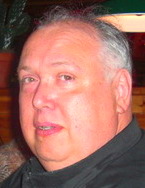
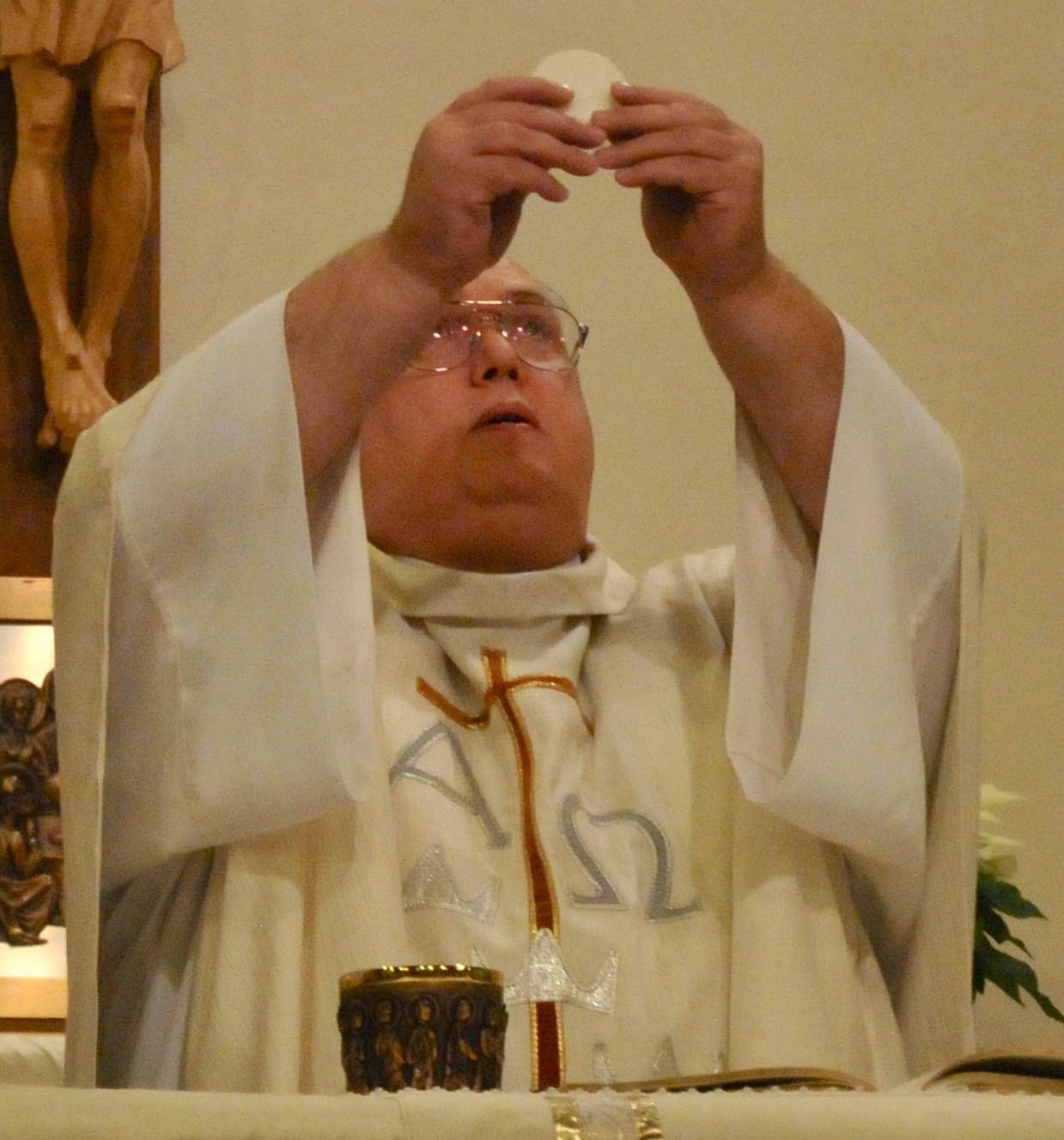
    Fr. Joseph Jenkins

  • The blog header depicts an important and yet mis-understood New Testament scene, Jesus flogging the money-changers out of the temple. I selected it because the faith that gives us consolation can also make us very uncomfortable. Both Divine Mercy and Divine Justice meet in Jesus. Priests are ministers of reconciliation, but never at the cost of truth. In or out of season, we must be courageous in preaching and living out the Gospel of Life. The title of my blog is a play on words, not Flogger Priest but Blogger Priest.

  • Archives

  • Categories

  • Recent Posts

  • Recent Comments

    Jeremy Kok's avatarJeremy Kok on Ask a Priest
    Gary Joseph's avatarGary Joseph on Old Mass or New, Does It …
    Barbara's avatarBarbara on Ask a Priest
    Anonymous's avatarAnonymous on Ask a Priest
    forsamuraimarket's avatarforsamuraimarket on Ask a Priest

Mary & Tradition: Offensive to God?

Recently, I was shockingly dismayed by the citation of Jeremiah 7:18-20 against the Catholic practice of honoring the Virgin Mary. The passage reads:

The children gather wood, their fathers light the fire, and the women knead their dough, to make cakes for the QUEEN OF HEAVEN, while libations are poured out to strange gods in order to hurt me. Is it I whom they hurt, says the Lord; it is not rather themselves, to their own confusion? See now, says the Lord God, my anger and my wrath will pour out upon this place, upon man and beast, upon the trees of the field and the fruits of the earth; it will burn without being quenched.

Because of a similarity in the title, “Queen of Heaven,” this quotation was used against the Mother of Jesus. Talk about silly! The anti-Catholic bigot often mixes his apples and oranges in trying to discredit Catholic teachings and practices. The citation has nothing whatsoever to do with Mary. There is no violation of the worship which is due to God alone. The text in question has to do with Ishtar, the Assyro-Babylonian goddess of fertility. This pagan worship was initiated under Manasseh and was restored after the death of Josiah. Pagan worship, then as now, is considered an abomination by Jews and Christians alike, including the first Christians, Catholics. Such a citation has no other objective than to play on the ignorance of others. Indeed, it violates the commandment regarding the bearing of false witness against another.

Why do we call Mary the Queen of the Saints? The answer is simple. Jesus came to proclaim the Good News of the Kingdom. His ministry, his parables, indeed, his very own person, is the breaking of the kingdom into our world. Jesus is hailed as Messiah upon his entry into Jerusalem and marked as King upon his Cross at Calvary. If Jesus is our king, then what is Mary? Obviously, she is the Queen-Mother. The rejection of this title for her is a repudiation of the royal lordship of Christ himself! This knocks down another straw man argument, that the Mary of Catholic faith and piety is not the Mary of the Bible. The anti-Catholic apologist goes so far as to insert the Virgin Mary into any Scripture text or historical chronicle regarding a pagan goddess, as in the quoted passage. This distortion of God’s Holy Word has only one objective, and that is to deceive. Irrational prejudice and the lack of any authentic argumentation propel such a polemic.

Anti-Catholics also suffer from an intensely privatized faith. They cannot stand the fact that alongside our worship of God and trust in our one Mediator, Jesus Christ, that we also address ourselves to our beloved family members who have gone ahead of us into the next life. Mary and the saints are still members of the Church, and having made it to the promised shore, we remember them and they pray for our ultimate salvation. However, tell this to an anti-Catholic bigot, and he will explode— you’re only suppose to pray to Jesus! He forgets that Jesus founded a Church, not simply a multitude of unrelated and separate personal relationships. Such people claim that there is no evidence for talking with others beyond this world. And yet, in the Transfiguration itself, Moses and Elijah appear with Jesus and he apparently enters into dialogue with them. Peter wants to set up three booths, so that this moment can be preserved and that they too might commune with the great prophet and deliverer. But, the image disappears. The transformation of Christ hints at his resurrection, the time when the righteous will be given a share in his life and when the Spirit of God will give birth to the Church. Our unity with the saints is in Christ. Attention paid to members in the Mystical Body of Christ is not detraction from the Lord.

One critic listed 1 Timothy 2:5 as a repudiation of the Catholic practice of calling upon Mary and the saints. It reads as follows:

For there is one God. There is also ONE MEDIATOR between God and the human race, Christ Jesus, himself human, who gave himself as ransom for all.

This says absolutely nothing about the Catholic prayer practice. We also believe that Christ is the one Mediator between ourselves and God. He makes possible our prayer being received by the Father. His is the acceptable sacrifice. He is the ransom that buys us back from the devil and opens up the gates of heaven. All this is Catholic doctrine; however, you would not know it from reading those who oppose us. This citation, almost creedal in composition, comes within a contention that “supplications, prayers, petitions, and thanksgivings,” particularly those in a liturgical context, are to be offered for all, even for the pagan. Throughout the centuries, the Church has continued to remember in prayer the non-believer and to invite him into her ranks. The presence of Jesus can be found in the Church, making her a singular vehicle for salvation.

An anti-Catholic critic also quoted Mark 7:9 and Mark 7:13 against the role of tradition as understood in the Church. However, since the Catholic Church precedes and was party to the composition of the Scriptures, particularly the New Testament, the continuing role of living tradition makes perfect sense. The Catholic Church assembled the books of the Bible and established by her God-given authority the Scriptural canon. Except for a few subtractions, the Protestant churches retained this canon. We even have a letter from a bishop of Rome (the Pope) written before the last of the New Testament had been composed! The citations from Mark say nothing against the living tradition of the Catholic Christian community following Christ:

And he said to them, “Well do you NULLIFY the commandment of God, that you may KEEP your own tradition!”

“You make void the commandment of God by your tradition, which you have handed down; and many such like things you do.”

These words do not convey our Lord’s full view regarding tradition. First of all, he was speaking about his own Hebrew tradition, particularly the heavy yoke of many laws placed upon the shoulders of everyday people. This sort of tradition protected the status-quo: the Pharisee could fulfill the various rubrics, with a few well-chosen exemptions, but the poor hard-working people would find it difficult to impossible. The Lord came to proclaim liberation; obviously such bondage would run against the grain of this message. However, the Lord also followed certain other traditions, and obviously the commandments, as a good Jew. The same could be said for his family who followed the ritual in regards to sacrifice and his Presentation at the temple. Prior to the verses mentioned here, we read: “For, letting go the commandment of God, you hold fast the tradition of men, the washing of pots and of cups; and many other things you do like these.” The Lord’s concern here is very specific, and does not speak to the living tradition of making manifest the Gospel in our daily lives. The verses following have Jesus challenging the Jewish dietary regulations. He is concerned that people put so much emphasis on external observance that they fail to nurture any genuine faith and love of God in their hearts— a love which spills over in our treatment of one another. All this is lost on the one who hates the Church and her practices; hatred by definition makes the truth of the Gospel obscure.

The new universal catechism represents no retreat from the orthodox positions of the Catholic Church; indeed it is an amplification and succinct summary of the ancient faith given us by God. While it was hoped that this wonderful work would break new ground among the Church’s enemies, they distort and manipulate it just as they do the Bible. This is most sad. One critic dismissed the whole catechism by quoting Acts 4:12:

[Speaking of Jesus] “There is no salvation through anyone else, nor is there any other name under heaven given to the human race by which we are to be saved.”

He contended that the matter could not be made any clearer. Again, remember, he was dismissing the importance of the Church and the Virgin Mary. A sure sign that his categorization is “all wet” is the fact that the universal catechism cites the verse from Acts three times: CCC #432, #452, #1507. It sure does not seem that the Church is avoiding it to me.

[CCC 432] The name “Jesus” signifies that the very name of God is present in the person of his Son, made man for the universal and definitive redemption from sins. It is the divine name that alone brings salvation, and henceforth all can invoke his name, for Jesus united himself to all men through his Incarnation, so that “there is no other name under heaven given among men by which we must be saved.”

What in this statement does the fundamentalist find disagreeable? That Jesus is God? That his alone is the saving name? What?

How about this other reference in the universal catechism?

[CCC 452] The name Jesus means “God saves.” The child born of the Virgin Mary is called Jesus, “for he will save his people from their sins” (Mt. 1:21): “there is no other name under heaven given among men by which we must be saved.”

Oops! Perhaps here is the trouble? The catechism mentions the Virgin Mary as his Mother! Sometimes anti-Catholic bigots talk as if they are embarrassed that Jesus had a mother. Any good mother can tell us, that motherhood does not end with birthing a child. A true mother’s heart always beats in harmony with that of her child— the joys and sorrows of his life are also her own. Such is the measure of maternal love. Jesus is and always will be, the Son of Mary, and she will always be, the Mother of our Savior.

To this day, the efficacy of the sacraments and the ministry of the Church, hinges upon the powerful and saving name of Jesus. Those who hate and oppose the teachings and work of the Church will discover themselves in opposition to Jesus, himself.

[CCC 1507] The risen Lord renews this mission [“In my name … they will lay their hands on the sick, and they will recover” (Mk. 16:17-18)] and confirms it through the signs that the Church performs by invoking his name. These signs demonstrate in a special way that Jesus is truly “God who saves.”

Jesus continues his work among us. This is most important. Some treat the mystery of Christ as if he is dead and gone. The name of Jesus still commands authority and power. All the mysteries of the Church, the role of Mary and the saints— everything— is founded on the Lord. We celebrate the Immaculate Conception, as an honor given Mary so that the Savior might enter the world through a sinless vessel.

We remember Mary as a special intercessor, just as at Cana, because we know that she is of one heart and mind with her Son. We love her just as Jesus loved her. She is acclaimed as the Mother of God, a title which protects the truth of her Son’s divinity. She is the Mother of the whole reality of her child. Would critics separate Jesus into two sons or deny his divinity? I hope not. She suffered at the Cross. What, not in the Bible? Come, let us be reasonable. What loving mother could see her innocent child betrayed, scourged, and crucified— and not be moved? To the very depths of her being she was devastated; she is indeed the Sorrowful Mother. We turn to her, not because she is more compassionate than God, but because she is a wonderful window to the Divine Mercy which is Christ. What, our family does not make possible our salvation? Well, maybe not a family of mere flesh and blood; but we are members of a spiritual family, looking to God as our Father, Jesus as our elder brother, and Mary as the new mother of many sons and daughters. This family relationship, the Church, grafts us to Christ himself and grants us the sure and certain hope of our salvation.

We would ask that those imprisoned in a religion of bigotry and deceits to come out into the light and to join the faith community established by Jesus himself, the Catholic Church:

“Therefore, come forth from them and be separate,” says the Lord, “and touch nothing unclean; then I will receive you and I will be a father to you, and you shall be sons and daughters to me, says the Lord Almighty.” (2 Corinthians 6:17-18)

Did Jesus Renounce His Mother?

Anti-Catholics often misunderstand or narrowly interpret passages so as to ridicule Catholic teachings. They are quite fond of doing this in regard to the Virgin Mary. A favorite such passage is Matthew 12:46-50:

While he was still speaking to the crowds, his mother and his brethren were standing outside, seeking to speak to him. And someone said to him, “Behold, thy mother and thy brethren are standing outside, seeking thee.” But he answered and said to him who told him, “Who is my mother and who are my brethren?” And stretching forth his hand towards his disciples, he said, “Behold my mother and my brethren! For whoever does the will of my Father in heaven, he is my brother and sister and mother.”

The anti-Catholic proponent will make many claims which run against the traditional understanding of this incident and which find little if any support from the text itself. He will suggest that these “brethren” are children of Mary, even though she is never called their mother and extended families of that time would usually include many cousins given the honor of being called a brother. Indeed, the linguistic limitations of these people would require such a designation. The critic will also contend that Mary and the family are aggravating Jesus by their attempted interruption. Instead, it seems that Jesus uses their appearance as a special opportunity to speak about a spiritual kinship which is superior to that of blood. Further, the religious bigot will suggest that Jesus is discounting the intercessory role and honor due to Mary. They will say that Jesus stretches forth his hand toward his disciples and not toward Mary, as if this supports their claim. What they fail to appreciate is the very real possibility that Mary and the brethren are counted among his many followers and/or disciples. Note that the crowd recognizes Mary and the brethren. They are familiar faces. Why have they come? They accompany Mary, who like any good mother is concerned about her Son. From Bethlehem to Calvary, she will not abandon him. Things are heating up. Not everyone is happy with Jesus. He has chastised his listeners as “an evil and adulterous generation” and the Pharisees for “blaspheming against the Holy Spirit.” They will almost certainly seek to retaliate. She does not come to silence him, but to be in solidarity with him.

Those who hate the Mother of Jesus will deny that Jesus is praising her. They refuse to understand that Mary was the first disciple of her Son. As the handmaid of the Lord, she affirmed the message of an angel and received the Savior into her womb. She is the precursor of all the disciples in hearing and doing God’s will. Oddly enough, there is another passage which proves this point and yet it is also used by certain fundamentalists to belittle Mary, Luke 11: 27-28:

Now it came to pass as he was saying these things, that a certain woman from the crowd lifted up her voice and said to him, “Blessed is the womb that bore thee, and the breasts that nursed thee.” But he said, “Rather, blessed are they who hear the word of God and keep it.”

Jesus does not mean to be demeaning of Mary’s maternity. Indeed, he is again elevating her status as the one in whom the Word has come to true fruition. It is in this regard that she is a model to others. If we receive the Good News, then we too can give birth to Jesus in each and every generation. Others will see him and know that he is really alive and meaningful through our discipleship. Also, note that as the fruit of Mary’s womb, the ultimate honor that the woman is giving is directed toward Jesus. The humility of Christ will not allow himself any idle and empty admiration. During his mortal life, he will be lifted up, not by flattery, but by our sins— and then upon a cross. He redirects their focus to his true meaning and reality, the living Word of God. He calls the crowd to receptivity and obedience.

Such questions as the relevance and role of Mary are often deliberately distorted in anti-Catholic bible study. Stock answers are prepared to beguile gullible Catholics and ignorant Protestants. Despite the widespread re-emphasis upon the Scriptures under Catholic auspices today, they will assert that such endeavors are neither serious nor encouraged. This is one of their many deceits. Lacking any definite teaching authority, they reduce the meaning of bible passages to that of personal interpretation, contend that it should be obvious to all, and then bitterly fight with their fellow fundamentalists who, with the same sincerity, disagree with them on certain texts and doctrines— so much for crystal clarity.

When rumors were flying that the Holy Father might declare Mary the co-redemptrix, anti-Catholic opponents became particularly virulent. (By the way, it was revealed that the rumors had no foundation.) However, the truth of such a teaching, even without a formal definition, is improperly defined by critics. The foes of truth contend that this title would make her an additional author of salvation. This is not the Catholic position. Rather, Mary’s role is subservient to that of her Son. Because of her unique position as the one first touched by the redemptive power of Christ’s Cross, her sinless maternity resonates with the saving work of her Son. She offered herself to God as the vessel of our salvation. She surrenders her Son at Calvary. His pain is her pain. She was intimately united to her Son in faith, hope, and love. One could even contend that she died a kind of vicarious martyrdom at the crucifixion. The knife long prophesied, pierced her heart. Her participation in the saving work of her Son was quite unique. Further, she continues to perform a role as our Spiritual Mother, given to us through our emissary John at the Cross. The Mother of the redeemer became the Mother of the redeemed. While on a different level, we are also called to participate in extending the message and work of Christ.

Mass as Sacrifice & Eucharist as Really Jesus

ANTI-CATHOLIC ASSERTION

Jesus, once and for all, died for sins. This saving act is never to be repeated. He now sits at the right hand of God and does not reappear to us in the Mass as a corpse’s blood and flesh.

Jesus dies once:

But this one [Jesus] offered one sacrifice for sins, and took his seat forever at the right hand of God; now he waits until his enemies are made his footstool. For by one offering he has made perfect forever those who are being consecrated. The holy Spirit also testifies to us, for after saying: “This is the covenant I will establish with them after those days, says the Lord: ‘I will put my laws in their hearts, and I will write them upon their minds,’” he also says: “Their sins and their evildoing I will remember no more.” Where there is forgiveness of these, there is no longer offering for sin (Hebrews 10:12-18).

Christ upon the Cross:

Therefore, when Jesus had taken the wine, he said, “It is consummated (finished)!” And bowing his head, he gave up his spirit (John 19:30).

Remembrance, not the forgiveness of sins:

For I received from the Lord what I also handed on to you, that the Lord Jesus, on the night he was handed over, took bread, and after he had given thanks, broke it and said, “This is my body that is for you. Do this in remembrance of me.” In the same way also the cup, after supper, saying, “This cup is the new covenant in my blood. Do this, as often as you drink it, in remembrance of me.” For as often as you eat this bread and drink the cup, you proclaim the death of the Lord until he comes (1 Corinthians 11:23-26).

CATHOLIC TRUTH

The Mass is a sacrifice and Holy Communion (through transubstantiation) is the actual body and blood of Jesus Christ.

It is true that Jesus died once and for all. His saving death is unique and the risen Lord will never die again. This is also Catholic doctrine. Further, the Catholic Church also agrees that Holy Communion is not the flesh and blood of a dead Christ. However, everything else is misunderstood by the anti-Catholic critic. The Mass is a real sacrifice in that it resonates in perfect harmony with Calvary. Each celebration of the Mass is not a new slaughter of Christ Jesus. Sometimes, when spoken about as a repetition of the Cross, this confusion arises. The Mass is a sacramental (use of sacred signs) and unbloody re-presentation of the sacrifice of Christ. Like a time machine, we are transported to Calvary and are present at the one saving act of all history. The only thing missing at the Cross was our own self-offering with and in Jesus. The appearances of bread remain, but the sacred elements constitute the risen Lord— body and soul, humanity and divinity– without division or diminishment. There is but one high priesthood in Christianity, that of Jesus Christ. Every ordained priest allows his very self to be appropriated by Christ in a participation in the one priesthood which offers true worship. If the Mass and Calvary are one and the same, then of course it is a sacrifice of propitiation, one which forgives sins. The covenant of Christ is not a stagnant affair locked in past history, the remembrance of the Eucharist makes present what it celebrates. It is a renewal of the new covenant in Christ’s body and blood. The Hebrew notion of “anamnesis” is not like our impoverished nostalgia-type of remembrance. The words of institution said by the priest at Mass, recall the saving supper of the Lamb and make him present— both in his person (his identity) and in his saving activity. The sacrifice of Calvary, re-presented to us throughout time and place, calls us all to unity in the Lord. The Lord himself tells us that unless we eat his body and blood, we can have no part of him. Paul’s words from 1 Corinthians are not merely an academic exercise in studying the institution narrative of the Lord’s Supper. These words were familiar to St. Paul because they constituted the liturgical tradition he had received. These are the words with which St. Paul, an apostle and priest of the new dispensation, offered the Eucharist. Note that after mentioning the Lord’s command to repeat his new ritual, St. Paul talks about our need to be worthy in its reception. Otherwise, we would be held accountable. Unless there is a “real presence” of Christ in the consecrated bread and cup, such a warning would be incoherent. He forewarns them against any further abuse at the Lord’s Supper, including overeating. (Remember, in the early Eucharist, the Lord’s Supper was attached to a regular meal.) It is precisely because of the efficacy of the Eucharist in regard to the forgiveness of sins, (the realization of divine mercy), that St. Paul talks immediately about judgment if we neglect or abuse the privilege.

We must properly understand 1 Corinthians 11:23-27. Look at the last verse; it only makes sense if the Eucharist really is the risen Christ:

Therefore whoever eats the bread or drinks the cup of the Lord unworthily will have to answer for the body and blood of the Lord (1 Corinthians 11:27).

Self-examination is necessary if we are to appreciate the command to unity which flows from Jesus’ giving of himself and our requirement to repeat his sacrifice with the same spirit of self-donation:

For anyone who eats and drinks without discerning the body, eats and drinks judgment on himself (1 Corinthians 11: 29).

Is the Roman Catholic Church Christian?

One of the most unintelligible and repugnant of slurs is the accusation that the Roman Catholic is not a Christian. Such a mentality fails to appreciate the historical evidence which details the Catholic Church as the first and the legitimate Christian community established by Christ. The alternative to such thinking would be that Christianity disappeared entirely for 1,500 years only to reappear with the Protestant Reformation. Would our Lord abandon his Church and allow the truth to be eclipsed throughout the centuries? Of course not— there is no logic to such a view. The Lord promised that he would never abandon his Church, even unto the end of the world.

One anti-Catholic proponent declared that practically all the “precepts” of the Roman Catholic faith contradict the Scriptures. However, a thoughtful reading of the Bible will reveal that quite the opposite is true: the Bible validates the Catholic religion. While the critic uneducated to Catholic terminology and faith might use the word “precept” to include all things Catholic, it is actually understood in the Church as an ecclesial positive law. Just as civil society needs laws by which civilization may be maintained, so too does the community of the Church need laws for good order and to insure the furtherance of the Christian life.

The first precept stipulates: “You shall attend Mass on Sundays and holy days of obligation.” It is very much related to the commandment to keep holy the Sabbath Day. Coincidentally, it was the Catholic Church which transferred the commemoration of this day from Saturday to Sunday. Thus, there is at least one matter where many anti-Catholics acknowledge the authority of the Pope over their lives and religious observance. We are called to worship on the Lord’s Day. What is so terrible about this? Nothing! Those who hate the Mass forget that Jesus told his friends at the Last Supper to repeat it in memory of him.

The fourth precept is very much like it: “You shall keep holy the holy days of obligation.”

The second precept stipulates: “You shall confess your sins at least once a year (if you are in serious sin).” Coincidentally, it was the Catholic Church which allowed such repeated penance to be practiced so that fallen away Christians might be allowed reentry into the faith community. Initially, serious sin after baptism cast a member from the community as not one of the elect. Thus, the practice of Catholics in repentance and seeking reconciliation with God and with the Church after conversion and initiation can be traced back to the Catholic leadership’s use of the keys to the kingdom. What is so terrible about encouraging a prodigal son or daughter to come home? Nothing! Those who hate Confession forget that Jesus gave the power to forgive sins to his Church.

The third precept stipulates: “You shall humbly receive your Creator in Holy Communion at least during the Easter season.” Coincidentally, even the narration of the Last Supper in 1 Corinthians is a recounting of the manner in which the Pauline Eucharist was celebrated. Did the Lord not say that unless you ate his flesh and drank his blood, you could have no part of him? Thus, the renunciation of the Lord’s Supper by many anti-Catholics is disobedience to a direct command from Christ and is a rejection of an apostolic testimony from the Scriptures. What is so terrible about fulfilling a mandate from Christ? Nothing! Those who ridicule the host as a “wafer God” blaspheme against the Lord.

The fifth precept stipulates: “You shall observe the prescribed days of fasting and abstinence.” Did the Lord not fast? Did not John the Baptizer mortify his flesh? They most certainly did. Knowing the value of discipline as a help to Christian character and as an inducement to selfless prayer, the Church recommends such austerity. What is so bad about imitating our Lord? Did he not say that a day was coming when the bridegroom would be taken away– a time for fasting? He sure did. Those who reject such penance are often the first to run away from any suffering inherent in following Christ.

The Catholic faithful are also duty bound to support the Church, materially and spiritually. Do not even non-Catholic churches take up donations and free-will offerings? Sure they do. Most of what is collected in Catholic Churches goes back into the work of the Gospel.

Anti-Catholic cults have some nerve calling the universal Church of Christ a cult. The so-called compassion such enthusiasts exhibit in stealing away Catholic membership is merely a symptom of their egoism. Instead of conforming themselves to Christ, they refashion Christ to themselves and to their message. Theirs is often a messianic cult of personality. Beware if such people tell you that they really care. The true prophet is humble and is always alert not to allow his own message to displace or overshadow that of Christ– even when it is a truth we personally would rather not hear. The Good News of Christ can be consoling; however, it can be very challenging as well. Sometimes the Church is attacked, not for what she believes but for what individuals and/or groups within her did in the name of religion. Often the abuses of the Inquisition or Crusades are listed as prime examples. Much of the Inquisition was the work of various governments and in some cases the Holy See pleaded for clemency and mercy. Further, many Protestant groups were also quite good at killing Catholics when they happened to stand in the way of their objectives– as in England. Such is not just the failure of religion; it is the failure to give Christianity a chance. Many figures for the death tolls are thrown around but they are also largely exaggerated. We must not lose sight of the fact that there were also positive objectives to movements which might have gotten out of hand. The threat of Islam was very much like that of Communism during the Cold War. The Inquisition was to insure that the Catholic Christian faith was safe in Western Europe. The Crusades were to give free access to the Holy Land for Christian pilgrims. The latter task met with limited success but resulted in an agreement where such pilgrimages continued into modern times. Another consequence of the Crusades, now recognized in Israeli law, is the right of Christians, albeit Catholics, to maintain many of the important religious sites in the Holy Land. All are welcome to these sites. Many missionaries and the Franciscans in particular have sacrificed much to insure this right of Christians. Long before the non-Catholic churches and cults came into existence, the Catholic Church was conducting operations which would come to the benefit of all Christians. It should also be noted that the Catholic Church is today at the forefront for the defense of human and religious rights. The understanding of such liberties, as with many doctrinal matters, sometimes only becomes clear over time and after a certain development. The greatest holocausts in all history are happening right now, especially with abortion; we are hardly in a position to pass judgment on the past. While suffering and death was once counted in hundreds and thousands, it is now numbered in the millions. The mindset of both Catholics and Protestants in days gone by was that the murder of the soul was as serious, if not more so, than the murder of the body. This perspective was what led to a severity toward which we would cringe today. Oddly enough, the love of God and the desire for the salvation of others was often still an ingredient. Hopefully, Catholics and Protestants can learn from the past; however, such has yet to be demonstrated.

Of course, anti-Catholic critics only want to fight the old battles all over again. One of their heroes is John Wycliffe (c. 1325-1384). He challenged the property rights of well-to-do clerics who fell from a state of grace, claiming that such resources then fell to the secular prince or monarch. Such anticlerical views ironically made him popular with poor priests. However, he got into real hot water over unorthodox views toward the Eucharist. He never meant to deny the doctrine of the Real Presence of Christ in Holy Communion, as the anti-Catholics do as a matter of course. Many of his views were ultimately judged heretical; but, he could hardly be the poster boy for the fundamentalists today. Indeed, he was quite devout until he had a stroke while at Mass. He believed in an ordained priesthood along Catholic lines but insisted upon evangelical simplicity. Another of their heroes is William Tyndale (c. 1494-1536). Leaning toward the humanism of Erasmus, he engaged in several debates with St. Thomas More over Christianity and the Catholic faith. More was a devout Catholic and Tyndale, while he had started out that way, had gravitated toward Protestantism. Both men would find themselves facing execution. Influenced by Martin Luther, Tyndale made a translation of the New Testament. It is interesting that Tyndale’s views were so unorthodox that not only did Catholics find him suspect, but the Lutherans forced him to leave England for Germany. He was not above breaking the law to bring about reformation. Regarding many matters, the views of these two men would be closer to Catholicism than to any anti-Catholic fundamentalism.

The issue with these two men and the Catholic faith was not their stress on the Scriptures, but upon interpretations which ran contrary to the consensus of the Church throughout the centuries. This is still the state of affairs; although anti-Catholics often paint a stark picture of deviation between Scriptural revelation and doctrinal truth.

Peter the ROCK of the Church

ANTI-CATHOLIC ASSERTION
Jesus Christ alone is the foundation of the church. Peter was a mere man like ourselves. He was not even the best of men. Note that the Lord declared Peter to be “Satan” (Matthew 16:23) when he rebuked the prospect of Christ’s betrayal and death. Peter rejected Cornelius’ effort to worship him, saying, “Get up. I myself am also a human being.” (Acts 10:26). The Pope would do well to pay heed to this admonition when his lost souls bow to him and kiss his ring. He is not worthy of worship!

…for no one can lay a foundation other than the one that is there, namely, Jesus Christ (1 Corinthians 3:11).

Jesus said to them, “Did you never read in the Scriptures?” (Matthew 21:42).

CATHOLIC TRUTH

The foundation stone of the Church is Peter. The critic’s citation of 1 Corinthians is purposely misleading. He gives a fragment of a text and twists its meaning to his purposes. Let us look at the previous verse of which 11 is a part: “According to the grace of God given to me [St. Paul], like a wise master builder I laid a foundation, and another is building upon it. But each one must be careful how he builds upon it, …” (1 Corinthians 3:10). Catholics would agree that Jesus is the center of our Christian faith; however, this passage is about the accountability of those in God’s service. It is in this sense that it refers to Peter, Paul, and any and all of the other shepherds of the Church. Peter is only a rock in a secondary sense to Christ who is the true foundation stone. He is the visible head of the entire Church, the Vicar of Christ. Jesus Christ is the invisible head. Peter and subsequent popes have been given a privileged place in the Church to care for the Lord’s flock. He is to be trustworthy and steadfast like a rock against the storms of sin, of flesh, and of the world. Peter’s failure in appreciating the saving task which Jesus had to undergo would earn him a rebuke; later his denial of Christ would earn him shame. However, despite his weaknesses, he is the one selected out by Christ as the head of the Apostles and the “rock” upon which Christ would build his Church. Note that the roles of the builder and the rock seem to blur or to be interchanged in the Scriptural texts. Something of this becomes understandable if we appreciate the incarnation of Christ by grace in his followers. The Church is holy because Christ is holy. The ministries and works of the Church are also Christ’s. He identifies himself and his authority especially in his Apostles and in their successors. Note later in 1 Corinthains 3:16: “Do you not know that you are a temple of God, and that the Spirit of God dwells in you?” Later, in chapter 4, verse 1, St. Paul says something which wonderfully resonates with the Pope as the Servant of the Servants of God: “Thus should one regard us: as servants of Christ and stewards of the mysteries (sacraments) of God.” The business about worship is hardly worthy of a response. We do not worship the Pope. We respect and honor him as an important and holy personage, but no more. Is a man on one knee proposing marriage to his beloved stealing the worship proper to God? No. Is the custom of a man kissing a lady’s hand blasphemous? No. Is the bow rendered to royalty a violation of God’s due? I sure hope not. Again, the anti-Catholic bigot proves his silliness and stumbles over himself in bearing false witness against Catholicism.

[Christ’s promise to St. Peter that he will be the head of the Apostles and visible foundation the Church together with him] Simon Peter answered and said, “Thou art the Christ, the Son of the living God.” Then Jesus answered and said, “Blessed art thou, Simon Bar-Jona, for flesh and blood has not revealed this to thee, but my Father in heaven. And I say to thee, thou art Peter, and upon this rock I will build my Church and the gates of hell shall not prevail against it. And I will give thee the keys of the kingdom of heaven; and whatever thou shalt bind on earth shall be bound in heaven, and whatever thou shalt loose on earth shall be loosed in heaven” (Matthew 16:16-19).

[Our Lord healed Peter from his thrice denial and makes him shepherd of his entire flock] When, therefore, they had breakfasted, Jesus said to Simon Peter, “Simon, Son of John, dost thou love me more than these do?” He said to him, “Yes, Lord, thou knowest that I love thee.” He said to him, “Feed my lambs.” He said to him a second time, “Simon, son of John, dost thou love me?” He said to him, “Yes, Lord, thou knowest that I love thee.” He said to him, “Feed my lambs.” A third time he said to him, “Simon, son of John, dost thou love me?” Peter was grieved because he said to him for the third time, “Dost thou love me?” And he said to him, “Lord thou knowest all things, thou knowest that I love thee.” He said to him, “Feed my sheep” (John 21:15-17).

[Peter confirms the faith of the other Apostles, alludes to papal infallibility in faith] “But I have prayed for thee, that thy faith may not fail; and do thou, when once thou hast turned again, strengthen thy brethren” (Luke 22:32).

Priests are Often Addressed as Father

ANTI-CATHOLIC ASSERTION

Catholics are wrong to call their ministers, “Father,” a title that is reserved to God.

“And call no one on earth your Father; for one is your Father, who is in heaven” (Matthew 23:9).

CATHOLIC TRUTH

This is an example of a Scriptural literary form known as Hebraic Hyperbole. It is like the passage that admonishes tearing your eye out or cutting your hand or foot off. It is a way of speaking to give heightened emphasis. The fundamentalist reads everything as if the primary language is English and the author contemporary. This is also an example of taking a verse out of context and distorting its meaning. Verse eight says to call no one Rabbi or teacher. However, do we not use this word all the time? Further, if this line is absolute against Catholic priests who possess a spiritual fatherhood, then what about our foster fathers and biological fathers? It would have to apply there as well. Almost no one would agree to this. It is a wonderful sign of respect and relationship. The matter about which the Lord is concerned is that his disciples not imitate the Pharisees in their pride and hypocrisy, lording their positions over others. God is the true and ultimate Father of all. If any fatherhood does not flow from and participate in divine fatherhood, then it is a lie and oppressive. St. Paul speaks of himself as a spiritual father in his first letter to the Corinthians and admits that there are other such fathers, although not many. The shortage of vocations to priesthood is still a matter with which we must deal.

[In speaking of our priorities] “He who loves FATHER or mother more than me is not worthy of me” (Matthew 10:37).

[About marriage] “For this cause a man shall leave his FATHER and mother, and cleave to his wife, and the two shall become one flesh” (Matthew 19:5).

[Placing discipleship to Jesus first] “And everyone who has left house, or brothers, or sisters, or FATHER, or mother, or wife, or children, or lands, for my name’s sake, shall receive a hundredfold, and shall possess life everlasting” (Matthew 19:29). {see also Mark 10:29}

[Abraham is called father] For this reason, it depends on faith, so that it may be a gift, and the promise may be guaranteed to all his descendants, not to those who only adhere to the law but to those who follow the faith of Abraham who is the FATHER of all of us, … (Romans 4:16). {see also Romans 4:11-12,17}

[Treatment of elders] Do not rebuke an older man, but appeal to him as a FATHER (1 Timothy 5:1).

[Enduring trials] For what “son” is there whom his FATHER does not discipline? (Hebrews 12:7). {see also Hebrews 12:9}

[My favorite and very similar to calling the priest, Father] I am writing you this not to shame you, but to admonish you as my beloved children. Even if you should have countless guides to Christ, yet you do not have many FATHERS, for I became your FATHER in Christ Jesus through the gospel. Therefore, I urge you to be imitators of me (1 Corinthians 4:14-16).

Priests Forbidden to Marry

ANTI-CATHOLIC ASSERTION
Any prohibition against the good of marriage is from the devil!

Now the Spirit explicitly says that in the last times some will turn away from the faith by paying attention to deceitful spirits and demonic instructions, through the hypocrisy of liars with branded consciences. They forbid marriage and require abstinence from foods that God created to be received with thanksgiving by those who believe and know the truth. For everything created by God is good, and nothing is to be rejected when received with thanksgiving, for it is made holy by the invocation of God in prayer (1 Timothy 14:1-4).

CATHOLIC TRUTH

These words refer to a false asceticism and not to the practices of Catholic Christianity. The early Church, well into the Patristic period, had to deal with cults and movements which made all sorts of exaggerated claims and required various austere practices. Some urged a return to Jewish dietary laws. Others wanted to go even further with fasting and abstinence, perpetually destroying joy in the goods of creation. There were even movements which urged strict celibacy upon all the members as the only way to enlightenment and salvation. The Catholic position is quite different. Our use of fasting and abstinence is not perpetual and it is not a rejection of certain foods as unclean or unworthy of man. Rather, their absence, to coin a cliché, is to make the heart grow fonder. It is precisely because something like meat is good that we might temporarily abstain. Jesus himself fasted and prayed in the desert and alluded to it in the future as something his followers would do. As for marriage, Catholics believe that Christ raised it up to the level of a sacrament, a special sacred sign of his relationship as the bridegroom to his bride, the Church. It is a mysterious means of encountering the Lord himself and receiving grace. Obviously, if such is the Catholic view, we would not be seeking to degrade it by our practice of celibacy. Priests and religious vow celibacy freely, not because marriage is bad, but because it is very good. Celibacy becomes a wonderful gift, freely embraced, as a sacrifice for God and his holy people. Jesus was celibate. St. Paul not only practiced it but encouraged it. The celibate priest becomes a sign of contradiction reflecting the kingdom of Christ to a hedonistic world. It is not a rejection of love, but a selfless abandonment to divine love as manifested in service to God’s people, the Church. It is not a calling for everyone, just as not everyone is called to priesthood or consecrated life. The majority of people seek holiness in marriage and family life.

ANTI-CATHOLIC ASSERTION

The Catholic Church claims its apostolic line through Peter and yet he was married, something not allowed for popes today.

And when Jesus had come into Peter’s house, he saw Peter’s mother-in-law lying in bed, sick with a fever (Matthew 8:14). Now Simon’s mother-in-law was keeping her bed sick with fever, and they immediately told him about her (Mark 1:30). But he rose from the synagogue and entered Simon’s house. Now Simon’s mother-in-law was suffering from a great fever, and they besought him for her (Luke 4:38).

CATHOLIC TRUTH

These references to Peter’s mother-in-law do indicate that Peter was married; although her absence from these texts might lead one to think that she experienced some mishap or might have been away. 1 Corinthians has Paul discussing his power to lead about a wife like Cephas (Peter) and there is a tradition that she was an early Christian martyr. But there is really very little we know about her. Be this as it may, the Catholic Church has never hidden the fact that Peter and other religious leaders of the Church were married. Indeed, the Catholic Church had a selective married clergy all the way up to the 12th century. The Fourth Lateran Council was quite decisive in mandating compulsory celibacy for any who would be priests of the Roman or Western Rite. The Eastern rites of the Catholic Church, to this very day (in Europe and the Far East) have an optional married clergy. These priests are in full union with Rome. Also, in our own nation many Protestant clergy, Lutheran and Episcopal, have entered into the Roman Catholic priesthood, even though they are married and have families. Those who are raised in the Western rite realize that celibacy is a special gift and a particular charism of our priestly experience. It is a sign of a wondrous single-hearted love. One of the fruits of this sacrifice is the availability that a priest can give to his prayers, study, and service. Any indication that Peter’s married state would affect apostolic succession is a low blow. Those who followed Peter had a spiritual and not a physical affinity to the great apostle. While the Church has known nepotism, such is the exception and not the rule. No one forces a young man to become a priest or brother. There is no coercion for a woman to become a nun. They know that vows of poverty, obedience, and celibacy are part of the package. If God gives a person a vocation in the Catholic Church, we believe that he will give him the graces and gifts to follow this life. The majority of men who leave the priesthood to get married ultimately have failed marriages. Promises are made to be kept. The problem is not the Church or God; the dilemma is people who are unwilling to surrender their lives fully to Christ. Marriage is also a sacrifice, amidst the joys. However, if we trust God and walk with him, he will guide our path.

ANTI-CATHOLIC ASSERTION

Paul was single but thought we should have the freedom to marry. Catholics are too strict.

Do we not have the right to take along a Christian wife, as do the rest of the apostles, and brothers of the Lord, and Kephas? (1 Corinthians 9:5).

CATHOLIC TRUTH

The Catholic Church also recognizes the right of people to get married. However, the Church has a right of her own to regulate her ministries. Permanent deacons, Extraordinary Ministers of Holy Communion, Catechists, Lectors, Acolytes, and Lay Evangelists and Ministers all serve the Church and may be married. Would the anti-Catholic demand compulsory matrimony? I hope not. Those who opt for priesthood in the Roman Rite also freely embrace celibacy. This is no less than what St. Paul did. After listing all the various rights that a follower in Jesus possesses, he acknowledges that he has chosen not to use these rights for himself.

After listing the right to marry among many other freedoms, St. Paul says:

Yet we have not used this right. On the contrary, we endure everything, so as not to place an obstacle to the Gospel of Christ. … I have not used any of these rights, … (1 Corinthians 9:12,15).

After speaking about marriage:

This I say by way of concession, however, not as a command. Indeed, I wish everyone to be as I am, but each has a particular gift from God, one of one kind and one of another. Now to the unmarried and to widows, I say: It is a good thing for them to remain as they are, as I do, … (1 Corinthians 7:6-8).

Advice to virgins and widows:

Now in regard to virgins, I have no commandment from the Lord, but I give my opinion as one who by the Lord’s mercy is trustworthy. So this is what I think best because of the present distress: that it is a good thing for a person to remain as he is. Are you bound to a wife? Do not seek a separation. Are you free of a wife? Then do not look for a wife. If you marry, however, you do not sin, nor does an unmarried woman sin if she marries; but such people will experience affliction in their earthly life, and I would like to spare you that. I tell you, brothers, the time is running out. From now on, let those having wives act as not having them, those weeping as not weeping, those rejoicing as not rejoicing, those buying as not owning, those using the world as not using it fully. For the world in its present form is passing away (1 Corinthians 7:25-31).

More on virginity:

So then, the one who marries his virgin does well; the one who does not marry her will do better (1 Corinthians 7:38).

About a widow:

She is more blessed, though, in my opinion, if she remains as she is, and I think that I too have the Spirit of God (1 Corinthians 7:40).

Celibacy as a sign of the kingdom:

His disciples said to him, “If the case of a man with his wife is so, it is not expedient to marry.” And he said, “Not all can accept this teaching; but those to whom it has been given. For there are eunuchs who were born so from their mother’s womb; and there are eunuchs who were made so by men; and there are eunuchs who have made themselves so for the sake of the kingdom of heaven. Let him accept it who can” (Matthew 19:10-12).

Confession to a Priest & Petitioning Saints

ANTI-CATHOLIC ASSERTION

Sins and needs are to be confessed only to God.

[Confession to God] If we acknowledge our sins, he is faithful and just and will forgive our sins, and cleanse us from every wrongdoing (1 John 1:9).

[The Our Father] “And forgive us our debts, as we forgive our debtors” (Matthew 6:12).

[One Mediator, not the saints, the Pope, or the priests] For there is one God. There is one mediator between God and the human race, Christ Jesus, himself human, who gave himself as ransom for all (1 Timothy 2:5). But if anyone does sin, we have an Advocate with the Father, Jesus Christ the righteous one (1 John 2:1).

CATHOLIC TRUTH

Two practices are involved under this heading: the confession (of sins) to a priest and the making of petitions to Mary and the saints. While they are very different topics, they are often linked in attacks because both involve the approach to someone other than Jesus. Catholics go to a living priest for the Sacrament of Penance. We pray to the living saints in heaven for their intercession and prayers to God. The fundamentalist has trouble with intermediaries. He insists that we must go directly to Jesus and to Jesus alone. Outside of the sacraments, some insist that we cannot even ask the living (in this world) for solidarity in prayer. Their view of a personal and privatized faith becomes so extreme that every believer becomes an isolated Church of one. Catholicism recognizes that we are not alone. Our priests perpetuate the ministry of Jesus and apply his mercy to our lives precisely as members of the Church, something larger than ourselves. Our recourse to the communion of the saints testifies to our confidence in the resurrection. Death does not destroy the bonds forged in life. Indeed, the saints are alive and remain members of the Church who have made it. They live in glory. They are where we hope to go. They have become what we seek to be. Jesus uses human priests to bring his forgiveness to the Church. Jesus allows the saints in heaven to pray for and with the Pilgrim Church on earth.

The use of 1 Timothy is quite interesting because the anti-Catholic apologist affirms the value of good works in fidelity and love to Christ: “But whoever keeps his word, the love of God is truly perfected in him. This is the way we may know that we are in union with him: whoever claims to abide in him ought to live [just] as he lived” (1 Timothy 2:5-6). I would suspect that he would not like this message very much. As usual, none of his citations contradict Catholic faith. Sins can be forgiven, even outside of the sacrament of Confession. However, one must still admit sinfulness, be sorry, and offer an act of contrition. The sacrament is a special and certain way we receive God’s mercy. The Church reserves to herself the confession of certain serious sins so that we may assuredly be forgiven, receive the graces to amend our life, repair the rift caused by sin in the Mystical Body, and receive appropriate counsel. Because of his configuration to Christ, the absolution of the priest in Confession resonates in perfect harmony with the expiation of the Cross. Christ forgives our sins. He has extended something of this authority to his Church as an element of his abiding and healing presence. The anti-Catholic critic has trouble with Confession for the same reason that he cannot abide the general ministry of priests, the authority of the Pope, and the intercession of the saints: his is an intensely privatized faith which makes no concession to a church other than periodic fellowship. Churches, as long as they are not Romanized, are interchangeable and maybe even considered unnecessary. Such is a theology incompatible with the Scriptural view of the Church as the new People of God or the new Israel or Jerusalem.

[Precedent in the Old Testament] The Lord said to Moses: “Tell the Israelites: If a man (or woman) commits a fault against his fellow man and wrongs him, thus breaking faith with the Lord, he shall confess the wrong he has done, restore his ill-gotten goods in full, …” (Numbers 5:5-7). He who conceals his sins prospers not, but he who confesses and forsakes them obtains mercy (Proverbs 28:13).

[David confessed his sins to Nathan the prophet and was given assurance of pardon] Then David said to Nathan, “I have sinned against the Lord.” Nathan answered David: “The Lord on his part has forgiven your sin: you shall not die” (2 Samuel 12:13).

[Responding to John the Baptizer] Then there went out to him Jerusalem, and all Judea, and all the region about the Jordan; and they were baptized by him in the Jordan, confessing their sins (Matthew 3:5-6).

[Responding to the Apostles] Many of those who had become believers came forward and openly acknowledged their former practices (Acts 19:18).

[Ordained ministers exert Christ’s forgiveness over sins] So we are ambassadors for Christ, as if God were appealing through us. We implore you on behalf of Christ, be reconciled to God (2 Corinthians 5:20). He therefore said to them again, “Peace be to you! As the Father has sent me, I also send you.” When he said this, he breathed upon them, and said to them, “Receive the Holy Spirit; whose sins you shall forgive, they are forgiven them; and whose sins you shall retain, they are retained” (John 20:21-23). “Amen I say to you, whatever you bind on earth shall be bound also in heaven; and whatever you loose on earth shall be loosed also in heaven” (Matthew 18:18). And all this is from God, who has reconciled us to himself through Christ and given us the ministry of reconciliation, namely, God was reconciling the world to himself in Christ, not counting their trespasses against them and entrusting to us the message of reconciliation (2 Corinthians 5:18-19).

I will address the matter of Mary and the saints elsewhere.

For more such reading, contact me about getting my book, DEFENDING THE CATHOLIC FAITH.

Priests Forgiving Sins

ANTI-CATHOLIC ASSERTION

Our sins are forgiven already in Christ, we have no need of confessing our faults to any mere man. We can appeal directly to Jesus our Savior and be forgiven.

Mark 2:5-11: “Why does this man speak thus? He blasphemes, who can forgive sins, but God.”

CATHOLIC TRUTH

Such was the verdict of the Scribes in repudiating Christ’s role as the Messiah, his testimony and authority, and ultimately his divinity. Little did they know— Christ was indeed the unique Son of God who had come to save his people. Similarly, those who discount the role of priests today stand in the role of the ancient Scribes in discounting the full ramifications of God coming upon us. Christ’s ministry of forgiving sins is perpetuated in the Church, particularly in the priests who have been specially configured to Christ for this purpose. If Christ’s mercy were a one-time deal or a general affair, then why did he spend so much time going out to individuals, liberating them from demons and forgiving their sins? Why then would he give Peter the power of the keys and explicitly tell him and the other apostles that they might loosen and bind from sin? “‘I will give you [Peter] the keys to the kingdom of heaven. Whatever you bind on earth shall be bound in heaven; and whatever you loose on earth shall be loosed in heaven’” (Matthew 16:19-20). When speaking about the referral of a sinful brother to the Church, Matthew repeats this teaching: “‘Amen, I say to you, whatever you bind on earth shall be bound in heaven, and whatever you loose on earth shall be loosed in heaven’” (Matthew 18:18). Only God can forgive sins, but he has made priests living vehicles, instruments of his mercy. After his death, the resurrected Lord appeared to his disciples, and the context makes clear that we are talking about his apostles in the locked upper room. Christ extends his peace to them: “‘As the Father has sent me, so I send you.’ And when he had said this, he breathed on them and said, ‘Receive the holy Spirit. Whose sins you forgive are forgiven them, and whose sins you retain are retained’” (John 20:21-23).

Acts 10:43: “To Him all the prophets bear witness, that through His name all who believe in Him may receive forgiveness of sins.”

CATHOLIC TRUTH

These words belong to Peter and come just before he is challenged for entering the homes of uncircumcised Gentiles and the issue of their baptism. People given the saving faith of Jesus come to baptism which brings forgiveness of sins. The sacramental life, and especially confession, makes possible our steadfastness in God’s grace and mercy. The absolution prayer used by the Church today acknowledges that it is “through the death and resurrection of his Son” that reconciliation is made with God. Further, the Holy Spirit continues to work among us “for the forgiveness of sins.” Then it takes note that Christ continues his saving work “through the ministry of the Church,” and we invoke the Almighty to shower upon the penitent his “pardon and peace.” Speaking in the first person, as he does at the altar during the Mass consecration, the priest absolves the person of his sins in the holy and triune “name” of God.

For more such reading, contact me about getting my book, DEFENDING THE CATHOLIC FAITH.

Baptism & Born Again

ANTI-CATHOLIC ASSERTION

This spiritual decision for Christ cannot be identified with water baptism or with any so-called saving works and certainly there is no foundation for infant baptism.

John 3:3,7: Jesus answered him, “Truly, truly, I say to you, unless one is born anew (again), he cannot see the kingdom of God. . . . Do not marvel that I said to you, ‘You must be born anew.’”

CATHOLIC TRUTH

This spiritual rebirth is intensely important for Catholics. Ours is no juridical imputation of righteousness; rather, we are literally remade into a new creation. Deleted from the pericope by our protagonist is this line, “That which is born of the flesh is flesh, and that which is born of the Spirit is spirit” (John 3:6). Faith in Jesus and an abiding trust and obedience to him brings us to the baptismal font. The Scripture citation here is still incomplete. It also states, “Truly, truly, I say to you, unless one is born of water and the Spirit, he cannot enter the kingdom of heaven” (John 3:5). The font of life-giving waters is known as the “tomb and womb” of the Church. We die to our old self, to sin; and we are reborn to Christ and the life of grace. We become temples of the Holy Spirit and are configured to Christ’s likeness as adopted sons and daughters of God. Our rite of initiation is not circumcision, but baptism into the name of the Trinity. Faith and baptism also makes us members of the new People of God, the Church of Christ. This theme of unity has always been important among the faithful. The Scriptures themselves narrate that sometimes whole households were converted to the faith (see Acts 16:15; 16:33; 1 Corinthians 1:16). During this period and again with the development of second penance and regular confession, babies were also brought forward for initiation. The bond joining the members of Christ’s body was understood to be so intimate and important that parents and sponsors could make a profession of faith for a child who had not yet reached the age of reason. Mortality rates being high, this was of crucial emotional importance to parents and had eternal ramifications for the children. Jesus himself had urged, “Let the children come unto me, and do not hinder them.” Over time, the final anointing of the baptismal ceremony (Confirmation) was separated from the first part, often reserved for the visiting bishop. Similarly, first Eucharist was also delayed until the child was older.

When records are not available or when there is some doubt of validity, the Catholic Church will offer a conditional baptism to candidates seeking entry into the believing community. However, if their prior Baptism in a Protestant community is deemed authentic, then they make an act of reception and subsequently receive Confirmation and Holy Communion. Baptism is a one-time sacrament which forever configures a person to the Lord. Technically, we equate the “born again” experience with baptism, although it can be personally affirmed with confirmation and a fuller sharing in the gift of the Holy Spirit. We might also experience exaltation at prayer which can give an emotional high or a special satisfaction to our faith. Christians baptized in the Catholic Church, even as infants, who seek and receive baptism in Protestant churches are in fact disavowing their prior baptism. What they are saying is that our baptism is null-and-void and that Catholics are neither Christians nor “saved,” using their language. This distortion of the truth is a terrible happenstance. Catholics were the first Christians and Catholicism is the TRUE Church. We love and pray for our Protestant brothers and sisters; we join their chorus in praising God for giving us such a wondrous redeemer as Christ; however, we cannot rejoice in the ignorance of our own or the bigotry of others which steals from our ranks.

For more such reading, contact me about getting my book, DEFENDING THE CATHOLIC FAITH.