Our Relationship to God
1. You shall not worship false gods.
2. You shall not take the name of the Lord, your God, in vain.
3. Remember to keep holy the Sabbath day.
Our Relationship to Each Other
4. Honor your father and your mother.
5. You shall not kill.
6. You shall not commit adultery.
7. You shall not steal.
8. You shall not bear false witness against your neighbor.
9. You shall not covet your neighbor’s wife.
10. You shall not unjustly desire what belongs to your neighbor.
The Greatest Commandment
Jesus asked, what is the greatest commandment? His answer echoes the pattern in the Decalogue of our relationship to both God and to neighbor. Christ says that we are to love God with our whole heart, with all our mind, and with all our soul. Loving ourselves as precious in God’s eyes, he reminds us to love our neighbor as ourselves. This is not a static kind of love; it means forgiving and not rendering evil for evil.
Reflection on the Decalogue
The first commandment reminds us that ours is a jealous God; there is no other before him. He is the one and only! He does not want us wasting our lives on false gods or empty superstitions. Even though there may not be many traditional worshipers of idols cast in stone or bronze, or of figures from nature like the sun or animals, this prohibition is still violated. We see this in dangerous occult toys, like tarot cards and Ouija boards. These things are hazardous to our souls because they sidestep God’s dominion over his will for us. They might even invite spiritual evil to penetrate our lives. This commandment also condemns sacrilege whereby persons, places, or things sacred to God are defiled. Even interest in the popular horoscopes can sometimes escalate beyond simple curiosity and become habitual false guides. God wants us to follow him alone.
The second commandment urges us to treat God’s name respectfully. This necessarily prohibits blasphemy, making false oaths in God’s name, and cursing.
The third commandment tells us to make the Sabbath day holy. For Christians, this obligation is transferred to Sunday. (It is interesting that most Protestant religions accept at least this one precept or legislation of the Roman Catholic Church. Otherwise, along with our Jewish brethren, they would respect it on Saturday.) We sanctify this day by prayer, worship, avoiding unnecessary work, rest, and joy. Therefore, something like failing to participate at Mass on Sunday is not merely a violation of the laws of the Church, but in a very direct manner, an infringement upon this commandment to give God his due.
The fourth commandment exhorts us to respect our parents by loving and helping them, especially when they are in need. While young and under their immediate authority, children must obey their parents. Reciprocally, parents must give a Catholic education to the children entrusted to them. Their spiritual and material welfare is essentially in their hands. The parents may extend or endow school teachers and others with something of their own authority. This commandment speaks to us in a less direct way about authority in general. All just authority comes from God. We are called to obey spiritual and civil authorities when they make legitimate demands. However, if there is a conflict between the laws of human beings and those of God, God comes first.
The fifth commandment prohibits us from either harming our own bodies or those of others. This commandment expands beyond murder or suicide to the various partial degradations: including such things as mutilation, striking another, harmful drugs, drunkenness, and carelessly taking risks with our lives. Abortion is a direct violation of this commandment. Our right to choose should never be deemed a higher priority than another person’s right to life.
The sixth commandment, taken alone, forbids all external sins against chastity. Once sexual activity is condoned outside marriage, as in fornication, it is logically difficult to confine afterwards, as in adultery. The premise is already adopted. Some fifty percent of the couples who live together prior to marriage eventually get divorced. The seed for failure is already planted. Sin is a mighty poor preparation for the nuptial sacrament. Considered with the ninth commandment, all interior sins against chastity are likewise condemned. The human sexual powers are given for the propagation of children and for the fidelity of a man and woman in marriage. Outside of marriage, it is a great evil to exercise these powers, which are not simply expressions of our flesh, but of our very persons— who we are! Inside of marriage, these powers must not be distorted in their purpose or in the motivation of two people in love drawn to union. Lust, even in marriage, is a sin and degradation to what it means to be truly human. It re-categorizes the beloved from a personal subject to an impersonal object. Instead of self-sacrifice and surrender— thinking of the other’s needs and happiness— we selfishly treat the other as a disposable thing with which we can seek our own gratification. If the beloved is no more than an object, then the stage is set for adultery because objects are interchangeable. This is the antithesis of the Gospel. Marriage is called to be a permanent union. Adultery is a gross violation of that permanent union which is to reflect the fidelity between Christ and his bride, the Church. The adulterer plays the role of Satan who would lure us away from our divine groom and from the wedding banquet of heaven.
The seventh commandment rejects stealing and unjust dealings with another. Even if we accept stolen goods, we have broken this commandment. All sorts of things fall under this heading: idling, charging unfair interest, not paying debts, not giving a just salary, and stealing someone’s good name. Restitution is demanded in cases where we have stolen or damaged the goods of others. This last matter draws this commandment to the eighth.
The eighth commandment would have us be a people of truth and good will. We are not to lie or to slander others. If we stumble into this sin, then we need to repair the damage caused by our falsehoods.
The ninth commandment, as mentioned under the sixth, requires us to be mindful of our thoughts. To occupy ourselves with sexual fantasies regarding others, not only breaks down our will in reference to actions, but degrades the one whom we are imagining. This is destructive to the dignity of the person who is reduced to an impersonal object, as in obscene films and other pornography.
The tenth commandment, like the ninth, reminds us that God wants our conversion, both in external action and in our internal disposition. To be open to the grace of his presence, we must free ourselves from within, of those persons or things which we might covet before God. In actuality, we might not explicitly commit a sin against justice, but we might “want” to do it. Even this needs to be weaned away. We need to reach a point in our spiritual life where we do not WANT to steal from or to hurt another.
We Are Shown the Way
There is much which could be discussed in the life of the Christian that falls under discipleship. Jesus shows us the way to the Father. His Mother hears the Word of God and it bears fruit in her very flesh, as the Woman of Faith. Like new Christs, the Twelve and all the followers of Jesus in history reveal something of what it means to be a disciple. During the course of any Christian study, commandments, confession, communion, baptism, and the sacrament of the sick deserve their own attention. All these things speak to our following the call of Christ. We pursue him out of love and obedience.
Precepts of the Church
1. To keep the day of the Lord’s Resurrection holy by worship at Mass on Sundays and on Holy Days of Obligation. We are also to avoid activities which would hinder renewal of soul and body, e.g., needless work and business activities, unnecessary shopping, etc.
2. To lead a sacramental life: to receive Holy Communion frequently and the Sacrament of Reconciliation regularly.
- Minimally, to receive the Sacrament of Penance at least once a year if in serious sin.
- Minimally, to receive Holy Communion at least once a year, between the First Sunday of Lent and Trinity Sunday. (However, weekly Sunday Mass attendance is still required.)
3. To study Catholic teaching in preparation for the sacrament of Confirmation, to be confirmed, and then to study and to advance the cause of Christ.
4. To observe the marriage laws of the Church; to give religious training by word and example to one’s children; and to use parish schools and/or religious education programs.
5. To strengthen and support the Church. This consists in assisting one’s own parish community and parish priests, as well as the worldwide Church and the Holy Father.
6. To do penance, including abstaining from meat and fasting from food on the appointed days.
7. To join in the missionary spirit and apostolate of the Church.
The Beatitudes (Matthew 5:3-10)
- Blessed are the poor in spirit; the reign of God is theirs.
- Blessed are the sorrowing; they shall be consoled.
- Blessed are the lowly; they shall inherit the earth.
- Blessed are they who hunger and thirst for holiness; they shall have their fill.
- Blessed are they who show mercy; mercy shall be theirs.
- Blessed are the single-hearted; they shall see God.
- Blessed are the peace-makers; they shall be called sons of God.
- Blessed are those persecuted for holiness’ sake; the reign of God is theirs.
Corporal Works of Mercy
1. To feed the hungry.
2. To give drink to the thirsty.
3. To clothe the naked.
4. To visit the imprisoned.
5. To shelter the homeless.
6. To visit the sick.
7. To bury the dead.
Spiritual Works of Mercy
1. To admonish the sinner.
2. To instruct the ignorant.
3. To counsel the doubtful.
4. To comfort the sorrowful.
5. To bear wrongs patiently.
6. To forgive all injuries.
7. To pray for the living and the dead.
Filed under: Commandments, Conscience, Discipleship | Tagged: Conscience | 5 Comments »





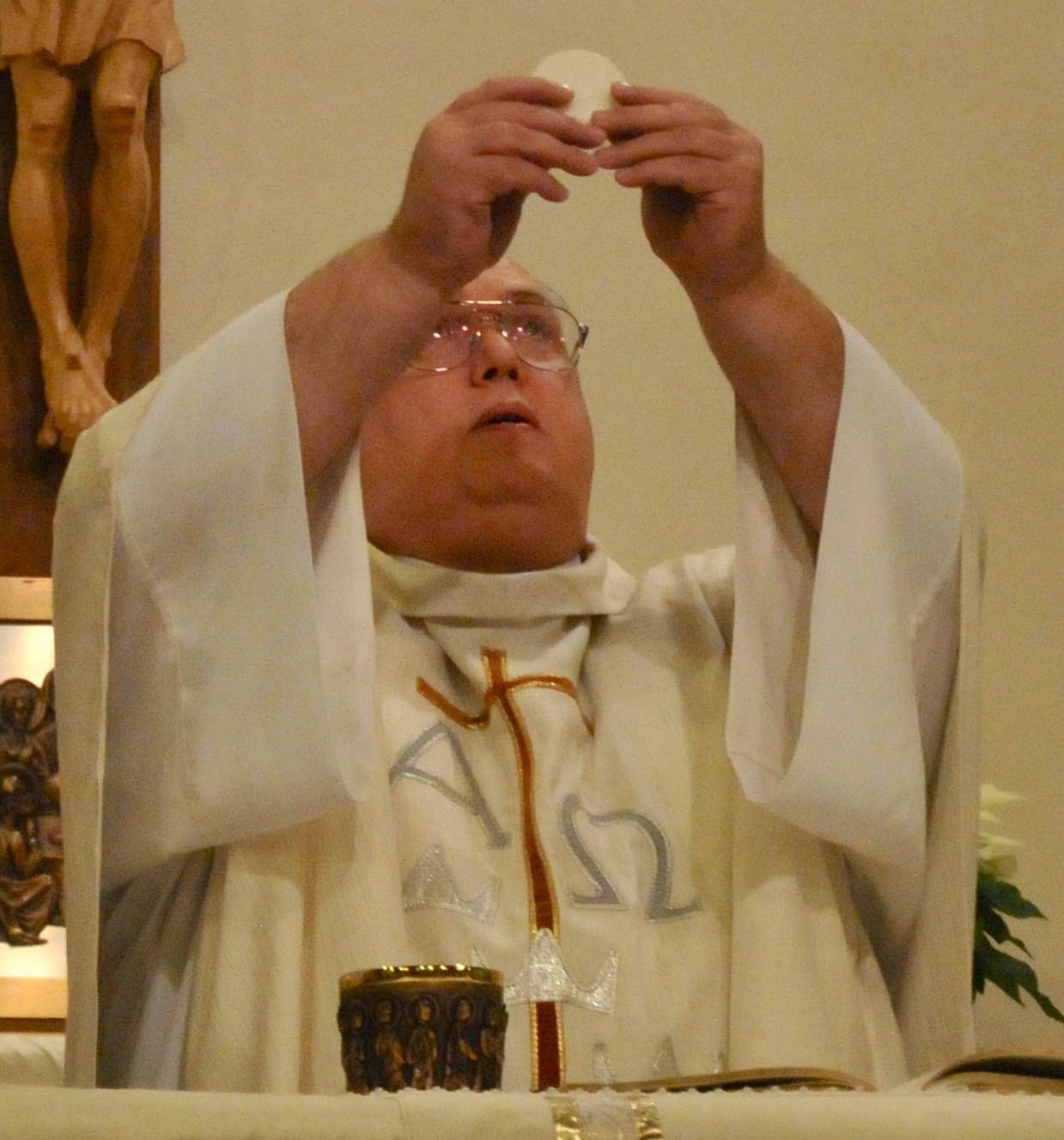


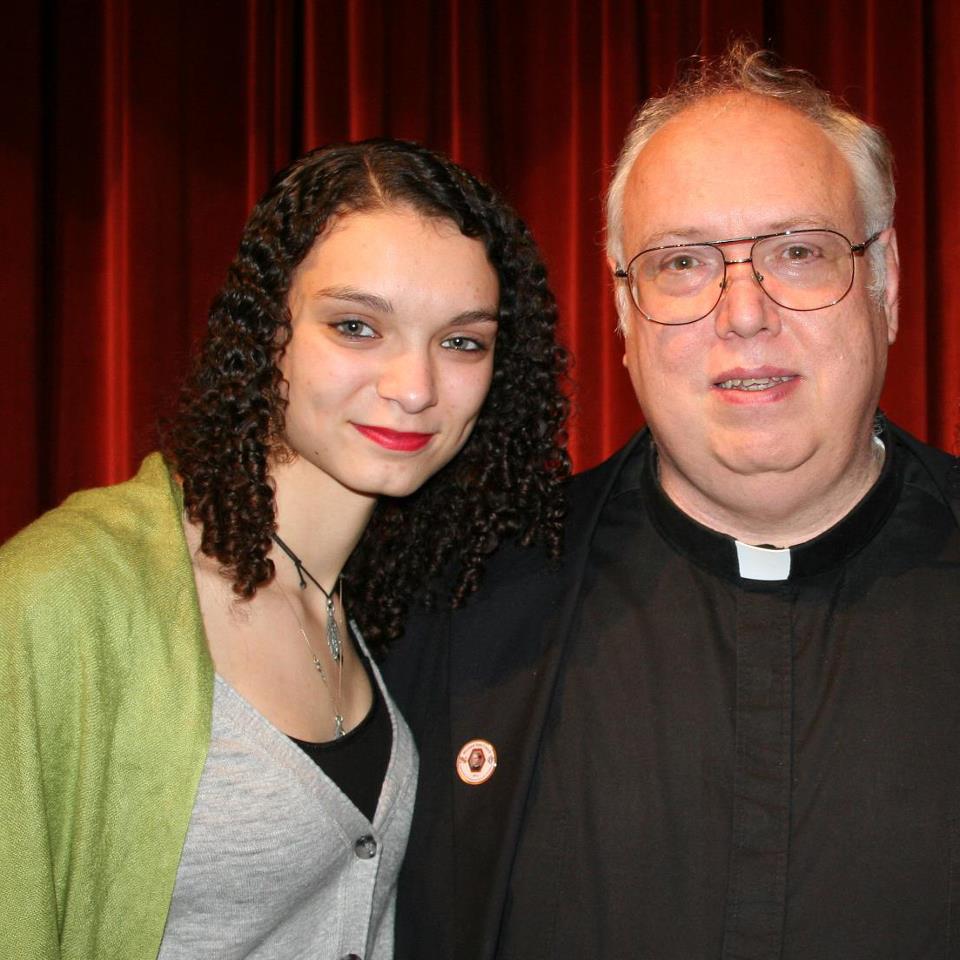


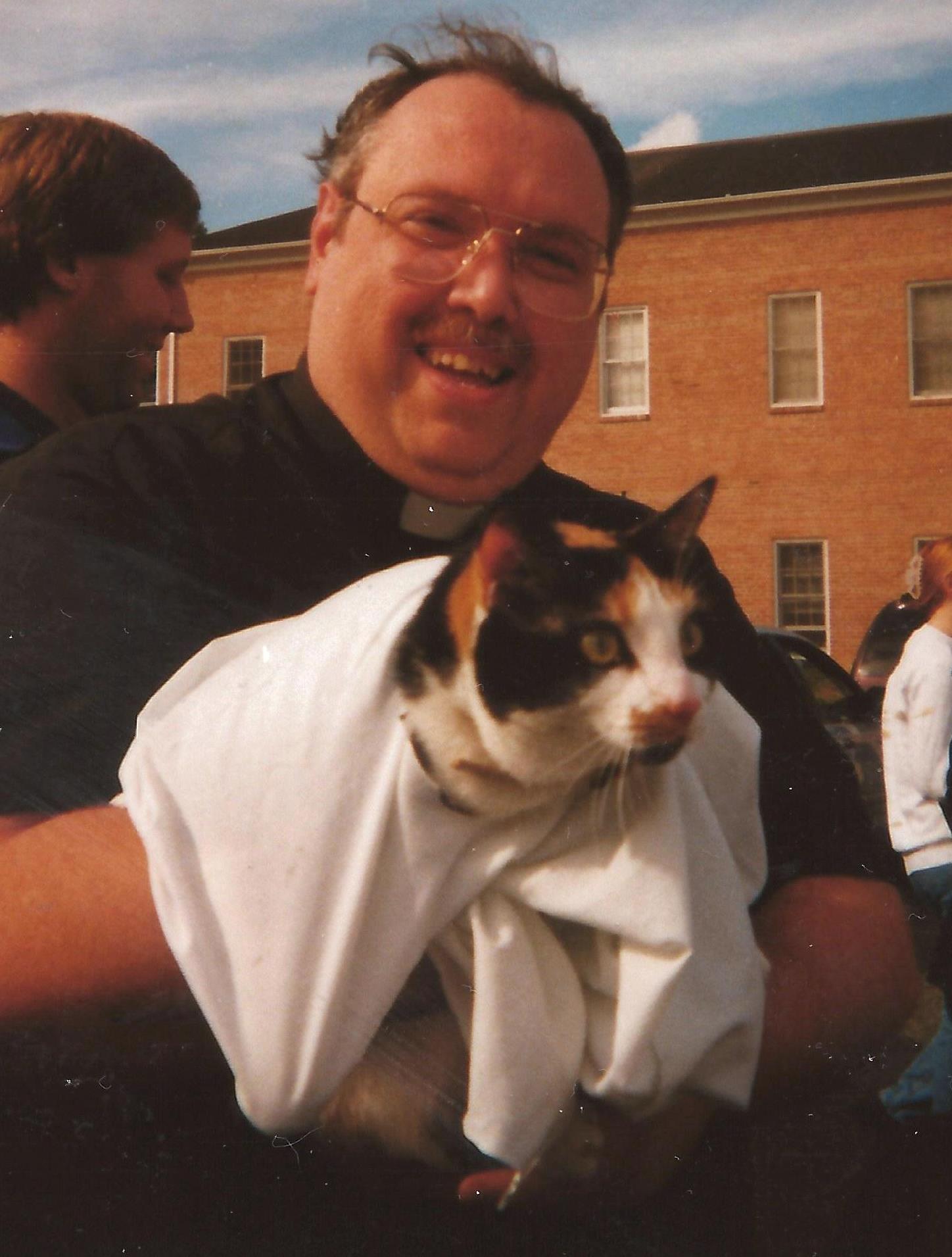



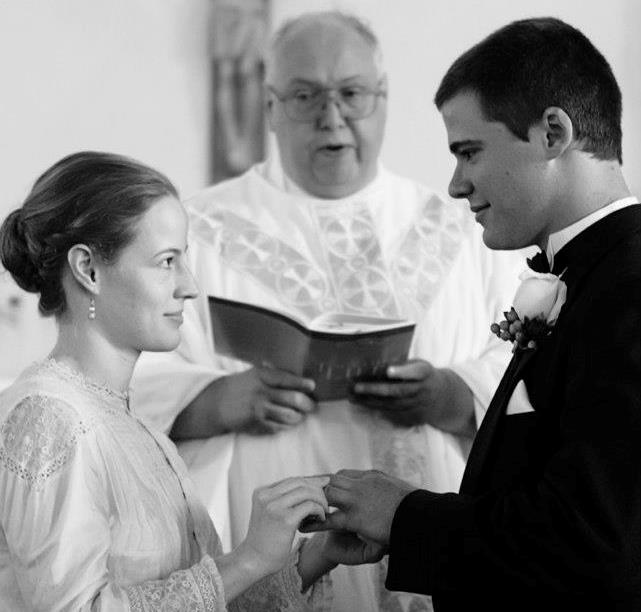




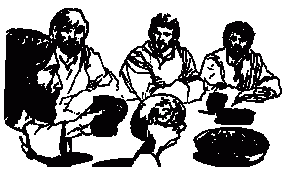 The vocation of priesthood is not like other occupations. Many people have jobs to put food on the table and a roof over their heads, but their employment does not define them. The priestly ministry, on the other hand, quantifies the man called to holy orders. It is for this reason that I always thought the current practice of having pastors retire was rather peculiar. One does not quit from priestly work. Even the infirmed clergyman in a hospital bed prays for the Church and may offer private Mass for the salvation of souls. Retired priests often still live in rectories and work in parishes. The priest literally works until he drops. The Church assures us that the mark or character distinguishing a man as a priest is also taken into the life to come. He is a priest, forever.
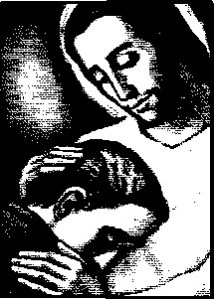 There are friends and then there are friends. What do I mean? The fair weather friend hangs near when days are happy and life is easy; but when troubles come and life is hard, he or she is nowhere to be found. Look at how Christ’s apostles ran away and Peter denied him. Fortunately, they would know remorse and the spirit of the Risen Christ would heal their betrayal and give them courage in the days ahead to follow in his footsteps, even embracing exile and martyrdom. What kind of friend are we to others and to Jesus? Are we a Christian only when it is convenient? Do we make sacrifices for others and to witness the truth of the Gospel? Some collect and deliver clothing and food to the poor. Believers work in soup kitchens and shelters. They visit the sick and elderly in hospitals, nursing homes and among the shut-ins. They tutor young people and assist with those having learning challenges. They volunteer for the Special Olympics and summer camps for the physically challenged. They march for the unborn. They try to make a difference.
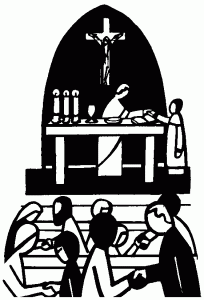 When I look at the depth of Catholic faith, I wonder why anyone would ever look anywhere else. Everything we need for spiritual meaning and salvation is here. Nevertheless, some inquirers dismiss the Church and others walk away. Speaking for myself, I would not want to forfeit the Eucharistic sacrifice or presence for anything. Why is it then that so many abandon or refuse to come home to the Catholic Church? I think the answer has to do with people wanting to feel wanted and the consolation that comes with close fellowship and the acceptance of others. Catholicism is a ritualistic church. Like the Jews before us, we have our traditions, priesthood, cultic oblation, and authority. We have formulas for everything. We dip our fingers into the water fount, we genuflect, we sit quietly, we cross ourselves, we pound our chests, we touch our foreheads, lips and hearts, we say, “Amen,” “And with your Spirit,” and offer a hand with the words, “Peace be with you.” There is no unnecessary talking in church. We do our duty, try not to snore during the homily, are careful not to drop the wafer and then head out the door. The first one to get to his or her car and start the engine wins. At least, this is what we imply by our mad race to the door.
 The demonic will lie to us, offering a feigned friendship and understanding. Evil is all about seduction, not about well-being and advancement. What is the darkness really saying behind the duplicity and rhetoric?
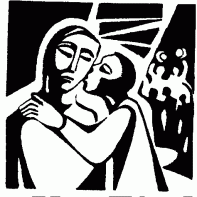 Going back to our childhood, there were people to whom we looked up. Our heroes inspired and move us. We hoped to be like them. We trusted them and they had a significant impact upon our lives. Unfortunately, heroes also frequently fall from the pedestals upon which we place them. Indeed, we often exaggerate their qualities and achievements, making their falls from grace all the more devastating. The truth is not always well served in hero worship. Men and women are bound to fail us. A boy might think that his father is the strongest man in the world; as he grows up, he is forced to realize that even the best of fathers are still mortal men dealing with sinfulness and weakness. The same can be said about our spiritual fathers or priests. It is only Christ who will never fail us.
 Years ago I knew a young man who battled drugs and alcohol. After getting into some trouble and a car accident, he entered a treatment program. He met a nice girl and he seemed to vastly improve. However, he had merely transferred his dependency from dangerous substances to her. An immature personality, he was unable to postpone the objects of his desires and pleasures. He could not save money and moved too quickly with the romantic relationship. Within short order they were having sexual intimacy and he was urging her to cohabitate with him. The girl became increasingly resentful of his dependence upon her and lack of self- control. While she was fond of him, it was questionable what he brought to the table of their relationship. Everything revolved around what he wanted and his needs. He isolated her from family and friends, being intensely jealous. His possessiveness was threatening to suffocate her. They became engaged and she was at odds as to what to do. She felt responsible for him. His relationship with her had become his chief source of security and what gave his life meaning. His sense of being grounded was attached to her and he acted as if he owned her, sometimes speaking and acting violently when he did not get his way. She tried to bear the situation but matters grew worse. Every time things seemed to get better there would be a relapse. His immediate family and friends would take his side and became enablers for his irresponsibility and problems. They regarded his girlfriend as a means to keep him in check, regardless of what it might personally cost the young woman. When she tried to exert herself, he would become moody and depressed. Eventually matters reached a breaking point and she terminated the engagement. It was probably the most loving thing she could do. He was not ready for what they might have together. He had to face his issues instead of using their relationship to compensate for them.
















 Blogger Priest