• Our Blogger

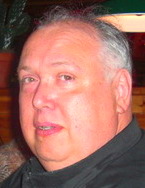
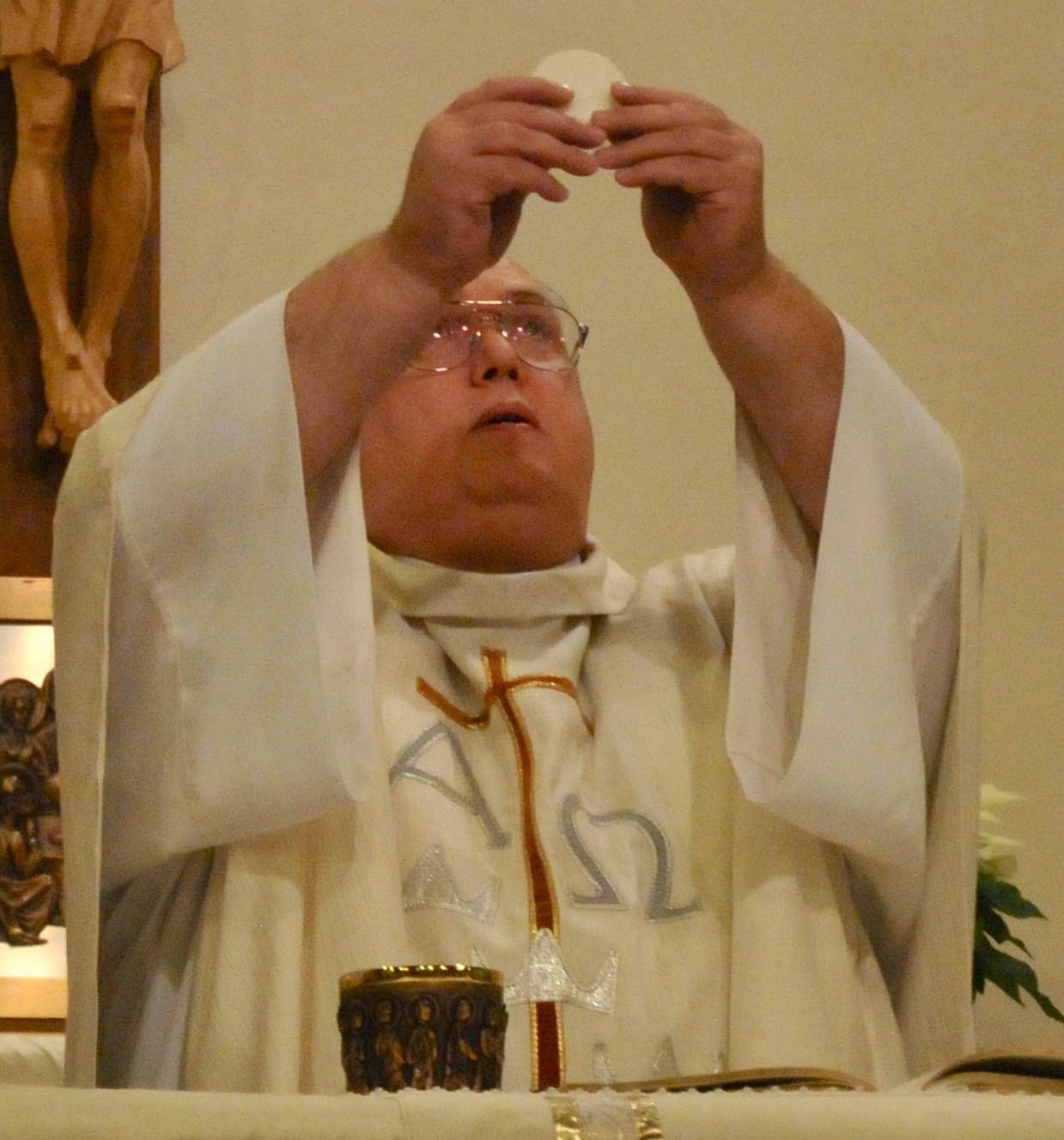
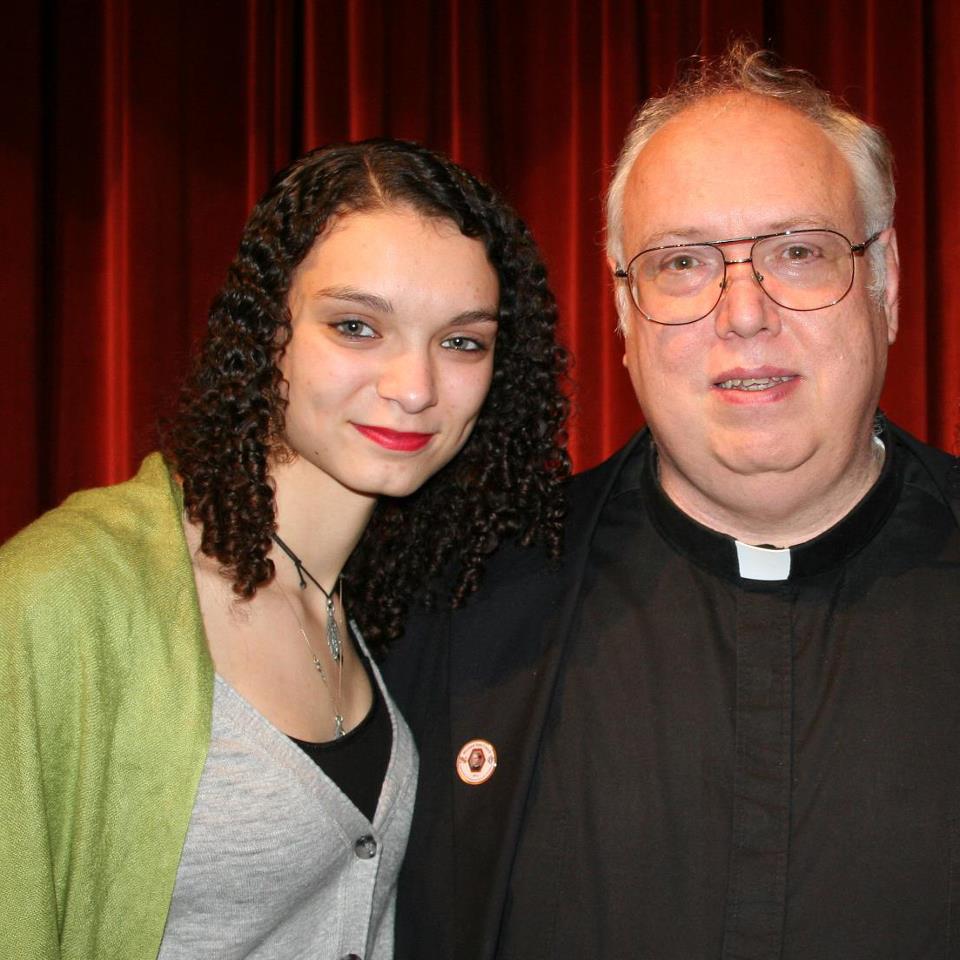
    Fr. Joseph Jenkins

  • An important theme for this blog is the scene in the New Testament where Jesus can be found FLOGGING the money-changers out of the temple. My header above depicts a priest FLOGGING the devils that distort the faith and assault believers. The faith that gives us consolation can and should also make us very uncomfortable. Both Divine Mercy and Divine Justice meet in Jesus. Priests are ministers of reconciliation, but never at the cost of truth. In or out of season, we must be courageous in preaching and living out the Gospel of Life. The title of my blog is a play on words, not Flogger Priest but Blogger Priest.

  • Archives

  • Categories

  • Recent Posts

  • Recent Comments

    Father Joe's avatarFather Joe on The Prayer to Saint Michael at…
    Inveilis's avatarInveilis on Ask a Priest
    Joanne M Rowan's avatarJoanne M Rowan on Reflecting Upon SSPX Dissent…
    Joanne M Rowan's avatarJoanne M Rowan on The SSPX Makes It Itself Out M…
    Jeremy's avatarJeremy on Ask a Priest

The Scurrilous Mysteries

rosaries_06

1. Demanding We Eat His Flesh & Drink His Blood (John 6:41-44;51-69)

The Jews murmured about him because he said, “I am the bread that came down from heaven,” and they said, “Is this not Jesus, the son of Joseph? Do we not know his father and mother? Then how can he say, ‘I have come down from heaven’?” Jesus answered and said to them, “Stop murmuring among yourselves. No one can come to me unless the Father who sent me draw him, and I will raise him on the last day. / “I am the living bread that came down from heaven; whoever eats this bread will live forever; and the bread that I will give is my flesh for the life of the world.” The Jews quarreled among themselves, saying, “How can this man give us his flesh to eat?” Jesus said to them, “Amen, amen, I say to you, unless you eat the flesh of the Son of Man and drink his blood, you do not have life within you. Whoever eats my flesh and drinks my blood has eternal life, and I will raise him on the last day. For my flesh is true food, and my blood is true drink. Whoever eats my flesh and drinks my blood remains in me and I in him. Just as the living Father sent me and I have life because of the Father, so also the one who feeds on me will have life because of me. This is the bread that came down from heaven. Unlike your ancestors who ate and still died, whoever eats this bread will live forever.” These things he said while teaching in the synagogue in Capernaum. Then many of his disciples who were listening said, “This saying is hard; who can accept it?” Since Jesus knew that his disciples were murmuring about this, he said to them, “Does this shock you? What if you were to see the Son of Man ascending to where he was before? It is the spirit that gives life, while the flesh is of no avail. The words I have spoken to you are spirit and life. But there are some of you who do not believe.” Jesus knew from the beginning the ones who would not believe and the one who would betray him. And he said, “For this reason I have told you that no one can come to me unless it is granted him by my Father.” As a result of this, many of his disciples returned to their former way of life and no longer accompanied him. Jesus then said to the Twelve, “Do you also want to leave?” Simon Peter answered him, “Master, to whom shall we go? You have the words of eternal life. We have come to believe and are convinced that you are the Holy One of God.”

2. Condemned for Forgiving Sins (Mark 2:7-12)

When Jesus returned to Capernaum after some days, it became known that he was at home. Many gathered together so that there was no longer room for them, not even around the door, and he preached the word to them. They came bringing to him a paralytic carried by four men. Unable to get near Jesus because of the crowd, they opened up the roof above him. After they had broken through, they let down the mat on which the paralytic was lying. When Jesus saw their faith, he said to the paralytic, “Child, your sins are forgiven.” Now some of the scribes were sitting there asking themselves, “Why does this man speak that way? He is blaspheming. Who but God alone can forgive sins?” Jesus immediately knew in his mind what they were thinking to themselves, so he said, “Why are you thinking such things in your hearts? Which is easier, to say to the paralytic, ‘Your sins are forgiven,’ or to say, ‘Rise, pick up your mat and walk’? But that you may know that the Son of Man has authority to forgive sins on earth”— he said to the paralytic, “I say to you, rise, pick up your mat, and go home.” He rose, picked up his mat at once, and went away in the sight of everyone. They were all astounded and glorified God, saying, “We have never seen anything like this.”

3. Forbidding Divorce & Adultery (Matthew 19:3-12)

Some Pharisees approached him, and tested him, saying, “Is it lawful for a man to divorce his wife for any cause whatever?” He said in reply, “Have you not read that from the beginning the Creator ‘made them male and female’ and said, ‘For this reason a man shall leave his father and mother and be joined to his wife, and the two shall become one flesh’? So they are no longer two, but one flesh. Therefore, what God has joined together, no human being must separate.” They said to him, “Then why did Moses command that the man give the woman a bill of divorce and dismiss her?” He said to them, “Because of the hardness of your hearts Moses allowed you to divorce your wives, but from the beginning it was not so. I say to you, whoever divorces his wife (unless the marriage is unlawful) and marries another commits adultery.” His disciples said to him, “If that is the case of a man with his wife, it is better not to marry.” He answered, “Not all can accept this word, but only those to whom that is granted. Some are incapable of marriage because they were born so; some, because they were made so by others; some, because they have renounced marriage for the sake of the kingdom of heaven. Whoever can accept this ought to accept it.”

4. Commending the Unclean Woman Who Touched Him (Luke 8:42-48)

As he went, the crowds almost crushed him. And a woman afflicted with hemorrhages for twelve years, who had spent her whole livelihood on doctors and was unable to be cured by anyone, came up behind him and touched the tassel on his cloak. Immediately her bleeding stopped. Jesus then asked, “Who touched me?” While all were denying it, Peter said, “Master, the crowds are pushing and pressing in upon you.” But Jesus said, “Someone has touched me; for I know that power has gone out from me.” When the woman realized that she had not escaped notice, she came forward trembling. Falling down before him, she explained in the presence of all the people why she had touched him and how she had been healed immediately. He said to her, “Daughter, your faith has saved you; go in peace.”

5. Charged with Consorting with Demons (Matthew 12:22-32)

Then they brought to him a demoniac who was blind and mute. He cured the mute person so that he could speak and see. All the crowd was astounded, and said, “Could this perhaps be the Son of David?” But when the Pharisees heard this, they said, “This man drives out demons only by the power of Beelzebul, the prince of demons.” But he knew what they were thinking and said to them, “Every kingdom divided against itself will be laid waste, and no town or house divided against itself will stand. And if Satan drives out Satan, he is divided against himself; how, then, will his kingdom stand? And if I drive out demons by Beelzebul, by whom do your own people drive them out? Therefore they will be your judges. But if it is by the Spirit of God that I drive out demons, then the kingdom of God has come upon you. How can anyone enter a strong man’s house and steal his property, unless he first ties up the strong man? Then he can plunder his house. Whoever is not with me is against me, and whoever does not gather with me scatters. Therefore, I say to you, every sin and blasphemy will be forgiven people, but blasphemy against the Spirit will not be forgiven. And whoever speaks a word against the Son of Man will be forgiven; but whoever speaks against the holy Spirit will not be forgiven, either in this age or in the age to come.

The Scandalous Mysteries

rosaries_061. Meeting the Samaritan Woman at the Well (John 4:4-30;39-42)

He had to pass through Samaria. So he came to a town of Samaria called Sychar, near the plot of land that Jacob had given to his son Joseph. Jacob’s well was there. Jesus, tired from his journey, sat down there at the well. It was about noon. A woman of Samaria came to draw water. Jesus said to her, “Give me a drink.” His disciples had gone into the town to buy food. The Samaritan woman said to him, “How can you, a Jew, ask me, a Samaritan woman, for a drink?” (For Jews use nothing in common with Samaritans.) Jesus answered and said to her, “If you knew the gift of God and who is saying to you, ‘Give me a drink,’ you would have asked him and he would have given you living water.” The woman said to him, “Sir, you do not even have a bucket and the cistern is deep; where then can you get this living water? Are you greater than our father Jacob, who gave us this cistern and drank from it himself with his children and his flocks? Jesus answered and said to her, “Everyone who drinks this water will be thirsty again; but whoever drinks the water I shall give will never thirst; the water I shall give will become in him a spring of water welling up to eternal life.” The woman said to him, “Sir, give me this water, so that I may not be thirsty or have to keep coming here to draw water.” Jesus said to her, “Go call your husband and come back.” The woman answered and said to him, “I do not have a husband.” Jesus answered her, “You are right in saying, ‘I do not have a husband.’ For you have had five husbands, and the one you have now is not your husband. What you have said is true.” The woman said to him, “Sir, I can see that you are a prophet. Our ancestors worshiped on this mountain; but you people say that the place to worship is in Jerusalem.” Jesus said to her, “Believe me, woman, the hour is coming when you will worship the Father neither on this mountain nor in Jerusalem. You people worship what you do not understand; we worship what we understand, because salvation is from the Jews. But the hour is coming, and is now here, when true worshipers will worship the Father in Spirit and truth; and indeed the Father seeks such people to worship him. God is Spirit, and those who worship him must worship in Spirit and truth.” The woman said to him, “I know that the Messiah is coming, the one called the Anointed; when he comes, he will tell us everything.” Jesus said to her, “I am he, the one who is speaking with you.” At that moment his disciples returned, and were amazed that he was talking with a woman, but still no one said, “What are you looking for?” or “Why are you talking with her?” The woman left her water jar and went into the town and said to the people, “Come see a man who told me everything I have done. Could he possibly be the Messiah?” They went out of the town and came to him. / Many of the Samaritans of that town began to believe in him because of the word of the woman who testified, “He told me everything I have done.” When the Samaritans came to him, they invited him to stay with them; and he stayed there two days. Many more began to believe in him because of his word, and they said to the woman, “We no longer believe because of your word; for we have heard for ourselves, and we know that this is truly the savior of the world.”

2. Eating with Tax Collectors & Sinners (Mark 2:13-17)

Once again he went out along the sea. All the crowd came to him and he taught them. As he passed by, he saw Levi, son of Alphaeus, sitting at the customs post. He said to him, “Follow me.” And he got up and followed him. While he was at table in his house,* many tax collectors and sinners sat with Jesus and his disciples; for there were many who followed him. Some scribes who were Pharisees saw that he was eating with sinners and tax collectors and said to his disciples, “Why does he eat with tax collectors and sinners?” Jesus heard this and said to them that, “Those who are well do not need a physician, but the sick do. I did not come to call the righteous but sinners.”

3. Fraternizing with the Roman Enemy (Matthew 8:5-13)

When he entered Capernaum, a centurion approached him and appealed to him, saying, “Lord, my servant is lying at home paralyzed, suffering dreadfully.” He said to him, “I will come and cure him.” The centurion said in reply, “Lord, I am not worthy to have you enter under my roof; only say the word and my servant will be healed. For I too am a person subject to authority, with soldiers subject to me. And I say to one, ‘Go,’ and he goes; and to another, ‘Come here,’ and he comes; and to my slave, ‘Do this,’ and he does it.” When Jesus heard this, he was amazed and said to those following him, “Amen, I say to you, in no one in Israel have I found such faith. I say to you, many will come from the east and the west, and will recline with Abraham, Isaac, and Jacob at the banquet in the kingdom of heaven, but the children of the kingdom will be driven out into the outer darkness, where there will be wailing and grinding of teeth.” And Jesus said to the centurion, “You may go; as you have believed, let it be done for you.” And at that very hour his servant was healed.

4. Dismissing the Woman Caught in Adultery (John 7:53-8:11)

Then each went to his own house, while Jesus went to the Mount of Olives. But early in the morning he arrived again in the temple area, and all the people started coming to him, and he sat down and taught them. Then the scribes and the Pharisees brought a woman who had been caught in adultery and made her stand in the middle. They said to him, “Teacher, this woman was caught in the very act of committing adultery. Now in the law, Moses commanded us to stone such women. So what do you say?” They said this to test him, so that they could have some charge to bring against him. Jesus bent down and began to write on the ground with his finger. But when they continued asking him, he straightened up and said to them, “Let the one among you who is without sin be the first to throw a stone at her.” Again he bent down and wrote on the ground. And in response, they went away one by one, beginning with the elders. So he was left alone with the woman before him. Then Jesus straightened up and said to her, “Woman, where are they? Has no one condemned you?” She replied, “No one, sir.” Then Jesus said, “Neither do I condemn you. Go, and from now on do not sin anymore.”

5. Allowing the Sinner Woman to Anoint Him (Luke 7:36-50)

A Pharisee invited him to dine with him, and he entered the Pharisee’s house and reclined at table. Now there was a sinful woman in the city who learned that he was at table in the house of the Pharisee. Bringing an alabaster flask of ointment, she stood behind him at his feet weeping and began to bathe his feet with her tears. Then she wiped them with her hair, kissed them, and anointed them with the ointment. When the Pharisee who had invited him saw this he said to himself, “If this man were a prophet, he would know who and what sort of woman this is who is touching him, that she is a sinner.” Jesus said to him in reply, “Simon, I have something to say to you.” “Tell me, teacher,” he said. “Two people were in debt to a certain creditor; one owed five hundred days’ wages and the other owed fifty. Since they were unable to repay the debt, he forgave it for both. Which of them will love him more?” Simon said in reply, “The one, I suppose, whose larger debt was forgiven.” He said to him, “You have judged rightly.” Then he turned to the woman and said to Simon, “Do you see this woman? When I entered your house, you did not give me water for my feet, but she has bathed them with her tears and wiped them with her hair. You did not give me a kiss, but she has not ceased kissing my feet since the time I entered. You did not anoint my head with oil, but she anointed my feet with ointment. So I tell you, her many sins have been forgiven; hence, she has shown great love. But the one to whom little is forgiven, loves little.” He said to her, “Your sins are forgiven.” The others at table said to themselves, “Who is this who even forgives sins?” But he said to the woman, “Your faith has saved you; go in peace.”

The Notorious Mysteries

rosaries_06

1. Whipping the Money Changers (John 2:13-22)

Since the Passover of the Jews was near, Jesus went up to Jerusalem. He found in the temple area those who sold oxen, sheep, and doves, as well as the money-changers seated there. He made a whip out of cords and drove them all out of the temple area, with the sheep and oxen, and spilled the coins of the money-changers and overturned their tables, and to those who sold doves he said, “Take these out of here, and stop making my Father’s house a marketplace.” His disciples recalled the words of scripture, “Zeal for your house will consume me.” At this the Jews answered and said to him, “What sign can you show us for doing this?” Jesus answered and said to them, “Destroy this temple and in three days I will raise it up.” The Jews said, “This temple has been under construction for forty-six years, and you will raise it up in three days?” But he was speaking about the temple of his body. Therefore, when he was raised from the dead, his disciples remembered that he had said this, and they came to believe the scripture and the word Jesus had spoken.

2. Violating the Sabbath (Matthew 12:1-14)

At that time Jesus was going through a field of grain on the sabbath. His disciples were hungry and began to pick the heads of grain and eat them. When the Pharisees saw this, they said to him, “See, your disciples are doing what is unlawful to do on the sabbath.” He said to them, “Have you not read what David did when he and his companions were hungry, how he went into the house of God and ate the bread of offering, which neither he nor his companions but only the priests could lawfully eat? Or have you not read in the law that on the sabbath the priests serving in the temple violate the sabbath and are innocent? I say to you, something greater than the temple is here. If you knew what this meant, ‘I desire mercy, not sacrifice,’ you would not have condemned these innocent men. For the Son of Man is Lord of the sabbath.” Moving on from there, he went into their synagogue. And behold, there was a man there who had a withered hand. They questioned him, “Is it lawful to cure on the sabbath?” so that they might accuse him. He said to them, “Which one of you who has a sheep that falls into a pit on the sabbath will not take hold of it and lift it out? How much more valuable a person is than a sheep. So it is lawful to do good on the sabbath.” Then he said to the man, “Stretch out your hand.” He stretched it out, and it was restored as sound as the other. But the Pharisees went out and took counsel against him to put him to death.

3. Castigating the Jewish Leadership (Matthew 23:1-7;13-17;23-33)

Then Jesus spoke to the crowds and to his disciples, saying, “The scribes and the Pharisees have taken their seat on the chair of Moses. Therefore, do and observe all things whatsoever they tell you, but do not follow their example. For they preach but they do not practice. They tie up heavy burdens hard to carry and lay them on people’s shoulders, but they will not lift a finger to move them. All their works are performed to be seen. They widen their phylacteries and lengthen their tassels. They love places of honor at banquets, seats of honor in synagogues, greetings in marketplaces, and the salutation ‘Rabbi.’ / Woe to you, scribes and Pharisees, you hypocrites. You lock the kingdom of heaven before human beings. You do not enter yourselves, nor do you allow entrance to those trying to enter. “Woe to you, scribes and Pharisees, you hypocrites. You traverse sea and land to make one convert, and when that happens you make him a child of Gehenna twice as much as yourselves. Woe to you, blind guides, who say, ‘If one swears by the temple, it means nothing, but if one swears by the gold of the temple, one is obligated.’ Blind fools, which is greater, the gold, or the temple that made the gold sacred? / “Woe to you, scribes and Pharisees, you hypocrites. You pay tithes of mint and dill and cummin, and have neglected the weightier things of the law: judgment and mercy and fidelity. [But] these you should have done, without neglecting the others. Blind guides, who strain out the gnat and swallow the camel! “Woe to you, scribes and Pharisees, you hypocrites. You cleanse the outside of cup and dish, but inside they are full of plunder and self-indulgence. Blind Pharisee, cleanse first the inside of the cup, so that the outside also may be clean. “Woe to you, scribes and Pharisees, you hypocrites. You are like whitewashed tombs, which appear beautiful on the outside, but inside are full of dead men’s bones and every kind of filth. Even so, on the outside you appear righteous, but inside you are filled with hypocrisy and evildoing. “Woe to you, scribes and Pharisees, you hypocrites. You build the tombs of the prophets and adorn the memorials of the righteous, and you say, ‘If we had lived in the days of our ancestors, we would not have joined them in shedding the prophets’ blood.’ Thus you bear witness against yourselves that you are the children of those who murdered the prophets; now fill up what your ancestors measured out! You serpents, you brood of vipers, how can you flee from the judgment of Gehenna?

4. Permitting the Eating of Unclean Foods (Mark 7:14-23)

He summoned the crowd again and said to them, “Hear me, all of you, and understand. Nothing that enters one from outside can defile that person; but the things that come out from within are what defile.” When he got home away from the crowd his disciples questioned him about the parable. He said to them, “Are even you likewise without understanding? Do you not realize that everything that goes into a person from outside cannot defile, since it enters not the heart but the stomach and passes out into the latrine?” (Thus he declared all foods clean.) “But what comes out of a person, that is what defiles. From within people, from their hearts, come evil thoughts, unchastity, theft, murder, adultery, greed, malice, deceit, licentiousness, envy, blasphemy, arrogance, folly. All these evils come from within and they defile.”

5. Disowned for Making Himself God’s Son (Luke 22:66-71; Matthew 26:65-67)

When day came the council of elders of the people met, both chief priests and scribes, and they brought him before their Sanhedrin. They said, “If you are the Messiah, tell us,” but he replied to them, “If I tell you, you will not believe, and if I question, you will not respond. But from this time on the Son of Man will be seated at the right hand of the power of God.” They all asked, “Are you then the Son of God?” He replied to them, “You say that I am.” Then they said, “What further need have we for testimony? We have heard it from his own mouth.” / Then the high priest tore his robes and said, “He has blasphemed! What further need have we of witnesses? You have now heard the blasphemy; what is your opinion?” They said in reply, “He deserves to die!” Then they spat in his face and struck him, while some slapped him…

One Priest Murdered, the Other Beaten & Injured

Bp7s8BaCEAEnnTB

FSSP Priest Killed in Rectory RIP Fr. Kenneth Walker – 1 other Priest Injured

Fr. Kenneth Walker FSSP: First Mass at Our Lady of Guadalupe Seminary

Priest Kenneth Walker Killed

Murdered, injured priests identified; suspect(s) still on the loose

Ordained just two years, last night someone broke into the Fraternity Rectory in Phoenix and murdered Fr. Kenneth Walker, FSSP. Another priest, Fr. Joseph Terra, was also attacked and remains in critical condition. Please keep these priests, the fraternity and their family and friends in your prayers.

Fr. Walker had a party this past weekend to celebrate his two years as a priest. Fr. Terra just recently celebrated 25 years as a priest. Fr. Terra called in the break-in. Police found Fr. Terra, badly beaten, praying over the body of Fr. Walker. Fr. Ken was shot to death.


Chaplain’s Message for June 2014

Attn: Bishop McNamara Chapter, Bishop Walsh Assembly & Fr. Kidd Council

knights-of-columbus-logo

CLICK this LINK for PDF of REPORT:

1406 Chaplain Message


Chaplain’s Message for May 2014

Attn:  Bishop McNamara Chapter, Bishop Walsh Assembly & Fr. Kidd Council

knights-of-columbus-logo

CLICK this LINK for PDF of REPORT:

1405 Chaplain Message


What If Money Didn’t Matter? But It Does Matter!

“What if money didn’t matter?” But the truth is— it does matter. Human work is ideally self-expressive but it is also a basic given of human existence and survival. Even if money did not exist and we returned to a bartering society, we would still have to work (and often in what we do not enjoy doing).

“For you know how one must imitate us. For we did not act in a disorderly way among you, nor did we eat food received free from anyone. On the contrary, in toil and drudgery, night and day we worked, so as not to burden any of you. Not that we do not have the right. Rather, we wanted to present ourselves as a model for you, so that you might imitate us. In fact, when we were with you, we instructed you that if anyone was unwilling to work, neither should that one eat” (2 Thessalonians 3:7-10).

Alan Watts (the narrator) was an Episcopalian priest who popularized Zen Buddhism for the West. Hidden in the perspective here is a rejection of any Catholic absolute morality. He favored certain drug usage as consciousness changing. However, he did admit to a social responsibility, particularly in regards to environmentalism. Ultimately, his philosophy was pantheistic and not compatible with true Christianity. While the presentation seems to imply a radical individualism, in actuality, he saw each and every living and non-living thing as an element of a forgetful universe coming to know itself. He died in 1973 after an excessive bout with alcoholism. He was married three times and his son, Mark Watts, is responsible for the promotion of his audio, video and films.

What he really asks is this:  what would you like to do if you could avoid responsibility? We must often sacrifice and do what is hard so that we can pay bills and support our families. It is wonderful if we can live our dreams and pursue what we desire, but such must reflect positive values (like honesty, truthfulness, self-control, etc.) and the reality of the existence given to us. I might desire to be a ballerina, but such is ill-conceived or ludicrous if I am a man built like a sumo wrestler. I might want to write bad poetry all day but such is both impractical and immoral if my family should then go homeless and my children starve. Do not be taken in by the British accent (as if that can change foolishness into wisdom) and the hollow play to modern selfishness.

You cannot do whatever you want. Instead, the question for Christians is what would God have me do? The evangelical pursuit of poverty is to seek spiritual perfection, not personal gratification. That is where the video message goes wrong. The message is very seductive. But its application could become destructive to society and to the individual. It might even be judged as demonic and an application of the moral code of that arch-Satanist Aleister Crowley, “Do What Thou Wilt.”

Mass Attendance & Catholic Identity

Are any of us really surprised by decreasing Mass attendance? While I would not want to fall prey to any kind of faithless cynicism, I am often more astonished about why people continue to practice their faith. We are suffering from several generations of poor catechetical formation and Catholics who have lost a sense of their faith identity. The Ordinaries of the Archdiocese of Washington have honestly faced the problem.  Offering remedies, I am reminded of Cardinal McCarrick’s vibrant preaching and Cardinal Wuerl’s effectiveness as a teacher of faith.  They have prescribed what they could to help: breaking open the Scriptures, stirring the people to holiness, and showing how the faith has meaning and importance in their lives. Priests have sought to imitate this pattern in their religious education programs and in the messages from the pulpit.

However, there are many baptized Catholics who rarely or no longer attend Mass. Some shop around and find religious meaning in other churches. Many, perhaps the larger share, drop out entirely. Children might go to Catholic schools, but the majority is missing from the pews on Sunday. When I was at St. Mary’s in Upper Marlboro, MD, in the 1990’s, I polled the sixth grade about their Mass attendance. One week only two kids out of thirty-five had gone to church— and everyone was from a home with at least one Catholic parent. Of these two, one had gone to the Evangelical church of her father. Only one went to Sunday Mass. I am making no exaggeration. This is the state of affairs and things have worsened in light of the scandals. Those upon whom we had only a tenuous hold are escaping the grasp of the Church.

I recall being party to a group of priests discussing the situation.  What could we do to turn matters around?  A number of the guys mentioned accidentals: music, welcoming, fellowship, good preaching, etc. We seemed to forget that the exodus escalated back in the 1960’s when the ancient form of the liturgy with its ritual beauty and religious chant was shelved for experimental forms. Faithful Catholics remained with the Church despite bland prayers and trite music. However, as that generation has aged and died off, younger people found Catholic worship to be a poor imitation of what Protestants can offer. Even our small African-American churches with their Gospel Masses have borrowed the music and style of the Protestant Black churches. If our accent is simply upon such accidentals and entertainment, we are bound to fail. The new mega-churches put on a much better show and without the restraints of Catholic ritual or the appeals to a moral code that has been rejected out-of-hand. One of these local Protestant churches can hold 10,000 people and the number of annual converts dwarfed what the entire Archdiocese brought in through the RCIA.  Of course, we have more than a “come-on-down” attitude.  We require months of study and reflection.  Some say that we make it too hard to be a Catholic.  And yet, others like the fact that we insure people know what they are embracing.

While certainly we should make our churches welcoming places where the liturgies are well done and the preaching is moving and authentic, we will have to find new and more aggressive ways of reaching the hearts and minds of people who no longer enter our doors. If people truly believe that every Mass is a sacramental encounter with the living Christ, then we would not have the current decline in participation. People do not understand the Eucharist at the heart of our faith. It is here where we find Jesus most present, the one who gives meaning to our lives as well as mercy and healing. We need to rediscover our own evangelistic spirit and promote in every forum possible a genuine Christian formation. A corrective will be truly holy priests who offer reverent liturgies where we discover and celebrate the mystery of God. The corrected translation of the prayers is a great help.  The poison of dissent and spiritual laziness, even among priests, must be rooted out. When the tides of change, indifference and pain assault us all, the ark of Peter is the only sure refuge.  Shepherds must make a courageous stand for the Gospel of Life, without compromise, so as to compel people to make a choice for Christ’s kingdom or for the secular castles in the sand. Priests must also inform and empower the laity to render a credible witness.  They can reach people where the clergy are unable to go.  Our Lord, himself, sent out the seventy to spread the saving Word.

Discussion on the Post

AMBER:

Your entry brought to mind my thankfulness for my Protestant beginnings. I “get it” (so to speak) and will work diligently to be sure my children are properly taught the faith. I do not want them to grow up and become complacent.  I think, while the Church should play a role in this, the parents are the key to ensuring that our children continue in the faith when they are no longer under our roof.

The parish I attend is wonderful in many ways but the music is seriously lacking and I very much miss the music from my Protestant church. How I would love to attend a Mass in which we have the richness of classical baroque… something that moves the soul to a deeper meeting with God.

Unfortunately, many Protestant churches have replaced the altar for a stage and communion for a sermon… and they are missing the essentials of worship… to meet our Lord in the Eucharist… and to be in His presence.

I could never go back.

COLOSSUS:

Father Joe, you say a lot here that has been on my mind lately. I’m 42, a lifelong Catholic, and am only now beginning to realize how central the faith is to everything.

“Poor catechetical formation,” that says just about everything. I am going through reading the actual Catechism (the JP II revision) and find that it offers a coherent, well-reasoned, and deep view of the world. I am exploring the Tridentine Mass and daily/nightly prayer in both English and Latin.

It is as if I have lived my whole life inside a bank and have been complaining of poverty, without ever having asked “By the way, what’s in the vaults?”

I am enjoying your site, too!

CLIFF:

Part of the problem lies in some of standards of our CCD instruction. In our parish I would venture to say that more than half don’t even know their basic prayers or even how to say a rosary. The other thing is what they learn (or do not learn) from their parents.  If they don’t attend Mass or practice their faith, what can you expect from their children?

MARY:

I served as an extraordinary minister for several years at our church. When you have to prepare the hosts for Mass you really notice the attendance dropping. We have over 50 ministries at our church and are considered a “thriving” parish. However I have noticed that the “wine was running short.” I asked the pastor, of all the groups that get together at the parish, are there any who pray for the people of the parish? He said no. This disturbed me greatly. Nothing happens without prayer. God wants to pour out his grace on His people. He gave us the free will to choose. All we have to do is ask. I

We see in God’s creation an example of how the enemy robs our life from us. Many plants that are edible have poisonous look-alikes. One is life giving and one brings only death.

For a long time I have been walking around in a “false humility and a false spirit of poverty.” In the spiritual world these things misrepresent true humility and truly being poor in spirit. One is life giving the other brings only death. Just like the plants. God is not as concerned about the people who do not attend church. He is more concerned about the ones that do, and consider themselves to be righteous. Like I use to.

The Catechism of the Catholic Church lists four reasons why God became man:

  • To reconcile human beings to God the Father
  • That we might know God’s love
  • To be our Model of holiness
  • To make us partakers of the Divine nature

Jesus had to die so that He could be resurrected so that we can share in that divine nature.

You never know that Jesus is all you need until Jesus is all you have. I had to lose everything before I realized that. I lost my son, my sanity, my job, even my husband for a time. How many others are out there walking around like me? I seemed alright on the outside, but on the inside I was dying. My son’s body was the seed that had to be planted in the ground so that new life could spring up in me. For me it is not the end of the story…it is only the beginning.

Maybe the people who are not attending church are doing so because they see this in the people who do?  Which brings me back to the original question I asked the pastor… who prays for the people of this parish?

FATHER JOE:

The pastor prays daily for his parishioners and each Sunday at Mass for the people of the parish. Many are included in the petitions of the General Intercessions. Some parishes have special prayer groups. We should all pray for each other.

BRETT:

No, it is not in the Eucharist where we find Jesus most present. It is in the soup kitchens, the palliative care wards, the prisons and the refugee camps where He walks tall through the actions of those who may never darken a church’s door but live out the word of God through their daily lives. Feeding the hungry, clothing the homeless and visiting the lonely— THAT is where Jesus is most present.

FATHER JOE:

Such a reductionist view of Christianity might satisfy the horizontal litmus test of the Obama administration; however, it would not exhaust the vertical mystery of faith that true Christians maintain.  Our intervention in the world is not our starting point.  It begins with a personal and corporate faith in Jesus Christ.  The love of God always precedes the love of neighbor.  We are to love and worship the Lord with our whole hearts, minds and souls.  Only then can we love neighbor as we should.  Christianity and our relationship with Jesus cannot be reduced to social work.  Our love for God spills over into our love of neighbor.  Look at the late Mother Teresa.  She was dedicated to the poor, the sick and the oppressed.  And yet, they also spent hours before the Blessed Sacrament and participated at daily Mass.  She writes:  “I encourage you to make your Holy Hour through Mary, the cause of our joy, and you may discover that nowhere on earth are you more welcomed, nowhere on earth are you more loved, than by Jesus, living and truly present in the Most Blessed Sacrament. The time you spend with Jesus in the Blessed Sacrament is the best time that you will spend on earth. Each moment that you spend with Jesus will deepen your union with Him and make you soul everlastingly more glorious and beautiful in Heaven, and will help bring about an everlasting peace on earth.”

Recently Murdered Priests

139696619851587b139696619851587139696619851587c


In remembrance of a good priest who was tortured and murdered a few months ago in Eureka.

FATHER ERIC FREED MEMORIAL PAGE

Man suspected of killing priest was in police custody before slaying

Another Catholic and Jesuit martyr…

Dutch priest dubbed ‘Syrian of Syrians’ is assassinated at his monastery in Homs

It must be hunting season for priests… rest in peace.

Former Napa priest killed in Nicaragua

Beginning & End of Life Intervention

QUESTION (Deirdre):

I would like to preface my comments by saying that I was raised Catholic. I was baptized, received communion and was confirmed. I am confused on the Church’s stance on fertility treatments to conceive a child. Why is it not okay to use fertility treatments to “artificially” create life but it is strictly enforced to use “modern medicine” and any means necessary to artificially pro-long life, i.e. feeding tubes, ventilators etc.?

RESPONSE:

First, certain fertility treatments are permitted by the Church. This would include medications to induce ovulation, increase sperm count, etc. Second, it is judged wrong to manipulate the elements of life through artificial insemination or in vitro technologies to create new human persons. The reasoning for the prohibition has to do with the meaning of the marital act and the dignity of human persons. The child should never be reduced to a commodity. Further, the Church views every fertilized embryo as a human person with an immortal soul. The freezing of human beings and/or the mass destruction of embryos that are part of this process is judged as the killing of persons.

You make the false presumption that the Church would agree without qualification about technologies that keep people alive. Pope Paul VI established that we are not morally obliged to use every extraordinary means to prolong human life. What the Church would insist on is that we provide necessary hydration and nutrition. Also, we should not employ “active” euthanasia as in suffocating someone with a pillow or injecting them with a deadly poison. Feeding tubes should not be judged as medicinal; however, the stomach can reach a point where because of swelling and infection, such processes of feeding will no longer work. A person may also suffer great discomfort and pain, making such a procedure difficult or impossible to employ. Painkillers like morphine might also inadvertently speed up death, but are permissible as long as out immediate intent is to relieve suffering or pain. The rule about ventilators is also not absolute, especially if there has been liquefaction of the brain. Although, I must say, there is a serious debate among ethicists as to what signifies true death of the human being. The late Pope John Paul II resisted extraordinary means at the end of his life. The Church has no issue with a terminally ill person who wants to die at home or in their own bed. While the Church has important ethical principles, each case varies from another and needs specific attention.