







Cathy writes:
The Letter of Barnabas (74 A.D.)
“Moreover God says to the Jews, ‘Your new moons and Sabbaths cannot endure.’ You see how he says, ‘The present Sabbaths are not acceptable to me, but the Sabbath which I have made in which, when I have rested from all things, I will make the beginning of the eighth day which is the beginning of another world.’ Wherefore we Christians keep the eighth day [Sunday] with joyfulness, the day also on which Jesus rose again from the dead” (Barnabas 15:6-8).
“Therefore let no one pass judgment on you in questions of food and drink or with regard to a festival or a new moon or a sabbath.” (Colossians 2:16).
Here are some other writings that describe the Lord’s Day being celebrated on Sunday in later centuries (just for fun):
Ignatius of Antioch (110 A.D.) wrote:
“[T]hose who were brought up in the ancient order of things [i.e. Jews] have come to the possession of a new hope, no longer observing the sabbath, but living in the observance of the Lord’s day, on which also our life has sprung up again by him and by his death” (Letter to the Magnesians 8).
Justin Martyr (155 A.D.) wrote:
“[W]e too would observe the fleshly circumcision, and the sabbaths, and in short all the feasts, if we did not know for what reason they were enjoined [on] you—namely, on account of your transgressions and the hardness of your heart. . . How is it, Trypho, that we would not observe those rites which do not harm us—I speak of fleshly circumcision and sabbaths and feasts? . . . God enjoined you to keep the sabbath, and imposed on you other precepts for a sign, as I have already said, on account of your unrighteousness and that of your fathers” (Dialogue with Trypho the Jew 18, 21).
Tertullian (203 A.D.) wrote:
“Let him who contends that the Sabbath is still to be observed as a balm of salvation, and circumcision on the eighth day . . . teach us that, for the time past, righteous men kept the Sabbath or practiced circumcision, and were thus rendered ‘friends of God.’ For if circumcision purges a man, since God made Adam uncircumcised, why did he not circumcise him, even after his sinning, if circumcision purges? . . . Therefore, since God originated Adam uncircumcised and unobservant of the Sabbath, consequently his offspring also, Abel, offering him sacrifices, uncircumcised and unobservant of the Sabbath, was by him [God] commended [Gen. 4:1-7, Heb. 9:4]. . . . Noah also, uncircumcised—yes, and unobservant of the Sabbath—God freed from the deluge. For Enoch too, most righteous man, uncircumcised and unobservant of the Sabbath, he translated from this world, who did not first taste death in order that, being a candidate for eternal life, he might show us that we also may, without the burden of the law of Moses, please God” (An Answer to the Jews 2).
The Didascalia (225 A.D.) stated:
“The apostles further appointed: On the first day of the week let there be service, and the reading of the Holy Scriptures, and the oblation, because on the first day of the week our Lord rose from the place of the dead, and on the first day of the week he arose upon the world, and on the first day of the week he ascended up to heaven, and on the first day of the week he will appear at last with the angels of heaven” (Didascalia 2).
Origen (229 A.D.) wrote:
“Hence it is not possible that the [day of] rest after the Sabbath should have come into existence from the seventh [day] of our God. On the contrary, it is our Savior who, after the pattern of his own rest, caused us to be made in the likeness of his death, and hence also of his resurrection” (Commentary on John 2:28).
Victorinus (300 A.D.) wrote:
“The sixth day [Friday] is called parasceve, that is to say, the preparation of the kingdom. . . . On this day also, on account of the passion of the Lord Jesus Christ, we make either a station to God or a fast. On the seventh day he rested from all his works, and blessed it, and sanctified it. On the former day we are accustomed to fast rigorously, that on the Lord’s day we may go forth to our bread with giving of thanks. And let the parasceve become a rigorous fast, lest we should appear to observe any sabbath with the Jews . . . which sabbath he [Christ] in his body abolished” (The Creation of the World).
Filed under: Anti-Catholicism, Sabbath | Leave a comment »

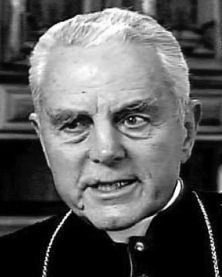
 Pope” and “the Modernist Rome.” Some of their sermons online and various writings go so far as to call counterfeit both the “Novus Ordo” priesthood and the “new” Mass. One writer claimed that since Cardinal Ratzinger was made a bishop under the new ritual that he did not share in the episcopacy and thus could not be a genuine pope. People like that will not want to “pollute” themselves with any association with the rest of us. There is a lot of wishful thinking, but after almost a half-century separation, many of them have gotten used to their independence. Slamming the rest of the Church and slurring the Holy Father, at least in sermons and in routine discourse has become second-nature. They do not seem the least bit afraid that they might be committing blasphemy against the Holy Spirit. Even Bishop Bernard Fellay has lamented this problem. It has become a habit hard or next to impossible to break. They will not reconnect with what they see as the enemy.
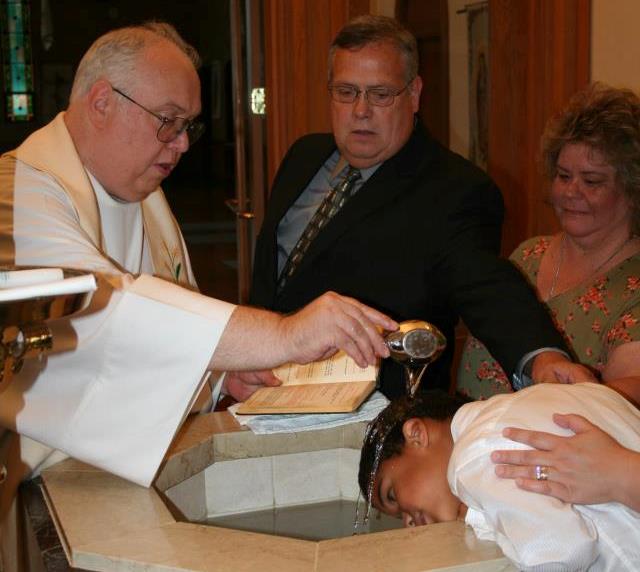
 The Body of Christ has yet another meaning and here we are indebted to St. Paul. The union that exists between Christ and his people (since their baptism into Christ by the waters of the sacrament) is identified as the Body of Christ by St. Paul. Looking at 1 Corinthians 12:27, we read: “Now you are Christ’s body, and individually parts of it.” St. Paul refers to the Church as the Body of Christ. He likens all of us, united to Christ and to each other, as in an intimate union. At Baptism, each of us, if you will, becomes a cell in that body and at the same time participating in the life of the whole body with its head, Christ. That union is not a physical union as in nailing two boards together, nor is it a moral union as when people are united as members of the same club or organization. This union of Christ and his members is unique; so much so, that we have to make up a new phrase to help us understand it. We call it the Mystical Body of Christ. All of us are united to Christ and to one another. Christ tried to inform us of this union with the parable of the vine and the branches. As the branch must adhere to the vine to live; we must adhere to Christ. Life must flow through Christ, the vine, to the branches, bringing about the fruit of our lives. St. Paul, back when he was Saul, persecuted the early Christians. Our Lord called out to him, “Saul, Saul, why do you persecute me?” He asked, “Who are you, Lord?” The Lord responded, “I am Jesus the one you are persecuting” (see Acts 9: 4-5 and Acts 22: 7-8). Again, our attention is called to the union between Christ and his people. Christ also said, “Whatever you do to the least of my brethren, you do unto me” (Matthew 25: 40). Modern social concerns tell us to see Christ in the poor, underprivileged and handicapped persons. We see in these references a reality telling us of the union that is likened to the human body. Christ is the head. We are the members. All of us are important. St. Paul says, “Does the hand say to the foot, I have no need of you?” (see 1 Corinthians 12: 15). All of us have our mission in the Church, the gathered-together people with Christ. Each of us has a mission. It may be very different from another’s mission; but, each of us is important. When we say in the Nicene Creed, “I believe in one, holy, catholic and apostolic Church” or in the Apostles’ Creed, “I believe in … the holy catholic Church,” this does not refer only to the hierarchy but to the whole Christ. At Mass, we beseech God, not to look on our sinfulness, but on the faith of the Church. When I hear this, I think of the known and unknown sacrifices being made by missionaries and martyrs, the unseen raising of children, care for the poor and the sick, and the elderly praying with gnarled hands. This Mystical Body has a structure like the human body with its skeleton; otherwise, it would collapse. Our structure is the Pope, bishops, priests and lay people. The union of people is composed of the saints in heaven, the ones who are striving to get to heaven (pilgrim people) and those waiting for perfection so as to be entirely one with Christ. While Jesus has a human body, a resurrected body; now, he also has the Church as his Mystical Body, where we are united spiritually in its members to Christ and to one another. At baptism we became children of God, members of the divine household and family. We are in union with Christ, both when we pray alone and when we worship together.