• Our Blogger

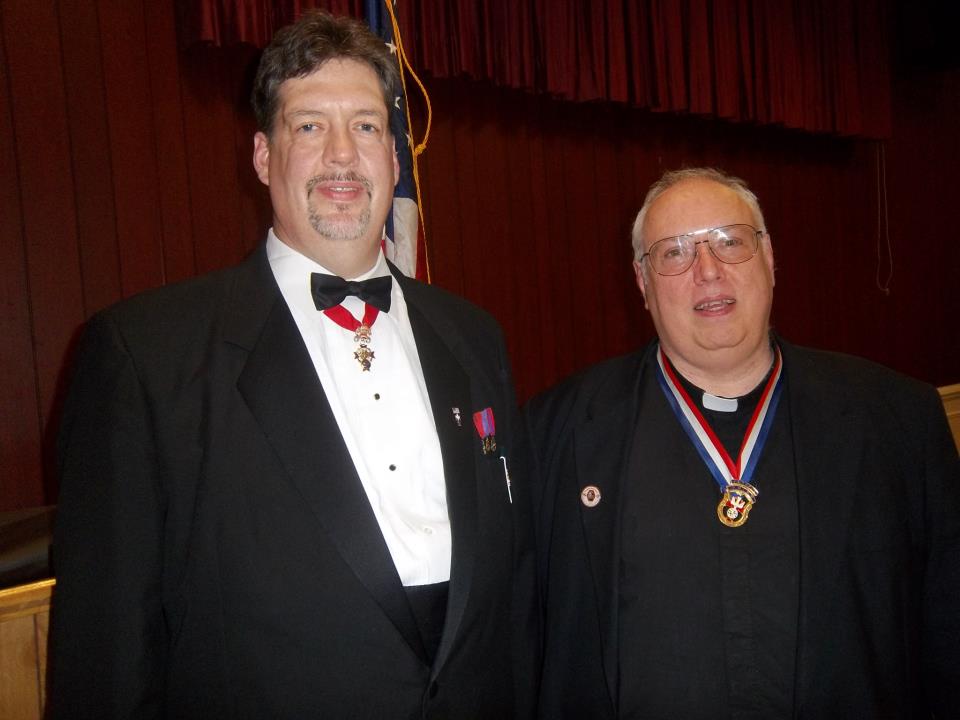
    Fr. Joseph Jenkins

  • An important theme for this blog is the scene in the New Testament where Jesus can be found FLOGGING the money-changers out of the temple. My header above depicts a priest FLOGGING the devils that distort the faith and assault believers. The faith that gives us consolation can and should also make us very uncomfortable. Both Divine Mercy and Divine Justice meet in Jesus. Priests are ministers of reconciliation, but never at the cost of truth. In or out of season, we must be courageous in preaching and living out the Gospel of Life. The title of my blog is a play on words, not Flogger Priest but Blogger Priest.

  • Archives

  • Categories

  • Recent Posts

  • Recent Comments

    Father Joe's avatarFather Joe on The Prayer to Saint Michael at…
    Inveilis's avatarInveilis on Ask a Priest
    Joanne M Rowan's avatarJoanne M Rowan on Reflecting Upon SSPX Dissent…
    Joanne M Rowan's avatarJoanne M Rowan on The SSPX Makes It Itself Out M…
    Jeremy's avatarJeremy on Ask a Priest

Responding to a Catholic Hater # 1

EVETTE: First we cannot pick and choose what and who we want to believe in from the Bible.

FATHER JOE: Well, yes and no, obviously the dispensation of Christ means we no longer have to follow elements in the Old Testament like the Levitical laws. There are also elements of immutable doctrine mixed with variable discipline.

EVETTE: Proverbs 30:6, “add thou not unto his words lest he reprove thee, and thou be found a liar.”

FATHER JOE: Be careful who you call a liar. Proverbs 30 also says, verse 32, “If you have foolishly been proud or presumptuous—put your hand on your mouth.”

EVETTE: The catholic church is so focused on rituals, hail marys and acknowledging priests instead if God, that many souls are being led astray and lost under this false religion.

FATHER JOE: The liturgy begins with repentance, then the proclamation of the Word, next the Lord’s Supper that Jesus commanded to be done in remembrance of him. Every part of the Mass can be connected with an element of Scripture. Similarly, the Hail Mary prayer is a combination of the angel’s greeting at the Annunciation, Elizabeth’s insight at the Visitation and the Church’s response, loving Mary just as Jesus loved her. None of that is false religion. Indeed, it seems to me that you might be the poor lost soul in this discussion.

EVETTE: There is ONLY ONE CHURCH, ONE INTERCESSOR: Christ. 1 Timothy 2:5, “for there is one God, and one mediator between God and men, the man Christ Jesus.” That church is the CHURCH OF GOD!

FATHER JOE:

Yes, this is true; there is only one Mediator between God and man, Jesus Christ. Catholicism does not deny the unique role of Christ as Savior and Redeemer. But your use of the word intercessor does not pass muster here. If you read just a few verses earlier, we find this text: “First of all, then, I ask that supplications, prayers, petitions, and thanksgivings be offered FOR everyone…” (1 Timothy 2:1). Praying for others or supplication is called INTERCESSION. Oops, I guess you missed that one. It is also true that there is one Church of God and it is my firm faith, in light of the apostolic transmission through history, that this is the Roman Catholic Church.

Beware of fundamentalism, Evette. If you make no distinction between doctrine and discipline then I am surprised we are even having this “conversation.” Just a few verses later, we read, “I do not permit a woman to teach or to have authority over a man. She must be quiet” (1 Timothy 2:12). My understanding of this is nuanced, but what is yours?

To be continued…

The Seven Beatitudes in the Book of Revelation

??????????????????????????????????????????????????????????????????????????????????????????????????????????????????????????????????????????????????????????Grace asks the following question: “Father, could you kindly explain the meanings of the Seven Beatitudes in the Book of Revelation?” Here is my reflection upon them.

Revelation 1:3“Blessed is the one who reads aloud and blessed are those who listen to this prophetic message and heed what is written in it, for the appointed time is near.”

Forming part of the greeting in this book of Scripture, it makes reference to God’s prophetic word that now is tthe appointed time.  The time is near when the Lord will appear in his glory. Like so much of this book, it strikes an apocalyptic tone. Harkening back to the Gospel message and the promises of Christ, it signifies that time is short, we must make ready for the coming of the Lord.

Revelation 14:13“I heard a voice from heaven say, ‘Write this: Blessed are the dead who die in the Lord from now on.’ ‘Yes,’ said the Spirit, ‘let them find rest from their labors, for their works accompany them.’”

The context here is the warning of three angels. Having admonished the pagan Romans to repent and worship the true God before it is too late; believers are consoled that if they remain faithful then their obedience or works will be a pleasing witness on their behalf before the divine tribunal.

Revelation 16:15“‘Behold, I am coming like a thief.’ Blessed is the one who watches and keeps his clothes ready, so that he may not go naked and people see him exposed.”

This beatitude is uttered at a more ominous part of the book. While there are certainly references to the persecution by pagan Rome, it has also been understood to point to a final reckoning. It is a time of false prophets and the infestation of demons. The antichrist wages war against the saints. After this blessing we are told that the kings will assemble in a place called Armageddon. True believers are urged to keep courage and know that even if all the powers of hell are waged against them and they only see death at every side, the Lord will come to save them. Christ has already conquered sin and death. But there will come a day when their effects will be undone. God’s people will not be abandoned.

The business about Christ coming as a thief at night is also often associated with our mortality.  Even if we are not personally alive at the end of the world, every death is the end of our mortal sojourn.  We need to be ready for our encounter before Christ and our particular judgment prior to the last or general judgment of all. 

Revelation makes allusions to the ancient plagues in Egypt at the time of Moses. But we have an even greater liberator in Jesus Christ.  We must be sentries for the Lord and stay awake. The reference to clothes is a reference to Genesis and the fall. After they had sinned, Adam and Eve hid themselves in shame because they realized they were naked. Apart from Christ we are all spiritually naked. As St. Paul tells us, we must be clothed in Christ. In the Lord there is no more shame or fear, just confidence and an ever-realized hope.

Revelation 19:9-10“Then the angel said to me, ‘Write this: Blessed are those who have been called to the wedding feast of the Lamb.’ And he said to me, ‘These words are true; they come from God.’ I fell at his feet to worship him. But he said to me, ‘Don’t! I am a fellow servant of yours and of your brothers who bear witness to Jesus. Worship God. Witness to Jesus is the spirit of prophecy.’”

This beatitude is echoed in every Mass with the final elevation of the consecrated species; the priest says: “Behold the Lamb of God, behold him who takes away the sins of the world. Blessed are those called to the supper of the Lamb.” A heavenly messenger is so filled with the divine presence that he must warn the visionary not to worship him. The scene is overwhelming. The previous verses speak of the bride who has been allowed to wear a clean linen garment, vesture which represents the “righteous deeds” or works of the holy ones or saints. This bride is the Church brought to perfection by her divine bridegroom, Christ. The wedding feast is the nuptial celebration of the heavenly kingdom. Christ is the Paschal Lamb who is now the Lamb of Victory. He has purchased the life of his bride with his own life. She has been washed clean by his blood. The angelic demand to worship God alone has been the faithful charge given the Church.

We are baptized into the spirit of prophecy, indeed we are reborn in the Spirit and anointed into Christ, priest, prophet and king. This theme of the marriage banquet and the Lamb of God is an integral element of Catholic worship. Our Lord made reference to himself as the Lamb of God, a truth realized between his Last Supper and the hill of Calvary. Every Mass is a celebration of the paschal mystery of Christ, “Behold the Lamb of God who takes away the sins of the world.” Again and again, we repeat these words every time we gather for worship. Jesus is made present and his sacrifice is realized or re-presented for believers today around the world. The mystery of Christ refuses to be locked in human history or any one place. It is a piece of eternity that intersects the linear time and world of mortal men, changing the meaning and direction of all salvation history.

Signified in his ministers, our Lord is the eternal High Priest and groom to his Church, his bride. Every Mass is a sacramental participation in the heavenly marriage banquet. The risen Christ comes to us in Holy Communion, giving us a share in the bounty from his table. One day sacred signs will pass, as will faith, and we will see face to face and know the one who has called us to share in his intimate everlasting love. This blessing is in regard to that union with God that Christ makes possible.

Revelation 20:6“Blessed and holy is the one who shares in the first resurrection. The second death has no power over these; they will be priests of God and of Christ, and they will reign with him for [the] thousand years.”

There are a number of elements that make this book difficult to interpret. It is filled with symbolism and numerology. There are references to the old pagan Rome and also to the final judgment. Chronology is often confused by exegetes, particularly those who read it with a bias against Catholicism or because they want to connect modern-day figures or countries to the symbolic elements. Keeping all this in mind, what can we say about this blessing? First, there will be no literal thousand year earthly reign of Christ. The mention of a thousand years is not literal but signifies the extended period between the chaining of Satan (Christ’s resurrection and victory over sin and death) and the end of days or end of the world. We were reborn in baptism. We were granted a share in eternal life. Becoming temples of the Holy Spirit, Christ lives in us. At the end of the first millennium, many believers took the number literally and thought that Christ would then surely come. But the Lord comes in his own good time. Second, the Church would rejoice that many more souls might be conceived and come to faith in Jesus and have a share in his resurrected life. Just as Moses prophesied when he said that he would have a nation of priests, along with prophet, we are anointed with chrism as priests. Our baptismal priesthood joins us together as a nation of priests.

Verses seven to ten which follow speak of Satan being released: “When the thousand years are completed, Satan will be released from his prison. He will go out to deceive the nations at the four corners of the earth, Gog and Magog, to gather them for battle; their number is like the sand of the sea. They invaded the breadth of the earth and surrounded the camp of the holy ones and the beloved city. But fire came down from heaven and consumed them. The Devil who had led them astray was thrown into the pool of fire and sulfur, where the beast and the false prophet were. There they will be tormented day and night forever and ever.”

There are been similar visions in the history of the Church.  Although the story circulated for years from Vatican staff to others, one of the more influential tales has to do with Pope Leo XIII.  Back on October 13, 1884, Pope Leo had concluded offering Mass. However, when he turned around, he sudden froze in place. Other authorities claimed he collapsed down the few steps and went into a death-like coma. He stayed this way for ten minutes or so. The attending clergy raced to his side in fear for his health. When he got moving again, apparently in some shock, they quickly took him to his private rooms. He sat down at his desk and wrote what has come to be called the Leonine Exorcism Prayer or the Prayer to St. Michael the Archangel. He would mandate that this prayer be appended to the “Low Mass” (unsung) of the Roman Rite.

What did the Pope experience during his mystical ecstasy? On the level of legend now, it is said that he claimed he could hear the voices of Satan and Christ in front of the altar and tabernacle. He described the voice of Satan as raspy and deep. The other was manly but soft and gentle.

Here is one version of the supposed dialogue:

The gruff voice boasted, “I can destroy your Church.”

The Lord challenged, “You can? Then go ahead and do so.”

Satan responded, “To do so, I need more time and more power.”

Jesus asked, “How much time? How much power?”

The devil said, “Allow me seventy-five to a hundred years, and a greater influence over those who will surrender themselves to my service.”

Christ consented, “So be it. You have the time; you will have the power. Do with them what you will.”

It is said the Pope claimed to have been shown a vision of demons released from Hell and with the purpose to corrupt souls and destroy the Church. Some suggest that this was all he experienced and the accompanying dialogue was a later embellishment. Fr. Domenico Pechenino, a priest who witnessed the event said as much in the 1940’s. He spoke about the look of terror on the Pope’s face, which had lost all color.

Now relegated to private devotion, although modern Popes have suggested but not demanded it’s restoration to the reformed liturgy, here is the edited or short version of Pope Leo’s prayer in vogue today:

“St. Michael the Archangel, defend us in battle, be our protection against the wickedness and snares of the devil; may God rebuke him, we humbly pray; and do thou, O Prince of the heavenly host, by the power of God, thrust (or cast) into hell Satan and (all) the other evil spirits who prowl (or wander or roam) about the world for the ruin of souls. Amen.”

What have we endured in the century since the vision? We have seen the devastation of the French Revolution, the rise and fall of European Communism, Hitler’s Germany and the extermination of six million Jews and millions of others besides, Communist dictatorships in Asia and the rise of radical militant Islam. We have seen the massive defection from faith and the eradication of Christian values from Western society. During this century homosexuality became a civil right and abortion became a legal choice. More people cohabitate and fornicate than coming to the marriage bed undefiled. Babylon has returned and the remnant of the saints is again persecuted.  While not underestimating man’s capacity for evil, it certainly seems that the demonic has had free reign to numb sconsciences and to corrupt souls. 

Revelation 22:7-9“‘Behold, I am coming soon.’ Blessed is the one who keeps the prophetic message of this book. It is I, John, who heard and saw these things, and when I heard and saw them I fell down to worship at the feet of the angel who showed them to me. But he said to me, ‘Don’t! I am a fellow servant of yours and of your brothers the prophets and of those who keep the message of this book. Worship God.’”

This blessing at the end of the book parallels similar beatitudes at the beginning and later in Revelation: 1:3 and 19:9-10. The message is essentially the same: this is a prophetic and spirit-filled message from God, it rests upon the authority of John, and an angel of God exhorts that all who receive this message abide in it seriously. The repeated stress on worship is not incidental. Along with the heavenly hosts, our very purpose and the general thrust of creation is to give glory to God. Such calls us to know, to love and to obey the Lord. Our worship in this world joins us to the communion of the saints and to the choirs of angels.

The principal activity in the heavenly kingdom is to give glory to God. Here we may find a hint to the deadly sin of Satan. He refused to bend the knee to the Son of God, the one who would be made incarnate. He could seek to slaughter the Lamb of God but he would never render worship. There is an old saying, “Pride goes before the fall.” True for men, it might have significance as well for the fallen angels or demons. And yet, the pride might not be so much between themselves as angelic creatures and the divine spirit as it is with the Second Person of the Trinity who would join himself to material creation. Knowing that angels are of a higher order or hierarchy in the created order, one could easily imagine that the devil would be incensed that an ensouled “animal” of flesh and blood should suddenly trump them and be so honored as to become God made man, reflecting the face of the Father in the Son. God became a man so that men by grace might share in divinity.

Revelation 22:12-15“‘Behold, I am coming soon. I bring with me the recompense I will give to each according to his deeds. I am the Alpha and the Omega, the first and the last, the beginning and the end.’ Blessed are they who wash their robes so as to have the right to the tree of life and enter the city through its gates. Outside are the dogs, the sorcerers, the unchaste, the murderers, the idol-worshipers, and all who love and practice deceit.”

While the reference to “dogs” was originally used by Jews about the Gentiles, here it means those outside the faith. We are called to be God’s children. “Sorcerers” are literally those seek to bypass divine providence and call upon the powers of the occult. The “unchaste” touches upon all those mentioned by St. Paul as excluded from the kingdom. Our Christianity demands a life of chaste and moderated love, safeguarding persons and not degrading others or ourselves with lust. Fornication, adultery, homosexual acts, etc. would fall into this category. “Murderers” refers to actual killers but also those who approve of taking innocent life, are passive to such acts. Those who betrayed Christians to the murderous persecution of Rome were murderers. Those who destroyed children as in abortion and infanticide (practiced by the pagans then and now) are also reckoned as murderers. The reference to “idol-worshippers” was a direct attack against the pagan religion of the Greeks and Romans. They could not worship idols of stone or the false deities they signified. Today, we would probably just argue that these deities did not exist in any form and that such worship was empty. However, it was the view of the ancient fathers that the deities of the pagans, while not gods, did have real existence as creatures, the demons. Thus, association with such false worship not only violated the Decalogue but placed one in bondage to Satan. The truth is also very important for the Church. Our Lord said that he came to testify to the truth. As for those who “love and practice deceit,” this is a stark warning to the believers of every age. We must be authentic. The word of a liar has no value. Just as the Lord keeps his promises, we must keep ours. God does not want part-time Christians. We must not simply go through the motions of discipleship. Every liar says with Peter in the courtyard of Caiaphas when asked about being a friend of Christ, “I tell you, I do not know the man!” Fortunately Peter had the opportunity to change his tune. Will we have time to do so?

As in the other beatitudes, we find the theme of Christ’s imminent return, judgment, reward to the just and punishment to evildoers. It has often amazed me that while some anti-Catholic apologists make so much of faith over works, the truth is that the two elements are intimately connected. It is not enough to say one believes. Faith needs to be realized with a movement of the will. There must be a genuine love of God that flows over into charity for neighbor. Christ is the eternal Word of God, the First and the Last. All creation must be consummated in him. The elect of God are depicted as in robes of white, washed clean by the blood of the Lamb. The damage of the old Adam has been healed by the new. Note that while original sin was connected to the forbidden fruit of a tree in the Garden, here too there is mention of a tree, the Tree of Life. This tree makes possible our return to a state of grace and communion with God. What is this Tree of Life? More recently Pope Benedict XVI has spoken about it as the saving Cross. Sin and death came into the world from a living tree; forgiveness and life were restored through the dead tree of the Cross. In other words, the saving work of Christ in his crucifixion has eternal consequences. Nothing will ever be the same. As pilgrims in this world, the fruits of that Living Tree are given to us as saving food in the Eucharist, rations from the banquet table of the Promised Shore and Kingdom. Immediately following the beatitude, there is an acknowledgment of those who are lost on the outside.

We are reminded of the foolish bridesmaids who in the parable allowed their oil to run out and were left outside the marriage banquet. We read in Matthew 25:11-13: “Afterwards the other virgins came and said, ‘Lord, Lord, open the door for us!’ But he said in reply, ‘Amen, I say to you, I do not know you.’ Therefore, stay awake, for you know neither the day nor the hour.”

There are also other teachings of Christ that refer to such judgment:

“I say to you, many will come from the east and the west, and will recline with Abraham, Isaac, and Jacob at the banquet in the kingdom of heaven, but the children of the kingdom will be driven out into the outer darkness, where there will be wailing and grinding of teeth” (Matthew 8:11-12).

“Then Jesus went from that place and withdrew to the region of Tyre and Sidon. And behold, a Canaanite woman of that district came and called out, ‘Have pity on me, Lord, Son of David! My daughter is tormented by a demon.’ But he did not say a word in answer to her. His disciples came and asked him, ‘Send her away, for she keeps calling out after us.’ He said in reply, ‘I was sent only to the lost sheep of the house of Israel.’ But the woman came and did him homage, saying, ‘Lord, help me.’ He said in reply, ‘It is not right to take the food of the children and throw it to the dogs.’ She said, ‘Please, Lord, for even the dogs eat the scraps that fall from the table of their masters.’ Then Jesus said to her in reply, ‘O woman, great is your faith! Let it be done for you as you wish.’ And her daughter was healed from that hour” (Matthew 15:21-28).

This last quotation connects with the word “dogs,” following this beatitude, actually a word that might be translated even more crudely. It would remind us that even the dogs might come inside from the cold and share from the table, if there is genuine faith, love and obedience. But the time grows short and soon it may be too late. There is urgency throughout these blessings and they are weighed against the possible terrible consequences of the curse and judgment.

Thursday of the Fourth Week in Ordinary Time

[326] 1 Heb 12:18-19, 21-24 / Ps 48 / Mk 6:7-13

St. Paul distinguishes between the encounter of God through Moses with that which is made manifest in Jesus Christ. While the promise was given for God’s favor and a land of their own; Jesus gives us true freedom and a share in the heavenly Jerusalem. One vision is earthbound, the other is spiritual and about a royal kingdom that will never end. God surprised and frightened his Chosen People, and they listened because they were “terrified.” But Jesus does not hide the face of God behind “blazing fire” and “trumpet blast” but reveals him with a human face and behind something as ordinary and mundane as bread and wine. Christ offers us a share in his life. We are made citizens of the heavenly kingdom. The promise of old is fulfilled in Christ and his blood. He is the Mediator between heaven and earth. The responsorial carries this theme forward and, of course, we understand that the old Jerusalem is only a figure for the New Zion, the heavenly kingdom of God. That kingdom breaks into our world first through the person of Christ and now through the Church.

Just as in our Gospel, our Lord makes us heralds of his kingdom, preaching repentance, driving out demons, and anointing and curing the sick. The old world and the old ways must pass away and make room for the new. Empowered and moved by divine grace, the Church is still dedicated to the ministry of reconciliation and healing. She still seeks to root out evil and supplant it with the goodness of God.

Memorial of Saint Paul Miki and Companions, Martyrs

[325] 1 Heb 12:4-7, 11-15 / Ps 103:1-2, 13-14, 17-18a / Mk 6:1-6

St. Paul would admonish us that we have not tried as hard as we should to avoid sin. If the martyrs could offer up their blood in fidelity, then can we not live virtuously in Christ? God loves us but this love does not mean that God tolerates everything we do or is pleased by the things we should do, but fail to do. The law of God should not be viewed as only a burden but also as an opportunity. We are tested precisely because God loves us and wants us to have an opportunity to demonstrate our love for him in return. If we are punished or find the tasks set before us arduous, it is so that our spiritual perfection might begin now. If God did not care about us, then he would have not bothered to give us his law or his Son. God calls us as his children and the family of God should be a place of healing, strengthening and support in holiness. This links up nicely with our psalm: “The Lord’s kindness is everlasting to those who fear him. As a father has compassion on his children, so the LORD has compassion on those who fear him.” People who thought they knew Jesus, repudiated and conspired against him when he spoke in the synagogue. They should have had hearts open to the Lord and supportive of one another. Let us pray that when we meet the Lord, he will not be amazed at “our” lack of faith or poor discipleship.

St. Paul Miki and his 25 companions were stabbed to death with lances on Feb. 5, 1597, at the site that became known as “Martyrs’ Hill.” Pope Pius IX canonized the Martyrs of Nagasaki in 1862.

Is the New HHS Compromise a Real Compromise?

Here is the HHS Compromise, be attentive because it gets complicated: “With respect to self-insured group health plans, the eligible organization would notify the third party administrator, which in turn would automatically work with a health insurance issuer to provide separate, individual health insurance policies at no cost for participants. The costs of both the health insurance issuer and third party administrator would be offset by adjustments in Federally-facilitated Exchange user fees that insurers pay.”

136009898198238

Since the Archdiocese is self-insured, this would in effect mean that some of our employees would have to be insured by an outside organization, either in whole or in part. Look at all the actors in this play: (1) the Church; (2) the third party administrator; (3) an outside health insurance issuer; (4) the federal government; (5) the supplier of services; and (6) the insured person. The user fees are essentially a tax to insure that contraceptives are free and to pay the third party administrator. What happens to the viability of the self-insurance program if people opt out for the third party insurer?

In any case, I still think people are going to pay more for heart and blood-pressure medicine to make up the cost for free contraceptives.  What insurance company will cover just contraception, sterilization and abortifacients without funds to shift from other medical coverage? I doubt federal fees with be sufficient. It will be exploited. Is the Church still morally culpable if we collaborate with other agents in such a scheme?  Are we culpable for money given to the government to pay the insurance companies to supply people with contraceptive services?

Given the intransigence of the administration with insisting that health care include free contraceptives, abortifacients and sterilization; I cannot say that I trust the latest offer of exemption to the Church and associated religious entities. It seems to me that religious liberty is still very much threatened. Remember, this is the same administration which sought jurisdiction over ministerial assignments; no doubt supposing that if they lost one ridiculous or outrageous battle, it would make churchmen more passive about what was viewed as a lesser campaign. I think they were genuinely surprised by men like Cardinal Dolan. Suddenly Catholic bishops had teeth and could bite back.

I suspect this newest offer is to convince the bishops of a need to see the dentist. The administration still insists that the agenda of Planned Parenthood will become the official policy of government. No matter how you spin it, that means a confrontation with the Church and the Gospel of Life.

I was amazed that some critics and churchmen quickly rejoiced and sang Hallelujah when the revised policy was announced.  We must not return to a posture of passivity and ineffective opposition to Big Brother and modernity. More level-headed religious leaders argue that we need to look at this offer closely. It may be a trick. It seems to me, upon closer examination, that there is no miracle break-through or adequate accommodation. The shell-game continues.

The question proposed is this: can such a policy be mandated against Church institutions with religious and moral reservations? The response of the administration seems to be that some institutions have more of a claim upon religious liberty than others. If the previous offer only preserved such liberty within the walls of the churches, this new policy will only add the porch or parking lot. Churches, individually or corporately, are protected, as are religious orders, but the rest is still up for grabs. Again, this administration has a very narrow notion of what constitutes “church.” Ministries in the area of community service are understood entirely within the matrix of secular humanism. President Obama’s religious vision is wholly a horizontal one (earth-bound) with little or nothing of the vertical or transcendent. In other words, God made us— great; but WE make the rules.”

We still have a fight on our hands because of the indiscriminate outreach of our religious charities, hospitals and schools. This element of the policy has not really changed. Okay, even if self-insured, we would not be required to pay “directly” for the contraceptive coverage; however, we still have to find other insurers to dirty their hands for us. The cooperation with evil becomes more remote but they will still be our agents.

Throughout it has saddened me that we have stressed the religious liberty of the Church as an institution but not the same rights of individual believers and citizens. There is no exemption for them and their businesses. It is bad enough that pro-life groups, EWTN, the Knights of Columbus and others might be forced to comply; however, what about the good Catholic entrepreneur who bakes donuts or fixes cars or cuts the grass. There are no exemptions at all for them. I know, some will say that they could fight and pay out hard-earned money to litigate for themselves. But this is America, our rights are supposed to be guaranteed, not entitlements for which we have to fight and beg.

I bet if it had not been for the courts, we would not have seen even these concessions. No doubt the administration wants to promote a particular public perception: a liberal government wanting to dialogue about national healthcare and a backward-thinking Church wanting to deprive couples of pills and condoms. President Obama and Kathleen Sebelius know full well that many if not most American Catholics are out of sync with Church leadership and moral teachings. As in Maryland with the proposition for same-sex marriages, they hope to exploit this advantage and show that they are the true magisterium, not the ecclesial shepherds largely abandoned by their flocks. As much as the USCCB has sought to frame this debate under the banner of religious liberty and the First Amendment, the administration has been highly effective in convincing many people that it is about reproductive choices and health. God help us!

Talking to an Atheist on Original Sin & Evolution

FATHER JOE:  A few years ago I made a response to a post at THE GOD COMPLEX (an atheist site) about a faulty reading on the doctrine of Original Sin. Much was made of the fact that I said the Catholic Church “allows” believers to accept the theory of evolution. He was sarcastic instead of politely recognizing that there need be no fight upon this issue.
ANDROO: You allow followers to accept evolution. How nice of you. It’s good to see that the catholic church no longer shackles its faithful with burdensome chains of ignorance, well, at least not in the case of evolution anyway.

FATHER JOE: This illustrates why discussion with non-believers today can oftentimes be very difficult. Everything is in the attack mode. Did their parents force them to go to church? Did sister beat them with a ruler? What gives? Like certain fundamentalist Protestants, they treat matters like the inquisition and Galileo’s house arrest like they happened last Tuesday. The fact that the Church preserved learning and that many great scientists are faithful Catholics is ignored. When I voiced a Catholic view of evolution he seemed supportive until I wrote that “Adam and Eve are more than metaphors for Catholics.” To this he found objection.

ANDROO: This is actually pretty good. We can agree on everything right up until this part right here: ‘More than metaphor’ is truth. There is no gray area of speech where something is ‘kind of’ a metaphor and ‘kind of not a metaphor’. Either it is truth or it is metaphor. As I said in my original post, either Adam and Eve existed or they did not. If you say they are more than a metaphor than you are saying that they are truth. If you say they are truth then by default you are saying that Evolution did not occur because anyone who knows the slightest bit about evolution knows that there was no first man and woman in a magically perfect garden with manipulative talking snakes.

FATHER JOE:

It may be the confusion here is due to the way language is used and how history is understood. A scientist wants words to have one meaning so as to narrow the descriptive parameters. Theologians may also prefer such words when trying to strictly define beliefs and to eradicate misunderstandings. However, often the language of faith is that of parable and poetry. The assembled words are multivalent. My critic probably reads “metaphor” as strictly fictional. He seems to be objecting to the notion that Adam and Eve had any existence whatsoever. But, he would certainly have to grant the existence of the first true humans and/or proto-humans. Nevertheless, the way the ancients understood history is a far cry from our “video replay” mentality today. History and the stories passed down become immediately interpretive. What is read into the stories is judged as real and meaningful. When I said that Adam and Eve were more than metaphor, I expressed a belief in the existence of our first parents—not that they were simply blond haired, blue-eyed white people waiting to be fooled by a snake.

I wrote that “We would not usually talk about the fall or the infusion of a rational soul when discussing such concerns as evolution and prehistory with non-believers.” He then argues that we are holding opposing contradictory beliefs as true.

ANDROO: If I simultaneously held to be true two totally contradictory beliefs I wouldn’t talk about it with anyone either. Let me illustrate:

  • This is belief number one: “allows believers to accept the theory of evolution, but such is also taught in our schools and universities”
  • This is belief number two: “Adam and Eve are more than metaphors for Catholics”

Belief number one, and belief number two are diametrically opposed Father Joe, they cannot co-exist at all and no amount of vague definitions or hand waving can change that.

FATHER JOE: The problem here is that there is no strict syllogism. The propositions need not contradict one another. Admittedly, if Catholics strictly applied the biblical story there would some conflicts. But one need not be a stickler on the details to get the basic information that it is intended to transmit: that God is our Creator, the creation is good and that evil is the result of man’s misuse of his freedom and a violation of his stewardship. Nothing of this stands in violation to the notion that human beings may have evolved from proto-humans or more primitive animal forms, particularly primates.

ANDROO: This type of thing reminds me of the novel Nineteen Eighty-Four, specifically this: “…the power of holding two contradictory beliefs in one’s mind simultaneously, and accepting both of them . . . . To tell deliberate lies while genuinely believing in them, to forget any fact that has become inconvenient, and then, when it becomes necessary again, to draw it back from oblivion for just so long as it is needed, to deny the existence of objective reality and all the while to take account of the reality which one denies — all this is indispensably necessary. Even in using the word doublethink it is necessary to exercise doublethink. For by using the word one admits that one is tampering with reality; by a fresh act of doublethink one erases this knowledge; and so on indefinitely, with the lie always one leap ahead of the truth.”

FATHER JOE: I have both read and written upon Orwell’s novel, but the Church seeks not to further “doublethink” but to do justice to all the disciplines of truth while proclaiming the Gospel. Unlike certain Protestant groups which claimed that scientific and philosophical views in conflict with faith did not matter; we seek to give both faith and reason their proper place. The critic here fails to appreciate this because he is blinded by his own bigotry against theism. Making proper distinctions is not Orwellian subterfuge, but is an element of proper and clear logical thinking. He did my explanations a severe injustice and literally bypassed them altogether without any analysis. We might still disagree, but should recognize that for most aspects of science, we could be on the same page. Science and atheism are not necessarily linked; indeed, most scientists in the history of the world have possessed some kind of faith, everything from Christianity and Judaism to variations of Deism.

ANDROO: So which is the reality Father Joe? Adam and Eve or Evolution? Is the entirety of man sinful because of the acts of the first man, or is the entirety of man sinful because you say so? Or, like Doublethink, are both of them true situationally? Is evolution true when you talk to me and Adam and Eve true when you take the podium on Sundays? you know, even if it was the case that You were a fundamentalist and you believed only in Adam and Eve I would be fine with that. That is a more logical and rational stance than trying to believe both at the same time. I mean, if you’re going to believe something wild and outlandish you might as well really commit to it and ignore all of the evidence all of the time and just be a total fundie. Saying that the story was just total metaphor would be fine too. But you didn’t go with either of those options.

FATHER JOE: The reality is greater and more wondrous than you would credit. Adam and Eve, or whatever you want to call the first parents, represents the beginning of humanity on this planet. I cannot tell you if they were dark or light skinned, hairy or bald, tall or incredibly short. They might have walked with a peculiar stride. They were part of nature and yet represented something special and new on the scene. There was a fall, and I would be at a loss to say what exactly happened. There was a test and our ancestors failed. They were the first and would set the pattern for all who would come after them. The first true human has a sense of himself called to a higher dignity. For the first time there is a creature that can respond to God in kind. He has the power of a self-reflective mind and a freedom of will. He is not a necessary slave to instinct. However, instead of embracing the mystery of his calling and dignity, he reverted to the bestial—the way of least resistance—and forfeited a unique relationship with the Creator. We can only imagine what things might have been like had mankind initially said YES to God. Maybe death would have been as easy as walking through a door from one room into another? In any case, it did not happen and the pattern of sin and death would be replayed over and over again. Nothing is denied from a study of pre-history, archeology, and the current interest in DNA. As I said, God could certainly form the human body from pre-existing forms using such things as natural selection and mutations. We would not usually talk about the fall and the infusion of a soul because these are matters that science cannot place under a microscope or discover in the fossil record. It must not contradict or invalidate good science; but science itself has neither the tools nor the perspective to say much about such religious views. The disciplines study different things.

ANDROO: What really bothers me though, is that when presented with the evidence, and the impossibility of both things being true, you retreat to this: “Obviously there are still mysteries left to be discovered and it is our expectation that revelation and science are not in opposition.”

FATHER JOE:

At this point I must apologize because I assumed the critic would understand the usage of my terms. This statement here proves me wrong. There is no opposition and I am not using the word “mystery” as in regard to something not yet discovered. Theologians use the word MYSTERY in a different way. The seven sacraments were originally called the divine mysteries. When we talk about the mystery of God or of creation, we are not talking about questioning God’s existence or how this relates to the natural world. The sublime revelations of God are called “mysteries.” Theological mysteries can be known to a certain extent but given their source in an infinite God it is not possible for us to exhaust their meaning. The old edition of the Catholic Encyclopedia had this to say:

Relations of natural and supernatural truth

(a) Superiority of the Supernatural

The mysteries contained in supernatural revelation are not simply disconnected truths lying beyond the realm of natural things, but a higher, heavenly world, a mystical cosmos whose parts are united in a living bond. (Scheeben, “Dogmatik”, I, 25.) Even in those parts of this vast system that have been revealed to us there is a wonderful harmony. In his great work “Die Mysterien des Christenthums”, Scheeben has sought to show the logical connection in the supernatural order by considering its supreme mystery, the internal communication of Divine life in the Trinity, as the model and ideal of the external communication to the creature of the Divine life of grace and glory. The knowledge of the supernatural is more excellent than any human wisdom, because, although incomplete, it has a nobler object, and through its dependence on the unfailing word of God possesses a greater degree of certitude. The obscurity which surrounds the mysteries of faith results from the weakness of the human intellect, which, like the eye that gazes on the sun, is blinded by the fulness of light.

(b) Harmony of Natural and Supernatural Truth

Since all truth is from God, there can be no real warfare between reason and revelation. Supernatural mysteries as such cannot be demonstrated by reason, but the Christian apologist can always show that the arguments against their possibility are not conclusive (St. Thos., “Suppl. Boeth. de trinitate”, Q. ii, a. 3). The nature of God which is infinite and eternal, must be incomprehensible to an intelligence that is not capable of perfect knowledge (cf. Zigliara, “Propædeutica”, I, ix). The powerlessness of science to solve the mysteries of nature, a fact that Rationalists admit, shows how limited are the resources of the human intellect (cf. Daumer, “Des Reich des Wundersamen und Geheimnissvollen,” Ratisbon, 1872). On the other hand reason is able not only to recognize wherein consists the special mysteriousness of a supernatural truth, but also to dispel to some extent the obscurity by means of natural analogies and to show the fittingness of the mystery by reasons of congruity (Council of Cologne, 1860). This was done with great success by the Fathers and the Scholastic theologians. A famous example is St. Thomas’ argument ex convenientia for the Divine processions in the Trinity (Summa Theol., I, QQ. xxvii-xxxi). (See FAITH, REASON, REVELATION.)

Here my response changes from third person to first…

ANDROO: You’re essentially saying that you just don’t know how both things can be true, but you expect that they are. That is one of the most intellectually dishonest things I have ever heard.

FATHER JOE: No, this is not what I was saying at all. The dishonesty is yours for failing to pick up on so much that I made clear in regard to Catholic respect for science, if not for atheism. Maybe this confusion is a symptom of your atheism? You have no soul, or at least refuse to allow your soul to express itself. When I speak of mystery, I am remarking upon that which causes awe and wonder. The fact that we can even have this discussion is incredible. Our very existence and that of our universe should by my way of thinking be highly unlikely; but, here we are! That is absolutely incredible, no less or more so than the religious beliefs I hold to be true.

ANDROO: It is common for religious people to ridicule scientists, and even you yourself have done it Father Joe, for not actually knowing everything and having mere ‘theories’ (this displays an ingnorance as to what a theory actually is in scientific terms though) as to the creation of the universe or the development of certain traits or species.

FATHER JOE: I am not presumptuous of scientists and their theories. I acknowledge my ignorance just as you are blind to yours. When theories are proven, we have facts. However, facts always lead to more theories, and sometimes even to the revision of our so-called facts. I have never ridiculed scientists. I am critical of you as an atheist. So far I have seen no sign that you are a scientist. We could talk science, but you have chosen to ridicule religion. Indeed, you have dedicated much of your poor blog to this cause.

ANDROO: Isn’t saying ‘It’s a mystery, but I expect that I’m right’ even worse than what you mock scientists for? Scientists work to solve problems, and come up with ideas when they don’t know the answers. then they experiment and study to see if their answers ideas and theories are correct.

FATHER JOE: I have already explained about your faulty and impoverished understanding of the word “mystery.” Scientists have never been mocked by me. They have my highest respect and admiration. All men and women who seek truth of any sort are kindred souls to me. But you are not really interested in that on your site, are you? You are all about mockery and bigotry. You hate the Church. You think Christians are pathetic. And you do the one thing that no true seeker of truth would ever do; you have closed your mind.

ANDROO: You Father Joe, when presented with a problem just give up and say ‘It’s a mystery, I don’t know, but I’m pretty sure I’m right so let’s not talk about it.” I for one, would rather say “I don’t know yet” and try to find the answer myself.

FATHER JOE: Excuse me, to whom are you talking? I have given more of a response than probably anyone else has ever given you. It was my hope that you would see that not all religion was the same. Faith need not invalidate science (or visa versa). I am a parish priest who studies, albeit as an amateur, religion, philosophy, astronomy, physics, history and pre-history, evolutionary science, the classics of literature, etc. I did not expect any great degree of human respect, but I was somewhat surprised at how tenaciously you would grab at any and every straw to promote your personal atheism at the expense of sound argument and a true picture of Catholic Christianity.

The Original Discussion

ANDROO THE ATHEIST:

According to Catholics, man is created sinful and must struggle his entire life against his powerful tendency to sin in order to be good enough to enter heaven. In an effort to help us out, God sent Jesus down here to suffer and die and then go back to heaven. This ‘ultimate’ sacrifice somehow makes forgiveness possible. So lets take a detailed look at this, if that is even is possible. First, why is man sinful? According to Catholic.com our sin descends from Adam and Eve.

The doctrine of original sin is that “in” Adam all have sinned. / This sin of Adam’s was not your ordinary sin. This was a sin that affected all mankind forever. This sin changed the course of human history. It did not just affect Adam personally; it also affected his human nature—which means it affected our nature, since we inherited it from him. / Adam was tested by God not just as Adam but as the representative of the whole human race, since we are all the seed of Adam. Just as David and Goliath met on the battlefield as champions of their respective armies, Adam was our champion. If your champion lost in battle to the other army’s champion.

A champion whose enemy was none other than god apparently, the odds seem to have been against Adam from the start. But I digress, here’s one more.

These passages are all about the Church’s doctrine of original sin. Because of Adam’s sin, all men were made subject to sin and death. That is Scripture’s teaching on the doctrine of original sin.

Now, because I generally don’t like to pull from just one source, here are some quotes from my old friend Father Joe These are comments from an entirely unrelated article, but they illustrate that the belief in Adam, the Garden of Eden and original sin is more than metaphorical amongst catholics and their religious figureheads.

If Adam had not sinned, the course of world events would have been quite different. However, we cannot be sure what would have happened. It might have meant the immediate consummation of all things. Natural laws might have been suspended. Death might have become an easy transition from this world to the next… indeed, not a true death (as we know it) at all. / Mankind fell in Adam. He was called to respond to God as one made in his image and likeness. Instead, he preferred the path of least resistance, the way of the brute.

Moderate religious people of any faith always say that science and religion are entirely compatible. The above quotes clearly illustrate that that is not true. How exactly can one accept evolution and the age of the earth as fact while simultaneously accepting as fact the story of Adam and Eve? Those two things are diametrically opposed, if one happened the other simply could not have happened. This is a fact, only one of those events could have transpired, and the overwhelming mountain of evidence is in favor of evolution. Sorry Adam, you just didn’t exist. Since we know, as fact, that there was no Adam and Eve, no Garden of Eden, and no lively games of Fetch between Adam and a Tyrannosaur, where then, does that leave the doctrine of Original Sin? Well, if Adam did not exist, then he could not have betrayed God and he could not have passed that sin onto us all. Is it possible then, that mankind isn’t sinful by Nature, and that the Catholic Church just wants you to think that in order to perpetuate a cycle of guilt and forgiveness that constantly leads people back to the Church?

Well, MAYBE the whole Adam and Eve thing is just some sort of confusing metaphor. Maybe God was a little busy when he wrote that part of the bible and didn’t make it clear that he wasn’t being literal. Well, that just leaves us with another problem, the problem of sin and justice. Let’s say I had a son, and I decided to have both of his arms amputated at the shoulder because I wanted him that way. Now lets say that I take him out into the back yard and constantly throw footballs at him. Would it be fair of me to get angry with him because he can’t catch any of them? Would it be justice lock him in a smoldering basement for rest of his life because he cant catch any of these footballs? If Adam and Eve are only a metaphor, than that leaves God as the one responsible for our sinful nature. After all, God created us exactly the way he wanted us to be, a omnipotent and omniscient being could do no less. So, if god made us sinful by nature, is it fair that he punishes us for giving in to sin? Is it fair that he sentences us to hell for giving in a desire he gave us in the first place? I don’t think so.

One final thought though, if we truly are sinful by nature, and it is ‘natural’ for us to sin, and God is forcing us to act righteously, than isn’t that coercion?

Coercion is the practice of compelling a person to behave in an involuntary way (whether through action or inaction) by use of threats, intimidation or some other form of pressure or force.

Seems like god is the bad guy no matter how you look at it.

FATHER JOE:

The Catholic Church not only allows believers to accept the theory of evolution, but such is also taught in our schools and universities. Unlike Protestant fundamentalists and certain Catholic traditionalists, we have long been open to the notion that the human body may have developed from pre-existing forms. Further, while men probably ran with mammoths and faced the extinct sabertooth, I do not think human beings were around when the dinosaurs or their precursors roamed the earth.

Adam and Eve are more than metaphors for Catholics, but there are certainly metaphorical elements in the story. We would not usually talk about the fall or the infusion of a rational soul when discussing such concerns as evolution and prehistory with non-believers. Rather, we would stress those things in which we find agreement from fossil and/or genetic evidence. Catholics would not hold opposing propositions as true; however, different matters are studied and each discipline is respected in its own right. Obviously there are still mysteries left to be discovered and it is our expectation that revelation and science are not in opposition. Instead they look at the basic questions from different perspectives. I would not use the Bible as a science textbook; neither would I use Darwin or Einstein as prophets of faith.

I am not trying to prove God to you, anymore than you could make me question my faith. I just hope we can live in a world where believers and non-believers can work together and live in peace and respectful civility.

Bishop Walsh Knights of Columbus Assembly

428164_10151234993448435_1024118244_n

We had a Fourth Degree Assembly meeting Monday night and renewed our promises as Knights.

150981_10151234992303435_191910948_n

Courageous Words from a Montgomery County Pastor

Maryland

When the vote was over, despite all the work of the Maryland Catholic Conference and our own Archdiocese of Washington, the same-sex marriage initiative passed. The day after, when analysts were looking at the numbers, it was noted that Prince Georges County had voted against the measure by a razer thin margin. No doubt while there were many Obama supporters, this was also the church mecca of the state, a county with a 93% minority population. The more affluent Montgomery County voted for the measure, almost two to one. Msgr. Filardi is a Montgomey County pastor. Here is his message:

WELCOME TO SODOM

Pastor’s Letter
Our Lady of Lourdes Parish, Bethesda, Maryland

Welcome to Sodom. Yes, that is what Maryland has now become. Sodom with its neighbor Gomorrah was a city of antiquity whose disregard for the natural law of human love led to its destruction. That same disregard is now written into state law. The distinctive physical and life-cultivating complimentarity of woman and man has been dismissed as a basis for marriage. Additionally, those who cannot honor this diluted definition in their personal and business activities will be held legally liable for discrimination and punished accordingly.

Already, the owner of a trolley service in Annapolis seeing this coming announced he will no longer offer wedding services. By doing so he will lose much of his business, but he cannot in good faith go along with treating as normal what is not, neither can we.

It is a great sadness that many of Satan’s helpers in ushering in this demonic distortion of marriage were Catholics, such as our governor. In promoting this desecration they have not only brought dishonor to our holy faith and shame to all Catholics, but invite the real possibility of damnation on themselves. We must pray that they recognize this error, repent and make reparation.

Some may interpret my words as an unfair disregard for individuals who bear same-gender attraction. It is not. Such brothers and sister must be loved and embraced. Indeed, we must make greater efforts of proper inclusion and support. At the same time true love is not allowance for any activity. It has no authority to overlook what is written in nature. Love cannot comply with a lie. It first honors what God has designed, and then encourages all to live in authentic love that leads to true fulfillment. Nothing changes for us, because God defines marriage. This has not changed. The purposeful union of man and woman was the crown of God’s creation. Anything else by that name mocks what God has created, and therefore mocks God.

Maryland is our home. It is where we are placed, and it is where we will continue to live. But especially now we must live upholding in word and honor the truth of marriage with clarity. We cannot betray what God has created without betraying God. This means never placating or playing along with a false notion, no matter how “well intention” some may be. It will not be easy. We do so at the risk of the ire and even legal sanctions this will invoke.

Our beloved state is now a modern-day Sodom. We should not be surprised at the coming of confusion, conflict, and even catastrophe. We reap what we sow. May God have mercy on us.

Msgr. Edward J. Filardi
Pastor, Our Lady of Lourdes Parish
Bethesda, Maryland

Catholic Bandita / Courageous Priest / Parish Bulletin / A Culture of Life / Father Z’s Blog / Deacon for Life

The Baptism of the Lord: What is Baptism?

jesus-baptismLast week I preached about how the Epiphany was the first of three theophanies (revelatory moments) where the divinity and power of Jesus was made manifest. At one time the Church celebrated them upon three consecutive days (a triduum): the Epiphany, the Baptism of the Lord and the Transfiguration. Today, the first two are in close proximity but the Transfiguration is elsewhere in the liturgical year (August 6).

Today also brings Christmas or Epiphanytide to an end. On the Epiphany, Christ the child is honored as the new king, God joining himself to the human family. When he is baptized by John, our Lord is a man beginning his public ministry. But, here too, he is made manifest as the long-promised Messiah, the one who would “increase” just as John would “decrease.” The Holy Spirit appears as a dove and there is the voice from above announcing, “Here is my beloved Son upon whom my favor rests.” It fits with the message of Christmas because while Jesus (the God made man) resembles us externally, his objective is that we might be more like him, internally.

This feast provides a wonderful opportunity to speak about the meaning and importance of baptism. Several years ago I had the privilege to visit Qumran where the Dead Sea Scrolls were discovered. There were various caves and much of the old settlement had been excavated. I was taken by these large tubs of stone or rock. Steps led up the sides of them and then more steps down into the tubs. These were ablution baths used by the Jews for ceremonial washings. There were several occasions in the New Testament where such things were mentioned. Remember the men suffering leprosy that were healed by Jesus and told to bathe and show themselves to the priests? Remember the poor man needing healing but there was no one to place him into the pool when the water stirred? Jesus would heal him outright. What John the Baptizer was doing was not something new to the Jews. They were familiar with ceremonial washings where people would beseech God for mercy and healing. But, like their sacrifices, these washings were never able to fully accomplish what they hoped. What drew people to John was that, even according to ancient standards, he was a peculiar character, unkempt and living off the land. There was also a strangely compelling and powerful element to his message of repentance. John’s baptism of people in the Jordan was really a baptism of PREPARATION. He was making a straight path for the Lord— preparing a people— disposing them to receive the one who was coming after him. Notice how his disciples quickly became followers of Jesus.

The second type of baptism was unique to our Lord. The waters of baptism were made holy by the one being baptized. Through the symbolism of a dove, along with the voice, the whole Trinity was present at the scene of Christ’s baptism. Jesus was identified as God’s Son. His baptism was precisely one of REVELATION. Jesus had no sins that needed repentance or forgiveness. Jesus was the one they had long awaited. Jesus’ identity was made manifest.

Turning to the third type of baptism, we recall our Lord’s words at the end of the Gospel of Matthew. He tells his apostles to go out to the entire world and to baptize “in the name of the Father and of the Son and of the Holy Spirit.” When he spoke about salvation, he insisted that we must be “born again.” While the baptism of Jesus reveals his identity, our baptism CHANGES our identity. We are remade as a new creation, something different than before. Baptism makes us members of Christ’s kingdom. We become brothers and sisters to Jesus, spiritually adopted sons and daughters of the Father. Sin is washed away, both original and personal. We are made holy and living temples of the Holy Spirit. This third baptism makes us into new Christs, molding us into his likeness. This is a baptism of TRANSFORMATION.

We recall this baptism every time we enter a church and cross ourselves with the holy water from the basin at the door.  As members of the divine family or royal household of God, the world needs to see Christ living and ministering through believers. Creatures of God have become sons and daughters. We are given a share in the divine life and abide as a people of faith in the real hope of salvation.

For more on this feast and the mystery of baptism, read Msgr. Charles Pope’s blog entry.

Saint Ann, Mother of the Blessed Virgin Mary

289_16408328434_2559_n

NOVENA PRAYER

GOD OUR FATHER, the beauty and the order of your creation was wilfully damaged by those who rejected your friendship. Undeterred by this ingratitude, your Son entered our world on a mission of mercy and healing. He walked among us as a divine physician seeking the lost and the strayed, curing the sick and the handicapped, mending broken hearts and restoring broken friendships, comforting the distressed and bringing peace of mind to the victims of sin. With the exception of sin, he too was the victim of suffering and anxiety. He knew fatigue and hunger and loneliness. In taking flesh and blood from the children of Eve, he honored Mary and Ann as mother and grandmother. From them he inherited eyes which behold the ills of man and hands which constantly reach out to bring healing to mind and body. In this novena of prayer, dedicated to Saint Ann, the friend of the sick, we ask her intercession to strengthen our faith that miracles of healing may continue to testify that the compassionate Jesus still walks among us. We ask him to bless us, today and forever. Amen.

ASSORTED DAILY PRAYERS (Choose one)

DAY 1 – Glorious Saint Ann, by the special bond of affection uniting you still with your child, our blessed Mother, and with her divine Son, we call on your powerful aid to meet today’s pressing needs. We freely acknowledge our own sinfulness and unworthiness, and yet we count on your help, and promise ever to be grateful to you and faithful to God’s will for us. Amen.

DAY 2 – Dearest Saint Ann, teach me the value of prayer. When I pray humbly, earnestly, God’s hand stretches out to me; it takes hold of my hand, my mind, my will and helps me up the steep path that leads me to the goal he has set before me. Amen.

DAY 3 – Saint Ann, when I lose my way and lose sight of my Lord, show me how I can find him again; tell me where he wishes me to walk through life; help me discover in Christ’s teaching the light that will reveal to me the Father’s will, which is made manifest through his commandments, through my duties toward him and toward my neighbor and through the various circumstances in which I am called to work out my destiny. Amen.

DAY 4 – Saint Ann, when I lose heart before the hardships of life and the constant obstacles that I have to overcome, when I feel helpless before my bad inclinations, before my repeated struggles against the evil one and against a world that is constantly pulling me away from you, obtain for me from God, who is the source of all strength, the courage to remain faithful to him, never to pull my hand out of his hand and to overcome the countless temptations of the world, the flesh and the devil. Amen.

DAY 5 – Saint Ann, first of all, let me always keep burning in my heart the eternal flame of God’s love; let the unquenchable fire of God’s love for me forever keep alive in me a consuming love for the Lord and for my neighbor. Amen.

Day 6 – Dearest Saint Ann, whenever I am unhappy, inspire me to pray for happiness, for my share in the happiness of this earth; but, first of all, for the endless happiness that God has prepared for those who serve him with loving and prayerful hearts. Amen.

DAY 7 – Each passing day is a step forward on our earthly pilgrimage. Saint Ann, let each new day bring us deeper into the Lord’s knowledge and love. This is the goal of all Christian life on earth: that every passing day and every passing year should show us better the dazzling face of our God and urge us toward him in more faithful service. Amen.

DAY 8 – Saint Ann, the afflictions that befall our persons, families, cities and nations will be unbearable, unless you teach us how God’s merciful designs for man are attained through suffering. Keep reminding us that the only way that leads man to God and happiness is the way of the cross. Amen.

DAY 9 – Saint Ann, teach us how to love one another. Love alone can do away with the evils of disputes, riots and wars. Love alone can inspire men with a sense of equity and justice. It will tear down the barriers that divide men according to languages, colors and creeds, and will inspire mankind to live in mutual understanding. Amen.

DAY 10 – Thank you, dearest Lord, for this new day and for all the blessings it has in store for me. Thank you for the air I shall breathe, for the bread I shall eat. Thank you for the gift of light which will allow me to enjoy the beauty of the universe; for the gift of strength that will allow me to keep walking on the road of your commandments; for the gift of friendship and love which will sustain my steps and give warmth to my life. Amen.

DAY 11 – Teach me, dear Saint Ann, how to use every hour of this new day as a gift from the Father’s loving hand. Let me use the sorrows of life as well as its joys in order to spend this whole day in his service and for his glory. Amen.

DAY 12 – My loving Lord, give me light when I lose sight of you and of the way that leads to you; give me strength when I am weak and faltering under the weight of my aches, of my responsibilities and of my griefs; give me hope when I am tempted by despair; give me your burning love when my heart is cold and loveless. Amen.

DAY 13 – Dear Saint Ann, bring Christ’s pilgrim people closer together while they are helping one another on the way to their eternal dwelling place. Amen.

DAY 14 – Dearest Saint Ann, I wish to make my evening prayer before you. This day was a gift from God. He gave it to me, not to be spent foolishly, but to be used for his glory and for my happiness, as well as for the benefit of my neighbor. Amen.

DAY 15 – Teach me also how to be sorry for frequently resisting God’s will and the impulses of his grace. Obtain me forgiveness for often failing in faith in God’s teaching, in hope in his assisttance and in love for him and my neighbor. This day had been given me in order to bring me closer to my Lord. At the end of this day, am I a more faithful and loving child to my God and Father? Are men more understanding, more helpful to one another? Amen.

DAY 16 – Saint Ann, as I reach the end of this day and of this prayer, I also wish to place my whole person, body and soul, under your care. Keep both, my soul and my body, in good health. Watch over my family, over my friends; watch over my city, my country, over the Church. Watch over all men, since they are God’s pilgrim people on the way to their Lord and Father. Amen.






















