• Our Blogger

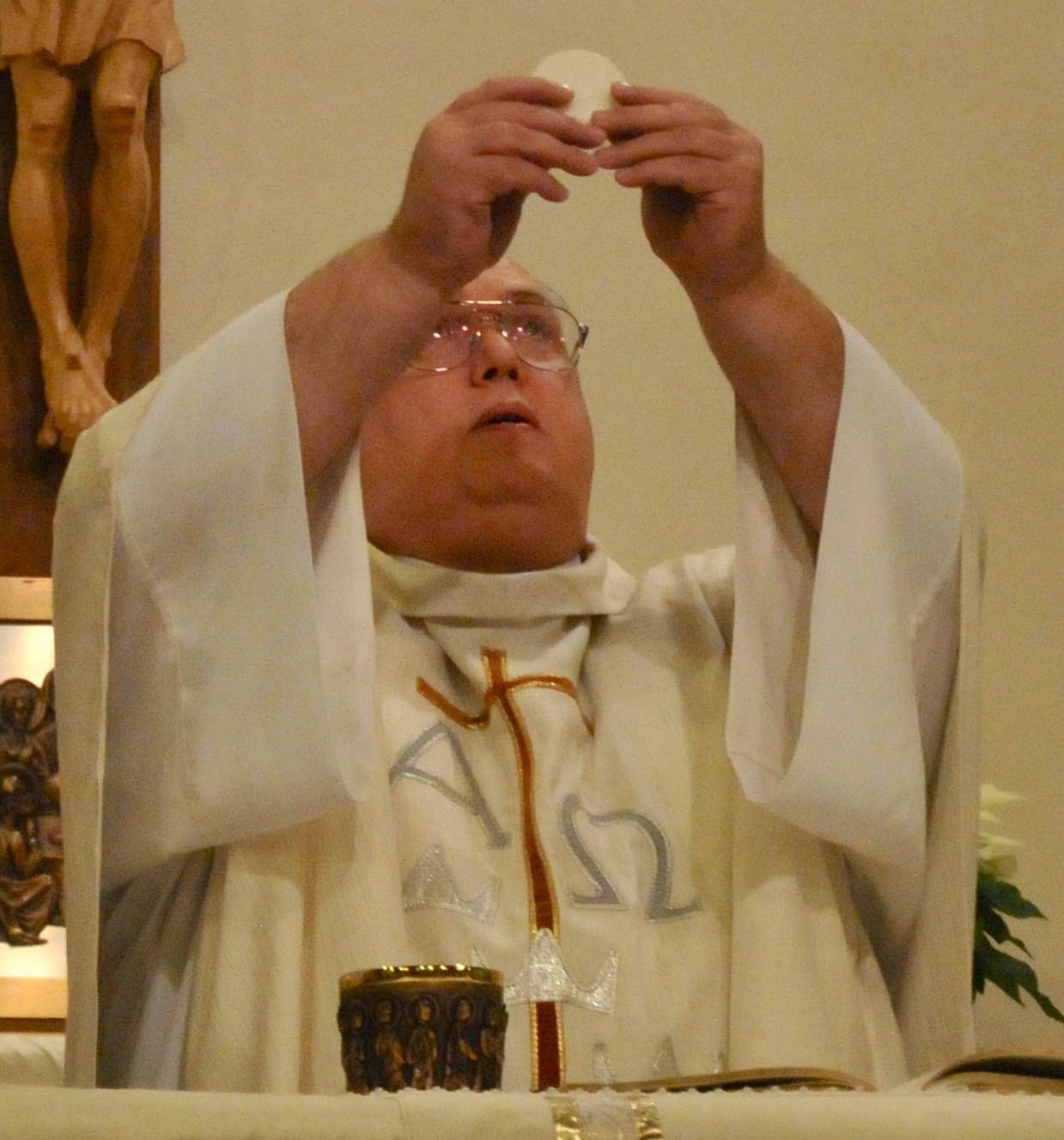
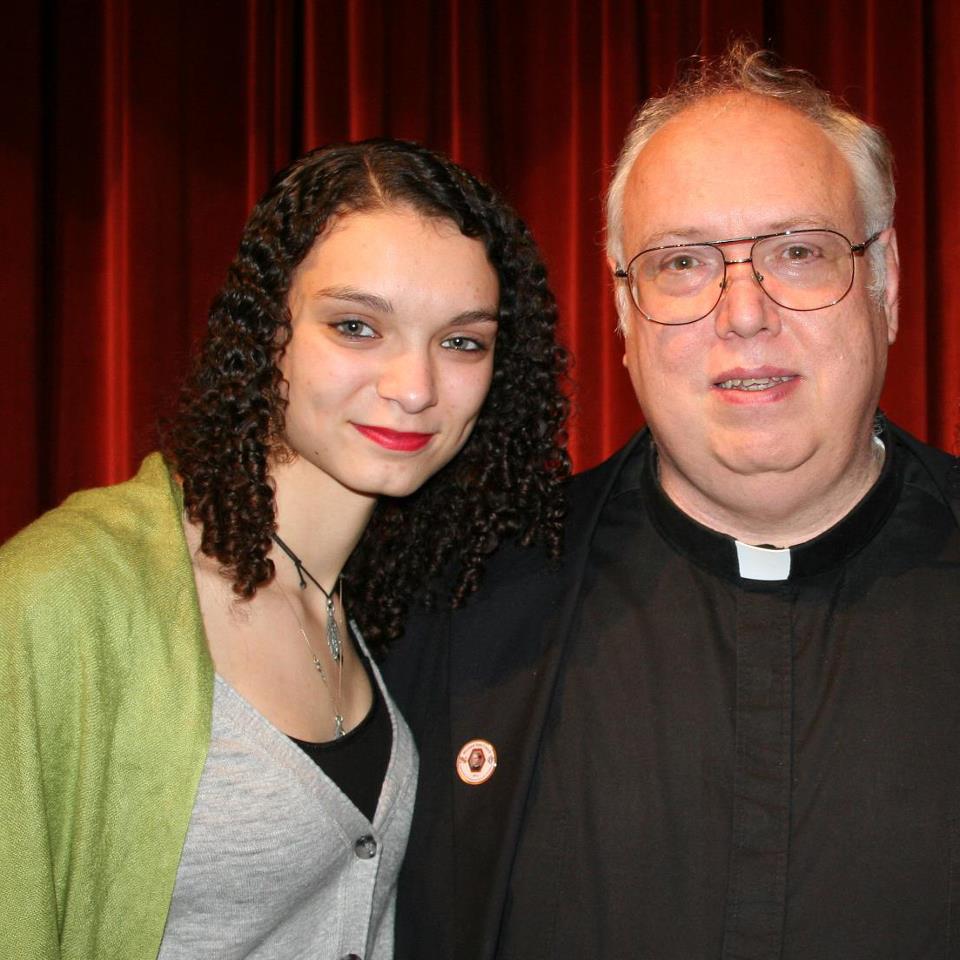
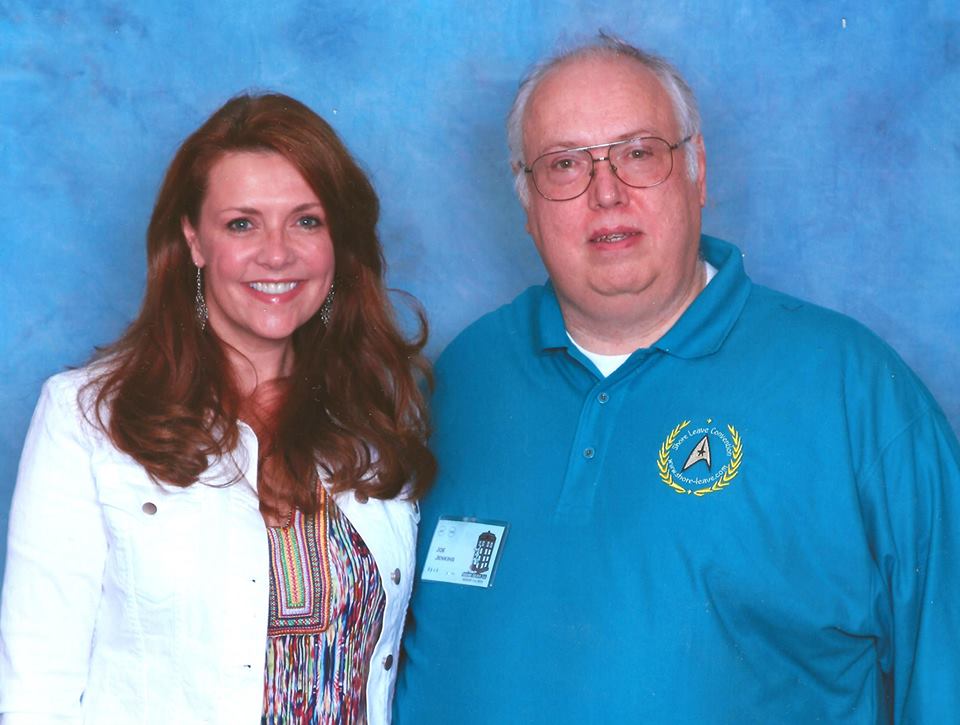
    Fr. Joseph Jenkins

  • The blog header depicts an important and yet mis-understood New Testament scene, Jesus flogging the money-changers out of the temple. I selected it because the faith that gives us consolation can also make us very uncomfortable. Both Divine Mercy and Divine Justice meet in Jesus. Priests are ministers of reconciliation, but never at the cost of truth. In or out of season, we must be courageous in preaching and living out the Gospel of Life. The title of my blog is a play on words, not Flogger Priest but Blogger Priest.

  • Archives

  • Categories

  • Recent Posts

  • Recent Comments

    Jeremy Kok's avatarJeremy Kok on Ask a Priest
    Gary Joseph's avatarGary Joseph on Old Mass or New, Does It …
    Barbara's avatarBarbara on Ask a Priest
    Anonymous's avatarAnonymous on Ask a Priest
    forsamuraimarket's avatarforsamuraimarket on Ask a Priest

Priests Forgiving Sins

ANTI-CATHOLIC ASSERTION

Our sins are forgiven already in Christ, we have no need of confessing our faults to any mere man. We can appeal directly to Jesus our Savior and be forgiven.

Mark 2:5-11: “Why does this man speak thus? He blasphemes, who can forgive sins, but God.”

CATHOLIC TRUTH

Such was the verdict of the Scribes in repudiating Christ’s role as the Messiah, his testimony and authority, and ultimately his divinity. Little did they know— Christ was indeed the unique Son of God who had come to save his people. Similarly, those who discount the role of priests today stand in the role of the ancient Scribes in discounting the full ramifications of God coming upon us. Christ’s ministry of forgiving sins is perpetuated in the Church, particularly in the priests who have been specially configured to Christ for this purpose. If Christ’s mercy were a one-time deal or a general affair, then why did he spend so much time going out to individuals, liberating them from demons and forgiving their sins? Why then would he give Peter the power of the keys and explicitly tell him and the other apostles that they might loosen and bind from sin? “‘I will give you [Peter] the keys to the kingdom of heaven. Whatever you bind on earth shall be bound in heaven; and whatever you loose on earth shall be loosed in heaven’” (Matthew 16:19-20). When speaking about the referral of a sinful brother to the Church, Matthew repeats this teaching: “‘Amen, I say to you, whatever you bind on earth shall be bound in heaven, and whatever you loose on earth shall be loosed in heaven’” (Matthew 18:18). Only God can forgive sins, but he has made priests living vehicles, instruments of his mercy. After his death, the resurrected Lord appeared to his disciples, and the context makes clear that we are talking about his apostles in the locked upper room. Christ extends his peace to them: “‘As the Father has sent me, so I send you.’ And when he had said this, he breathed on them and said, ‘Receive the holy Spirit. Whose sins you forgive are forgiven them, and whose sins you retain are retained’” (John 20:21-23).

Acts 10:43: “To Him all the prophets bear witness, that through His name all who believe in Him may receive forgiveness of sins.”

CATHOLIC TRUTH

These words belong to Peter and come just before he is challenged for entering the homes of uncircumcised Gentiles and the issue of their baptism. People given the saving faith of Jesus come to baptism which brings forgiveness of sins. The sacramental life, and especially confession, makes possible our steadfastness in God’s grace and mercy. The absolution prayer used by the Church today acknowledges that it is “through the death and resurrection of his Son” that reconciliation is made with God. Further, the Holy Spirit continues to work among us “for the forgiveness of sins.” Then it takes note that Christ continues his saving work “through the ministry of the Church,” and we invoke the Almighty to shower upon the penitent his “pardon and peace.” Speaking in the first person, as he does at the altar during the Mass consecration, the priest absolves the person of his sins in the holy and triune “name” of God.

For more such reading, contact me about getting my book, DEFENDING THE CATHOLIC FAITH.

Only Priests Can Offer Absolution

2 Corinthians 5:20: So we are ambassadors for Christ, God making his appeal through us. We beseech you on behalf of Christ, be reconciled to God. (see longer quote below)

John 20:21-23: Jesus said to them again, “Peace be with you. As the Father has sent me, even so I send you.” And when he had said this, he breathed on them, and said to them, “Receive the Holy Spirit. If you forgive the sins of any, they are forgiven; if you retain the sins of any, they are retained.”

Matthew 18:18: “Truly, I say to you, whatever you bind on earth shall be bound in heaven, and whatever you loose on earth shall be loosed in heaven.”

2 Corinthians 5:18-20: All this is from God, who through Christ reconciled us to himself and gave us the ministry of reconciliation; that is, God was in Christ reconciling the world to himself, not counting their trespasses against them, and entrusting to us the message of reconciliation. So we are ambassadors for Christ, God making his appeal through us. We beseech you on behalf of Christ, be reconciled to God.

The power to forgive sins is reserved to priests. As long as there is a need for the forgiveness of sins, the priests of the Catholic Church will continue to possess this power from Christ. Christ would not abandon his Church. As long as his Church exists, so will his mercy. The tragedy today is that may opt to remain in their sins. One of the greatest spiritual powers of every priest is neglected. The graces of this sacrament cannot be exaggerated.

For more such reading, contact me about getting my book, DEFENDING THE CATHOLIC FAITH.

Confession of Sins

Numbers 5:6-7: “Say to the people of Israel, When a man or woman commits any of the sins that men commit by breaking faith with the Lord, and that person is guilty, he shall confess his sin which he has committed; and he shall make full restitution for his wrong, . . . .”

Proverbs 28:13: He who conceals his transgressions will not prosper, but he who confesses and forsakes them will obtain mercy.

2 Samuel 12:13: David said [confessed] to Nathan, “I have sinned against the Lord.” And Nathan said [the absolution] to David, “The Lord also has put away your sin; . . . .”

Luke 23:43: The good thief is promised paradise in return for his confession on the cross: And he [Jesus] said to him, “Truly, I say to you, today you will be with me in Paradise.”

1 John 1:9: If we confess our sins, he is faithful and just, and will forgive our sins and cleanse us from all unrighteousness.

Matthew 3:5-6: Then went out to him Jerusalem and all Judea and all the region about the Jordan, and they were baptized by him in the river Jordan, confessing their sins.

Acts 19:18: Many also of those who were now believers came, confessing and divulging their practices.

Confession of sin is denoted as necessary in the Bible for the forgiveness of sins. The Catholic practice of private confession is based upon the charge from Christ to forgive or to retain sins. The Church and her ministers judge such situations. The confessor can only fulfill this obligation adequately if the penitent tells him the sins for which he needs absolution and penance. There may also be an important element of counsel.

For more such reading, contact me about getting my book, DEFENDING THE CATHOLIC FAITH.

Sinners & Christ’s Church

2 Corinthians 5:15: And he died for all, that those who live might live no longer for themselves but for him who for their sake died and was raised.

Romans 5:6-21: While we were yet helpless, at the right time Christ died for the ungodly, etc.

1 John 2:2: . . . and he is the expiation for our sins, and not for ours only but also for the sins of the whole world.

1 Timothy 2:4: . . . who desires all men to be saved and to come to the knowledge of the truth.

Christ died to redeem all men and women. Some Protestant groups contend that he only died for a select few predestined for salvation. A radical variation of Calvinism claims as much. Theirs is an angry God who has also predestined many for hell. They are even punished in this world by misfortune, poverty and sickness as a sign of their eternal depravity. Catholics, on the other hand, acknowledge that while Christ has died for all, human freedom still gives us the ability to accept or reject the gift of salvation. God’s passive will allows this, but his direct will makes salvation available to all. Poverty and sickness in this world is not a sign of our status with God; indeed, many have chosen to be poor in the sight of men so as to be rich in the eyes of God. The most wicked war criminal, psychotic serial killer, and abortionist are given God’s fatherly attention and, if they should want to avail themselves of it, can claim the boundless mercy of Christ. It may be that many follow the example of the good thief Dismas on the cross.

Matthew 22:1-14: The parable of the king who made a marriage for his son.

Matthew 13:24-32: The parable of the field in which grew both grain and cockle.

2 Timothy 2:20: In a great house there are not only vessels of gold and silver, but also of wood and earthenware, and some for noble use, some for ignoble.

Matthew 18:15: “If your brother sins against you, go and tell him his fault, between you and him alone. If he listens to you, you have gained your brother.”

Matthew 13:47-50: Parable of the net that was cast into the sea, and gathered every kind of fish, savory and unsavory.

Membership in the Church is retained for the righteous and sinners alike. Thus, it is possible for both good and evil men to claim to be Catholics. Of course, such Christianity for wicked men and women would be in name only. It is such a terrible tragedy. Some of the saints have claimed that there are even priests in hell. It is a prospect that sickens us. But, it is a possibility.

For more such reading, contact me about getting my book, DEFENDING THE CATHOLIC FAITH.

Share Your Bread with the Hungry

“Share your bread with the hungry, shelter the oppressed and the homeless; Clothe the naked when you see them, and do not turn your back on your own. Then your light shall break forth like the dawn, and your wound shall quickly be healed” (see Isaiah 58:7-10).
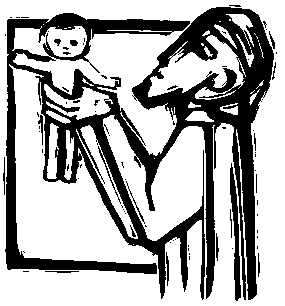
“You are the light of the world” (see Matthew 5:13-16).

These passages are very meaningful and challenging, maybe more so than is immediately evident. In the seminary I was a member of a social justice committee and such passages as found in Isaiah inspired us. We really are called to share our bread with the hungry, to shelter the oppressed and homeless, to clothe the naked, and definitely NOT to turn our back on our own. But even if we were to be advocates of all the social justice platforms offered today, this alone would not make us faithful to this passage or a true light to the world.

Jesus and Jesus alone is the true light. Apart from him any flicker of light we might offer to others would be swallowed by the shadows. Sharing your bread with the hungry is a noble task, but the trouble is, the one given bread today will be hungry again tomorrow. We have many good-natured fellows who make others dependent upon them, unable to stand up for themselves with full human dignity. Or, we have just the opposite, those who feed their brothers and sisters once and feel no further obligation. And, on top of all this, we can forget the real hunger that is out there– that needs to be fed– that can only be satisfied in Christ. Christ comes to us in the bread of life, the Eucharist; he transforms us into himself, a bread which must be broken if it is to be given to others. It is not enough simply to care for the hungry; we have to LOVE them– some of whom are in our very families or groups of friends. Not all the hungry are on the street. They know who they are. Some may be in our midst right now. Do any of you sense it? Is there emptiness inside you? Is the belly of your soul crying out for nourishment? Don’t be afraid to ask for help, come– be fed– there are priests and other Catholics waiting to hear from you– to help you, come. Christ is waiting.

Isaiah also speaks of sheltering the oppressed and homeless. That is what the house of God is about. Sometimes when I am in church, I imagine I can feel an external oppression. I envision it pressing upon the outer walls. When our values of action and of belief are openly ridiculed and distorted, then we are oppressed.

Our Church is a shelter from all the wiles of a world intent upon our destruction. There are hurts out there– come in and be healed. There are lies out there– come in and hear the truth. There is violence out there– come in and receive peace. There is coldness out there– come in and be warmed by the flame of Christ’s love. There is darkness out there– come in and become a part of that light which is the Lord.

It is sad when someone hears the call of Christ and misinterprets it or only goes part way. There was a man in Washington, DC, who generously devoted his life to the care of the homeless. That is to be applauded. But, like so many, I have to wonder if he heard the call clearly. Why? He sold all he had, gave up his job, and did things reminiscent of what our Lord asked of the rich man in the Gospel. However, he also abandoned his wife and family to enter upon his crusade. He was my friend, but this always bothered me. Can we renounce one responsibility for another? Can we exchange one set of mouths to be fed for others? Can we cause homelessness in order to give a home for others? I do not want to judge anyone, but the very Scriptures which speak of so many deeds of mercy also remind us not to turn our back on our own. In Christ, and only in Christ, you are the light of the world. When does this light shine? It shines when a husband and wife love each other unselfishly, open to the gift of new life. It shines when a brother tells his sister, “I’m sorry, forgive me.” It shines when a father welcomes his alienated son back home. It shines when a couple loves each other so much that they discipline their love in chaste giving. It even shines when one friend gives another a scarf or sweater for Christmas. Done in Christ, all things great and small make the light of Christ shine all the brighter.

For more such reflections, contact me about getting my book, CHRISTIAN REFLECTIONS.

The Mission of the Church

The mission of the Church is to spread the Gospel and to baptize in the name of the Father and of the Son and of the Holy Spirit. As Christians, we are sent on mission at the end of Sunday worship each week: “The Mass has ended. Go in peace to love and serve the Lord.” We must take our role as missionary seriously. Where is our passion for the Gospel? Why are we not on fire telling people about it?

Certainly, we all relate to our brothers and sisters in different ways. But what does it matter? Everyone has something to contribute. Because of in-depth knowledge of our teachings and the Scriptures, some may be called to add apologetics to the work of winning converts. Others might find themselves in jeopardy if they walked that route, but be exceptional in helping people with their hurts and in touching others through personal charity. Some may relate well with young people who often look for answers in the wrong places. Still others may be able to reveal in ecumenical prayer and service the fraternity of Catholics with other believers in the Lord. We need to bring the Gospel to our homes, to our neighbors, and to our workplaces.

However, if we are going to share our faith, we had best make sure that we are Christians and good Catholics first. We need to nurture a determination to stick with the Church no matter what disappointments may come our way. Some do not do this and the results can be tragic for all. I recall a woman who studied at a Catholic college for four years and was certified to do parochial work. When the new pastor was assigned, he failed to keep a position for her. Along with this disappointment, the Pope reaffirmed that women could never be priests. Well, that was the last straw for her and she left the Church. What is sadder is that she took a few others with her. There are only so many clergy and most of the outreach into the community must be done by the laity. We have to be flexible enough to bounce with the bumps in the road. Doors close and other doors open. We have to be receptive to God’s will, even when we do not entirely understand it. The work is not so much ours, as it is the Lord’s. Some are given the gift of Holy Orders, but there are other gifts, particularly given to the laity, that facilitate the expansion of the Church and the proclamation of the Good News. Married couples are missionaries to their children. Many non-Catholic spouses embrace the faith of their Catholic partner. Single people have the gift of time and availability to help in youth groups, bible study programs, prayer circles, charity endeavors, etc. With the loss of sisters and religious brothers, the laity teach in Catholic schools, CCD and RCIA programs, etc. There are even parishioners that go door-to-door with the invitation to explore the faith and their parishes.

Spreading the faith requires that we grow in the faith, ourselves. We should search in ourselves and with others for a stronger faith and then share it, loving and caring for those with whom we come into contact– keeping in mind that the burden of conversion is held between the individual and God. God changes a wicked person into a saintly one. Our care for the poor, the sick, our families, our neighbors, by our pursuit of social justice, for peace, etc., in all these things we witness for the Gospel.

Souls are not simply converted by highly educated or witty missionaries; rather, they are brought to the Lord through the work of Christ in holy men and women inspired and sanctified by the Holy Spirit. Look at Peter, he was an ignorant fisherman! Neither Mary nor Joseph was ordained a priest; and yet, who could estimate the enormous spiritual benefits that both of them have exerted for our well being? The Holy Spirit is the Divine Counselor, who like Father and Son, makes use of frail instruments to achieve his purposes.

While the kingdom of Christ will be realized in God’s good time, the laity and clergy work together for this eventuality. Having spoken about our universal call as missionaries, I would like to say a few words about priestly ministry. Have you ever wondered what it must be like as a priest? He knows the dark secrets of people’s lives and weeps over their sins and the sheep that go astray. He sees more than his share of sickness and dying, particularly those with a regular hospital ministry. Yes, he knows the joy of witnessing marriages; but he also feels the arrogance of those who violate the commandments in dating promiscuity and cohabitation. He sometimes wonders if the young even listen to him. The happiest times are when he baptizes a child; and yet, he can never forget the babies he could not save from abortion. When things go right, God gets the praise and when they go wrong, the priest gets the blame.

People angry with the Church see him as an icon for the institution and assault him for things he had no part in, possibly going back to before he was born. This often happens when priests wearing clerics are recognized in public. When I was a young associate, I recall one fellow on the subway who sat next to me and without any introduction, shouted, “I left the Church thirty years ago, and let me tell you why!” In such situations, the priest wants to get away or argue in return, but he just sits back and listens. “A priest yelled at me in the confessional,” the man says, although he cannot recall what it was about. Such a little thing, and for all we know the poor priest probably had his own demons plaguing him at the time or was maybe just not feeling well. In any case, it was enough to make this man leave the Church. I explained how sorry I was that it happened, and the tone of the conversation changes. I miss my metro stop, but it is okay. His wife recently passed away and he had a bad heart. His mind often went back to his childhood days. Eventually, he asks, “Father, how do I come back to the Church?” What happened? I could not recall saying anything particularly moving. It must have been God’s grace. I take out my purple stole. His eyes open wide. We move to a vacant section of the train, he falls to his knees, and says, “Bless me Father, for I have sinned.” When I leave the train a prodigal son is back home. I catch a subway car going in the opposite direction, back to my exit which I missed. When I enter the rectory, I am chastised for my tardiness. I say nothing.

As a sign of contradiction in our culture, the priesthood can be difficult. However, there is also a deep consolation in being an instrument of God’s mercy in a sometimes cold world. The same difficulty should be a daily element in the lives of all Christian believers. Evangelization is not just the business of professional religious people. It is an indispensable part of our baptismal call. We can work together to make the Church a more heart-warming place for all those wounded and searching.

When it comes to Christology, the theological study of Jesus, there are some theologians who seem heavily orientated toward Christmas (the incarnation) and others who branch out from Easter (the resurrection). These are the poles of Christ’s earthly life and both have essential importance. If we are to share Jesus, we must know him.

For more such reflections, contact me about getting my book, CHRISTIAN REFLECTIONS.

Out of Prison

Imagine that you are in prison. You are afraid. You have been whipped and mocked. Your feet are bound down in chains. A guard is at the door and there seems no way of escape. Who knows, maybe they will beat you more tomorrow? Maybe they will go even further? Can you imagine how desperately you might want to escape and run away?

Paul and Silas find themselves in this situation (Acts 16:22-34). However, instead of betraying their cause or crying out in despair and fear — they sing songs. They pray and sing hymns to God. The other prisoners listen and maybe find some consolation in their hymns. Suddenly, there is an earthquake. The guard is asleep. The doors fly open. The chains are pulled loose. Run! Run! This is the natural human sentiment. It is probably what most of us would do. Get out of there quick! Hide! Escape! Freedom!

The guard awakens and thinking that the prisoners have escaped, he draws his sword to commit suicide. He is like us. He feels that he has run out of options. If he takes his life, the authorities may spare his family. However, Paul shouts out, “Do not harm yourself! We are still here.” The jailer cannot believe it. He calls for a light, and there in the shadows are Paul and Silas. He falls at their feet. Why did they not escape? They speak to him and he asks them what he would have to do to be saved. Their action is changing him.

Suddenly he is more concerned about the salvation offered from God then simply avoiding the punishment from his superiors. His fear evaporates. He himself takes them out of the prison and to his household. He bathes their wounds and then Paul bathes him and his family in the waters of baptism. With a table spread out, they all then celebrate the newfound faith.

A jailor, whom many of us would have thought about murdering, was himself saved by God. There have been similar stories during our own age, where the witness of Christians in prison has lead to the conversion of their persecutors. We may not find ourselves behind bars for our faith, but we may sometimes be prisoners nonetheless. We can hide our faith behind the bars of indifference, prejudice, or even just laziness. We often fail to try to move people we love to greater faith in Jesus and we practically forget about those we dislike. Indeed, instead of praying and working for the conversion of all, we might be very selective in whom we choose to confide about Christ. Paul was not. Friend or foe, male or female, Jew or Gentile, slave or free, ugly or beautiful— the Gospel is meant for all.

For more such reflections, contact me about getting my book, CHRISTIAN REFLECTIONS.

Courageous on Behalf of the Gospel

Jesus revealed himself publicly in the synagogue as the promised messiah. Although initially pleased with his learned exhortations, they quickly begin to question his authority (Luke 4:21-30). Those who knew him as a child or knew his family begin to gossip about him. Hidden in these words is their disbelief that the promised one could possibly be one from their own midst, and a poor man at that! Their acceptance of him swiftly soured into rejection. They no longer wanted to hear what he had to say.

Sometimes we as Catholic Christians, making manifest the same Christ, our Savior, will discover similar rejection and even embarrassment. Speaking the words of God will be difficult, not only because we want to be accepted, but because of how they might touch others. Like medicine, the healing of our Lord comes in a package that may include more preliminary pain before any true healing can take place. The presence of Jesus among his own people would work this way. Some would have to earnestly struggle with his message and presence. For most of his disciples, witnessing for the Master would also cost them their mortal lives; however, in return they would receive everlasting life.

I mention this because there is much about God’s truths that can make us uneasy. God tells us, “Before I formed you in the womb I knew you, before you were born I dedicated you, a prophet to the nations I appointed you” (see Jeremiah 1:4-5, 17-19). Most of us were anointed at baptism with the holy chrism as Christian prophets. As children, the challenge afterwards was to be nurtured in the faith by our parents. Later, we were to proclaim it to others as adults. I wonder if we always do that, myself included? It is so easy to get comfortable and to allow others to do all the work of evangelization or Christian witness. However, what would become of a world filled with people so poorly motivated? I shudder to imagine.

The particular wording in Jeremiah is reminiscent of other passages which deal with God calling us, even before we saw the light of day. In the New Testament, the most famous is the one in which the prophet John the Baptist leaps with joy in his mother’s womb when he is near to his Savior still hidden deep inside Mary’s flesh. From the very beginning, each and every one of us is called.

Annually, many citizens of this land march on Washington for the sake of the unborn, a very troubling issue to be sure. Those children who for one reason or another are not wanted, have from the very beginning, been called by God to fellowship with him. Those young women who have faced this crisis, and the many that have made agonizing decisions, have also been called by God. The same could be said for those who are often the invisible partners in this tragedy, the men who have become reluctant fathers. All of them need healing. The woman who makes a poor decision, or who was pressured into doing so, needs to realize the wrongness of what happened, so that true repentance and healing might be achieved. The same sense of scrutiny and responsibility also needs to be accepted in the lives of men who are partners in this holocaust. We can be partners in sin or we can be helpers to one another in grace. As for the child, we believe that God desires the salvation of all. If we should abandon the youngest of children, God will not. They are alive. This realization can be the hardest of all for those who have suffered this dilemma. They are alive. Adopted by the loving arm of the Church; touched by the same love which embraced the children killed by Herod in Christ’s stead; they are alive. As such, they pray for their parents and God willing, wait until we are all rejoined together in Paradise.

Our faith tells us that all are called. No life is to be wasted. All life is precious. 1 Corinthians 12:31-13:13 tells us that faith, hope, and love are everlasting. When it comes to the truths of our faith or the moral values which the Gospel upholds, we need to be courageous. Do we attend Mass every Sunday in order to worship God in the community? Do we pray a few minutes every day? Do we try to be charitable and peaceful? Do we stand up for our beliefs and for our Church when they are mocked or ridiculed? Do we attempt to correct those in error? Do we use or waste the great gift of life with which God and our parents gave us?

In every new life and in ever old life made new by Christ’s forgiveness, hope is born. What might we become? With God, the possibilities are endless. What are our hopes for each other? A time when children can go to school and play safely? A world that does not throw the precious gift of creation back into God’s face? A future wherein we all meet the goals set for us by God, growing in wisdom and grace, just as Christ once did? We work to achieve these hopes, knowing that in God’s will, all things come in his own good time. We wait in hope, knowing that God calls every one of us. One day the hopes of believers will be realized.

When this happens, it will be because God loved us and loved us first. We exist because of love, the love of God and the love of a man and woman. We live for love; if you do not believe this just try to exist without it. Maybe it all boils down to our responding with the same kind of trusting love with which Christ accepted the Father’s will in his life? Of all visible creation, it is only the human being who can respond back to God in prayer and a life of love.

For more such reflections, contact me about getting my book, CHRISTIAN REFLECTIONS.

Continuing the Prophetic Witness

Someone asked me once if there were any Scriptures where a relationship between a mother and daughter was pivotal. The one that came immediately to mind was in the tragic story of John the Baptist and his execution (Mark 6:17-29). This was hardly something for emulation. Living in an age where so many teenage girls crave things like digital music, computers, shoes, cars, clothes, and jewelry — this figure of Herodius’ daughter is a peculiar one — at her mother’s urging, she wants the head of John the Baptist. I suppose times do change, if just the externals, but this seems a bit over the top to say the least.

I spoke about how the Lord gave his disciples a long list of sins to avoid. He challenged them not to be hypocrites but to be a genuine people in love with the Lord. I mentioned that such lists, if preached upon, can make us angry, the reason being that most of us do not like to be reminded of our sinfulness and weakness. We even try to keep it from ourselves. Herodias was like this, too. John the Baptist would not allow them to forget or to ignore the great sin with which she and Herod had become involved. She soon discovered that the only way to silence him was to have his head on a platter, to force her lover to kill him.

We need to be, not like Herodias, but like John the Baptist. He fully realized that we were all sinners, needing to admit this reality to ourselves and to repent. Indeed, the baptism he offered in the desert was one of repentance and conversion. We should face up to what we do and to who we are, both to the beautiful and to the ugly. If we are not honest to ourselves, how can we dare face ourselves, our neighbor, and our God with any semblance of integrity?

Sometimes to be a prophetic witness like John the Baptist will require hardship for us as well. It might mean that we will also have to die. If not physically, we may have to endure the little dyings that come when we challenge others to a more moral life and one which places God in a central position.

For more such reflections, contact me about getting my book, CHRISTIAN REFLECTIONS.

Our Call as Prophets

Ez. 2:2-5 has many interesting elements for us to consider. The Spirit of God moves Ezekiel; he says it “set me on my feet.” In other words, the Spirit compels or moves him to action. He stands before God and must be on his way to the Israelites. God, himself, admits that they are an obstinate and hard-hearted people, but this makes no difference. Come what may, Ezekiel will be the mouthpiece of God and “they shall know that a prophet has been among them.”
It is a wonderful image of the prophet for us who follow that other “son of man,” Jesus, who is also the Son of God. God calls us in our baptism to be prophets to the world. However, do we stand up and take action and speak prophetic words? Or, do we remain at rest and hope that God will change his mind or get tired of summoning us?

How are we called as prophets today? Four thousand unborn babies die in our nation each day through abortion. Do we raise our voices in protest? Do we support the local pro-life efforts and pregnancy centers? Do we lobby our elected officials and hold them accountable? Have we considered peaceful civil disobedience and marching? This is the first and most important issue facing us today, although there are others as well. Do we stand for racial integration and social justice? Do we promote marriage by our lifestyle and counsel over promiscuous and/or disoriented behavior? Do we take the high ground in avoiding and not patronizing pornography in films, television, magazines, Internet, and books? Do we dress, act, and speak modestly? Do we use language worthy of the children of God or instead use words from the gutter that corrupt lips that should praise God? Do we respect the Church’s teaching about the transmission of human life and birth control? Do we worship regularly and support our struggling churches? Do we honor our bishops, priests, and religious or do we mock and joke about the special messengers of God? Do we pray when there seems no time or we find ourselves busy? Do we defend our Church against ridicule or do we ourselves become sources of defamation against the Rock of Christ? Do we speak the truth in love to our families or smother the message under empty human affection? Have we been our brother’s keeper or have we exploited others for our own selfish purposes? If we stand up for what our faith tells us is right, then no matter whether others approve of us or not, they will know that prophets have been in their midst. If we have sometimes failed, we can follow the late Pope’s lead in making a “mea culpa” for the past and in becoming true signs of contradiction in the present. As the psalm response tells us on the 14th Sunday Mass of Ordinary Time (B), we can say: “Our eyes are fixed on the Lord, pleading for his mercy.”

Like Ezekiel, Paul is called by God and, along with a thorn in the flesh against pride, is told that divine grace is sufficient for his witness. All that matters is that we are faithful. Everything else belongs to the providence of God. The true prophet will know persecution. Paul says, “Therefore I am content with weakness, with mistreatment, with distress, with persecutions and difficulties for the sake of Christ; for when I am powerless, it is then that I am strong” (2 Corinthians 12:10). We have Catholics in Chinese prisons for their loyalty to the Pope. We have murdered Christians in parts of Africa and the Orient for daring to make converts. We have believers in American jails for saying rosaries outside abortion clinics. We have nurses, interns, and pharmacists who have lost their positions because of their fidelity to the Gospel of Life. We have children who have been silenced from mentioning God in prayer or listing the commandments in school. We have brothers and sisters in the military that have been passed over for promotion for speaking their mind in disagreeing with the liberal policy on active homosexuals in the ranks. We have Christian friends who have been punished for putting a bible or religious image on their workplace desk. Christians are fined or litigated against for wanting public religious displays of faith during the seasons of Christmas and Easter. Coalitions of Catholic and Protestant Christians are ridiculed as “far right” or “fascist,” sometimes even by those who are supposed to be Christian. The issues are many, and yet the Christian posture should always be the same: fidelity to God in the face of the faithlessness of a civilization that has turned its back on him.

It is a shame that while television programs advertising the possible winning of a million dollars or marrying a millionaire get high ratings, religious programming has virtually disappeared from the commercial and public stations. Indeed, marriage is reduced to sex and money; that which is supposed to be a sign of the covenant between Christ and his Church. The world and certain televison networks minimize it to primetime prostitution. Where are the prophets? Where is the outcry?

Mark 6:1-6 has Jesus going home and speaking in the synagogue. He laments that those who think they know him really know nothing. Their lack of faith reduced his effectiveness among those to whom his heart most wanted to embrace. He healed a few and then went to the neighboring villages instead. We have prophets in our midst, too. However, sometimes we call them fools or fanatics. People who really speak and live their faith make most of us uncomfortable. They remind us about what we would prefer to forget– our own impoverished discipleship. The great Catholic sin comes to mind, not what we have done, but what we have failed to do. Jesus is in our midst, do we recognize him?

For more such reflections, contact me about getting my book, CHRISTIAN REFLECTIONS.