• Our Blogger

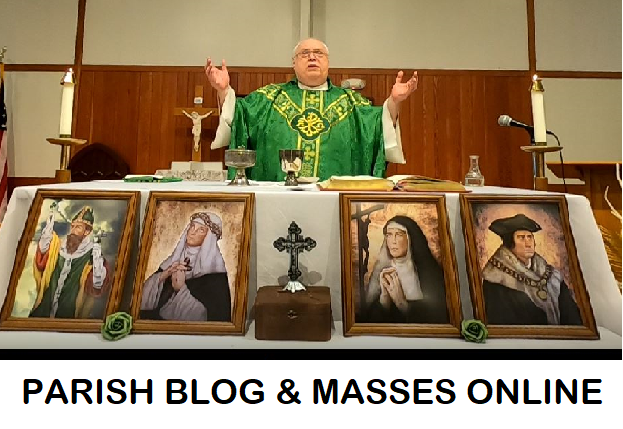
    Fr. Joseph Jenkins

  • The blog header depicts an important and yet mis-understood New Testament scene, Jesus flogging the money-changers out of the temple. I selected it because the faith that gives us consolation can also make us very uncomfortable. Both Divine Mercy and Divine Justice meet in Jesus. Priests are ministers of reconciliation, but never at the cost of truth. In or out of season, we must be courageous in preaching and living out the Gospel of Life. The title of my blog is a play on words, not Flogger Priest but Blogger Priest.

  • Archives

  • Categories

  • Recent Posts

  • Recent Comments

    Barbara King's avatarBarbara King on Ask a Priest
    Ben Kirk's avatarBen Kirk on Ask a Priest
    Jeremy Kok's avatarJeremy Kok on Ask a Priest
    Barbara's avatarBarbara on Ask a Priest
    forsamuraimarket's avatarforsamuraimarket on Ask a Priest

Women Ministers

1 Corinthians 14:34: As in all the churches of the saints, the women should keep silence in the churches. For they are not permitted to speak, but should be subordinate, even as the law says.

This is one of the verses that made the new disciplines regarding women readers, servers, and extraordinary ministers so problematical. Even now, officially installed Lectors and Acolytes must be men. It may have been that women were taking over leadership positions in Corinth or that there was some tie to the nonsensical babble that pagan women and goddess worship employed. In any case, the priesthood was then and now reserved to men. While disciplines can change regarding the lesser ministries; the Holy Father has affirmed the tradition that ONLY men can be ordained to holy orders. Unlike Protestant churches, they cannot be true pastors or ministers over congregations. It should be noted that Catholic law prohibits them from proclaiming the Gospel at Mass and from liturgical preaching. This reservation is no incrimination upon their human dignity; rather, it is a guarded imitation of the pattern given us by our Lord and the apostolic community. Gender is not seen as an accidental of personhood, but as a constitutive component of our identity. As such the maleness of the priest resonates in harmony with that of Christ to whom he has been sacramentally configured through ordination. He can thus function in the person of Christ, the head of the Church. He is a true icon of Christ. He signifies Christ the bridegroom at the marriage banquet of the Mass to his bride, the Church. Women priests in this context would imply a sort of sacramental lesbianism.

For more such reading, contact me about getting my book, DEFENDING THE CATHOLIC FAITH.

The Vocation of Holy Orders is a Gift

Hebrews 5:1: For every high priest chosen from among men is appointed [ordained] to act on behalf of men in relation to God, to offer gifts and sacrifices for sins.

Hebrews 5:4: And one does not take honor upon himself, but he is called by God, just as Aaron was.

John 15:16: “You did not choose me, but I chose you and appointed [ordained] you that you should go and bear fruit and that your fruit should abide; so that whatever you ask the Father in my name, he may give it to you.”

John 20:21: Jesus said to them again, “Peace be with you. As the Father has sent me, even so I send you.”

The Lord chooses us, we do not choose him. Nowhere is this more evident than in priesthood. It is not something anyone deserves. It cannot be made an item on anyone’s social justice agenda for inclusion. The people in the pews have no innate authority to commission clergy apart from Christ. Rather, a divine calling is ratified and brought to completion through the Apostles and their legitimate successors.

For more such reading, contact me about getting my book, DEFENDING THE CATHOLIC FAITH.

Confession of Sins

Numbers 5:6-7: “Say to the people of Israel, When a man or woman commits any of the sins that men commit by breaking faith with the Lord, and that person is guilty, he shall confess his sin which he has committed; and he shall make full restitution for his wrong, . . . .”

Proverbs 28:13: He who conceals his transgressions will not prosper, but he who confesses and forsakes them will obtain mercy.

2 Samuel 12:13: David said [confessed] to Nathan, “I have sinned against the Lord.” And Nathan said [the absolution] to David, “The Lord also has put away your sin; . . . .”

Luke 23:43: The good thief is promised paradise in return for his confession on the cross: And he [Jesus] said to him, “Truly, I say to you, today you will be with me in Paradise.”

1 John 1:9: If we confess our sins, he is faithful and just, and will forgive our sins and cleanse us from all unrighteousness.

Matthew 3:5-6: Then went out to him Jerusalem and all Judea and all the region about the Jordan, and they were baptized by him in the river Jordan, confessing their sins.

Acts 19:18: Many also of those who were now believers came, confessing and divulging their practices.

Confession of sin is denoted as necessary in the Bible for the forgiveness of sins. The Catholic practice of private confession is based upon the charge from Christ to forgive or to retain sins. The Church and her ministers judge such situations. The confessor can only fulfill this obligation adequately if the penitent tells him the sins for which he needs absolution and penance. There may also be an important element of counsel.

For more such reading, contact me about getting my book, DEFENDING THE CATHOLIC FAITH.

Only the Real Presence Demands Worthy Reception

1 Corinthians 11:27-29: Whoever, therefore, eats the bread or drinks the cup of the Lord in an unworthy manner will be guilty of profaning the body and blood of the Lord. Let a man examine himself, and so eat of the bread and drink of the cup. For anyone who eats and drinks without discerning the body eats and drinks judgment upon himself.

St. Paul tells us that the unworthy reception of Holy Communion is a sacrilege; indeed, it desecrates the real body and blood of Christ. It is the ultimate in hypocrisy and blasphemy. Such an assertion that the sacrament might bring damnation instead of salvation must be seriously considered. Catholics in mortal sin should not receive the sacrament until that time that they have repented and the sin is absolved. If Holy Communion were no more than bread and wine, this assertion from St. Paul would make NO sense. How can a piece of bread or a sip of wine damn you for all eternity? How could such an empty symbolic gesture desecrate Christ, himself? They could not, unless Catholics are right and the bread and wine are truly transformed into the body and blood of Christ.

Confirmation

Acts 8:14-17: Now when the apostles at Jerusalem heard that Samaria had received the word of God, they sent to them Peter and John, who came down and prayed for them that they might receive the Holy Spirit; for it had not yet fallen on any of them, but they had only been baptized in the name of the Lord Jesus. Then they laid their hands on them and they received the Holy Spirit.

Acts 19:6: And when Paul had laid his hands upon them, the Holy Spirit came on them; and they spoke with tongues, and prophesied.

Hebrews 6:2: . . . with instructions about ablutions [baptisms], the laying on of hands, the resurrection of the dead, and eternal judgment.

Extracting of the final anointing of baptism took along with it the confirmation rite. Two sacraments, which stood together, became separated in the West so that the bishop might “confirm” the sacrament of baptism when he became available. The sacrament of confirmation includes the laying on of hands, a gesture that functions as an invocation of the Holy Spirit. Such a ritual is decisively presented in the Scriptures. As a further sign of the Holy Spirit’s presence, the laying on of hands was often associated with incredible supernatural effects. This is the same sacrament offered by the successors to the apostles, the bishops, today.

For more such reading, contact me about getting my book, DEFENDING THE CATHOLIC FAITH.

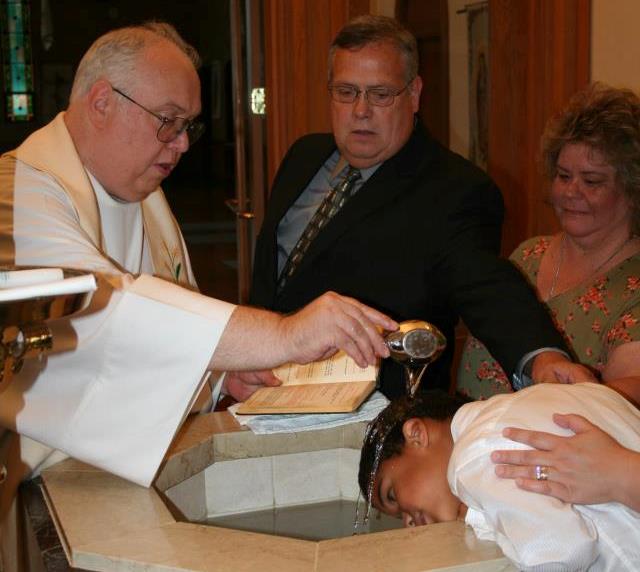
Baptism

Acts 16:33: And he took them the same hour of the night, and washed their wounds, and he was baptized at once, with all his family.

1 Corinthians 1:16: I did baptize also the household of Stephanas. Beyond that, I do not know whether I baptized any one else.

Acts 16:15: And when she was baptized, with her household, she besought us, saying, “If you have judged me to be faithful to the Lord, come to my house and stay.” And she prevailed upon us.

Sometimes whole families were baptized, no doubt even including children. Such is the record of the Scriptures and the early Catholic traditions.

Mark 16:16: “He who believes and is baptized shall be saved; but he who does not believe will be condemned.”

Matthew 28:18-20: And Jesus came and said to them, “All authority in heaven and on earth has been given to me. Go therefore and make disciples of all nations, baptizing them in the name of the Father and of the Son and of the Holy Spirit, teaching them to observe all that I have commanded you; and lo, I am with you always, to the close of the age.”

Those who had reached the age of reason, like adults, had to profess faith in Christ and his Church as a prerequisite for baptism. As for infants, the faith of their parents and the believing community would suffice until that day that they would claim the faith fully as their inheritance. Baptism for children is very important so that the soul might be cleansed of original sin and supplanted with supernatural grace.

John 3:5: Jesus answered, “Truly, truly, I say to you, unless one is born of water and the Spirit, he cannot enter the kingdom of God.”

Baptism is the sacrament of salvation, making possible our entry into the kingdom of God.

For more such reading, contact me about getting my book, DEFENDING THE CATHOLIC FAITH.

Preaching, the Liturgy & the Faith

Why Does the Fire Go Out?

People have their reasons, but there is no good reason for leaving the Church. The majority in the area where I reside are probably Baptist and/or Evangelical. Some of these communities target Catholics and many Catholics marry non-Catholics. Not understanding their own tradition, many Catholics are inordinately moved by the music and preaching in Protestant churches. Catholic reformed rituals might not be regarded as very entertaining. Much of the music we sing is criticized as trite and unmoving. When we borrow Protestant hymns or sing Gospel, it is usually a pale imitation of what our separated brethren have to offer. Music enshrines preaching. Particularly in the African-American community, services can go hours. The importance of the minister is measured by his musicality and his effectiveness as a preacher. Our gravity is upon the formulae of liturgy, not upon preaching.

Masolino_Peter_Preaching2

Preachers and Priests, No Comparison?

Many priests were trained to keep homilies or sermons to ten minutes or less. That is about the length of two or three MTV videos. Time-wise, it cannot compare to the formation of the media or to the teaching sermons of our separated-brethren. I knew one old man who went to Mass on Saturday night and to his wife’s Baptist church on Sunday. He told me that he went to Mass for Holy Communion and to the Protestant church for good preaching. This is a rather sad state of affairs. Are we fully feeding our people? Preaching outside the Catholic Church may be dynamic and meaningful; however, it is also fraught with religious error.

Sermons or Homilies?

I recall from preaching seminars that the priest should offer a homily based upon the Scriptures of the day. This focus was understandable but I found the focus too narrow and absolutist. The priest or deacon can preach upon the readings, the liturgical prayers themselves, upon the feast or memorial, or upon what his people (at that time and place) need to hear. I had a vigorous dispute with a liturgist when I suggested catechetical sermons. It was and remains a contention of mine that many people stray to other faith communities because they really do not understand Catholicism and the full significance of the Eucharist.

Can Father Talk Too Long?

How long should the priest or deacon preach? This depends upon many factors:

1. What is the type of liturgy?

2. What has to be said to make the message worthwhile?

3. What is the capacity in patience and in comprehension of the listeners?

Given that Catholic sermons are usually shorter than Protestant counterparts, the priest might be able to amplify his instruction by linking his sermons from week to week. He can also use the parish bulletin, special adult education and bible study, and invite people to use the cycle of readings themselves with missals they can take home. If people look at the readings before Mass, their experience will not be cold when the priest or deacon speaks about them. Instead of merely thinking about what Protestants have that we don’t, let us utilize our own strengths, the missal and the cycle of predetermined readings.

Catholics might also do well to getting used to longer liturgies. Of course, this runs counter to the Roman Rite tradition, known for being curter and more to the point than Eastern Rite liturgies and certain Evangelical Protestant services. There is a basic dilemma with longer sermons, and that is the balance and rhythm of the Mass. A long homily and a short Eucharistic prayer seems to switch the gravity away from the sacrament to the Word which is intended to dispose us for the sacrifice and Holy Communion.

I am concerning myself essentially with the Sunday homily. Given work concerns and strained time issues, weekday Masses would probably have to remain little more than basic exhortations. Such exhortations are similar to aspirations: Jesus, Mary, Joseph save souls! Do good and avoid evil! Keep faith and hope alive! Lord, have mercy on us! God will not abandon you!

Messages Should Comfort and Challenge

Homilies more strictly revolve the Readings; however, sermons can touch upon all sorts of relevant topics. Sermons might be moral exhortations, catechetical moments, inspiration rhetoric and stories, etc. However, they should always connect the lesson, whatever the source, to the lives of the people listening. The congregation should not be passive to the preaching but actively engaged. A topic is explored, the message is ordered for coherence, examples or illustrations are made, and there is the immediate appliance.

The words used in preaching vary upon the setting. When the clergyman marries a couple, he speaks about the joy and hopes of the couple. He might also challenge them to keep the marital act free from the corruption of lust and artificial contraception. However, many Catholic ministers are afraid to rock the boat. When a priest or deacon officiates at a funeral, his words emphasize the consolations of faith to those who mourn, the promises of Jesus our gentle shepherd in regard to eternal life, and the need to go on with our lives. Again, many Catholic ministers are afraid of the conflict that comes with challenging the congregation to see the death as a warning about their own mortality and the need to reform before it is too late. Even evil men are temporarily canonized and little is said about Purgatory. A number in the pews no longer even believe in Hell. Sunday homilies are often pampering and grossly approving because many clergy are afraid of alienating the numbers in the pews and depleting the money gathered into collection baskets.

Need for Courage and Trusting Providence

I knew a priest in the South who tried to integrate the two churches he pastured, one white and the other black. White parishioners complained to the bishop and the man found himself stripped of his parish, reprimanded for making trouble, and reassigned to a teaching position in a college far away. Decades later he was still not allowed to return to parish ministry. But God writes straight with our crooked lines. This priest ended up teaching seminarians. He inspired another generation of men in ministry to struggle for social justice.

How often have we heard certain priests speak about artificial contraception, abortion, divorce and remarriage, or even about fornication and cohabitation? Some men in ministry are afraid. But what chance do God’s people have when their shepherds are passive and fearful? The late Pope John Paul II echoed our Lord’s words of wisdom, “Be not afraid.”

It may be that the priest shortage and the clergy scandals have drained the energy resources and joy of our priests. This needs to be remedied. The core message of the Gospel is not exhausted or angry. Priests who show enthusiasm or excitement about the Catholic faith and Gospel are the most effective. It is also a mentality which breeds vocations. Young men do not want to join a confraternity of tired old men who only go on because of cold duty and obligation. We have to be on fire with the faith if we want those in the pews to ignite! It is very hard for a priest to give what he does not have. God’s servants should be so in love with God that this love spills over in their service of others. Preaching should reflect a life of prayer and a drive to save souls!

The preaching should move God’s people to greater faith and acts of service to our Lord and neighbor. It assists everyone to better understand the Eucharist and disposes us to receive the Blessed Sacrament. We take what we have been given in Word and sacrament as we go out in mission to the world around us.

Women Priests & Our Girl Jesus

1194984585936802019female_rollandin_frances__svg_medMary gave birth to a baby boy and named him Jesus. Jesus grew up and he picked more boys to be his apostles. They in turn ordained still more boys to be bishops, priests and deacons. The priesthood is the ultimate boy’s club. But radical feminists act as if it is a woman-hater’s club… it is not. We all benefit from the ministry of priests. Not all men are worthy of this vocation. Women are called to other vocations, like religious life and motherhood. Except for a misguided sense of egalitarian equality, a disproportionate focus upon one element of social jusitice and feminists hungry for power, there is little that commends a move to ordain women. These dissenters would not only refashion the ministries but also Jesus would be remolded to their liking. He would become an abstraction, a model for their agenda but not the historical Savior. If God is not neutered, then he is likely made feminine. Jesus becomes Jessica or the Kristi who hangs upon the cross, raped and defiled by male machismo. They talk about equality; but this is a lie. They seek dominance and payback for what they regard as past subjugation and oppression.

I just read an article by Greg Archer over at THE HUFFINGTON POST entitled, “Roman Catholic Female Priests Growing in Numbers: An Insider’s Perspective.” I feel compelled to make a few comments. It is important that good Catholics not be confused by dissent on women priests or priestesses. There simply is no such creature within the Christian context. Christ has never given the Church the authority to ordain women. While our Lord counted women among his disciples, only men were selected to be his apostles. Jesus proved time and time again that he was willing to break the stereotypes of his day; however, upon this matter he retained a male leadership or hierarchy.

Many are surprised to find out that Catholicism only has one High Priest— Jesus Christ. Every man ordained to service is configured to Christ and participates in his one priesthood. The ordained priest is a living and breathing icon for Christ. His very flesh and his manhood resonate with that of Christ— making our Lord and his saving work present for the community. Historically, the Gnostic heretics had priestesses because they rejected matter as evil and denied the full incarnation of Christ as the God-Man. Catholics and/or orthodox Christianity take the incarnation seriously. Matter is not evil. Indeed, human nature is elevated and divinized by the coming of God among us as our brother. While the soteriological implications transcend gender, in baptism and faith all can know the gift of redemption; the parameters of sacerdotal ministry were clearly laid out. Only men could be bishops and priests. This did not deride the role of women. Holiness is available for all. It is just that God has intended that we fulfill differing roles.

Some have argued that the male-only priesthood gives balance to God’s life-giving love. Just as only women can physically conceive and give birth to a child; only a man (who is a priest) can spiritually confect the Eucharist and give us the bread of life. The Church also offers us the marriage analogy that passes down from Scripture. The priest signifies Christ who is the divine bridegroom; the congregation at Mass signifies the Church, his bride. Many of the centrist advocates for priestesses hate this analogy because it makes the notion of a woman priest into a kind of sacramental lesbianism. Of course, the more liberal critics might like this analogy in that they also support the gay and lesbian lifestyle.

The article started off by mentioning Victoria Rue, a lady who “attempted” ordination back in July 2005. Although the author claims to be “an insider” he refers to the precious blood as a wine chalice. This might be Episcopalian terminology; but, it is not how informed Catholics would speak about the cup. In any case, his point is that she is only one of a quickly growing number of women who are becoming “priests”. I have to stop at that point and insist that he is wrong to assume that these women are truly priests. They can play dress up, but as far as the true Catholic Church is concerned, they are only posturing.

He pokes fun that the Vatican would solely acknowledge “those sporting an XY chromosome” and yet he fails to realize that gender is more than an accidental. Too many people have bought the lie that the sexes are interchangeable or essentially the same. Gender is more than facial hair and muscles; it is a core element of human identity. The saints in heaven will still be both men and women, not neutered monstrosities. The resurrected and glorified Christ was still a man. Mary, our Blessed Mother, is still a woman. Gender has more purpose and meaning than genital expression. It is who we are.

Seven women tried to become priests three years earlier on the Danube River, seeking to avoid canonical sanction from the immediate archdiocese. However, by January 2003, they were all rightfully judged excommunicated. He also mentions Christine Mayr-Lumetzberger and Gisela Foster of a group called Womenpriests. They make a claim to ordination because their renegade bishop had apostolic succession. However, a woman constitutes “invalid matter” and cannot be ordained, even if the form is correct. They also like to confuse the issue of a celibate clergy (a discipline in the Church) with that of proposed women priests (which is doctrinally impossible).

Other women are also slowly joining the ranks of excommunicated wannabe priestesses. Rue claims that the Vatican has become quiet because they do not want an escalation. I suspect the real reason is because the Church has already made its position clear. There might also be an element of pity for these poor women who want something so desperately that they cannot have. The article gives the impression that this is all a game of strategy. But this is only the opinion of the dissenters. The Church is not playing. There is no game. It is a done deal. There can be no change… not today, not tomorrow, not ever.

These so-called women priests are really just creating their own church. They are Protestants with a few Catholic trappings. Some have gravitated toward the Episcopal communities that allow priestesses. As far as many of us are concerned, this movement is rather mute. Anglican orders, even for men, are probably largely invalid. Women priests merely represent the last nail in the coffin for a church that is no longer even Christian in its values. Adultery is routinely accepted. Fornication is excused. They welcome openly gay men and lesbians! What is left? When mortal sin is regarded as a virtue, Satan has won the day!

The author cited a 2006 NATIONAL CATHOLIC REPORTER survey of U.S. Catholics that said 62% of those responding favored women priests. An AP poll in 2005 found about 65% supported the change. But the AP is hardly sympathetic to Catholicism and such numbers make good news. As for the NCR, it is a liberal rag that gets the answers it wants. Traditional Catholics would likely not even respond to such garbage surveys. Further, who are these Catholics? Are we talking about NCR readership? Just because someone was baptized or went to Catholic school does not make a person a “real” or “practicing” Catholic. Only a quarter of our people still go to Mass. The rest are victims of modernity with its secular humanism, materialism, hedonism, and ignorance of faith. In any case, the truth and Church teachings are not open to polls. The Church is not a democracy. Christ is king and still in his heaven. The Pope is his vicar on earth.

While the 1975 report of the Pontifical Biblical Commission noted “no scriptural objections to ordaining women,” this summation is somewhat misleading. All it means is there is no direct statement from Christ about it. However, we do have the Scriptural teachings about Christ’s relationship to the Church (see St. Paul) and his example in appointing only men as his apostle-bishop-priests. Further, Catholicism is NOT a “sola scriptura” religion. We also have Sacred Tradition. There we do find explicit statements against women’s ordination. The early council of Nicea forbade the laying on of hands upon women (ordination).

Rue asserts in the article that there is archeological and Scriptural evidence for priestesses, but this is not true. She and her organization Womenpriests put a spin on dubious materials that cannot be substantiated. Conveniently for her, too much so, she complains that there was more evidence the Church destroyed and that the canonist Gracian wrote them out of the Church’s legal books and history. Her organization also sometimes fails to distinguish early heretical groups from the orthodox. They try to argue that boyish icons of priests are really females. They grab for straws and the author of the article swallows it uncritically.

And who is this know-it-all Victoria Rue who functions as his chief source? She is an ex-nun, seduced by militant feminism and angry with the Church. She left the Catholic Church. Her theological training was at a Reformed Protestant school in New York. She studied Liberation Theology, inherently Marxist in regards to its dialectic analysis of poverty, but she pursued it under the umbrella of radical feminism and lesbianism. She also studied at the GTU in Berkeley, California, a so-called ecumenical school known for its adherence to religious indifferentism and relativism, even in regard to blatantly and/or pagan non-Christian religions. She, along with other Womenpriests, are deceitful to gullible Catholics about their standing. As a teacher of propaganda in “women studies” and “comparative religious studies” she feigned being a real priest and offered a “weekly Catholic Mass” at San Jose State University. We are told that the diocese in 2006 rendered this statement:

Rue is not a validly ordained priest of the Roman Catholic Church. Members of the Roman Catholic Church should not participate in celebrations of the sacraments that are conducted by Victoria Rue, as those celebrations are not in union with the local or universal Church.

The fact that she regularly celebrates so-called Masses at an Episcopal church in San Francisco says it all. They might be in communion with her but she is not in communion with the bishops of the Catholic Church. She is a Protestant. All priestesses are either Protestant or pagan (understood as a reference to the old religions prior to Christ). Some of them even say that they worship the goddess. There is a popular crucifix with a naked woman upon it. However, Kristi is a model of the divine that has no place in genuine Christianity. It is Jesus Christ who offers the saving sacrifice and who forgives sins, not Kristi suffering with a bad hair day.

At the end of the article we are told that Rue is a lesbian who has lived with her partner for many years— big surprise— NOT!

Scriptural prohibitions against homosexuality and lesbianism mean nothing to her. She cites psychological views to the contrary. Of course, the American Psychiatric Association once referred to perversion as a disease. It was only when gays poured into the field that this verdict changed. Divine positive law and natural law take precedence over human whim. Rue says that her sexuality is important to her identity as a priest. This is an interesting statement, given that she renounced the Church’s prohibition of women priests based upon the importance of male gender as an element of identity in the priest.

The article concludes by telling us that there are now five RC bishop gals and almost 100 priestesses in the U.S. This is hardly a number about which the Church needs to be worried. Few practicing Catholics take these ladies seriously. Many of them are also quite advanced in years. They will not be around for long. Meanwhile, the numbers of young men entering legitimate seminaries are on the rise. Nice Catholic girls and women are entering religious orders with traditional charisms and structure. Rue traded in her habit for a collar. But the former she prized too lightly and the latter does not belong to her.

The article ends with the acclamation, “Hail, Mary!” But Mary would not be pleased. She is about bringing us to her Son. These women are preoccupied about themselves and power. In reality, the priesthood must always be about humility and obedience— servanthood. However, Mary must indeed be brought into the equation. All these wannabe priests should repent and come home to the true Church.

“Holy Mary, Mother of God, Pray for Us Sinners!”

Sinners & Christ’s Church

2 Corinthians 5:15: And he died for all, that those who live might live no longer for themselves but for him who for their sake died and was raised.

Romans 5:6-21: While we were yet helpless, at the right time Christ died for the ungodly, etc.

1 John 2:2: . . . and he is the expiation for our sins, and not for ours only but also for the sins of the whole world.

1 Timothy 2:4: . . . who desires all men to be saved and to come to the knowledge of the truth.

Christ died to redeem all men and women. Some Protestant groups contend that he only died for a select few predestined for salvation. A radical variation of Calvinism claims as much. Theirs is an angry God who has also predestined many for hell. They are even punished in this world by misfortune, poverty and sickness as a sign of their eternal depravity. Catholics, on the other hand, acknowledge that while Christ has died for all, human freedom still gives us the ability to accept or reject the gift of salvation. God’s passive will allows this, but his direct will makes salvation available to all. Poverty and sickness in this world is not a sign of our status with God; indeed, many have chosen to be poor in the sight of men so as to be rich in the eyes of God. The most wicked war criminal, psychotic serial killer, and abortionist are given God’s fatherly attention and, if they should want to avail themselves of it, can claim the boundless mercy of Christ. It may be that many follow the example of the good thief Dismas on the cross.

Matthew 22:1-14: The parable of the king who made a marriage for his son.

Matthew 13:24-32: The parable of the field in which grew both grain and cockle.

2 Timothy 2:20: In a great house there are not only vessels of gold and silver, but also of wood and earthenware, and some for noble use, some for ignoble.

Matthew 18:15: “If your brother sins against you, go and tell him his fault, between you and him alone. If he listens to you, you have gained your brother.”

Matthew 13:47-50: Parable of the net that was cast into the sea, and gathered every kind of fish, savory and unsavory.

Membership in the Church is retained for the righteous and sinners alike. Thus, it is possible for both good and evil men to claim to be Catholics. Of course, such Christianity for wicked men and women would be in name only. It is such a terrible tragedy. Some of the saints have claimed that there are even priests in hell. It is a prospect that sickens us. But, it is a possibility.

For more such reading, contact me about getting my book, DEFENDING THE CATHOLIC FAITH.

Church Authority

Hebrews 13:17: Obey your leaders and submit to them; for they are keeping watch over your souls, as men who will have to give account. Let them do this joyfully, and not sadly, for that would be of no advantage to you.

Matthew 18:17: “If he refuses to listen to them, tell it to the church; and if he refuses to listen even to the church, let him be to you as a Gentile and a tax collector.”

Luke 10:16: “He who hears you hears me, and he who rejects you rejects me, and he who rejects me rejects him who sent me.”

Matthew 16:19: “I will give you (Peter) the keys of the kingdom of heaven, and whatever you bind on earth shall be bound in heaven, and whatever you loose on earth shall be loosed in heaven.”

Galatians 1:8-9: But even if we, or an angel from heaven, should preach to you a gospel contrary to that which we preached to you, let him be accursed. As we have said before, so now I say again, if anyone is preaching to you a gospel contrary to that which you received, let him be accursed.

The claims of authority for the leadership of the Catholic Church find verification in the Scriptures. It is given by Christ and affirmed by the apostles. Since the Church acts in the name of our Lord, we even back up the Decalogue with the precepts of the Catholic Church. Chapter 15 of Acts gives a wonderful instance of leadership among “the apostles and the elders” over the community against those who “troubled [them] with words.” This troubling continues today in the voices of secularism and anti-Catholic fundamentalism.

For more such reading, contact me about getting my book, DEFENDING THE CATHOLIC FAITH.