
• Our Blogger

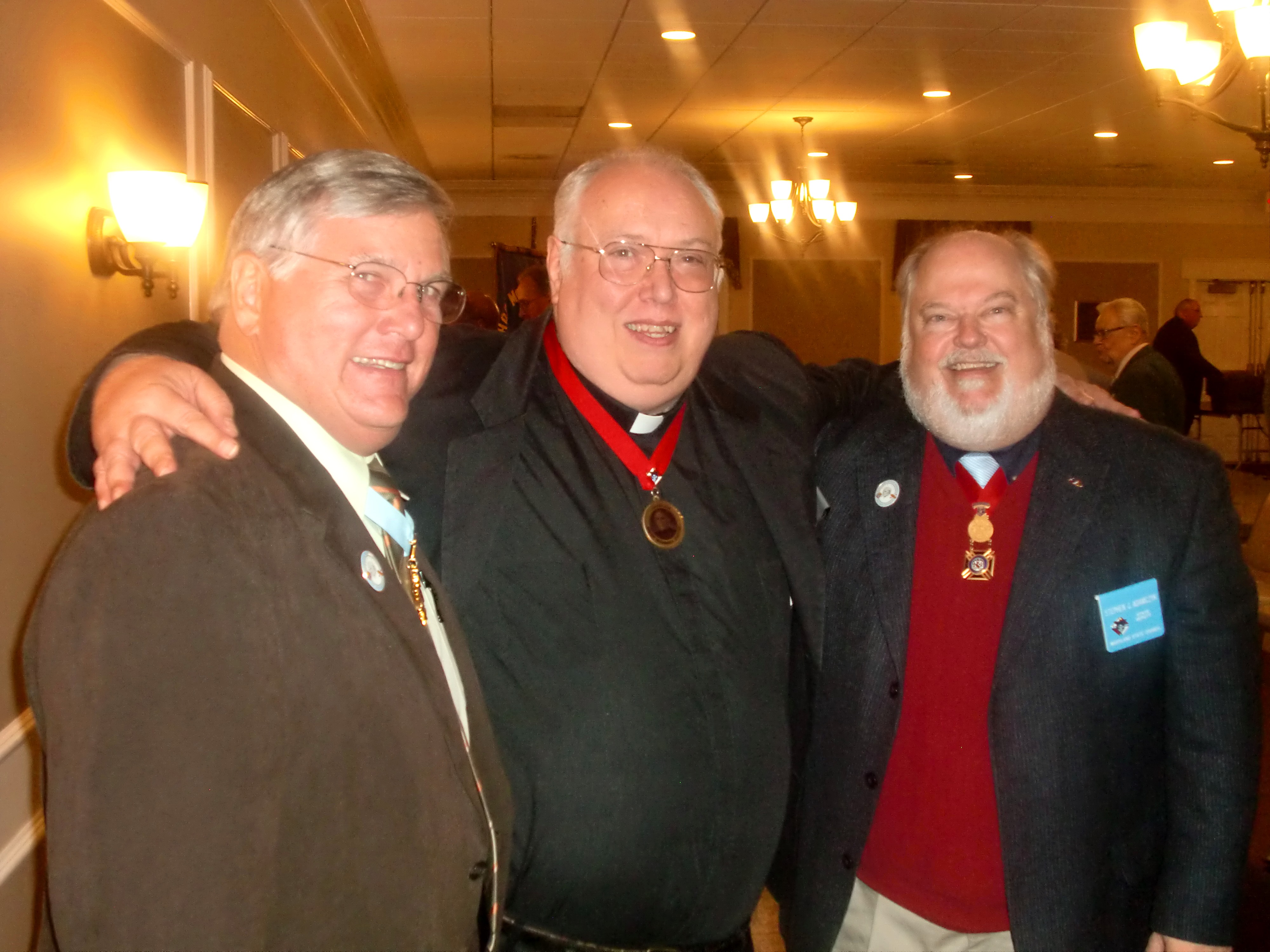
    Fr. Joseph Jenkins

  • The blog header depicts an important and yet mis-understood New Testament scene, Jesus flogging the money-changers out of the temple. I selected it because the faith that gives us consolation can also make us very uncomfortable. Both Divine Mercy and Divine Justice meet in Jesus. Priests are ministers of reconciliation, but never at the cost of truth. In or out of season, we must be courageous in preaching and living out the Gospel of Life. The title of my blog is a play on words, not Flogger Priest but Blogger Priest.

  • Archives

  • Categories

  • Recent Posts

  • Recent Comments

    Barbara King's avatarBarbara King on Ask a Priest
    Ben Kirk's avatarBen Kirk on Ask a Priest
    Jeremy Kok's avatarJeremy Kok on Ask a Priest
    Barbara's avatarBarbara on Ask a Priest
    forsamuraimarket's avatarforsamuraimarket on Ask a Priest

The Great Saturday or Sunday Sabbath Debate #6

Lou writes:

“Of the Apostle Barnabas, nothing is known, except what is recorded in the Acts. There we have an honorable encomium of his character, and a particular description of his joint labors with St. Paul. It is a great injury to him, to apprehend the Epistle which goes by his name to be his.” (Vol. I., p. 126, Church History. Boston, 1809.)

Father Joe responds:

This is becoming monotonous! It does not matter to Roman Catholics if the author is or is not St. Barnabas! Authorship concerns have been conceded for centuries! Get a life! The important matter is the reception give the document by the Church and its antiquity. It gives us an accurate depiction of the mind of the early Church.

Lou writes:

“The so-called Epistle of Barnabas, a forgery of the second century.” (Cyclopedia Biblical Literature, article Lord’s-day.)

Father Joe responds:

Sorry, fragments and references have pushed the date back to 100 to 131 AD. You must be using out-of-date archaeological sources! (Of course 131 AD would make it EARLY second century– VERY EARLY!)

Lou writes:

“But the Epistle was not written by Bamabas; it is not merely ‘unworthy of him,’ it would be a disgrace to him, and, what is of much more consequence, it would be a disgrace to the Christian religion, as being the production of one of the authorized teachers of that religion in the time of the apostles, which circumstance would seriously damage the evidence of its divine origin.” (An Examination of the Six Texts, p. 233.)

Father Joe writes:

Read what I wrote before, it still holds! As for the content, the methods of rhetoric change over the centuries. It must be appreciated as a work of its time and not according to more modern standards. Many of the Church Fathers implemented allegorical interpretation. The greatest fault of the document is not the content but that the style is a bit boring.

Lou writes:

“The tract known as the Epistle of Barnabas was probably composed in A.D. 135. It is the production, apparently, of a convert from Judaism, who took special pleasure in allegorical interpretation of Scripture.” (History of the Ancient Church, p. 367. New York, 1859. See also The Old Catholic Church, pp. 8, 13. T. & T. Clark, 1871.)

Father Joe responds:

Yes, this is quite plausible. Here at least is one intelligent quotation that adds something new to the discussion.

Lou writes:

The Epistle of Barnabas, bearing the honored name of the companion of Paul in his missionary labors, is evidently spurious. It abounds in fabulous narratives, mystic allegorical interpretations of the Old Testament, and fanciful conceits; and is generally agreed by the learned to be of no authority. Neander supposes it to have originated in the Alexandrian school; but at what particular time he does not define” (Ancient Christianity Exemplified. chap. 2, sec. 2, p. 47. Philadelphia, 1852).

Father Joe responds:

Given that the author of the commentary was probably not thinking about its use in the Sunday observance debate, the comments here are fairly to the point.

Lou writes:

“The author was probably a converted Jew from Alexandria (perhaps by the name Barnabas, which would easily explain the confusion), to judge from his familiarity with Jewish literature, and, apparently, with Philo, and his allegorical method in handling the Old Testament. In Egypt his Epistle was first known and most esteemed, and the Sinaitic Bible which contains it was probably written in Alexandria or Caesarea in Palestine. The readers were chiefly Jewish Christians in Egypt, and the East, who overestimated the Mosaic traditions and ceremonies” (History Christian Church, Vol. II., p. 677. New York, 1883.)

Father Joe responds:

Yes, this is not bad either. Although more modern scholarship suggests that he was a Gentile convert who was quite familiar with Judaism.

Lou writes:

“He could not be the author of a work so full of forced allegories, extravagant and unwarrantable explications of Scripture, together with stories concerning beasts, and such like conceits, as make up the first part of this Epistle.”

Father Joe responds:

Who is this by? Oh no, it is just like the epistle under discussion— ANONYMOUS! And yet, do you not consider it a comment possessing some weight? Alas, such is the same with TRUE Christians and the EPISTLE OF BARNABAS.

Lou writes:

The preceding historical evidence brings only one conclusion. The Epistle of Barnabas is a vague, fanciful production of some unknown author, forged at an uncertain date in the second century. I can’t base my faith on forged and faulty works when I have the option of by faith believing in the inerrant Word of God.

Father Joe responds:

Here you come out with it. You would not accept any testimony outside of the Scriptures. If such is the case then why did you demand a response from Cathy on Sunday observance before 100 AD? You underestimated her, didn’t you? Yes, you did! Boy, am I proud of Cathy!  (See previous postings in this debate.)

As I said before, there is nothing FORGED about the epistle. The early texts do not claim to be written by Barnabas. He is simply an early Christian who wanted to be known, not by his given name but by his cherished faith in Jesus Christ.

The litany of anti-Catholic books listed by Lou, some going back as much as two centuries are hardly credible and objective critiques of the EPISTLE OF BARNABAS. Does he actually have all these books? Some of them are classics of backward and prejudiced thinking. The quotations themselves show that many of them disregarded the value of the epistle because it conflicted with evangelical thinking and their watered-down doctrines. This is hardly the criterion for judging the historicity and value of a work. No doubt Lou sees them as his spiritual kin in religious bigotry and dancing around the difficulty of Catholic truths.

Here are some links to aid Lou in his education:

As for the DIDACHE:

I think it is appropriate at this point to restore all the citations Cathy made with the hope that Lou will read them with openness to the ancient testimony of Christian faith and Sunday observance.

Lou writes:

In conclusion, you have failed to prove that Christians BEFORE the second century AD were Sunday keepers. You are relying on false, forged, works.

Father Joe responds:

In conclusion— nothing— quite the opposite is the testimony.

Lou writes:

And I might add this. Even if there were some that it could be proven did in fact keep Sunday before 100 AD – it still wouldn’t prove your position that there was a Divine COMMAND to substantiate it. There isn’t any. As for me, I’ll stick with the Word of God and shun the false forgeries of the Didache and the so-called letters of Barnabas.

Father Joe responds:

There you have it folks. Just as I said, this has been a wasted exercise over a counterfeit question. The one additive I would make to Lou’s remarks is that he DOES NOT stick with the Word of God, but his own private (mis)interpretations of Scripture. It is a BIG DIFFERENCE.

Lou writes:

You quote [speaking to Cathy] Colossians 2:16 to prove that the Sabbath has *passed away*. This is not discussing the Sabbath. It’s discussing the shadow ordinances that met their fulfillment in Christ.

Father Joe responds:

“Shadow ordinances?” But you said NOTHING would pass away. Ah, excuses, excuses!

Lou writes:

“Let no man therefore judge you in meat, or in drink, or in respect of an holyday, or of the new moon, or of the sabbath days: Which are a shadow of things to come; but the body is of Christ” (Colossians 2:16-17).

The Sabbath day of the moral law is different from the “sabbath days” of the ceremonial shadows that pointed to Christ. The Bible makes the distinction. So should all of us.

Father Joe responds:

Absolute bunk! Do you make this up as you go along or does someone feed it to you?

Lou writes:

“These are the feasts of the LORD, which ye shall proclaim to be holy convocations, to offer an offering made by fire unto the LORD, a burnt offering, and a meat offering, a sacrifice, and drink offerings, everything upon his day: Beside the sabbaths of the LORD, and beside your gifts, and beside all your vows, and beside all your freewill offerings, which ye give unto the LORD” (Leviticus 23:37-38).

God set aside certain feast days that were also sabbaths and were holy days of convocation. And God makes the distinction between those sabbaths and the Sabbath of the Lord. It’s the ceremonial sabbaths that Colossians 2:16-17 is discussing, not the Sabbath of God’s great moral law of ten commandments.

Father Joe responds:

Lou, if you are not willing to study the languages of the original texts then you really must purchase for yourself some parallel bible translations. Note the rendering from the RSV:

“Therefore let no one pass judgment on you in questions of food and drink or with regard to a festival or a new moon or a sabbath. These are only a shadow of what is to come; but the substance belongs to Christ” (Colossians 2:16-17).

It is true that a distinction is being made about the various festivals, however, the SABBATH IS THE SABBATH. The text is referring to a hierarchy of holy days: the YEARLY festivals, the MONTHLY new moon, and the WEEKLY Sabbath. Your contention is preposterous that the Sabbath here is not the one of the Decalogue. It is made manifest that you know neither the history nor the Scriptures of God’s people. Cathy is again proven astute and correct. She is one smart young woman! If all college girls were like her, we would have few problems to worry about.

Lou writes:

And again, Cathy, the catholic church doesn’t look to the Bible for support of Sunday keeping. They cite THEIR OWN AUTHORITY for the change in Gods Sabbath. It really is a major exercise in futility to try and prove that Sunday is a Divine institution. Your misuse of the Scriptures proves you wrong. Your citation of forged writings proves you wrong, and even your church who fully admits that Sunday keeping is THEIR MARK of authority proves you wrong in attempting to do something that she herself does not do, and that is try to defend Sunday keeping as Scriptural. In this instance, Cathy, you are deviating from your church that cites THEMSELVES, not Scripture, in validating Sunday keeping. Based on these truths, I do hope you prayerfully reconsider your position. Peace!

Father Joe responds:

Reconsider her position? I hope not. Despite your protestations otherwise, she shot you down on every point. Just because the Catholic Church claims the power of the keys regarding Sunday observance does not nullify the salvation truth and utility of the Scriptures. Catholics do not believe in Church authority alone or Tradition alone or Scripture alone. Your faulty commentary shows that you really do not believe in Scripture alone. Rather, you believe in LOU ALONE.
Some of the books you cite against the EPISTLE OF BARNABAS are from the Anglican and Presbyterian (Low Church) tradition. I suspect all of them support Sunday observance.

HERE IS MY CHALLENGE TO YOU:

Do any of the books you quote against the EPISTLE OF BARNABAS promote the Hebrew Saturday Sabbath over the observance of the Christian Sunday? I suspect not. Perhaps I am cynical, but I suspect that you have never even read those books and only know them second-hand? Prove me wrong, if you can. I would be pleasantly surprised. Peace.

The Great Saturday or Sunday Sabbath Debate #5

Lou writes:

The Letter of Barnabas (as a source before 100 AD) is unfortunately for the Sunday-keeping proponents, an unreliable source. This is not of the “Barnabas” who was the companion of the apostle Paul. This is but a forgery in a futile attempt to bolster the validity of Sunday-keeping, which has NO Biblical authority.

Father Joe writes:

Says who, you? If ignorance were really bliss, you would be in heaven already. Just as some of the Pauline letters in Scripture were written by another hand, this does not make the documents into forgeries according to the criteria of the ancients. It was attributed to Barnabas by Clement of Alexandria, Jerome, Origen, the Codex Sinaiticus, and in later manuscripts. However, the oldest texts are anonymous. We do not know the author’s identity for sure. This is the stance of the Catholic faith regarding this text. The validity of source material in both Sacred Scripture and Sacred Tradition is based not so much upon an author’s identity as it is upon the reception of these documents as expressive of the Church’s abiding faith. Thus, all your citations that dismiss the letter because of “false” authorship can, themselves, be dismissed. Again, it is the antiquity of the document and its revelatory character regarding the early Church that makes it important. It was probably written between 100 AD to 131 AD.

The thrust of the document is not merely “Sunday-keeping” as you call it. The “way of light” and “way of darkness” sections are reminiscent of the DIDACHE. He implements an allegorical means of interpreting the Hebrew Scriptures as opposed to a more radical or literal approach. It is a somewhat tedious polemic against Jewish cultic (worship) practices. His community celebrates Sunday, “the eighth day” (15:8-9). Lou claims that this was the Catholic Church’s “futile attempt to bolster the validity of Sunday-keeping”; however, it was only translated into Latin during the third century. Considered canonical Scripture by many in ancient Egypt, the epistle had little impact upon Rome and the Western Church. It is a legitimate picture of the early Church. Again, Cathy answered your response and did so quite well.

Lou writes:

“The writings of the so-called Apostolic Fathers are, alas! come down to us, for the most part, in a very uncertain condition; partly, because in early times writings were counterfeited, under the name of these venerable men of the church, in order to propagate certain opinions or principles; partly, because those writings which they had really published were adulterated, and especially so to serve a Judao-hierarchical party, which would fain crush the free evangelical spirit. We should here, in the first place, have to name Bamabas, the well-known fellow traveler of St. Paul, if a letter, which was first known in the second century, in the Alexandrian church, under his name, and which bore the inscription of a Catholic epistle, was really his composition. But it is impossible that we should acknowledge this epistle to belong to that Barnabas who was worthy to be the companion of the apostolic labors of St. Paul, and had received his name from the power of his animated discourses in the churches. We find, also, nothing to induce us to believe the author of the Epistle was desirous of being considered Barnabas. But since its spirit and its mode of conception corresponded to the Alexandrian taste, it may have happened, that as the author’s name was unknown, and persons were desirous of giving it authority, a report was spread abroad in Alexandria, that Barnabas was the author.” (History of the Christian Church of the First Three Centuries, pp. 407, 408, Rose’s Trans.)

Father Joe responds:

Cathy uses primary source material and you parrot secondary material. Again, the Catholic Church admits it may not be the companion to St. Paul. So what? Does he even make the claim? Many people have the same name! Just as many authorities claim the hand of John’s disciples in the Johannine writings, why not here in reference to Barnabas?

Note that your so-called authority dismisses all the Apostolic Fathers. This takes care of the debate quite nicely. The ostrich buries his head in the sand.

Lou writes:

The Epistle of Barnabas was the production of some Jew, who most probably lived in this [the second] century, and whose mean abilities and superstitious attachment to Jewish fables, show, notwithstanding the uprightness of his intentions, that he must have been a very different person from the true Barnabas who was St. Paul’s companion.” (Church History, Vol. 1, p. 113, Maclaine’s Trans.)

Father Joe responds:

You miss the whole point. Using an analogy, the discussion here is about the value of eggs, not about which chicken laid them. Let me say it still again, Rome does not insist that the author of this epistle is St. Barnabas! Since he seems to have some blind spots regarding Jewish practices, he was probably not a Jew as this citation asserts, but a Gentile who was familiar with many Jewish ways.

Lou writes:

“For what is suggested by some of its having been written by that Barnabas who was the friend and companion of St. Paul, the futility of such a notion is easily to be made apparent from the letter itself. Several of the opinions and interpretations of Scripture which it contains, having in them so little, either of truth, or dignity, or force, as to render it impossible that they ever could have proceeded from the pen of a man divinely inspired.” (Historical Commentaries, Century 2, See. 53.)

Father Joe responds:

Many of the great figures of Christian history had a different assessment of the quality of this work. In any case, I will say it once more; it makes no difference if the authorship is not St. Barnabas. The Church has not made any definite claimed it was. Indeed, most authorities, Catholic or otherwise, assert that it cannot be him. But the document stands on its own historical merits.

Lou writes:

“Among the rejected writings must be reckoned also the Acts of Paul, and the so-called Shepherd, and the Apocalypse of Peter, and in addition to these the extant Epistle of Barnabas, and the so-called Teachings of the Apostles.” (Church History, Book III., chap. 25, Sec. 4. The Nicene and Post-Nicene Fathers, Vol. I., p. 156.

Father Joe responds:

The Catholic bishops did indeed REJECT all these writings as canonical Scripture. They are useful in our historical appreciation of the early Church, but they are not “lost” books of the Bible. Do we agree upon this much?

Lou writes:

“The letter still extant, which was known as that of Bamabas, even in the second century, cannot be defended as genuine” (Commentary on Acts, p. 251).

Father Joe responds:

Genuine what? We know it is plenty old. That is all that Cathy is contending. These citations about authorship (stolen from footnotes or editorial notes?) do not address her contention. Cathy wins on this score. The Sunday observance was practiced within the first century of the Christian era!

The Great Saturday or Sunday Sabbath Debate #3

Cathy writes:

The Didache (Constitutions of the Holy Apostles) written in 70 AD:

“But every Lord’s day, gather yourselves together and break bread, and give thanksgiving after having confessed your transgressions, that your sacrifice may be pure. But let no one that is at variance with his fellow come together with you, until they be reconciled, that your sacrifice may not be profaned” (Didache 14).

“And on the day of our Lord’s resurrection, which is the Lord’s day, meet more diligently, sending praise to God that made the universe by Jesus, and sent Him to us, and condescended to let Him suffer, and raised Him from the dead. Otherwise what apology will he make to God who does not assemble on that day to hear the saving word concerning the resurrection…?” (Didache, Vol. 7).

“And how can he be other than an adversary to God, who takes pains about temporary things night and day, but takes no care of things eternal? Who takes care of washings and temporary food every day, but does not take care of those that endure forever? How can such a one even now avoid hearing that word of the Lord, ‘The Gentiles are justified more than you’ as He says, by way of reproach, to Jerusalem, ‘Sodom is justified rather than thou.’ For if the Gentiles every day, when they arise from sleep, run to their idols to worship them, and before all their work and all their labors do first of all pray to them, and in their feasts and in their solemnities do not keep away, but attend upon them; and not only those upon the place, but those living far distant do the same; and in their public shows all come together, as into a synagogue: in the same manner those which are vainly called Jews, when they have worked six days, on the seventh day rest, and come together in their synagogue, never leaving or neglecting either rest from labor or assembling together… If, therefore, those who are not saved frequently assemble together for such purposes as do not profit them, what apology wilt thou make to the Lord God who forsakes his Church, not imitating so much as the heathen, but by such, thy absence grows slothful, or turns apostate or acts wickedness? To whom the Lord says to Jeremiah, ‘Ye have not kept My ordinances; nay, you have not walked according to the ordinance of the heathen and you have in a manner exceeded them… How, therefore, will anyone make his apology who has despised or absented himself from the church of God?” (Didache, Vol. 7).

“…every Lord’s day, hold your solemn assemblies, and rejoice: for he will be guilty of sin who fasts on the Lord’s day, being the day of the resurrection…” (Didache, Vol. 7).

“On the day of the resurrection of the Lord, that is, the Lord’s day, assemble yourselves together, without fail, giving thanks to God, and praising Him for those mercies God has bestowed upon you through Christ, and has delivered you from ignorance, error, and bondage, that your sacrifice may be unspotted, and acceptable to God, who has said concerning His universal Church: ‘In every place shall incense and a pure sacrifice be offered unto me; for I am a great King, saith the Lord Almighty, and my name is wonderful among the heathen,’ [Malachi 1:11, 14]” (Didache, Vol. 7).

Lou writes:

I will comment on your references of Sunday-keeping before 100 AD. Your first reference to Sunday-keeping before 100 AD is the Didache. Unfortunately, the last ten volumes of the Didache is a most unreliable source. The first six volumes are recognized as containing the binding force of the Word of God, the rest (from which you gather your information) is the work of human compilation and contrivance. The Didache is, properly speaking, the first six chapters and no more.

Father Joe responds:

Good work, Cathy, you answered Lou’s challenge and he had to tell a fable to escape the trap he made for himself!

Turning to Lou, since its teachings ring as heretical to your SDA ears, you join the likes of F. E. Vokes in saying that the DIDACHE must be later fiction.

Sorry, Lou, I do not know who told you that the DIDACHE was a counterfeit, but you were misled. Cathy is again right on target. While there is an evolutionary character to the work, its style, language, etc. all point to its authenticity in its various sections. Fragments of the DIDACHE have been found in Latin, Coptic, Georgian, and Greek (particularly of the DOCTRINA that you oppose).

The DIDACHE TON DODEKA APOSTOLON is universally held as a first century Syrian document dated around 60 AD to 70 AD. That means that it was not written long after St. Paul’s letters and about the same time period as our Gospels. It has sixteen chapters in total. The first six that you hold in high regard deal with the “Way of Life” and the “Way of Death.” Chapters seven through ten deal with liturgical affairs like baptism, fasts, and the Eucharist. You reject these chapters, not because they reflect a different hand or a later date (which is not true) but because you find their content offensive. The fact that Christians could be involved with such “Catholic” things during the “living memory” period after Jesus puts your every dissent into question. You would be more consistent and honest to spurn the entire work. Chapters eleven through fifteen cover church laws and discipline, including THE PROPER KEEPING OF THE LORD’S DAY (Sunday) and the election of bishops. Chapter sixteen prophesies the Lord’s return WITH ALL THE SAINTS (oops! I guess they were not sleeping after all). Cathy was brilliant in mentioning this document. It undermines every misconception and lie (even if inadvertent) that you might conjure up.

The DIDACHE was well known in the early Church. There are even references to some of the parts you disavow. It influenced the APOSTOLIC CONSTITUTIONS and was promoted by St. Athanasius. It also includes the earliest known Church condemnation of abortion.

Since this document is authentic, Cathy has successfully answered your challenge to give testimony prior to 100 AD in favor of Sunday worship over the Saturday synagogue service (see first post). You need to respond intelligently, without subterfuge to the texts she gives you.

The Great Saturday or Sunday Sabbath Debate #2

This post gives my response (only) to the legalistic argument for the Saturday sabbath over the Sunday observance made by Lou, one of the Internet’s more offensive anti-Catholics.  

Father Joe writes: 

As for Scripture verses that seem to put things in a more balanced perspective, we read:

“For since the law has but a shadow of the good things to come instead of the true form of these realities, it can never be the same sacrifices which are continually offered year after year, make perfect those who draw near” (Hebrews 10:1).

Believers in Jesus assemble on Sunday to commemorate the Lord’s Supper and the one sacrifice that makes true and lasting reparation to the throne of God. The Sunday Eucharist, not temple sacrifice or synagogue service, is the foretaste of the “good things” offered by our Savior.

“Now before faith came, we were confined under the law, kept under restraint until faith should be revealed. So that the law was our custodian until Christ came, that we might be justified by faith. But now that faith has come, we are no longer under a custodian; for in Christ Jesus you are all sons of God, through faith” (Galatians 3:23-26).

The coming of Christ has changed many things. God, who is Spirit, is reflected in the face of Jesus Christ. This ushers in a new age regarding the economy of images. Thus, the early Christians developed religious art and statuary to convey their faith and devotion. Christian faith in Jesus is paramount and the Sunday observance of his resurrection becomes an element of the new law over the old.

“For all who rely on works of the law are under a curse; for it is written, ‘Cursed be everyone who does not abide by all things written in the book of the law, and do them.’ Now it is evident that no man is justified before God by the law; for ‘He who through faith is righteous shall live’; but the law does not rest on faith, for ‘He who does them shall live by them.’ Christ redeemed us from the curse of the law, having become a curse for us— for it is written, ‘Cursed be everyone who hangs on a tree’ – that in Christ Jesus the blessing of Abraham might come upon the Gentiles, that we might receive the promise of the Spirit through faith” (Galatians 3:10-13).

The law was the Hebrew elaboration upon the Ten Commandments and the various ancient divine mandates. While the commandments retain their binding force, it is in light of Christ’s two-fold commandment to love God and neighbor. The old law is reinterpreted in light of the Christ-event and the lived-situation of converts for whom the “eighth day” was the principal occasion for celebrating their faith and their spiritual adoption.

“For Christ is the end of the law, that everyone who has faith may be justified” (Romans 10:4).

This confirms the Catholic interpretation of Matthew 5:17-18. Heaven and earth, as we knew it, has indeed passed away.

There are various Scriptures that place the spirit of the law over the letter. This might also be applied to the Christian Sunday since believers taking a day to praise and honor God will surely please our Lord. I can just see Lou now with his Seventh Day Adventist proclivities, banging his feet and shouting at God: “That’s not fair, God! They did not keep the right day! They had no right to single out Sunday as a day to commemorate Christ’s resurrection and to assemble. It is Saturday or nothing! They should be punished, not rewarded for remembering and loving you!”

“Not that we are sufficient of ourselves to claim anything as coming from us; our sufficiency is from God, who has qualified us to be ministers of a new covenant, NOT IN A WRITTEN CODE BUT IN SPIRIT; for the written code kills, BUT THE SPIRIT GIVES LIFE. Now if the dispensation of death, carved in letters on stone, came with such splendor that the Israelites could not look at Moses’ face because of its brightness, fading as this was, will not the DISPENSATION OF THE SPIRIT BE ATTENDED WITH GREATER SPLENDOR? For if there was splendor in the dispensation of condemnation, the dispensation of righteousness must far exceed it in splendor. Indeed, in this case, what once had splendor has come to have no splendor at all, because of the splendor that surpasses it. For if what faded away came with splendor, what is permanent must have much more splendor. Since we have such a hope, WE ARE VERY BOLD . . .” (2 Corinthians 3:5-12).

Our Lord is alive in his Church, making his presence and authority available. When Christ’s disciples were condemned by the Pharisees for plucking and eating the ears of grain on the Sabbath, our Lord defended them, saying, “And if you had known what this means, ‘I desire mercy, and not sacrifice,’ you would not have condemned the guiltless. FOR THE SON OF MAN IS LORD OF THE SABBATH” (Matthew 12:7-8). The rabid imitation of SDA faith that Lou promotes makes him an heir to the Pharisees. Lou witnesses this attitude on a viciously anti-Catholic website operated by his partner in crime Nicholas.  Dispersions against those who worship God on Sunday (and not a pagan deity either) fall upon men and women who act in good faith. Instead of supporting their efforts to bring Jesus Christ back into people’s lives, they ridicule those who want a restoration of blue laws as pawns of the anti-Christ and associates of the Whore of Babylon.

There is a real sickness in their polemics. We need to pray for them.

Furthermore, the law of God mandated circumcision, and yet through the intervention of St. Paul, and the acceptance of St. Peter at the Council of Jerusalem, the Church abrogated that which was a major sign of membership in the People of God. One would not have to become Jewish before becoming a Christian. The matter of transferring the Sabbath to the day that commemorated Christ’s resurrection would seem a far easier matter and there is no critical debate among believers. “He is a Jew who is one inwardly, and real circumcision is a matter of the heart, spiritual and not literal” (Romans 2:29). Of course, up until modern times, many Christians, and Catholics in particular, took both Saturday and Sunday as special days of rest to be with family and to reaffirm their commitment to God. Many Catholics attend the Saturday night anticipatory Mass for Sunday. The Neocatechumenal Way, a religious association in the Church for post-baptismal catechesis, celebrates its liturgies ONLY on the Saturday Hebrew Sabbath. A menorah candle burns on the altar and the congregation dances the Jewish Mishnah around the altar at the end of the liturgy. They pledge obedience to the Pope and function entirely within the good graces of the Roman Catholic Church. They have so many vocations that they operate a number of their own seminaries, including a notable one in New Jersey. Thus, one could say that there is a growing restoration of the ancient Hebrew elements and the significance of the Jewish Sabbath, particularly as blended to the resurrection theme so very important on Sunday.

The Great Saturday or Sunday Sabbath Debate #1

This post is the start of an argument about the Hebrew Saturday sabbath over the Christian Sunday observance.  Nicholas and Lou, two of the Internet’s more offensive anti-Catholics, attacked the Christian practice of Sunday observance.  I have not saved here the website post from Nicholas that was the catalyst for this discussion.  Lou is the visible point-man for the pseudo-SDA view in this debate.

Cathy writes:

First, I would like to make one important clarification: I do not believe God “changed” the Sabbath from Saturday to Sunday. I believe that the Saturday Sabbath has “passed away” and is not included in the NEW Covenant. Rather, we have the Lord’s Day, Sunday, on which we celebrate the resurrection of Jesus. (See Revelation 1:10)

Lou writes:

So, you say that you don’t believe that God “changed” the Sabbath from Saturday to Sunday. But you believe that the *Saturday* Sabbath has “passed away.” That is a direct contradiction of the Lord Jesus’ words. For Jesus says:

“Think not that I am come to destroy the law, or the prophets: I am not come to destroy, but to fulfill. For verily I say unto you, till heaven and earth pass, one jot or one tittle shall in no wise pass from the law, till all be fulfilled” (Matthew 5:17-18).

For as long as the heavens and the earth remain, God’s law, including His Sabbath, will also remain. That means forever! The text in Revelation 1:10 is not a reference to Sunday, but to the Sabbath day, of which Jesus proclaimed He is “Lord.”

Father Joe responds:

I think what Cathy is trying to say is that there was no singularly recorded moment wherein God spoke from heaven, declaring that the Jewish Sabbath would be transferred to Sunday. She is correct in this sense, although Lou is not far from the truth when he argues that the Catholic Church moved the obligation, or at least the center of gravity, from Saturday to Sunday, the so-called “eighth day” in Patristic testimony. We must remember that Lou and his friend Nicholas are biblical fundamentalists (at least of a sort). Lou might ask for evidence of the Sunday Sabbath before 100 AD, but he really does not mean it, at least if the testimony is extra-biblical (outside the literal Scriptural testimony). He is quick to mimic the bad scholarship that would dismiss other ancient Christian documents as spurious. It is as if the Bible emerges from some nebulous vacuum, and not from a teaching Church or from a canon negotiated by bishops, albeit under the influence of the Holy Spirit. This is what makes debate with his likes so very difficult. He is the supreme interpreter of Holy Writ. The Church and all her traditions are as weeds to be burned. History and truth becomes subjective with any facts to the contrary ignored or twisted to fit a preconceived bigotry. As for the topic at hand, the evidence seems to indicate that the shift did not happen all at once. The first Christians were Jewish and maintained their synagogue participation on the Sabbath. However, as the Church added to her numbers many Gentile converts, the Hebrew customs and rituals decreased in value. The expulsion of the Christian Jews from the synagogue and the subsequent persecution would be the straw that broke the camel’s back. The Christians were also gathering on Sunday for the commemoration of the Lord’s Supper (tied to an agape or love-feast). Every Sunday was seen as a celebration of Christ’s resurrection. Cathy has all this quite right.

As for Revelation 1:10, this is part of a late document, between 90 and 120 AD. It is the last book of the New Testament to be written. Lou is very wrong in saying that “the Lord’s day” in this text refers to the Saturday “Jewish” Sabbath. The phrase “the Lord’s day” was a code word universally used by Christians to signify Sunday. Lou is guilty of bad scholarship here and ignorance of God’s Word. John writes: “I was in the Spirit on the Lord’s day, and I heard behind me a loud voice like a trumpet saying . . .” The trumpet imagery is borrowed from the Sinai theophany in Exodus and in other eschatological situations. The day that commemorated our Lord’s resurrection is tied in with his Second Coming and the Judgment. The Hebrew Sabbath, while important to the early Jewish Christians, did not have the devotional weight of the Christian Sunday because the resurrection of Jesus was seen as a new creative event, the proof of our redemption and hope for eternal life in Christ. John sees all time after the resurrection as End-Times. The victory is already won in Christ. We are merely awaiting the final consummation in the Lord.

Let us turn to the Scripture that Lou cites, Matthew 5:17-18. Again, he displays his ignorance of the Word of God and his troubled use of isolated passages as proof texts. He interprets these verses as evidence that the Hebrew Saturday Sabbath is a permanent affair. However, Christians have never understood this text in this way. The assertion “Till heaven and earth pass (away)” does not necessarily mean the end of the world. Rather, it means the PASSING AWAY of the world, as we knew it. Regarding the matter of the Sabbath, it is, as Cathy would have us understand, the transition from the Saturday to the Sunday holy day. Of course, the text is saying a great deal more. Jesus has come to fulfill the law and the prophets. The ancient law and traditions bind them “till heaven and earth pass away” and “until all is accomplished.” This occurs with the revelatory event of Christ’s paschal mystery, his passion, death and resurrection.

John’s Gospel makes this delineation clear from the mouth of Jesus on the Cross: “After this Jesus, knowing that all was now finished, said (to fulfill the scripture), ‘I thirst.’ A bowl full of vinegar stood there; so they put a sponge full of the vinegar on hyssop and held it to his mouth. When Jesus had received the vinegar, he said, ‘It is finished’; and he bowed his head and gave up his spirit” (John 19:28). The Gospel is addressed to those in the final age, the age foretold by Isaiah of “new heavens and a new earth” (Isaiah 65:17; 66:22). However, during Jesus’ public ministry, they are still living in the setting of the old law, anticipating what would come.

Transformation from Modern to Traditional Altar

FSSP transform a modernistic free-standing altar into a very beautiful High Altar. The church that this took place in is in France and is now operated by the Fraternity of St. Peter. The complete time for this “Altar-ation” was just about 15 minutes!

A number of years ago, I posted this simple video of an ugly modern communion table being transformed into a visible altar of sacrifice. The posting was a whim, a small aside. The discussion that followed floored me. This was much more important to believers than I had thought. This is all for the good.

Here is the Discussion

MARY O: Deo Gratias!

GERRY L: Amazing! That’s how it should be.

ANNA MARIA: To Mary O— A big “Amen” to your comment. I couldn’t say it better. To Father Joe— Thanks for posting this! Where there is a will there is a way. I hope we see more of this Stateside!

JOHN S: Next stop improve the music!

KAY: Amen!!!!

KRISTIE: Beautiful! And I agree; that is how it should be! Wouldn’t it be wonderful if it spread State side? Thanks Father Joe! You are awesome!

VICTORIA: Reverent…one aspect of many of the beauty of Catholicism. (I didn’t witness this reverence in the Baptist, Unitarian, Nondenominational, or Methodist churches.) I’m sooo happy I’m Home.

BOB: John S— Sanctus fumus! More Palestrina, that’s what wants here!

LADY GODLESS: Well, that was nice! It looked too much like a lethal injection gurney before.

REGINA: Fr. Joe, this is why women are not priests…I spent an hour reading your blog and it reminds me of something I already know— men have a thick skin. They are tougher than us women. I heard a caller to a secular radio station say that the gates of hell referred to in the bible would not prevail against the Church, which, as the caller pointed out, was a battering ram. I loved this insight— you are a battering ram! Keep battering those gates Father! I pray for you.

ANITA MOORE OPL: One of these days, the change will be permanent. We can look at the cost as a penance for having wrecked the old furnishings in the first place. Is it possible there are some bishops who will not get out of Purgatory until the wreckovations they ordered are undone? If so, that makes the restoration of the Churches even more urgent.

HIDDEN ONE: I know a few altars that could use that kind of treatment… at least one of which a renovation group could sneak into, remodel, and leave, likely without being noticed. *sigh*

MR. FLAPTRAP: This is the installation of the new altar at my parish, St. Raphael’s in Rockville, Md. The old altar was similar in style to the original one in this video (four round concrete legs and a slab.) The base on the new one features the three archangels named in the Bible.

FATHER JOE: Yes, I remember the before and after. There are also shots of the late Father Bill Finch who died after Mass on Holy Thursday 2009. Rest in Peace. Thank you for sharing the video.

BILL C:

I recently joined a parish where altar, tabernacle, and crucifix are in a traditional vertical line of worship as in the video. Sadly, I am aware of only a few churches in the archdiocese of Cincinnati that are configured with the tabernacle placed at the altar. I must drive farther to my new parish, but the trip is well worth it because I now experience a much deeper sense of worship, adoration, and reverence for the Eucharist.

I pray our new archbishop will institute a uniform policy to place the tabernacle at the altar in all parish churches in the archdiocese. This would be a huge achievement for the catechesis of young and old on Christ’s Eucharistic presence.

Pope Pius XII, in his 1956 Address on the Liturgy, addressed with prophetic insight what would happen only a decade later shortly after Vatican II by warning: “To separate tabernacle from altar is to separate two things which by their origin and their nature should remain united.” Indeed, Church tradition for seven centuries — from mid-thirteenth century until after Vatican II — had placed the tabernacle at the altar. Surely the Holy Spirit inspired the holy union of tabernacle and altar over so many centuries.

This is a really informative website. Keep up the good work, Fr. Joe! God bless.

JOHN: The problem today is that the priests have been formed to think that they are pastors first and the Mass means very little.

FATHER JOE: That was not my experience. Most priests I know would argue with you. The Eucharist is the center of our lives.

JOHN:

If you look at the new Code of Canon Law promulgated in 1983 by Pope John Paul II, take a look at Canon 276. This canon directly addresses the question of how Catholic priests are to pursue holiness. It lists:

First, the obligation to ‘faithfully and untiringly….fulfill the duties of pastoral ministry’; Second, the obligation to Sacred Scripture and the celebration of the Eucharist; Third, reading the breviary.

FATHER JOE: Are you being purposely deceptive? The code begins by saying, “In leading their lives, clerics are bound in a special way to pursue holiness since, having been consecrated to God by a new title in the reception of orders, they are dispensers of the mysteries of God in the service of His people.” The initial statement of the canon stresses “the mysteries of God” and the chief among these are the Eucharist and the Sacrament of Penance. Priests have been empowered by Christ to offer the sacrifice of the Mass and to forgive sins. I suspect that you have a watered down appreciation of the pastoral ministry. A man is not ordained chiefly for his own salvation but for that of others. Jesus washed the feet of his apostles and told his followers to do so for one another. The priest is the servant of God who lays down his life for others. A pastor serves God by sacrificing his life for his flock. Only priests can offer the Mass and forgive sins. This has not changed since Vatican II.

JOHN: Canon 276 sets forth a weird priority of obligations. For years Catholics (including priests) have been taught that because the Eucharist is the centre of the Church the obligation to celebrate Mass was far and away the most important in priestly life. In fact, this principle was often demonstrated by the famous example that a priest will still celebrate Mass even though there is no one in attendance.

FATHER JOE: I suspect you are not appreciating the language of the Code. It is still recommending that priests celebrate daily Mass. Most if not all priests I know do precisely that. Indeed, many of us offer the Mass several times a day.

JOHN: The obligation of all priests to pastoral duties also undermines the life of any priest living the contemplative life.

FATHER JOE: There are different codes for pastors and monks. It is a different life. Many religious priests in monasteries regularly concelebrate. Most diocesan priests are the only priest present at their liturgies. Some groups like the Trappists only ordain enough priests to care for the community. The other monks remain religious brothers. The old code also placed a pastor-priest’s salvation on the line in how he fulfilled his pastoral duties: not neglecting the needs of his people for the Eucharist and Confession and Extreme Unction. The transmission of the true faith, especially to the children is crucial in both codes. Failure to give adequate care to this would constitute mortal sin.

JOHN: Although the canon refers to all priests (not merely diocesan), one wonders how it can be applied to the many priests living in a monastery.

FATHER JOE: Particular rules of life in orders approved by the Holy See and the codes on religious take precedence since it is seen as a higher vocation.

JOHN: In fact, it is very difficult, if not impossible, to see how monks can be said to have any priestly obligation to pastoral ministry. It would also not be exaggeration to say that the Vatican II theology of the priesthood, which makes pastoral obligations intrinsic to the Sacrament of Holy Orders, undermines the life of the monk-priest.

FATHER JOE: Such ministry is in regard to the religious community. Similarly priests were sometimes given charge of a convent. Their flock would be the nuns. Pastoral ministry always exists in some form, even if it is just Mass for the dead. The word “pastoral” is a reference to the role of a priest as a shepherd. He cares for the sheep and does so according to the powers and authority given him. You are making a false case. Accidentals have changed in some cases, but the priesthood is as it has always been. The old code was even more concerned about accidentals to ministry, like tonsure and clerical property and certain rights.

JOHN:

This approach seems little else that an attempted synthesis between the Catholic diocesan priesthood and the Lutheran ministry. Further, it is a change so radical that it can be safely said that the Catholic priesthood has been turned upside-down.

On October 24, 1995, Cardinal Joseph Ratzinger, in a speech given on the thirtieth anniversary of Presbyterorum Ordinis, said that Vatican II attempted to broaden the classical image of the priesthood and to satisfy the demands proposed by the Reformation, by critical exegesis, and by modern life but from the reading of Canon 276 it seems more likely that the Council, in its ecumenical effort, embraced the Protestant ideas of ministry but unfortunately loosened its grasp of the core of the Catholic priesthood. The consequence was that Vatican II produced a document which at its core is little else than a warmed-over version of the Protestant ministry.

FATHER JOE: You mean well, but your hatred of the Church after Vatican II colors your reasoning. Catholic priests are not defined as one would Lutheran ministers. Many Lutherans believe that ordination can expire. The priesthood is forever. Catholic priests offer daily Mass. Many Lutherans do not and are only part-time ministers. Catholic priests offer a propitiatory sacrifice of the Mass (a true re-presentation of Calvary) and offer us the risen Christ in the Blessed Sacrament. Protestants have occasional communion services and give out bread and juice. Catholic priests claim to have the power to forgive sins. No Lutheran minister would say that. Look at the catechism, which is far more revelatory about the priesthood than the Code on the rights and responsibilities of the clerical state.

JOHN: These liturgical changes, which were introduced over forty years ago, can now be seen as part of the larger picture. It is no secret that vernacular liturgy, the concept of Eucharist as-meal (implicit in the Mass of Paul VI), and the use of a table in the sanctuary (rather than an altar) were applauded by most Protestant sects. In fact these liturgical changes were the companion of very serious changes to the Catholic priesthood— all under the influence of Protestant theology.

FATHER JOE: Abuses happened, but the liturgical reform and a movement to a vernacular liturgy were being explored even in the 1930′s. We saw the development of the dialogue Mass prior to Vatican II. There is no denial of sacrifice by regarding the altar as also a table. There need be no either/or. As for Protestant sects, we came to appreciate a common love for Jesus, but most of them still reject the Mass and the priesthood. The sacraments are still wholly Catholic and neither the priesthood nor the Mass has lost that spiritual efficacy given them by Christ.

JOHN: And I continue to find it so amusing how everyone thinks of Pope JPII as being so conservative where it was he who introduced a new Code of Canon Law, new Catholic Catechism, new translations of the Bible (USCCB and NAB but approved on the Vatican website and explained as such), proudly proclaimed ecumenism as the cornerstone of his pontificate and participated in false worship that in infallible councils and in encyclical after encyclical proclaimed any Catholic let alone a Pope who would do such was excommunicated.

FATHER JOE: The Old Catholics broke away from the true Church prior to Vatican II. Many Anglicans practice ancient rituals. However, like so many Latin Traditionalists, their fight over ecclesiology and the authority of the Pope makes them the REAL PROTESTANTS. You can offer the Tridentine Mass and still be a heretic, schismatic, excommunicant, and a PROTESTANT. Unlike certain churches of the East locked into a stagnant tradition; the Catholic Church has a Magisterium that is protected by the Holy Spirit. We have a teaching authority centered upon the Pope which along with the world’s bishops (in and out of council) guides the Church. A few renegade bishops and priests have no such divine protection.

JOHN: This mess will take generations to clean up and millions of souls will be lost because of those who were entrusted to save souls.

FATHER JOE: And some of the lost souls will follow the guidance of illicit bishops who deny the Jewish holocaust and who rebuke the authority of Christ’s Vicar on Earth.

ANNE W. PALMER: I cried and cried when I saw the video. Thanks be to God! I grew up with the traditional years ago. There is such a difference in realization of the sacredness of our precious Lord in the Eucharist. Vatican II was so misinterpreted, adding things that were never there in the first place. I will never understand how that happened. The video makes it so plain. Thank you for posting it. I will share it with as many as possible. By the way, the music was awesome too. I would like to know from where it came? Music also denotes the sacred and that was sacred.

JOHN: Why is my comment still awaiting moderation? [I had to find time to respond in the original discussion.] Is it that difficult or do you not want to acknowledge the new form of the priesthood, which after Vatican II saw thousands leave and starting with the late 1950′s, the “wandering eye” priest (not to be accepted as good) give way to the pedophile, gay, liberal priest who has led millions of souls to hell?

FATHER JOE: There is no new form of priesthood. That is the lie promulgated by those who misrepresent the teachings of the present-day Catholic Church under Peter’s successor. Those who give greater weight to accidentals over substance or essentials fall into grievous error, particularly in regard to ecclesiology and juridical authority. You might not like the current reformed rituals, but the sacraments are intact and the Church endures. As for pedophile priests, many of the lawsuits regard clergy who were formed by the old Latin regime. What is the old saying about people living in glass houses throwing stones?

JOHN: Our Sermon today at the SSPV chapel in Oyster Bay was just that, how the priesthood right before and after Vatican II with its changes in its form as well as intent as I have stated above, is more concerned about being “liked” and knowing the bible than about saving souls and leading those astray to find Christ.

FATHER JOE: You belong to a splinter group of a splinter group, a schism of a schism? You are being deceived. I will pray that you will return to the one holy “Catholic” and apostolic CHURCH.

BILL C:

I’m surprised more people have not responded to this topic and I would really like to know what you think. I’m 62 years old. Although I’m happy to have recently joined a parish with the tabernacle at the main altar, it makes me downright angry that so many parishes in my archdiocese displace the tabernacle. Let me give you a few examples. The parish where I grew up removed the tabernacle from the altar sometime after Vatican II and placed it in a side wing near the choir. They put the baptismal font at the altar where the tabernacle once stood.

Another parish I attended for several years was an older church with a beautiful altar having a built-in tabernacle. When it was remodeled, they put the tabernacle at a side altar outside the sanctuary, and “boarded up” the hole at the main altar with an ornamental cross display.

The last parish I attended for several years before joining my present one actually had the tabernacle as a small wall-closet outside the sanctuary. I finally had my fill of this nonsense and was delighted to find a traditional parish with the tabernacle at the main altar.

Call me “old fashioned” if you like, but to my way of thinking, Christ’s Eucharistic presence is either real or make-believe. If make-believe, then it really doesn’t matter where we put the tabernacle or whether anyone genuflects before it. But if Christ’s Eucharistic presence is real, then where on earth would you even think about placing the tabernacle — other than at the main altar.

As I pointed out in my earlier comment, Catholic tradition placed the tabernacle at the altar for 7 centuries — from mid-13th century until shortly after Vatican II. And contrary to what some Catholics mistakenly believe, Vatican II did NOT mandate or encourage the removal of the tabernacle from the altar. This nonsense resulted from liturgists who used the reform momentum of Vatican II as an excuse to radically redesign churches with the consent of some bishops who frankly were “asleep at the wheel.”

And where has this nonsense led. My observation is that most people do not genuflect when the tabernacle is absent from the altar, and if they do it’s often not even in the direction of the tabernacle. There is also a lot more talking in the pews before and after Mass. In short, reverence for the Eucharist is lacking to some extent and Mass seems more a “communal meal” and less an act of divine worship. At least, that’s my personal experience.

And, what about catechesis on Christ’s Eucharistic presence? What does it say to young and old alike when the baptismal font replaces the tabernacle at the altar, or when the tabernacle is placed at a side altar like a saint’s statue, or when the tabernacle is a wall closet outside the sanctuary?

Eucharistic adoration doesn’t make a lot of sense to me in churches where the tabernacle is displaced. After all, what is the sense of placing the Eucharist in a monstrance on the main altar when the tabernacle is not afforded the same position of honor? Isn’t the same Eucharist inside the tabernacle or am I missing something?

To reiterate the words of Pope Pius XII in my earlier post above: “To separate tabernacle from altar is to separate two things which by their origin and their nature should remain united.” Also, I think it’s hard to argue with 7 centuries of Church tradition that placed the tabernacle at the altar. Certainly, the Holy Spirit inspired the holy union of tabernacle and altar over so many centuries.
Okay, Father Joe, what do you think about all this? It troubles me spiritually to see such disconnect between my belief about the Eucharist and the placement of the tabernacle in so many churches?

FATHER JOE: In regard to our parish churches, tabernacles are best placed in the center, along with the altar. We pretty much agree. My last parish had a side tabernacle (built in 1971). I moved it to the center where it belonged.

MARY O: “I moved it to the center where it belonged.” God bless you for that, Father Joe.

The PATHEOS Portal

http://www.patheos.com/Library/Roman-Catholicism.html

The PATHEOS portal advertises itself as “hosting the conversation of faith,” however— it does more than this, it seeks to reframe and/or to delineate religious truth. While several good Catholic blogs are hosted; it seeks neutrality with other religious or non-religious systems that is not possible without compromise and contradiction. For instance, while admitting that Catholicism “traces its history to Jesus of Nazareth,” which it defines as merely an “itinerant preacher,” the quick facts given stipulate the following:

  1. The Roman Catholic Church formed between the 3rd to the 5th centuries C.E.
  2. The bishops formed a “universal” church.
  3. The exact date of the beginning of the Roman Catholic Church is indeterminable.
  4. Many historians suggest that Pope Leo I (440-461) is the first to claim universal jurisdiction over the worldwide Church, thus initiating the rise of the papacy, a uniquely Roman Catholic structure.

While the nomenclature of “Roman Catholic” and “Pope” develops over time, the Church is directly instituted by Jesus Christ, God-made-man. The apostles were bishop-priests. There was no generic first and second century Christianity. Those who accepted Christ in faith and baptism were Catholic Christians. All the apostles and disciples were Catholic. The Virgin Mary was a Catholic. Jesus calls Simon ROCK or Peter and says that he will build his Church on this ROCK. He gives Peter the keys to the kingdom and universal jurisdiction as his visible shepherd. While there is certainly development, all the important elements go back to Christ and the apostles. Anti-Catholic critics have long contended for the late institution of the Church. Revisionist Catholics, even in academia, spout similar nonsense.  These are not credible historians, no matter what alphabet soup follows their names. It seems to me that while individual voices at PATHEOS are orthodox, the site is tainted by a religious relativism that spills over into the section about Catholicism. Might this represent the wrong type of ecumenism about which Pope Benedict XVI has warned us? I think so. There is no sense of the supernatural nature of Mother Church. Dissenting voices are given as much legitimacy as those which speak the truth. There is no imprimatur or protection to insure against misleading statements. Attempting to appease many authorities, there is a definite religious indifferentism and denominationalism. Both are contrary to Catholic teaching and are affronts to the truth.

Mark Shea has a good article on his blog (hosted at PATHEOS) entitled, “Why it’s Our Ruling Class vs. the Rest of Us.”  It alerts us to media consolidation and control of information, even religious information.  I did not even know that PATHEOS existed until after I looked at the post and had my eye drawn away to the ads and links.  I found it very unsettling and confusing.  I hope over time the problems can be fixed, but I fear a continuing tension and struggle over what is or is not genuine Catholicism.  

Was Peter, the First Pope, Married?

peter333QUESTION:

You claim that Peter was the first Pope, and yet Scripture attests that he was married. Since this great apostle could be married, why not all bishops and priests?

RESPONSE:

Restricting ourselves to the Gospels, no doubt you are referring to Peter’s mother-in-law. We read in Luke 4:38-39: “After he left the synagogue, he entered the house of Simon. Simon’s mother-in-law was afflicted with a severe fever, and they interceded with him about her. He stood over her, rebuked the fever, and it left her. She got up immediately and waited on them.” See the story again in Mark 1:30.

The Catholic Church does not deny that Peter was married. However, note her general absence in the New Testament texts. We do not even know her name. We only encounter the mother-in-law, never his wife or any children. Indeed, throughout the Gospels and the Acts of the Apostles, references are made to Peter’s activities and travels; but, only a vague intimation by Paul in 1 Cor. 9:5 that he had a right to travel with his “believing wife.” If it were not for this mention in the epistle, one might suppose that Peter was a widower. Tradition suggests that his wife was martyred. It is peculiar that although the wife would ordinarily have cared for the needs of guests, Peter had to rely upon his wife’s mother.

However, granting that she was still around (somewhere); she evidently assumed a secondary role in his life behind his leadership of the infant Church. Indeed, her insignificance in the biblical witness would seem to provide weight to the supporters of priestly celibacy. Like Peter, bishops and priests might do better to serve God’s people without the distraction of wives and children. Jesus gives his sheep to Peter. Pastors similarly love Christ and care for their flocks. This is the emphasis of Catholic ministry, our family in faith.

This post was never meant to be a defamation against Peter’s wife.  I have also edited it to avoid any peripheral discussion about whether or not the tradition can be trusted regarding her martyrdom; given that some authorities speculated that she might have died earlier and/or that there might have been a second bond.  It is probably best that we accept the tradition at face value.

Here are early testimonies for the martyrdom of Peter’s wife:

CLEMENT OF ALEXANDRIA (died around 215 AD)

(THE STROMATA, 7:11)

So then he undergoes toils, and trials, and afflictions, not as those among the philosophers who are endowed with manliness, in the hope of present troubles ceasing, and of sharing again in what is pleasant; but knowledge has inspired him with the firmest persuasion of receiving the hopes of the future.

Wherefore he contemns not alone the pains of this world, but all its pleasures.
They say, accordingly, that the blessed Peter, on seeing his wife led to death, rejoiced on account of her call and conveyance home, and called very encouragingly and comfortingly, addressing her by name, Remember the Lord. Such was the marriage of the blessed and their perfect disposition towards those dearest to them.

Thus also the apostle says, that he who marries should be as though he married not, and deem his marriage free of inordinate affection, and inseparable from love to the Lord; to which the true husband exhorted his wife to cling on her departure out of this life to the Lord.

Was not then faith in the hope after death conspicuous in the case of those who gave thanks to God even in the very extremities of their punishments? For firm, in my opinion, was the faith they possessed, which was followed by works of faith.

EUSEBIUS (around 265 AD to 340 AD)

(ECCLESIAL HISTORY, 3:30)

1. Clement, indeed, whose words we have just quoted, after the above-mentioned facts gives a statement, on account of those who rejected marriage, of the apostles that had wives. Or will they, says he, reject even the apostles? For Peter and Philip begot children; and Philip also gave his daughters in marriage. And Paul does not hesitate, in one of his epistles, to greet his wife, whom he did not take about with him, that he might not be inconvenienced in his ministry.

2. And since we have mentioned this subject it is not improper to subjoin another account which is given by the same author and which is worth reading. In the seventh book of his Stromata he writes as follows: They say, accordingly, that when the blessed Peter saw his own wife led out to die, he rejoiced because of her summons and her return home, and called to her very encouragingly and comfortingly, addressing her by name, and saying, ‘Remember the Lord.’ Such was the marriage of the blessed, and their perfect disposition toward those dearest to them. This account being in keeping with the subject in hand, I have related here in its proper place.

DISCUSSION

GERRY:

Thanks for all your insights, Fr. Joe. They are priceless! I’d like to let you know that I look forward to reading the “feeds” from your blog site. God Bless!

KARL:

Who would sit in judgment for all the annulments? Certainly the Pope does not have the time and men who cannot keep their houses in order (like those divorced and seeking annulments) certainly should not sit in judgment of each other and their wives.

What would happen to a bishop who abandoned his wife? Should he continue to serve as a bishop? Who would pay for the divorce, alimony and child support settlements? Who would get the Cathedral, the wife?

Anyone who thinks it is wise to have a married clergy is likely naive, foolish or has difficulty keeping their mind off their private parts. Oops, or Orthodox or one of the Uniate Rites.

ALEXANDER ROMAN:  As a Ukrainian Catholic, I wanted to take great exception to a comment on that refers to Eastern Catholics as “uniates.” That term is pejorative and offensive – that it is used by a Latin Rite Catholic is not helpful.

FATHER JOE:

Churches of the East do not permit dating priests. They have to be married before ordination. Only single men become bishops. There is a different sense of priesthood between those who are celibate and the ones who are married. The first married Episcopalian priest in the U.S. who became a Catholic priest is now divorced. His wife left him, saying that nothing in the Episcopal church prepared them for what his life would be like. She gave him an ultimatum, leave the Catholic priesthood or she would leave him. He is now a divorced and celibate priest.

CATHOLIC GIRL:

Catholics and Protestants arguing for a married Priesthood (or worse those who propose that Mary was not a perpetual Virgin) miss the point with their literal interpretations.

Catholics are not literalists (although most Protestants are). We hold the Bible as no more or less important as Church tradition and teaching. Remember who put the Bible together – the Catholic Church. Who better to understand and interpret the meaning?

The important part of the message about St. Peter is that he – Peter – represents the Church. Christ was returning to the Father and so he gave Peter a duty as the first Pope and left us with the Church as the visible symbol of his love. He specifically said that he would be with the Church until the end of time and gave it the “keys to heaven,” what they bind on Earth is bound in Heaven.

He knew Peter was not perfect – after all, he denied he knew Christ three times. He did expect and continues to expect that we follow him and that means that unmarried persons should remain celibate – as he did.

Only the Catholic Church has the keys to the kingdom. Pope Benedict says that the tradition will not be changed. The Church isn’t a democracy and those that don’t agree are simply not Catholic. So he’s the boss and that discussion is closed!

MARK:

The Church has never taught the two sacraments are incompatible; neither did Our Lord. That the Church has chosen to promote celibacy in the model of Christ should be sufficient for the discussion.

“In essentials, unity. In non-essentials, liberty. In all things, charity.”—St Augustine

FATHER JOE:

It is probable that his wife later suffered martyrdom but her absence from the Scripture texts is still a significant fact. Except for the fact that Peter had the right to bring her along, there is little or nothing that can be cited to show that his wife actually did participate in his most important missionary journeys.

You are right that the sacrament of marriage and that of holy orders are not intrinsically incompatible with each other; although, there is early evidence of tension. Many of the Popes and saints over the centuries have written about celibacy in the priesthood and religious life as if it were the best course to pursue. Could it be said that just as there was an organic development of doctrine, that celibacy for priests reflects a positive evolution in discipline as well, also under the guidance of the Holy Spirit? I think so. Indeed, there is growing evidence that priests who were married during the apostolic and patristic age were expected to practice perpetual continence after ordination.

ANGELA:

I personally believe that leaders of the church should be able to get married if they want; but I think it is great when they are capable of remaining celibate. I guess I feel if God has called you to become a priest, then he has also called you to become celibate since that is in accordance to what priesthood is.

I no longer attend a Catholic church, although I grew up in one. I have met some great priests and some not so great. I have also met some great married pastors and some not so great. It does talk about how it is better for a man to remain celibate unless you are incapable. I believe if a man can do this successfully he will be greatly rewarded.

Unfortunately, if a man is choosing to go into the priesthood and have lust issues, they may want to consider what going into the priesthood really means. He should either first address such issues or consider the possibility that maybe God wants him to be a leader of men in a different way that allows marriage. He should not necessarily change denominations if he feels his faith corresponds more greatly with Catholic belief systems; but there are so many ways to be a shepherd among men and yet be married.

That being said, I still admire the man and woman who can devote their hearts, minds, and souls solely to God and remain pure in heart, mind, body and soul.

JAKE:

Peter was a [expletive deleted] and his wife was well to be rid of him. Peter is well said to be the founder of the ‘mother of [expletive deleted] church’. Women were nothing more than cattle in the [expletive deleted] bible and the men, including jayzus were perverted [expletive deleted] [expletive deleted]. The catholic church is indeed the true church of jayzus. If priests aren’t [expletive deleted] each other, they are [expletive deleted] innocent children and being paid by stupid people to do so.

FATHER JOE:

I must report your IP number (Atlanta) to the authorities for misuse of this forum. Sorry, but you forced my hand.

JAKE:

Peter=child molester
jayzus=[deleted pejorative word for homosexuals]
catholic church=mother of [plural expletive deleted]

FATHER JOE:

Jake=Bigot

LUCIA:

It is an interesting topic and one I am not sure I yet fully understand. It is my understanding that the vows of celibacy from the priesthood all the way to the pontiff are a matter of the disciplines of the Church. Its necessity is established by the Authority of the Church based on the inspired judgments of the Church.

Thus it is possible that the Church can change its mind on this point for its own reasons, or make exceptions to the rule. For example I know that in cases of Eastern Catholics, those from the predominantly Orthodox regions which are now in full communion with Rome, there are exceptions allowing married priests. None of this creates a problem.

So to my thinking, if as Clement of Alexandria and Eusebius relate, Peter was in fact married as an apostle/bishop it doesn’t matter. If the Church then later decided that it would require celibacy of priests and all the clergy in the higher ranks as well then that is the rule. The rule established by the authority of the Church. If Peter was not married as a bishop likewise it remains a discipline the Church has established and maintained for good reason. And one which, in limited cases to which it makes exception.

Do I understand correctly? Thanks.

FATHER JOE:

Sounds like you do. Priests promise celibacy when they are ordained transitional deacons.

MD:

Lucia has the simplest answer but the most profound.

CO:

First of all, the Bible refers to Peter’s mother-in-law. My assumption is that there is a wife and the Scriptures do not tell me different…meaning, he was married. My concern, however, is the belief that he was the first Pope. If you are basing it on the fact that Jesus said that on this Rock I will build my church, and he was speaking to Peter, Christ is the Rock, not Peter. Peter in the original Greek is petros, which in interpreted… “pebble.”

FATHER JOE:

Actually, in common usage the word PETROS could mean more than pebble. The reason why that word is used instead of the more common Greek word for ROCK is because Greek words have gender. Peter is given the male version of the word. In itself it is a transliteration of the Aramaic which makes no distinctions about ROCK. Peter is literally a chip off the old block, Jesus Christ, who is the foundation stone of the Catholic Church. Peter is Rock because Jesus is ROCK.

Economy of Images & Catholic Devotions

This is the fifth of several posts in a rebuttal of an anti-Catholic on the faith.  Picollo is not particularly bright but his poison is no less deadly.

PICOLLO:

There are many doctrines held by Catholics that need to be examined. These include such things as setting up images in the church, setting up grottos where people may go and kneel before idols and especially pray to Mary, another man’s wife. It totally negates the will of God as commanded in Deuteronomy 16:22. “Thou shall not set up images nor worship them.” Do they think that going to Rome is going to heaven? Never! Peter says in Acts 5, it is better to obey God than to obey man. It is very painful to me how the African nations have been dogmatically enslaved again by this falsehood, in complete disregard to the will of God in the Bible.

FATHER JOE:

Fundamentalists fail to make a distinction between the veneration and the worship of images. It upsets them that the Pope himself bows before statues of Mary. Similarly, they condemn our worship of Christ in the Eucharist. Indeed, they object to almost all of our sacramentals: statues, votive candles, and other such religious objects in their homes and churches.

They quote a portion of the Decalogue in Scripture to make their case:

[The fashioning and veneration of images is forbidden as idolatry]

“You shall not carve idols [any graven image] for yourselves in the shape of anything in the sky above or on the earth below or in the waters beneath the earth; you shall not bow down before them or worship them. For I, the Lord, your God, am a jealous God …” (Exodus 20:4-5).

No, Catholics do not “worship” images. Veneration is different from the kind of exclusive worship and adoration owed to God alone. Rather, we honor and treat with respect those things which remind us of God and those in whom the Lord has done wondrous things. The honor we show the Blessed Virgin Mary is particularly pronounced; however, even here it is not the same kind of worship which we render to God. Unlike the ancient idol worshippers, the honor is paid not to the physical representation, but to the one who is signified. Definitions are very important. Holy objects often serve the same function as mementos and photographs in our homes; they remind us of our friends and family. Similarly, religious statues, pictures, and all the rest bring to mind our spiritual family of faith and our identity as part of it. Candles are symbolic of Jesus himself. The smoke rises as prayer is taken into heaven. They give off light and Jesus is the Light of the World, dispelling the darkness of sin and death. They give off heat, and Jesus gave the warmth of healing and forgiveness to others. Like the candle which exhausts itself for our benefit, Jesus surrenders his life that we might be redeemed. Turning to the Eucharist, Jesus himself told us that it was his flesh and blood, the living sacrament of his presence. We can worship this divine mystery because it is Jesus and Jesus is God. Fundamentalist anti-Catholics are not consistent on this score about graven images. Come Christmas, they usually have statuary nativity scenes like everyone else. Also, if they were to be consistent in their strict observance of this commandment, it would also include the toy dolls they buy their children. Some cults actually do this! The Catholic view of images is based on the permissible symbolic use of them in the Old Testament and the fact that Christ himself through the incarnation reveals the transcendent God. God allowed images which symbolically pointed to our ultimate salvation in the Lord. The very historical fact of the God-Man, Christ, ushers in a new “economy” of images [CCC #2131].

[To be healed from the poisonous bites of serpents]

“So Moses prayed for the people, and the Lord said to Moses, ‘Make a seraph and mount it on a pole, and if anyone who has been bitten looks at it, he will recover.’ Moses accordingly made a bronze serpent and mounted it on a pole, and whenever anyone who had been bitten by a serpent looked at the bronze serpent, he recovered” (Numbers 21:7-9). {See also Wisdom 16:6-8}

[Jesus’ humanity is a healing image of God]

“‘And as Moses lifted up the serpent in the desert, even so must the Son of Man be lifted up, that those who believe in him may not perish, but may have life everlasting’” (John 3:14).

[Regarding the Ark of the Covenant]

“‘Make two cherubim of beaten gold for the two ends of the propitiatory, fastening them so that one cherub springs direct from each end. The cherubim shall have their wings spread out above, covering the propitiatory with them; they shall be turned toward each other, but with their faces looking toward the propitiatory’” (Exodus 25:18-20). {See also 1 Kings 6:2328}.

PICOLLO:

I was a child brought up in Catholic schools and I never read the Bible until I was lead by the spirit to do so. I left the church and I have never regretted the decision. God bless you, though the truth is bitter— it must be told. Only the TRUTH can set one free!

FATHER JOE:

You would do well to read these other topics here before seeking refutation. I have transferred some information here for convenience of argument. Otherwise, I would have to delete your comments. I cannot allow heresy and error an uncontested presence on this Blog. May the Holy Spirit bring you to a true friendship with Christ and acknowledgment of the Church he founded and the truths he taught. Peace!

Priestly Celibacy & the Value of Virginity

This is the fourth of several posts in a rebuttal of an anti-Catholic on the faith.  Picollo is not particularly bright but his poison is no less deadly.

PICOLLO:

God is not a respecter of man and He has nothing to hide as far as the Scriptures are concerned. Jesus entered the house of Peter and met his sick mother-in law. He was approached for help. Who approached him? The Bible is silent as to whether it was Peter or his wife. This incident, in my humble mind, was not accidental. Rather, it was to initiate the grace of God in Peter and to strengthen his belief. The Bible in 1 Timothy 3:24 says that if any man desires to be a bishop (not POPE), he must be a husband of one wife, Also, in verse 5 we read this for deacons and “priests.” He now asks a very fundamental question: if a man does not have a family to rule, how can he control the bigger house of God which is the church? It is unwise to discuss this issue because anybody who is supposedly a Christian and disputes what is in the Bible is an unbeliever.

FATHER JOE:

That is a neat trick, disagree with your interpretation of certain biblical texts and you then regard your antagonist as “an unbeliever.” Sorry friend, you may believe in Christ but you also attack him and his Church him through your ignorance and prejudice.

Anti-Catholic fundamentalists often misconstrue the following Scripture:

[Contention that it is from the devil to prohibit the good of marriage]

“Now the Spirit explicitly says that in the last times some will turn away from the faith by paying attention to deceitful spirits and demonic instructions, through the hypocrisy of liars with branded consciences. They forbid marriage and require abstinence from foods that God created to be received with thanksgiving by those who believe and know the truth. For everything created by God is good, and nothing is to be rejected when received with thanksgiving, for it is made holy by the invocation of God in prayer” (1 Timothy 14:1-4).

These words refer to a false asceticism and not to the practices of Catholic Christianity. The early Church and well into the Patristic period, had to deal with cults and movements which made all sorts of exaggerated claims and required various austere practices. Some urged a return to Jewish dietary laws. Others wanted to go further with fasting and abstinence, perpetually destroying joy in the goods of creation. There were even movements which urged strict celibacy upon all the members as the only way to enlightenment and salvation. The Catholic position is quite different. Our use of fasting and abstinence is not perpetual and it is not a rejection of certain foods as unclean or unworthy of man. Rather, their absence, to coin a cliché, is to make the heart grow fonder. It is precisely because something like meat is good that we might temporarily abstain. Jesus himself fasted and prayed in the desert and alluded to it in the future as something his followers would do. As for marriage, Catholics believe that Christ raised it up to a level of a sacrament, a special sacred sign of his relationship as the bridegroom to his bride, the Church. It is a mysterious means of encountering the Lord himself and receiving grace. Obviously, if such is the Catholic view, we would not be seeking to degrade it by our practice of celibacy. Priests and religious vow celibacy freely, not because marriage is bad, but because it is so good. Celibacy becomes a wonderful gift, freely embraced, as a sacrifice for God and his holy people. Jesus was celibate. St. Paul not only practiced it but encouraged it. The celibate priest becomes a sign of contradiction of the kingdom of Christ to a hedonistic world. It is not a rejection of love, but a selfless abandonment to divine love as manifested in service to God’s people, the Church. It is not a calling for everyone, just as not everyone is called to priesthood or consecrated life. The majority of people seek holiness in marriage and family life.

Here are more Scriptures misunderstood by anti-Catholic bigots:

[Peter was married; an apostolic line through Peter?]

“And when Jesus had come into Peter’s house, he saw Peter’s mother-in-law lying in bed, sick with a fever” (Matthew 8:14).

“Now Simon’s mother-in-law was keeping her bed sick with fever, and they immediately told him about her” (Mark 1:30).

“But he rose from the synagogue and entered Simon’s house. Now Simon’s mother-in-law was suffering from a great fever, and they besought him for her” (Luke 4:38).

These references to Peter’s mother-in-law do indicate that Peter was married; although her absence from these texts might lend one to think that she experienced some mishap and was out of the picture. Be this as it may, the Catholic Church has never hidden the fact that Peter and other religious leaders of the Church were married. Indeed, the Catholic Church had a married clergy all the way up to the 12th century. The Fourth Lateran Council was quite decisive in mandating compulsory celibacy for any who would be priests of the Roman or Western Rite. The Eastern rites of the Catholic Church, to this very day (in Europe and the Far East) have an optional married clergy. These priests are in full union with Rome. Also, in our own nation many Protestant clergy, Lutheran and Episcopal, have entered into the Roman Catholic priesthood, even though they are married and have families. Those who are raised in the Western rite realize that celibacy is a special gift and a particular charism of our priestly experience. It is a sign of a wondrous single-hearted love. One of the fruits of this sacrifice is the availability that a priest can give to his prayers, study, and service. Any indication that Peter’s married state would affect apostolic succession is a low blow. Those who followed Peter had a spiritual and not a physical affinity to the great apostle. While the Church has known nepotism, such is the exception and not the rule. No one forces a young man to become a priest or brother. There is no coercion for a woman to become a nun. They know that vows of poverty, obedience, and celibacy are part of the package. If God gives a person a vocation in the Catholic Church, we believe that he will give them the graces and gifts to follow this life. The majority of men who leave the priesthood to get married ultimately have failed marriages. Promises are made to be kept. The problem is not the Church or God; the dilemma is people who are unwilling to surrender their lives fully to Christ. Marriage is also a sacrifice, amidst the joys. However, if we trust God and walk with him, he will guide our path.

Anti-Catholic apologists also distort the following and read too much into it:

[Paul was single but thought we should have the freedom to marry]

“Do we not have the right to take along a Christian wife, as do the rest of the apostles, and brothers of the Lord, and Kephas?” (1 Corinthians 9:5).

The Catholic Church also recognizes the right of people to get married. However, the Church has a right of her own to regulate her ministries. Permanent deacons, Extraordinary Ministers of Holy Communion, Catechists, Readers, Lectors, Acolytes, and Lay Evangelists and Ministers all serve the Church a may be married. Would the anti-Catholic demand compulsory matrimony? I hope not. Those who opt for priesthood in the Roman Rite also freely embrace celibacy. This is no less than what St. Paul did. After listing all the various rights that a follower in Jesus possesses, he acknowledges that he has chosen not to use these rights for himself.

Here are some other useful Scriptures:

[After listing the right to marry among many other freedoms, St. Paul says]

“Yet we have not used this right. On the contrary, we endure everything, so as not to place an obstacle to the Gospel of Christ. … I have not used any of these rights …” (1 Corinthians 9:12,15).

[After speaking about marriage]

“This I say by way of concession, however, not as a command. Indeed, I wish everyone to be as I am, but each has a particular gift from God, one of one kind and one of another. Now to the unmarried and to widows, I say: It is a good thing for them to remain as they are, as I do …” (1 Corinthians 7:6-8).

[Advice to Virgins and Widows]

“Now in regard to virgins, I have no commandment from the Lord, but I give my opinion as one who by the Lord’s mercy is trustworthy. So this is what I think best because of the present distress: that it is a good thing for a person to remain as he is. Are you bound to a wife? Do not seek a separation. Are you free of a wife? Then do not look for a wife. If you marry, however, you do not sin, nor does an unmarried woman sin if she marries; but such people will experience affliction in their earthly life, and I would like to spare you that. I tell you, brothers, the time is running out. From now on, let those having wives act as not having them, those weeping as not weeping, those rejoicing as not rejoicing, those buying as not owning, those using the world as not using it fully. For the world in its present form is passing away” (1 Corinthians 7:25-31).

[More on virginity]

“So then, the one who marries his virgin does well; the one who does not marry her will do better” (1 Corinthians 7:38).

[About a widow]

“She is more blessed, though, in my opinion, if she remains as she is, and I think that I too have the Spirit of God” (1 Corinthians 7:40).

[Celibacy is a sign of the kingdom!]

“His disciples said to him, ‘If the case of a man with his wife is so, it is not expedient to marry.’ And he said, ‘Not all can accept this teaching; but those to whom it has been given. For there are eunuchs who were born so from their mother’s womb; and there are eunichs who were made so by men; and there are eunuchs who have made themselves so for the sake of the kingdom of heaven. Let him accept it who can’” (Matthew 19:10-12).