














Questions from Dina:
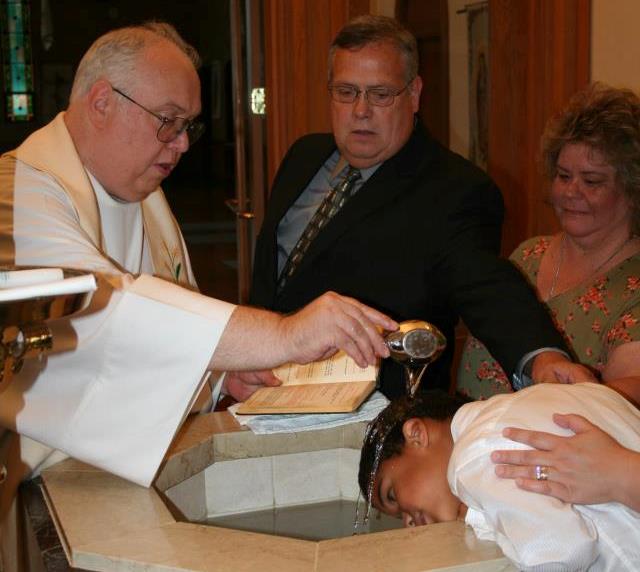
Why does it make sense to baptize a child who doesn’t know what is happening, or what about forced baptism over the centuries? Why does either have an effect? In one case the baby knows nothing and int he other you have an unwilling “convert” who wants nothing to do with the Catholic faith? Thanks!
Response from Father Joe:
We do not force baptisms upon adults. Missionaries often endured great hardships and even suffered martyrdom in bringing the faith to others around the world. Unwilling converts cannot be validly baptized or received into the Church. This has always been the case. The situation with children depends upon several points:
1. The apostolic and patristic tradition of baptizing whole households, including the children of believers.
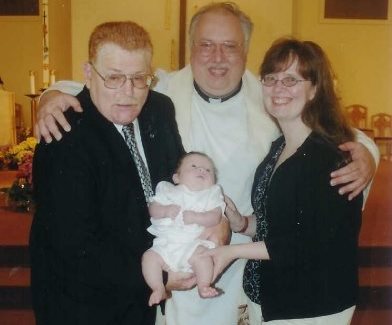
2. While a child has not yet reached the age of reason, parents may profess faith on behalf of a child with the expectation that they will raise the child in the faith and insure the sacraments of penance, holy communion and confirmation. There are three sacraments of initiation, not one: BAPTISM, EUCHARIST, and CONFIRMATION. At confirmation that person will make for himself the profession and promises made by parents at baptism.
3. The Church is the sacrament of salvation. Catholics are called both to a CORPORATE faith in Jesus as well as a PERSONAL one. This corporate element, linked to the communion of the saints, is why parents can profess faith for a child. We do not come to the Lord alone.
4. After the age of reason, an unbaptized child must take catechesis and make the baptismal promises himself.
5. The sacraments, including baptism, do what they are intended to do. They were instituted by Christ for his Church.
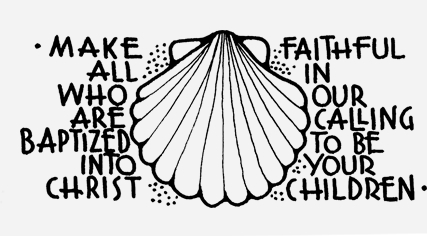
6. Baptism is more than an acknowledgment or affirmation of saving faith, it accomplished the following:
- Makes one a temple of the Holy Spirit;
- Accesses sanctifying grace;
- Conforms a person to the likeness of Christ;
- Washes away sin (original sin);
- A person is spiritually adopted as a son or daughter of our heavenly Father;
- Incorporates us into the Catholic Church;
- We become a Christian; and
- We enter the doorway to the sacramental life.
Filed under: Anti-Catholicism, Apologetics, Baptism, Bible, Catholic, Church, Discipleship, Evangelization, Faith, Holy Spirit, Jesus, Questions, Religion, Sacraments, Sin | 3 Comments »
















 Blogger Priest