
• Our Blogger

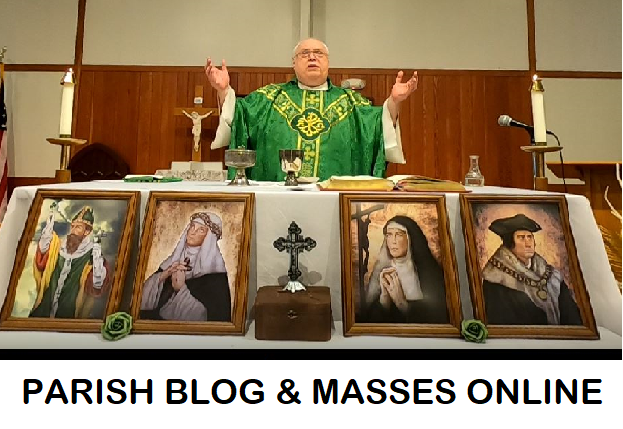
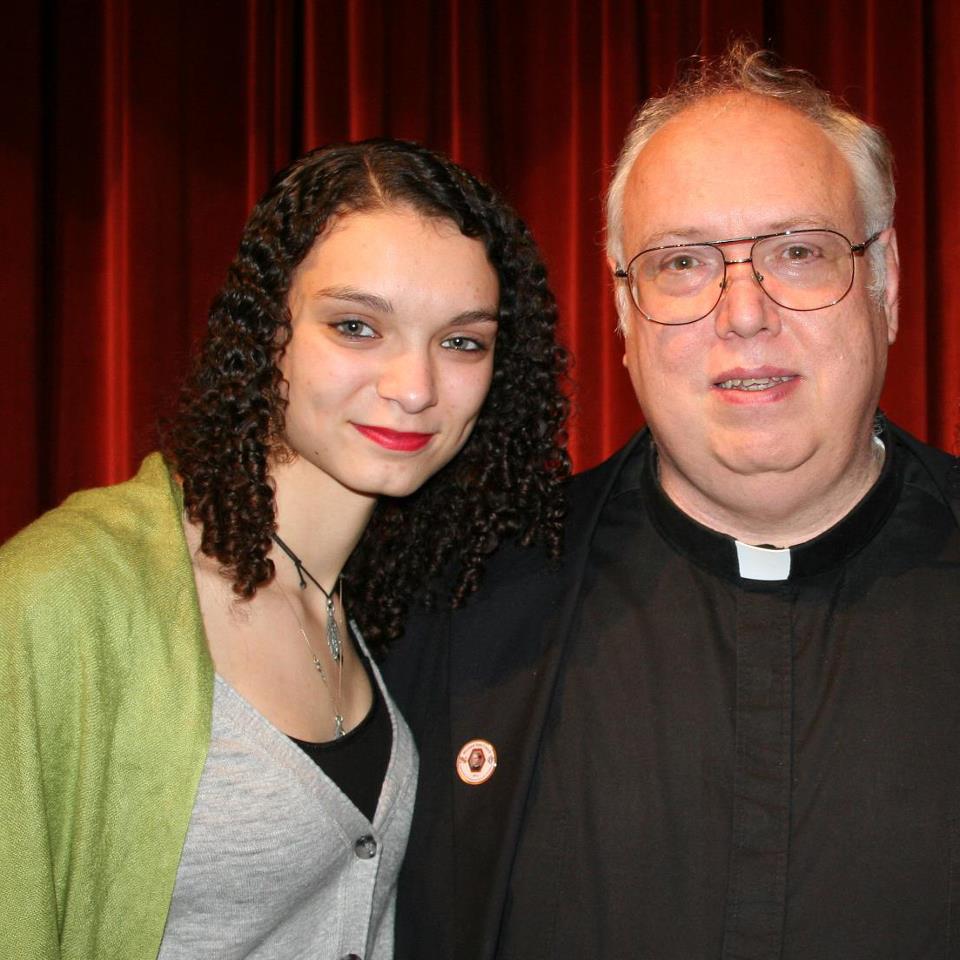
    Fr. Joseph Jenkins

  • The blog header depicts an important and yet mis-understood New Testament scene, Jesus flogging the money-changers out of the temple. I selected it because the faith that gives us consolation can also make us very uncomfortable. Both Divine Mercy and Divine Justice meet in Jesus. Priests are ministers of reconciliation, but never at the cost of truth. In or out of season, we must be courageous in preaching and living out the Gospel of Life. The title of my blog is a play on words, not Flogger Priest but Blogger Priest.

  • Archives

  • Categories

  • Recent Posts

  • Recent Comments

    Anonymous's avatarAnonymous on Ask a Priest
    Michael J's avatarMichael J on Ask a Priest
    Jeremy Kok's avatarJeremy Kok on Ask a Priest
    Mike Zias's avatarMike Zias on Ask a Priest
    Jeremy Kok's avatarJeremy Kok on Ask a Priest

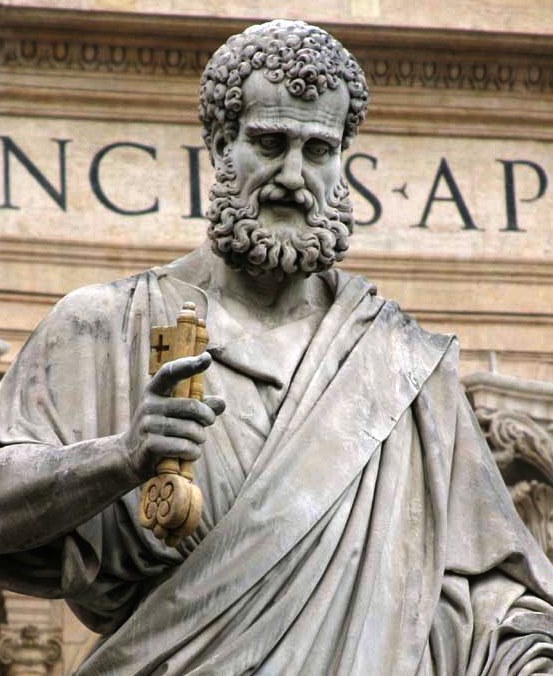
The Primacy of Peter & the Council of Jerusalem

st-peter

Regarding the first council of the Church in Jerusalem, note that after the debate about ritual circumcision, it is Peter who resolves the matter. The mere fact that Paul and Barnabas had come to Jerusalem illustrated their confidence in the apostolic authority there. As in any council, there was debate and dialogue; however, in the end it was Peter who stood up and supported Paul in his refusal to impose the Mosaic Law upon the Gentiles– they would not have to become Jews before becoming Christians. Citing the work of God’s Spirit in Cornelius and his household, whom they knew and accepted, Peter summarizes the core proclamation of salvation: “My brothers, you are well aware that from early days God made his choice among you that through my mouth the Gentiles would hear the word of the gospel and believe. And God, who knows the heart, bore witness by granting them the Holy Spirit just as he did us. He made no distinction between us and them, for by faith he purified their hearts. Why, then, are you now putting God to the test by placing on the shoulders of the disciples a yoke that neither our ancestors nor we have been able to bear? On the contrary, we believe that we are saved through the grace of the Lord Jesus, in the same way as they” (Acts 15:7-11). We are told that the whole assembly was reduced to silence. The issue was resolved. Paul and Barnabas then enthusiastically recounted how God had used them as instruments to reach the Gentiles.

Many distinctions need to be made about Peter. He is certainly much altered after the Christ has suffered, died, and risen. The Holy Spirit on Pentecost grants him a special charism of authority and infallibility. This did not mean that either Peter or his successors would be impeccable and unable to sin. The miraculous truth in the long history of the Church is that even weak and sinful men have seemed changed by the office of Peter. Without such an authority, we would suffer from the same endless fragmentation and deviation from Gospel truth that other religious communities experience. We believe we have Christ’s Rock to preserve and protect the deposit of faith. Given to Peter, this gift of infallibility is for the entire Church. This forum demands brevity, but we see it observed when the Holy Father makes a formal proclamation of dogma as the universal shepherd (the Vicar of Christ) on a matter of faith or morals. Neither the Pope, nor the bishops, nor an ecumenical council can manufacture new beliefs– they define something which has always been taught and believed, but reformulate it in a more concise and solemn way. A papal declaration along these terms is an exercise of his Universal Extraordinary Magisterium.

The unanimous teaching of all the world’s bishops in union with the Pope is called the Universal Ordinary Magisterium. This latter expression of infallibility is much more common. The laity and the religious of the Church also enter into this mystery. The Sensus Fidelium (sense of the faithful) among Catholics who have informed their consciences according to Church teaching and who live out the faith also touch upon this mystery of faith. (Admittedly this latter aspect is usually only mentioned by dissenters these days; however, they cite people who have largely rejected the deposit of faith and the Christian life– the ones to whom it does not really apply.)

The question arises, what is the significance of James’ input? As the bishop of the Jerusalem Church, he rose after Peter and directed that a letter be written and promulgated to the other churches. While a special charge is recorded as given to Peter, the apostolic community also respected the familial relationship of John and James to Jesus. James, John and Peter accompanied our Lord when Jesus raised Jairus’ daughter from the dead. These three also witnessed the Transfiguration. These “sons of thunder” remained close to Jesus in the Garden of Gethsemane. Peter’s unique authority was real and yet the structure by which authority was exercised was much more fluid during the apostolic period. Peter did not remain with the Jerusalem church but traveled elsewhere in exercise of his universal charge. James remained with the Jewish community in Jerusalem and became its bishop. Jerusalem is viewed as the Mother Church and James operated the council since it was within his jurisdiction.

Peter is listed as first among the apostles; he is given the new name Rock and our Lord said that he would build his Church upon this Rock; and he is named the chief shepherd by name. Jesus prays for him by name in order that his “faith may not fail” and that in turn he might “strengthen your brethren” (Luke 22:32).

Priestly Celibacy – Consecrated Virginity

Restored in 1970 and attributed to Pope Leo the Great, our esteem for priestly celibacy can be amplified by a parallel ritual and promise made by women who are consecrated as perpetual virgins. We read:

“You have poured out your grace upon all peoples. You have adopted as heirs of the new covenant sons and daughters from every nation under heaven, countless as the stars. Your children are born, not of human birth, nor of man’s desire, but of your Spirit. Among your many gifts you give to some the grace of virginity. Yet the honor of marriage is in no way lessened. As it was in the beginning, your first blessing still remains upon this holy union. Yet your loving wisdom chooses those who make sacrifice of marriage for the sake of the love of which it is a sign. They renounce the joys of human marriage, but cherish all that it foreshadows. Those who choose chastity have looked upon the face of Christ, its origin and inspiration. They give themselves wholly to Christ, the son of the ever-virgin Mary, and the heavenly Bridegroom of those who in his honor dedicate themselves to lasting virginity.”

Pledged to say the Liturgy of the Hours and to regularly participate at Mass, these wonderful women must make their own way in the world while vowing themselves as brides of Christ. Suppressed for a time, it is fitting that this vocation should be restored in a day and age when most do not prize virginity. Much that is said about it could also be said of priestly celibacy, although the priest is signified on the male or groom side of the analogy. Those who fault priestly celibacy would even more ruthlessly attack consecrated virgins. However, this opposition is more the reason why both celibacy and virginity must be preserved as constitutive features for callings in the Church.

Note that virginity is accented as a great honor or benefit.  It makes possible an elevation of dignity. If celibacy were a miserable sacrifice, one would hardly know it from the joyous ritual. The young woman is dressed in a wedding gown. She will be presented with a ring and a veil. I recall recently seeing photographs of a beautiful young woman being consecrated to perpetual virginity. Her friends and family were excited and happy for her. Others objected to the ceremony and what it would entail. Controversy was bred because many really no longer believe. They thought she was wasting her life. She would never marry and from that day forward would never date or pursue a romantic interest. All her talk about a spiritual spouse in Christ angered the critics. Did she hate men? What was wrong with her maternal instinct? Jesus was no where to be seen, if he even still existed, how could he be a husband to her? Their practical atheism was full in force: invisible equals absent. Hers was a relationship with the Lord that had blossomed; theirs, if they ever believed, had been aborted or feigned altogether. Those who did not understand were said to pity her and women like her. The same negative sentiment is held out for priests who are faithful to their celibacy. But the happy priest views it as a treasure, a great prize, yes, even as an exultation. The traditional warning for the celibate was to guard against pride.

It cannot be denied that there were abuses in the traditional negativity toward marriage. While it is a great mystery that signifies the unity of Christ with his Church and an awesome participation in the creative work of God; the mechanics of the marital act externally resemble the sexual congress of animals. The Church counsels that passion and not lust should accompany the act, but this admonition falls largely on deaf ears. Human bodies are objectified and made interchangeable. Viagra facilitates erections and contraception insures infertility. Sex is separated from marriage, first in fornication and cohabitation, and second in adultery. Pornography makes possible a voyeurism over interaction; indeed, it establishes a virtual adultery. Critics fail to understand virginity and priestly celibacy just as they generally confuse the meaning of sexual love in marriage.

A Christian culture and society has collapsed all around us into a neo-pagan one. Values have not merely shifted but in some cases, reversed. Virginity was once regarded as such a premium that theologians had to make concerted efforts to protect and support matrimony. But today it is virginity that is spurned while marriage, or at least sexual congress, is paraded as essential and in unqualified demand.

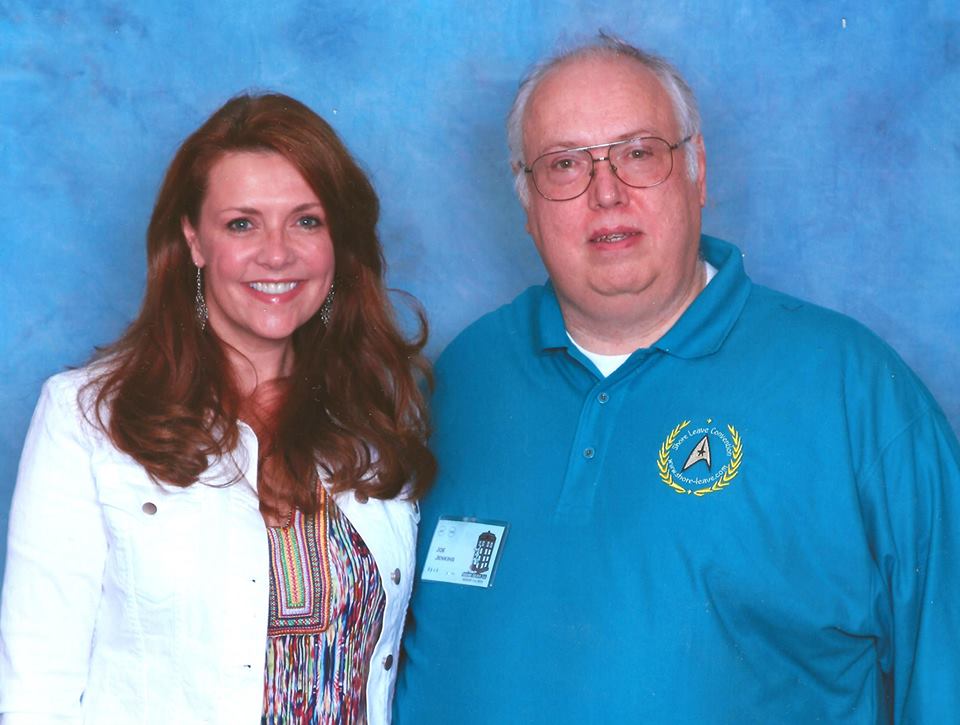
Father Joe with Amanda Tapping at Shoreleave Convention

1003764_10151593409178435_2144398694_n

Here is Father Joe with Amanda Tapping who plays Samantha Carter on Stargate SG-1 and Helen Magnus on Sanctuary.

Priestly Celibacy – Based Upon Christ

Discussions about priestly celibacy usually cite the universal catechism or Pope John Paul II or canon law or an elevated asceticism. Indeed, there are theologians who quote ecclesial laws as if they were Sacred Scripture. Do not get me wrong, our laws are important, but only in so far as they keep good order in the Church and safeguard essential truths. We do not follow the law for the law’s sake. The conditions for holiness are not limited to those who most renounce the world or who engage in the most rigorist of mortifications, penances and sacrifices. Marriage does not close the door to holiness and celibacy does not guarantee it as a merited prize. Ultimately, everything for the Christian comes back to Christ and everything is gift. Ours is not a religion of a book or of laws or a philosophy of life and meaning. No, the Catholic Christian faith, as complex as it may seem, still comes down to a personal and corporate faith in Jesus Christ. We follow a person, the eternal Word, the incarnate Christ, God made man. Jesus is Lord and Savior and Messiah. His is the saving name. There is no other way to the Father except through him. He is the one high priest. He is the pontifex or bridge from the mortal world of sin and death to the promised kingdom of salvation, eternal life and communion with God and the saints. Both the priesthood and celibacy find their measure in Jesus. Ordained men share in his priesthood. They act in his name. Priestly celibacy resonates in harmony with the virginal priesthood of our Lord. The Church deems this as having significant value and so she makes celibacy mandatory and absolute, at least for most of the presbyterate.

Celibacy is rooted in Christ’s life and witness; much of the rest is window dressing. While celibacy gives the priest a wonderful freedom and facilitates his charge as an agent of the Church, this is only a fruit of his sacrifice, not its cause. It is also not motivated by any desire to escape the ordinary cares of the world and the demands of the flesh. These side-effects may be overly emphasized, but he is not so much running away from the world as he is racing toward the kingdom. The Reformed Protestant theologian, Karl Barth, speculated that the sin of the fallen angels was that they “tarried” or hesitated to do God’s will. Ultimately, there can be no hesitation, either from angels or from men. We cannot look back. Jesus tells a disciple to let the dead bury the dead. While there is a degree of hyperbole, he says that he who would turn back even to assist family is not worthy of him. There is an urgency to the coming kingdom and the work that must be done. Celibacy, in Christ and in his priests, communicates this divine imperative.

Priestly Celibacy – Visions of the Church

It is in light of serious debates over the substance of faith and morals that certain critics wonder why we have purposely sidelined ourselves to apologetics over the accidental of celibacy? They would say that if it be not essential and of original divine mandate, then we are needlessly complicating the dialogue of faith and hampering evangelization. What is more important, the priesthood or celibacy? What is more pressing, making sure that priests sleep alone in their beds or staffing parishes where the flock hungers for the Eucharist? Is the millennium-long tradition of celibacy worth deprivation of hurting people from the healing sacraments and from the absolution of their sins? These critics feel the argument over celibacy is a cuckoo in the nest, a substitute for the real egg that should be there. However, it is my contention that the meaning and value of celibacy comes not just from men but from God. It cannot be honestly dismissed out-of-hand.

Celibacy and marriage are both vocations but also themes that intersect how we bring the saving kerygma to the world around us. Marriage speaks to cooperation and partnership. It is open to dialogue with the world. Celibacy is representative of being a sign of contradiction. We are called to do battle with the world, the devil and the flesh. We struggle as Catholics with both attitudes. Much of this has fueled the tension after the Second Vatican Council. We embrace a certain religious freedom for ourselves, and by practical necessity, for others; and yet, all the while maintaining the proposition that error has no rights. The Catholic Church is the true Church. We pursue a course of ecumenism but always skirting the perilous cliff of religious indifferentism. The kernel or seed remains the same; we embrace dialogue over anaphora for the same purpose, the conversion of souls to Catholic truth. There is give-and-take about accidentals; but there can be no compromise upon substance. Truth is not relative but objective and fixed. We can look at it from different perspectives. Our appreciation can grow deeper but the deposit of faith is passed on only, not reinvented. Marriage and family life is the vocation of dialogue: entailing compromise, diplomatic speech, intimacy, touching, and sometimes confusion and messiness. Celibacy is the vocation of decree: along with obstinacy, command, distance, bulwarks, discipline and order. These themes are not absolute but they are illustrative of the necessary tension that is maintained in the Church. One might argue that the eclipse of celibacy would bode poorly against the dogmatic quality we find vital in Church authority and structure.

Sunday, 19th Week of Ordinary Time

SUNDAY, Week 19 – Homily Notes

“For in secret the holy children of the good were offering sacrifice and putting into effect with one accord the divine institution.”

God sees the whole picture. We do not. What we understand is limited to the current mess where we find ourselves. The past is fleeting and memory fails us. The future has yet to be realized and we know all too well how human plans often do not work out. But it is a tenet of faith that nothing can circumvent divine providence. Our first reading from Wisdom shows an early insight into this truth. Despite the faithlessness of men and women, God kept his promises. Of course, while they saw a family become a tribe become a great nation and then a spiritual people of faith; it is doubtful that they fully appreciated where God’s plans would take them. It was enough in ancient days to know that God was good and that he had called them to be his children. They offered sacrifices to the one true God and rejoiced in the covenant they shared. As the people of the promise, one day the Messiah would come and as the great high priest he would offer the true oblation of atonement. The covenant would be ratified and made brand new with the new and everlasting covenant in Christ’s blood.

“Blessed the people the Lord has chosen to be his own.”

The psalm response brings this point home. We especially, as the Church, are the blessed People of God. Do we really concentrate upon this blessing? We have so very much. We have the Bible, the sacraments, the Eucharist and the forgiveness of sins, the catechism, the Pope, the testimony of the ancient fathers and the legacy of the saints, we have the various forms of Christian prayer, especially the Rosary, and the list goes on and on. Blessings upon blessings are ours.

It all began with Abraham but it comes to fulfillment in Christ. This is the theme from our second reading, Hebrews. God would spare Isaac, but not his own Son. The prophets and patriarchs died in faith. But now we can embrace a faith, not simply of promise, but of realization. Christ conquers sin and death. We are no longer the devil’s property. We are truly God’s children in truth.

The Gospel speaks to our posture in the Church. Placing our treasure in Christ, we must be committed to his service and alert stewards ready for the Lord’s return. We are not the master of our lives. There might be much that we do not understand. Often, our efforts might seem pointless and we find ourselves counted as failures. None of this matters, because when we see the Lord, he will simply say, as he did to Peter, “Do you love me?” And then as he did for Peter, he will make reference to our mission or stewardship. Flowing from the first question, may come a second, “Have you been faithful?” If the answer is YES then he will tell us as he did in a parable of a faithful servant, “Come, share your Master’s joy!”

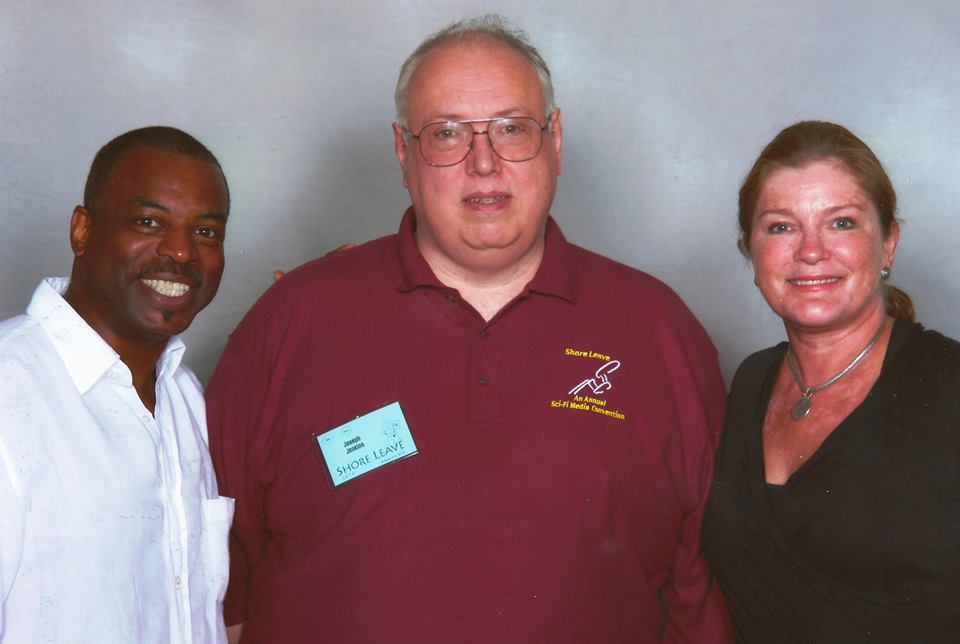
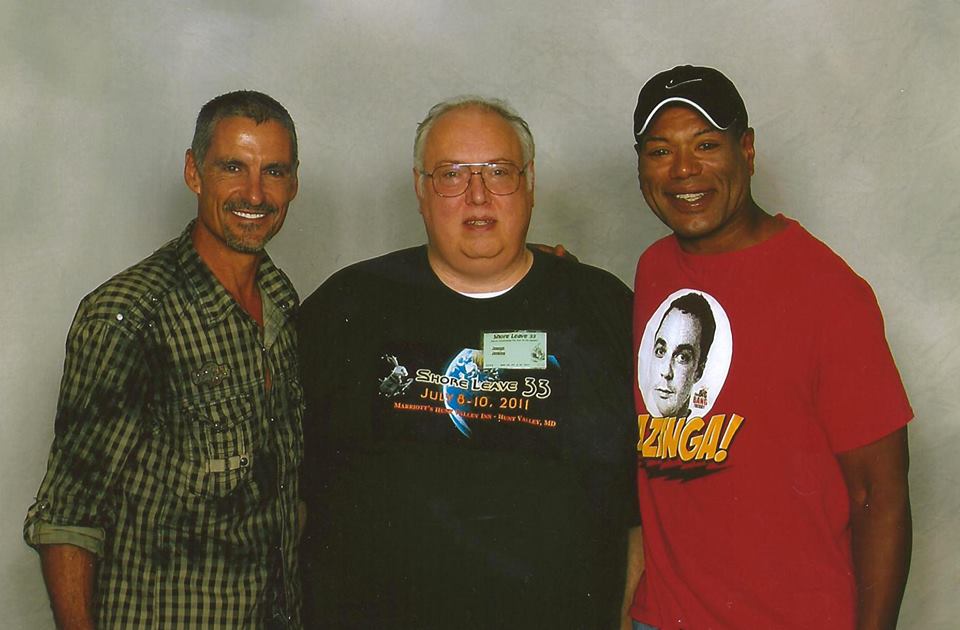
Father Joe at Shoreleave Convention – Data from Star Trek

971066_10151592061128435_843155548_n

Here is Father Joe with Brent Spiner (Data from Star Trek) and from Warehouse 13, Saul Rubinek (Artie) and Eddie McClintock (Pete).

Priestly Celibacy – Short-changing the Church?

A question that is increasingly coming into vogue with the emergence of Catholic Eastern rites in the West and the accommodation for former Anglicans is this: why should our priests of the Roman rite be deprived of modeling Christian fatherhood and spousal love as do the clergy of Protestant denominations? While there is no denial that a celibate priest can teach and preach on matters of marriage and sexual morality; this perspective merely stresses that we may be depriving ourselves of a wonderful witness for family life from the men who stand at our pulpits and altars. There is no denying that a married minister brings a certain experiential knowledge that has value. Similarly, though, the celibate priest brings a certain distance that may help us to discern issues from a more dispassionate or panoramic view. We can alternately be too far from an issue to offer any applicable solutions or too close to problems to see any available remedies.

The question remains, have we shortchanged ourselves without the recourse of optional celibacy or optional marriage for candidates seeking priestly ordination? Many of us would contend that the way out of this apparent conundrum is to better train and employ our married permanent deacons. They cannot celebrate Mass, hear confessions or anoint the sick; however, they can still witness as married men in sacramental ministry. Eastern rites and former Anglicans aside, just because Protestants have something that we do not is an insufficient rationale for a change. Many non-Catholic faith communities also have women ministers and Pope Francis has reiterated the infallible prohibition of both Benedict XVI and John Paul II that priests must be male. However, we can again cite our current Pope who invites us to be more inviting and enterprising at finding authentic ways for women to serve the Lord and his Church.

Priestly Celibacy – Qualified to Instruct Couples?

Marriage preparation can be quite an ordeal for the celibate priest, not because he is ignorant or because he is envious of what these couples possess; but rather due to the lack of faith that is increasingly brought to these forums. Couples are often having sex and living together before marriage. They want a church wedding for aesthetic reasons or because of parental pressure; but they, themselves, neither practice their faith nor give much thought to Catholic truths. The priest comes across as an intrusive busybody who wants to know their business and then tries to tell them how to behave. The response is either anger or ridicule. “Who are you to tell us what to do? Just because you cannot ‘get laid’ is no reason to tell us that we should not have sex! We love each other. If only you loved someone or had someone to love you, then you would know. You’re not even fully a man! Just tell us what is the minimum we have to do to get married. That is all we want from you!” As an effort to avoid such confrontations, either the priest relinquishes his moral authority behind silence or humor, or the couple will purposely deceive the priest and conceal fornication and cohabitation. Such a situation might be similar for a married minister, with the exception that he would not be mocked as an ignoramus for being celibate. Nevertheless, it is into this setting that the celibate priest should still instruct upon the sacrament of marriage, the openness to human life, the value of coming to the marriage bed undefiled, and the theology of the body. Retaliating against criticism, some priests will argue that a celibate priest can speak about such themes just as a doctor can be informed as to how to treat cancer, without having cancer, himself. The problem with this analogy is that marriage is compared to a disease. A better analogy might be with the astronomer. He can tell you all about the moon even though he personally has never walked there. Similarly, before you drove a car, you studied and had to pass a test on the manual which gave you pointers and rules for the road. Sex and marriage are far more complicated than driving. The priest speaks not for himself but from the experience of the Church and her teachings, as in the universal catechism. Important guidance is given as to how couples can live out their marriages, sacramentally and naturally. Love and joy are enhanced by such positive direction, yes, even if it comes from a celibate priest. But he does not stand alone. There are many married Catholic lay men and women who stand with him and give witness to the truth and value of Catholic teachings.

Priestly Celibacy – The Loss of Credibility

Given the loss of esteem given celibacy and the higher levels of education available in the West to the laity, the teachings from a priest, monk or nun on the subject of sexuality and marriage have lost a great deal of credibility.  This is a fact that we must acknowledge and seek to resolve.  In days gone by, the priest was one of the few people in a community who could read and had gone to school.  Many of the immigrant families tell me that their grandparents would seek the priest’s advice for about everything, not just on faith and morals.  The celibate priest was given incredible moral authority.  The enemies of the Church knew well that the only way to undermine Catholic teaching and values was to devalue the clergy.  The criminal abuse cases had accomplished what our enemies long desired.  The abuse scandals, the defections of priests from ministry, and publicizing their affairs in books, has also done much harm.  They might argue that such was only to force a discussion; but the actual effect has been scandal and ridicule against the so-called institutional Church.  The defectors, themselves, clamor that no institution can demand perpetual celibacy.  Little or nothing is said about personal culpability, promises freely made and then broken, and entanglements with women that were sinful.

The infamous Father Cutie scandal in Florida is a case in point:  he has an affair, gets caught, jumps to the Episcopal church without a word to his bishop, marries a divorced woman, writes a book, and is given a forum from the secular news to continue spreading his rebellious discontent.  There is almost nothing about what he did that one could judge as commendable.  He was a disgrace from beginning to end.  Now he belongs to the church of priestesses, contraception, multiple marriages, and gay unions.  If he has no ideological issues with that then good riddance…they can keep him.  I do not see how any authentically Catholic-minded priest could suffer such nonsense, and bring excommunication upon himself and judgment down on someone he claims to love.  But that is me.  God will be his judge.