
• Our Blogger

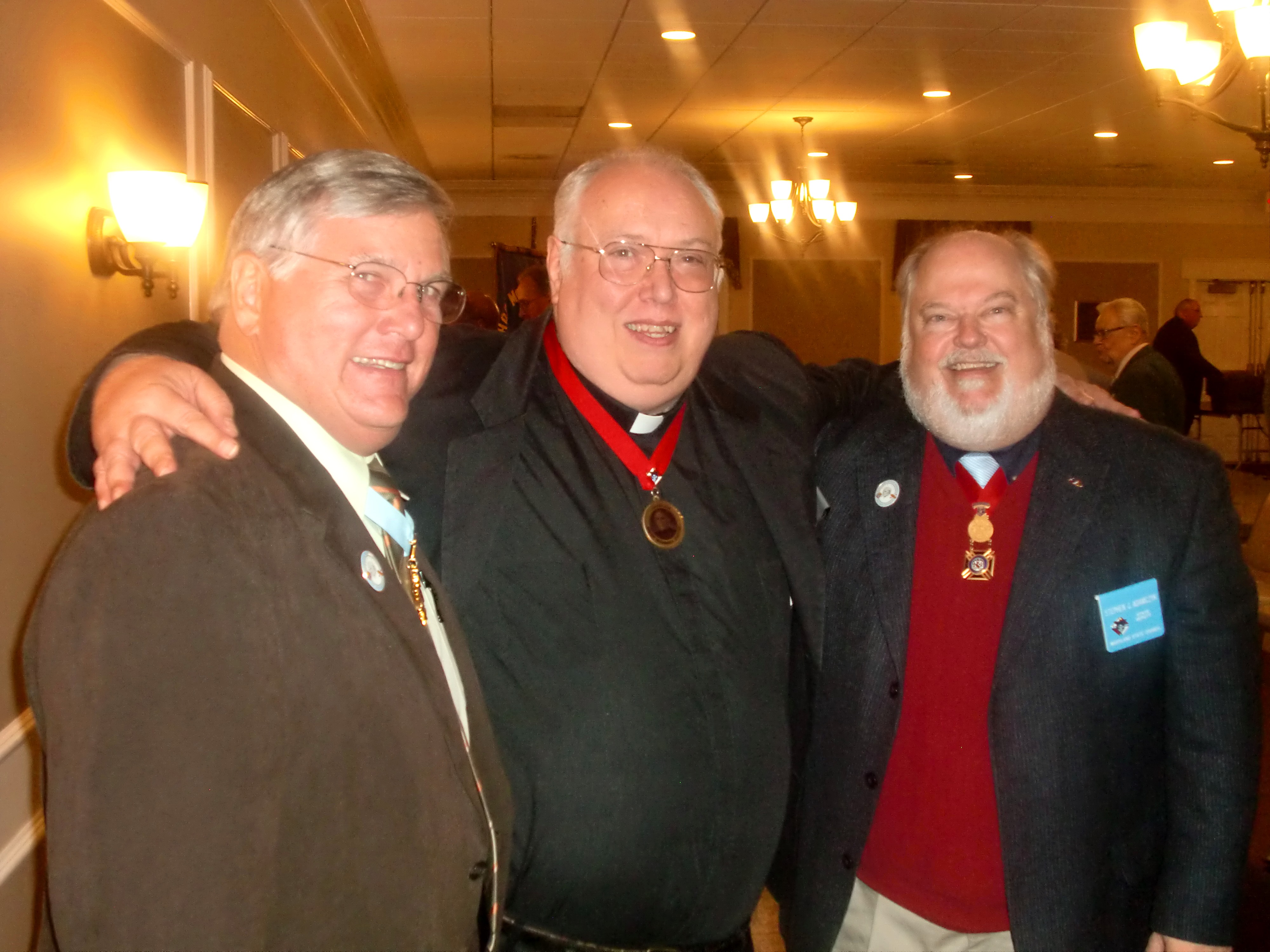
    Fr. Joseph Jenkins

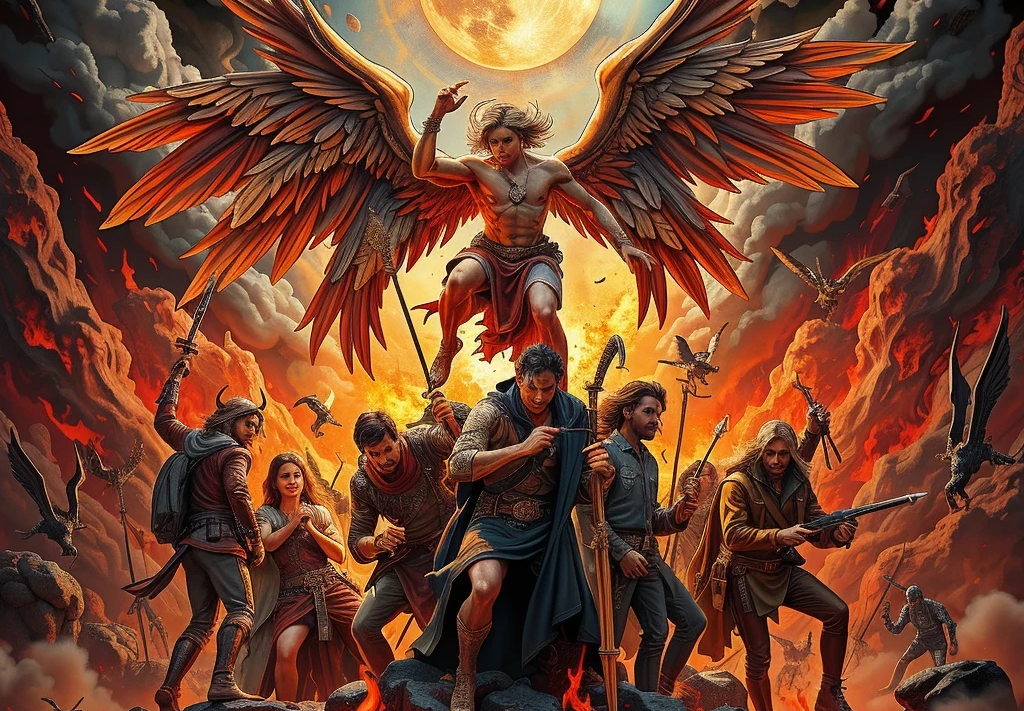
  • An important theme for this blog is the scene in the New Testament where Jesus can be found FLOGGING the money-changers out of the temple. My header above depicts a priest FLOGGING the devils that distort the faith and assault believers. The faith that gives us consolation can and should also make us very uncomfortable. Both Divine Mercy and Divine Justice meet in Jesus. Priests are ministers of reconciliation, but never at the cost of truth. In or out of season, we must be courageous in preaching and living out the Gospel of Life. The title of my blog is a play on words, not Flogger Priest but Blogger Priest.

  • Archives

  • Categories

  • Recent Posts

  • Recent Comments

    Inveilis's avatarInveilis on Ask a Priest
    Joanne M Rowan's avatarJoanne M Rowan on Reflecting Upon SSPX Dissent…
    Joanne M Rowan's avatarJoanne M Rowan on The SSPX Makes It Itself Out M…
    Jeremy's avatarJeremy on Ask a Priest
    Father Joe's avatarFather Joe on How a Celibate Priest Looks at…

Beware a False Christ with No Power to Help Us

Put bluntly, the counterfeit Jesus of posturing Christians has no power to save. He is not real.  Such souls will have a true existential shock when they encounter the true Messiah and Savior. Those who trust in the Lord are summoned to a transformation in Christ. Mentally configuring Jesus into our own alter ego is a backward act that serves no purpose other than self-deception. Of course, this false Jesus may have substance in that the demonic can masquerade as holy personages and deities. This assessment of idols extends back to the first martyrs. They suffered torture and death at the bloody spectacle of the arena for failing to worship the emperor and the pagan pantheon of gods. The associated bloodlust was a sure indication that the pagan deities had an association with the demons and the devil.  We must always be wary of a darkness that feigns being light.

Saints are made on earth, not in heaven.  We are molded by our actions and by the intervention of divine grace.  Actual grace helps us to behave as God’s children in this world, ensuring that we will be receptive and retentive of saving grace. Sanctifying grace makes us worthy of heaven and the beatific vision.  Finding an analogy in modern science fiction, numerous futurists predict as an alternative to terraforming planets, that a super science might seek to biologically augment human beings to accommodate planetary environments otherwise inhospitable for human life. While this is farfetched, it is our conviction that divine grace and the sacraments condition us for the sacred environment of heaven.  Humanity must be healed of original sin, weaned from concupiscence, and made able to breathe the air of eternal joy over that of proximate pleasures.  The mutable and mortal must give way to the perfect and immortal.  We must be reborn or made brand new. Similarly, the absence of grace will not only fail to sustain the new man but leave the natural man gasping for air. This world is passing.  Heaven is the only way to get off before it is too late.  The devil would prefer to leave us stranded. That is enough for him to steal souls. But the devil is not satisfied with inaction, he exploits human weakness and fear. He imposes vice over virtue. He would condition us for a habitation of bondage and darkness. It is somewhat ironic that we associate hell with fire because it is a flame that offers no illumination. It is a fire that blinds and casts all in the darkness of night. By contrast, our Lord calls us to a new beginning, a new day.   

Hell Bound: Dissent & Dishonoring God

What is heaven? Heaven is where we find God. Sin reflects a prevailing failure to love, either in hatred or indifference. The damned would not want any part of this love, either here on earth or in heaven. God is not a cherished part of their life. They might readily manipulate others, but they refuse to really care for their neighbor. What do saints and angels do in heaven? They worship God as the Holy, Holy, Holy. By contrast, if so-called Catholics cannot tolerate an hour a week at Sunday Mass, then why would they want to spend eternity at the nuptial banquet for the Lamb of God?

Those who reject the testimony of Scripture, dissenting from the teachings of the Church, already have one foot in hell. We are obliged to accept what has been revealed by God. We must obey the commandments. None of us should cast ourselves outside the pale of Christ, the one who is the Light of the World. What the children of darkness presume as enlightenment is in truth error and eternal night. While it is true that saints need not always be right, just holy; there must still be an assent from Catholics to the foundational truths and values of the faith. Otherwise, one is saying, “Not Thy will, but my will be done.” This is a critical contradiction to the kerygma, itself. One does not have to have a degree in theology but one should appreciate the creed and the commandments. Dissenters will often fashion a caricature of Jesus that is in contradiction to the one who appears in the New Testament and in the constant preaching of the Church. What dissenters fail to grasp is that “their Jesus” stands neither on the firm foundation of Scripture nor of Tradition. Those who would abandon the barque of Peter must seek refuge upon the worthless driftwood or flotsam of human whim and proximate pleasures. Instead of the moral base grounded upon natural and divine positive law, values emerge from a sham individualism that has no rudder other than the media and politics of secular humanism. The guideposts are literally the deadly sins. The worst of the lot is arguably pride as it most earned the ire of Christ against the pharisees. It makes a place for the other six sins. It poisons communion with God.

Providence & Human Freedom

The stopgap of purgatory fuels our trust in Christ’s mercy but should not fool us into thinking it is a certain backdoor to heaven. We must aim for heaven. Anything less and we risk missing the target altogether. None of this means that salvation is a gamble. Those with a faith realized in loving obedience can walk in the sure and certain hope of their salvation in Christ. There is a profound mystery in this regard between the providence of God and human freedom, in either cooperating with or inhibiting the movement of divine grace.

As believers, the prospect of perdition might seem harsh, but God loved us so much that he wanted our loving response to him to be free. He could have made us like mindless robots or insects controlled by instinct; however, we were made in the image of God— by nature shy of the dignity belonging to angels, but as consciously aware, unique intermediaries between the spiritual and material worlds.

Divine judgment might seem harsh but ultimately, God gives us what we want. But do we really know what we want? I suspect that many have a false view of heaven where egos are bloated and narcissism reigns. This is a far cry from the Christian view of heaven as a realm focused entirely upon the Trinity. We must become God-centered with a selfless empathy for others. Many self-possessed people would object to a necessary deflation or spiritual emptying, so that Christ might be all in all. Indeed, many apparently confuse the definitions of heaven and hell.

I have imagined that the judgment of God comes along with “a great awakening,” a moment of personal awareness where we see ourselves as we really are. Note that this supernatural divulgement comes at the end of life because to see ourselves as God sees us would be horrifying for most and many would likely drop dead. Such judgment relies both upon mercy and truth. The Lord will salvage what he can but in the final analysis the truth prevails. There can be no deception or false humility under this light of verity. God will not force us to love him or waylay souls over the threshold into heaven.

Fátima Confirms a Crowded Hell

Given his identity as a divine Person and the Savior, there is no avoiding the significance of Christ’s constant emphasis upon the reality and prospect of hell for many. Those critics who are quick to say that Jesus does not judge are fooling themselves and are in denial about our Lord’s stance in the Gospels. Indeed, while the number 144,000 for the Elect in the Book of Revelation may be symbolic, it is telling that the Bible admits to only a select few being saved. While there is a universal call to salvation, the unpleasant truth remains that while all humanity is the beneficiary of redemption, many misuse their freedom in rejecting the gift of salvation. We might hope and pray that the devil is lonely and that most go to heaven, but this is neither indicated by Scripture nor by the constant evidence of human iniquity. Indeed, the many apparitions of Mary attest to hell. The vision given to the children of Fátima is particularly frightening:

01. “. . . a vast sea of fire. Plunged in this fire, we saw the demons and the souls of the damned.”

02. “The latter were like transparent burning embers, all blackened or burnished bronze, having human forms.”

03. “They were floating about in that conflagration, now raised into the air by the flames which issued from within themselves, together with great clouds of smoke.”

04. “Now they fell back on every side like sparks in huge fires, without weight or equilibrium, amid shrieks and groans of pain and despair . . .”

05. “The demons were distinguished from the souls of the damned by their terrifying and repellent likeness to frightful and unknown animals, black and transparent like burning coals.”

The main element of the vision is fire. Lúcia admits that if it were not for the Blessed Mother’s promise of protection, they would have died from fright at the horrendous spectacle. It is interesting that she discerns a distinction between damned humanity and angelic demons. Men and women retain their human forms even though they have been blackened by the flames and have become translucent, thus lacking substance.

It is peculiar that the damned are thrashed about by explosive flames from within themselves. Note what Jesus says in John 14:23, “Whoever loves me will keep my word, and my Father will love him, and we will come to him and make our dwelling with him.” As with the natural world, the supernatural hates vacuum. Either we become temples to the Spirit of God and grace or else, something demonic will come to nest in the human heart. Hell is not simply around them but inside them.

The demons are similarly burned and transparent but are in the form of terrible beasts or monsters. There is nothing left of their angelic beauty.  

Evil Persons or Just Persons Doing Evil Acts?

I read a recent posting that quoted the Russian orthodox priest, John of Kronstadt, on the matter of evil. He said that evil is simply “a chance misfortune, an illness, a devilish reverie.” He went on to say, “But the very essence of the person is the image of God, and this remains in him despite every disfigurement.” I immediately felt a need to make a qualification. It is broken down into thirteen points.

First, it is true that every human person is made in the image of God. However, this is a characteristic of every human being, both the Christian and the unregenerate. This speaks to the natural dignity of all human beings.

Second, our spiritual adoption as sons and daughters of the Father through faith and baptism takes this to a higher supernatural level. This adds upon our human dignity, divinizing or perfecting our nature by grace. Even the damned in hell were made in the image of God, it is more important that we should be remade into the likeness of Christ through the transformative power of divine grace.

Third, the essence of a person is the core of who he is.  This sense of identity is intricately tied up with all the things that make each of us who we are— our values, faith, relationships, learning, emotions, etc. This is the awareness of self that we take with us in our trajectory of existence. Angels are purely “spiritual persons.” Men and women are “human persons,” literally spiritual-corporeal composites. A human person is neither a corpse nor just a ghost. That is why the resurrection of the body is essential. (The infused soul is understood as the locus for the mind and will. Dietrich von Hildebrand would also distinguish the “heart”). Jesus as the Son of God shares our human nature and even has a human soul; however, he is also the eternal Logos or Word and is thus a “divine person.” Personhood answers the question, “Who are you?” Jesus is God.    

Fourth, the Catholic faith has a rich Christian anthropology that targets the human person, the plight of sin (both personal and original), his awareness, the matter of conscience, the value of virtue and the detriment of vice, and the supernatural impact of both sanctifying and actual grace.

Fifth, evil is not a mere accident like stumbling over a rock. While we reject strict determinism, nothing really happens by chance. The mysterious providence of God both directs an active divine intervention and permits a passive tolerance for natural maladies and the use and misuse of human freedom.

Sixth, fault is always on our side of the equation. All moral evil has a human or angelic agent. The primordial fall itself unleashed the further calamity of natural evil. Creation is good but damaged.

Seventh, while evil or sin might be likened to an illness or contagion, our Lord has given us the remedy in faith and the sacraments. More than a devilish “reverie,” evil is a negation, a miscalibration— more a deception than a fantasy. 

Eighth, while our Lord can forgive evil acts, they cannot be blindly excused. Our Lord surrenders his life for sinners, as an act of satisfaction or propitiation for sin. He pays the price we cannot pay. Mercy is real but justice must be preserved. We must want to be forgiven. We must know a disposition in faith and sorrow for forgiveness. Indeed, it is evil that makes the incarnation and the subsequent redemptive act of Christ so very crucial. The gravity of evil is not in the acts but in the “persons” that commit them. We are properly formed by sacrifice and virtue. We are disfigured by selfishness and vice. The saints cooperate with divine grace and live out the commandments in love. The damned reject the favor and helps of God, preferring rebellion and self over others and the Lord. Putting it bluntly, if you do bad things then you may become a “bad” man or woman.

Ninth, our likeness to Christ can be forfeited by serious sin. It is a dogmatic teaching that there is no such thing as absolute evil, either angelic or human. Such would constitute the absurdity of metaphysical negation. This teaching is linked to the teaching of hell and the divine economy against annihilation. Nevertheless, evil need not be absolute to be damning. Unrepentant sin and hubris corrupt the person and distorts the likeness made possible by grace. While repentance and conversion are possible, a pattern of iniquity makes it increasingly unlikely. Such people become what Dr. Scott Peck calls “the People of the Lie.” While the Lord’s mercy is immense, his judgment is real and severe.

Tenth, priests would have penitents confess evil acts but ultimately their focus is upon the status of the person. Absolution is directed toward a person needing forgiveness and healing.  A condition for mercy is sorrow for sin and amendment of life. The priest wants to fill the void left by sin in the person.  The devil has nothing to give. We need both sanctifying and actual grace. A person without such grace is like the walking dead.  Evil does not have to be absolute to be terrible and disfiguring. A Picaso painting of a person might be judged as a masterpiece, but if anyone actually resembled it, he or she would be judged a monstrosity. Any natural goodness becomes mute if we should die and face judgment while in deadly sin.  Again, one can be evil without that iniquity being absolute. Such evil does not even require us to clearly hate God or neighbor. Indifference and not caring is sufficient to damn a soul.

Eleventh, most if not all of us wear masks, even virtuous men and women. Humility might hide the advanced compassion and holiness of a good person. We would urge the saints not to hide their light under a basket as it can guide others to the truth. Some would argue that sin and evil is a mask that certain people place before their goodness as creatures made in the image of God. I suspect that what is more common is a mask of false sanctity and charity worn to disguise that which is foul and selfish. There are also plenty of wolves in sheep’s clothing seeking to devour the flock. Is that not part of the scandal around abusive clergy? Yes, and about this we need an intense transparency. Evil must not be allowed to hide. Martin Luther argued for juridical imputation— that one is saved by disguise, literally allowing Jesus to stand before us and the Father. Catholicism would claim transformation— that the heavenly Father must see his Son alive inside of us.  The plight of sin is that it would deprive us of this indwelling and that supernatural advancement of human nature.

Twelfth, if evil can be a mask, it is a poor one that always disfigures our likeness, even when it is removed through divine judgment. Just as we can be perfected by grace, we can become corrupted by vice— we literally become the lie. I am reminded of an episode of The Twilight Zone entitled “The Masks.” Taking place on Mardi Gras, a dying man coerces his family members into wearing grotesque masks reflective of their dark personalities. When it comes time to remove them, their faces are found to be molded into the ugly caricatures.  Sin is more than hiding behind a lie. One can also become the lie.  

Thirteenth, Jesus speaks to how evil disfigures the person. Referencing the ungodly and hypocritical, he states: “You belong to your father the devil and you willingly carry out your father’s desires. He was a murderer from the beginning and does not stand in truth, because there is no truth in him. When he tells a lie, he speaks in character, because he is a liar and the father of lies” (John 8:44). He also says: “Thus you bear witness against yourselves that you are the children of those who murdered the prophets; now fill up what your ancestors measured out! You serpents, you brood of vipers, how can you flee from the judgment of Gehenna?” (Matthew 23:31-33).

I become so infuriated with a presumptuous Pollyanna faith. We must remember that saints are made on earth, not in heaven. Salvation is a gift, but we must truly desire the gift. We are not promised perfect happiness in this world and death will not procure it for everyone. Evil is real and it is more than an accident or a mask to the good. It infects and corrupts and disfigures the person. Hell is real and the damned fashion it in the here-and-now. They carry it around with them. Like Milton’s Satan, they can cry out, “I myself am hell.” The tragedy is that many resist the grace and mercy of God. The two great motivations in the life of every Christian should be to worship the Lord and to save souls. Love is indeed the answer, but too often it is found wanting. We fail to pray. Many neglect the Mass. Too many are indifferent to the poverty, pain and oppression of others.

What Did the Pope Say about Interfaith Dialogue?

Pope Francis left his scripted remarks and spoke “spontaneously” to the youth of Singapore on Friday, September 13, 2024. The Holy Father made a distinction between a courageous person who seeks the truth as a “critical” thinker and the critic with “endless words” who offers “destructive criticism.” He asked them this question, “Do you have the courage to criticize but also the courage to let others criticize you?”

Impressed with the capacity of youth for interfaith dialogue, he stated: “This is very important because if you start arguing, ‘My religion is more important than yours…,’ or ‘Mine is the true one, yours is not true….,’ where does this lead?” One of the young people answered, “Destruction,” and the Pope responded, “That is correct.”

He went on to say, “Religions are seen as paths trying to reach God. I will use an analogy; they are like different languages that express the divine. But God is for everyone, and therefore, we are all God’s children. ‘But my God is more important than yours!’ Is this true? There is only one God, and religions are like languages that try to express ways to approach God. Some Sikh, some Muslim, some Hindu, some Christian. Understand? Yet, interfaith dialogue among young people takes courage. The age of youth is the age of courage, but you can misuse this courage to do things that will not help you. Instead, you should have courage to move forward and to dialogue.”

He went on to speak about the need for respect and the danger of bullying. He concluded by saying, “And now, in silence, let us pray for each other. In silence. May God bless all of us. In the future, when you are no longer young, but you are elderly and grandparents, teach all these things to your children. God bless you and pray for me, don’t forget! But pray for, not against!”

Is the Holy Father’s emphasis the methodology of dialogue or the reality of God as revealed in world religions? I suspect it is the former. It is true that interfaith dialogue does not go very far when the different sides disrespect and deride each other. People of conviction feel that they are right and take exception to challenges toward what they believe. Pope Francis is correct that we must resist the temptation to argue and name-call.  Civility demands that we temper our emotions, especially against criticisms that are quickly taken to heart and are painful.  Those of us with pugnacious natures, instinctively want to hit back.  History is largely written with such a lack of toleration that leads to violence, censorship, holy wars, torture, imprisonment and even death. The language of hate allows for no dialogue and little in the way of successful debates. Instead of discussing ideas, there is a harsh attack against persons— the opposition are decried as “heretics,” “heathens,” and “infidels.”

Each of us likely believes that his or her religion is the best or the truest, such is even the case for atheists who posit their non-religion or anti-religion as having a higher epistemological value. As Catholics, the most resolute believers are correct to maintain that our faith is the genuine revelation of God through the mediation of Jesus Christ. The New Covenant is the consummation of the Old. Both Judaism and Christianity are judged as true religions. Of course, a natural religion has been surpassed by a supernatural religion that understands God to be both one and a Trinity. Other religions may have elements of the truth, but they are also weighed down by serious errors. Traditionally, apologetics would list all the many false teachings and practices of these other belief systems. By contrast, Pope Francis is saying that this is not where dialogue begins. Such an approach closes minds to the truth and to any possible consensus. It is best to begin dialogue by examining the elements of faith that are shared.  This will vary between creeds. Catholics and Jews both embrace Abraham as our father in faith. We have taken the Hebrew Scriptures as our own. Islam also believes in one God and claims facets of a shared revelation. The Hindus are arguably polytheists, but some of their modern-day teachers suggest that their many deities may in truth be manifestations of a single God. Where such thinking will go, I cannot say. Even if there should be no or little congruence on matters of theology, dialogue can be judged as successful if we learn to live in peace and to work together for a better world where human rights and freedoms are respected.     

Yes, religions are seen as paths to reach God. However, we as Jews and Catholics understand religion as also the story of how God comes looking for us.  There is a two-fold movement. God establishes relationships (covenants) with his people. The analogy of religions as different languages to express the divine is accurate. Left unsaid is that some languages are better in their evocative and descriptive power. Christianity not only espouses God-talk but has been given the revelation of how the eternal Word becomes flesh. The lack of such an appreciation is a defect that handicaps all other religions. God gives us his Word in Scripture, but more importantly writes his revelation upon human flesh in the incarnation. Jesus is the face of God and the revelation of the Father. He is the way and the truth and the life.  There is no way to the Father except through him. Other religions, if they do not go off in the wrong direction, can only take their adherents to the door of the kingdom; it is Christ that lets us inside. His Church and the sacraments constitute the key to that door. 

Are we all God’s children? As in the catechism and at Vatican II, a distinction must be made. Spiritually, through faith and baptism, we are made adopted sons and daughters of the Father. It is in this sense of grace and a new creation, that those of other religions are not children of God. However, the meaning of Pope Francis is in the sense of creation. All in the human family are creatures and children of the earth. Our source is almighty God. Regeneration aside, we are all arguably children made in the image of God. We are creatures of flesh and blood and soul. We are so much more than the animals around us. This notion speaks to human dignity.  It is a major element of the Gospel of Life. In or outside the womb, God looks upon us with a Father’s love.

Knowing that he is speaking to a crowd of mixed faiths, Pope Francis asks that they might pray for each other in silence.  Notice that he prays that God might bless them, but he refrains from asserting the saving name of Jesus.  While we might question timidity regarding the name of Jesus and/or making the sign of the cross, we should remember Pope Francis’ words about courage. Certain Christians will not pray with Catholics. While we can pray the psalms with Jews, it is quite problematical to pray with non-Christians. We do not want to open such young people to rebuke or punishment from their own religious leaders. Importantly, we as Catholics must not subscribe to any form of religious indifferentism or the notion of universal salvation. Silent prayer is probably the best for all in such a situation.

ADDENDUM

Anyone with a smidgen of Italian can appreciate that the text on the Vatican website (yesterday) is not actually what the Pope said to young people in Singapore. Previous popes tended to be more careful with off-the-cuff or spontaneous remarks. Officially, the text that matters is the written one, today on the Vatican website and/or included in the published Acta.  

When I was informed about a translation change, I went immediately to the Vatican site. What the hell? The official translation had at least corrected the Pope’s remarks. Now, the Vatican has returned to what comes across as deeply problematical. Last night, the text read, “Religions are seen as paths trying to reach God.” Yes, this is true, regardless as to whether they do so. This morning it has been changed to “All religions are paths to God.” This is not true. Even those in false religions reject this notion. Reading further, the initial papal text asserted, “There is only one God, and religions are like languages that try to express ways to approach God.” Yes, this is true, even defective religions are efforts to approach the transcendent. But the new version is as wrong as wrong can get, “There is only one God, and religions are like languages, paths to reach God.” Not all religions target the true God. Indeed, it is Christ as the term of salvation that makes possible our reconciliation with the Father.  None are saved apart from Christ and his Church. Further, not all religions are the same. Satanism and demon worship are counted as religions, but there is no redemption, just alienation and loss. Certain religions worship false gods or even demons.  

What Makes You So Sure That There’s Only One God?

Krystal Smith poses this question at STAPLER CONFESSIONS and states: “Most believers take the Bible or whatever their religious text may be as absolute truth. This is a matter of faith, something that atheists often have a hard time understanding or relating to.  Atheists often point out the unknowable nature of an all powerful creator or concept of God or many gods. Without scientific proof, they find it illogical to believe so strongly in something that plays such an important role.”

Critics of Scripture often play fast and loose with how Christian believers regard and use the Bible.  But of course, there is no unanimity between believers either. Protestant fundamentalists who believe in the Bible alone are a far cry away from Catholic integralists who interpret the Bible against the horizon of Sacred Tradition. There is also the tension between private interpretation and magisterial teaching authority.  The issue is not just that atheists reject “the book,” but they general question any supposed revelation or communication from God as either delusion or as deception.  Many refuse to seriously consider the arguments of either theologians or philosophers.  If God cannot be shown through their microscopes or telescopes, then no ground is given for his existence. 

While the atheist may find it illogical to believe in a “God” proclaimed from a book and not proven from science to his satisfaction, there may be far more anxiety with the prospect that we are alone and unloved in this vast universe. It is here that Pascal’s wager speaks to the agnostic. Pascal argued that if you believe in God and this truth should be realized, then you win everything. Whereas if he does not exist, then you have lost nothing regardless of your stance. While insightful, this approach is unsatisfactory for the believer because faith is about more than hedging your bets.    

The atheist narrows truth to the scientific and even that is restricted by their bias.  They make no distinction between the belief of one God and the notion of multiple deities.  However, Christians, Jews and Moslems insist that there is a God and he is ONE. True, Christians speak of a Trinity, but he is defined as one divine nature in three divine Persons.  The multiple deities of ancient pagans and the present-day Hindus are treated as idolatry and superstition.  Here we would agree with atheists. There are indeed counterfeit religions and false gods. The early Christians regarded the pagan gods as demons in disguise.  The Judaeo-Christian appreciation of one God signified a step forward to true religion and away from magic.

The pagan gods often behaved badly, and some were not even regarded as immortal.  They were more like the Marvel comics vision of such gods as super-powerful aliens.  Look at how Catholicism defines and speaks about God. He has within himself all perfections and is the Creator of all things.  You cannot have two omnipotent beings because such would cancel each other out.  God is perfect and that means he must logically be simple or one.  All creatures receive their existence from God or participate or share in his existence.  Nothing can exist apart from him. He keeps all things in being.

While we do not see God face-to-face, we know him in the created order from his effects. Revealing himself to us in salvation history, the God of reason becomes the God of faith.  He wants to establish a relationship with us. Sacred signs or miracles are performed to help our unbelief.            

Do You Believe People Can Still Be Moral Without Religion?

Krystal Smith poses this question at STAPLER CONFESSIONS and states: “Religion provides guidance for many people. It set laws and rules for ancient societies to abide by. And many religious people feel these laws are necessary to dictate what is right and wrong for humankind.  Many atheists feel that morality is innate and modern society’s laws are sufficient to govern mankind.”

The Church had hoped that a healthy universal respect for natural law would bring consensus and cooperation in forming a better and moral society.  However, the current clash in values is readily interpreted by believers as ample evidence that apart from God, men and women do not know how to be good. We would likely agree with the more reasonable atheists that there should be an innate sense of right and wrong, at least for most people. But we should not forget that human nature while good is also fallen. 

Morality includes not only prohibitive acts but also altruism for the good of others and the poor.  Ayn Rand’s thinking is particularly popular among conservative politicians on the right. She would also appeal to atheists. Her philosophy of selfishness shuns expressions of charity. It has been noted by certain atheists themselves that the charity and social justice efforts are disproportionately linked to churches and religious people.  Both the civil rights efforts for racial integration and the marches for the lives of the unborn are heavily populated by believers. The faithful and Christian organizations are often the first on the ground to support the poor and disadvantaged. Where would they be if people of faith were to disappear?    

Many a believer has prayed that he might be spared from the terrible compassion of non-believers with benign intentions but with a lack of guidance about right or wrong.  A mother panics about an unplanned pregnancy and destroys her unborn baby. A family frets about the pain that an elderly grandmother suffers and opts for euthanization to end her misery. The Christian places ultimate trust in God. By contrast, the atheist must place his trust in mankind alone, and in practice this means politicians and the state.  While believers speak of inalienable and God-given rights, what the state gives, the state can take away. Right and wrong becomes a capricious exercise of pandering to power. The wealthy and powerful will always win in this scenario. The poor and the weak will be victimized and manipulated.  It is in recognizing God that we safeguard human dignity and rights.  Nothing else satisfies as well.

Why Have So Many Wars Have Been Fought in the Name of Religion?

Krystal Smith poses this question at STAPLER CONFESSIONS and states: “From biblical times to modern day, it’s true that many wars have been fought in the name of religion. From the Spanish Inquisition and the Crusades, to modern religious extremists and terror attacks, many have suffered. However, most religious people don’t support going to war with people who have different beliefs. Those who have been mislead to resort to violence fail to see the peaceful messages that are present in virtually all religious texts. Some atheists feel that the world would be more peaceful without the impact of any religions.”

Were there many wars fought over religion? While Hitler ordered the holocaust of six million Jews, it was not really a war over religion. The first World War had to do with clashing empires, alliances and money. The Japanese wanted sovereignty over Asia and control of the Pacific Ocean. Korea and Vietnam was all about the aggression of Chinese atheistic Communism. The Inquisition employed religion as a tool but besides stamping out heresy was essentially a political effort to secure Europe from Moslem occupation. The Crusades preserved Europe from Islamic invasion. Religion was a factor in the Crusades because it was hoped that the Holy Land might be reopened to pilgrims. Religion is merely one factor among many in such questions about human congress and tension. It is not necessarily the single root-cause for hostilities.

Speaking in terms of Christianity, the pacifism of the earliest believers became increasing impracticable and hard to sustain. Believers were martyred like the killing of flies.  The Roman empire opposed the new religion because Christianity was intolerant of paganism and believers refused to compromise. One could not worship idols or the demons they signified and still claim the lordship of Jesus Christ. Old Rome saw the emergence of Christianity as a political threat to the empire— especially the language about turning the cheek, giving to those who take from you, and loving your enemies. Christians joined with Constantine to bring three centuries of persecution to an end. When it came to the relationship between the Church and Islam, the weight of guilt was more heavily upon Islam and its notion of jihad or holy war to force religious submission.  Islam was to Europe what the Soviet Union was to us during the Cold War. Our faith and civilization were all at stake.  The inquisition expelled an enemy from our midst. The crusades sought to open the holy land to pilgrims.  The tensions between Protestants and Catholics in Europe were part of a struggle for political power between princes, kings, and the Church.  The conflict was more about temporal matters than spiritual ones.   

While there are many apologists who argue that militant Islam is an aberration to a religion of peace, in truth every place that becomes 51% Islam experiences a repression of Christians, Jews and others.  We would concur with atheists that God’s children should not kill each other over religion; however, Christian believers have a right to defend themselves. When this becomes impossible, as with the Coptic men who had their throats cut, there is a witness to how we should remain faithful even if we must die. 

Those atheists who think that a world without religion would be more peaceful are delusional. Atheism has been tried, and as with Stalin, millions suffered the loss of rights and incarceration in the gulags. He killed 20 million of his own people.  The atheists who claim political power, subsequently treat their anti-god philosophy like a religion, seeking converts not through argument but through war and revolution.  When God is taken out of the picture, men assume his throne.  There can never be a vacuum.  While critics lament God’s laws and judgment, the verdict of men is much harsher. Separated from the Divine Mercy, why should we be surprised?

Do You Believe Everything in Your Holy Text?

Krystal Smith poses this question at STAPLER CONFESSIONS and states: “Religious people typically accept their holy text as the word of God, verbatim. This can cause friction with modern concepts of personal freedom and liberties that didn’t exist in biblical times. Some atheists criticize the archaic laws and customs of the Bible, and insist that it’s outdated and shouldn’t be followed by modern people.”

First, the Bible is not a morality manual. That which is taught must be understood in a contextual way and not quoted as isolated proof texts. Second, everything taught in the Old Testament must be appreciated in the context of its times and culture.  No one today would seek to impose stoning or beheading for either adultery or idolatry. Third, the message of Jesus in his words and actions constitutes the prism for understanding the entire Bible. Fourth, not every law or custom in the Bible is meant to have lasting significance. We must discern between the transitory and lasting. Fifth, Catholic morality and beliefs emerge from the Bible, Tradition, the teachings of the Church.  Sixth, added to the mix of divine positive law are the truths of natural law.  It is precisely a reflection upon the mystery of Christ that enlightens the believer about genuine human rights and the freedom that belongs to the dignity of persons.  Those who insist that the Bible creates friction with modern concepts of personal freedom are quite right as a non-Christian secular humanism has lost its way.  It not only tolerates but gives approbation to homosexual acts, gender dysphoria, fornication and adultery, and the destruction of the unborn.  Many critics would strip believers of their religious liberty. Those who would destroy the unborn forfeit the moral high ground to judge anyone.  Freedom was never meant to be a license for sin.  Freedom can be abused and become a type of bondage.  Part of the problem with the criticism is a wrongful definition of “freedom.”

While we may literally declare the Bible to be the revealed Word of God, immutable divine truths are interspersed with the truths of men.  This appreciation of the Word goes beyond the text to an appreciation of the divine presence of Christ. Our Lord is present in both the Word and in the sacrament or Eucharist. 

Few or none would argue that we as Christians must believe in or follow the Old Jewish juridical law. The atheists who reject the teachings of the Bible would put no faith in the teaching Church that is charged with the transmission and interpretation of sacred truths. The atheist wrongly views the Scriptures as entirely man-made and thus as having no binding force upon secular men and women.  Unfortunately, this includes more than customs but the Decalogue which underpins the traditional appreciation of right and wrong. Believers seek to promote virtue and discriminate against vice. And yet, separated from the sources of revelation, modern men find it difficult to distinguish between right and wrong. 

What is often omitted is that the so-called “archaic laws and customs” of the Bible became the underpinnings of Western culture for most of its 2,000 years. Something that was old and ever-new is brushed aside for the new morality and of an emerging secular society.  All that is old is rejected as obsolete and wrong while untried fads are given an unmerited importance. The commandments about God are utterly discarded. The commandment about objective truth is compromised by the deception of relativism where the subjectivity of politicians and the media are even given sway over reality and nature, itself. The good of marriage and family life is surrendered to fornication, adultery, and homosexuality.  “Thou shall not kill” is qualified as not to include euthanizing old sick people or terminating unwanted or defective children, either in the womb or soon after birth. Obedience becomes a dirty word for a people who will not be told what to do, especially by elders and the Lord. Greed, lust, indeed every deadly sin is celebrated instead of rejected. Minds are poisoned, wills are compromised, and confusion reigns. Today many confess uncertainty about their gender.  Biblical morality or Christian ethics are readily discarded, but what if anything substantial is offered in its place?