• Our Blogger

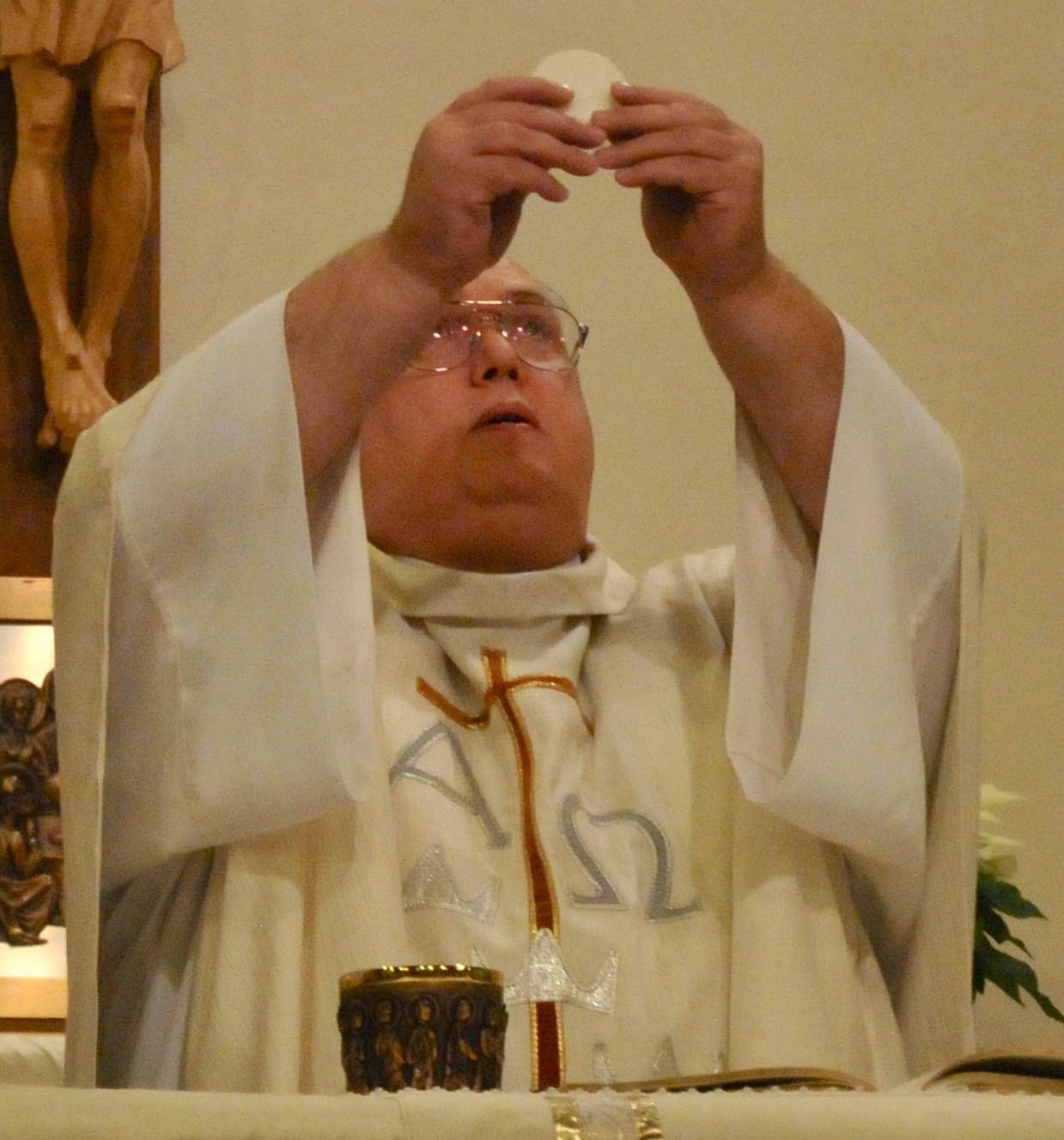
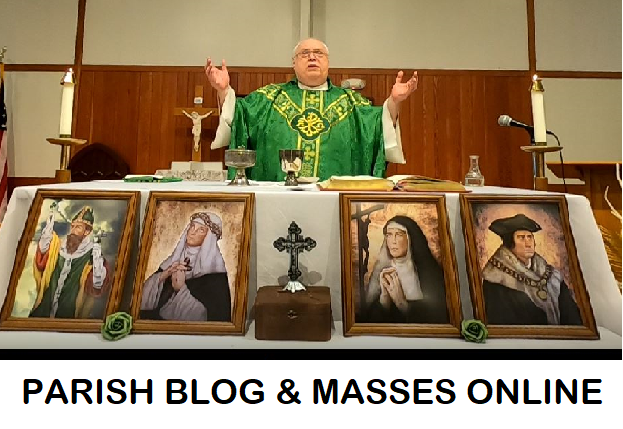
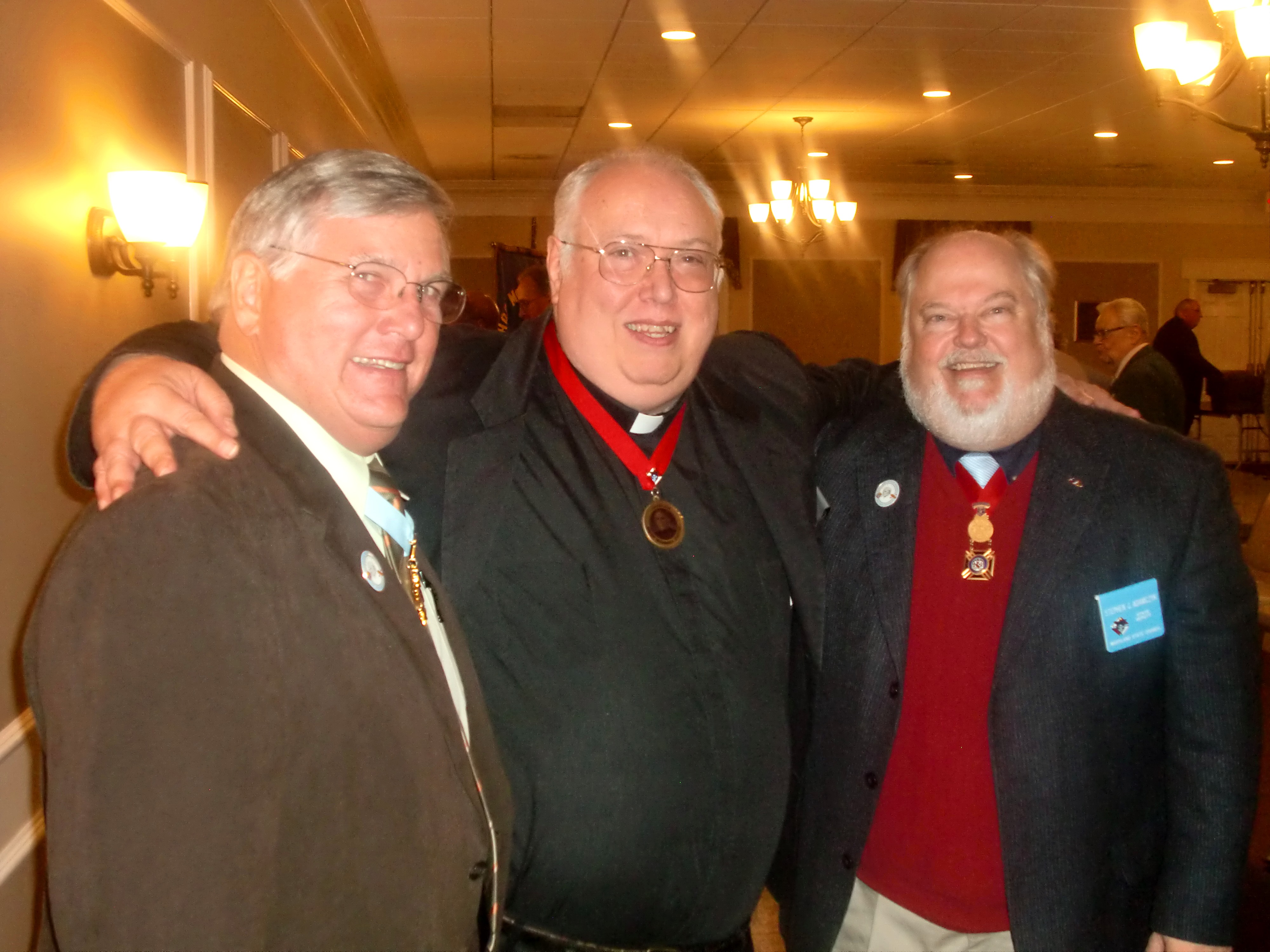
    Fr. Joseph Jenkins

  • An important theme for this blog is the scene in the New Testament where Jesus can be found FLOGGING the money-changers out of the temple. My header above depicts a priest FLOGGING the devils that distort the faith and assault believers. The faith that gives us consolation can and should also make us very uncomfortable. Both Divine Mercy and Divine Justice meet in Jesus. Priests are ministers of reconciliation, but never at the cost of truth. In or out of season, we must be courageous in preaching and living out the Gospel of Life. The title of my blog is a play on words, not Flogger Priest but Blogger Priest.

  • Archives

  • Categories

  • Recent Posts

  • Recent Comments

    Barbara King's avatarBarbara King on Ask a Priest
    Ben Kirk's avatarBen Kirk on Ask a Priest
    Jeremy Kok's avatarJeremy Kok on Ask a Priest
    Barbara's avatarBarbara on Ask a Priest
    forsamuraimarket's avatarforsamuraimarket on Ask a Priest

Heaven & the Comedy of God

One definition of humor is this: “Complying with the wishes of someone in order to keep them content or happy with us, no matter how unreasonable such wishes might be.”  It is in this vein that we might understand God and heaven as having a sense of humor.  It may be that in the kingdom that which is serious and that which is comic somehow coalesce or become one. 

There is much about the truth of Christ which consoles and challenges, and yet, simultaneously there is much that seems absurd. Creation itself is not immune from the comic. It should be warned that trying to discern this element in God might inadvertently lead to a kind of cynicism. For instance, focusing on God as the author of creation, I have heard it remarked: “Why did God make the most fertile females in the world, only sixteen years old?” Teens that are least able to deal with the needs of children easily have babies while established and mature women struggle to have offspring.  Those who work with crisis pregnancies often shake their heads in bewilderment.  We can laugh or we can cry about it.  God’s ways often seem unfathomable. It is almost as if intelligent design took a wrong turn.

Turning to salvation history, the ministry of Jesus begins with a humorous oddity.  His mother tells him that they have run out of wine at a wedding banquet.  Our Lord is curt, what has this to do with me— my time has not yet come?  Mary tells the servants to do as he says.  He has water poured into jars. The stewards are already imagining the disappointment of the gathering when they get water instead of wine. But miraculously water becomes wine; indeed it is the best wine so far. Who would have thought such a thing?  Surprise!

If your eye causes you to sin, pluck it out!  If your hand causes you to sin, cut it off! Call no man your father!  You must be born again!  He who loses his life will save it!  He who does not hate mother and father is not worthy of me! Let the dead bury their dead! Hebraic hyperbole gives an emphasis to the demands of Christ, but still it seems crazy to our ears.  If we were to view such matters in a literal way, we would find ourselves set firmly within a Monty Python script.

There are some elements of the Gospel that readily lend themselves to joking.  Even the questions of Jesus can be funny.  A blind man comes up to Jesus and our Lord asks, “What do you want?”  Is it not obvious?  It may be he is hoping that someone would ask for sins to be forgiven, but the given response is more than likely.  The afflicted man says, “I want to see!”  No surprise in the response here, only in the question.

When a woman is caught in adultery, our Lord tells the crowd, let the one without sin cast the first stone.  The text relates that they all walk away and that our Lord, who could condemn her, forgives her instead.  A contemporary joke version has a stone sailing past Jesus and plunking the woman on the head, knocking her down.  Surprised, Jesus looks around and says, “Mother, I told you to stay home!” (This is a Catholic joke as we understand Mary to be the sinless or immaculate Virgin Mary.)

Our Lord tells parables that are familiar to us but which were ridiculous to his first listeners.  Which among you would not leave his ninety-nine sheep to go in search of the one lost lamb?  Later, he speaks about the shepherd rejoicing in having found it.  However, in truth, most shepherds would have written it off.  Why risk all the rest to thieves and wolves? And yet, this good shepherd regards the least of his flock as having a value commensurate with all the rest.  This is crazy but it is part of the irony or humor of God.  Then there is the story of the good housewife. She tears her house apart in search of a lost coin. When she finds it she has a party with her friends that probably amounted to more than the coin’s value.  Again, his listeners, probably frugal women, would have thought the whole business was crazy or nonsensical.

Take the last place at gatherings.  You must become like little children.  Sell all that you have and follow me.  The one who would be the greatest must become the least servant of all.  Our Lord never lets up.  The absurdity is amplified as the topics become more grave or important.  Thousands have followed him to an isolated location.  When asked to dismiss them so that they might find sustenance, he tells his apostles to feed the crowd themselves.  All they have are a few fish and a little bread.  Nevertheless the multitude are fed and there is food left over.

His humor is so severe that one day most of his followers walk away. He says that unless we eat his flesh and drink his blood then we can have no life in us.  Today, the guys in the white suits would be coming to take him away.  And yet, it is precisely this Eucharist that has sustained the Church for two thousand years. Indeed, these are the rations from the promised shore to which we travel as pilgrims of faith.  We must become a parable people.  We must become fools for Christ.

Everyone likes to receive a gift or reward, so Jesus assures us of a litany of favors. Our Lord gives a series of benedictions, assuring us that we will receive the kingdom, will be comforted, inherit the land, have justice satisfied, know mercy, see God, become God’s children, and one more thing—know persecution, including torture and murder.  It sounds pretty good until that last bit.  But such is the humor of God.

“Blessed are you when they insult you and persecute you and utter every kind of evil against you [falsely] because of me. Rejoice and be glad, for your reward will be great in heaven” (Matthew 5:11-12).

“For as I see it, God has exhibited us apostles as the last of all, like people sentenced to death, since we have become a spectacle to the world, to angels and human beings alike. We are fools on Christ’s account, but you are wise in Christ; we are weak, but you are strong; you are held in honor, but we in disrepute. To this very hour we go hungry and thirsty, we are poorly clad and roughly treated, we wander about homeless and we toil, working with our own hands. When ridiculed, we bless; when persecuted, we endure; when slandered, we respond gently. We have become like the world’s rubbish, the scum of all, to this very moment “(” (1 Corinthians 4:9-13).

Our Lord writes his straight lines with our crooked ones.  He shows his greatness, not by calling the best of men but making the least and the weakest into his ministers and messengers.

These are the ones that make up the great saints of heaven.  Yes, the joke is on us, but it is a joke that brings not brief laughter but eternal joy. The infinite and omnipotent God has filled his house with the likes of thieves, prostitutes and traitors.  Just as he could change water to wine and wine and bread into his flesh and blood, he can transform the weakest of sinners into the greatest of saints. I suspect, albeit in a spiritual manner, there erupts a celestial guffaw that the children of heaven appreciate and which leaves the devils of hell scratching their heads.  They do not get it and that is why they have cast themselves outside the gates to paradise.

The greatest humor or ironic sign of contradiction is found in the heart of the incarnation.  It is here that we discover the full scope of infinite power, love and humor.  The perfect Spirit, the Creator of this and all dimensions and universes, the one who is truly omnipotent and omniscient, the one that stands outside and yet sustains all that he has made— makes himself almost infinitely small, weak and subject to all the petty jealousies and enmity of humanity.  The devil is the first to distance himself from God in utter disbelief— something ridiculous and impossible happens— the great Unmoved Mover seems to move… and the Word becomes flesh.

Step Up to Fidelity & the Law of Love

Looking at Deuteronomy 30:10-14, the translation of verse 10, “If only you would heed the voice of the LORD, your God, . . .” implied that future divine blessings and promises were contingent on the obedience of God’s people. The prophetic address  assured the Israelites that the commandments were reasonable for them to know and obey. God knows all things, and despite their brokenness, God had designed a covenant that fit his people. They could do this. The almighty was not far away but close to his people. If they kept faith in him, he would not lead them wrong. Regarding the law and faithfulness, God told his people that their fidelity was not an insurmountable goal, rather he said, “No, it is something very near to you, already in your mouths and in your hearts; you have only to carry it out.”

While many believers suppose they are going to the promised land of heaven, they are quick to say they are not saints, implying that perfect holiness is too hard or impossible. It was this attitude that Moses was facing with his people regarding fidelity to God’s law. Remember that through Moses, God had brought them out of the bondage of Egypt by tremendous displays of divine power. The real work of liberation belonged not to them but to the LORD. Similarly, Christ has redeemed us from Satan by the power of the Cross and Resurrection. Again, we did not save ourselves. We are saved by the LORD. And yet, then and now, many claim fidelity and holiness is too hard.  This is exposed as an empty excuse; indeed, let us call it what it is—a lie. We can do all things in Christ. The gift of grace can make what seems impossible, possible.

Psalm 69:33 echoes this theme of reliance upon God: “Turn to the Lord in your need, and you will live.” Fidelity to the covenant always assures God protecting and nurturing his people. Look at the words or expressions in the rest of Psalm 69 associated with God’s intervention: “your favor, great kindness, constant help, bounteous kindness, great mercy, saving help, hears the poor, spurns not,” etc. The selection ends with an affirmation that “God will save Zion and rebuild the cities of Judah.” True for the first people of God it is even more so realized for Christians since the Church is the new Zion or Jerusalem.

The story of the Good Samaritan in Luke 10:25-37 spells out the essential law that we must obey to merit eternal life. We need to be possessed by a divine love that is so thorough that it spills over into love of neighbor. If we want to reach the promised land of heaven, we must avoid the current name-calling, the polemics of hate and bigotry, and indifference to the oppressed and poor. It we want God to care about us then we must also care for others. Ours is a jealous God and he wants all that we are. The transformation of love must reach the mind and heart of the believer, our core identity. Many are hesitant to love in such a way. It signifies risk and sacrifice.  This radical call demands obedience to God. Saving faith is literally an active fidelity realized in obedient love.  A failure to love is a refusal to obey. A failure to love is to dismiss God and our obligations to one another.  Love brings life in Christ. A failure to love brings death.

We humbly submit to the Lord, we obey.

We ask for contrite and compassionate hearts, we love.

We bend both the knee and our will, we are faithful.

OBEY! LOVE! BE FAITHFUL!

The Purpose of Infernal Incarceration

Many lament the large numbers of prisoners, particularly male convicts, who face extended jail time in the United States. Many advocates for judicial reform have sought reduced sentences for convictions and leniency for certain crimes.  Often at the heart of these discussions is a debate about the overall purpose of our prisons. There is a parallel here with the spiritual realm. Either denied or left largely untouched in religious arguments is the fact that an almost unimaginable number of spiritual felons are incarcerated by God in a prison where there is torture or pain and an eternal sentence without reprieve. Is God cruel and sadistic? The Church would say, no. Then what are we to make of all this?

Like earthly prisons, our appreciation of purgatory is for rehabilitation. A better analogy might be that of a hospital. A surgical procedure might hurt but in the long-run we will be better for it. The purgation will perfect and heal the soul. All who pass through purgatory are on their way to heaven.  They are saints in the making. At the end of time, purgatory will cease to exist and there will only remain two realities, heaven and hell.    

Unlike terrestrial jails, there can be no rehabilitation in hell.  This is no longer on the table. Often this seems to be the case on earth, not because hope has vanished, but because hearts have become too hardened to change. Recidivism rates among violent federal offenders in the U.S. is over 60% or 3 out of 5 men. Prison doors swing open and close with repeat offenders. While human justice makes mistakes, divine justice is perfect. God knows our hearts. Those who can be corrected pass through purgatory but the damned must suffer hell. We trust a God who does not err. The sentence fits the crime.  

The purposes of hell seem similar to the traditional purposes for earthly prisons:

  • RETRIBUTION – crime or sin cries out for punishment.

All sin requires the satisfaction of temporal punishment. That is why a priest gives a penance to the penitent. If this punishment is not served on earth then it must be satisfied in purgatory before our release into heaven. However, when it comes to hell, there can be no full satisfaction or propitiation. The redemptive work of Christ has been rejected. Apart from Christ, we cannot be saved. This retribution (not revenge) insures that Divine Justice is not compromised. Dishonoring or offending God is a most terrible sin. It is the direct opposite of our purpose to give glory to God and to serve him.

  • INCAPACITATION – protecting the innocent from their influence.

This topic brings up the serious issue of demonic involvement in the world. Some have even speculated that damned souls or ghosts may be able to extend something of their oppressive manipulation, particularly of those in their family line. Having said this, I have tended to interpret so-called ghosts as either the souls in purgatory beckoning our prayers or demons in disguise.  Note that in cases of demonic possessions, exorcists will order the devils to return to hell. The peculiar case of Christ driving demons into the suicidal swine is reflective of a Jewish ritual where demons might be dispatched into animals. The demons so dreaded hell that they begged to be consigned into the unclean animals, instead. A strange case with some similarity was explained to me where a Jewish exorcist drove a demon into a chicken and then he killed the bird. Unlike living human beings, demons have no localized bodies. Given that fallen angels and “disembodied” souls lack matter, they are technically only where they operate or are active. As finite, they are not like God who sees all and is in all or everywhere.

But how is it that these demons are escaping to earth anyway? This happenstance goes all the way back to the book of Genesis where we find Satan as a serpent causing trouble for our first parents. How was it that he was not caged in hell?  Some of the church fathers theorized a close proximity where hell was understood as below or under the earth.  Light is thrown upon this in the last book of the Bible:

Then war broke out in heaven; Michael and his angels battled against the dragon. The dragon and its angels fought back, but they did not prevail and there was no longer any place for them in heaven. The huge dragon, the ancient serpent, who is called the Devil and Satan, who deceived the whole world, was thrown down to earth, and its angels were thrown down with it. (Revelation 12:7-9)

We battle with cosmic powers and principalities. The hell spirits may be invisible but they are among us exerting their dark influence. Fallen angels have no corporeal bodies and thus do not “physically” break out of hell. Their condemnation and the suffering accompanied with it is their hell. While hell is a place it remains true that the devils carry hell with them wherever they go. God’s permissive will allows them a certain influence, as we see in the testing of Job and in the temptations of Christ. However, the war is won in Jesus Christ. Satan and his devils are spiteful but they are losers. God’s permissive will allows for the correct and incorrect use of freedom. He equips his children in faith with the gift of sanctifying grace, our great weapon against the powers of hell.

Some would speak of the demons as extending themselves or their spiritual stuff in such a way as to be both in hell and on earth. When it comes to certain saints this is referred to as bi-location. In any case, with the last judgment and final consummation, whatever liberty the damned spirits possess will be rescinded. Indeed, the redemptive work of Christ has broken the devil’s hold on the earth. But each of us still has to want to be saved.

  • DETERRENCE – urging those on earth to do good and to obey God.

The prospect of the loss of heaven and the pains of hell is meant to deter the living from leading ungodly lives.  Some preachers take this to the extreme of seeking to scare people into being good. The ideal is that people would be good because they love the Lord and want to honor God through their praise and obedience. But some with meager love might still be saved through the intimidation of punishment. Of course, this would not work if there were nothing of love in their hearts. In such a case, the damned of hell might know regret, not toward the Godhead, but rather because of the pain associated with hell he has brought upon himself.

Sin, Judgment & Perdition

It is true that both the virtuous and the vile must wrestle with sin. Christ is what gives us the edge against the devil. The natural man has to make the best of the fight while inhibited by ignorance, impeded by Satan and lacking any supernatural protection. The fallen-away believer forfeits his alliance with heaven and shuns the one who desperately wants to save him. It is the new man, born again by grace into the likeness of Christ who can vanquish the devil and know reconciliation and peace in the Lord.  Christ’s victory is our victory. 

I cannot say how often I have heard a parent regret an adult child’s defection and apostasy. And yet, almost in the same breath, they take consolation that at least he or she still believes in Jesus or goes to a Protestant church or at the bare minimal, is a nice person. But there is no Gospel of Nice. We cannot get to heaven on our own.  While this will upset many, I suspect there is a “nice” section to hell, where maybe the flame is not quite so hot and the demons have padded pitchforks. A lapsed Catholic might still believe in “Jesus” but is he the real Messiah, the Christ that comes to us in the Eucharist? No, I suspect it is the caricature of Christ that one might get from movies or a popular but immature recollection of faith.  That cannot save us either.  As for those who find fellowship in Protestant churches, some which feign being non-denominational, there is no denying that there are elements of the Catholic faith purloined by these confessions. But while some solace and benefit might come to non-Catholics, those who were baptized Catholic will be kept to a higher standard and will be judged as Catholics.  If missing even one Mass is a mortal sin that damns a soul for eternity, then how about those who have missed hundreds or thousands of Sunday Masses. No deprecation of ecumenism intended, a faith-fellowship juice and cracker meal cannot compare with the Catholic precious body and blood of our Lord in the Eucharist.  If I sound fatalistic I am sorry. God can save whom he wills.  But this does not mean that he will necessarily save all those we desperately desire he would save.    

Those who count themselves as friends to Christ would have others join their company. They share something of the Lord’s desperation or burning desire for the salvation of souls. They take delight in being instruments of God.  They find satisfaction at the sight of sinners on bended knee, contrite and repentant for the wrongs they have committed. They invite the prodigal and reformed reprobate to join them in praising God.  Together, they walk hand-in-hand in keeping the commandments. But no matter how hard they try, there are some who will not listen. Indeed, they reject both the message and the messenger (Matthew 23:33-34). This is the legacy of prophets and missionaries. Ears are closed to what they do not want to hear. Voices are silenced. Martyrs are convicted for the crime of believing and urging others to faith. Some face trumped up charges for the sins of others, like the late Cardinal Pell. Reputations are destroyed and preachers are ridiculed as hypocrites. It is not simply that the Gospel finds rejection; there is a dark agency seeking to thwart the Word of God. We battle not just human ignorance and weakness but spiritual powers and principalities.  It is not enough that there are those who would damn themselves; they desire to take others down with them.

The Blight of Atheism

Atheism is regarded as a sin against faith. It is not simply a matter of one not finding the evidence for God as intellectually satisfying; rather, it is an active impediment to credulity. It signifies a spiritual drought. Worst yet, it might be compared to the locusts that swarm to consume the awaited harvest. Rather than trusting in God’s providence and intervention, atheists lament that all their hard work is quickly undone. Their toil is in vain. The lack of lasting meaning tempts them to despair.

When it comes to Jesus, the disciple must possess a readiness to believe. The ground of the soul must be prepared as fertile and receptive for the seed. The crop must be watered by instruction, witness and grace. There is no naïve gullibility but rather an honesty in intellect and a willingness in consent. Jesus is the fulfillment of prophecy. He is the long-awaited Messiah (John 8:24-28). He confirms his power and identity by performing miracles. A claim is made for divinity by his acts of mercy. Only God can forgive sins.  He raises the dead. God alone is the author of life.  He walks on water. He is the God of nature or creation. The great precursor and prophet, John the Baptist, attests to who he is and to his mission. The hearts of believers, past and present, are burning with the truth.  Only those who are spiritually cold, not wanting to believe, are the ones to reject him and his message.  Hundreds will witness the aftermath of his revivification. The apostles who celebrate his victory over the grave will testify to his resurrection by their constant preaching and martyrdom. What sane person would die for a lie? No one! A refusal to believe constitutes a rejection of grace. Saving faith is made real not just in the mind but in the heart. 

The greatest remedy to atheism is the Eucharist. Along with the Word, it is the food that satisfies for the hunger of the soul. Non-believers go hungry. Those who deny the Eucharistic Christ are spiritually malnourished, starving for meaning and the life of grace. Believers become one with this Eucharist, part of the harvest of faith.

Salvation in Christ as the Light of the World

When it comes to salvation, the excuse of ignorance forfeits much of its weight after the incarnation. The covenant that God first forges is with a select people and much of the rest of the world is left in the dark about the true God. It is only with the coming of Christ that the covenant is expanded and consummated to include all who would believe in the Jewish Messiah. Membership among the elect is now not determined by blood and circumcision but by faith and baptism. Our Lord, who is the Light of the world, does not expose himself all at once but over time and in degrees.  This Light first emerges as a glimmering promise to an insignificant family and tribe. Later, having prepared a people for himself, we have the first of several theophanies. It is in the Epiphany with the wise men or kings that the Light is revealed as having entered the world. It will become the Light to the nations.  And yet, the hidden years of Christ conceal much of this illumination until the final three years of our Lord’s life and the instigation of his public ministry.  What he does during these final years will set the pattern for his apostles and for all who would evangelize. No longer would this Light be hidden. Indeed, Jesus as the burning paschal candle will sacrifice himself for all who would believe and love him.

The daybreak of Christ dispels the long night brought about by the devil and disobedience. Sin unleashes a storm of suffering and death upon the world. Christ institutes his  Church as a vehicle for his shining justification. The community of faith functions as a lighthouse, guiding wayfarers to safety lest they shipwreck against the rocks of ignorance, fear and hatred. The mission of the Church is always the same, to herald Jesus as the Light of Salvation. Jesus tells his listeners,

“You are the light of the world. A city set on a mountain cannot be hidden. Nor do they light a lamp and then put it under a bushel basket; it is set on a lampstand, where it gives light to all in the house. Just so, your light must shine before others, that they may see your good deeds and glorify your heavenly Father” (Matthew 5:14-16).

We can speak of “light” as something identified with our Lord and shared with his Church, allowing us to see or penetrate the darkness. What happens if a light is too brilliant and the eyes to the soul are not calibrated to bear its intensity? Like looking at the sun, our eyes might close or face blindness. Others do not like what they see and thus they turn their gaze. Do we really want to see God? Can we bear to see ourselves as we truly are, with all our sins and weaknesses, or do we shun the light?

The wicked are often not forthright with the truth. They may even count on others as not being disposed and ready to hear it. I am reminded of the actor Jack Nicholson as Colonel Jessep, when being questioned on the stand in the movie, A FEW GOOD MEN. A marine has died and a coverup ensues. He angrily responds to the prosecutor, “You can’t handle the truth!” The truth convicts the guilty but it often overwhelms the innocent. As for the saints, they see God— both within and before them. The light always brings with it a verdict (John 3:19-21).

We are Not All Judged the Same

While we tend to give the emphasis to human freedom and choice; God’s justice and mercy also hinges upon divine election. This is not fate or a crude Calvinism where God hates sinners and predestines them to hell. St. Augustine would speak of the just being predestined to glory. How it works remains a mystery. But we trust that God is good and his justice is fair and right.

When it comes to the matter of justification before God, many might compare themselves to others but with a smug confidence in their superior standing. That is just not how divine judgment works. Mindful of the parable about the pharisee and the publican (Luke 18:10-14), we are not saved in isolation from those around us.

The believer must care about the spiritual status of those around him, particularly those who are his charges. Giving scandal to the faith or bringing harm to the “little ones” can be particularly damning. Indifference to the poor and the oppressed brings harsh judgment upon those who might ordinarily be viewed as pious or devout (Mark 9:42). 

The realm of mortal sin includes both the violation of the laws of God and precepts of the Church, as well as the commission of acts that are always and everywhere objectively wrong. Following the testimony of Scripture, there are both mortal and venial sins, depending upon the severity of the objective matter. However, the gravity of sin is also a subjective issue.  If one is ignorant of a wrong then one cannot be guilty of its commission. Those who have not reached the age of reason cannot sin. Those who are delusional or have suffered the loss of reasoning are likewise no longer culpable for what they do. Also, one cannot accidentally commit sin. By definition, sin requires both an objective wrong, awareness of its severity, and free volition in its commission.     

The teachings of Pope Francis about spiritual accompaniment have stirred much soul searching. As a community of faith it makes sense that we must journey with one another. Those in ministry have a sacred duty to walk with others. But I have become increasingly troubled by the commentary about this accompaniment. It seems nonsensical that we might remain silent about wrongs or about the deadly threat of perdition. True love would save souls, not just make people feel better about living in sin. Those in irregular unions, i.e. adulterous second bonds, may attend Mass, care for their households and nurture their children. But can we dismiss the warning of Christ about divorce? Serious sin can be tender and caring, but it is still wrong. Why do we focus on the replacement family and so often forget about the abandoned spouse and children? We should rightly urge annulments when there are obvious grounds and prospects of healing for messy situations; but we must not be presumptuous about the invalidity of broken bonds or the positive status of subsequent unions. I well understand how our hearts can go out to those in same-sex unions, particulaly when they are faithful in church attendance and toward one another; but can we really indirectly affirm or even remain quiet about a sin that Scripture deplores as most deadly? St. Paul lists it among the sexual sins that forfeit one’s place in the kingdom (Romans 1:26-32). We can affirm love but not sin.  We can expand the meaning of family but never in a way that undermines the plan of God in marriage between one man and one woman that is open to the generation of new human life. Again, accompaniment is important, but what if we are walking in the wrong direction? Do we go to hell for friendship sake? That is not true solidarity.  It could also happen that sinners wrong in conscience might be judged lightly, while those who knew better but withheld correction, might find themselves damned. The more one is given, the more for which one is accountable. Indeed, two might commit the same sin, but because of subjective liability, one earns purgation and heaven and another merits hell.  As I said, judgment is real but it is not always clear and simple. Deathbed repentence and conversion is possible. A priest has the power to steal a soul from Satan even at the last moment of mortal life.

Ringleader, henchmen, or bystander, Christ can save whom he wills. How will God judge those who lead others into sin? Enablers and accomplices are also guilty of sin. We need to model the faith and life of a Christian disciple and walk the road trod before us by the saints. If we want heaven then we must witness to Christ and his Church. Silence or embarrassment about Christ is deadly.

  • Do we routinely curse and take God’s name in vain?
  • Do we neglect the Mass and the community of faith?
  • Have we placed idols before God in our life?
  • Are our families neglected or parents forgotten?
  • Are children baptized and raised in the faith?
  • Do we routinely tell lies and violate the truth?
  • Have we received stolen goods?
  • Are we culpable for supporting abortion?
  • Have we compelled the use of contraception?
  • Do we excuse fornication and cohabitation?
  • Have we respected and been faithful to marriage bonds?
  • Have we applauded same-sex unions?
  • Has immodest dress or flirtation led others into sin?
  • Do we patronize blasphemous and lewd media?
  • Have we neglected the confession of sin and pardon?

The Reciprocity of Mercy

Matthew 6:14-15 echoes the admonition in the Lord’s Prayer that we will be forgiven by God just as we forgive others. Charity and mercy are the keys to the door of heaven. But it must be properly understood. I have heard ministers preach upon this subject in a wrong-headed manner.  It is not a bargaining with God.  We have nothing with which we can bargain.  Salvation is always a gift and cannot be merited apart from Christ.  The secret is not in the deal but with transformation.  If we forgive as Christ does then the Father will recognize his Son in us.  Jesus pleads for us on the Cross, asking the Father to forgive us as sinners, arguing that we really do not know what we are doing. Jesus dies not for the innocent but for the guilty.  If we want to take advantage of this mercy then we must imitate Jesus. That is how we show that we are kindred to him, related on a spiritual level as brothers and sisters to Christ, adopted sons and daughters of the Father. It is by giving away mercy that we make room in our hearts for receiving the pardon and saving grace of God.

We think too much of the body and too little about the soul.  Luke 12:4-5 warns us to fear the one who has the authority to cast souls into hell. St. Paul in 2 Corinthians 5:9-10 reminds us that no one properly has this power other than Christ, not evil men, not even the devil. We wrongly shy away from the Fear of the Lord, which is a gift of the Holy Spirit. But Jesus is both the Divine Mercy and the Divine Justice.  He is the judge of all. I suspect that redefining Fear of the Lord as Awe or Reverence tends to diminish something of the fear and trembling that should normally characterize the approach of a finite creature to the judging gaze of almighty God. It is true that God is all good but the problem is that we are often far from this goodness. This fearfulness is not just about who God is but about who we have failed to become. Many seem to have no shame about their iniquity and weakness. Few go to confession because there is a lack of contrition or sorrow for sin. We must not be precipitous of divine mercy or take the gifts that God offers for granted. 

If we do not love God sufficiently to avoid offending him then we should at least fear the loss of heaven and the pains of hell. Ultimately God gives us what we truly want.  Regrettably, we can compromise ourselves. Many display cowardice to evil men and submit to their intimidation. Many cower in facing the devil and wrongly give him power over them.  Weak believers have literally laid down their shields, armor and weapons in the face of the legions of hell. All must be urged to take them up. We have the sacraments! We have the saving Word! We have the communion of the saints! We have the mystery of the Church! We can have in abundance the saving grace that the devil has forfeited! We must not forget that we are a parable people who follow a parable Savior.  Jesus turns weakness and death into strength and life.  He turns his defeat into his great victory.    

Our Lord’s admonition to his friends, “Be not afraid,” should be clarified. It is first a necessary declaration given the surprise of his resurrection. Next, while Jesus would not have his disciples take light of the earthly and spiritual perils that face them; he is telling them that if they follow him, even to the Cross, they need not be afraid, because he has won the great victory. If we truly love the Lord, acknowledging with regret how our sins sent him to his passion and the Cross, then we can approach our Judge, the risen Christ, with hope and courage. If we have failed to love the Lord as we should, and have only imperfect contrition, then we have every reason to fear punishment, either temporarily in purgatory or even worse, eternally in hell. While Fear of the Lord can be saving, fear of the devil signals a deficiency in faith.    

A War Between Two Kingdoms

The world around us would replace Christian virtues with secular ones.  While tolerance is arguably a subcategory of justice, contemporary humanism would redefine it as an overriding permissiveness to a whole host of evils. Christianity cannot be tolerant of moral evil. Indeed, real Christianity makes moral judgments, seeks repentance and conversion, and amendment of life. A false Christianity would buy into the mentality of gross toleration.  But the assertion that no judgments are made is a deceit. Any who would judge as God does or against the grain of selfishness would themselves face a negative judgment. The joke about this is that everything is tolerated except another’s intolerance. The tables are turned by those cohabitating in sin, living in adultery or pursuing intimate same sex unions. “Who are you to judge me! How dare you be so intolerant and backward? All we are doing is loving each other!”

Of course, such a stance makes moral life subjective. Life and behavior are not under human whims but must comply with both divine positive law and natural law. Neither liberal politicians nor progressive churchmen can substitute their statutes for those of the historical Gospel. When such people want to argue with me, I explain that their grievance is not with me but with God. They are essentially saying that God is at fault, that the Almighty has no right to judge them or to make demands.       

As Catholics we are obliged to render human respect, but this does not mandate surrendering our basic principles.  We can love others without embracing or enabling their sins. Those who act as if they were ashamed of Jesus Christ, failing to witness and to testify to the Lord, are doing no one any favors. Instead of promoting civility they are exhibiting cowardice. Believers should be willing to suffer persecution, imprisonment and martyrdom for the Gospel.  It is an odd situation when the sinner is tolerated, and the would-be saint is oppressed. While much dissent comes from the left, the right is also guilty, as with the philosophy and cult around Ayn Rand. While an anti-communist, she was virulently anti-religion. Her popular philosophy of selfishness and a stark individualism stands in diametrical opposition to the communion of the Church and charity admonished by Christ. Religious liberty in the United States helps to preserve the place of the Church and the faith in society; however, it also makes room for competing creeds and contrary messages.

The reason why some states like Communist China persecute and manipulate the Church is because it sees Catholicism as a threat. While we might argue otherwise, insisting that believers make the best citizens, in truth the Church is dangerous.  The Church and her message about justice and human dignity make her a threat to those states aligned with the principles of hell. Yes, the cosmic confrontation also has terrestrial allies. Despite propaganda, threats, imprisonment and executions— faith communities are hard to silence and neutralize. Communist China is intimidated by symbols like the cross. Lately there has been a campaign to remove crosses from churches. When possible, the churches themselves are bulldozed. There is a competition for souls. While it takes a different form, the tension is taking place in the Western world, too. The Marxist atheist and the Secular humanist are kindred spirits. The existence of God would not only be inconvenient but would place their materialistic objectives in peril. The battle is for hearts and minds. The devil is never more effective than when he is hidden from sight, presumed as a fairy tale without real existence.

I well recall the Solidarity movement in Poland during a time when a Polish Pope had been elected in Rome. What was happening in the Eastern bloc countries was thought impossible. Strides were being made for truth and freedom. The news recollected Stalin asking a mocking question of Churchill after the war, “How many divisions does the Roman Pope have?” Given time, the joke was on him, for the Pope evidently had enough. Not all wars are won with guns and bombs. Some victories come with trust in God and a willingness to take up the cross and follow the Lord.

Christian faith and values are often quite personal, but they are also communal and never private. Modern secularists assume that religion is merely a false superstition. Increasingly militant, they are forcing believers and their God out of the public forum. Sadly, if God is removed then there is no protection from those who have usurped the Lord as the chief lawgiver. Politicians make themselves into gods, lawyers become their priests, and the police are made the muscle to keep everyone in line. Media personalities and public-school teachers make possible the necessary indoctrination.  By contrast, the Church does not indoctrinate but seeks to inform free men and women with the truths that come from God. Conversion and faith are the work of the Holy Spirit. Saints and the damned are fashioned in this world, not the next. Even though they may be unaware, all are being prepared for eternity, for heaven or hell. The demarcation as to which side we might be on is made possible by asking pertinent questions of ourselves. Are there certain truths that are immutable or are all things relative or subjective? Are all people regarded as having an incommensurate value as “persons” or do some matter more than others? Is human life sacred or are some judged as expendable?  Anything that undermines human dignity and the sanctity of life is not from God. Human rights and freedoms are cherished by the Church and believers. The commandments reflect the mind of God and our nature as men and women. Any license to sin is not a nod to true freedom but rather its misuse and the derogation of human dignity. When we fail to think with the mind of Christ and his Church, we compromise the Gospel. We begin believing something other than the Christian faith. Reflecting upon such matters can enlighten us as to whether we are walking toward the kingdom of God or to the fiery trash heap of Gehenna.

The Taint of Sin is a Taste of Hell

When we compromise with sin or fail to acknowledge its damaging gravity over us, we are not simply tempting fate but attempting to spurn the providence of God. We are literally daring God to save us despite ourselves. This makes us kindred spirits with Judas who likely thought that a forced confrontation would speed the messianic confrontation with the Romans and a corrupt Jewish leadership. Given his close association with Jesus, it is unlikely that he acted purely from greed. He despairs when he realizes that he has been an agent for Satan in getting his master tortured and murdered. Lacking supernatural faith, he finds himself alienated from the other apostles and stripped of hope. The throngs he expected to rise as an army of the righteous proclaiming their hosannas, shouted “crucify him” instead. If the devil could not claim Jesus, and even has Peter stolen from his grasp, then he will at least claim this one traitor as his own. Indeed, all who sin and fail to repent before death overtakes them, share in the stamp of traitor that is pressed upon their souls. While those who have never known baptism and faith might know hell because of ignorance; Judas was probably the first but not the last to betray our Lord as one who had belonged to his grouping of friends. Indeed, while there is arguably a most terrible circle of hell for renegade Christians, Judas stands as a warning to the Church that even bishops and priests can suffer damnation. 

Why would we play games and take chances? Too many are among the walking dead, perpetually working and playing in mortal sin. Failing to go to confession and to receive absolution, they have allowed the spirit of Satan to enter them. Indeed, akin to Judas at the Last Supper, they attend Mass and receive the Eucharist— blasphemies on top of blasphemies. Their priests like Christ could immediately steal them from Satan and return them to the good graces of God if only they would go to confession. But too many will not submit to God’s ministers of mercy or admit to one another or even to themselves, the terrible truth. They have broken their friendship with God. They already have one foot in hell. The longer this situation lasts, the more comfortable they become with sin. They can still be saved but it is increasingly unlikely. Indeed, many will no longer change their hellish trajectory even if they could.  

Proof of this is evidenced when trying to turn someone around. They get angry when anyone challenges their hypocrisy. “Leave me alone! Who are you to tell me about my business! I haven’t hurt anyone! You talk like I’ve killed someone! I know people a lot worse than me!”