

• Our Blogger

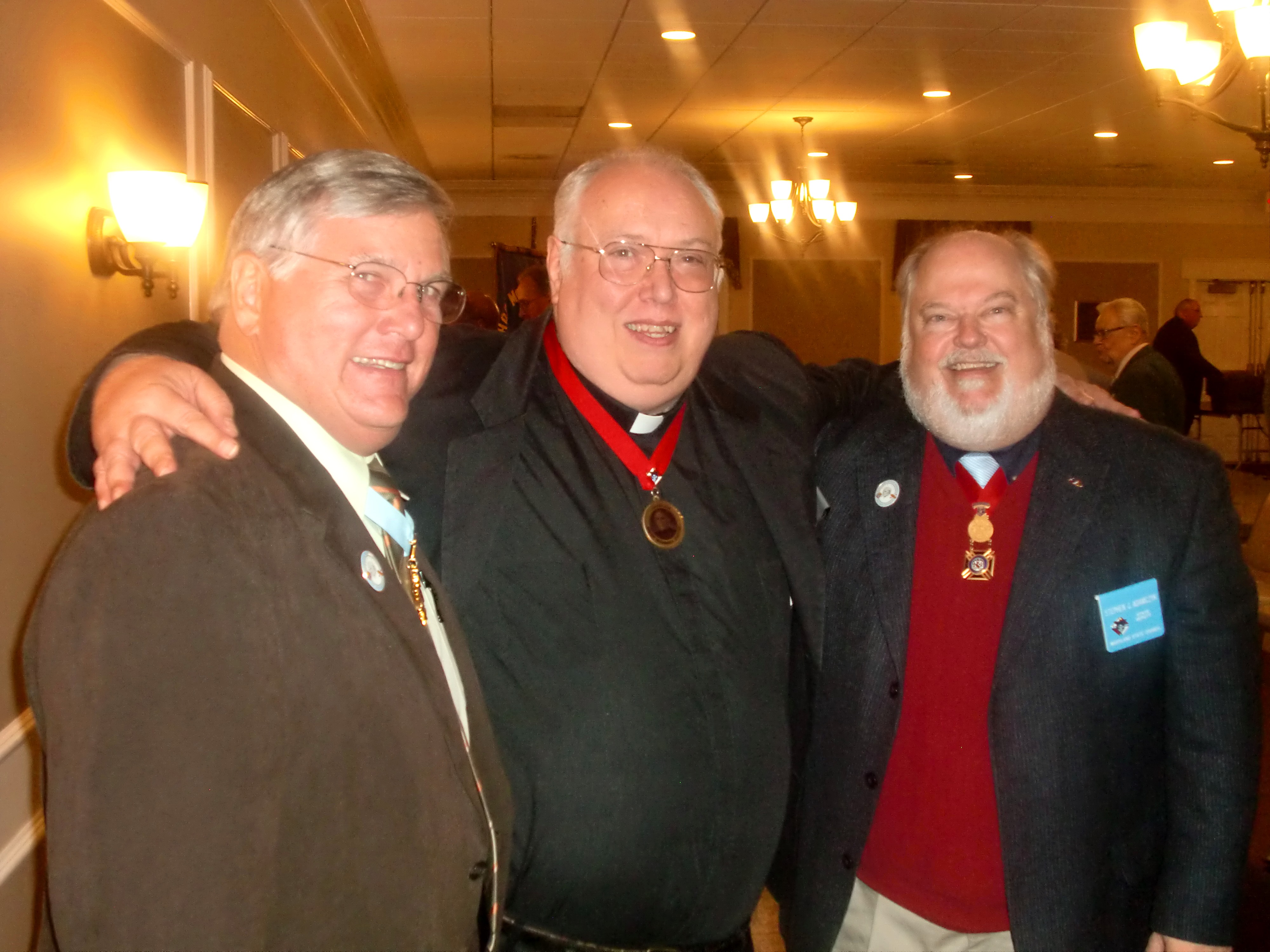
    Fr. Joseph Jenkins

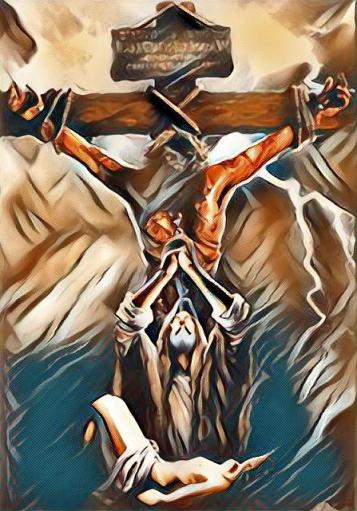
  • The blog header depicts an important and yet mis-understood New Testament scene, Jesus flogging the money-changers out of the temple. I selected it because the faith that gives us consolation can also make us very uncomfortable. Both Divine Mercy and Divine Justice meet in Jesus. Priests are ministers of reconciliation, but never at the cost of truth. In or out of season, we must be courageous in preaching and living out the Gospel of Life. The title of my blog is a play on words, not Flogger Priest but Blogger Priest.

  • Archives

  • Categories

  • Recent Posts

  • Recent Comments

    Josh's avatarJosh on Mixed Signals about Homosexual…
    gjmc90249's avatargjmc90249 on Marian Titles & the Mantle…
    Jeremy Kok's avatarJeremy Kok on Ask a Priest
    Anonymous's avatarAnonymous on Ask a Priest
    forsamuraimarket's avatarforsamuraimarket on Ask a Priest

[26] Second Sunday of Lent

151976741619345650 (1)

Readings:  Gen. 22:1-2, 9a, 10-13, 15-18 / Ps. 116 / Romans 8:31b-34 / Mk. 9:2-10

An important traditional demarcation of the ancient Jews from their pagan neighbors was the repugnance they felt toward human sacrifice.  Rather, they offered the grains of the field or animals like goats, sheep, bulls and birds.  However, more recent archeological evidence shows that the early Jews did at one time offer the oblation of human beings.  The remnant texts that point to such behavior are the testing of Abraham and the story of Jephthah’s daughter. The story of Jephthah’s daughter can be found in Judges 11:29-40.  Like our passage today, it is deeply disturbing.  The Hebrew general pledges that the first who steps out the door of his home, he will sacrifice. He immediately laments his pledge because out steps his young daughter. She requests a short time to mourn her virginity and then we are told he did as he promised. Unlike the story of Abraham and Isaac, it appears that God does not stay his hand. The young girl had courage and her father kept his promise to God; but as Christians, we are aware that some promises should not be made. The child mourns that she will never know the joys of being a wife and mother. It is a poignant and terrible story.

Just as the story of Abraham and Isaac prefigures God’s surrender of his Son; the story of Jephthah’s daughter is connected to the Virgin Mary.  Mary gives herself to perpetual virginity and undergoes a vicarious martyrdom in witnessing the passion and death of her Son. Jephthah was a great Jewish general. He was successful against tremendous odds. He was victorious not because of his oath, but in spite of it. As St. John Chrysostom would tell us, his repugnant act would move the Jews to renounce all such blood-oaths from that time forward. Regarded as a testing of Abraham’s faith, a messenger from heaven intervenes and God directly prohibits the sacrifice of Isaac.  This would plainly show that God does not delight in such sacrifices.

Abraham certainly did not comprehend the command to sacrifice Isaac.  It seemed to violate providence, itself.  The patriarch was elderly and his son was the child of promise from which he was supposed to generate many descendants.  He did not understand but he remained faithful.  It is that element and not the shocking act that we should fully reflect upon.  God stays the hand of Abraham but he would not spare his own Son, the child promised from the dawn of creation.  Our heavenly Father did not directly will that his Son should be tortured and murdered; but he did desire faithfulness.  Jesus is faithful to his mission unto the Cross.  Abraham substitutes the oblation of a ram.  When God spared us (signified by Isaac), Jesus substitutes himself for us as the divine Lamb of God.  The sacrifice is no longer a ram caught in the briars but a Savior crowned with thorns.

The sacrifice of human beings by the pagans would be regarded by the early Christian community as a feeding the bloodlust of demons. We might think that we are morally better and enlightened, but over a million unborn children are aborted in the United States annually.  Many ministers regard this as a return of the demonic sacrifices of old.  Are we feeding demons the blood of our children?

The responsorial speaks to our conviction as believers during the season of Lent: “O LORD, I am your servant; I am your servant, the son of your handmaid; you have loosed my bonds. To you will I offer sacrifice of thanksgiving, and I will call upon the name of the LORD.” Catholics readily make the connection between Christ as the suffering servant and Mary who declares herself as “the handmaid of the Lord.”  Jesus offers his life that we might be released from the bonds of Satan.  Our Lord will pay the price of his life to set us free.  Mother and Son will meet on Calvary.  The sacrifice of Jesus will do what all prior oblations failed to do— make true and lasting atonement for sin.

The second reading reiterates today’s theme:  “If God is for us, who can be against us? He who did not spare his own Son but handed him over for us all, how will he not also give us everything else along with him?”  Paul is speaking about the gift of hope that comes with faith.  The victory over sin and death has already been won.

The Gospel reading gives us the scene of the Transfiguration.  Our Lord is dressed in dazzling white and beside him stands Elijah and Moses.  This signifies that Jesus is the fulfillment of the LAW and the PROPHETS.  The transformation in Jesus might be interpreted as a sign of things to come, notably the resurrection.  Lest it should be misunderstood, Jesus tells his three apostles not to speak about what they have seen until “the Son of Man had risen from the dead.”  We are told that they questioned what was meant by “rising from the dead.”  The apostles really could not get their heads around our Lord’s prophesies about his passion and death.

There is an important but sometimes overlooked element to the reading that we today should take to heart.  The heavenly Father’s voice beckons from the cloud, “This is my beloved Son. Listen to him.”  Jesus is the ultimate term for salvation.  It is his sacrifice that is saving.  Given that he buys us back with his own life, we belong to him.  If that be the case, then it must be realized with faith and an abiding obedience.

  • What sacrifices have you made in your life to realize your discipleship?
  • Do you appreciate that every Mass is a re-presentation of the oblation of Calvary?
  • Have you placed limits on your faith and what you would do in response to God’s calling?
  • How have you died for Christ and others, brushing aside selfishness?
  • Do you listen and obey God’s Son or have you substituted other authorities?
  • Do you put a premium upon human life, both in and out of the womb?

We are Men and Women, Not Angels

15192255957185427 (2)

Biology uses the word “species” to refer to us as “homo sapiens.”  Thomistic philosophers sometimes use it in a different way, speaking of our species as human, albeit as composites. Angels and human souls are without matter, but every material composite has two parts, prime matter and substantial form. The substantial unity of a composite being demands that there can be but a single substantial form. The substantial form in human beings, men and women, is the soul.  This soul is exclusive of any other soul.  However, we are kindred to one another as a species or class.  Material composites know individuation because of their extension or dimensions.  By contrast, angels have no matter and are not composites; thus, every angel as a spiritual entity is a distinct species unto itself.

There is no marriage between angels.  There is no reproduction.  There is no complementarity of gender.  All we can say is that they may have traits that we usually associate with one gender over another.  But even that may be an oversimplification.  What do we know of what angels do or angelic character?  When we try to figure them out we illustrate them as naked human bodies with wings attached.

Why do I make such obscure academic observations?  It is because many seem to be confusing the human with the angelic.  What makes us human men and women is fixed; nevertheless, many are arguing that gender is simply a matter of choice.  While it would not include the quality of gender, angels by their intellect and will determine their unique species at the moment of their immediate creation outside of space and time.  We come to exist in time and within material creation.  We classify pure spirits as angels and even rank them but no one angel is like any other.  Some transgender people today are treating their humanity in a similar way, refusing to be labeled as either male or female.  But do they have this authority, particularly since gender seems to be fixed?  Do they have freedom or choice to embrace legal fictions?

Gender identification is today often called into question and debated.  Growing numbers seem to suffer from a sexual disorientation.  Many feel that they have a gender sense that is in conflict with their bodily composition.  Some have sought to have a legal designation to reassign their gender.  Others have sought through surgery or chemical intervention to change their gender.  The Church would traditionally view such efforts as absurd. The divine determination is taken for granted.  You are what you are… every body part and every cell… your basic DNA… all of it speaks to your identity as a man or woman.  This is the lens through which we know ourselves and how we look upon the world.  We relate as men and women in all our associations and friendships, even in our chaste relationships.

Gender is a differentiation we share with others.  Men and women are human but they come in two sexes.  These qualities are combined with many others, some shared and others unique to our identity.  Here I speak not so much about the accidentals that distinguish us but rather those qualities or elements that defy measurement or calibration.  We are finite creatures but the spark of the infinite both gives us life and keeps us in existence.

The Mystery of Gender Permeates Body & Soul

151909038040016754

An accepted tenet of my classical training is that substantial forms inform all prime matter.  It is within this sphere that we usually discuss creation.  Christians believe in an ordered universe.  God is the source for an intelligent design.  We are not the result of a cosmic accident.  The substantial form is where we locate the properties and unity of an object.  The substantial form for the human person is the immortal soul.  If this soul organizes our constitution and gives us our identity then the soul must also include the element of gender.  Sexuality is not isolated to the body.  There is also a spiritual component.  There is no generic human soul and then male or female accidental renderings of humanity.  Unlike the substantial forms of things, each human soul while having commonality with others is unique.  Since the human soul has no parts it is indestructible and survives the death of the body.  We will be reconstituted in accord with our souls.

Separatist or dualist theologians argue against traditional Christian sexual morality because they treat the person as an operator in a robotic body.  The soul is distinct and not necessarily connected to the body.  They do not regard the body as the real you.  Materialists might have some regard for natural law, but often contend that morality is whatever men want it to be.  They argue that there is no soul that actuates or vivifies you.  They further insist that there is no spiritual operator running a robotic body— there is only the body. Since they judge everyone as merely thinking and loving meat, there are no eternal consequences for our actions to worry us.  They would say do as you want because tomorrow you will be nothing but worm-food.

My own view is one of an intense integralism.  While we are spiritual-corporeal composites, I would place a greater weight upon the composite itself over the body and even the soul.  Bodies without souls are corpses.  Souls without bodies are ghosts.  Neither is a condition to which I look forward.  Our hope in Christ is for the resurrection of the dead, body and soul.  Not angelic beings, it is essential to our personhood and identity that there be a restoration.  The soul is a higher principle in that it has no parts that can break down.  However, our constitution is set as a creature that bridges the material and spiritual worlds.  We are not mere animals.  Alternately, we seem to have little or nothing in the way of angelic powers.  Just as the soul informs the body; the body shares information with the soul.  There are apparent parallel operations between the intellect of the soul and the elements of mind and intelligence found in the organic (the brain).  There is an interposition between the spiritual and material.  Soul and body function as a profound unity.  I suppose this is why spouses can speak of each other as soul-mates.  There would be no marriage if men and women were not sexual beings.  However, this meaning cannot be reduced to the same denominator that defines cats, dogs, horses and other animals.  There is a transcendent factor that permeates the central axis of persons.  Everything the soul or body wants or does reverberates in the other.  Gender or sexuality permeates the whole.


Sexuality is Who You Are Not What You Do

We are sexual beings.  Even the celibate knows himself as either male or female.  The word sex is often wrongly reduced to activity.  It is actually expressive of our identity or who we are.  It is for this reason that the U.S. Bishops went forward with the “Marriage Matters” campaign against so-called same sex marriage.  Marriage is an exclusive bond between a man and a woman.

Reductionists perceive sexuality as an action and one that can be measured or judged.  It sacrifices the element of mystery as a quality of a person’s inner being.  It is also narrowed to consequences.  Pregnancy and birth are inhibited as one would a disease.  The prospect of a stable or singular relationship is often spurned in favor of momentary pleasure or a thill that might employ any number of sexual partners or none at all.  People “have” sex instead of “being” their sex.

I recall a paperback fantasy story (the title escapes me) in which those cast in hell became more bestial.  Everything and everyone became more eroticized in hell.  Women became more endowed in breasts and curves.  The men discovered that their genitals grew and they lost almost all self-control.  One man tried to sneak into heaven but raced back to hell when he observed the gradual disappearance of his male sex organs.  Despite these peculiar elements, the author tried to avoid the more grievous vulgarities in his composition so as to promote certain moral truths. While interesting fiction, I would contend that he got the situation basically wrong.  We become more and not less of what we are with judgment in the afterlife; men and women in heaven will never stop being male or female.  Joseph is still the foster “father” of Jesus and Mary will always be the blessed “mother” and the New Eve.  There will be no concupiscence in heaven.  There will be no marrying or giving in marriage— except for the marriage banquet of the Lamb.  There will be perfect self-control.  There will be unity in Christ.  We will relate to one another as brothers and sisters, men and women— not as sexless drones.

While angels may be without gender, such is not the state of human beings.  Male and female is how we are made and it is how we will be remade.  God’s grace will perfect us but we will still be who and what we are.  The divine economy will give us a share in immortality but God will not unmake our identity.

Frequently in these arguments, critics will point to St. Paul’s statement in Galatians 3:28 that in Christ “there is neither male nor female.”  This does not mean that men and women are interchangeable or utterly the same.  What it does say is that men and women alike are called by Christ to be disciples.  We all have the capacity for faith and to benefit from the saving graces of baptism.  I have engaged in past debates where critics used this passage to argue for women’s ordination.  However, it does not apply to anything more than our universal priesthood in baptism.  The tradition coming down from Christ and the apostles is that the ordained priesthood is reserved to men.  Men are seen as living icons for Christ.  They signify the divine bridegroom at the altar with the Church as his bride.  A woman priest would suffer from the same critique as would same-sex marriages:  the marriage analogy would be transformed into a lesbian caricature that could only feign priesthood.  The true priesthood, the Mass and sacramental absolution would be lost.  Gender is not an accidental element but a substantial quality of human identity.

An Over-sexed World Does Not Understand Sex

151898139878378649 (2)

Analogies scratch at the surface of truth and reality.  Nevertheless, they do allow a certain degree of illumination.  We speak of heaven as an eternal banquet.  We view the relationship of Christ to his Church as akin to the marital bond of a husband to his wife.  Just as there can be no gluttony in heaven, neither can there be lust.  The imperfections in human desires and activities can have no part to play in their eternal dimension.  While we are broken, the moral life demands that we strive toward something of the perfection that awaits us.  Food means physical life.  Marriage means the life of children.  Food gives satisfaction.  Marriage brings the joy of marital union.  God will sustain us and he will feed us with his very self.  Ultimately, the measure of our unity is within the peace of Christ.

It may be that marriage finds itself in trouble within the modern world because people do not know what marriage and sex is really about.  Failure to appreciate the truth damages relationships and makes the marriage analogy incomprehensible.  There is confusion because many refuse to admit that they might be wrong.  Just as certain virgins are anxious about telling others about their inexperience; those with active sex-lives may be reticent to admit that they are regularly engaged in something that they really do not understand.  Persons are often reduced to a means to a selfish end.  Sex is treated as recreation or as something to release tension.  While it should be expressive of a bond, it should not be regarded as bondage.  The abuse of sexual union leads to a whole assortment of ills.  That which should draw people together and make possible personal integrity can inadvertently fragment personalities and cause rifts of infidelity and frustration.  If one has a negative experience of sexual behavior, particularly when it is abusive, then how can he or she imagine that it is good, joyous and holy?  There may be no sexual intercourse in heaven; however, this does not mean that such loving coupling cannot point to a profound intimacy between the divine and the communion of the saints.

Our culture is erotically saturated.  Pornography has gone largely mainstream.  Sex pollutes the media entertainments and advertising.  Many people claim that they have to have it, giving impetus to a drug market where all sorts of dysfunction cures are prescribed.  Nevertheless, while there is a focus on fantasy and the mechanics of human sexuality; there is a paucity of reflection upon ultimate meaning and the theology of the body.  If human sexuality is reduced to an accidental then it might no longer matter… serial marriages, multiple partners, same-sex unions, fornication and even adultery are shifted to the periphery of social life with minimal moral importance.  However, the traditional Western philosophical and religious critic would lament that this is all a lie.  Human sexuality is not accidental and gender is not interchangeable.  There must be a genuine complementarity, sufficient gravity in importance and a lasting permanence.  Our gender identity is a core substantive element.  The union of men and women is not between two half’s but rather two whole’s.  It builds upon who they are, making them (together) something new.


The Dark Secret

What is the presumed dark truth that remains largely unspoken by the churchmen desiring a “paradigm shift” in reference to those in irregular unions being invited to receive the sacraments, i.e. the Eucharist and the penitential absolution?

151898139878378649 (1)

I suspect that despite objections to the contrary, they really do not believe that there is any lasting bond (sacramental, natural or spiritual) associated with the marriage of men and women.  There was a priest I knew, died some years ago, who ridiculed the very notion that there was a lasting spiritual change in the spouses akin to the sacramental character imprinted upon the soul of men ordained to the priesthood.  While I agreed that sacerdotal ordination was “forever” and that marriage was “until death do they part,” he spurned the notion of any real but invisible tie between spouses other than a psychological one.  His view seemed to me as overly Anglican, as does the Orthodox compromise of penitential marriage.  My thinking upon the question remains unchanged.

Marriage is a perpetual bond.  Our Lord insists that it remains in effect as indissoluble as long as the spouses are alive.  Further, while marriage ends at the threshold of this world and the next, we should all appreciate in Christ that love is stronger than death.  There is something about the connection that changes spouses in an irrevocable way.  They might marry again after a spouse dies; but a mysterious quality remains from the first union.  Something changed with the bond that does not revert back to what it was before.  Given that marriage is reflective of Christ’s relationship with his bride, the Church, this struck me as a necessary truth.  Our Lord will never abandon or divorce his Church.  Spouses give something to the beloved that is singular and that creates a union that is unique and unrepeatable.  A second marriage may have its own value and particular traits; however, while not maligning a second chance at love, the first bond (if real, and in certain cases even when suspect) has a residual or lasting impact or impression.  I am talking about more than mental memories; it is as if the body itself has its own remembrance.  Further, what we do in the flesh has a powerful interplay with the human soul and identity.

Matthew 19:3-9:

Some Pharisees approached him, and tested him, saying, “Is it lawful for a man to divorce his wife for any cause whatever?” He said in reply, “Have you not read that from the beginning the Creator ‘made them male and female’ and said, ‘For this reason a man shall leave his father and mother and be joined to his wife, and the two shall become one flesh’? So they are no longer two, but one flesh. Therefore, what God has joined together, no human being must separate.” They said to him, “Then why did Moses command that the man give the woman a bill of divorce and dismiss [her]?” He said to them, “Because of the hardness of your hearts Moses allowed you to divorce your wives, but from the beginning it was not so. I say to you, whoever divorces his wife (unless the marriage is unlawful) and marries another commits adultery.”

C. S. Lewis has this to say in Letter 18 of The Screwtape Letters:

The Enemy described a married couple as “one flesh.” He did not say “a happily married couple” or “a couple who married because they were in love,” but you can make the humans ignore that. You can also make them forget that the man they call Paul did not confine it to married couples. Mere copulation, for him, makes “one flesh.” You can thus get the humans to accept as rhetorical eulogies of “being in love” what were in fact plain descriptions of the real significance of sexual intercourse. The truth is that wherever a man lies with a woman, there, whether they like it or not, a transcendental relation is set up between them which must be eternally enjoyed or eternally endured. From the true statement that this transcendental relation was intended to produce, and, if obediently entered into, too often will produce, affection and the family, humans can be made to infer the false belief that the blend of affection, fear, and desire which they call “being in love” is the only thing that makes marriage either happy or holy. The error is easy to produce because “being in love” does very often, in Western Europe, precede marriages which are made in obedience to the Enemy’s designs, that is, with the intention of fidelity, fertility and good will; just as religious emotion very often, but not always, attends conversion. In other words, the humans are to be encouraged to regard as the basis for marriage a highly-colored and distorted version of something the Enemy really promises as its result.


[23] First Sunday of Lent

15188060042474533

Readings: Genesis 9:8-15 / Psalm 25 / 1 Peter 3:18-22 / Mark 1:12-15

Noah plays the part of a new Adam.  Just as in the creation story, Adam is given charge over creation and names every living thing; Noah preserves the animals from destruction and he and his family will make a new beginning.  The spirit of God hovers over the waters of creation and he breathes life into all living beings.  Whereas life comes from the waters, so too does death.  The covenant that God established with Noah includes the promise that God will never again wipe out the world through a flood.  This pattern is revisited with Christ and the new covenant:  we die with Christ in the waters of baptism so that we might live or rise with him.  The rainbow is left as a sign of God’s covenant with Noah.  The sign of the cross will be the mark or lasting sacramental of Christ’s saving covenant.  Baptism makes us adopted sons and daughters of the Father, brothers and sisters to Christ, heirs of the kingdom and members of the Church.  The Church is often reckoned as or compared to the Ark of Noah.  Salvation is found in Christ and in his Church.  As pilgrims who must sail through the dangerous storms of this world, our Lord guides and protects us as our captain in his boat or ship.  Our rations are signified by the Eucharist, food taken from the Promised Shore.  The story of Noah, like the story of salvation in Christ is both about judgment and mercy.  Even if many are lost, some will be saved.  Those who listen to the Lord will be spared.  Those who turn away will face his terrible justice.

The psalm asserts, “Your ways, O Lord, are truth and love to those who keep your covenant.”  Those who claim God will in turn be claimed by him.  It is as simple as that.  Covenants are contracts but also much more.  Jewish covenants were made in blood.  An animal would be slain and blood sprinkled.  It was understood that if one broke a covenant, a promise would become a curse.  Literally placing one’s life and that of the family on the line, one implored that if this covenant were broken then “let happen to me” what was suffered by this sacrificed lamb or goat or bull.  Jesus would be the Lamb of God who “lays down his life” for sinners.

Despite our infidelity, Jesus is faithful.  He takes upon himself the sins of the world.  He dies that we might live.  The psalm asserts that “truth” comes with the covenant.  God reveals himself and establishes a relationship with us.  Jesus is the revelation of the Father, showing us the face of God.  The psalm also states that the covenant expresses love.  It is love that calls us into existence.  It is for love that God saves a remnant in the days of Noah.  It is love that is nailed to a tree and that proves stronger than the grave.

The second reading from Peter’s epistle speaks of Christ’s singular oblation for sinners.  Jesus heals the breech between heaven and earth with is death, rises from the dead and then he preaches “to the spirits in prison.” These are the righteous dead in the limbo of the fathers.  This number includes Adam, Noah, Abraham, indeed all the ancient patriarchs and prophets.  They have waited from the beginning of the world for the promised Messiah— the one who would be reckoned as the Way and the Truth and the Life. Peter says that the story of Noah prefigures “baptism, which saves you now.”

As a contrast to the rain and waters in the story of Noah, our Lord experiences the heat and dust of the desert for forty days.  Gone is the life-filled garden of the first Adam.  Death has entered the world.  Our Lord is tempted by the devil.  Fortunately, this time we have an Adam who will not fall.  Jesus begins the work for which he comes into the world.  He comes to Galilee preaching the Good News:  “This is the time of fulfillment. The kingdom of God is at hand. Repent, and believe in the gospel.” All of salvation history converges upon Christ and his three years of ministry:  teaching, healing, and forgiving.  God will keep his promise to send a Savior.  He comes not to rescue the righteous or the good, but sinners or the bad.  Despite our infidelity, age after age, God is forever faithful.

We came into existence wounded in the womb.  Our ancestors through sin contracted suffering and death.  All inherited these painful mysteries and needed healing.  We were the purloined property of a fallen angel.  While our Lord ransomed us back from the devil, Satan still takes delight in tormenting our wound, introducing a spiritual infection and distracting us from the divine physician.  Indeed, some have become so duped that they forget God and no longer believe that Satan exists.  History is only transformed if we turn to our saving God; otherwise, we find ourselves contaminated by an essential malignancy.  It is only with the Lord that we can find spiritual healing and life.  While frustrated in his temptation of Christ, the same demon makes his appeal to us.  While he has lost an entitlement to the world and to the race of men, he can still exploit his eternal spite.  Jesus may have won the war, but the devil can yet abscond with his particular casualties.  Christ might claim you but you are not safe until you claim him.  Satan would have us mingle with the indifferent crowd, only believing in the strength of what flesh might attain apart from Christ.  He tells us to gorge ourselves with earthly riches and proximate pleasures.  “Do not worry about what is right or wrong, no matter whether it be in reference to stolen goods, oppressed immigrants or aborted children.  The only choices that matter are the ones that satisfy your needs.” The demon tempts and mocks us all while hiding at the periphery of our life and awareness.  Like the roaches that scurry when the lights are turned on, we need to allow Jesus who is the Light of the World to dispel all that hides in the darkness.  Repentance makes room for believing and loving as we should.

  • As people of the covenant, do we keep our promises to God and others?
  • Do we sufficiently ponder the price that was paid for our sins?
  • Do we go to confession and is our contrition perfect or imperfect?
  • Have we read the Gospels or any book about the life of Christ?
  • Do we take seriously the discipline about fasting and abstinence?


Who Can Be Saved?

I am a bit perplexed by recent soteriology debates.  One group assumes a form of universalism wherein most if not everyone will ultimately be saved.  This contingent hopes that hell is the afterlife’s ghost town, populated by a few like the devil, Judas and Herod and maybe with a Nero, a Hitler and a Stalin.  The other side contends, much in line with Scripture and the private revelations of saints that only a few will be saved and that hell is a crowded abode of souls anguishing in eternal hell-fire.  While we can hope the devil is lonely, it seems to me that we should merely acknowledge the reality of heaven and hell and leave it entirely to God’s merciful providence and justice as to where he will assign us.  Nothing about God’s generous mercy will be compromised if most souls should be damned.  After all, we have always spoken about salvation as a gift which we cannot merit and do not deserve.  I would not be surprised if God should save many that men would count as condemned.  We are fortunate that God and not men make such determinations as we struggle to love and forgive as we should.  Those who count baptism and Church membership as sure signs of being saved should be on guard against the “yeast of the Pharisees.”

Jesus tells us: “Not everyone who says to me, ‘Lord, Lord,’ will enter the kingdom of heaven, but only the one who does the will of my Father in heaven. Many will say to me on that day, ‘Lord, Lord, did we not prophesy in your name? Did we not drive out demons in your name? Did we not do mighty deeds in your name?’ Then I will declare to them solemnly, ‘I never knew you. Depart from me, you evildoers’” (Matthew 7:21-23).

Is it not enough that we admit our sinfulness, ask for forgiveness, and invoke divine grace through faith in Christ— walking in right relationship with God and striving to take a few of our family and friends to heaven with us?

We come into this world wounded in the womb.  We cannot save ourselves.  The world would beguile us with false treasure and empty assurances of safety and success.

Jesus speaks to us the uncomfortable truth: “‘Amen, I say to you, it will be hard for one who is rich to enter the kingdom of heaven. Again I say to you, it is easier for a camel to pass through the eye of a needle than for one who is rich to enter the kingdom of God.’ When the disciples heard this, they were greatly astonished and said, ‘Who then can be saved?’ Jesus looked at them and said, ‘For human beings this is impossible, but for God all things are possible’” (Matthew 19:23-26).

Jesus gives us hope but not what some posit as an absolute assurance.  If he were to do any other, then malice could wrongly find excuse for the exploitation and satisfaction of vices.  Except for the Christ as the source of holiness and the virgin preserved from sin; there are some questions that must not be answered on this side of the grave.  It is so terribly hard to be good.  It is easy to love those who love us and to want those things that give us immediate pleasure.  More difficult is trying to love those who are hard to love and embracing those things wrapped with the crown of thorns.  As believers we have moments of grace that seem to enthrall or intoxicate us.  We feel as the great saints must have felt within the intensity of their mysticism.  But the joy is fleeting.  The veil comes down.  Suddenly the moment is gone.  We have lost the oasis and only have the dry sand of the desert.  The sense of loss is terrible and we are tempted to fill the vacuum with something less, anything that will take away the terrible sting of loss.  Once we have had a taste of genuine joy, we want more and we want it in never-ending abundance.

Our primordial parents brought death into the world.  Does this mean that in the evolution and battle of life that they were immortal?  It is true that they could have been.  No matter how the first man or woman was formed, it was their choice in sin that damaged the immediate trajectory of creation.  Even if mortal or physical death had remained, great theologians have speculated that it would have been entirely redefined— nothing as we now experience it.  The door between this world and the next closes abruptly.  We cannot see clearly to the other side.  There is so much pain and isolation.  We are afraid.  We are also naked and we know that we are naked.  Had our first parents remained in the full flower of grace, death might have been no more a struggle than our walking from one lit room into another.  They journeyed with God as a people in perpetual contemplation, desiring to cross the threshold from this world to the next with a hope to fully possess God and to have him possess them.  Unfortunately, they broke this peace for themselves and for all who would follow.  That peace is only restored in Christ.

[77] Sixth Sunday in Ordinary Time

151836448978737067

Readings: Leviticus 13:1-2, 44-46 / Psalm 32 / 1 Corinthians 10:31-11:1 / Mark 1:40-45

The Levitical law about lepers was intended to protect the community from contagion; however, the individual sufferer was both physically ostracized and stigmatized as one who was punished by God.  The leper lost everything:  his place in the community, his job, his family, etc.  Indeed, failure to abide by the regulations about proximity could result in his execution.  By appearance and by proclamation, “Unclean, unclean!” he announced his coming into the local vicinity.  Sometimes the healthy villagers or families had locations where food was left for the afflicted.  Later, those suffering from leprosy would also ring a bell, particularly if they had trouble speaking.  Just as the Jewish priest passed sentence for the expulsion, if cleansed a similar process of washing and examination might allow a (former) leper to return to his family and community.  Lepers often traveled alone although some gathered for companionship or formed their own colonies.  Most were intensely afraid of any association with them.

The situation with leprosy reminds me of what was encountered by those afflicted with AIDs in the early 1980’s.  As a priest working at a hospice in Washington, DC, I quickly saw the cancer patients outnumbered by those dying from AIDs.  There were few drugs to treat it back then and the disease quickly killed its victims.  Many of the patients I visited were young men in their 20’s.  Certain rigid fundamentalists asserted that it was God’s condemnation upon the homosexual community.  Even children and others who contracted the disease through blood transfusions were vilified and segregated.  The virus was found in all the fluids of the body, even sweat and tears.  I recall one young man who wept when I anointed him with the holy oil.  Everyone who approached him was dressed up like an astronaut and wore rubber gloves.  Much to the chagrin of the staff I insisted on applying the oil with my bare hand.  When I asked the poor man why he cried, he responded, “Father, everyone is afraid to come near me.  You are the first person to actually touch me with his bare hand in over a year.”  I was summoned to another dying patient by his parents.  As I approached the door, a young man stood before me and angrily shouted, “I am George and I am his boyfriend!  What do you think about that?  He was angry and wanted a fight.  I was not going to give it to him.  I replied, “My name is Father Joe and I am so sorry about the situation.  I have come to bring the mercy and healing of Jesus, not to debate.”  I prayed with him and the poor man’s parents.  I gave him the Last Rights.  Upset at the situation and anger at the Church seemed to disappear.  This was the real face of the Church.  Jesus did not put conditions on his love.  Our Lord said that he came not for the righteous but for sinners.  He did not shy away from others but deliberately went out to the poor, the sick, the sinners and the marginalized.  How could I or any priest do any differently?  St. Paul said in the second reading today, “Be imitators of me, as I am of Christ.”  This was the manner in which we bring salvation to others.  When family and friends learned of my hospice ministry, I was assigned my own plate, fork, spoon and a cup (with my name on it).  Because of my ministerial association with modern-day lepers, many became afraid to immediately relate with me.  Fortunately, such a hysterical response has long since subsided; but it is nothing that I will ever forget.  I took comfort from the Scriptures, knowing that our Lord was condemned and spurned because of his outreach to God’s alienated people.

The responsorial exhorts, “Blessed is he whose fault is taken away, whose sin is covered… ‘I confess my faults to the LORD.’”  We are all sick.  We are all sinners.  Nevertheless, we often look down upon others as less or as more afflicted than ourselves.  Believers are always tempted to be like the self-righteous Pharisee, seeking to justify ourselves as better than others or at least not as sinful as someone else.  But sin is sin, no matter if great or small.  We are all broken and need healing.  The Church, like Christ, does not close her doors to those afflicted by sin.  Yes, we have strong views about right and wrong.  We should never compromise our moral truths.  But likewise, we should appreciate that we have all fallen short.  We live in a messy world.  We invite God’s grace to forgive and to transform us.  This process begins in the here-and-now but for some it will not be complete until the purification in the life to come.  As vehicles or prophets of grace, we need to open the doors of the faith to all who are searching for meaning and reconciliation with God.  This is a hallmark of Pope Francis’ notion of accompaniment.

The leper in the Gospel takes a terrible chance, as does our Lord.  He approaches Jesus and begs to be healed.  This “approach” itself is forbidden by their law.  Our Lord is not worried about such things.  We read, “Moved with pity, he stretched out his hand, touched him, and said to him, ‘I do will it.  Be made clean.’” The Scriptures are deliberate here.  Our Lord “touched” the untouchable leper.  He made himself unclean in the sight of the religious leadership.  This is a whole magnitude more serious than eating and drinking with tax collectors.  Even the religious leadership would partake of Matthew’s food and hospitality, although without sitting at the same table with him and other condemned sinners.  The leper was absolutely off limits.  Jesus tells the man to show himself to the Jewish priest.  This is the same process we read about in the first reading.  This man is not merely physically healed, but this act of mercy restores him socially to his community and family.  It is no wonder that he could not keep secret about this great blessing in his life.  However, word of the event causes the crowds to balloon.  Such intervention would also further harden the hearts of those who oppose Jesus.  They are more concerned about rules and their standing in the Jewish community than about the plight of the poor and hurting.

  • Are there people with whom we refuse to associate?
  • Have we ever felt abandoned or rejected?
  • Are we ever afraid to become involved or to witness Christ to others?
  • Have we belittled others through stereotypes and bigotry?


[74] Fifth Sunday in Ordinary Time

15177789398859516

Readings: Job 7:1-4, 6-7 / Psalm 147 / 1 Corinthians 9:16-19, 22-23 / Mark 1:29-39

Job speaks of life as “drudgery” or as a battle to survive.  Like “hirelings” we must work to live and to put food on the table.  This is not our true home and we are wayfarers in a foreign land.  We are a “slave” to the mortal condition, longing for leisure and comfort from our toil.  One might summarize his remarks thusly:  life is hard and life is short. When he speaks about the lack of hope and that he “shall not see happiness again,” he is speaking about the fleeting joy or satisfaction this world offers.  Job is not spurning God but he does indicate that there is something about the mystery of pain that remains unintelligible.  Any of us who have endured loss or grown old or know sickness and pain can add our voices to the truth of what Job says.  We get older and know that there are more days behind us than before us.  We appreciate that our bodies fail us and there are some ailments from which we will not recover.  Pain becomes the constant companion to many of us.  While as Christians we trust that the Lord can restore all that the world takes away, the world will not let go of us until it has killed us.

The Book of Job is not a testament to despair, but rather is a witness of faith against the harsh truth of existence in the mortal world.  I am reminded of St. Teresa of Avila and her appraisal as a Christian of hardship. She was on her way back to the convent during a torrential storm.  She tumbles down an embankment into a pool of mud.  Dragging herself out, she looks up to heaven with this address to the Almighty:  “If this is how you treat your friends, it is no wonder that you have so few of them!” Perpetually in conversation with God, her assessment is no affront to the deity, but is a tenacious expression of an existential truth in facing the mystery of suffering.

Visitors to his home attempt to convince Job that his dire plight must be a punishment for some crime or sin.  The Jews saw this view as safeguarding God’s goodness and divine justice.  Suffering is perceived as self-inflicted or as the price for sin.  That assessment also feeds into our notion of original sin.  God as the creator is good and in no way can be the source of evil.  Sin is the consequence of our violation of freedom— a transgression of the moral law— and is an offense against God, the divine lawgiver.  It follows that God as the just judge rewards good and punishes evil.  This reckoning of the moral order would have us interpret suffering as “justified evil.”  However, the story of Job, while not invalidating this stance, shows that it is overly simplistic.

Pope John Paul II writes in Salvifici Doloris that Job is “the story of this just man, who without any fault of his own is tried by innumerable sufferings… loses his possessions, his sons and daughters, and finally he himself is afflicted by a grave sickness.” Job honestly reflects upon his life and upon the good he has done.  He can see no grounds upon which he deserves the punishment that comes to him.  “In the end, God himself reproves Job’s friends for their accusations and recognizes that Job is not guilty. His suffering is the suffering of someone who is innocent and it must be accepted as a mystery, which the individual is unable to penetrate completely by his own intelligence.”  The notion of an innocent victim will find its prime paradigm in Jesus Christ.  The setting for the testing of Job is one that emerges from the devil’s provocation.  “And if the Lord consents to test Job with suffering, he does it to demonstrate the latter’s righteousness.”  Francis Bacon once wrote, “In order for the light to shine so brightly, the darkness must be present.”

While life can be hard and suffering comes to all, we are admonished not to despair.  The psalm tells us, “He heals the brokenhearted and binds up their wounds.”  The Church realizes this promise by extending the message and mission of Jesus.  Our souls are healed and we know forgiveness.  One day we will be restored, body and spirit.  While we live in a world where some seem to suffer more than their lot, we are also told that “The LORD sustains the lowly; the wicked he casts to the ground.”  The innocent might sometimes suffer and the wicked may appear to flourish.  But God sees everything, and the innocent will be gifted with mercy while evil doers will merit justice.  The early Jews largely defined divine reward as wealth, power, property and children in this world.  The question of Job and suffering would move them to consider life after death.  There has to be an existence where the scales are balanced in favor of the innocent.

Most eulogies celebrate life and leave unspoken certain truths that make us fearful.  We selectively remember someone as fun to be around or who knew how to have a good time or who did not make too many demands upon us.  Nothing is said about a general lack of charity or a failure to sacrifice for others or one too self-preoccupied to worry about anyone else.  We extract a list of secular virtues that would make one well-remembered in this world but still largely unknown in the next. We mention his favorite food, that he was a fan for the local football team, and that his dog will miss him.  “We will never forget him.  He will always remain in our memories.” That is what we tell ourselves. Of course, life goes on and a short time later most would have put him out of mind.  His name will go unspoken.  Photos will be filed away in an album that will one day be opened by relatives not yet born.  They will look at his picture and wonder, who is that?  People of faith tend to focus on the positive.  They figure that we might as well imagine he is in heaven so as not to distress his family and friends.  After all, if he is in hell, who among us  will know until we are dead?  Catholics might pray for his soul as one in purgatory, but are fearful of asking others to pray with them since it means that judgment after death is real.  We are attracted to Christ as the Divine Mercy, but not so much to the Lord as Divine Justice.  Nevertheless, they are both truthful assessments about his identity. Love is stronger than death.  Love is forever and in Christ it has conquered the grave.  God will love us forever and thus he gives us a share in his life.  This is the great consolation for believers.  But we must not forget that just as the beatific vision and the joy of the saints is eternal, so is hell-fire.

St. Paul tells the Corinthians, “To the weak I became weak, to win over the weak. I have become all things to all, to save at least some.” The Christian kerygma is one that challenges basic Jewish presumptions about social position reflecting divine favor.  The apostle is literally saying that he is making himself a slave for others.  He is fulfilling the summons of Christ to take up the cross in following him.  That is fundamental to the sacrifices made by priests and religious to celibacy, poverty and obedience.  They embrace for the kingdom that which is traditionally regarded as punishment or curse.  The Christian meaning of suffering would forever be associated with the Paschal Mystery of Christ.  If we die with Christ then we can live with him.  We offer ourselves as grafted to the crucified Savior.  We take all the struggle, sickness, pain, loss, and hurt we experience and make them redemptive in the Lord.  Catholicism emphasizes that even the dark things of life can come to God’s glory.

It was this message about suffering that was a hallmark in the witness of the late Mother Teresa.  It was also a truth about which her critics despised and maligned her.  Those who saw no value in pain hated Mother Teresa.  They are the same voices that speak in favor of abortion and euthanasia, today.

Turning to the Gospel, Jesus heals Simon’s mother-in-law. Later, we are told that “the whole town was gathered at the door. He cured many who were sick with various diseases, and he drove out many demons, not permitting them to speak because they knew him.”  Everyone he healed would get sick and die.  All his miracles and healings pointed to the lasting healing of the soul, in the forgiveness of sins.  He will give us a share in his Easter mystery.  Jesus is the revelation of the Father, the face of God.  When our Lord acts, it is always to heal and to liberate.  All who suffer can find solidarity in Christ.

  • When we cannot escape pain, do we become frustrated and angry?
  • Have we ever embraced suffering and discomfort as mortification and penance?
  • How do we take up our crosses in following Jesus?
  • Can we add our struggle to the passion of Jesus as an offering to the Father?
  • Do we place our hopes in what this world offers or in the kingdom of Christ?
  • If we should die today, are we prepared for judgment?
  • Have we experienced cases where the wicked flourished and the innocent suffered?
  • While we believe that the scales of justice will be balanced in the world to come, what is our obligation to building up the kingdom in the here-and-now?