
• Our Blogger

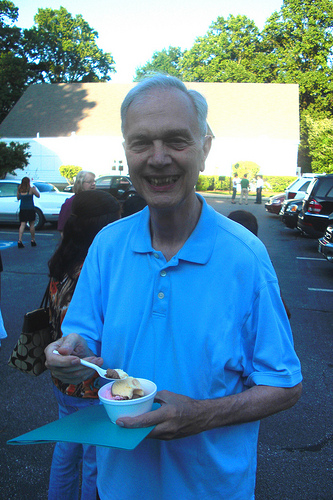
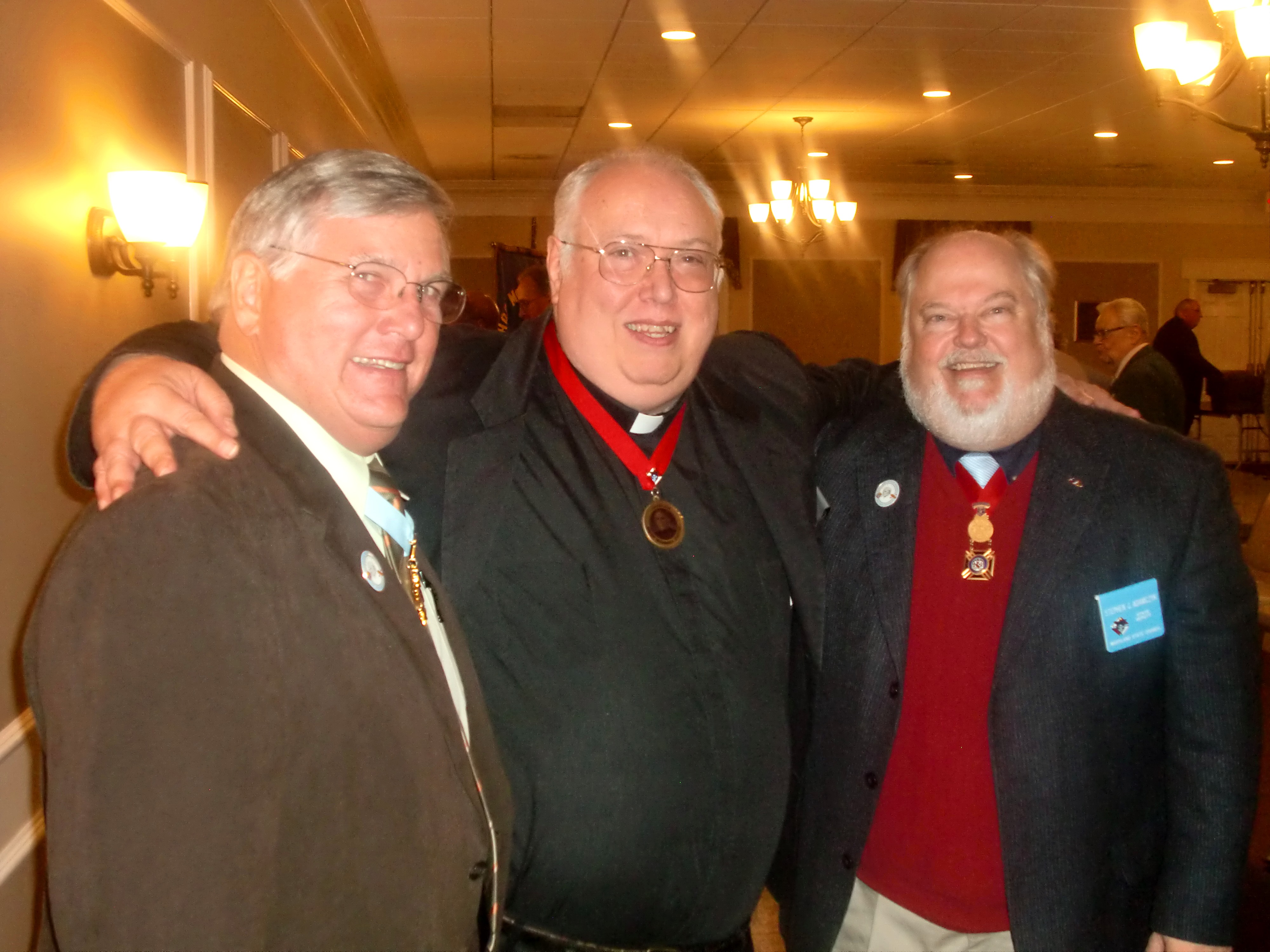
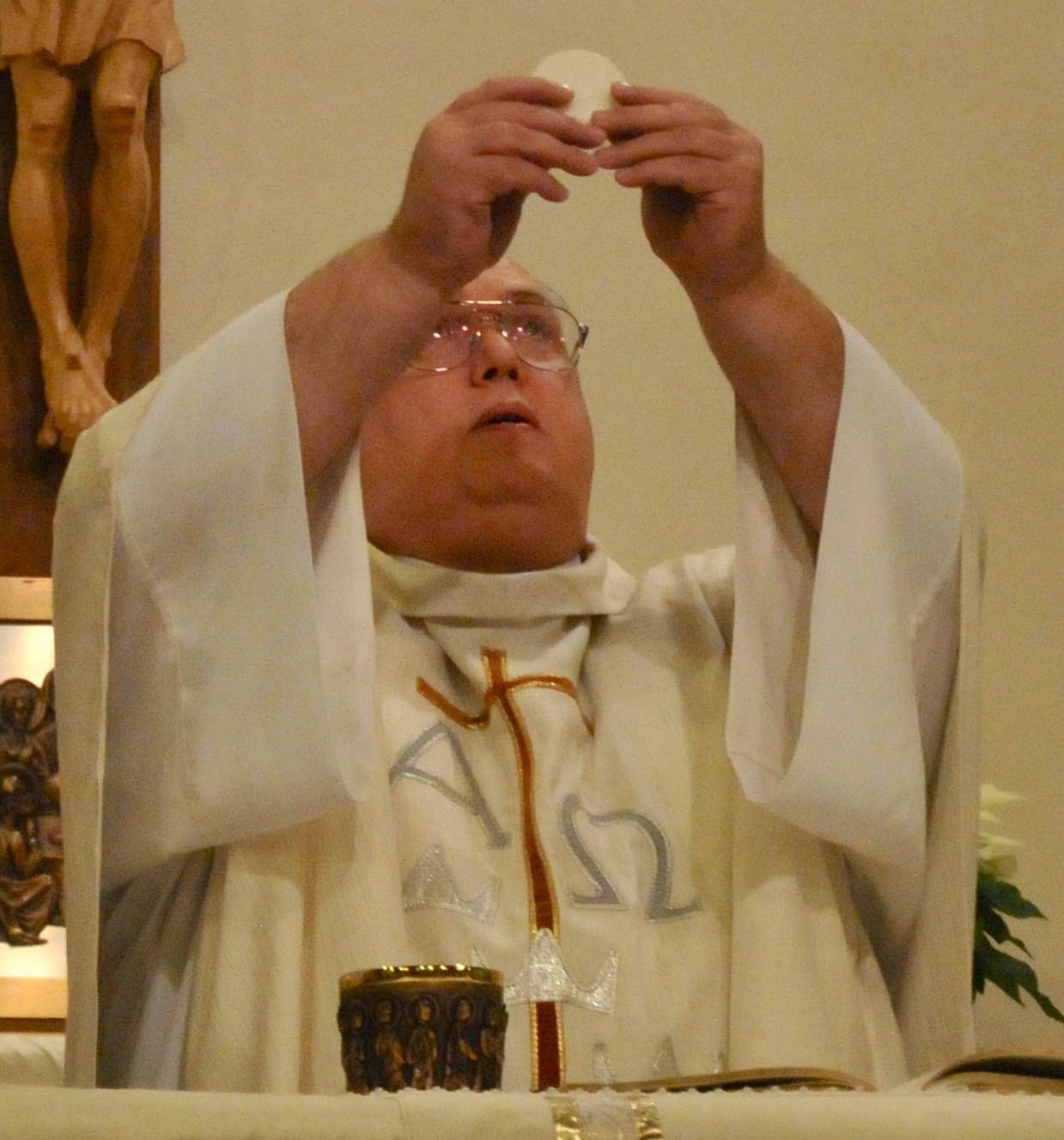
    Fr. Joseph Jenkins

  • The blog header depicts an important and yet mis-understood New Testament scene, Jesus flogging the money-changers out of the temple. I selected it because the faith that gives us consolation can also make us very uncomfortable. Both Divine Mercy and Divine Justice meet in Jesus. Priests are ministers of reconciliation, but never at the cost of truth. In or out of season, we must be courageous in preaching and living out the Gospel of Life. The title of my blog is a play on words, not Flogger Priest but Blogger Priest.

  • Archives

  • Categories

  • Recent Posts

  • Recent Comments

    Barbara King's avatarBarbara King on Ask a Priest
    Ben Kirk's avatarBen Kirk on Ask a Priest
    Jeremy Kok's avatarJeremy Kok on Ask a Priest
    Barbara's avatarBarbara on Ask a Priest
    forsamuraimarket's avatarforsamuraimarket on Ask a Priest

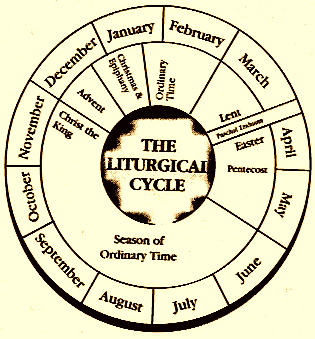
Questions & Answers About the Church Year

What is the meaning of Advent?

This season of four weeks before Christmas represents the four thousand years (according to the Scriptural reckoning) that mankind had to wait for the coming of the Redeemer.

What is the object of Advent?

We become aware of ourselves as spiritual Jews, recalling the advent of Christ’s first appearance while awaiting his Second Coming. It should light the spark of desire for this definitive encounter and for the graces he gives us as our Savior and Redeemer. Advent prepares us for the birth of Christ.

Why do we call Jesus’ birthday Christmas?

It is because the Church celebrates the festive day with Masses that specially commemorate the birth of our Lord.

Why do we traditionally offer three different Christmas Masses?

It is seen as a threefold act of thanksgiving to the divine persons of the Blessed Trinity who participated in our redemption.

What is the feast of the Presentation of the Lord?

On the fortieth day after Christ’s birth, Mary, in obedience to the law, offered her divine Son to his heavenly Father. It was once called the Purification because Mary offered the required clean oblation in the temple.

Why is it also called Candlemas Day?

It is because the priest blesses candles on this day. Candles are symbols for Jesus who is the Light of the World. Simeon proclaimed him to be the light of enlightenment of the Gentiles (Luke 2:32). Candles are blessed on this day with beautiful prayers and hymns: “May we who carry them to praise your glory walk in the path of goodness and come to the light that shines forever.” A procession is made to the church where Mass will be offered.

What is done on Ash Wednesday?

Ashes are blessed by the priest and placed on the heads of the faithful.

What makes up the ashes?

They are the remnants from blessed palm used the previous year. The ashes remind us that our bodies are destined to soon return to dust. That is why the priest says: “Remember, man, you are dust and unto dust you will return.

What are the ceremonies of Passion (Palm) Sunday?

It is a pious custom to cover the crucifix, statues, and pictures in violet to represent the brief time before the passion that Jesus hid from the Jewish authorities, following his terrible humiliation by them in the temple. Since it is also Palm Sunday, we also celebrate Christ’s triumphant entrance into Jerusalem. Palms are blessed in the church. The Jewish people greeted Jesus with palm branches and hailed him as their king. We know, of course, that he was not the kind of king they wanted and that Jesus really came to Jerusalem to die.

Why is the last week of Lent called Holy Week?

It is because we specially commemorate the events making up our redemption. Many graces are given us in this most holy time.

What takes place during Mass on Holy Thursday?

The Church commemorates the institution of the Eucharist (and the Priesthood). As a special sign of joy, the Gloria is sung and bells are rung during its recital. Extra hosts are consecrated for special reservation that evening and for communion on Good Friday. The Eucharist is carried in procession to the repository at a side altar. The organ and bells are now silent until the Gloria on Holy Saturday. This expresses the deep bereavement of the faith community over the passion and death of Christ.

Why is this the customary day for the consecration of holy oils?

Although sometimes moved to another day like Monday or Tuesday (for practical reasons) of Holy Week, the bishop consecrates the oils that are used at baptism, confirmation, anointing of the sick, and certain consecrations. Holy Thursday is chosen since it is the day that Jesus instituted the priesthood and made the apostles dispensers of his graces through the sacraments. Priests renew their promises.

Why are the altars stripped after Holy Thursday Mass?

This indicates our sorrow at the pitiful exposure of our Lord during his scourging and crucifixion.

What does the washing of the feet signify?

It is connected to the calling of the apostles as the first priests. The deep humility of Christ must also be found in his servants and ministers. St. Augustine associated it to our faith and baptism. Jesus washed the feet of his apostles before instituting the Eucharist. This reminded them of the purity and humility of heart that should be theirs before receiving and distributing Holy Communion.

What are the observances for Good Friday?

This is not a feast day, and no Mass is said. There may be special readings of the passion, Stations of the Cross, and Veneration of the Cross. We remember the death of Jesus. Various supplications are prayed.

Why do priests prostrate themselves at the foot of the altar on this day?

It expresses our profound grief at the suffering and death of Jesus.

What does the Church pray for in the great Supplications?

In the context of solemn petitions, the priest prays for the Church, the Holy Father, the bishops, the clergy and laity, the country, those preparing for baptism and/or reception, the suffering, separated brethren, Jews and other non-Christian people of faith, etc. We actually dare to pray that they might share in the fruits of Christ’s saving death. After all, our Lord died for all men and women.

How is the Veneration of the Cross conducted?

The priest or deacon holds up a Cross at three areas in the church: the back, middle, and front. If veiled, he reveals another of its three points as he moves toward the sanctuary. He proclaims: “This is the wood of the Cross on which hung the Savior of the world.” The people respond, “Come, let us worship.

How is the Cross worshipped or adored?

The priest lays the uncovered Cross before the altar, and then he kneels and kisses it. Traditionally, he would kneel three times at different distances and would finally kiss the wounds on the figure (corpus).

What does the choir traditionally sing?

They sing the reproaches that Christ must have made to his ungrateful people on this day.

Why is no Mass celebrated on Good Friday?

It would be unbecoming to celebrate the UNBLOODY renewal of the sacrifice of the Cross on the day we commemorate the BLOODY sacrifice of the Cross.

Also, every Mass makes really present the saving activity and presence of our RISEN Lord. Today we remember the shadows and not the light directly.

What does Holy Saturday bring to mind?

Many things come to mind. The darkness, candles, sacred silence and repose brings us to the Lord’s borrowed tomb and his descent to the limbo of the fathers (the righteous dead who awaited their Savior). But also, the festivities of the evening press upon us. We will soon celebrate our Easter joy.

What are the services for Holy Saturday?

The most elaborate liturgy of the year it is also the most beautiful and profound. There is the blessing of the new fire and the lighting of the Paschal Candle. There are a whole series of readings that trace our salvation history. There is also an incredible Easter Proclamation called the Exsultet. The Litany of the Saints is recited and baptismal faith is reaffirmed. A blessing is made over the baptismal water in preparation for the initiation and reception of new members into the faith.

What does the blessed fire of the candle signify?

The Paschal Candle is a symbol for Christ. Extinguished on Good Friday, it is restored brand new (resurrected) on Holy Saturday. The fire of the candle, from which other candles in the church are lit, signifies Christ as the Light of the World who dispels the darkness and gives warmth against the cold world and sin. Five incense grains are pressed into the candle representing the five wounds of Christ.

How is the baptismal water blessed in this celebration?

A whole series of Old Testament prophesies that point to baptism is read and prayers are made for the neophytes and those who reaffirm their faith. After the blessing and renewal of baptismal promises, the priest sprinkles the people. During the blessing, the Paschal Candle is dipped three times into the water as an invocation is made to the sanctifying power of the Holy Spirit. The water reminds us that the waters of baptism cleanse the world of sin.

What does the Church celebrate at Mass on this day?

The Church celebrates the resurrection of Christ. The Gloria is chanted, bells are rung, and the solemn Alleluia is sung.

What does the word Easter mean?

Easter or “East star” is derived from the rising of the sun or the resurrection of Jesus. It has also been called Pascha, a name taken from the Jewish festival when a lamb was slain in memory of the blood of the lamb that saved the first born of the Israelites. Jesus is the new Lamb of God who was slain on the cross and whose blood will save us.

What is the Ascension?

Forty days after Easter we commemorate Christ’s triumphant ascent into heaven.

What ceremony is peculiar to this day?

It is customary to extinguish the Paschal Candle, symbolizing the departure of Christ from earth to his Father in heaven.

What is Pentecost?

This is the commemoration of the descent of the Holy Spirit and it traditionally occurs ten days after the Ascension, or fifty days after Easter. We celebrate it on Sunday.

What are the Holy Days of obligation?

In the United States they are as follows:

  • Solemnity of Mary – Jan. 1
  • Ascension Thursday – (40 days after Easter)
  • Assumption of Blessed Virgin Mary – Aug. 15
  • All Saints – Nov. 1
  • Immaculate Conception – Dec. 8
  • Christmas – Dec. 25

Canada: Holy Days are Christmas and Solemnity of Mary, Mother of God

What is Ordinary Time?

This is a name given to the liturgical time outside of the seasons of Advent, Christmas, Lent, and Easter. Of course, in a sense, no time is ordinary. Every day and every liturgy is a wondrous opportunity to grow closer to the Lord and to live out our discipleship.

For more such material, contact me about getting my book, CATHOLIC QUESTIONS & ANSWERS.

Questions & Answers About the Bible

Is the Bible self-sufficient in teaching us all we need to believe in order to be saved?
Salvation truth is in the Bible; however, sufficiency fails upon the matter of interpretation and translation.

Can non-Catholic Christians be certain of possessing a fully authentic and complete Bible?

Unfortunately, they cannot as has been demonstrated by the various versions in use by Protestants. It should be said that ecumenical overtures have improved this matter, as many of their Bibles now possess the deuterocanonical books. Unlike many truncated Protestant Bibles, Catholic editions contain 72 books.

What prevents Protestants from having a certain set of biblical books?

History itself prevents them. Unlike the Catholic community, they were not present when the original copies were written and collected.

Why can Protestants not be certain of their biblical interpretations?

Their constant fragmentation into various divergent churches and sects is evidence that no universal sense of Scripture exists. They have no divinely protected mechanism of authority and tradition to insure fidelity to Biblical truth. Indeed, what authorities they do contain are at odds with one another, even if each claims a true sense of the Bible.

Would not modern translations from the original languages suffice in giving Protestants a true rendering of Scripture?

While very useful toward this end, there is still the dilemma that except for a few ancient fragments, we no longer have the means to re-examine the original texts. Further, biblical scholars themselves are often at odds with one another on certain points. Some Protestant groups even reject modern biblical scholarship altogether for a favorite and archaic English translation. There are few scholars versed in Hebrew and Greek, and knowledgeable of the dialects, expressions, and cultural circumstances of the biblical people.

Did God appoint an arbiter to preserve and to explain Biblical truth?

Yes, he did. The notion that Christ would establish a Church only to allow it to immediately fall into error is nonsensical. No, God chose St. Peter and his successors to be the supreme teaching authority in the Church. It was the promise of Christ that Peter’s faith would not fail and that the spirit of truth would abide with him forever.

Could it be said that the Holy Spirit inspires every individual in their personal understanding of the true meaning of biblical truth?

No, and there is no evidence for it. If the thousands of ministers in Protestant communities were truly inspired then they would all believe alike. There would be but one Church. Contradiction is not the fruit of the Holy Spirit.

What is the benefit of an infallible teacher to explain the Scriptures?

The benefit should be obvious. Doubts about certain texts and sections of the Bible are readily resolved. Unity in teaching precipitates oneness in the believing community. Without this leadership, there could be as many churches as there are heads. It dispels lingering doubts, maintains the faith, and casts off the errors of rationalism and atheism.

Are Catholics forbidden to read the Bible?

No, although Catholics are warned to avoid those Bibles containing errors. Also, care should be taken for the gullible and uneducated that they will not be led astray by false teachers or for a lack of good commentaries. The Bible can be used for our edification; however, used injudiciously, it can also cause much damage. St. Peter had such an experience. “There are some things in them hard to understand, which the ignorant and unstable twist to their own destruction, as they do the other scriptures” (2 Peter 3:16).

Is Bible reading encouraged in the Catholic Church?

Most certainly it is promoted. The Scriptures are proclaimed at Mass, make up the principal parts of the daily prayer or Liturgy of the Hours required of clergy and religious, taught in Catholic schools and religious education programs, and encouraged in the home and in study groups.

Are the teachings of the Catholic Church found in the Bible?

The truths of the Catholic faith are essentially found in the Holy Scriptures. There are some doctrines, while not explicitly in the Bible, come down to us through Divine Tradition.

Who explained the Scriptures to Jews during Old Testament days?

The High Priest and the Sanhedrin (a council of seventy-two civil and religious judges) fulfilled this role. Indeed, Deuteronomy 17:8 reveals that the Jews were required under pain of death to obey their decisions in doubtful matters.

When was the canon of biblical books established?

During the first three hundred years of the Christian era, the New Testament existed only as dispersed fragments. Complicating the situation, there were many books and letters in circulation which were named as scripture but which would be deemed otherwise. Such works included the spurious Gospel of St. Peter and the Gospel of St. James and of St. Matthias. In the year 397 AD, the Council of Carthage declared which books were canonical and inspired.

How do we know that the Catholic canon of the Bible is correct?

The present Catholic canon is the same as the list approved in the year 1546 by Pope Eugene at the Council of Trent. This in turn is the same canon published by Pope Gelasius in the year 494. His canon is the same as that of the Latin Vulgate compiled and translated by St. Jerome and approved by the Council of Carthage in 397. This continuity in the Catholic Church is a telling fact in favor of this particular listing.

How did St. Jerome and the Council of Carthage collect the texts and determine the biblical canon?

St. Jerome was one of the few Latin fathers who also knew Greek and Hebrew. He visited the places where the letters and writings of the apostles were preserved. He carefully collected as many as he could find, studied and translated them. His Latin Bible would come to be known as the Vulgate, the official Bible of the Catholic Church.

Why maintain a Latin translation of the Bible?

Actually, when first composed, the Latin Vulgate was written in a living language. However, the languages of men changed over time. The benefit of a so-called “dead” language is real, nonetheless. Such a translation with certain and unchanging word definitions insures a faithful source for all other renditions. It helps to preserve the Bible from erroneous or inexact interpretations.

Is not private interpretation of the Bible permitted?

The Bible should speak to our hearts and minds, finding particular application in our lives; however, as a universal concept, such private interpretation is fraught with dangers. It is responsible for giving us thousands of churches and sects all claiming to be the religion of Christ. The true voice of the Scriptures emerges from the Catholic Church, which has the authority to explain it. Our Lord said: “Go therefore and make disciples of all nations, baptizing them in the name of the Father and of the Son and of the Holy Spirit, teaching them to observe all that I have commanded you; and lo, I am with you always, to the close of the age” (Matthew 28:19-20).

Can a person be saved without reading the Bible?

Of course, in the first three centuries of the Christian era there was no complete collection of the New Testament books. During the first 1,500 years, before the process of printing, Bibles had to be copied with pen. It was not possible for everyone to have his or her own Bible. In any case, many people could not read. The command of Christ is not to take and read the Bible but to hear and respond to the preaching and teaching Church.

But did not Jesus tell us to “search the Bible”?

This was in response to the question of the Jews about his identity. Was he the long-awaited and true Messiah? He told them to search the Scriptures to see what the prophets said about him. Christ never explicitly told us to read the Bible; rather, he pointedly commanded us to hear the Church and to obey her teachings.

What language was used in the first Bible?

Books were variously written in Hebrew and Greek.

Who guarded the integrity of the Bible throughout the centuries?

Long before the reformation churches came into existence in the 1500’s, the Catholic Church preserved and guarded the Bible.

Was Martin Luther’s Bible the first to be printed?

No, a hundred years before the reformation a Catholic had invented the art of printing. This allowed at least fifty-six Catholic editions of the Bible to be published in the continent of Europe. Twenty-one of these were published in Germany, one in Spanish, four in French, twenty-one editions in Italian, five in Flemish, and four editions in Bohemian.

When was the Bible translated into the English language?

The venerable Bede translated the Bible into Saxon which was the language of England in the eighth century. Archbishop Arundle of Canterbury (1394) stated that Queen Anne diligently read the four gospels in English. Sir Thomas More speaks of an English Bible during his time.


Questions & Answers About the Church

What is the Church?

Put simply, the Church is a community of faith founded by Christ which celebrates and makes known her Lord through his teachings and sacraments. This Church is composed of the clergy, laity and consecrated religious.

Does the Bible speak of the Church?

Yes, it does, a fact that is quite disturbing to those who disavow any significant role for her and who reduce Christian faith to a personal experience with occasional Christian fellowship. Jesus said: “And I tell you, you are Peter, and on this rock I will build my church, and the powers of death shall not prevail against it.” (Matthew 16:18). St. Paul also speaks about “the church of the living God” (Timothy 3:15). In Hebrews 12:23, he calls her the Church or “the assembly of the first-born.” Revealing something of the intimacy between Christ and his people, St. Paul says in Ephesians 5:25, “Christ loved the church and gave himself up for her.” Jesus compares the Church to a flock of sheep: “So there shall be one flock, one shepherd” (John 10:16).

Does the Bible say anything about Christ founding a Church?

Our Lord chose twelve apostles and commanded that they teach and insure that believers observe all that he had given them. Christ, himself, admits to his own authority, “All authority in heaven and on earth has been given to me” (Matthew 28:18) and extends it to his apostles, “Peace be with you. As the Father has sent me, even so I send you.” (John 20:21). Christ appointed a visible headship or ultimate leadership among his apostles in Peter: “And I tell you, you are Peter, and on this rock I will build my church” (Matthew 16:18). This “rock” signifies that Peter should be the foundation stone and chief shepherd of the Church. Christ told him “Feed my sheep . . . Tend my lambs . . . Feed my sheep” (John 21:15-17). In other words, he was to lead the apostles and teach the People of God. He was to minister to them and insure the efficacy of the sacraments, particularly the Eucharist.

When did this Church really begin?

The Acts of the Apostles chronicles how the apostles were empowered and began to exercise their mission on Pentecost. The Church expanded and prospered. Bishops were appointed to assist and to be the successors to the apostles. This living legacy extends all the way to today.

Can the origin of the Church and its apostolic succession be proven?

Sure, history and Church documents themselves are evidence of Church leadership and activity throughout the ages. Significant are the lists of succession, especially that of the Pope which extends back to Christ and his appointment of Peter. There has also been a successive series of Church fathers and doctors who have explained and defended the faith in every century. We might point further to the Church councils, which have corrected and maintained teaching and discipline against error so as to be faithful to Christ.

Can we really be sure from biblical testimony that Christ gave Peter a special supremacy and power?

Christ asserted that Peter was the rock or foundation stone of his Church. He tells him to feed his flock, to teach and minister to clergy and laity alike. He makes no qualm in saying, “I will give you the keys of the kingdom of heaven, and whatever you bind on earth shall be bound in heaven, and whatever you loose on earth shall be loosed in heaven” (Matthew 16:19).Yes, the singular role of Peter is pretty clear.

Does the Bible assert that Peter was the chief apostle and that he exercised supremacy over them?

St. Peter personally presided over the election of Matthias. He was the first to address the crowd after the descent of the Holy Spirit. At the Sanhedrin in Jerusalem he took it upon himself to speak in the name of all the apostles. He presided in Jerusalem over the first Church council (Acts 15). He resolved disputed matters (Acts 15:7). St. Paul consulted Peter about certain practices. Indeed, early Christian history tells us that after Christ, Peter was considered the head and chief teacher of faith.

Can it be proven that the Catholic Church is the true Church?

Christ established the Catholic Church almost two thousand years ago. Her Christian teachings have remained consistent against the fads and fashions of time. Her saints have written our Church history in lives of holiness and sometimes even of martyrdom. She has spread throughout the world to the many nations of the earth. She has not deleted or compromised the teachings of Christ. She has an unbroken succession of leadership (that can be chronicled) going back to Jesus. The Catholic Church alone has weathered all the storms of dissension, schisms, paganism, and persecution.

How can it be said that no other denomination is the true Church?

Except for the special position of the Orthodox churches and their relationship, albeit fractured, with the Catholic Church, all other Christian denominations emerge from the personal opinions of certain men. These figures alter, add, and delete from the deposit of faith according to their own whim and private notions. Non-Catholic churches [properly called ecclesial communities] disagree with one another and only possess fragments of Christ’s teaching, not the whole truth. All saving truth “subsists” in the Catholic Church. These other ecclesial communities extend back a few centuries or merely a couple years, not two millennia like the Catholic faith. These denominations exist only locally or in a few countries and are not worldwide. Having not formed under the watchful eye and guidance of the apostles, non-Catholic Bible-Christians frequently and ultimately explain the Scriptures in ways to suit human opinion.

Does the Bible actually say that we should submit our opinion to the Church?

We read St. Paul in Hebrews 13:17: “Obey your leaders and submit to them.” Jesus said to the apostles: “All authority in heaven and on earth has been given to me. Go therefore and make disciples of all nations, baptizing them in the name of the Father and of the Son and of the Holy Spirit, teaching them to observe all that I have commanded you; and lo, I am with you always, to the close of the age” (Matthew 28:18-20). “He who hears you hears me, and he who rejects you rejects me, and he who rejects me rejects him who sent me” (Luke 10:16). Thus it is that we should hear the Church and submit our opinions to her.

But blind submission violates the freedom of human inquiry and thinking, does it not?

This submission is not blind. We are obliged, to the best of our ability, to study the reasons and background for Catholic teachings. But, should we encounter “mystery” and we will, then we should render a religious assent to the views of the Church, which received the command from Christ to teach and to explain the truth.

Does not everyone have a right to his or her own opinion?

Yes, but only so long as the facts admit to differing opinions. But if truth should be made manifest or decided by a competent authority (like the Church), then we must submit. Children have opinions; would we say that they are always mature and correct? The insane have views too, would we consider all truth relative so as to give them credence? No, of course we would not.

Could not Christ have made things a lot easier for us, just by spelling out his doctrines so that no confusion might develop?

Christ did provide for the eventuality of misunderstanding. He gave us a certain and infallible teacher for his doctrines. In cases of uncertainty, we have a means of discerning the truth. He principally gave this infallibility to Peter, the Bishop of Rome, and to his successors.

But, is not the Bible an infallible teacher?

No, because many texts require explanation. There are some Scriptures difficult to understand. The multiplicity of denominations in this nation alone is proof that the Bible is no infallible teacher.

Does the Bible really say that St. Peter has infallible teaching authority?

Christ said to St. Peter: “Simon, Simon, behold, Satan demanded to have you, that he might sift you like wheat, but I have prayed for you that your faith may not fail; and when you have turned again, strengthen your brethren” (Luke 22:31). In Matt. 16:17-19, Jesus said to Peter: “Blessed are you, Simon Bar-Jona! For flesh and blood has not revealed this to you, but my Father who is in heaven. And I tell you, you are Peter, and on this rock I will build my church, and the powers of death shall not prevail against it. I will give you the keys of the kingdom of heaven, and whatever you bind on earth shall be bound in heaven, and whatever you loose on earth shall be loosed in heaven.” This proves that Peter was empowered by Jesus Christ so that his faith would not falter and that he should insure and strengthen the faith of his brothers. Christ confided his Church to Peter as on a rock that will never be disturbed by false teachings or by the gates of hell. Christ said to Peter: “Tend my lambs . . . feed my sheep,” (John 21:15), which means to teach and care for the whole Church. If Peter was charged to teach the whole Church, then Christ had to insure that he would be able to teach without error. Otherwise, no one could be required to believe what he taught. Except for some window dressing and the development of our appreciation of doctrine, the Church has taught the same unchanging doctrine for two thousand years.

But if Peter swore that he did not know Christ, how could he be infallible?

This question emerges from a common misunderstanding between “infallibility” and “impeccability”. While St. Peter was infallible in teaching matters of faith and morals, he was not free from sin. Further, when Peter denied Christ, he had not received the Holy Spirit who would preserve him free from error in teaching the Church. Christ had yet to give him full and empowered charge of his flock.

What does “ex cathedra” teaching mean?

It is a technical term, which means literally from the chair; it signifies when the Pope speaks from his role, as the universal teacher, some matter of faith and morals which must be accepted throughout the world. He puts the full weight of the seat of Peter behind it. His private conversations and such are not infallible.

Does such a view of infallibility create an atmosphere for ignorance, making people passive in investigating the truth?

No, quite to the contrary, infallibility insures that we do not follow any false leads. The truth is studied on a firm foundation and in the light; those who have no such guide search for the truth in the dark. The fragmentation of Protestantism is evidence of this latter route.

But wait a minute; is not the teaching regarding infallibility of recent origin?

It was formally defined toward the end of the 19th century as a necessary retort to a world that was increasingly secular and dismissive of the role of the Church. However, even before it became a declared article of faith, the Popes were always infallible. Papal infallibility is not a new doctrine; rather, it is an ancient perpetual truth given a clearer definition.

But some Popes were terrible public sinners; does this not invalidate this business?

No, just as with Peter, infallibility does not mean an exemption from sin.

Could it be that Peter was infallible, but no Popes after him?

The guarantee from Jesus was that he would remain with his Church until the end of the world. Thus, the infallibility of Peter must endure as long as the Church exists and the teachings of Jesus have need of preservation from error. Anything less would be unjust. Every generation has a right to the truth. Remember, Christ promised he would send to his Church the Spirit of truth which would abide with her forever (John 14).

At the time of the reformation, about the year 1500, did not the Catholic Church fall into idolatry and superstitious practices?

No, her beliefs have remained essentially the same throughout all history, going back to the apostles and the first Christians. These charges are the result of bigotry and misunderstanding.

Were there not many abuses in the Catholic Church at the time of the reformation?

The Church is holy because Christ is holy. However, many individual members of every “church” may be guilty of sinfulness and abuses. The Church has never formally approved of religious abuses and has legislated “Church” penalties, including excommunication, to discourage such activities.

Is it correct to assume that Protestant denominations possess the same faith and teachings as the first Christians?

No, this would be a false presumption. Many cases of deviation can be documented, not to mention their breach with the Catholic Church. While the first Christians acknowledged baptism as necessary for salvation, many of these “new” churches dismiss its importance. Ancient believers also believed in the Church’s jurisdiction over the sacrament of penance and the value of confession to a priest; all the Protestant sects renounce this mystery of mercy. The early Christians made the Eucharist the center of their lives, trusting that in Holy Communion they received the real body and blood of Jesus Christ. Most Protestant sects denounce the real presence, spiritualize it, or reduce it entirely to ordinary bread. Early Christians also inherited from the Jews of Christ’s day the practice of praying for the dead; this also, the non-Catholic denominations have discarded.

What is so serious about a denomination changing or modernizing its tenets of faith?

Implicit in such an activity is the assumption that the previous tenets were incomplete or erroneous. Both cannot be right. The true teachings of Christ and the apostolic Church, the very matters of faith required for salvation, cannot be reversed or altered. Attempts to do so sever the connection between believers and the true Church of Christ. Of course, issues of discipline can be revised according to changing circumstances. Further, the many languages of men and the various societies in which the Church finds herself may also dictate reformulation in the expressions of changeless doctrinal truths. It could also be said that the full meaning and ramifications of certain teachings develop or are only realized over time.

Does the Catholic Church fabricate new articles of faith?

No, she does not have the authority to create new teachings. Rather, she sometimes defines matters of faith that have existed in the Church from the very beginning. As for discipline, she can create or revoke laws according to changing circumstances.

For more such material, contact me about getting my book, CATHOLIC QUESTIONS & ANSWERS.

Deacon Dr. Henry D. Dardy Passes Away

Presidential Rank of Meritorious Senior Professional
Dr. Henry Dardy, 2008

I lost one of my best friends, the parish deacon. His sister called me last Saturday to let me know that Deacon Hank collapsed while doing yardwork at his home. Hank was a great scientist and man of faith. He was instrumental in the creation of several corporations worth hundreds of billions of dollars. He ranked with Steve Jobs and Bill Gates. The only difference was that he was more interested in being a prophet than in making profits. Along with his lab and those who worked with and under him, he invented and perfected all sorts of things. He worked with Lucas over the computerization of the dinosaurs in Jurassic Park. He was behind high speed data transmission and in collaboration with ABC and Disney helped to perfect HDTV. He worked for his country and the Navy. He loved his Country, his Church, and his Community. I will never forget this quiet and good man. Last Friday he did the parish Stations of the Cross for me. He preached two weeks ago and gave one of the best homilies I had ever heard; I even said so from the altar. No task was too great or too small. This world-class scientist replaced my light bulbs and fixed the clocks. He set up for Masses, performed baptisms, and proclaimed the Good News. He believed. He was living evidence that there need be no contradiction between being a person of science and a man of faith.

Bishop Martin Holley presided at his funeral and I was honored to preach. Many of his deacon classmates attended. The church was packed with friends, family and colleagues.

I will miss him very much. Everyone loved him. Goodbye Hank, until we meet again in the Lord . . .

OBITUARY

549358 

Deacon Dr. HENRY D. DARDY “Hank” (Age 67)

On Saturday, February 27, 2010 in La Plata, MD, the beloved brother of Sr. Mary Ann Dardy and Anthony “Tony” Dardy; brother-in-law of Barbara G. Dardy; uncle of Lisa D. McGee and Mark D. Dardy; nephew of Anna M. Lindich.

Family and friends may call at Holy Family Catholic Church, 12010 Woodmore Rd., Mitchellville, MD 20721 on Wednesday, March 3 from 6 to 8 p.m. where Mass of Christian Burial will be offered on Thursday, March 4 at 10 a.m. Interment on Friday, March 5 at 11 a.m. in Calvary Cemetery in Cleveland, OH. In lieu of flowers, contributions may be made in his memory to either Holy Family Catholic church or John Carroll University, 20700 North Park Blvd., University Heights, OH 44118.

www.KalasFuneralHomes.com

Catholic Schools in Financial Difficulty

The US Dept. of Education’s “Financial Responsibility Test” was recently announced. This test indicates that according to certain ratios, a private higher education institution may be at risk for failure. These schools are subject to extra monitoring on their use of federal student aid funds.

114 private, nonprofit, degree-granting institutions scored below 1.5, the passing level, and are thus in financial jeapardy. There are a number of Catholic institutions on the list as having financial difficulties:

Please note that Dominican College of Blauvelt (New York) which also scored a low 0.9 is no longer a Catholic institution. The college is very clear that it is an independent school with only a Catholic “heritage” or “origin”. I suppose schools like people can forfeit their souls.

11954250181186354795ArtFavor_Stack_of_bills_money_svg_med

All private colleges that award federal student aid must participate in the Department of Education’s financial-responsibility test, which is based on information from their audited financial statements. The department develops a composite score on a scale of 3.0 to minus 1.0, based on financial ratios that measure factors such as net worth, operating losses, and the relationship of assets to liabilities. Institutions with scores of 1.5 to 3 pass. In addition to extra monitoring for all institutions that “fail,” those with scores below 1.0 are required to post a letter of credit with the department equal to 10 percent of the federal student aid that goes to their students annually.

Where Have the Churches Gone?

Bill and Susan are both baptized Catholics. But they rarely went to Mass. You might see them in the pews at Christmas and Easter, but that is about it. One Easter they came to Mass and had the surprise of their lives. The parking lot was empty. Going up to the church doors, they discovered that everything was locked. Confused, they almost decided just go home but it was Easter so they drove a little further to another church. Again, they were shocked. There was no one there, either. Now the mystery was intriguing them. What had happened? Had there been a revolution and the churches forcibly closed? Were the Protestants right and all the good Christians taken away by the rapture? They traveled outside of town to a third church. Here they found cars but services were ending. Although they had missed Mass, they entered the church for a quick visit and to find reassurance that nothing else had suddenly changed. Everything appeared to be in place, although the congregation seemed a bit small from the celebrations remembered in the past. They saw the priest and approached him with their puzzlement.
Susan spoke first, “Father, we are sorry about missing Mass but we had trouble finding an open church.”

Father Flynn responded, “I take it that you are new to the area. We would love to have you register here. We can always use new members.”

“No Father,” said Susan, “we have lived here all our lives. We were married at St. Margaret’s.”

“Oh my,” responded the priest, looking somewhat disturbed and maybe upset.

Bill entered the conversation, “We went to St. Margaret’s this morning and finding no one there went over to Holy Spirit. Both places were empty.”

“Yes,” lamented the priest, “I guess you both feel inconvenienced.”

“It certainly ruined Easter, what is going on Father?” asked Susan.

“You won’t like my answer. It might even make you angry,” added the priest.

The priest motioned for them to sit in a pew next to him.

“What is it, Father?” asked Bill.

“I will tell you,” said the priest, “it is your fault.”

Taken aback by the answer, they immediately insisted that he explain.

“You and so many people like you, killed St. Margaret, Holy Spirit, and almost a hundred other churches in the diocese. You want the church for a wedding, as if the building is only a decoration on a cake. You might ask for a baby’s baptism, when grandparents nag you. But then we have trouble finding a godparent who is not in mortal sin. Everyone who comes is a stranger. No one is practicing his or her faith. You come to Mass a couple times a year, throw a few dollars in the basket and expect the church to still be here waiting for you when you feel like coming back. Some only come to church twice in a lifetime, the day of baptism and the day of final repose. You did not know about those churches because they were not a part of your life. You did not support your parish through donations. You did not add to the parish life by your participation at Mass and in the various volunteer opportunities. You did not have children or if you did, you did not encourage vocations. How did you expect us to keep the churches open when we have no priests and empty pews? You broke the hearts of your priests who gave up the possibility of spouse and children to take care of the family of God. Priests weep over their people who neglect Confession and the Mass. Priests yearn to forgive your sins. You became comfortable with sin and made excuses. You said by your neglect that our sacrifices did not matter. Some of you were even vocal in arguing for married priests and condemning all celibate men as deviates and predators. In essence, your dissent and absence told the priests that we were wasting our time. Worst of all, you were saying that you did not need the Church. You forced God to the periphery of your lives, if he were there at all. The churches closed were wonderful places once. God lived in those houses and in the hearts and souls of the people. But when you stopped coming, things began to run down. Where there were once three priests, now there was one. Eventually even that one was shared between parishes. Many young people stopped coming. The congregations got older. The average parishioner age at Holy Spirit was around eighty! God called the faithful remnant home. Grandparents tried to give the faith to their grandchildren, but sometimes with opposition from their own children. They suffered terrible guilt. What had they done wrong? Why did their children stray? Bills started to grow and resources were strained. The new Bishop had to take action. Critics hated him and spouted condemnations when he closed beautiful old churches. Many of these same voices were those of fallen-away Catholics. They still had sentiment about their childhood parishes, but nothing of a deeper or lasting value. Catholics today are twice as populous as in the old days, but less than 15 to 20% go to weekly Mass. Back in 1960, that figure was 90 to 95%. Our schools are dying and increasingly expensive. Our churches are relegated to the status of museums instead of as places of worship and community life. You did not pray— you did not pay— and now you are upset that the churches did not stay. We are drowning in a sea of hypocrisy. A housing developer will be bull-dozing Holy Spirit within the month. Who knows what shall become of St. Margaret Catholic Church? There is talk that a Baptist group might buy it. Some of the churches have become condominiums with the guts torn out. What the enemies of the Church could not do, we have done to ourselves.”

The couple was silent. The priest reached into his pocket and pulled out a broken piece or marble or plaster made out as marble.

“See this,” said the priest, “this is a fragment from the altar at Holy Spirit. I was pastor there. On the morning I came by to pay my final respects, demolition men were hacking the altar to pieces. It was on that altar that bread and wine became the body and blood of Jesus. It was from that altar that the faithful received the bread of life and the cup of eternal salvation. I did everything I could think of to save the church. I went door-to-door in an attempt at outreach. But there was a bigger Catholic church down the road and we had no school. Even they were struggling. Most people of faith in the area were Protestants. Others spurned all religion. Many Catholics had moved away and those who remained did not come, except for my small faithful remnant. I buried most of them.”

Staring straight into the faces of the couple, he lamented, “I cried and cried after seeing that altar destroyed. Here, take this,” offering the altar fragment.

“It means too much to you Father, no, we couldn’t take that,” returned Bill.

Not taking no for an answer, the priest forced the fragment into his hand, and said, “It is okay, I really want you to have it. You are right, it meant a lot to me, but it is my hope that someday it might come to mean something to you and your wife.”

The Doctrine on the Trinity

God makes himself known, as a Trinity, in the revelatory message of Jesus Christ. This truth is not simply academic, but relational. Despite our unworthiness, the eternal Son of God offers his Father to us as “our” Father. In contrast to the Cosmic Watchmaker of philosophical Deists, the Judeo-Christian God called a people to himself and established covenants with them. The same Spirit that hovered over the waters of creation would overshadow a Virgin in Nazareth and bring forth forgiveness, healing, and life in the ministry and life of Christ. God delivered his people from political oppression and slavery. He gave them both the Prophets and his Law. Finally, he gave them his Son. Ours is a God who never forgets us. This abiding reality is most forcibly expressed in the saving mission of Jesus Christ, the Son of God and Second Person of the Blessed Trinity. He is sent into the world as one of us. He comes to rescue us from the sin and death, which was of our own making. God the Creator offers us the opportunity of a re-creation and of a new life in Christ.

God is the Father of us all. He calls us into union with him. He is the Supreme Being, infinitely perfect, and the maker of all things, keeping them in existence. Created things reflect the glory of God, their Creator. As the source of all goodness, God willed certain things into existence so that they might enjoy his benefits and participate in his goodness. His infinite power brought all things out of nothingness into being and he keeps them in being. Otherwise, and it is against the divine economy, they would sink once more into nothingness. Above all creatures, he is self-existing; indeed, he is existence, itself. He is an infinitely perfect Spirit. All perfections find their eminent degree in him. All the goodness, beauty, truth, and power we appreciate in created things are but the merest shadows of the perfections found in their source, almighty God.

God is revealed through the laws of nature and, in a more personal way, through his revelation as assembled in God’s Word. Because of the limitations of human knowledge, many of the ways we know and speak about God are through analogies and stories. God identifies himself with Truth and with Love. He is all-good. He is mercy itself and ever forgiving. His is all-knowing. He is just. He is without limit. He is perfect and therefore, unchangeable. He is omnipotent (all-powerful) and present everywhere. He has no need of anything or anyone outside of himself. He creates freely, to give glory to himself, to share his life with his creatures, and to have them return thanks and praise to him. While there is ONE God, his identity is Triune: Father, Son, and Holy Spirit. These three Persons of the Trinity are not “persons” in the sense of contemporary usage dealing with psychology. Rather, it implies a sort of divine dynamism wherein there are three mysterious interlocked equal cores of God’s identity. The Scriptures never use the word “Trinity,” but the doctrine resonates there clearly in the New Testament.

Jesus calls upon God as Father. Jesus does the things that only God can do, like forgiving sins and making atonement. The Holy Spirit is experienced as God, giving life to the community just as he breathed life back into the crucified Christ. The Lord gives the command to go out to all nations and to baptize “in the name of the Father and of the Son and of the Holy Spirit.” Baptism in the name of a creature would be meaningless, thus all three Persons constitute the one God of faith.

We give thanks and glory to God in response to his gift of creation and the act of re-creation wrought by his Son through the power of the Holy Spirit. A sin offering had to be made and only one who was sinless could offer it. It is the teaching of the Church that the Lord’s human origin was the work of the Holy Spirit in the womb of the Virgin Mary. Jesus’ conception, unlike our own, is the miraculous work of the Holy Spirit and is untouched by original sin. The Holy Spirit can directly create nothing sinful. Further, the fact that Jesus is God would make the presence of sin an inner contradiction. Jesus is viewed in the incarnation as the eternal Son of God born in the flesh of Mary. This revelation of Christ’s identity is derived from a comprehensive look at the details of the Gospels. The early centuries of the Church was a pivotal time for debate and reflection where a precise appreciation of Christ’s identity emerged under the light of God’s guiding Spirit. A formula was issued which still applies today: Jesus is one divine Person, existing fully in two natures, divine and human.

For more such reflections, contact me about getting my book, CHRISTIAN REFLECTIONS.

God Reveals Himself

Proverbs 8:22-31 personifies Wisdom as begotten from God before all ages. Wisdom was one with God when he created the universe and established his wondrous order. This text foreshadows the later revelation of a plurality of divine Persons in the Godhead. Wisdom, literally the Word of God, will become incarnate in Jesus Christ. Romans 5:1-5 speaks of the experience of the Trinity by early Christians. Faith in Jesus Christ has justified them before God the Father. Jesus has sent the Holy Spirit upon them so that divine love now flows through human hearts. We are literally invited into the inner divine and Trinitarian life. The Gospel has Jesus assuring his disciples that the Holy Spirit will make the significance of his mission and teaching clear to them. Something of the intimacy in the Trinity is hinted when Jesus says, “All that the Father has belongs to me” (John 16:15). The Spirit will draw them into this intimacy and saving truth.

For more such reflections, contact me about getting my book, CHRISTIAN REFLECTIONS.

God’s Fatherly Concern

Luke 11:5-13 has Jesus pointing toward the natural relationship of fatherhood as self-reflective of the Heavenly Father’s love. It begins by speaking of the Christian’s obligation to be charitable, even when it is inconvenient and difficult to do so. However, it then switches gears somewhat and refers to the kindness of earthly fathers to their children. This passage ends with the sentence, “If you, with all your sins, know how to give your children good things, how much more will the heavenly Father give the Holy Spirit to those who ask him.” Throughout the long history of the Church, it may be that we sometimes took the analogy too far in imaging God above as a stern, vengeful, and punishing Father. It is true that while he is a just Father, he is also merciful. There is something self-reflective about this most special Fatherhood. In his love we see something of who we are to be as fathers (and mothers) to one another. Conversely, in our love as Christians we need to find something of God’s fatherly concern for us. It is interesting to note that Christ uses the most familiar of relationships to reveal something of the God we follow. In the order of grace, Christ makes us adopted sons and daughters to the Father and shows us that he cares about us. In Christ’s relationship to us, we are reminded of the analogy of Christ as the groom and the Church as his bride. Between the pages of these two relationships, the whole story of salvation is written.

For more such reflections, contact me about getting my book, CHRISTIAN REFLECTIONS.

Reform & Believe

“The Reign of God is at hand! Reform your lives and believe in the gospel!” (Mk 1:14-15). The cry for men and women to reform their lives had long been one echoed in the history of God dealing with his people. With the coming of Christ, we for the first time can fully respond to this admonition.

In the days of Noah the people were also called to faithfulness and yet they remained in their debauchery. I recall a reproduction of a painting my parents used to have of the deluge. A young beautiful woman with long hair clung to a jagged rock while surrounded by heavy winds and thrashing tides. I recall staring at the picture and feeling deeply sorry for her. She was so beautiful. How could God be so cruel? As I have gotten older and hopefully wiser, still sometimes the actions of God in the Old Testament seem like such over-reactions to me. I suppose what we forget is that the more primitive the people, the less sophisticated had to be the ways to keep them in line and to guide them. The story of the flood is not one simply about destruction and disobedience; in Noah and his companions we see an image of God’s steadfast fidelity and love for mankind, despite our disobedience. God sets up a covenant with Noah and promises never to flood the world again; he even sets the rainbow in the sky as a sign of his promise. The words of Genesis convey here the deep love of God. Because of our sins, we deserved death. However, not only are a remnant rescued but later God would send us his Messiah to save us from our sins and eternal death.

I would probably be negligent if I failed to say a few words about the kind of literature which this text in Genesis represents (see Genesis 9:8-15). It is linked with the story of creation, even though there was no scribe or news reporter taking notes in the first days of humanity. It is a later reflection. When the Jewish people were in Babylonian exile surrounded by a people who followed false Gods, the story of the flood reaffirmed to them how much God loved them; and that no matter how desperate their situation became, God would not abandon them.

The story of creation and the flood also made up a kind of satire against the Babylonian gods. Much of the linguistic allusion is lost in English. The particular story which parallels ours is called the Gilgamish epic. In it, the hero is not Noah but Ut-napishtim. When the gods, notice the horrendous plural, decree the deluge, the pagan god Ea reveals their designs to Ut-napishtim by speaking secretly through a reed wall. You see, Ea did not want to let the other gods, who wanted to get rid of mankind, know what was coming. He is urged to build a cubical boat of ten cubits. This is not like the rectangular boat of Genesis, just a box. He is warned to take ample provisions, as well as a sampling of the beasts of the field and the wild creatures. This is like Genesis. However, he is also told to take craftsmen lest their skills be lost. For six days and nights the storm persists. Finally, the ark comes to rest on Mount Nisir. Like Noah, he sends forth a dove, a swallow, and a raven, leaving the boat when the raven fails to come back. Ut-napishtim offers a sacrifice to the gods who cluster around him like flies. Instead of a covenant as we see in our story today, there follows an angry dispute among the gods. Enlil, angry about the remnant which has escaped, inquires as to who leaked the secret of the flood. Ea confesses but questions the prudence of Enlil in sending the storm. Upon the sinner, he says, should be imposed his sin, and on the transgressor, his disobedience. Instead of a universal disaster, Enlil, he complains, should have simply sent a wolf or a lion or a famine or a pestilence which would not have wiped out the entire race. Because Ut-napishtim and his wife escaped destruction, they must now be given immortality and transplanted so that they would not mingle with mortals. This and similar stories question the wisdom and goodness of the providence of the gods. The Jewish people believed in one God who was all knowing and all good. The destruction is then not seen as the act of a whimsical god but rather was something which a disobedient people brought upon themselves. God’s response is to save a remnant from further depravity and have them start brand new. You can see from these two stories the resemblance. Father John McKenzie, a Scripture scholar, tells us that “The differences between the Mesopotamian and the biblical stories show how the Hebrews took a piece of ancient tradition and retold it in order to make it a vehicle of their own distinctive religious beliefs, in particular their conception of divine justice and providence” (Dictionary of the Bible, p. 189). Although this flood may not have actually wiped clean our planet, it could well be that both stories emerge from some common memory of a disastrous flood of prehistoric times — a recollection which has grown out of all proportions.

Having said this, theologically, the wisdom and faith of righteous man was praised for having followed God who saved humanity from his folly. Noah listened and obeyed God. This is the key. In 1 Peter 3:18-22, the deluge is reckoned an example of God’s patience and is compared to the waters of baptism. Water for us thus becomes a symbol of both life and death. In the history of salvation, it meant death to the peoples around Noah — it meant death to the Egyptians who chased the Jews across the Red Sea — and it even meant death for Jesus who once baptized by John would engage in a ministry which would demand the highest cost. It also meant life — it meant life and a second chance for Noah — it meant life and freedom for those fleeing Egyptian slavery — it meant life in the natural processes of the world where plants and animals perish without water. In baptism, by submerging and dying with Christ in those waters of regeneration, we are promised to rise with him. Like a seed which has flowered, we are born again and made brand new. Our sins are forgiven and we are made members of a new People of God.

Recall your baptismal promises often and allow Christ to live in you. Have Noah’s kind of faith. He trusted God even in the absurd task of building an ark. Living out our Christianity will sometimes seem absurd to others, but do not allow the storm of sin and death to drown you. Christ has given us a fine ship called the Church and if we remain faithful, it will take this Pilgrim People to the Promised Shore.

For more such reflections, contact me about getting my book, CHRISTIAN REFLECTIONS.