











http://www.patheos.com/Library/Roman-Catholicism.html

The PATHEOS portal advertises itself as “hosting the conversation of faith,” however— it does more than this, it seeks to reframe and/or to delineate religious truth. While several good Catholic blogs are hosted; it seeks neutrality with other religious or non-religious systems that is not possible without compromise and contradiction. For instance, while admitting that Catholicism “traces its history to Jesus of Nazareth,” which it defines as merely an “itinerant preacher,” the quick facts given stipulate the following:
-
The Roman Catholic Church formed between the 3rd to the 5th centuries C.E.
-
The bishops formed a “universal” church.
-
The exact date of the beginning of the Roman Catholic Church is indeterminable.
-
Many historians suggest that Pope Leo I (440-461) is the first to claim universal jurisdiction over the worldwide Church, thus initiating the rise of the papacy, a uniquely Roman Catholic structure.

While the nomenclature of “Roman Catholic” and “Pope” develops over time, the Church is directly instituted by Jesus Christ, God-made-man. The apostles were bishop-priests. There was no generic first and second century Christianity. Those who accepted Christ in faith and baptism were Catholic Christians. All the apostles and disciples were Catholic. The Virgin Mary was a Catholic. Jesus calls Simon ROCK or Peter and says that he will build his Church on this ROCK. He gives Peter the keys to the kingdom and universal jurisdiction as his visible shepherd. While there is certainly development, all the important elements go back to Christ and the apostles. Anti-Catholic critics have long contended for the late institution of the Church. Revisionist Catholics, even in academia, spout similar nonsense. These are not credible historians, no matter what alphabet soup follows their names. It seems to me that while individual voices at PATHEOS are orthodox, the site is tainted by a religious relativism that spills over into the section about Catholicism. Might this represent the wrong type of ecumenism about which Pope Benedict XVI has warned us? I think so. There is no sense of the supernatural nature of Mother Church. Dissenting voices are given as much legitimacy as those which speak the truth. There is no imprimatur or protection to insure against misleading statements. Attempting to appease many authorities, there is a definite religious indifferentism and denominationalism. Both are contrary to Catholic teaching and are affronts to the truth.
Mark Shea has a good article on his blog (hosted at PATHEOS) entitled, “Why it’s Our Ruling Class vs. the Rest of Us.” It alerts us to media consolidation and control of information, even religious information. I did not even know that PATHEOS existed until after I looked at the post and had my eye drawn away to the ads and links. I found it very unsettling and confusing. I hope over time the problems can be fixed, but I fear a continuing tension and struggle over what is or is not genuine Catholicism.
Filed under: Anti-Catholicism, Apologetics, Apostles, Bishops, Catholic, Church, Evangelization, Faith, Links, Magisterium, Patheos, Pope, Priests, Religion | 4 Comments »
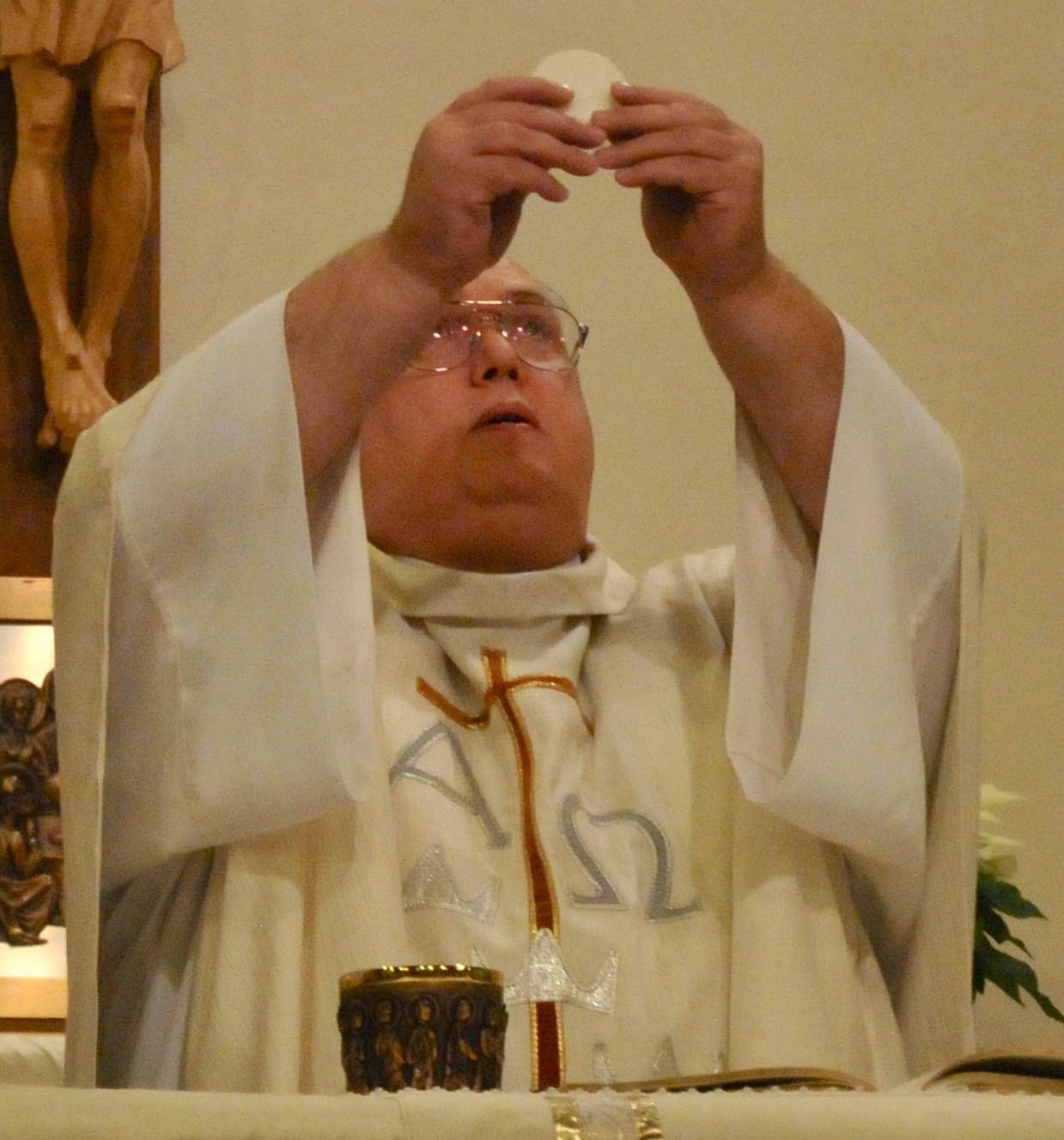
 There is a place in our private prayers for silence. “Be still and know that I am God,” the Scriptures tell us. When we pray privately, there is a time for silence, for wonder, and for awe as we listen to the movements of God’s grace. Regarding the public prayer of the Church, the Mass, a great deal depends on our private prayer said at other times. Our personal prayers fuel a deeper meaning and relevance to the corporate prayer with its accompanying moments of silence. Unless we are accustomed to private prayer, the place for silent prayer at Mass will not be fruitful. There is a place for silence in the beginning of Mass and for reflection on our sinfulness just before the priest asks the congregation to express their sorrow publicly. Hopefully, at the end of the Scripture reading, the Reader will give us a moment to reflect on what has just been heard. God speaks to us in the Scripture service and it may be that some phrase or word will touch us. Certainly there is an intended theme or message and it is often picked up by our response to the reading. A silent pause, no matter how brief, should come after the Gospel and at the end of the homily. During the preparation of the gifts (of bread and wine), there are moments when we silently offer ourselves, our work, our play and our lives to God. We do not enter into the liturgy cold but rather bring our needs, hopes, aspirations and insights from private prayer. There are moments for private acts of faith at the beginning of the Mass, at the Offertory and at the elevation of the consecrated hosts and precious blood. We pause quietly again to pray for the living and the dead. The most important moment for silence is at the time immediately following Holy Communion. We spend a little time at Mass making our Thanksgiving. Do we realize who has just come to us in Communion or is it “eat-and-run”? The latter is impolite even in ordinary gatherings for meals. Finally, there is the time at the conclusion of the Mass. Unfortunately, while a few are trying to pray quietly in the church, they are distracted by others engaging in conversation. Silence is golden, especially when it reflects a preoccupation with God and his presence.









 Blogger Priest