• Our Blogger

    Fr. Joseph Jenkins

  • The blog header depicts an important and yet mis-understood New Testament scene, Jesus flogging the money-changers out of the temple. I selected it because the faith that gives us consolation can also make us very uncomfortable. Both Divine Mercy and Divine Justice meet in Jesus. Priests are ministers of reconciliation, but never at the cost of truth. In or out of season, we must be courageous in preaching and living out the Gospel of Life. The title of my blog is a play on words, not Flogger Priest but Blogger Priest.

  • Archives

  • Categories

  • Recent Posts

  • Recent Comments

    Barbara King's avatarBarbara King on Ask a Priest
    Ben Kirk's avatarBen Kirk on Ask a Priest
    Jeremy Kok's avatarJeremy Kok on Ask a Priest
    Barbara's avatarBarbara on Ask a Priest
    forsamuraimarket's avatarforsamuraimarket on Ask a Priest

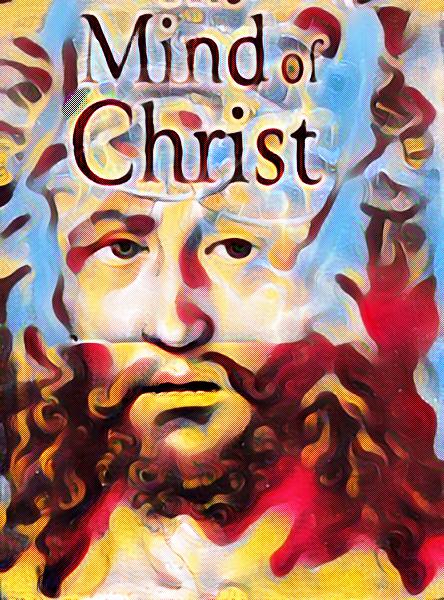
A Glimpse into the Mind of Christ

I have spoken before about what Christ knew as a man and yet questions remain. There is no way that we can absolutely penetrate this issue.  Why is it important? Particularly for those of us who pursue an active intellectual life, living largely in our heads, this matter touches the depths of our own sense of identity.  What we know and believe largely defines us and our place in the human family. The operations of the human soul, knowing and willing, speak to our appreciation of faith and our convictions— separating us from animals and machines.

As a pastor of souls, I have also accompanied families in their dealing with aging relatives suffering from Alzheimer’s and other ailments of the mind. Families confessed to losing loved ones, not all at once, but a little at a time. Eventually they must deal with loving someone who does not even know his or her name.  It is our firm confidence that the soul retains that which escapes the grasp of physical brains. We hope that one day we will be restored body and spirit— sharing something of Christ’s resurrection.

I mention this, because I firmly believe that if we and the world forget— God will never forget. This is very pertinent to Christ because when as a man he is most vulnerable on the Cross, as God he is the most powerful in offering himself for each of us by name. Jesus knows us better than we know ourselves. Such is the wonder and necessity of his divine knowledge.   

Christ possesses both his divine and human intellect. Further, as the new Adam, he would claim what our primordial parents had lost— an infused science that complements experiential knowing. Further, he always enjoys the beatific vision. As a divine person, Christ knows all things.  His conceptual knowledge could not expand because it was already infinite. While the general awareness of Christ is unbounded, his experiential knowledge is mysteriously shielded or preserved. When he walked the earth as one of us, his human experiential knowledge came  through his physical senses. While his divine knowing and infused knowledge were always a part of him, in his humanity he could ask questions (see John 18:4 and John 6:5-6).

Variations of Gnosticism plagued the early high Christology of the Church.  Docetism was a heresy that Jesus was fully divine but only appeared or pretended to be human. Monothelitism also stressed the divinity of Christ but denied he had a human will, just a divine will.  Apollinarianism reduced Jesus’ body to a shell for his divinity, with no human soul (and thus no human mind and will). Others would assault the identity of Christ from the perspective of a low Christology, viewing Jesus more as a creature than the Creator: Nestorians (viewing Mary as the “mother of the man” but not as the Bearer of God) and Arians (defining Jesus as a spiritual demiurge but not truly divine). All these false roads also espouse an erroneous psychology in the Lord.         

The business about Christ’s identity and awareness is still explored and often gotten wrong, particularly in films, television, and popular books. The novels about Jesus from the late Anne Rice appealed to the apocryphal and were dangerously shallow in trying to speak from Jesus’ perspective. Her Jesus was neither   omniscient nor omnipotent. He was liable to error and was more human than divine. As a corrective, we have the life of Christ given us by the late Pope Benedict XVI.  He writes in regard to the finding of Jesus in the temple: 

On the one hand, the answer of the twelve-year-old made it clear that he knew the Father— God— intimately. Only he knows God, not merely through the testimony of men, but he recognizes him in himself. Jesus stands before the Father as Son, on familiar terms. He lives in his presence. He sees him. As Saint John says, Jesus is the only one who rests in the Father’s heart and is therefore able to make him known (cf. Jn 1: 18). This is what the twelve-year-old’s answer makes clear: he is with the Father, he sees everything and everyone in the light of the Father. And yet it is also true that his wisdom grows. As a human being, he does not live in some abstract omniscience, but he is rooted in a concrete history, a place and a time, in the different phases of human life, and this is what gives concrete shape to his knowledge. So it emerges clearly here that he thought and learned in human fashion. It becomes quite apparent that he is true man and true God, as the Church’s faith expresses it. The interplay between the two is something that we cannot ultimately define. (Pope Benedict XVI, Jesus of Nazareth: The Infancy Narratives, p. 127)

Article 12 of the Declaration on Human Dignity

Article 12 of the declaration speaks of the dignity to be found in Christ’s solidarity with humanity by being “born and raised in humble conditions.” Next, we are told that his public ministry “affirms the value and dignity of all who bear the image of God, regardless of their social status and external circumstances.” It should be clear that the Cardinal Fernández is not referring to the elevated supernatural dignity given by grace to persons regenerated through faith and baptism. Several religious pundits have attacked the him and the Holy Father on this front without conceding a dignity that is inherent firstly, as a rational creation of almighty God, and secondly, as one who shares a kinship with Christ due to the incarnation.  The whole point about the change of economy regarding images in the Decalogue is that God has now revealed himself through a human face.  While there is a discrepancy in how the terms are used, one might argue that we are all created in the image of God but that through the sacraments we are reborn into the likeness of Christ.  This natural dignity is very much a part of Pope John Paul II’s theology of the body.  Note that when it comes to the Gospel of Life, the unborn child (although lacking baptism) possesses a right to life and dignity that should not be assailed. 

Jesus also defended a moral dignity of persons, especially toward the oppressed and marginalized.  The Church must similarly be the voice for the voiceless.  Citing Scripture, the document takes note of his outreach to the tax collectors, women, children, lepers, the sick, strangers, and widows. The Cardinal writes that Jesus “heals, feeds, defends, liberates, and saves.”  The love of neighbor flows from our love of God and must be dynamic in the life of charity.

The one problematical element of this article is the following:

For Jesus, the good done to every human being, regardless of the ties of blood or religion, is the single criterion of judgment. The apostle Paul affirms that every Christian must live according to the requirements of dignity and respect for the rights of all people (cf. Rom. 13:8-10) according to the new commandment of love (cf. 1 Cor. 13:1-13).

Critics contend that the Cardinal Fernández and the Pope undermine religion as a basic factor in our judgment and salvation. However, we should remember that the document is written for believers, and it is taken for granted that the good being done is by Catholics in right standing with God. I doubt the Holy Father would undermine basic soteriology. There is no salvation apart from Christ and his holy Church. Further, any merit for good acts also requires that the agent be in a state of grace.  A person in mortal sin remains under God’s negative judgment until the remission of sin through heartfelt contrition and the sacrament of penance.  However, for the justified believer, grace builds upon grace.  Our good work is not limited to our own.  A disciple of Christ is compelled by love and truth to preserve human dignity and in justice to defend human rights.     

As a Christian I am required to be compassionate and just to all, even those who are not of my family or ethnicity or religion.  I can know the catechism backwards and forwards, but without charity I have nothing.  Again, on the level of creation, there is a duty to preserve basic human rights and dignity. I believe this is what the document is saying.  It connects to the teaching about the corporal works of mercy in Matthew 25:41-45:

“Then he will say to those on his left, ‘Depart from me, you accursed, into the eternal fire prepared for the devil and his angels. For I was hungry and you gave me no food, I was thirsty and you gave me no drink, a stranger and you gave me no welcome, naked and you gave me no clothing, ill and in prison, and you did not care for me.’ Then they will answer and say, ‘Lord, when did we see you hungry or thirsty or a stranger or naked or ill or in prison, and not minister to your needs?’ He will answer them, ‘Amen, I say to you, what you did not do for one of these least ones, you did not do for me.’”

I suspect that what Cardinal Fernández and Pope Francis are wanting to say is made clearer in 1 Corinthians 13:1-8: 

If I speak in human and angelic tongues but do not have love, I am a resounding gong or a clashing cymbal. And if I have the gift of prophecy and comprehend all mysteries and all knowledge; if I have all faith so as to move mountains but do not have love, I am nothing. If I give away everything I own, and if I hand my body over so that I may boast but do not have love, I gain nothing. Love is patient, love is kind. It is not jealous, love is not pompous, it is not inflated, it is not rude, it does not seek its own interests, it is not quick-tempered, it does not brood over injury, it does not rejoice over wrongdoing but rejoices with the truth. It bears all things, believes all things, hopes all things, endures all things. Love never fails. If there are prophecies, they will be brought to nothing; if tongues, they will cease; if knowledge, it will be brought to nothing.

Mystery of the Incarnation

An important verse for the ancient school of Alexandria was John 1:14: “And the Word became flesh and made his dwelling among us, and we saw his glory, the glory as of the Father’s only Son, full of grace and truth.” This is what authorities call a high Christology because the emphasis is upon Jesus as God and only secondarily upon him as man. Who is Jesus? He is God come down from heaven to save us.

Given the revelation of the Trinity, Jesus is understood as the Second Person of the one triune God. Conceived by the Holy Spirit in the womb of the Virgin Mary, the eternal God joins himself to his creation and begins to exist in time. The Son of God becomes one of us, entering our world through the immaculate vessel that he had fashioned and safeguarded for himself. It all begins not with the nativity scene but with the annunciation:

Then the angel said to her, “Do not be afraid, Mary, for you have found favor with God. Behold, you will conceive in your womb and bear a son, and you shall name him Jesus. But Mary said to the angel, “How can this be, since I have no relations with a man?” And the angel said to her in reply, “The holy Spirit will come upon you, and the power of the Most High will overshadow you. Therefore the child to be born will be called holy, the Son of God.” (Luke1:30-31, 34-35)   

God would come himself to make things right, making possible— the forgiveness of sins, hope against despair, healing to the broken, liberation from spiritual bondage, and the victory of love over death.

The incarnation is a deep mystery that we cannot fully penetrate.  Who is Jesus?  He is almighty God and the second Person of the Trinity.  He is the eternal Word.  What is Jesus?  He is God and man— two natures that are substantially joined in the one person of Jesus Christ.  Both natures are whole and complete.  His human nature is body and soul. His soul possesses both a human intellect and will. 

This is no spiritual adoption of an ordinary man as through an accidental union of the godhead. He is no Gnostic phantom or a God pretending to be a mortal man. Jesus Christ is a unique individual whose soul and flesh is substantially joined in the divine Person of the Lord. Yes, this is a fantastic claim. Note how Caiaphas responds to our Lord’s admission of his identity: 

But Jesus was silent. Then the high priest said to him, “I order you to tell us under oath before the living God whether you are the Messiah, the Son of God.” Jesus said to him in reply, “You have said so. But I tell you: From now on you will see ‘the Son of Man seated at the right hand of the Power’ and ‘coming on the clouds of heaven.’” Then the high priest tore his robes and said, “He has blasphemed! What further need have we of witnesses? You have now heard the blasphemy; what is your opinion?” They said in reply, “He deserves to die!” (Matthew 25:63-66)

Jesus is not simply a prophet. If he is not God and the promised Messiah, then his claim was indeed blasphemy. But our Lord affirms his identity by his works— the sick are healed, the possessed are exorcised, and the dead are raised. He forgives sins which is a prerogative reserved to God. (Priests can do so because Jesus has extended something of his authority to mortal men.)

There was no division in Christ but rather a perfect harmony between his two natures. His divine and human wills were in perfect sync. Room was made for his human knowing while not impoverishing or forfeiting his divine mind. As God, Christ knew all things; as human, he had genuine experiential knowledge and beheld the beatific vision.   

If Jesus were Tempted, Could He Sin?

The question invariably arises, “If Jesus could be tempted then could he sin?”

Filled with the holy Spirit, Jesus returned from the Jordan and was led by the Spirit into the desert for forty days, to be tempted by the devil. He ate nothing during those days, and when they were over he was hungry. The devil said to him, “If you are the Son of God, command this stone to become bread.” Jesus answered him, “It is written, ‘One does not live by bread alone.’” Then he took him up and showed him all the kingdoms of the world in a single instant. The devil said to him, “I shall give to you all this power and their glory; for it has been handed over to me, and I may give it to whomever I wish. All this will be yours, if you worship me.” Jesus said to him in reply, “It is written: ‘You shall worship the Lord, your God, and him alone shall you serve.’” Then he led him to Jerusalem, made him stand on the parapet of the temple, and said to him, “If you are the Son of God, throw yourself down from here, for it is written: ‘He will command his angels concerning you, to guard you,’ and: ‘With their hands they will support you, lest you dash your foot against a stone.’” Jesus said to him in reply, “It also says, ‘You shall not put the Lord, your God, to the test.’” When the devil had finished every temptation, he departed from him for a time. (Luke 4:1-13)

There are some critics so desperate to humanize Christ that they will deny the definition of Chalcedon about Jesus as a divine Person with both a human and divine nature. They contend that in his humanity our Lord could sin.  Nuts! Let’s be blunt— if Jesus could sin then he is not God. If Jesus is not God, then he cannot save us, and we are still in our sins.

At work here is nonsensical reasoning. It is like the false logic behind the old question, “Given that God is all powerful, can he make a rock too heavy for him to pick up?” There is an inner contradiction. If God can fashion such a rock, then he is not omnipotent in failing to lift it. If God cannot make this rock, then again, he cannot be all-powerful either.  But it is a silly and flawed syllogism. Similarly, critics will argue, “If Jesus were truly tempted by the devil, then he must be liable to falling into temptation and sinning. But they are wrong. While one might be tempted by hunger and thirst, power, or worldly acceptance and glory; we do not necessarily have to succumb to such allurements.  Indeed, for Jesus while the temptations are real, he is incapable of sin.  How is this? Sin is a violation against God. There is no way that God can wrong himself.  The humanity of Jesus can never be severed through sin from his divinity. Such would be a twisted version of the heresy of Nestorianism. There can be no fracturing of the holy Trinity. There is one deity, not two or three. God is perfect holiness. There is no defect in God that would permit a wrongful act. He is all good and there is no space in him for evil.  He is the LIGHT that cannot be dimmed by the darkness.   

Hebrews 4:15 leaves no room for doubt.  “For we do not have a high priest who is unable to sympathize with our weaknesses, but one who has similarly been tested in every way, yet without sin.” The moral test was real, but the test was fixed.  The new Adam was not liable to fall as was the old Adam.  

While not God, the angels of heaven can no longer sin either as they share the beatific vision. This is another reason why sin for Jesus is impossible.  We must accept that while our Lord entered the human family, he is not entirely like us. After the incarnation of the eternal Word, his hypostatic union ensures the unity of his two natures. Jesus has a complete human nature (body and soul) and a divine nature.  But he is not a human person but the divine Second Person of the Blessed Trinity. Our Lord’s human soul, including its mind and will, were sanctified by the divine presence and heavenly vision. The beatific vision means that he both saw the Father and also all those joined with him in his mystical body. That is why he conquers our sin on the Cross and does not falter as we often do. He lovingly sacrifices himself, intimately knowing by name all those for whom he surrenders his mortal life.    

What if God Were One of Us?

Many years ago, when I was a seminarian, I recall a class discussion over Luke 2:51-52:

“He went down with them and came to Nazareth, and was obedient to them; and his mother kept all these things in her heart. And Jesus advanced in wisdom and age and favor before God and man.”

The context was the tension between the theological school of Antioch that emphasized the humanity of Christ with the school of Alexandria that focused upon his divinity. The latter school stressed John 1:1-3:

“In the beginning was the Word, and the Word was with God, and the Word was God. He was in the beginning with God. All things came to be through him, and without him nothing came to be.”

The biblical verse from Luke substantiated the claims of Antioch.  However, it seemed to fly in the face of the Church’s discernment that Jesus Christ was a divine person, albeit with two natures. While Jesus could certainly grow in age regarding his humanity, how could he really advance in wisdom and grace or holiness?  While we should be careful about presumptions toward the mind or psychology of Christ, it must be held that as God he assuredly knew all things. It would be absurd to imagine him as an amnesiac deity.  He knew from the womb who he was and his mission.  The best we can figure, so as not to destroy his human “experiential” knowledge, he must have pocketed or set aside the fullness of divine knowledge or awareness.  It was always there, but like a book that needed to be taken off a shelf.

An analogy can be made as to how we all know things.  While we can call upon our many memories and knowledge, it is an element of human psychology that we do not focus upon everything at once.  We concentrate on a few things or what we need at any given moment.  I suspect it was the same for the incarnate Christ.  However, when there was a need, he could call upon his infinite divine knowledge, as he does in prophesying his passion and reading souls that he would heal and forgive. Thus, Jesus could have learned carpentry from his foster father Joseph, even though in his divine knowing, he could have built wooden television consoles.  But Jesus is careful not to do anything that violates the parameters of his humanity that is situated in a particular culture within space and time. Further, the pocketing of his divine knowledge means that his experiential learning is real and that he is not a God pretending to be a human being.  Both elements of his being are sustained although the tension would precipitate much confusion and debate in the Church. 

More problematical is the fact that Jesus Christ is the source for all holiness.  How can he possibly grow in grace? Again, looking at the rest of us, something of the solution emerges.  When an infant is baptized it can be said that the holiest person in that family household is that child.  Like Jesus, we get older, are instructed in the ways of our faith and we mature.  We begin to manifest the fruits of faith and realize the graces received in the sacrament.  Similarly, our Lord is the living sacrament and uncreated grace starting in the womb of Mary.  Unlike us he will never forfeit or blemish his holiness through sin.  His trajectory or life in holiness is perfect while ours will know detours with needed repentance and God’s mercy along the way.

Jesus always sees the heavenly Father (the beatific vision). As a child in the womb, as a baby in the manger, indeed, throughout his whole life there was never any confusion in his mind between his foster father Joseph and God the Father.  It was in this sense that there was no ignorance or confusion in Christ. 

Our Lord will realize before men who he is and why he has come into the world.  His learning will amaze listeners and they will wonder where he received it. His presence will exude a welcoming and enriching grace that will attract many to him.  The transition is from his hidden life as the son of Joseph and Mary to his public life as the Son of God come to save us. His ministry begins when he is thirty years old, not when he immediately emerges from the womb. It is fitting that he is like us in all things except sin.  He knows what it is to grow up in a human family.  He is one of us although he is also the second person of the Trinity, the one true God.          

The Church teaches that the human and divine natures of Christ are perfectly joined in a hypostatic union (in one divine personhood). Jesus is both God and man, but he is a divine and NOT a human person.  This is still the case— the incarnate Christ in heaven is forever God and man. What Christ is by way of identity, we can share by the indwelling of grace by which we as human persons are remade into the likeness of Christ by the intervention of the Holy Spirit. 

What Does It Mean to be a Catholic?

I have had people angry with me because there was no formal way for them to disaffiliate with the Catholic Church. A few years ago, there was an effort to allow those intellectually and/or emotionally alienated from the faith to juridically separate themselves with a written document signed by their pastor and bishop.  But clergy largely refused to sign it.  The legitimacy of this whole business was called into question regarding dispensations, marriage annulment cases and tribunals. Complicating matters further, there was a disagreement between two Vatican congregations— Liturgy and Doctrine of the Faith. The pressing doctrinal fact remains that baptism is a once-and-forever sacrament.  Baptism cleanses us of original sin, infuses sanctifying grace, makes one an adopted child of the Father and a temple of the Holy Spirit.  We become a Christian and a member of the Church with privileges and duties.  Baptized a Catholic, one remains always a Catholic.  A person might become lapsed or start worshiping in a non-Catholic church, but he or she remains a Catholic and will be judged by God as a Catholic.

There are many others that insist upon being designated as “Catholic” when they have long since stopped living the faith.  Their religion is treated as a club or as an ethnic matter. When pollsters interview such people on beliefs and the value shifts of the day, the results are skewed to the left.  That is why those seeking serious statistics distinguish between those Catholics that regularly participate at Mass and those that do not. 

Can one be a Catholic in truth while abiding in mortal sin, literally with one foot in hell?  Remember that the deliberate failure (through our own fault) to go to Mass on Sundays and holy days is a grievous sin that brings us to perdition.  Status becomes even more dire when a host of other mortal sins are added like fornication, adultery, homosexuality, abortion, and various forms of contraception.  The failure to worship dishonors almighty God.  The so-called pelvis or sexual sins bring dishonor to created persons and human life. The trouble with the latter is not a misplaced preoccupation of the Church with human sexuality but rather a failure of men and women to respect themselves as bodily creatures.  Human dignity is violated through disobedience to both natural and divine positive law.       

It may be that many others go through the motions of faith but suffer from missing or inadequate religious formation. How many do not understand or reject the “real presence” of Christ in the Eucharist?  Does everyone in the pews appreciate that the Mass is an unbloody re-presentation of the immolation of Calvary?  Do we go to church solely from duty or do we intend to adore the trinitarian God?  Do we all pray? Are there some that do not know how?  Do we invoke the Holy Spirit and petition for the intercession of the saints? Do we see the priest at the altar as one who participates in the one priesthood of Jesus Christ?  He is so very different from a minister as in Protestant sects.   

At baptism we were anointed as priest, prophet, and king.  A priestly people render sacrifice, literally taking up their crosses to follow Jesus— spiritually grafting themselves to Jesus as an acceptable offering to the Father.  As a nation of prophets, we are commissioned to proclaim and share the Good News of the Lord to all whom we meet.  Given that Jesus is king, and Mary is the queen mother, we are made family members of the royal household of God. Do we acknowledge this privileged dignity and dutifully preach the truth and participate in Sunday Mass?

Salvation requires faith in Christ; however, it is more nuanced than the evangelical’s easy profession of Jesus as one’s “personal Lord and savior.” The Catholic appreciation takes into consideration the Gospel of Mark, the writings of Paul and the epistle by James.  We are not saved by faith alone, but by grace alone.  Works are important as well, because remade in his likeness, we allow the Lord to minister through us.  Whatever Jesus does, has value. Saving faith includes the ingredients of charity and obedience.  We must have both a personal and a corporate relationship with Christ that is realized through loving fidelity (John 14:15; 24).

Affiliation with the Church is not optional.  Just like the Jewish people of old, we are called to the Lord as members of his new People of God or New Zion— the Church.  The Church is the mystical body of Christ.  Just as Jesus is the one WAY to the Father, the Church is also necessarily the way— the means through which we sacramentally encounter Christ.  It is for this reason that we teach that there is no salvation outside the Church.  This provides the mandate for evangelization and for the Church’s prayerful intervention for everyone.  While the identities of “the many” that will be saved remains with divine providence, the Church cooperates in proclaiming the universal call to salvation. 

Our Lord makes a point of instituting the Church and giving Peter the keys to the kingdom.  Jesus gives the promise that the Church will prevail until the very end of the world. This is the same Church we proclaim in the Creed as one, holy, catholic, and apostolic.  These four marks find their home in Roman Catholicism.     

Too often we use political labels for the persuasion or depth of one’s Catholicism.  We say that this or that person is “liberal” or “conservative.”  The true measure of faith is between “orthodoxy” and “heresy.” One cannot be a good Catholic and subscribe to false doctrines or immoral practices. We are also obliged to remain in union with the pope who is the Vicar of Christ and the successor to St. Peter.  Such relationships can be strained when bishops of Rome promote their fallible ideas over immutable truths; but we trust that the Holy Spirit will preserve both the faith and the papacy.  The Pope is the servant of the Word and not its master.  His trust is to preserve and to pass on the timeless faith.  It is for this reason that Catholics have an obligation to know the Scriptures and the Catechism. Too many are ignorant and easily swayed by the changing fads and whimsy of the day. Indeed, many have spoken of an unofficial schism that afflicts the Church. We should make the firm resolution to practice the Catholic faith, despite outside pressures, disappointments inside the Church, and personal doubts and weaknesses. 

Christianity is NOT a Book Religion

When I first began apologetics online in the mid-1990’s, the internet was brand new and while there was little to no Catholic presence, there was no shortage of bigots who spouted the anti-Catholicism that was popular a century or more earlier.  The “Bible alone” proponents were fundamentalist to the core and reduced Christianity to a “book religion.”  If a Catholic tried to employ Scripture, because we are the true bible Christians, they would lament that our translations could not be trusted and that we had added books.  Some would point to the missals used at Mass or the Breviary said by priests and religious, arguing that these papist books were what we substituted for the real Bible.  I remember having the most heated arguments with a Protestant apologist who argued that the only true Bible was the old King James Version without revision— “if it were good enough for Jesus,” he argued, “it is good enough for me!”  When it was explained that the Bible was originally in Greek and Hebrew, he would just delete the Catholic objections on his message board (there were no blogs in those days) as just so much spell casting and sorcery.  The “Bible alone” champions would use isolated proof texts to answer any challenge, no matter what the actual context was about.  They believed they had an immediate understanding of the biblical texts from God and that no commentaries, catechisms, and definitely no Catholic pope were necessary.  Debate was hard because they were slippery and far from honest or rational. 

What was the truth? The Christians inherited the Old Testament from the Greek speaking Jews of the diaspora.  Gospels were composed, letters written, and an oral tradition spoken, that became the nucleus for the New Testament.  A living sacred tradition has remained the backdrop for understanding the inspired Word of God.  There was no complete Bible and agreed upon New Testament for the first three centuries of the Church’s life.  The bishops gathering at Hippo (393 AD) would agree upon the canon. It would only be with the Vulgate Bible composed by St. Jerome that all 73 writings of the Bible were available in a single book, written in the vernacular Latin of the West. (English did not exist as a language.) Up until the invention of the printing press, there were few Bibles and they were very expensive.  That would coincide with the reformation and the general availability of bibles (for the past 500 years).  Given poor literacy rates, the main way that people absorbed Scriptural truths was from preaching, liturgy, and art.  The latter should not be forgotten because both statuary and stained-glass windows often brought to mind the saints and the stories in salvation history. This the fundamentalist condemned as idolatry! 

As the years passed, the winds have changed direction and I find myself in arguments with Catholics and Protestants alike who make a claim of the Bible but then ignore what it has to say. Essential salvation truth subsists in the Bible.  But the Church comes first in time, not the book.  The command to preach the Gospel is what gives birth to the Scriptures.    

The Falsification of the Faith

It has amazed me that believers, either for political reasons or to pacify the radical left, not only compromise their faith but then rationalize egregious errors as compatible with the Gospel. Some claim that same sex unions pass muster if there is monogamy.  Convoluted teachings from churchmen suggest that these unions can be blessed.  But we cannot bless sin!  A great many argue for approval toward pre-ceremonial sex if there is love and commitment— but fornication is a mortal sin against marriage and the family!  Increasing numbers are excusing divorce and remarriage, especially “when love dies” and there are new children in the mix— but Jesus himself rejected these serial marriages as the sin of adultery!  Christians in certain states are so weak about human trafficking, they want the formal legalization of prostitution so that authorities can tax sin for revenue. That turns the government into a collaborating pimp!

One national politician and fallen away Catholic argued that a baby is not a baby until the first breath is taken.  That means that it is okay to destroy a nine-month-old child if he or she is still in the womb. Nonsense!  There is no such thing as a pro-abortion Gospel.  The soul is infused at conception, and we even celebrate this mystery regarding Mary as the Immaculate Conception.  Biblically, we recall the leap of joy by the unborn John in the womb of Elizabeth when in close proximity to Christ in the womb of Mary (Luke 1:41–44).  Those who would make empty rationalizations and play word games for “women’s reproductive rights” have made a whole class of people expendable and stripped of the right to life.

Jeremiah 1:5“Before I formed you in the womb I knew you, before you were born I dedicated you, a prophet to the nations I appointed you.”

Psalm 22:10-11“For you drew me forth from the womb, made me safe at my mother’s breasts. Upon you I was thrust from the womb; since my mother bore me you are my God.”

While we used to complain that many would replace Catholicism for a liberal Protestantism, today the substitution is a shell game with a secular humanism at odds with the very heart of Christian teachings and values.

The Watchful Guardian Angels

Many adults regard prayers to a guardian angel to be the stuff of children only, along with the Tooth Fairy, the Easter Bunny and Santa Claus. As soon as they grow up, even fervent believers frequently cease beseeching the intercession of their spiritual guardians. Guardian Angels are NOT imaginary friends. We have it in good authority that they are real and are watching.  Jesus tells us, “See that you do not despise one of these little ones, for I say to you that their angels in heaven always look upon the face of my heavenly Father” (Matthew 18:10).  The statement is reassuring and staggering.  We are not alone.  Not only does God see everything but we have an angel watching us as well.  Of course, the angels must be all eyes because the good angels never lose sight of the beatific vision. 

Do we detect something of a warning in Christ’s statement?  The little ones are often associated with innocent children but in truth they would include all those who are marginalized and brushed aside by the world.  While we can take comfort in having spiritual guardians, they will always testify to the truth about what they see.  Our guardians may be one-and-the-same as the harvesting angels. Those who have had near-death experiences sometimes report encounters with angels and a looming light. Also experienced but understandably under-reported are when angels seek to draw souls into the fire of perdition. Angels can pray for us and maybe intervene in special situations, but they cannot save us from God’s judgment. 

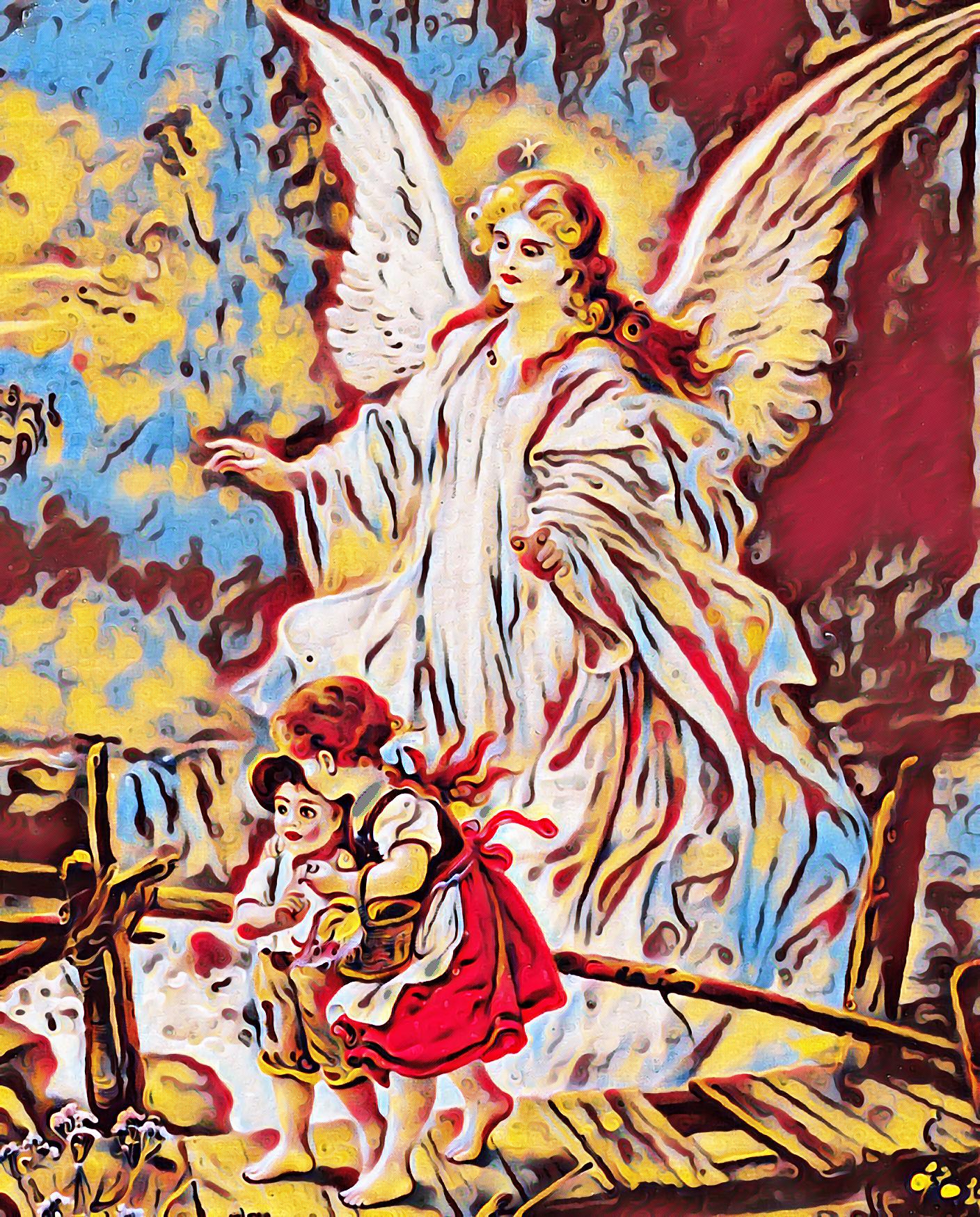
Cynics will point to the famous picture of an angel looming over small children who are on the edge of a dangerous bridge.  They ask, if such were real, then why do children fall off bridges or get sick or face abuse? Where is this proposed intervention? We must answer that the Guardian Angels do catch and rescue the innocent children— however, it is often the case that we fail to see the saving act.  Bodies might be lost but souls are saved.  I suspect that every pregnant woman is being followed by at least two angels, her own and the one appointed to the child in her womb.  These angels are not ghosts and they are certainly not demonic.  Indeed, I suspect that many blessed homes could avoid demonic disturbances if only we acknowledged the powerful spiritual presence of God’s angels.  It is sad that people increasingly get involved with the occult and pursue conversations with ghosts and demons, but never offer a prayer to their personal angel.  There is also evidence that gatherings of people as in churches or within nations are granted angelic protection, as with Fatima’s Angel of Portugal. 

Angels do not belong to themselves.  They are messengers for God but more— they are unique and personal instruments through which God acts.  Just as Jesus appoints men as his priests to extend his saving work of mercy; so too are angels the vehicles for God’s intervention and power.  The angels of God are always about the Lord’s business.  They reflect God’s love for us. They are saints and want us to join their number. 

A ghost or human soul outside the body is helpless but not angels. The presence of an angel in one’s home is not a haunting but a blessing. We read in the universal catechism: “From its beginning until death, human life is surrounded by their watchful care and intercession. ‘Beside each believer stands an angel as protector and shepherd leading him to life.’ Already here on earth the Christian life shares by faith in the blessed company of angels and men united in God.”

The Bible attests to these spiritual guardians.  Matthew 18:10 was already quoted.  We can also look to Psalm 34:7, Psalm 91:11, and Hebrews 1:14.

Psalm 34:8“The angel of the LORD encamps around those who fear him, and he saves them.”

Psalm 91:11“For he commands his angels with regard to you, to guard you wherever you go.”

Hebrews 1:14“Are they not all ministering spirits sent to serve, for the sake of those who are to inherit salvation?”

The Church has enshrined her belief in Guardian Angels within her liturgical year with their annual commemoration on October 2.         

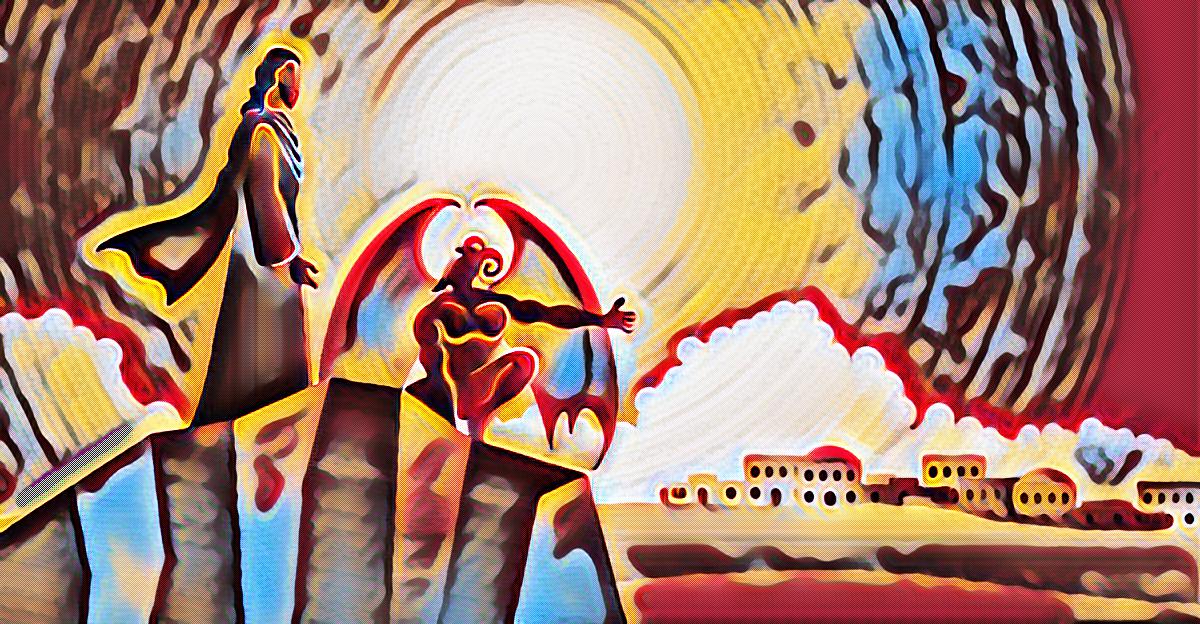
Our Adversary the Devil

I recall from my days as a seminarian, working in the campus library to make money to pay for my books, there was one student at the tables about whom there were nervous whispers.  He stayed to himself and had piles of books at his workstation about devils and demonic possession. At one time such works were cordoned off in the Forbidden Books section. Maybe it was a good idea because this young man was obsessed about the subject. His proper studies suffered due to the long hours he spent researching this dark topic. I am not even sure he ever graduated. It took over his life.

That is the danger in discussing fallen angels and the devil.  There is a peculiar attraction about the matter. I suspect that is why it is so frequently the theme of fanciful books and movies.  It gives a terrifying thrill. As with an amusement ride, it feels dangerous but there is the presumption of safety— why? I suspect it is because many do not have any credible faith and so the subject is treated as fiction.  The devil is reduced to a caricature.  Many of the emerging satanist clubs are populated not by religious devil worshipers but by atheists who campaign against theism with parodies and mockery. But if the devil and hell are real, then they are in for the shock of their lives— and it will be no joke. 

The issue here is not purely psychological. As a Christian I believe that we battle not only evil men but invisible powers and principalities. The devil and his minions are real and while they are diminutive and weak compared to the power of Christ, they can still exert a dreadful influence upon souls. More than the comical devil on one shoulder and an angel on the other, Satan can corrupt a person through the openings made by malice and human weakness.  More prevalent than outright possession are the phenomena of obsession and oppression.  Indeed, they are arguably more insidious as they seduce the human will and lead victims into mortal sin. The devil can also numb the conscience to moral truths, as with matters of bigotry or threats to the sanctity of life. 

The Lord’s Prayer is evidence of how serious this matter is. The oration literally asserts “deliver us from the evil one.”  The serpent or devil that tempted Adam and Eve also tempted Christ in the desert. Of course, our new Adam prevailed.  Unfortunately, we often play the part of Judas. We are easily swayed by the world, the flesh and the devil. 

The name given to the devil is Lucifer which means “light bearer.” Compared to Jesus as the Light of the World, the devil is a false light. He initiates the angelic rebellion, and he is the chief of the demons that plot the damnation of souls. Given the mystery of Christ’s redemptive work on the Cross, the devil has lost the spiritual war. Nevertheless, Satan fights skirmishes over individual souls.  The fallen angels were created as good by God, but their fall recast them as demons.  Their decisive choice allows for no repentance or reconciliation.  They are cast into hell.  Indeed, one might say that they are hell or carry hell with them wherever they go.  Hell is more than fire. The greatest pain of perdition is the alienation from God and from saving grace. The devil was ranked among the highest angels, a Cherubim or maybe even a Seraphim.  We read in Isaiah 14:12: “How you have fallen from the heavens, O Morning Star, son of the dawn! How you have been cut down to the earth, you who conquered nations!”

Demons may cause grave spiritual harm, or if permitted by God, even hurt to the bodies of men and women. The story of Job cannot be written off as merely literary fiction. It speaks to both the wounded human condition and to our chief adversary that propelled humanity on this dreadful trajectory. Jesus performed several exorcisms and gave the ministers of his Church authority over unclean spirits. Today we often recite after Mass, the Prayer to St. Michael against the devil.  We are also urged to recite deliverance prayers and to avoid those things that can lead to demonic infestation such as vengeance, the occult and lewdness. Pornography is often employed by traditional devil worship. The devil delights in anything that impugns the dignity of God or our own persons. Demons exert various levels of bondage: obsession, oppression, and possession.  The greatest tool we have against demonic influence are the sacraments, particularly the Eucharist and the sacrament of penance.             

Demonic “oppression” is what it says, literally a pressing down or weighing upon a person.  Such an attack from the outside can target anyone, even the most fervent Christian. Often the situation we face is used against us— moral persecution, natural calamity, indebtedness and poverty, hunger, sickness, etc. We are tempted to despair or to do something rash. A person may be in a dark mood that evades shaking off. Another may experience an inexplicable fearfulness— uncomfortable around a person, place, or thing. Some even suffer physical ailments for which no one can find a natural cause.   

Demonic “obsession” is a form of subtle mind control wherein one becomes mentally drawn or addicted to evil.  There is an attraction to the things of sin and an aversion to elements of faith or holiness.  Just the mention of Jesus’ name can sometimes send such victims into a rage. I have often wondered if this might be a reason why vulgar songs, slasher films and other questionable media become so popular, especially with the youth. There is a level of deception in this, with sufferers thinking such preoccupations are neutral or not offensive.  Indeed, some will wrongly equate evil with the will of God. This trespasses into blasphemy against the Spirit of God.  Sexual sins are readily excused or even justified. Christians with traditional values or beliefs are mocked. Compromises are made about prayer and worship that do not serve the purpose of growing in holiness. Bible reading and prayer is neglected.  Anxiety replaces trusting the Lord. Instead of centering one’s life upon Christ, the obsession is about the devil and the many supernatural ways he interacts in people’s lives.  Even the rash of exorcism books by Christian authors might be dangerous to such people as they are overly enamored by the topic. The kids into goth styles and vampire fantasies might be another manifestation of obsession. The darkness saturates where there should be light.  New Age religion and occult practices often reflect the intervention of the demonic into people’s minds and hearts.       

Demonic “possession” is the most feared, although it can signify the least human volition or control of the three afflictions.  While something of the occult like a Ouija board, a séance or tarot cards might initiate a series of events leading to possession; once it begins, the person becomes like a puppet on a string.  Habitual sin, particularly deadly sin, can be a window to the demonic, as well.  Possession is only a hop and a skip away from allowing oneself to be a slave to sin.  The devil moves in and takes control of the will.  It is a dangerous situation.

A priest must be given episcopal approval to perform an exorcism. Often such efforts take place in hospitals because the demon will fight to remain and may hurt or even try to kill the possessed person. The exorcist must be in a state of grace, himself.  The devil will lie and try to frighten those who oppose its presence.  Sometimes the exorcist gets hurt.  There are various signs to be observed in the discerning of spirits.  The exorcist can ask questions but should avoid general conversation with the spiritual invader.  The devil will lie.  The demon will sometimes show a knowledge of languages, like Latin, Greek, Hebrew, and Aramaic. Often demons speak in a shrill sing-song voice, accenting the wrong words. This is often a give-away that the demon and not the human demoniac is talking. Just like artificial intelligence engines on the phone or internet, you can often tell that the speaker is not human. It does not sound right. The devil cannot tell the future, but he is a good guesser and can read into situations and fool his listeners. He can learn a great deal by watching. He cannot read one’s mind unless one invites him to do so.  There may be supernatural manifestations like objects apparently moving of their own accord.  Demons in possessions often seem bestial (a sign of their degradation). The exorcist can ask the name and number of the demons but always remembering that demons are deceptive.  No bargains can be made.  The Church’s prayers deliberately insult the devil. He is commanded to leave.  Once liberated, the possessed person should embrace faith, to help forestall the possibility of a relapse.  The devil loves a spiritual vacuum.  By contrast, if one is filled with the presence and grace of God, the demon will shy away from setting up a nest in that person.  The exorcist invokes the saving name of Jesus and the communion of the saints in administering an exorcism. 

Despite the naysayers, the devil is real and so is hell.  But the devil is a creature, a fallen angel.  The true power remains with God.  If we walk with Christ, the devil will fear both the Lord and us.