


• Our Blogger

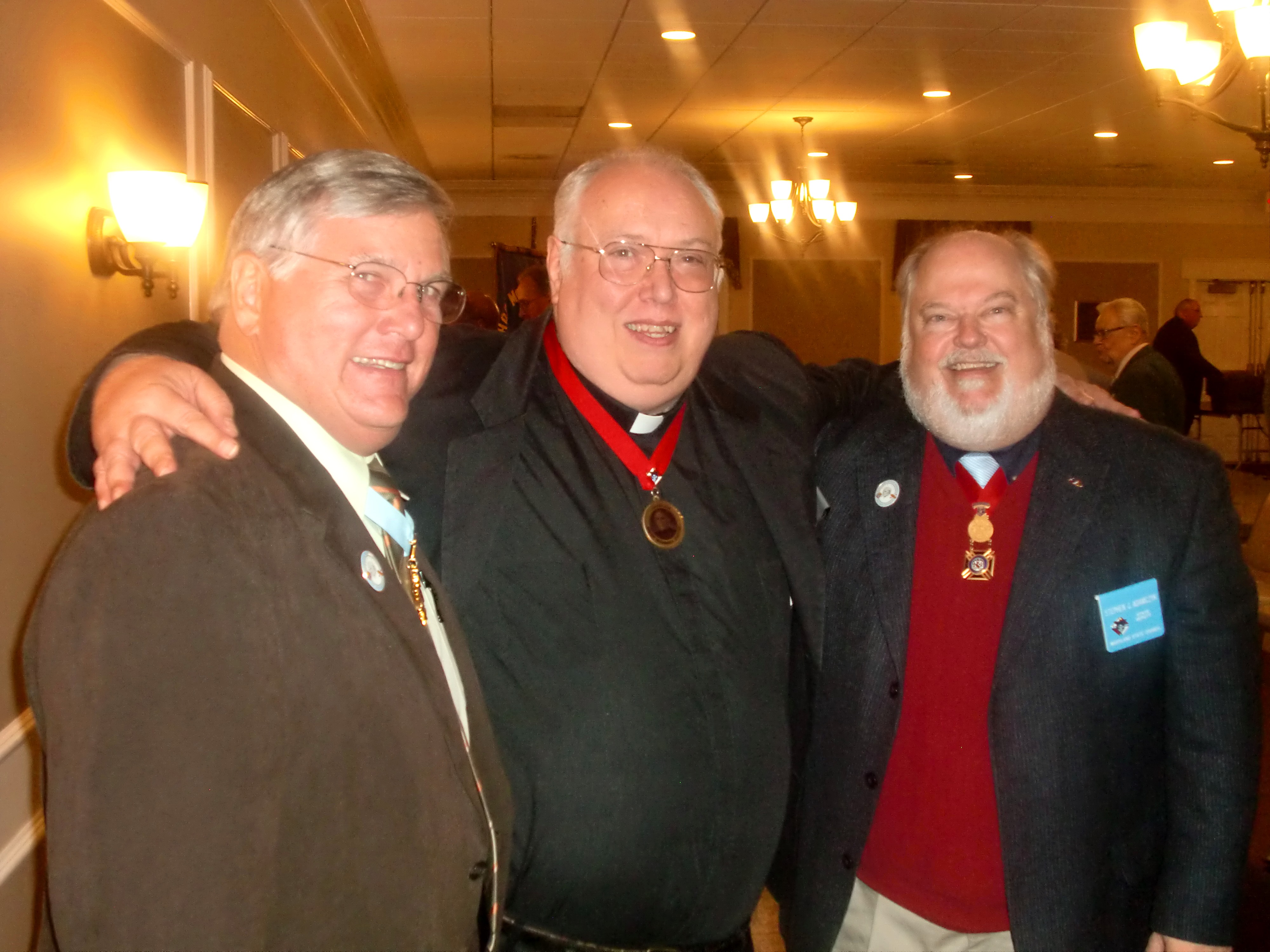
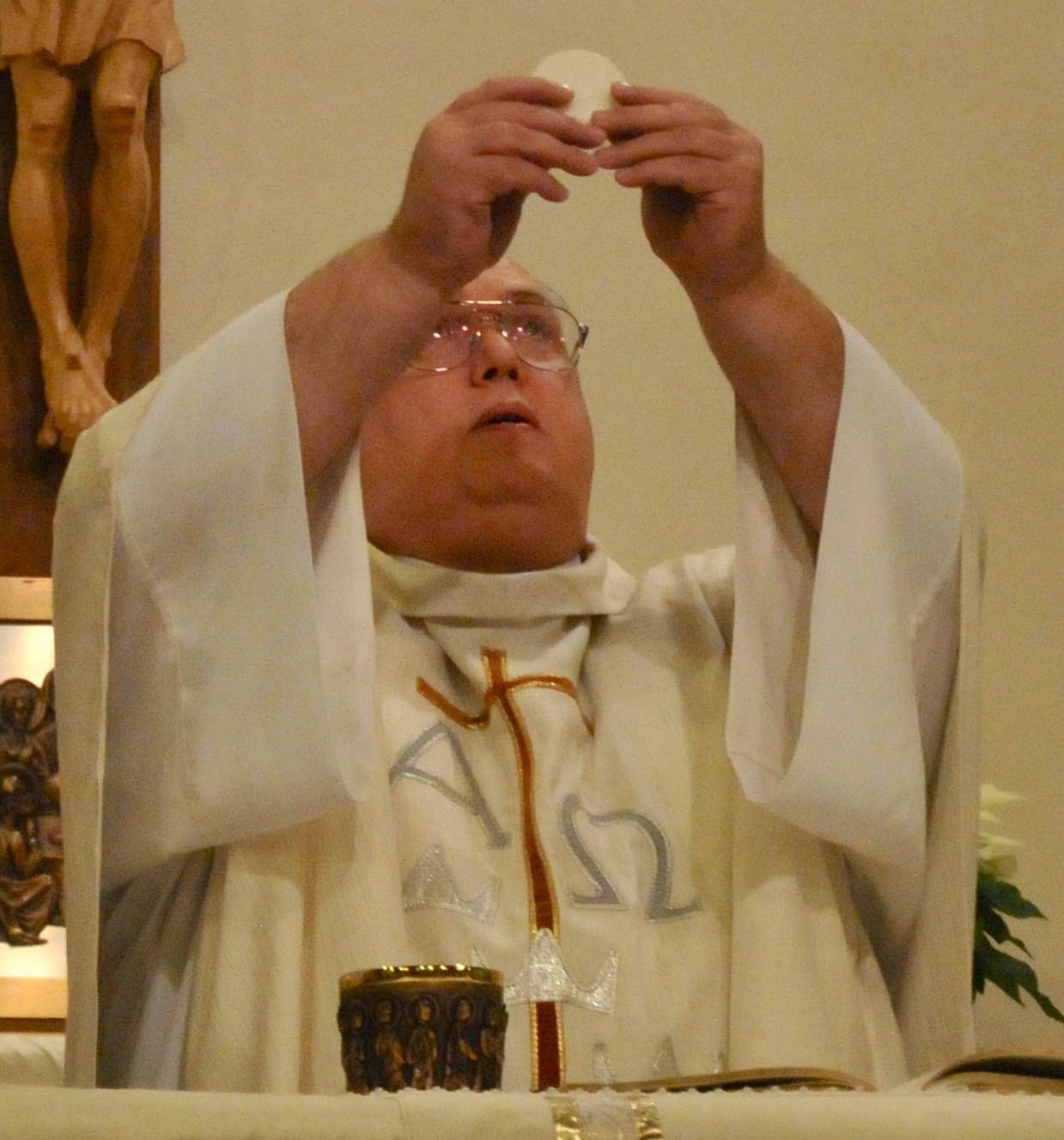
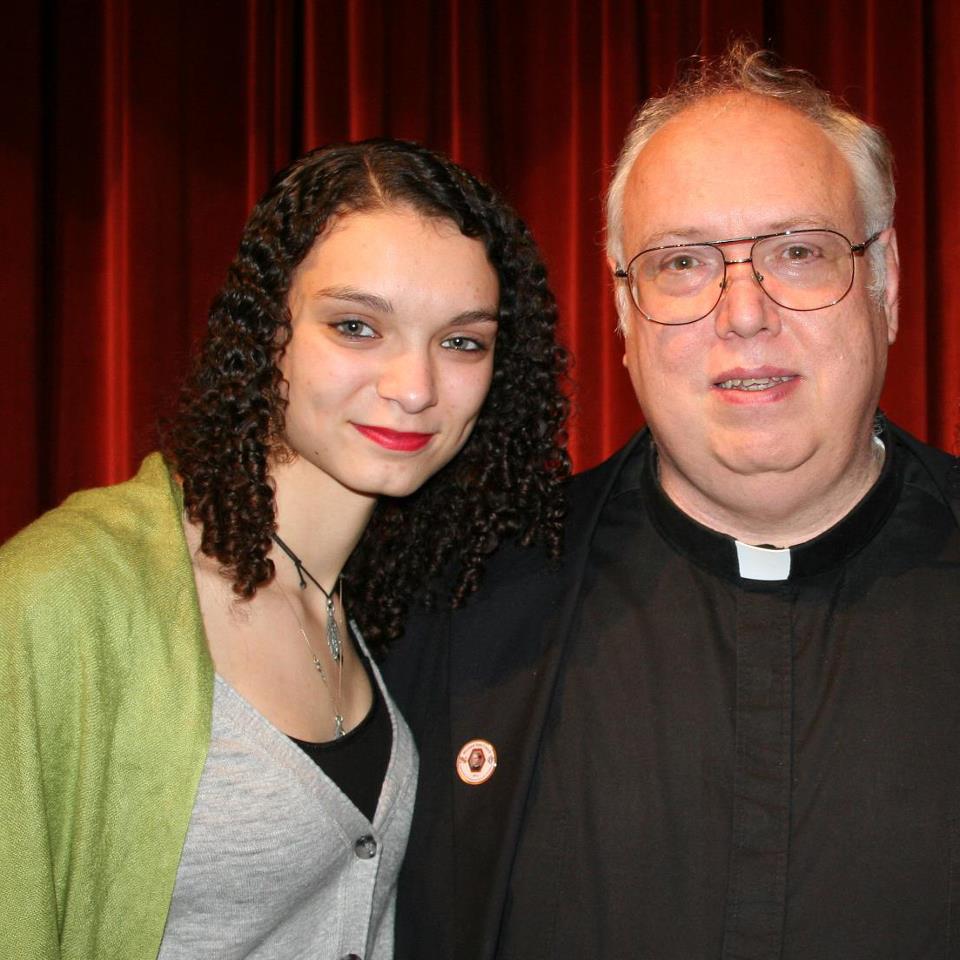
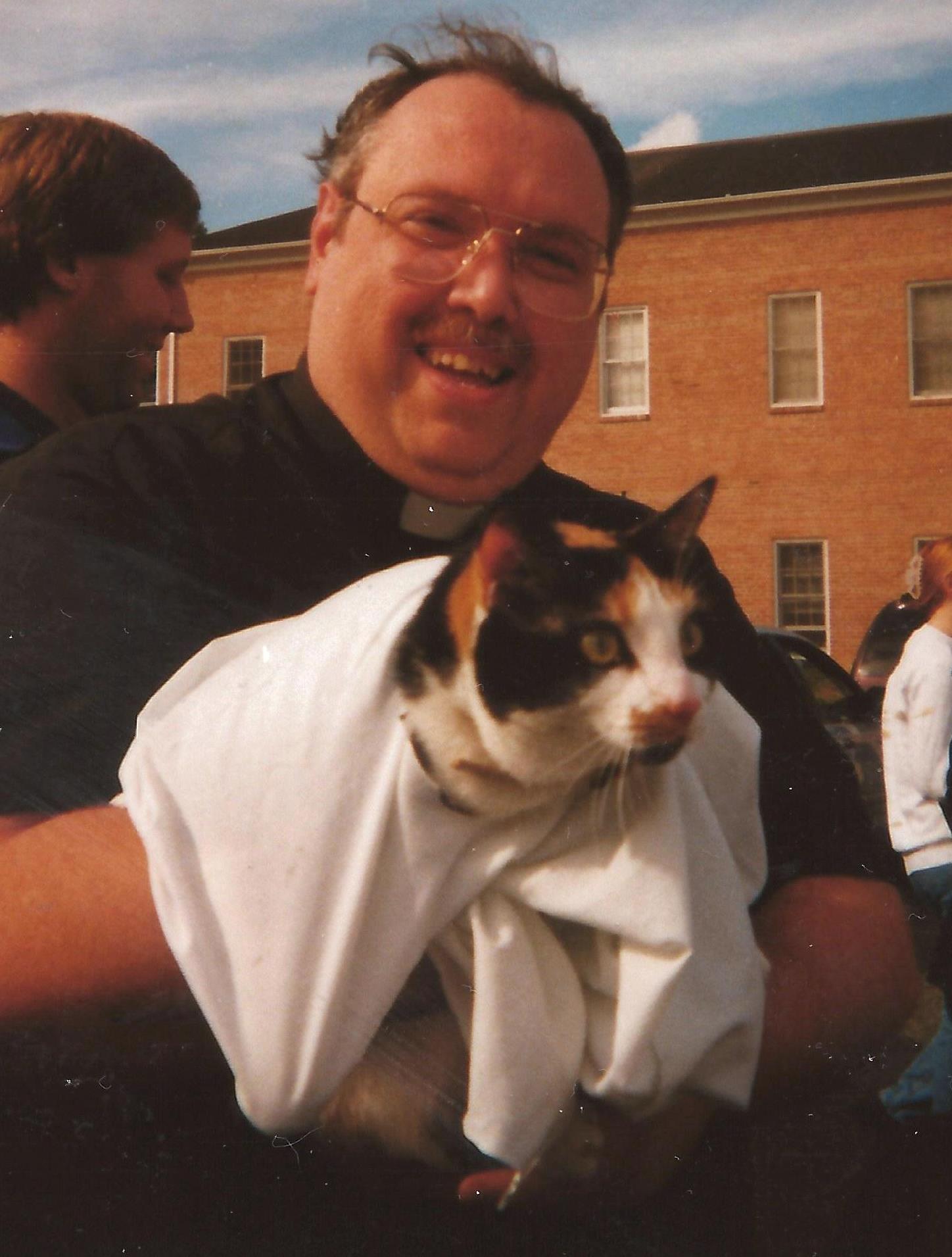
    Fr. Joseph Jenkins

  • The blog header depicts an important and yet mis-understood New Testament scene, Jesus flogging the money-changers out of the temple. I selected it because the faith that gives us consolation can also make us very uncomfortable. Both Divine Mercy and Divine Justice meet in Jesus. Priests are ministers of reconciliation, but never at the cost of truth. In or out of season, we must be courageous in preaching and living out the Gospel of Life. The title of my blog is a play on words, not Flogger Priest but Blogger Priest.

  • Archives

  • Categories

  • Recent Posts

  • Recent Comments

    Jeremy Kok's avatarJeremy Kok on Ask a Priest
    Barbara's avatarBarbara on Ask a Priest
    Josh's avatarJosh on Mixed Signals about Homosexual…
    gjmc90249's avatargjmc90249 on Marian Titles & the Mantle…
    Jeremy Kok's avatarJeremy Kok on Ask a Priest

Priestly Celibacy – The Church’s Man

I watched a television program several years go where a reporter interviewed a sampling of priests who left ministry for marriage. They were aging men and one in particular told a very touching story about how he came face to face with his need for a wife and family when he was baptizing the first child of his brother. He said that he knew then what he wanted. Nevertheless, he admitted that if the Church asked him to return to ministry tomorrow (as married man), he would leave his lucrative business in an instant. He still felt that he was called to the priesthood. Indeed, he rightly said, he would always be a priest. However, the images that followed stripped away the sympathy I felt for him. He was involved with other ousted married priests in conducting religious services and Mass, even though they had been stripped of faculties to do so. As is so often the case with such priests, his problem was not merely a failure to keep his promise of celibacy, but also of ecclesial obedience. If the Church authorities should deem fit to grant the priesthood to married men, then that is the Church’s business, no matter whether I like it or not. However, a man who marries without laicization and dispensation from celibacy, not only incurs censure but involves the person he is said to love in mortal sin. Yes, it is mortal because the priest knows better. If such a man tries to continue in ministry, then he draws still more people away from the true Church into his circle of rebellion. Personal weakness I can understand. But harming the souls of others is a gross betrayal of Christ. He places himself into the role of Judas, not for a sack of coins but for the temptation clothed in a skirt and stockings.

Our understanding of celibacy, as I have already mentioned, cannot be disconnected from our understanding of marriage. As topics they can be distinguished but they can only really be defined accurately in relationship to each other. It is in light of these two mysteries that we can branch out in our critique of open-ended single life and the moral ills of fornication, cohabitation, homosexual acts, polygamy and pornographic voyeurism. Of course, some might misjudge celibacy because they wrongly define marriage. This not only applies in reverse but can tamper with how we see the other areas of human sexual experience. The degradation of celibacy may expand the understanding of marriage as merely an opportunity for contractual sexual pleasure. But marriage is not licensed prostitution. Such a view would collapse moral judgment against moral ills outside of marriage. Divinizing celibacy too highly might impair marriage by reducing it to merely a necessary evil for the sake of propagation of the species. This mentality might properly exclude the listed moral evils but at the terrible price of defaming a sacrament of the Church. Although in the past marriage was defined primarily in reference to the need for human generation; Pope John Paul II’s Theology of the Body would seek to bring this into balance with the fidelity of the spouses. This is fine and good, but it has had necessary ramifications with our appreciation of celibacy. As marriage is made more appealing and even spiritualized as a means to holiness; we need to show the overriding value and benefit of celibacy. If we fail to make the case, then young men are going to view it simply in terms of an imposed hardship they must suffer to save souls and to forgive sins. This value must both be defined and made relevant in the daily life of the celibate priest; otherwise, he will become increasingly angry and resentful against the very institution he represents. The priest is the Church’s man. If he turns against the Church or gives in to cynicism, then this negativity will spread to the pews and damage efforts at evangelization.

Priestly Celibacy – The Return to Innocence

St. Paul gave practical advice about human nature when he warned that it was better to marry than to burn; in turn some have viewed his words as an assault against marriage. Given the analogy of marriage as a reflection of Christ’s relationship to the Church, this is ridiculous. Marriage is a sacrament by which Christ grants grace. It is holy. The Manichee taint hates matter and despises marriage because it binds men and women in the flesh and creates still more corporeal beings. Christian celibacy cannot rightly raise up itself as an institution on the bones of marriage. If marriage falls, so does celibacy. Evidence of this fact is apparent in modern society. People are largely sexually active, but increasingly without benefit of marriage; simultaneously, celibacy is ridiculed and vocations to the priesthood cannot keep up with the need for shepherds. Christian marriage and the family constitute the cradle and birthplace to celibate vocations. This is one of God’s sweet absurdities or ironies. Our Lord delights in contradictions and makes them signposts to his kingdom: we must die to live, we must surrender to find treasure, we must forgive those who hurt us, we must love our enemies who hate us, and we must first have married vocations before we can have celibate priests. Social theorists might speak of marriage as a human construct imposed to protect civilization from the brute animal that would pillage, rape and murder. It restrains man’s lust and inhibits him from taking the wife or daughter of his neighbor. It gives man a structure of support and also ties him down with responsibility within an intimate communion of interdependence. The Christian would argue that marriage is a natural bond of divine institution. It is marriage and not the lascivious beast that defines him. Men and women are made for each other but not in a way analogous to the apes or animals. Husbands and wives find something of God’s watchful gaze in each other’s eyes. They discover a facet of divine love in their intimate embrace and know they are not alone. They participate in the Almighty’s awesome power in the creation of new human life. The promotion of celibacy and the quality of it as a sacrifice is necessarily enhanced when marriage is enthroned upon it’s rightly high throne.

The Church and society have long been at loggerheads about marriage and virginity. A female who embraced virginity and spiritual marriage with Christ was praised in pious circles. However, an unmarried woman might ordinarily be derided as a spinster and pitied by married women. A handsome man who became a priest is sometimes lamented by women as “what a waste!” A single man might still be regarded as a catch but a confirmed bachelor is viewed with suspicion. Is he gay? Is he eccentric and too much to handle? Maintaining a healthy tension has often proven difficult or impossible.

Our traditional regard for sexual innocence readily touches something spiritual, but what? It may be our Lord’s admonition that we must become like innocent little children. It may also reflect a dim memory of our own childhood and the innocence we once knew prior to the full emergence of reason, on one hand, and the breakthrough of puberty, on the other. We had yet to be possessed by the movement of passion, trusted our parents with a faith that was only second to God and saw the world with both wonder and a sense of simplicity. Religious virginity and vowed celibacy hint to what we shall become in the kingdom by opening windows to our first days in this world where we knew the trust and unblemished saintliness of children. At the moment of our baptism, we became perfect saints. We desperately want to return to that innocence and holiness.

Priestly Celibacy – Dueling with Dualism

It is popularly argued that priestly misbehavior is due to the “infliction” of celibacy upon candidates for the priesthood. However, it is beyond ridiculous to assert that trying to avoid sex immediately leads to pedophilia or lesser forms of misconduct. The radical proponents for married priests, nevertheless, contend that unless the priest has a release for sexual desire, he will eventually explode with an act of transgression. They insist that the priest will fall because he was bound to fall. This is like saying that a man restricted to one wife is bound to fail. Adultery is not the end result of a promise of fidelity to one wife in marriage. Priestly misconduct is not the end result of a promise of celibacy in priesthood.

Catholics are not puritans and yet an outside observer might think that we were somewhat schizophrenic. They would be mistaken, but only because of a failure to define terms and make distinctions. For instance, it is a basic premise that God is good and his creation is good. While we struggle with fallen nature, we affirm the handiwork of God. The natural order, the complementarity of the male/female bodies and marriage are all important parts to the divine design. Attraction and human sexuality are good and also authored by God. Nevertheless, we have sometimes spoken about the flesh and sexual attraction as if they were bad things. We would not want to impugn the work of God in nature. Certain clarifications are kept in mind. First, depending upon one’s state of life, one may not be entitled to the goods that others enjoy. Human sexual congress is beautiful, but outside of marriage or twisted to conform to a disorientation, and we have an evil or sin. Second, because of original sin, our level of control is seriously compromised. Our passions and appetites may threaten to overwhelm us. This struggle was taken much more seriously in the past. Stories of the saints purposely facing the numbing cold while exposed or St. Francis throwing his body into the briars to mortify the flesh strike us as extreme or mad. While in practice it may seem that we embrace a type of Manichean dualism or Jansenist self-deprecation, in theory or principle, the Church remains orthodox. We know full well that men and women are not angels, no matter how much believers aspire to the spiritual or supernatural over the natural. Third, priests are prophetic signs in their very persons of Christ’s kingdom. There is a messiness to human experience.  Our mortality is always pressing upon us. Physical strength and beauty leaves us in awe but is fleeting. We deeply desire to put on perfection and immutability. Everything changes and everyone dies. Even God became a man and suffered the Cross. The incarnation divinizes human flesh by grace and by eternal participation with the Logos or Word. We desire a share in his victory and immortality. The dead will rise. We will be restored body and soul. But like the angels, there will neither be marriage nor the giving in marriage. There will be no more need for propagation. There will be no more need for sacraments. We will see and know God and the source of life and love directly. Priests witness as prophets to this great eschatological hope.

Serious critics of compulsory celibacy, not the average Joe on the street or the tabloid sensationalists, contend that it signifies a dangerous and even pagan dualism. They clamor that it represents placing greater weight upon the soul than upon the body. Worse yet, they point out what seems to be the victory of heresy where the spiritual is praised and sought out while the material or the body is condemned and fled. They would argue that the religious celibate might be running away from his own humanity. I cannot speak for all priests. It may be possible that there are some men who see themselves and the world in these terms. Hopefully formation programs would identify such men with these sorts of inclinations.

A man should not become a priest because he hates or looks down upon women.

A man should not become a priest because he is fearful of females and afraid of intimacy.

A man should not become a priest because it is easier to opt out of a sexual or romantic life.

A man should not become a priest because he has been hurt and does not want to hurt anymore.

A man should not become a priest because he wants to be a robot or alien outsider among men.

A man should not become a priest because he is gay and wants to hide his orientation and/or lifestyle.

A man should not become a priest because it is easier to be a boy than a man.

Priestly Celibacy – A Wasted or Fulfilled Life?

I have heard the challenge to celibacy that it is not natural. This is, of course, quite absurd. Like marriage, it is perfectly within the range of properly oriented human conduct; although, it represents (in perpetuity) a road less traveled. What is sometimes at force in such charges is not any appreciation for natural law, because these same accusers might lobby on behalf of homosexuality, but rather a form of atheism. We all know that even self-acclaimed believers sometimes live as if there is no God. While they might temporarily support the “new celibacy” that abstains from sex and relationships for the sake of upward mobility and a business career; they resoundingly object to “Christian celibacy” that sets aside earthly pleasure and companionship for spiritual treasure and intimacy with God. We hear this mentality in slogans like, “Go for the gusto!” and “You only live once, so make the most of it!” Especially when a priest fails to keep up with his prayer life, he becomes subject to this attack. “Where is God? Does it matter that I have given up the chance to have a wife and children? Have I wasted my life?”

When I first started my seminary studies, it was with the Franciscan TORs. We lived at the seminary and commuted down the hill to their adjacent college, now Saint Francis University in Loretto, PA. The young brothers had an interesting sense of humor and a few sang a made-up song on the bus one day that both shocked and amused me. We were all philosophy students and I guess the upper classmen were studying atheism. I still remember the refrain of their ditty, “Sorry, there is no God, you left your girlfriend for nothing.” If non-believers were right, the song brought home the absurdity of what we were about…forsaking a wife and family, all so that we might spread the cult of an imaginary deity. Of course, I am personally convinced that the atheists are in the wrong and for this there will be eternal consequences.

Priestly Celibacy – The Best Match for Ministry

If priestly celibacy were the product of historical development, then that evolution began among the Jews and the periodic celibacy pursued by the priests of the temple during their tenure of service. However, it is not the misbegotten child of the Middle Ages as the strained research of certain scholars might imply. They are wrong to deny its presence already well formed during the Apostolic and Patristic periods. It may not have been absolutely mandatory; but as I have already said, there is growing evidence for perpetual or absolute continence among the ancient married priests of the Church.

Apologists for married priests will quickly point to the selfless ministers in Protestant communities. They observe, and I have no reason to question it, that these men are sustained by their wives and families, often as collaborators in the ministry. The wives of Orthodox priests tend to become the supporting mother-figures for their husband’s churches. They would similarly point to married men in other professions: doctors, police, firemen, teachers, etc. Well, yes and no, I am sure there are wonderful instances where spouses and children can sustain a man, giving him the strength and courage to go on. But the fact remains, that there are only so many hours in a day and we can only stretch ourselves so far. Most ministers I know keep regular work hours. Many may have weekly bible study and counseling, but only weekend services. I recall reading with great sadness about the first of the Episcopalian priests who entered the Catholic Church and got ordained. His wife said she thought his life would be the same but it was not. She grew to resent how his ministry took precedence and how he was often absent from the home in the evenings. One day she swore she had enough and gave him an ultimatum: “It is the priesthood or me, you have to decide, one or the other!” He told her that he would not leave the priesthood. Now he serves as a celibate priest because she left and divorced him. Married doctors have a terrible divorce rate, with the ones who marry nurses faring the best. Physicians of the soul have been freed of the marital burden for a reason. It is not crass or political. Celibacy best matches up with the life and service of a priest. I am not saying that married men could not be priests, only that such a priesthood would differ accidentally and in other ways hard to express in a few words.

Faith & Values in the News

More than 100 teens rescued in weekend sex-trafficking raids, FBI says

Lock up the traffickers and throw away the key!

Archbishop Tutu would pick hell over an anti-gay heaven

Well, so much for submission to God’s will. At least he is honest in choosing sides, as well as in denouncing traditional Christianity (i.e. Catholicism).

Proof that animals can stand like people, may take over the world

Certain evolutionists assert that standing upright on two legs freed the hands and acted as a catalyst for the development of modern man. Does this mean that in imitating human beings, animals are on their way to becoming true sentient people? Hum… funny photos!

Bush 41 shaves head in support of 2-year-old cancer patient

We need more stories like this!

Marriage rate in the US hits a new low

Goodness! Heterosexual couples don’t want to get married but gay couples do. What a world we live in!

Calif. inmates illegally sterilized, new report shows

Left unsaid is that past sterilizations helped to hide the molestation of women prisoners by their jailers. We had similar incidents in facilities for the mentally challenged. In any case, forced sterilizations is a major human rights violation.

Woman marries bridge like that’s a totally normal thing to do

What can I say? Maybe we had better keep up the Maryland Catholic Conference Marriage Matters campaign?

23 Scouts hospitalized after lightning strike in Belmont, New Hampshire

Struck by lightning and burned, rushed to the hospital and the boys still reported that “there was nothing to worry about.” God bless the Scouts, they are tough… they are men!

Matt Birk skips White House visit over President’s remarks

Great testimony and witness from a pro-life and pro-marriage Catholic!

Valedictorian tears up speech, recites Lord’s Prayer instead

Amen!

2013-14 Officers of Fr. Michael C. Kidd K of C Council

CIMG0466

We had the installation of our new officers on July 27, 2013.

Held at Holy Family Church and Hall, Mitchellville, MD.

CHAPLAIN – Rev. Joseph Jenkins

GRAND KNIGHT – Manuel R. Rodriguez

DEPUTY GRAND KNIGHT – Ken Zemrowski

CHANCELLOR – Jaime G. Cardano

RECORDER – Alexander Wong

ADVOCATE – Akinbode A. Akinola

WARDEN – Curtis L. Person

TREASURER – Kevin Renze

FINANCIAL SECRETARY – Porfirio Concepcion

INSIDE GUARD – Michael Turner

OUTSIDE GUARD – Innocent K. Okeke

LECTURER – Calvin Halloway

TRUSTEE 3-YEAR – Andres Padilla

TRUSTEE 2-YEAR – James Murry

TRUSTEE 1-YEAR – George H. Johnson

CONVENTION DELEGATE – Andres Padilla

FIRST ALTERNATE – Terry Reinhart

SECOND ALTERNATE – Saturnino Foronda

Priestly Celibacy – Universal & Absolute?

Despite how it sounds, it is not my intention to disparage the good works accomplished by our few married priests. They are good and holy men. Nevertheless, if I had my way, all priests everywhere would be celibate. Married men accommodated and ordained priests from the Anglican Communion have been given a great gift. I assent and bend my will entirely to the universal Church which made this overture; however, had I my way, they would have been offered the permanent diaconate but no more. But that personal opinion really amounts to nothing.  I am not infallible and I pray not to be a fool.  Again, I do not mean to be hurtful. But a door has been opened and we may have a hard time closing it. I have confidence that the Spirit is alive and well in the Church, even if I fail to understand God’s mysterious ways.  The liberal voices are well aware of how such openings might be exploited; however, their delight is muffled by the conservative character of the candidates who cross the Tiber. These men belong to Pope Benedict and the dissenters hated Benedict. These religious refugees yearned for the doctrinal and moral integrity of Roman Catholicism. Too long they suffered under questionable orders, priestesses, and now the benediction of homosexual unions. Many progressive Catholic voices would prefer that Catholicism mirror such Protestantism, not flee from it. In other words, these Anglicans joining the Church are good men, Catholic before they knew they were Catholic, and the right-thinking sort of men. But they are married and that is the conundrum. How do we fit them into our priesthood without changing our priesthood? How might it affect vocations? What resentments might it spur? We are just now finding out but the future is still unclear.

Why is this a big deal with me? “Water flows downstream.” We normally move in the direction of least resistance. If we are gradually transitioning to a priesthood with optional celibacy, I foresee a day when the celibate diocesan priest will virtually disappear. Under such liberality, the majority of celibate priests would belong to religious orders or special societies. If healthy heterosexual men are given a modified choice, most of them would opt for both marriage and priesthood. Once celibacy and priesthood are no longer linked, it will be harder to argue necessity or the value of supererogation. We really do not want to go this route. I believe in freedom and in most things tend toward libertarianism. But basic human values must be preserved and a celibate priesthood has a significance that is all its own. The choice is to become a priest or to get married. Compromising that choice risks losing it altogether. Do we really want to see this flame of sacrificial loving extinguished?

Priestly Celibacy – Ministerial Availability

Is celibacy an obsolete construct? Could it be abandoned without damaging the body of the Church? My response is that it is more pertinent and valuable in our age than in any preceding it. We need this sign of contradiction so that we might not be swallowed up by the hedonism of our day.

The theme of availability which is furthered by celibacy is usually crudely understood as one having the time to respond at a moment’s notice to the urgent needs of our people. While this is certainly a partial definition, it has a far more pervasive scope. The premise that “no wife and no children” equates to a freedom to serve fails if the celibate fills the vacuum with selfish preoccupations. He must be wary of becoming the proverbial old and angry bachelor. He must place the needs of his people and the demands of God before strictly personal pursuits that give pleasure. A physical creature of desires and passions, he might place the love of entertainment or traveling or drinking or eating before his role as servant. He might also begin to waste time with unhealthy rumination about his choices, resenting the decisions he made or faulting the Church for his unhappiness. (I think this is where we discover a number of aging dissenters and those who abandon their ministry and/or break their promises.) Availability is not simply time management or sitting around like Bruce Wayne waiting for the Bat signal to call him to the rescue. The celibate priest makes Christ available to the People of God. While a husband and wife encounter the Lord through the symbolism of their bodies; the priest is wedded to the Church and facilitates our meeting with Christ through his priesthood and in the Eucharist, the Body and Blood of Jesus Christ. This assignment or coming together is best furthered when there is no distraction. Just as the maleness of the priest speaks to his role as an icon for Christ, so too in a lesser manner does his celibacy resonate with the life of our Lord. He has nowhere to rest his head. He looks around at the vast crowds of searching humanity and laments that they are like lost sheep needing a shepherd. Even when he seeks out deserted places to pray, they find him out and he responds with teaching them of God’s love, healing, forgiving and feeding them. He also fights for them, knowing that the devil is like a prowling beast, ready to devour them. The urgency of the priests who share in the high priesthood of Christ is that they must be ever on guard to do battle. Indeed, the battle never stops. He crushes sin with the extension of his hand and the words of absolution in the Confessional.  He makes present the saving presence and sacrifice of Christ at the altar.  On the road or in a chapel, he says his prayers, giving God his due and interceding for his flock. Alone in his bed he clutches his rosary, still throwing himself completely into the burning hearts of Jesus and Mary. He begs that he might be consumed so that souls might be saved.  Not in an exclusive relationship to one person, but to the Mystical Body of Christ, his whole life finds meaning with the proclamation, “I am totally yours!”

Priestly Celibacy – A Preservation in Holiness

Some critics of celibacy felt bolstered by the scant references to married clergy in the New Testament, and yet such evidence was hardly conclusive. Were the children of priests conceived before or after the men were ordained? There is growing historical evidence that married men, in agreement with their wives, set aside a sexual life for the sake of the faith community and in respect to the Eucharist. This might seem nonsensical to us today but the Church, early on, placed a significant meritorious value in celibate discipleship. It is the witness of the apostles who abandoned their families and earthly work to follow Christ. It is the realization of the calling given the rich man to sell all he has, to give it to the poor and then to follow Jesus. It is a level of sacrifice that the world does not want to understand. We must be honest.  Many of our own people, baptized Catholics, are more formed by the world than by the Gospel. That is why they fail to understand and thus undermine the great gift of single-hearted virginal love.

Celibacy was not inflicted upon the Church simply to make life difficult. It was composed to substantiate the best form of ministerial discipleship and to bring errant men back to a holiness of life. Celibacy was not a medicine against marriage, because matrimony was no disease. Rather, it was an antidote to divided hearts, mistresses, illegitimate children, and other forms of wrongdoing and/or sin. The resources of the faith community were being exploited by unscrupulous men and wrongly passed on to their offspring. Celibacy was the Church’s way of shouting, enough! Similarly today, the problem is not celibacy but rather the failure to remain faithful to this chaste way of loving. It is no wonder that the ire of Christ was most raised by the evil of hypocrisy.