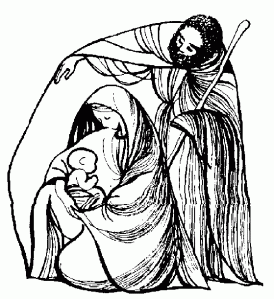
 Although I offered a reflection upon the Holy Family at the beginning of my book on prayer, I would like to return to this subject in this post. Reflecting upon the Holy Family, we are not only guided as to what a Christian family should be, but stand convicted in our lives over what it is not. While the modern concept of liberty is often moral license, theirs was responsibility and fidelity. We cater to individualism and a preoccupation with self that runs counter to the claims of familial bonds. The immediate family in the time of Christ was expanded to include aunts, uncles, cousins and others. (Indeed, the brethren of Christ were precisely these other relations.) Catholics realize, or at least should, that our relationship to God and to one another is in the context of family. We are not alone.
While these brief words can only offer a quick brush-stroke on the subject of “family,” a few thoughts might be beneficial. Something is wrong. No amount of beating around the bush or a pretense at greater enlightenment can take away this nagging perception in all segments of society. Determining what is wrong, and for that matter right, is where public debate becomes quickly frozen and polarized.
Politicians clamor about “family values” and then argue about what this means in a pluralistic society. Advocates of alternative lifestyles seek through the media and legislatures to socially engineer the family into something past generations would think unimaginable. It is in the midst of this confusion that we come to terms with that most central of human relationships. If it were not hard enough, even our traditional family units are plagued by communication that is absent or dysfunctional.
God sends his Son that repentant children might be added to his family and given eternal life. And yet, in our sinfulness, we can and often do offer a counter-witness to this truth. I know a couple whose girl ran away at seventeen. She eventually realized her foolishness and sought to return home. However, she discovered the locks changed. Her father had told her that if she went out the door she would not be welcome back. He gave away her clothes and personal things to charity. He would not allow his wife to display her picture. It was as if she had never been born. This couple, with their older daughter, were active in the parish and regularly at Sunday Mass. When their youngest returned to Mass, they refused to sit beside her. They even maligned her to neighbors. I overheard one of her father’s parish friends tell her, “You did it to yourself. You made your own mess, now you have to live with it! This is what tough love means!” Well, yes and no. Tough love means discouraging selfishness and nurturing self-reliance. This was not that at all; it was cruelty. The girl, as it turned out, was not only a foolish teenager, she suffered from bipolar disorder. When I first met her, she was just out of a mental institution and living with her boyfriend and his grandmother. It was either this or the streets. She had nowhere else to go. She had no job because employers did not want a “crazy” girl working for them. When informed of an upcoming family reunion, she decided to attend. Her mother dismissed her at the back door: “You will just embarrass us. I planned long and hard for this party and I will not have you ruin it. Go away.” When her boyfriend smacked her around, she again tried to go home. But they were gone to Europe. The wife confided that with the younger daughter gone, they had regained their freedom, and could finally live for themselves.
As a pastor of souls I have heard many variations of this story. The happy ending of the prodigal son parable is not always revisited in the lives of those who claim to be Christian, and yet, it is precisely the witness that our Lord gave us from the Cross. We read in Colossians, “Because you are God’s chosen ones, holy and beloved, clothe yourselves with heartfelt mercy, with kindness, humility, meekness, and patience . . . Forgive as the Lord has forgiven you” (Colossians 3:12-13). This is the challenge and the transformation for those who would truly be Christian. Neglectful parents today might have astonished the worst sinners and unbelievers of yesterday. Our Lord says, “What father among you, if his son asks for a fish, will instead of a fish give him a serpent; or if he asks for an egg, will give him a scorpion? If you then, who are evil, know how to give good gifts to your children, how much more will the heavenly Father give the Holy Spirit to those who ask him!” (Luke 11:11-13; see also Matthew 7:9-11). A rhetorical question is now a frighteningly real one.
Among those who call upon the saving name of Jesus are those who engage in unlawful sexual activity and infidelity, destroy children in the womb, and discard those labeled defective. Instead of a forgiving love, they harden their hearts against those who share their blood and their name. This is the way it is, not the way it should be, and definitely not the way true believers should want it to remain.
Sirach 3:2-6,12-14 points, not to the parents’ obligations, but to those of children, particularly regarding the 4th commandment stipulation of honoring (obeying) one’s father and mother. But increasingly preachers are forced to confront parents. How can a child honor parents if they are dishonorable? When Jesus demanded, “Call no man your father,” (Matthew 23:9), he precisely meant that true fathers, indeed parents of either gender, are only worthy of the title when their role is reflective of the loving and merciful fatherhood of God. Parents have responsibilities toward those whom they give life. Many churches have to offer remedial instructions for uncatechized but baptized Catholics. Their parents failed to take them to Sunday Mass, to teach them their prayers, and to transmit to them our holy faith. This implies that parents themselves do not believe; nevertheless, they are still culpable for the damage to their children’s immortal souls. Such neglect is a form of child abuse and ranks with murder in the hierarchy of sins.
In return, just as we read in Sirach, children have a lasting obligation toward their parents. When parents grow older and need the support of grown children, it is not merely a matter of charity but of duty. However, such a turn-of-events is increasingly considered an unwarranted burden. I know of cases where the children fight each other, no one wanting to take the personal and immediate responsibility for an elderly parent. The children, in some cases, have learned from the example of their parents all too well. I also know good parents who did little or nothing wrong in raising their children; and yet their brood contains both the holy and the wicked.
Familial roles are not limited to a few years but have lasting consequences and obligations. Mary followed her Son and quietly emerges at various stages of the Gospel and in the public life of Jesus. She was his mother at the Annunciation, at the Nativity, indeed, all the way to the Cross. Love brings with it responsibility and often much worry. Jesus was disowned by many of those who knew him; Mary’s testimony of love and loyalty is one that needs to be ours. She always claimed him. Jesus claims her and gives her to us, his new family, on Calvary. As for good St. Joseph, tradition has it that he died in the loving arms of Jesus and Mary. Perhaps this was God’s greatest gift to this noble man? After all, as our Gospel relates, when an angel told him that Herod was seeking Jesus “to destroy him,” Joseph sought refuge for them in Egypt until it was safe to return. The aged guardian of Mary and Jesus might have found it impossible to remain passive when his adult Son underwent his betrayal and passion. When his earthly role was finished, the foster father to Christ was taken from this world to await his Son and Savior in the abode of the righteous dead.
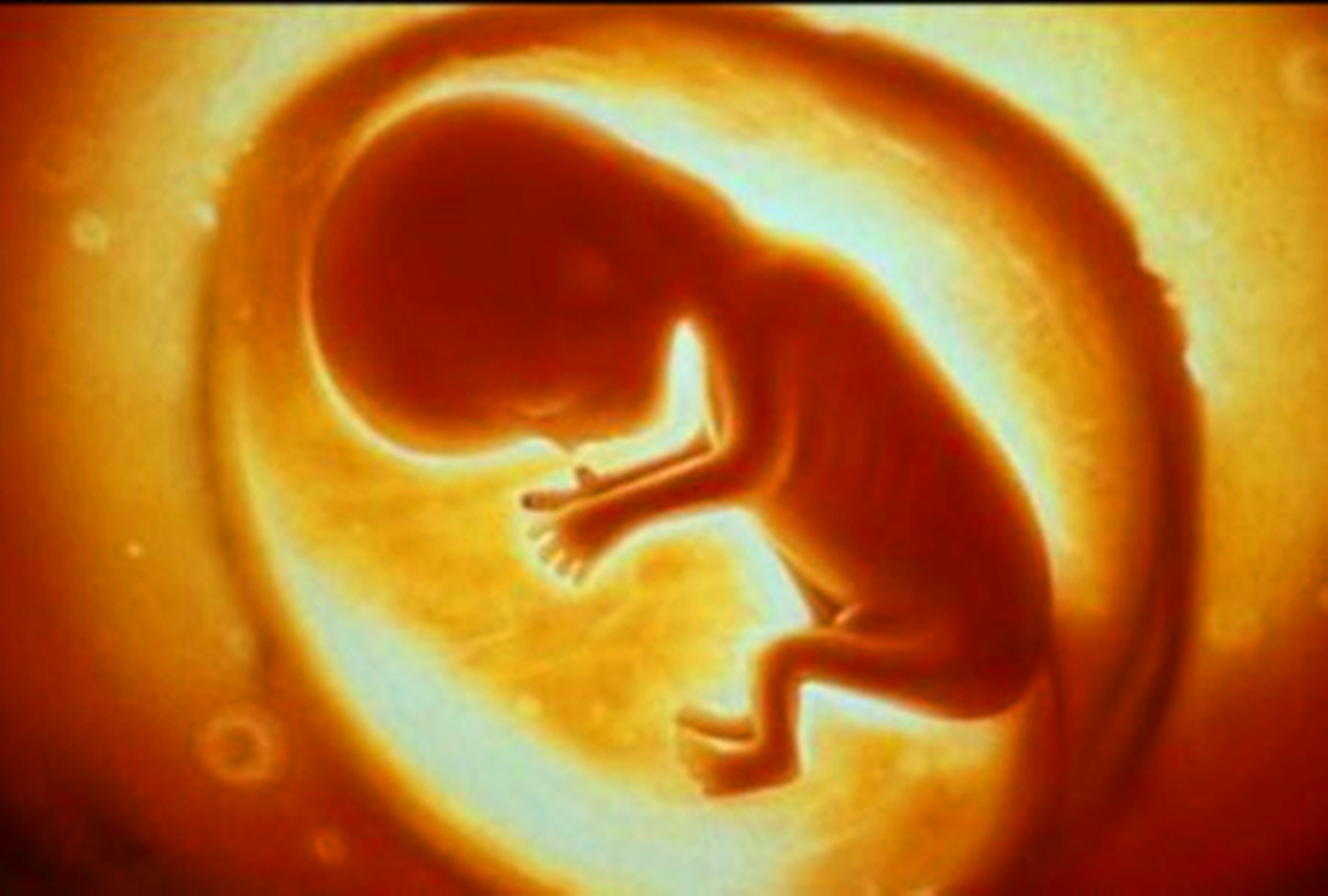
We need to put on the mind of Christ regarding family life. Can we conceive of God being well pleased with parents who killed their children through abortion? Along with contraception that breeds distrust between spouses, the abortion holocaust has attacked the very nucleus of family life. Pregnancy, once called the “blessed state” is now considered a disease to be medicated away. There is no reconciling such a mentality with that in Psalm 128:1-5 where the psalmist praises the wife as “a fruitful vine.” The child, instead of being prized as a precious gift from God, is considered a tragic accident, a problem to be disposed of as quickly as possible. Freedom, or rather license, as well as economic and upward mobility, is all hindered by the presence of a child. We are forced to think of another’s needs and wants before our own. Some just do not want to do this. Sex is recreation, nothing more. Such a mentality is inherently opposed to the Gospel. When such is the point of view of believers in Jesus, one has to wonder if even their concept of God is counterfeit?
Can we suppose that God cares little about marriage vows made in his name “to death do us part?” No, and yet divorce is at an epidemic high. Alternative living arrangements, including polygamy and homosexual liaisons would dismiss it entirely. Some critics argue that the dilemma is not the loss of the traditional family but rather because we are trying to force old codes of behavior (like the commandments) and expectations upon new forms of familial relationships. This post-Christian group insists that transitory unions are ideal and most reflective of modern experience. Some actually say that people live too long for lasting relationships. Prenuptial agreements posit a theoretical doubt in the permanence of a marriage bond, already. Certain states are considering marriages with easy escape clauses and some have even suggested built-in term limits. Logically, if spouses can separate at will, it would seem that offspring might have similar rights? Several years ago a child attempted to divorce his parents.
For more such reflections, contact me about getting my book, CHRISTIAN REFLECTIONS.
Filed under: Bible, Catholic, Charity, Church, Discipleship, Faith, Family, Fatherhood, God, Incarnation, Jesus, Marriage, Mary, Pro-Life, Prophets, Providence, Reflection, Sexuality | Leave a comment »

















 Television, which mirrors and also forms so many of our ideas and behavior patterns, has vividly shown the shift in family values. Programs like “Father Knows Best,” “Leave It to Beaver,” and “Make Room for Daddy” are a far cry from “The Simpsons,” “Married with Children,” and “Murphy Brown.” A sign of hope is that a number of shows are returning to the older format and even go a step further by explicitly bringing in religious faith. I am thinking, in particular, about the short-lived but popular “Christy,” and the more viable “Touched by an Angel” and “Seventh Heaven.” But, we must be wary of the media that trusts more in profits than in prophets. If we want strong traditional families, then America must rediscover her soul. Statistics verify that families attending regular Sunday worship usually stay together and find contentment. Frequently, they are happier than those who have more money and material things. Many successful families also limit the amount of television they watch; parents review the music to which the children listen; they actively participate in their religious formation; and they pray together. They make family and not work or hobby the center of their lives. It is here where they find God. Regarding the flip side, children are increasingly bringing parents back to God and the Church, evidence of a mysterious movement of the Holy Spirit.
 Although the prophet Micah spoke about the future coming of the Messiah as a prince of peace, the remnant from Israel and Judah would come to largely anticipate a warrior savior (see Micah 5:1-4). They had been conquered and downtrodden. They had paid a heavy price for their infidelity but God had not utterly turned his face from them. Interestingly, they saw themselves punished for compromising their faith and trust in God while throughout the centuries they were mocked by the conquering peoples for their fidelity to the ancient faith and the God of Abraham.
 There are still signs of hope and of the kind of life to which we aspire. My thoughts turn to the terrible high school killings at Columbine High School a few years ago. A killer pointed his gun at young Cassie Bernall and asked what would be a life or death question: “Do you believe in God?” This Christian girl had turned her life around and given herself to Christ. She paused. This was the classical situation that many of us once laughed about when sister posed such a question in CCD. I am reminded of the bumper-sticker slogan, “If Christianity were a crime, would there be enough evidence to convict you?” Here was a child in this difficult situation. Even the great Apostle Peter, in a similar dilemma, denied our Lord three times. What would this girl say? Looking at the gun, she replied, “Yes, I believe in God.” The gunman asked her, “Why?” but did not give her a chance to answer. His shot rang out and she collapsed lifeless to the floor. She came to the library as a 17-year-old girl to study during lunch. When she left the library for the world to come, she did so as a modern Christian martyr. I would submit that she was also a martyr for life. She trusted that whatever the world might take away, Christ could restore.
 Jeremiah 31:7-9 finds the prophet Jeremiah sitting amidst the ruins of Jerusalem. He had opposed the return of idolatry with his whole being, but it was to no avail. Dismissing his warnings, the false prophet Hananiah got the upper hand with Zedekiah against Babylon. Judah would subsequently be conquered. The chosen people are sent into exile. When they trusted to their own might and made offerings to false gods, they lost everything. Jeremiah speaks a word of hope. If they return to fidelity with God, then God’s mighty arm will save them. Illustrating just how incredible the return to their homeland shall be, he speaks these words for God: “I will gather them from the ends of the world, with the blind and the lame in their midst, the mothers and those with child; they shall return as an immense throng” (Jeremiah 31:8). The most vulnerable among them will be counted with the returning exiles. No new army will accomplish it. Compared to the will and power of God none of the factors against them will matter. Sure enough, after that generation had passed away and his own people murdered Jeremiah, Babylon would not only let them return but function as a benefactor in the reconstruction of Jerusalem and the Temple. However, they would not be a great independent nation again, at least not until the establishment of the modern state of Israel.
 Looking at Mark 9:39-43,45,47-48, the new elders or disciples seem to resent that a stranger might use Jesus’ name to expel demons. Our Lord says, “Do not try to stop him. No man performs a miracle using my name can speak ill of me. Anyone who is not against us is with us” (verses 39-40). The power of God works where it wills. Jesus then makes a quick warning against false prophets, stipulating that any who would lead simple believers astray would best be cast into the sea– literally, better off dead. Jesus is not creating a death penalty for heresy; rather, he is remarking that rendering false teaching puts one under severe judgment from God.
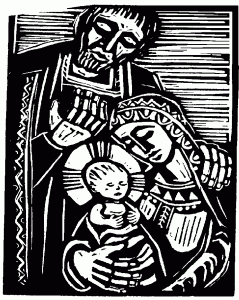 Every year we have a secular celebration of Father’s Day. While our culture finds much sentiment, expressed in verse and song for mothers, it does seem that fathers are sometimes cast to the side. The most noble of men find no insult in this, particularly in their children’s devotion to their mothers, because it confirms their good fortune and judgment in finding a companion for life. However, it does behoove us to spend a moment pondering upon the value of the man’s role in the family.
 Read Matthew 7:7-12 and you will find a line which should never fail to touch us with the absurdity of being harsh to those whom we love. “Would one of you hand his son a stone when he asks for a loaf, or a poisonous snake when he asks for a fish?” Jesus goes on to tell us that if we who are a sinful people know how to give that which is good to our children, just imagine what our Heavenly Father has in store for us.
 One of my favorite feasts and dogmas is that of the Immaculate Conception, a teaching of the Church which has had a long and sometimes controversial history. There are even some contemporary critics of this dogma of faith who would argue that it overly separates Mary from the rest of us. Certainly, it is true that sinfulness is a reality ever present in our lives. We find it so difficult to be good. It is ironic that a few of the feminist theologians who image Mary as a strong and liberated woman, would then criticize this teaching and argue that Mary has been used as a device of oppression on the part of a male dominated hierarchy. It seems to me that quite the opposite may be true. The witness of Mary as the queen of the saints would emphasize that the greatest person to ever walk the earth next to the Lord, is this woman Mary. Genesis 3:9-15, 20 recalls the first Eve who with her husband turns away from God in disobedience. Psalm 98:1,2-3,3-4 might remind us that if Eve is the mother of all the living, Mary in her faithfulness is the mother of all who are reborn in her Son. She stands as a model of holiness for men and women alike. Her preservation from sin does not create an impassible chasm between her and us. Sin by definition adds nothing to us or to her. If anything, it is a lack of something which should be there — the grace and presence of Christ. Just as she carried the Lord, now we must avoid sin so as to be filled with his presence and life. Sin is that which divides and alienates. To wish this upon Mary would mean wanting separation from her and the Lord.
 Luke 11:27-28 has had a long and sometimes mangled tradition among those who call themselves Christians. I recall reading some years ago a believer of another Christian community using this very passage to deride Mary, the Mother of God. He criticized stringently the Catholic stress upon her cooperative role with Christ in our redemption. He insisted that we, because of our faith in Christ, are much superior to her. The impression was that she was a stupid girl of which God made use. Of course, if the text were taken simply in how it first impresses us, his argument might have a leg to stand upon. However, we who are called to see things with two-thousand year old eyes, view the text for what it truly is — an elevation of Mary’s dignity and a reaffirmation of Christ’s call for us to be like her.

















 Blogger Priest