• Our Blogger

    Fr. Joseph Jenkins

  • The blog header depicts an important and yet mis-understood New Testament scene, Jesus flogging the money-changers out of the temple. I selected it because the faith that gives us consolation can also make us very uncomfortable. Both Divine Mercy and Divine Justice meet in Jesus. Priests are ministers of reconciliation, but never at the cost of truth. In or out of season, we must be courageous in preaching and living out the Gospel of Life. The title of my blog is a play on words, not Flogger Priest but Blogger Priest.

  • Archives

  • Categories

  • Recent Posts

  • Recent Comments

    Anonymous's avatarAnonymous on Ask a Priest
    Michael J's avatarMichael J on Ask a Priest
    Jeremy Kok's avatarJeremy Kok on Ask a Priest
    Mike Zias's avatarMike Zias on Ask a Priest
    Jeremy Kok's avatarJeremy Kok on Ask a Priest

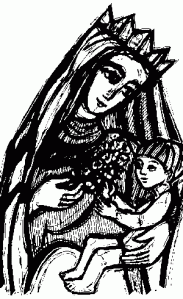
The Woman of Prophecy

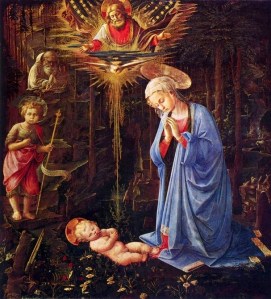
Prophecy was fulfilled in the Virgin Mary. The long-awaited Messiah would be conceived and born of her flesh. Jewish mothers to this very day cherish their children as a renewal of the divine promise. Christians know that this promise has been satisfied and that every child is a reflection of the Christ Child. God gave Mary singular graces, not simply to honor her, but to protect the dignity of his Son. The redemptive merits of her Son would reach backward into human history and embrace her at the first moment of her existence in the womb of St. Ann. The mystery of Mary and the incarnation brings to the fore the theme of children and our relationship with one another.

 The first child is the new Adam, Jesus Christ. He is God come down from heaven to save us. The second child is the Virgin Mary who said yes to God. She is the Immaculate Conception and the new Eve. The third child is plural for we are also children of God. Our Lord makes possible our spiritual adoption as sons and daughters of the Father, brothers and sisters to our elder brother, Jesus. Further, at the Cross, Mary is given to our emissary John.

 The Mother of the Redeemer becomes the Mother of all the redeemed.

Veneration (Worship?) of Images

ANTI-CATHOLIC ASSERTION

Catholics venerate or worship images. The Pope himself bows before statues of Mary. Similarly, they worship Christ in the Eucharist. They also possess statues, candles, and other such religious objects in their homes and churches. All these things violate the commandments and are offensive to God.

[The fashioning and veneration of images is forbidden as idolatry] “You shall not carve idols [any graven image] for yourselves in the shape of anything in the sky above or on the earth below or in the waters beneath the earth; you shall not bow down before them or worship them. For I, the Lord, your God, am a jealous God, …” (Exodus 20:4-5).

CATHOLIC TRUTH

No, Catholics do not “worship” images. Veneration is different from the kind of exclusive worship and adoration owed to God alone. Rather, we honor and treat with respect those things which remind us of God and those in whom the Lord has done wondrous things. The honor we show the Blessed Virgin Mary is particularly pronounced; however, it is not the same kind of worship which we render to God. Unlike the ancient idol worshippers, the honor is paid not to the physical representation, but to the one who is signified. Definitions are very important. Holy objects often serve the same function as mementos and photographs in our homes; they remind us of our friends and family. Similarly, religious statues, pictures, and all the rest bring to mind our spiritual family of faith and our identity as part of it.

Candles are symbolic of Jesus himself. The smoke rises as prayer is taken into heaven. They give off light and Jesus is the Light of the World, dispelling the darkness of sin and death. They give off heat, and Jesus gave the warmth of healing and forgiveness to others. Like the candle which exhausts itself for our benefit, Jesus surrenders his life that we might be redeemed. Turning to the Eucharist, Jesus himself told us that it was his flesh and blood, the living sacrament of his presence. We can worship this divine mystery because it is Jesus and Jesus is God.

Fundamentalist anti-Catholics are not consistent on this score about graven images. Come Christmas, they usually have statuary-nativity scenes like everyone else. Also, if they were to be consistent in their strict observance of this commandment, it would also include the toy dolls they buy their children. Some cults actually do this! The Catholic view of images is based on the permissible symbolic use of them in the Old Testament and the fact that Christ himself through the incarnation reveals the transcendent God. God allowed images which symbolically pointed to our ultimate salvation in the Lord. The historical fact of the God-Man, Christ, ushers in a new “economy” of images [CCC #2131].

[To be healed from the poisonous bites of serpents] So Moses prayed for the people, and the Lord said to Moses, “Make a seraph and mount it on a pole, and if anyone who has been bitten looks at it, he will recover.” Moses accordingly made a bronze serpent and mounted it on a pole, and whenever anyone who had been bitten by a serpent looked at the bronze serpent, he recovered (Numbers 21:7-9). {See also Wisdom 16:6-8}

[Jesus’ humanity is a healing image of God] “And as Moses lifted up the serpent in the desert, even so must the Son of Man be lifted up, that those who believe in him may not perish, but may have life everlasting” (John 3:14).

[Regarding the ark of the covenant] “Make two cherubim of beaten gold for the two ends of the propitiatory, fastening them so that one cherub springs direct from each end. The cherubim shall have their wings spread out above, covering the propitiatory with them; they shall be turned toward each other, but with their faces looking toward the propitiatory” (Exodus 25:18-20). {See also 1 Kings 6:23-28}.

Mary is Called the Mother of God

ANTI-CATHOLIC ASSERTION

Mary is only the mother of the mortal or human Jesus, not God. Jesus, as God, pre-exists, even before creation (note John 1:1). God has no beginning– no mother.

He allowed himself “for a little while” to be “made lower than the angels,” that by the grace of God he might taste death for everyone (Hebrews 2:9).

If Mary was actually God’s mother— giving birth to God himself— she would be God:

You are my witnesses, says the Lord, my servants whom I have chosen to know and believe in me and understand that it is I. Before me no god was formed, and after me there shall be none (Isaiah 43:10).

Your throne stands firm from of old; you are from everlasting, Lord (Psalm 93:2).

But you, Bethlehem-Ephrathah, too small to be among the clans of Judah, from you shall come forth for me one who is to be ruler in Israel; whose origin is from of old, from ancient times (Micah 5:1).

Who [Christ Jesus], though he was in the form of God, did not regard equality with God something to be grasped. Rather, he emptied himself, taking the form of a slave, coming in human likeness; and found human in appearance … (Philippians 2:6-7).

CATHOLIC TRUTH

The anti-Catholic who made this argument against the title Mother of God did not do his homework. He failed to properly define the title; he failed to appreciate the Catholic position regarding Christ as divine; and he fell into an ancient heresy against the identity of Christ. It is a perfect example of the old cliché, “Those who do not know the past are doomed to repeat it.” A response is problematical, because it is hard to take such a stab against Catholic faith regarding Mary seriously. Catholic school children could see the holes here. The heresy espoused here is known as Nestorianism after Bishop Nestorius who rejected the term Theotokos or God-bearer (Mother of God) for Mary. He argued that she was only the bearer or mother of Christ’s human nature. To his credit, Nestorius was concerned that the title was too similar to that which had belonged to goddesses, like Isis, Demeter and Hera as “mother of the gods.” Ultimately, what was at stake was more than an honor for Mary. The real issue was who is Jesus? Yes, he was God and yes, he was a man. However, the position of Nestorius tended to divide Jesus into two sons. The unity of Christ was endangered. Never did the title Mother of God imply that she was divine or a goddess. Mary was and always will be purely a human creature. This is the Catholic position. The title Mother of God does not have ontological properties regarding her identity. Christ is the pre-existent Logos, the Word, and author of life. This is the Catholic understanding, often lost in the drivel of ignorant and bigoted anti-Catholics. According to Roman usage, the title Mother of God represents a particular form of speech known as communicatio idiomata– the communication or exchange of idioms. Another example would be the expression that in Jesus, “God died on the cross.” Obviously, as a perfect Spirit, God as God cannot die. However, because of the inseparable identity of Christ as the God-Man, his death by virtue of his human nature can be ascribed to him according to his ultimate identity– the Son of God. Similarly, while the Lord only takes his human nature from Mary, she, like all mothers, is the mother of the whole identity of her child. The only difference is that her child happens to be God. The anti-Catholic posits a metaphysical meaning to the title Mother of God which the Catholic Church had never given it. This title protects the unity between the divine and human natures of Christ, one divine person.

Elizabeth’s greeting:

“And how have I deserved that the mother of my Lord should come to me?” (Luke 1:43).  {See also John 2:1; 19:25; Matthew 13:55}

Unity in Christ:

For in him dwells the whole fullness of the deity bodily … (Colossians 2:9).

Mary Remained a Perpetual Virgin

ANTI-CATHOLIC ASSERTION

The critic argues that Mary and Joseph had children, the brothers and sisters of Jesus.

“‘Is not this the carpenter’s son? Is not his mother called Mary, and his brethren James and Joseph and Simon and Jude? And his sisters, are they not all with us? Then where did he get all this?’” (Matthew 13:55-56).

“‘Is not this the carpenter, the son of Mary, the brother of James, Joses, Jude, and Simon? And are not also his sisters here with us?’ And they took offense at him” (Mark 6:3).

CATHOLIC TRUTH

Mathew’s quoted text itself intimates that the people speaking do not know what they are talking about. They cannot fathom where Jesus has received his special authority and wisdom; indeed, by designating him as “the carpenter’s son,” they are even in the dark about his virgin birth as the incarnate Son of God. If they can be wrong about St. Joseph being the biological father of Jesus, then a cursory reading of these Scriptures may lead us into a similar error regarding Mary and the other family members. Note that they are listed as kin to Christ, cousins perhaps? Nothing more can be certainly determined from the Oriental custom of calling all such, “brothers and sisters.” Not once is Mary called “their” mother. Actually, the phrasing is quite careful to separate Mary, as the mother of Jesus, from these other brethren. Another point of interest is that Jesus on the Cross entrusts Mary to his apostle John, rather than to these kin. If they were actually half brothers and sisters, such would have been understood as a great insult to the family. It just was not done. Another point of correction is the presence of Mary as the beloved matriarch of the early Church. She was protected and cherished by the believing community. This same family of faith, who knew Mary so intimately, would transmit as part of our living sacred tradition the truth that Mary remained a perpetual virgin. Also, such virginity was befitting the dignity of Jesus Christ as the unique God-Man and Savior. Looking at the Scriptural citations, there are certain practical problems to the use of these bible passages in the anti-Catholic’s arsenal. Look at the names of the brethren here; Mark 15:40 informs us that James the younger and Joses (Joseph) were the sons of another Mary who was related to the Virgin Mary. As for the others, they may have been cousins, or if a second century work entitled The Protevangelium of James is to be trusted, the children of Joseph from a previous marriage. The image of a widower would collaborate the tradition that Joseph was much older than Mary. Such a view was also supported by other ancient authorities: Origen, Eusebius, Gregory of Nyssa, and Epiphanius. St. Jerome, knowledgeable in Latin, Greek, and Hebrew, argued that they were cousins. He asserted that Mary (a sister to the Virgin Mary?), the wife of Clopas (also known as Alphaeus), was the actual mother of the brothers and sisters of Christ.

Two of the brethren of Christ are listed as children of another Mary:

And some women were also there, looking on from a distance. Among them were Mary Magdalene, Mary the mother of James the Less and of Joses (Joseph), and Salome. They used to accompany him and minister to him when he was in Galilee — besides many other women who had come with him to Jerusalem (Mark 15:40-41).

Semitic usage of brother and sister applied also to nephews, nieces, cousins, and others:

He recovered all the possessions, besides bringing back his kinsman [BROTHER] Lot and his possessions, along with the women and the other captives (Genesis 14:16).

Laban said to him: “Should you serve me for nothing just because you are a relative [BROTHER] of mine?” (Genesis 29:15).

Then Moses summoned Mishael and Elzaphan, the sons of Aaron’s uncle Uzziel, with the order, “Come, remove your kinsmen [BROTHERS] from the sanctuary and carry them to a place outside the camp” (Leviticus 10:4).

Mary & Tradition: Offensive to God?

Recently, I was shockingly dismayed by the citation of Jeremiah 7:18-20 against the Catholic practice of honoring the Virgin Mary. The passage reads:

The children gather wood, their fathers light the fire, and the women knead their dough, to make cakes for the QUEEN OF HEAVEN, while libations are poured out to strange gods in order to hurt me. Is it I whom they hurt, says the Lord; it is not rather themselves, to their own confusion? See now, says the Lord God, my anger and my wrath will pour out upon this place, upon man and beast, upon the trees of the field and the fruits of the earth; it will burn without being quenched.

Because of a similarity in the title, “Queen of Heaven,” this quotation was used against the Mother of Jesus. Talk about silly! The anti-Catholic bigot often mixes his apples and oranges in trying to discredit Catholic teachings and practices. The citation has nothing whatsoever to do with Mary. There is no violation of the worship which is due to God alone. The text in question has to do with Ishtar, the Assyro-Babylonian goddess of fertility. This pagan worship was initiated under Manasseh and was restored after the death of Josiah. Pagan worship, then as now, is considered an abomination by Jews and Christians alike, including the first Christians, Catholics. Such a citation has no other objective than to play on the ignorance of others. Indeed, it violates the commandment regarding the bearing of false witness against another.

Why do we call Mary the Queen of the Saints? The answer is simple. Jesus came to proclaim the Good News of the Kingdom. His ministry, his parables, indeed, his very own person, is the breaking of the kingdom into our world. Jesus is hailed as Messiah upon his entry into Jerusalem and marked as King upon his Cross at Calvary. If Jesus is our king, then what is Mary? Obviously, she is the Queen-Mother. The rejection of this title for her is a repudiation of the royal lordship of Christ himself! This knocks down another straw man argument, that the Mary of Catholic faith and piety is not the Mary of the Bible. The anti-Catholic apologist goes so far as to insert the Virgin Mary into any Scripture text or historical chronicle regarding a pagan goddess, as in the quoted passage. This distortion of God’s Holy Word has only one objective, and that is to deceive. Irrational prejudice and the lack of any authentic argumentation propel such a polemic.

Anti-Catholics also suffer from an intensely privatized faith. They cannot stand the fact that alongside our worship of God and trust in our one Mediator, Jesus Christ, that we also address ourselves to our beloved family members who have gone ahead of us into the next life. Mary and the saints are still members of the Church, and having made it to the promised shore, we remember them and they pray for our ultimate salvation. However, tell this to an anti-Catholic bigot, and he will explode— you’re only suppose to pray to Jesus! He forgets that Jesus founded a Church, not simply a multitude of unrelated and separate personal relationships. Such people claim that there is no evidence for talking with others beyond this world. And yet, in the Transfiguration itself, Moses and Elijah appear with Jesus and he apparently enters into dialogue with them. Peter wants to set up three booths, so that this moment can be preserved and that they too might commune with the great prophet and deliverer. But, the image disappears. The transformation of Christ hints at his resurrection, the time when the righteous will be given a share in his life and when the Spirit of God will give birth to the Church. Our unity with the saints is in Christ. Attention paid to members in the Mystical Body of Christ is not detraction from the Lord.

One critic listed 1 Timothy 2:5 as a repudiation of the Catholic practice of calling upon Mary and the saints. It reads as follows:

For there is one God. There is also ONE MEDIATOR between God and the human race, Christ Jesus, himself human, who gave himself as ransom for all.

This says absolutely nothing about the Catholic prayer practice. We also believe that Christ is the one Mediator between ourselves and God. He makes possible our prayer being received by the Father. His is the acceptable sacrifice. He is the ransom that buys us back from the devil and opens up the gates of heaven. All this is Catholic doctrine; however, you would not know it from reading those who oppose us. This citation, almost creedal in composition, comes within a contention that “supplications, prayers, petitions, and thanksgivings,” particularly those in a liturgical context, are to be offered for all, even for the pagan. Throughout the centuries, the Church has continued to remember in prayer the non-believer and to invite him into her ranks. The presence of Jesus can be found in the Church, making her a singular vehicle for salvation.

An anti-Catholic critic also quoted Mark 7:9 and Mark 7:13 against the role of tradition as understood in the Church. However, since the Catholic Church precedes and was party to the composition of the Scriptures, particularly the New Testament, the continuing role of living tradition makes perfect sense. The Catholic Church assembled the books of the Bible and established by her God-given authority the Scriptural canon. Except for a few subtractions, the Protestant churches retained this canon. We even have a letter from a bishop of Rome (the Pope) written before the last of the New Testament had been composed! The citations from Mark say nothing against the living tradition of the Catholic Christian community following Christ:

And he said to them, “Well do you NULLIFY the commandment of God, that you may KEEP your own tradition!”

“You make void the commandment of God by your tradition, which you have handed down; and many such like things you do.”

These words do not convey our Lord’s full view regarding tradition. First of all, he was speaking about his own Hebrew tradition, particularly the heavy yoke of many laws placed upon the shoulders of everyday people. This sort of tradition protected the status-quo: the Pharisee could fulfill the various rubrics, with a few well-chosen exemptions, but the poor hard-working people would find it difficult to impossible. The Lord came to proclaim liberation; obviously such bondage would run against the grain of this message. However, the Lord also followed certain other traditions, and obviously the commandments, as a good Jew. The same could be said for his family who followed the ritual in regards to sacrifice and his Presentation at the temple. Prior to the verses mentioned here, we read: “For, letting go the commandment of God, you hold fast the tradition of men, the washing of pots and of cups; and many other things you do like these.” The Lord’s concern here is very specific, and does not speak to the living tradition of making manifest the Gospel in our daily lives. The verses following have Jesus challenging the Jewish dietary regulations. He is concerned that people put so much emphasis on external observance that they fail to nurture any genuine faith and love of God in their hearts— a love which spills over in our treatment of one another. All this is lost on the one who hates the Church and her practices; hatred by definition makes the truth of the Gospel obscure.

The new universal catechism represents no retreat from the orthodox positions of the Catholic Church; indeed it is an amplification and succinct summary of the ancient faith given us by God. While it was hoped that this wonderful work would break new ground among the Church’s enemies, they distort and manipulate it just as they do the Bible. This is most sad. One critic dismissed the whole catechism by quoting Acts 4:12:

[Speaking of Jesus] “There is no salvation through anyone else, nor is there any other name under heaven given to the human race by which we are to be saved.”

He contended that the matter could not be made any clearer. Again, remember, he was dismissing the importance of the Church and the Virgin Mary. A sure sign that his categorization is “all wet” is the fact that the universal catechism cites the verse from Acts three times: CCC #432, #452, #1507. It sure does not seem that the Church is avoiding it to me.

[CCC 432] The name “Jesus” signifies that the very name of God is present in the person of his Son, made man for the universal and definitive redemption from sins. It is the divine name that alone brings salvation, and henceforth all can invoke his name, for Jesus united himself to all men through his Incarnation, so that “there is no other name under heaven given among men by which we must be saved.”

What in this statement does the fundamentalist find disagreeable? That Jesus is God? That his alone is the saving name? What?

How about this other reference in the universal catechism?

[CCC 452] The name Jesus means “God saves.” The child born of the Virgin Mary is called Jesus, “for he will save his people from their sins” (Mt. 1:21): “there is no other name under heaven given among men by which we must be saved.”

Oops! Perhaps here is the trouble? The catechism mentions the Virgin Mary as his Mother! Sometimes anti-Catholic bigots talk as if they are embarrassed that Jesus had a mother. Any good mother can tell us, that motherhood does not end with birthing a child. A true mother’s heart always beats in harmony with that of her child— the joys and sorrows of his life are also her own. Such is the measure of maternal love. Jesus is and always will be, the Son of Mary, and she will always be, the Mother of our Savior.

To this day, the efficacy of the sacraments and the ministry of the Church, hinges upon the powerful and saving name of Jesus. Those who hate and oppose the teachings and work of the Church will discover themselves in opposition to Jesus, himself.

[CCC 1507] The risen Lord renews this mission [“In my name … they will lay their hands on the sick, and they will recover” (Mk. 16:17-18)] and confirms it through the signs that the Church performs by invoking his name. These signs demonstrate in a special way that Jesus is truly “God who saves.”

Jesus continues his work among us. This is most important. Some treat the mystery of Christ as if he is dead and gone. The name of Jesus still commands authority and power. All the mysteries of the Church, the role of Mary and the saints— everything— is founded on the Lord. We celebrate the Immaculate Conception, as an honor given Mary so that the Savior might enter the world through a sinless vessel.

We remember Mary as a special intercessor, just as at Cana, because we know that she is of one heart and mind with her Son. We love her just as Jesus loved her. She is acclaimed as the Mother of God, a title which protects the truth of her Son’s divinity. She is the Mother of the whole reality of her child. Would critics separate Jesus into two sons or deny his divinity? I hope not. She suffered at the Cross. What, not in the Bible? Come, let us be reasonable. What loving mother could see her innocent child betrayed, scourged, and crucified— and not be moved? To the very depths of her being she was devastated; she is indeed the Sorrowful Mother. We turn to her, not because she is more compassionate than God, but because she is a wonderful window to the Divine Mercy which is Christ. What, our family does not make possible our salvation? Well, maybe not a family of mere flesh and blood; but we are members of a spiritual family, looking to God as our Father, Jesus as our elder brother, and Mary as the new mother of many sons and daughters. This family relationship, the Church, grafts us to Christ himself and grants us the sure and certain hope of our salvation.

We would ask that those imprisoned in a religion of bigotry and deceits to come out into the light and to join the faith community established by Jesus himself, the Catholic Church:

“Therefore, come forth from them and be separate,” says the Lord, “and touch nothing unclean; then I will receive you and I will be a father to you, and you shall be sons and daughters to me, says the Lord Almighty.” (2 Corinthians 6:17-18)

Did Jesus Renounce His Mother?

Anti-Catholics often misunderstand or narrowly interpret passages so as to ridicule Catholic teachings. They are quite fond of doing this in regard to the Virgin Mary. A favorite such passage is Matthew 12:46-50:

While he was still speaking to the crowds, his mother and his brethren were standing outside, seeking to speak to him. And someone said to him, “Behold, thy mother and thy brethren are standing outside, seeking thee.” But he answered and said to him who told him, “Who is my mother and who are my brethren?” And stretching forth his hand towards his disciples, he said, “Behold my mother and my brethren! For whoever does the will of my Father in heaven, he is my brother and sister and mother.”

The anti-Catholic proponent will make many claims which run against the traditional understanding of this incident and which find little if any support from the text itself. He will suggest that these “brethren” are children of Mary, even though she is never called their mother and extended families of that time would usually include many cousins given the honor of being called a brother. Indeed, the linguistic limitations of these people would require such a designation. The critic will also contend that Mary and the family are aggravating Jesus by their attempted interruption. Instead, it seems that Jesus uses their appearance as a special opportunity to speak about a spiritual kinship which is superior to that of blood. Further, the religious bigot will suggest that Jesus is discounting the intercessory role and honor due to Mary. They will say that Jesus stretches forth his hand toward his disciples and not toward Mary, as if this supports their claim. What they fail to appreciate is the very real possibility that Mary and the brethren are counted among his many followers and/or disciples. Note that the crowd recognizes Mary and the brethren. They are familiar faces. Why have they come? They accompany Mary, who like any good mother is concerned about her Son. From Bethlehem to Calvary, she will not abandon him. Things are heating up. Not everyone is happy with Jesus. He has chastised his listeners as “an evil and adulterous generation” and the Pharisees for “blaspheming against the Holy Spirit.” They will almost certainly seek to retaliate. She does not come to silence him, but to be in solidarity with him.

Those who hate the Mother of Jesus will deny that Jesus is praising her. They refuse to understand that Mary was the first disciple of her Son. As the handmaid of the Lord, she affirmed the message of an angel and received the Savior into her womb. She is the precursor of all the disciples in hearing and doing God’s will. Oddly enough, there is another passage which proves this point and yet it is also used by certain fundamentalists to belittle Mary, Luke 11: 27-28:

Now it came to pass as he was saying these things, that a certain woman from the crowd lifted up her voice and said to him, “Blessed is the womb that bore thee, and the breasts that nursed thee.” But he said, “Rather, blessed are they who hear the word of God and keep it.”

Jesus does not mean to be demeaning of Mary’s maternity. Indeed, he is again elevating her status as the one in whom the Word has come to true fruition. It is in this regard that she is a model to others. If we receive the Good News, then we too can give birth to Jesus in each and every generation. Others will see him and know that he is really alive and meaningful through our discipleship. Also, note that as the fruit of Mary’s womb, the ultimate honor that the woman is giving is directed toward Jesus. The humility of Christ will not allow himself any idle and empty admiration. During his mortal life, he will be lifted up, not by flattery, but by our sins— and then upon a cross. He redirects their focus to his true meaning and reality, the living Word of God. He calls the crowd to receptivity and obedience.

Such questions as the relevance and role of Mary are often deliberately distorted in anti-Catholic bible study. Stock answers are prepared to beguile gullible Catholics and ignorant Protestants. Despite the widespread re-emphasis upon the Scriptures under Catholic auspices today, they will assert that such endeavors are neither serious nor encouraged. This is one of their many deceits. Lacking any definite teaching authority, they reduce the meaning of bible passages to that of personal interpretation, contend that it should be obvious to all, and then bitterly fight with their fellow fundamentalists who, with the same sincerity, disagree with them on certain texts and doctrines— so much for crystal clarity.

When rumors were flying that the Holy Father might declare Mary the co-redemptrix, anti-Catholic opponents became particularly virulent. (By the way, it was revealed that the rumors had no foundation.) However, the truth of such a teaching, even without a formal definition, is improperly defined by critics. The foes of truth contend that this title would make her an additional author of salvation. This is not the Catholic position. Rather, Mary’s role is subservient to that of her Son. Because of her unique position as the one first touched by the redemptive power of Christ’s Cross, her sinless maternity resonates with the saving work of her Son. She offered herself to God as the vessel of our salvation. She surrenders her Son at Calvary. His pain is her pain. She was intimately united to her Son in faith, hope, and love. One could even contend that she died a kind of vicarious martyrdom at the crucifixion. The knife long prophesied, pierced her heart. Her participation in the saving work of her Son was quite unique. Further, she continues to perform a role as our Spiritual Mother, given to us through our emissary John at the Cross. The Mother of the redeemer became the Mother of the redeemed. While on a different level, we are also called to participate in extending the message and work of Christ.

Virgin Mary

Luke 1:26-35: In the sixth month the angel Gabriel was sent from God to a city of Galilee named Nazareth, to a virgin betrothed to a man whose name was Joseph, of the house of David; and the virgin’s name was Mary. And he came to her and said, “Hail, full of grace, the Lord is with you!” But she was greatly troubled at the saying, and considered in her mind what sort of greeting this might be. And the angel said to her, “Do not be afraid, Mary, for you have found favor with God. And behold, you will conceive in your womb and bear a son, and you shall call his name Jesus. He will be great, and will be called the Son of the Most High; and the Lord God will give to him the throne of his father David, and he will reign over the house of Jacob for ever; and of his kingdom there will be no end.” And Mary said to the angel, “How can this be, since I have no husband? And the angel said to her, “The Holy Spirit will come upon you, and the power of the Most High will overshadow you; therefore the child to be born will be called holy, the Son of God.”

Luke 1:48: “. . . for he has regarded the low estate of his handmaiden. For behold, henceforth all generations will call me blessed; for he who is mighty has done great things for me . . .”

Mary is the mother of Jesus. This truth is attested by the Scriptures and universally held. However, a few verses later in Luke it is written that all generations will honor her. The Catholic Church still venerates her as the blessed Virgin, the mother of the Redeemer who is now the mother of all the redeemed. Fundamentalist churches tend to respond to Mary with silence or with a quick rebuke that she was “only” the mother of Christ. Ours is the Church where the prophecy is fulfilled! Yes, she is a creature like us, although “full of grace” and preserved from sin; but she is the mother of the whole identity of her Son. Her Son is the Second Person of the Blessed Trinity. As with all mothers, her maternal role never ceases. Truly, she is “blessed among women!” Our honor of Mary imitates that of heaven. As for her assumption, there is precedent in the Old Testament. Unlike Jesus, she is not taken up by her own power but by that of her Son.

For more such reading, contact me about getting my book, DEFENDING THE CATHOLIC FAITH.

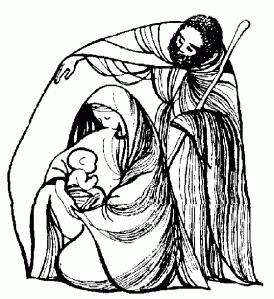
Reflection Upon the Holy Family

Although I offered a reflection upon the Holy Family at the beginning of my book on prayer, I would like to return to this subject in this post. Reflecting upon the Holy Family, we are not only guided as to what a Christian family should be, but stand convicted in our lives over what it is not. While the modern concept of liberty is often moral license, theirs was responsibility and fidelity. We cater to individualism and a preoccupation with self that runs counter to the claims of familial bonds. The immediate family in the time of Christ was expanded to include aunts, uncles, cousins and others. (Indeed, the brethren of Christ were precisely these other relations.) Catholics realize, or at least should, that our relationship to God and to one another is in the context of family. We are not alone.

While these brief words can only offer a quick brush-stroke on the subject of “family,” a few thoughts might be beneficial. Something is wrong. No amount of beating around the bush or a pretense at greater enlightenment can take away this nagging perception in all segments of society. Determining what is wrong, and for that matter right, is where public debate becomes quickly frozen and polarized.

Politicians clamor about “family values” and then argue about what this means in a pluralistic society. Advocates of alternative lifestyles seek through the media and legislatures to socially engineer the family into something past generations would think unimaginable. It is in the midst of this confusion that we come to terms with that most central of human relationships. If it were not hard enough, even our traditional family units are plagued by communication that is absent or dysfunctional.

God sends his Son that repentant children might be added to his family and given eternal life. And yet, in our sinfulness, we can and often do offer a counter-witness to this truth. I know a couple whose girl ran away at seventeen. She eventually realized her foolishness and sought to return home. However, she discovered the locks changed. Her father had told her that if she went out the door she would not be welcome back. He gave away her clothes and personal things to charity. He would not allow his wife to display her picture. It was as if she had never been born. This couple, with their older daughter, were active in the parish and regularly at Sunday Mass. When their youngest returned to Mass, they refused to sit beside her. They even maligned her to neighbors. I overheard one of her father’s parish friends tell her, “You did it to yourself. You made your own mess, now you have to live with it! This is what tough love means!” Well, yes and no. Tough love means discouraging selfishness and nurturing self-reliance. This was not that at all; it was cruelty. The girl, as it turned out, was not only a foolish teenager, she suffered from bipolar disorder. When I first met her, she was just out of a mental institution and living with her boyfriend and his grandmother. It was either this or the streets. She had nowhere else to go. She had no job because employers did not want a “crazy” girl working for them. When informed of an upcoming family reunion, she decided to attend. Her mother dismissed her at the back door: “You will just embarrass us. I planned long and hard for this party and I will not have you ruin it. Go away.” When her boyfriend smacked her around, she again tried to go home. But they were gone to Europe. The wife confided that with the younger daughter gone, they had regained their freedom, and could finally live for themselves.

As a pastor of souls I have heard many variations of this story. The happy ending of the prodigal son parable is not always revisited in the lives of those who claim to be Christian, and yet, it is precisely the witness that our Lord gave us from the Cross. We read in Colossians, “Because you are God’s chosen ones, holy and beloved, clothe yourselves with heartfelt mercy, with kindness, humility, meekness, and patience . . . Forgive as the Lord has forgiven you” (Colossians 3:12-13). This is the challenge and the transformation for those who would truly be Christian. Neglectful parents today might have astonished the worst sinners and unbelievers of yesterday. Our Lord says, “What father among you, if his son asks for a fish, will instead of a fish give him a serpent; or if he asks for an egg, will give him a scorpion? If you then, who are evil, know how to give good gifts to your children, how much more will the heavenly Father give the Holy Spirit to those who ask him!” (Luke 11:11-13; see also Matthew 7:9-11). A rhetorical question is now a frighteningly real one.

Among those who call upon the saving name of Jesus are those who engage in unlawful sexual activity and infidelity, destroy children in the womb, and discard those labeled defective. Instead of a forgiving love, they harden their hearts against those who share their blood and their name. This is the way it is, not the way it should be, and definitely not the way true believers should want it to remain.

Sirach 3:2-6,12-14 points, not to the parents’ obligations, but to those of children, particularly regarding the 4th commandment stipulation of honoring (obeying) one’s father and mother. But increasingly preachers are forced to confront parents. How can a child honor parents if they are dishonorable? When Jesus demanded, “Call no man your father,” (Matthew 23:9), he precisely meant that true fathers, indeed parents of either gender, are only worthy of the title when their role is reflective of the loving and merciful fatherhood of God. Parents have responsibilities toward those whom they give life. Many churches have to offer remedial instructions for uncatechized but baptized Catholics. Their parents failed to take them to Sunday Mass, to teach them their prayers, and to transmit to them our holy faith. This implies that parents themselves do not believe; nevertheless, they are still culpable for the damage to their children’s immortal souls. Such neglect is a form of child abuse and ranks with murder in the hierarchy of sins.

In return, just as we read in Sirach, children have a lasting obligation toward their parents. When parents grow older and need the support of grown children, it is not merely a matter of charity but of duty. However, such a turn-of-events is increasingly considered an unwarranted burden. I know of cases where the children fight each other, no one wanting to take the personal and immediate responsibility for an elderly parent. The children, in some cases, have learned from the example of their parents all too well. I also know good parents who did little or nothing wrong in raising their children; and yet their brood contains both the holy and the wicked.

Familial roles are not limited to a few years but have lasting consequences and obligations. Mary followed her Son and quietly emerges at various stages of the Gospel and in the public life of Jesus. She was his mother at the Annunciation, at the Nativity, indeed, all the way to the Cross. Love brings with it responsibility and often much worry. Jesus was disowned by many of those who knew him; Mary’s testimony of love and loyalty is one that needs to be ours. She always claimed him. Jesus claims her and gives her to us, his new family, on Calvary. As for good St. Joseph, tradition has it that he died in the loving arms of Jesus and Mary. Perhaps this was God’s greatest gift to this noble man? After all, as our Gospel relates, when an angel told him that Herod was seeking Jesus “to destroy him,” Joseph sought refuge for them in Egypt until it was safe to return. The aged guardian of Mary and Jesus might have found it impossible to remain passive when his adult Son underwent his betrayal and passion. When his earthly role was finished, the foster father to Christ was taken from this world to await his Son and Savior in the abode of the righteous dead.

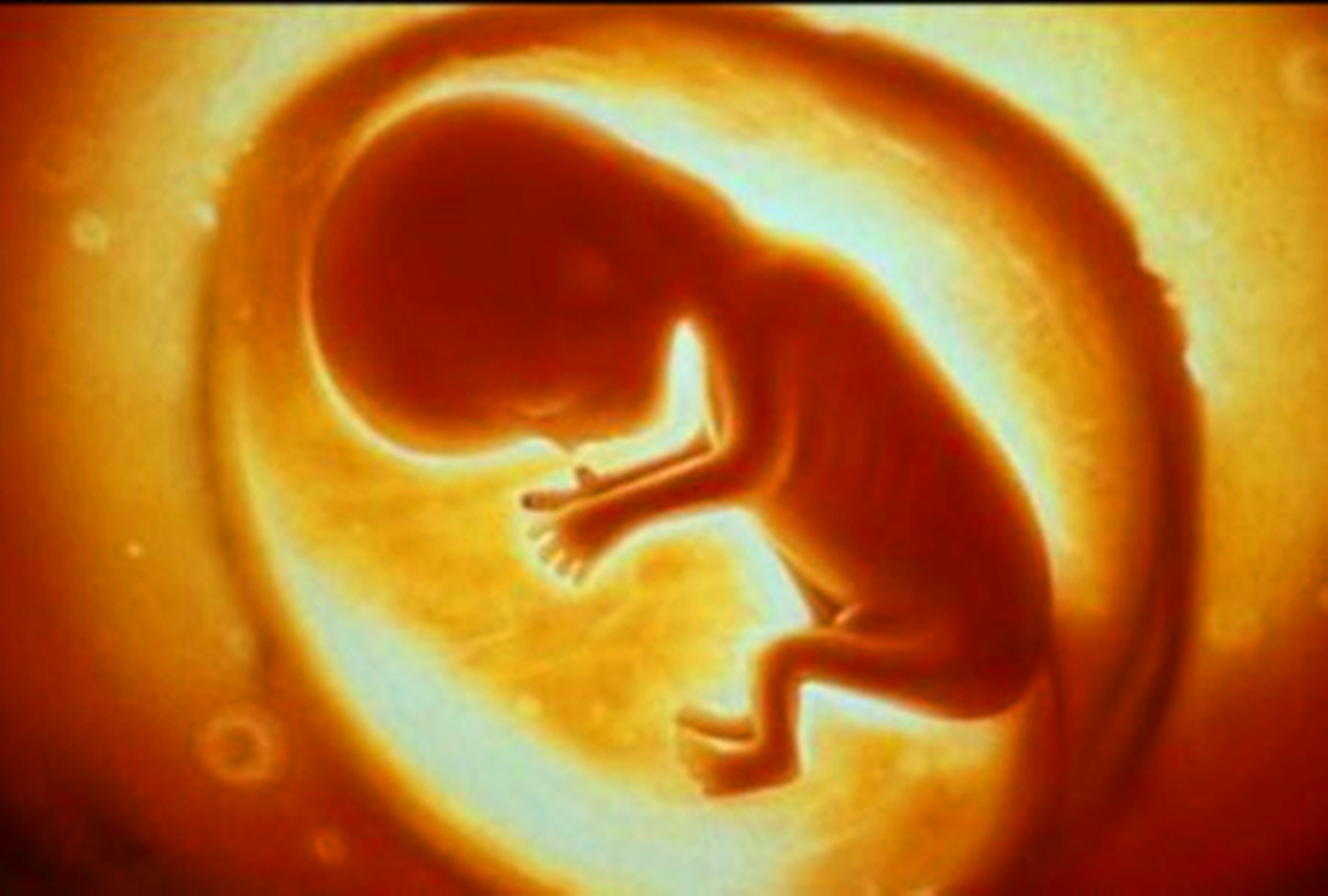
We need to put on the mind of Christ regarding family life. Can we conceive of God being well pleased with parents who killed their children through abortion? Along with contraception that breeds distrust between spouses, the abortion holocaust has attacked the very nucleus of family life. Pregnancy, once called the “blessed state” is now considered a disease to be medicated away. There is no reconciling such a mentality with that in Psalm 128:1-5 where the psalmist praises the wife as “a fruitful vine.” The child, instead of being prized as a precious gift from God, is considered a tragic accident, a problem to be disposed of as quickly as possible. Freedom, or rather license, as well as economic and upward mobility, is all hindered by the presence of a child. We are forced to think of another’s needs and wants before our own. Some just do not want to do this. Sex is recreation, nothing more. Such a mentality is inherently opposed to the Gospel. When such is the point of view of believers in Jesus, one has to wonder if even their concept of God is counterfeit?

Can we suppose that God cares little about marriage vows made in his name “to death do us part?” No, and yet divorce is at an epidemic high. Alternative living arrangements, including polygamy and homosexual liaisons would dismiss it entirely. Some critics argue that the dilemma is not the loss of the traditional family but rather because we are trying to force old codes of behavior (like the commandments) and expectations upon new forms of familial relationships. This post-Christian group insists that transitory unions are ideal and most reflective of modern experience. Some actually say that people live too long for lasting relationships. Prenuptial agreements posit a theoretical doubt in the permanence of a marriage bond, already. Certain states are considering marriages with easy escape clauses and some have even suggested built-in term limits. Logically, if spouses can separate at will, it would seem that offspring might have similar rights? Several years ago a child attempted to divorce his parents.

For more such reflections, contact me about getting my book, CHRISTIAN REFLECTIONS.

The Message of Life

Although the prophet Micah spoke about the future coming of the Messiah as a prince of peace, the remnant from Israel and Judah would come to largely anticipate a warrior savior (see Micah 5:1-4). They had been conquered and downtrodden. They had paid a heavy price for their infidelity but God had not utterly turned his face from them. Interestingly, they saw themselves punished for compromising their faith and trust in God while throughout the centuries they were mocked by the conquering peoples for their fidelity to the ancient faith and the God of Abraham.

“He himself will be peace” (Micah 5:4). It is true, but the peace of God in Jesus Christ is a gift with which we still struggle and misunderstand. Certainly, one dynamic of it is peace between peoples. But, this is not simply a lack of belligerence. The peace of the Good News is radical and all-embracive. We turn on our televisions and open our newspapers and there are almost daily reports of dead soldiers overseas. Everyone is on guard against terrorists and now it looks like North Korea has a nuke that can reach the West Coast. The new millennium is starting to look an awful lot like the old one. The problem remains the same; there can be no true and lasting peace until there is a change in our minds and hearts. Early Christians prided themselves on not resisting aggression. They turned the other cheek and they announced forgiveness to their murderers in imitation of Christ. They also suffered and died in droves. After about three centuries of facing the sword, fiery stake, cross, and wild beasts, believers took up armaments in the service of a would-be emperor, Constantine. Their bets proved fortuitous and Christianity would emerge as the privileged religion of the empire. However, as history shows us, such a victory would not guarantee perpetual peace and harmony.

What do we mean by “peace?” Despite the collapse of European Stalinism, the Asian communists understand it in two ways. First, it is a ploy used with enemies to insure time and resources in building up an arsenal to wage war. Second, it is the integration of each person as an instrument of the state and such an amalgamation is not complete until the whole world is part of the Marxist mechanism. While there is diversity in Islam, the business about the very word for their religion meaning “peace” is somewhat inexact. Before entering Afghanistan and Iraq, Western leaders almost fell over each other in explaining that our actions were against a few terrorists and dictators, not against Islam. There was no new crusade. Such clarifications were appropriate, even if they did over stress a point. Interviews with Islamic moderates in the U.S. do not reflect the positions of many fundamentalists worldwide. Islam is not all the same. Would we ask an average member of a Baptist congregation about Roman Catholicism? No. A cursory reading of the Koran makes it evident that peace is understood as the submission of all to Islam, if need be with force. Unless it is rejected or mitigated, such a mindset will never acknowledge religious freedom and always stand in opposition to the West. After all, how can one have true peace with the “Great Satan,” a widespread label for the United States? As for ourselves, how do we understand peace? Lack of aggression is certainly part of it, as in our desire for security; and justice is a theme we hear much about as well, but how far do we go to achieve the peace we crave? Pearl Harbor and 9-11 have fueled our mistrust of much of the world. Apart from the politics of late, there is the danger of creating a mentality that perverts a command of Christ, “Do unto others as you would have them do unto you” (see Luke 6:31 and Matthew 7:12). It becomes, rather, “Do unto others before they can do unto you.” This is not purely a global strategy, but how many people live their lives.

The Jewish understanding of SHALOM or peace is a salutation and benediction of friendship and cooperation. It is an invocation of divine blessing, for health, prosperity, and good standing with God. At Mass, Catholics extend the sign of peace to one another. We are one in the Lord. We are all brothers and sisters who should love and care about one another. Peace is the realization of divine love in our lives. At least these understandings are what should be present; however, enmity, a lust for revenge, and various forms of racism can get in the way. Here is the tragedy. Peace is not simply an enemy staying on his side of the fence. It is about the removal of walls and fences. It is about mutual good will and cooperation.

The peace among nations must also reflect a peace among fellow citizens, in the Church, in our neighborhoods, in our families, and in us as individuals. Should it surprise us that when the world is at war that our small part of it should also suffer unrest? Are there people with whom we refuse to associate? Are there family members who have not spoken for years? Did we get mad at someone and deliberately hurt them? Did someone do this to us? Do we pray for our enemies and try to forgive? Do we look for forgiveness from God so as to live in peace with him?

The martyrs of the Church knew the peace of God even when there was nothing left for them to do in defense of their lives. They knew that no matter what the world should strip away from them, they had an imperishable treasure in heaven. They knew that God loved them and that they were friends of Jesus. May we learn this lesson too and know the peace that the world cannot give.

Hebrews 10:5-10 stresses that had there been no Christmas there would have been no Good Friday and Easter. God, himself, took on our humanity that we might share in his divinity (see the prayer for mixing water into the wine at Mass). Jesus enters the human family so that he could offer up his life as an oblation for all the sins of the world. Jesus is the faithful servant who makes his flesh the sign of the new covenant with God. The New Law builds upon and replaces the Old.

It begins very simply. There is a message from an angel. Then there is the visitation. Mary greets Elizabeth and the unborn John the Baptist leaps in the womb (see Luke 1:39-45). Elizabeth is filled with the Holy Spirit and echoes the Hail Mary prayer, “blessed is the fruit of your womb.” Next she says, “Why should I be honored with a visit from the mother of my Lord?” Elizabeth’s words are very telling and they are affirmed as from the Spirit of God. John’s actions here parallel his activity thirty some years later in the Jordan River when he baptizes Christ. The unborn prophet cannot speak but he moves his mother to speak for him. She affirms that the unborn Christ is already her Lord. Jesus is Lord from the womb. Since he is the Prince of Peace, this gives credence to the late Mother Teresa’s contention that there can be no peace in the world while we are at war with the child in the womb. Every child is a reflection of the Christ-child.

There is a temptation for homilists or preachers during Advent and Christmas to sidestep the pro-life message. Such Scripture readings as this make it hard to do so. Advent speaks against abortion as Christmas is a condemnation of infanticide and partial-birth abortion. Why are priests and deacons silent? Let me relate a personal experience from a few years ago. I mentioned the seasonal pro-life themes at a Christmas Mass. A couple of people stood up during the homily and remained standing throughout the liturgy. Several days later the bishop called in response to a letter. A woman wrote, “My daughter only comes to Mass a couple times a year and this priest ruined it for us! He had no business talking about abortion or saying how anyone guilty of it should go to Confession before receiving communion. My daughter cried all night. She swears that she will never go to Mass again and I will find another church! By the way, this will cost you all our very generous donations!” I think the money element is why I got in trouble. But my conscience was bothered because the purpose of every homily is to promote continued conversion and not the alienation of God’s people. I think I was right, and there was no particular condemnation of anyone, just a proclamation of the Gospel of Life; but, while my head understood, my heart has never stopped grieving for the strayed lost lamb. No names were given and I could not follow up the message, except in prayer.

For more such reflections, contact me about getting my book, CHRISTIAN REFLECTIONS.

Sinless Mother Mary

One of my favorite feasts and dogmas is that of the Immaculate Conception, a teaching of the Church which has had a long and sometimes controversial history. There are even some contemporary critics of this dogma of faith who would argue that it overly separates Mary from the rest of us. Certainly, it is true that sinfulness is a reality ever present in our lives. We find it so difficult to be good. It is ironic that a few of the feminist theologians who image Mary as a strong and liberated woman, would then criticize this teaching and argue that Mary has been used as a device of oppression on the part of a male dominated hierarchy. It seems to me that quite the opposite may be true. The witness of Mary as the queen of the saints would emphasize that the greatest person to ever walk the earth next to the Lord, is this woman Mary. Genesis 3:9-15, 20 recalls the first Eve who with her husband turns away from God in disobedience. Psalm 98:1,2-3,3-4 might remind us that if Eve is the mother of all the living, Mary in her faithfulness is the mother of all who are reborn in her Son. She stands as a model of holiness for men and women alike. Her preservation from sin does not create an impassible chasm between her and us. Sin by definition adds nothing to us or to her. If anything, it is a lack of something which should be there — the grace and presence of Christ. Just as she carried the Lord, now we must avoid sin so as to be filled with his presence and life. Sin is that which divides and alienates. To wish this upon Mary would mean wanting separation from her and the Lord.
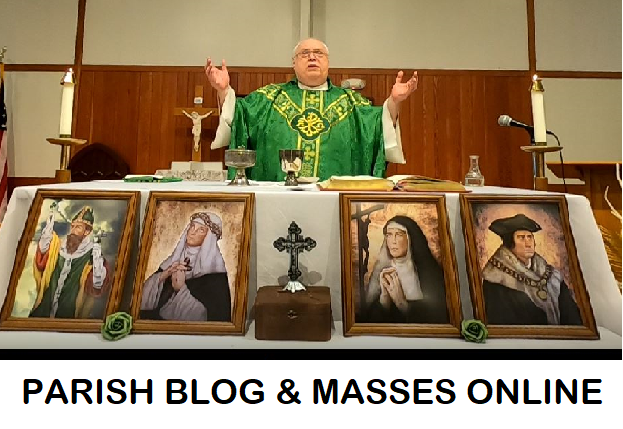
Like us, she is totally a creature. The saving grace which washes over us in baptism reaches from the Cross backward to the moment Mary is conceived in the womb. The Messiah whom himself is sinless would enter our world through the sinless portal of Mary.

Rarely do preachers mention how the mystery of the Immaculate Conception celebrates the beauty and holiness of marital love. Nevertheless, this is true when we look at the actual history of God’s intervention. Although Mary would conceive Christ through the overshadowing power of the Holy Spirit (see Luke 1:26-38); Mary’s conception as sinless elevates the significance of marital and sexual love as shared between Joachim and Ann. Couples raising families in this age would do well to recall that their children in baptism become as Mary, and even though they struggle to remain holy; they may be perfected as saints. As Mary is, we may become.

For more such reflections, contact me about getting my book, CHRISTIAN REFLECTIONS.