• Our Blogger

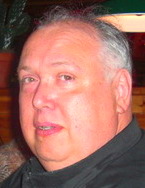
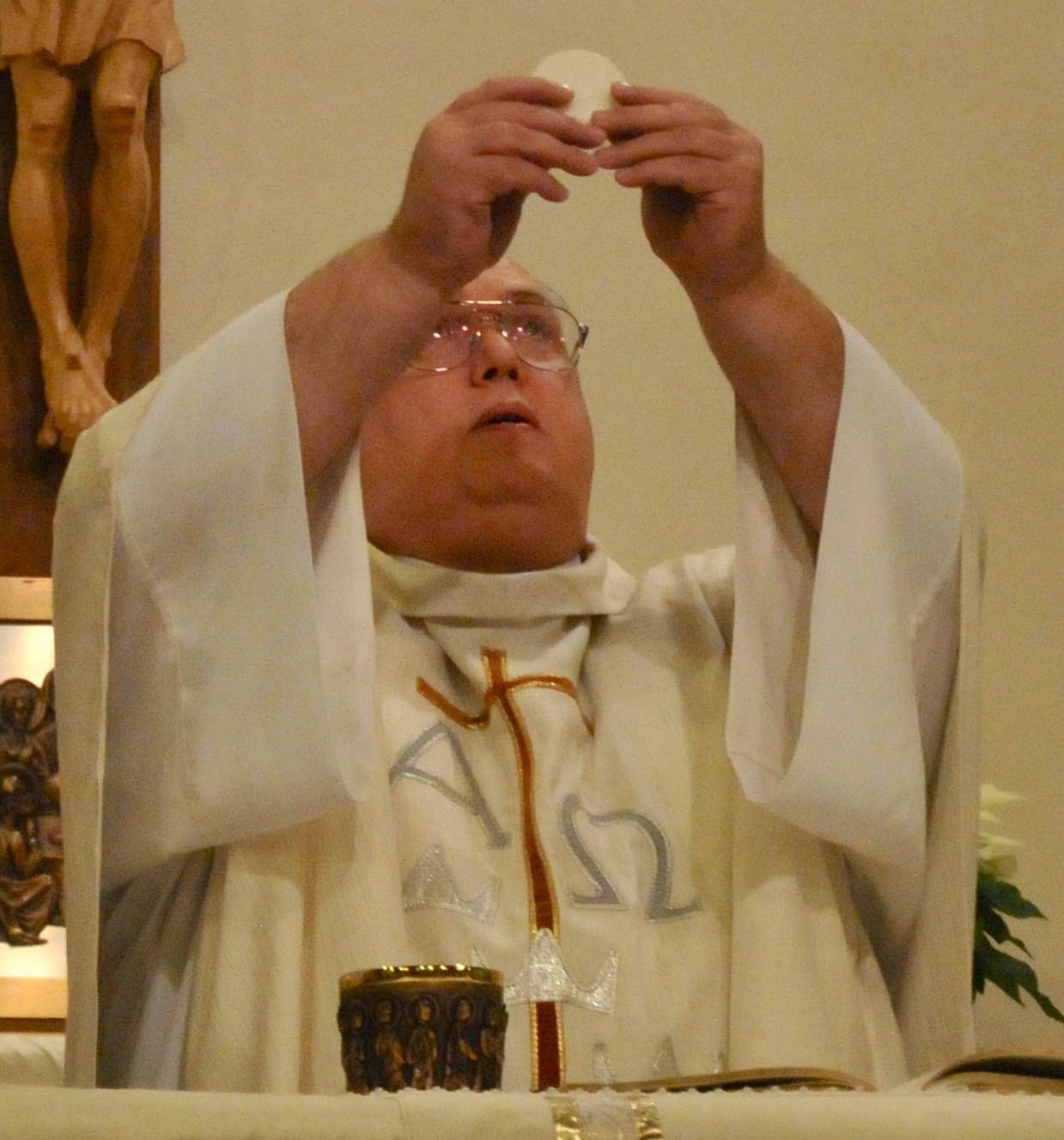
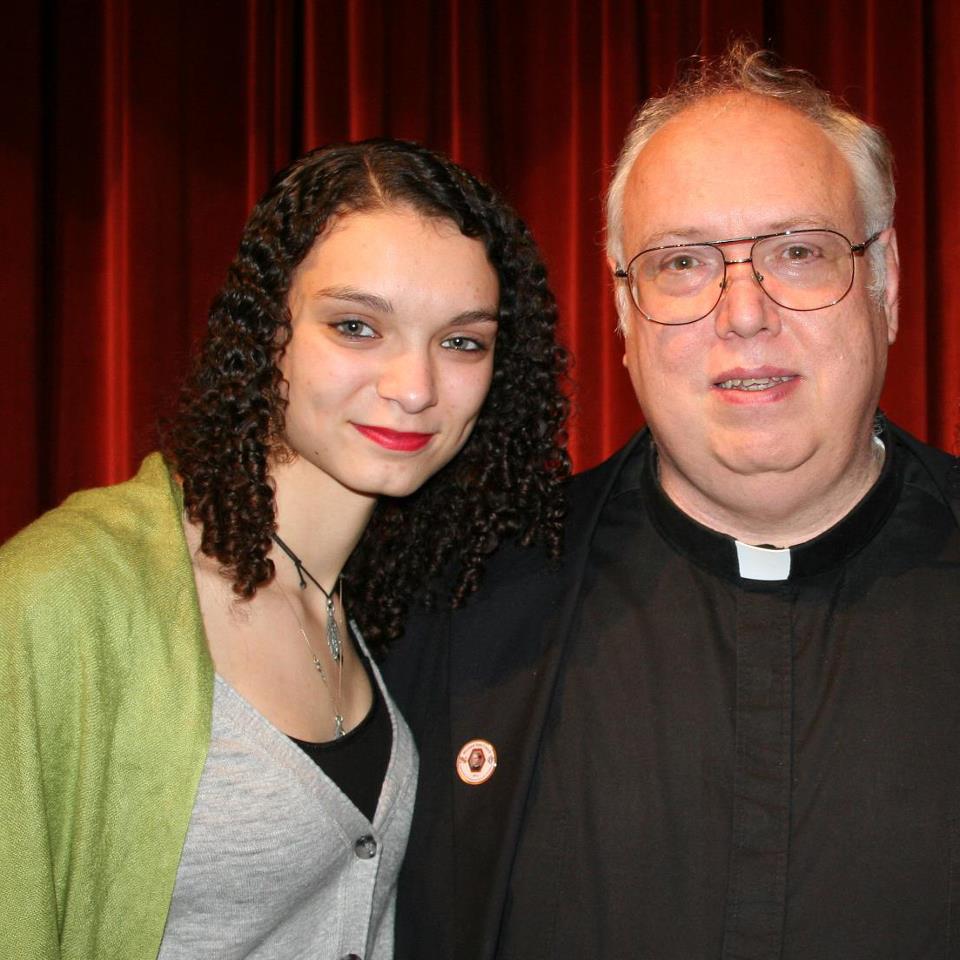
    Fr. Joseph Jenkins

  • The blog header depicts an important and yet mis-understood New Testament scene, Jesus flogging the money-changers out of the temple. I selected it because the faith that gives us consolation can also make us very uncomfortable. Both Divine Mercy and Divine Justice meet in Jesus. Priests are ministers of reconciliation, but never at the cost of truth. In or out of season, we must be courageous in preaching and living out the Gospel of Life. The title of my blog is a play on words, not Flogger Priest but Blogger Priest.

  • Archives

  • Categories

  • Recent Posts

  • Recent Comments

    Anonymous's avatarAnonymous on Ask a Priest
    Michael J's avatarMichael J on Ask a Priest
    Jeremy Kok's avatarJeremy Kok on Ask a Priest
    Mike Zias's avatarMike Zias on Ask a Priest
    Jeremy Kok's avatarJeremy Kok on Ask a Priest

Questions & Answers About the Bible

Is the Bible self-sufficient in teaching us all we need to believe in order to be saved?

Salvation truth is in the Bible; however, sufficiency fails upon the matter of interpretation and translation.

Can non-Catholic Christians be certain of possessing a fully authentic and complete Bible?

Unfortunately, they cannot as has been demonstrated by the various versions in use by Protestants. It should be said that ecumenical overtures have improved this matter, as many of their Bibles now possess the deuterocanonical books. Unlike many truncated Protestant Bibles, Catholic editions contain 72 books.

What prevents Protestants from having a certain set of biblical books?

History itself prevents them. Unlike the Catholic community, they were not present when the original copies were written and collected.

Why can Protestants not be certain of their biblical interpretations?

Their constant fragmentation into various divergent churches and sects is evidence that no universal sense of Scripture exists. They have no divinely protected mechanism of authority and tradition to insure fidelity to Biblical truth. Indeed, what authorities they do contain are at odds with one another, even if each claims a true sense of the Bible.

Would not modern translations from the original languages suffice in giving Protestants a true rendering of Scripture?

While very useful toward this end, there is still the dilemma that except for a few ancient fragments, we no longer have the means to re-examine the original texts. Further, biblical scholars themselves are often at odds with one another on certain points. Some Protestant groups even reject modern biblical scholarship altogether for a favorite and archaic English translation. There are few scholars versed in Hebrew and Greek, and knowledgeable of the dialects, expressions, and cultural circumstances of the biblical people.

Did God appoint an arbiter to preserve and to explain Biblical truth?

Yes, he did. The notion that Christ would establish a Church only to allow it to immediately fall into error is nonsensical. No, God chose St. Peter and his successors to be the supreme teaching authority in the Church. It was the promise of Christ that Peter’s faith would not fail and that the spirit of truth would abide with him forever.

Could it be said that the Holy Spirit inspires every individual in their personal understanding of the true meaning of biblical truth?

No, and there is no evidence for it. If the thousands of ministers in Protestant communities were truly inspired then they would all believe alike. There would be but one Church. Contradiction is not the fruit of the Holy Spirit.

What is the benefit of an infallible teacher to explain the Scriptures?

The benefit should be obvious. Doubts about certain texts and sections of the Bible are readily resolved. Unity in teaching precipitates oneness in the believing community. Without this leadership, there could be as many churches as there are heads. It dispels lingering doubts, maintains the faith, and casts off the errors of rationalism and atheism.

Are Catholics forbidden to read the Bible?

No, although Catholics are warned to avoid those Bibles containing errors. Also, care should be taken for the gullible and uneducated that they will not be led astray by false teachers or for a lack of good commentaries. The Bible can be used for our edification; however, used injudiciously, it can also cause much damage. St. Peter had such an experience. “There are some things in them hard to understand, which the ignorant and unstable twist to their own destruction, as they do the other scriptures” (2 Peter 3:16).

Is Bible reading encouraged in the Catholic Church?

Most certainly it is promoted. The Scriptures are proclaimed at Mass, make up the principal parts of the daily prayer or Liturgy of the Hours required of clergy and religious, taught in Catholic schools and religious education programs, and encouraged in the home and in study groups.

Are the teachings of the Catholic Church found in the Bible?

The truths of the Catholic faith are essentially found in the Holy Scriptures. There are some doctrines, while not explicitly in the Bible, come down to us through Divine Tradition.

Who explained the Scriptures to Jews during Old Testament days?

The High Priest and the Sanhedrin (a council of seventy-two civil and religious judges) fulfilled this role. Indeed, Deuteronomy 17:8 reveals that the Jews were required under pain of death to obey their decisions in doubtful matters.

When was the canon of biblical books established?

During the first three hundred years of the Christian era, the New Testament existed only as dispersed fragments. Complicating the situation, there were many books and letters in circulation which were named as scripture but which would be deemed otherwise. Such works included the spurious Gospel of St. Peter and the Gospel of St. James and of St. Matthias. In the year 397 AD, the Council of Carthage declared which books were canonical and inspired.

How do we know that the Catholic canon of the Bible is correct?

The present Catholic canon is the same as the list approved in the year 1546 by Pope Eugene at the Council of Trent. This in turn is the same canon published by Pope Gelasius in the year 494. His canon is the same as that of the Latin Vulgate compiled and translated by St. Jerome and approved by the Council of Carthage in 397. This continuity in the Catholic Church is a telling fact in favor of this particular listing.

How did St. Jerome and the Council of Carthage collect the texts and determine the biblical canon?

St. Jerome was one of the few Latin fathers who also knew Greek and Hebrew. He visited the places where the letters and writings of the apostles were preserved. He carefully collected as many as he could find, studied and translated them. His Latin Bible would come to be known as the Vulgate, the official Bible of the Catholic Church.

Why maintain a Latin translation of the Bible?

Actually, when first composed, the Latin Vulgate was written in a living language. However, the languages of men changed over time. The benefit of a so-called “dead” language is real, nonetheless. Such a translation with certain and unchanging word definitions insures a faithful source for all other renditions. It helps to preserve the Bible from erroneous or inexact interpretations.

Is not private interpretation of the Bible permitted?

The Bible should speak to our hearts and minds, finding particular application in our lives; however, as a universal concept, such private interpretation is fraught with dangers. It is responsible for giving us thousands of churches and sects all claiming to be the religion of Christ. The true voice of the Scriptures emerges from the Catholic Church, which has the authority to explain it. Our Lord said: “Go therefore and make disciples of all nations, baptizing them in the name of the Father and of the Son and of the Holy Spirit, teaching them to observe all that I have commanded you; and lo, I am with you always, to the close of the age” (Matthew 28:19-20).

Can a person be saved without reading the Bible?

Of course, in the first three centuries of the Christian era there was no complete collection of the New Testament books. During the first 1,500 years, before the process of printing, Bibles had to be copied with pen. It was not possible for everyone to have his or her own Bible. In any case, many people could not read. The command of Christ is not to take and read the Bible but to hear and respond to the preaching and teaching Church.

But did not Jesus tell us to “search the Bible”?

This was in response to the question of the Jews about his identity. Was he the long-awaited and true Messiah? He told them to search the Scriptures to see what the prophets said about him. Christ never explicitly told us to read the Bible; rather, he pointedly commanded us to hear the Church and to obey her teachings.

What language was used in the first Bible?

Books were variously written in Hebrew and Greek.

Who guarded the integrity of the Bible throughout the centuries?

Long before the reformation churches came into existence in the 1500’s, the Catholic Church preserved and guarded the Bible.

Was Martin Luther’s Bible the first to be printed?

No, a hundred years before the reformation a Catholic had invented the art of printing. This allowed at least fifty-six Catholic editions of the Bible to be published in the continent of Europe. Twenty-one of these were published in Germany, one in Spanish, four in French, twenty-one editions in Italian, five in Flemish, and four editions in Bohemian.

When was the Bible translated into the English language?

The venerable Bede translated the Bible into Saxon which was the language of England in the eighth century. Archbishop Arundle of Canterbury (1394) stated that Queen Anne diligently read the four gospels in English. Sir Thomas More speaks of an English Bible during his time.


Questions & Answers About the Church

What is the Church?

Put simply, the Church is a community of faith founded by Christ which celebrates and makes known her Lord through his teachings and sacraments. This Church is composed of the clergy, laity and consecrated religious.

Does the Bible speak of the Church?

Yes, it does, a fact that is quite disturbing to those who disavow any significant role for her and who reduce Christian faith to a personal experience with occasional Christian fellowship. Jesus said: “And I tell you, you are Peter, and on this rock I will build my church, and the powers of death shall not prevail against it.” (Matthew 16:18). St. Paul also speaks about “the church of the living God” (Timothy 3:15). In Hebrews 12:23, he calls her the Church or “the assembly of the first-born.” Revealing something of the intimacy between Christ and his people, St. Paul says in Ephesians 5:25, “Christ loved the church and gave himself up for her.” Jesus compares the Church to a flock of sheep: “So there shall be one flock, one shepherd” (John 10:16).

Does the Bible say anything about Christ founding a Church?

Our Lord chose twelve apostles and commanded that they teach and insure that believers observe all that he had given them. Christ, himself, admits to his own authority, “All authority in heaven and on earth has been given to me” (Matthew 28:18) and extends it to his apostles, “Peace be with you. As the Father has sent me, even so I send you.” (John 20:21). Christ appointed a visible headship or ultimate leadership among his apostles in Peter: “And I tell you, you are Peter, and on this rock I will build my church” (Matthew 16:18). This “rock” signifies that Peter should be the foundation stone and chief shepherd of the Church. Christ told him “Feed my sheep . . . Tend my lambs . . . Feed my sheep” (John 21:15-17). In other words, he was to lead the apostles and teach the People of God. He was to minister to them and insure the efficacy of the sacraments, particularly the Eucharist.

When did this Church really begin?

The Acts of the Apostles chronicles how the apostles were empowered and began to exercise their mission on Pentecost. The Church expanded and prospered. Bishops were appointed to assist and to be the successors to the apostles. This living legacy extends all the way to today.

Can the origin of the Church and its apostolic succession be proven?

Sure, history and Church documents themselves are evidence of Church leadership and activity throughout the ages. Significant are the lists of succession, especially that of the Pope which extends back to Christ and his appointment of Peter. There has also been a successive series of Church fathers and doctors who have explained and defended the faith in every century. We might point further to the Church councils, which have corrected and maintained teaching and discipline against error so as to be faithful to Christ.

Can we really be sure from biblical testimony that Christ gave Peter a special supremacy and power?

Christ asserted that Peter was the rock or foundation stone of his Church. He tells him to feed his flock, to teach and minister to clergy and laity alike. He makes no qualm in saying, “I will give you the keys of the kingdom of heaven, and whatever you bind on earth shall be bound in heaven, and whatever you loose on earth shall be loosed in heaven” (Matthew 16:19).Yes, the singular role of Peter is pretty clear.

Does the Bible assert that Peter was the chief apostle and that he exercised supremacy over them?

St. Peter personally presided over the election of Matthias. He was the first to address the crowd after the descent of the Holy Spirit. At the Sanhedrin in Jerusalem he took it upon himself to speak in the name of all the apostles. He presided in Jerusalem over the first Church council (Acts 15). He resolved disputed matters (Acts 15:7). St. Paul consulted Peter about certain practices. Indeed, early Christian history tells us that after Christ, Peter was considered the head and chief teacher of faith.

Can it be proven that the Catholic Church is the true Church?

Christ established the Catholic Church almost two thousand years ago. Her Christian teachings have remained consistent against the fads and fashions of time. Her saints have written our Church history in lives of holiness and sometimes even of martyrdom. She has spread throughout the world to the many nations of the earth. She has not deleted or compromised the teachings of Christ. She has an unbroken succession of leadership (that can be chronicled) going back to Jesus. The Catholic Church alone has weathered all the storms of dissension, schisms, paganism, and persecution.

How can it be said that no other denomination is the true Church?

Except for the special position of the Orthodox churches and their relationship, albeit fractured, with the Catholic Church, all other Christian denominations emerge from the personal opinions of certain men. These figures alter, add, and delete from the deposit of faith according to their own whim and private notions. Non-Catholic churches [properly called ecclesial communities] disagree with one another and only possess fragments of Christ’s teaching, not the whole truth. All saving truth “subsists” in the Catholic Church. These other ecclesial communities extend back a few centuries or merely a couple years, not two millennia like the Catholic faith. These denominations exist only locally or in a few countries and are not worldwide. Having not formed under the watchful eye and guidance of the apostles, non-Catholic Bible-Christians frequently and ultimately explain the Scriptures in ways to suit human opinion.

Does the Bible actually say that we should submit our opinion to the Church?

We read St. Paul in Hebrews 13:17: “Obey your leaders and submit to them.” Jesus said to the apostles: “All authority in heaven and on earth has been given to me. Go therefore and make disciples of all nations, baptizing them in the name of the Father and of the Son and of the Holy Spirit, teaching them to observe all that I have commanded you; and lo, I am with you always, to the close of the age” (Matthew 28:18-20). “He who hears you hears me, and he who rejects you rejects me, and he who rejects me rejects him who sent me” (Luke 10:16). Thus it is that we should hear the Church and submit our opinions to her.

But blind submission violates the freedom of human inquiry and thinking, does it not?

This submission is not blind. We are obliged, to the best of our ability, to study the reasons and background for Catholic teachings. But, should we encounter “mystery” and we will, then we should render a religious assent to the views of the Church, which received the command from Christ to teach and to explain the truth.

Does not everyone have a right to his or her own opinion?

Yes, but only so long as the facts admit to differing opinions. But if truth should be made manifest or decided by a competent authority (like the Church), then we must submit. Children have opinions; would we say that they are always mature and correct? The insane have views too, would we consider all truth relative so as to give them credence? No, of course we would not.

Could not Christ have made things a lot easier for us, just by spelling out his doctrines so that no confusion might develop?

Christ did provide for the eventuality of misunderstanding. He gave us a certain and infallible teacher for his doctrines. In cases of uncertainty, we have a means of discerning the truth. He principally gave this infallibility to Peter, the Bishop of Rome, and to his successors.

But, is not the Bible an infallible teacher?

No, because many texts require explanation. There are some Scriptures difficult to understand. The multiplicity of denominations in this nation alone is proof that the Bible is no infallible teacher.

Does the Bible really say that St. Peter has infallible teaching authority?

Christ said to St. Peter: “Simon, Simon, behold, Satan demanded to have you, that he might sift you like wheat, but I have prayed for you that your faith may not fail; and when you have turned again, strengthen your brethren” (Luke 22:31). In Matt. 16:17-19, Jesus said to Peter: “Blessed are you, Simon Bar-Jona! For flesh and blood has not revealed this to you, but my Father who is in heaven. And I tell you, you are Peter, and on this rock I will build my church, and the powers of death shall not prevail against it. I will give you the keys of the kingdom of heaven, and whatever you bind on earth shall be bound in heaven, and whatever you loose on earth shall be loosed in heaven.” This proves that Peter was empowered by Jesus Christ so that his faith would not falter and that he should insure and strengthen the faith of his brothers. Christ confided his Church to Peter as on a rock that will never be disturbed by false teachings or by the gates of hell. Christ said to Peter: “Tend my lambs . . . feed my sheep,” (John 21:15), which means to teach and care for the whole Church. If Peter was charged to teach the whole Church, then Christ had to insure that he would be able to teach without error. Otherwise, no one could be required to believe what he taught. Except for some window dressing and the development of our appreciation of doctrine, the Church has taught the same unchanging doctrine for two thousand years.

But if Peter swore that he did not know Christ, how could he be infallible?

This question emerges from a common misunderstanding between “infallibility” and “impeccability”. While St. Peter was infallible in teaching matters of faith and morals, he was not free from sin. Further, when Peter denied Christ, he had not received the Holy Spirit who would preserve him free from error in teaching the Church. Christ had yet to give him full and empowered charge of his flock.

What does “ex cathedra” teaching mean?

It is a technical term, which means literally from the chair; it signifies when the Pope speaks from his role, as the universal teacher, some matter of faith and morals which must be accepted throughout the world. He puts the full weight of the seat of Peter behind it. His private conversations and such are not infallible.

Does such a view of infallibility create an atmosphere for ignorance, making people passive in investigating the truth?

No, quite to the contrary, infallibility insures that we do not follow any false leads. The truth is studied on a firm foundation and in the light; those who have no such guide search for the truth in the dark. The fragmentation of Protestantism is evidence of this latter route.

But wait a minute; is not the teaching regarding infallibility of recent origin?

It was formally defined toward the end of the 19th century as a necessary retort to a world that was increasingly secular and dismissive of the role of the Church. However, even before it became a declared article of faith, the Popes were always infallible. Papal infallibility is not a new doctrine; rather, it is an ancient perpetual truth given a clearer definition.

But some Popes were terrible public sinners; does this not invalidate this business?

No, just as with Peter, infallibility does not mean an exemption from sin.

Could it be that Peter was infallible, but no Popes after him?

The guarantee from Jesus was that he would remain with his Church until the end of the world. Thus, the infallibility of Peter must endure as long as the Church exists and the teachings of Jesus have need of preservation from error. Anything less would be unjust. Every generation has a right to the truth. Remember, Christ promised he would send to his Church the Spirit of truth which would abide with her forever (John 14).

At the time of the reformation, about the year 1500, did not the Catholic Church fall into idolatry and superstitious practices?

No, her beliefs have remained essentially the same throughout all history, going back to the apostles and the first Christians. These charges are the result of bigotry and misunderstanding.

Were there not many abuses in the Catholic Church at the time of the reformation?

The Church is holy because Christ is holy. However, many individual members of every “church” may be guilty of sinfulness and abuses. The Church has never formally approved of religious abuses and has legislated “Church” penalties, including excommunication, to discourage such activities.

Is it correct to assume that Protestant denominations possess the same faith and teachings as the first Christians?

No, this would be a false presumption. Many cases of deviation can be documented, not to mention their breach with the Catholic Church. While the first Christians acknowledged baptism as necessary for salvation, many of these “new” churches dismiss its importance. Ancient believers also believed in the Church’s jurisdiction over the sacrament of penance and the value of confession to a priest; all the Protestant sects renounce this mystery of mercy. The early Christians made the Eucharist the center of their lives, trusting that in Holy Communion they received the real body and blood of Jesus Christ. Most Protestant sects denounce the real presence, spiritualize it, or reduce it entirely to ordinary bread. Early Christians also inherited from the Jews of Christ’s day the practice of praying for the dead; this also, the non-Catholic denominations have discarded.

What is so serious about a denomination changing or modernizing its tenets of faith?

Implicit in such an activity is the assumption that the previous tenets were incomplete or erroneous. Both cannot be right. The true teachings of Christ and the apostolic Church, the very matters of faith required for salvation, cannot be reversed or altered. Attempts to do so sever the connection between believers and the true Church of Christ. Of course, issues of discipline can be revised according to changing circumstances. Further, the many languages of men and the various societies in which the Church finds herself may also dictate reformulation in the expressions of changeless doctrinal truths. It could also be said that the full meaning and ramifications of certain teachings develop or are only realized over time.

Does the Catholic Church fabricate new articles of faith?

No, she does not have the authority to create new teachings. Rather, she sometimes defines matters of faith that have existed in the Church from the very beginning. As for discipline, she can create or revoke laws according to changing circumstances.

For more such material, contact me about getting my book, CATHOLIC QUESTIONS & ANSWERS.

The Doctrine on the Trinity

God makes himself known, as a Trinity, in the revelatory message of Jesus Christ. This truth is not simply academic, but relational. Despite our unworthiness, the eternal Son of God offers his Father to us as “our” Father. In contrast to the Cosmic Watchmaker of philosophical Deists, the Judeo-Christian God called a people to himself and established covenants with them. The same Spirit that hovered over the waters of creation would overshadow a Virgin in Nazareth and bring forth forgiveness, healing, and life in the ministry and life of Christ. God delivered his people from political oppression and slavery. He gave them both the Prophets and his Law. Finally, he gave them his Son. Ours is a God who never forgets us. This abiding reality is most forcibly expressed in the saving mission of Jesus Christ, the Son of God and Second Person of the Blessed Trinity. He is sent into the world as one of us. He comes to rescue us from the sin and death, which was of our own making. God the Creator offers us the opportunity of a re-creation and of a new life in Christ.

God is the Father of us all. He calls us into union with him. He is the Supreme Being, infinitely perfect, and the maker of all things, keeping them in existence. Created things reflect the glory of God, their Creator. As the source of all goodness, God willed certain things into existence so that they might enjoy his benefits and participate in his goodness. His infinite power brought all things out of nothingness into being and he keeps them in being. Otherwise, and it is against the divine economy, they would sink once more into nothingness. Above all creatures, he is self-existing; indeed, he is existence, itself. He is an infinitely perfect Spirit. All perfections find their eminent degree in him. All the goodness, beauty, truth, and power we appreciate in created things are but the merest shadows of the perfections found in their source, almighty God.

God is revealed through the laws of nature and, in a more personal way, through his revelation as assembled in God’s Word. Because of the limitations of human knowledge, many of the ways we know and speak about God are through analogies and stories. God identifies himself with Truth and with Love. He is all-good. He is mercy itself and ever forgiving. His is all-knowing. He is just. He is without limit. He is perfect and therefore, unchangeable. He is omnipotent (all-powerful) and present everywhere. He has no need of anything or anyone outside of himself. He creates freely, to give glory to himself, to share his life with his creatures, and to have them return thanks and praise to him. While there is ONE God, his identity is Triune: Father, Son, and Holy Spirit. These three Persons of the Trinity are not “persons” in the sense of contemporary usage dealing with psychology. Rather, it implies a sort of divine dynamism wherein there are three mysterious interlocked equal cores of God’s identity. The Scriptures never use the word “Trinity,” but the doctrine resonates there clearly in the New Testament.

Jesus calls upon God as Father. Jesus does the things that only God can do, like forgiving sins and making atonement. The Holy Spirit is experienced as God, giving life to the community just as he breathed life back into the crucified Christ. The Lord gives the command to go out to all nations and to baptize “in the name of the Father and of the Son and of the Holy Spirit.” Baptism in the name of a creature would be meaningless, thus all three Persons constitute the one God of faith.

We give thanks and glory to God in response to his gift of creation and the act of re-creation wrought by his Son through the power of the Holy Spirit. A sin offering had to be made and only one who was sinless could offer it. It is the teaching of the Church that the Lord’s human origin was the work of the Holy Spirit in the womb of the Virgin Mary. Jesus’ conception, unlike our own, is the miraculous work of the Holy Spirit and is untouched by original sin. The Holy Spirit can directly create nothing sinful. Further, the fact that Jesus is God would make the presence of sin an inner contradiction. Jesus is viewed in the incarnation as the eternal Son of God born in the flesh of Mary. This revelation of Christ’s identity is derived from a comprehensive look at the details of the Gospels. The early centuries of the Church was a pivotal time for debate and reflection where a precise appreciation of Christ’s identity emerged under the light of God’s guiding Spirit. A formula was issued which still applies today: Jesus is one divine Person, existing fully in two natures, divine and human.

For more such reflections, contact me about getting my book, CHRISTIAN REFLECTIONS.

God’s Fatherly Concern

Luke 11:5-13 has Jesus pointing toward the natural relationship of fatherhood as self-reflective of the Heavenly Father’s love. It begins by speaking of the Christian’s obligation to be charitable, even when it is inconvenient and difficult to do so. However, it then switches gears somewhat and refers to the kindness of earthly fathers to their children. This passage ends with the sentence, “If you, with all your sins, know how to give your children good things, how much more will the heavenly Father give the Holy Spirit to those who ask him.” Throughout the long history of the Church, it may be that we sometimes took the analogy too far in imaging God above as a stern, vengeful, and punishing Father. It is true that while he is a just Father, he is also merciful. There is something self-reflective about this most special Fatherhood. In his love we see something of who we are to be as fathers (and mothers) to one another. Conversely, in our love as Christians we need to find something of God’s fatherly concern for us. It is interesting to note that Christ uses the most familiar of relationships to reveal something of the God we follow. In the order of grace, Christ makes us adopted sons and daughters to the Father and shows us that he cares about us. In Christ’s relationship to us, we are reminded of the analogy of Christ as the groom and the Church as his bride. Between the pages of these two relationships, the whole story of salvation is written.

For more such reflections, contact me about getting my book, CHRISTIAN REFLECTIONS.

Reform & Believe

“The Reign of God is at hand! Reform your lives and believe in the gospel!” (Mk 1:14-15). The cry for men and women to reform their lives had long been one echoed in the history of God dealing with his people. With the coming of Christ, we for the first time can fully respond to this admonition.

In the days of Noah the people were also called to faithfulness and yet they remained in their debauchery. I recall a reproduction of a painting my parents used to have of the deluge. A young beautiful woman with long hair clung to a jagged rock while surrounded by heavy winds and thrashing tides. I recall staring at the picture and feeling deeply sorry for her. She was so beautiful. How could God be so cruel? As I have gotten older and hopefully wiser, still sometimes the actions of God in the Old Testament seem like such over-reactions to me. I suppose what we forget is that the more primitive the people, the less sophisticated had to be the ways to keep them in line and to guide them. The story of the flood is not one simply about destruction and disobedience; in Noah and his companions we see an image of God’s steadfast fidelity and love for mankind, despite our disobedience. God sets up a covenant with Noah and promises never to flood the world again; he even sets the rainbow in the sky as a sign of his promise. The words of Genesis convey here the deep love of God. Because of our sins, we deserved death. However, not only are a remnant rescued but later God would send us his Messiah to save us from our sins and eternal death.

I would probably be negligent if I failed to say a few words about the kind of literature which this text in Genesis represents (see Genesis 9:8-15). It is linked with the story of creation, even though there was no scribe or news reporter taking notes in the first days of humanity. It is a later reflection. When the Jewish people were in Babylonian exile surrounded by a people who followed false Gods, the story of the flood reaffirmed to them how much God loved them; and that no matter how desperate their situation became, God would not abandon them.

The story of creation and the flood also made up a kind of satire against the Babylonian gods. Much of the linguistic allusion is lost in English. The particular story which parallels ours is called the Gilgamish epic. In it, the hero is not Noah but Ut-napishtim. When the gods, notice the horrendous plural, decree the deluge, the pagan god Ea reveals their designs to Ut-napishtim by speaking secretly through a reed wall. You see, Ea did not want to let the other gods, who wanted to get rid of mankind, know what was coming. He is urged to build a cubical boat of ten cubits. This is not like the rectangular boat of Genesis, just a box. He is warned to take ample provisions, as well as a sampling of the beasts of the field and the wild creatures. This is like Genesis. However, he is also told to take craftsmen lest their skills be lost. For six days and nights the storm persists. Finally, the ark comes to rest on Mount Nisir. Like Noah, he sends forth a dove, a swallow, and a raven, leaving the boat when the raven fails to come back. Ut-napishtim offers a sacrifice to the gods who cluster around him like flies. Instead of a covenant as we see in our story today, there follows an angry dispute among the gods. Enlil, angry about the remnant which has escaped, inquires as to who leaked the secret of the flood. Ea confesses but questions the prudence of Enlil in sending the storm. Upon the sinner, he says, should be imposed his sin, and on the transgressor, his disobedience. Instead of a universal disaster, Enlil, he complains, should have simply sent a wolf or a lion or a famine or a pestilence which would not have wiped out the entire race. Because Ut-napishtim and his wife escaped destruction, they must now be given immortality and transplanted so that they would not mingle with mortals. This and similar stories question the wisdom and goodness of the providence of the gods. The Jewish people believed in one God who was all knowing and all good. The destruction is then not seen as the act of a whimsical god but rather was something which a disobedient people brought upon themselves. God’s response is to save a remnant from further depravity and have them start brand new. You can see from these two stories the resemblance. Father John McKenzie, a Scripture scholar, tells us that “The differences between the Mesopotamian and the biblical stories show how the Hebrews took a piece of ancient tradition and retold it in order to make it a vehicle of their own distinctive religious beliefs, in particular their conception of divine justice and providence” (Dictionary of the Bible, p. 189). Although this flood may not have actually wiped clean our planet, it could well be that both stories emerge from some common memory of a disastrous flood of prehistoric times — a recollection which has grown out of all proportions.

Having said this, theologically, the wisdom and faith of righteous man was praised for having followed God who saved humanity from his folly. Noah listened and obeyed God. This is the key. In 1 Peter 3:18-22, the deluge is reckoned an example of God’s patience and is compared to the waters of baptism. Water for us thus becomes a symbol of both life and death. In the history of salvation, it meant death to the peoples around Noah — it meant death to the Egyptians who chased the Jews across the Red Sea — and it even meant death for Jesus who once baptized by John would engage in a ministry which would demand the highest cost. It also meant life — it meant life and a second chance for Noah — it meant life and freedom for those fleeing Egyptian slavery — it meant life in the natural processes of the world where plants and animals perish without water. In baptism, by submerging and dying with Christ in those waters of regeneration, we are promised to rise with him. Like a seed which has flowered, we are born again and made brand new. Our sins are forgiven and we are made members of a new People of God.

Recall your baptismal promises often and allow Christ to live in you. Have Noah’s kind of faith. He trusted God even in the absurd task of building an ark. Living out our Christianity will sometimes seem absurd to others, but do not allow the storm of sin and death to drown you. Christ has given us a fine ship called the Church and if we remain faithful, it will take this Pilgrim People to the Promised Shore.

For more such reflections, contact me about getting my book, CHRISTIAN REFLECTIONS.

How Do We Understand Christ as King?

Every year we celebrate the feast of Christ the King. But, what does this feast mean to modern men and women? Contemporary civilization has largely rid itself of kings. It is true that the English and a few other nations maintain royalty, but the world democracies have reduced them to cosmetic and ceremonial roles. They are the subject of gossip and romantic fascination, not the masters of lives or the sources of true power. Americans fought a revolution, precisely to shed any allegiance to a king. Our corporate psyche has an inherent distrust in positing too much authority and power in any individual man or woman. We would rather reward ingenuity and ability with a leadership role than to grant it blindly because of an accident of birth and so-called noble blood. Checks and balances are incorporated into the system of government to insure that no individual becomes too strong. Indeed, the powers of the executive branch are constantly debated because of concerns that the presidency may become too independent and/or that its war powers are too great a responsibility for one man. Having said this, we acknowledge the strength of the individual and have a preoccupation with the so-called self-made man and the hero. Our politicians are often successful lawyers, businessmen, and veterans, even professional football players and wrestlers. We are also a people in love with the realization of a myth that the poorest person, subject to tremendous difficulties, can rise to prominence and even to the greatest office in this land of opportunity.

2 Samuel 5:1-3 presents us with the ultimate hero, David. The tragic power struggle with Saul is over. He was the great warrior who had saved Israel from her enemies. The elders anoint him as the king of Israel. It will be from his line that the Messiah will emerge. Generations to come will acclaim him as the model of a great king. Nevertheless, he made terrible mistakes and committed horrendous sins. He would take to himself the wife of one of his generals and then insure that the poor man would be killed in battle. When confronted with his sin and facing the judgment of God, he repents in sackcloth and ashes. The entire land does penance. David is acclaimed as the king who is willing to bend the knee to the true God and lay claim to his personal faults.

It may be useful for the Christian to appreciate that most earthly kings have been relegated to history. While there were saints among them; they were more often the worse of sinners. The image of Christ the King often had little in common with their abuse of power and their political intrigue. A British king took much of the English world out of the true Church. Many among the German nobility and princes divided the Church between Luther and Rome. When the King of Savoy sought the unification of the Italian peninsula, he confiscated the Papal States from the Church. Kings and emperors often had to validate bishop candidates. There are countless other examples that might be given. While it was traditionally argued that the ideal situation was a union of the Church and State, it must be acknowledged that the Church has thrived in the United States with its constitutional separation of the two entities. Of course, while no national church was recognized, we still maintained a real religiosity as “one nation under God.” Meanwhile, largely Catholic nations have often been the sources of the most severe persecution of the Church. This has usually occurred after bad governments, albeit somewhat sympathetic to the Church, have been overturned in elections or revolution. Mexico enforced abusive anti-clerical laws for many years. The French revolution secularized a nation with an accompanying bloodlust that cost thousands of priests and religious their lives.

Colossians 1:12-20 sounds like a creed. The divinity of Christ is proclaimed. Jesus is the kingdom. Since Jesus is also “head of the body, the church,” then by extension something of the kingdom is breaking into the world through the Church. His is a kingdom of light. Jesus is the Light of the World. He has “rescued us from the power of darkness.” We owe Christ everything. He redeems us and forgives our sins. The attributes of Christ’s kingship are narrated. He is the revelation of the Father, making visible that, which is invisible. Everything was created through him, the divine plan of creation. He is at the source of all that exists, “whether thrones or dominations, principalities or powers.” While his kingdom is not of this world, all earthly kings receive their authority from him. While used to defend the divine right of kings, it is also applied to modern democracies like ours. We even say as much on our money: “In God we trust.” The Christian sees this truth fully residing in Jesus Christ. Reconciliation is made possible through the blood of his cross. No one else can save us. His is the name that saves.

If the kingship of Christ is just window dressing with pretty crowned statues and empty words of praise, then we are wasting our time. Jesus does not want our flattery; he desires our humble submission. This feast and title of Christ the King reminds us that ours is a jealous God. We may be both citizens of a nation and subjects of a kingdom, but the claim of Christ must come first in our lives. When Jesus was asked as to whether it was legitimate to pay a tax, he requested a coin. He asked, whose head is on it? The answer came back, Caesar. Jesus answered, then give to Caesar what is Caesar’s, but give to God what is God’s. This response is often misinterpreted. His answer was really no answer, but a way to get around the trap that was being made for him. If he said not to pay the tax, he could immediately be arrested as an enemy of Rome. If he said, pay it, than those who looked to him as the Messiah might reject him as a crony of the occupying government. If we think about his response, the believer becomes alert to the fact that everything belongs to God. All that we have and everything that we are is a divine gift. This puts to shame the many politicians, and dare we say voters, who claim they can be Christian while advocating as public policy the murder of the unborn and the expansion of moral depravity. The suggestion that one can personally support the Gospel of Life while civilly aligning oneself with the constituents for the Culture of Death is a lie that strips one of genuine Christian discipleship. We either belong to the kingdom of God or we do not. The kingdom is in constant tension with the world and challenges business as usual.

Who is the master of our lives? The Lord, himself, says that we cannot serve two masters. Those who have sought to do so either compromise the demands of Christ or they ignore them completely. Dissenters against the truths of Scripture and the living Church often develop a rebellious spirit to authority. They purport to love Jesus but discount as historically conditioned or misconstrued anything he has to say that challenges them. Like any nation, the kingdom has its own laws. These laws run against the grain of what might be caricaturized as “normal thinking”. Only men are chosen as apostles and later as bishops and priests. This is rejected as patriarchal and opposed to equal rights for women. Jesus says that we must eat his body and drink his blood if we want a share in him and in his life. This is rejected as the peculiar cannibalistic thinking of the Roman Church. Jesus tells the woman caught in adultery that she is forgiven, but warns her to avoid this sin in the future. He also challenges the fornication of the Samaritan woman. This is rejected as the antiquated morality of right-wing extremists. Jesus says, if someone strikes you, turn and offer the other cheek. The world responds with petty wars. Three thousand people are killed every day by small arms fire alone. Jesus says, give without expecting repayment. The richer nations of the world retain a crushing debt against the poorer nations. A deaf ear has been given the Pope’s plea for debt forgiveness that would restore hope to the Third World and set the new millennium apart from past history. Jesus says love your enemies; forgive those who do you injury. The world executes them. The Chinese even resort to massive orchestrations of public rebuke and shaming prior to killing those ruled as criminals, especially those from the political opposition. During one three month period, they executed 1,751 people; that is 30 more than all the rest of the world over the past three years. Nevertheless, they are rewarded with “most favored nation” trade status and courted by world businesses. How can the demarcation between the world and the kingdom be any clearer?

Why are we afraid to speak out? Why are we so willing to accept excuses for the state of the world and our part in it? The prophets of the kingdom seem few in number and their message ignored. There are enough baptized believers in the world to change things if they wanted to do so. The trouble is that we have become complacent with the way things are. The problems around the world seem remote from our own lives. As for the society we live in, there is an unconverted part of us that secretly relishes in the new materialism and hedonism. Spiritually we have one foot in the kingdom and the rest is still in the world. Are we entering Christ’s kingdom or stepping out? Are we being converted or is our faith being corrupted?

Luke 23:35-43 gives us the scene at the cross. Jesus is mocked. The Jews are upset because he was not the kind of Messiah they wanted. He has let them down. The Romans mock him also, although they never placed faith in him initially. All they know is the sword and blood. This is what translates as power to them. The Jews are a beaten people. Perhaps some of their mockery was for the Jews who rebuked Jesus? They were all fools, as far as they were concerned, a defeated people. Pilate’s inscription rests above our Lord’s head: “This is the King of the Jews.”

While one criminal blasphemed against him; the other thief crucified with Jesus acknowledges his guilt and then professes his faith by asking Jesus to remember him in his kingdom. Although it is the darkest hour of the Gospel, Jesus comforts the good thief with the most wonderful words ever spoken to another: “I assure you: this day you will be with me in paradise.” What a strange king Jesus is. He gathers coarse fishermen and traitorous tax collectors to himself; he speaks with women of poor reputation and touches the unclean and leper. Now, at the cross, he tells an insurrectionist and true criminal that he should be with him in heaven, the capital of Christ’s kingdom. Even the devil with his vast but dark spiritual intelligence could not figure him out. He tempted Jesus with all that the world had to offer; but, to no avail. The cross should have been the devil’s shinning hour; however, even this will be turned into a parable, placing worldly wisdom on its head. A sign of defeat will be translated for all time as the symbol of victory. That, which previously ushered only death, will merit us a share in eternal life. Yes, what a peculiar king we have in Jesus; and yet how thankful we are for his infinite mercy.

All the parables speak about a kingdom that the world still does not understand. We are unwilling to sell everything for the treasure hidden in a field or the pearl of great price. We are unwilling to abandon a flock of concerns, to search out the one lamb that is lost and afraid. The treasure beyond measure is Jesus. We are called to serve him in heart-felt imitation. The kingdom of God has only two laws and yet they impact upon everything: love of God and love of neighbor. When will we learn?

For more such reflections, contact me about getting my book, CHRISTIAN REFLECTIONS.

Suffering Servant and Powerful Lord

Isaiah 50:4-7 gives us a few lines about the suffering servant. This prophecy is directly connected to Christ. “I gave my back to those who beat me . . . My face I did not shield from buffets and spitting.” Our Lord has his flesh torn by scourging. He was mocked and spat upon. His own condemned him as a criminal and betrayed him. The selection concludes, “I have set my face like flint, knowing that I shall not be put to shame.” Jesus remained faithful to his Father to the last. His Father would restore him to life by the power of the Holy Spirit, and yet it was also by his own authority. The resurrection would overturn the false verdict and condemnation of sinful men.

Psalm 22 quoted by our Lord showed the depth of his agony, “My God, my God, why have you abandoned me?” (verse 2). And yet the psalm moves toward renewed conviction. Here the psalm parallels our Lord’s passion. “All who see me scoff at me . . . They have pierced my hands and feet . . . They divide my garments among them and for my vesture they cast lots” (verses 8, 17, 19). The psalm citation is fully realized. “I will proclaim your name to my brethren; in the midst of the assembly I will praise you: ‘You who fear the Lord, praise him; all you descendants of Jacob, give glory to him’” (verses 23-24). Since the psalm obviously refers to crucifixion, what can these words mean? There can be no doubt; they point to the resurrection. Our Lord would appear before his apostles in the Upper Room and they would give praise. More than this, we are the spiritual descendants of the apostles. The resurrected Christ is with us in the assembly of faith and makes possible our prayerful praise and glory to God at Mass.

Now, the emphasis is upon our witness and how the mystery of Christ changes us. Look at Philippians 2:6-11. It is literally a faith profession in Christ. God has come to save his people in Jesus Christ. The name of Jesus invokes saving power and mercy. He has redeemed us from the devil. We are his property. We belong to him.

For more such reflections, contact me about getting my book, CHRISTIAN REFLECTIONS.

Our Sins Assault Christ

Many of my reflections touch upon the liturgical year. We can learn a great deal in our ritual, worship and the Church readings. Lent is probably my favorite time for pondering the things of faith. We have so many worthwhile opportunities. Take for instance the reading of the Passion and the ceremonials of Palm Sunday. They are so powerful that many if not most priests do not offer homilies on Palm Sunday. However, in a few words or in bulletins, much can be added to help people in their Lenten reflection. Our Lord is acclaimed with palm branches and cries of Hosannas. Nevertheless, many of the same voices that praise him will eventually cry, “Crucify him!” The drama is glorious and frightful. While we are given the ultimate example of that love of which there is none greater; we are also given a terribly real picture of human fickleness and treachery. What makes matters more intense is that we see ourselves in the Christ-story. Jesus reveals the self-sacrificing love of God. However, our own sinfulness and faithlessness is put up against the mirror. When done in a dialogue style, the reading itself puts Christ’s rejection as a criminal upon our own lips. Sometimes people object to this or remain silent. But, there is no running away from it. The Apostles tried running away, but our Lord would catch them hiding in the Upper Room after his resurrection. There is no fleeing the truth. There is nowhere to which we can run. Every sin we have ever committed, both large and small, was a denial of Christ and a hammer blow to his crucifixion. We are guilty, not just the Jews or the Romans or the few living in Palestine two thousand years ago. All of us have blood on our hands. The Church deliberately intensifies the readings and rituals to bring this home to us. Unless we come to a genuine realization of our sinfulness, then true repentance would be impossible.

The mystery of Christ’s passion and death is that he did not deserve to die. Jesus was the innocent one. As the Son of God, he was the very one slighted by the primordial sin of our first parents and by all subsequent ratification of their rebellion in our own transgressions. Finite creatures utterly dependent upon the Almighty had violated the infinite dignity of God. Instead of damning us eternally, we were promised a Redeemer. God called to himself a particular Semitic people and promised them a Messiah. They looked for the restoration of their nation. Christ would come to establish an entirely new kingdom. God himself would pay the debt we owed and could not pay. He would redeem us with his own life. Jesus had every right to curse us from the cross, instead, he would say, “Father forgive them, they know not what they do” (Luke 23:34).

The absolution of Christ from the Cross, actualized in faith and the sacraments is a great consolation to us. But, there is a qualification about which we must be alerted. Are our sins not of an entirely different caliber since we are believers? Do we not know what we are doing? Lips that have offered responses at Mass and recited the Lord’s Prayer, have also cursed, gossiped, and told dirty jokes and stories. Eyes that have looked upon the elevated host, literally our Lord raised high on the cross, have also been windows to shameful entertainment and temptations designed to arouse lust and covetous desires. Hands that grasp others in the sign of peace and receive our Lord have also engaged others in derogatory gestures, fighting, and unlawful pleasures. Minds that were gifted with intelligence that we might know God have neglected him for profane and idle learning. Hearts that were made for God alone have displaced him for a love of the things in our passing world. Palm Sunday and all of Holy Week attempts to strip away our hypocrisy and self-deceit. It is imperative that we center ourselves on that which most matters, our relationship with the God who has redeemed us in Jesus Christ. Not just for a day or season, but all year long, we should be mindful of our high calling and the price of our sins.

For more such reflections, contact me about getting my book, CHRISTIAN REFLECTIONS.

Debate on IFC’s 2007 Bridge Builders Confusion, Part 2

LINK:  False Worship at John Paul II Cultural Center?

LINK:  Debate on IFC’s 2007 Bridge Builders Confusion, Part 1

SOROJ:

Obviously my opinion may be biased, given that I’m a Hindu myself. However, please bear with me. This is both a collection of my opinions as well as questions I’m curious about regarding the Catholic faith itself. Forgive my ignorance in advance.

First, I need something cleared up for my own knowledge. While idol worship is condemned within the Judeo-Christian faith, there is no church to my knowledge that does not have an image of Christ upon the Cross, at the very least. That, as far as I can tell, is an idol. The same goes for the icons of saints that are ubiquitous among Catholics.

FATHER JOE:

There are certain Protestant sects that prohibit even a corpus (body) upon a cross. A Baptist woman I know wears a plain cross but absolutely refuses to wear a crucifix. Catholics have no problem with crucifixes and statues; however they are only representations of religious personages or themes. They are not worshipped in themselves.

SOROJ:

The original intent, as far as I know, for forbidding that the Divine be contained in an image is that in our limited nature, we cannot capture His full essence, so to do so would be a vain act. So why are there so many crucifixes, paintings, icons, etc.?

FATHER JOE:

We believe that the incarnation of Christ, the God-Man, changes the economy of images and thus the Jewish prohibition in the Decalogue is modified. The divine is not contained in the image; rather images serve as a form of symbolic language.

SOROJ:

Second, if God decreed that “thou shalt have no other god before me,” then what about the saints? Of course they aren’t exactly “deified” but they are worshiped, no doubt. They are worshiped for what they stand for, whether it’s the protection of children, fertility, animals, or anything else. Of course it can be argued that they are being “venerated.” Yet, the definition given by Merriam Webster is “to honor (as an icon or a relic) with a ritual act of devotion,” which is not exactly different from worship. How do you differentiate between the two?

FATHER JOE:

A man might worship the woman he adores, but such is a sentiment of romance, not religious celebration. Saints are not worshipped. Divine worship is given to God alone. All prayer has God as its proper object. Saints are invoked within a special communion: the Church in pilgrimage on earth, the souls in purgation and the saints in glory. We ask the saints to intercede and pray with and for us to almighty God. We look to their lives as models of discipleship and for inspiration. The dictionary definition you cite is not precise enough. We venerate the saints as men and women who have been moved by divine grace to holy lives. We worship God as the source of all grace and holiness. We do not treat saints as deities. Mary is not a goddess. All that they have is given them. Saints are like the moon in the night sky. It shines but only because the light of the sun is reflected upon it. Similarly our Lord is the LIGHT OF THE WORLD. Saints are those who allow his light to shine through them.

SOROJ:

Third, and this is more pertinent to your post, what exactly is the big deal? The values espoused by all religions are the same; the rituals though may be different. Does that make one religion more right than another? I wouldn’t necessarily call what happened at the John Paul II Cultural Center an act of, or an endorsement of so-called “false worship.” It is an acceptance of different points of view, regarding praying for knowledge and success, both material and spiritual. Inter-religious dialogue is the only way we can achieve peace. This doesn’t mean necessarily accepting or adopting the views of the other faith, but it does mean respecting their way of life and respecting their right to live it that way. So long as they aren’t causing undue suffering or death, what’s the harm?

FATHER JOE:

No, the values are not the same in all religions. There is both true and false religion. Some religions have no afterlife, others an offensive reincarnation (which offends our soteriology) and still others vary in many degrees from the Catholic or Christian view. Catholics believe that Jesus is the Way and the Truth and the Life. He is the pontifex or bridge from this world to the next, our path to the Father. He is the redeemer of the world, regardless of what others might believe. Truth is objective and not subject to human whim. Similarly, the moral life is quite different between creeds. Certain religions espouse violence or holy wars to achieve their ends. We believe sexual conduct must remain exclusive to a man and woman in marriage. We reject divorce. We view the core of the Good News as a Gospel of Life. Abortion is regarded as murder.

As for lighting a candle before an Oriental idol, Tertullian and various fathers of the ancient Church would regard such an act as idolatry. Even more serious, they would view the deities of the East as possibly demonic in origin. We believe in invisible spiritual realities. We cannot accept another’s point of view that is diametrically opposed to our own. We can render “human” respect to another’s traditions, and even tolerate false worship. However, we ourselves are allowed no part in it. I do not think the nuncio was fully aware of what was going on and an honest mistake was made. Why should I commit an act that is sinful and renounces my exclusive devotion to Christ?

I have no problem with dialogue. It is collaboration in another’s ritual or prayer where I have problems. Pope Benedict VI, himself, has explained that ecumenism may mean allowing each group to pray as their tradition dictates, even for a common cause like peace, but without the blending of prayers or the coerced collaboration of anyone in a ritual which they would find offensive. The same respect I would give to them I would hope they would extend to me. Religious indifferentism is regarded by the Church as one of the most grievous sins in the post-Vatican II world.

SOROJ:

Let it be noted, by the way, that it is a gross misinterpretation that Hinduism is a polytheistic faith.

FATHER JOE:

So you say, but not all Hindu teachers agree. There seems to be a movement for sure, some arguing that the various deities are really manifestations of a single God. However, the models or manifestations are still incompatible with the Triune One God of Christianity.

SOROJ:

It is, in fact, a monotheistic religion but has evolved to allow its adherents greater spiritual freedom to view God in their own way, hence the seemingly large number of deities. Think of it kind of like having a hundred email addresses but mail sent to any of them is forwarded into one main address. Dorky example, admittedly, but it’s the best I can come up with right now.

FATHER JOE:

The image I have is that of spammers, none of the addresses may be the right one. I fail to see any significant unity in such an analogy.

SOROJ:

I just want to end off by stressing that I have much respect for the Catholic faith. It is a beautiful faith, and I have many friends who are strong believers. I have much respect for what you’re doing; it takes a strong person to write about one’s opinions without cutting corners. I’m just responding as such. Best of luck with everything.

FATHER JOE:

I would never do anything to infringe upon the rights of Hindus to celebrate their faith. I also believe in dialogue and cooperation about those things in society where we find some agreement. At the same time, I am acutely aware that the God of Christianity and Judaism is a jealous God and the prohibition against “other gods” is absolute. Indeed, although the Pope seems to view the Allah of the Moslems as the same as Yahweh and the Father of Jesus, there are many critics even here under the umbrella of Abraham who have their doubts. The deity or deities of Hinduism are even further removed.

SWAMI HARIDAS:

My dear Pagan Catholic friends, who worship countless numbers of saints, images and paintings, and are therefore ignorant polytheistic idol worshippers, those who eat and hack away at the animals of God, first of all I would like to point out your extremely derogatory tone towards Hindus and Hinduism. You call us idol worshippers, fools deluding others, idol bringers and polytheists. However, did you know that Hinduism has only one God, the Lord Vishnu and all of the other gods and goddesses are simply in the Catholic term saints, devotees and worshippers of our one true Lord? We worship these idols and statues, never believing that our Gods are directly before us, but because of the symbolism, it allows us to view the Lord in our hearts, for his to dwell in our minds.  And so we are as pagan and polytheistic as you are!

It is symbolism, walking around the deity (pradakshina), acknowledging that God is the essence of our lives and beyond, bowing, acknowledging our subordinace to the eternal saviour, eating food that is supposedly blessed by the Lord (prasadam) allows us to be pure and refreshed by his blessing, his blessing to break our sinful bonds and engage in spiritual service to him.

You have been completely misled.

Those two statues are not Hindu deities; they are simply decorative statues of two princesses holding flowers in their hands. It is purely a decorative element and has no religious basis whatsoever. So please do not over-exaggerate with your ignorant terms, because in a sense you are the same.

May the Lord lift the darkness from your eyes, may you be humbled by his word ( Gita ) and may you surrender onto him, he who is our father, he who is our eternal lord, and he who is ever flowing with grace, because no matter how sinful you are, there is always space for you in the abode of the Lord, all you need is a change – Hare Krishna.

FATHER JOE:

Have I not written enough about this incident? The corrective was the very cautious manner in which the Pope acted when he visited the John Paul II Cultural Center. He talked about peoples of various faiths working together for a better world. He urged that together we search for the truth, albeit knowing that objective truth and an honest exploration leads to the God of the Bible, of the saints and Thomas Aquinas, and of the Church. There was no hybrid or welcoming liturgies that would incur confusion into the minds of Christian believers.

Catholics do not give divine worship to saints. Despite protestations to the contrary, the Hindus have made no universal statement disavowing polytheism. Even if their many deities were confined by some religious revisionism to one known through many manifestations, it is no guarantee that this would be the God of the Hebrews and of the Church. The Church has seen the old pagan religions fade away, and it has seen the emergence of a new paganism. The Catholic Church is not pagan but thoroughly Christian.

I am well aware of the ten avatars of Vishnu as well as the other 330,000 supernatural beings. They are all false, from the Catholic perspective. I do not deny that some Hindus have reinterpreted their religion as monotheistic. But this is not universally the case among its teachers and certainly not the situation among individual practitioners. Your treatment of images goes way beyond Catholic veneration. Trying to equate Catholicism with Hinduism will not work and a number of theologians and Catholic writers have faced censure from the Holy See for trying to do so. You are free to follow your beliefs; that was never in question. The concern of the post is that we as Catholics are not on the same page about faith and God. Christians are forbidden to take part in such foreign worship. Catholics cannot even receive communion in a non-Catholic church. We might sing hymns, but are generally forbidden to formally participate in the ritual of another denomination. Eating food that is supposedly blessed by a non-Christian deity was condemned by the early Christians fathers, even though the poor were attracted to the free meat and bread offered to a false god. The pagans were often good people. But, Christianity is not tolerant of false religions. Ecumenism means better mutual understanding, working for common objectives in society, but it does not mean anything more than “human” respect and it certainly does not mean any kind of religious relativism.

The statues are elements of Hindu iconography if nothing else, and lighting candles before them is highly questionable. One person suggested that the two princesses holding flowers were the two daughters of Vishnu, the head deity. I do not propose to be an expert in Hindu theology, but you cannot speak for a worldwide Hinduism which varies greatly from place to place and from teacher to teacher. Further, as a priest, I am somewhat well informed about Catholic Christianity and find your views in this regard both juvenile and inaccurate.

Worship your one or thousands of gods; that is your business. But do not expect me to say that such is okay for Catholics. It is not!

Jesus is the Way and the Truth and the Life!

MICHAEL:

Swami, your remarks typify all of the ignorant hard headed non-Catholics that don’t have a clue. Wait until you’re on your death bed. You’ll be calling on all kinds of people both dead and alive and YES, even some Catholic saints, I’ll bet.

You’re gonna find out how wrong you are. In the meantime, I would suggest that you keep quiet and stop basing your opinions and thoughts on conjecture. Do yourself a favor and read the entire Catechism of the Catholic Church from cover to cover TWICE, if you’re sincere about learning. Then you’ll have reason to understand why true Catholics do what we do and believe what we believe in

Jesus is the Way and the Truth and the Life!

ABAR!

MELBOURNE:

I don’t understand what the fuss is about. Both religions have pagan influences in how they Worship God. Even the words Worship, Sacrifice, Goddess have pagan origins. Christians give money in sacrifice; pagans kill animals to appease their God. Catholics have placed Mary as a Goddess of Virginity just as the Romans placed Venus as a Goddess of Love. Roman mythology has been mixed up with Gods words. They are all pagan religions. Fear of honoring the wrong god is just superstitious. God, your Father, judges you on your character, not on your beliefs.

FATHER JOE:

There are certain commonalities between religions as a whole, but that does not mean Christianity is in any way paganized. Worship and Sacrifice have unique definitions for Christians, albeit derived from the earlier Jewish usage. We worship the one true God and all worship must be focused upon God. The Jews sacrificed grain and animals, Catholics offer the unbloody offering of Jesus Christ behind the elements of bread and wine that are transformed into his body and blood. Neither the Bible nor the living tradition substantiates your claims. The quality of a man’s character will not save you. False belief or the worship of demons will not save you. As a Christian, I believe that Jesus alone is Savior and Lord: he is the Way and the Truth and the Life. Catholics do not regard Mary as a goddess; she is a human creature like the rest of us, but specially chosen and blessed by God.

VISHNU:

Dear Father, it has been a long time since you have written a post like this. I am a Hindu, so what? I’ve been to church, be it RC (Roman Catholic), LC (Latin), Pentecostal or whatever. And each of these guys says that they are the real Christian.  Again, I don’t care about that too.  For me, they are all Christians and believe in Yeshua.

I believe that Jesus is one of the saviors and a lord, but don’t believe that he is the sole path to eternity. I am sure there are many other ways, too.

I wasn’t here for that. Actually, the picture there was just a sculpture and had nothing to do with so-called pagan culture and god. And lighting a lamp is almost like cutting a ribbon, stating that something has started. And yes, it is the Indian way.

Don’t take it to the heart dear, but Christians in India do light lamps (yes, similar oil lamps with a cross on the top) and candles in front of Jesus.

Father I have some serious doubts.  Please do contact me in the email address… just some doubts regarding Christianity.

FATHER JOE:

The archbishop may have been similarly deceived, but it is not “just a statue” but has symbolic value for Hinduism and the lighting of a candle is a ritual gesture. Jesus is the Savior.  Apart from Christ, there is only condemnation.  Jesus tells us in John 14 that “no one comes to the Father, but through me.” Jesus is NOT one deity or “savior” among many. He is the Lord. His is the saving name.

PJ JOHNSON:

It seems as if this is a very old thread at this point so I’m a bit reluctant to comment on it, but I’m a Catholic Ph.D. student in South Asian religions and the subject is of personal and professional interest to me particularly when I am doing fieldwork in India.

If you have interlibrary loan access you might want to look at the Indian bishops’ “Guidelines for Interreligious Dialogue” (Guidelines for Interreligious Dialogue. New Delhi: CBCI Centre, 1989). It deals with many of the issues treated in this discussion, such as the nature of Indian religions (polytheism vs. monotheism, the role of images, and so forth), and sets norms for interfaith worship services involving Catholics and Hindus.

My interpretation of the document is that the bishops established individual prudential judgment as the ultimate arbiter of what is licit involvement with non-Christian religions, with just a handful of exceptions – potential scandal given to the non-Christian party (avoiding scandal to the Christian party is contemplated but rejected as a guiding principle), and any guidelines and norms that are subsequently established by one’s diocese to limit the application of individual conscience. The norms specifically permit invoking the Christian god under Hindu names, adapting Indian religious symbols to private Christian religious use as part of inculturation, limited participation in Hindu puja, and a demeanor of worship at non-Christian religious sites. You may or may not be familiar with Cardinal Dias lighting a lamp for Ganesha in the 1990s, but it was a similar situation to the nuncio’s action at the JPII Center operating within the Indian guidelines. More recently, St. Philomena’s in Mysore illuminated itself (that is, turned on its lights) for the Hindu festival Dusshera.

http://www.ucanews.com/2009/09/11/priests-divided-over-government-move-for-inclusive-hindu-festival/

This is of course an Indian document, but from my own limited perspective, I think it’s likely that the Holy See, apostolic nuncios such as Pietro Sambi, and others in the Church involved in comparative theology and interfaith dialogue are aware of the Indian norms and find them licit, and something like the same norms are the de facto ones applied throughout the church. In other words, I don’t think the nuncio was acting in ignorance, but within norms for inter-religious dialogue that are generally accepted by the magisterium. If you could establish out of recent magisterial documents that this is not the case, I would appreciate knowing about it.

FATHER JOE:

When the Pope encountered the interfaith groups in the United States, he was very careful not to say or do anything that might compromise on this issue. We can work together in a common pursuit of the truth but the Pope is fearless in knowing that the claims of Catholicism reflect objective truth and reality. Compromises similar to a few you have mentioned have been rightfully criticized and I suspect Pope Benedict will slowly bring correctives to the situation. I know that the American bishops have been admonished on elements of their document on homosexuality (forcing a rewrite) and ICEL translations formerly approved by the USCCB were deemed as heretical by the Vatican. I suspect the Indian bishops and others are also fallible. This is more than a matter of policy or Church rules, but of the Decalogue and Divine Revelation.

ROY:

READ DUET. 4:23-25 – Be careful, therefore, lest you forget the covenant which the LORD, your God, has made with you, and fashion for yourselves against his command an idol in any form whatsoever. For the LORD, your God, is a consuming fire, a jealous God.

READ DUET. 5:7-8 – You shall not have other gods beside me. You shall not make for yourself an idol or a likeness of anything in the heavens above or on the earth below or in the waters beneath the earth.

READ DUET. 6:14-15 – You shall not go after other gods, any of the gods of the surrounding peoples— for the LORD, your God who is in your midst, is a passionate God—lest the anger of the LORD, your God, flare up against you and he destroy you from upon the land.

FATHER JOE: 

This does not speak to the change in the economy of images because of the incarnation.  You are simply citing the Old Testament and I applied the full quotations.  Such is in the Catholic Bible and represents no challenge to the Catholic faith.

Arguing with a Crazy Man

LINK:  False Worship at John Paul II Cultural Center?

LINK:  Debate on IFC’s 2007 Bridge Builders Confusion, Part 1

JOHN:

You’re all morons!

FATHER JOE:

Well, starting a discussion that way certainly adds no points to your argument. You are saying that any religion that makes absolute truth claims can have its adherents ridiculed and mocked. Sorry, all you do is immediately show your irrational bigotry. Catholics and other Christians would take exception to other religions, maybe even see spiritual hazards, but hopefully we would not ridicule their believers as “morons.”

JOHN:

All religions are the same— period!

FATHER JOE:

This statement is so ignorant; I am not sure where to begin. Are you saying that all truth is relative? No, obviously not, because you are starting off by criticizing Catholic doctrine which condemns the heresy of “religious indifferentism.” Further, if all religions are the same (with conflicting truth claims), then what you seem to be saying is that all religions are equally false. This is also off the mark because Catholic Christianity puts much store into such things as natural law. In other words, even if you disagree with our faith claims, there are certain assumptions from the natural order that must be held unless you somehow reject objective reality. Certain religions reject such reality as illusion and thus, even from an atheist’s perspective, would probably be further removed from the truth.

JOHN:

Christians have been misled purposely.

FATHER JOE:

We have? By whom? Sorry, the history of salvation history shows a clear progression from Judaism to Christianity. You are wrong about this. We believe that the Holy Spirit has safeguarded the Magisterium of the Church and the inspiration and canonical selection of her Scriptures.

JOHN:

The word God in the old Geneva Bible was Elohim.

FATHER JOE:

Why are we talking about a Protestant bible that was not fully published until 1560? The Catholic Church resolved the issue of the biblical canon in 393 AD!

JOHN:

Elohim… meant male/female and also meant more than one! That means that God was Gods! And any true Jewish man will confirm this.

FATHER JOE:

No true Jew will confirm any form of polytheism. Hebrew did not capitalize the word (how would it) and this has led to your misinterpretation that it can refer to many gods. The word was sometimes substituted for the more formal YAHWEH. However, in either case, it is a reference to the one God of Abraham. There is nothing about combined gender as God is neither male nor female. He is an infinitely perfect spirit. Nevertheless, the Scriptures do suggest that there is something significant about the role of groom and father in terms of his revelation to men.

Wikepedia states: “Note that contrary to what is sometimes assumed, the word Eloah (אלוה) is quite definitely not feminine in form in the Hebrew language (and does not have feminine grammatical gender in its occurrences in the Bible).” Further, any royal plural does not signify multiple gods but is used as in the same manner as the royal and papal “we.”

JOHN:

So logic dictates that anytime you see God in the Bible it actually is Elohim or Gods!

FATHER JOE:

There is nothing at all logical about it.

JOHN:

Makes sense when you rationally look at Genesis: “….and let us make man in our own image.” If it were one “Old Man in the Sky,” then why the plural?

FATHER JOE:

Again, this is merely a linguistic use of the ROYAL PLURAL. The entity is still singular. Your literal fundamentalism that runs against the grain of both ancient Jewish and Christian teaching is indeed quite ridiculous. Note also that Catholics believe in a Trinity = one divine nature but three divine persons. Jews would simply stress the single godhead.

JOHN:

Angels had nothing to do with the fashioning of man, only God. So reason dictates (not religious dogma or lies) that there were more than one.

FATHER JOE:

Yes, angels perform no demiurge function. But you display no logical reason. I am tempted to call you the liar, but suspect that you are merely ignorant and incompetent.

JOHN:

In the Old Testament (Torah… the Old Testament is nothing more than the Torah with a different name), terms this to mean that Gods are everywhere in the Bible and you don’t know what God or Gods were really good and which ones were jerks!!!

FATHER JOE:

Now you have become incomprehensible and resort again to bigoted name-calling. Of course, even here you make factual mistakes. The Torah is part of the Old Testament or Hebrew Scriptures, but is not the entire Old Testament. The Torah is five books:  1. Genesis; 2. Exodus; 3. Leviticus; 4. Numbers; and 5. Deuteronomy.  There are 46 books in the Catholic Old Testament.

JOHN:

Also, it makes sense were somewhere later (can’t remember the Scripture) when Jesus says in the New Testament that “my God is not your God…” to the Jews.

FATHER JOE:

Huh? Like where does he say this? Do you make up everything you ramble about?  The scene is just the opposite from how you describe it.  The text is John 20:17 where the Risen Lord speaks to Mary Magdalene:  “Stop holding on to me, for I have not yet ascended to the Father. But go to my brothers and tell them, ‘I am going to my Father and your Father, to my God and your God.’”  We hear echoes of Ruth 1:16-17 in the Old Testament:

But Ruth said, “Do not press me to go back and abandon you!  Wherever you go I will go, wherever you lodge I will lodge. Your people shall be my people and your God, my God. Where you die I will die, and there be buried. May the LORD do thus to me, and more, if even death separates me from you!”

JOHN:

In two terms this means one… they are not actually worshipping God but Satan since they are money driven whore mongers and they could actually worship a whole totally different God!!

FATHER JOE:

Now you will offer exegesis on made-up verses? Pleeeease! Jesus is the one who is accused of healing with the power of demons, a false charge and a blasphemy against the Holy Spirit. The God of the Jews and that of the Christians is the same.

JOHN:

Some Jewish text clearly states (once again, ask an honest Jewish guy, probably not a brainwashed orthodox one but a more secular one) that Leviathan was an old Babylonian god worshipped by Jews in that time period and still to this day.

FATHER JOE:

You are willing to mock Jews, too? If you ask either an informed orthodox or a reformed Jew, he or she would tell you that your ideas are confused and erroneous. We do not worship the pagan deities or the false religion of ancient Babylon.

JOHN:

Look, it all boils down to either you use love, compassion, caring and understanding, and sometimes a little tough love or you wanna burn everyone, kill in the name of an unknowable God, yada, yada, yada… there are two philosophies plain and simple.

FATHER JOE:

What really matters is that the true God of the Jews has revealed his face in Jesus Christ. Divine mercy and divine justice are hallmarks of this revelation.

JOHN:

Take your pick.  I will take the Jesus-Buddha-Krishna-Tamuz pick and say live and let live.  Give some tough love when someone needs it.  Don’t pee on my door step and I won’t pee on yours!

FATHER JOE:

Jesus has nothing to do with false prophets or pagan gods. Idol worship as practiced by pagans was condemned by the Jews. Pagan worship is condemned in the New Testament. The early Church fathers saw the pagan gods as demons in disguise. Christianity and Judaism are not tolerant of polytheism and the false worship to which you subscribe. You applaud contradictions and, despite professions to logic, have embraced irrationality.

JOHN:

Be nice people and that’s it— stop all the debate and squabble.

FATHER JOE:

Look who is talking! You called us “morons” and “jerks”!

JOHN:

You’re caught up in the ritual and literal translation of things instead of the real meat of the point!!! Be nice!!!

FATHER JOE:

You are the one who has missed the whole point. Being nice and being saved are different things.

JOHN:

Grow up and be honest with yourselves.  Work on you and don’t worry about your neighbor!

FATHER JOE:

Charity and the mandate of the Gospel demand that we proclaim the Good News.  We must care for our neighbor. You would have us renege on the saving message of Jesus Christ. Who are you to tell us our faith? What nerve!

JOHN:

Stop the nonsense; everyone has the same value and worth.

FATHER JOE:

Yes, human dignity and personhood is incommensurate, but this is a wholly different matter than religious faith. Not all religions are the same. Some are closer to the truth and others are dead wrong. Yours is utterly incomprehensible.

JOHN:

No one person should make more money than anyone else.  Everyone in the world is important, everyone! In every second of everyday!!!

FATHER JOE:

What are you now, a communist? I say this as a poor priest.