

• Our Blogger

    Fr. Joseph Jenkins

  • The blog header depicts an important and yet mis-understood New Testament scene, Jesus flogging the money-changers out of the temple. I selected it because the faith that gives us consolation can also make us very uncomfortable. Both Divine Mercy and Divine Justice meet in Jesus. Priests are ministers of reconciliation, but never at the cost of truth. In or out of season, we must be courageous in preaching and living out the Gospel of Life. The title of my blog is a play on words, not Flogger Priest but Blogger Priest.

  • Archives

  • Categories

  • Recent Posts

  • Recent Comments

    Barbara King's avatarBarbara King on Ask a Priest
    Ben Kirk's avatarBen Kirk on Ask a Priest
    Jeremy Kok's avatarJeremy Kok on Ask a Priest
    Barbara's avatarBarbara on Ask a Priest
    forsamuraimarket's avatarforsamuraimarket on Ask a Priest

Sola Scriptura?

Catholics poorly educated in their faith and non-Catholics filled with prejudices, often prejudge the Catholic faith or difficult issues of our discipleship. Such biases, reinforced by others with grievances, are often hard to overcome– no matter how clearly they are shown to be wrong. The matter of “sola scriptura” is a case in point. Can a believer in Christ interpret the Bible without any help from anyone else and without any Magisterium of the Church? While the fundamentalist might distort Scripture by citing isolated verses against Catholic positions; any Scriptures shown to challenge them are dismissed as irrelevant or misinterpreted, no matter how the full context of the teaching is intelligently explained. They are blind to the fact that they have made themselves or their favorite minister into their own private Magisterium– the final authority. They ridicule others holding the same view of “sola scriptura” who interpret the Scriptures differently than they do. Despite the thousands of fragments into which Protestantism has fallen, they insist that there is no NEED for a genuine teaching authority safeguarded by the Holy Spirit in the Church. They violate salvation history by denying that the Church came into being prior to the completion of the Scriptural canon and the composition of the New Testament. Facts do not matter to them unless they are “their” facts. The living tradition and the authority of the Church have always had a part to play in regard to the formation and the truths of Scripture. Just as they reject a teaching authority and are blind to their own claims to infallible interpretation, so too are they hesitant to admit their own church traditions, even if they are only a generation or so old. The “sola scriptura” Christians view the Bible as emerging from some vacuum in time to be picked up later by men who themselves would form churches. This contradicts the fact that Jesus himself said that he was going to found a Church and that he was going to appoint his apostles, with Peter at the head, as its shepherds. Their contradictions to this do not wash. No Catholic Church, no Christian Bible! It is as simple as that, and yet, they still refuse to believe.

False is their view that all personal interpretation of the Bible is forbidden to Catholics. Catholic Christians will often search the Bible for personal edification and for the voice of God in their lives. What the Church holds is that an individual’s interpretation must not contradict a text that has a universally accepted interpretation in the Church, such as regarding the identity or nature of Christ and the means of our salvation, etc. Accompanied by good footnotes and commentaries, the Catholic reader can make great personal use of the Scriptures.

When trounced by a Catholic who really knows the Bible, the anti-Catholic bigot will resort to name-calling. Upon this very topic, I have witnessed their categorization of God’s Church as “the Roman whore” and as a “prostitute.” Since St. Paul tells us that husbands should love their wives as Christ has loved the Church, I suppose the derogatory language ultimately targets Christ, no matter whether they know this or not. How would any husband feel to have his wife degraded in this manner? Do they not fear judgment? Failing at any coherent dialogue, the anti-Catholic will tell so-called honest men and women to run for their lives. In other words, even conversation with knowledgeable Catholics is unwarranted compromise. Instead, they seek out the gullible and the intellectually ill-equipped who can be easily maneuvered into their camp. One anti-Catholic author advises Protestants to avoid the Catholic Church and her emissaries as one would the “bubonic plague” and that otherwise, “AIDs and death” might await them.

After urging avoidance, they have the audacity to say that the Catholic Church refuses to allow people to use the brains God gave them. The next big lie is that the Church forbad Catholics to read the Bible. The truth is, that long before these anti-Catholic bible Christians or their founders came into existence, the Church had to contend with heresy and the Protestant reformation. Some of these flawed bible texts, even the fundamentalists today would reject. The Church did not ban the Bible; rather, she wanted to insure that Catholics read bibles that were accurate and complete. This is the truth upon the matter. Popes have urged believers to approach the Scriptures with real humility and to invoke the Spirit of truth. The Scriptures confirm the claims of the Catholic Church and that of our fathers in faith. This point is also quickly verifiable; however, anti-Catholic critics will have none of it. Indeed they argue the opposite is true. Again, the argument will move from the issues to an attack on the institution and those who speak for her. Thus, someone of my likes would be dubbed “poisoned by his pride” and the Church denounced as a “monstrous entity” which “enslaves the souls of men” in preparation for hell. As you can see, they do not exactly like us. They reduce the Gospel to a propaganda program of hatred and misinformation.

For more such reading, contact me about getting my book, DEFENDING THE CATHOLIC FAITH.

Scripture & Tradition

Why must we deal with anti-Catholic critics and their distortions? The fact is that Scripture, separated from the living tradition and Magisterium of the Church, loses its grounding and can be easily corrupted. The assertion that the authenticity of the Scriptures rests entirely upon itself is an argument that runs counter to the facts and the history of God’s people. The Church collected and, under the inspiration of the Holy Spirit, is the source for the New Testament. Before one word of the Gospel was written, there was the ministering and teaching Catholic Church. The notion that Old Testament prophesies legitimate the Bible fails to recognize that the promise was given to the Jewish people, the first people called by God to be in covenant with him. There are no Scriptures separated from a community established by God. The Catholic Church recognizes that Old Testament prophecies of the coming Messiah do indeed point to Jesus. This is not a matter of debate. Some anti-Catholic bigots still insist upon fighting the Catholic Church and her historical role in all this.

For more such reading, contact me about getting my book, DEFENDING THE CATHOLIC FAITH.

Did the Catholic Church Prohibit Bible Reading?

An anti-Catholic critic claimed knowing elderly ex-Catholics who were generally not encouraged by the priests and nuns to read God’s Word. I asked an older priest about this and he said he never heard such a thing; indeed, a special indulgence was granted to anyone who faithfully read the Bible on a daily basis. Pope Benedict XV wrote in his encyclical Spiritus Paraclitus (1920): “A partial indulgence is granted to the faithful who, with the veneration due the divine Word, make a spiritual reading from the Sacred Scriptures. A plenary indulgence is granted if this reading is continued for at least one half an hour.” My late aunt admitted that she was hesitant to read the Bible for fear of misinterpreting the texts; however, such a personal sentiment cannot be said to reflect a Catholic prohibition.

Anti-Catholic apologists, themselves, use isolated bits-and-pieces to refute Catholic teachings and then accuse the Church of using the same flawed methods. Such just is not the case. An anti-Catholic author, David Cloud, furthered such distortions in an online article entitled, “The KJV and the Latin Vulgate.” He writes:

The Council of Trent (1545-1564) placed the Bible on its list of prohibited books, and forbade any person to read the Bible without a license from a Roman Catholic bishop or inquisitor. The Council added these words: “That if any one shall dare to read or keep in his possession that book, without such a license, he shall not receive absolution till he has given it up to his ordinary.”

Rome’s attempt to keep the Bible from men has continued to recent times. Pope Pius VII (1800-1823) denounced the Bible Society and expressed shock at the circulation of the Scriptures. Pius VII said, “It is evidence from experience, that the holy Scriptures, when circulated in the vulgar tongue, have, through the temerity of men, produced more harm than benefit.” Pope Leo XII called the Protestant Bible the “Gospel of the Devil” in an encyclical letter of 1824. Pope Gregory XVI (1831-1846) railed “against the publication, distribution, reading, and possession of books of the holy Scriptures translated into the vulgar tongue.”

Pope Leo XII, in January 1850, condemned the Bible Societies and admitted the fact that the distribution of Scripture has “long been condemned by the holy chair.”

Let us look at his assertions. First, did the Council of Trent really prohibit the reading and ownership of the Bible? The answer is, no. The council fathers decreed on April 8, 1546,     “. . . the synod, following the examples of the orthodox Fathers, receives and venerates with an equal affection of piety and reverence all the books both of the Old and New Testament, –seeing that one God is the author of both, . . . .” Oddly, I could not find the quotation as given by the cited author; however, I did find decrees regarding UNAPPROVED and or FAULTY translations of the Scriptures. Just as with theological works, the Church asserted her role over their legitimate use. To suggest that the Council of Trent opposed the authentic Word of God is untrue. Second, the prohibition for Catholics in joining Bible Societies was due to the fact that these said groups did not use Scriptures approved by Church sources and were quite anti-Catholic in their approach. Such has been the continued problem with gullible Catholics stolen from Christ’s Church by anti-Catholic fundamentalist bible study programs, some which particularly target Catholics. Again, this was no disdain for the Holy Scriptures, only for the malicious intent by which some men used them. Third, the concern about bible distribution was that Protestant bibles were being circulated which in missing texts and in footnotes often questioned and ridiculed Catholic teaching. Obviously, the Church preferred that Catholics read bibles which reflected the orthodox Catholic interpretation of the Word of God. The misuse of the Gospel against the Church established by Christ himself is as Pope Leo XII noted nothing less than satanic. Cloud’s interpretation of Church history, or tradition, is as cloudy as the anti-Catholic’s understanding of the Scriptures.

Having attacked Christ’s Church, the anti-Catholic bigot will sometimes have the audacity to call the Catholics whom he addresses by the label, “friends.” This specious sign of affection was used several years ago by the pornography and prostitute addicted Jimmy Swaggert in a pamphlet to proselytize Catholics. Do not be fooled. Such critics will neither break bread nor pray in union of mind and heart with the Catholic. Indeed, the anti-Catholic critic, when he runs out of material, will often harp about the so-called multitude killed by Catholics as declared heretics. He tries to plant his own tags of intolerance and prejudice upon the Catholic Church.

It is true that civil societies in the past did engage in much insular nonsense, Catholic and Protestant, however, both camps equated spiritual murder with physical murder and subsequently confused the penalties. Neither Protestants nor Catholics would want to be classified by the actions of dishonest extremists. Returning to the subject of the Bible, it is my supposition that if properly studied, with care to the sources and the literary forms of the text, it will affirm the Catholic faith. Such openness to the truth of the Scriptures has led many of the more astute Protestants into the Catholic Church. However, the more emotional, embittered, and ignorant the researcher– the less affected they are by such truths or the claims of the Catholic Church. The message of our loving God to such critics would be to put aside their prejudice and hatred; taste and see the goodness of the Lord in the Catholic community of faith.

Dealing with Anti-Catholicism

I wish I could say that apologetics with fundamentalists is always nice and friendly. But I cannot. We have arguments with certain fundamentalists who hate the Church and all for which Catholicism stands. It is hard to be gentle with bigots. The ecumenical gestures of dialogue, prayer and social cooperation are spurned by them. They do not acknowledge Catholics as Christian brothers and sisters. Indeed, except for singular exceptions, they would say the members of the Church are damned. Many names are used against us: Idolaters, Pagans, Papists, Romanists, etc. Our worship is likewise demeaned as alternately “cookie worship” [Eucharist] and “goddess worship” [Mary]. They believe we are Pelagian heretics who seek to save ourselves with our own good works apart from faith in Jesus. The most fiendish of them will insist that “true Christians,” meaning of their sort, can have no affiliation or cordial association with “demon worshiping” Catholics. They latch upon mentally disturbed ex-nuns and angry former priests to fortify their arsenal of polemics against Catholic teachings and practices.

As I have gotten older, I have tired somewhat of battling such prejudice, hatred and ignorance. Given my own inherited pugnacious nature, I came out swinging as a young priest. It irritated me that smarter men and women in the Church often ignored such challenges and failed to make a response. Indeed, some critics argued that apologetics ran against the grain of Vatican II ecumenism and rapprochement. However, such passivity allowed simple souls with weak faith to be picked off and stolen from the Church. I was one poor shepherd who felt duty-bound to protect his sheep. While my responses have sometimes rescued or preserved a soul from the fundamentalist wolves; I am saddened to admit that very few if any of the so-called wolves or preachers of hate were ever personally moved to abandon such attacks upon the Church. It was my Pollyanna hope that such critics might even be turned around to accept the claims of Catholicism and seek membership. In any case, such matters are best left in God’s hands since he is the source for both repentance and faith.

Here are a few general efforts to share truth and to refute error on behalf of the Church instituted by Jesus. Despite the assertions of Catholic haters, there is no Scripture which invalidates the claims of the Roman Catholic Church. Further, I would beseech all our Christian friends, who see Catholics as brothers and sisters in faith, not to be offended by the harshness of my arguments. They are not addressed to such men and women of good faith who honestly disagree with Catholics about particular points of doctrine or affiliation. I want to make a response to the anti-Catholic bigot, and thus the tone may be more severe and apologetic than usual in interfaith discussions.

Turning to my own faith convictions, I have great confidence in the infallibility of the Catholic faith as made possible by the protective influence of the Holy Spirit.  The Spirit of truth guides our teachers in faith (the Magisterium or bishops who are in union with the Pope).  The Spirit of truth inspires with divine authorship those written records regarded as canonical (Sacred Scripture).  The Spirit of truth guides and gives life to the Church (Sacred Tradition).  While revelation ended with the death of the last apostle, our understanding of Christian doctrine grows and matures.

The subject of this safeguard from the Holy Spirit is faith and morals. It does not include all the various secular and scientific truths, upon which the Church’s leaders and membership might make human judgments. Fundamentalists often lose sight of this and posit the popes with wielding authority and a degree of infallibility that they do not even claim. While doing this, they seem to take for themselves the very infallibility they would strip from the Holy Father. Ironically, liberal Catholics will sometimes clamor for papal change in regard to teachings about ministry or sexual morality, even though the popes do not have the power to change what God has demanded in divine positive law or which flows from objective natural law. The first group must understand that the Pope does not claim to be God; and the latter must humbly acknowledge that they have no divine prerogative or veto to treat the Pope as their flunky open to intimidation.

Many charges are made against us. A holdover from the reformation controversy over paid indulgences is the distortion that Catholicism offers salvation for sale. Today, many will offer a donation, called a stipend for a Mass. However, it is a gift, with or without monetary help— the sacraments are free– even if we have to find resources elsewhere to pay for the upkeep of our clergy, facilities and materials. Protestant churches also “pass the basket” so this material side cannot be used to harass the Catholic Church. Yes, we pray for the dead, not to hear ourselves talk, but to manifest our continued unity with our beloved deceased who may still be on their way to paradise. It is true that the price for their entry into heaven has been paid by the blood of Christ. However, we must be made perfect as our heavenly Father is perfect. Those in heaven do not need our prayers and those in hell cannot benefit from them. At least upon this much, the anti-Catholic fundamentalist and the Catholic might agree.

The Roman Catholic Church is the largest Church in the world. Catholics have taken seriously their commitment to love God and neighbor. Catholic schools and hospitals abound throughout the nation. Catholic Charities is one of the largest charity and social assistance organizations on the globe and second only to the U.S. Government. We follow Jesus who is the Way and the Truth and the Life. He gave us the Church as his special family and the breaking of his kingdom into the world. It is unfortunate that despite the Church’s incredible contributions to society that there should still be a few who hate and malign her.

Reflection Upon the Holy Family

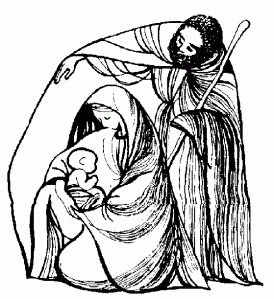
Although I offered a reflection upon the Holy Family at the beginning of my book on prayer, I would like to return to this subject in this post. Reflecting upon the Holy Family, we are not only guided as to what a Christian family should be, but stand convicted in our lives over what it is not. While the modern concept of liberty is often moral license, theirs was responsibility and fidelity. We cater to individualism and a preoccupation with self that runs counter to the claims of familial bonds. The immediate family in the time of Christ was expanded to include aunts, uncles, cousins and others. (Indeed, the brethren of Christ were precisely these other relations.) Catholics realize, or at least should, that our relationship to God and to one another is in the context of family. We are not alone.

While these brief words can only offer a quick brush-stroke on the subject of “family,” a few thoughts might be beneficial. Something is wrong. No amount of beating around the bush or a pretense at greater enlightenment can take away this nagging perception in all segments of society. Determining what is wrong, and for that matter right, is where public debate becomes quickly frozen and polarized.

Politicians clamor about “family values” and then argue about what this means in a pluralistic society. Advocates of alternative lifestyles seek through the media and legislatures to socially engineer the family into something past generations would think unimaginable. It is in the midst of this confusion that we come to terms with that most central of human relationships. If it were not hard enough, even our traditional family units are plagued by communication that is absent or dysfunctional.

God sends his Son that repentant children might be added to his family and given eternal life. And yet, in our sinfulness, we can and often do offer a counter-witness to this truth. I know a couple whose girl ran away at seventeen. She eventually realized her foolishness and sought to return home. However, she discovered the locks changed. Her father had told her that if she went out the door she would not be welcome back. He gave away her clothes and personal things to charity. He would not allow his wife to display her picture. It was as if she had never been born. This couple, with their older daughter, were active in the parish and regularly at Sunday Mass. When their youngest returned to Mass, they refused to sit beside her. They even maligned her to neighbors. I overheard one of her father’s parish friends tell her, “You did it to yourself. You made your own mess, now you have to live with it! This is what tough love means!” Well, yes and no. Tough love means discouraging selfishness and nurturing self-reliance. This was not that at all; it was cruelty. The girl, as it turned out, was not only a foolish teenager, she suffered from bipolar disorder. When I first met her, she was just out of a mental institution and living with her boyfriend and his grandmother. It was either this or the streets. She had nowhere else to go. She had no job because employers did not want a “crazy” girl working for them. When informed of an upcoming family reunion, she decided to attend. Her mother dismissed her at the back door: “You will just embarrass us. I planned long and hard for this party and I will not have you ruin it. Go away.” When her boyfriend smacked her around, she again tried to go home. But they were gone to Europe. The wife confided that with the younger daughter gone, they had regained their freedom, and could finally live for themselves.

As a pastor of souls I have heard many variations of this story. The happy ending of the prodigal son parable is not always revisited in the lives of those who claim to be Christian, and yet, it is precisely the witness that our Lord gave us from the Cross. We read in Colossians, “Because you are God’s chosen ones, holy and beloved, clothe yourselves with heartfelt mercy, with kindness, humility, meekness, and patience . . . Forgive as the Lord has forgiven you” (Colossians 3:12-13). This is the challenge and the transformation for those who would truly be Christian. Neglectful parents today might have astonished the worst sinners and unbelievers of yesterday. Our Lord says, “What father among you, if his son asks for a fish, will instead of a fish give him a serpent; or if he asks for an egg, will give him a scorpion? If you then, who are evil, know how to give good gifts to your children, how much more will the heavenly Father give the Holy Spirit to those who ask him!” (Luke 11:11-13; see also Matthew 7:9-11). A rhetorical question is now a frighteningly real one.

Among those who call upon the saving name of Jesus are those who engage in unlawful sexual activity and infidelity, destroy children in the womb, and discard those labeled defective. Instead of a forgiving love, they harden their hearts against those who share their blood and their name. This is the way it is, not the way it should be, and definitely not the way true believers should want it to remain.

Sirach 3:2-6,12-14 points, not to the parents’ obligations, but to those of children, particularly regarding the 4th commandment stipulation of honoring (obeying) one’s father and mother. But increasingly preachers are forced to confront parents. How can a child honor parents if they are dishonorable? When Jesus demanded, “Call no man your father,” (Matthew 23:9), he precisely meant that true fathers, indeed parents of either gender, are only worthy of the title when their role is reflective of the loving and merciful fatherhood of God. Parents have responsibilities toward those whom they give life. Many churches have to offer remedial instructions for uncatechized but baptized Catholics. Their parents failed to take them to Sunday Mass, to teach them their prayers, and to transmit to them our holy faith. This implies that parents themselves do not believe; nevertheless, they are still culpable for the damage to their children’s immortal souls. Such neglect is a form of child abuse and ranks with murder in the hierarchy of sins.

In return, just as we read in Sirach, children have a lasting obligation toward their parents. When parents grow older and need the support of grown children, it is not merely a matter of charity but of duty. However, such a turn-of-events is increasingly considered an unwarranted burden. I know of cases where the children fight each other, no one wanting to take the personal and immediate responsibility for an elderly parent. The children, in some cases, have learned from the example of their parents all too well. I also know good parents who did little or nothing wrong in raising their children; and yet their brood contains both the holy and the wicked.

Familial roles are not limited to a few years but have lasting consequences and obligations. Mary followed her Son and quietly emerges at various stages of the Gospel and in the public life of Jesus. She was his mother at the Annunciation, at the Nativity, indeed, all the way to the Cross. Love brings with it responsibility and often much worry. Jesus was disowned by many of those who knew him; Mary’s testimony of love and loyalty is one that needs to be ours. She always claimed him. Jesus claims her and gives her to us, his new family, on Calvary. As for good St. Joseph, tradition has it that he died in the loving arms of Jesus and Mary. Perhaps this was God’s greatest gift to this noble man? After all, as our Gospel relates, when an angel told him that Herod was seeking Jesus “to destroy him,” Joseph sought refuge for them in Egypt until it was safe to return. The aged guardian of Mary and Jesus might have found it impossible to remain passive when his adult Son underwent his betrayal and passion. When his earthly role was finished, the foster father to Christ was taken from this world to await his Son and Savior in the abode of the righteous dead.

We need to put on the mind of Christ regarding family life. Can we conceive of God being well pleased with parents who killed their children through abortion? Along with contraception that breeds distrust between spouses, the abortion holocaust has attacked the very nucleus of family life. Pregnancy, once called the “blessed state” is now considered a disease to be medicated away. There is no reconciling such a mentality with that in Psalm 128:1-5 where the psalmist praises the wife as “a fruitful vine.” The child, instead of being prized as a precious gift from God, is considered a tragic accident, a problem to be disposed of as quickly as possible. Freedom, or rather license, as well as economic and upward mobility, is all hindered by the presence of a child. We are forced to think of another’s needs and wants before our own. Some just do not want to do this. Sex is recreation, nothing more. Such a mentality is inherently opposed to the Gospel. When such is the point of view of believers in Jesus, one has to wonder if even their concept of God is counterfeit?

Can we suppose that God cares little about marriage vows made in his name “to death do us part?” No, and yet divorce is at an epidemic high. Alternative living arrangements, including polygamy and homosexual liaisons would dismiss it entirely. Some critics argue that the dilemma is not the loss of the traditional family but rather because we are trying to force old codes of behavior (like the commandments) and expectations upon new forms of familial relationships. This post-Christian group insists that transitory unions are ideal and most reflective of modern experience. Some actually say that people live too long for lasting relationships. Prenuptial agreements posit a theoretical doubt in the permanence of a marriage bond, already. Certain states are considering marriages with easy escape clauses and some have even suggested built-in term limits. Logically, if spouses can separate at will, it would seem that offspring might have similar rights? Several years ago a child attempted to divorce his parents.

For more such reflections, contact me about getting my book, CHRISTIAN REFLECTIONS.

The Message of Life

Although the prophet Micah spoke about the future coming of the Messiah as a prince of peace, the remnant from Israel and Judah would come to largely anticipate a warrior savior (see Micah 5:1-4). They had been conquered and downtrodden. They had paid a heavy price for their infidelity but God had not utterly turned his face from them. Interestingly, they saw themselves punished for compromising their faith and trust in God while throughout the centuries they were mocked by the conquering peoples for their fidelity to the ancient faith and the God of Abraham.
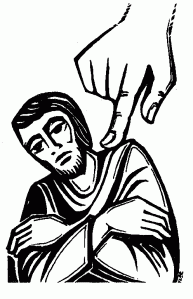
“He himself will be peace” (Micah 5:4). It is true, but the peace of God in Jesus Christ is a gift with which we still struggle and misunderstand. Certainly, one dynamic of it is peace between peoples. But, this is not simply a lack of belligerence. The peace of the Good News is radical and all-embracive. We turn on our televisions and open our newspapers and there are almost daily reports of dead soldiers overseas. Everyone is on guard against terrorists and now it looks like North Korea has a nuke that can reach the West Coast. The new millennium is starting to look an awful lot like the old one. The problem remains the same; there can be no true and lasting peace until there is a change in our minds and hearts. Early Christians prided themselves on not resisting aggression. They turned the other cheek and they announced forgiveness to their murderers in imitation of Christ. They also suffered and died in droves. After about three centuries of facing the sword, fiery stake, cross, and wild beasts, believers took up armaments in the service of a would-be emperor, Constantine. Their bets proved fortuitous and Christianity would emerge as the privileged religion of the empire. However, as history shows us, such a victory would not guarantee perpetual peace and harmony.

What do we mean by “peace?” Despite the collapse of European Stalinism, the Asian communists understand it in two ways. First, it is a ploy used with enemies to insure time and resources in building up an arsenal to wage war. Second, it is the integration of each person as an instrument of the state and such an amalgamation is not complete until the whole world is part of the Marxist mechanism. While there is diversity in Islam, the business about the very word for their religion meaning “peace” is somewhat inexact. Before entering Afghanistan and Iraq, Western leaders almost fell over each other in explaining that our actions were against a few terrorists and dictators, not against Islam. There was no new crusade. Such clarifications were appropriate, even if they did over stress a point. Interviews with Islamic moderates in the U.S. do not reflect the positions of many fundamentalists worldwide. Islam is not all the same. Would we ask an average member of a Baptist congregation about Roman Catholicism? No. A cursory reading of the Koran makes it evident that peace is understood as the submission of all to Islam, if need be with force. Unless it is rejected or mitigated, such a mindset will never acknowledge religious freedom and always stand in opposition to the West. After all, how can one have true peace with the “Great Satan,” a widespread label for the United States? As for ourselves, how do we understand peace? Lack of aggression is certainly part of it, as in our desire for security; and justice is a theme we hear much about as well, but how far do we go to achieve the peace we crave? Pearl Harbor and 9-11 have fueled our mistrust of much of the world. Apart from the politics of late, there is the danger of creating a mentality that perverts a command of Christ, “Do unto others as you would have them do unto you” (see Luke 6:31 and Matthew 7:12). It becomes, rather, “Do unto others before they can do unto you.” This is not purely a global strategy, but how many people live their lives.

The Jewish understanding of SHALOM or peace is a salutation and benediction of friendship and cooperation. It is an invocation of divine blessing, for health, prosperity, and good standing with God. At Mass, Catholics extend the sign of peace to one another. We are one in the Lord. We are all brothers and sisters who should love and care about one another. Peace is the realization of divine love in our lives. At least these understandings are what should be present; however, enmity, a lust for revenge, and various forms of racism can get in the way. Here is the tragedy. Peace is not simply an enemy staying on his side of the fence. It is about the removal of walls and fences. It is about mutual good will and cooperation.

The peace among nations must also reflect a peace among fellow citizens, in the Church, in our neighborhoods, in our families, and in us as individuals. Should it surprise us that when the world is at war that our small part of it should also suffer unrest? Are there people with whom we refuse to associate? Are there family members who have not spoken for years? Did we get mad at someone and deliberately hurt them? Did someone do this to us? Do we pray for our enemies and try to forgive? Do we look for forgiveness from God so as to live in peace with him?

The martyrs of the Church knew the peace of God even when there was nothing left for them to do in defense of their lives. They knew that no matter what the world should strip away from them, they had an imperishable treasure in heaven. They knew that God loved them and that they were friends of Jesus. May we learn this lesson too and know the peace that the world cannot give.

Hebrews 10:5-10 stresses that had there been no Christmas there would have been no Good Friday and Easter. God, himself, took on our humanity that we might share in his divinity (see the prayer for mixing water into the wine at Mass). Jesus enters the human family so that he could offer up his life as an oblation for all the sins of the world. Jesus is the faithful servant who makes his flesh the sign of the new covenant with God. The New Law builds upon and replaces the Old.

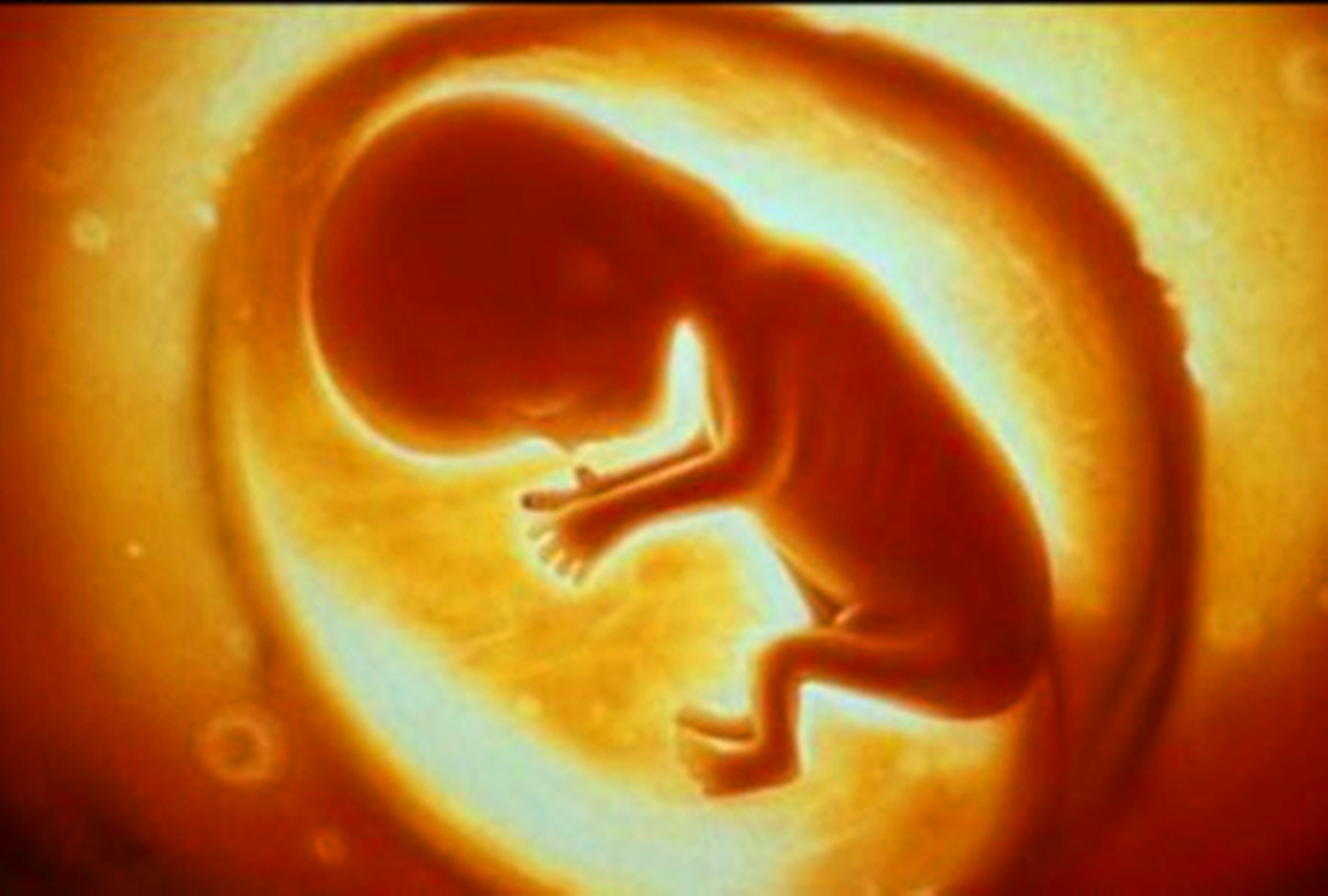
It begins very simply. There is a message from an angel. Then there is the visitation. Mary greets Elizabeth and the unborn John the Baptist leaps in the womb (see Luke 1:39-45). Elizabeth is filled with the Holy Spirit and echoes the Hail Mary prayer, “blessed is the fruit of your womb.” Next she says, “Why should I be honored with a visit from the mother of my Lord?” Elizabeth’s words are very telling and they are affirmed as from the Spirit of God. John’s actions here parallel his activity thirty some years later in the Jordan River when he baptizes Christ. The unborn prophet cannot speak but he moves his mother to speak for him. She affirms that the unborn Christ is already her Lord. Jesus is Lord from the womb. Since he is the Prince of Peace, this gives credence to the late Mother Teresa’s contention that there can be no peace in the world while we are at war with the child in the womb. Every child is a reflection of the Christ-child.

There is a temptation for homilists or preachers during Advent and Christmas to sidestep the pro-life message. Such Scripture readings as this make it hard to do so. Advent speaks against abortion as Christmas is a condemnation of infanticide and partial-birth abortion. Why are priests and deacons silent? Let me relate a personal experience from a few years ago. I mentioned the seasonal pro-life themes at a Christmas Mass. A couple of people stood up during the homily and remained standing throughout the liturgy. Several days later the bishop called in response to a letter. A woman wrote, “My daughter only comes to Mass a couple times a year and this priest ruined it for us! He had no business talking about abortion or saying how anyone guilty of it should go to Confession before receiving communion. My daughter cried all night. She swears that she will never go to Mass again and I will find another church! By the way, this will cost you all our very generous donations!” I think the money element is why I got in trouble. But my conscience was bothered because the purpose of every homily is to promote continued conversion and not the alienation of God’s people. I think I was right, and there was no particular condemnation of anyone, just a proclamation of the Gospel of Life; but, while my head understood, my heart has never stopped grieving for the strayed lost lamb. No names were given and I could not follow up the message, except in prayer.

For more such reflections, contact me about getting my book, CHRISTIAN REFLECTIONS.

An End to Exile

Jeremiah 31:7-9 finds the prophet Jeremiah sitting amidst the ruins of Jerusalem. He had opposed the return of idolatry with his whole being, but it was to no avail. Dismissing his warnings, the false prophet Hananiah got the upper hand with Zedekiah against Babylon. Judah would subsequently be conquered. The chosen people are sent into exile. When they trusted to their own might and made offerings to false gods, they lost everything. Jeremiah speaks a word of hope. If they return to fidelity with God, then God’s mighty arm will save them. Illustrating just how incredible the return to their homeland shall be, he speaks these words for God: “I will gather them from the ends of the world, with the blind and the lame in their midst, the mothers and those with child; they shall return as an immense throng” (Jeremiah 31:8). The most vulnerable among them will be counted with the returning exiles. No new army will accomplish it. Compared to the will and power of God none of the factors against them will matter. Sure enough, after that generation had passed away and his own people murdered Jeremiah, Babylon would not only let them return but function as a benefactor in the reconstruction of Jerusalem and the Temple. However, they would not be a great independent nation again, at least not until the establishment of the modern state of Israel.
Christianity interprets the restitution as coming to completion in Jesus. The long exile, not to the Babylonians, but to death and sin was coming to an end. The devil was losing his grasp upon us. The Messiah comes to give us a share in eternal life and to repair the primordial rift with God. A new nation is established– a new People of God is chosen from among Jews and Gentiles– the Church.

For more such reflections, contact me about getting my book, CHRISTIAN REFLECTIONS.

Not Against Us, With Us

Looking at Mark 9:39-43,45,47-48, the new elders or disciples seem to resent that a stranger might use Jesus’ name to expel demons. Our Lord says, “Do not try to stop him. No man performs a miracle using my name can speak ill of me. Anyone who is not against us is with us” (verses 39-40). The power of God works where it wills. Jesus then makes a quick warning against false prophets, stipulating that any who would lead simple believers astray would best be cast into the sea– literally, better off dead. Jesus is not creating a death penalty for heresy; rather, he is remarking that rendering false teaching puts one under severe judgment from God.
Noting that sin often invalidates the life of virtue and clouds our witness, Jesus utilizes Hebraic hyperbole (exaggeration) in saying if your hand causes you to sin– or your foot– or your eye– cut it off or pluck it out. Short of actually maiming ourselves, our Lord is telling us to avoid sin at all costs. If we are to be nation of prophets, we must repent of sin, believe in the Gospel, and proclaim it to others.

For more such reflections, contact me about getting my book, CHRISTIAN REFLECTIONS.

Something About Fatherhood

Every year we have a secular celebration of Father’s Day. While our culture finds much sentiment, expressed in verse and song for mothers, it does seem that fathers are sometimes cast to the side. The most noble of men find no insult in this, particularly in their children’s devotion to their mothers, because it confirms their good fortune and judgment in finding a companion for life. However, it does behoove us to spend a moment pondering upon the value of the man’s role in the family.

I overheard a woman once say to her friend, “What do I need a husband for, I got my babies and that’s all I wanted.” The statement startled me; it even made me ill inside. The man was reduced to a good time boy or to a sperm donor. What a monstrous notion! Many good and loving women know the true joy in having a special friend in their husbands. Spouses can share their lives, with all their joys and sorrows, knowing that they are not alone. They can also be helpmates in becoming saints. Together, they can raise a family. There are too many fatherless homes. Some cities have made it the rule and the complete family, the exception. A mother is the heart of a home. Is it so terrible that a father might be its head? The fragmentation of family life continues. How can we possibly teach young people about the fatherhood of God if such a role is not modeled in the home and in our society? Fathers are special people and are not dispensable.

Big Brother programs came into existence precisely because there was a need for a fathering role among the young. Some fathers die, and we need to know that their love and prayers are not diminished by death. Some are cast out, and we need to be sympathetic to men denied their rights as parents. Other men run away from their responsibilities, impoverishing their families and denying themselves the joy of participating with God and their wives in nurturing the fruit of marital love– children. The role of St. Joseph as foster father to Christ, chaste husband of Mary, and protector of the Church may be a religious corrective in this regard. Let us esteem and cultivate the prophetic courage of fathers that shows us something of the face of God.

For more such reflections, contact me about getting my book, CHRISTIAN REFLECTIONS.

Realizing the Love of God

Read Matthew 7:7-12 and you will find a line which should never fail to touch us with the absurdity of being harsh to those whom we love. “Would one of you hand his son a stone when he asks for a loaf, or a poisonous snake when he asks for a fish?” Jesus goes on to tell us that if we who are a sinful people know how to give that which is good to our children, just imagine what our Heavenly Father has in store for us.
I wonder though, whether or not Jesus would use this analogy today? It seems that the depravity among men and women has reached such a monstrous point that even the children are no longer safe. Abortion in our society is well into its fourth decade, so commonplace that most of us hardly give it a thought. The papers and television are filled with the news of children being abused both by their parents and by those in whose care they are placed. Recently there was a story about a woman who hired a hit man to kill her husband. Another story told about children placed into animal cages. We are not talking about minor squabbles in families. All these concerns involve murder and abuse. This does not make matters easy for us who try our best in living out Christianity. Jesus taught his friends how to call God, our Father, in the Lord’s Prayer. How do we teach children about a loving Father with situations so bad, with divorce plaguing half of all marriages, or where the mother gives her favors to a different man on any given night? It is not easy.

I would encourage you all, as parents and grandparents, as uncles and aunts, as brothers and sisters, and as friends in Christ, to give the kind of witness which will make the Father’s love believable. Allow that love to shine out and to touch others through you. Do this especially for the children. God knows it is a tough enough world. We can help make it easier for them. They are the future of our nation and Church. We have to invest in them. Jesus understood this well when he said, “Treat others the way you would have them treat you: this sums up the law and the prophets” (Matthew 7:12).

For more such reflections, contact me about getting my book, CHRISTIAN REFLECTIONS.