 It Takes One To Tango
By William Saletan
Sunday, June 10, 2007; Page B02
The article states:
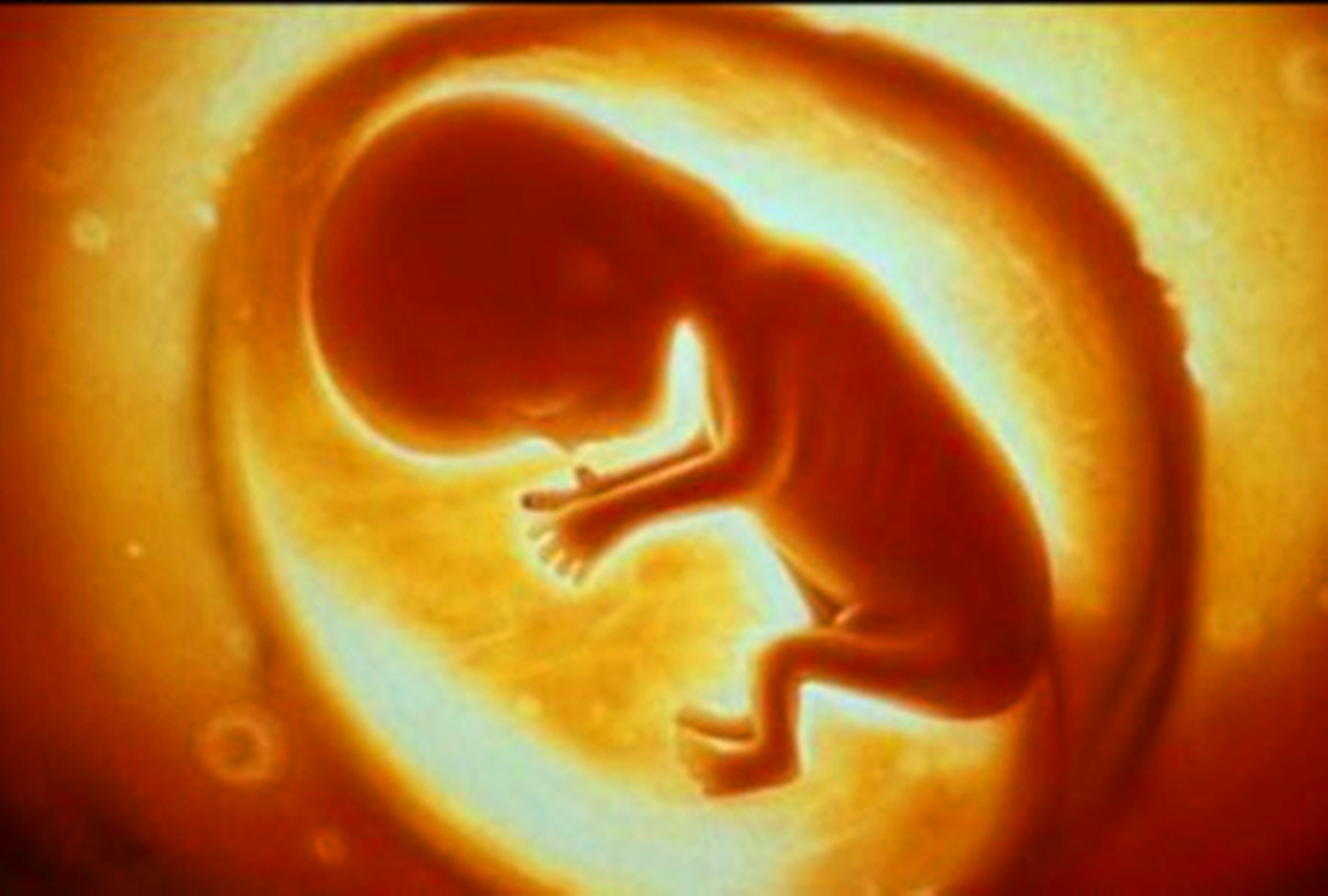
“Still, the process hadn’t been proved in sharks or mammals. And there seemed to be a good reason why. An egg that fertilizes itself makes two identical sets of chromosomes, including sex chromosomes. In birds, snakes and most lizards, two identical sex chromosomes make a male. That allows parthenogenesis to function as a DNA survival mechanism, because an isolated female — close your ears, kids — can produce a son and mate with him. But in sharks and mammals, this wouldn’t work, because two identical sex chromosomes — XX — make a female.”
Virgin birth happens statistically with one in every 10,000,000 human births. The offspring is always a girl, which is further verification of how miraculous was the Christ as a boy. Such was only supernaturally possible.
Goodness, can you imagine the headache and reproach if suddenly a chaste Catholic girl found herself pregnant, without even the benefit of a man and the enjoyment of mortal sin? Who would believe her? As a nun in the cloister she would be forced to surrender her child to adoption. As a layperson, she would face the stigma of being a single mother or racing around to find some noble man willing to marry her and to believe her story, accepting the public blame for a child he did not help conceive.
The article goes on to say:
“Mammals are different. We have a mechanism called imprinting, which foils parthenogenesis. But we’ve also developed an organ that can foil imprinting: the human brain. A few years ago, scientists produced 10 mice, two of them apparently normal, by manipulating a couple of genes so that eggs could fertilize each other. The scientists predicted “even greater improvements in the efficiency of parthenogenetic development in mice,” and they vowed to try next with pigs.”
I am not sure if there are any moral problems with parthenogenetic research in animals. But as for human beings, the notion of taking sperm and genetic DNA material from two females to create a embryo (for research purposes) seems highly suspect and wrong. There are a host of serious questions. One might contend that such efforts at reproduction foil the natural law which requires one man and one woman and the marital act.
However, if parthenogenesis (the fusion of two eggs) already exists in human-beings (although quite rare) then might one argue that enabling such a process is just a promotion of a rare naturally occurrence. Of course, those who terminate pregnancies also claim that they merely do what sometimes happens naturally, miscarriages. My contention would be that a rare statistical event of this sort (parthenogenesis) represents an abnormality and that which is the usual and most frequent instance of reproduction must be considered normative. Further, while human science can change all sorts of parameters, this in itself does not make such research moral. Men can act against their nature and this includes the reduction of human life to a commodity or to a curiosity for medical research and experimentation.
“Will we try parthenogenesis in humans? We already have. Biotech companies are rushing to industrialize it, with one claiming “a dominant patent position in the production of human embryonic stem cells by parthenogenesis.” The stem-cell version of parthenogenesis can’t make babies, but the mouse version might be able to. Theoretically, it would make it possible for two women to create a child together — not a clone, but a mixture of genes from each parent, just like you or me.”
Women might be able to have children together? Given that a number of women only rank the importance of men based upon their abilities to perform from the waist down, this possibility seems to make men largely disposable. Technologies give women devices for various forms of masturbation and now reproductive schemes would grant them “female” offspring. Socially, many women have already made the break, particularly in the households of female single parents. I recall in a liberal minority congregation years ago being told by a woman getting federal and state assistance: “What do I need a man for? I already have my babies!” Men provided entertainment and a stud-service, but nothing else.
Lesbian couples would not have to adopt but could now have children from their own combined DNA. This is a jump from the fusion of two egg cells in a single woman to the forced sharing of genetic material between two. Indeed, there is no scientific reason why genetic information could not be shared from many individuals. Of course, this would quickly represent a new eugenics with designer children. Men could participate, but would be completely optional, unless one wanted a male child.
I see no significant reason why such research should be pursued. The race is not facing immediate extinction.
Filed under: Family, Homosexuality, Marriage, Morality, Pro-Life, Right to Life, Sexuality, Sin | 3 Comments »





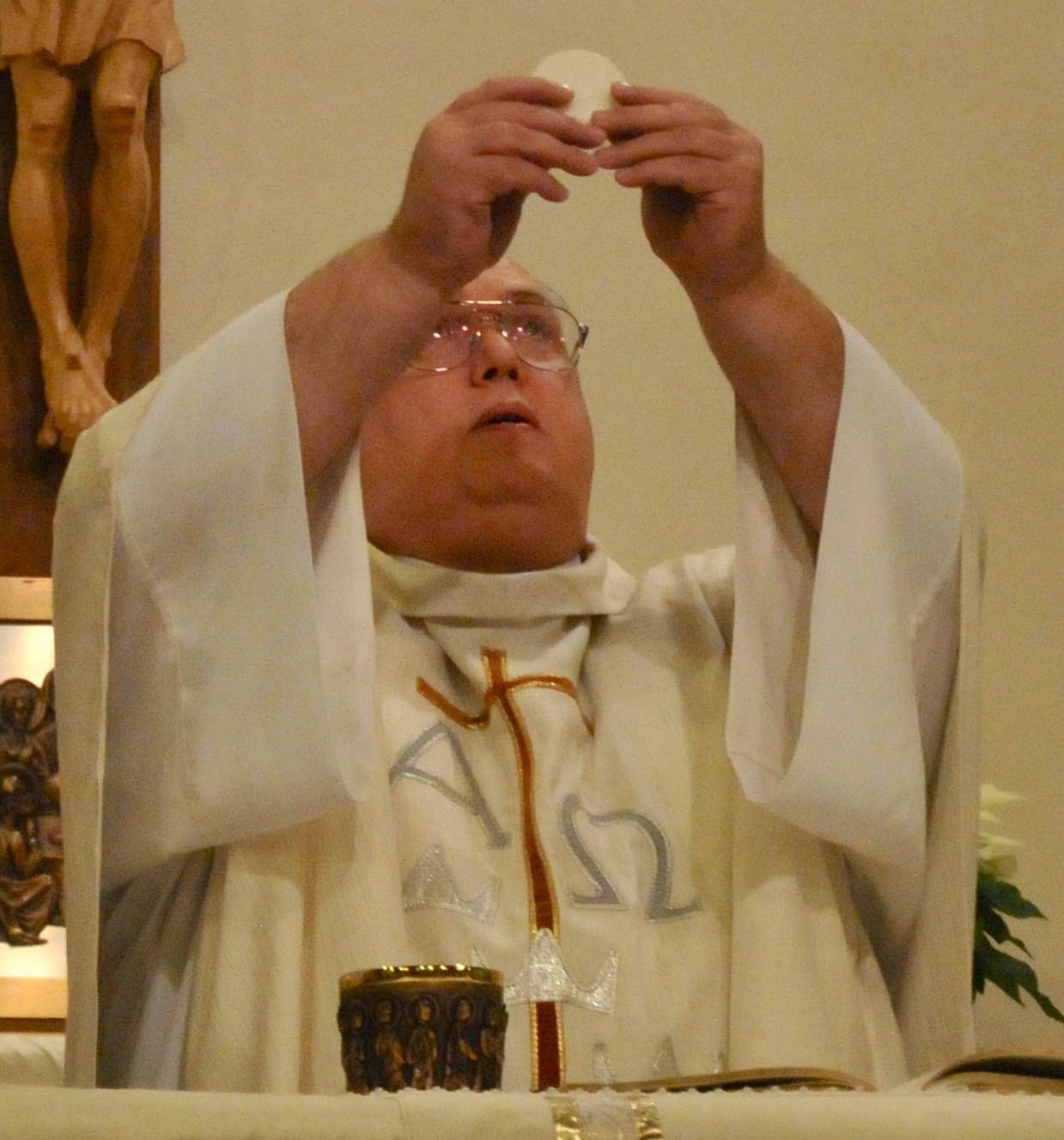












 The altar occupies the central position in the church building and in the liturgical ceremonies. When we walk into God’s house, the prominence of the altar is quite clear. Why is this? It is because the altar represents Christ. The Eucharist is the “summit and source” of our relationship with God. This emphasis is fitting since all things are directed in, with and through Christ. All graces flow from Christ. Thus, it is only fitting that the place, the altar, where all this takes place, should be treated with honor. After God speaks to us in the Scriptures of the Mass, the altar is dressed for the re-presentation of Christ’s death and resurrection. Whenever possible, the corporal (where the sacred species rests), the chalice, the purificator, and the pall, are placed on the altar. Just as the apostles prepared the upper room, so we prepare the altar to do what Christ commanded us to do at the Last Supper. Wine, water and bread are brought to the altar so that the ritual of the Last Supper can be celebrated and the great mystery made present. Jesus took bread and then the chalice to consecrate, giving us his sacramental presence. When the whole ceremony is finished, the altar is cleared for the closing rites and the dismissal of the people. “Go forth, the Mass is ended.” We are now sent out on mission to carry what we did and received into the world of everyday life. Sometimes the altar is incensed, particularly on special solemn occasions. Incense was the sign of honor reserved for the VIPs of old who could afford servants carrying incense before them as they walked the smelly streets (before sewers were invented). It would later go before processions of the Blessed Sacrament, honoring Jesus Christ. Now it is a mark of honor for the altar and also a sign that our prayers ascend (like smoke) and with pleasing fragrance to God. The people on occasion are also incensed as a sign of their own high dignity at being one with Christ in the Mystical Body. It is also a sign that God is pleased with our prayers which ascend to him. The altar is kissed before and after the Mass, signifying our greeting Christ which the altar represents. The altar can be fashioned in such a way that it resembles a table from whence the food which is Christ comes to us. It can also be shaped like a coffin or tomb to remind us of the death-resurrection of Christ that is made present. Relics of the saints and martyrs are imbedded in the altar, sealed in the altar stone, to remind us that martyrs resemble Christ in laying down their lives and are in a profound union with him. “Greater love than this no man has when he lays down his life for his friends” (John 15:13). When you enter a church, look to the altar and believe what happens there.

















 Blogger Priest