
• Our Blogger

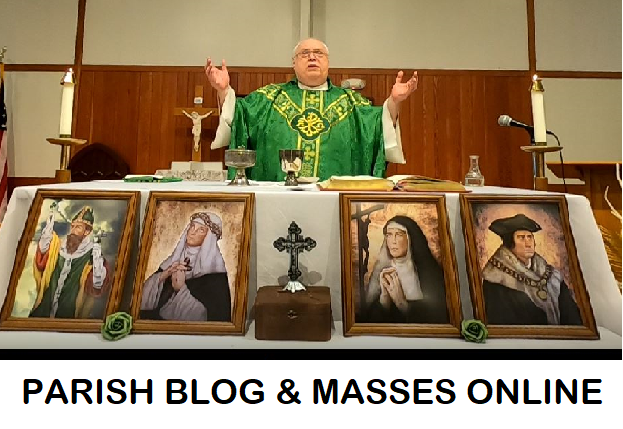
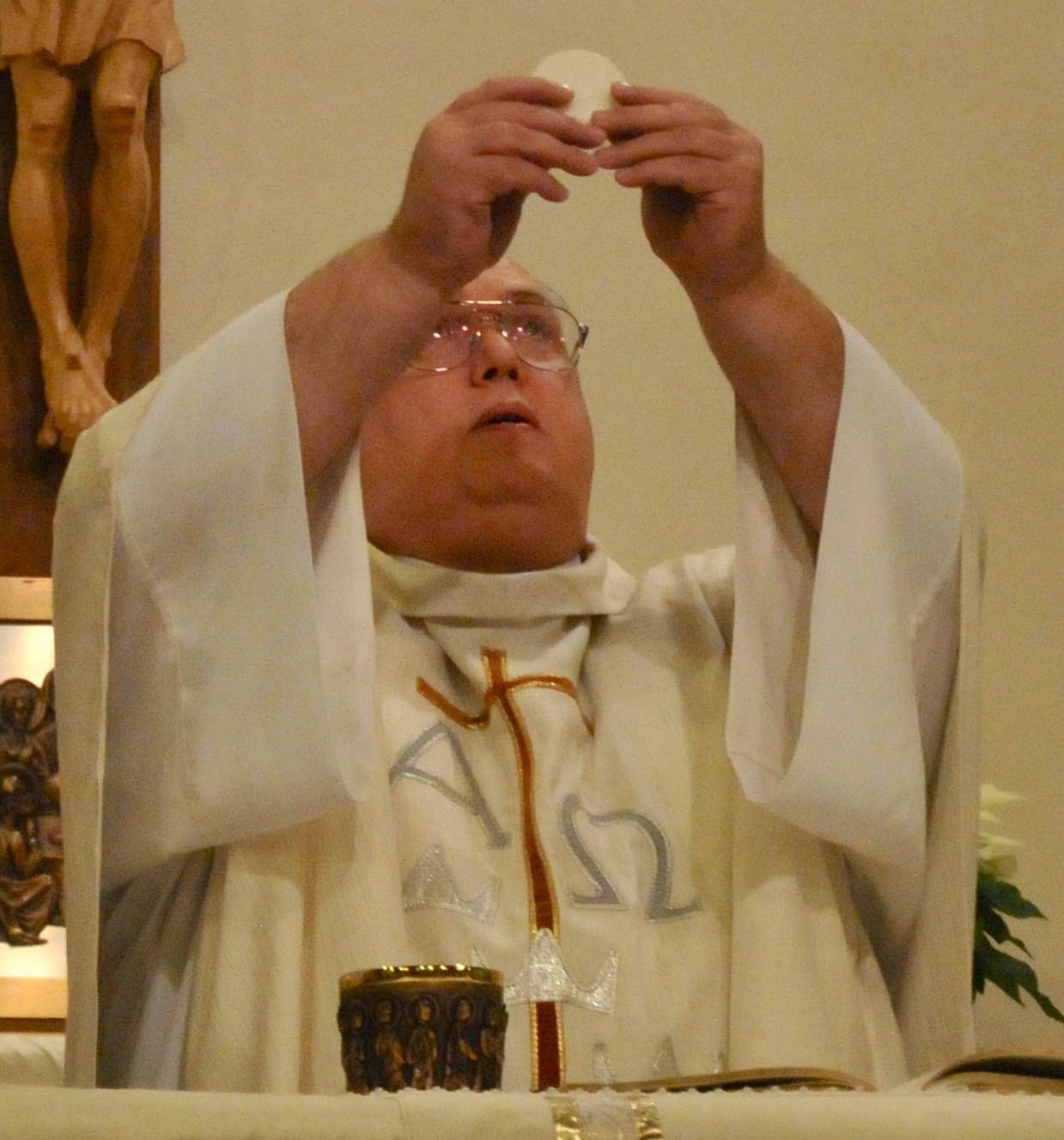
    Fr. Joseph Jenkins

  • The blog header depicts an important and yet mis-understood New Testament scene, Jesus flogging the money-changers out of the temple. I selected it because the faith that gives us consolation can also make us very uncomfortable. Both Divine Mercy and Divine Justice meet in Jesus. Priests are ministers of reconciliation, but never at the cost of truth. In or out of season, we must be courageous in preaching and living out the Gospel of Life. The title of my blog is a play on words, not Flogger Priest but Blogger Priest.

  • Archives

  • Categories

  • Recent Posts

  • Recent Comments

    Anonymous's avatarAnonymous on Ask a Priest
    Michael J's avatarMichael J on Ask a Priest
    Jeremy Kok's avatarJeremy Kok on Ask a Priest
    Mike Zias's avatarMike Zias on Ask a Priest
    Jeremy Kok's avatarJeremy Kok on Ask a Priest

The Church & Priests

ANTI-CATHOLIC ASSERTION

Catholics think they can buy their way into heaven and the Church exploits them in this regard.

Matthew 23:14: “Woe unto you, scribes and Pharisees, hypocrites! For ye devour widows’ houses, and for a PRETENSE make long prayer; therefore ye shall receive the greater damnation.”

1 Peter 1:18,19: . . . not redeemed with corruptible things, as SILVER AND GOLD . . . But with the precious blood of Christ, as of a lamb without blemish and without spot.

CATHOLIC TRUTH

Donations are made to all churches, and yet, give something to a Catholic church, and the bigot will quote these verses and decry the Church’s greed and corruption. It is a double standard. Stipends are often given priests for saying Mass intentions; however, such is a gift and the Masses would be offered all the same even without them. Money collected for the pamphlet rack, for religious items, or for votive candles go back into replenishing supplies.

Compare the large homes and life-style of many ministers to the poverty of most priests! This in itself exposes the lie. The Church universal has many resources, but much of it is in terms of buildings, artifacts, and precious works of art. She maintains these things for the good of the Church and for the enrichment of human civilization.

ANTI-CATHOLIC ASSERTION

Priests are given the title “Father” in direct opposition to Christ’s demand. God himself is our Father, and no mere man can usurp his role.

Matthew 23:9: “And call no MAN your father upon the earth: for one is your Father, which is in heaven.”

John 8:41: “. . . we have one Father, even God.”

CATHOLIC TRUTH

I wonder what such a fellow called his male parent, “Hey you”? He knows nothing of Hebraic Hyperbole and the ways in which Jews used language for emphasis. He readily dismisses the spiritual role of a priest as a father of souls and as a confessor. This one critic went so far as to say that unless the priest can repudiate this stand Scripturally, according to his own terms, have no more to do with him. Here is where I want to make my brief corrective. The meaning of the verse is to place no trust and fatherhood over that of Almighty God. It should be noted that even St. Paul refers to his role as a spiritual fatherhood. The title of affection given to priests simply continues this apostolic tradition. (More about this in the next topic.)

ANTI-CATHOLIC ASSERTION

The Catholic faith is disproved by the Scriptures and all would be well advised to leave her before it is too late. All true Christians will remain faithful to Jesus and not to any Pope or to any contrived doctrines of men. Come out of her and accept Jesus as your personal Lord and Savior.

Revelation 18:4: “Come out of her, my people, that ye be not partakers of her sins, and that ye receive her plagues.”

CATHOLIC TRUTH

The Catholic faith is verified by a careful and honest reading of Scripture. The deposit of faith is guarded by the Church and certain doctrines develop over time, but nothing new is invented. The verse in question could more easily be applied to non-Catholic churches, particularly those which espouse a doctrine of hate and ignorance against others.

ANTI-CATHOLIC ASSERTION
The Catholic Church has no authority to put aside God’s laws. You need no corrupt teaching authority outside the Bible to tell you what it means. The Holy Spirit will guide you in all truth. Papal infallibility is another construct to imprison the minds and consciences of people.

2 Peter 1:19-21: We have also a more sure word of prophecy; whereunto ye do well that ye take heed, as unto a light that shineth in a dark place, unto the day dawn, and the day star arise in your hearts: Know this first, that no prophecy of the scripture is of any PRIVATE interpretation. For the prophecy came not in old time by the will of man: but holy men of God spake as they were moved by the Holy Ghost.

Galatians 1:6-8: I marvel that ye are so soon removed from him that called you into the grace of Christ unto another gospel: Which is not another; but there be some that trouble you, and would pervert the gospel of Christ. But though we, or an angel from heaven, preach another gospel unto you than that which we have preached unto you, let him be ACCURSED.

CATHOLIC TRUTH

The fracturing of Christianity invalidates the interpretation that certain Fundamentalists give to these bible passages. The Holy Spirit does indeed protect the teaching authority instituted by Christ to insure that we continue to walk in Christ’s ways. Otherwise, all would be an ocean of confusion. The Church has a two thousand year legacy; Jesus did not abandon the Church until some “John Doe” came about in the present to reinvent it. The condemnation, the anathema of God, comes down upon those who attack and deride the ancient Catholic Christian People of God.

Priests Forbidden to Marry

ANTI-CATHOLIC ASSERTION

Any prohibition against the good of marriage is from the devil!

Now the Spirit explicitly says that in the last times some will turn away from the faith by paying attention to deceitful spirits and demonic instructions, through the hypocrisy of liars with branded consciences. They forbid marriage and require abstinence from foods that God created to be received with thanksgiving by those who believe and know the truth. For everything created by God is good, and nothing is to be rejected when received with thanksgiving, for it is made holy by the invocation of God in prayer (1 Timothy 14:1-4).

CATHOLIC TRUTH

These words refer to a false asceticism and not to the practices of Catholic Christianity. The early Church, well into the Patristic period, had to deal with cults and movements which made all sorts of exaggerated claims and required various austere practices. Some urged a return to Jewish dietary laws. Others wanted to go even further with fasting and abstinence, perpetually destroying joy in the goods of creation. There were even movements which urged strict celibacy upon all the members as the only way to enlightenment and salvation. The Catholic position is quite different. Our use of fasting and abstinence is not perpetual and it is not a rejection of certain foods as unclean or unworthy of man. Rather, their absence, to coin a cliché, is to make the heart grow fonder. It is precisely because something like meat is good that we might temporarily abstain. Jesus himself fasted and prayed in the desert and alluded to it in the future as something his followers would do. As for marriage, Catholics believe that Christ raised it up to the level of a sacrament, a special sacred sign of his relationship as the bridegroom to his bride, the Church. It is a mysterious means of encountering the Lord himself and receiving grace. Obviously, if such is the Catholic view, we would not be seeking to degrade it by our practice of celibacy. Priests and religious vow celibacy freely, not because marriage is bad, but because it is very good. Celibacy becomes a wonderful gift, freely embraced, as a sacrifice for God and his holy people. Jesus was celibate. St. Paul not only practiced it but encouraged it. The celibate priest becomes a sign of contradiction reflecting the kingdom of Christ to a hedonistic world. It is not a rejection of love, but a selfless abandonment to divine love as manifested in service to God’s people, the Church. It is not a calling for everyone, just as not everyone is called to priesthood or consecrated life. The majority of people seek holiness in marriage and family life.

ANTI-CATHOLIC ASSERTION
The Catholic Church claims its apostolic line through Peter and yet he was married, something not allowed for popes today.

And when Jesus had come into Peter’s house, he saw Peter’s mother-in-law lying in bed, sick with a fever (Matthew 8:14). Now Simon’s mother-in-law was keeping her bed sick with fever, and they immediately told him about her (Mark 1:30). But he rose from the synagogue and entered Simon’s house. Now Simon’s mother-in-law was suffering from a great fever, and they besought him for her (Luke 4:38).

CATHOLIC TRUTH

These references to Peter’s mother-in-law do indicate that Peter was married; although her absence from these texts might lead one to think that she experienced some mishap or might have been away. 1 Corinthians has Paul discussing his power to lead about a wife like Cephas (Peter) and there is a tradition that she was an early Christian martyr. But there is really very little we know about her. Be this as it may, the Catholic Church has never hidden the fact that Peter and other religious leaders of the Church were married. Indeed, the Catholic Church had a selective married clergy all the way up to the 12th century. The Fourth Lateran Council was quite decisive in mandating compulsory celibacy for any who would be priests of the Roman or Western Rite. The Eastern rites of the Catholic Church, to this very day (in Europe and the Far East) have an optional married clergy. These priests are in full union with Rome. Also, in our own nation many Protestant clergy, Lutheran and Episcopal, have entered into the Roman Catholic priesthood, even though they are married and have families. Those who are raised in the Western rite realize that celibacy is a special gift and a particular charism of our priestly experience. It is a sign of a wondrous single-hearted love. One of the fruits of this sacrifice is the availability that a priest can give to his prayers, study, and service. Any indication that Peter’s married state would affect apostolic succession is a low blow. Those who followed Peter had a spiritual and not a physical affinity to the great apostle. While the Church has known nepotism, such is the exception and not the rule. No one forces a young man to become a priest or brother. There is no coercion for a woman to become a nun. They know that vows of poverty, obedience, and celibacy are part of the package. If God gives a person a vocation in the Catholic Church, we believe that he will give him the graces and gifts to follow this life. The majority of men who leave the priesthood to get married ultimately have failed marriages. Promises are made to be kept. The problem is not the Church or God; the dilemma is people who are unwilling to surrender their lives fully to Christ. Marriage is also a sacrifice, amidst the joys. However, if we trust God and walk with him, he will guide our path.

ANTI-CATHOLIC ASSERTION

Paul was single but thought we should have the freedom to marry. Catholics are too strict.

Do we not have the right to take along a Christian wife, as do the rest of the apostles, and brothers of the Lord, and Kephas? (1 Corinthians 9:5).

CATHOLIC TRUTH

The Catholic Church also recognizes the right of people to get married. However, the Church has a right of her own to regulate her ministries. Permanent deacons, Extraordinary Ministers of Holy Communion, Catechists, Lectors, Acolytes, and Lay Evangelists and Ministers all serve the Church and may be married. Would the anti-Catholic demand compulsory matrimony? I hope not. Those who opt for priesthood in the Roman Rite also freely embrace celibacy. This is no less than what St. Paul did. After listing all the various rights that a follower in Jesus possesses, he acknowledges that he has chosen not to use these rights for himself.

After listing the right to marry among many other freedoms, St. Paul says:

Yet we have not used this right. On the contrary, we endure everything, so as not to place an obstacle to the Gospel of Christ. … I have not used any of these rights, … (1 Corinthians 9:12,15).

After speaking about marriage:

This I say by way of concession, however, not as a command. Indeed, I wish everyone to be as I am, but each has a particular gift from God, one of one kind and one of another. Now to the unmarried and to widows, I say: It is a good thing for them to remain as they are, as I do, … (1 Corinthians 7:6-8).

Advice to virgins and widows:

Now in regard to virgins, I have no commandment from the Lord, but I give my opinion as one who by the Lord’s mercy is trustworthy. So this is what I think best because of the present distress: that it is a good thing for a person to remain as he is. Are you bound to a wife? Do not seek a separation. Are you free of a wife? Then do not look for a wife. If you marry, however, you do not sin, nor does an unmarried woman sin if she marries; but such people will experience affliction in their earthly life, and I would like to spare you that. I tell you, brothers, the time is running out. From now on, let those having wives act as not having them, those weeping as not weeping, those rejoicing as not rejoicing, those buying as not owning, those using the world as not using it fully. For the world in its present form is passing away (1 Corinthians 7:25-31).

More on virginity:

So then, the one who marries his virgin does well; the one who does not marry her will do better (1 Corinthians 7:38).

About a widow:

She is more blessed, though, in my opinion, if she remains as she is, and I think that I too have the Spirit of God (1 Corinthians 7:40).

Celibacy as a sign of the kingdom:

His disciples said to him, “If the case of a man with his wife is so, it is not expedient to marry.” And he said, “Not all can accept this teaching; but those to whom it has been given. For there are eunuchs who were born so from their mother’s womb; and there are eunuchs who were made so by men; and there are eunuchs who have made themselves so for the sake of the kingdom of heaven. Let him accept it who can” (Matthew 19:10-12).

Priests & Sacrifices

ANTI-CATHOLIC ASSERTION

There is no need of Catholic priests or of the sacrifice of the Mass, we have Christ and all is accomplished on the Cross already.

Hebrews 7:27: He has no need, like those high priests, to offer sacrifices daily, first for his own sins and then for those of the people; he did this once for those of the people; he did this once for all when he offered up himself.

CATHOLIC TRUTH

While there was no requirement for daily sacrifice in the law of Moses, such a feature was prescribed for the Day of Atonement. Of course, what we can readily contrast are the repeated sacrifices of the Hebrews and the singular oblation of Jesus. True atonement could not be achieved by their sacrifices, and yet, such was expected between the fallen creature and his Creator. Indeed, the practice of making sacrifices, even in pagan religions, shows that there is an innate awareness of this responsibility imprinted upon nature itself. The sacrifices of the Old Testament are in preparation for and point to the redemptive Cross. Chosen by God, the Jewish people were made righteous by their faith and fidelity to the covenant; and yet, even their beloved dead, preserved from the fires of hell, would have to await the descent of our crucified Lord before entering into paradise. As the catechisms explain, Christ took upon his shoulders the death we deserved and the heavy burden of sin. He conquers them, but they have yet to be undone in human history. The gates of heaven are opened and as our Mediator, Jesus makes possible our entry into the heavenly home.

Apart from Christ, any human sacrifice was only of a finite measure and could not make full reparation for the infinite dishonor against God caused by the primordial sin and our subsequent collaboration through personal sin.

The Eucharist or Mass is the Christian’s sacramental way of making himself present to the great mystery of Calvary. Christ dies ONCE and FOR ALL; however, this saving mystery is extended through space and time by the Eucharist. Christ has died and will never die again. We do not have Christ killed upon our altars again and again. The Mass makes time travelers of us all, albeit through sacred signs. We see the image of a cross or crucifix, but it is the altar-table which most resonates with the Cross of Christ. We see a priest at the altar and yet he acts in the person of Christ, the head of the Church. The cultic language of the Last Supper links it with his saving death. We see many different men function as priests, and yet their priesthood participates in the ONE PRIESTHOOD of Jesus Christ. He is the high priest of the Catholic Christian faith. The only difference from the initial historical death of Christ and its actual re-presentation in the Mass is our ability now to join ourselves to him. We can surrender ourselves along with Christ, joined inextricably to him, as one perfect sacrifice to the heavenly Father. We are faithful, generation after generation, in keeping his great command: “Do this in remembrance of me” (see Luke 22:19; 1 Corinthians 11:23-25). This “anamnesis” is a living memory, making present that which is recalled and signified.

Confession to a Priest & Petitioning Saints

ANTI-CATHOLIC ASSERTION

Sins and needs are to be confessed only to God.

[Confession to God] If we acknowledge our sins, he is faithful and just and will forgive our sins, and cleanse us from every wrongdoing (1 John 1:9).

[The Our Father] “And forgive us our debts, as we forgive our debtors” (Matthew 6:12).

[One Mediator, not the saints, the Pope, or the priests] For there is one God. There is one mediator between God and the human race, Christ Jesus, himself human, who gave himself as ransom for all (1 Timothy 2:5). But if anyone does sin, we have an Advocate with the Father, Jesus Christ the righteous one (1 John 2:1).

CATHOLIC TRUTH

Two practices are involved under this heading: the confession (of sins) to a priest and the making of petitions to Mary and the saints. While they are very different topics, they are often linked in attacks because both involve the approach to someone other than Jesus. Catholics go to a living priest for the Sacrament of Penance. We pray to the living saints in heaven for their intercession and prayers to God. The fundamentalist has trouble with intermediaries. He insists that we must go directly to Jesus and to Jesus alone. Outside of the sacraments, some insist that we cannot even ask the living (in this world) for solidarity in prayer. Their view of a personal and privatized faith becomes so extreme that every believer becomes an isolated Church of one. Catholicism recognizes that we are not alone. Our priests perpetuate the ministry of Jesus and apply his mercy to our lives precisely as members of the Church, something larger than ourselves. Our recourse to the communion of the saints testifies to our confidence in the resurrection. Death does not destroy the bonds forged in life. Indeed, the saints are alive and remain members of the Church who have made it. They live in glory. They are where we hope to go. They have become what we seek to be. Jesus uses human priests to bring his forgiveness to the Church. Jesus allows the saints in heaven to pray for and with the Pilgrim Church on earth.

The use of 1 Timothy is quite interesting because the anti-Catholic apologist affirms the value of good works in fidelity and love to Christ: “But whoever keeps his word, the love of God is truly perfected in him. This is the way we may know that we are in union with him: whoever claims to abide in him ought to live [just] as he lived” (1 Timothy 2:5-6). I would suspect that he would not like this message very much. As usual, none of his citations contradict Catholic faith. Sins can be forgiven, even outside of the sacrament of Confession. However, one must still admit sinfulness, be sorry, and offer an act of contrition. The sacrament is a special and certain way we receive God’s mercy. The Church reserves to herself the confession of certain serious sins so that we may assuredly be forgiven, receive the graces to amend our life, repair the rift caused by sin in the Mystical Body, and receive appropriate counsel. Because of his configuration to Christ, the absolution of the priest in Confession resonates in perfect harmony with the expiation of the Cross. Christ forgives our sins. He has extended something of this authority to his Church as an element of his abiding and healing presence. The anti-Catholic critic has trouble with Confession for the same reason that he cannot abide the general ministry of priests, the authority of the Pope, and the intercession of the saints: his is an intensely privatized faith which makes no concession to a church other than periodic fellowship. Churches, as long as they are not Romanized, are interchangeable and maybe even considered unnecessary. Such is a theology incompatible with the Scriptural view of the Church as the new People of God or the new Israel or Jerusalem.

[Precedent in the Old Testament] The Lord said to Moses: “Tell the Israelites: If a man (or woman) commits a fault against his fellow man and wrongs him, thus breaking faith with the Lord, he shall confess the wrong he has done, restore his ill-gotten goods in full, …” (Numbers 5:5-7). He who conceals his sins prospers not, but he who confesses and forsakes them obtains mercy (Proverbs 28:13).

[David confessed his sins to Nathan the prophet and was given assurance of pardon] Then David said to Nathan, “I have sinned against the Lord.” Nathan answered David: “The Lord on his part has forgiven your sin: you shall not die” (2 Samuel 12:13).

[Responding to John the Baptizer] Then there went out to him Jerusalem, and all Judea, and all the region about the Jordan; and they were baptized by him in the Jordan, confessing their sins (Matthew 3:5-6).

[Responding to the Apostles] Many of those who had become believers came forward and openly acknowledged their former practices (Acts 19:18).

[Ordained ministers exert Christ’s forgiveness over sins] So we are ambassadors for Christ, as if God were appealing through us. We implore you on behalf of Christ, be reconciled to God (2 Corinthians 5:20). He therefore said to them again, “Peace be to you! As the Father has sent me, I also send you.” When he said this, he breathed upon them, and said to them, “Receive the Holy Spirit; whose sins you shall forgive, they are forgiven them; and whose sins you shall retain, they are retained” (John 20:21-23). “Amen I say to you, whatever you bind on earth shall be bound also in heaven; and whatever you loose on earth shall be loosed also in heaven” (Matthew 18:18). And all this is from God, who has reconciled us to himself through Christ and given us the ministry of reconciliation, namely, God was reconciling the world to himself in Christ, not counting their trespasses against them and entrusting to us the message of reconciliation (2 Corinthians 5:18-19).

I will address the matter of Mary and the saints elsewhere.

For more such reading, contact me about getting my book, DEFENDING THE CATHOLIC FAITH.

Priests Forgiving Sins

ANTI-CATHOLIC ASSERTION

Our sins are forgiven already in Christ, we have no need of confessing our faults to any mere man. We can appeal directly to Jesus our Savior and be forgiven.

Mark 2:5-11: “Why does this man speak thus? He blasphemes, who can forgive sins, but God.”

CATHOLIC TRUTH

Such was the verdict of the Scribes in repudiating Christ’s role as the Messiah, his testimony and authority, and ultimately his divinity. Little did they know— Christ was indeed the unique Son of God who had come to save his people. Similarly, those who discount the role of priests today stand in the role of the ancient Scribes in discounting the full ramifications of God coming upon us. Christ’s ministry of forgiving sins is perpetuated in the Church, particularly in the priests who have been specially configured to Christ for this purpose. If Christ’s mercy were a one-time deal or a general affair, then why did he spend so much time going out to individuals, liberating them from demons and forgiving their sins? Why then would he give Peter the power of the keys and explicitly tell him and the other apostles that they might loosen and bind from sin? “‘I will give you [Peter] the keys to the kingdom of heaven. Whatever you bind on earth shall be bound in heaven; and whatever you loose on earth shall be loosed in heaven’” (Matthew 16:19-20). When speaking about the referral of a sinful brother to the Church, Matthew repeats this teaching: “‘Amen, I say to you, whatever you bind on earth shall be bound in heaven, and whatever you loose on earth shall be loosed in heaven’” (Matthew 18:18). Only God can forgive sins, but he has made priests living vehicles, instruments of his mercy. After his death, the resurrected Lord appeared to his disciples, and the context makes clear that we are talking about his apostles in the locked upper room. Christ extends his peace to them: “‘As the Father has sent me, so I send you.’ And when he had said this, he breathed on them and said, ‘Receive the holy Spirit. Whose sins you forgive are forgiven them, and whose sins you retain are retained’” (John 20:21-23).

Acts 10:43: “To Him all the prophets bear witness, that through His name all who believe in Him may receive forgiveness of sins.”

CATHOLIC TRUTH

These words belong to Peter and come just before he is challenged for entering the homes of uncircumcised Gentiles and the issue of their baptism. People given the saving faith of Jesus come to baptism which brings forgiveness of sins. The sacramental life, and especially confession, makes possible our steadfastness in God’s grace and mercy. The absolution prayer used by the Church today acknowledges that it is “through the death and resurrection of his Son” that reconciliation is made with God. Further, the Holy Spirit continues to work among us “for the forgiveness of sins.” Then it takes note that Christ continues his saving work “through the ministry of the Church,” and we invoke the Almighty to shower upon the penitent his “pardon and peace.” Speaking in the first person, as he does at the altar during the Mass consecration, the priest absolves the person of his sins in the holy and triune “name” of God.

For more such reading, contact me about getting my book, DEFENDING THE CATHOLIC FAITH.

Baptism & Born Again

ANTI-CATHOLIC ASSERTION

This spiritual decision for Christ cannot be identified with water baptism or with any so-called saving works and certainly there is no foundation for infant baptism.

John 3:3,7: Jesus answered him, “Truly, truly, I say to you, unless one is born anew (again), he cannot see the kingdom of God. . . . Do not marvel that I said to you, ‘You must be born anew.’”

CATHOLIC TRUTH

This spiritual rebirth is intensely important for Catholics. Ours is no juridical imputation of righteousness; rather, we are literally remade into a new creation. Deleted from the pericope by our protagonist is this line, “That which is born of the flesh is flesh, and that which is born of the Spirit is spirit” (John 3:6). Faith in Jesus and an abiding trust and obedience to him brings us to the baptismal font. The Scripture citation here is still incomplete. It also states, “Truly, truly, I say to you, unless one is born of water and the Spirit, he cannot enter the kingdom of heaven” (John 3:5). The font of life-giving waters is known as the “tomb and womb” of the Church. We die to our old self, to sin; and we are reborn to Christ and the life of grace. We become temples of the Holy Spirit and are configured to Christ’s likeness as adopted sons and daughters of God. Our rite of initiation is not circumcision, but baptism into the name of the Trinity. Faith and baptism also makes us members of the new People of God, the Church of Christ. This theme of unity has always been important among the faithful. The Scriptures themselves narrate that sometimes whole households were converted to the faith (see Acts 16:15; 16:33; 1 Corinthians 1:16). During this period and again with the development of second penance and regular confession, babies were also brought forward for initiation. The bond joining the members of Christ’s body was understood to be so intimate and important that parents and sponsors could make a profession of faith for a child who had not yet reached the age of reason. Mortality rates being high, this was of crucial emotional importance to parents and had eternal ramifications for the children. Jesus himself had urged, “Let the children come unto me, and do not hinder them.” Over time, the final anointing of the baptismal ceremony (Confirmation) was separated from the first part, often reserved for the visiting bishop. Similarly, first Eucharist was also delayed until the child was older.

When records are not available or when there is some doubt of validity, the Catholic Church will offer a conditional baptism to candidates seeking entry into the believing community. However, if their prior Baptism in a Protestant community is deemed authentic, then they make an act of reception and subsequently receive Confirmation and Holy Communion. Baptism is a one-time sacrament which forever configures a person to the Lord. Technically, we equate the “born again” experience with baptism, although it can be personally affirmed with confirmation and a fuller sharing in the gift of the Holy Spirit. We might also experience exaltation at prayer which can give an emotional high or a special satisfaction to our faith. Christians baptized in the Catholic Church, even as infants, who seek and receive baptism in Protestant churches are in fact disavowing their prior baptism. What they are saying is that our baptism is null-and-void and that Catholics are neither Christians nor “saved,” using their language. This distortion of the truth is a terrible happenstance. Catholics were the first Christians and Catholicism is the TRUE Church. We love and pray for our Protestant brothers and sisters; we join their chorus in praising God for giving us such a wondrous redeemer as Christ; however, we cannot rejoice in the ignorance of our own or the bigotry of others which steals from our ranks.

For more such reading, contact me about getting my book, DEFENDING THE CATHOLIC FAITH.

Jesus the Way

ANTI-CATHOLIC ASSERTION

We become children of God by accepting Jesus as our Savior; nothing is said about the church. The church is only a fellowship structure to hand down the truth about our need for salvation. Jesus does not say that the church is the way or that no one comes to him except through the church. Jesus alone is the way!

John 14:6: Jesus said to him, “I am the way, and the truth, and the life; no one comes to the Father, but by me.”

CATHOLIC TRUTH

Jesus here speaks of himself as “the way and the truth and the life.” The critic above quoted this text to illustrate that the Church is only a bearer of the proclamation and that Jesus alone is the way to salvation. This viewpoint shows a terrible ignorance of the Scriptures. The “way” would come to refer, not only to Jesus, but to Christianity and to the Church herself (Acts 18:25; 9:2; 19:9,23; 22:4). Christ, indeed, is the way to the Father; his exodus from darkness to light opens the road to salvation for all of us. We are invited to travel that road; such is our participation with Christ. The Church comes to be understood as also the way because she has, in actuality, taken this road.

We find something of this in 1 Peter 2:9:

But you are a chosen race, a royal priesthood, a holy nation, God’s own people, that you may declare the wonderful deeds of him who called you out of darkness into his marvelous light. Once you were no people but now you are God’s people; once you had not received mercy but now you have received mercy. Beloved, I beseech you as aliens and exiles to abstain from the passions of the flesh that wage war against the soul.

Often read at funeral liturgies, we have the text of 2 Corinthians 5:1-7:

For we know that if the earthly tent we live in is destroyed, we have a building from God, a house not made with hands, eternal in the heavens. Here indeed we groan, and long to put on our heavenly dwelling, so that by putting it on we may not be found naked. For while we are still in this tent, we sigh with anxiety; not that we would be unclothed, but that we would be further clothed, so that what is mortal may be swallowed up by life. He who has prepared us for this very thing is God, who has given us the Spirit as a guarantee. So we are always of good courage; we know that while we are at home in the body we are away from the Lord, for we walk by faith, not by sight.

Moving to 1 Corinthians, we read in the context of the roles and gifts in the Church:

But earnestly desire the higher gifts. And I will show you a still more excellent WAY (12:31).

The Church is where we find ourselves in the earthly pilgrimage. It is by means of her divine mysteries as the great sacrament of salvation that we encounter Christ. Imbued with the presence of her Savior, the Church is the new chosen People of God. She is inseparable from her Lord and Redeemer. Christ’s way is illumined by her presence in the world. Christ’s truth is fearlessly proclaimed in a world that still counts the Gospel as foolishness. Christ’s offer of eternal life is realized in her saints and all life is defended from the womb to the tomb. Without the Church, we would be an orphaned people, quick to lose our way.

1 Timothy 2:5: For there is one God, and there is one mediator between God and men, THE MAN CHRIST JESUS, who gave himself as a ransom for all.

Okay, Catholics also believe that Jesus is the Mediator and Redeemer. The role of Mary, the saints, and the believing Church does not diminish this truth. Just a few verses earlier, the words of Paul attest to this much:

First of all, then, I urge that supplications, prayers, INTERCESSIONS, and thanksgivings be made for all men (1 Timothy 2:1).

I am at a lost as to how the anti-Catholic critic could have missed this; no doubt, his agenda of hatred blinded him to the truth. Indeed, given this context, it is understood that this intercessory liturgical prayer can also be made for pagans and it receives its efficacy from the presence of the saving Lord within the community of salvation, the Church. Verse five may have actually been an early creedal statement of faith similar to the Jewish shema (Deuteronomy 6:4-5).

For more such reading, contact me about getting my book, DEFENDING THE CATHOLIC FAITH.

Faith & Works

ANTI-CATHOLIC ASSERTION

The Catholic Church wrongly teaches that we can be saved by works and sacraments. Penance and rosaries are of no avail. We can gain no merits by crying to heaven, lengthy prayers, periods of fasting, required church attendance, pilgrimages, the monastic life, or the sacraments. Works are only the fruit of faith. The believer does not work for salvation; it is precisely because he is already saved that he does good works. If he remains in his sins, then there has been no change, and his faith is a pretense.

Romans 3:28: For we hold that a man is justified by faith apart from works of law.

Galatians 2:16: . . . yet who know that a man is not justified by works of the law but through faith in Jesus Christ, even we have believed in Christ Jesus, in order to be justified by faith in Christ, and not by works of the law, because by the works of the law shall no one be justified.

CATHOLIC TRUTH

Anti-Catholics often purposely quote verses while leaving out adjacent words which might nuance matters more in the favor of Catholicism. Take for example the citation from Romans, we read in Romans 3:31: “Do we then overthrow the law by this faith? By no means! On the contrary, we uphold the law.” It would seem that Hebrew customs and traditions (including the works of the law and the commandments) could very well be an element in their newfound faith in Jesus. The dichotomy is between those who place works over faith, as if the latter is inconsequential. Faith and works are as two sides of a single coin. However, it should be mentioned that the law mentioned here is particularly the Jewish Law; an exact parallel cannot be drawn by works as they emerge under the New Covenant of Christ. Catholics understand works as a participation in Christ’s meritorious or saving activity. Christ lives in the believer through grace and anything the Lord does in us belongs essentially to him. All saving merit belongs to Christ, yes; but “greater is he who lives in me than he who lives in the world.” Our faith in Christ is necessarily realized and actualized, not only manifested, in the life of charity and obedience. It is not simply a stagnant profession of faith in response to the Word.

The core of his contention is that works possess no saving merit. The Catholic would agree, if such works were separated from our faith in Christ. The Scriptures render a view quite different from what the critic of Catholicism contends:

Matthew 6:4: [Giving alms] “. . . so that your alms may be in secret; and your Father who sees in secret will reward you.”

Matthew 6:6: [Prayer] “But when you pray, go into your room and shut the door and pray to your Father who is in secret; and your father who sees in secret will reward you.”

Matthew 6:18: [Fasting] “. . . that your fasting may not be seen by men but by your father who is in secret; and your father who sees in secret will reward you.”

Matthew 16:27: [Deeds] “For the Son of man is to come with his angels in the glory of his Father, and then he will repay every man for what he has done.”

Romans 2:6-10: [Works done] For he will render to every man according to his works: to those who by patience in well-doing seek for glory and honor and immortality, he will give eternal life; but for those who are factious and do not obey the truth, but obey wickedness, there will be wrath and fury. There will be tribulation and distress for every human being who does evil, the Jew first and also the Greek, but glory and honor and peace for everyone who does good, the Jew first and also the Greek.

1 Peter 1:17: [Works done] And if you invoke as Father him who judges each one impartially according to his deeds, conduct yourselves with fear throughout the time of your exile.

2 Timothy 4:8: [Righteous life] “Henceforth there is laid up for me the crown of righteousness, which the Lord, the righteous judge, will award to me on that Day, and not only to me but also to all who have loved his appearing.”

While Catholics follow a contextual approach, we can still quote verses back to those who use Scripture proof texts in a fundamentalist manner. Here are two of my favorites:

All who have sinned without the law will also perish without the law, and all who have sinned under the law will be judged by the law. For it is not the hearers of the law who are righteous before God, but the doers of the law who will be justified (Romans 2:12-13).

You see that a man is justified by works and not by faith alone (James 2:24).

This second citation so troubled Martin Luther that he extracted the entire book of James from his bible! Later Protestants restored it while ignoring its content.

For more such reading, contact me about getting my book, DEFENDING THE CATHOLIC FAITH.

Biblical Terrorism

The misuse of the Scriptures, twisting verses into contrived apologetical schemes for purposes of refutation or to shore up dubious opinions is increasingly common. Catholics are reminded to be careful in their study of the Bible, acknowledging that there is an authentic interpreter (the Church) and that we have a living tradition that includes the writings and homilies of the ancient fathers and the saints. Despite the format employed here, Catholics tend to interpret passages in a contextual manner that does no injustice to the Word of God. Certain fundamentalists will pick-and-choose verses with little consideration about what they are actually addressing or the inherent language and cultural peculiarities attached to them. The Internet itself is full of sites where individuals parrot the anti-Catholic arguments of those of a century or more ago who saw the immigrants from Catholic lands to be the sub-human mongrels castoff by a Europe that was glad to be rid of them. It is ironic that the new “know-nothings” sometimes include the descendants of these poor Catholic refugees, adopting the prejudiced arguments used against their forebears. The fallen-away Catholic betrays all for which they sacrificed and forfeits the fullness of truth as proclaimed by the true Church of Christ. It is unfortunate, but true, that the Bible can be erroneously used to prove all sorts of nonsense. Opponents of Catholicism reject the Pope and yet in the same breath give themselves his authority and infallibility over religious truth. More so than the Pope would ever claim, their conceit drives them into the role of the only competent interpreter of the Scriptures. Such a position is flawed because it is a lie. Depending upon their agenda, the meanings of verses might even vacillate.

Bible study, particularly if it is badly organized, can become a similar sharing in ignorance. If the leader of the group is strong and the other members consist of largely dependent personalities, he will have no trouble dictating to them what passages mean. “I think this passage means this, thus it only means this.” If they are somewhat stronger of character, then there is a tendency to make bible interpretation rather relativistic. “I think that passage means this, you think it admits that, and someone else the other thing.” Of course, if the traditional Catholic interpretation is given then that must be wrong; after all, they will say, Catholics are always wrong and are not true Christians. The anti-Catholic fundamentalist has ruptured himself from the Church and from her living witness during the centuries. Old heresies and false paths are blindly taken again. All our ancestors in faith are reduced to fools who have nothing to contribute to the searcher of truth today. What a terribly impoverished view of faith and of the Scriptures!

Many of the modern Christian denominations and cults claim the Bible as their own and yet disagree about what it teaches. One television evangelist claims every Christmas that Jesus was not God. He does so while quoting verse after verse from the Bible and swinging the book around like a sword. Others stress the divinity of Christ to the point of negating his humanity. Unitarians might fall into this category and indeed, they reject the whole concept of a Trinity. Mormons prize the Bible along with purely human works, and yet they reject strict monotheism and argue for the pre-existence of souls. Some claim priests while others insist that no one participates in the priesthood of Christ. Certain sects will deny the need for baptism entirely while others will argue from Scripture for an improper form. Others will say that it is required, but only for adults. They might even reduce baptism to a hollow rite of initiation with no mention of its orthodox elements: the infusion of sanctifying grace; rebirth as a new creation in the image and likeness of Christ, and becoming a temple of the Holy Spirit— a member of the family of God and the Mystical Body of Christ. Some only accept baptism that is done by full immersion. Others sprinkle with little regard as to whether water touched each candidate. One minister was in the news recently for only putting his wet thumb upon the foreheads of his people and calling it baptism. Some believe in a literal rapture (although such a Protestant teaching was unheard of until recent times). A number believe that there will be a thousand-year reign and a second trial for all. Certain Calvinists use their bibles to prove that most people are predestined for hell, no matter what they do. Others use the Bible to show that there is no hell and that everyone will be saved. This final view is even making headway into the camp of poorly catechized Catholics. Is Jesus really going to invite into his kingdom all the unrepentant murderers and abortionists, adulterers and fornicators, thieves and oppressors of the poor? I would not bank on it. Nevertheless, all these views and practices emerge from churches that claim the Bible as their own.

The Gospel of Matthew, according to Irenaeus, was written while Peter and Paul preached in Rome (61 to 67 AD). Other authorities place it after the Gospel of Mark, around 70 AD when the temple was destroyed. The other gospels, Acts, Revelation, and the assorted letters were complete by 100 AD. Many other books were considered by some to be inspired. Persecution and distance kept the Church from effectively gathering the books and judging their canonical status. The peace of Constantine (313 AD) gave the Church the opportunity to begin doing this. Scrupulous study, prayer, and dialogue (all guided by the Holy Spirit) led the bishops to affirm a canon of approved biblical books by 397 AD. The New Testament, as we know it, had come into existence. Christ gave something of his own authority to the Catholic Church so that people might truly understand the Word of God and not succumb to the empty prattle of men. The living tradition of the Church with all its past testimony of the fathers and the saints, its early art and catacomb inscriptions, its various regulations, etc. would create an umbrella of understanding around the Scriptures. Forsaking the true Church, Protestant reformers and their churches would cast aside centuries of authentic Christian life and teaching to find their own way. What they forgot was that Jesus was the Way and the Truth and the Life. Jesus was still very much with his Catholic Church. Some have lost their way entirely and can no longer be called Christian. Others still look to Jesus with love but only possess partial truth and much that is erroneous. Some of these find their way back home, as with notable converts to Catholicism in recent years.

For more such reading, contact me about getting my book, DEFENDING THE CATHOLIC FAITH.

Sources for Catholic Doctrine

1. Those things taught directly by the Bible, either explicitly or implicitly.

2. Those things transmitted through sacred traditions that develop and complement reveal truths while not contradicting the biblical testimony.

3. The guiding presence of the Holy Spirit promised by Christ to safeguard his Church (John 14:16,26).

4. The abiding presence of Christ in the Church as he had promised (Matthew 28:20).

For more such reading, contact me about getting my book, DEFENDING THE CATHOLIC FAITH.