• Our Blogger

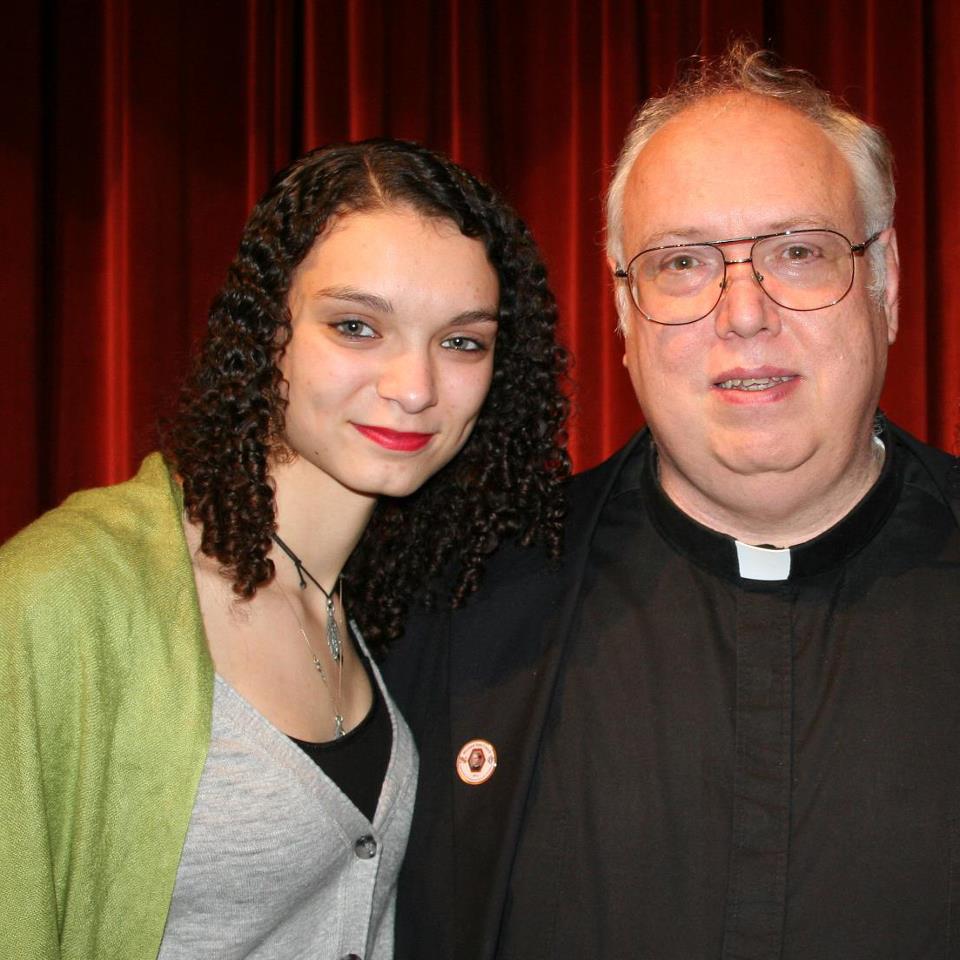
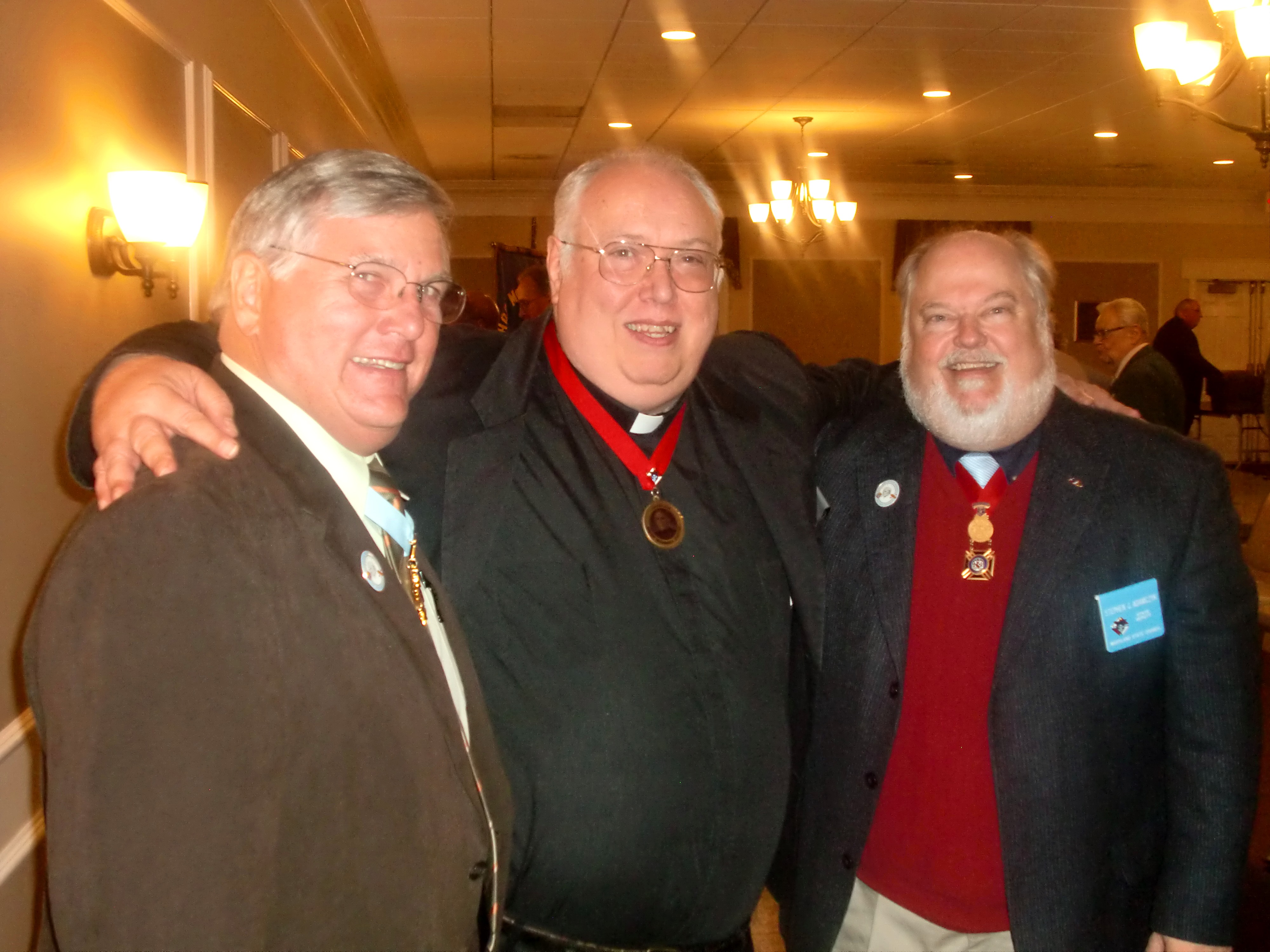
    Fr. Joseph Jenkins

  • The blog header depicts an important and yet mis-understood New Testament scene, Jesus flogging the money-changers out of the temple. I selected it because the faith that gives us consolation can also make us very uncomfortable. Both Divine Mercy and Divine Justice meet in Jesus. Priests are ministers of reconciliation, but never at the cost of truth. In or out of season, we must be courageous in preaching and living out the Gospel of Life. The title of my blog is a play on words, not Flogger Priest but Blogger Priest.

  • Archives

  • Categories

  • Recent Posts

  • Recent Comments

    Barbara King's avatarBarbara King on Ask a Priest
    Ben Kirk's avatarBen Kirk on Ask a Priest
    Jeremy Kok's avatarJeremy Kok on Ask a Priest
    Barbara's avatarBarbara on Ask a Priest
    forsamuraimarket's avatarforsamuraimarket on Ask a Priest

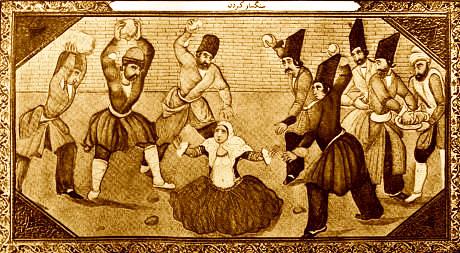
Stoned to Death for Adultery

Today’s news included the story about a stoning of an adulterous couple, 20 year old Sadiqa and her lover 28 year old Qayum. Qayum had left his wife for her and the two were caught at a friend’s house by the Taliban. This past Sunday, before a crowd of 150 men, they were stoned to death in the Kunduz providence of northern Afghanistan. Before the fall of Taliban rule such stonings were common. Such brutality shocks us but it speaks volumes about the mentality of the enemy and their brutal religious beliefs.  (Take note, we are are told that such is a distortion of Islam.)

Despite dark moments in history, by contrast, right-minded Christians would censure wrongdoing but pay heed to the witness of our Lord.

Early in the morning he came again to the temple; all the people came to him, and he sat down and taught them. The scribes and the Pharisees brought a woman who had been caught in adultery, and placing her in the midst they said to him, “Teacher, this woman has been caught in the act of adultery. Now in the law Moses commanded us to stone such. What do you say about her?” This they said to test him, that they might have some charge to bring against him. Jesus bent down and wrote with his finger on the ground. And as they continued to ask him, he stood up and said to them, “Let him who is without sin among you be the first to throw a stone at her.” And once more he bent down and wrote with his finger on the ground. But when they heard it, they went away, one by one, beginning with the eldest, and Jesus was left alone with the woman standing before him. Jesus looked up and said to her, “Woman, where are they? Has no one condemned you?” She said, “No one, Lord.” And Jesus said, “Neither do I condemn you; go, and do not sin again.” (John 8:2-11)

Our nation seems to have moved to the opposite extreme, excusing all sorts of sexual depravity and the violation of the marriage bond. Adultery, fornication and sodomy were once universally regarded as crimes. Half of the 50 states of the U.S. still regard adultery as a criminal offense. Not in your state? Last I heard it was illegal in Alabama, Arizona, Colorado, Florida, Georgia, Illinois, Indiana, Kansas, Maryland, Massachusetts, Michigan, Minnesota, Mississippi, Missouri, Montana, North Carolina, Oklahoma, Rhode Island, South Carolina, Tennessee, Utah and Virginia. However, along with the other immoral acts, it is rarely prosecuted. Adultery is still a violation of the military code of conduct and can earn a court martial.

Adultery was defined in some states as actual sexual congress and in others, like Virginia, as “lewd” or “lascivious” associations. I recall a few years ago the authorities used a fornication charge to get a court order to raid a house of a suspected drug pusher— sneaky! Possible penalties for adultery are as severe as a life sentence (Michigan), two years imprisonment (Pennsylvania) or in my own state of Maryland, a $10 fine. Given the money problems in the state, I am surprised the fine is not raised and the law enforced. Just as with the speed and red light cameras which catch offenders for hefty fines, could we not place discrete anti-smooching cameras in parks, near pools, at bars and maybe even in bedrooms? Charging per each offense, I would suspect given the lifestyle and lack of commitment today, the money would come flooding in!  [I hope you guys know that I am kidding.]

How far must we go to insure public morality?  Who determines today what is right and wrong? 

What are your thoughts about all this?

Questions & Answers About the Sacrifice of the Mass

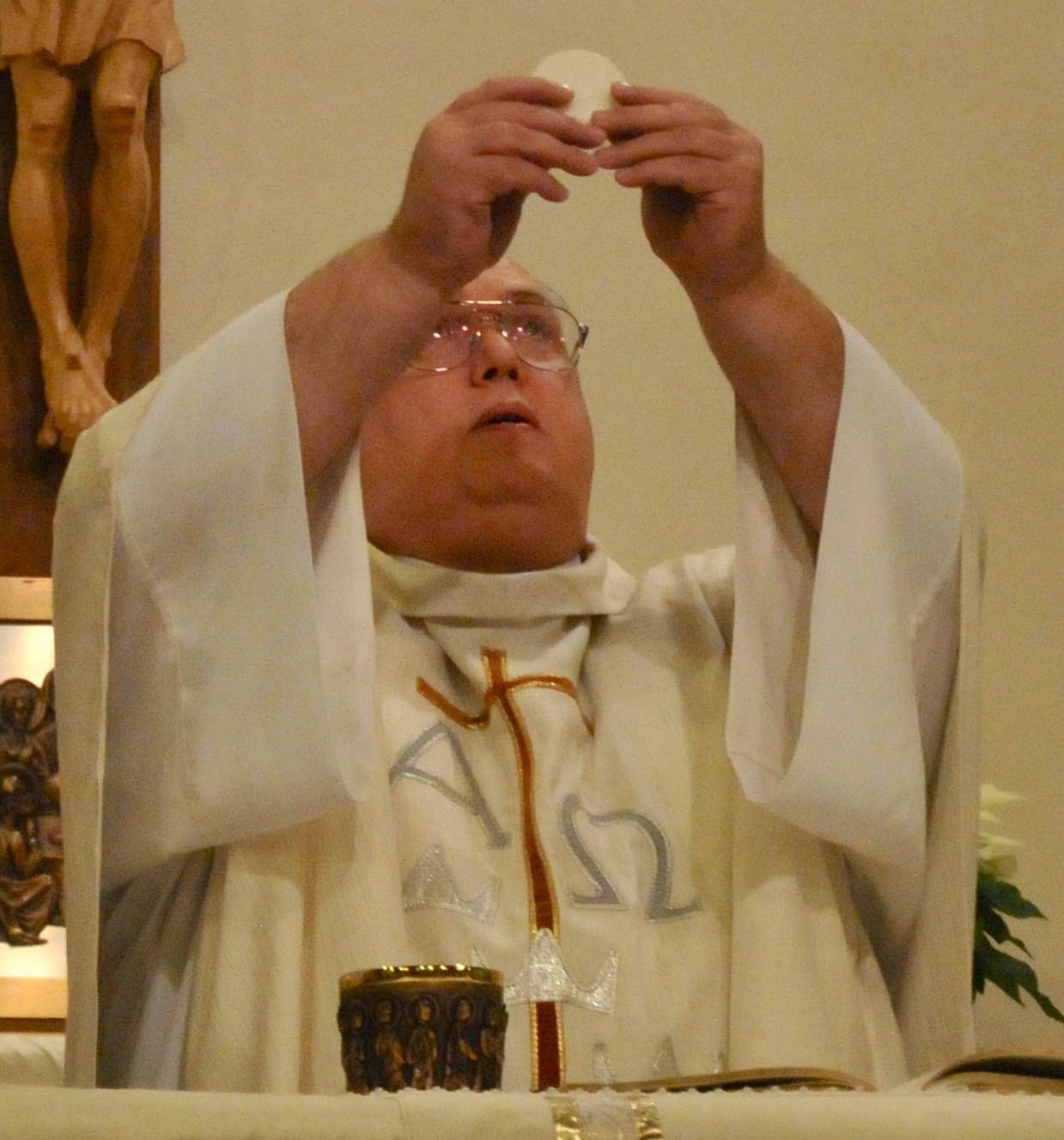
What do Catholics mean by the sacrifice of the Mass?

A sacrifice is the oblation of a sensible thing made by God through a lawful minister by a real change in the thing offered, testifying to God’s absolute authority over us and our complete dependence upon him.

Does God really want us to render sacrifice?

Yes, indeed, so much is this need ingrained in us that we find various forms of sacrifice in many world religions and in those of antiquity. It was because of a jealousy over the acceptance of a sacrifice that Cain killed Abel. Beginning with the Jews, sacrifice was properly directed toward the true God who had revealed himself. Noah, Abraham, and the Old Law enacted sacrifice to God. The sacrifices of the first people called by God would typify and foreshadow the sacrifice of the cross upon which Christ offered his body and blood to the Father for our redemption from sin and the devil. This same sacrifice is commemorated or made sacramentally present in the Mass. It is offered to God upon our altars for the living and the dead.

Does the Bible say anything about New Testament sacrifices?

The prophecy of Malachi states that the sacrifices of the old law would be abolished and supplanted by a new one offered for the entire world: “I have no pleasure in you, says the LORD of hosts, and I will not accept an offering from your hand. For from the rising of the sun to its setting my name is great among the nations, and in every place incense is offered to my name, and a pure offering; for my name is great among the nations, says the LORD of hosts” (Malachi 1:10-11).

Was this prophecy fulfilled?

Yes, the Jewish sacrifices have utterly ceased. The new sacrifice is the saving death of Jesus Christ, which is renewed and made present in each Mass offered every day. Around the world and in countless places it is celebrated, from the rising of the sun to its setting.

Does this mean that, according to Catholics, Jesus must suffer and die over and over again?

No, Jesus does not suffer and die all over again. Christ has risen from the dead and can never more die. As if it were a time machine, the Mass connects us with his onetime passion and death– extended to us sacramentally so as to give us the opportunity to participate and to offer ourselves along with him. It is repeatedly offered to God the Father for the forgiveness of sins.

Does not this notion of repeated sacrifices clash with the warrant of New Testament testimony? After all, St. Paul states: “But when Christ appeared as a high priest of the good things that have come, then through the greater and more perfect tent (not made with hands, that is, not of this creation) he entered once for all into the Holy Place, taking not the blood of goats and calves but his own blood, thus securing an eternal redemption” (Hebrews 9:11-12) and later: “And just as it is appointed for men to die once, and after that comes judgment, so Christ, having been offered once to bear the sins of many, will appear a second time, not to deal with sin but to save those who are eagerly waiting for him.” (9:27-28). In 10:14, we read: “For by a single offering he has perfected for all time those who are sanctified.” It seems to be saying that the one sacrifice on the cross was enough and no other ones are needed.

The one sacrifice of the cross is enough for our redemption. However, it must be commemorated and applied to souls, just as Jesus commanded: “Do this in remembrance of me” (Luke 22:19). This is done daily in the Mass.

But if Christ has already died for our sins, and we are thus saved, why is the Mass necessary?

If all we had to do were to believe that Jesus had died for us and that we were then automatically saved, then there would be no need for the Mass. Of course, such a presumption would make preaching and the Church herself unnecessary. There would be no impetus to live a holy life. While proponents of such a view often speak a great deal about hell, it would largely make it inconsequential as well. Those who have committed the most grievous wrongs would be on the same footing as saints. However, our Lord, besides his death on the cross, has commanded other things of us if we are to be saved.

How can Catholics make such a claim contrary to St. Paul’s words? He writes: “For it was fitting that we should have such a high priest, holy, blameless, unstained, separated from sinners, exalted above the heavens. He has no need, like those high priests, to offer sacrifices daily, first for his own sins and then for those of the people; he did this once for all when he offered up himself” (Hebrews 7:26-27).

The context is being confused here. He is not talking about the Mass but about Jewish sacrifices and their high priests. Because of their imperfections, their sacrifices were no longer needed. Catholic priests do not offer a new sacrifice, but the same oblation of Jesus on the cross. The words of Jesus make it a command performance.

Does St. Paul say that ministers should do more than preach; they should also render sacrifices to God for their peoples’ sins?

Certainly, he says in Hebrews 5:1: “For every high priest chosen from among men is appointed to act on behalf of men in relation to God, to offer gifts and sacrifices for sins.”

If the sacrifice of the Mass were required, it would seem to imply that the sacrifice of the cross was insufficient to reconcile us with God; is this true?

No, it is not. The sacrifice of the cross was sufficient to reconcile us with almighty God, but Christ desired that his oblation of the cross should be commemorated in “living” memory of him. As with the memorial acclamation in the revised liturgy, St. Paul says: “For as often as you eat this bread and drink the cup, you proclaim the Lord’s death until he comes” (1 Cor. 11:26). As faithful adopted sons and daughters of God, our Father, we celebrate our redemption with an unbloody sacrifice (of the cross) to God for ourselves and for the good of the world.

For more such material, contact me about getting my book, CATHOLIC QUESTIONS & ANSWERS.

Questions & Answers About the Real Presence in the Eucharist

What is the main difference between the Holy Communion received by Catholics and that, which is implemented by non-Catholics?

While some may contend that there is some sort of weak “spiritual” presence, most non-Catholics reduce Communion to an “empty” sign, in other words, something that signifies a presence, which is absent, namely the historical Jesus. This reduces the communion elements simply to ordinary bread and wine. Of course, without a legitimate priesthood and Eucharistic liturgy, their communion is precisely such. On the other hand, Catholics believe that their Holy Communion conveys a sacramental and real presence of the risen Christ. The Eucharistic species have literally been transformed into our Lord. Possessing a valid priesthood, which celebrates a lawful Mass, the communicants eat the REAL body of Christ and drink the REAL blood of Christ.

Did Jesus really promise that he would give us his body to eat and his blood to drink?

Yes, most assuredly so. Jesus says in John 6:51: “I am the living bread which came down from heaven; if any one eats of this bread, he will live forever; and the bread which I shall give for the life of the world is my flesh.” His fellow Jews murmured in disagreement, seriously doubting that Jesus could do such a thing. He could not be serious, they thought. Maybe, he only meant it in a figurative fashion? Of course, even that was somewhat offensive to Jews, given their strict dietary laws. Jesus reiterates it to insure that there is no confusion: “Truly, truly, I say to you, unless you eat the flesh of the Son of man and drink his blood, you have no life in you; he who eats my flesh and drinks my blood has eternal life, and I will raise him up at the last day. For my flesh is food indeed, and my blood is drink indeed” (John 6:53-55).

Later, did Jesus fulfill his promise and give his apostles his body to eat and his blood to drink?

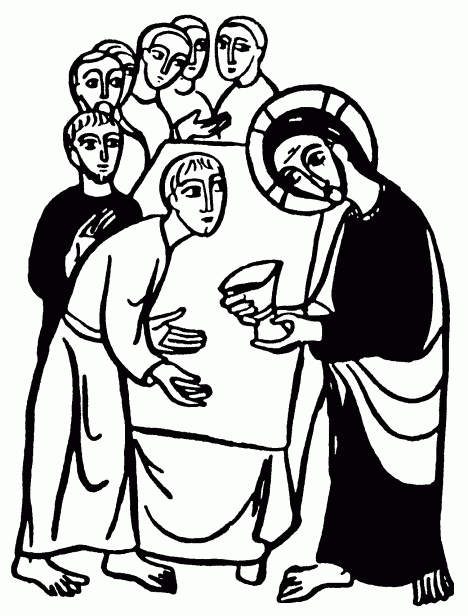
Again, the answer is yes. We read in Matthew 26:26-28: “Now as they were eating, Jesus took bread, and blessed, and broke it, and gave it to the disciples and said, ‘Take, eat; this is my body.’ And he took a cup, and when he had given thanks he gave it to them, saying, ‘Drink of it, all of you; for this is my blood of the covenant, which is poured out for many for the forgiveness of sins.’”

Is not the fact that many denominations stress the eating and drinking a sufficient indication of their belief in the body and blood of Jesus?

No, it is not. Indeed, many deny the Catholic understanding of “real presence” while making a big deal over the fact that often Holy Communion in the Catholic Church is reduced to the host. (Each particle of the host and every drop of the precious blood, not wine, is the complete Jesus, body and soul, humanity and divinity.) Certain Protestants get caught up in the mechanics and deny the very essence of the sacrament. Jesus himself was concerned that his followers might go through the motions of eating and drinking the sacred meal and lose sight of the underlining reality. He says: “For my flesh is food indeed, and my blood is drink indeed” (John 6:55). Further, he tells his people: “Truly, truly, I say to you, unless you eat the flesh of the Son of man and drink his blood, you have no life in you” (John 6:53). Acknowledging this truth, the apostles raised the “breaking of the bread” or Eucharist to the center of their lives and that of their faith communities.

But Christ seems to reverse himself when he says: “It is the spirit that gives life, the flesh is of no avail” (John 6:63). How is this explained?

If it were not tragic, it would be amusing how numbers of Protestants often point to this sentence to refute the Catholic understanding of real presence. After all, it intimates that Jesus was in error or that he hastily revises his teaching when most of his followers abandon him over it. Such is far from the truth. Jesus does not suddenly suffer from amnesia regarding his earlier words; rather, he is talking about the spirit of God which makes faith possible, even in those things difficult to accept, like the graphic truth of his Eucharistic presence. Eating the flesh of Jesus without faith would profit nothing; eating it with faith gives life.

It has been offered that what Jesus meant to say at the Last Supper was, “This represents my body, this represents my blood.” Is this not more correct?

It is a lie. If Jesus meant to say that the bread and wine only represented his body and blood, then he would have said so. However, he purposely said: “This is my body, this is my blood.” Lacking a “to be” verb, his expression is even more stark: “This–my body, this–my blood.” Some time prior to the Last Supper, our Lord promised his followers that he would give them his body and blood as food and drink. Jesus spoke plainly and made no attempt to mislead his listeners with ambiguous rhetoric. Christ’s Church has believed Jesus’ words in their literal sense for two thousand years. The apostles believed that the Eucharist was the real body of Christ. It is not ordinary bread. St. Paul goes so far as to emphasize that unworthy reception of this bread of life causes damnation.

How can God possibly give us his own body to eat and his blood to drink?

This question suffers from the intrusion of modern atheism, even when it emerges from fundamentalist Christians. How could God possibly take flesh at all? And yet, he did precisely this in the incarnation. How could he feed five thousand people with a mere five loaves of bread and two fishes? Nevertheless, he did.

If God could change rivers into blood, as he did in Egypt, could he not transform bread and wine as a sacrament for his followers? Sure he could! God is almighty and can do all things. Would we be so egotistical as to hold that just because we cannot envision something as possible that it is impossible for God?

When Jesus, and today the priest, breaks the consecrated bread, is he breaking the body of Christ?

No, only the outward form of bread is broken, not Christ’s body.

How can the complete and living Christ be present in each and every Holy Communion around the world and often at the same time?

He is God. This mystery of the real presence of Christ cannot be explained in a way sufficient for human understanding. Nevertheless, we know with God that all things are possible. The sun in the sky can shed its light and warmth upon many places at the same time, but there is still only one sun. This is a poor analogy, and yet it might help.

How can Catholics argue such a transformation when St. Paul merely called it BREAD, saying, “Whoever, therefore, eats the bread” (1 Corinthians 11:27)?

The apostle emphasizes “the bread” as something more than ordinary bread. Recall that in the same chapter he complains about those who fail to discern between this bread and the ordinary variety. He warns them that to eat this bread unworthily brings down judgment, making one guilty of the body and blood of Christ. Ordinary bread could not mandate such a punishment.

While it might be granted that Jesus gave his body and blood to his apostles, is it not too great a leap to suppose that priests can give this body and blood to others?

It is no stretch of credulity at all. The apostles were commanded by Jesus to repeat what he did. He gave them his body and blood so that they might have a share in his eternal life. If this power was not handed down to the priests, how could we eat the body of Christ and drink his blood? Jesus said to them, “All authority in heaven and on earth has been given to me” (Matthew 28:18); “As the Father has sent me, even so I send you” (John 20:21). The authority given the apostles is necessarily passed down to the bishops and priests.

Might the communion bread and wine be seen as a remembrance of Christ only?

No, this view is too narrow. The consecrated elements are indeed a remembrance of Christ, but they are also his body and blood. The stark words of institution make any other interpretation impossible. Further, the Hebrew view of memory is much different from our own. We tend to use remembrance in a nostalgic way, recalling something that is past and absent. The ancients saw the past coming alive again in the telling. Remembrance makes something present; it allows one to enter into the story. Regarding the Eucharist, this is not only figuratively true, but really so. The Mass allows us to visit and participate in the sacrifice of Christ on Calvary. Holy Communion is our encounter with our risen Lord, now made our saving food.

Can it be proven that the first Christians held such views about the Eucharist?

Yes, it can. St. Justin (150 AD) says, “The faithful receive communion not as an ordinary bread, or an ordinary drink, but we were instructed that it is the flesh and blood of Christ” (First Apology). St. Irenaeus (200 AD) writes regarding the Gnostic heretics, “They refuse to acknowledge that the bread in Communion is the body of their Lord and the chalice his blood” (Against Heresies). Other early authorities write similar testimonies, saying that Christ is joined with us in communion, not only through faith, but really and truly. It is said that just as water was changed into wine, so is the bread changed into the body of Christ. Others speak of adoration, an operation proper to God alone, as proper before the Blessed Sacrament. Extending back to apostolic times, this 16th century epiclesis illustrates this abiding belief: “Come, Holy Spirit, consecrate, change, transform by thy almighty power the bread and wine into the body of Jesus, born of the Virgin Mary, and in the blood which was shed for our salvation.” Even many of the early breakaway groups from the Catholic Church retained this central teaching in the real presence.

How could Jesus reasonably be present under the appearance of so many wafers and in so many churches at the same time?

Spatial and temporal limitations do not apply to God. We may not understand it, but Jesus, being God, is not locked exclusively into any one time or place. Such is the mystery of Christ after his resurrection and ascension.

What proof can be put forward in favor of the claim that Jesus remains in the hosts reserved in the Church tabernacle?

We have Jesus’ own words for this sacred trust. He says: “This is my body,” and he makes no move to turn the sacred elements back into bread. Therefore, as long as the appearances of bread are present, so is Jesus. In addition, we know that the first Christian believers carried the consecrated bread to the sick, to prisoners, and maintained it in valuable vases for later administration to those near death. This faith of the early Church is formative to what we have always maintained.

Does the body of Christ in Holy Communion suffer from human digestion?

No, only the outward appearances are subject to change. The body of Jesus is not touched.

Does the Bible say that Jesus will live in our hearts after communion?

Yes, we find the passage in St. John 6:56: “He who eats my flesh and drinks my blood abides in me, and I in him.”

Is it permissible only to believe that Jesus is somehow present in the bread, but not that it is actually transformed into his body?

No, it is not, if one wants to remain a true Catholic. Again, Jesus said: “This is my body.” We either believe in Jesus’ words or we do not. If it is not really changed into his body, then Jesus was lying to us. This would be absurd.

Is it idolatry to adore the communion bread?

If it were ordinary bread, adoration would indeed be idolatrous. However, since it is the body of Jesus, it is expected and proper.

Why do so many churches offer only the host and not the cup?

The pattern followed by the early Church is significant in that many received only the consecrated bread or only the precious blood. Further, the totality of Christ– body and blood, soul and divinity– is received whole and entire under either form. The practical consideration aside, which could be serious regarding excess consecrated wine, the priest’s communion of both species illustrates the unity of the host and the cup.

But, are not Catholics denying a direct command of Jesus in not drinking from the cup?

It should be said that many Catholic parishes do offer the precious blood to the congregation. However, large parishes often find it difficult. After all, unlike some of the Protestant parishes, our sensibilities about the real presence would cause a just anxiety about the use of hundreds of small thimble-sized cups. While Jesus did say “unless you eat my body . . . and unless you drink my blood”; he also said in the same chapter: “I am the living bread which came down from heaven; if any one eats of this bread, he will live forever; and the bread which I shall give for the life of the world is my flesh” (John 6:51). Clearly, this means that eating this bread will give us a share in eternal life. This is elaborated by St. Paul: “Whoever, therefore, eats the bread or drinks the cup of the Lord in an unworthy manner will be guilty of profaning the body and blood of the Lord” (1 Cor. 11:27).

Is not every baptized believer a priest who can celebrate the Lord’s Supper?

No, baptismal priesthood and ministerial priesthood are quite different. The laity cannot consecrate the bread and wine. Only the apostles were commanded to do this by Jesus. Consequently, only their successors, the bishops and priests at Mass, are able to consecrate the bread and wine in the name of the people. As St. Paul tells us, the ministers are chosen by God to offer sacrifices for the people (Hebrews 5:1).

What are some of the practical reasons why the cup might not be offered?

  • The apostles themselves could not always administer it to the sick or imprisoned.
  • The danger of spillage is a real concern.
  • There is a great aversion to drinking from the same cup, especially with the sick.
  • Some places have difficulty procuring and preserving wine.
  • Alcoholics and certain others cannot drink it.
  • Because Jesus gave the Church authority to regulate such matters.

Questions & Answers About the Reception of Communion

Where do we receive Holy Communion?

Communion is usually distributed in church; however, the sick may receive it in the hospital or in their homes.

How is it administered in church?

There are two ways that the host is given at present in the Roman Rite: upon the tongue and in the hand. Various Eastern rites also have their own manner of distribution, including the spoon or a sacred tube. The priest holds up the host before the communicant and says, “The Body of Christ.” The communicant responds, “Amen,” thus acknowledging the real presence of Christ and the full authority and authenticity of the Catholic faith that makes this holy encounter possible. The unity here between the communicant, Christ and the Church is intensely intimate. It is for this reason that one who is not of our faith or who is in mortal sin should not receive the sacrament. It would turn the “Amen,” no less than a faith profession, into a lie. The person opens his mouth and puts out his tongue slightly. The minister places the host upon the tongue. The communicant immediately closes his mouth, signs himself with the cross and moves back to his place in the church. Those receiving in the hand make a throne of their left hand in their right for Christ the King. They do not put their hands side by side in the image of a bird. Nor should they pick at the host as an insect would with its pinchers. Fingers should be together and nothing should be carried. If a communicant has a rosary in the hand, a purse under the arm, or a baby held close — he or she should not receive in the hand but upon the tongue. Having received in the hand, we step aside but still facing the altar, pick up the host with the right hand and put it into the mouth. We make the sign of the cross, and then, and only then, we turn and walk back to our place. We do not walk away with the host in our hand. We do not make a hasty sign of the cross as we rush to our pew. The minister of the sacrament must be able to see the communicant put the host into the mouth.

Why is Holy Communion sometimes designated as Viaticum?

It applies to Holy Communion given to the sick as spiritual sustenance and as saving food. It helps to prepare them for the final leg of their pilgrimage into eternity.

Why are people sometimes blessed with the sacrament?

Benediction is offered with the Blessed Sacrament because it is really and truly Jesus. Thus, blessing people with the sacrament is quite literally Jesus blessing the people just as he did when he walked the earth.

How is such a benediction usually conducted?

While a hymn in honor of the Blessed Sacrament is sung, the priest, dressed in a cope and humeral veil, incenses the monstrance (a display container placed upon the altar). After this sign of adoration, he blesses the people with the Blessed Sacrament by making a sign of the cross with it over them.

Why have there been processions with the Blessed Sacrament?

It is a touching and solemn profession of our faith, giving adoration to our Savior in the consecrated host.

What is the meaning of the Vigil Light perpetually burning next to the tabernacle containing the consecrated hosts?

It is a visual reminder of the abiding presence of Jesus in the church and of our worship that is everywhere and always due him. The Lord has not abandoned us. One faithful critic claimed that it is not unlike one’s mother leaving a light burning in the window. Jesus is always there for us, ready to receive us back.

For more such material, contact me about getting my book, CATHOLIC QUESTIONS & ANSWERS.

Questions & Answers About Confession

Who can forgive sins?

Only God can forgive sins, and those to whom he has given the power to do so.

To whom did God give such a power?

The Scriptures reveal that Jesus gave this power to his apostles. We read in John 20:22-23: “And when he had said this, he breathed on them, and said to them, ‘Receive the Holy Spirit. If you forgive the sins of any, they are forgiven; if you retain the sins of any, they are retained.’” Our Lord says that all power in heaven and on earth has been given to him, “Peace be with you. As the Father has sent me, even so I send you” (John 20:21). Jesus was sent into the world to forgive sins, and so he similarly sent the apostles.

Instead of confession, maybe this meant that priests could forgive sins in baptism?

The Bible makes a clear distinction between the sins forgiven by baptism and those remitted afterwards. Regarding the former, we are told, “Repent, and be baptized every one of you in the name of Jesus Christ for the forgiveness [remission] of sins” (Acts 2:38); as for the latter, there is the charge, “If you forgive the sins of any, they are forgiven; if you retain the sins of any, they are retained” (John 20:23).

Maybe Christ forgives sins, but not priests?

Jesus Christ does forgive our sins, provided that we confess them to a priest (particularly if we have the opportunity to do so).

The Scriptures assert that the forgiveness of sins shall be preached to all nations; if mercy is granted in preaching, why is confession necessary?

The proclamation of forgiveness points to the remission of sins through baptism, confession, or any other means instituted by the Lord.

Does not the biblical notion of forgiving sins apply to the excommunication of sinners or their restoration?

The apostles are given a two-fold power. First, they can forgive sins as our Lord makes clear. Second, they are given the authority to excommunicate. Jesus says, “Truly, I say to you, whatever you bind on earth shall be bound in heaven, and whatever you loose on earth shall be loosed in heaven” (Matthew 18:18).

If Mary Magdalene can have her sins forgiven because she “loved much” then perhaps all sins are similarly forgiven (see Luke 7:47)?

Mary Magdalene’s outward display of great sorrow in her confession of Jesus brings about the forgiveness of her sins by Christ (who knew her sins). It is not the sentiment of love that is sufficient, but a practical love which results in sorrow, confession if possible, satisfaction and a firm resolve not to sin again. Few priests are given the supernatural power to read souls; thus, unlike Jesus, the priest cannot know what your sins are unless you tell him. This allows the priest to apply an appropriate penance and to give adequate counsel.

If confession is legitimate, why does the Bible remain silent about it?

It is not silent. We have already read Christ’s stipulation in its favor. The historical fact that the early Christians, indeed Catholics during the last two thousand years, have confessed their sins is proof that Christ taught the apostles that sins should be confessed.

But St. Paul said as proof of ourselves, “Let a man examine himself, and so eat of the bread and drink the cup” (1 Corinthians 11:28). He did not say “Go to confession.” Is there not a real clash?

St. Paul meant that we should be proved according to the teaching of Christ. In other words, we are to prove and to examine our conscience. If we discover any sins, then we should confess them before “eating of this bread.” Certainly, St. Paul would not contradict Jesus who commanded the apostles to forgive sins.

As we say in the Lord’s Prayer, “Forgive us our trespasses as we forgive those who trespass against us,” are we not forgiven by forgiving others?

It means that if we want our heavenly Father to forgive our sins, then we must forgive our neighbor. This is more than a precondition connected to human activity. God is not crudely bargaining with us. This line has everything to do with conversion or transformation into a new Christ. We are to imitate and to manifest the loving mercy of God in our very selves. By forgiving others, we become precisely the types of persons who are open to the graces of mercy. God can use us in ushering in his kingdom. We grow in holiness because we become revelatory to the face and presence of God. Ultimately, the Father will look upon us and see his Son living in us. He will give us a share in the eternal life that Christ merits on our behalf.

If sins can readily be forgiven, will it not entice people to easily relapse into sin?

No, because a good confession demands true sorrow for sin and a firm intention to avoid sin in the future. The more a sinner experiences and expresses his sorrow in confession, the less likely will he return to his sin. This sorrow is more than just “feeling” sorry. It reflects a real remorse over what our sins have accomplished. Our sins inhibit our transformation in Christ, deprive us of grace, and threaten us with the loss of heaven and the pains of hell. While fear of punishment illustrates imperfect contrition; we are all to strive for perfect contrition. This requires that we be conscious of the dishonor our sins bring upon God for whom we are created. They strike down our Savior upon Calvary (often imaged in the Sacred Heart devotion).

Can it be said that the apostles went to confession?

We certainly know that our Lord told his apostles to forgive sins; no doubt, if they committed any, they forgave each other’s sins.

Can a priest charge money for forgiving sins?

No, this would be a great crime called simony. Severe punishments would be inflicted upon any priest who would dare do something so offensive.

Can a priest forgive a thief who has no intention to return stolen goods?

No, the stolen property, if possible, must be restored to the lawful owner or at least a promise must be given that restoration will be made. Only then is the priest at liberty to absolve the sin.

Does the Bible distinguish any sins as mortal?

It most certainly does. The Bible tells us that some sins deserve death and that they exclude sinners from the kingdom of heaven. St. Paul states in Galatians 5:19-21: “Now the works of the flesh are plain: immorality, impurity, licentiousness, idolatry, sorcery, enmity, strife, jealousy, anger, selfishness, dissension, party spirit, envy, drunkenness, carousing, and the like. I warn you, as I warned you before, that those who do such things shall not inherit the kingdom of God.” St. Paul enumerates a number of serious or mortal sins in 1 Corinthians. Exclusion from the kingdom of God literally means damnation.

Does the Bible mention any sins as venial (more easily forgiven)?

Again, the answer is yes. “For a righteous man falls seven times, and rises again” (Proverbs 24:16). Evidently it is possible for a righteous or just man to commit certain sins and not forfeit his good status. However, if a person commits a mortal sin, he can no longer be considered righteous or just. [Also see James 3:2.]

Is there a clear biblical teaching that God punishes mortal sins with temporal and eternal punishments?

This is the case. David was guilty of murder, which merited the pains of hell (2 Samuel 12:9). Nathan warned him of his mortal peril. David repents: “I have sinned against the Lord” (2 Samuel 12:13). Nathan responds as the voice of God: “The Lord has put away your sin,” (2 Samuel 12:13) that is, the eternal punishment of hell. Nathan continues: “You shall not die. Nevertheless, because by this deed you have utterly scorned the Lord, the child that is born to you shall die” (2 Samuel 12:13-14). This was clearly temporal punishment.

How is the Sacrament of Penance administered?

It is very simple. The ritual usually begins with the sign of the cross. The penitent will often ask for a blessing from the priest at the beginning. Next, he confesses his sins. The priest might offer some fatherly advice, a penance is imposed, and absolution is given.

What are the essential words of absolution?

“God, the Father of mercies, through the death and resurrection of his Son has reconciled the world to himself and sent the Holy Spirit among us for the forgiveness of sins; through the ministry of the Church, may God give you pardon and peace, and I ABSOLVE YOU FROM YOUR SINS IN THE NAME OF THE FATHER, AND OF THE SON, + AND OF THE HOLY SPIRIT. Amen.”

For more such material, contact me about getting my book, CATHOLIC QUESTIONS & ANSWERS.

Questions & Answers About Confirmation

How is confirmation administered?

While a priest usually has faculties to confirm converts, along with baptizing them and giving them first Holy Communion; usually the bishop is the minister of the sacrament. The bishop imposes his hands upon them and beseeches the Holy Spirit to descend with his sevenfold gifts. He anoints them with sacred chrism in the sign of the cross upon the forehead. This anointing points toward a spiritual character that is offered by the Spirit of God. The cross stands for our redemption and our willingness to enter into the passion, death and resurrection of Jesus. Accompanying the anointing are these words: “N., be sealed with the Gift of the Holy Spirit.” The candidate may choose to use his baptismal name or that of another patron saint.

What is the oil used?

It is a sacred chrism (possessing balm or a scent) blessed by the bishop during Holy Week, traditionally on Holy Thursday but nowadays often done earlier to ease schedules so that more priests can concelebrate the Mass and renew their priestly promises.

What does it signify?

The sweet fragrance signifies the sweetness of virtue, displacing the corruption of sin with the healing presence of Christ. It will strengthen the candidate for the struggle against the enemies of Christ and of the Church. As the older language would infer, we become an adult in the Church and a soldier for Christ.

Why is the sign of the cross made upon the head?

It is to emphasize that the Christian should never be ashamed of the cross, but to confess his faith in Christ crucified without regard to human opinion or persecution.

For more such material, contact me about getting my book, CATHOLIC QUESTIONS & ANSWERS.

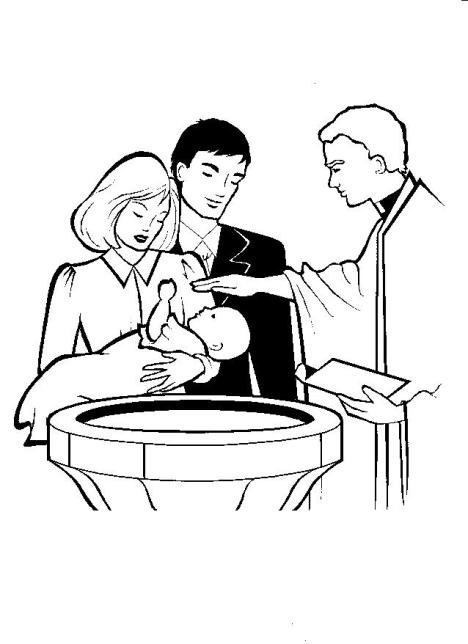
Questions & Answers About the Baptism of Children

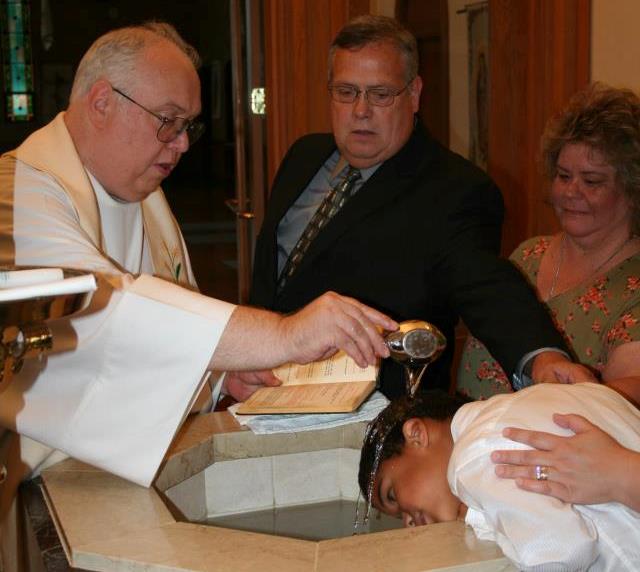
Why do we baptize children?

“Truly, truly, I say to you, unless one is born of water and the Spirit, he cannot enter the kingdom of God” (John 3:5). Neither gender nor age is specified in this passage. Such a fact is important because the suggestion that this passage is a repudiation of infant baptism would be far from the mark. Indeed, given the necessity of baptism, it would point to the latter.

Nevertheless, accepting that the passage is addressed to those who have reached the age of reason, we can explore what it means, “to be born again.” Just as we receive biological life in the womb, so too can we receive supernatural life from the womb of Mother Church— focusing in a practical way upon the water of the baptismal font and the action of the Holy Spirit. We do not deny that adults need to be taught and to accept the faith prior to baptism. Jesus says as much in his commission to spread the Gospel: “Go therefore and make disciples of all nations, baptizing them in the name of the Father and of the Son and of the Holy Spirit, teaching them to observe all that I have commanded you” (Matthew 28:19-20). However, in reference to children, the faith of parents and the believing community suffices. St. Paul was converted by God’s grace at a time when he did not believe in Christ and persecuted the Church. St. John the Baptizer was sanctified prior to his martyrdom, even though he knew little about the faith of Christ. Precedent for such an early initiation into the People of God can be found in the practice of the Jews, the first people called forth. Almighty God can wash children clean of original sin and give them a share in divine life, just as he presumed faith in the Jewish children circumcised on the eighth day as a step toward justification. Jesus would have none hinder the baptism of children. He said: “Let the children come to me, and do not hinder them; for to such belongs the kingdom of heaven” (Matthew 19:14). While something of God’s mercy toward children who die while still in their innocence might be implied here, the main point is the inclusivity of God’s kingdom and Church. The gravity of baptism should not be dismissed. Jesus tells us that unless one is born again of water and of the Holy Spirit, he cannot enter into the kingdom of heaven.

Do we actually believe that a little baby is infected by the sin of Adam and Eve and has consequently forfeited supernatural life?

Well, the Scriptures speak for themselves. St. Paul tells us: “Then as one man’s trespass led to condemnation for all men, so one man’s act of righteousness leads to acquittal and life for all men. For as by one man’s disobedience many were made sinners, so by one man’s obedience many will be made righteous” (Romans 5:18-19). He also states: “For the love of Christ controls us, because we are convinced that one has died for all; therefore all have died. And he died for all, that those who live might live no longer for themselves but for him who for their sake died and was raised.” (1 Corinthians 6:14-15). As a testimony from the Old Testament, we read in Psalm 50, verse 5: “Behold, I was brought forth in iniquity, and in sin did my mother conceive me.” Returning to Paul, he tells the Ephesians: “We were by nature children of wrath” (Ephesians 2:3). Original sin afflicts us, even upon the very day of our conception. Baptism restores supernatural life through Jesus Christ. As for what happens to a child who dies prior to baptism, we can take consolation in the fact that God’s justice to every soul is perfect and accompanied by a boundless mercy.

Does the Bible actually teach that all sins are forgiven by baptism and that a new life is given us?

St. Peter says: “Repent, and be baptized every one of you in the name of Jesus Christ for the forgiveness of sins; and you shall receive the gift of the Holy Spirit. For the promise is to you and to your children and to all that are far off, every one whom the Lord our God calls to him” (Acts 2:38-39). This is prefigured in Ezekiel 36:25 when God states: “I will sprinkle clean water upon you, and you shall be clean from all your uncleannesses, and from all your idols. I will cleanse you.” As for regeneration, we read in Galatians 3, verse 25-27: “But now that faith has come, we are no longer under a custodian; for in Christ Jesus you are all sons of God, through faith. For as many of you as were baptized into Christ have put on Christ.” There can be no doubt about it in Titus 3:4-7: “But when the goodness and loving kindness of God our Savior appeared, he saved us, not because of deeds done by us in righteousness, but in virtue of his own mercy, by the washing of regeneration and renewal in the Holy Spirit, which he poured out upon us richly through Jesus Christ our Savior, so that we might be justified by his grace and become heirs in hope of eternal life.”

Is there any evidence of the Apostles baptizing children?

Yes, they baptized whole households. We read in Acts 10:48 that they baptized the household of Cornelius and in Acts 16:15 that of Lydia. Also, do not forget Paul’s reception by Stephana, keeper of the prison. It is most probable that there were children in his home, too.

Were children baptized in the early post-Apostolic period?

Early authorities like Origen, Cyprian, and St. Augustine make clear that the baptism of children as soon as possible constituted a tradition handed down by the apostles themselves. The reasoning was that divine grace should not be withheld from anyone.

Is it wrong to presume faith in a small child or infant?

No, just as children can be made an heir of earthly property, long before they have the faculty of consenting to receive it, so too in baptism, infants can be made heirs of heaven.

For more such material, contact me about getting my book, CATHOLIC QUESTIONS & ANSWERS.