




















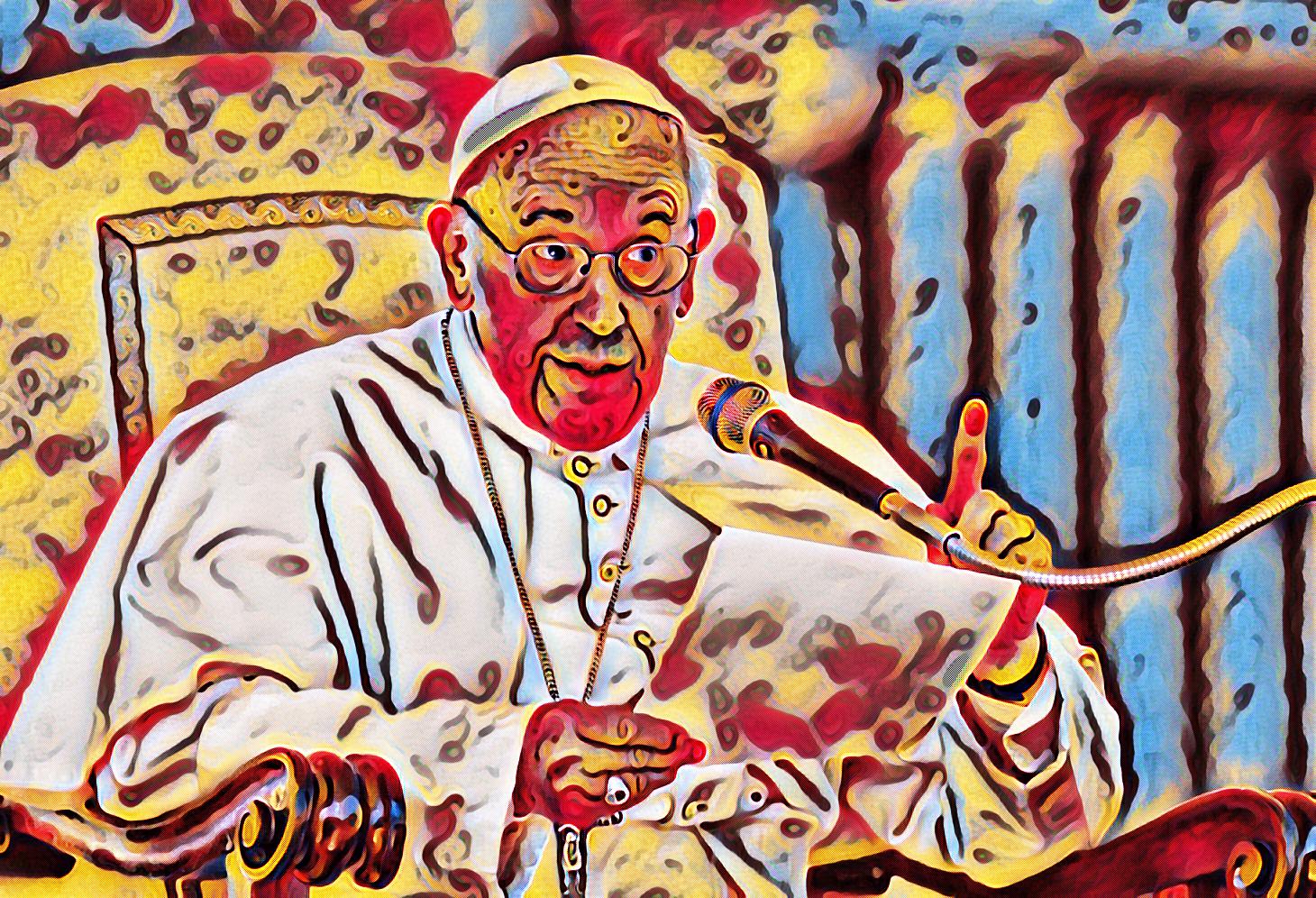
While there has long been an invisible schism in the Church caused by the many loud liberal or progressive voices in the years since Vatican II, today matters have intensified with resistance from a growing arrogant traditionalism. Critics observe that the catalyst for the reaction on the right has been a papacy that represses the historical Latin Mass, sometimes pampers the Church’s enemies, glosses over what seem to be serious errors, and opts for diplomatic ambiguity when there is a pressing need for clarity and truth from the teaching office. Admittedly, the pastoral accommodation that belongs to the pastors on the ground cannot be appropriated by the highest shepherds or by the one who sits in the chair of Peter without doing insufferable harm to the transmission and interpretation of the deposit of faith.
Like the proverbial snowball rolling down a hill, many religious pundits who have made accurate assessments about what falls short of complete fidelity are now lashing out against anything and everything that comes down from Rome or the bishops in union with him. They make themselves into mini popes who presume to tell the Holy Father what he is doing and saying wrong. They are hesitant to admit agreeing with the pope when he says or does anything wholly Catholic.
The First Vatican Council of 1870 expounded upon its definition of papal infallibility:
“Both clergy and faithful, of whatever rite and dignity, both singly and collectively, are bound to submit to this power by the duty of hierarchical subordination and true obedience, and this not only in matters concerning faith and morals, but also in those which regard the discipline and government of the Church.”
If schism is a failure to submit to the Holy See or to be in full communion with the Church he leads, then we are indeed entering such dark days. However, the current situation is so chaotic that many pay lip service even as they dissent in practice. The mockery in social media, inclusive of those who flaunt their orthodoxy, is a clear denial of the Pope’s command authority. The left’s liturgical abuse and the right’s impugning of the Novus Ordo signifies both a refusal to embrace the Church’s current understanding of herself and her divine worship. Left unsaid is when the line might be crossed into excommunication.
When teaching upon faith and morals for the whole Church and doing so from the chair and in union with the world’s bishops, St. Peter and his successors are guaranteed the grace of infallibility from the Holy Spirit. Of course, they can interpret and explain but cannot invent anything entirely new or contrary to revealed truths. Popes are not always accurate in private opinions and the fact that they go to confession is proof that they are not impeccable. Just as St. Paul corrected and changed the mind of St. Peter at the council of Jerusalem, they can be admonished, particularly by other apostles or bishops. But ultimately, much like the cat dropped from a height, the papacy lands on its feet. Those who would deliberately trip a pope up and then expose and laugh at his tumble, are not faithful sons of the Church. Instead of a true dialogue and shared creativity leading to a satisfactory consensus regarding matters like liturgy and morality; there is instead, a combative “us and them” attitude that is tearing the Church apart. Traditionalists fight for anachronisms and progressives enshrine the trite and untried.
Those who propose a rigid interpretation of “No Salvation Outside the Church” would often cite the 1302 papal bull of Boniface VIII: “. . . we declare, we proclaim, we define that it is absolutely necessary for salvation that every human creature be subject to the Roman Pontiff.” Catholicism takes seriously its divine institution by Christ and how its foundation is inseparable from the Petrine office:
“And so I say to you, you are Peter, and upon this rock I will build my church, and the gates of the netherworld shall not prevail against it. I will give you the keys to the kingdom of heaven. Whatever you bind on earth shall be bound in heaven; and whatever you loose on earth shall be loosed in heaven” (Matthew 16:18-19).
We pray that we will have saintly popes, but the charism is given to the good and the bad alike, not for their own sake but for the overriding good of the Church. Historically they rule as absolute monarchs and for all practical purposes the popes constitute the Roman rite, with an emphasis upon living men over the dead. The latter point is essential to the so-called liturgical wars.
Filed under: Uncategorized | Tagged: catholic-church, christianity, Church, Pope Francis, Religion | 1 Comment »






















 Blogger Priest