Guest Opinion in the Catholic Standard (Sept. 6, 1990)
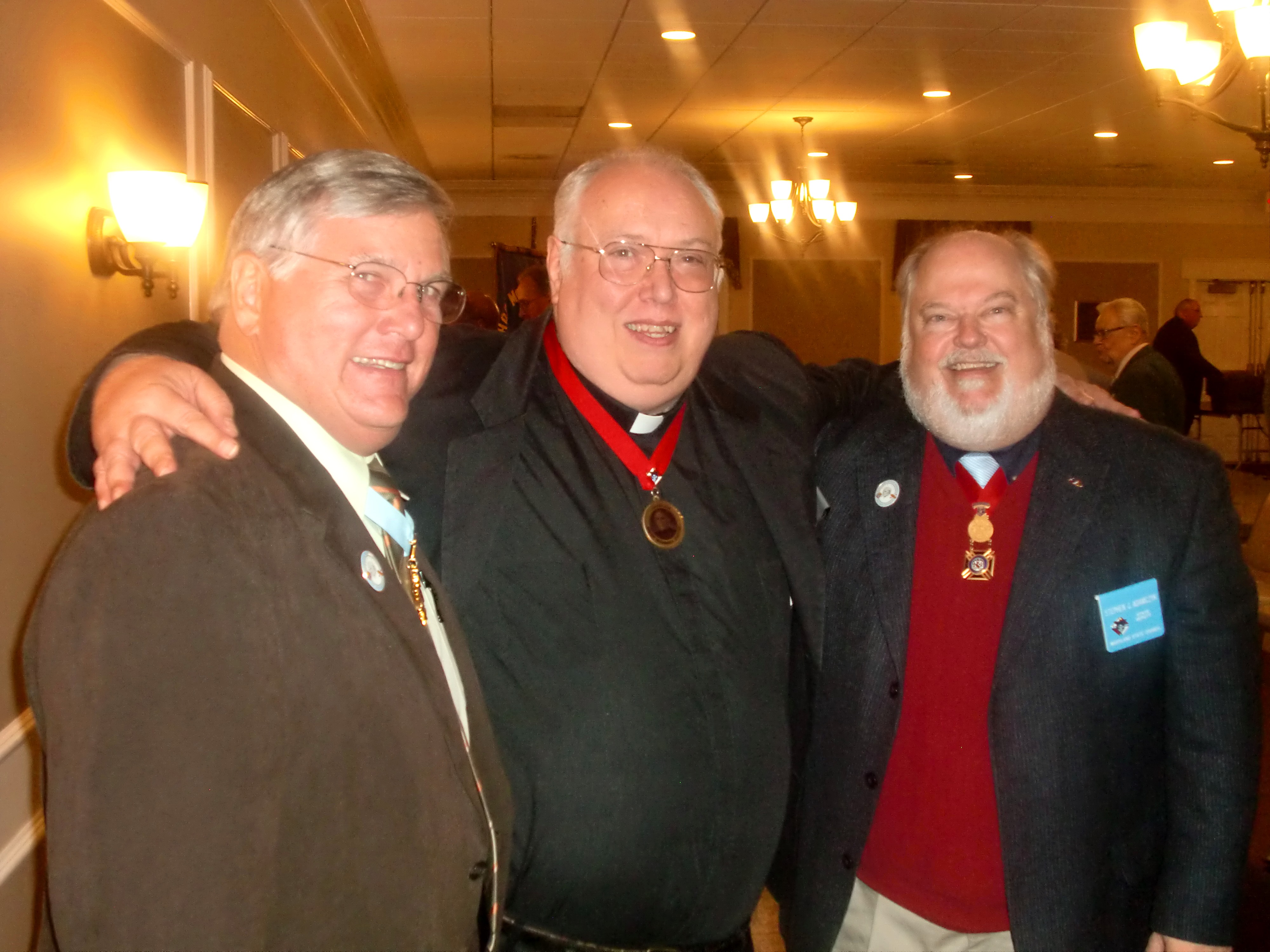
 Msgr. William J. Awalt (Special to the Standard)
I have been encouraged to suggest a few more thoughts regarding the recent survey on the frequency, or rather, the infrequency of reception of the Sacrament of Penance, also called Reconciliation or Confession.
From letters and comments based on the first reflection (Catholic Standard, July 26), I would like to investigate those hesitantly expressed to me.
If a long period of time has passed since a person’s last confession, or if some hidden sin of which he or she is downright ashamed has occurred, then the penitent might ask, “How do I start?” Furthermore, he or she would question, “How do I proceed to make my confession?”
First of all, prayer is an absolute necessity. As we have no doubt all heard, the shortest prayer is “Help!” Afterwards, a simple announcement of our problem would be in order. “How do I begin, Father?” “Would you help me?” “I forget, I don’t know my prayers….” “I don’t know what to say or how to say it.”
From a long and privileged ministry of offering the sacrament, I can say that these are most consoling and gratifying words for any confessor to hear. Why? Listening to these or similar words, the confessor discerns from the penitent both a real need, perhaps urgent, and a genuine contrition.
The priest is overjoyed to assist with what might be called a non-routine confession. (I say this reverently.) Because of the possible gravity of the penitent’s sins and their long hungering for God’s healing grace, the priest knows that these confessions may be far more imperative and important than the usual or more routine confessions.
As a petition, we all need to pray, “Help!” of God and to ask the confessor’s assistance.
Harking back to the first set of reflections on confession, we have to realize that Christ is the one present. He is listening and saying, as He did in the first reading of the 18th Sunday of the liturgical year, “Come… Come… Come.”
Similarly, there is the quotation from the Gospel. “Come to me you who labor and are burdened and I will refresh you.” No matter how we ultimately get ro confession, it is always at God’s invitation. It is not so much our idea as our response to the God who calls us.
I would ask readers to strengthen their faith in the presence of Christ in the sacrament; He is the one who is receiving, healing and forgiving us. It may happen that penitents consider a priest too young or another too old. But age or personality should not be the determining factors in going to confession.
The sacrament is more than the reception of some profound, hopefully competent, advice. And even a young priest is going to be hard to shock, especially if he reads the newspapers. We are not so much seeking him as we are coming to Christ.
From the confessor’s point of view, Paul’s words to Timothy are apropos, “Let no one look down on you because of your youth” (1 Timothy 4-12). Of course, if a confessor is older, it is true that he understands the full weight of life’s trials.
If we need complicated advice, then it is best that we schedule an appointment for counseling outside confession. In the sacrament, any priest, by virtue of his ordination, can make the healing, forgiveness, and comfort of Christ present to us in the Sacrament of Penance. I suppose that all of us at some time or another have experienced a fear or at least an uneasiness going to confession. Perhaps this has arisen from an unfortunate past experience.
One element of this anxiety or hesitancy can be attributed to the concern, “What is my confessor going to think?” Sound familiar? “All this time I have been away, I have done such and such. I have been a good parishioner; what if he recognizes who I am? I am so ashamed.
One of the best solutions I know to this dilemma came my way several decades ago. It is in the form of a short piece on what a soldier’s confessor thinks of him. I re-examine it from time to time when I wonder what my confessor thinks of me or when I want to comfort a penitent.
WHAT A SOLDIER’S CONFESSOR THINKS
“What will the priest think when he hears the load that I have to tell?”
“He’ll think how unworthy I am of such a privilege as this. To be able to send this man out walking on air, forever freed of this burden that he’s been carrying.
“He’ll think what a time this lad must have had getting up the courage to come to confession. What a grand, strong faith he’s got or he wouldn’t be here.
“He’ll think would I have had the guts to go to confession if I were in his shoes.
“He’ll think I’ll bet it’s his mother’s prayer that obtained the grace for him. She’s probably been making novenas for this for months.
“He’ll think this should call for celebration. Didn’t Christ say, “There will be more joy in in heaven over one sinner who does penance than over the ninety-nine who need not repent?
“He’ll think that for the chance to hear this confession I would wait a lifetime. Thanks be to God.”
Filed under: Awalt Papers, Uncategorized | Leave a comment »












 Although the recent disclosures in Pennsylvania and New Jersey have fanned the flames of controversy about abuse by clergy in the Catholic Church, it must be admitted that the Archdiocese of Washington has suffered the most serious blunt of the scandal. One of our cardinals faces censure under a Vatican investigation and the other stepped down after criticism of his efforts to stem abuse were judged insufficient and as lacking transparency. Given the situation, Washington may be the one “hot potato” local church that no bishop will want. Unlike other archdioceses, our numbers are modest and the prominence of the church here is due to the status as the nation’s capital. There are also particular problems with this jurisdiction given that many politicians from other states and dioceses live and work here. Can the ordinary of Washington establish censures or regulations over parishioners that conflict with the rules held by their proper bishops? This is one of the reasons acknowledged why pro-abortion politicians are not refused Holy Communion in Washington. Some national bishops refuse to take such measures and others have dictated this policy to their priests. Of course, it can be argued that there is no middle-ground because a lack of a prohibition already takes sides. Cardinal McCarrick often spoke about this, saying that he did not want to force confrontations at the altar. However, matters were exasperated when he befriended the late Senator Ted Kennedy over protests from organizations like the American Life League. When challenged about it, he argued that the archdiocese and “the Church” needed these politicians to support us on other issues. While only a parish priest, my objection was that if a child is destroyed, for that human person there are no more issues. It also seemed to stand in stark contrast from the guidance given by Cardinal Ratzinger who later became Pope Benedict XVI. Under Cardinal Wuerl, the policy of not withholding Holy Communion became official. The only possible exception would be when the communicant was deliberately inciting a controversial confrontation, as with wearing pro-abortion shirts and hats in church.