 This is a follow up post to a previous one focusing on “the other side” of divorce and upon those spouses who wanted to preserve their unions. The issue of Church censure, annulments and remarriage weigh heavily in the discussion. Here are a number of voices in dialogue about this important matter. The first respondent begins by remarking upon Karl’s charges against the last two popes for not doing enough.
FATHER LONE RANGER:
Pope John Paul II and Pope Benedict XVI are part of the problem? I do not think so. They have sought to address the problem of invalid annulments, but many canonists will not listen to them. The Holy Father has wanted to prevent scandal and so there is a great deal of communication that is never made privy to the general public. The issue is and was extensive dissent, not simply among ragtag theologians, but wholesale among bishops and chancery clergy.
Why does the problem remain? Liberal theologians are also often canonists and the same passivity that the Church exhibits towards politicians and morals is also revealed when facing distraught divorced people who want to erase a mistake and marry again. For all practical purposes, the Church is involved with a silent schism and the Pope knows that if he pushes too hard, the bulk of the American Church will defect, bishops and all. It will be England and Henry VIII revisited with a vengeance.
[At this point he offers a prayer for Karl.]
Dear God, we ask you to bring healing to Karl and justice to the cause that he feels so deeply. Easy divorce is a violation that attacks at the heart of the marriage bond. Vows are made and should be kept. Marriages are not ended by judicial decree or even by Church courts, but by the death of a spouse. Then and only then is a true marriage ended, and yet, even here, there is no end to the love that a husband and wife share. Bless Karl in his life, and watch over and protect his five children. The fruit of married love is real and everlasting (Holly, Mary, Margaret, Monica and Karl Michael). May the good Lord envelop Karl in his loving embrace and give him peace. Amen.
Sign the petition against No-Fault Divorce:
http://www.catholicmarriagepetition.org/index.htm
MARY:
Many of us have been abandoned by our spouses. Life is tough, Karl. But we are not living for joy & happiness on this earth. We are trying to get to HEAVEN …. There is justice after this life if not during. This is why we pray & pray for conversion in our unfaithful spouses so that their hearts will be softened and they return to Christ before their death and be able to obtain heaven. And we pray and pray for ourselves …for the grace to be faithful to God’s Law (especially that of living a chaste life, which is so very lonely) and the grace to imitate Christ in His meek carrying of His cross. And we pray for our children that their hearts not be hardened by the pain of loss they suffer or by being witnesses to bad example (most likely) from both parents.
No, Karl, life is not fair. I also lost a son in a car accident. Does this give me the right to rage against God at the injustice? To rage against others who have not lost children simple because they do not share this particular cross? …To ignore my surviving children, and my other duties because of my pain? My answer to these questions has been NO! You might be surprised how others answer these questions…peek in on a support group for bereaved parents, you may be shocked. As sad as these situations may be or should I say as sad as the sufferings we all face in life may be, we must be willing to do what we can to correct injustice on this earth without going against God’s Law (because the end never justifies the means). Then, we must accept our fate as God’s Will for us and continue to serve Him in love.
WI CATHOLIC:
Although I do not fight in the same way or anger as Karl does, I have to agree with him on nearly everything he has said about the lack of help/assistance for those of us who believe/KNOW that we ARE in a Valid Marriage no matter what a civil divorce court has said, or the world has said… OR Tribunals have said.
I have been told to “Trust the Holy Spirit” and petition the Tribunals, with the additional statements that the alcoholism is a clear indication of NULLITY, and would be adequate grounds to a Null Decision.
Point One: I do not believe alcoholism (sickness and heath, better or worse, good times and bad) are grounds for determining that our marriage was NULL on the day we appeared before God and Man and pledged our vows “all the days of my life.”
Point Two: I am not able to sign the basic forms that are needed to petition due to the fact that I must state that I believe my Marriage to have been Null from the beginning. I do NOT believe that.
Point Three: In a Church which teaches/has always taught that ALL marriages are VALID until proven beyond doubt that they were not, before a Tribunal, I cannot buy into the fact that the Tribunals are being led by the Holy Spirit when the first contact with Respondents is to call my spouse my “FORMER SPOUSE.” Sorry, but the Civil Law means nothing, and my spouse is still my spouse regardless of that decree. CIVILLY he may not be, but in my Church, he is! To me, and to many other faithful spouses who live their vows regardless of what MAN says, in obedience to what GOD says (Jesus Himself four times in the Gospel, as well as in Church teachings)–this is a slap in the face, and a clear indication where “the spirit” lies… and discernment can lead one to believe that it may well be a “false spirit of compassion” that rules the day in our US Tribunals that seems to favor those who destroy the marriage, often by adultery/divorce/civil marriage to the “lover”/and finally, a petition to annul the first marriage in favor of the second, which was based on adultery to begin with.
Point Four: Sites with an appealing name such as “Save Our Sacrament” are not pointed out to be dissident. “Internal Forum” is blatantly featured, in spite of the fact that it is NOT to be used for Marriage/Divorce, and no one in the hierarchy calls them on it publicly. No one preaches the Truth on Internal Forum in the local parishes where it is “taught” by priests, etc. It is allowed to stay online for years (as in St Anthony Messengers article by Fr John Catoir on the topic). THIS is SCANDAL.
http://www.saveoursacrament.org/
S.O.S. is a member of Catholic Organizations for Renewal (COR).
http://www.cta-usa.org/COR.html#list
Yet, the very cry of most of us who do NOT want NULL verdicts, but the TRUTH of the VALIDITY of our marriages is corrupted by this website. What is promoted there is not saving the Sacrament. It is watering down Truth to fit society’s plunge into the Pit. It is, essentially, what Henry VIII said/taught after Rome refused to grant a NULL verdict about his marriage to Catherine of Arragon.
I do love my Church, and there is no place else I would go. I could not leave Him (The Eucharist) any more than I can quit my vows. To do so would be doing to HIM what my spouse did to ME so long ago— Desertion— forced unilateral divorce— attempting to say that something that EXISTS never really did in the first place.
Yet my Church, which used to defend those of us who remain faithful till death, vehemently, has done this to us by allowing the US Tribunals to grant so many NULL verdicts and to tell us that this is “right” and “true” and “spirit-led.”
If there is a schism here in the US, it will ONLY be VISIBLE evidence of what is already happening! “My people PERISH for lack of KNOWLEDGE!” …of TRUTH. Truth needs to be preached, and to be acted on, or “the spirit of compassion” (which I firmly believe is a False spirit) will continue to overtake Truth. While the Gates of Hell will not prevail against His Church—many of the members of that Church may end up on the other side of those very Gates.
In our situation, the civil wife KNOWS the Truth, and told our children that they (civil wife and my spouse) cannot go to Communion because according to the Church, they are living in sin—her words in the very beginning of that “marriage.”
Another in our family, an in-law, was told by her priest-friend that as long as SHE knew in her heart that the first marriage wasn’t valid, she could avoid the Tribunal and still receive Communion…and she does on the rare occasion she attends Mass.
No one refutes this from any pulpit in our area (and I would be willing to bet, in few nationally). In fact, I have heard only ONE sermon on Jesus’ words on divorce (I believe they show up once every three years in the Gospel readings of Sunday Mass, though it MAY be twice) in all the years since our separation in the early 80′s! And that was watered down….
Karl has very valid points. His anger is, in many ways, justified.
Too many are willing to compromise to “protect the feelings” of those in the pews who may need to hear Truth in order to save their very souls. It is Truth that sets us free, not compromise, not justifying Sin and condoning it with an official “verdict” that is based on today’s psychiatric diagnoses.
His People Perish for Lack of Knowledge… and Hell is for Eternity.
FATHER JOE:
The bit about “sickness and heath, better or worse, good times and bad” are not in reference to things that would invalidate a marriage in the present. If you become a drunk after you are married, there are no grounds for invalidation. If you develop psychosis after marriage, you are still married. If a man has a fishing accident with a hook while on honeymoon and castrates himself, as long as there has been a consummation, he is truly married. But, if any of these things happen prior to the marriage day, then the couple is out of luck. Annulments are granted because people conceal problems from the priest and sometimes try to do so even from themselves. An annulment means they should NEVER have gotten married in the first place and that the sacrament or natural bond is not really present. There is a legal union (both in the Church and in civil society) and for that reason children remain legitimate even after an annulment.
Alcoholism can vary by degrees; however, a person who is grossly incapable of dealing with his own life can hardly make a marital commitment to another. Like paralysis, certain maladies can make the fulfillment of marital duties impossible or highly improbable. If such is the case before the vows are taken and on the appointed day for a marriage, the bond could indeed be invalidated. Indeed, if priests are aware of a problem like alcoholism, we are forbidden to marry the couple. I ask about addictions and diseases prior to witnessing marriages. If they lie to me that deceit can also invalidate the marriage. People have a natural right to marriage, but some like me freely renounce that right and others are incapable of it because of either faulty intention, dishonesty, impotence, addiction, hatred (rejection) of children, physical incapacitation, sexual corruption, or mental aberration.
A person who is HIV positive cannot be married lawfully in the Church to a non-infected person because non-contraceptive intercourse required for consummation is possibly deadly to the spouse. A paralyzed man cannot engage in the marital act and get married, with the possible exception of those with artificial intervention to restore potency. Couples who are sterilized are routinely required to attempt surgical reversals in order to have a sacramental wedding. People who are mentally deranged and/or who take drugs for mental diseases are not normally able to marry. Medication to control various mental illnesses would deform a fetus. Alcoholism or any other kind of serious drug addiction invalidates the marriage vows and bond. A heroin fiend cannot truly fulfill his vows and is lying to his beloved and the priest. The same goes for gross alcoholism. It is a sickness, but there is a moral element related to it. I knew a man who was an active alcoholic who had his prior bond annulled on the grounds that his addiction made him incapable of marriage. He then wanted to get married again but a “monitum” prohibited any priest or deacon from marrying him until a doctor certified that he had found sobriety. He remained a drunk and so he could not marry again. The last time I saw him, he was begging for money on the streets.
You write: “I am not able to sign the basic forms that are needed to petition due to the fact that I must state that I believe my Marriage to have been Null from the beginning. I do NOT believe that.” Fine and good, you should not sign them if you disagree. Indeed, if such is your conviction, you should never remarry even if the spouse does so, in or out of the Church. Marriage is a one-time sacrament. I cannot say that the Tribunals are always right about these things. The culpability is more upon them than any individuals they mislead. However, the process, while imperfect, is an attempt to protect the indissolubility of marriage while being compassionate to those who might have grounds for nullity.
I am not familiar with the website SAVE OUR SACRAMENT although I am familiar with internal forum between couples (usually elderly) and the pastor. They are required to live as brother and sister and they are not to advertise the nature of their relationship so as to avoid scandal. I worked with just such a couple many years ago who were in their 90′s. They have since passed away.
If your husband has civilly remarried, he is not in good standing with the Church. He is still required to go to Sunday Mass and to make sure that any children receive the sacraments. However, as long as he cohabitates with this other woman, the status is regarded as adultery and no personal sentiment or feeling on his part would allow him to receive communion. Indeed, he cannot receive absolution from a priest, either. He is apparently in a state of mortal sin. His in-laws are grievously wrong to tell him otherwise. They are numbing his conscience and that of his civil-wife to the fact that their eternal salvation is at stake.
I cannot speak about your case because I do not know the particulars. Since there is a civil marriage, I take it that no annulment was granted. If you felt that the first marriage was the valid one, then you are right to oppose the annulment, although they are sometimes granted despite opposition. If your husband and his civil-wife were really good Catholics, they would not want to live in an adulterous relationship. If you really loved someone, would you do something that would deprive them of the Eucharist and maybe even cost them their salvation in Christ? I asked this of a priest who left and attempted marriage. He said he loved the girl. I argued that he did not love her enough and that he was selfish. Better for a priest to suffer in his loneliness than to cost another the gift of sanctifying grace and the reception of the Blessed Sacrament. He did not know what to say. He knew I was right. He said he would get laicized. But at that time he was still married to the Church and what if she should die before laicization was granted? He would have to live with the terrible possibility that he sent to hell the person he most loved in the whole world.
I preach upon this subject of divorce and annulments, as well as upon the crisis of premarital sex and cohabitation. Not all priests are silent. I am sorry about your pain. You can pray for him and continue to witness to your vows. We all want joy, but often what we get is the Cross.
WI CATHOLIC:
I have reconciled myself to living my vows alone till one of us dies. Our civil-forced-divorce was way back in 1985, and I have long been able to praise Him and to forgive my spouse. I pray for him and for the civil wife all the time. (She and I have spoken; she has been praying for my health recently, much to the chagrin of xxxxxxxxx). My primary desire is his salvation and sobriety, as well as mine. Hers is secondary. Reconciliation at this stage is totally up to God Himself.
Yes, it is MY understanding also what counts is prior to marriage, and the wedding day itself, not what is diagnosed 10 plus years after the marriage. But that is not what happened in our area, and it is not what I have been told by at least three priests. I have been me telling THEM this fact.
I can believe that you do teach on the subject, Father Joe, because you are one of the rare ones who speaks of this topic ONLINE, too. But in most places, it is avoided like the plague.
Civil divorce is taken as proof that the marriage was not a marriage most of the time now, or “it would not have ended up in the divorce courts.” But this is not true.
We are still a largely forgotten group of very Faithful Catholics, most often looked upon as pitiable, rigid, angry, bitter… even “pus-filled.” I assure you, most of us are not. When WE plead, “Save our Sacrament,” WE are begging the Church to stand with us regarding the validity of our marriages. We are not looking for a “way out,” but help to work toward reconciliation, healing, and maintaining the validity and permanency that Jesus Himself insisted upon.
As for Internal Forum, I cannot begin to claim the education others have, but I have spent the past 25 years learning as much as possible. One source:
Joseph Cardinal Ratzinger, Cardinal Prefect of the Vatican’s Congregation for the Doctrine of the Faith (CDF), and now Pope Benedict XVI writes forcefully on the subject of the indissolubility of marriage. He concludes such a statement regarding the International Theological Commission’s Propositions on the Doctrine of Christian Marriage:
I would underscore that what is at stake in respect to the teaching of the indissolubility of marriage is nothing less than the Church’s fidelity to the radicalism of the Gospel. “The severity does not derive from a purely disciplinary law or from a type of legalism. It is rather a judgment pronounced by Jesus Himself (Mk 10:6ff). Understood in this way, this severe norm is a prophetic witness to the irreversible fidelity of love that binds Christ to His Church. It shows also that the spouses’ love is incorporated into the very love of Christ (Eph. 5:23-32).”[6]
In short, because marriage is an irrevocable covenant established by God, it is not a mere personal and private act. Marriage consent pertains to the common good and directly effects the Church. Subsequently, a mere personal and private act cannot substitute for a judgement of marriage nullity. In determining such a grave matter, only the Church herself, acting in the name of Christ, has competence to pass judgement.
http://www.cuf.org/Faithfacts/details_view.asp?ffID=54
God bless! (I can still understand Karl’s anger and frustration.)
KARL: Hang in there, WI Catholic, I do love the Catholic Church, just can’t live with her.
WI CATHOLIC: Thank you, Karl. God bless you!
Filed under: Adultery, Annulment, Catholic, Divorce, Family, Marriage, Morality, Sexuality, Sin, Uncategorized | 3 Comments »













 The story of Jesus appearing to two men on the road to Emmaus is one of the most famous of our resurrection accounts (see Luke 24:13-35). The last phrase, “. . . they had come to know him in the breaking of the bread,” speaks to us about how we encounter the risen Lord in our Eucharist. The Eucharist is Christ’s living legacy to us. No matter what age it might be, he does not abandon us. After his ascension, the Lord continues to abide in his early disciples as well. He sends them his Spirit and works his ministry through them.
 From the very beginning, there would be those who would doubt the resurrection of Christ. Indeed, even one of his disciples, Thomas, would have to be challenged by Jesus himself to touch his wounds before his skepticism could be swept away. However, the Gospel chronicles another type of rejection as well, one far more resistant to the truth (see Matthew 28:8-15). The chief priest has an inkling that the story of Christ’s coming back from the dead might bear some truth. It is this possibility which he and his cronies seek to hide behind lies. So, they bribe the soldiers to say that Jesus’ disciples had stolen the body at night.
 The cast of characters and events in John 20:1-9 fuel our hope. They include Mary Magdalene, Simon Peter, and John. But notice who is absent in our reading; although it is a Gospel and therefore about Jesus, he is neither seen nor heard. All we have is the empty tomb and some surprised disciples. The story, of course, goes on; but, the Church in its wisdom feels that this passage alone would suffice on Easter morning at Mass. Why is that? Let us look at the story.
 The feast of Christmas is very important in preserving an authentic understanding of the identity of Jesus. It is for this reason that the Knights of Columbus each year promote their loyal “Keep Christ in Christmas” campaign with essay and poster contests. Of course, it has been argued that the abbreviation “X-mas” still preserves something of the truth in that the “X” is an ancient symbol for the Cross and thus, by association, for Christ, himself. Those who malign the celebration of Christmas as a religious holiday, more so than not, minimize the mission and identity of the Lord. There is a minister, nationally televised throughout the nation on Sunday mornings, who annually assaults the meaning of Christmas. He actually claims that the Jesus who walked on earth was a different individual from God’s eternal Son in heaven. Jehovah Witnesses reduce Jesus to an important prophet but sidestep the dilemma that unless he is God then the charges of the Pharisees and the Sanhedrin stick. Only God can forgive sins. Only God could save us. Another evangelist bewails the fact that at Christmas even the most sanitized Protestant worship space looks like a Catholic church with the various “idolatrous” statues of Jesus, Mary and Joseph. This is peculiar in that many of these same churches will return to repudiating such graven images come December 26 and argue that Catholicism has stripped the corresponding commandment from the Decalogue. Our view is not all that complex, although it is perfectly reasonable: the incarnation of Christ alters forever the economy of images. Jesus is the revelation of the Father and God with us. Now, the image of the creature can convey something of the dignity of God and his involvement in salvation history. Representations of Christ, the Virgin Mary and other saints are not worshipped in themselves but constitute a language in pictures that moves the mind and heart to the truth of the Gospel. A crucified figure on the Cross or any baby in a manger is recognized immediately, even by a child, as Jesus. One of the most heated debates on Internet message boards is between hard-line Seventh-Day Adventists and mainline believers over the correct Sabbath and the so-called pagan origins of Christmas. Protestant Christians are ridiculed for following Catholic institutions not mandated by the Bible. The Mormons often have very elaborate and beautiful commemorations for Christmas; however, they deny that Jesus is the unique or only Son of God the Father. This difference is critical because a denial of monotheism separates them from classical Christianity as well as from Islam and Judaism.
 The presence and participation of girls as altar servers has become fairly commonplace since their official introduction in the 1990’s. Just as we would hope that our young men might be inspired to consider a vocation to the priesthood; it is desired that our young ladies might give some thought toward a calling to the religious life as either a sister or a nun. While it is only “private” revelation, I have routinely shared with our altar girls the following citation from Mary of Agreda’s CITY OF GOD about the Virgin Mary’s service in the temple:
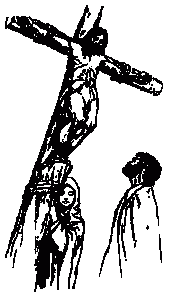 Jesus is our High Priest. Unlike the Jewish priests, he was not given his role by human authority and neither did he have any personal sin for which he needed to make an offering. Jesus took upon himself the punishment that was rightfully ours. Certainly his death on the Cross brings immediately to mind the great offense of our sins. We did not deserve such a Savior who would make himself priest and saving victim. Looking upon the Cross should serve as a remedy for our pride and lust, unless we have desensitized ourselves to human suffering. Jesus repairs the damage inflicted by Adam and Eve. His death will render satisfaction for all the sins of their children.
 The long-awaited Jewish Messiah comes into the world (Matthew 1:1-25). The Genealogy of Jesus is traced to his stepfather, Joseph and the remaining Gospel text affirms the virgin birth. It was customary for people to marry within their tribe. Thus, if Joseph was of the line of David then Mary would be as well. Despite the fact that the conception was made possible through the intervention of the Holy Spirit, it was customary to trace the family line through the father. Again, affirming that Jesus was the promised Messiah of the line of David, Joseph and Mary go to David’s town of Bethlehem for the census (Luke 2:1-14). The story is familiar; there was no room at the inn and so the Christ-child was placed in a manger, a feed box for animals. Today, upon the manger of the altar, we again find Jesus, who makes himself a saving food for men and women. The angel makes the wonderful pronouncement to shepherds and the hosts of heaven rejoice. It is part of Christian folklore that the devil and the other fallen angels were thrown out of heaven precisely because they refused to have any part in this angelic rejoicing. He would not bend the knee or give glory to a God dressed in human flesh and made vulnerable to human caprice. The shepherds visit the nativity (Luke 2:15-20). Mary “treasured all these things and reflected on them in her heart,” an indication from St. Luke that Mary was one of his sources for the nativity narrative. The great theologian of the evangelists, John, speaks of the pre-existent Word that became flesh, the only Son of God come into the world to save us and to bring us to the Father (John 1:1-18). The Jewish Messiah is revealed as the World Savior and God come among us.
 “Father, Lord of heaven and earth, to you I offer praise; for what you have hidden from the learned and the clever you have revealed to the merest children. Father, it is true. You have graciously willed it so” (see Matthew 11:25-30).










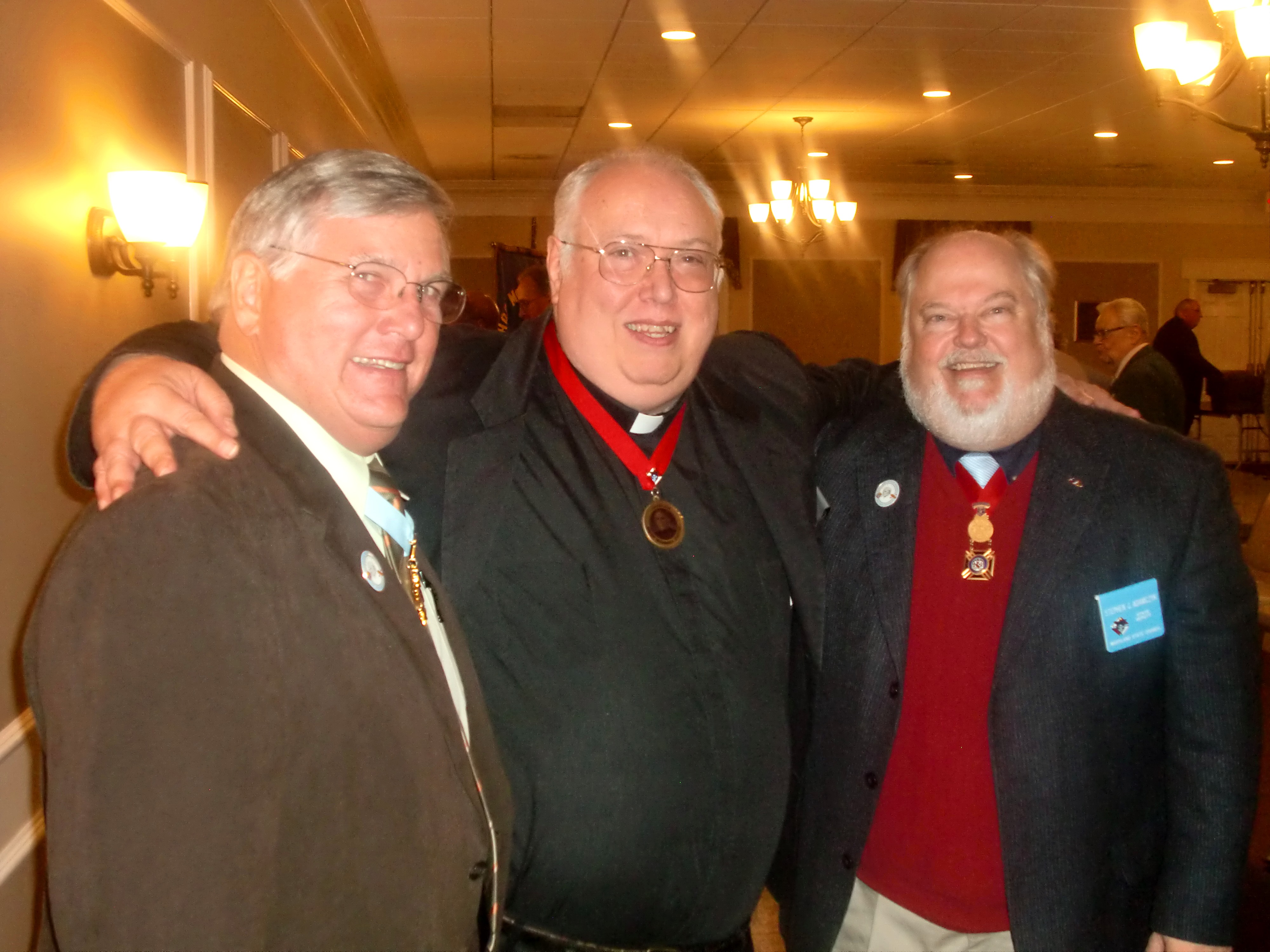
 Blogger Priest