• Our Blogger

    Fr. Joseph Jenkins

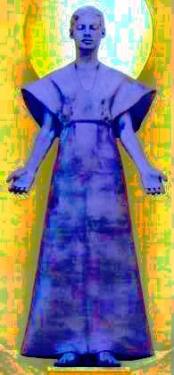
  • An important theme for this blog is the scene in the New Testament where Jesus can be found FLOGGING the money-changers out of the temple. My header above depicts a priest FLOGGING the devils that distort the faith and assault believers. The faith that gives us consolation can and should also make us very uncomfortable. Both Divine Mercy and Divine Justice meet in Jesus. Priests are ministers of reconciliation, but never at the cost of truth. In or out of season, we must be courageous in preaching and living out the Gospel of Life. The title of my blog is a play on words, not Flogger Priest but Blogger Priest.

  • Archives

  • Categories

  • Recent Posts

  • Recent Comments

    Barbara King's avatarBarbara King on Ask a Priest
    Ben Kirk's avatarBen Kirk on Ask a Priest
    Jeremy Kok's avatarJeremy Kok on Ask a Priest
    Barbara's avatarBarbara on Ask a Priest
    forsamuraimarket's avatarforsamuraimarket on Ask a Priest

Gone Fishing: Called Out into the Deep Water

When Jesus called me to be a priest, it was as if I were one of the fishermen in the boat with Peter and I heard him say, “Put out into the deep water.” Never having learned to swim, the prospect of such a literal action would be very frightening to me. But, the spiritual enactment of these words was no less daunting. There were many hurdles and risks. A psychological test was required. A number of people thought I was a bit off; did I want to risk confirmation that I was crazy? There was the medical examination and the physical challenges. I was a lifelong asthmatic with poor eyesight. My back had been bad from my youth. If accepted, there would be eight years of education; did I have sufficient grey cells to properly know the faith and to teach it to others? As a child when my mother tried to place me in parochial school, the good sister rejected me as too sickly and stupid. Later, in public school, I would fail first grade. The teacher told my mother that I was “retarded” and needed to go to a “special” school. Mother argued and thankfully another teacher stepped in and made a difference. Facing the prospect of years in formation, was I spiritually prepared and able? I went to Mass every Sunday and said my prayers but had done little in the way of church service. I had been kicked out of Sunday CCD early in high school. The teacher said there was nothing he could teach me. I had always behaved myself, but the eventual promises of perpetual celibacy and obedience also weighed on my mind. I was a good kid but sometimes got into fights. Whatever mischief my brothers and I engaged, my father always pointed to me as the “ring leader.” When it came to girls, I had many romantic thoughts but found them infinitely mysterious. Nevertheless, I came from a large family and knew that not having one of my own would be a terrible sacrifice. Of course, that was the whole point about the priesthood— sacrifice. Lastly, there was the question of money. My family was poor. If the Church wanted me as a priest, then the Church would have to pay for it. My family made sacrifices, but this matter worried me to no end. If I failed, then all the costs for seminary education would fall on my shoulders. It would mean years of debt for an education that would not easily translate into any successful secular occupation. A friend of mine who left was so plagued by the expenses that he enlisted in the army to defray them. Part of me was fairly certain that my application for seminary would be denied. Two weeks before starting at a regular college, I got the word. I had been approved. Every year after that I felt sure the faculty or bishop would catch on and dismiss me as unworthy. It was this that fueled my surprise when I stood before the archbishop on the day of my ordination. Oh my goodness, I thought, they’re actually going to it! The Church was going to make me a priest. I could not shake the notion that the Church must be pretty desperate to want me. But, for what it was worth, I would employ my poor gifts for the good of God’s people and seek to give God the glory.

Gone Fishing: The Biggest Fish Story Ever Told

Fishing entails real work, but there are extended periods of rest or inactivity. In my own reckoning, I have always associated it with finding buried treasure. The fish are hidden under the water and are acquired at the end of a baited hook or net. What we do or do not get is received as a gift, and if plentiful, a welcomed surprise. When something really huge is caught, we have the makings of “a big fish story.” The Good News of Christ represented the greatest story that mankind had ever heard. It was also one filled with surprises. While fish stories tend to get bigger or more far-fetched with each telling; the truth of Christ’s message exploded way beyond the capacity of the words we might find to convey it. God loved us and wanted to forgive our sins. The time for healing the breach between heaven and earth had come. Jesus was Emmanuel or God come down from heaven to save us. Even as Jesus was rejected, he would offer his life in atonement for our sins. Jesus would redeem us from the devil and conquer both sin and death. Jesus would overcome the grave and give us a share in his resurrected life. There was just no topping such a story. Of course, the analogy with fishing falls apart. The great treasure is not so much associated with fishing for souls as it is in the bait that is given to us or the counsel as to where to throw our nets. Just as in baptism where we are submerged or die with Christ so that we might live with him; there is a level of risk and trust in baiting our hooks or nets with Christ in the hope that we might catch others for the faith. We have to trust the bait and the counsel given. If we fail to live out the faith we profess with our lips, only going through the motions, we might find ourselves with empty or torn nets. The bait that we relied upon might itself be found lost from our hooks. Then we would have nothing.

Gone Fishing: Catch or No Catch

There is something very conducive to meditation about fishing and boating. One is always prepared for the surprise of the catch; but one could also enter a trance by looking at the light reflecting on the moving water. I knew one fellow who regularly fished at a small mountain lake. However, it was common knowledge that there were no fish stocked in the lake. When asked why he engaged in such a futile occupation, he said that he was not even partial to fish, but enjoyed the activity itself. It enabled a link with nature and the God of nature. He could reflect deeply about his life, the things that mattered and invite God to communicate through the stillness and silence. It allowed him to get away from the noise and busy-ness of the world, so that he might better commune with God. I have something of the same appreciation of fishing, both in a real boat and in the ark that is the Church. We might not even be good fishermen, but the real work belongs to God. When the disciples had fished all night, catching nothing; our Lord sent them out again and directed them in throwing out their nets. It was then that they made their catch and found their nets at the bursting point. However, even if nothing is caught, the spiritual fisherman can take solace in doing as he is told. God does not demand that we be successful, only that we be faithful.

Gone Fishing: When Fish Bite Back

Many years ago, I shared a boat ride with a few brother priests on the Sea of Galilee. It is a freshwater lake. I tried to imagine myself on a more primitive boat with fishermen and the new prophet and teacher, Jesus. Some would call him, “Messiah,” but from the perspective of history and faith, I would call him, “Lord.” My momentary absorption was broken by the pilgrimage guide speaking about problems faced by contemporary fishermen. It seemed that some idiots had dumped piranha into the water and the wicked fish were flourishing, to the chagrin and financial downfall of those who made their living there. I pulled my hand that was lazily hanging over the side back into the boat. What would Jesus have made of that? Our Lord told his disciples that he would make them fishers of men. But, now the fish could bite back, both literally and figuratively. Like the interloper piranha, sometimes men resist the nets of the Gospel and the fishermen themselves become victims of the sea and their would-be catch: we call such fishermen by another name, martyrs. Of course, not everyone remains steadfast. Sometimes those who seek to spread the truths of faith are ill-equipped, either intellectually or spiritually. They become seduced or converted, themselves, either to religious falsehood or to the incomplete answers of a secular and/or atheistic modernity.

Discussion About Priestly Service, Scandal & the Church

GH: (initial statement)

The Church has brainwashed you and you are a mere puppet of this institution! It is like a cult, if you do not OBEY or agree with every belief and precept 100%, you are OUT!

I walked away from the church after 25 years of trying to be a good Catholic because all I witnessed were MANY priests leaving to get married. (I knew of 12— that’s a LOT in such a time period!) Several others stayed and had women on the side. Oh yeah, these guys heard my confessions too and had the power to take my sins away— what a joke!

I suppose you think that when they die they will burn in hell, the ones who left and were laicized, I mean. Is this a loving reaction, BANISH them forever? (Their love is disordered, unholy and they all end up divorced, too.)

You wrote that there were only a FEW rascals? You sir are deluded! You try to maintain a facade of good and holy priests; I do not doubt there are some, and in fact pray there are, as we need them. Sadly, I think that it is the exception and not the norm.

You blame the individual men themselves (who left to get married). They wanted to serve God but perhaps after a while felt their heartstrings pulled one time too many? Or maybe they just gave into what you regard as the great sin of falling in love and wanting to be with a woman. Therein rests the conflict of wanting to serve God and wanting to love one of his creations. Why does there have to be a choice and why is the punishment from the church so final and damning?

But there is something wrong with a church hierarchy that claims to have the only true pipeline to God and to the truth while insisting on celibacy that apparently so few can truly live out.

FATHER JOE: (immediate response)

You might like to think that people like me are brainwashed, but nothing could be further from the truth. I was a public school kid. I was even kicked out of Sunday high school CCD. No, I was not stupid; rather, my teacher said I knew too much. It was embarrassing my slower classmates. Actually, I think it was correcting my teacher a few times that was the last straw! Because of ill health and asthma, I read a great deal on my own. Religion fascinated me, but I was no one’s robot. I became convinced of the Church’s claims and tried to appreciate them, not simply from authority but from my reasoning.

If people do not clearly understand their faith, we do not kick them out of the Church. We invite them to read the catechism, adult formation classes, and bible study.

If you left the Church because of hypocrisy then you placed greater faith in men than in God. It is no wonder you defected. You are just making excuses for yourself. You could have stayed in the Church and supported those priests who were faithful to their promises. Instead, you joined the crowd of bad priests and womanizers. How can you complain about them when you aligned yourself with them against the Church and her faithful ministers? You join the chorus of those who mock Catholic priests and their ministry of reconciliation. You should be ashamed.

You are another one presuming that priests like me damn the defectors and others to perdition. Where do you get such ideas? We preach about the mercy of Jesus and yes, about his justice. But God will judge you and me. We are all sinners. The posture of any good priest is to pray for others, especially for those who leave the Catholic fold.

I am not deluded, I am a priest and I know my brother priests. Most are good and holy men. While you falsely depict me as damning others; you have judged me and my brother priests. A few have disgraced themselves and have made headlines. The most publicity many of us will ever have will be our obituaries.

You have been away from the Church and yet you think you know the truth about her priests. You should not sin by such presumption.

Promises are made to be kept. No one forced their hand. I am responsible for my priesthood and so are they for theirs.

Would you excuse a married man who fell in love and left his wife for another woman? I can well understand sinfulness, weakness and passion. All priests over time have their heartstrings tugged; but that is when we embrace celibacy as a true sacrifice.

But what punishment is so final and damning for those who leave? A priest who wants to get married may eventually get laicized. He leaves ministry. However, if he marries in the Church then he can return to the sacraments. He can form his children in the Church. He remains a priest forever but in practice is reduced to the lay state. No one says that he must be consigned to hell.

The deposit of faith is made permanent with the death of the last apostle. No new doctrines are invented although there is organic development. Jesus institutes the Catholic Church and establishes a teaching authority. These are the facts as the Church sees them. Anyone can encounter our Lord in Scripture, prayer and in the Church. The hierarchy shepherd the Church and the Magisterium has a charism to preserve the truth in every generation. Over the centuries, the Church discerned that a celibate priesthood best served the needs of God’s people. I believe this is still the case and I trust God’s grace to help priests in being faithful to their commitments. Yes, there have been some bad apples. But you wrong many good priests. About this you should be ashamed and ask pardon.

I will pray for the healing of your hurt and anger. God bless you!

Subsequent Dialogue

GH: That is the Catholic way, to put shame and guilt on people. I should be ashamed?

FATHER JOE: I do not know what you did. If you did something wrong, then yes, you should feel guilty and ashamed of yourself. Feeling guilty is not a bad thing, when you are guilty. Such remorse moves a person to repentance and to reforming his or her life. The trouble today is that many people no longer know shame and people tolerate all sorts of nonsense. Children and young women dress immodestly. People use bad language without so much as saying they are sorry. Couples cohabitate and fornicate and then get mad when the priest challenges them to either separate or get married. Yes, such people should be ashamed of themselves, not simply because they have destroyed their reputations, but because they have dishonored God by their disobedience.

GH: The ones that should be ashamed are those priests I speak of— I have seen repeated sin and hypocrisy and men masquerading as true priests; they are the ones who MOCK the sacrament of reconciliation, Father, not me.

FATHER JOE: Hopefully bad priests do feel sorry for their poor witness. But there are also good priests who should not have their faithfulness mocked or their ministry invalidated by the failures of others. In any case, we are all sinners; there is enough blame to go around. Just because the shepherds sometimes fall short is no license for the sheep to get lost as well.

GH: Yet they will not leave because they are afraid to; so they live a double life.

FATHER JOE: If you know of priests living double-lives then tell the authorities. They will put an end to it. If this is too drastic, then tell a good priest in confidence and ask him to talk to a rascal in the ranks. I have read the riot act to men and some will listen. But as I said, most priests I know are faithful to their promises and ministry.

GH: I am not wronging the good priests. Where did I say that?

FATHER JOE: Look at your words. You lump us all together and contend that there are more bad apples than good. Such has not been my experience and I have been an active priest for 25 years and in the seminary for 8 years before that. On top of it all, you said that the poor witness of priests caused you to leave the Church. That means you saw nothing worthwhile enough in the work and character of good priests to remain in the fold of Christ’s Church.

GH: I said that there are some true and holy priests, yourself one indeed, but I feel they are in the minority.

FATHER JOE: And, while I appreciate the commendation, I sincerely believe good priests are in the majority. Sure the Church went through some hard times. Many priests defected in the 1960′s and 70′s. Some had trouble with the reformed liturgy. Others thought the rule of celibacy was going to be relaxed and they wrongly got ordained with this false expectation. The 1980′s and 90′s brought the almost unbelievable scandal of child abuse. Homeschoolers and other die-hard Catholics kept the faith and now their children are entering the seminaries in droves. This new generation of clergy is very traditional and serious about their commitments. They are joining ministry with those who remained faithful and steadfast in priestly work. Yes, there were some womanizers and misbehaving homosexuals hiding in the ranks; but as they have been identified they have also been expelled from the active presbyterate. Some men with problems, as with a woman or alcohol, have sought counseling, reconciliation and moral reform. This deserves mention in any evaluation of the Church, too. There are real signs of hope, today.

GH: Yes, this is sad. Perhaps, I have been unfortunate enough to have been exposed to far too many of the so called “few bad apples”?

FATHER JOE: This may be the case. Not every diocese is the same and some formation programs were more successful than others.

GH: I don’t see a long line of potential men answering the call either. Why do you suppose that is? There has been much damage done and a great need for healing in the Church. I unfortunately am one of the casualties.

FATHER JOE: I am not sure how you would see the new men coming forward for priestly ministry, given that you have exiled yourself from the Church. Numbers could be better and worldwide; many missionaries are coming from the Third World to reconvert Europe and the West. The dissenting and progressive Catholic families either had no children or a few who were secular and uninterested in vocations. Our more traditional homes are having large families and encouraging their children to be priests and nuns. This is where the next generation of vocations is emerging. The dissenters have contracepted and aborted themselves out of existence. The youth symbolized by the thousands that celebrate World Youth Day with the Pope are serious about their faith. Indeed, they seem more fervent than their parents. The Holy Spirit is not done with the Catholic Church, yet!

GH: I have read in other topics on your blog that you feel such men are “risking their soul to hell.”..You may as well say they will go there.

FATHER JOE: All mortal sin is risking hell. You cannot fault me for a basic teaching of the catechism. But God will be their judge. He will also be the judge of you and me.

GH: It is all semantics and how you word things.

FATHER JOE: No, such should not be the appreciation of Christians. After all, we follow the living Word and his testimony should never be regarded as confusing semantics. Do not be like Pilate who said back to Jesus, “What is truth?” Jesus is the WAY and the TRUTH and the LIFE. It is still the message and person and saving activity of Christ that is proclaimed and made manifest in the Church. The ministry of priests who participate in his high priesthood is still essential to this Good News.

GH: Then you try to put even more Catholic guilt on me because I have walked away from an institution that makes no sense to me anymore. I have not walked away from God, only the Catholic Church. And we all know that the Catholic Church feels those who do that are also— you got it— “risking their souls to hell.”

FATHER JOE: Jesus established his Church as the living sacrament of salvation. It is a new People of God. Our personal salvation comes within this community of faith. That is why Jesus gave us the sacraments. He extends his work through the ministry of priests. I am sorry if I increase your unhappiness. While I cannot control what you would do, my hope is that you would come home to the safe harbor of faith. If anyone hurt or abused you, I am truly sorry. But that is not what the priesthood and the Church are really about. My work as a priest centers upon teaching the truth, celebrating the Eucharist and bringing healing to others. I would have you seek the sacrament of penance and absolution. You would still have a right to be upset with those priests or churchmen who disgraced themselves. But if they were about the work of the devil then who wins if you should be forever alienated from Christ’s Church? Don’t let the devil win in your life. You say that you still have faith in Jesus; then seek out a good priest. Share your whole story and even your anger with him. Return to the sacraments. You might even think that the discipline of compulsory celibacy should be reviewed. But we need humility and acceptance about such things. We need good people to build the Church up again. Maybe God wants you to be one of those people?

GH: The church exerts her absolute power over her priests that leave… even the ones who are laicized; they are not even permitted to read God’s word or act as any type of lay minister. This to me is unjust punishment.

FATHER JOE: Were you a priest? The priesthood is a ministry that belongs to the Church. She has the right and the authority to regulate it as she sees fit. No man was forced to become a priest. Every man who made a perpetual promise of celibacy had six or eight or twelve years of formation to think about it. I believe that God would give the good candidate all the graces he needs to live out this promise. But we are sinners. A few fail. Often they were remiss in their prayer-life and various duties. One person began to mean more to them than the many over which they were given charge. All the Church asks is that we keep our promises. Laicization is the best that the Church can do. It allows a man to rebuild his life while protecting the ministries of the Church from further scandal. The men themselves often ask for it, particularly if they want to remain within the bosom of Mother Church. The restrictions also help to protect the good name and the authority of the priests who keep their promises and remain on the job.

GH: A priest who leaves is a disgrace and an anathema in the eyes of the church. I said the eyes of the Church, NOT God.

FATHER JOE: Here I would disagree. Such a priest made promises or solemn vows. Yes, they were made to the bishop or superior, but also to Almighty God. Breaking our promises to God is a genuine tragedy. God is the one who gives the initial call. The Church later affirms that divine summons.

GH: The analogy that priests are wed to the church is also overused and makes no sense if the church does not in turn use that same analogy with regards to divorce when priests are laicized.

FATHER JOE: Analogies are not exact, but the comparison of things that share some likeness. The marriage analogy would not make married priests impossible. After all, we have some licitly married priests already. The marriage analogy flows from the meaning of the Eucharist. It participates and manifests something of the marriage banquet of heaven. It is not the same as an earthly and carnal marriage which is dissolved by death. The priest participates in the priesthood of Christ who is the groom to his bride, the Church. This relationship is eternal. The new laicization process makes the laicization stages similar to a Church annulment. However, he remains a priest. He does have to argue that he should never have been ordained. Just as the Church does not recognize divorce between married couples, Jesus will never divorce himself from his Church. The laicized priest will always be a priest, even if he can no longer function. A laicized priest who wanted to get married and have sexual relations would still require a permissorial releasing him from his promises.

GH: True, they may receive the sacraments, but why are they not permitted to be a lector or EMC? Divorced people who had their marriages annulled are permitted to be such lay ministers, but laicized priests are not? Again the church exercises her authority with a heavy hand.

FATHER JOE: There is always a scandal when a priest leaves ministry to get married. It advertises hypocrisy and a double-life. A man should not be rewarded for his sins and for breaking his promises. Allowing such a man to continue some form of ministry is also an insult to good men who did what they were supposed to do. Our actions have consequences. If there is any man who should know better, it is the priest! He is held to a higher standard and must pay a more severe price for disobedience. (Having said this, Church law does sometimes permit laicized clergy to function as teachers of religion, although usually in another diocese where their former priestly ministry is not known. Such is up the local bishop’s discretion.)

GH: And the Church wonders why so many Catholics are disgruntled, confused, hurt and angry? We don’t have enough priests to serve anymore because no one wants to join— churches are closing and the remaining priests are burnt out. Something has to give somewhere.

FATHER JOE: You would be ill served by flooding the ranks of the clergy with disobedient priests. The faithful remnant support and love their priests. My little church is filled with such wonderful and happy people. Many of the Masses are so packed that I have people standing up in the back and along the walls. We may not be wealthy, but the faith is alive. I hope and pray that you will know healing and find this joy once more. God bless you!

GH: Father Joe, I want to wish you the very best in your ministry as a priest of the Most High God. I am wounded and confused. I keep in touch with many Catholic friends and read our local Catholic newspapers and unfortunately still am privy to stories of those priests who have left or caused scandal. Sadly it continues. I know there are good and true apostles of our Lord and I will continue to pray for more. God bless you!

BOOK REVIEW: Love is Always

LOVE IS ALWAYS by Michael Miles is a book about a Catholic priest who marries a woman and then seeks to continue his ministry as a priest. While progressives might look upon the story as a challenge to Rome, it is actually an occasion for shame for those involved. Fr. Miles sidesteps as unloving and intolerant those who would criticize his actions. However, what he does is worthy of real rebuke and the publication of his scandal is evidence of his lack of repentance.

He violates his promise of celibacy, made to the bishop, but also by extension to the Church and almighty God.

He made both a priest friend and his bishop into accomplices in his ecclesiastical crime and seriously sinful matter.

While Archbishop Hunthausen was implicated by his toleration of a potential act of schism from the Holy See; his replacement, Bishop Curtiss, erred by his passivity in allowing the disobedient priest to remain in the parish and pretend, poorly it should be added, not to be a priest. It was a sham, pure and simple.

Since he was barred from marriage by his vocation, his bond with Joan was counterfeit, subjecting them both to a situation of sinful cohabitation and fornication. He risked damning, not just himself, but the person he claimed to love.

He sought to hide his transgression from the eyes of Rome, implying of course that the universal Church had no say over him or the enforcement of discipline.

He ingratiated himself and his family upon a parish and the pastoral council, leading to hostility between parishioners and Church authorities; threatening the Catholicity and the souls of the laity.

He reveals himself to be the friend of dissenters. It should be no surprise that he questions Church authority to impose discipline on other matters. He fails to respect celibacy as a special love (all its own), but further, repudiates the teachings against artificial contraception. I would not be surprised if he rejected the view that homosexual attraction as a sexual disorientation, too.

One good thing about the book is that it allows Fr. Miles to burn his bridges behind him. Even if the Church should one day relax the discipline regarding priestly celibacy— such renegades and heretics will never be allowed to function as priests again.

A false compassion and romanticism allowed something to happen that never should have started. Many priests who leave for a woman often get divorced; a sign that one broken promise often leads to others. LOVE IS ALWAYS, not simply until something that looks better comes along.

Sin and evil does not always wear a scary mask. Fornication and rebellion against the Church might be disguised as tenderness and freedom; but, it remains a whirlpool that threatens to draw us into the darkness. Feelings are important, but should never take precedence over human integrity, the value of obedience, and the imposition of the Gospel as proclaimed by the teaching authority of the Church.

When I wrote this book review back in February of 2006, there was an immediate negative reaction.  I was attacked personally:  “WOW! This reviewer is obviously angry about something. Jealous? Hiding something? It has been about 20 years since I read LOVE IS ALWAYS, but I remember it as a wonderfully, heartwarming love story between a man and a woman, and the struggle he had with his church and the vows he took as a priest. The author and his wife were friends of one of my coworkers and I met him and had him sign my copy of the book. Granted, I am not Catholic, so I have a very difficult time understanding why the Roman Catholic church cannot enter the 21st century and allow its priests and nuns to marry. Maybe there would be more young men and women interested in serving the Catholic church if they were allowed to get married? And, maybe there would be less of a problem with priests sexually abusing children if they could come to terms with their own sexuality?”

Am I Angry? Maybe, but definitely upset…why? It has nothing to do with jealousy because I find the man reprehensible. I can appreciate falling in love, but promises are made to be kept. If the priest cannot keep his, then how can we expect our married laity to keep theirs? Adultery is the price we pay and it is a terrible sin. Most priests in the West are celibate, and despite the protestations of malcontents, we are so by choice and by obedience. Spiritually married to the Church, the priest must be a man of truth if he is to preach and witness to the one who is the Way and the Truth and the Life. We all have challenges and crosses to bear. Every vocation and direction in life is an opening of certain doors and the closing of others. This is as it should be.

I love the Church. It upsets me when priests in particular think they can substitute their own notions and practices for Church teachings and fidelity. It upsets me when priests give scandal to the faith and to their vocations by their disobedience and deceit. It upsets me when priests commit serious sexual sins and then urge others to follow them in their corruption.

The fact that such things do not bother certain permissive critics, or that they would mock a priest who tries to be faithful, says volumes about their own beleaguered faith and impoverished character.

But maybe I am too harsh? The critic here admits that she is not Catholic, and yet she presumes to understand how serious a matter this is regarding a priest. The Church teaches that a priest who attempts marriage (without laicization) is not truly married. That means, no matter how affectionate and loving, his relations with a woman would all constitute a matter of fornication, ranked as a mortal sin. As a priest, he cannot pretend in conscience that he does not know Catholic teaching. How can a man say he loves a woman and then to be so selfish as to damn her with himself in the eyes of God and the teaching Church? Sometimes “real” love means letting go of someone…for his or her sake…and for our own sake and the promises we are bound to keep.

Just as married couples make a promise to each other and to God, so too does the priest in embracing celibacy. He vows that this is the particular way that he will love others. His single-hearted love for God flows over into his love and service of God’s people. He surrenders genital love to be a special sign of contradiction for the kingdom…a path praised by St. Paul.

The critic asks, “Maybe there would be more young men and women interested in serving the Catholic Church if they were allowed to get married?”

There might be a few, but we already have thousands of married deacons among our ordained clergy. A married clergy has not resolved shortages of men seeking vocations in the Episcopal and Lutheran churches. Indeed, some of the Methodist seminaries are predominately female. No, the problem is not sex and marriage but faith and courage. God will give the gift of celibacy to those whom he truly calls to the priesthood and religious life in the West. It should be noted that over half of the priests who left ministry to get married are now divorced and in second or third marriages. Once you break a solemn promise to God, it is easier to do it again and again. Currently we are reaping a vocations increase from young men from traditional families. I suspect the future of the Church and the priesthood is looking up. There will be no wide scale relaxation of the discipline of celibacy.

In any case, what upsets me here is not the prospect of married clergy, and we have them in our deacons and in Eastern rite clergy and priests ordained from the Episcopal and Lutheran confessions into the Catholic Church. No, what upsets me is the breaking of promises, lying and the corruption of others.

Finally, the critic asks, “And, maybe there would be less of a problem with priests sexually abusing children if they could come to terms with their own sexuality?”

Certainly priests should come to terms with their sexuality, and do so before taking their vows; however, one can be a celibate and chaste sexual being, without recourse to marriage and sexual congress. What you imply is the fallacy that unless men or women are married, they are necessarily incomplete and unfulfilled. This is not the case. Consecrated celibacy is a wonderful expression of love, witnessed by both our Lord, Jesus Christ, and St. Paul. Catholic clergy who fall are often in the news because our message seems so high and demanding. But, while others may not have so far to fall, and thus do not always make the news, married ministers have their own share of scandals. An evangelical in the news some time back who resigned over gay acts is a case in point. As for child molestation, the terrible truth is that most cases are incestuous and happen in families. A married priesthood might have made the problem far worse, although perhaps less reported.

Despite a few rascals, most priests are good and holy men. They are faithful to their promises, despite the cost.

That is what the priest in the book could not do and so he was a failure and a disgrace. The story might seem romantic and tender. But beyond the subjective elements, it is a terrible tragedy. I am sorry that the critics were unable to see this side of the story and felt compelled to attack me.

Why would you such a critic attempt to psychologize me, the reviewer? Does she know me and my priesthood? I just celebrated 25 years as a priest, and I would not change a thing about the demands of this vocation.

Contraception, Gender Roles & Priestesses

Do you know that there is no single cell in the human body (with the exception of gametes for reproduction) which is not sexually imprinted as either male or female? I will not go into an elementary lecture on the structural differences between the sexes or the differing roles in the marital act. Although a few contest it, there are differences in the characteristics of mind and spirit, too. While we must be careful of stereotypes, women seem to have a heightened receptivity and religious sense. Their powers of intuition and emotion also seem more pronounced over the male’s analytical approach to life and ideas. We cannot dismiss the wonderful gifts of women. These kinds of distinctions must be considered in any debate regarding women ministers, and even more so, about the possibility of women priests or priestesses. The differences between the sexes and any talk about the subordination of women do not imply inferiority and is ultimately the will of the Creator. Any degradation of womanhood would be a false interpretation of Scripture and impugn the work of God with creation and human nature.

The question of women in the priesthood arose after the so-called sexual revolution. The legalization and endorsement of artificial contraception tended to escalate the separation of womanhood from motherhood and the home. The role of women went through a drastic reappraisal. Sexual expression was also increasingly severed from marriage and the desire for a family. After the Anglican decision to tolerate contraception, at least for married couples, in 1930, the Catholic Church felt compelled to respond with a clear repudiation of such a stance. I am among the school of thought holding that Pope Pius XI’s encyclical on the ends of marriage, Casti Connubii, fulfills the requirements for infallibility within the universal ordinary Magisterium. All the world bishops were consulted and it was received everywhere, by the shepherds and laity alike. Dr. William May and Dr. Germain Grisez are also of one mind about this. The encyclical condemned artificial contraception. But, what is more, it corrected the modern view about the “equality of rights” of the spouses. The Holy Father wrote, “. . . there must be a certain inequality . . . which is demanded by the good of the family and the right ordering and unity and stability of home life” (paragraph 77). This “hierarchical” ordering of marriage implied not denigration of women, “for if the man is the head, the woman is the heart” of the family (paragraph 27f). Similarly, Pius XII emphasized that the particular qualities of the sexes had to be given recognition, especially the social leadership of men and the maternal traits of women. The voice of the true Vatican II, not the nebulous and often contradictory “spirit of Vatican II,” signifies that the differences between the sexes be acknowledged and nurtured. In the Declaration on Christian Education, we read, “. . . pay due regard in every educational activity to sexual differences and to the special role which divine Providence allots to each sex in family life and in society” (#8).

I digress into all this to stress that the sexes are not the same. Further, the Church and her tradition puts much weight on the marriage analogy in understanding the priesthood and ecclesial identity as expressed in the Mass. Seen in this light, many observers would argue that it appears the ordination of women is counter to female human nature as it arises from the creative providence of God.

POPE JOHN PAUL II: “I declare that the Church has no authority whatsoever to confer priestly ordination on women and that this judgment is to be definitively held by all the Church’s faithful” (Ordinatio Sacerdotalis).

Priestesses: Can Women Become Men?

Back in 1989, many Europeans celebrated the anniversary of the French Revolution. The Church was heavily criticized for not taking an active part in the festivities. Why did the Church refuse to join in the memorial of an uprising that espoused, “liberty-equality-fraternity”? Well, the answer went deeper than the religiosity of the fallen crown. Liberty for some meant persecution and death for others. Catholic priests were murdered by the thousands. Church properties were confiscated. The faith was mocked. No, the revolution might have been a watershed in French history, but it was also a tragic instance of man’s inhumanity to man. What does the Church have to show for this revolution? Less than 18% of the French go to Sunday Mass. The cathedrals are empty. Their over-emphasis upon individual freedom found its way into existentialist philosophy.

Simone de Beauvoir wrote in her book, The Second Sex, that she envisioned young girls as “thwarted boys, that is, children that are not permitted to be boys,” and defined the adult female as an “abortive man.” Akin to our radical feminists, although they might deny it, she concludes that women can only achieve true emancipation by liberating themselves from their femininity. This changes the question, “Can women become priests?” to “Can women become men?” This is not a ridiculous question. My old rectory cook used to keep a small television running while working in the kitchen. Sitting with her one day she told me of a talk-show hosted by a panel of women who through hormonal treatments and drugs had undergone sex changes. They were literally seeking to become men.  It seems that “liberty” and “equality” have gone mad!

Men are also confused about gender and sexuality. Doctors are seriously considering experiments with the implantation of embryos into the stomach linings of homosexual men. Yes, they want to be mothers! It is in this context of gender confusion that the question of women priests or priestesses arises. Many proceed with the unattenuated assumption that sexual differentiation is primarily a sociological matter. Minimizing the underlying biology, the social roles are interpreted as interchangeable.

A radical feminist theology, analyzed within a Marxist matrix, is one of the contemporary liberation theologies. Its ultimate end is an androgynous utopia in which there is full “mathematical” equality between the expectations and assignments of the sexes. This is in contrast to the Christian goal of a state of holiness and the acquisition of the greatest good, God. This end is achieved by divine grace and through the complementary (but not always identical) instrumentation of gender-differentiated human beings. I sometimes have to wonder even in regard to their official feminist stratagem, if radical feminists are honest; is it really equality they want or superiority? How does the old song from a musical go? Ah, yes, “Anything you can do, I can do better than you!” I suspect this is part of their not so well disguised agenda.

POPE JOHN PAUL II: “I declare that the Church has no authority whatsoever to confer priestly ordination on women and that this judgment is to be definitively held by all the Church’s faithful” (Ordinatio Sacerdotalis).

Priestesses: Not Ordination but Subordination?

What are we to make of St. Paul’s writings about women? Those who reject the inspiration of Scripture do not really care what he has to say. Others will try to distinguish changeable disciplines from doctrines, but not everyone draws the line in the same places. Many conservative voices might make light of hair coverings or even silencing women in churches, but still resist a more gender neutral partnership in marriage and more leadership roles for women in the Church. Are St. Paul’s teachings simply culturally conditioned or does his viewpoint reflect God’s timeless mind about matters.

St. Paul is the source for the major texts on the “subordination” of women. Nevertheless, critics of the status-quo of a male-only priesthood often quote his words about equality in grace found in Galatians. Paul is not schizophrenic. His words must not be forced to say things that he did not intend.

Regarding ministry and marriage, Paul is clear.

“What I want you to understand is that Christ is the head of every man, man is the head of woman, and God is the head of Christ . . . a man . . . is the image of God and reflects God’s glory; but woman is the reflection of man’s glory . . . and man was not created for the sake of woman, but woman was created for the sake of man. . . . However, though woman cannot do without man, neither can man do without woman, in the Lord; woman may come from man, but man is born of woman — both come from God” (1 Cor. 11:3, 7-8, 11-12).

Speaking of the organization of spiritual gifts, he demands:

“Women are to remain quiet at meetings since they have no permission to speak; they must keep in the background as the Law itself lays it down. . . . Anyone who claims to be a prophet or inspired ought to recognize that what I am writing to you is a command from the Lord” (1 Cor. 14:34, 37).

Illustrating his sincerity, he repeats himself to Timothy:

“During instruction a woman should be quiet and respectful. I am not giving permission for a woman to teach or to tell a man what to do. A woman ought not to speak, because Adam was formed first and Eve afterwards, and it was not Adam who was led astray but the woman who was led astray and fell into sin. . . .” (1 Tm. 2:1-14).

St. Paul is regarded as infamous in certain circles for his view of marriage:

“Wives should regard their husbands as they regard the Lord, since as Christ is head of the Church and saves the whole body, so is a husband the head of his wife; and as the Church submits to Christ, so should wives to their husbands, in everything. Husbands should love their wives as Christ loved the Church and sacrificed himself for her, to make her holy. . . . In the same way husbands must love their wives as they love their own bodies; for a man to love his wife is for him to love himself. A man never hates his own body, but he feeds it and looks after it; and that is how Christ treats the Church, because it is his body — and we are its living parts. . . . This mystery has many implications; but I am saying it applies to Christ and the Church” (Ephesians 5:22-25, 28-32).

Leaving out commentary, I suspect some readers are already angry. These Scripture texts seem to fly in the face of what many know of the contemporary experience. I have known Christian feminists who gave blunt appraisals of St. Paul. They saw him as sexist and utterly patriarchal. I still remember one frustrated woman of WIT (a group at Catholic University called “Women in Theology”) who just admitted angrily, “I hate Paul!” If she could, she would have torn his writings out of her bible. But there is the catch. St. Paul is in the Bible and many of us believe that we must wrestle even with those texts that challenge us and are hard to accept. St. Paul is the great apostle to the Gentiles. The Pauline community and its beliefs will become pivotal to the Church’s understanding of sin and the measure of faith, ministry, the family and the Church.

The analogy of the spousal relationship is directly attached to Christ’s relationship to the Church. It is this analogy that is operative at Mass, wherein the priest signifies Christ, the head of the Church; the congregation is immediately reflective of the rest of the Mystical Body. The priest is one with the divine bridegroom; the assembly, representative of the bride of Christ, is identified with the Church. As I have mentioned before, unless one is going to overlook “sacramental lesbianism,” a woman cannot fulfill the function of priest in such a theological framework.

St. Paul wanted women to know their faith and to hand it on in the domestic setting; however, they were not allowed to offer the official teaching that is associated with the presbyter at liturgy. Paul makes it definitively clear that this prescription is tied up with the God-given order of creation (1 Cor. 11:7; Gn. 2:18-24). He further admits to a specified “command from the Lord” (1 Cor. 14:37). Although this command is not known to us, it should not be dismissed. Paul is not a liar. Christ is perceived as the ultimate author of a corpus of religious teaching that must be handed on in exact detail and preserved by the teachers of faith (1 Cor. 11:23, 15:1-2; 2 Tm. 1:13). Several times Paul encountered serious assaults upon his person and office (1 Cor. 1:12, 4:3; 2 Cor. 10-12); if he had invented this “command from the Lord” to shore up his arguments, he would quickly have been stripped of his authority and unveiled as a deceiver. Such did not happen.

Will we allow the truths of Christ via St. Paul to speak to us today? I pray it will be so. I only hope it is not too late. As an experiment I read these passages to several fine women in my parish and even the most docile took some offense. How deep is the secular infection in the hearts and minds of believers? How can we recover St. Paul so that traditional values about ministry and the home can be preserved while women might still be empowered and given the respect they deserve?

POPE JOHN PAUL II: “I declare that the Church has no authority whatsoever to confer priestly ordination on women and that this judgment is to be definitively held by all the Church’s faithful” (Ordinatio Sacerdotalis).

Apostolic Tradition Vetoes Priestesses

The early Christian community kept faith with the practice of Jesus in depending entirely on male priests. The Scriptural witness is ratified at every turn. Although the Virgin Mary occupied an honored status among them (Acts 1:14), there was never any hint that she should replace Judas as one of the twelve (Acts 1:15-26). Further, on Pentecost, despite the universal showering of the Holy Spirit upon the infant Church (Acts 1:13-14), it was left to “Peter and the Eleven” to take on the initial preaching of the Gospel (Acts 2:1, 14). Looking to St. Paul, it is evident that he relied heavily upon the help of women, maybe even more than Jesus did. Paul makes known Phoebe who served the Church in Cenchreae and also many other women who assisted him in his labors (Romans 16:1-16). He counted Priscilla and her husband Aquila among his friends (Romans 16:3), even entrusting to them the completion of his instruction of Apollos in Ephesus (Acts 18:26). Paul, who said some formidable things about the place of women, is left speechless when Lydia insists that he receive her hospitality at Philippi (Acts 16:14). The great apostle takes it for granted that men and women alike will pray and prophesy when the community gathers for public worship (1 Cor. 11:4-5, 13). Yet, even in the face of all this, he insisted that the leadership in the community and the official teaching come from male office-bearers. I mention all this because sometimes certain post-Christian and anti-patriarchal feminists caricature the early Church as a woman-haters’ club. Far from it, the apostolic community was in many ways more liberating for its women than pagan society; however, women were still not ordained. They felt the very real need to perpetuate the model of ministry established by Christ.

POPE JOHN PAUL II: “I declare that the Church has no authority whatsoever to confer priestly ordination on women and that this judgment is to be definitively held by all the Church’s faithful” (Ordinatio Sacerdotalis).