The blog header depicts an important and yet mis-understood New Testament scene, Jesus flogging the money-changers out of the temple. I selected it because the faith that gives us consolation can also make us very uncomfortable. Both Divine Mercy and Divine Justice meet in Jesus. Priests are ministers of reconciliation, but never at the cost of truth. In or out of season, we must be courageous in preaching and living out the Gospel of Life. The title of my blog is a play on words, not Flogger Priest but Blogger Priest.
The message which emerges from our Gospel is sometimes quite unsettling. Take for instance Mark 7:1-8;14-15;21-23. Preachers might even be afraid to bring further attention to it because of the possible angry reactions it might evoke. None of us, myself included, like to be reminded of how imperfect, weak, and sinful we are. We create all kinds of barriers in our lives to protect ourselves from this realization. We try earnestly to project images of wholesomeness and sanctity, even when we realize that we have a long way to go.
We need to be careful not to become a people of pretense, but rather a people of true purity and holiness. This is not some goal reserved to those of past history or to those outside our materialism in poorer nations as in Eastern Europe or Latin America. We here in the capitol of one of the richest, most technological, and powerful nations in the world, we too need to place our trust completely in God, despite the distractions. Christ condemns the Pharisees by using the words of the prophet Isaiah against them, “This people pays me lip service, but their heart is far from me.” Our hearts need to belong to God. It is the only response from us that makes sense. After all, Christ in the Mass comes to live in our hearts by way of the sacrament of his very self, the Eucharist. How contradictory is this miraculous gift to the kind of sad things by which many people are enslaved.
The Lord gives us a long grocery list of the type of wicked designs which emerge from the core of the heart, things which would never allow room for Christ’s presence to reside there. In our prayer and in the sacraments, especially reconciliation, we need to root out these foreign loyalties so that there will be room for Christ to live in us. But to do this, we must also be sensitive to that which does not belong to God.
We need to be on the alert lest we deaden ourselves to the tragic infestation of sin. Throughout this great land, people of all ages flaunt a lifestyle of fornication that Christ noted as the first wicked design to condemn on his list. Perhaps this shows us how serious it is? Elsewhere in Scripture, it is said that no fornicator can have any part of the Kingdom of God. The Church could no more retract this teaching than it could reject Christ’s divinity or his resurrection. People, especially the young, give away their very persons before they even know what they are relinquishing. Our identity is a precious gift. Christ would have any who would share it in the most intimate way, to do so within the secure confines of a holy marriage — a life open to fidelity and receptive to new life.
Also on the list is adultery. If marriage is that special covenant by which the deep relationship of Christ is revealed in regard to his bride the Church, then this is a most serious transgression indeed. It is idolatry. Instead of loving Christ in your spouse, you have turned elsewhere. It undoes everything the Christian is about.
The other sins Christ mentions are also things which should send off warning lights in our lives.
Theft — how many ways, both petty and major, have we stolen during our lives? How often have we taken more than what was our due? How often have we even robbed others of their good name and dignity?
Murder — how many have never lifted a hand to prevent a young woman from destroying her unborn child? How many of us in our words and actions have killed the spirit of such women by not forgiving them afterwards? How many times have we killed others by taking away their hopes and dreams, making them a walking dead?
Greed and Envy — why must we always keep up with the Joneses and decide to insure our lifestyle even at the cost of having children? How often have we made material things into our goal instead of Christ and salvation?
Maliciousness — why is it that sometimes we look back on our behavior and try to justify our meanness?
Deceit — from the white lie and minor alteration to the black and complete dishonesty, how can we justify this as a people who follow a Savior called, “the Way, the Truth, and the Life?”
Sensuality — while not denying our sexuality, why is it so often used as bait for sinful pleasure instead of as an integral part of us? Why do we allow the passions such a free reign in our life, forgetting to mortify ourselves?
Blasphemy — how can it be that our faith and God can be insulted and so many of us fail to be agitated? Why is it that blasphemous movies can be made which distort the image of Christ as a wimpish fool and mock the priesthood and so few seem concerned?
Arrogance and Obtuse/Insensitive Spirit — why is it today that the Word of God and Tradition as interpreted by the teachers in the Church can all be ridiculed with impunity?
How is it that we can show disrespect to sacred images, articles, places, and persons? Why is it that so many of our brothers and sisters can make time for television, movies, dances, sports and other such things, and find no time for God or the Mass? Why is it that we can become callous and cold, even to the needs of others?
If these things convict us of sin, then we must be willing to recognize it and to ask for God’s pardon. He loves us all more than we will ever know. With the gift of his pardon, we will also receive his grace to avoid sin and to become more like that figure in the psalm “Who walks blamelessly and does justice; who thinks the truth in his heart and slanders not with his tongue. Who harms not his fellow man, nor takes up a reproach against his neighbor; . . .” (see Psalm 15:2-3; 3-4; 4-5).
I know a young girl who has just returned to college. To use an old term, she really is a “nice girl.” Some of her friends, especially a few boys she really likes have mocked her values and have alienated themselves from her because of what she believes. She went to church Sunday and they made fun of her. She is decent and they harass her. She called home to her folks and asked, “Mom, why are they doing this to me?” She asked this in tears because she had thought these people were her friends.
We need to pray for such young people who struggle courageously to maintain their faith and values. We know how deeply it can sometimes hurt. It would be good for us in word and example to continue our prophetic witness of Christ’s kingdom breaking into the world; and to pray for ourselves and such young people who need our love and encouragement.
For more such reflections, contact me about getting my book, CHRISTIAN REFLECTIONS.
I suppose most Thomists would say that animals do not go to heaven, given that they do not possess immortal souls. This somewhat harsh response is often softened with the assertion that they are not entirely gone in that other animals (like dogs) share their substantial form. Others would say that an animal, like your favorite dog, continues to exist as an idea in the mind of God.
C.S. Lewis remarked that canine loyalty and affection oftentimes put human fidelity and friendship to shame. Because of this he thought that maybe dogs would be allowed to join their masters in heaven. Critics contend that this is just another instance of over-blown English sentimentality.
Why would a priest waste his time talking to people about the fate of dead animals? Well, to be honest, it immediately leads to their views about life after death in general. That is more properly my concern. Animals are often the first reminders to us, usually as children when we have lost a pet, that everything that lives in this world will eventually die. We are mortal. We share our physicality with the other earthly creatures around us. Some, like dogs (and maybe cats), give us great comfort and companionship. They matter to us and so the question arises, is this all there is? Will we see them again? Can we find solace in knowing that all we cherish as good in creation will be reflected back to us in the beatific vision of the Creator?
This post is in response to inquiries about people’s pet dogs and the question as to whether they would be given entry into heaven. I would move the gravity to stress human immortality and our hope for heaven. Animal substantial forms would continue to exist as paradigms in the divine mind. Anything more would be up to God’s mysterious providence and I would not presume to give an answer where the Church has not. Others are free to speculate, but we will not know anything more for sure until or if we find ourselves among the saints.
It is possible that my view would make some angry with me but I am not mean-spirited. Others come down on the side of continued existence of animals because these creatures are a part of our affection and shared existence in this world and thus, the argument goes, they would add to our happiness in the next.
Certain animal apologists cite Scripture and argue for a literal new earth. Some ridicule the whole notion of an afterlife, for anyone or anything. Others agree with me that the stress has to be upon the beatific vision and how we (people) are made for God.
I would not worry much about the fate of animals after they die. If we love animals we should do what we can now to protect them from abuse and suffering. We live in a world where many species are rapidly becoming extinct.
Further, some may err by the sin of presumption about their own salvation. Are you sure that you are going to heaven? Speaking for myself, I have faith in Christ and try to be a faithful disciple in the Church. I worship God and seek to serve him through my charity and sacrifices for others. However, if people forget God, discount obedience to the commandments, and hate their fellow man… well, they may be in for a terrible surprise!
In any case, there is a growing concensus that the outer circle of hell is patroled by cats. (Yes, that is a joke!)
About three years ago I wrote a post on another blog entitled, “XTC Dear God, Is It Blasphemous?” It spurred an interesting discussion and a number of non-believers took part. Given that the topic of atheism and faith is still very much in the news, and probably will continue as such for the foreseeable future, I thought I would repost the information here. The initial post was quite short and included a third-party video which employed the song in question:
XTC DEAR GOD, IS IT BLASPHEMOUS?
Dear God by the Musical Group XTC
Is this song blasphemous?
I have heard that it is the atheist’s song.
It may be that our own failure to reflect the divine presence has brought this angst upon us.
The song calls upon God and yet the singer says he cannot believe in him. It is as if he is so angry that he wants to hurt God.
What do you all think?
My reckoning is that it is a musical way of asking an old question, “How can a good God allow evil?”
There is so much sickness and suffering in the world. We endure natural calamities and the terror of men.
The Christian answer is that disharmony was brought into the world by human sin.
We contend that while Christ is victorious over sin and death and the war is won; nevertheless, these dark realities are not yet undone.
While we still experience pain and death, we know solidarity with God’s Son, and appreciate that this world of sorrow is passing away.
NOTE: Notice who is portrayed as Satan by the slide presentation…funny, but definitely not nice.
After many comments, here is an interchange between an atheist and myself:
GIL: Much of the motivation for all this writing, stems from the believers’ (mostly Christian) propensity to transform logic as secularists understand it, into an imaginative litany of excuses and alibis for the inconsistencies, errors and omissions of religion, the Bible, and other Christian dogma, in the light of scientific information acquired over the last half-a-millenium. The scientific evidence has gradually eroded the underpinnings of the Christian view of the cosmos, and as a result, they have responded with increasingly convoluted apologias for these shortcomings, necessitating more explanations from scientists and other secularists in an ever escalating spiral of explanation and rebuttal.
FATHER JOE: The motivation of this post is to speak about the Christian kerygma against the backdrop of modern atheism. It may be true that fundamentalists often posit the argument for blind faith over reason; but such is not the Catholic perspective. Indeed, it sometimes seems that secularists are themselves void of the very logic that they fault Christians for contorting. The language of faith is different from that of science. There are many roads that one may take to the truth. Elements of the truth might be better viewed through the respective prism of religion, philosophy or science. The truths of faith are often discerned through parable and allegory; however, this should not be construed as “an imaginative litany of excuses” or “alibis for the inconsistencies.” An old cliché comes to mind, “The Bible teaches us how to go to heaven, not how the heavens go.”
GIL: However, the millions of words generated by the capable defenders of Atheism, Agnosticism, and other non-religious viewpoints, fascinating as they may be, in a way, may all be only superfluous dressing on the delicious pastry of skepticism. In my opinion, the best (and really only necessary) argument for the nonexistence of God was arrived at two milleniums ago by the great stoic philosopher Epicurus, who disposed of the idea of God in a mere forty-five words, although these are probably not the actual words that he had used. Since, as with many ancient writers, we have to depend on later admirers and students for knowledge about their ideas, and the few extant examples of Epicurus’ own letters are fragmentary, the “riddle” is stated in a phraseology that was probably authored by someone else.
FATHER JOE: I am not sure what “scientific evidence” has undermined the Christian view of creation. I would not expect that we would find God through the eye-piece of a telescope. However, when I have studied the order and majesty of the universe, I have been filled with awe and my faith has been refueled. My late deacon friend was a top-notch scientist, and he saw no contradiction between his secular and spiritual professions. I will allow the contention that sometimes authorities are not entirely honest; however, such a lack of integrity afflicts both believers and the secular scoffers.
It is peculiar, at least to my mind, that anyone would regard the defenders of nothing or atheism or skepticism as a “delicious pastry.” It would seem to me that there is nothing on their plate, either to please the taste buds or to fill the stomach. Indeed, what they generate are polemics for despair.
GIL:
But regardless of the authenticity of its grammatical structure, as it is most often presented, (although it has never been found among Epicurus’ writings in that particular form) it asks and says:
Is God willing to prevent evil, but not able? Then he is not omnipotent.
Is he able, but not willing? Then he is malevolent.
Is he both able and willing? Then whence cometh evil?
Is he neither able nor willing? Then why call him God?
FATHER JOE:
While I run the danger of being rude, I suspect what we merely see in the last comment is an overly erudite but simplistic assertion that the riddle of Epicurus resolves the argument at hand in favor of atheism.
In Catholic circles, this is not known so much as the first postulate of atheism as it is an early rendition of the problem of evil. We should note that while there was little of true divinity about them, Epicurus believed in the existence of gods. Epicurus distanced himself from the concept of an all-powerful God and judged the gods as unconcerned about men and creation. The riddle itself emerges in the writings of a Christian apologist, Lactantius. He essentially echoed the Neo-Platonist argument in favor of theism over atomist materialism.
GIL:
In James A. Haught’s book 2000 Years of Disbelief, Haught rewrites or “requotes” Epicurus as saying more prosaically, “Either God wants to abolish evil, and cannot; or he can, but does not want to. If he wants to, but cannot, he is impotent. If he can, but does not want to, he is wicked. If God can abolish evil, and God really wants to do it, why is there evil in the world?”
Some experts claim that this argument is “a reductio ad absurdum of the premises” and not a riddle or paradox at all, but when I tried to research and understand the meaning of a reductio ad absurdum of the premises, my head began to ache and I thought I’d try my own metaphor instead.
As I see it, solutions to the riddle of Epicurus are similar to someone telling me that they own a simple three-dimensional solid object that simultaneously possesses all the qualities of a sphere, a cube and a regular pyramid. One does not need a doctorate in mathematics, or even to have had a course in solid geometry to understand that an object cannot possess mutually exclusive attributes. Like oxymorons, they define themselves out of existence.
FATHER JOE:
The critic fails to appreciate that much of what we know about an infinite and all-powerful God is through analogies that fall short. God cannot be reduced to mathematics or geometry. Such a god that is ridiculed in arguments of this sort is not really God at all. Christians speak of a Trinity: three divine persons but one divine nature. This is doctrine but no one really understands it. Augustine and Thomas would use the analogy of the mind or soul to speak about it. The Father knows himself and generates from all eternity the Son. There is infinite goodwill (Love) between the Father and Son, generating from all eternity the Holy Spirit. Taken too far, the analogy falls apart. But it still speaks truth. God is complete in himself. He is a perfect Spirit. He is the divine “esse” or existence itself and the source for all created beings. He is the Unmoved Mover. He has no parts and is changeless. He creates out of nothing and stands outside of time. And yet, the Second Person of the Trinity becomes a man, dies on the Cross and rises from the dead. Philosophical proofs might bring one to an awareness of God’s existence, but divine positive revelation and religion bring us into a personal and corporate relationship with him. One teaches, albeit poorly, “what” God is and the other “who” he is. True religion gives substance to that which we discover by natural reason.
The argument of Epicurus is laid out plainly enough in 2000 Years of Disbelief by James Haught:
“Either God wants to abolish evil, and cannot; or he can, but does not want to.”
“If he wants to, but cannot, he is impotent.”
“If he can, but does not want to, he is wicked.”
“If God can abolish evil, and God really wants to do it, why is there evil in the world?”
There seems at first glance to be a serious conundrum. If we were to accept these statements in an unqualified manner, then a logical contradiction appears. By definition, God must be both omnipotent and omnibenevolent. Given the fact of evil, this reasoning would back the theist into a corner. A deity (as understood by Christianity) that is either impotent or wicked is impossible. The problem is compounded when we add the element of divine omniscience.
Obviously an all-good God is opposed to evil. Would not such a God desire to abolish evil? The answer is yes, and in the course of time, his providence in this regard will be accomplished. Given that we are finite and only see a small temporal and spatial portion of reality, we are handicapped in any appraisal of the perimeters of this question. The problem of evil requires that we envision all of history and the final consummation. Indeed, given the angelic hosts, this question has a cosmic dimension that goes beyond material creation (where there may be duration but not time as such). Such a solution might be logically adequate but the problem of evil and suffering remains a mystery because we are intensely self-preoccupied. There is no evil that hurts as terribly as that which faces us right now in the present moment. A couple who loses a child cannot be consoled. The patient suffering pain in a hospital bed cries out for morphine, wanting the pain to stop, even if the treatment will kill him. The mother watching her children starve and sicken cannot be cheered with platitudes. Realities like these do not undermine the truth of Christian argument, but they do dampen or nullify our emotional and personal ability to be satisfied by them.
God is able to prevent evil.
However, the presence of evil is not an immediate sign that God is malevolent.
GIL:
Whether or not you understand what a reductio ad absurdum of the premises is, it is self-evident that there are no square circles . . . nor are there any gods as defined by the god-fearing. Either way, Epicurus came to the inexorable conclusion that the existence of god, as most Abrahamic religions describe him, is impossible.
But believers, most notably Christians, are not impressed with what appears to Atheists to be unassailable logic, and employing a mysterious logic of their own, have devoted countless hours, energy, and mental and semantic manipulation in attempting to refute, obfuscate and deny the undeniable conclusion of the “Epicurean paradox,” as it is sometimes called. In so doing, they have created the branch of theology called “theodicy” which despite its partial aural resemblance to “idiocy” is not necessarily etymologically related to that noble enterprise.
In an interesting statement (quoted form the Catholic Encyclopedia)* Catholics display an amazing degree of chutzpa mingled with self-contradiction, in calling theodicy “a science” while describing theology as the “knowledge of God as drawn from the sources of supernatural revelation” (Thereby admitting to the failure of theology.)
FATHER JOE:
There is nothing about the definition of theodicy or theology which admits to failure. The critic makes silly assertions but offers no sensible or logical argument.
Epicurus, himself, lived at a time prior to the incarnation and had not been exposed to the God who would reveal himself in human history. God created man in his own image and likeness. Of all creation, men and women could respond to God, not with blind animal instinct but with deep awareness and love. There was a terrible cost with such freedom and power for self-determination. God’s will would permit evil but would not remain frozen regarding it. This is why God is not a monster and why this argument against his existence fails. He intervenes in human history. What he would not prevent, he comes to heal and to forgive. He comes to make right the wrongs we committed. While sin, suffering and death have not been undone, they have been conquered. The Greatest Good, which nothing greater can be conceived and which by necessity must exist, will prevail over evil.
The “reduction to absurdity” argument is dependent upon the accuracy of the premises. If any of the assertions lack consistency or wholeness of meaning, the conclusion would be invalid. It seeks to prove a contention by deriving an absurdity from its denial. I am reminded of the omnipotence paradox. “Given that God can do anything and is omnipotent, could God create a rock too heavy for anyone to lift?” If God could then he would not seem to be omnipotent at all. If he could not, the same conclusion would be applied. In truth, there is an inner contradiction to the reasoning. God can doing anything except violate his own nature, identity and will. God is an objective reality possessing the perfections of attributes in which we participate in a lesser manner. Similarly, Epicurus’ understanding of omnipotence, evil and goodness might need a re-evaluation. What God directly wills is not evil, no matter what name we might give it. This does not mean that evil is an illusion, only that there is some value we might not immediately perceive in permitting it, like free will and a contingent good. God is man’s judge, not the other way around. We can abstract from finite things the concept of the infinite. We know imperfection and thus attribute to God the perfection we do not experience. However, the finite can never exhaust or fully comprehend the infinite. There will always be mystery.
Just as he might contend that believers are bias in their reasoning, the atheist critic is also prejudiced in that he assumes he has proven what he set out to prove. I suppose he thinks that this brings under his ridicule the “Abrahamic religions” of Judaism, Islam and Christianity. While I cannot speak to the other two monotheistic faiths, the essential message of Christianity is a resolution of the problem of sin and evil. Christ redeems a people and heals the breach caused by human iniquity. The lamentation of Job is given its final resolution and response in the God who made our pain his own. He who was higher over us than we are over ants has made himself an ant for us. Such is not a sign of malice but a sacrificial love that is unmerited and unfathomable. Now the Father finally receives the love and fidelity he deserves. We join ourselves with Jesus so that there might be one eternal Lamb which surrenders himself to the Father. The riddle of Epicurus speaks against the god of the deists who like a watch-maker abandons his creation. False gods do not exist. But the God of Christian faith keeps us in existence from every moment and makes possible our re-creation in Jesus Christ.
GIL:
Gottfried Wilhelm Leibniz is alleged to have coined the term in a philosophical treatise ”The Theodicee,” published in 1710, while he was engaged in the practice of “apologetics, . . . a branch of theology devoted to the defense of the divine origin and authority of Christianity.” By doing this he made inroads into the nefarious practice of combining theology and philosophy, thereby contributing to the corruption of both, although it is difficult to conceive of the corruption of theology. I say this because in my opinion, theology (like Seinfeld’s TV show) has as the object of its study . . . “nothing.” Imagine; thousands of people, many with doctorates, scouring the earth, its libraries, and all of the vast repositories of human knowledge, and every one of them is engaged in what they believe and proclaim to be a scientific study; to which I add . . . of nothing.
For thousands of years, believers and apologists, have attempted to convince Atheists and other freethinkers, beginning with Epicurus, that there really is no problem with the existence of a benevolent god in a world full of plagues, tsunamis, (and in modern times) Holocausts, and educated professionals, who fly fuel-laden commercial jetliners into hundred-story skyscrapers.
FATHER JOE:
The critic here really has no argument of his own. All he can do is offer empty ridicule. He calls theodicy “idiocy” because he gives no value to theological reflection. He displays ignorance at many stages of his response, proving I suppose that schools give fools doctorates these days if they can parrot their teachers and pay tuition bills. The word “science” is used in regard to theology and he mocks such a label, evidently unaware that it traditionally signified any field or branch of knowledge. He speaks about Leibniz as a progenitor in the combination of theology and philosophy and yet Augustine much earlier used Neo-Platonism and Aquinas employed Aristotelianism. This represented no corruption but truth building upon truth. He impugns such work as the vast studying of “nothing.” Again, he is very presumptuous, borrowing information he does not understand and criticizing that which by his own admission he deems as unworthy of study. Such attitudes make for very dull-witted minds although they will sometimes masquerade as informed, plagiarizing those with bigger heads and thumbing excitedly through thesauruses.
While he contends that atheists and believers have been at loggerheads for thousands of years; the history of the matter is that most arguments have been among theists. Atheism as we know it today is a fairly modern animal. Epicurus would not be counted among them although the mythic deities of his age and culture were all too fallible and often more reprehensible in character than many men.
GIL:
For me, the problem came to light, again, in an after-dinner conversation recently with a Christian schoolteacher who described the wonderful experience of having had a student discover that some good might have resulted from the Holocaust. The student had come to the conclusion that the reason the concentration-camp inmates did not rebel against their captors, was that the energy they would have needed for such a daunting undertaking was consumed by their desperate daily obsession with food, water and survival. They did not have the luxury of exploring solutions to problems like rebellion. The teacher described this student’s enlightenment as an “epiphany” and said that it demonstrated that “some good had come out of the death of six million Jews, in the fact that a high-school kid in South Florida realized how lucky he was to not have to spend his entire waking life in the pursuit of safety, food and water!”
I protested that this was another example of apologetics, whereby the apologetic stretch for the identification of “good” in the face of unimaginable horror, is analogous to claiming that some good was derived from the San Francisco earthquake in April of 1906 because in a few places near the sea it formed cliffs for affluent twentieth-century Californians to build homes with an ocean view.
FATHER JOE: The aside about a Christian school teacher and a partial apologia or rationalization of the Holocaust is aberrant to this discussion and ridiculous. However, can good come from terrible evil? The legacy of the early Christian martyrs is a point in favor. Their blood watered the plant that was the early Church. We are moved and inspired by those who witness for the Gospel as signs of contradiction in the world. As for the Jewish Holocaust, we should never forget this terrible evil and the hatred and apathy of men that made it possible. There is nothing we can do to change what happened. However, we can work for a better world where there is understanding and toleration. The reason why there is a museum to this mass murder in Washington, DC, is so that these deaths will not be in vain. God did not intervene and stop it but the believer trusts that after our short sojourn in this world, there is an eternity that awaits us. This world with our frightful freedom prepares us for what is to come. Christians trust that even in the present, because of the passion of Jesus, God is in solidarity with the suffering, the oppressed and the poor. God will reward faithfulness and punish disobedience, particularly the failure to love.
GIL:
Of course, it is always possible to redefine terms, restructure ideas and waffle on descriptive categories, as was done by one of the most eminent of biologists and free-thinkers, who unfortunately was also an apologist of sorts. Self-described “Jewish agnostic” Stephen Jay Gould, in arguing for the peaceful co-existence of science and religion, created his concept of non-overlapping magisteria, NOMA, in which each magisterium was a “domain of teaching authority,” and by so doing, in 1999, he arbitrarily established the existence of two universes, despite the fact that as a scientist he was obligated to live and study in only one.
He wrote, “. . . I have great respect for religion, and . . . I believe, with all my heart, in a respectful, even loving, concordat between our magisteria—the NOMA concept.”
FATHER JOE: Stephen Jay Gould writes about a collaboration of believers and secularists. The critic contends that such falsely creates multiple universes where there is only one. (I guess he is not familiar with string theory and possible overlapping universes, but this takes us to another subject.) He fails to fathom that there may be many roads to approach some of the same truths and values. The Church focuses upon natural law as a means by which believers and non-believers might hold similar views about human dignity, behavior and life. He sees religion and God as a joke, not even as something which enriches human society and culture. His way is no way at all. It leads to persecution of believers and the marginalization of faith and values.
GIL: So it is possible not only for theologians and philosophers to play the game of “apologetics,” apparently even prominent scientists are not above this attempt to circumvent logic and common sense in an effort to placate the gods. But over two thousand years ago, Epicurus, in a mere few sentences, refuted for all time, the pious, misguided meanderings of theologians, philosophers, scientists and ordinary people, . . . including my erstwhile dinner companion. . . . Yet none of them have the slightest clue that they are attempting to define “truth” as ideas that are in accord with their own distorted reality.
*The Catholic Encyclopedia also referred to today as the Old Catholic Encyclopedia, is an English-language encyclopedia published by The Encyclopedia Press. It was designed to give “authoritative information on the entire cycle of Catholic interests, action and doctrine.”
FATHER JOE:
The distortion of reality belongs to the critic here. It is no wonder that such a closed-minded person cannot begin to appreciate the complexity of the question about God’s existence and the problem of pain. It amazes me that while we cannot even make a basic seed from scratch, that we would presume in two or three short sentences to refute the existence of the very Creator who ordered the universe and gave us the seeds we plant. There is one word that summarizes the feigned mastery and pathetic argument of the critic here: HUBRIS.
God could have created a world void of evil. The Church contends that God allows evil as a result of the fall and as the price for human free will. He could have made us like ants or robots. Christians also believe that divine providence will ultimately prevail. This challenges us to acknowledge that we only see a small part of the whole situation. God does not view creation in a sequential fashion, but all at one time. As all powerful, he is above it all. The very fact that God can make right what we see as so many wrongs is a demonstration of his authority.
Christians are realists in regard to the presence of evil in the world. God’s passive or permissive will tolerates and even uses quantitatively limited evils for long-term eventual goods. There is no denying the possibility and the subsequent occurrence of evil; however, God does not directly will evil in itself. Christianity gives great weight to divine providence but it would not be catalogued as a form of determinism or fate. It is precisely because God desires for us to know the greatest good of love that he has given us free will. Divine omnipotence is not compromised by the insertion of such freedom into the human equation even though it includes potency for evil or sin. There is also the potential for faithfulness. Indeed, the divine response to iniquity is the passion and death of Christ. The absurdity of the Greeks (Epicurus) becomes the wisdom of God. The God that they cannot fathom to exist, by the implementation of his almighty power, traverses the infinite distance between the Creator and the creature in becoming man and subjects himself to the punishment of suffering and death which we incurred by sin. In the course of salvation history, God in Jesus Christ conquers evil and the devil. Goodness itself shines all the brighter against the backdrop of evil. We see this in the courageous witness of martyrs and saints. Indeed, suffering or sharing in Christ’s Cross brings us into a closer relationship or affinity with God. The Christian resolution to the mystery of evil and suffering is our Lord’s solidarity with us in the dark things of life. He gives them a transformative meaning and does not abandon us as orphans. We are promised a share in his risen and glorified life.
Catholic thought about evil or sin and suffering in the world is heavily informed by an Augustinian theodicy. Reading Genesis, it is apparent that what God created was good but sin came into the world because of the primordial rebellion of our first parents. Suffering from a fallen nature, moral evil is perpetuated by human beings who have distanced themselves from God and have disobeyed him. This fall also brought about a disharmony in the world or natural evil. Evil is either a deviation from the path given us by God or a privation of goodness. Evil does not exist in itself. While God is all-good, there is no such thing as an all-evil entity. The devil is a fallen creature but not the parallel opposite extreme of God. Thomas Aquinas would echo Augustine and speak of metaphysical, moral and physical evil. There are some things we regard as natural evils only because human beings are involved, like living next door to an active volcano or caught in a raging fire storm or flood. Evil is thus seen as a relational concept. Thomas would write that the created universe would be less perfect as a whole if it contained no evil. The example is given of the wood which gives warmth as it is consumed by the fire. Similarly, we eat other creatures to survive. However, the evil of sin is permitted but finds its source in men and not in God. It is the result of the abuse of free will.
Christian anthropology will sometimes speculate about what might have been had man not fallen. Perhaps the final consummation would have taken place at the beginning of human history instead of at the end? Maybe death would have been like our casual walking through a doorway from one room to another, not true death at all? But men sought to return to the bestial, denying their high calling. Sin and death entered the world. God brings good from our evil. He does not abandon us. The priest or deacon sings in the Exultet on Holy Saturday, “O happy fault, O necessary sin of Adam, which gained for us so great a Redeemer!”
Just as Jeremiah images the blind and lame as among the throng returning from exile, Jesus pays particular attention to the crippled and blind. The Gospel scene in Mk 10:46-52 is very touching and telling. Bartimaeus is a blind beggar who has heard about the miraculous deeds of Jesus. Now that Jesus is nearby, he calls out to him. People literally scold him to keep quiet. He shouts all the louder. The crowd did not want to hear him. Maybe they were even ashamed of his presence? Nevertheless, while their ears and probably their hearts are closed to the beggar, Jesus hears his cry. Note what Bartimaeus says, “Son of David, have pity on me!” He is acknowledging that Jesus is a descendant of David and from his royal line is to come the Messiah and Savior of Israel. The beggar cries for mercy, but attached to his plea is a profession of faith in our Lord. When Jesus calls him over, the sentiment of the throng seems to change. There is a total about-face. “You have nothing whatever to fear from him! Get up! He is calling you!” There is a two-fold action. This remains an element of discipleship. We cry out for mercy and God hears our prayer. We seek God and he seeks us out. Note what Bartimaeus does. He throws aside his cloak, jumps up, and comes to Jesus. As a blind beggar he probably had little else besides his one cloak. No doubt he slept and sat upon it, lest it be blown away or stolen. Instead of grasping it tightly around him while walking to Jesus, he throws it aside. He no longer needs what is literally his security blanket. He will be able to find it afterwards because he believes that he shall soon see. He wastes no time and jumps up. Such should be our disposition when God calls us. When he reaches Jesus, our Lord does something a bit peculiar, no doubt for the crowd. He asks, “What do you want me to do for you?” We might ask, is it not obvious? The beggar responds, “I want to see.” What else might he ask? Was Jesus hoping for another answer? In any case, the gift of sight is given him. No more mention is made of the cloak. The beggar’s old life has been swept away. He sees, not only with physical eyes, but with eyes of faith. Jesus tells him, “Be on your way! Your faith has healed you.” Here is where we get a hint as to what Jesus wanted to hear from the beggar. His eyes open, Bartimaeus follows him up the road. He becomes one of the many followers or disciples of Jesus. Can you imagine what laughter would have resulted had he answered Jesus’ question, “I want to be your disciple.” Nevertheless, the result here is the same. Tradition suggests that many of those given restored sight and made able to walk would later be blinded and crippled again in the persecution of the Christian saints. Their little faith that brought healing would blossom into a great faith meriting a share in Christ’s eternal life.
For more such reflections, contact me about getting my book, CHRISTIAN REFLECTIONS.
A central theme of Christianity is reconciliation with our neighbor and with God. In Matthew 5:20-26, Christ exhorts us to nurture a holiness which goes beyond external appearances and which emanates essentially from within. Our hearts need to be forgiving and willing to accept forgiveness. Our minds need to elevate good thoughts about our brothers and sisters, and not be centered upon how we might get even with those who hurt us. This is what Christ would do for us who murdered him by our sins. Instead of utterly destroying us with thunderbolt and fire, he offers us a share in his victory over death. He died, loving and forgiving his murderers. When we come together to celebrate this great gift offered by Christ, the Lord desires us to respond in kind. He says, “If you bring your gift to the altar and there recall that your brother has anything against you, leave your gift at the altar, go first to be reconciled with your brother, and then come and offer your gift” (Matthew 5:23-24). With the bread and wine which comes up to the altar, we have to offer ourselves for transformation, so that Christ may live more fully in us. This is the essential meaning behind the sign of peace. This becomes even more essential when we recognize that Christ identifies himself with the persons in our lives whom we least love. Here is the kind of love which grants blessings upon another and not curses, even when we find it difficult to like someone. It is this kind of love which is quick to forgive and which makes one willing to admit his or her sinfulness, and need for forgiveness. The Old Testament was not silent about such a disposition. Ezekiel 18:21-28 challenges us to forgive as God forgives. Ezekiel said, “None of the crimes he committed shall be remembered against him; he shall live because of the virtue he has practiced.” When God forgives, it is as if he forgets. We are made as white as snow. For this reason, let us forgive as God forgives, without resentment and backstabbing. Let us forgive ourselves, recognizing that we have no right to hold bound what Christ in the Church has loosed.
For more such reflections, contact me about getting my book, CHRISTIAN REFLECTIONS.
The Old Testament prophet speaks about the restoration of Zion and Jerusalem (see Isaiah 62:1-5). His words are quite eloquent and filled with hope. Remember that the people of God had been dispossessed and their nation and its temple destroyed. Such a testimony would seem like foolishness to many. It is no wonder that at the end of their exile, if not of their subjugation, they rebuilt the temple and expected the eminent coming of the Messiah. However, a few years after the crucifixion of Christ, Jews and Christians alike found themselves persecuted with vigor by Rome and the temple was destroyed. Along with it the Jewish priesthood and their ritual sacrifices came to an end. Non-Catholic Protestant fundamentalists and certain Jewish authorities view the political restoration of Israel today as the beginning of a more complete fulfillment of the ancient prophecy. Indeed, the Scriptures were publicly cited when the United Nations recognized the re-establishment of Israel. “You are to be a crown of splendor in the hand of the Lord, a princely diadem in the hand of your God; no longer are you to be named ‘Forsaken,’ nor your land ‘Abandoned,’ but you shall be called ‘My Delight’ and your land ‘The Wedded,’ for the Lord takes delight in you and your land will have its wedding” (Isaiah 62:3-6).
As Catholic Christians we do not associate the state of Israel with the promised restoration of God’s nation. Instead, the New Zion or Jerusalem is the Church. Corinthians 12:4-11 recognizes that there are differing roles in the Church and varying gifts of the Spirit. The old sacrifices of the temple are replaced by the one oblation of Jesus who is both priest and victim. We renew and make present his saving covenant by celebrating the Lord’s Supper— in other words, the Mass— in our churches.
Every Christian priest participates in the one priesthood of Jesus. Every Mass is a re-presentation (in an unbloody but real and spiritual way) of the sacrifice of Calvary. Just as Hosea and others in the Old Testament used the marriage analogy between God and his people, Christ is the bridegroom and the Church is his bride. The Mass is a participation in the heavenly wedding banquet that finds mention in Isaiah. St. Paul will speak eloquently about how a husband should love his wife as Christ has loved his Church. The Jews were right in their hope two thousand years ago for a Messiah; the tragedy is that only a few recognized him when he came. When he comes again, he will not forget his own— either in the Church or among the first people chosen by God.
John 2:1-11 carries forward the general theme of marriage with the wedding feast at Cana. Note the intercessory role of Mary, even after Christ’s objection, “Woman why turn to me?” There is no argument. Joseph is gone and Jesus is the head of her household. She brings concerns to him and he takes care of them. He provides. Her answer is a command to the servants, “Do whatever he tells you.” Jesus had said that “My hour has not yet come,” and yet, the power of her faith moves him to freely comply. Jesus would later tell his listeners that if they had faith the size of a mustard seed, they could move mountains. There is no competition or tension between Jesus and Mary. This marriage feast was obviously for dear friends, maybe even relatives, and nothing should spoil its joy. Jesus turns water into wine. This is the first of his signs. At his own wedding banquet, he will turn wine and bread into his body and blood.
For more such reflections, contact me about getting my book, CHRISTIAN REFLECTIONS.
Acts 2:1-11 gives us the scene of that first Pentecost. There are some interesting elements. First, the day “found the brethren gathered in one place.” There is an unexpectancy to the movement of the Spirit who FINDS them and acts SUDDENLY. On what would be the birthday of the Church, the Spirit finds the brethren watchful and awake. The believers are gathered, no doubt for fellowship and prayer. Since Christ had already instituted the priesthood and Eucharist, they might have been celebrating the “breaking of the bread.” Second, we read that “Suddenly from up in the sky there came a noise like a strong driving wind . . . .” All hear it in the house. Behind the symbolism of the wind, the Holy Spirit literally breaks from the celestial house of heaven and reverberates in the house of the Church. Third, the Holy Spirit is imaged as “tongues of fire” over the assembled. Fire gives off light. The Holy Spirit would illumine their minds and make them sharers in the Light of the World, Jesus Christ. Fire warms the flesh, and again like Jesus, the Church would bring the healing and forgiveness of the Lord to a cold world. Fire also burns and so does the Holy Spirit in that it destroys the old way of sin and builds new with the firm foundation of Christ Jesus. Fourth, the assembled speak in many tongues, a recognition that the Gospel proclamation is meant for all peoples and nations.
The kerygma of salvation can only be understood in terms of configuration to Christ and the movement of the Holy Spirit. “And this is his commandment, that we should believe in the name of the Son Jesus Christ and love one another, just as he has commanded us. All who keep his commandments abide in him, and he in them. And by this we know that he abides in us, by the Spirit which he has given us” (1 John 3:23-24). Faith and obedience is only possible if the Holy Spirit animates us (see also 1 John 4:13). Faith itself is a gift of the Spirit. This is the message of Paul. “Therefore I want you to understand that no one speaking by the Spirit of God ever says ‘Jesus be cursed!’ and no one can say ‘Jesus is Lord’ except by the Holy Spirit” (1 Corinthians 12:3). See also Acts 5:29-32. The posture of the believer to the Holy Spirit is one of humble openness and acceptance.
The Gospel gives the essential elements of the Church’s mission. The disciples are afraid and hiding behind locked doors. However, like Jonah who could not run away from God or his call as a prophet, so too can the disciples not hide. The risen Lord breaks upon them and proclaims, “As the Father has sent me, so I send you” (John 20:21). Breathing upon them, another image for the Holy Spirit, he gives them a great commission: “Receive the Holy Spirit. If you forgive men’s sins, they are forgiven them; if you hold them bound, they are held bound” (John 20:21-23). This legitimates the Church’s ministry of forgiveness and the power given to priests to absolve sins. Never before had God given such authority to men.
What more do the Scriptures say about the Holy Spirit? As the principle of creation, we read that “the Spirit of God was moving over the face of the waters” (Genesis 1:2). A harmony existed between the Creator and creation. When mankind fell from grace, something of this Spirit was taken from us: “Then the Lord said, ‘My spirit shall not abide in man for ever, for he is flesh . . .’” (Genesis 6:3). The Holy Spirit gives both physical and supernatural life. The gulf created by sin ushered in our mortality as well as forfeiting our likeness to God in grace. God, himself, would not allow this sad separation to remain forever. The Gospel of John has Jesus explicitly speaking of the divinity of the Holy Spirit: “‘God is spirit, and those who worship him must worship in spirit and truth’” (John 4:24). This truth is confirmed by Peter when speaking about the deceit of Ananias: “But Peter said, ‘Ananias, why has Satan filled your heart to lie to the Holy Spirit . . . ? You have not lied to men but to God’” (Acts 5:3,4). The Spirit maintains truth and convicts us if we stray away from the path marked by our Lord.
The Holy Spirit is God. He is the power of God that created us and keeps us in existence. The Spirit of God is absolutely dynamic and working. Otherwise, we would cease to exist. The Spirit of God is not fickle. What God has created has a purpose. God does not make mistakes. God respects our tremendous freedom in assenting to his grace or in rebelling against it. The Holy Spirit moves us to faith in the mysterious divine election. He guides human history and ensures the providence of God. He makes possible the miracles of Jesus. He makes real the forgiveness of sins. He is the force behind the resurrection, one with Christ, allowing him to rise by his own power. Showered upon the followers of Jesus at Pentecost, he gives efficacy to the sacraments of the Church and grants the assurance of truth to those appointed as sharers in Christ’s priesthood. That which was lost because of our sin is restored by the intervention of God in human history. The resurrection of Jesus overcomes the stigma of death and allows us to be reborn in the likeness of God as sons and daughters to the Father.
The Holy Spirit makes faith possible and assures those in the Church established by Jesus of knowing saving truth without error. It is a truth different from that offered by the world. “If you love me, you will keep my commandments. And I will pray the Father, and he will give you another Counselor, to be with you for ever, even the Spirit of truth, whom the world cannot receive, because it neither sees him nor knows him; you know him, for he dwells with you, and will be in you” (John 14:15-17). The Spirit of God is given to us both individually and as a new community fashioned by God, himself.
Just as the Holy Spirit lives in us, so too does he live in the house that is the Church, the community of faith. It has been said that the Holy Spirit is the soul of the Church. We would do well to reflect upon what the Spirit of God offers us. He gives us wisdom, understanding, counsel, fortitude, knowledge, piety, and fear of the Lord [reverence] (Isaiah 11:2,3). Besides the seven gifts, there are also twelve traditional fruits: charity, joy, peace, patience, kindness, goodness, long-suffering, humility, fidelity, modesty, continence, and chastity (Galatians 5:22,23,24). These catechetical listings are quite worthy of mention and annotation at a time when many good Catholics need a booster shot to their Christian formation. We live in the age of the Holy Spirit. Every day we should pray the words, “Come, Holy Spirit, fill the hearts of your faithful; and kindle in them the fire of your love.”
For more such reflections, contact me about getting my book, CHRISTIAN REFLECTIONS.
At this point I would like to say something about the liturgical year; more precisely, I would like to give a quick summary of the first week of Easter. The Gospels relate the resurrection appearances of Jesus. Easter Sunday, we have the discovery of the empty tomb; Monday there is the story of Jesus appearing to the women; Tuesday there is the sending of Mary Magdalene to tell the disciples of his restoration; Wednesday he reveals his identity in the breaking of the bread to the two men on the road to Emmaus; Thursday he reappears to these two while they are recounting the incident to his disciples; Friday he appears upon the shore while his friends are fishing; Saturday there is a brief summary from Mark of his earlier appearances and the narration of his coming to his followers while at table. Finally, John offers us two occasions where Jesus appears to his friends while assembled in the upper room.
Jesus has risen from the dead. Over and over again it is with this message that the Church saturates us. John 20:19-31 has the doors locked in fear of the Jews who plotted Christ’s death. But, doors locked because of fear are no barrier to the risen Christ. The only locks which might prevent him from being present in our lives are the ones we place upon ourselves.
We are surrounded by signs of God’s presence. Every Springtime signals the reawakening of nature, aiding us in appreciating the meaning of Easter. Learning our catechism answers is not enough. If we say that God is everywhere, we run the risk of some skeptic asking us where we saw him last. What answer would we offer?
Astute philosophy teachers would remind us that God is in his creation, but only in the Incarnation can he be identified with it. Who is this God who is vast and infinite — who is all-perfect and knows everything — who is omnipotent and the source of all life — who is three persons in one nature — who can be revealed to us in the flesh of a frail individual called Jesus and be put to death and rise from the grave? Do we see the wonders of God around us and proclaim his glory or do we nurture doubts?
Our faith teaches us that the Scriptures are both the word of God and of man and that they speak infallibly in regards to salvation truth — do we believe this? Do we believe their testimony and that of the Church that Jesus rose from the dead? These are important questions. There are some who seem to believe easily and there are others who find it a most grueling pursuit.
I want to narrow this focus to the abiding presence of Christ in the Church and the ongoing historical fact of the resurrection. I do not pretend to speak the last word on these matters; but, it may be important to speak all the same.
There was an Anglican Bishop of only a few years ago who publicly admitted in his cathedral that he did not believe the resurrection had ever occurred. Even men of faith may lose it. An interesting footnote to that incident was that a bolt of lightning immediately struck the building and destroyed an ancient stained-glass window. One uncharitable critic with a sense of humor remarked that God’s aim was off and he just missed. Like Thomas in our Gospel, it is easy to discount the fantastic or the unusual. Indeed, this is the age of the doubting Thomas. Science has taught us to believe only what we can empirically prove. Because we cannot place the resurrection of Christ under a microscope, it is a matter, if not outrightly rejected, then ignored. Theologians, even in the Catholic camp, have endorsed an assortment of resurrectional theories which I must admit, if I accepted, would seriously dampen my faith. I recall one most famous thinker writing that if the bones of Christ were discovered tomorrow, his faith would remain intact. He would do this by spiritualizing the event into some kind of a-historical sphere beyond the datum of archeology. For me, such a statement already infers a level of doubt. Some of our thinkers would minimize the resurrection to the level of an internal feeling or experience with no physical counterpart or manifestation. There would be no visions of the risen Christ and the stories of the risen Christ a fiction made up to express what they were feeling in their hearts, especially at meal time. I am sorry. I cannot buy any of it. Maybe we all think too much? Maybe we want everything too explainable within very narrow limits? Faith is deeper than knowledge, even if one informs the other. There are plenty of men and women with intellects which could do circles around most of us; but, they might not all be believers. First and foremost, we need to fall upon our knees and admit that the resurrection is a mystery. However, having said this, we must also acknowledge that it is very real. Everything that Jesus was, his entire person — body, soul, and divinity, is transformed or glorified by the resurrection. He is like us even though his humanity is perfected beyond our wildest dreams; he is unlike us in that he appears in locked rooms and to those with eyes of faith. I believe this is the response to which the Scriptures honestly testify. To doubly stress the fact that this resurrection has a deeper substance than that which some moderns would offer it, we have the story of Thomas. Because we could not all be there, he is our representative. He says, “I’ll never believe it without probing the nail-prints in his hands, without putting my finger in the nail-marks and my hand into his side” (John 20:25).
A second time Jesus appears in the locked room. Thomas is there. After wishing them peace, he says to Thomas, “Take your finger and examine my hands. Put your hand into my side. Do not persist in your unbelief, but believe!”
(John 20:27). I cannot imagine this testimony from Scripture if this appearance were simply on the level of hallucination or a dream. No, Jesus said and meant these words. This particular testimony is for us more so than any previous age.
In the sacrament of the Eucharist, the Church provides what is missing so that the risen Christ might be here for us as our food. Jesus again speaks, but this time his words may be more directed to us than to Thomas. “You became a believer because you saw me. Blest are they who have not seen and have believed” (John 20:29). A day should not pass without our thanking God for the gift of faith and beseeching him for an ever greater share of understanding and belief. The sacraments must suffice until we meet Christ face to face. When we look upon the cup of his blood and the bread which is transformed into his body, we need to see with eyes of faith. He is here with us. His real being is present in these gifts, not just as empty symbols, not merely as devices to recall a past event, but actually here. My father had this kind of faith. Every time he saw the host and cup elevated he could not help but respond with those words of Thomas, “My Lord and my God!” (verse 28).Those need to be our words, if not upon our lips, then at least in our hearts.
For more such reflections, contact me about getting my book, CHRISTIAN REFLECTIONS.
The cast of characters and events in John 20:1-9 fuel our hope. They include Mary Magdalene, Simon Peter, and John. But notice who is absent in our reading; although it is a Gospel and therefore about Jesus, he is neither seen nor heard. All we have is the empty tomb and some surprised disciples. The story, of course, goes on; but, the Church in its wisdom feels that this passage alone would suffice on Easter morning at Mass. Why is that? Let us look at the story.
The first to reach the tomb and to make the discovery that the stone had been rolled away is Mary Magdalene. In the long history of the Church, venerable piety would link her to the prostitute whom Jesus reformed. Although modern exegesis would place this in some doubt; she, nonetheless, stands out as one of the so-called weaker sex, a woman who in that society often possessed a third class status behind oxen and other forms of property. To the eyes of many, she would be worth nothing and invisible. And yet, this Scripture and Luke (mentioning the women), places the female first at the tomb. Maybe this honor falls upon her to demonstrate how Christ has come to raise up the downtrodden and to grant all of us an equal dignity in the eyes of God? He comes for the poor, the oppressed, and the sinful. Mary Magdalene, maybe more so in that culture than our own, would come to highlight that mission. If as a child he could be worshiped by lowly shepherds then why could he not first appear to a woman who herself was lowly in the eyes of many?
In this version of the story, she is afraid and runs to Peter with the news. The second person to reach the tomb is called “the disciple Jesus loved” and we in our tradition have discerned this to be John. But, notice what he does. Although he has outrun Simon Peter, he hesitates at the entrance of the tomb and waits for him. John is nothing if he is not humble. He knows quite well whom Jesus has placed in charge of the disciples — it is Peter. Peter is the one who first recognizes Jesus to be the Messiah, the Son of the Living God. But, remember what has happened recently. He has denied Christ three times. Unlike John, he runs and hides himself. He would not even be present at the Cross. Now, he is at the tomb. He is slowly recovering from his betrayal. With Jesus gone to the Father, it would be Peter who would be the rock of Christ’s Church. In the tomb he sees the various wrappings, but we are not told whether he discerns more. We like Peter might also sometimes find ourselves in the paradox of both betraying Christ by our sins and yet searching earnestly for him. Where is he, we might ask?
After Peter looks into the tomb, John takes his turn. With John there is no mention of the various wrappings and artifacts which the human eye can see. No, it is John this time who sees deeper than the rest. With the same eyes which witnessed the Crucifixion and somehow did not totally abandon hope, he sees and believes. He sees with eyes of faith. It is no mere empty tomb for him. Something new has happened — something unheard of — something which only a madman or a man of faith might hold — a man has risen from the grave. Notice that I say this is something new. In similar stories as with the little girl or Lazarus, a person comes back to life; but it is more like resuscitation than resurrection. Jesus would never die again. Jesus is totally transformed. Everything he is becomes something new and wonderful — beyond suffering — beyond sickness — beyond death. Suddenly the quote from Jesus, that if his temple is destroyed it would be restored in three days, makes sense. He means his very own person.
Later on the Gospels would relate episodes where the risen Lord, who is man and yet also very much God, would appear to his followers. He would greet his friends from a beach. He would appear to them in the locked upper room. He would appear to a couple of followers along the road to Emmaus and be recognized in the breaking of bread, an incident which is intensely important for us who also seek Christ in his bread of life broken for us at the Eucharist. These other incidents are wonderful treasures in our heritage from God; but we must first take seriously the initial response of John and then later the other disciples. In our own personal stories we see little more than what we find in our Gospel about the empty tomb. Jesus does not regularly manifest himself in a sensible fashion in our homes. Even in our Church, the reality of the risen Christ can only be present in the sacraments which reveal him to our eyes of faith and yet veil him to our five physical senses.
However, we like the early Church, know in our hearts that Christ is indeed risen and that his Spirit is among us right at this moment. He promises that he would never abandon us, even unto the end of the world. In my fondness for history, I recall a passage from the great French general Napoleon after his final bid for power fails. He remarks that in his very own lifetime, his followers have forgotten him and that he is utterly deserted. And yet, Jesus who lives and dies a millennium and a half earlier still possesses disciples willing to surrender their lives for him. For Napoleon, in those last years of his life, this becomes evidence that the Spirit of the risen Christ is still alive among his disciples in the Church. This continues to be the case for us. Not only is the risen Christ made manifest in the seven sacraments and especially in the Eucharist; he is also revealed in his Mystical Body — ourselves.
We are given a share of that life. In baptism, we die with Christ (Good Friday) so that we might rise with him (Easter). We do not deserve this gift. But, in return for our faithfulness, it is offered all the same. Everyone who has ever died is still alive. All those who have believed in our Lord and were faithful now possess a happiness and life we could never even imagine. In the face of death, the resurrection is our one true consolation. Otherwise, we would be tempted to complete despair. Imagine, we will one day meet Christ face to face, and in him, everyone else who has believed, whom we have lost and loved — our friends — our parents — our brothers and sisters — even our enemies, whom we sometimes ironically miss more than certain friends — all those who have at least on some level of their life held Jesus as their treasure. Every year, starting on Holy Saturday, our Easter Candle burns tall and bright once again, a symbol that after we have burned ourselves up bringing Christ’s light to those in darkness and his warmth to those in the coldness of sin, that we like him will be restored and made new.
For more such reflections, contact me about getting my book, CHRISTIAN REFLECTIONS.
The feast of Christmas is very important in preserving an authentic understanding of the identity of Jesus. It is for this reason that the Knights of Columbus each year promote their loyal “Keep Christ in Christmas” campaign with essay and poster contests. Of course, it has been argued that the abbreviation “X-mas” still preserves something of the truth in that the “X” is an ancient symbol for the Cross and thus, by association, for Christ, himself. Those who malign the celebration of Christmas as a religious holiday, more so than not, minimize the mission and identity of the Lord. There is a minister, nationally televised throughout the nation on Sunday mornings, who annually assaults the meaning of Christmas. He actually claims that the Jesus who walked on earth was a different individual from God’s eternal Son in heaven. Jehovah Witnesses reduce Jesus to an important prophet but sidestep the dilemma that unless he is God then the charges of the Pharisees and the Sanhedrin stick. Only God can forgive sins. Only God could save us. Another evangelist bewails the fact that at Christmas even the most sanitized Protestant worship space looks like a Catholic church with the various “idolatrous” statues of Jesus, Mary and Joseph. This is peculiar in that many of these same churches will return to repudiating such graven images come December 26 and argue that Catholicism has stripped the corresponding commandment from the Decalogue. Our view is not all that complex, although it is perfectly reasonable: the incarnation of Christ alters forever the economy of images. Jesus is the revelation of the Father and God with us. Now, the image of the creature can convey something of the dignity of God and his involvement in salvation history. Representations of Christ, the Virgin Mary and other saints are not worshipped in themselves but constitute a language in pictures that moves the mind and heart to the truth of the Gospel. A crucified figure on the Cross or any baby in a manger is recognized immediately, even by a child, as Jesus. One of the most heated debates on Internet message boards is between hard-line Seventh-Day Adventists and mainline believers over the correct Sabbath and the so-called pagan origins of Christmas. Protestant Christians are ridiculed for following Catholic institutions not mandated by the Bible. The Mormons often have very elaborate and beautiful commemorations for Christmas; however, they deny that Jesus is the unique or only Son of God the Father. This difference is critical because a denial of monotheism separates them from classical Christianity as well as from Islam and Judaism.
Technically speaking, God had already entered the human family when the Holy Spirit overshadowed Mary. However, although the proof of his existence as well as the personhood of John the Baptizer is validated in the visitation between Mary and Elizabeth; human convention places much gravity upon the moment of birth. Except for a few early episodes, we will not hear more about Jesus until he enters upon his public ministry. The life of Jesus is one of progressive revelation through significant steps. Jesus is present in the womb; then he is born and placed in a manger; later he is brought to the temple for his presentation; as a boy he is discovered teaching the teachers; many years later, he begins his public ministry and is baptized by John in the Jordan (the two meeting once more in a new beginning); and ultimately, he is fully revealed in his Paschal Mystery (passion, death and resurrection).
Looking to the date for Christmas, December 25, not all the ancient authorities were in agreement about it. Clement of Alexandria knew no certain tradition about it, asserting that some thought that either April or May 20 might be the day. St. Epiphanius and Cassian offered the Egyptian reckoning as January 6. The Greek churches did not celebrate Christmas for some time and when they did they linked it to the Epiphany. Preaching on Christmas in the year 386, St. Chrysostom told the Antiocheans, “It is not ten years since this day [December 25] was clearly known to us, but it has been familiar from the beginning to those who dwell in the West. The Romans, who have celebrated it for a long time, and from ancient tradition, have transmitted the knowledge of it to us.” St. Augustine confirmed that this was the practice of the Church in the West. Thus, we can conclude that even by the fourth century that dating was well established in earlier antiquity. [Source: The Catholic Encyclopedia, 1917.]
Such facts are interesting, but no matter what the true date is, we know for certain he was born and that Christ’s humanity was real. God became a human being so that something of God could now be found in every man and woman. Such is the significance of divine grace. Human nature is not only restored in dignity, but is complemented by the supernatural presence of God. The unity between God and man that was disrupted by sin is bridged in Jesus Christ. Christ’s redemptive work began with the incarnation and was accomplished in his saving works. The Sinless One took upon himself “sinful” flesh that sin might be conquered. The unity between God and humanity was already realized in Jesus Christ personally, even from the womb. His death and resurrection would extend this unity as a saving reality embracing others in the human family.
The Scriptures give sparse details about the daily relationships in the Holy Family. Our natural presumption, given that Jesus is God and that Mary was preserved from sin as the vehicle of the Incarnation, is that it was a peaceful home filled with harmony. Certainly there is much credit to such a view; however, we should be cautious in too quickly identifying their family life with what we hold as ideal. What evidence we do have about the relationship between Jesus and Mary is jarring to polite sensibility. Luke’s Gospel tells us that Jesus was submissive to Joseph and Mary. But, was there the tenderness that we usually associate with them at Christmas? The only polite words that Jesus addressed to his Mother, as understood today, were at the Cross. Mary, the same woman who held him in Bethlehem will hold her dead Son in her arms at Golgotha. Her devotion and faith is clear. But the recorded words of Jesus were often quite pointed and curt. Finding him teaching in the temple, after a three-day search, the boy Jesus speaks to Mary as if she were the child: “Why have you sought me? Did you not know that I had to be about my Father’s business?” (Luke 2:49). His foster father Joseph says nothing. Mary bends her will to Christ’s and Joseph moves aside for the true Father of Jesus, the Father in heaven. As a man, Mary and the brethren (cousins to Christ) followed him and were no doubt concerned for his safety. They call out for him (Matthew 12:46-50). He does not respond. Rather, he tells his listeners, “Who is my mother, and who are my brothers?” Then looking to his listening disciples, he adds: “Behold my mother and my brothers! For whoever does the will of my Father in heaven is brother and sister and mother to me.” Again, he speaks, not from the normal perspective of a son but as one who cannot be utterly contained in the human dynamic. In other words, his divinity as God’s Son always comes to the fore. Earlier, at the wedding feast of Cana (John 2:1-11), Mary makes the statement to Jesus that they have no more wine. Jesus answers, “Woman, what business is this to me. My time has not yet come.” Despite the tone, he will perform his first miracle all the same. If I spoke that way to my mother, she would probably slap me. Many women are well aware of the tough tone that Jesus takes with Mary. How often have we heard upset mothers say to their sons something like, “You must think you’re Jesus Christ!” What are we to make of this?
First, Jesus was aware, even from the womb and manger, of his identity as the Son of God. He would grow in wisdom and grace but his divine awareness and knowledge was always accessible. It may be, as some theologians suggest, that he shelved while still retaining elements of his divine consciousness so as not to overwhelm his human nature. Second, we cannot interpret in the language alone any animosity or bitterness between Jesus and Mary. Jesus had to make a demarcation between them. While he had been born of Mary, his was ultimately the role of the Creator and her, the creature. In any case, discriminating mothers know by a gentle embrace or even a look, that they are loved. Mary loved Jesus and never doubted his love for her. Full of grace, Mother Mary was always imbued with the presence of her Son. She gave physical birth to him in time, but she was always giving spiritual birth to him in faith and in her immaculate heart. The writer, Francois Mauriac, said of this: “Christ had all eternity in which to glorify his mother in the flesh. Here below, perhaps, he sometimes treated her as he still does his chosen ones whom he has marked for holiness and who, behind their grilles, in their cells, or in the midst of the world, know all the appearances of abandon, of being forsaken, not without keeping the interior certainty of being his elect and beloved” (LIFE OF JESUS, pp. 15-16).
God is on our side in Jesus Christ. God the Son, Second Person of the Blessed Trinity, and eternal Word, has made himself a son of Mary and a brother to all in the human family. The mystery of Christmas signals a new intimacy between heaven and earth. At a time when we give and receive gifts, God has given us the best gift of all.
For more such reflections, contact me about getting my book, CHRISTIAN REFLECTIONS.
This is the home of the AWALT PAPERS, the posting of various pieces of wisdom salvaged from the writings, teachings and sermons of the late Msgr. William J. Awalt.















 The message which emerges from our Gospel is sometimes quite unsettling. Take for instance Mark 7:1-8;14-15;21-23. Preachers might even be afraid to bring further attention to it because of the possible angry reactions it might evoke. None of us, myself included, like to be reminded of how imperfect, weak, and sinful we are. We create all kinds of barriers in our lives to protect ourselves from this realization. We try earnestly to project images of wholesomeness and sanctity, even when we realize that we have a long way to go.
 I suppose most Thomists would say that animals do not go to heaven, given that they do not possess immortal souls. This somewhat harsh response is often softened with the assertion that they are not entirely gone in that other animals (like dogs) share their substantial form. Others would say that an animal, like your favorite dog, continues to exist as an idea in the mind of God.
 Just as Jeremiah images the blind and lame as among the throng returning from exile, Jesus pays particular attention to the crippled and blind. The Gospel scene in Mk 10:46-52 is very touching and telling. Bartimaeus is a blind beggar who has heard about the miraculous deeds of Jesus. Now that Jesus is nearby, he calls out to him. People literally scold him to keep quiet. He shouts all the louder. The crowd did not want to hear him. Maybe they were even ashamed of his presence? Nevertheless, while their ears and probably their hearts are closed to the beggar, Jesus hears his cry. Note what Bartimaeus says, “Son of David, have pity on me!” He is acknowledging that Jesus is a descendant of David and from his royal line is to come the Messiah and Savior of Israel. The beggar cries for mercy, but attached to his plea is a profession of faith in our Lord. When Jesus calls him over, the sentiment of the throng seems to change. There is a total about-face. “You have nothing whatever to fear from him! Get up! He is calling you!” There is a two-fold action. This remains an element of discipleship. We cry out for mercy and God hears our prayer. We seek God and he seeks us out. Note what Bartimaeus does. He throws aside his cloak, jumps up, and comes to Jesus. As a blind beggar he probably had little else besides his one cloak. No doubt he slept and sat upon it, lest it be blown away or stolen. Instead of grasping it tightly around him while walking to Jesus, he throws it aside. He no longer needs what is literally his security blanket. He will be able to find it afterwards because he believes that he shall soon see. He wastes no time and jumps up. Such should be our disposition when God calls us. When he reaches Jesus, our Lord does something a bit peculiar, no doubt for the crowd. He asks, “What do you want me to do for you?” We might ask, is it not obvious? The beggar responds, “I want to see.” What else might he ask? Was Jesus hoping for another answer? In any case, the gift of sight is given him. No more mention is made of the cloak. The beggar’s old life has been swept away. He sees, not only with physical eyes, but with eyes of faith. Jesus tells him, “Be on your way! Your faith has healed you.” Here is where we get a hint as to what Jesus wanted to hear from the beggar. His eyes open, Bartimaeus follows him up the road. He becomes one of the many followers or disciples of Jesus. Can you imagine what laughter would have resulted had he answered Jesus’ question, “I want to be your disciple.” Nevertheless, the result here is the same. Tradition suggests that many of those given restored sight and made able to walk would later be blinded and crippled again in the persecution of the Christian saints. Their little faith that brought healing would blossom into a great faith meriting a share in Christ’s eternal life.
 A central theme of Christianity is reconciliation with our neighbor and with God. In Matthew 5:20-26, Christ exhorts us to nurture a holiness which goes beyond external appearances and which emanates essentially from within. Our hearts need to be forgiving and willing to accept forgiveness. Our minds need to elevate good thoughts about our brothers and sisters, and not be centered upon how we might get even with those who hurt us. This is what Christ would do for us who murdered him by our sins. Instead of utterly destroying us with thunderbolt and fire, he offers us a share in his victory over death. He died, loving and forgiving his murderers. When we come together to celebrate this great gift offered by Christ, the Lord desires us to respond in kind. He says, “If you bring your gift to the altar and there recall that your brother has anything against you, leave your gift at the altar, go first to be reconciled with your brother, and then come and offer your gift” (Matthew 5:23-24). With the bread and wine which comes up to the altar, we have to offer ourselves for transformation, so that Christ may live more fully in us. This is the essential meaning behind the sign of peace. This becomes even more essential when we recognize that Christ identifies himself with the persons in our lives whom we least love. Here is the kind of love which grants blessings upon another and not curses, even when we find it difficult to like someone. It is this kind of love which is quick to forgive and which makes one willing to admit his or her sinfulness, and need for forgiveness. The Old Testament was not silent about such a disposition. Ezekiel 18:21-28 challenges us to forgive as God forgives. Ezekiel said, “None of the crimes he committed shall be remembered against him; he shall live because of the virtue he has practiced.” When God forgives, it is as if he forgets. We are made as white as snow. For this reason, let us forgive as God forgives, without resentment and backstabbing. Let us forgive ourselves, recognizing that we have no right to hold bound what Christ in the Church has loosed.
 The Old Testament prophet speaks about the restoration of Zion and Jerusalem (see Isaiah 62:1-5). His words are quite eloquent and filled with hope. Remember that the people of God had been dispossessed and their nation and its temple destroyed. Such a testimony would seem like foolishness to many. It is no wonder that at the end of their exile, if not of their subjugation, they rebuilt the temple and expected the eminent coming of the Messiah. However, a few years after the crucifixion of Christ, Jews and Christians alike found themselves persecuted with vigor by Rome and the temple was destroyed. Along with it the Jewish priesthood and their ritual sacrifices came to an end. Non-Catholic Protestant fundamentalists and certain Jewish authorities view the political restoration of Israel today as the beginning of a more complete fulfillment of the ancient prophecy. Indeed, the Scriptures were publicly cited when the United Nations recognized the re-establishment of Israel. “You are to be a crown of splendor in the hand of the Lord, a princely diadem in the hand of your God; no longer are you to be named ‘Forsaken,’ nor your land ‘Abandoned,’ but you shall be called ‘My Delight’ and your land ‘The Wedded,’ for the Lord takes delight in you and your land will have its wedding” (Isaiah 62:3-6).
 Acts 2:1-11 gives us the scene of that first Pentecost. There are some interesting elements. First, the day “found the brethren gathered in one place.” There is an unexpectancy to the movement of the Spirit who FINDS them and acts SUDDENLY. On what would be the birthday of the Church, the Spirit finds the brethren watchful and awake. The believers are gathered, no doubt for fellowship and prayer. Since Christ had already instituted the priesthood and Eucharist, they might have been celebrating the “breaking of the bread.” Second, we read that “Suddenly from up in the sky there came a noise like a strong driving wind . . . .” All hear it in the house. Behind the symbolism of the wind, the Holy Spirit literally breaks from the celestial house of heaven and reverberates in the house of the Church. Third, the Holy Spirit is imaged as “tongues of fire” over the assembled. Fire gives off light. The Holy Spirit would illumine their minds and make them sharers in the Light of the World, Jesus Christ. Fire warms the flesh, and again like Jesus, the Church would bring the healing and forgiveness of the Lord to a cold world. Fire also burns and so does the Holy Spirit in that it destroys the old way of sin and builds new with the firm foundation of Christ Jesus. Fourth, the assembled speak in many tongues, a recognition that the Gospel proclamation is meant for all peoples and nations.
 At this point I would like to say something about the liturgical year; more precisely, I would like to give a quick summary of the first week of Easter. The Gospels relate the resurrection appearances of Jesus. Easter Sunday, we have the discovery of the empty tomb; Monday there is the story of Jesus appearing to the women; Tuesday there is the sending of Mary Magdalene to tell the disciples of his restoration; Wednesday he reveals his identity in the breaking of the bread to the two men on the road to Emmaus; Thursday he reappears to these two while they are recounting the incident to his disciples; Friday he appears upon the shore while his friends are fishing; Saturday there is a brief summary from Mark of his earlier appearances and the narration of his coming to his followers while at table. Finally, John offers us two occasions where Jesus appears to his friends while assembled in the upper room.
 The cast of characters and events in John 20:1-9 fuel our hope. They include Mary Magdalene, Simon Peter, and John. But notice who is absent in our reading; although it is a Gospel and therefore about Jesus, he is neither seen nor heard. All we have is the empty tomb and some surprised disciples. The story, of course, goes on; but, the Church in its wisdom feels that this passage alone would suffice on Easter morning at Mass. Why is that? Let us look at the story.
 The feast of Christmas is very important in preserving an authentic understanding of the identity of Jesus. It is for this reason that the Knights of Columbus each year promote their loyal “Keep Christ in Christmas” campaign with essay and poster contests. Of course, it has been argued that the abbreviation “X-mas” still preserves something of the truth in that the “X” is an ancient symbol for the Cross and thus, by association, for Christ, himself. Those who malign the celebration of Christmas as a religious holiday, more so than not, minimize the mission and identity of the Lord. There is a minister, nationally televised throughout the nation on Sunday mornings, who annually assaults the meaning of Christmas. He actually claims that the Jesus who walked on earth was a different individual from God’s eternal Son in heaven. Jehovah Witnesses reduce Jesus to an important prophet but sidestep the dilemma that unless he is God then the charges of the Pharisees and the Sanhedrin stick. Only God can forgive sins. Only God could save us. Another evangelist bewails the fact that at Christmas even the most sanitized Protestant worship space looks like a Catholic church with the various “idolatrous” statues of Jesus, Mary and Joseph. This is peculiar in that many of these same churches will return to repudiating such graven images come December 26 and argue that Catholicism has stripped the corresponding commandment from the Decalogue. Our view is not all that complex, although it is perfectly reasonable: the incarnation of Christ alters forever the economy of images. Jesus is the revelation of the Father and God with us. Now, the image of the creature can convey something of the dignity of God and his involvement in salvation history. Representations of Christ, the Virgin Mary and other saints are not worshipped in themselves but constitute a language in pictures that moves the mind and heart to the truth of the Gospel. A crucified figure on the Cross or any baby in a manger is recognized immediately, even by a child, as Jesus. One of the most heated debates on Internet message boards is between hard-line Seventh-Day Adventists and mainline believers over the correct Sabbath and the so-called pagan origins of Christmas. Protestant Christians are ridiculed for following Catholic institutions not mandated by the Bible. The Mormons often have very elaborate and beautiful commemorations for Christmas; however, they deny that Jesus is the unique or only Son of God the Father. This difference is critical because a denial of monotheism separates them from classical Christianity as well as from Islam and Judaism.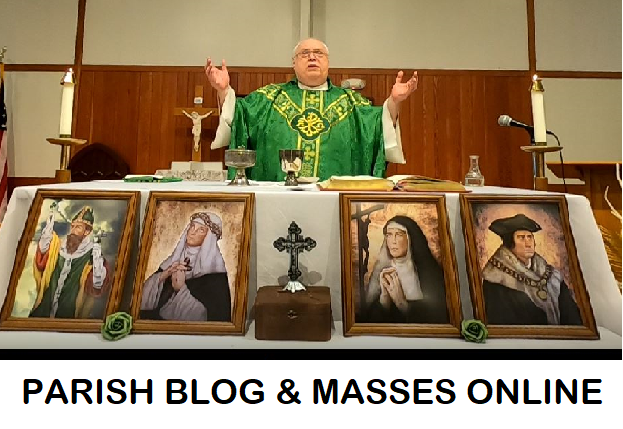














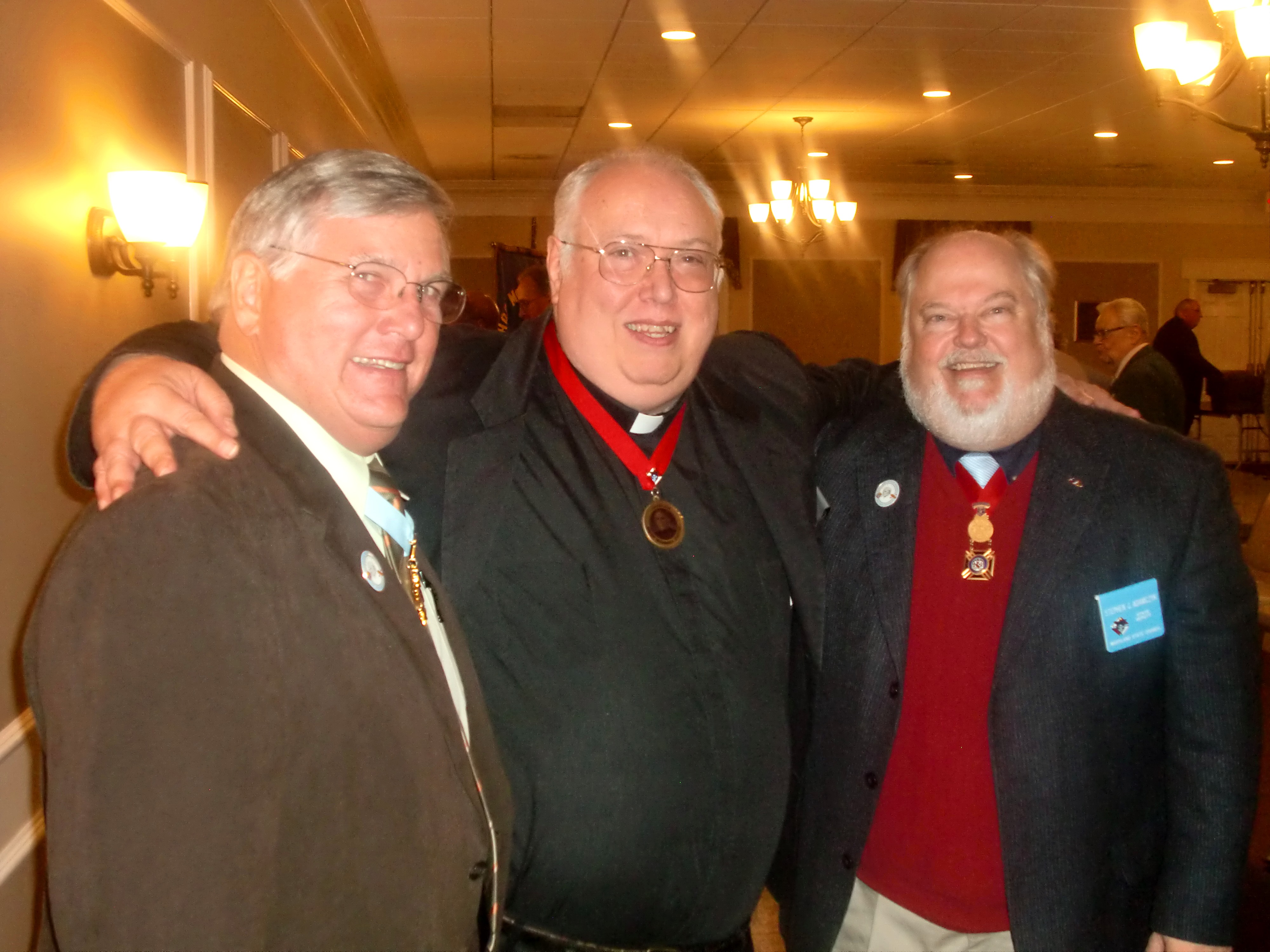
 Blogger Priest