























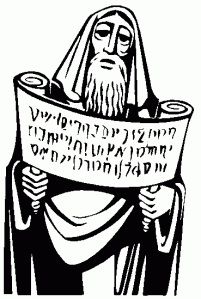
 Ez. 2:2-5 has many interesting elements for us to consider. The Spirit of God moves Ezekiel; he says it “set me on my feet.” In other words, the Spirit compels or moves him to action. He stands before God and must be on his way to the Israelites. God, himself, admits that they are an obstinate and hard-hearted people, but this makes no difference. Come what may, Ezekiel will be the mouthpiece of God and “they shall know that a prophet has been among them.”
It is a wonderful image of the prophet for us who follow that other “son of man,” Jesus, who is also the Son of God. God calls us in our baptism to be prophets to the world. However, do we stand up and take action and speak prophetic words? Or, do we remain at rest and hope that God will change his mind or get tired of summoning us?
How are we called as prophets today? Four thousand unborn babies die in our nation each day through abortion. Do we raise our voices in protest? Do we support the local pro-life efforts and pregnancy centers? Do we lobby our elected officials and hold them accountable? Have we considered peaceful civil disobedience and marching? This is the first and most important issue facing us today, although there are others as well. Do we stand for racial integration and social justice? Do we promote marriage by our lifestyle and counsel over promiscuous and/or disoriented behavior? Do we take the high ground in avoiding and not patronizing pornography in films, television, magazines, Internet, and books? Do we dress, act, and speak modestly? Do we use language worthy of the children of God or instead use words from the gutter that corrupt lips that should praise God? Do we respect the Church’s teaching about the transmission of human life and birth control? Do we worship regularly and support our struggling churches? Do we honor our bishops, priests, and religious or do we mock and joke about the special messengers of God? Do we pray when there seems no time or we find ourselves busy? Do we defend our Church against ridicule or do we ourselves become sources of defamation against the Rock of Christ? Do we speak the truth in love to our families or smother the message under empty human affection? Have we been our brother’s keeper or have we exploited others for our own selfish purposes? If we stand up for what our faith tells us is right, then no matter whether others approve of us or not, they will know that prophets have been in their midst. If we have sometimes failed, we can follow the late Pope’s lead in making a “mea culpa” for the past and in becoming true signs of contradiction in the present. As the psalm response tells us on the 14th Sunday Mass of Ordinary Time (B), we can say: “Our eyes are fixed on the Lord, pleading for his mercy.”
Like Ezekiel, Paul is called by God and, along with a thorn in the flesh against pride, is told that divine grace is sufficient for his witness. All that matters is that we are faithful. Everything else belongs to the providence of God. The true prophet will know persecution. Paul says, “Therefore I am content with weakness, with mistreatment, with distress, with persecutions and difficulties for the sake of Christ; for when I am powerless, it is then that I am strong” (2 Corinthians 12:10). We have Catholics in Chinese prisons for their loyalty to the Pope. We have murdered Christians in parts of Africa and the Orient for daring to make converts. We have believers in American jails for saying rosaries outside abortion clinics. We have nurses, interns, and pharmacists who have lost their positions because of their fidelity to the Gospel of Life. We have children who have been silenced from mentioning God in prayer or listing the commandments in school. We have brothers and sisters in the military that have been passed over for promotion for speaking their mind in disagreeing with the liberal policy on active homosexuals in the ranks. We have Christian friends who have been punished for putting a bible or religious image on their workplace desk. Christians are fined or litigated against for wanting public religious displays of faith during the seasons of Christmas and Easter. Coalitions of Catholic and Protestant Christians are ridiculed as “far right” or “fascist,” sometimes even by those who are supposed to be Christian. The issues are many, and yet the Christian posture should always be the same: fidelity to God in the face of the faithlessness of a civilization that has turned its back on him.
It is a shame that while television programs advertising the possible winning of a million dollars or marrying a millionaire get high ratings, religious programming has virtually disappeared from the commercial and public stations. Indeed, marriage is reduced to sex and money; that which is supposed to be a sign of the covenant between Christ and his Church. The world and certain televison networks minimize it to primetime prostitution. Where are the prophets? Where is the outcry?
Mark 6:1-6 has Jesus going home and speaking in the synagogue. He laments that those who think they know him really know nothing. Their lack of faith reduced his effectiveness among those to whom his heart most wanted to embrace. He healed a few and then went to the neighboring villages instead. We have prophets in our midst, too. However, sometimes we call them fools or fanatics. People who really speak and live their faith make most of us uncomfortable. They remind us about what we would prefer to forget– our own impoverished discipleship. The great Catholic sin comes to mind, not what we have done, but what we have failed to do. Jesus is in our midst, do we recognize him?
For more such reflections, contact me about getting my book, CHRISTIAN REFLECTIONS.
Filed under: Bible, Catholic, Church, Contraception, Discipleship, Faith, God, Jesus, Pope, Prophets, Reflection, Repentance, Sexuality | Leave a comment »





















 Blogger Priest