











Why Does the Fire Go Out?
People have their reasons, but there is no good reason for leaving the Church. The majority in the area where I reside are probably Baptist and/or Evangelical. Some of these communities target Catholics and many Catholics marry non-Catholics. Not understanding their own tradition, many Catholics are inordinately moved by the music and preaching in Protestant churches. Catholic reformed rituals might not be regarded as very entertaining. Much of the music we sing is criticized as trite and unmoving. When we borrow Protestant hymns or sing Gospel, it is usually a pale imitation of what our separated brethren have to offer. Music enshrines preaching. Particularly in the African-American community, services can go hours. The importance of the minister is measured by his musicality and his effectiveness as a preacher. Our gravity is upon the formulae of liturgy, not upon preaching.

Preachers and Priests, No Comparison?
Many priests were trained to keep homilies or sermons to ten minutes or less. That is about the length of two or three MTV videos. Time-wise, it cannot compare to the formation of the media or to the teaching sermons of our separated-brethren. I knew one old man who went to Mass on Saturday night and to his wife’s Baptist church on Sunday. He told me that he went to Mass for Holy Communion and to the Protestant church for good preaching. This is a rather sad state of affairs. Are we fully feeding our people? Preaching outside the Catholic Church may be dynamic and meaningful; however, it is also fraught with religious error.
Sermons or Homilies?
I recall from preaching seminars that the priest should offer a homily based upon the Scriptures of the day. This focus was understandable but I found the focus too narrow and absolutist. The priest or deacon can preach upon the readings, the liturgical prayers themselves, upon the feast or memorial, or upon what his people (at that time and place) need to hear. I had a vigorous dispute with a liturgist when I suggested catechetical sermons. It was and remains a contention of mine that many people stray to other faith communities because they really do not understand Catholicism and the full significance of the Eucharist.
Can Father Talk Too Long?
How long should the priest or deacon preach? This depends upon many factors:
1. What is the type of liturgy?
2. What has to be said to make the message worthwhile?
3. What is the capacity in patience and in comprehension of the listeners?
Given that Catholic sermons are usually shorter than Protestant counterparts, the priest might be able to amplify his instruction by linking his sermons from week to week. He can also use the parish bulletin, special adult education and bible study, and invite people to use the cycle of readings themselves with missals they can take home. If people look at the readings before Mass, their experience will not be cold when the priest or deacon speaks about them. Instead of merely thinking about what Protestants have that we don’t, let us utilize our own strengths, the missal and the cycle of predetermined readings.
Catholics might also do well to getting used to longer liturgies. Of course, this runs counter to the Roman Rite tradition, known for being curter and more to the point than Eastern Rite liturgies and certain Evangelical Protestant services. There is a basic dilemma with longer sermons, and that is the balance and rhythm of the Mass. A long homily and a short Eucharistic prayer seems to switch the gravity away from the sacrament to the Word which is intended to dispose us for the sacrifice and Holy Communion.
I am concerning myself essentially with the Sunday homily. Given work concerns and strained time issues, weekday Masses would probably have to remain little more than basic exhortations. Such exhortations are similar to aspirations: Jesus, Mary, Joseph save souls! Do good and avoid evil! Keep faith and hope alive! Lord, have mercy on us! God will not abandon you!
Messages Should Comfort and Challenge
Homilies more strictly revolve the Readings; however, sermons can touch upon all sorts of relevant topics. Sermons might be moral exhortations, catechetical moments, inspiration rhetoric and stories, etc. However, they should always connect the lesson, whatever the source, to the lives of the people listening. The congregation should not be passive to the preaching but actively engaged. A topic is explored, the message is ordered for coherence, examples or illustrations are made, and there is the immediate appliance.
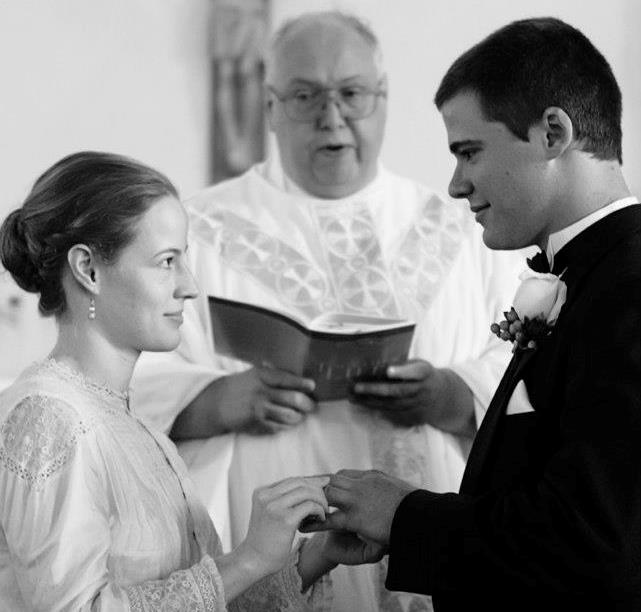
The words used in preaching vary upon the setting. When the clergyman marries a couple, he speaks about the joy and hopes of the couple. He might also challenge them to keep the marital act free from the corruption of lust and artificial contraception. However, many Catholic ministers are afraid to rock the boat. When a priest or deacon officiates at a funeral, his words emphasize the consolations of faith to those who mourn, the promises of Jesus our gentle shepherd in regard to eternal life, and the need to go on with our lives. Again, many Catholic ministers are afraid of the conflict that comes with challenging the congregation to see the death as a warning about their own mortality and the need to reform before it is too late. Even evil men are temporarily canonized and little is said about Purgatory. A number in the pews no longer even believe in Hell. Sunday homilies are often pampering and grossly approving because many clergy are afraid of alienating the numbers in the pews and depleting the money gathered into collection baskets.
Need for Courage and Trusting Providence
I knew a priest in the South who tried to integrate the two churches he pastured, one white and the other black. White parishioners complained to the bishop and the man found himself stripped of his parish, reprimanded for making trouble, and reassigned to a teaching position in a college far away. Decades later he was still not allowed to return to parish ministry. But God writes straight with our crooked lines. This priest ended up teaching seminarians. He inspired another generation of men in ministry to struggle for social justice.
How often have we heard certain priests speak about artificial contraception, abortion, divorce and remarriage, or even about fornication and cohabitation? Some men in ministry are afraid. But what chance do God’s people have when their shepherds are passive and fearful? The late Pope John Paul II echoed our Lord’s words of wisdom, “Be not afraid.”
It may be that the priest shortage and the clergy scandals have drained the energy resources and joy of our priests. This needs to be remedied. The core message of the Gospel is not exhausted or angry. Priests who show enthusiasm or excitement about the Catholic faith and Gospel are the most effective. It is also a mentality which breeds vocations. Young men do not want to join a confraternity of tired old men who only go on because of cold duty and obligation. We have to be on fire with the faith if we want those in the pews to ignite! It is very hard for a priest to give what he does not have. God’s servants should be so in love with God that this love spills over in their service of others. Preaching should reflect a life of prayer and a drive to save souls!
The preaching should move God’s people to greater faith and acts of service to our Lord and neighbor. It assists everyone to better understand the Eucharist and disposes us to receive the Blessed Sacrament. We take what we have been given in Word and sacrament as we go out in mission to the world around us.
Filed under: Bible, Catholic, Church, Discipleship, Eucharist, Faith, Homily, Liturgy, Mass, Preaching, Prophets, Sacraments | 10 Comments »






 Sometimes anti-Catholics talk as if the Catholic Church is the enemy of the Bible. The contrary is true; the Bible is the Catholic Church’s book! The late Paulist priest, Fr. Alvin A. Illig, CSP, joked, “It is a shame we never got a copyright on OUR book.” The Bible did not suddenly come into existence or out of bondage with Martin Luther. Prior to the invention of the printing press, bibles were produced by hand and could be quite expensive and time consuming to create. For this reason they were often secured in churches with locks and chains. A theft could cost the entire faith community its copy of the Scriptures. Many people were illiterate and thus received their bible instruction in preaching and in religious art. The first book printed with the new technology devised by John Gutenberg was probably the Catholic Bible. This was done under the auspices of the Church. Prior to Luther’s German bible in 1534, some 626 bible editions (or portions thereof) were printed in nations where the Catholic Church held sway. Many of these were in the vernacular languages of the day. Today, the lectionary used at Mass insures a wide exposure to Scripture in our worship. There is a papal indulgence available for faithful bible reading. Every Catholic home probably has a bible, or at least, is supposed to have one. The so-called Catholic hostility to the Bible during the Middle Ages and later to bible study groups or societies is a deliberate distortion of the facts by anti-Catholics. The Church was not against the Bible; rather, she was opposed to faulty and dangerous translations as rendered by the Waldensians, Albigensians, Wycliff and Tyndale. The fact that churchmen may have gone to unnecessary extremes in combating heretical versions of Scripture does not invalidate their overriding concern. Bible societies, just as they can be today, posed a danger in that false interpretations to bible passages were given to proselytize Catholics from the true faith.









 Blogger Priest