



• Our Blogger

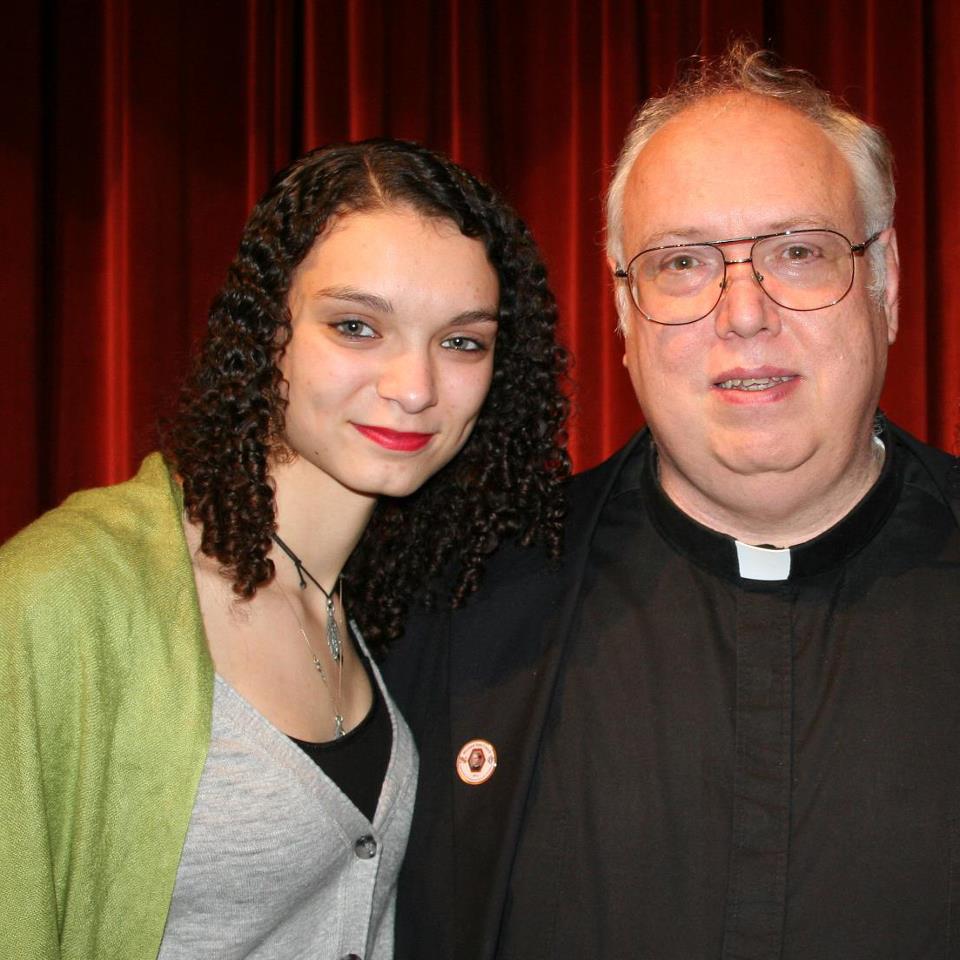
    Fr. Joseph Jenkins

  • The blog header depicts an important and yet mis-understood New Testament scene, Jesus flogging the money-changers out of the temple. I selected it because the faith that gives us consolation can also make us very uncomfortable. Both Divine Mercy and Divine Justice meet in Jesus. Priests are ministers of reconciliation, but never at the cost of truth. In or out of season, we must be courageous in preaching and living out the Gospel of Life. The title of my blog is a play on words, not Flogger Priest but Blogger Priest.

  • Archives

  • Categories

  • Recent Posts

  • Recent Comments

    Barbara King's avatarBarbara King on Ask a Priest
    Ben Kirk's avatarBen Kirk on Ask a Priest
    Jeremy Kok's avatarJeremy Kok on Ask a Priest
    Barbara's avatarBarbara on Ask a Priest
    forsamuraimarket's avatarforsamuraimarket on Ask a Priest

Priestly Celibacy: Relating to Women

How should the celibate priest relate to women? This question is not simple given that there is an active national debate about how men behave (or misbehave) around women. Some guys treat every woman as chiefly a sexual object. We see this in the proliferation of pornography which focuses upon the desires of men. The sin of fornication is increasingly regarded as a necessary rite of passage and the way to measure the success of the dating experience. Cohabitation now statistically outnumbers married couples. Adultery is a chief cause for separation and divorce. Women complain about harassment, gender stereotypes and abusive and/or forced seduction. It is into this environment that celibate priests are called to respect women, who usually make up the majority of their congregations; however, there can be no romantic associations.

As an effort to safeguard or to insure celibacy, a number of priests in the past were trained to keep women at a distance. This did not mean that they hated women; however, they may have looked upon females with suspicion and tagged them as dangerous. It has been known that some priests have narrowed their friendships to other priests or a few men while treating their flocks (men and women alike) as souls to save but nothing more. We might say that they have attempted to strip gender from the perception of their congregations; but in truth, they have endeavored to neuter themselves. I have never known it to work well.

Priests must acknowledge they are men, not robots. Men relate to women differently than they do to other men. This does not have to be a bad element. Women can bring out a sensitive and courteous side in men. Look at how gentlemen treat their mothers and daughters. Women by their witness and interaction can assist the priest in extracting or bringing to the surface his sympathetic side and gentleness. The failure to properly acknowledge and treat women will result in a coarsening of priestly manners. He becomes distant, authoritarian and legalistic.

While celibate, priests are increasingly surrounded by women. Women are both employees of the Church and volunteers. I am not speaking here simply of housekeepers and cooks. Married and single women are catechists, youth ministers, liturgical musicians, readers, extraordinary ministers of Holy Communion, altar servers, secretaries, parish business managers, parish associates, etc. This is in addition to traditional service in altar guilds, rosary groups, sodalities, etc. Women work and are present in rectories, parish schools, and in our churches (both in the pews and assisting the priest at the altar). Most parish priests find themselves more surrounded by females than males. Women among the laity have increasingly taking up the slack from the diminishing numbers of women religious, although nuns and sisters will always have an important part to play in the life of the Church. I make these lists to demonstrate that the priest does not and cannot escape the presence of women. They are integral components of the Church. The celibate priest, as the Church’s man, must be comfortable working with and for them. They will be his coworkers and friends. Having said all this, he should be ever cognizant of the boundaries that must never be crossed. He has to be prepared to exhibit a certain distance or even coldness if a certain boundary line of intimacy is skirted. Some women will fall in love with priests. He must let them know by word and manner that he is not interested. Priests will also find themselves falling in love; it is here that clergy need to be reminded of their celibacy so as to create the necessary space for fidelity in their vocation. His priestly work and the life of prayer and worship are his shield from falling. Nurturing his friendships within the presbyterate is also encouraged; there is a certain solidarity and understanding among men who share the same life and dedication to the Lord.

Priestly Celibacy: Evolution of a Sacrament

If the celibate priesthood represents the providential development of this sacrament, would not the general allowance for married priests represent a denial of this grace-filled trajectory? We are creatures who live in time and it is only in the fullness of time that the mysteries of God and of his Church are unraveled. The deposit of faith is fixed but not stagnant. The priesthood must be understood within the context of its purpose and history. I personally fail to see how a reversal can be permitted. It would seem to be a movement against the stream of history and the retrogression of holy orders to an earlier stage of development or appreciation. Our thoughts these days are so much about what the Church and the priesthood used to be. It may be that some critics are so desperate for the damage to be repaired that they would risk further harm by making more radical shifts. Pope Benedict XVI ardently sought to restore balance and to give an interpretation of Vatican II through the eyes of tradition and not modernity. As to what approach we are now taking, only time and prayer will show. However, whatever we do, the needs of the Church and the value of the priesthood should be given full measure over self-seeking desires and personal or particularized relationships. Marriage might make a priest very happy but it would probably cost the Church. I am not convinced by arguments that it would enrich this vocation in any significant manner to offset what would be lost.

Priestly Celibacy: Obligatory or Optional?

We are repeatedly reminded that the Eastern rites have both married and celibate priests. But the fact that most Catholic laity in the United States seem unaware of this is evidence that this witness is largely off the radar. Instead, it is the preference for marriage among the many visible Protestant clergy that catches our notice. It is here that most will make the comparison. Some denominations will not even commission or ordain men unless they are already married. Such is viewed as a divine command and a source for both maturity and stability. It is for this reason that it makes national headlines when married Episcopalian and Lutheran ministers are received and ordained in the Catholic Church. A new model of ministry is being introduced into Catholicism and one that is both condoned by modernity and challenging to our accepted vision of the priesthood. Some find this prospect exciting. Others find in it an ominous and frightening omen. Speaking for myself, I usually err on the side of human freedom; but about this issue, I may not seem consistent. There are certain basic values and rights about which human freedom is limited. What is the will of God in all this? What is best for the Church? I would keep matters as they are with a priestly celibacy that is both mandatory and absolute.

Priestly Celibacy: Changing More Than Rules

It seems to me that the discussion about married priests is too quick to dismiss the depth of meaning given the celibate priesthood. Celibacy is more than a discipline; it is the chief modifier and visible component to the priesthood in the Roman Catholic Church. Indeed, mandatory celibacy has come to personify our priesthood. This is why we must approach this debate very carefully. Most of our priestly men identify themselves— their personality, their station as they face God, their place in both the secular and faith communities— by their stance with celibacy. In other words, it might be a discipline, but it has come to permeate and inform everything that makes them priests. While thousands of men left the priesthood in the 1960’s and 1970’s to get married, realizing that the discipline was not changing any time soon; now we run the risk of a new exodus should celibacy become optional. A tiny few married priests from the Episcopalian church is one thing; a wholesale batch of married men and the return of men who left to get married (unlikely) would be another. It would shake the priesthood as we know it to its very foundation. As I wrote before, I also fear that we would needlessly hurt good men who remained at their posts as celibate sentinels, even when such was a terrible and costly sacrifice. Heartstrings were tugged, they fell in love, and yet, they remained faithful to their promises. Celibacy can be a great joy but it can also be a source of heart-rending tears. Whatever the Church decides to do, we must not be blind or insensitive to the cost paid by the diocesan priesthood. We would be changing more than rules.

Priestly Celibacy: Too High a Price for Women?

Given how we understand the priesthood and the demands that we make upon our clergy in the Roman Rite, would the allowance for married priests constitute a violation of human justice? If there is the fear of breaching the seal of confession while talking during sleep, would the couple not be obliged to keep separate bedrooms? The demands of parishioners would take precedence over the needs of his wife and children. Is this fair to them? Given that his first wife, the Church, must always be given her way; what resentments might emerge from the second wife and his family? There is a moral quandary because spouses and families should not be deprived of their due. Right now we have a few married priests (approved of course) who keep their families in neighborhoods apart from where the men serve. Their salaries are enhanced and they are treated differently than celibate clergy. Indeed, I have known several over the years who housed their families in adjacent dioceses or across state lines. What if all priests were treated the same? Could married clergy raise families on a salary rated below poverty level? I was assigned to one parish that was surrounded by drug pushers, pimps with prostitutes and crack houses. My deacon was pistol whipped outside the church doors, the rectory was robbed and dealers shot two bullets through my bedroom window. Would we send a married priest into such an environment? Would they obey and go?

Knowing the life of a traditional Catholic priest, would it really be love to want to subject a woman to the sacrifices and absences that would come along with marriage to one? Even the military man has a term of service. The situation with the priest would be permanent. Several years ago we had a crisis with our local police. The tremendous strain on relationships gave the officers a high divorce rate. It was bad enough that their women had to accept the dangerous profile of their jobs but then the city mandated that police employed had to live within the boundaries of the District. Housing in the better part of town was expensive. The men did not want to house their families in the ghetto or where gangs might identify their wives and children for assault and kidnapping. A number of men tried to skirt the new rules by taking out post office boxes in the city and lying about where they actually lived. They were desperate but good men. Priests have always lived where they worked. The late Archbishop Sheen pressed upon priests that they should live no better than the people they serve. This has often been a point of comparison between Protestant ministers and Catholic priests. Priests must always be accessible or available. They do not work strictly assigned hours. What might this do to a family? The demands are quite different, but the Lutherans have married ministers and they are rightly distressed about the high divorce rate among their pastors. Do we really want to go this way? I noted before that the first married Episcopalian priest who was received and ordained in the United States is now divorced. His wife left him, saying that his prior ministry did not prepare adequately for his life and ministry as a Roman Catholic priest.

Priestly Celibacy: Prophets or False Prophets?

Everyone has an invested interest. Some legitimately feel that wider permission for married priests would resolve the vocations shortage. Shortages in Protestant ranks hint that this may be a false premise. Others have a wayward democratic view about such issues. Unfortunately, many in the pro-marriage camp also subscribe to women priests and that is a deal breaker. The issue of celibacy may be one of discipline; but, the prohibition against women priests is irreformable doctrine.

Most celibate priests probably want to maintain the status-quo. They know firsthand the value of priestly celibacy. Priests who left ministry to get married are wholeheartedly in favor of a liberalization of the rule. However, it is doubtful that such a dispensation for new priests would be applied to the old. The men who left for marriage violated their promises and while some were laicized, a number defected to other churches, rejected the see of Peter and embraced heresy in faith and morals. There would be no place for these aging men in the Catholic ministries. Much is made of the thousands who left in the 1960’s and 1970’s, but time is running out. They are entering the retirement years and many are dying off. Soon they will be all gone. Were they prophets to a married priesthood in the near future? If so they were like the Hebrews who corrupted themselves by worshipping a golden calf after their liberation from Egypt. Before God’s people reached the Promised Land that whole generation and Moses would pass away. This might not seem fair, but it is probably the way it will play out. The Church will not reward disobedience.

Celibacy flows naturally from the sacerdotal calling. Everything about the demands of priesthood, its intrinsic nature, and its place in salvation history (Scripture and Tradition) promotes the organic development of celibacy. Celibacy is not outdated. It has not worn out its welcome or exhausted its utility. It is my conviction that a married priesthood can be tolerated if necessity dictated; but the ideal or preference must remain a celibate priesthood. If we can get along fine without married priests (and vocations are up and growing) then we should maintain mandatory celibacy, even if a married man might rarely be ordained for purposes of ecclesial reunion.

Priestly Celibacy: Is It an Argument One Can Win?

I know what the critics are saying:

“There are plenty of women willing to endure all sorts of hardship and poverty for the men they love, even if those men should be priests. Why not let them decide and make a try of it?”

“If the refugees from Anglicanism can have married priests in the Catholic Church, then how is it fair or just to deprive our own boys of a wife and family?”

“The Eastern rites are in full communion with Rome and yet they have married priests. These men serve well and their wives become loving spiritual mothers over their faith communities. Does not mandatory celibacy impugn their witness and the value of these women? Can we claim that their concept of priesthood represents an earlier period of faith development that we have matured beyond in the West?”

How does one respond and not sound like a bigot? Might any defense of mandatory priestly celibacy be interpreted as an attack upon married clergy? I can argue that there are only so any hours in a day. I can insist that it is wrong to inflict upon women and their children the arduous sacrifices that would accompany such unions with Roman Catholic priests. I can lug it out with the insistence that the priest is already married to the Church and one wife is enough. I can remind everyone that priesthood is a gratuity and that no one deserves or merits it. I can make the contention that God will only truly call those who have been given the gift of celibate love. But no matter what I say and do, some will be angry that anyone would oppose the momentum for married priests.

What will they say? “You just want to keep the priesthood safe for hiding homosexuals and pedophiles. What is wrong with you? Do you hate women? Are you afraid of them?”

Priestly Celibacy: Changes Coming Under Pope Francis?

The new Vatican Secretary of State, Italian Archbishop Pietro Parolin, was interviewed for a Venezuelan newspaper. The reporter from El Universal asked various questions but the discussion perked a lot of ears when the topic turned to priestly celibacy. The Archbishop’s statement was nothing new but it was immediately sensationalized. He simply replied that celibacy belongs not to “Church dogma,” but to “Church tradition.” Thus, he admitted, it was a topic that was open for discussion. While it is obvious that any possible change would not include men in consecrated life or religious orders, the discussion and/or debate would be reserved to diocesan or secular priests. Religious priests take vows of celibacy, obedience and poverty. Diocesan priests currently take promises of celibacy and obedience. The one indispensable promise is obedience. Speaking as a diocesan priest, I think that the issue of married priests is more problematical than many would think and for many of the same reasons why it is incompatible for men in religious orders like the Jesuits, Dominicans or Franciscans. While they take no vow of poverty, many if not most of our diocesan clergy purposely live as poor men, looking upon the Lord and his people as their great treasure. I think it is best that we do nothing to cause divided hearts. Celibacy is not so much a loss as it is a gain, granting a freedom to love and minister courageously and beyond measure. A married man is anchored by the world. He must look backward again and again to insure that his family is secure and still tagging along. He wants to run with his priestly discipleship but must walk so as not to abandon his wife and children. Both priests move forward but one must be more measured.

I am not saying that a man who loves his wife cannot love the Church. But I do believe it narrows his vision. The celibate is fortunate in that he can love in a broad or expansive way. He has no children of his own and yet, in a fashion, all children are his children. Similarly, even to the stranger he is called, “Father.”

The celibate tries not to grieve about what he has given up. He knows full well that an intimate shared life, sexual expression and a family are beautiful things. But celibacy is wonderful, too. He focuses on what he has, not upon what is missing. The priest is a man of prayer and service. These are the exclusive poles of his life.

Yes, the celibate priest has his struggles; and yet those challenges make him more sympathetic to others who face obstacles— injustice, poverty, suffering, sickness, dying, betrayal, abandonment, loneliness, you name it. His celibacy allows solidarity with them. We live in a veil of tears. Sin infects men and the structures of society. We cannot have everything we want. The celibate priest witnesses that no matter what the struggle or loss, God has not abandoned us.  The Lord gives us what we need.

When we think of celibacy, we envision something personal, and yet it is a sacrifice embraced for the community. It is a gift that God gives which the priest must share. He is not called simply to be a hermit, but a man who lives for others.

The promise of celibacy is regarded as a discipline, not to measure a man’s spiritual muscle and depth of commitment, but to express the immensity of God’s love for his people. He keeps his promises just as married couples are faithful to their vows. Both celibate priests and married couples are living parables to a world filled with broken promises. They testify by their lives that in the face of serious challenges, promises can be kept with joy and that this precious faithful love has not disappeared from the world.

I cannot say if all the excitement signals change regarding the discipline or not.  It is my preference that mandatory celibacy remains undisturbed.  But, whatever happens, the Church will survive and God’s grace will always animate and enliven God’s ministers and flock.

Priestly Celibacy: The Bond & Servanthood

There are men who flee marriage, not because of a love for celibacy, but because of a fear towards what they perceive as bondage. This does not necessarily mean that they avoid genital activity or sexual expression as men today neither fear God nor love virtue. We live in a world of single mothers and deadbeat fathers. Contraception gives some the illusion of freedom while breeching men and women from the fullness of a union intended by God. Abortion and broken hearts are the tragic casualties of this lethal escape from obligation and duty. Casual sex gives the illusion of freedom while damaging both the psyche and the family. Recreational sex without binding ties is not something for which men and women were made. Indeed, it is an insult to our persons and an affront to the marriage bed. We cannot find ourselves by impugning the quality of permanence in the institution of marriage and the family.

Might husbands and wives become slaves to each other and to their children? Yes, this is assuredly so. However, it should be reckoned as a joyous servitude. The married man is no longer his own man. He is responsible for his family. His immediate goal in life is to make his wife happy and to help her realize the vocation of motherhood. The whole direction or preoccupation of his life takes on a new compass setting. Similarly, the priestly celibate is a slave to the Church. He can know liberation from sin and freedom in Christ; however, like Christ he is called to fulfill his mission. Like the husband for his wife, he must take up the cross and lay down his life. Instead of running away from responsibility, the married man and the priestly celibate run toward it. They are real men, not the pale imitations who enshrine selfishness and lust at the cost of belonging, duty and love. No matter how fast we run, we cannot escape the specter of pain and death; the married man and the sacerdotal celibate courageously stare down these dark mysteries square in the face. Just as the obligations of a family will eat a man up; so too will the responsibilities of the priesthood utterly consume a man. We stand with courage and a level of real dignity. As believers, we are confident that no matter what this world takes away from us, we will receive many times over in Christ. In other words, no man need live in vain.

Priestly Celibacy: The Ancient Living Legacy

Scientists speak of evolution and theologians discuss the organic development of doctrine. Any truth in the premise of the first must respect the role of intelligent design and in the latter, divine providence. This is no less true in the case of the priesthood and the mandate for perfect continence and lifetime celibacy. Celibacy may reside more on the discipline than the doctrine side of the spectrum; but the believer must acknowledge that this form of life and love is not by accident but rather is an expression of the Holy Spirit’s guiding and protective presence. It is for this reason that we cannot be capricious in dismissing it. It is my view that mandatory celibacy signifies the ideal lifestyle and manner of loving for the priesthood. Instead of retreating in the face of the regiments of well-meaning married clergy from the Anglican exodus and the growing Eastern rites, we should be urging them to follow suit in mandating celibacy. We can allow those who are currently married to perform their ministries but make it clear that future generations will be celibate. But I doubt this will happen because “respect” for these rites will be translated by some to an attitude of “don’t tell us what to do” or worse yet, a certain snobbery that the ways of these remnant national churches take precedence over the universal jurisdiction of Rome. (The Pope is not simply one prelate among many, or just over the Roman Rite, but the holder of the universal see with general jurisdiction.) He is Peter. It should be added, that if the Holy Father should relax the discipline about celibacy, no matter how priests like myself might disagree, we would also be obliged to assent to his authority as faithful sons.

The early churches used the scarce men available who were qualified to lead faith communities and celebrate the Eucharist. Just as our Lord demonstrated in his apostolic selection, both single and married men were chosen. I would propose that the latter were called forth, yes even Peter, out of practical urgency and not as an expression of absolute indifference to the question of marriage or celibacy. Indeed, St. Paul (1 Corinthians 7:29-36) says that those with wives should live as if they have none:

“I tell you, brothers, the time is running out. From now on, let those having wives act as not having them, those weeping as not weeping, those rejoicing as not rejoicing, those buying as not owning, those using the world as not using it fully. For the world in its present form is passing away. I should like you to be free of anxieties. An unmarried man is anxious about the things of the Lord, how he may please the Lord. But a married man is anxious about the things of the world, how he may please his wife, and he is divided. An unmarried woman or a virgin is anxious about the things of the Lord, so that she may be holy in both body and spirit. A married woman, on the other hand, is anxious about the things of the world, how she may please her husband. I am telling you this for your own benefit, not to impose a restraint upon you, but for the sake of propriety and adherence to the Lord without distraction.”

A Church of converts, the existing Jewish and Gentile communities came to the Lord. Religious and civic leaders made a transition to the new faith. They naturally became the new priests of the infant Church. We should not make anything more of it in regard to married clergy. The preference remains celibacy or perfect continence. Negative critics of priestly celibacy focus upon medieval measures to enforce this state of life. They argue that such a mandate was of late human manufacture. They point out the hypocrisy of priests with secret wives or mistresses. They seek to detach it from the promptings of the Holy Spirit and any higher spiritual motivation. The causality is narrowed to greed: either of the family clan for the property of the Church or of the Church to maintain and to expand her wealth without claims from progeny. This critique is unfair. The emphasis in priesthood and in the communion of the saints illustrates that celibacy or virginity existed for more than a pragmatic purpose. The Church long celebrated those heroes of faith who embraced virginity over the opposition of family and society. Some like Felicitas and Perpetua embraced martyrdom so as to maintain their virginity. Are there any martyrs acclaimed for insisting upon marriage over a life of preferred virginity? No, I do not think so. Virginity or celibacy was viewed as playing an important spiritual role toward a form of growth in holiness and dependence upon the Lord. Thomas Aquinas’ family so opposed his desire to be a monk that they kidnapped him. Francis of Assisi connected his celibacy to a desire for poverty; breaking with the wishes of his father by abandoning the family business and stripping himself naked. I am also reminded of the child-saint Maria Goretti who died to safeguard her purity; she forgave her murderer with her last breath. Virginity or celibacy has an ancient and significant place in Christian tradition; those who ridicule it will find themselves in opposition to the general witness of the saints.