• Our Blogger

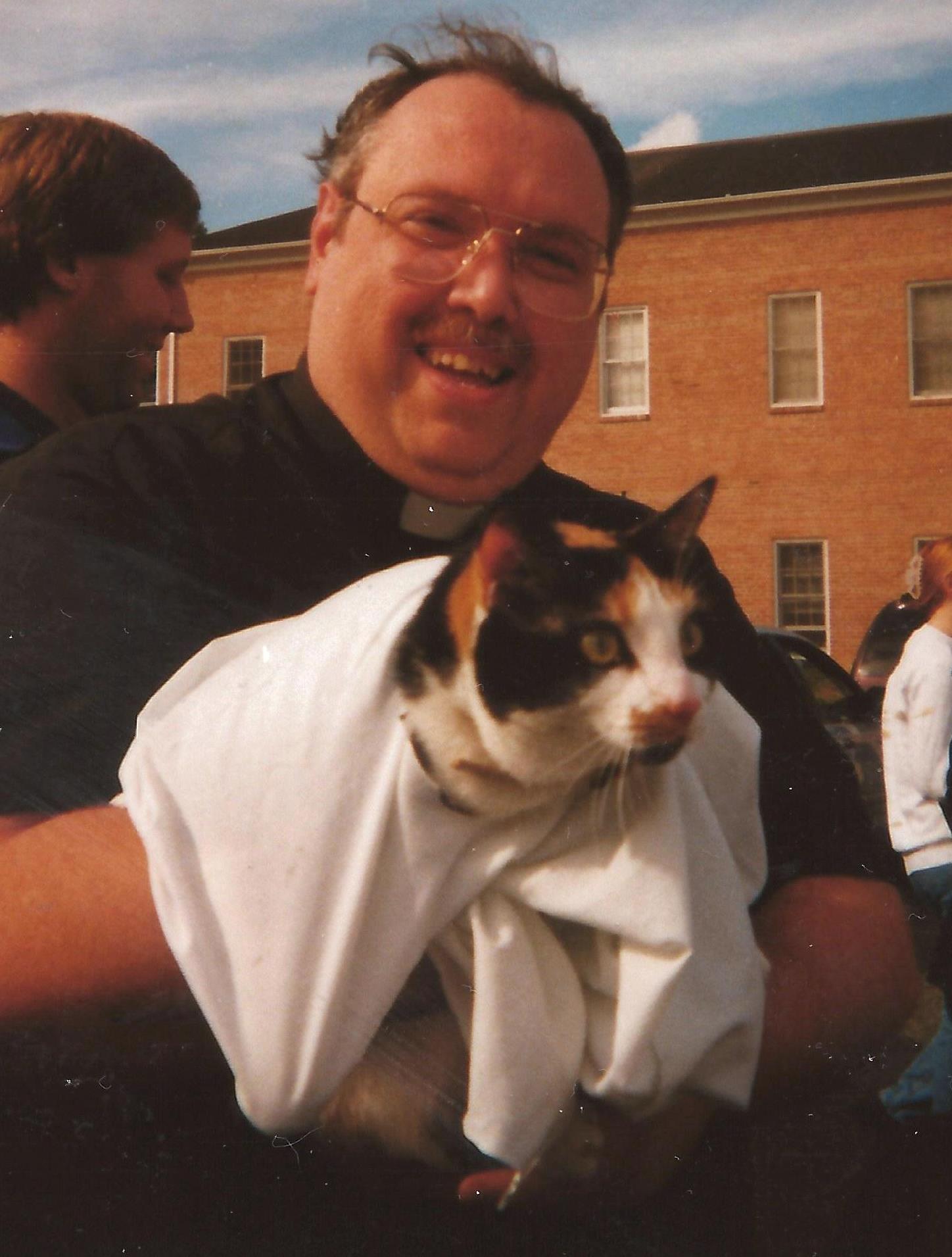
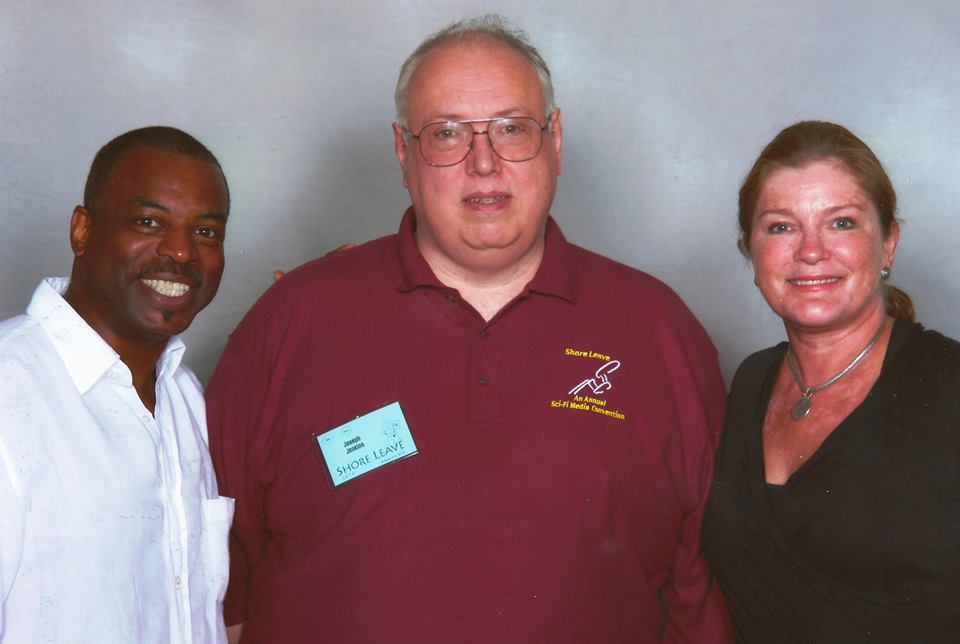
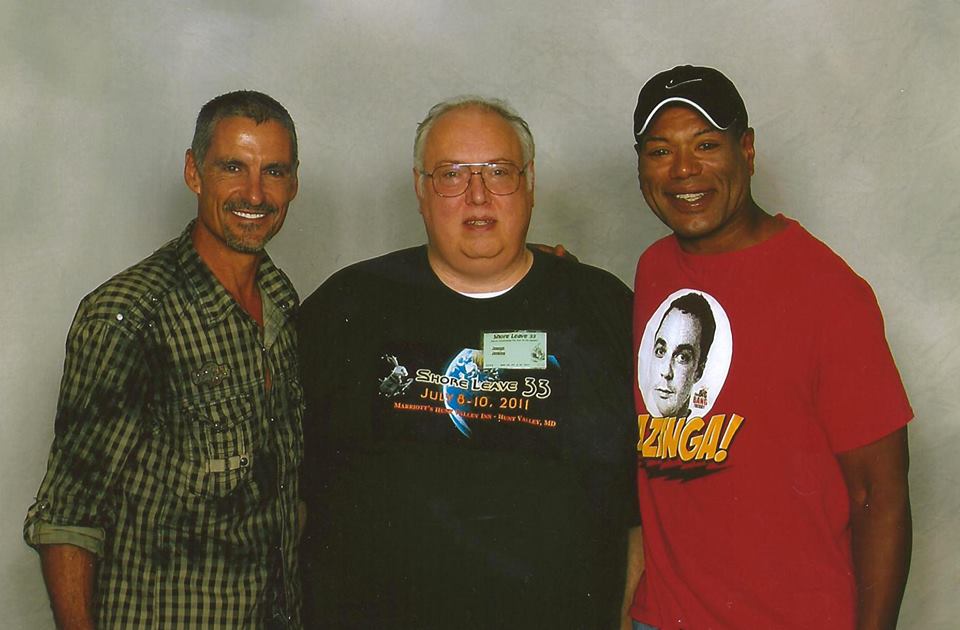
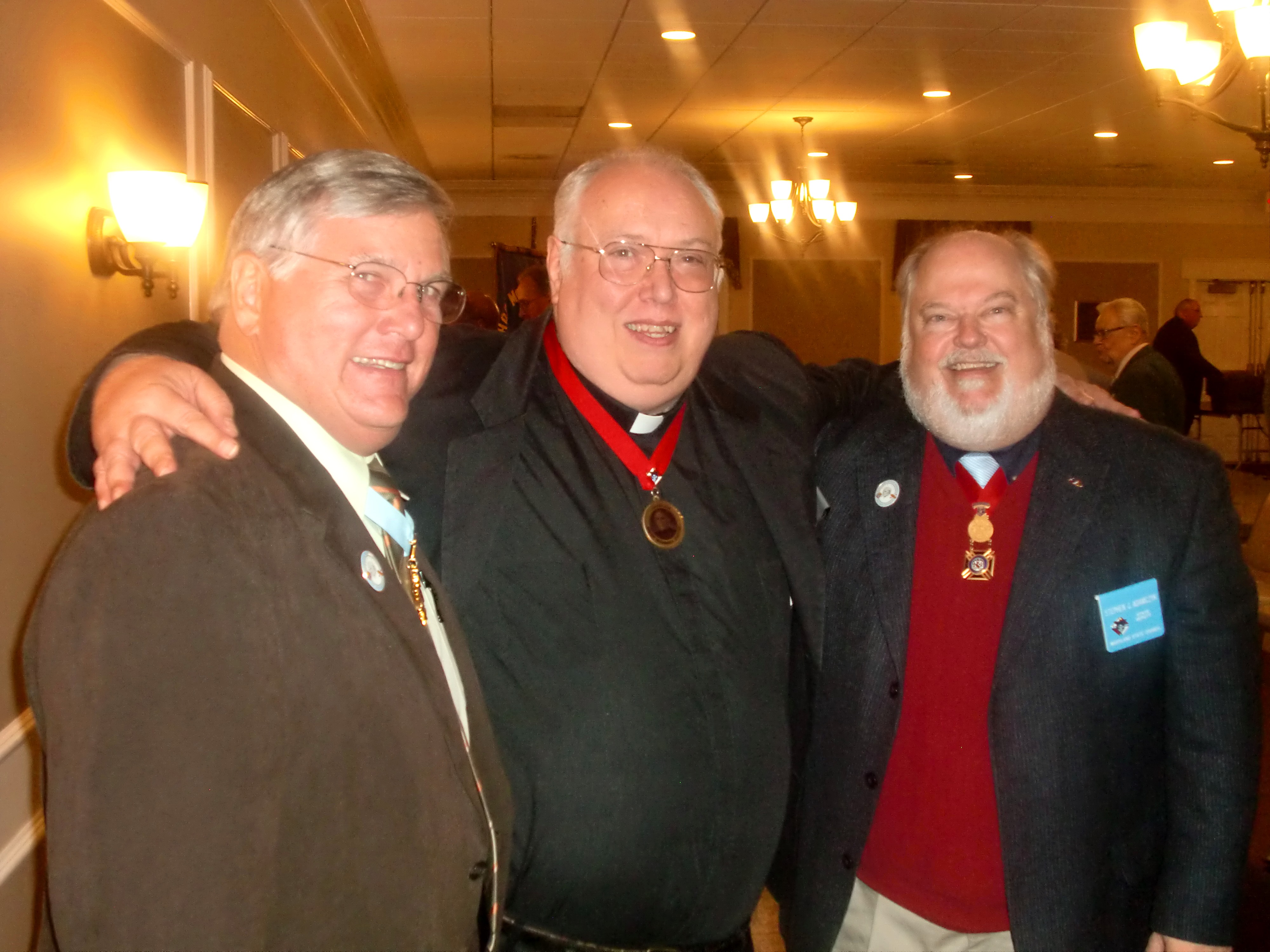
    Fr. Joseph Jenkins

  • The blog header depicts an important and yet mis-understood New Testament scene, Jesus flogging the money-changers out of the temple. I selected it because the faith that gives us consolation can also make us very uncomfortable. Both Divine Mercy and Divine Justice meet in Jesus. Priests are ministers of reconciliation, but never at the cost of truth. In or out of season, we must be courageous in preaching and living out the Gospel of Life. The title of my blog is a play on words, not Flogger Priest but Blogger Priest.

  • Archives

  • Categories

  • Recent Posts

  • Recent Comments

    Barbara King's avatarBarbara King on Ask a Priest
    Ben Kirk's avatarBen Kirk on Ask a Priest
    Jeremy Kok's avatarJeremy Kok on Ask a Priest
    Barbara's avatarBarbara on Ask a Priest
    forsamuraimarket's avatarforsamuraimarket on Ask a Priest

Marriage, Divorce & Condoms

Boy is she a cutie…NOT! Hey, I am a celibate priest, and most days that seems pretty good by me. Yes, it would be nice to have someone bring me soup when sick, and my slippers, and cook, and clean, and do the laundry and…well, as my dear mother used to say, “I am sure glad you are a priest, no woman in her right mind would have you!” Probably true, but house-keepers are soooo expensive!

Years ago I posted a Catholic Sex Morality Test on my old Blog. However, the quiz site deletes the quizzes after a certain period of time. Rather than make up a new test, I thought I would share my thoughts about the few questions that those answering often got wrong. Remember I am prudish, but I try to teach ONLY what the Church actually teaches.

One of the questions on the quiz was, “Marooned alone together on a desert island, can a Catholic man and woman marry?” The answer was, “Yes, they can pledge their vows before God privately.”

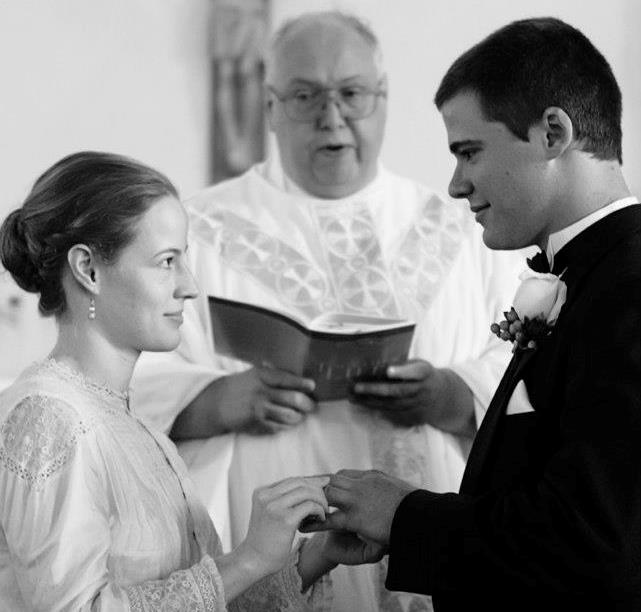
The laws of the Church regarding canonical form (requiring the presence of a priest and two witnesses) is only required if it is humanly possible. A couple on a desert island, cut off from the rest of the world, can still make their vows before God and if later rescued would be considered as husband and wife by the Church. If so desired, the ceremonials associated with the exchange of vows could be provided with a Mass at that time. Remember, the couple marry themselves. The priest witnesses it for the Church.

Another question was, “How does the Catholic Church judge divorce?” The answer was, “Sometimes tolerated, divorce is technically a sin.”

Actually, divorce is tolerated, especially in cases of abuse or where the true character of the marriage is in doubt. An annulment cannot be acquired in the United States unless there is a prior divorce. However, divorce of a true marriage is forbidden by Jesus and those guilty of breaking up a true marriage commit sin. I know this is a hard teaching for some and for that reason the Church struggles in maintaining this truth while showing pastoral consideration and compassion to persons.

A question that surprised many respondents was, “Can a condom be used to prevent spreading HIV to an uninfected spouse?” The correct answer was, “No, condom use is always intrinsically evil.”

Okay, upon this one I will grant some confusion because of news stories about a possible change in Church teaching; however, I do not consider dissenting theologians and liberal bishops to be credible authorities. There was some speculation recently that the Church might permit condom use in cases where a spouse was HIV positive and the other was uninfected. Even many conservative thinkers thought that it might be permitted if the couple were elderly or infertile. Obviously, there would be no contraceptive intent. However, given the papal teachings we do have, the danger of watering down Pope Paul VI’s encyclical Humanae Vitae, and the consensus of magisterial theologians like the late Msgr. Smith of Dunwoodie and Dr. William May now retired of the JPII Marriage Institute, it is my conviction that the current teaching of the Church will not be modified. Condom use is always intrinsically evil. There is no fecundity with condom use. It feigns the marital act but is objectively something else.

I always speak honestly about what I believe…and I only hold what the Church claims as true. When and if the Church corrects me, I will always be a faithful and obedient son.

Questions & Answers About the Baptism of Children

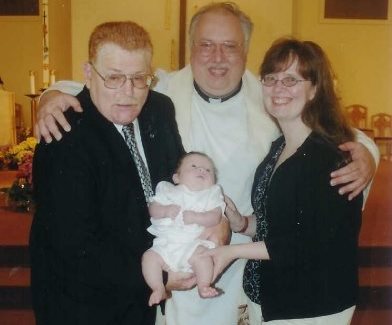
Why do we baptize children?

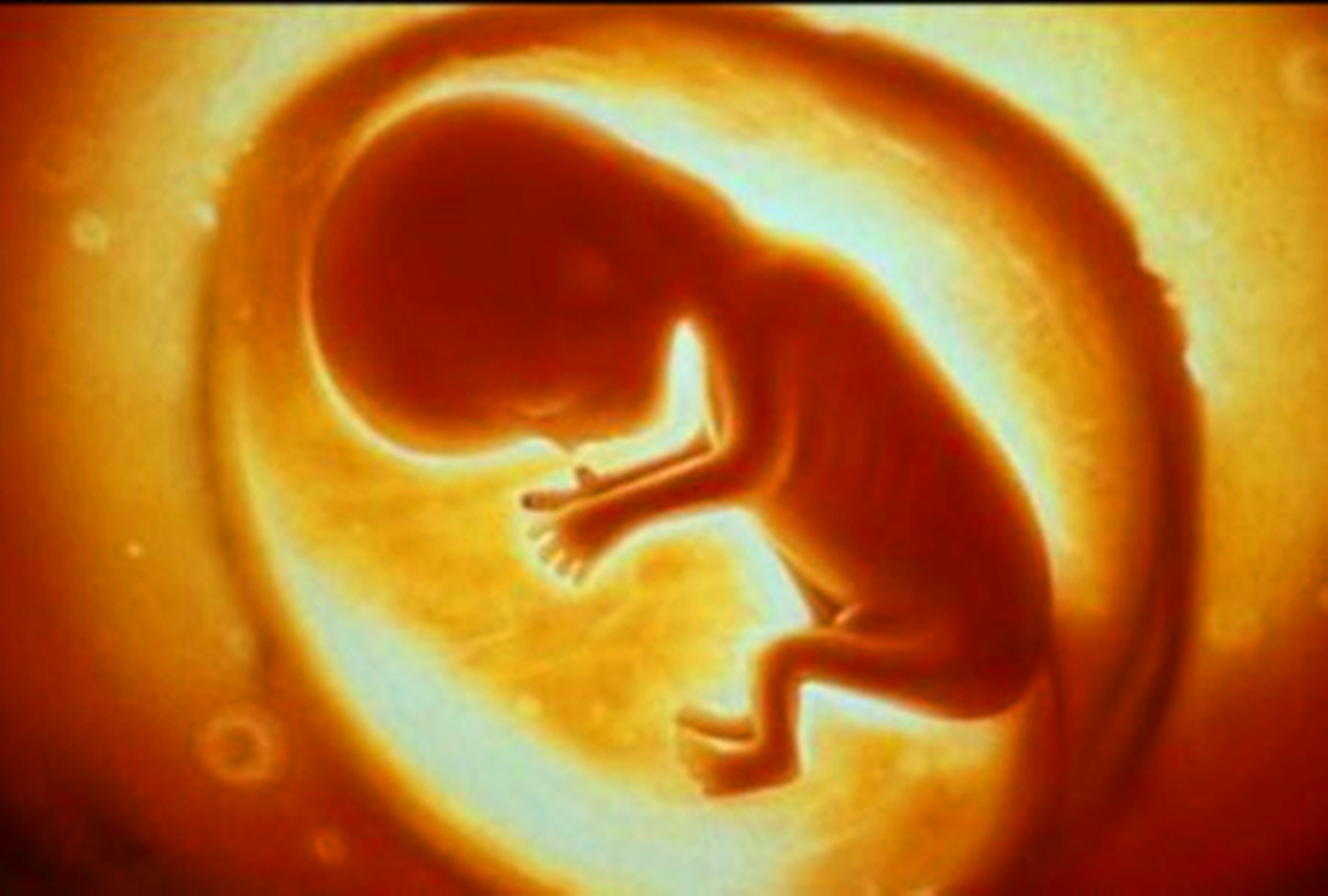
“Truly, truly, I say to you, unless one is born of water and the Spirit, he cannot enter the kingdom of God” (John 3:5). Neither gender nor age is specified in this passage. Such a fact is important because the suggestion that this passage is a repudiation of infant baptism would be far from the mark. Indeed, given the necessity of baptism, it would point to the latter.

Nevertheless, accepting that the passage is addressed to those who have reached the age of reason, we can explore what it means, “to be born again.” Just as we receive biological life in the womb, so too can we receive supernatural life from the womb of Mother Church— focusing in a practical way upon the water of the baptismal font and the action of the Holy Spirit. We do not deny that adults need to be taught and to accept the faith prior to baptism. Jesus says as much in his commission to spread the Gospel: “Go therefore and make disciples of all nations, baptizing them in the name of the Father and of the Son and of the Holy Spirit, teaching them to observe all that I have commanded you” (Matthew 28:19-20). However, in reference to children, the faith of parents and the believing community suffices. St. Paul was converted by God’s grace at a time when he did not believe in Christ and persecuted the Church. St. John the Baptizer was sanctified prior to his martyrdom, even though he knew little about the faith of Christ. Precedent for such an early initiation into the People of God can be found in the practice of the Jews, the first people called forth. Almighty God can wash children clean of original sin and give them a share in divine life, just as he presumed faith in the Jewish children circumcised on the eighth day as a step toward justification. Jesus would have none hinder the baptism of children. He said: “Let the children come to me, and do not hinder them; for to such belongs the kingdom of heaven” (Matthew 19:14). While something of God’s mercy toward children who die while still in their innocence might be implied here, the main point is the inclusivity of God’s kingdom and Church. The gravity of baptism should not be dismissed. Jesus tells us that unless one is born again of water and of the Holy Spirit, he cannot enter into the kingdom of heaven.

Do we actually believe that a little baby is infected by the sin of Adam and Eve and has consequently forfeited supernatural life?

Well, the Scriptures speak for themselves. St. Paul tells us: “Then as one man’s trespass led to condemnation for all men, so one man’s act of righteousness leads to acquittal and life for all men. For as by one man’s disobedience many were made sinners, so by one man’s obedience many will be made righteous” (Romans 5:18-19). He also states: “For the love of Christ controls us, because we are convinced that one has died for all; therefore all have died. And he died for all, that those who live might live no longer for themselves but for him who for their sake died and was raised.” (1 Corinthians 6:14-15). As a testimony from the Old Testament, we read in Psalm 50, verse 5: “Behold, I was brought forth in iniquity, and in sin did my mother conceive me.” Returning to Paul, he tells the Ephesians: “We were by nature children of wrath” (Ephesians 2:3). Original sin afflicts us, even upon the very day of our conception. Baptism restores supernatural life through Jesus Christ. As for what happens to a child who dies prior to baptism, we can take consolation in the fact that God’s justice to every soul is perfect and accompanied by a boundless mercy.

Does the Bible actually teach that all sins are forgiven by baptism and that a new life is given us?

St. Peter says: “Repent, and be baptized every one of you in the name of Jesus Christ for the forgiveness of sins; and you shall receive the gift of the Holy Spirit. For the promise is to you and to your children and to all that are far off, every one whom the Lord our God calls to him” (Acts 2:38-39). This is prefigured in Ezekiel 36:25 when God states: “I will sprinkle clean water upon you, and you shall be clean from all your uncleannesses, and from all your idols. I will cleanse you.” As for regeneration, we read in Galatians 3, verse 25-27: “But now that faith has come, we are no longer under a custodian; for in Christ Jesus you are all sons of God, through faith. For as many of you as were baptized into Christ have put on Christ.” There can be no doubt about it in Titus 3:4-7: “But when the goodness and loving kindness of God our Savior appeared, he saved us, not because of deeds done by us in righteousness, but in virtue of his own mercy, by the washing of regeneration and renewal in the Holy Spirit, which he poured out upon us richly through Jesus Christ our Savior, so that we might be justified by his grace and become heirs in hope of eternal life.”

Is there any evidence of the Apostles baptizing children?

Yes, they baptized whole households. We read in Acts 10:48 that they baptized the household of Cornelius and in Acts 16:15 that of Lydia. Also, do not forget Paul’s reception by Stephana, keeper of the prison. It is most probable that there were children in his home, too.

Were children baptized in the early post-Apostolic period?

Early authorities like Origen, Cyprian, and St. Augustine make clear that the baptism of children as soon as possible constituted a tradition handed down by the apostles themselves. The reasoning was that divine grace should not be withheld from anyone.

Is it wrong to presume faith in a small child or infant?

No, just as children can be made an heir of earthly property, long before they have the faculty of consenting to receive it, so too in baptism, infants can be made heirs of heaven.

For more such material, contact me about getting my book, CATHOLIC QUESTIONS & ANSWERS.

Questions & Answers About Baptism (in General)

What is the importance of the baptismal ritual?

The various rituals that surround and precede the baptism amplify and signify the whole meaning of the sacrament. The candidate is given a saint’s name so that he will have a special patron before God and a particular model of holiness. He is asked if he desires baptism to insure that such is his own choice and that the conversion is not coerced. There is a brief exorcism rite, especially if the person has been involved in New Age cults or various Eastern religions. Of course, given the perplexing times, it is also possible that a person has actively engaged in witchcraft and Satanic practices. The words of the priest and his very breath in saying them signify the protecting presence of the Holy Spirit against evil and anything diabolic. Any enslavement to Satan is broken. The sign of the cross, made many times in the ritual, and upon the head of the candidate, marks the person as the property of God and as a disciple of the crucified Christ. He is to nurture in his heart and practice in his life the dictates of the Christian calling.

The imposition of hands is a further symbol of divine protection. Retained, at least as an option for children, the priest touches the ears and mouth of the candidate with the words, “Be opened” or Ephpheta! After the example of Jesus with spittle in Mark 7:33, his eyes are given spiritual sight and his mouth and actions are opened to the truth of the Word of God.

The person being baptized proclaims the faith and renounces Satan and all his works. Unless accomplished earlier, as with the exorcism rites, the candidate is anointed with the oil of baptism, also called the oil of catechumens. A child is anointed upon the breast. An adult is anointed upon the palms of the hands. It is still another sign of protection. Just as one might use lotion to protect from the damaging rays of the sun, here the oil is to act like armor against the assault of the world, the flesh, and the devil.

How is baptism performed?

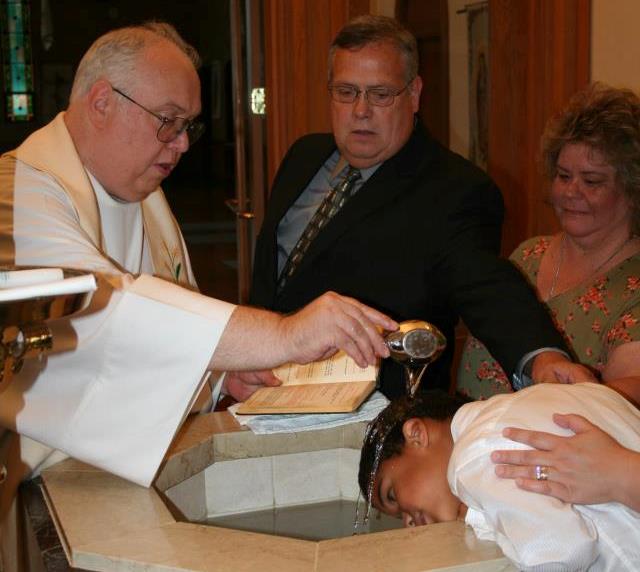
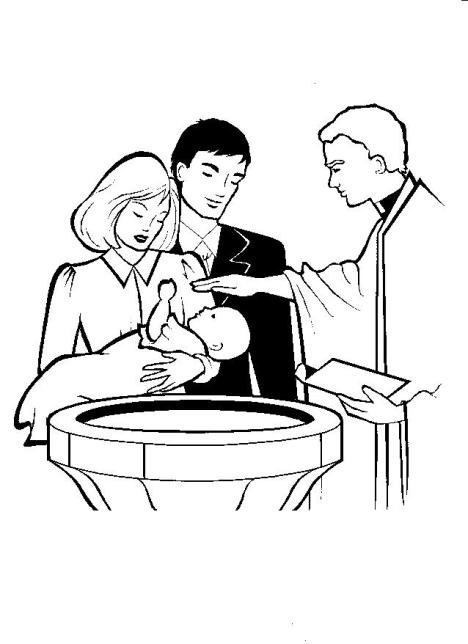
There are several ways that water might be used:  immersion, sprinkling, and pouring. Pouring is still the most common. The priest or deacon pours water over the head of the catechumen while saying: “I baptize you in the name of the Father, and of the Son, and of the Holy Spirit.”

What are some of the ceremonies that follow the act of baptism?

There is a second anointing, upon the forehead (upon the crown of the head for children). The oil used is a sacred chrism (slightly perfumed). The initiate is confirmed with this anointing, or if it is delayed, he is anointed priest, prophet, and king. He is the anointed of God, specially chosen to be among his elect. Such is our hope and the reasoning behind the white garment that might be used at this point. The book of Revelation asserts that the elect will be attired in gowns of white. It is a special sign of purity. We pray that they might bring it (figuratively) unstained before the judgment-seat of Christ. A lighted candle is presented to the person, or to a godparent in the case of children, lit from the Paschal or Easter Candle. Christ is the Light of the world and his is the fire that brings warmth to a world ever so cold. We pray that the one baptized into Christ will witness to this light and warmth. This is only made possible if one avoids sin, keeps the commandments, and loves both God and neighbor. If such is accomplished, then he can be confident in coming to the marriage banquet of heaven with all the saints. While the candle represents the newly baptized as a new Christ, the fire is the flame of everlasting life.

Why do we have sponsors or godparents?

They stand by the adult as supports and friends in the journey of faith. They stand by the child as one who professes faith and makes a solemn vow on the child’s behalf. They will support parents in raising the child in the Catholic faith. They will remain a model of Christian discipleship to the adult. We are a family. We do not come to God alone. A spiritual relationship is forged.

For more such material, contact me about getting my book, CATHOLIC QUESTIONS & ANSWERS.

Questions & Answers About Purgatory, Heaven & Hell

Does the Bible say anything about purgatory?

The word as such is not mentioned; however, it does say that we should pray for the dead: “Therefore he made atonement for the dead, that they might be delivered from their sin” (2 Maccabees 12:45). Obviously the souls in heaven do not require our prayers for atonement and the dead in hell are beyond redemption. It must mean the dead in a purgative condition.

What is purgatory?

It is a state where certain souls go to suffer for a while, having died with unremitted venial sins or with temporal punishment for sin yet to be expiated. When they have satisfied divine justice, they will be delivered into heaven.

Is this something the early Christians believed?

Uniform prayers for the dead were promulgated by counciliar decree in 253 AD. Later councils of the Church in 579 AD, in 827 AD, and at Trent, urged people to pray for the dead. This is ample evidence that the first Christians believed in a state of atonement after this life.

But do not some question the authenticity of 2 Maccabees?

Protestant reformers removed it about five hundred years ago. However, the Catholic Church from the earliest days had approved it as canonical and authentic.

But its author apologizes for its errors?

Yes, but he meant errors in style, not in doctrine.

Are there any other proofs for purgatory?

We read in the book of Revelation: “But nothing unclean shall enter it [heaven], nor anyone who practices abomination or falsehood, but only those who are written in the Lamb’s book of life” (Revelation 21:27). If nothing defiled can enter heaven, then it would seem that the millions upon millions who die in their venial sins are eternally lost. That is, they are lost unless there is a purgatory to offer final and complete spiritual healing. It is also written that God will render to each of us according to his works and that an accounting will be required for every idle word spoken. Many die with small faults in word and action; certainly a good God will not damn them eternally for minor transgressions. Purgatory is the place of atonement for little imperfections.

But, in light of Ephesians 1:7, “In him we have redemption through his blood, the forgiveness of our trespasses, according to the riches of his grace which he lavished upon us,” purgatory would not seem necessary. Why would Catholics claim otherwise?

Such an interpretation against purgatory would eliminate the necessity for hell, too. Christ cleanses us from sin, as long as we use the means he has prescribed. If we neglect them, we will incur suffering because God rewards and punishes each of us according to our works.

The Bible asserts “in the place where the tree falls, there it will lie” (Ecclesiastes 11:3); thus, there is no other condition than that in heaven and hell, right?

Wrong, this would reduce to insignificance the justice of God. The text can only be used within this context in reference to our final orientation, toward heaven or hell. Every soul is destined for heaven, IF we accept and make sufficient use of the grace God gives us (see 2 Peter 3:9; Wisdom 11:27; Ezekiel 31:11; 1 Timothy 2:4).

But does not the Bible say that some people are predestined for heaven?

Certainly we all hope to be numbered among the elect. Some, like the apostles, martyrs, and other saints reveal such predestination by lives of extraordinary faith and loving witness to the Gospel. St. Augustine would talk about this mystery as a predestination to glory. This is quite different from the exaggerated Calvinistic view that sees signs of election (being saved) in our status and worldly success. Such a view would insinuate that the poor are abandoned, even by God. This notion is utterly reprehensible. God gives sufficient grace to all men and women to be saved. What we need is faith and cooperation in that grace.

Is it just to damn someone for all eternity?

The souls in hell chose by their own free will and understanding the bondage to sin over the freedom of the children of God. Like the fallen angels before them, they will never again change their minds and hearts. God will not drag a soul by force into heaven. We cannot know all the reasons why such souls were created in the first place; however, beyond this mystery, the affirmation of God’s justice and its support to Christian morality cannot be underestimated.

For more such material, contact me about getting my book, CATHOLIC QUESTIONS & ANSWERS.

Questions & Answers About Mary & the Saints

Is it not wrong to honor saints and angels since the Bible says, “You shall adore the Lord your God, and him alone you shall serve” (see Lk 4:8; Mt 4:10)?

Certain critics misinterpret Catholic teaching on this matter. Catholics adore or worship God alone. He is the one we serve. The honor we show the saints is of a secondary order. It is no more an offense against God than the honor and respect we show our parents and friends.

How can Catholics rationalize such an attitude given the clear Scriptural prohibitions, as in Isaiah 42:8, “I am the LORD, that is my name; my glory I give to no other”?

There is no deep rationalization here, only common sense and courtesy. Of course, the mindset of those who have refashioned Christianity into a privatized sect, seeking a direct link with Christ while ignoring any semblance of a family of faith– living and dead– would have a hard time appreciating the communion of saints. As I said before, the highest honor and adoration goes to God alone; however, the very fact that we have natural bonds (with blood kin) and supernatural ones (in the family of the Church) demands some level of respect and affection.

What is the difference between showing honor and giving adoration?

Adoration is the term we properly use regarding the highest honor we show and this is directed to God. We recognize his Lordship over all creation. By honoring angels and saints we give glory to God who has worked wondrous deeds and has instilled divine virtues in them.

Does the Bible say that we should honor angels?

Most certainly, it does. Three angels appeared to Abraham. His response was to bow his face to the ground and to honor them (Genesis 18:2; 19:1). Similarly, Joshua raised his eyes and saw what he at first took to be a man, standing over against him, holding a drawn sword and proclaiming, I am “commander of the army of the LORD. . .” (Joshua 5:15). We read in Exodus 23:20-21, God saying: “Behold, I send an angel before you, to guard you on the way and to bring you to the place which I have prepared. Give heed to him and hearken to his voice, do not rebel against him, for he will not pardon your transgression; for my name is in him.”

But, does not St. Paul say, “To God alone is due honor and praise” (see 1 Timothy 1:17)?

The apostle means that the highest honor and praise is reserved to God. Note what he says in Romans 12:10: “Love one another with brotherly affection; outdo one another in showing honor.”

What does it really mean to pray to saints?

It is a particular kind of prayer. Ultimately, it is a prayer of supplication that finds its ultimate source in God, himself. We are asking the saints to pray for us and with us. Our prayers of adoration are reserved to God, all glory and praise is his.

Does the Bible say it is permissible to ask the saintsto pray for us?

Yes, it does. The Bible tells us that there is a real value in requesting the prayers of people on earth and the prayers of the angels in heaven. This being the case, it is only logical that the saints, who reign with Christ in heaven and who are still a part of our family of faith, can pray and intercede for us. St. Paul makes this request: “I appeal to you, brethren, by our Lord Jesus Christ and by the love of the Spirit, to strive together with me in your prayers to God on my behalf” (Romans 15:30). He said similar things in Ephesians 6:18 and Thessalonians 5:25.

Does the Bible say anything about angels and saints praying for people who walk the earth?

There is evidence for this. Zechariah 1:12 documents an angel praying for the Jewish people: “O LORD of hosts, how long wilt thou have no mercy on Jerusalem and the cities of Judah, against which thou hast had indignation these seventy years?” God heard and responded to the angel’s prayer, noting that his words were “gracious and comforting” and that he would have mercy on Jerusalem. Note these words from the chief apostle (2 Peter 1:15):

“And I will endeavour that you frequently have after my decease whereby you may keep a memory of these things” (Douay-Rheims).

“And I will see to it that after my departure you may be able at any time to recall these things” (Revised Standard Version – Catholic Edition).

While the language sounds a bit convoluted, one might claim that the apostle is saying, “And I will do my endeavor that after my death also you may often have prayers whereby you may keep a memory of these things” (2 Peter 1:15).

St. Peter wished to pray for his friends even after his death. The clincher that the saints pray for us is in the Book of Revelation where St. John saw four and twenty ancients who “fell down before the Lamb, each holding a harp, and with golden bowls full of incense, which are the prayers of the saints” (Revelation 5:8).

But how can angels and saints be mediators when St. Paul tells us that “There is one mediator between God and men,” and his name is “Christ Jesus” (see 1 Timothy 2:5)?

Jesus is our Mediator. However, this does not rule out secondary intercessors that are assisted and used by Christ. Remember, St. Paul, himself, asked for prayers from his brethren.

Why not pray to God in a direct way, according to the fashion that Jesus taught us?

There are many instances where we do pray directly to God. However, we acknowledge that we do not come to God alone. Just as God called to himself a People of God in the Jewish nation, so too he summons a new people in the Church. We pray with and for one another. Death is no barrier to this solidarity. We beckon the saints to pray for our needs. There is a great humility in this form of prayer. We recognize our unworthiness and ask the saints to obtain for us that which may be just out of our grasp. Both prayer forms are recommended.

But if the dead are either asleep or too far off to hear us, then what use are our petitions?

The saints know rest in the Lord, but this does not mean that they have been relegated, even temporarily, to oblivion. Further, the ties that bind us, particularly our faith and love in Christ, transcend the barrier of death. There is a legitimate mystery here and yet we trust the Word of God, which testifies that angels and saints do, indeed, hear us. “Just so, I tell you, there is joy before the angels of God over one sinner who repents” (Luke 15:10). The saints have joined the angels of heaven. They hear our voices.

But does not Jeremiah 17:5 say, “Cursed is the man who trusts in man”?

The prophet only meant that trust in men should not displace trust in God. Note that God himself told us to observe and trust his angel (Exodus 23).

Do not Catholics go too far in calling various saints “our hope, our mercy,” etc.?

These are merely signs of affection and thankfulness to our special friends among the saints. Such expressions should not be interpreted crudely as denying the singular place of God and his operation in our lives.

Why do Catholics pay special and heightened honor to the Virgin Mary?

She was chosen by God to be the Mother of our Savior. Should we not honor the mother of the one who has saved the world? Sure we should.

The appearance and the words of the angel honored Mary with titles befitting her dignity: “Hail Mary, full of grace, the Lord is with thee, blessed art thou among women.” Is it right to echo the salutation of a heavenly messenger? Certainly it is.

Jesus desired that we take notice of his mother and honor her, saying to John from the cross, “See your mother” (John 19:27). Are we obliged to carry out the last words of our crucified Lord? Without question, this is the case.

The first Christians honored Mary with a most intense and intimate love. Should we do the same as brothers and sisters to Christ, adopted children of the Father, and spiritual children to Mary? Yes, the pattern and connection is clear.

After God himself, Mary is the most perfect model of purity, justice, and holiness for us to imitate. If Mary is the queen of the saints, then is her spiritual perfection worthy of imitation? Quite so.

Those who have honored her have been wondrously rewarded by God; the lame walked, the blind regained their sight, the sick recovered, etc. Practically speaking, we would be fools to ignore such a person and the incredible manner that God continues to use her. In many ways, the miracles and messages attributed to her remind us that God is still very much aware and concerned about our plight.

Again, does it not defame God to give so many honors to a mere creature?

This honor we show her does not degrade God in the least. As a matter of fact, the respect and veneration we show Mary pleases God. We give glory to God in honoring the woman who was so wonderfully made free from sin and who said YES to God for all humanity.

Did the Virgin Mary have other children besides Jesus?

No, the Bible calls her “a virgin betrothed to a man whose name was Joseph, of the house of David; and the virgin’s name was Mary” (Luke 1:27). The Scriptures also tell us that she remained a virgin up to the birth of Jesus (Matthew 1:25). Her perpetual virginity was an accepted fact in the early Church community, taught by the Nicene Creed and the early fathers as “the glorious EVER virgin Mary.”

But does this conflict with what the evangelist actually says, that Joseph “knew her not until she had borne a son; and he called his name Jesus” (Mt 1:25)?

There is no conflict, just a problem with language and translation. The wording, “until” or “not till” does not mean that her virginity ended at that point or at some time after. It merely stresses again that Jesus was specially conceived by divine intervention. Given that Mary was a sacred vessel for the presence of God, Joseph would do nothing to defile her. After the birth of Christ, and knowing full well the identity of his foster Son, Joseph and Mary lived a virginal marriage. The language here shares some similarity with Genesis 8:7: “. . . and sent forth a raven; and it went to and fro UNTIL the waters were dried up from the earth.” The raven did not return at all. As with the virginity of Mary, it was a perpetual status. The same expression is used in 1 Kings 15:30.

But if Jesus is called Mary’s FIRST BORN, does not this readily imply other children?

No, and again, language is a serious issue in biblical interpretation. The term “first born” was applied to the FIRST BORN of every Jewish woman, regardless of whether other children followed. A case in point is Joshua 17:1. The frequent mention of the brethren of Jesus finds several reliable explanations. There is evidence that in some cases it refers to cousins (especially when a woman other than Mary is mentioned as their mother) and in other instances it may simply be an extension of referring to his followers as his brethren.

Does the Bible say that Mary was always free from original sin?

We read in Genesis 3:15: “I will put enmity between you and the woman, and between your seed and her seed; he shall bruise your head, and you shall bruise his heel.” The seed is interpreted as Christ Jesus, the woman is the Virgin Mary, and the serpent is Satan. Certain older Catholic renditions translated the last line here as “She shall crush your head.” Thus, in statuary and other imagery, she is often envisioned stepping upon a serpent. This translation peculiarity is fortuitous in that modern scholarship tells us that a more exact rendering would be, “They [all the descendants of the woman] will strike at your head.” The Mother of the Redeemer is now the Mother of the Redeemed. She is the image and model of the Church. The enmity between her sons and daughters against those in league with the devil is a perpetual one. Such an interpretation would not admit to even a momentary moment of reconciliation. She has always been, and always will be, the one made holy by Christ’s saving grace– a favor which reached from the cross backwards through history, to the very moment of her conception– all so that the divine and all-holy one might pass through a sinless vessel. The angel’s salutation affirms this truth, “Hail full of grace.” There is no space or vacuum in her for sin. The angel continues, “blessed art thou among women” (Luke 1:26,33). The holiness of Mary distinguishes her from all other women.

Are there any other reasons that might prove that Mary was free from original sin?

It would have been unbecoming of an infinitely pure God to be incarnated in a woman who was or had been under the dominion of sin, even if just for a moment.

Christ takes his flesh from the flesh of Mary; as God and as untouched by sin, he could not assume a sinful flesh.

The Holy Spirit has guided the Church on this matter and thus it can be trusted.

Mary appeared at Lourdes in France and declared herself the IMMACULATE CONCEPTION. As verification of this message, healing water sprung mysteriously from the ground and as a lasting testimony thousands have been cured by it from all kinds of diseases.

UNIVERSITY OF ILLINOIS VIOLATES ACADEMIC FREEDOM

Dr. Kenneth Howell, an adjunct professor at the University of Illinois, Champaign, who taught classes on the Introduction to Catholicism and Modern Catholic Thought, was fired for teaching and explaining in an email to students the Catholic teaching on homosexuality. While the Catholic position is based upon the clear Scriptural prohibition, the meat or substance for our position is a reasoned stand applying Natural Law.

The universal catechism is very clear:

[CCC 2357] Homosexuality refers to relations between men or between women who experience an exclusive or predominant sexual attraction toward persons of the same sex. It has taken a great variety of forms through the centuries and in different cultures. Its psychological genesis remains largely unexplained. Basing itself on Sacred Scripture, which presents homosexual acts as acts of grave depravity, tradition has always declared that “homosexual acts are intrinsically disordered.” They are contrary to the natural law. They close the sexual act to the gift of life. They do not proceed from a genuine affective and sexual complementarity. Under no circumstances can they be approved.

The context of the current controversy was an upcoming test on the theory of utilitarianism. He contrasted it with the Catholic appreciation of natural law. Apparently, the university wanted him either to be silent regarding such Catholic teachings or to encourage dissent. Because he honestly taught what he was charged to teach, he was terminated. A friend of the student complained that the explanation he gave amounted to “hate speech.” This is precisely the kind of repercussion that we were told by liberals would not happen when legislation redefined such speech. Professor Howell has also suffered the loss of his position at the campus Catholic center. I suspect that the school will now seek out lapsed and/or bad Catholics to replace him. No “good” Catholic would take such a position since that school has unveiled its blatant anti-Catholic bias.

The professor wrote:

  • In short, to judge an action wrong is not to condemn a person. A person and his/her acts can be distinguished for the purposes of morality.
  • Natural Moral Law says that Morality must be a response to REALITY. In other words, sexual acts are only appropriate for people who are complementary, not the same.
  • Men and women are complementary in their anatomy, physiology, and psychology. Men and women are not interchangeable. So, a moral sexual act has to be between persons that are fitted for that act. Consent is important but there is more than consent needed.
  • One example applicable to homosexual acts illustrates the problem. To the best of my knowledge, in a sexual relationship between two men, one of them tends to act as the “woman” while the other acts as the “man.” In this scenario, homosexual men have been known to engage in certain types of actions for which their bodies are not fitted.
  • I don’t want to be too graphic so I won’t go into details but a physician has told me that these acts are deleterious to the health of one or possibly both of the men. Yet, if the morality of the act is judged only by mutual consent, then there are clearly homosexual acts which are injurious to their health but which are consented to. Why are they injurious? Because they violate the meaning, structure, and (sometimes) health of the human body.
  • Thus, people tend to think that we can use our bodies sexually in whatever ways we choose without regard to their actual structure and meaning. This is also what lies behind the idea of sex change operations. We can manipulate our bodies to be whatever we want them to be.
  • Natural Moral Theory says that if we are to have healthy sexual lives, we must return to a connection between procreation and sex. Why? Because that is what is REAL. It is based on human sexual anatomy and physiology. Human sexuality is inherently unitive and procreative. If we encourage sexual relations that violate this basic meaning, we will end up denying something essential about our humanity, about our feminine and masculine nature.
  • I know this doesn’t answer all the questions in many of your minds. All I ask as your teacher is that you approach these questions as a thinking adult. That implies questioning what you have heard around you. Unless you have done extensive research into homosexuality and are cognizant of the history of moral thought, you are not ready to make judgments about moral truth in this matter. All I encourage is to make informed decisions.

To read the complete email, go to: THE GAZETTE

This honest and good teacher taught for nine years at the University of Illinois. He told his students that they would be tested on their understanding of Catholic teaching, not judged upon their personal acceptance or beliefs.

The setting for the controversy was one of his lectures in the Introduction to Catholicism course. He wrote an email in May to his students in preparation for an exam regarding the application of natural law theory to a practical social issue, i.e. like judging the morality of homosexual acts. Despite acknowledging that many might disagree with Catholic doctrine, and the notion of natural law (like Supreme Court nominee, Elena Kagan), the good professor gave an accurate application to a pertinent issue from Catholic social teaching. Nevertheless, the school insisted that the teachings and email violated their standards of inclusivity.

Today, certain concerned administrators of the school have asked that the faculty committee determine whether or not academic freedom was violated. I suspect for many of us, even those unsympathetic to such views, would regard this as a no brainer. It seems obvious that a pro-homosexual litmus test usurped such freedom and an accurate, if offensive to some, Catholic teaching. Would he have also been fired for the application of natural law to the abortion question? Liberals hated Justice Clarence Thomas for his paper in such an application, drawing an analogy with the question of slavery and the violation of the innate dignity of human personhood.

It amazes me that a facility dedicated to open education could be so closed-minded. What are they saying to their students?

Truths are relative, unless they are liberal truths.

Judge no one but we can judge you.

All ideas are welcome, except those which are not politically correct.

Exercise your faith, unless you are a conservative Christian or Roman Catholic.

This professor was hired to teach Catholic thought. This university has not only wronged this man but sends the bigoted message that Catholic thinking is unacceptable on their campus. Perversion (my word, not that of the sensitive and gentle professor) is tolerated but no insinuation that such actions might be judged morally wrong. I suspect that this speaks ill both for the religious studies and the philosophy departments. If religious tenets and philosophical/ethical questions cannot be freely addressed, then any insistence of academic freedom becomes a hypocritical sham. Discussions about homosexuality, fornication, and abortion would be limited to the left or made taboo. The teacher gave a forthright answer. The students could have argued and disagreed with it. Instead, the professor was silenced. He attacked no one. He merely gave the Catholic position on a question of conduct.

Faithful Catholic students should complain that they are not really welcome to be fully engaged in the life of the school. Parents should consider sending their children elsewhere. I know one Catholic university which hired a renowned atheist philosophy instructor. The students and other faculty members often delighted in debating with him. They respected each other. But here is a case where a believer is punished precisely because he teaches views which non-believers or secular students will not tolerate. It is ironic that those who are the most fanatical about toleration are so often incredibly intolerant.

Dr. Kenneth Howell is an award winning educator (recognized by the university in 2009) and a convert to the Catholic faith. He has taught there for nine years. The word is out that even the local bishop is requesting his reinstatement. The professor was very careful to admit that he was a faithful practicing Catholic and thus he was sympathetic to the subject matter he was hired to teach. He slandered no one and even admitted that a critical eye to certain actions should not be interpreted as condemnation or hatred against others. Rather than a professional and academic debate, anonymous students and “politically correct” co-workers decided they would simply get rid of him. It reminds me of the spoiled child who takes his ball and runs home when he starts to lose in a game.

We are told that the university president, Michael Hogan, has received over 100 emails. Now he has asked that the matter be reviewed. Maybe more of us should say something about this as well?

UI President
uipres@uillinois.edu
http://www.uillinois.edu/president/

Executive Offices
http://www.uillinois.edu/administration/vps.cfm

Trustees
http://www.uillinois.edu/trustees/

Ethics Office
http://www.ethics.uillinois.edu/policies/index.cfm

My suggestion is that the professor be rehired or that the public school make it very clear that Catholic teachings are neither welcome in the classroom nor in regular discourse. If they do the latter, they should also forfeit tax dollars and public support. They can hang a sign on their doors, saying, “Catholics are only welcome if they shut up and compromise their faith and values!”

Further, if he is reinstated, I would recommend that those administrators, faculty members and students who violated his academic and personal rights face, themselves, some sort of disciplinary censure. They violated this man’s academic freedom, religious freedom and freedom of speech. Where he was open to rational discourse, they were not. He gave a coherent presentation of the subject matter he was charged to teach, Catholicism, without any foul language or attacks upon persons. Those who fired him were not so noble or magnanimous.

Is it not interesting that a liberal atheist professor at another university faced no reprimand when he urge the theft and desecration of the Eucharist while mockingly name-calling Christians and Catholics? However, when a Catholic professor who stresses respect for persons and freedom for intellectual inquiry, shares ideas which are found offensive by a radical minority over-sensitive about homosexual rights, he is quickly terminated.

Finally, I would urge other Catholic professors, students and those sensitive to matters of academic freedom, to take Dr. Howell’s email and to sign it themselves. At present, he is a man who stands largely alone. He did nothing wrong. This could be done online and with hard copies sent to the university. This should not be anonymous. That is the route of cowards, like the one who started this mess for the good professor. We should stand up and be counted.

We love our homosexual brothers and lesbian sisters.

However, Catholic teaching rightly stipulates that homosexual acts are disordered and a violation of our nature.

In any case, even if you disagree with Catholic teaching, given the public setting and the classes he was hired to teach, those who favor academic freedom should also support him.

DISCUSSION ON THIS POST

John

I heard about this on the radio the other day and could not believe it. Liberals are all about freedom of speech until you say something that they disagree with, and then they try to shut you down. Didn’t a professor out in CA teach a class on female masturbation with a [deleted]? I’m sure this was okay because of her freedom of speech. Simply amazing!

Ron D

I wrote the good UI President a three-letter email, “cut the crap.” Here is his reply, and mine:

Let me begin by thanking you for expressing your concerns. Academic freedom is at the core of our teaching and research missions. It’s vital to our ability to explore new ideas, educate our students, and promote the civil and free exchange of alternative viewpoints in a democracy.

I learned of this action on the University of Illinois Urbana-Champaign (UIUC) campus late last week and immediately asked Chancellor Robert Easter, who oversees the campus, to provide me with a briefing on the matter. I want to assure you that the University administration shares my commitment to the principles of academic freedom. At the same time, we do believe it’s important to fully investigate all of the details related to this situation. As I’m sure you’re aware, it is sometimes the case that public reports may convey only part of the story. I think it important to reserve judgment until I have all of the facts and I hope you’ll agree.

We have asked the UIUC Senate’s standing Committee on Academic Freedom and Tenure to immediately review this action. This is the mechanism on the campus through which these matters should be vetted. We expect this review to be completed very soon. By using our channels of shared governance and review, we are in the best position to make informed decisions that afford a fair process for all.
Again, I’m grateful to have heard from you and others about this and I’m grateful for the opportunity to respond. It reaffirms the deep commitment that so many have to the University and public higher education and to ensuring that the University of Illinois continues to be a beacon of excellence, as it should be for the state, the nation, and the world.

Sincerely,
Mike

Michael J. Hogan
President
University of Illinois

Just remember what he’s teaching. CATHOLIC studies. He cannot lie about the position of the Church, that wouldn’t be education. Many Catholics will be following this. I hope you come to the proper conclusion.

WI Catholic

This is why I have missed you!! God bless you abundantly!

Aidan H

Oh my goodness, you are back!

I thought you were dead!

And look, you raise your puffy fat head out of the grave fighting!

What is with you anyway? You must really hate gay people! You attack them and their rights every chance you get!

This screwy professor had to be fired. Like you he was a hate-monger. The university was crazy to allow Catholic nonsense to be taught at a state school anyway! It is a violation of church and state! If religion has to be taught, it should pass a litmus test. Groups and cults which encourage racism, sexism, and discrimination because of sexual orientation have no place in the public forum. They should be ostracized and stamped out.

If I had my way I would force the Catholic church to ordain women and active homosexuals. Guys who like other men and women would not be chasing little boys!

Did the professor explain how Catholicism can excuse and promote child abuse and the protection of molesters? I doubt it, but gay men who love each other are always fair game… NOT!

The natural law is bunk. We control our destinies and make what we want out of life. If same-sex love was unnatural then people would not have such attractions. But there are homosexual people and animals. It does not result in children but not all heterosexual relationships do so either.

If you ask me, celibacy is far more questionable than homosexuality. Is it even possible to go through life without the intimacy of another person and his or her body? It is no wonder these priests go bonkers and start chasing kiddies. They are sick men and this professor was an apologist for their sickness!

I for one am telling the university, “Bravo!” It was about time and I hope more such homophobic bigots are shown the door in the near future.

Father J, you are the most hateful and hypocritical priest I know. Just when I thought we would be spared your spewing lies, you jump back on the scene. I for one hope that your heart is racing. How’s the blood pressure? You can pop a vein but I bet you never [deleted]!

Now, here again is my dare. Show my comment or prove you are a coward and fake! You can give it, but by your own admission, you just can’t take it! I hope I am too much for you and that you will go away for good!

Why can’t you be like most priests, lazy fools who keep their mouths closed? Mind your own business and leave the rest of us alone.

Shut up! Shut up! Shut up!

Father Joe

Aidan, some comments are so radical that they are their own rebuttal.

Arguing with you will probably be pointless.

I will keep you in prayer, instead.

John

Father Joe, I was thinking the same thing while reading Aidan’s remarks: no sense in even responding to this. My blood pressure did start rising as I read, but by the time I was finished, I actually felt sad for this person. It sounds like he may be a little bigoted himself. You are right, we can only pray for them.

MQ

Kind words, your comment Father Joe, indeed kind words.

Jeff

Father Joe,

Just a quick word of encouragement for you, as a convert to Catholicism in 1987 (from a completely non-religious upbringing, btw), I admire reasoned thought in the defense of the Catholic Church’s teachings. God gave humans the ability to not only love, but also to reason and self-analyze. I believe that is strongest foundation by which we can stand firm in our faith and in our public defense of it.
Keep up the good work!

Lady Godless

Father Joe said: “Is it not interesting that a liberal atheist professor at another university faced no reprimand when he urge the theft and desecration of the Eucharist while mockingly name-calling Christians and Catholics? However, when a Catholic professor who stresses respect for persons and freedom for intellectual inquiry, shares ideas which are found offensive by a radical minority over-sensitive about homosexual rights, he is quickly terminated.”

Are you referring to PZ Myers?

I believe that was about something that happened a couple of years ago. What did you advocate in that case?

Father Joe

I do think there are extremes which would force censure upon professors: inappropriate relationships with students, incompetence, belligerence and seeking to harm the institution for which one is employed, treating students unfairly or unjustly (as in biased grading and verbal abuse), constant foul and derogatory language, encouraging students to violence, a disregard for the civil laws and enticing students to violate them, etc.

Myers ridiculed believers and lacked basic human respect. I would expect all teachers to exhibit a certain tolerance and courtesy to others, even when they do not share their opinions or views. Further, he was hired to teach science; Howell was specifically hired to teach about Roman Catholicism.

Howell might be critical of atheism, other religious beliefs, and the brand of morality practiced by others; however, he seemed honest and approached such issues within the scope of his course, respect for his students and intellectual honesty. A science teacher may or may not believe in God, and he might even share his intellectual reasoning for such views; however, name-calling and deliberate blasphemy crosses the line (in my estimation). It is like using the “n” word to blacks and the “f” word to homosexuals. Polite or decent people should not devalue others, even when there are serious disagreements, either from prejudice or from a given perspective of the created order.

Lady Godless

Looks like Ken Howell has been temporarily reinstated, pending full review:

http://articles.chicagotribune.com/2010-07-29/news/ct-met-u-of-i-catholic-professor-073020100729_1_reinstates-academic-freedom-associate-professor

Michele Johnson

I just discovered your blog, Father Joe. I find the discussions here fascinating but I can understand why you would need to limit your postings. The hatred in some of these comments is quite toxic.

What brought me to your blog was a search on how Catholics should react to Islam….which lead me to your article on Pope John Paul II kissing the Koran several years ago. Again, fascinating discussions and hoping I find some answers there.

I’ve recently been invited to attend a meeting to discuss a program for school children in our area. The program is “Operation Cooperation” and strives to bring understanding and cooperation among children of different faiths: Judaism, Catholicism, Islam and Christian Scientist.

I am praying for wisdom in this matter. I look forward to following your blog in the future.

May the Lord bless and keep you

Questions & Answers About the Church Year

What is the meaning of Advent?

This season of four weeks before Christmas represents the four thousand years (according to the Scriptural reckoning) that mankind had to wait for the coming of the Redeemer.

What is the object of Advent?

We become aware of ourselves as spiritual Jews, recalling the advent of Christ’s first appearance while awaiting his Second Coming. It should light the spark of desire for this definitive encounter and for the graces he gives us as our Savior and Redeemer. Advent prepares us for the birth of Christ.

Why do we call Jesus’ birthday Christmas?

It is because the Church celebrates the festive day with Masses that specially commemorate the birth of our Lord.

Why do we traditionally offer three different Christmas Masses?

It is seen as a threefold act of thanksgiving to the divine persons of the Blessed Trinity who participated in our redemption.

What is the feast of the Presentation of the Lord?

On the fortieth day after Christ’s birth, Mary, in obedience to the law, offered her divine Son to his heavenly Father. It was once called the Purification because Mary offered the required clean oblation in the temple.

Why is it also called Candlemas Day?

It is because the priest blesses candles on this day. Candles are symbols for Jesus who is the Light of the World. Simeon proclaimed him to be the light of enlightenment of the Gentiles (Luke 2:32). Candles are blessed on this day with beautiful prayers and hymns: “May we who carry them to praise your glory walk in the path of goodness and come to the light that shines forever.” A procession is made to the church where Mass will be offered.

What is done on Ash Wednesday?

Ashes are blessed by the priest and placed on the heads of the faithful.

What makes up the ashes?

They are the remnants from blessed palm used the previous year. The ashes remind us that our bodies are destined to soon return to dust. That is why the priest says: “Remember, man, you are dust and unto dust you will return.

What are the ceremonies of Passion (Palm) Sunday?

It is a pious custom to cover the crucifix, statues, and pictures in violet to represent the brief time before the passion that Jesus hid from the Jewish authorities, following his terrible humiliation by them in the temple. Since it is also Palm Sunday, we also celebrate Christ’s triumphant entrance into Jerusalem. Palms are blessed in the church. The Jewish people greeted Jesus with palm branches and hailed him as their king. We know, of course, that he was not the kind of king they wanted and that Jesus really came to Jerusalem to die.

Why is the last week of Lent called Holy Week?

It is because we specially commemorate the events making up our redemption. Many graces are given us in this most holy time.

What takes place during Mass on Holy Thursday?

The Church commemorates the institution of the Eucharist (and the Priesthood). As a special sign of joy, the Gloria is sung and bells are rung during its recital. Extra hosts are consecrated for special reservation that evening and for communion on Good Friday. The Eucharist is carried in procession to the repository at a side altar. The organ and bells are now silent until the Gloria on Holy Saturday. This expresses the deep bereavement of the faith community over the passion and death of Christ.

Why is this the customary day for the consecration of holy oils?

Although sometimes moved to another day like Monday or Tuesday (for practical reasons) of Holy Week, the bishop consecrates the oils that are used at baptism, confirmation, anointing of the sick, and certain consecrations. Holy Thursday is chosen since it is the day that Jesus instituted the priesthood and made the apostles dispensers of his graces through the sacraments. Priests renew their promises.

Why are the altars stripped after Holy Thursday Mass?

This indicates our sorrow at the pitiful exposure of our Lord during his scourging and crucifixion.

What does the washing of the feet signify?

It is connected to the calling of the apostles as the first priests. The deep humility of Christ must also be found in his servants and ministers. St. Augustine associated it to our faith and baptism. Jesus washed the feet of his apostles before instituting the Eucharist. This reminded them of the purity and humility of heart that should be theirs before receiving and distributing Holy Communion.

What are the observances for Good Friday?

This is not a feast day, and no Mass is said. There may be special readings of the passion, Stations of the Cross, and Veneration of the Cross. We remember the death of Jesus. Various supplications are prayed.

Why do priests prostrate themselves at the foot of the altar on this day?

It expresses our profound grief at the suffering and death of Jesus.

What does the Church pray for in the great Supplications?

In the context of solemn petitions, the priest prays for the Church, the Holy Father, the bishops, the clergy and laity, the country, those preparing for baptism and/or reception, the suffering, separated brethren, Jews and other non-Christian people of faith, etc. We actually dare to pray that they might share in the fruits of Christ’s saving death. After all, our Lord died for all men and women.

How is the Veneration of the Cross conducted?

The priest or deacon holds up a Cross at three areas in the church: the back, middle, and front. If veiled, he reveals another of its three points as he moves toward the sanctuary. He proclaims: “This is the wood of the Cross on which hung the Savior of the world.” The people respond, “Come, let us worship.

How is the Cross worshipped or adored?

The priest lays the uncovered Cross before the altar, and then he kneels and kisses it. Traditionally, he would kneel three times at different distances and would finally kiss the wounds on the figure (corpus).

What does the choir traditionally sing?

They sing the reproaches that Christ must have made to his ungrateful people on this day.

Why is no Mass celebrated on Good Friday?

It would be unbecoming to celebrate the UNBLOODY renewal of the sacrifice of the Cross on the day we commemorate the BLOODY sacrifice of the Cross.

Also, every Mass makes really present the saving activity and presence of our RISEN Lord. Today we remember the shadows and not the light directly.

What does Holy Saturday bring to mind?

Many things come to mind. The darkness, candles, sacred silence and repose brings us to the Lord’s borrowed tomb and his descent to the limbo of the fathers (the righteous dead who awaited their Savior). But also, the festivities of the evening press upon us. We will soon celebrate our Easter joy.

What are the services for Holy Saturday?

The most elaborate liturgy of the year it is also the most beautiful and profound. There is the blessing of the new fire and the lighting of the Paschal Candle. There are a whole series of readings that trace our salvation history. There is also an incredible Easter Proclamation called the Exsultet. The Litany of the Saints is recited and baptismal faith is reaffirmed. A blessing is made over the baptismal water in preparation for the initiation and reception of new members into the faith.

What does the blessed fire of the candle signify?

The Paschal Candle is a symbol for Christ. Extinguished on Good Friday, it is restored brand new (resurrected) on Holy Saturday. The fire of the candle, from which other candles in the church are lit, signifies Christ as the Light of the World who dispels the darkness and gives warmth against the cold world and sin. Five incense grains are pressed into the candle representing the five wounds of Christ.

How is the baptismal water blessed in this celebration?

A whole series of Old Testament prophesies that point to baptism is read and prayers are made for the neophytes and those who reaffirm their faith. After the blessing and renewal of baptismal promises, the priest sprinkles the people. During the blessing, the Paschal Candle is dipped three times into the water as an invocation is made to the sanctifying power of the Holy Spirit. The water reminds us that the waters of baptism cleanse the world of sin.

What does the Church celebrate at Mass on this day?

The Church celebrates the resurrection of Christ. The Gloria is chanted, bells are rung, and the solemn Alleluia is sung.

What does the word Easter mean?

Easter or “East star” is derived from the rising of the sun or the resurrection of Jesus. It has also been called Pascha, a name taken from the Jewish festival when a lamb was slain in memory of the blood of the lamb that saved the first born of the Israelites. Jesus is the new Lamb of God who was slain on the cross and whose blood will save us.

What is the Ascension?

Forty days after Easter we commemorate Christ’s triumphant ascent into heaven.

What ceremony is peculiar to this day?

It is customary to extinguish the Paschal Candle, symbolizing the departure of Christ from earth to his Father in heaven.

What is Pentecost?

This is the commemoration of the descent of the Holy Spirit and it traditionally occurs ten days after the Ascension, or fifty days after Easter. We celebrate it on Sunday.

What are the Holy Days of obligation?

In the United States they are as follows:

  • Solemnity of Mary – Jan. 1
  • Ascension Thursday – (40 days after Easter)
  • Assumption of Blessed Virgin Mary – Aug. 15
  • All Saints – Nov. 1
  • Immaculate Conception – Dec. 8
  • Christmas – Dec. 25

Canada: Holy Days are Christmas and Solemnity of Mary, Mother of God

What is Ordinary Time?

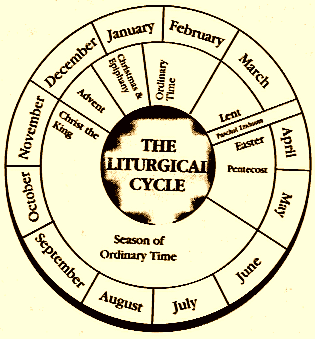
This is a name given to the liturgical time outside of the seasons of Advent, Christmas, Lent, and Easter. Of course, in a sense, no time is ordinary. Every day and every liturgy is a wondrous opportunity to grow closer to the Lord and to live out our discipleship.

For more such material, contact me about getting my book, CATHOLIC QUESTIONS & ANSWERS.

Questions & Answers About the Church

What is the Church?

Put simply, the Church is a community of faith founded by Christ which celebrates and makes known her Lord through his teachings and sacraments. This Church is composed of the clergy, laity and consecrated religious.

Does the Bible speak of the Church?

Yes, it does, a fact that is quite disturbing to those who disavow any significant role for her and who reduce Christian faith to a personal experience with occasional Christian fellowship. Jesus said: “And I tell you, you are Peter, and on this rock I will build my church, and the powers of death shall not prevail against it.” (Matthew 16:18). St. Paul also speaks about “the church of the living God” (Timothy 3:15). In Hebrews 12:23, he calls her the Church or “the assembly of the first-born.” Revealing something of the intimacy between Christ and his people, St. Paul says in Ephesians 5:25, “Christ loved the church and gave himself up for her.” Jesus compares the Church to a flock of sheep: “So there shall be one flock, one shepherd” (John 10:16).

Does the Bible say anything about Christ founding a Church?

Our Lord chose twelve apostles and commanded that they teach and insure that believers observe all that he had given them. Christ, himself, admits to his own authority, “All authority in heaven and on earth has been given to me” (Matthew 28:18) and extends it to his apostles, “Peace be with you. As the Father has sent me, even so I send you.” (John 20:21). Christ appointed a visible headship or ultimate leadership among his apostles in Peter: “And I tell you, you are Peter, and on this rock I will build my church” (Matthew 16:18). This “rock” signifies that Peter should be the foundation stone and chief shepherd of the Church. Christ told him “Feed my sheep . . . Tend my lambs . . . Feed my sheep” (John 21:15-17). In other words, he was to lead the apostles and teach the People of God. He was to minister to them and insure the efficacy of the sacraments, particularly the Eucharist.

When did this Church really begin?

The Acts of the Apostles chronicles how the apostles were empowered and began to exercise their mission on Pentecost. The Church expanded and prospered. Bishops were appointed to assist and to be the successors to the apostles. This living legacy extends all the way to today.

Can the origin of the Church and its apostolic succession be proven?

Sure, history and Church documents themselves are evidence of Church leadership and activity throughout the ages. Significant are the lists of succession, especially that of the Pope which extends back to Christ and his appointment of Peter. There has also been a successive series of Church fathers and doctors who have explained and defended the faith in every century. We might point further to the Church councils, which have corrected and maintained teaching and discipline against error so as to be faithful to Christ.

Can we really be sure from biblical testimony that Christ gave Peter a special supremacy and power?

Christ asserted that Peter was the rock or foundation stone of his Church. He tells him to feed his flock, to teach and minister to clergy and laity alike. He makes no qualm in saying, “I will give you the keys of the kingdom of heaven, and whatever you bind on earth shall be bound in heaven, and whatever you loose on earth shall be loosed in heaven” (Matthew 16:19).Yes, the singular role of Peter is pretty clear.

Does the Bible assert that Peter was the chief apostle and that he exercised supremacy over them?

St. Peter personally presided over the election of Matthias. He was the first to address the crowd after the descent of the Holy Spirit. At the Sanhedrin in Jerusalem he took it upon himself to speak in the name of all the apostles. He presided in Jerusalem over the first Church council (Acts 15). He resolved disputed matters (Acts 15:7). St. Paul consulted Peter about certain practices. Indeed, early Christian history tells us that after Christ, Peter was considered the head and chief teacher of faith.

Can it be proven that the Catholic Church is the true Church?

Christ established the Catholic Church almost two thousand years ago. Her Christian teachings have remained consistent against the fads and fashions of time. Her saints have written our Church history in lives of holiness and sometimes even of martyrdom. She has spread throughout the world to the many nations of the earth. She has not deleted or compromised the teachings of Christ. She has an unbroken succession of leadership (that can be chronicled) going back to Jesus. The Catholic Church alone has weathered all the storms of dissension, schisms, paganism, and persecution.

How can it be said that no other denomination is the true Church?

Except for the special position of the Orthodox churches and their relationship, albeit fractured, with the Catholic Church, all other Christian denominations emerge from the personal opinions of certain men. These figures alter, add, and delete from the deposit of faith according to their own whim and private notions. Non-Catholic churches [properly called ecclesial communities] disagree with one another and only possess fragments of Christ’s teaching, not the whole truth. All saving truth “subsists” in the Catholic Church. These other ecclesial communities extend back a few centuries or merely a couple years, not two millennia like the Catholic faith. These denominations exist only locally or in a few countries and are not worldwide. Having not formed under the watchful eye and guidance of the apostles, non-Catholic Bible-Christians frequently and ultimately explain the Scriptures in ways to suit human opinion.

Does the Bible actually say that we should submit our opinion to the Church?

We read St. Paul in Hebrews 13:17: “Obey your leaders and submit to them.” Jesus said to the apostles: “All authority in heaven and on earth has been given to me. Go therefore and make disciples of all nations, baptizing them in the name of the Father and of the Son and of the Holy Spirit, teaching them to observe all that I have commanded you; and lo, I am with you always, to the close of the age” (Matthew 28:18-20). “He who hears you hears me, and he who rejects you rejects me, and he who rejects me rejects him who sent me” (Luke 10:16). Thus it is that we should hear the Church and submit our opinions to her.

But blind submission violates the freedom of human inquiry and thinking, does it not?

This submission is not blind. We are obliged, to the best of our ability, to study the reasons and background for Catholic teachings. But, should we encounter “mystery” and we will, then we should render a religious assent to the views of the Church, which received the command from Christ to teach and to explain the truth.

Does not everyone have a right to his or her own opinion?

Yes, but only so long as the facts admit to differing opinions. But if truth should be made manifest or decided by a competent authority (like the Church), then we must submit. Children have opinions; would we say that they are always mature and correct? The insane have views too, would we consider all truth relative so as to give them credence? No, of course we would not.

Could not Christ have made things a lot easier for us, just by spelling out his doctrines so that no confusion might develop?

Christ did provide for the eventuality of misunderstanding. He gave us a certain and infallible teacher for his doctrines. In cases of uncertainty, we have a means of discerning the truth. He principally gave this infallibility to Peter, the Bishop of Rome, and to his successors.

But, is not the Bible an infallible teacher?

No, because many texts require explanation. There are some Scriptures difficult to understand. The multiplicity of denominations in this nation alone is proof that the Bible is no infallible teacher.

Does the Bible really say that St. Peter has infallible teaching authority?

Christ said to St. Peter: “Simon, Simon, behold, Satan demanded to have you, that he might sift you like wheat, but I have prayed for you that your faith may not fail; and when you have turned again, strengthen your brethren” (Luke 22:31). In Matt. 16:17-19, Jesus said to Peter: “Blessed are you, Simon Bar-Jona! For flesh and blood has not revealed this to you, but my Father who is in heaven. And I tell you, you are Peter, and on this rock I will build my church, and the powers of death shall not prevail against it. I will give you the keys of the kingdom of heaven, and whatever you bind on earth shall be bound in heaven, and whatever you loose on earth shall be loosed in heaven.” This proves that Peter was empowered by Jesus Christ so that his faith would not falter and that he should insure and strengthen the faith of his brothers. Christ confided his Church to Peter as on a rock that will never be disturbed by false teachings or by the gates of hell. Christ said to Peter: “Tend my lambs . . . feed my sheep,” (John 21:15), which means to teach and care for the whole Church. If Peter was charged to teach the whole Church, then Christ had to insure that he would be able to teach without error. Otherwise, no one could be required to believe what he taught. Except for some window dressing and the development of our appreciation of doctrine, the Church has taught the same unchanging doctrine for two thousand years.

But if Peter swore that he did not know Christ, how could he be infallible?

This question emerges from a common misunderstanding between “infallibility” and “impeccability”. While St. Peter was infallible in teaching matters of faith and morals, he was not free from sin. Further, when Peter denied Christ, he had not received the Holy Spirit who would preserve him free from error in teaching the Church. Christ had yet to give him full and empowered charge of his flock.

What does “ex cathedra” teaching mean?

It is a technical term, which means literally from the chair; it signifies when the Pope speaks from his role, as the universal teacher, some matter of faith and morals which must be accepted throughout the world. He puts the full weight of the seat of Peter behind it. His private conversations and such are not infallible.

Does such a view of infallibility create an atmosphere for ignorance, making people passive in investigating the truth?

No, quite to the contrary, infallibility insures that we do not follow any false leads. The truth is studied on a firm foundation and in the light; those who have no such guide search for the truth in the dark. The fragmentation of Protestantism is evidence of this latter route.

But wait a minute; is not the teaching regarding infallibility of recent origin?

It was formally defined toward the end of the 19th century as a necessary retort to a world that was increasingly secular and dismissive of the role of the Church. However, even before it became a declared article of faith, the Popes were always infallible. Papal infallibility is not a new doctrine; rather, it is an ancient perpetual truth given a clearer definition.

But some Popes were terrible public sinners; does this not invalidate this business?

No, just as with Peter, infallibility does not mean an exemption from sin.

Could it be that Peter was infallible, but no Popes after him?

The guarantee from Jesus was that he would remain with his Church until the end of the world. Thus, the infallibility of Peter must endure as long as the Church exists and the teachings of Jesus have need of preservation from error. Anything less would be unjust. Every generation has a right to the truth. Remember, Christ promised he would send to his Church the Spirit of truth which would abide with her forever (John 14).

At the time of the reformation, about the year 1500, did not the Catholic Church fall into idolatry and superstitious practices?

No, her beliefs have remained essentially the same throughout all history, going back to the apostles and the first Christians. These charges are the result of bigotry and misunderstanding.

Were there not many abuses in the Catholic Church at the time of the reformation?

The Church is holy because Christ is holy. However, many individual members of every “church” may be guilty of sinfulness and abuses. The Church has never formally approved of religious abuses and has legislated “Church” penalties, including excommunication, to discourage such activities.

Is it correct to assume that Protestant denominations possess the same faith and teachings as the first Christians?

No, this would be a false presumption. Many cases of deviation can be documented, not to mention their breach with the Catholic Church. While the first Christians acknowledged baptism as necessary for salvation, many of these “new” churches dismiss its importance. Ancient believers also believed in the Church’s jurisdiction over the sacrament of penance and the value of confession to a priest; all the Protestant sects renounce this mystery of mercy. The early Christians made the Eucharist the center of their lives, trusting that in Holy Communion they received the real body and blood of Jesus Christ. Most Protestant sects denounce the real presence, spiritualize it, or reduce it entirely to ordinary bread. Early Christians also inherited from the Jews of Christ’s day the practice of praying for the dead; this also, the non-Catholic denominations have discarded.

What is so serious about a denomination changing or modernizing its tenets of faith?

Implicit in such an activity is the assumption that the previous tenets were incomplete or erroneous. Both cannot be right. The true teachings of Christ and the apostolic Church, the very matters of faith required for salvation, cannot be reversed or altered. Attempts to do so sever the connection between believers and the true Church of Christ. Of course, issues of discipline can be revised according to changing circumstances. Further, the many languages of men and the various societies in which the Church finds herself may also dictate reformulation in the expressions of changeless doctrinal truths. It could also be said that the full meaning and ramifications of certain teachings develop or are only realized over time.

Does the Catholic Church fabricate new articles of faith?

No, she does not have the authority to create new teachings. Rather, she sometimes defines matters of faith that have existed in the Church from the very beginning. As for discipline, she can create or revoke laws according to changing circumstances.

For more such material, contact me about getting my book, CATHOLIC QUESTIONS & ANSWERS.

Deacon Dr. Henry D. Dardy Passes Away

Presidential Rank of Meritorious Senior Professional
Dr. Henry Dardy, 2008

I lost one of my best friends, the parish deacon. His sister called me last Saturday to let me know that Deacon Hank collapsed while doing yardwork at his home. Hank was a great scientist and man of faith. He was instrumental in the creation of several corporations worth hundreds of billions of dollars. He ranked with Steve Jobs and Bill Gates. The only difference was that he was more interested in being a prophet than in making profits. Along with his lab and those who worked with and under him, he invented and perfected all sorts of things. He worked with Lucas over the computerization of the dinosaurs in Jurassic Park. He was behind high speed data transmission and in collaboration with ABC and Disney helped to perfect HDTV. He worked for his country and the Navy. He loved his Country, his Church, and his Community. I will never forget this quiet and good man. Last Friday he did the parish Stations of the Cross for me. He preached two weeks ago and gave one of the best homilies I had ever heard; I even said so from the altar. No task was too great or too small. This world-class scientist replaced my light bulbs and fixed the clocks. He set up for Masses, performed baptisms, and proclaimed the Good News. He believed. He was living evidence that there need be no contradiction between being a person of science and a man of faith.

Bishop Martin Holley presided at his funeral and I was honored to preach. Many of his deacon classmates attended. The church was packed with friends, family and colleagues.

I will miss him very much. Everyone loved him. Goodbye Hank, until we meet again in the Lord . . .

OBITUARY

549358 

Deacon Dr. HENRY D. DARDY “Hank” (Age 67)

On Saturday, February 27, 2010 in La Plata, MD, the beloved brother of Sr. Mary Ann Dardy and Anthony “Tony” Dardy; brother-in-law of Barbara G. Dardy; uncle of Lisa D. McGee and Mark D. Dardy; nephew of Anna M. Lindich.

Family and friends may call at Holy Family Catholic Church, 12010 Woodmore Rd., Mitchellville, MD 20721 on Wednesday, March 3 from 6 to 8 p.m. where Mass of Christian Burial will be offered on Thursday, March 4 at 10 a.m. Interment on Friday, March 5 at 11 a.m. in Calvary Cemetery in Cleveland, OH. In lieu of flowers, contributions may be made in his memory to either Holy Family Catholic church or John Carroll University, 20700 North Park Blvd., University Heights, OH 44118.

www.KalasFuneralHomes.com

Catholic Schools in Financial Difficulty

The US Dept. of Education’s “Financial Responsibility Test” was recently announced. This test indicates that according to certain ratios, a private higher education institution may be at risk for failure. These schools are subject to extra monitoring on their use of federal student aid funds.

114 private, nonprofit, degree-granting institutions scored below 1.5, the passing level, and are thus in financial jeapardy. There are a number of Catholic institutions on the list as having financial difficulties:

Please note that Dominican College of Blauvelt (New York) which also scored a low 0.9 is no longer a Catholic institution. The college is very clear that it is an independent school with only a Catholic “heritage” or “origin”. I suppose schools like people can forfeit their souls.

11954250181186354795ArtFavor_Stack_of_bills_money_svg_med

All private colleges that award federal student aid must participate in the Department of Education’s financial-responsibility test, which is based on information from their audited financial statements. The department develops a composite score on a scale of 3.0 to minus 1.0, based on financial ratios that measure factors such as net worth, operating losses, and the relationship of assets to liabilities. Institutions with scores of 1.5 to 3 pass. In addition to extra monitoring for all institutions that “fail,” those with scores below 1.0 are required to post a letter of credit with the department equal to 10 percent of the federal student aid that goes to their students annually.