
• Our Blogger

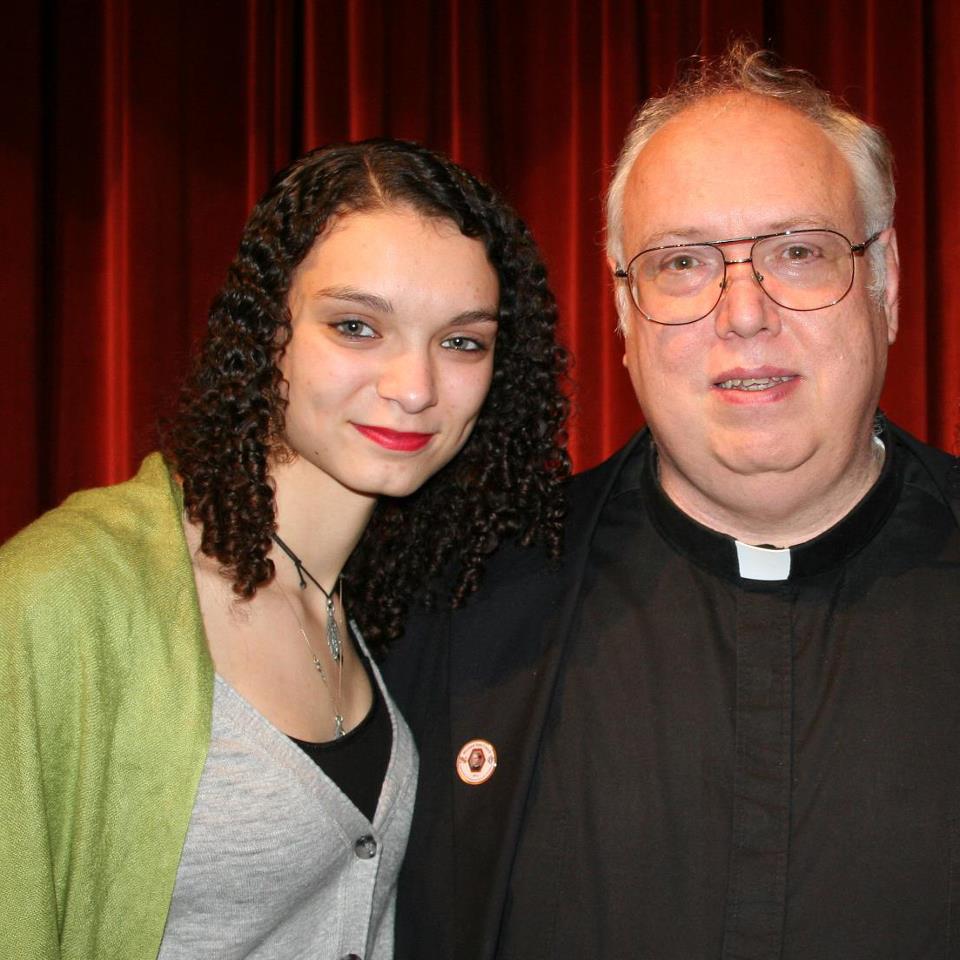
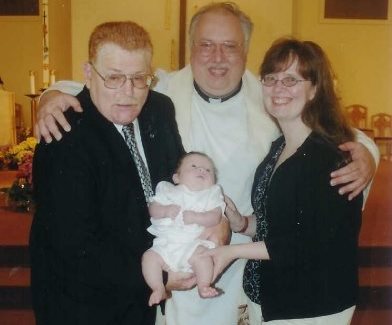
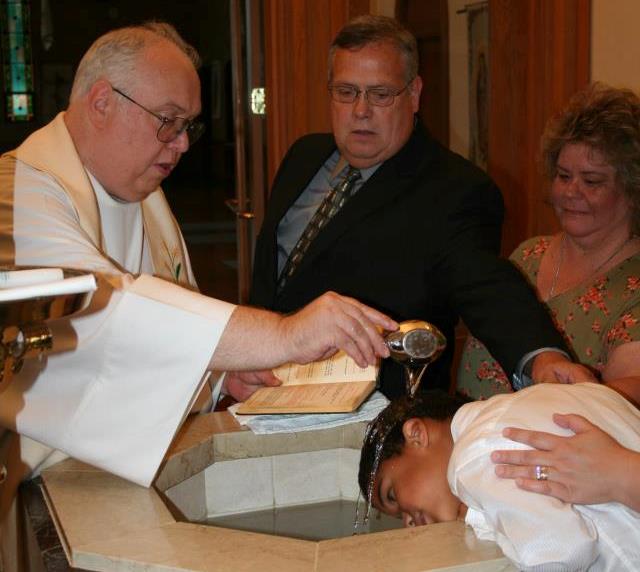
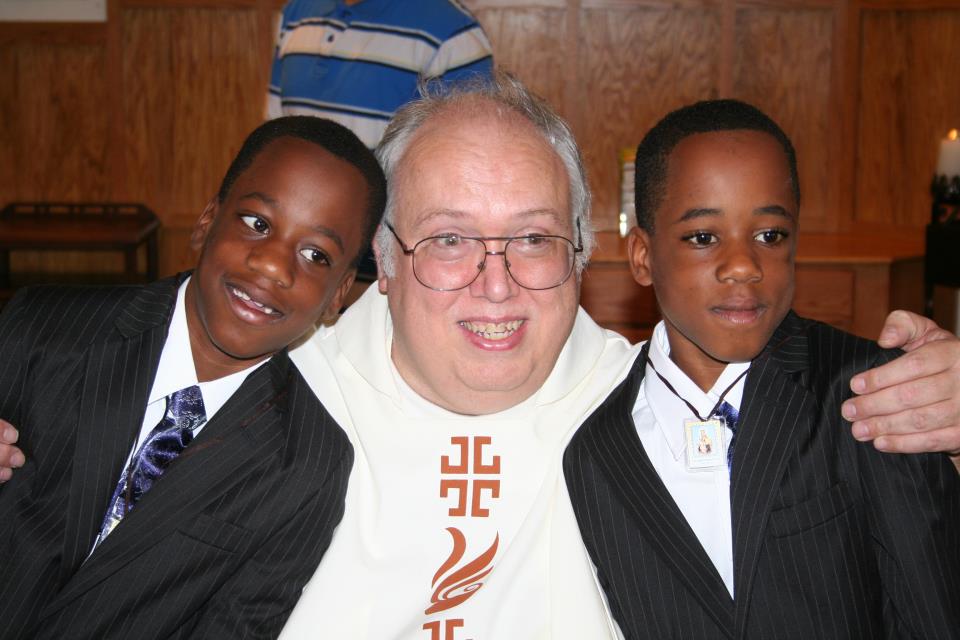
    Fr. Joseph Jenkins

  • The blog header depicts an important and yet mis-understood New Testament scene, Jesus flogging the money-changers out of the temple. I selected it because the faith that gives us consolation can also make us very uncomfortable. Both Divine Mercy and Divine Justice meet in Jesus. Priests are ministers of reconciliation, but never at the cost of truth. In or out of season, we must be courageous in preaching and living out the Gospel of Life. The title of my blog is a play on words, not Flogger Priest but Blogger Priest.

  • Archives

  • Categories

  • Recent Posts

  • Recent Comments

    Barbara King's avatarBarbara King on Ask a Priest
    Ben Kirk's avatarBen Kirk on Ask a Priest
    Jeremy Kok's avatarJeremy Kok on Ask a Priest
    Barbara's avatarBarbara on Ask a Priest
    forsamuraimarket's avatarforsamuraimarket on Ask a Priest

Questions & Answers About Mary & the Saints

Is it not wrong to honor saints and angels since the Bible says, “You shall adore the Lord your God, and him alone you shall serve” (see Lk 4:8; Mt 4:10)?

Certain critics misinterpret Catholic teaching on this matter. Catholics adore or worship God alone. He is the one we serve. The honor we show the saints is of a secondary order. It is no more an offense against God than the honor and respect we show our parents and friends.

How can Catholics rationalize such an attitude given the clear Scriptural prohibitions, as in Isaiah 42:8, “I am the LORD, that is my name; my glory I give to no other”?

There is no deep rationalization here, only common sense and courtesy. Of course, the mindset of those who have refashioned Christianity into a privatized sect, seeking a direct link with Christ while ignoring any semblance of a family of faith– living and dead– would have a hard time appreciating the communion of saints. As I said before, the highest honor and adoration goes to God alone; however, the very fact that we have natural bonds (with blood kin) and supernatural ones (in the family of the Church) demands some level of respect and affection.

What is the difference between showing honor and giving adoration?

Adoration is the term we properly use regarding the highest honor we show and this is directed to God. We recognize his Lordship over all creation. By honoring angels and saints we give glory to God who has worked wondrous deeds and has instilled divine virtues in them.

Does the Bible say that we should honor angels?

Most certainly, it does. Three angels appeared to Abraham. His response was to bow his face to the ground and to honor them (Genesis 18:2; 19:1). Similarly, Joshua raised his eyes and saw what he at first took to be a man, standing over against him, holding a drawn sword and proclaiming, I am “commander of the army of the LORD. . .” (Joshua 5:15). We read in Exodus 23:20-21, God saying: “Behold, I send an angel before you, to guard you on the way and to bring you to the place which I have prepared. Give heed to him and hearken to his voice, do not rebel against him, for he will not pardon your transgression; for my name is in him.”

But, does not St. Paul say, “To God alone is due honor and praise” (see 1 Timothy 1:17)?

The apostle means that the highest honor and praise is reserved to God. Note what he says in Romans 12:10: “Love one another with brotherly affection; outdo one another in showing honor.”

What does it really mean to pray to saints?

It is a particular kind of prayer. Ultimately, it is a prayer of supplication that finds its ultimate source in God, himself. We are asking the saints to pray for us and with us. Our prayers of adoration are reserved to God, all glory and praise is his.

Does the Bible say it is permissible to ask the saintsto pray for us?

Yes, it does. The Bible tells us that there is a real value in requesting the prayers of people on earth and the prayers of the angels in heaven. This being the case, it is only logical that the saints, who reign with Christ in heaven and who are still a part of our family of faith, can pray and intercede for us. St. Paul makes this request: “I appeal to you, brethren, by our Lord Jesus Christ and by the love of the Spirit, to strive together with me in your prayers to God on my behalf” (Romans 15:30). He said similar things in Ephesians 6:18 and Thessalonians 5:25.

Does the Bible say anything about angels and saints praying for people who walk the earth?

There is evidence for this. Zechariah 1:12 documents an angel praying for the Jewish people: “O LORD of hosts, how long wilt thou have no mercy on Jerusalem and the cities of Judah, against which thou hast had indignation these seventy years?” God heard and responded to the angel’s prayer, noting that his words were “gracious and comforting” and that he would have mercy on Jerusalem. Note these words from the chief apostle (2 Peter 1:15):

“And I will endeavour that you frequently have after my decease whereby you may keep a memory of these things” (Douay-Rheims).

“And I will see to it that after my departure you may be able at any time to recall these things” (Revised Standard Version – Catholic Edition).

While the language sounds a bit convoluted, one might claim that the apostle is saying, “And I will do my endeavor that after my death also you may often have prayers whereby you may keep a memory of these things” (2 Peter 1:15).

St. Peter wished to pray for his friends even after his death. The clincher that the saints pray for us is in the Book of Revelation where St. John saw four and twenty ancients who “fell down before the Lamb, each holding a harp, and with golden bowls full of incense, which are the prayers of the saints” (Revelation 5:8).

But how can angels and saints be mediators when St. Paul tells us that “There is one mediator between God and men,” and his name is “Christ Jesus” (see 1 Timothy 2:5)?

Jesus is our Mediator. However, this does not rule out secondary intercessors that are assisted and used by Christ. Remember, St. Paul, himself, asked for prayers from his brethren.

Why not pray to God in a direct way, according to the fashion that Jesus taught us?

There are many instances where we do pray directly to God. However, we acknowledge that we do not come to God alone. Just as God called to himself a People of God in the Jewish nation, so too he summons a new people in the Church. We pray with and for one another. Death is no barrier to this solidarity. We beckon the saints to pray for our needs. There is a great humility in this form of prayer. We recognize our unworthiness and ask the saints to obtain for us that which may be just out of our grasp. Both prayer forms are recommended.

But if the dead are either asleep or too far off to hear us, then what use are our petitions?

The saints know rest in the Lord, but this does not mean that they have been relegated, even temporarily, to oblivion. Further, the ties that bind us, particularly our faith and love in Christ, transcend the barrier of death. There is a legitimate mystery here and yet we trust the Word of God, which testifies that angels and saints do, indeed, hear us. “Just so, I tell you, there is joy before the angels of God over one sinner who repents” (Luke 15:10). The saints have joined the angels of heaven. They hear our voices.

But does not Jeremiah 17:5 say, “Cursed is the man who trusts in man”?

The prophet only meant that trust in men should not displace trust in God. Note that God himself told us to observe and trust his angel (Exodus 23).

Do not Catholics go too far in calling various saints “our hope, our mercy,” etc.?

These are merely signs of affection and thankfulness to our special friends among the saints. Such expressions should not be interpreted crudely as denying the singular place of God and his operation in our lives.

Why do Catholics pay special and heightened honor to the Virgin Mary?

She was chosen by God to be the Mother of our Savior. Should we not honor the mother of the one who has saved the world? Sure we should.

The appearance and the words of the angel honored Mary with titles befitting her dignity: “Hail Mary, full of grace, the Lord is with thee, blessed art thou among women.” Is it right to echo the salutation of a heavenly messenger? Certainly it is.

Jesus desired that we take notice of his mother and honor her, saying to John from the cross, “See your mother” (John 19:27). Are we obliged to carry out the last words of our crucified Lord? Without question, this is the case.

The first Christians honored Mary with a most intense and intimate love. Should we do the same as brothers and sisters to Christ, adopted children of the Father, and spiritual children to Mary? Yes, the pattern and connection is clear.

After God himself, Mary is the most perfect model of purity, justice, and holiness for us to imitate. If Mary is the queen of the saints, then is her spiritual perfection worthy of imitation? Quite so.

Those who have honored her have been wondrously rewarded by God; the lame walked, the blind regained their sight, the sick recovered, etc. Practically speaking, we would be fools to ignore such a person and the incredible manner that God continues to use her. In many ways, the miracles and messages attributed to her remind us that God is still very much aware and concerned about our plight.

Again, does it not defame God to give so many honors to a mere creature?

This honor we show her does not degrade God in the least. As a matter of fact, the respect and veneration we show Mary pleases God. We give glory to God in honoring the woman who was so wonderfully made free from sin and who said YES to God for all humanity.

Did the Virgin Mary have other children besides Jesus?

No, the Bible calls her “a virgin betrothed to a man whose name was Joseph, of the house of David; and the virgin’s name was Mary” (Luke 1:27). The Scriptures also tell us that she remained a virgin up to the birth of Jesus (Matthew 1:25). Her perpetual virginity was an accepted fact in the early Church community, taught by the Nicene Creed and the early fathers as “the glorious EVER virgin Mary.”

But does this conflict with what the evangelist actually says, that Joseph “knew her not until she had borne a son; and he called his name Jesus” (Mt 1:25)?

There is no conflict, just a problem with language and translation. The wording, “until” or “not till” does not mean that her virginity ended at that point or at some time after. It merely stresses again that Jesus was specially conceived by divine intervention. Given that Mary was a sacred vessel for the presence of God, Joseph would do nothing to defile her. After the birth of Christ, and knowing full well the identity of his foster Son, Joseph and Mary lived a virginal marriage. The language here shares some similarity with Genesis 8:7: “. . . and sent forth a raven; and it went to and fro UNTIL the waters were dried up from the earth.” The raven did not return at all. As with the virginity of Mary, it was a perpetual status. The same expression is used in 1 Kings 15:30.

But if Jesus is called Mary’s FIRST BORN, does not this readily imply other children?

No, and again, language is a serious issue in biblical interpretation. The term “first born” was applied to the FIRST BORN of every Jewish woman, regardless of whether other children followed. A case in point is Joshua 17:1. The frequent mention of the brethren of Jesus finds several reliable explanations. There is evidence that in some cases it refers to cousins (especially when a woman other than Mary is mentioned as their mother) and in other instances it may simply be an extension of referring to his followers as his brethren.

Does the Bible say that Mary was always free from original sin?

We read in Genesis 3:15: “I will put enmity between you and the woman, and between your seed and her seed; he shall bruise your head, and you shall bruise his heel.” The seed is interpreted as Christ Jesus, the woman is the Virgin Mary, and the serpent is Satan. Certain older Catholic renditions translated the last line here as “She shall crush your head.” Thus, in statuary and other imagery, she is often envisioned stepping upon a serpent. This translation peculiarity is fortuitous in that modern scholarship tells us that a more exact rendering would be, “They [all the descendants of the woman] will strike at your head.” The Mother of the Redeemer is now the Mother of the Redeemed. She is the image and model of the Church. The enmity between her sons and daughters against those in league with the devil is a perpetual one. Such an interpretation would not admit to even a momentary moment of reconciliation. She has always been, and always will be, the one made holy by Christ’s saving grace– a favor which reached from the cross backwards through history, to the very moment of her conception– all so that the divine and all-holy one might pass through a sinless vessel. The angel’s salutation affirms this truth, “Hail full of grace.” There is no space or vacuum in her for sin. The angel continues, “blessed art thou among women” (Luke 1:26,33). The holiness of Mary distinguishes her from all other women.

Are there any other reasons that might prove that Mary was free from original sin?

It would have been unbecoming of an infinitely pure God to be incarnated in a woman who was or had been under the dominion of sin, even if just for a moment.

Christ takes his flesh from the flesh of Mary; as God and as untouched by sin, he could not assume a sinful flesh.

The Holy Spirit has guided the Church on this matter and thus it can be trusted.

Mary appeared at Lourdes in France and declared herself the IMMACULATE CONCEPTION. As verification of this message, healing water sprung mysteriously from the ground and as a lasting testimony thousands have been cured by it from all kinds of diseases.

Questions & Answers About the Bible

Is the Bible self-sufficient in teaching us all we need to believe in order to be saved?
Salvation truth is in the Bible; however, sufficiency fails upon the matter of interpretation and translation.

Can non-Catholic Christians be certain of possessing a fully authentic and complete Bible?

Unfortunately, they cannot as has been demonstrated by the various versions in use by Protestants. It should be said that ecumenical overtures have improved this matter, as many of their Bibles now possess the deuterocanonical books. Unlike many truncated Protestant Bibles, Catholic editions contain 72 books.

What prevents Protestants from having a certain set of biblical books?

History itself prevents them. Unlike the Catholic community, they were not present when the original copies were written and collected.

Why can Protestants not be certain of their biblical interpretations?

Their constant fragmentation into various divergent churches and sects is evidence that no universal sense of Scripture exists. They have no divinely protected mechanism of authority and tradition to insure fidelity to Biblical truth. Indeed, what authorities they do contain are at odds with one another, even if each claims a true sense of the Bible.

Would not modern translations from the original languages suffice in giving Protestants a true rendering of Scripture?

While very useful toward this end, there is still the dilemma that except for a few ancient fragments, we no longer have the means to re-examine the original texts. Further, biblical scholars themselves are often at odds with one another on certain points. Some Protestant groups even reject modern biblical scholarship altogether for a favorite and archaic English translation. There are few scholars versed in Hebrew and Greek, and knowledgeable of the dialects, expressions, and cultural circumstances of the biblical people.

Did God appoint an arbiter to preserve and to explain Biblical truth?

Yes, he did. The notion that Christ would establish a Church only to allow it to immediately fall into error is nonsensical. No, God chose St. Peter and his successors to be the supreme teaching authority in the Church. It was the promise of Christ that Peter’s faith would not fail and that the spirit of truth would abide with him forever.

Could it be said that the Holy Spirit inspires every individual in their personal understanding of the true meaning of biblical truth?

No, and there is no evidence for it. If the thousands of ministers in Protestant communities were truly inspired then they would all believe alike. There would be but one Church. Contradiction is not the fruit of the Holy Spirit.

What is the benefit of an infallible teacher to explain the Scriptures?

The benefit should be obvious. Doubts about certain texts and sections of the Bible are readily resolved. Unity in teaching precipitates oneness in the believing community. Without this leadership, there could be as many churches as there are heads. It dispels lingering doubts, maintains the faith, and casts off the errors of rationalism and atheism.

Are Catholics forbidden to read the Bible?

No, although Catholics are warned to avoid those Bibles containing errors. Also, care should be taken for the gullible and uneducated that they will not be led astray by false teachers or for a lack of good commentaries. The Bible can be used for our edification; however, used injudiciously, it can also cause much damage. St. Peter had such an experience. “There are some things in them hard to understand, which the ignorant and unstable twist to their own destruction, as they do the other scriptures” (2 Peter 3:16).

Is Bible reading encouraged in the Catholic Church?

Most certainly it is promoted. The Scriptures are proclaimed at Mass, make up the principal parts of the daily prayer or Liturgy of the Hours required of clergy and religious, taught in Catholic schools and religious education programs, and encouraged in the home and in study groups.

Are the teachings of the Catholic Church found in the Bible?

The truths of the Catholic faith are essentially found in the Holy Scriptures. There are some doctrines, while not explicitly in the Bible, come down to us through Divine Tradition.

Who explained the Scriptures to Jews during Old Testament days?

The High Priest and the Sanhedrin (a council of seventy-two civil and religious judges) fulfilled this role. Indeed, Deuteronomy 17:8 reveals that the Jews were required under pain of death to obey their decisions in doubtful matters.

When was the canon of biblical books established?

During the first three hundred years of the Christian era, the New Testament existed only as dispersed fragments. Complicating the situation, there were many books and letters in circulation which were named as scripture but which would be deemed otherwise. Such works included the spurious Gospel of St. Peter and the Gospel of St. James and of St. Matthias. In the year 397 AD, the Council of Carthage declared which books were canonical and inspired.

How do we know that the Catholic canon of the Bible is correct?

The present Catholic canon is the same as the list approved in the year 1546 by Pope Eugene at the Council of Trent. This in turn is the same canon published by Pope Gelasius in the year 494. His canon is the same as that of the Latin Vulgate compiled and translated by St. Jerome and approved by the Council of Carthage in 397. This continuity in the Catholic Church is a telling fact in favor of this particular listing.

How did St. Jerome and the Council of Carthage collect the texts and determine the biblical canon?

St. Jerome was one of the few Latin fathers who also knew Greek and Hebrew. He visited the places where the letters and writings of the apostles were preserved. He carefully collected as many as he could find, studied and translated them. His Latin Bible would come to be known as the Vulgate, the official Bible of the Catholic Church.

Why maintain a Latin translation of the Bible?

Actually, when first composed, the Latin Vulgate was written in a living language. However, the languages of men changed over time. The benefit of a so-called “dead” language is real, nonetheless. Such a translation with certain and unchanging word definitions insures a faithful source for all other renditions. It helps to preserve the Bible from erroneous or inexact interpretations.

Is not private interpretation of the Bible permitted?

The Bible should speak to our hearts and minds, finding particular application in our lives; however, as a universal concept, such private interpretation is fraught with dangers. It is responsible for giving us thousands of churches and sects all claiming to be the religion of Christ. The true voice of the Scriptures emerges from the Catholic Church, which has the authority to explain it. Our Lord said: “Go therefore and make disciples of all nations, baptizing them in the name of the Father and of the Son and of the Holy Spirit, teaching them to observe all that I have commanded you; and lo, I am with you always, to the close of the age” (Matthew 28:19-20).

Can a person be saved without reading the Bible?

Of course, in the first three centuries of the Christian era there was no complete collection of the New Testament books. During the first 1,500 years, before the process of printing, Bibles had to be copied with pen. It was not possible for everyone to have his or her own Bible. In any case, many people could not read. The command of Christ is not to take and read the Bible but to hear and respond to the preaching and teaching Church.

But did not Jesus tell us to “search the Bible”?

This was in response to the question of the Jews about his identity. Was he the long-awaited and true Messiah? He told them to search the Scriptures to see what the prophets said about him. Christ never explicitly told us to read the Bible; rather, he pointedly commanded us to hear the Church and to obey her teachings.

What language was used in the first Bible?

Books were variously written in Hebrew and Greek.

Who guarded the integrity of the Bible throughout the centuries?

Long before the reformation churches came into existence in the 1500’s, the Catholic Church preserved and guarded the Bible.

Was Martin Luther’s Bible the first to be printed?

No, a hundred years before the reformation a Catholic had invented the art of printing. This allowed at least fifty-six Catholic editions of the Bible to be published in the continent of Europe. Twenty-one of these were published in Germany, one in Spanish, four in French, twenty-one editions in Italian, five in Flemish, and four editions in Bohemian.

When was the Bible translated into the English language?

The venerable Bede translated the Bible into Saxon which was the language of England in the eighth century. Archbishop Arundle of Canterbury (1394) stated that Queen Anne diligently read the four gospels in English. Sir Thomas More speaks of an English Bible during his time.


Arguing with a Crazy Man

LINK:  False Worship at John Paul II Cultural Center?

LINK:  Debate on IFC’s 2007 Bridge Builders Confusion, Part 1

JOHN:

You’re all morons!

FATHER JOE:

Well, starting a discussion that way certainly adds no points to your argument. You are saying that any religion that makes absolute truth claims can have its adherents ridiculed and mocked. Sorry, all you do is immediately show your irrational bigotry. Catholics and other Christians would take exception to other religions, maybe even see spiritual hazards, but hopefully we would not ridicule their believers as “morons.”

JOHN:

All religions are the same— period!

FATHER JOE:

This statement is so ignorant; I am not sure where to begin. Are you saying that all truth is relative? No, obviously not, because you are starting off by criticizing Catholic doctrine which condemns the heresy of “religious indifferentism.” Further, if all religions are the same (with conflicting truth claims), then what you seem to be saying is that all religions are equally false. This is also off the mark because Catholic Christianity puts much store into such things as natural law. In other words, even if you disagree with our faith claims, there are certain assumptions from the natural order that must be held unless you somehow reject objective reality. Certain religions reject such reality as illusion and thus, even from an atheist’s perspective, would probably be further removed from the truth.

JOHN:

Christians have been misled purposely.

FATHER JOE:

We have? By whom? Sorry, the history of salvation history shows a clear progression from Judaism to Christianity. You are wrong about this. We believe that the Holy Spirit has safeguarded the Magisterium of the Church and the inspiration and canonical selection of her Scriptures.

JOHN:

The word God in the old Geneva Bible was Elohim.

FATHER JOE:

Why are we talking about a Protestant bible that was not fully published until 1560? The Catholic Church resolved the issue of the biblical canon in 393 AD!

JOHN:

Elohim… meant male/female and also meant more than one! That means that God was Gods! And any true Jewish man will confirm this.

FATHER JOE:

No true Jew will confirm any form of polytheism. Hebrew did not capitalize the word (how would it) and this has led to your misinterpretation that it can refer to many gods. The word was sometimes substituted for the more formal YAHWEH. However, in either case, it is a reference to the one God of Abraham. There is nothing about combined gender as God is neither male nor female. He is an infinitely perfect spirit. Nevertheless, the Scriptures do suggest that there is something significant about the role of groom and father in terms of his revelation to men.

Wikepedia states: “Note that contrary to what is sometimes assumed, the word Eloah (אלוה) is quite definitely not feminine in form in the Hebrew language (and does not have feminine grammatical gender in its occurrences in the Bible).” Further, any royal plural does not signify multiple gods but is used as in the same manner as the royal and papal “we.”

JOHN:

So logic dictates that anytime you see God in the Bible it actually is Elohim or Gods!

FATHER JOE:

There is nothing at all logical about it.

JOHN:

Makes sense when you rationally look at Genesis: “….and let us make man in our own image.” If it were one “Old Man in the Sky,” then why the plural?

FATHER JOE:

Again, this is merely a linguistic use of the ROYAL PLURAL. The entity is still singular. Your literal fundamentalism that runs against the grain of both ancient Jewish and Christian teaching is indeed quite ridiculous. Note also that Catholics believe in a Trinity = one divine nature but three divine persons. Jews would simply stress the single godhead.

JOHN:

Angels had nothing to do with the fashioning of man, only God. So reason dictates (not religious dogma or lies) that there were more than one.

FATHER JOE:

Yes, angels perform no demiurge function. But you display no logical reason. I am tempted to call you the liar, but suspect that you are merely ignorant and incompetent.

JOHN:

In the Old Testament (Torah… the Old Testament is nothing more than the Torah with a different name), terms this to mean that Gods are everywhere in the Bible and you don’t know what God or Gods were really good and which ones were jerks!!!

FATHER JOE:

Now you have become incomprehensible and resort again to bigoted name-calling. Of course, even here you make factual mistakes. The Torah is part of the Old Testament or Hebrew Scriptures, but is not the entire Old Testament. The Torah is five books:  1. Genesis; 2. Exodus; 3. Leviticus; 4. Numbers; and 5. Deuteronomy.  There are 46 books in the Catholic Old Testament.

JOHN:

Also, it makes sense were somewhere later (can’t remember the Scripture) when Jesus says in the New Testament that “my God is not your God…” to the Jews.

FATHER JOE:

Huh? Like where does he say this? Do you make up everything you ramble about?  The scene is just the opposite from how you describe it.  The text is John 20:17 where the Risen Lord speaks to Mary Magdalene:  “Stop holding on to me, for I have not yet ascended to the Father. But go to my brothers and tell them, ‘I am going to my Father and your Father, to my God and your God.’”  We hear echoes of Ruth 1:16-17 in the Old Testament:

But Ruth said, “Do not press me to go back and abandon you!  Wherever you go I will go, wherever you lodge I will lodge. Your people shall be my people and your God, my God. Where you die I will die, and there be buried. May the LORD do thus to me, and more, if even death separates me from you!”

JOHN:

In two terms this means one… they are not actually worshipping God but Satan since they are money driven whore mongers and they could actually worship a whole totally different God!!

FATHER JOE:

Now you will offer exegesis on made-up verses? Pleeeease! Jesus is the one who is accused of healing with the power of demons, a false charge and a blasphemy against the Holy Spirit. The God of the Jews and that of the Christians is the same.

JOHN:

Some Jewish text clearly states (once again, ask an honest Jewish guy, probably not a brainwashed orthodox one but a more secular one) that Leviathan was an old Babylonian god worshipped by Jews in that time period and still to this day.

FATHER JOE:

You are willing to mock Jews, too? If you ask either an informed orthodox or a reformed Jew, he or she would tell you that your ideas are confused and erroneous. We do not worship the pagan deities or the false religion of ancient Babylon.

JOHN:

Look, it all boils down to either you use love, compassion, caring and understanding, and sometimes a little tough love or you wanna burn everyone, kill in the name of an unknowable God, yada, yada, yada… there are two philosophies plain and simple.

FATHER JOE:

What really matters is that the true God of the Jews has revealed his face in Jesus Christ. Divine mercy and divine justice are hallmarks of this revelation.

JOHN:

Take your pick.  I will take the Jesus-Buddha-Krishna-Tamuz pick and say live and let live.  Give some tough love when someone needs it.  Don’t pee on my door step and I won’t pee on yours!

FATHER JOE:

Jesus has nothing to do with false prophets or pagan gods. Idol worship as practiced by pagans was condemned by the Jews. Pagan worship is condemned in the New Testament. The early Church fathers saw the pagan gods as demons in disguise. Christianity and Judaism are not tolerant of polytheism and the false worship to which you subscribe. You applaud contradictions and, despite professions to logic, have embraced irrationality.

JOHN:

Be nice people and that’s it— stop all the debate and squabble.

FATHER JOE:

Look who is talking! You called us “morons” and “jerks”!

JOHN:

You’re caught up in the ritual and literal translation of things instead of the real meat of the point!!! Be nice!!!

FATHER JOE:

You are the one who has missed the whole point. Being nice and being saved are different things.

JOHN:

Grow up and be honest with yourselves.  Work on you and don’t worry about your neighbor!

FATHER JOE:

Charity and the mandate of the Gospel demand that we proclaim the Good News.  We must care for our neighbor. You would have us renege on the saving message of Jesus Christ. Who are you to tell us our faith? What nerve!

JOHN:

Stop the nonsense; everyone has the same value and worth.

FATHER JOE:

Yes, human dignity and personhood is incommensurate, but this is a wholly different matter than religious faith. Not all religions are the same. Some are closer to the truth and others are dead wrong. Yours is utterly incomprehensible.

JOHN:

No one person should make more money than anyone else.  Everyone in the world is important, everyone! In every second of everyday!!!

FATHER JOE:

What are you now, a communist? I say this as a poor priest.