
• Our Blogger

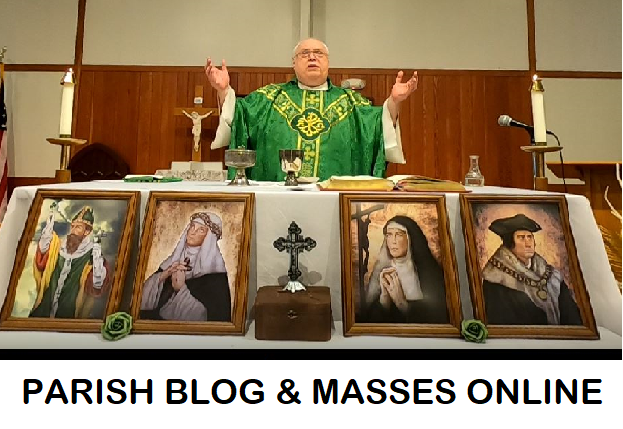
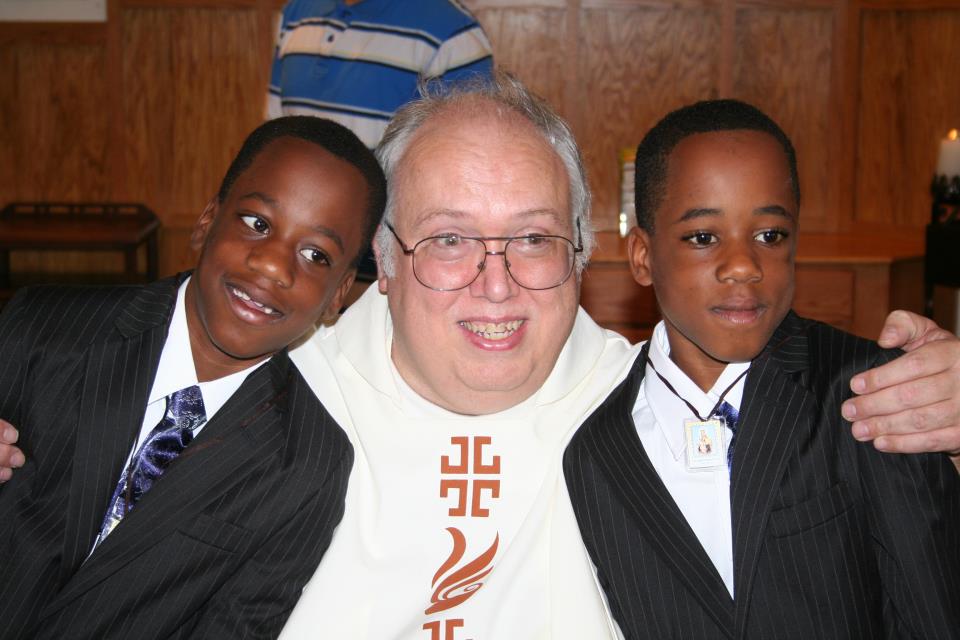
    Fr. Joseph Jenkins

  • An important theme for this blog is the scene in the New Testament where Jesus can be found FLOGGING the money-changers out of the temple. My header above depicts a priest FLOGGING the devils that distort the faith and assault believers. The faith that gives us consolation can and should also make us very uncomfortable. Both Divine Mercy and Divine Justice meet in Jesus. Priests are ministers of reconciliation, but never at the cost of truth. In or out of season, we must be courageous in preaching and living out the Gospel of Life. The title of my blog is a play on words, not Flogger Priest but Blogger Priest.

  • Archives

  • Categories

  • Recent Posts

  • Recent Comments

    GA210286's avatarGA210286 on Impotence & Marriage
    Anonymous's avatarAnonymous on Ask a Priest
    jbg's avatarjbg on An Appeal to Reconciliation fo…
    Inveilis's avatarInveilis on Ask a Priest
    Mihaela Ghenea's avatarMihaela Ghenea on Ask a Priest

The Book of Revelation: A Discussion About Interpretation

The Book of Revelation is not given to easy interpretation. It cannot be deciphered in a literal or fundamentalist manner that seeks to make quick and easy contemporary correlation. We have to appreciate it as a particular form of literature that utilizes symbolic and allegorical phraseology. Similar such writings of this genre appear in Daniel, Zechariah, and Ezekiel. While many will interpret it strictly in terms of future events, it actually has a great deal to say about the crisis in the early Church and her future hope.

11:7 – “And when they have finished their testimony, the beast that ascends from the bottomless pit will make war upon them and conquer them and kill them, . . . ”

This beast was understood to be the antichrist, the one who symbolizes evil in his own person, the Roman emperor, Nero. Christians witnessed to their faith by shedding their blood. (See Rev. 13:1-8; 17:8).

11:8 – “ . . . and their dead bodies will lie in the street of the great city which is allegorically called Sodom and Egypt, where their Lord was crucified.”

While it is geographically true that Jesus was crucified in Jerusalem, this is not the thrust of the apocalyptic text here. Rather, the emphasis is upon the figurative Jerusalem that repudiates God and his witnesses. This is clearly the new “Babylon”, another code word for pagan Rome. See chapters 16 through 18. (Anti-Catholics go so far as to make the leap in logic that the beast and his city are not the pagan emperor and Rome but rather the pope and the Roman Catholic Church. Such a view violates the meaning of the text and defames the sacrifice of early Catholic Christians.) “Sodom” and “Egypt” are symbols for immorality (cf. Isaiah 1:10) and for the oppression of the people of God (cf. Exodus 1:11-14). The authority of pagan Rome crucified Christ through its emissaries. Christ is being crucified anew in his members. It is an early holocaust of the Christian believers at the hands of a bloodthirsty pagan Rome.

The Book of Revelation is composed to deal with a specific crisis. Believers of Christ are dying in droves and the inspired author is urging the Christian community not to abandon hope or to betray the Lord. Jesus’ promise comes to mind: “ . . . and lo, I am with you always, to the close of the age” (Matthew 28:20). Catholic Christians are reminded that God has not abandoned them.

Hope this breakdown helps, although it hardly exhausts the layers of meaning here.

**********          **********          **********

GIO: I don’t know. When Cardinal Ratzinger wrote about the explanation of Fatima in 2000 upon the revelation of the third secret, he compared the Angel with the fiery sword in Revelation to the Angel that the children saw at Fatima, saying something like “the risk of judgment looms over us.”

ARMANDO: Shalom! Fr. Joe, I am a devout Catholic and I’m very curious about the Catholic interpretation of the Book of Revelation. Father, can you tell me, who is the second beast? Who is this beast with a name equivalent to 666? I believe in the messages of Our Lady of Fatima. Actually, I’m praying the Rosary four times a day since I started working here in Saudi Arabia. I hope for your kind reply to these questions because I categorically don’t believe other interpretations of the Bible. I believe in the Catholic view alone, because it is the only true Church founded by Christ with its visible Head as St. Peter and His successors. May the God Abraham, Isaac and Jacob richly bless us all always! Thank you very much Father. I will include you in my prayers.

FATHER JOE: I would recommend a faithful Catholic commentary and a Catholic Bible with good footnotes. Throughout history there have been many antichrists. It refers to any and all who reject and oppose Christ and his Church. The term also signifies a false Christ or counterfeit messiah. This is not to deny the possibility of a singular apocalyptic antichrist; however, many authorities suggest that this pointed to the Emperor Nero or possibly another tyrant of pagan Rome who persecuted the early Church.

ARMANDO: May the God of Abraham, Isaac and Jacob richly bless all always! Father Joe, thank you very much! I learned just yesterday night, from Brother Michael of EWTN about the intimate relation of the Book of Revelation to the Holy Catholic Mass. It enlightened my heart and mind so much and it strengthened my Catholic faith even more. You know Father, I’m actually a Catholic Charismatic and I’ve been serving the Lord since I was 10 years old through our humble St. Joseph Chapel in Ibabao, Cuenca, Batangas, Philippines. I’ve been a choir guitarist up to the present here in the Muslim country of Saudi Arabia. We are without a Church and must worship in secret. Despite this situation, my friends and I, Filipinos and an Indian, started a small Prayer Group. We pray the Holy Rosary, singing praise and worship songs. I lead a Catholic Bible Study. You know, Father, we are very happy because there are many Catholics who turned away from our Church but now turning back again because of Catholic Life in the Spirit Seminar or CLSS. Two more questions Father: when will the 1000 years of peace happen and is Satan already loosed? Mama Mary, pray for us.

FATHER JOE: You are from the Philippines! My brother married a Filipina a few years ago and traveled to Manila to see her family. I have many Filipinos in my parish here in Maryland, USA. Many are far better educated. You can ask questions of faith and I will do my best to answer. But, please understand, I am quite fallible. The Catholic Church does not teach a millennium rule. Rather, we believe that when Jesus comes he will consummate all things to himself. As for when the second coming will happen, we cannot know for sure, despite various signs. Look at Matthew 24:36. Our Lord tells us that “no one but the Father knows the day and the hour.” As for Satan, look around the world today. He is still very much around and prowling about for souls to devour. Trust Jesus and Mary. Invoke the special aid of St. Michael the Archangel. May God bless you!

ARMANDO: Shalom again, Fr. Joe. Why is it that the Catholic Church does not teach a millennium rule since it is written in Revelation? Am I right that maybe it’s not a literal 1000 years of peace? And what are those seven plaques w/c the 7 angels brought?

FATHER JOE:

The notion of an earthly kingdom ruled directly by the Messiah finds its roots in the Jewish aspirations of a military and political leader. This imagery is picked up by the Scriptures but the time of Christ’s rule is spiritual and found in the Catholic Church and her sacraments. The new Zion or Jerusalem is, similarly, not the political state of modern Israel but the Church. Some authorities claim that a false Messiah or Christ will seek to establish an early kingdom. Here we are talking, not about Christ but about the anti-Christ. It is said that he would persecute the Church.

There are seven plagues preceding the destruction of Babylon. The imagery is borrowed from the plagues of Egypt.

[1] Men and beasts are smitten with ulcers (Exodus 9:9-10).

[2] & [3] The seas and rivers become blood (Exodus 7:17-21).

[4] The sun burns men to death.

[5] The throne of the beast causes great darkness (Exodus 10:11-29).

[6] The waters of the Euphrates are dried up and form a passage for the kings of the East (Exodus 14).

[7] Storm and earthquake destroy Babylon.

The Catholic Church gives no literal or fundamentalist interpretation to these plagues. It is enough that there will be both man-made and natural calamities.

Pope John Paul II (February 2003) identified seven deadly plagues that threaten the future of humanity:

[1] an insidious terrorism capable of striking at anytime and anywhere;
[2] the unresolved problem of the Middle East with the Holy Land and Iraq;
[3] the turmoil disrupting South America, particularly Argentina, Colombia and Venezuela;
[4] the conflicts preventing numerous African countries from focusing on their development;
[5] the diseases spreading contagion and death;
[6] the grave problem of famine, especially in Africa;
[7] the irresponsible behavior contributing to the depletion of the planet’s resources.

ARMANDO: Thanks again, little by little, the Book of Revelation is getting clearer to me. Is the “holy city Jerusalem” in Rev. 21: 10-21, the same as the New Jerusalem which symbolizes the Church? Why does it have walls, gates, foundation stones, etc?

FATHER JOE: The heavenly Jerusalem is paradise. The New Jerusalem is the kingdom breaking into the world through the Church. The Church is an extension of the Church in glory.

CATHOLIC GIRL:

Gio, during the Fatima apparitions, Our Lady gave the children a horrific vision of hell. They said that so many souls were going there so fast it was like snowflakes falling. She also told them that one of their school mates – a child – would be “in purgatory until the end of the time.” Without the Mercy of God, no one would be saved but his sword is a mighty sword of justice.

As far as Revelations, I feel that the Protestant “Tim Lehaye” books (and movies) have spread heresy into Catholic beliefs. Here in the south, it is the most argued point in adult Bible study. It is another aspect of too little knowledge of the faith. In a class I was in, where a Nun from the Seminary literally went through chapter by chapter, people walked out – and many called the Chancery swearing that SHE was the heretic. Most Catholics simply do not understand that we are not literalists as far as the Bible goes.

I often wonder why Catholics do not have more organized Bible Study (with nuns or priests as a guide). I think a lot of eyes would be opened.

ARMANDO: Father, does our Church teaches about rapture? I do not hear any priest teaching about this matter. And what is Armageddon?

FATHER JOE: The Church believes that Christ will consummate the world to himself. Rapture as understood by certain Protestants and in the LEFT BEHIND books is not part of Catholic teaching. As for the conflict against the anti-Christ, we are already in the thick of it. The Church does not insist upon a literal final battle in the Middle East. Apocalyptic literature cannot be read like a history book.

CHARLIE: It is true that the book of Revelation is complicated. I can’t stop thinking though how Revelation 17 and how the Woman fits the description of the Catholic church.

FATHER JOE: Mary and the Church is associated with this woman (with child). However, the Church is NOT the harlot or “whore of Babylon.” Be careful not to associate the Church with the anti-Christ. There have always been grave sinners in the Church; but the Church is holy because Christ is holy.

CHARLIE: It seems to me that the church is trying very hard NOT to tell us the REAL meaning of Revelation.

FATHER JOE: Give me an instance. Why is it that you, as a Catholic, would put your personal interpretation of Scripture over that of the Magisterium? If you believe that the Church is evil, why are you still a Catholic. Sorry, this does not wash! You are buying into all the conspiracy theory nonsense.

CHARLIE: With the church being around for so long and with all the scholars in the church, they could be more specific like all the other churches when it comes to interpreting Revelation.

FATHER JOE: How is the Church not specific? Apocalyptic language is inherently difficult, given our proximity in time and place from the source. Other churches, and I can just imagine what fundamentalist authorities to which you refer, make up or fictionalize their commentary. The Catholic Church is grounded on truth.

CHARLIE: I almost feel like they are hiding something.

FATHER JOE: Almost? Please, stop playing games. What have you read from Catholic sources about the Book of Revelation that makes you say this? What commentaries? What Church documents? You have cited nothing. You are imagining things. Be careful that you do not deliberately slam the Church.

CHARLIE: We need to understand more and get more input from the church on Revelation because we don’t want to fall into a trap in the end times.

FATHER JOE: [At this point it became clear that Charlie was a ringer or poser. He may have been Catholic but now he was something else. Some anti-Catholics use such deception to get under the Catholic defenses. They may cite catholic sources, but they are not really interested in the truth or discussion. They come to slam the Church and to steal believers.] Then get it already. What are you waiting for? The problem is you, not the Church. Here are a few books you might find useful. Also, look at the footnotes in a Catholic Bible.

The Book of Revelation: A Catholic Interpretation of the Apocalypse by John Tickle.

Apocalypse: A Catholic Perspective on the Book of Revelation by Stephen C. Doyle.

New Jerome Biblical Commentary (3rd Edition) by Raymond E. Brown, Joseph A. Fitzmyer, and Roland E. Murphy.

CHARLIE: Satan is a deceiver and the father of lies and we need to have a CLEAR picture of things when it comes to prophecy. Now more than ever….with the Prophecy of Saint Malachy and his clear prophecies of the popes…..which by the way are true and we see that even with his prediction of Pope Benedict and Pope John Paul II. We see clearly that we need more information on the Book of Revelation.

FATHER JOE: The prophesies of St. Malachy belong to private revelation only and are not doctrinal or required for belief. It also appears that they do not belong to St. Malachy but to some anonymous source.

CHARLIE: It says in Revelation 17 that John was amazed by what he saw and this would clearly state to me that he was AMAZED by this vision because perhaps he saw that the church which Saint Peter started was in the end corrupted and polluted by an evil power.

FATHER JOE: Jesus promised that his Church would endure until his consummation of the world.

CHARLIE: I see this clearly as the last Pope predicted by Saint Malachy which he said would lead the church to destruction. Why are none talking about this?

FATHER JOE: It is because the prophesies are not reliable. They are interesting but I place no confidence in them.

CHARLIE: You can’t wait until it happens and have people led astray to the tricks of Satan. I know in my heart the church MUST know things, but chooses to keep people in the dark….because the latter days the church would be led by forces of darkness. It clearly states this in Revelation. “Woman” in prophecy means CHURCH.

FATHER JOE: All you need is to be faithful. Worrying about such things is not from God.

JOHN: I came to this partial understanding around 1980. The two horned goat is USA and Russia. The image of the beast is the Islamic republic of Iran.

FATHER JOE: Such connections are only conjecture. I tend to give the apocalypse a historical understanding. The beast is Nero and the old pagan Roman Empire. Apostate Christians might be the other beast. Anyone who opposes Christ and his Church is an antichrist.

JOHN:

Yes, such connections are only conjecture. Some conjectures are more compelling than others. Consider, the two horned ram and angry beast allegory is first found in Daniel (well before the first century). What is this fire from heaven, but the bombs of two nuclear super powers. The foreign policy slogan of current Iran is “Neither east nor west.” Thank you for your courage, which I know can only come from our lord, Jesus Christ.

I sent the above comments (in fuller form) to Pope John Paul II in the Spring of 1980. The response received was a letter from the secretary of state of the Vatican (July 1980). Here is the text: “The Holy Father has seen the kind letter sent to him, and has asked that I express his thanks, and convey his blessing.”

CHRIS: I think an inspired interpretation of Apocalypse is Steven Paul’s Apocalypse: Letter by Letter. Very sick with cancer during the penning of his book, this staunch Catholic had an intimate understanding of Revelation and just about managed to get all his knowledge on paper before his death. I can’t recommend it enough for any Catholic who wants a clear understanding of Revelation.

FATHER JOE: I asked around about Steven Paul’s book and found that not everyone is excited about it. One critic even remarked that there are a number of factual mistakes and interpretations which are contrary to Catholic tradition. A book that I would recommend is Apocalypse: A Catholic Perspective on the Book of Revelation by Fr. Stephen Doyle.

CHRIS: Unfortunately, Steven isn’t around to answer any of his critics. Given that he was a committed Catholic I’m surprised to hear there are elements of his book which are contrary to Catholic Tradition. Do you have an example from his book that I can check out?

JOHN:

It’s my understanding that those who hold anti-Catholic interpretations use the “seven hill” phrase to justify their view.

Must the singular anti-Christ be present for the present age to end? I had thought that Khomeini was such. When popes die their personnel letters are to be burned. When Khomeini died I burned my written interpretations of Revelations. Later, I remembered it was written (by me): “the image to the beast is the beast itself, that is, the Islamic Republic of Iran.”

FATHER JOE: Deciphering possible prophecies of the eschaton and the beast is no easy business. Is there ever a singular anti-Christ? During WWII and afterwards there were many contenders. What I can tell you is that there is ONE Christ. Put your emphasis there and on your relationship with him.

JOHN: Jesus was beaten, scared, and killed. His justice is not, and will not be blind. May he grant us the mercy, grace, and courage to help the needy when we see him. I believe you, Father Joe, have the best job this world has to offer. Thank you for your courage!

NEIL: Very interesting dialogue. I’m a 2010 convert to Catholicism from practically every Protestant denomination out there. I’m quite interested in Revelation and appreciate some of the questions here. Pertaining to Revelation 17, I’ve heard the reference to the Vatican before which never made much sense. An interpretation of the new Babylon being America and the new city being New York, actually registered with me. Are you saying Father Joe that this is referring to the fallen Roman Empire instead? Glory to God!

FATHER JOE: The reference was to pagan Rome. Further connections to present-day earthly cities and nations are merely speculation.

DOLORES:

Dear Father Joe, I am currently involved in a Bible study entitled “Journey through Revelation: Apocalyptic Hope for Today,” written for Presbyterian USA women. I came across your web site while googling for a Catholic interpretation of Rev.12.

I was pleased to read all the queries and responses on the subject of Revelation. The information pretty much jibes with this study and other sources I have read. I was particularly interested in how the Catholic Church interpreted “the Woman” in Chapt.12. I had always thought she was the Virgin Mary, and you did state that in one of your responses. Most of my sources say the woman represents the Church or people of God or Israel. You also mentioned this in the same response.

We are studying Revelation, taking into consideration the time in which it was written, the type of literature that would have been familiar to the people John was writing to, the terrible persecution the early Christians were undergoing— a book of hope rather than a book of prophecy. I’m learning a lot and looking forward to the rest of the study.

I’m glad I found your website. If you have anything more to say about Mary as the woman in Chapter 12, I would be very interested to have the Church’s view. Thank you.

JOHN: I’m so glad Jesus has promised his earthly return and kingdom. The prophetic message ends with this realization. I don’t really care who lines up as the bad guys of prophesy, but that his will is fulfilled. The epistle of Barnabas and Paul’s writings seem to indicate there will be a singular anti-Christ at the end times. The hope of this Christian is to understand and live with his/her God. I am a sinner.

CHRIS: Excerpt from Steven Paul’s interpretation of Apocalypse, p.171, may be relevant to what is currently going on in North Africa/Middle East: “It has already been shown, however, that the Beast will rise from that formerly Roman territory designated as ‘the sea’; therefore, the Beast will initially seize about 60% of the ‘sea,’ not just 30% by violence, because the ‘sea’ comprises North Africa and the Middle East, i.e., about half of all that was once the Roman Empire. Of the ‘sea’s’ two main regions, the Asian is the larger and richer in oil: it includes Turkey and the small countries immediately south of the Caucasus Mountains—Syria, Iraq, Jordan, Lebanon, and Palestine. In order to seize that initial 60% of the ‘sea,’ the Beast or ‘little horn’ must take possession of some part of the Asian region along with all of the African, or he will simply take all of the Asian, or he will take much of the Asian and part of the African, such as Egypt and Libya.”

FATHER JOE: I suspect that like many before him, Steven Paul’s interpretation will be proven false. Such preoccupations detract from the true antichrists that surround us and who may even share our homes. All who are spiritually dead in mortal sin are opposed to our Lord.

DEBRA: Father, I am a revert. I am reading John’s Revelation. I have read these threads. Yours is a voice of reason and common sense. Thanks be to God for that. Please pray for me.

NEIL: Father Joe, what do you make of the locusts in Chapter 9? I’ve heard opinions that they are attack helicopters. Also, what are the Four Living Creatures mentioned in Ezekiel and Revelation? God Bless!

FATHER JOE: They might only be a blight of locusts.

JOHN: It puzzles me that Catholics, and Christians as a whole, argue over facts. For example, what does it matter weather Mary was taken up alive, bodily, or died and rose the usual way. Some things don’t affect the heart, one way or another. While it doesn’t hurt to put out a heartfelt opinion, to state it as fact, though it’s objectively non-provable, does no one good. Jesus’ resurrection is provable by its result.

FATHER JOE: Catholic Christianity treasures both faith and reason. That is why the facts about things are important and worth the appropriate discussion. Looking at your example, you seem to miss the whole point of Mary’s Assumption. Catholic doctrine is very clear: at the end of Mary’s earthly life, she remained incorrupt and was taken body and soul into heaven. The issue as to whether she “fell asleep” or “died” is not a contentious one for the Magisterium as both perspectives are acknowledged. What actually is death if one is not consumed by the grave, anyway? Her corporeal assumption is a critical point because it resonates with Christ’s resurrection and ascension. She is seen as the first fruits, or evidence that our Lord would share his life and victory with others. Mary is a figure for the Church. (It is this connection we find in the Book of Revelation.) We are also promised a share in eternal life and the restoration of our bodies and souls. This honor is granted her because of her unique role in the history of salvation. Her assumption flows from her cooperation with Christ’s redemptive work as the Mother of God and the Immaculate Conception. Our sentiments about Mary are not merely matters of the heart, but declared dogmas of the Catholic Christian faith.

Can Catholics Kill Protestants? And Other Fables

There are some charges beyond ridiculous. One of these is that the Canon Law of the Catholic Church advocates the killing of Protestants. Again, the anti-Catholic loves sensationalism and scare tactics. It is not unlike the BIG LIE tactics of the WWII Nazi propaganda machine. The Church is not only blamed for the Dark Ages and the Inquisition but probably for everything from bad breath to smelly feet. Instead of pictured as a loving mother, the anti-Catholic calls the Church of Rome a “monster,” “the beast” or “the harlot.” He cannot tolerate her authority or the possibility that there is a claim to truth beyond his control. Such a belligerent stance often puts the anti-Catholic bigot in the embarrassing position of castigating even those policies and persons with whom he would have an affinity, if he truly loves the Lord. Thus, he takes public positions against pro-life endeavors which he probably favors all because they originate with the Catholic Church. He also suggests that the likes of Mother Teresa are burning in hell because they did not espouse fundamentalist propositions; indeed, Mother Teresa closely associated the Eucharist with her charity endeavors. He becomes the very thing he says he hates about the Catholic Church, intolerant and dishonest.

EXCOMMUNICATION – Turning his attention to this subject, the anti-Catholic denies the Church any authority to discipline her membership. However, he ignores the fact that many Protestant communities shun and expel those who do not follow the party line. In ancient days banishment was preferred to taking the life of an unbeliever. Communion in the Catholic Church implies uniformity in worship and belief. If such a unity is imperiled by heresy and/or irregular worship, the Church has the obligation to protect the integrity of the faith. One critic compared this policy to the work of Hitler or the Red Scare. However, there is no comparison. The substance of what is being protected is the truth, not egregious deceits as in totalitarianism. Further, one may still dissent, but one may not do so upon a serious matter and pretend to be a good Catholic Christian. The two matters which bring automatic excommunication are harming the person of the Pope and deliberately procuring an abortion. Would the anti-Catholic argue contrarily for violence or for excusing the murder of babies? I hope not.

PROSCRIPTION FROM OFFICES – This only pertains to ecclesiastical offices these days as most governments in the West are secular. Should a person continue as a pastor of souls if he is leading them into error or causing scandal by his conduct? I think not. In ancient days, this concern was tied up with the tension with kings over authority and interference in Church matters. While this point is now more historical than current, the Pope has insisted that Catholic priests and male and female religious not hold political positions in civil governments. Would the anti-Catholic who feels this infringes upon private rights really want a Catholic clergyman as his Senator or President? I doubt it. He makes a lot of noise for nothing!

CONFISCATION OF GOODS – This notion is quite archaic and no longer applies except in cases where goods belonging to the Church have been illicitly procured. Would the anti-Catholic want a disgruntled pastor to sell his church from under him or leave it to children with no interest in religion? No. It was the same issue with the Catholic faith. The temporal goods of the Church belong to the People of God. I would readily compare the few hundred dollars a month most of our priests get to the high salaries of many evangelical and fundamentalist ministers any day! Who is it who is really getting rich on religion? On top of this most priests have to maintain their own car, pay insurance, and pay the same taxes as all the rest of us. Religious clergy even take a vow of poverty. Mother Teresa’s sisters only possess two habits each and a bucket to wash them in. Millions upon millions go to charity and the Vatican often suffers a short-fall in funds. Where is this rich Vatican government that anti-Catholics shout about? Should the Church sell off her holdings of art to private collectors and deprive the world of what she safeguards for all humanity? The argument of the anti-Catholic bigot on this score is a tumbling house of cards.

EXECUTION – Anti-Catholics play this tune for all they can get out of it. Again, nations, Protestant, Catholic, Moslem, and Secular have often used religion to their own ends. The complicity of certain ones in the membership (or in leadership) is not grounds for damning the entire Church fellowship. In ancient times, the people themselves would often drag out and lynch heretics. The Church encouraged the rule of law to bring order and justice to the situation. Oftentimes confiscation of property and banishment was the punishment. However, over time the death penalty did encroach upon the scene. Further, until recent times, the Papacy actually retained a substantial territory, the Papal States. Consumed by the Italian unification movement, all that remains is the small Vatican City. The civil legislation of the old Papal States must be reckoned on the same level as other nations. Countries in the past and in the present have sometimes allowed the death penalty for threats to society. Records indicate that such executions in papal lands dealt with capital crimes like murder. Today, the Church has discerned a development in doctrine that would rescind this right of the state to take life since it adds to the current culture of death. Incarceration and rehabilitation are preferred avenues for criminals. However, this is again in reference to what we would all discern to be crimes against society. The irony here is that while many fundamentalists side with Catholics against abortion, they are frequently strong advocates of capital punishment in our own nation. This brings us back to the ludicrous assertion that Catholics are given liberty to kill Protestants. It just is not so. Alongside fundamentalists who want free access to the people inside the old Soviet Union, the Catholic Church has joined her voice in defending the sanctity of conscience and religious liberty as a constitutive right of the human person.

Development along these lines does not impinge upon the charism of infallibility regarding faith and morals given the Church. While the Church is holy because of the abiding presence of Christ, her members are always sinners in need of their redeemer, Christ. Regarding matters of science and practical matters of government, the Church has had to feel her way through time just like other organizations. The Church may be infallible, but she is not always impeccable. Anti-Catholics often fail to make this distinction.

One anti-Catholic had to go all the way to Gratian’s Decretals of the 12th century (one of the earliest attempts to codify the laws of Christendom) in order to discredit the Catholic Church. His own denomination did not yet exist; indeed, the Protestant Reformation had yet to happen. Nevertheless, he belittles the Church for oppressing his compatriots during that time.

Utterly desperate to show that Catholics can kill Protestants with impunity, one anti-Catholic bigot cites the St. Bartholomew Day Massacre. The king’s sister, Margaret of Valois, married an important Protestant leader, Henry of Navarre. Her mother and her family secretly arranged for his assassination. When it failed, they convinced the king that there would be a Huguenot reprisal. They decided to strike first but the government could not retain the violence. Religious war broke out and upon his conversion to Catholicism, Henry of Navarre became king, himself. Unfortunately, another religious war would follow. The anti-Catholic bigot gives few of the facts and condemns the whole Catholic Church for what was a French civil war.

The typical bigoted anti-Catholic’s views which I have largely reviewed here always end with a terrible bluntness. He says that unless one leaves the Catholic Church, one must be damned to hell. He tells the Catholic to run, but only gives him a religion which judges itself by its hate of Catholicism. That is no choice. The Catholic should stay home and explore his own spiritual roots. Our history may have some blemishes, but it also contains many jewels. It is the Church of the saints and the family of God established by Jesus.

Good Works an Element of Salvation

ANTI-CATHOLIC ASSERTION

Good works have NO part to play in our salvation.

[Blood of Christ saves] … and the blood of his Son Jesus cleanses us from all sin (1 John 1:7).

[Faith alone saves] And they said, “Believe in the Lord Jesus and you will be saved” (Acts 16:31). They are justified freely by his grace through the redemption in Christ Jesus, whom God set forth as an expiation, through faith, by his blood, to prove his righteousness because of the forgiveness of sins previously committed, through the forbearance of God — to prove his righteousness in the present time, that he might be righteous and justify the one who has faith in Jesus. What occasion is there then for boasting? It is ruled out. On what principle, that of works? No, rather on the principle of faith. For we consider that a person is justified by faith apart from works of the law (Romans 3:24-28).

CATHOLIC TRUTH

Good works have a part to play in our salvation.

But what is it that fundamentalists think they understand? Fundamentalists tend to say that good works are the fruits which come from being saved. They would insist that they are not a means to salvation. If a person is one of the elect, it will be manifested by his good works as one filled with Christ’s spirit. Thus, in their estimation, it is not the works, but the blood of Christ which earns salvation.

Sometimes Catholics quote James 2:20 in their defense that “faith without works is useless”; however, what this means is that the type of faith which is saving is one which manifests the work of God. Note that James 2:19 has the demons believing and trembling. Theirs is not a saving faith. Many say they believe in Jesus and yet they refuse to follow him. Theirs is not a saving faith. A person of true faith experiences the indwelling of the Holy Spirit and good works will find expression in his life. Such works are a confirmation of true faith. Going even further, faith is professed by an act of will that uses words and works. The model of Abraham is recalled in James 2:21-23 in which he believed in God to the extent of being willing to sacrifice his son, Isaac. God came first and he trusted that God could still keep his promises, no matter what.

This last Scripture text (Romans) might be a bit misleading. The works mentioned here are not those which constitute an element of our faith in Christ. The argument here is not entirely different from the circumcision debate at the council in Jerusalem. The tension is not between faith and good deeds but Christian faith and the Jewish law. This contrast becomes clear if we read further: “Does God belong to Jews alone? Does he not belong to Gentiles, too? Yes, also to Gentiles, for God is one and will justify the circumcised on the basis of faith and the uncircumcised through faith. Are we then annulling the law by this faith? Of course not! On the contrary, we are supporting the law” (Romans 3:29-31). The interpretation given by fundamentalists to James makes me cringe. James says quite bluntly, “Do you want proof, you ignoramus, that faith without works is useless? (James 2:20). Mentioning Abraham, it was not that his works were just a fruit of his faith; rather, they were a vital ingredient of it. “You see that faith was active ALONG WITH his works, and faith was COMPLETED by the works” (James 2:22). The reformer, Martin Luther admitted that the Letter of James could not be reconciled with his view that we were saved by faith alone. Consequently, he omitted this letter from his bible. Others readmitted this wonderful Catholic testimony back into the Protestant bible. The anti-Catholic’s stereotype of the Church’s view of justification is inexact and misleading. Regarding the need for a faith which ushers in saving grace, there would be concord. Further, it is obvious that a true faith will show itself with good fruits. Again, there is no argument here, except in the critic’s own mind. The citation from James here is not entirely as the fundamentalist describes. It appears that James is indeed offering a correction to an exaggeration of the Pauline view. The Catholic Church herself admits that good works cut off from faith and sanctifying grace would avail us nothing. The one extreme would contend that good deeds earn salvation; the other, that faith in the Lord (dedicating themselves to trust in God through Jesus) would suffice. Paul actually steers a middle course by speaking about the importance of faith lived out in love (Galatians 5). Dynamic faith is not only a profession in words but an interior disposition actuated by the grace of God and substantiated by the life of charity. The Catholic stress on the incarnation is crucial here. If Christ is alive inside of us, then the good deeds we perform are ultimately the works of Christ. Because they are the extension of the Lord’s saving activity, they have merit. Justification is intimately bound up with our entry into God’s community of faith, the Church. Baptism is the entry into this life and the sacraments are the essential means of our growth. Faith and works (in love) are two sides of the same coin; there may be some tension between these elements, but no strict division.

THE UNIVERSAL CATECHISM ON FAITH & WORKS:

[CCC #1814] Faith is the theological virtue by which we believe in God and believe all that he has said and revealed to us, and that Holy Church proposes for our belief, because he is truth itself. By faith “man freely commits his entire self to God” (DV 5). For this reason the believer seeks to know and do God’s will. “The righteous shall live by faith.” Living faith “work[s] through charity” (Romans 1:17; Galatians 5:6).

[CCC #1815] The gift of faith remains in one who has not sinned against it (Trent). But “faith apart from works is dead” (James 2:26): when it is deprived of hope and love, faith does not fully unite the believer to Christ and does not make him a living member of his Body.

[CCC #1816] The disciple of Christ must not only keep the faith and live on it, but also profess it, confidently bear witness to it, and spread it: “All however must be prepared to confess Christ before men and to follow him along the way of the Cross, amidst the persecutions which the Church never lacks” (LG 42). Service and witness to the faith are necessary for salvation: “So every one who acknowledges me before men, Ia lso will acknowledge before my Father who is in heaven; but whoever denies me before men, I also will deny before my Father who is in heaven” (Matthew 10:32-33).

[Blood of Christ saves if we walk in God’s ways (good works with faith) in the community of the Church] But if we walk in the light as he is in the light, then we have fellowship with one another, and the blood of his Son Jesus cleanses us from all sin (1 John 1:7)

[Faith (in Jesus), charity (in caring for injuries and feeding the hungry) and the certain hope of salvation (in baptism) comes to us as a Christian family] And they said, “Believe in the Lord Jesus and you and your household will be saved.” So they spoke the word of the Lord to him and to everyone in his house. He took them in at that hour of the night and bathed their wounds; then he and all his family were baptized at once. He brought them up into his house and provided a meal and with his household rejoiced at having come to faith in God (Acts 16:31-34).

[Remarking about Abraham] See how a person is justified by works and not by faith alone. And in the same way, was not Rahab the harlot also justified by works when she welcomed the messengers and sent them out by a different route? For just as a body without a spirit is dead, so also faith without works is dead (James 2:24-26).

[Faith, Hope, and Love] For through the Spirit, by faith, we await the hope of righteousness. For in Christ Jesus, neither circumcision nor uncircumcision counts for anything, but only faith working through love (Galatians 5:6).

Veneration (Worship?) of Images

ANTI-CATHOLIC ASSERTION

Catholics venerate or worship images. The Pope himself bows before statues of Mary. Similarly, they worship Christ in the Eucharist. They also possess statues, candles, and other such religious objects in their homes and churches. All these things violate the commandments and are offensive to God.

[The fashioning and veneration of images is forbidden as idolatry] “You shall not carve idols [any graven image] for yourselves in the shape of anything in the sky above or on the earth below or in the waters beneath the earth; you shall not bow down before them or worship them. For I, the Lord, your God, am a jealous God, …” (Exodus 20:4-5).

CATHOLIC TRUTH

No, Catholics do not “worship” images. Veneration is different from the kind of exclusive worship and adoration owed to God alone. Rather, we honor and treat with respect those things which remind us of God and those in whom the Lord has done wondrous things. The honor we show the Blessed Virgin Mary is particularly pronounced; however, it is not the same kind of worship which we render to God. Unlike the ancient idol worshippers, the honor is paid not to the physical representation, but to the one who is signified. Definitions are very important. Holy objects often serve the same function as mementos and photographs in our homes; they remind us of our friends and family. Similarly, religious statues, pictures, and all the rest bring to mind our spiritual family of faith and our identity as part of it.

Candles are symbolic of Jesus himself. The smoke rises as prayer is taken into heaven. They give off light and Jesus is the Light of the World, dispelling the darkness of sin and death. They give off heat, and Jesus gave the warmth of healing and forgiveness to others. Like the candle which exhausts itself for our benefit, Jesus surrenders his life that we might be redeemed. Turning to the Eucharist, Jesus himself told us that it was his flesh and blood, the living sacrament of his presence. We can worship this divine mystery because it is Jesus and Jesus is God.

Fundamentalist anti-Catholics are not consistent on this score about graven images. Come Christmas, they usually have statuary-nativity scenes like everyone else. Also, if they were to be consistent in their strict observance of this commandment, it would also include the toy dolls they buy their children. Some cults actually do this! The Catholic view of images is based on the permissible symbolic use of them in the Old Testament and the fact that Christ himself through the incarnation reveals the transcendent God. God allowed images which symbolically pointed to our ultimate salvation in the Lord. The historical fact of the God-Man, Christ, ushers in a new “economy” of images [CCC #2131].

[To be healed from the poisonous bites of serpents] So Moses prayed for the people, and the Lord said to Moses, “Make a seraph and mount it on a pole, and if anyone who has been bitten looks at it, he will recover.” Moses accordingly made a bronze serpent and mounted it on a pole, and whenever anyone who had been bitten by a serpent looked at the bronze serpent, he recovered (Numbers 21:7-9). {See also Wisdom 16:6-8}

[Jesus’ humanity is a healing image of God] “And as Moses lifted up the serpent in the desert, even so must the Son of Man be lifted up, that those who believe in him may not perish, but may have life everlasting” (John 3:14).

[Regarding the ark of the covenant] “Make two cherubim of beaten gold for the two ends of the propitiatory, fastening them so that one cherub springs direct from each end. The cherubim shall have their wings spread out above, covering the propitiatory with them; they shall be turned toward each other, but with their faces looking toward the propitiatory” (Exodus 25:18-20). {See also 1 Kings 6:23-28}.

Purgatory, Religious Life (Nuns) & the Pope

ANTI-CATHOLIC ASSERTION

Catholics propose many things not supported in the Scriptures, like Purgatory, Nuns and the Pope. It is a serious sin to add to the Bible. Moving to the matter of the Pope, he is a man who takes upon himself the honor which belongs to God alone. People do not need the Pope to know the will of God. The testimony of Scripture is that the Holy Spirit guides each believer to all truth. All anyone needs is a bible and the Holy Spirit. The papacy has no special commission to teach; it is the pathetic attempt of the blind leading the blind. Disaster awaits them all. Catholics should abandon this man-made system which prevents them from personally knowing Jesus and being saved. Turning to Purgatory, it is purportedly a place where sins are purified after death. However, the Bible says that Jesus does this. Our fate is sealed with death– heaven or hell– nothing more.

[Not to add to the Bible] Add nothing to his words, lest he reprove you, and you be exposed as a deceiver (Proverbs 30:6).

[Regarding the absence of the Catholic Purgatory] Hence, now there is no condemnation for those who are in Christ Jesus (Romans 8:1). Just as it is appointed that human beings die once, and after this judgment, so also Christ, offered once to take away the sins of many, will appear as second time, not to take away sin but to bring salvation to those who eagerly await him (Hebrews 9:27-28).

CATHOLIC TRUTH

The citation of Proverbs contends that we must not add anything to God’s revelation; taken in the strict sense of the fundamentalist, it would logically mean that everything written (including Scripture?) after the fifth century B.C. (the date of this book’s composition) is inauthentic. Not being very rational, even with their own principles, they will deny and run away from such a position. The Catholic Church adds nothing that alters the substantial message of salvation; indeed, she validates much that the anti-Catholic would steal from God’s hands. While religious life is mentioned, fundamentalist anti-Catholics are never clear about what is wrong with consecrated life. Having spoken about the Pope elsewhere, I will not add much here. The Scriptural and historical evidence is abundantly clear that the Papacy was an institution finding its roots in the significant mission given St. Peter by Jesus, himself. Even the Orthodox churches, who are not in union with the Holy See, view the Pope as the first among equals. As for Purgatory, I fail to see how the Bible texts quoted say anything to challenge this doctrine of faith. The soul in Purgatory is destined for heaven. Jesus has indeed rescued him from the death of sin. However, since we believe that justification is not so much imputation as it is transformation, the soul must be perfected and purified before entry into heaven. The fire of God’s love itself burns away the residue of selfishness to which we cling. Temporal punishment for sin is paid and the little sins which plagued us, as well as evil habits or vices, are eradicated and we are healed. Often Purgatory has been compared to a prison, but it might better be likened to a hospital. Indeed, if Purgatory is the hospital of the afterlife, then hell is the cemetery for dead souls, who have forfeited the divine life, clung to mortal sin, and hate both God and man. The Catholic citation of 2 Maccabees brings another issue to the forefront, the deletion of a book of the Bible by Protestant reformers. Of course, it still shows the orthodox mindset of the Jews regarding prayer for the dead and what Jesus would have held as one who acknowledged by words and then by his own person, the resurrection.

[Expiation for the dead] Judas rallied his army and went to the city of Adullam. As the week was ending, they purified themselves according to custom and kept the sabbath there. On the following day, since the task had now become urgent, Judas and his men went to gather up the bodies of the slain and bury them with their kinsmen in their ancestral tombs. But under the tunic of each of the dead they found amulets sacred to the idols of Jamnia, which the law forbids the Jews to wear. So it was clear to all that this was why these men had been slain. They all therefore praised the ways of the Lord, the just judge who brings to life the things that are hidden. Turning to supplication, they prayed that the sinful deed might be fully blotted out. The noble Judas warned the soldiers to keep themselves free from sin, for they had seen with their own eyes what had happened because of the sin of those who had fallen. He then took up a collection among all his soldiers, amounting to two thousand silver drachmas, which he sent to Jerusalem to provide for an expiatory sacrifice. In doing this he acted in a very excellent and noble way, inasmuch as he had the resurrection of the dead in view; for if he were not expecting the fallen to rise again, it would have been useless and foolish to pray for them in death. But if he did this with a view to the splendid reward that awaits those who had gone to rest in godliness, it was a holy and pious thought. Thus he made atonement for the dead that they might be freed from this sin (2 Maccabees 12:38-46).

[Clear implication that there is forgiveness of sins in the next life] “And whoever speaks a word against the Son of Man, it shall be forgiven him; but whoever speaks against the Holy Spirit, it will not be forgiven him, either in this world or in the world to come” (Matthew 12:32).

[Must be made perfect before entering heaven] The treasure and wealth of nations will be brought there, but nothing unclean will enter it, nor any[one] who does abominable things or tells lies. Only those will enter whose names are written in the Lamb’s book of life (Revelation 21:26-27).

Mary is Called the Mother of God

ANTI-CATHOLIC ASSERTION

Mary is only the mother of the mortal or human Jesus, not God. Jesus, as God, pre-exists, even before creation (note John 1:1). God has no beginning– no mother.

He allowed himself “for a little while” to be “made lower than the angels,” that by the grace of God he might taste death for everyone (Hebrews 2:9).

If Mary was actually God’s mother— giving birth to God himself— she would be God:

You are my witnesses, says the Lord, my servants whom I have chosen to know and believe in me and understand that it is I. Before me no god was formed, and after me there shall be none (Isaiah 43:10).

Your throne stands firm from of old; you are from everlasting, Lord (Psalm 93:2).

But you, Bethlehem-Ephrathah, too small to be among the clans of Judah, from you shall come forth for me one who is to be ruler in Israel; whose origin is from of old, from ancient times (Micah 5:1).

Who [Christ Jesus], though he was in the form of God, did not regard equality with God something to be grasped. Rather, he emptied himself, taking the form of a slave, coming in human likeness; and found human in appearance … (Philippians 2:6-7).

CATHOLIC TRUTH

The anti-Catholic who made this argument against the title Mother of God did not do his homework. He failed to properly define the title; he failed to appreciate the Catholic position regarding Christ as divine; and he fell into an ancient heresy against the identity of Christ. It is a perfect example of the old cliché, “Those who do not know the past are doomed to repeat it.” A response is problematical, because it is hard to take such a stab against Catholic faith regarding Mary seriously. Catholic school children could see the holes here. The heresy espoused here is known as Nestorianism after Bishop Nestorius who rejected the term Theotokos or God-bearer (Mother of God) for Mary. He argued that she was only the bearer or mother of Christ’s human nature. To his credit, Nestorius was concerned that the title was too similar to that which had belonged to goddesses, like Isis, Demeter and Hera as “mother of the gods.” Ultimately, what was at stake was more than an honor for Mary. The real issue was who is Jesus? Yes, he was God and yes, he was a man. However, the position of Nestorius tended to divide Jesus into two sons. The unity of Christ was endangered. Never did the title Mother of God imply that she was divine or a goddess. Mary was and always will be purely a human creature. This is the Catholic position. The title Mother of God does not have ontological properties regarding her identity. Christ is the pre-existent Logos, the Word, and author of life. This is the Catholic understanding, often lost in the drivel of ignorant and bigoted anti-Catholics. According to Roman usage, the title Mother of God represents a particular form of speech known as communicatio idiomata– the communication or exchange of idioms. Another example would be the expression that in Jesus, “God died on the cross.” Obviously, as a perfect Spirit, God as God cannot die. However, because of the inseparable identity of Christ as the God-Man, his death by virtue of his human nature can be ascribed to him according to his ultimate identity– the Son of God. Similarly, while the Lord only takes his human nature from Mary, she, like all mothers, is the mother of the whole identity of her child. The only difference is that her child happens to be God. The anti-Catholic posits a metaphysical meaning to the title Mother of God which the Catholic Church had never given it. This title protects the unity between the divine and human natures of Christ, one divine person.

Elizabeth’s greeting:

“And how have I deserved that the mother of my Lord should come to me?” (Luke 1:43).  {See also John 2:1; 19:25; Matthew 13:55}

Unity in Christ:

For in him dwells the whole fullness of the deity bodily … (Colossians 2:9).

Mary Remained a Perpetual Virgin

ANTI-CATHOLIC ASSERTION

The critic argues that Mary and Joseph had children, the brothers and sisters of Jesus.

“‘Is not this the carpenter’s son? Is not his mother called Mary, and his brethren James and Joseph and Simon and Jude? And his sisters, are they not all with us? Then where did he get all this?’” (Matthew 13:55-56).

“‘Is not this the carpenter, the son of Mary, the brother of James, Joses, Jude, and Simon? And are not also his sisters here with us?’ And they took offense at him” (Mark 6:3).

CATHOLIC TRUTH

Mathew’s quoted text itself intimates that the people speaking do not know what they are talking about. They cannot fathom where Jesus has received his special authority and wisdom; indeed, by designating him as “the carpenter’s son,” they are even in the dark about his virgin birth as the incarnate Son of God. If they can be wrong about St. Joseph being the biological father of Jesus, then a cursory reading of these Scriptures may lead us into a similar error regarding Mary and the other family members. Note that they are listed as kin to Christ, cousins perhaps? Nothing more can be certainly determined from the Oriental custom of calling all such, “brothers and sisters.” Not once is Mary called “their” mother. Actually, the phrasing is quite careful to separate Mary, as the mother of Jesus, from these other brethren. Another point of interest is that Jesus on the Cross entrusts Mary to his apostle John, rather than to these kin. If they were actually half brothers and sisters, such would have been understood as a great insult to the family. It just was not done. Another point of correction is the presence of Mary as the beloved matriarch of the early Church. She was protected and cherished by the believing community. This same family of faith, who knew Mary so intimately, would transmit as part of our living sacred tradition the truth that Mary remained a perpetual virgin. Also, such virginity was befitting the dignity of Jesus Christ as the unique God-Man and Savior. Looking at the Scriptural citations, there are certain practical problems to the use of these bible passages in the anti-Catholic’s arsenal. Look at the names of the brethren here; Mark 15:40 informs us that James the younger and Joses (Joseph) were the sons of another Mary who was related to the Virgin Mary. As for the others, they may have been cousins, or if a second century work entitled The Protevangelium of James is to be trusted, the children of Joseph from a previous marriage. The image of a widower would collaborate the tradition that Joseph was much older than Mary. Such a view was also supported by other ancient authorities: Origen, Eusebius, Gregory of Nyssa, and Epiphanius. St. Jerome, knowledgeable in Latin, Greek, and Hebrew, argued that they were cousins. He asserted that Mary (a sister to the Virgin Mary?), the wife of Clopas (also known as Alphaeus), was the actual mother of the brothers and sisters of Christ.

Two of the brethren of Christ are listed as children of another Mary:

And some women were also there, looking on from a distance. Among them were Mary Magdalene, Mary the mother of James the Less and of Joses (Joseph), and Salome. They used to accompany him and minister to him when he was in Galilee — besides many other women who had come with him to Jerusalem (Mark 15:40-41).

Semitic usage of brother and sister applied also to nephews, nieces, cousins, and others:

He recovered all the possessions, besides bringing back his kinsman [BROTHER] Lot and his possessions, along with the women and the other captives (Genesis 14:16).

Laban said to him: “Should you serve me for nothing just because you are a relative [BROTHER] of mine?” (Genesis 29:15).

Then Moses summoned Mishael and Elzaphan, the sons of Aaron’s uncle Uzziel, with the order, “Come, remove your kinsmen [BROTHERS] from the sanctuary and carry them to a place outside the camp” (Leviticus 10:4).

Mary & Tradition: Offensive to God?

Recently, I was shockingly dismayed by the citation of Jeremiah 7:18-20 against the Catholic practice of honoring the Virgin Mary. The passage reads:

The children gather wood, their fathers light the fire, and the women knead their dough, to make cakes for the QUEEN OF HEAVEN, while libations are poured out to strange gods in order to hurt me. Is it I whom they hurt, says the Lord; it is not rather themselves, to their own confusion? See now, says the Lord God, my anger and my wrath will pour out upon this place, upon man and beast, upon the trees of the field and the fruits of the earth; it will burn without being quenched.

Because of a similarity in the title, “Queen of Heaven,” this quotation was used against the Mother of Jesus. Talk about silly! The anti-Catholic bigot often mixes his apples and oranges in trying to discredit Catholic teachings and practices. The citation has nothing whatsoever to do with Mary. There is no violation of the worship which is due to God alone. The text in question has to do with Ishtar, the Assyro-Babylonian goddess of fertility. This pagan worship was initiated under Manasseh and was restored after the death of Josiah. Pagan worship, then as now, is considered an abomination by Jews and Christians alike, including the first Christians, Catholics. Such a citation has no other objective than to play on the ignorance of others. Indeed, it violates the commandment regarding the bearing of false witness against another.

Why do we call Mary the Queen of the Saints? The answer is simple. Jesus came to proclaim the Good News of the Kingdom. His ministry, his parables, indeed, his very own person, is the breaking of the kingdom into our world. Jesus is hailed as Messiah upon his entry into Jerusalem and marked as King upon his Cross at Calvary. If Jesus is our king, then what is Mary? Obviously, she is the Queen-Mother. The rejection of this title for her is a repudiation of the royal lordship of Christ himself! This knocks down another straw man argument, that the Mary of Catholic faith and piety is not the Mary of the Bible. The anti-Catholic apologist goes so far as to insert the Virgin Mary into any Scripture text or historical chronicle regarding a pagan goddess, as in the quoted passage. This distortion of God’s Holy Word has only one objective, and that is to deceive. Irrational prejudice and the lack of any authentic argumentation propel such a polemic.

Anti-Catholics also suffer from an intensely privatized faith. They cannot stand the fact that alongside our worship of God and trust in our one Mediator, Jesus Christ, that we also address ourselves to our beloved family members who have gone ahead of us into the next life. Mary and the saints are still members of the Church, and having made it to the promised shore, we remember them and they pray for our ultimate salvation. However, tell this to an anti-Catholic bigot, and he will explode— you’re only suppose to pray to Jesus! He forgets that Jesus founded a Church, not simply a multitude of unrelated and separate personal relationships. Such people claim that there is no evidence for talking with others beyond this world. And yet, in the Transfiguration itself, Moses and Elijah appear with Jesus and he apparently enters into dialogue with them. Peter wants to set up three booths, so that this moment can be preserved and that they too might commune with the great prophet and deliverer. But, the image disappears. The transformation of Christ hints at his resurrection, the time when the righteous will be given a share in his life and when the Spirit of God will give birth to the Church. Our unity with the saints is in Christ. Attention paid to members in the Mystical Body of Christ is not detraction from the Lord.

One critic listed 1 Timothy 2:5 as a repudiation of the Catholic practice of calling upon Mary and the saints. It reads as follows:

For there is one God. There is also ONE MEDIATOR between God and the human race, Christ Jesus, himself human, who gave himself as ransom for all.

This says absolutely nothing about the Catholic prayer practice. We also believe that Christ is the one Mediator between ourselves and God. He makes possible our prayer being received by the Father. His is the acceptable sacrifice. He is the ransom that buys us back from the devil and opens up the gates of heaven. All this is Catholic doctrine; however, you would not know it from reading those who oppose us. This citation, almost creedal in composition, comes within a contention that “supplications, prayers, petitions, and thanksgivings,” particularly those in a liturgical context, are to be offered for all, even for the pagan. Throughout the centuries, the Church has continued to remember in prayer the non-believer and to invite him into her ranks. The presence of Jesus can be found in the Church, making her a singular vehicle for salvation.

An anti-Catholic critic also quoted Mark 7:9 and Mark 7:13 against the role of tradition as understood in the Church. However, since the Catholic Church precedes and was party to the composition of the Scriptures, particularly the New Testament, the continuing role of living tradition makes perfect sense. The Catholic Church assembled the books of the Bible and established by her God-given authority the Scriptural canon. Except for a few subtractions, the Protestant churches retained this canon. We even have a letter from a bishop of Rome (the Pope) written before the last of the New Testament had been composed! The citations from Mark say nothing against the living tradition of the Catholic Christian community following Christ:

And he said to them, “Well do you NULLIFY the commandment of God, that you may KEEP your own tradition!”

“You make void the commandment of God by your tradition, which you have handed down; and many such like things you do.”

These words do not convey our Lord’s full view regarding tradition. First of all, he was speaking about his own Hebrew tradition, particularly the heavy yoke of many laws placed upon the shoulders of everyday people. This sort of tradition protected the status-quo: the Pharisee could fulfill the various rubrics, with a few well-chosen exemptions, but the poor hard-working people would find it difficult to impossible. The Lord came to proclaim liberation; obviously such bondage would run against the grain of this message. However, the Lord also followed certain other traditions, and obviously the commandments, as a good Jew. The same could be said for his family who followed the ritual in regards to sacrifice and his Presentation at the temple. Prior to the verses mentioned here, we read: “For, letting go the commandment of God, you hold fast the tradition of men, the washing of pots and of cups; and many other things you do like these.” The Lord’s concern here is very specific, and does not speak to the living tradition of making manifest the Gospel in our daily lives. The verses following have Jesus challenging the Jewish dietary regulations. He is concerned that people put so much emphasis on external observance that they fail to nurture any genuine faith and love of God in their hearts— a love which spills over in our treatment of one another. All this is lost on the one who hates the Church and her practices; hatred by definition makes the truth of the Gospel obscure.

The new universal catechism represents no retreat from the orthodox positions of the Catholic Church; indeed it is an amplification and succinct summary of the ancient faith given us by God. While it was hoped that this wonderful work would break new ground among the Church’s enemies, they distort and manipulate it just as they do the Bible. This is most sad. One critic dismissed the whole catechism by quoting Acts 4:12:

[Speaking of Jesus] “There is no salvation through anyone else, nor is there any other name under heaven given to the human race by which we are to be saved.”

He contended that the matter could not be made any clearer. Again, remember, he was dismissing the importance of the Church and the Virgin Mary. A sure sign that his categorization is “all wet” is the fact that the universal catechism cites the verse from Acts three times: CCC #432, #452, #1507. It sure does not seem that the Church is avoiding it to me.

[CCC 432] The name “Jesus” signifies that the very name of God is present in the person of his Son, made man for the universal and definitive redemption from sins. It is the divine name that alone brings salvation, and henceforth all can invoke his name, for Jesus united himself to all men through his Incarnation, so that “there is no other name under heaven given among men by which we must be saved.”

What in this statement does the fundamentalist find disagreeable? That Jesus is God? That his alone is the saving name? What?

How about this other reference in the universal catechism?

[CCC 452] The name Jesus means “God saves.” The child born of the Virgin Mary is called Jesus, “for he will save his people from their sins” (Mt. 1:21): “there is no other name under heaven given among men by which we must be saved.”

Oops! Perhaps here is the trouble? The catechism mentions the Virgin Mary as his Mother! Sometimes anti-Catholic bigots talk as if they are embarrassed that Jesus had a mother. Any good mother can tell us, that motherhood does not end with birthing a child. A true mother’s heart always beats in harmony with that of her child— the joys and sorrows of his life are also her own. Such is the measure of maternal love. Jesus is and always will be, the Son of Mary, and she will always be, the Mother of our Savior.

To this day, the efficacy of the sacraments and the ministry of the Church, hinges upon the powerful and saving name of Jesus. Those who hate and oppose the teachings and work of the Church will discover themselves in opposition to Jesus, himself.

[CCC 1507] The risen Lord renews this mission [“In my name … they will lay their hands on the sick, and they will recover” (Mk. 16:17-18)] and confirms it through the signs that the Church performs by invoking his name. These signs demonstrate in a special way that Jesus is truly “God who saves.”

Jesus continues his work among us. This is most important. Some treat the mystery of Christ as if he is dead and gone. The name of Jesus still commands authority and power. All the mysteries of the Church, the role of Mary and the saints— everything— is founded on the Lord. We celebrate the Immaculate Conception, as an honor given Mary so that the Savior might enter the world through a sinless vessel.

We remember Mary as a special intercessor, just as at Cana, because we know that she is of one heart and mind with her Son. We love her just as Jesus loved her. She is acclaimed as the Mother of God, a title which protects the truth of her Son’s divinity. She is the Mother of the whole reality of her child. Would critics separate Jesus into two sons or deny his divinity? I hope not. She suffered at the Cross. What, not in the Bible? Come, let us be reasonable. What loving mother could see her innocent child betrayed, scourged, and crucified— and not be moved? To the very depths of her being she was devastated; she is indeed the Sorrowful Mother. We turn to her, not because she is more compassionate than God, but because she is a wonderful window to the Divine Mercy which is Christ. What, our family does not make possible our salvation? Well, maybe not a family of mere flesh and blood; but we are members of a spiritual family, looking to God as our Father, Jesus as our elder brother, and Mary as the new mother of many sons and daughters. This family relationship, the Church, grafts us to Christ himself and grants us the sure and certain hope of our salvation.

We would ask that those imprisoned in a religion of bigotry and deceits to come out into the light and to join the faith community established by Jesus himself, the Catholic Church:

“Therefore, come forth from them and be separate,” says the Lord, “and touch nothing unclean; then I will receive you and I will be a father to you, and you shall be sons and daughters to me, says the Lord Almighty.” (2 Corinthians 6:17-18)

Did Jesus Renounce His Mother?

Anti-Catholics often misunderstand or narrowly interpret passages so as to ridicule Catholic teachings. They are quite fond of doing this in regard to the Virgin Mary. A favorite such passage is Matthew 12:46-50:

While he was still speaking to the crowds, his mother and his brethren were standing outside, seeking to speak to him. And someone said to him, “Behold, thy mother and thy brethren are standing outside, seeking thee.” But he answered and said to him who told him, “Who is my mother and who are my brethren?” And stretching forth his hand towards his disciples, he said, “Behold my mother and my brethren! For whoever does the will of my Father in heaven, he is my brother and sister and mother.”

The anti-Catholic proponent will make many claims which run against the traditional understanding of this incident and which find little if any support from the text itself. He will suggest that these “brethren” are children of Mary, even though she is never called their mother and extended families of that time would usually include many cousins given the honor of being called a brother. Indeed, the linguistic limitations of these people would require such a designation. The critic will also contend that Mary and the family are aggravating Jesus by their attempted interruption. Instead, it seems that Jesus uses their appearance as a special opportunity to speak about a spiritual kinship which is superior to that of blood. Further, the religious bigot will suggest that Jesus is discounting the intercessory role and honor due to Mary. They will say that Jesus stretches forth his hand toward his disciples and not toward Mary, as if this supports their claim. What they fail to appreciate is the very real possibility that Mary and the brethren are counted among his many followers and/or disciples. Note that the crowd recognizes Mary and the brethren. They are familiar faces. Why have they come? They accompany Mary, who like any good mother is concerned about her Son. From Bethlehem to Calvary, she will not abandon him. Things are heating up. Not everyone is happy with Jesus. He has chastised his listeners as “an evil and adulterous generation” and the Pharisees for “blaspheming against the Holy Spirit.” They will almost certainly seek to retaliate. She does not come to silence him, but to be in solidarity with him.

Those who hate the Mother of Jesus will deny that Jesus is praising her. They refuse to understand that Mary was the first disciple of her Son. As the handmaid of the Lord, she affirmed the message of an angel and received the Savior into her womb. She is the precursor of all the disciples in hearing and doing God’s will. Oddly enough, there is another passage which proves this point and yet it is also used by certain fundamentalists to belittle Mary, Luke 11: 27-28:

Now it came to pass as he was saying these things, that a certain woman from the crowd lifted up her voice and said to him, “Blessed is the womb that bore thee, and the breasts that nursed thee.” But he said, “Rather, blessed are they who hear the word of God and keep it.”

Jesus does not mean to be demeaning of Mary’s maternity. Indeed, he is again elevating her status as the one in whom the Word has come to true fruition. It is in this regard that she is a model to others. If we receive the Good News, then we too can give birth to Jesus in each and every generation. Others will see him and know that he is really alive and meaningful through our discipleship. Also, note that as the fruit of Mary’s womb, the ultimate honor that the woman is giving is directed toward Jesus. The humility of Christ will not allow himself any idle and empty admiration. During his mortal life, he will be lifted up, not by flattery, but by our sins— and then upon a cross. He redirects their focus to his true meaning and reality, the living Word of God. He calls the crowd to receptivity and obedience.

Such questions as the relevance and role of Mary are often deliberately distorted in anti-Catholic bible study. Stock answers are prepared to beguile gullible Catholics and ignorant Protestants. Despite the widespread re-emphasis upon the Scriptures under Catholic auspices today, they will assert that such endeavors are neither serious nor encouraged. This is one of their many deceits. Lacking any definite teaching authority, they reduce the meaning of bible passages to that of personal interpretation, contend that it should be obvious to all, and then bitterly fight with their fellow fundamentalists who, with the same sincerity, disagree with them on certain texts and doctrines— so much for crystal clarity.

When rumors were flying that the Holy Father might declare Mary the co-redemptrix, anti-Catholic opponents became particularly virulent. (By the way, it was revealed that the rumors had no foundation.) However, the truth of such a teaching, even without a formal definition, is improperly defined by critics. The foes of truth contend that this title would make her an additional author of salvation. This is not the Catholic position. Rather, Mary’s role is subservient to that of her Son. Because of her unique position as the one first touched by the redemptive power of Christ’s Cross, her sinless maternity resonates with the saving work of her Son. She offered herself to God as the vessel of our salvation. She surrenders her Son at Calvary. His pain is her pain. She was intimately united to her Son in faith, hope, and love. One could even contend that she died a kind of vicarious martyrdom at the crucifixion. The knife long prophesied, pierced her heart. Her participation in the saving work of her Son was quite unique. Further, she continues to perform a role as our Spiritual Mother, given to us through our emissary John at the Cross. The Mother of the redeemer became the Mother of the redeemed. While on a different level, we are also called to participate in extending the message and work of Christ.

Mass as Sacrifice & Eucharist as Really Jesus

ANTI-CATHOLIC ASSERTION

Jesus, once and for all, died for sins. This saving act is never to be repeated. He now sits at the right hand of God and does not reappear to us in the Mass as a corpse’s blood and flesh.

Jesus dies once:

But this one [Jesus] offered one sacrifice for sins, and took his seat forever at the right hand of God; now he waits until his enemies are made his footstool. For by one offering he has made perfect forever those who are being consecrated. The holy Spirit also testifies to us, for after saying: “This is the covenant I will establish with them after those days, says the Lord: ‘I will put my laws in their hearts, and I will write them upon their minds,’” he also says: “Their sins and their evildoing I will remember no more.” Where there is forgiveness of these, there is no longer offering for sin (Hebrews 10:12-18).

Christ upon the Cross:

Therefore, when Jesus had taken the wine, he said, “It is consummated (finished)!” And bowing his head, he gave up his spirit (John 19:30).

Remembrance, not the forgiveness of sins:

For I received from the Lord what I also handed on to you, that the Lord Jesus, on the night he was handed over, took bread, and after he had given thanks, broke it and said, “This is my body that is for you. Do this in remembrance of me.” In the same way also the cup, after supper, saying, “This cup is the new covenant in my blood. Do this, as often as you drink it, in remembrance of me.” For as often as you eat this bread and drink the cup, you proclaim the death of the Lord until he comes (1 Corinthians 11:23-26).

CATHOLIC TRUTH

The Mass is a sacrifice and Holy Communion (through transubstantiation) is the actual body and blood of Jesus Christ.

It is true that Jesus died once and for all. His saving death is unique and the risen Lord will never die again. This is also Catholic doctrine. Further, the Catholic Church also agrees that Holy Communion is not the flesh and blood of a dead Christ. However, everything else is misunderstood by the anti-Catholic critic. The Mass is a real sacrifice in that it resonates in perfect harmony with Calvary. Each celebration of the Mass is not a new slaughter of Christ Jesus. Sometimes, when spoken about as a repetition of the Cross, this confusion arises. The Mass is a sacramental (use of sacred signs) and unbloody re-presentation of the sacrifice of Christ. Like a time machine, we are transported to Calvary and are present at the one saving act of all history. The only thing missing at the Cross was our own self-offering with and in Jesus. The appearances of bread remain, but the sacred elements constitute the risen Lord— body and soul, humanity and divinity– without division or diminishment. There is but one high priesthood in Christianity, that of Jesus Christ. Every ordained priest allows his very self to be appropriated by Christ in a participation in the one priesthood which offers true worship. If the Mass and Calvary are one and the same, then of course it is a sacrifice of propitiation, one which forgives sins. The covenant of Christ is not a stagnant affair locked in past history, the remembrance of the Eucharist makes present what it celebrates. It is a renewal of the new covenant in Christ’s body and blood. The Hebrew notion of “anamnesis” is not like our impoverished nostalgia-type of remembrance. The words of institution said by the priest at Mass, recall the saving supper of the Lamb and make him present— both in his person (his identity) and in his saving activity. The sacrifice of Calvary, re-presented to us throughout time and place, calls us all to unity in the Lord. The Lord himself tells us that unless we eat his body and blood, we can have no part of him. Paul’s words from 1 Corinthians are not merely an academic exercise in studying the institution narrative of the Lord’s Supper. These words were familiar to St. Paul because they constituted the liturgical tradition he had received. These are the words with which St. Paul, an apostle and priest of the new dispensation, offered the Eucharist. Note that after mentioning the Lord’s command to repeat his new ritual, St. Paul talks about our need to be worthy in its reception. Otherwise, we would be held accountable. Unless there is a “real presence” of Christ in the consecrated bread and cup, such a warning would be incoherent. He forewarns them against any further abuse at the Lord’s Supper, including overeating. (Remember, in the early Eucharist, the Lord’s Supper was attached to a regular meal.) It is precisely because of the efficacy of the Eucharist in regard to the forgiveness of sins, (the realization of divine mercy), that St. Paul talks immediately about judgment if we neglect or abuse the privilege.

We must properly understand 1 Corinthians 11:23-27. Look at the last verse; it only makes sense if the Eucharist really is the risen Christ:

Therefore whoever eats the bread or drinks the cup of the Lord unworthily will have to answer for the body and blood of the Lord (1 Corinthians 11:27).

Self-examination is necessary if we are to appreciate the command to unity which flows from Jesus’ giving of himself and our requirement to repeat his sacrifice with the same spirit of self-donation:

For anyone who eats and drinks without discerning the body, eats and drinks judgment on himself (1 Corinthians 11: 29).