



• Our Blogger

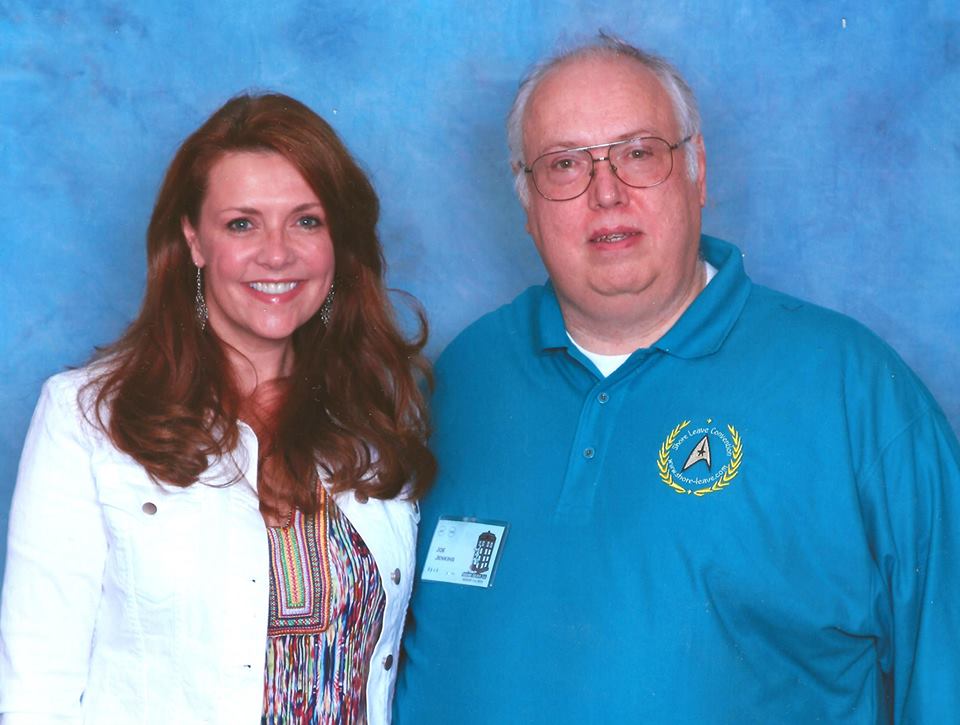
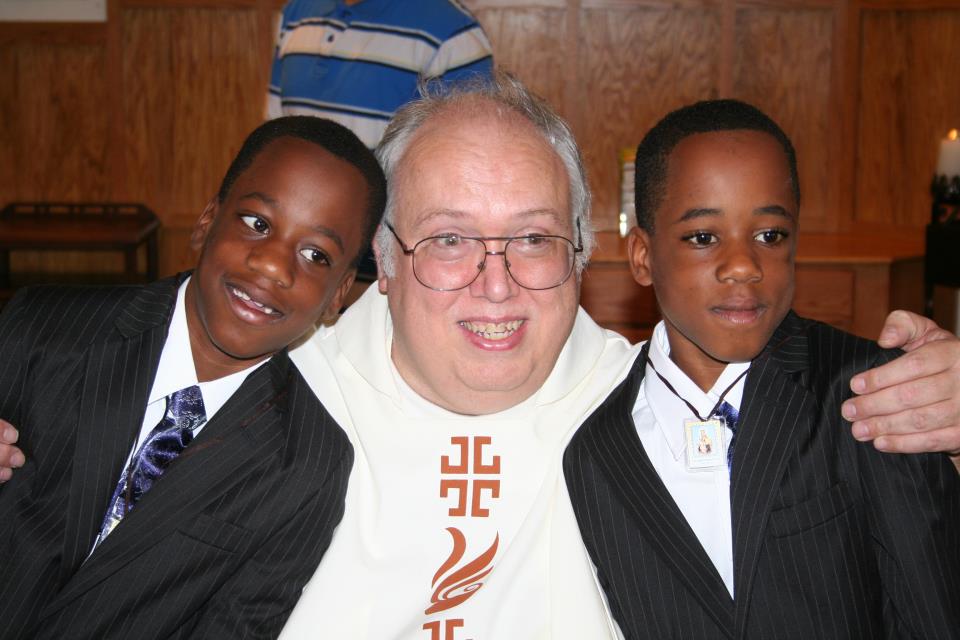
    Fr. Joseph Jenkins

  • The blog header depicts an important and yet mis-understood New Testament scene, Jesus flogging the money-changers out of the temple. I selected it because the faith that gives us consolation can also make us very uncomfortable. Both Divine Mercy and Divine Justice meet in Jesus. Priests are ministers of reconciliation, but never at the cost of truth. In or out of season, we must be courageous in preaching and living out the Gospel of Life. The title of my blog is a play on words, not Flogger Priest but Blogger Priest.

  • Archives

  • Categories

  • Recent Posts

  • Recent Comments

    Jeremy Kok's avatarJeremy Kok on Ask a Priest
    Gary Joseph's avatarGary Joseph on Old Mass or New, Does It …
    Barbara's avatarBarbara on Ask a Priest
    Anonymous's avatarAnonymous on Ask a Priest
    forsamuraimarket's avatarforsamuraimarket on Ask a Priest

Fallen Angels & Men in Hell

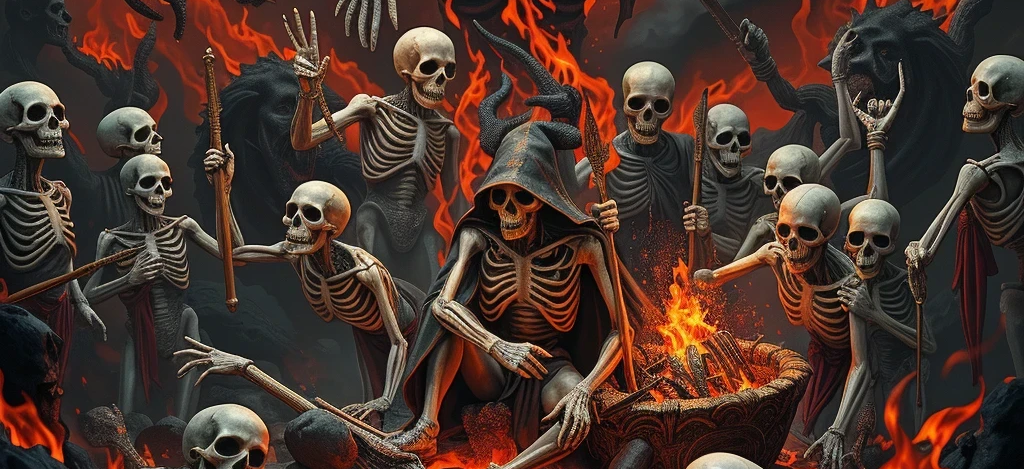
I suspect even the damned seek to run away from the truth of perdition, seeking to make some semblance of heaven in hell. What powers remain to them? They still have intellect and will.  C. S. Lewis may have been on to something in his book THE GREAT DIVORCE. The damned fashioned their worlds through imagination and separated themselves ever more and more from one another. The reality would be most unpleasant. Might they seek escape through the phantasms of the mind just as mortal men turn to drugs or the bottle?  Such seems to be a symptom of self-preoccupation and self-destruction. 

What are the characteristics of the damned? Let us look first at the saved. At the very beginning of the catechism, we are asked about our ultimate meaning. Why did God make us? The answer is short and decisive— to know him, to love him, to serve him, and to give him glory.  The damned do not want to know God and either hate or are indifferent to him. This failure to love will also show itself with an impoverishment regarding charity to our neighbor.  The devil’s sin becomes that of fallen humanity. Milton’s Satan swears, “I will not serve!” We read in the epic poem, PARADISE LOST: “The mind is its own place, and in itself can make a Heav’n of Hell, a Hell of Heav’n. . . Better to reign in Hell, then serve in Heav’n.”  The saints are about God’s business in the world. They worship him at Mass and take their adoration and praise with them into heaven. By contrast, a fallen humanity might go through the motions, but their love is purely for show. They might curse and throw God’s name around, but they rarely if ever pray. They miss more Masses than they attend. As I stated before, if they cannot worship God once a week for an hour, why should they want to enter heaven where the saints and angels give endless glory to God? 

Many people wrongly assume that the souls of saints become angelic after death. However, this is not the teaching of the Church. When a human being dies, his body becomes a corpse, and his soul becomes a ghost.  Human ghosts are regarded as helpless. They have no angelic powers. It is for this reason that after the final judgment, the righteous dead will be restored body and spirit. Like the glorified Christ, they will be reconstituted albeit like Jesus able to appear in locked rooms and no longer subject to sickness, suffering or death.  By contrast, the angels were never born and are not human.  They have no true bodies or physical extension. While we are born in time, the number of angels is fixed.  Just like men, some angels rebelled against God. Fallen angels followed Satan and are called devils or demons.  Fallen human beings are called the damned.  They are not the same and fallen humanity is largely subject to the will of the demonic.  While it is generally accepted that demons can sometimes evade or escape or extend hell; many if not most authorities view the fallen dead of humanity as imprisoned in hell without any possible respite. However, the Church has not given a certain answer to this query.

The Closed & Locked Door

The gravity of the parable in Luke 13:22-30 is not about the dimensions of the door but the fact that it is closed. No one will enter heaven except those that the Lord allows to do so. Hell is not simply another path or door that might be chosen but also regards being locked outside the kingdom of the just. St. Augustine writes in THE CITY OF GOD about two competing cities.  The great doctor of the Church argued that in this world it is often difficult or impossible to determine the kingdom to which a person belongs. Wicked people sometimes do good things.  Good people sometimes commit grievous wrongs. All will be made clear on the other side of the mortal veil. 

We are reminded of a two-fold movement, first, pilgrims toward God and the land of promise; and second, the God who comes searching for us. God knows those who belong to him. When it comes to the damned, some will jump ship before reaching the promised shore. They may literally knock on the door to God’s house, but they will never come in. Self-deception can take one to the very entry of heaven but without the key hidden in the human heart, no one can enter. A single step inside would bring the full weight of truth crushing down. Lies have no place under the light of divine truth. God’s revelation about this takes into consideration human freedom and the tension between virtue and vice.  The Lord readily showers his grace upon those who are disposed to receive his help and life. Unfortunately, others shun the rain of God’s gifts and favor.

Ours is no angry God who hates sinners as depicted in radical Calvinism.  God loves us all, even those who would reject him.  Indeed, he loves us so much that he is willing both to die for us and to give us space to exercise our own freedom, even if that means letting us go. There is no annihilation as supposed by the Adventists. God would love us into heaven but that same love will follow us into hell with a fire that can never be extinguished. If heaven is the proper home for love, then hell is where that love is never accepted. That love brings joy to some and agony to others.

The Broad Road Leads to Destruction

Matthew 7:13-14 urges us to enter through the narrow gate and that “the broad road leads to destruction.”  Our Lord tells us that salvation demands struggle (taking up the cross to follow him) and that there are few who take the narrow gate into the kingdom. This summons to mind the somewhat comical door to the ground level bathroom in my rectory. It is a half-door, fondly called the “Hobbit” door to the toilet. It requires that anyone who is somewhat wide to squeeze into the room. Visitors have laughed about it but those of us who are on the large side find it disconcerting. While it may be unlikely, it is hard to shake the prospect of getting stuck. Indeed, it precipitated a story that I told parish friends.  Preaching on how our salvation is not a private affair, I insisted that it had a communal or interpersonal dynamic.  While we must each make our own choices, we can assist one another in making and keeping them. Sharing a mental image, I related imagining myself standing before the entry way to heaven.  The door is open, but the opening is very small.  Despite many efforts, I cannot squeeze through. Suddenly friends appear that I have known in life. Yes, this is a somewhat elaborate fantasy. Those already in heaven started to pull and pull, so that I might join them.  Meanwhile, I am holding up the line. More friends start to push me from behind. While it might be a peculiar and comical image, I would offer it as a depiction for the communion of saints.  Starting at the font when we come in the arms of parents and godparents, we never come to God alone.  Intercession plays an essential role in our approach to the Lord and our life in the kingdom.  Jesus establishes a “church” or community of faith.  He gives us sacraments and one another.  It might take a lot of pulling and pushing, but those who love the Lord will eventually get through that small door or narrow gate. Maybe the struggle at the entry itself is another indication of purgatory?  

How many would give up and select the wider gate? Separated from others, one would be alone. Would there be any interest in taking the narrow gate to see God if love for him is lacking? Too many take the easy way out. Unfortunately, in the parable this route leads to destruction or hell.

What Goes on in Hell?

What exactly are the demons and the damned doing in hell, anyway? It is my recollection that certain demons forced from hiding in exorcisms give as their names the various capital sins. While it is speculative, might each of these devils be the chief tormentor for the select damned under the jurisdiction of its foundational sin: pride, avarice (greed), lust, envy, gluttony, wrath (anger), and sloth? It may be that in hell people become their sins. Comparable to a leprosy of flesh, their afflicted souls suffer corruption. Susceptibility to torment also suggests that the damned will be given their bodies, flesh made indestructible and yet not glorified. Just as in heaven where there is mastery over concupiscence and a spiritualization of the flesh, might the damned of hell know the antithetical where bodies are further enslaved by the passions? If heaven allows for divinization by grace, then hell likely ushers a descent backwards toward the bestial man or woman.

Hell is a real place where the damned forfeit the vision of God. The Scriptures testify to a terrifying fire and pain. It burns but does not consume. There is a material element to this fire, but it somehow impacts upon the spiritual fabric of the soul. I suspect that the tormenting fire is God’s last gift to those he wanted for his children. How is this? Does God take a sadistic satisfaction in watching the damned squirm? Would this not make God into a monster? If this were the case, the Almighty would be unworthy of our attention in worship. No, I am certain that there are other reasons for the fire. First, it signifies in justice a temporal punishment that can no longer be appeased. This must be contrasted to the souls in purgatory who will know purification and attain heaven. Such is not possible for the damned. Second, it constitutes in mercy a distraction from the loss of God for which we were made. The damned must suffer an existential frustration in that they will never be whole or fulfilled in meaning or purpose. Like a puzzle, there will always be a piece missing— and that piece is God. 

We can take it for granted that hell is not a pleasant place, but the damned will likely have their pursuits. Besides wading in the corruption or waste of iniquity, I would guess that some would pursue something of the intellectual life. This is likely the case of fallen angels and I would surmise by extension that of men. The intellect and will of men and angels would remain intact. While it is doomed to fail, they may even try to make a heaven of hell. What more can they do? They wanted no part of real heaven. While associations for rational discourse are likely in hell, there can be no abiding friendships because of their failure to love. The devil’s sycophants offer an empty and misdirected worship. As on earth, the relationships of staunch sinners would be manipulative and poisoned by their selfishness. The great would take advantage of the small. If heaven celebrates redemption and freedom in Christ, hell is the ultimate prison where there is bondage to Satan.  

Graced or Imbued with the Divine Life

Just as the Spirit of God makes possible the transformation of the Eucharistic gifts into the real presence of the risen Christ; this same Spirit configures or changes us, forming us into the likeness of Christ. It all begins with faith and baptism. The infusion of grace makes possible a spiritual transformation. We are disposed or made into tabernacles or suitable vessels for God, living temples of the Holy Spirit (1 Cor. 3:16; 2 Cor. 6:16). Of course, any and each Person of the Trinity draws to itself the fullness of God.  As the classical definition reminds us, there are three divine Persons in one divine nature— one God. We can distinguish between the Persons of the Trinity but must be vigilant against heresy. Some fall prey to modalism wherein the triune God is defined by his activities and not by name. Others wrongly speak about the divine Persons as distinct gods, signifying a practical polytheism. Both constitute grievous sins against the divine godhead.  

We are adopted sons and daughters of the Father. We are kin to Christ and Mary is our Queen Mother.  God the Father first sends the eternal Word, his Son, to ransom us from sin. Next God sends his Spirit that we might become his adopted children (Galatians 4:4-7). The Spirit of God that hovered over the waters of creation now makes possible something of the divine life in us. We are invited to enter God the Trinity. Christ promises to send the Advocate, his Spirit of truth upon the Church (John 14:16-17). It is within the context of salvation history that the Trinity comes to light as the central revelation of the Gospel. Jesus reveals the face of God. It is in Jesus that we appreciate God as Abba or Father. It is in Jesus that we will receive the Holy Spirit.  God communicates himself to us through Christ, the living Word. All this is so that we might have a genuine relationship with the Lord. It is a basic principle that you cannot have a relationship with someone you do not know.  We are called to know and to love the Lord. While we can speak about the Trinitarian or inner life of God within us by grace; it must also be admitted that we cannot trap or utterly contain the divine presence. God saturates us and yet we make poor sponges; he drips and leaks from us. It is not simply God inside us but also all around us. We leave puddles. We soak those with whom we come into contact. God exudes or emanates from the saints.  Changing from the image of water to light, that is why artists often portray saints with halos or whole-body auras. They do not hinder the light but amplify it for all to see. Something of this is intimated with the Virgin Mary who responds to the angel, “My soul doth magnify the Lord. And my spirit hath rejoiced in God my Savior” (Luke 1:46-47 – Douay-Rheims).

I am reminded of a child coloring the pictures of a coloring book.  Little children always fail to color between the lines with their crayons. Similarly, we are colored or given life by God, but the colors of his presence also fail to stay between the lines. They cross lines and bleed through the pages. Again, we cannot completely contain or trap the divine presence.  But this is okay. If faith is real, then it must be shared. We must give away what we have.  Faith is not private but communal. Yes, the goal of every Christian is to go to heaven. But more than this, we should want to take others with us. What many fail to appreciate is the identification of heaven with the Trinity. We are called to live within God forever. Knowing the beatific vision, everywhere the saints look, they see God.

We often view love or charity as either a sentiment of the heart or as an action of benevolence. The measure of the Cross would have us evaluate it in terms of sacrifice and surrender. This is the ruler imposed upon every married couple and parent, as well as any who would be a missionary for Christ.  The command of Jesus to take up the cross and to follow is an order to love one another. While not negating the value of our own life and happiness, we look beyond ourselves to prize those who are dear to us.  The radical nature of Christ’s Gospel is that this command must be applied to those who are hard to love.  This love that so often falls short among humanity is given an infinite value or measure in Christ and his relationship with the Father.  Indeed, infinite or perfect love must be granted the highest standing that we can imagine, literally personhood. It is for this reason that we speak of God as love or of the Holy Spirit as personified LOVE. Those who would be graced with the inner life of God must necessarily share in this divine LOVE.   We read in John 14:15-17: “If you love me, you will keep my commandments. And I will ask the Father, and he will give you another Advocate to be with you always, the Spirit of truth, which the world cannot accept, because it neither sees nor knows it. But you know it, because it remains with you, and will be in you.” This reference to remaining “with” and “in” us is not figurative but real.  We tend to be good at explaining the real presence in the Eucharist, but we often stumble in appreciating this real presence in the human heart.  Do we treat our “persons” or “bodies” with the respect to which they are entitled as vehicles for the divine? This is so very important that Jesus will repeat himself, “Whoever loves me will keep my word, and my Father will love him, and we will come to him and make our dwelling with him” (John 14:23).

Atheism & the Rejection of Punishment for Sin

While certain inquirers know an intellectual life that passes from disbelief and then doubt to reach faith; some might be surprised to learn that atheism and its timid cousin, agnosticism, are reckoned among sins, at least for those marked as believers. It is a vice against the virtue of religion. The reason is that a natural faith alone and ignorance of the supernatural is closed to the Jewish inheritance of salvation history and its fulfillment in the saving name of JESUS. More so than not, an uncertainty about God is associated with a denial of an afterlife, either heaven or hell. No matter whether there is ignorance or outright denial, human freedom must be exercised.  Attaining the age of reason, each of us begins to make choices that pertain to our eternal destiny. Accompanying this search for meaning is the movement of the Holy Spirit and the mysterious providence and election of God. 

The atheist must suffer a terrible surprise in awakening from the dead. Expecting oblivion, he finds that there is both happiness and misery awaiting souls on the other side. He has squandered his chances and finds not mindless sleep but a nightmare awaiting him. This raises a question. Is hell the same for all the damned? There are some who failed to respond to God’s overtures through ignorance, others through fear or weakness, and many due to pleasure and proximate goods placed before God and neighbor. The worst among the damned have sinned through malice.  Is Dante correct, are there levels to hell for different kinds of sinners? One would suspect that distinctions would be mandated by divine justice.  

What is Our True Home?

Today there are many who judge traditional soteriology as cruel and indefensible. Those who suggest that many go to hell and only a few to heaven are condemned as mean-spirited sadists who take delight in the pain of others. Nothing could be further from the truth. Rather, we would save what we can. We are cognizant of the two forms of contrition, perfect and imperfect. The former is a sorrow for sin rooted in love. We regret the dishonor our sins have caused God and the terrible price that was enacted from our Lord on the Cross. The latter finds its incentive in a fear of punishment and the loss of God. While one is better than the other, either might save a soul from the fires of hell. God would pull us into heaven by the hand, but if he must, he would also drag some by the hair. Both require that we cooperate and not fight his effort to rescue us.

It would make no sense for God to invite the damned into heaven as they could not breathe the air, stand the heat or bear the gravity. Like the figures in C. S. Lewis’ GREAT DIVORCE, it would pain them just to walk the grass. They would quickly race back to hell, a poor home for sure, but one where they could turn their faces away from God. The damned have no good prospects. As much as they might try, they will never make a fitting heaven of hell. But they would prefer it to the abode of the saints. They have acclimated themselves to hell by their selfishness, indifference, fears, and lack of charity. The damned forfeit a great prize. Heaven is where we find “the true,” “the beautiful” and “the good.” If heaven is framed by windows to the divine then hell is a place of mirrors, where narcissism reigns and ugliness exposed. Well, yes and no, this may not be entirely true. The devil despises humanity, and it is doubtful that he will allow the damned from earth any rest. They are constant reminders to him of the incarnation and the one he could not tempt. Indeed, Satan refused to bend the knee to the God made man— the one who spurned his temptations and beguiled him by the Cross which should have been his victory instead. If great demons eat the lesser ones, Satan will certainly make a meal of the damned. Here is the tragedy. The saints of heaven share in the eternal banquet of the Lamb. The damned of hell suffer both thirst and hunger as they are made carrion for flies in an eternal and mocking parody of heaven.

There is a logical contradiction to supposing the damned could enter heaven. Such a prospect would signal the end to their freedom and ironically to their dignity. God will not force us to love him. The time of testing for angels and men required a separation or veil. If any should be in full acquisition of the greatest Good (to see God as he is) then the creature, human or angelic, would have to embrace him. God’s presence is overwhelming to any kind of freedom. The angels and saints of heaven live in eternity and can never change their minds. They see God face-to face. The damned of hell also live in eternity although they do not see God. Their freedom is preserved by the absence of God. Of course, this absence is not absolute. If the Almighty were to entirely withdraw himself then the devils and the damned would cease to exist. Even in hell, there must be the smallest spark of the divine to keep them in being. Otherwise, they would be annihilated. It has been argued that this most miserable spark is what constitutes the blazing and tormenting inferno of hell. It is similarly argued that this flame is even more present and real in heaven, but the saints of God dance in the furnace of God’s love. Similarly, this fire is interpreted as the agent of purification for the poor souls in purgatory.

Beware a False Christ with No Power to Help Us

Put bluntly, the counterfeit Jesus of posturing Christians has no power to save. He is not real.  Such souls will have a true existential shock when they encounter the true Messiah and Savior. Those who trust in the Lord are summoned to a transformation in Christ. Mentally configuring Jesus into our own alter ego is a backward act that serves no purpose other than self-deception. Of course, this false Jesus may have substance in that the demonic can masquerade as holy personages and deities. This assessment of idols extends back to the first martyrs. They suffered torture and death at the bloody spectacle of the arena for failing to worship the emperor and the pagan pantheon of gods. The associated bloodlust was a sure indication that the pagan deities had an association with the demons and the devil.  We must always be wary of a darkness that feigns being light.

Saints are made on earth, not in heaven.  We are molded by our actions and by the intervention of divine grace.  Actual grace helps us to behave as God’s children in this world, ensuring that we will be receptive and retentive of saving grace. Sanctifying grace makes us worthy of heaven and the beatific vision.  Finding an analogy in modern science fiction, numerous futurists predict as an alternative to terraforming planets, that a super science might seek to biologically augment human beings to accommodate planetary environments otherwise inhospitable for human life. While this is farfetched, it is our conviction that divine grace and the sacraments condition us for the sacred environment of heaven.  Humanity must be healed of original sin, weaned from concupiscence, and made able to breathe the air of eternal joy over that of proximate pleasures.  The mutable and mortal must give way to the perfect and immortal.  We must be reborn or made brand new. Similarly, the absence of grace will not only fail to sustain the new man but leave the natural man gasping for air. This world is passing.  Heaven is the only way to get off before it is too late.  The devil would prefer to leave us stranded. That is enough for him to steal souls. But the devil is not satisfied with inaction, he exploits human weakness and fear. He imposes vice over virtue. He would condition us for a habitation of bondage and darkness. It is somewhat ironic that we associate hell with fire because it is a flame that offers no illumination. It is a fire that blinds and casts all in the darkness of night. By contrast, our Lord calls us to a new beginning, a new day.   

Hell Bound: Dissent & Dishonoring God

What is heaven? Heaven is where we find God. Sin reflects a prevailing failure to love, either in hatred or indifference. The damned would not want any part of this love, either here on earth or in heaven. God is not a cherished part of their life. They might readily manipulate others, but they refuse to really care for their neighbor. What do saints and angels do in heaven? They worship God as the Holy, Holy, Holy. By contrast, if so-called Catholics cannot tolerate an hour a week at Sunday Mass, then why would they want to spend eternity at the nuptial banquet for the Lamb of God?

Those who reject the testimony of Scripture, dissenting from the teachings of the Church, already have one foot in hell. We are obliged to accept what has been revealed by God. We must obey the commandments. None of us should cast ourselves outside the pale of Christ, the one who is the Light of the World. What the children of darkness presume as enlightenment is in truth error and eternal night. While it is true that saints need not always be right, just holy; there must still be an assent from Catholics to the foundational truths and values of the faith. Otherwise, one is saying, “Not Thy will, but my will be done.” This is a critical contradiction to the kerygma, itself. One does not have to have a degree in theology but one should appreciate the creed and the commandments. Dissenters will often fashion a caricature of Jesus that is in contradiction to the one who appears in the New Testament and in the constant preaching of the Church. What dissenters fail to grasp is that “their Jesus” stands neither on the firm foundation of Scripture nor of Tradition. Those who would abandon the barque of Peter must seek refuge upon the worthless driftwood or flotsam of human whim and proximate pleasures. Instead of the moral base grounded upon natural and divine positive law, values emerge from a sham individualism that has no rudder other than the media and politics of secular humanism. The guideposts are literally the deadly sins. The worst of the lot is arguably pride as it most earned the ire of Christ against the pharisees. It makes a place for the other six sins. It poisons communion with God.

Providence & Human Freedom

The stopgap of purgatory fuels our trust in Christ’s mercy but should not fool us into thinking it is a certain backdoor to heaven. We must aim for heaven. Anything less and we risk missing the target altogether. None of this means that salvation is a gamble. Those with a faith realized in loving obedience can walk in the sure and certain hope of their salvation in Christ. There is a profound mystery in this regard between the providence of God and human freedom, in either cooperating with or inhibiting the movement of divine grace.

As believers, the prospect of perdition might seem harsh, but God loved us so much that he wanted our loving response to him to be free. He could have made us like mindless robots or insects controlled by instinct; however, we were made in the image of God— by nature shy of the dignity belonging to angels, but as consciously aware, unique intermediaries between the spiritual and material worlds.

Divine judgment might seem harsh but ultimately, God gives us what we want. But do we really know what we want? I suspect that many have a false view of heaven where egos are bloated and narcissism reigns. This is a far cry from the Christian view of heaven as a realm focused entirely upon the Trinity. We must become God-centered with a selfless empathy for others. Many self-possessed people would object to a necessary deflation or spiritual emptying, so that Christ might be all in all. Indeed, many apparently confuse the definitions of heaven and hell.

I have imagined that the judgment of God comes along with “a great awakening,” a moment of personal awareness where we see ourselves as we really are. Note that this supernatural divulgement comes at the end of life because to see ourselves as God sees us would be horrifying for most and many would likely drop dead. Such judgment relies both upon mercy and truth. The Lord will salvage what he can but in the final analysis the truth prevails. There can be no deception or false humility under this light of verity. God will not force us to love him or waylay souls over the threshold into heaven.