


















The anti-Catholic bigot Laurence states:
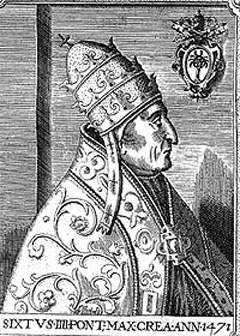
Pope Sixtus IV financed his wars by selling church offices to the highest bidders. He used the papacy to enrich himself and his family, for no less than eight cardinals were his nephews, some being given the position of cardinal even as a boy.
My response:
Francesco della Rovere was born of poor parents in 1414. Destined from his you for the Franciscans, he showed great success at his philosophical and theological studies. A scholar, he was made a cardinal in 1467. The conclave assembled on the death of Pope Paul II elected him pope under the name Sixtus IV.
The wars mentioned in the quote were to win back the Eastern churches of Turkey. However, he could not enkindle sufficient interest in a new crusade. There continued tension with France where papal decrees could only be promulgated with royal consent.
Problems emerged, as the quote suggests, with nepotism. The Pope’s nephew, Cardinal Rafael Riario, sought to overthrow the Medici of Florence. To his credit, he placed Florence under interdict for the assasinations of Giuliano de’ Medici. A two year war erupted with Florence. Ferrara found allies among the Italian princes and they forced the pope to make peace.
The ramifications of favors for family stained his legacy as pope. Despite the deference given to personal family members, he made 23 cardinals representative of the many important families: Giuliano della Rovere, Stefano Nardini, Pedro Gonsalvez de Mendoza, Giovanni Battista Cybo (later Pope Innocent VIII), Giovanni Arcimboldi, Philibert Hugonet, Giorgio da Costa, Charles de Bourbon l’ancien, Pierre de Foix le jeune, Girolamo Basso della Rovere, Gabriele Rangoni, Pietro Foscari, Juan of Aragon, Raffaele Sansoni Riario, Domenico della Rovere, Paolo Fregoso, Giovanni Battista Savelli, Giovanni Colonna, Giovanni Conti, Juan Moles de Margarit, Giovanni Giacomo Sclafenati, Giovanni Battista Orsini and Ascanio Maria Sforza-Viscon.
However, again as evidence as how God can use weak instruments for his will, Pope Sixtus IV suppressed the abuses of the Inquisition. A patron of the arts, he had the famous Sistine Chapel built and he renovated the library. The living conditions of Rome improved. The Pope was blameless in his private life despite the charges of his enemies. He enriched the Church for the ages.
Filed under: Anti-Catholicism, Pope | Leave a comment »

















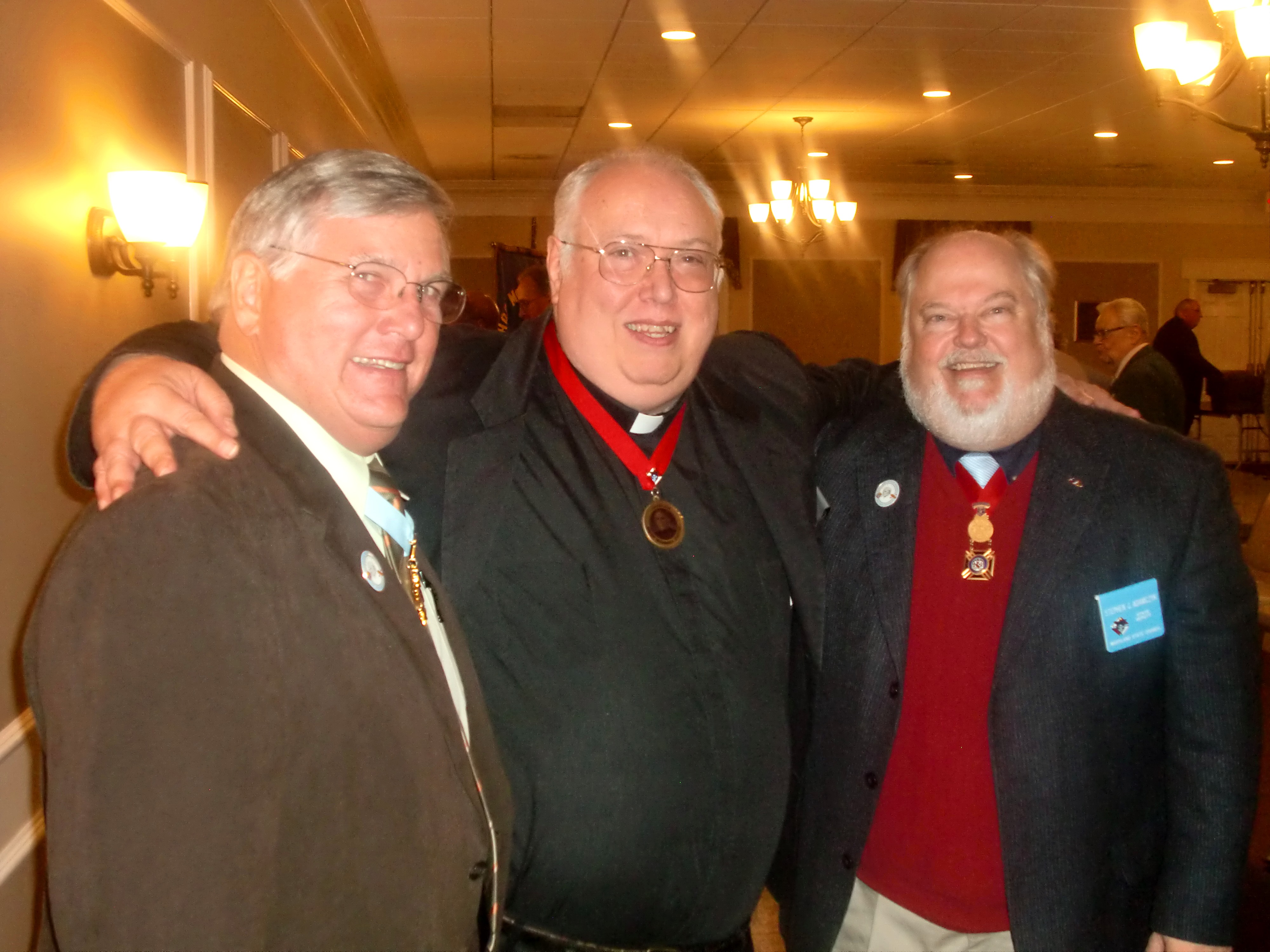
 Blogger Priest