























The anti-Catholic bigot Laurence states:
Pope John XII was an immoral man and whose palace was likened to a brothel. The bishop of Cremona, Luitprand said, “No honest lady dared to show herself in public, for Pope John had no respect either for single girls, married women, or widows – they were sure to be defiled by him, even on the tombs of the holy apostles, Peter and Paul.” Pope John XXII was said to have seduced and violated three hundred nuns. He must have had a strong and insatiable libido for he kept a harem of no less than two hundred girls. He was called “the most depraved criminal who ever sat on the papal throne.” A Vatican record says this about him, “His lordship, Pope John, committed perversity with the wife of his brother, incest with holy nuns, intercourse with virgins, adultery with the married, and all sorts of sex crimes… wholly given to sleep and other carnal desires, totally adverse to the life and teaching of Christ… he was publicly called the Devil incarnate.”
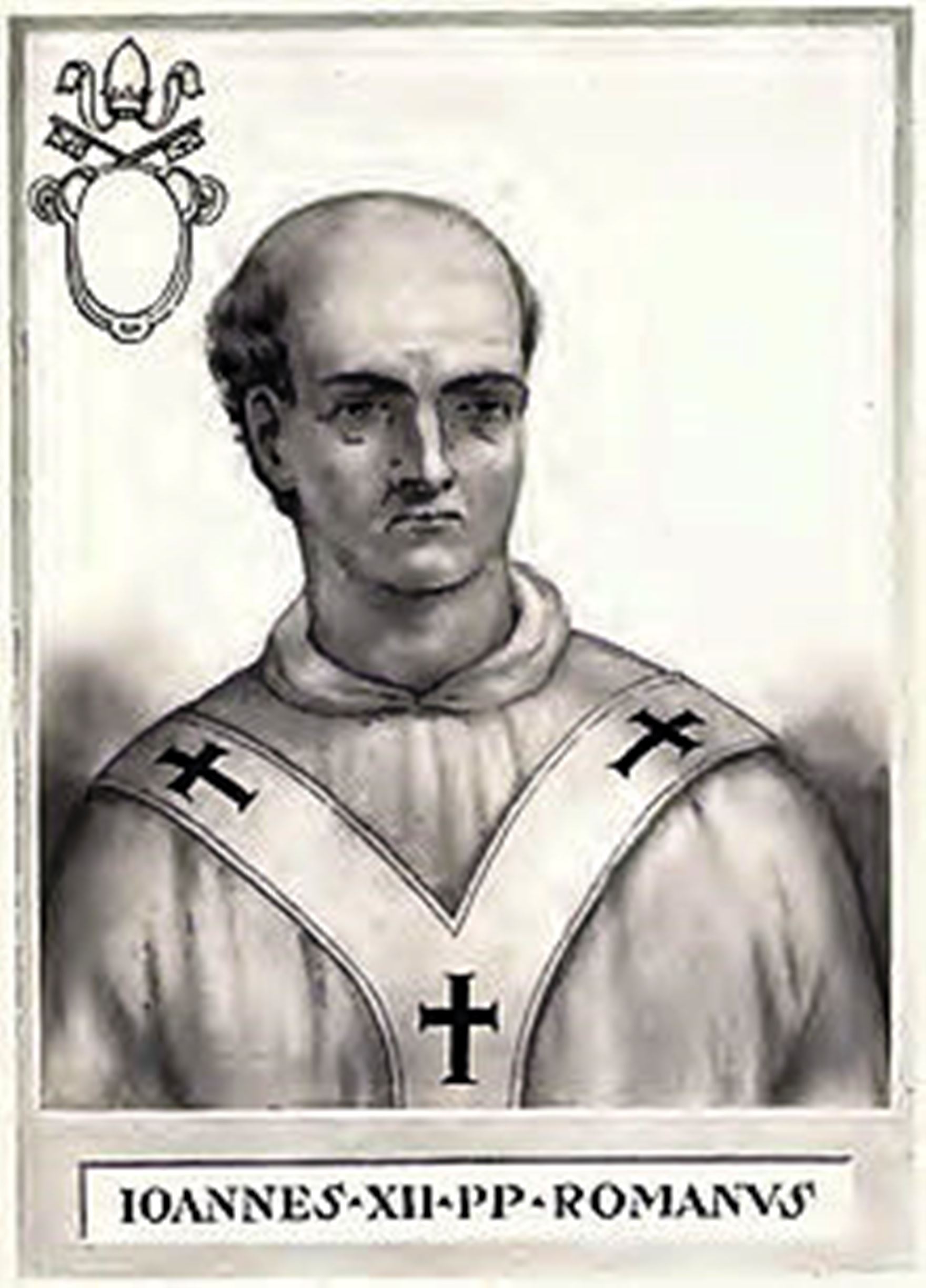
My response:
The younger Alberic was the absolute ruler at Rome and he made the Roman nobles promise that upon the next vacancy they would elect his son, Octavius to the papacy. He took office in 955 at the age of 18. This reunited the spiritual and temporal authority of Rome in one person. It is true that he was a coarse and immoral man. The Ecclesiastical States were occupied and war erupted with Pope John XII allied with the German King Otto I (made emperor). However, he later sought to betray the emperor. Bishop Liutprand of Cremona (quoted above) was part of the emperor’s entourage. The Roman nobles promised that no future pope would be elected or consecrated without the emperor’s consent. A synod of fifty Italian and German bishops was convened at St. Peter’s to censure Pope John XII. The Pope was accused of sacrilege, simony, perjury, murder, adultery, and incest, and was summoned in writing to defend himself. The pope refused to meet with them or to recognize their authority. The emperor exposed the pope’s betrayal of their alliance and the synod deposed him. A layman was elected, ordained and consecrated as Pope Leo VIII. However, canons were violated and most regarded his pontificate as invalid. Insurrection broke out and the new Leo VIII fled. Pope John XII retaliated against the churchmen who opposed him. Many good Catholic bishops suffered greatly to bring healing to the Church. In 964 there was another synod at St. Peter’s where Pope Leo VIII was declared invalid and he and all who elected him were excommunicated. The emperor had defeated Berengarius and was going to re-enter Rome when Pope John XII died (May 14, 964).
Both the civil authorities and churchmen did what they could against a bad man who had taken the papacy. However, note that as bad as he was personally, no heretical teachings were introduced against the deposit of faith. We are told that he acted as if he were not a churchman at all and had little concern for spiritual or religious affairs. The Holy Spirit protected the Church, yes even when the worse of men were given roles as shepherds. Such situations as this is why the conclave system with cardinals was created, to have a more organized selection and to take it away from the control of the Roman nobility or other civil authorities.
Filed under: Anti-Catholicism, Pope | Leave a comment »




















 Blogger Priest