Given the importance of this matter, and how it is a special teaching moment, here is an article from the archdiocesan newspaper . . .
Incident at St. John Neumann spurs reflection on significance of Holy Communion
 Special to the Standard
Recent news accounts have reported an incident at St. John Neumann Parish in Gaithersburg, where a woman was initially denied Communion at her mother’s funeral Mass (she did, however, receive Communion from a Eucharistic minister) and the celebrant did not attend the burial. (Another priest did preside at the graveside service.) In response, the Archdiocese of Washington issued a statement (below) and Auxiliary Bishop Barry Knestout, vicar general, personally contacted members of the family.
This is the statement issued by the archdiocese on February 27:
“In matters of faith and morals, the Church has the responsibility of teaching and of bringing the light of the Gospel message to the circumstances of our day. When questions arise about whether or not individuals should present themselves for Communion, it is not the policy of the Archdiocese of Washington to publicly reprimand the person. Any issues regarding the suitability of an individual to receive Communion should be addressed by the priest with that person in a private, pastoral setting.
“The archdiocese is looking into the incident at a funeral Mass that was celebrated by Father Marcel Guarnizo and will handle this as a personnel issue.”
This situation provides an opportunity to refresh our understanding of the Eucharist, its importance and the guidelines on how it is to be administered and received.
For Catholics, the Eucharist is the most important of the seven sacraments because we believe that through this mystery, we literally receive the Body and Blood of Christ. It is not just a symbol. Jesus is truly present Body, Blood, Soul and Divinity. It is an intimate encounter with Christ, in which we sacramentally receive Christ into our bodies, and become more completely assimilated into his.
Therefore, because the Eucharist is Christ himself, who is the center of all Christian life, the Church teaches that Catholics must be properly disposed to receive the Eucharist worthily. Catholics should examine their conscience and make use of the Sacrament of Reconciliation if they have committed grave sin before receiving the Body and Blood of Christ.
The following guidelines, issued by the United States Conference of Catholic Bishops, clarify how Catholics should prepare prior to receiving the Eucharist:
“As Catholics, we fully participate in the celebration of the Eucharist when we receive Holy Communion. We are encouraged to receive Communion devoutly and frequently. In order to be properly disposed to receive Communion, participants should not be conscious of grave sin and normally should have fasted for one hour. A person who is conscious of grave sin is not to receive the Body and Blood of the Lord without prior sacramental Confession except for a grave reason where there is no opportunity for Confession. In this case, the person is to be mindful of the obligation to make an act of perfect contrition, including the intention of confessing as soon as possible (canon 916). A frequent reception of the sacrament of penance is encouraged for all.”
The priest has an obligation to make sure that the sacraments are respected. Since it is difficult to know what is in a person’s heart, it is also important that when doubt arises regarding whether a person is properly disposed to receive the Eucharist, it is handled in a pastoral and compassionate manner, privately between the priest and the communicant.
The reception of the Eucharist is a blessing and a grace. We should receive Jesus with the intention of becoming more like him. No one is entitled to the Eucharist. It is a free gift that should be received with humility and reverence. It is also a sign of unity with the Church’s teaching on faith and morals.
CLICK for Guidelines for the Communion Line
NEWS ALERT: Ms Johnson is Buddhist and Gay Rights Activist!
Filed under: Catholic, Eucharist, Holy Communion, News, Sexuality | 27 Comments »








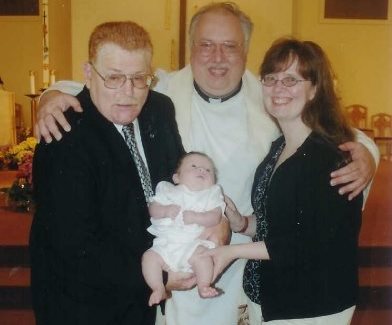
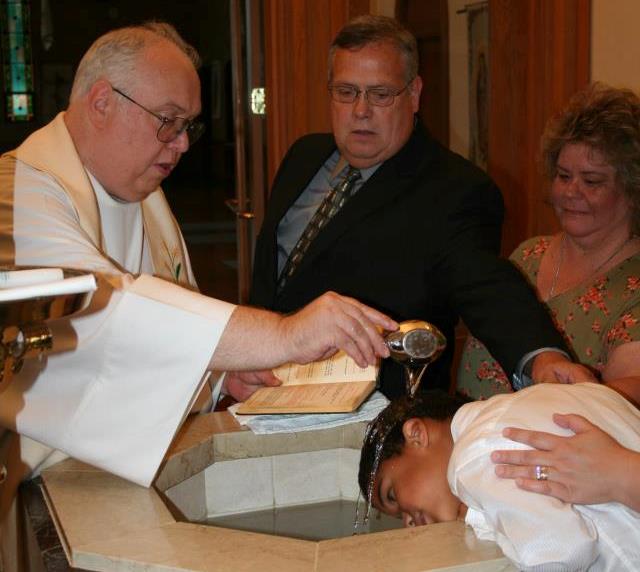
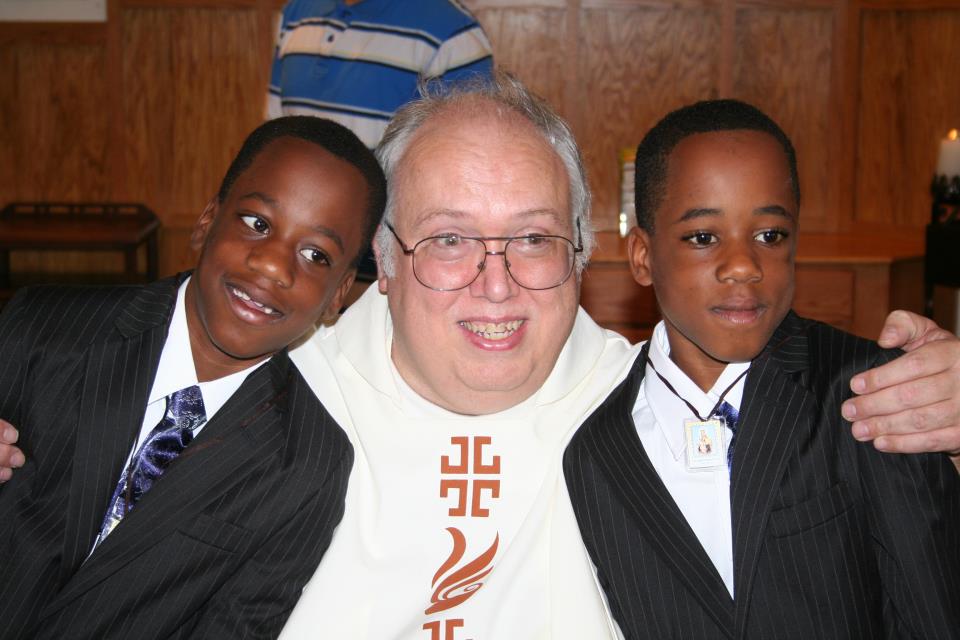





 I was only a boy sitting in church when I started to think about the meaning of having a single or undivided heart (1 Corinthians 7:32-34). It puzzled me because my own love or at least my childish affections seemed so fractured or divided. My loves were alternately profound (from my love of God and my family) to profane (in loving sweets and low-brow television). As I got older I fell in “love” with every pretty girl I saw; although my shyness, prudishness and poverty as a young man often short-circuited any romantic inclinations. In any case, I seemed most satisfied with an internal dialogue and friendship with God that extended back into my personal history as far as I could remember. I am told that sickly children often turn to God, particularly when poor health excludes them from play with their peers. I knew that God loved me. But how much did I love God and his Church? The Church was good to us and yet the charity bothered me. Some return was required. If I did not have money, I would give something else. What to give? Reflecting upon this question and the notion of an undivided heart, I decided one day that I would offer God my very self. It was not a sure thing that God and his Church would want what I had to offer, and yet, I would offer it all the same.
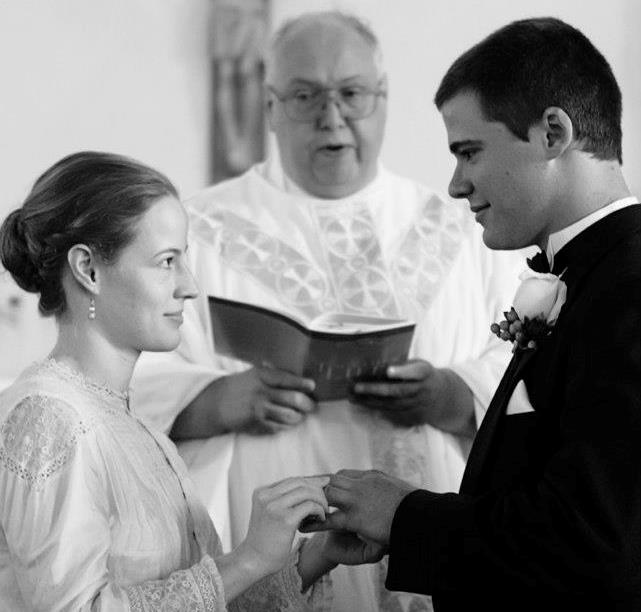
 There is always reciprocity in the sacraments and this is no less true in the priesthood. Christ loves us and as the great High Priest extends and shares his priesthood with men called to service. God gives the call and men in turn accept this call. The Church gives validation to a person’s calling and through formation assists in its acquisition. Jesus ministers to his people through his priests. The vocation of priesthood or holy orders comes within the context of living out our baptismal call as a priestly people. A child is baptized and then anointed as priest, prophet and king. The Holy Spirit anoints or consecrates the Church (the Mystical Body of Christ) as a prophetic, royal and priestly nation. The sacraments are for men and women, and they are offered as such, but always in the name of Jesus Christ.
 Dissenters, arguing for priestesses (women priests), will contend that their exclusion is a violation of justice and that qualified women deserve and must demand ordination. Besides such inclusion being deemed impossible by the late Pope John Paul II, neither men nor women “deserve” to be ordained. It is not an item on a social justice or equality agenda that anyone can merit. It is a divine gift. The Church discerns as genuine or false the vocations to which people feel called. The priesthood is given to a few but in terms of service, the whole Church benefits. Jesus chose men to be his apostles and in turn they ordained bishops, priests and deacons to follow them. The Church follows the pattern of Christ and never felt directed or free to ordain women. However, while no women are called to priestly service, very few men are given this gift from God. The priest is sacramentally “another Christ” and he is an icon of Christ the bridegroom to his bride the Church at Mass. Our most precious sacraments and gifts of salvation come from the mediation of priests. A number of our Anglican or Episcopalian brothers and sisters are coming to Catholicism because they are sick of seeing vocations demeaned to purely human terms. A radical feminism led to women Episcopal priests and bishops. Now a radical homosexual movement forces gay and lesbian clergy into their ranks. Error builds upon error. The reality of the sacraments is forfeited. Human whim and fancy replaces Scripture and a living tradition. I am reminded of the reprimand that our Lord gave poor Peter, and immediately after his great profession of Christ’s identity no less. Unable to understand Jesus’ reference to his coming passion, our Lord says to him, “Get out of my sight, you Satan, you are not judging by God’s standards but by man’s” (Matthew 16:23).
 The vocation of priesthood is not like other occupations. Many people have jobs to put food on the table and a roof over their heads, but their employment does not define them. The priestly ministry, on the other hand, quantifies the man called to holy orders. It is for this reason that I always thought the current practice of having pastors retire was rather peculiar. One does not quit from priestly work. Even the infirmed clergyman in a hospital bed prays for the Church and may offer private Mass for the salvation of souls. Retired priests often still live in rectories and work in parishes. The priest literally works until he drops. The Church assures us that the mark or character distinguishing a man as a priest is also taken into the life to come. He is a priest, forever.











 Blogger Priest