






















 Jeremiah 20:10-13, taken alone, might make us think that the prophet Jeremiah has something of a persecution complex; however, the oppression he feels is real. No sooner had he warned the people of a coming judgment from the Lord, because of their disobedience and neglect of God, the priest Pashhur had him arrested and scourged.
Upon his release from the stocks, he is compelled by his mission to continue his prophecy. He gives the credit for his persistence against mockery and abuse, not to his own fortitude and strength, but to the Lord whose message “becomes like fire burning in my heart.” The phrase, “Terror on every side,” reiterates that Pashhur and the people who have rejected his message will share the fate of doomed Jerusalem. Jeremiah contrasts the betrayal of his friends with the steadfastness of God. God’s prerogatives will not be circumvented.
Psalm 69 is another testimonial in just how far the love of God might take us. “For your sake I bear insult, and shame covers my face. I have become an outcast to my brothers, a stranger to my mother’s sons, because zeal for your house consumes me, and the insults of those who blaspheme you fall upon me” (Psalm 69:8-9). God comes first and last. This should be a sentiment for us all. However, there are many temptations to such a courageous stand. The greatest of these is our desire for the acceptance of others, especially of family and friends. Jews saw their fellowship with one another and the intimacy of their families as central to their lives. However, the Scriptures counsel us all that the most important relationship is with God. If this fundamental association is compromised, then all the rest becomes a sham and we invite destruction. This is still very much the case. Peer pressure or the false prophets of popular media often sway young people. The rest of us sometimes surrender our good standing with God behind small deceits and the disproportionate attraction to material things and comfort. Toleration and peace can become a sham if behind them there is a disregard for the poor and the dignity of human life.
Are we prophets like Jeremiah or priests like Pashhur? Do we seek to silence the voice of the prophets among us? Such questions we must ask ourselves. Several years ago, a priest friend of mine in Georgia decided that he was going to integrate his church instead of operating two facilities, one for whites and the other for blacks. When he tried to do so, the collection plummeted, threatening phone calls rang at all hours, and letters poured into the chancery office. The situation became so dangerous that he was reassigned to a teaching post in another diocese. The experience wounded him deeply and yet he knew it was the right thing and what God wanted. I know a loving nurse who was harassed and finally lost her position in a teaching hospital because she refused to assist in abortions. She knew she had no other choice as a Catholic and as a true believer in Jesus; and yet, it cost her what she most wanted out of life. Many more stories about the prophets in our midst could be told. Will we add our own stories to theirs? Will we see something of our story in Jesus Christ who embraced the Cross to save us despite the mockery of our sins and the scourging of our infidelity?
Romans 5:12-15 draws to our attention precisely this: that through one man (Adam) sin and death entered the world while through another, Christ (the new Adam), grace and life. Jeremiah and all the Old Testament prophets could warn their people and even suffer at their hands for them; however, unlike Jesus, they could not utterly redeem them. The ancient prophecy, repeated time and time again, is fulfilled in Christ. “Sing to the Lord, praise the Lord, for he has rescued the life of the poor from the power of the wicked!” (Jeremiah 20:13).
Look at Matthew 10:26-33, Jesus admonishes his disciples to follow his example and that of the ancient prophets. He tells us not to be afraid. “Do not let men intimidate you.” He promises that whoever avows him before others, his Father will claim in heaven. What more could we want? And yet, so often we allow the problems and the pressures of the day to master us.
For more such reflections, contact me about getting my book, CHRISTIAN REFLECTIONS.
Filed under: Catholic, Discipleship, Faith, God, Jesus, Morality, Prophets, Reflection, Sin | Leave a comment »
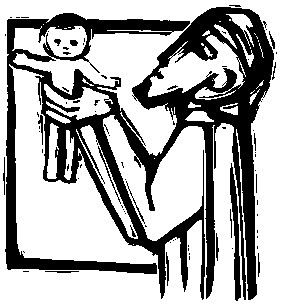 Jesus revealed himself publicly in the synagogue as the promised messiah. Although initially pleased with his learned exhortations, they quickly begin to question his authority (Luke 4:21-30). Those who knew him as a child or knew his family begin to gossip about him. Hidden in these words is their disbelief that the promised one could possibly be one from their own midst, and a poor man at that! Their acceptance of him swiftly soured into rejection. They no longer wanted to hear what he had to say.



















 Blogger Priest