• Our Blogger

    Fr. Joseph Jenkins

  • The blog header depicts an important and yet mis-understood New Testament scene, Jesus flogging the money-changers out of the temple. I selected it because the faith that gives us consolation can also make us very uncomfortable. Both Divine Mercy and Divine Justice meet in Jesus. Priests are ministers of reconciliation, but never at the cost of truth. In or out of season, we must be courageous in preaching and living out the Gospel of Life. The title of my blog is a play on words, not Flogger Priest but Blogger Priest.

  • Archives

  • Categories

  • Recent Posts

  • Recent Comments

    Jeremy Kok's avatarJeremy Kok on Ask a Priest
    Gary Joseph's avatarGary Joseph on Old Mass or New, Does It …
    Barbara's avatarBarbara on Ask a Priest
    Anonymous's avatarAnonymous on Ask a Priest
    forsamuraimarket's avatarforsamuraimarket on Ask a Priest

Homosexuality Prohibited by God & Church

Many years ago, I precipitated the ire of several activist homosexuals with criticism of their movement toward normalization and the enabling from politicians who made claim to the Catholic label, like the late Senator Ted Kennedy. My old blog was barraged by negative critics, and I was reported to the archdiocese for hate-speech. However, in truth I was merely doing what any pastor of souls should do, echoing the truths of Christ’s Church.

There have been a notable number of websites labeled as hate sights for quoting the Bible, notably Leviticus 18:22: “You shall not lie with a male as with a woman; it is an abomination.” This sin is bookmarked by prohibitions against adultery and child sacrifice on one side and by a condemnation of bestiality on the other. This is ample evidence of how the earliest believers called by God viewed such transgressions. Many clergy worry that one day any word from the pulpit against sodomy may result in arrest, fines and maybe even imprisonment. Up-and-coming politicians like Cory Booker view both the killing of unborn children (as with feeding them by fire to the demon Molech) and same sex marriages as protected human rights. Arguing that the termination of unborn children is healthcare, he states, “Abortion is not just a ‘women’s issue’ it is a human rights issue. Which is why we must continue to fight for legal and safe abortion access!” Supporting gay marriage he states, “We aren’t just talking about ‘gay rights.’  . . . We are talking about human rights.” He says this as a supposedly good Baptist. But, alas, the truths of the Bible are readily dismissed for the fads and fashions of an immoral secular world.

There is pressure being exerted to change the teachings of the Catholic Catechism. Already there are bible exegetes seeking creative ways to misdirect or devalue prohibitions against intimate same-sex activity. Paragraph 2357 labels homosexual acts as a “grave depravity” and homosexuality as “intrinsically disordered.” It is a violation of divine positive law (Scripture) and the natural law. It is the chief sin that brings down destruction upon the cities of Sodom and Gomorrah.

The prohibition of the Old Testament is confirmed in the New. St. Paul is definite about the moral gravity and writes:

“Do you not know that the unrighteous will not inherit the kingdom of God? Do not be deceived; neither the immoral, nor idolaters, nor adulterers, nor homosexuals, nor thieves, nor the greedy, nor drunkards, nor revilers, nor robbers will inherit the kingdom of God” (1 Corinthians 6:9-10).

He repeats himself in 1 Timothy1:8-10:

“Now we know that the law is good, if any one uses it lawfully, understanding this, that the law is not laid down for the just but for the lawless and disobedient; for the ungodly and sinners, for the unholy and profane, for murderers of fathers and murderers of mothers, for manslayers, immoral persons, sodomites, kidnappers, liars, perjurers, and whatever else is contrary to sound doctrine . . . .”

Homosexual sin is described as a symptom of spiritual alienation from God. It is no wonder that the many voices for inclusion and welcome in the Church for gays also repudiate purity and charity while demanding full normalization of perversion. Instead of the reprobate reforming, the impetus is placed upon the Church renouncing the law of God and nature.  We read in Romans 1:24-27,

“Therefore God gave them up in the lusts of their hearts to impurity, to the dishonoring of their bodies among themselves, because they exchanged the truth about God for a lie and worshiped and served the creature rather than the Creator, who is blessed fore ever! Amen. For this reason God gave them up to dishonorable passions. Their women exchanged natural relations for unnatural, and the men likewise gave up natural relations with women and were consumed with passion for one another, men committing shameless acts with men and receiving in their own persons the due penalty for their error.”   

Today, many are claiming the term “disorientation” is mean-spirited or cruel. But I would argue that it is both descriptive and civil. The slurs of Pope Francis illustrate that there are a lot worse words we could use to describe those afflicted with this inclination.  I must qualify this by noting that a few orthodox commentators are quick to explain that there is no sin in the disorientation, only in the same-sex acts.  Yes, this is true, but it is not a neutral matter.  It signifies a real and dangerous woundedness.  The Church’s enemies appreciate this point and it is for this reason that they seek to prohibit and/or make illegal any efforts at therapeutic repair or correction of the orientation.            

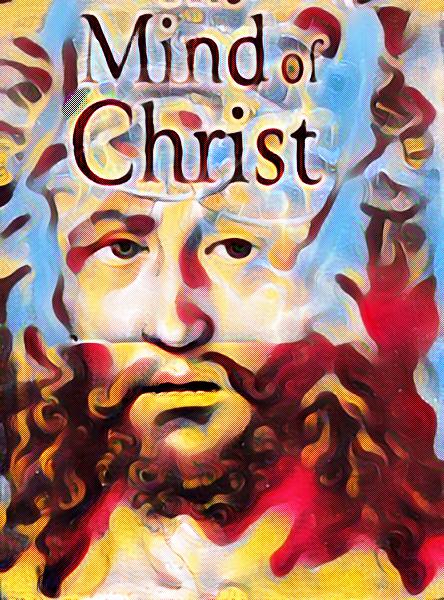
A Glimpse into the Mind of Christ

I have spoken before about what Christ knew as a man and yet questions remain. There is no way that we can absolutely penetrate this issue.  Why is it important? Particularly for those of us who pursue an active intellectual life, living largely in our heads, this matter touches the depths of our own sense of identity.  What we know and believe largely defines us and our place in the human family. The operations of the human soul, knowing and willing, speak to our appreciation of faith and our convictions— separating us from animals and machines.

As a pastor of souls, I have also accompanied families in their dealing with aging relatives suffering from Alzheimer’s and other ailments of the mind. Families confessed to losing loved ones, not all at once, but a little at a time. Eventually they must deal with loving someone who does not even know his or her name.  It is our firm confidence that the soul retains that which escapes the grasp of physical brains. We hope that one day we will be restored body and spirit— sharing something of Christ’s resurrection.

I mention this, because I firmly believe that if we and the world forget— God will never forget. This is very pertinent to Christ because when as a man he is most vulnerable on the Cross, as God he is the most powerful in offering himself for each of us by name. Jesus knows us better than we know ourselves. Such is the wonder and necessity of his divine knowledge.   

Christ possesses both his divine and human intellect. Further, as the new Adam, he would claim what our primordial parents had lost— an infused science that complements experiential knowing. Further, he always enjoys the beatific vision. As a divine person, Christ knows all things.  His conceptual knowledge could not expand because it was already infinite. While the general awareness of Christ is unbounded, his experiential knowledge is mysteriously shielded or preserved. When he walked the earth as one of us, his human experiential knowledge came  through his physical senses. While his divine knowing and infused knowledge were always a part of him, in his humanity he could ask questions (see John 18:4 and John 6:5-6).

Variations of Gnosticism plagued the early high Christology of the Church.  Docetism was a heresy that Jesus was fully divine but only appeared or pretended to be human. Monothelitism also stressed the divinity of Christ but denied he had a human will, just a divine will.  Apollinarianism reduced Jesus’ body to a shell for his divinity, with no human soul (and thus no human mind and will). Others would assault the identity of Christ from the perspective of a low Christology, viewing Jesus more as a creature than the Creator: Nestorians (viewing Mary as the “mother of the man” but not as the Bearer of God) and Arians (defining Jesus as a spiritual demiurge but not truly divine). All these false roads also espouse an erroneous psychology in the Lord.         

The business about Christ’s identity and awareness is still explored and often gotten wrong, particularly in films, television, and popular books. The novels about Jesus from the late Anne Rice appealed to the apocryphal and were dangerously shallow in trying to speak from Jesus’ perspective. Her Jesus was neither   omniscient nor omnipotent. He was liable to error and was more human than divine. As a corrective, we have the life of Christ given us by the late Pope Benedict XVI.  He writes in regard to the finding of Jesus in the temple: 

On the one hand, the answer of the twelve-year-old made it clear that he knew the Father— God— intimately. Only he knows God, not merely through the testimony of men, but he recognizes him in himself. Jesus stands before the Father as Son, on familiar terms. He lives in his presence. He sees him. As Saint John says, Jesus is the only one who rests in the Father’s heart and is therefore able to make him known (cf. Jn 1: 18). This is what the twelve-year-old’s answer makes clear: he is with the Father, he sees everything and everyone in the light of the Father. And yet it is also true that his wisdom grows. As a human being, he does not live in some abstract omniscience, but he is rooted in a concrete history, a place and a time, in the different phases of human life, and this is what gives concrete shape to his knowledge. So it emerges clearly here that he thought and learned in human fashion. It becomes quite apparent that he is true man and true God, as the Church’s faith expresses it. The interplay between the two is something that we cannot ultimately define. (Pope Benedict XVI, Jesus of Nazareth: The Infancy Narratives, p. 127)

What We Have Lost

Death enters the world due to sin. Regardless of whether there was spontaneous creation or development of species as through evolution, the Church teaches that death enters the world because of sin. Had Adam and Eve remained faithful, our first parents would either have never known death or it would have been as merely opening a door and walking from one room to another.  Human rebellion would cost us preternatural gifts and usher forth suffering, sickness and dying.  It is a crucial hallmark of Christian anthropology, that these dark mysteries are not the result of the divine active will, but rather of his passive will— God makes space for the misuse of human freedom.  While he does not preserve us from the consequences of sin, he does not forget us and makes a promise of redemption. 

After the fall, our first parents hide themselves in shame of their nakedness.  They forfeit their profound union with God.  An awareness that raised them ahead of all other creatures of material creation was accompanied by a duty or responsibility to honor the Almighty.  However, their love and fidelity fall short. Eve falls to the serpent and Adam is emasculated in complying with the demand of Eve.  They would remain stewards of creation but as deeply flawed sentinels in a now broken world. The sin of our first parents brings about a woundedness to all creation. The bridge collapses between heaven and earth. It would only be in Christ our “pontifex” that the bridge would be restored, albeit in the form of a cross.  While hope remains, our pilgrimage would henceforth include struggle and suffering. The actions of Adam and Eve do not mean merely death to a few but death to many. As in any mortal sin, they are stripped of sanctifying grace.  This is still how we enter the world and why faith and baptism are so essential. Another lesson learned is that just as the cost of original sin is passed down to every child of humanity save Mary; all sin, even the most personal and hidden, touches others because we then cannot witness as the saints we should be. Indeed, one of the imperatives for the sacrament of penance is that we might be healed as members of the mystical body, the Church.  The sin of any one of us is a cause of diminishment for all.  We are called not simply as individuals but as a new People of God or New Israel.    

Compounding the gravity of Adam and Eve’s rebellion is that within their intense intimacy with God comes a heightened awareness of intellect, sometimes referred to as infused science. Not only have we lost this supernatural gift, but today many seem to possess only a vague appreciation of human nature and our true place in the world. Consciences are numbed to the truth about the sanctity of human life and the dignity of persons— divine light is displaced by a satanic darkness. Every school kid is aware of this loss because learning often does not come quickly and requires constant study and repetition to store information in memory.  What should be easy becomes difficult or arduous.

Original sin also strips away our sense of integrity, making us capricious and prone to the urging of concupiscence.  It is hard to do the good and easy to do the bad. The symphony of harmony in us and in creation is disrupted. The fruitful blessings of the garden would be traded for the struggle of the arid wastes— men would toil for their food and women would know the pains of childbirth.