• Our Blogger

    Fr. Joseph Jenkins

  • The blog header depicts an important and yet mis-understood New Testament scene, Jesus flogging the money-changers out of the temple. I selected it because the faith that gives us consolation can also make us very uncomfortable. Both Divine Mercy and Divine Justice meet in Jesus. Priests are ministers of reconciliation, but never at the cost of truth. In or out of season, we must be courageous in preaching and living out the Gospel of Life. The title of my blog is a play on words, not Flogger Priest but Blogger Priest.

  • Archives

  • Categories

  • Recent Posts

  • Recent Comments

    Jeremy Kok's avatarJeremy Kok on Ask a Priest
    Gary Joseph's avatarGary Joseph on Old Mass or New, Does It …
    Barbara's avatarBarbara on Ask a Priest
    Anonymous's avatarAnonymous on Ask a Priest
    forsamuraimarket's avatarforsamuraimarket on Ask a Priest

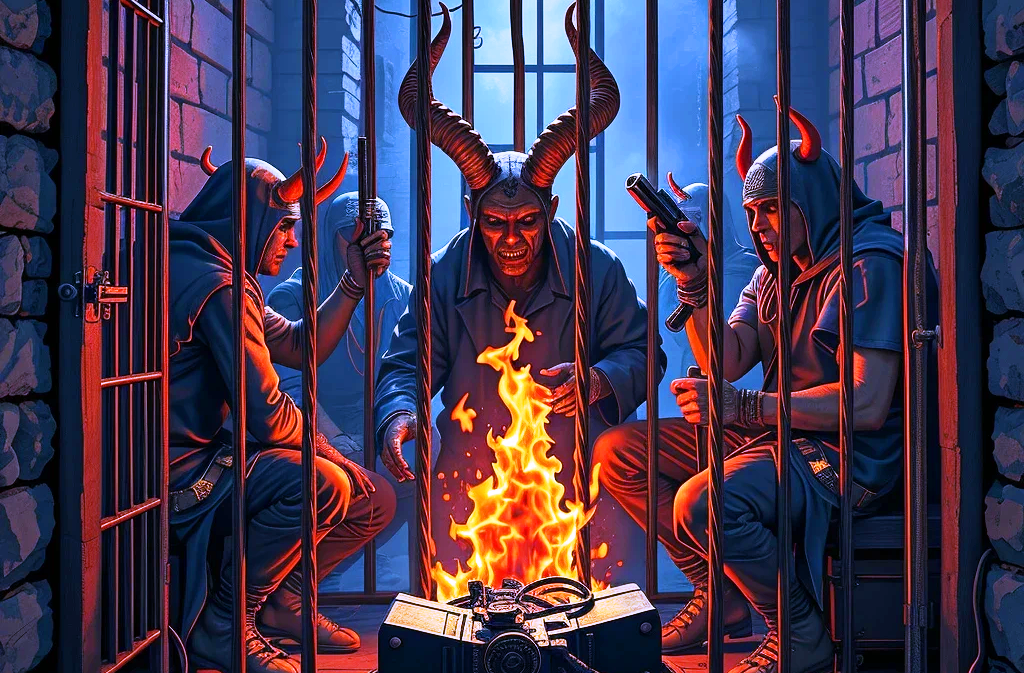
Satan Club at Anne Arundel Community College

Anne Arundel Community College is literally in our backyard. Montgomery County is also considering adding a Satan Club to their approved campus organizations. Disguised behind a false rationalism and a host of liberal causes, it is a hate group and exists only to mock both faith and believers.

When people claim Satan but then argue that it is all a ploy, don’t believe it. They are fooling themselves. I have no doubt that the devil has his hand in this!

The Satanic Circle asserts that it does not believe in a literal Satan. Members claim a degree of enlightenment they do not possess. Dismissive of the many great scientists and thinkers who posited faith in a higher power, they grant to science a form of natural faith even though it asks different questions than philosophy and theology. Deductive science might tell us how a watch runs but not who made the watch. The theoretical sciences and mathematics deal with abstraction over the real. While many aggressive atheistic thinkers attack religion as espousing a “God of the Gaps,” they are blind to their own gaps in understanding both the macro- and micro universe. Many of the so-called rational satanists are those with weak minds who parrot the arguments of influential atheists in the scientific community. They are particularly influenced by those in the media. Kids in high school and rebellious youths in college are quick to distance themselves from the beliefs and values of parents and others. They image religious believers as ignorant fools while in fact they are the ones who have little knowledge of anything and know next to nothing about the ultimate questions. They live lives devoid of any appreciation of metaphysics and genuine intellectual reflection. Adherents rattle on against theistic faith even as they make a religion or cult of their atheism and proposed satanism.

Their reasoning signifies dislocated or illogical atheistic rationalism. They make many claims but do not know how to think for themselves.  Question them about the definition of a syllogism and they would only give a blank stare. Those with recourse to a dictionary or the internet might answer with words they do not understand. Unable to truly debate, they turn to so-called proof-statements from leaders in the movement.  But those answers fail to satisfy so they turn to mockery and ridicule.  These new militants who promulgate an evangelistic or missionary atheism, have fooled themselves. We must not allow the wool to be pulled over our own eyes.  This is a real concern at a time when many youths are only superficially Christian. They do not understand their faith as they should, and they cannot defend it.

The devil is powerful, and he strategically exploits doubts and denials about his existence. Those who caricature him as a joke do not know that the joke is on them. This new breed of satanist might welcome occult witches or Wiccans or even new age religionists to their gatherings for “fun,” but in debates they are also criticized as closet theists. They purloin their symbols and nomenclature as their own. They deny that the supernatural is real even as they come under a hidden spiritual oppression. Signs of such manipulation are realized in the dark fruits of their coalition. They go out of their way to mock Christian believers while demanding respect for themselves. They hate the Jews as the progenitors of the Judeo-Christian faith. Indeed, they would side with terrorists against the state of Israel. They are inherently Marxist, contending for “mischief” or revolution to overthrow genuine faith and the Mosaic commandments.  They create a false dichotomy between reason and faith, elevating a science that does not have all the answers, especially about the ultimate meaning for humanity.

They are political activists. Instead of arguing for Christian stewardship over creation, they raise up nature and ecology as in rivalry or war with humanity. They would save whales but exterminate unwanted human babies. The new Gnostics, while they claim an allegiance to science and nature, wholeheartedly endorse same-sex disorientation and gender dysphoria. They not only support the LGBTQ+ agenda, but they also embrace a no holds barred sexual expression between consenting adults. Despite the clear mention of the Almighty in our founding documents as a nation, their interpretation of separation of church and state would go far beyond the intent of our founding fathers. Instead of a mere prohibition of a national denomination or confession, they propose the disavowal of any belief in God and the accompanying religious values. Under the heading of “bodily autonomy,” they would deny the right to life of the unborn. Against the Gospel of Life, they are activists for abortion on demand “whenever women want it.” This false secular humanism allows hidden demons to savor their favorite food, the sacrifice of children to the lust and selfishness of their sycophants.

The satanists are of two types, exhibitionists on one side and cowards on the other.  The first group believes in shock value.  They are often heavily tattooed and have disturbing body piercings.  They wear clothes that immediately offend with crude or derogatory messages. The second group are outright cowards.  They love to wear masks and hoods to disguise their identities.  Both feel that they can use Satan as a weapon and not get hurt, themselves. But they are slaves of the devil even if they are unaware. They are wounded by sin and sentinels for hell.

The Purpose of Infernal Incarceration

Many lament the large numbers of prisoners, particularly male convicts, who face extended jail time in the United States. Many advocates for judicial reform have sought reduced sentences for convictions and leniency for certain crimes.  Often at the heart of these discussions is a debate about the overall purpose of our prisons. There is a parallel here with the spiritual realm. Either denied or left largely untouched in religious arguments is the fact that an almost unimaginable number of spiritual felons are incarcerated by God in a prison where there is torture or pain and an eternal sentence without reprieve. Is God cruel and sadistic? The Church would say, no. Then what are we to make of all this?

Like earthly prisons, our appreciation of purgatory is for rehabilitation. A better analogy might be that of a hospital. A surgical procedure might hurt but in the long-run we will be better for it. The purgation will perfect and heal the soul. All who pass through purgatory are on their way to heaven.  They are saints in the making. At the end of time, purgatory will cease to exist and there will only remain two realities, heaven and hell.    

Unlike terrestrial jails, there can be no rehabilitation in hell.  This is no longer on the table. Often this seems to be the case on earth, not because hope has vanished, but because hearts have become too hardened to change. Recidivism rates among violent federal offenders in the U.S. is over 60% or 3 out of 5 men. Prison doors swing open and close with repeat offenders. While human justice makes mistakes, divine justice is perfect. God knows our hearts. Those who can be corrected pass through purgatory but the damned must suffer hell. We trust a God who does not err. The sentence fits the crime.  

The purposes of hell seem similar to the traditional purposes for earthly prisons:

  • RETRIBUTION – crime or sin cries out for punishment.

All sin requires the satisfaction of temporal punishment. That is why a priest gives a penance to the penitent. If this punishment is not served on earth then it must be satisfied in purgatory before our release into heaven. However, when it comes to hell, there can be no full satisfaction or propitiation. The redemptive work of Christ has been rejected. Apart from Christ, we cannot be saved. This retribution (not revenge) insures that Divine Justice is not compromised. Dishonoring or offending God is a most terrible sin. It is the direct opposite of our purpose to give glory to God and to serve him.

  • INCAPACITATION – protecting the innocent from their influence.

This topic brings up the serious issue of demonic involvement in the world. Some have even speculated that damned souls or ghosts may be able to extend something of their oppressive manipulation, particularly of those in their family line. Having said this, I have tended to interpret so-called ghosts as either the souls in purgatory beckoning our prayers or demons in disguise.  Note that in cases of demonic possessions, exorcists will order the devils to return to hell. The peculiar case of Christ driving demons into the suicidal swine is reflective of a Jewish ritual where demons might be dispatched into animals. The demons so dreaded hell that they begged to be consigned into the unclean animals, instead. A strange case with some similarity was explained to me where a Jewish exorcist drove a demon into a chicken and then he killed the bird. Unlike living human beings, demons have no localized bodies. Given that fallen angels and “disembodied” souls lack matter, they are technically only where they operate or are active. As finite, they are not like God who sees all and is in all or everywhere.

But how is it that these demons are escaping to earth anyway? This happenstance goes all the way back to the book of Genesis where we find Satan as a serpent causing trouble for our first parents. How was it that he was not caged in hell?  Some of the church fathers theorized a close proximity where hell was understood as below or under the earth.  Light is thrown upon this in the last book of the Bible:

Then war broke out in heaven; Michael and his angels battled against the dragon. The dragon and its angels fought back, but they did not prevail and there was no longer any place for them in heaven. The huge dragon, the ancient serpent, who is called the Devil and Satan, who deceived the whole world, was thrown down to earth, and its angels were thrown down with it. (Revelation 12:7-9)

We battle with cosmic powers and principalities. The hell spirits may be invisible but they are among us exerting their dark influence. Fallen angels have no corporeal bodies and thus do not “physically” break out of hell. Their condemnation and the suffering accompanied with it is their hell. While hell is a place it remains true that the devils carry hell with them wherever they go. God’s permissive will allows them a certain influence, as we see in the testing of Job and in the temptations of Christ. However, the war is won in Jesus Christ. Satan and his devils are spiteful but they are losers. God’s permissive will allows for the correct and incorrect use of freedom. He equips his children in faith with the gift of sanctifying grace, our great weapon against the powers of hell.

Some would speak of the demons as extending themselves or their spiritual stuff in such a way as to be both in hell and on earth. When it comes to certain saints this is referred to as bi-location. In any case, with the last judgment and final consummation, whatever liberty the damned spirits possess will be rescinded. Indeed, the redemptive work of Christ has broken the devil’s hold on the earth. But each of us still has to want to be saved.

  • DETERRENCE – urging those on earth to do good and to obey God.

The prospect of the loss of heaven and the pains of hell is meant to deter the living from leading ungodly lives.  Some preachers take this to the extreme of seeking to scare people into being good. The ideal is that people would be good because they love the Lord and want to honor God through their praise and obedience. But some with meager love might still be saved through the intimidation of punishment. Of course, this would not work if there were nothing of love in their hearts. In such a case, the damned of hell might know regret, not toward the Godhead, but rather because of the pain associated with hell he has brought upon himself.

Our Understanding of Hell

The traditional view of hell in Scripture and in Church teaching reluctantly admits that most people will suffer perdition. There is a universal call to salvation but that does not mean that everyone will be saved. Heaven is the ultimate sign of God’s love which we must share and return. Purgatory is an expression of God’s mercy for those who love the Lord but not as they should. Hell is proof of God’s justice where goodness is rewarded and evil is punished. There is a particular judgment at the end of life and a final judgment at the consummation of all things.   The damned in hell are alive and conscious. They are not asleep and they have not passed out of existence. The soul is immortal. It has no parts to break down. The suffering of hell is due to their awareness. Primarily, they are alienated from the God for whom they were made. Secondarily, hell is a place where there is punishment or pain to the senses. This torment is defined as fire, both literally and spiritually. It is a fire that torments but is incapable of consuming us. Hell is forever. There is no respite or escape. The literary reflection of Dante would suggest that there are circles or variations of hell based upon one’s spiritual state at death. While God’s providence cannot be thwarted and he saves whom he wills, this is understood as an election to glory. Catholicism does not teach that any are stamped as damned from the very beginning of their life-story. Rather, we get what we want. It comes down to our cooperation or lack of it with divine grace. Our emphasis is upon human freedom or choice. Not to be confused with hell is purgatory, a temporary abode (where those in venial sin or suffering from temporal punishment due to sin) can be purified or perfected by the fire of God’s love prior to entry into heaven.         

What is Wrong with Us?

Why do so many travel the wide road to hell and so few take the narrow path to heaven? Has God deliberately made the path to paradise too difficult or cumbersome?  Has he failed to plant signs to guide us on our way? Or has the devil turned the signs around to misdirect travelers? I suspect the sobering truth is that humanity is difficult to save. Jesus has redeemed us but many are resistant to grace and the gift of salvation. The measure is likely in how we treat the most vulnerable among  us.  If we can coldly destroy millions of unborn children, and celebrate with glee such choice or freedom, then it is no wonder that hearts lack contrition or remorse for sin, even though our disobedience was the catalyst for Christ’s horrific passion and crucifixion. The fact is that many do not care about what Jesus has done and this same callous attitude is imposed upon the neighbor. Some wrongly blame God and others. They may seek to mitigate personal blame by giving all the credit to the devil.  It is hard to face the ugly truth about a fallen human nature.  Even apart from the demonic, humanity is capable of the most atrocious wrongs. Betrayal, abuse, oppression, sadism, assault, murder, indifference, prejudice, rape, and an assortment of other iniquities define the darkness in human hearts.  Given this sobering understanding of fallen man, the query is not whether there is a hell or not; rather, the real question is rhetorical, how can there not be a hell? Divine justice demands the existence and populating of hell. 

I wonder what an angel or a rational extraterrestrial would think of us while visiting the earth for the first time? I suspect the visitor would wonder, what is wrong with us? He would be right to suppose we were somehow broken.  We want what we do not need and need what we do not want. We say one thing and do another. We celebrate both Mother’s and Father’s Day and then go about aborting millions of children each year around the globe. We prize love as an ideal but hate each other in practice. We develop mass media for communication and education and then fill the bandwidth with pornography and cheap live-action voyeurism. As a species and the stewards of earthly creation, we have moments of intense awareness where we penetrate the veil to the mysterious transcendent. But no sooner do we spy the face of God we return to wallowing in the mud like the pigs on a farm. We were made for God but why do there seem to be so few children of the Light and so many that prefer the darkness? God spells out what we need to do and yet we resist; we parade our disobedience. Indeed, the more serious the commandment, the more stringent our resistance.  Echoing the garden of Eden, we crave above all the forbidden fruit. We seemed to have lost something of the small child’s docility and trust. The old dog refuses to learn new tricks. Eyes are closed, ears are deafened, hearts are hardened, and minds are shut off. Such a mentality allows for no change of course, even if one is defiantly speeding to hell. 

Ever watch a cop show when one is pulled over for speeding or failing to stop at a stop sign or red light? Some immediately take out their license and say they are sorry. This is the posture of admission and contrition. It may bring punishment but there is the promise of redemption. Another resists the officer and may even reach for a weapon. This is the sinner who wants everything his way. He will not even admit he has done anything wrong. It is likely that he will die in his sins. Finally, there is the perpetrator who speeds up instead of stopping. A high speed chase ensues.  This is the sinner who tries to flee from God. He is reckless and endangers others in trying to run away. But ultimately, there is no escape. He has only made matters worse. There will be hell to pay. 

The Blight of Atheism

Atheism is regarded as a sin against faith. It is not simply a matter of one not finding the evidence for God as intellectually satisfying; rather, it is an active impediment to credulity. It signifies a spiritual drought. Worst yet, it might be compared to the locusts that swarm to consume the awaited harvest. Rather than trusting in God’s providence and intervention, atheists lament that all their hard work is quickly undone. Their toil is in vain. The lack of lasting meaning tempts them to despair.

When it comes to Jesus, the disciple must possess a readiness to believe. The ground of the soul must be prepared as fertile and receptive for the seed. The crop must be watered by instruction, witness and grace. There is no naïve gullibility but rather an honesty in intellect and a willingness in consent. Jesus is the fulfillment of prophecy. He is the long-awaited Messiah (John 8:24-28). He confirms his power and identity by performing miracles. A claim is made for divinity by his acts of mercy. Only God can forgive sins.  He raises the dead. God alone is the author of life.  He walks on water. He is the God of nature or creation. The great precursor and prophet, John the Baptist, attests to who he is and to his mission. The hearts of believers, past and present, are burning with the truth.  Only those who are spiritually cold, not wanting to believe, are the ones to reject him and his message.  Hundreds will witness the aftermath of his revivification. The apostles who celebrate his victory over the grave will testify to his resurrection by their constant preaching and martyrdom. What sane person would die for a lie? No one! A refusal to believe constitutes a rejection of grace. Saving faith is made real not just in the mind but in the heart. 

The greatest remedy to atheism is the Eucharist. Along with the Word, it is the food that satisfies for the hunger of the soul. Non-believers go hungry. Those who deny the Eucharistic Christ are spiritually malnourished, starving for meaning and the life of grace. Believers become one with this Eucharist, part of the harvest of faith.

Salvation in Christ as the Light of the World

When it comes to salvation, the excuse of ignorance forfeits much of its weight after the incarnation. The covenant that God first forges is with a select people and much of the rest of the world is left in the dark about the true God. It is only with the coming of Christ that the covenant is expanded and consummated to include all who would believe in the Jewish Messiah. Membership among the elect is now not determined by blood and circumcision but by faith and baptism. Our Lord, who is the Light of the world, does not expose himself all at once but over time and in degrees.  This Light first emerges as a glimmering promise to an insignificant family and tribe. Later, having prepared a people for himself, we have the first of several theophanies. It is in the Epiphany with the wise men or kings that the Light is revealed as having entered the world. It will become the Light to the nations.  And yet, the hidden years of Christ conceal much of this illumination until the final three years of our Lord’s life and the instigation of his public ministry.  What he does during these final years will set the pattern for his apostles and for all who would evangelize. No longer would this Light be hidden. Indeed, Jesus as the burning paschal candle will sacrifice himself for all who would believe and love him.

The daybreak of Christ dispels the long night brought about by the devil and disobedience. Sin unleashes a storm of suffering and death upon the world. Christ institutes his  Church as a vehicle for his shining justification. The community of faith functions as a lighthouse, guiding wayfarers to safety lest they shipwreck against the rocks of ignorance, fear and hatred. The mission of the Church is always the same, to herald Jesus as the Light of Salvation. Jesus tells his listeners,

“You are the light of the world. A city set on a mountain cannot be hidden. Nor do they light a lamp and then put it under a bushel basket; it is set on a lampstand, where it gives light to all in the house. Just so, your light must shine before others, that they may see your good deeds and glorify your heavenly Father” (Matthew 5:14-16).

We can speak of “light” as something identified with our Lord and shared with his Church, allowing us to see or penetrate the darkness. What happens if a light is too brilliant and the eyes to the soul are not calibrated to bear its intensity? Like looking at the sun, our eyes might close or face blindness. Others do not like what they see and thus they turn their gaze. Do we really want to see God? Can we bear to see ourselves as we truly are, with all our sins and weaknesses, or do we shun the light?

The wicked are often not forthright with the truth. They may even count on others as not being disposed and ready to hear it. I am reminded of the actor Jack Nicholson as Colonel Jessep, when being questioned on the stand in the movie, A FEW GOOD MEN. A marine has died and a coverup ensues. He angrily responds to the prosecutor, “You can’t handle the truth!” The truth convicts the guilty but it often overwhelms the innocent. As for the saints, they see God— both within and before them. The light always brings with it a verdict (John 3:19-21).

We are Not All Judged the Same

While we tend to give the emphasis to human freedom and choice; God’s justice and mercy also hinges upon divine election. This is not fate or a crude Calvinism where God hates sinners and predestines them to hell. St. Augustine would speak of the just being predestined to glory. How it works remains a mystery. But we trust that God is good and his justice is fair and right.

When it comes to the matter of justification before God, many might compare themselves to others but with a smug confidence in their superior standing. That is just not how divine judgment works. Mindful of the parable about the pharisee and the publican (Luke 18:10-14), we are not saved in isolation from those around us.

The believer must care about the spiritual status of those around him, particularly those who are his charges. Giving scandal to the faith or bringing harm to the “little ones” can be particularly damning. Indifference to the poor and the oppressed brings harsh judgment upon those who might ordinarily be viewed as pious or devout (Mark 9:42). 

The realm of mortal sin includes both the violation of the laws of God and precepts of the Church, as well as the commission of acts that are always and everywhere objectively wrong. Following the testimony of Scripture, there are both mortal and venial sins, depending upon the severity of the objective matter. However, the gravity of sin is also a subjective issue.  If one is ignorant of a wrong then one cannot be guilty of its commission. Those who have not reached the age of reason cannot sin. Those who are delusional or have suffered the loss of reasoning are likewise no longer culpable for what they do. Also, one cannot accidentally commit sin. By definition, sin requires both an objective wrong, awareness of its severity, and free volition in its commission.     

The teachings of Pope Francis about spiritual accompaniment have stirred much soul searching. As a community of faith it makes sense that we must journey with one another. Those in ministry have a sacred duty to walk with others. But I have become increasingly troubled by the commentary about this accompaniment. It seems nonsensical that we might remain silent about wrongs or about the deadly threat of perdition. True love would save souls, not just make people feel better about living in sin. Those in irregular unions, i.e. adulterous second bonds, may attend Mass, care for their households and nurture their children. But can we dismiss the warning of Christ about divorce? Serious sin can be tender and caring, but it is still wrong. Why do we focus on the replacement family and so often forget about the abandoned spouse and children? We should rightly urge annulments when there are obvious grounds and prospects of healing for messy situations; but we must not be presumptuous about the invalidity of broken bonds or the positive status of subsequent unions. I well understand how our hearts can go out to those in same-sex unions, particulaly when they are faithful in church attendance and toward one another; but can we really indirectly affirm or even remain quiet about a sin that Scripture deplores as most deadly? St. Paul lists it among the sexual sins that forfeit one’s place in the kingdom (Romans 1:26-32). We can affirm love but not sin.  We can expand the meaning of family but never in a way that undermines the plan of God in marriage between one man and one woman that is open to the generation of new human life. Again, accompaniment is important, but what if we are walking in the wrong direction? Do we go to hell for friendship sake? That is not true solidarity.  It could also happen that sinners wrong in conscience might be judged lightly, while those who knew better but withheld correction, might find themselves damned. The more one is given, the more for which one is accountable. Indeed, two might commit the same sin, but because of subjective liability, one earns purgation and heaven and another merits hell.  As I said, judgment is real but it is not always clear and simple. Deathbed repentence and conversion is possible. A priest has the power to steal a soul from Satan even at the last moment of mortal life.

Ringleader, henchmen, or bystander, Christ can save whom he wills. How will God judge those who lead others into sin? Enablers and accomplices are also guilty of sin. We need to model the faith and life of a Christian disciple and walk the road trod before us by the saints. If we want heaven then we must witness to Christ and his Church. Silence or embarrassment about Christ is deadly.

  • Do we routinely curse and take God’s name in vain?
  • Do we neglect the Mass and the community of faith?
  • Have we placed idols before God in our life?
  • Are our families neglected or parents forgotten?
  • Are children baptized and raised in the faith?
  • Do we routinely tell lies and violate the truth?
  • Have we received stolen goods?
  • Are we culpable for supporting abortion?
  • Have we compelled the use of contraception?
  • Do we excuse fornication and cohabitation?
  • Have we respected and been faithful to marriage bonds?
  • Have we applauded same-sex unions?
  • Has immodest dress or flirtation led others into sin?
  • Do we patronize blasphemous and lewd media?
  • Have we neglected the confession of sin and pardon?

We Trust the Promise but Must Wait for Details


The dynamics of the kingdom are nothing like those of the world around us. Many who pride themselves as believers have been seduced by the unholy trinity: the world, the flesh and the devil. The world is greedy for wealth and power. Flesh desires pleasure and reduces “persons” to commodities. Satan is all about bondage and broken promises. There can be no doubt that this is what the damned substitute in hell for the true Trinity that raises up the poor and the weak, that seeks a lasting joy for all who are saved, that trusts in the promises of Christ and finds freedom in his everlasting covenant.

While lacking a practical guidebook to the afterlife, we can surmise a few aspects. Heaven is not an abode of bored angels playing harps on clouds. It is not a place where selfish dreams come true. While we are left with questions, we are told that the saints see God and that this beatific vision is an occasion for completion and peace in themselves while the focus will always be giving glory to the one triune God. There is a profound unity in the Lord. The divine mystery cannot be exhausted by finite creatures. But we will be one in Christ.  We will be happy. There will be no more sorrow, sickness, pain or dying. All tears will be wiped away.  We may not understand what it means, but there will be a new heaven and a new earth.  Everything good that the world takes away will be given back to us in Christ.  We will be in our true home.    

We have been warned about hell, but it is unlikely that it will be exactly like the poets Dante and Milton described. What can we say about it? Many sources agree upon the component of fire, but while it is mesmerizing and torturous, it is more blinding than a light for true illumination. If heaven is where we find the light inside, then as Jesus described, hell is the “outer darkness.” The worst element of perdition is a forever alienation from the God that made us for himself. We will be always incomplete, frustrated in terms of our “final end.” It is a place of punishment for wrong, and along with this, of both pain or suffering to the senses and in the human spirit. The last element is the decisiveness of hell as there can be no escape. It is forever.  Will the demons delight in abusing the damned? Despite the distraction of fire, will there be rational discourse in hell? Or will each soul be placed in a perpetual solitary confinement? It is certain that there is no communion of saints in hell. But what might be the parameters for associations or a community of the damned? Are all their relationships, by definition, parasitical? Just as not all saints are identical, cannot the same be argued for the damned? Even in this world we make distinctions about criminals. Would serial killers be lumped with those who occasionally missed Mass?  While more theory than fact, it seemed to me that the limbo of the innocents was really more a suburb of hell than an abode on the fringes of heaven. It would appear likely that divine justice would treat differently those who did not know God from those who failed to love him as they should, through hatred or indifference. What quality of charity for a neighbor might spare one from the harshest elements of perdition? The mystery here is the question of salvation itself. Hell is real and terrible, but we do not know for sure who is there now and who will join them for eternity. Should we even speak of hell as a single place or as many places outside the boundaries of Christ’s kingdom?

I have wondered about the connection, if any, between dreaming and the afterlife. Dreams often reflect our concerns and anxieties about what awaits us after death. Given how I can remember very little while awake, I am amazed at the details and the worlds created in my head when sleeping. Places are fashioned that I have no conscious recognition of ever visiting. Books on shelves have real titles and there is text inside to read. This strikes me as bordering the paranormal. What is to be made of this? Often, I am oblivious to the dream, just accepting as reality the setting around me. While heaven and hell are real places, might the soul that is translated to the next world still have this capacity to create worlds within itself? If not heaven, might such an ability provide a small delusional refuge for the damned soul facing the utter terror of hell. I cannot say for sure, but I would not be surprised. Further, might there be a connection or parallel between the phantasms of the mind and the place that is prepared for us— between the virtual and the real?

The prospect of heaven or hell looms before every man and woman. Death signifies the most significant of personal transformations. It signals an awakening or a change of perspective about what matters. Too many squander their time and opportunities. Non-believers would argue that dreams have no connection with literal experiences. Dreaming allows the brain to process the questions, concerns and fears of the day. Believers would point to the two Joseph’s, one the interpreter of dreams and steward for Pharoah, and the other the foster father of Christ given messages from an angel. Dreams can be portals to the spiritual and reflect real communication with the kingdom. They can alert us to the apocalyptic and to what awaits us.   

No Escape from Hell

Given the testimony in the Old Testament, and the devilish attack upon Job, it is no wonder that the devil targets Mary, Christ and the Church.  He attacks the family of our Lord. While it seems that he has utterly escaped hell to pursue his mischief, there are a few points we need to remember. First, Satan and his demonic horde are pure spirits and have no bodies.  One can only identify their presence by their activity. Second, any abode outside of heaven may constitute at least a fringe boundary of hell, if not hell proper.  Third, it might be possible for the demons to stretch the fabric of hell. Milton’s Satan as the great anti-hero cries out, “Me miserable! Which way shall I fly Infinite wrath and infinite despair? Which way I fly is hell; myself am hell.” I am reminded of the famous exorcism in Washington, purportedly in Georgetown but really in Cottage City. Completed in St. Louis months after a local failure, the demons identified themselves with scratches on the afflicted boy’s chest. The words read, “Hell Spirit.” The demons literally take hell with them, wherever they want to go. Fourth, the theme of freedom is likely engaged again. While there can be no reform or contrition on the part of fallen angels, their intrusion in human affairs sets the stage for us to prove our fidelity. Yes, some will abuse freedom and make bad choices. But liberty in this regard sets the groundwork for great saints and heroes of faith. There is an irony here, but some men and women would never step up unless they were severely tested.    

While there is concurrence among authorities that devils might not be restricted to hell and thus roam the earth; the verdict is less clear about damned human beings. I am reminded of the story about the rich man and Lazarus in Luke 16:19-31.  While there is some conversation, which might be merely a literary device, the rich man is told by Abraham that he can neither command Lazarus to refresh his tongue nor offer warning to his brothers about their looming fate.  A great chasm both separates him from others and imprisons him. If taken literally as a depiction of hell, then there is no getting out. 

Most Protestants deny the existence of ghosts. Catholicism does not. Ordinarily ghosts are understood as the suffering souls in purgation. There are many stories about them appealing for prayers so that they might be sped on their way to heaven. Further the reality of ghosts finds testimony from Christ in Luke 24:39. Jesus says, “Touch me and see, because a ghost does not have flesh and bones as you can see I have.” As a pastor of souls, I have seen evidence that the dead and the damned might also continue to exert a negative influence or manipulation upon the living. While I would not deny psychological elements, it is hard in certain cases not to discern a genuine and malicious spiritual bondage, particularly against family members. It may be that God allows such things so that the living might face the darkness and demons of life to find true liberation and healing. However, speaking generally, the ordinary negative spiritual agencies are not dead human beings but rather angelic demons or the devil.    

What Goes on in Hell?

What exactly are the demons and the damned doing in hell, anyway? It is my recollection that certain demons forced from hiding in exorcisms give as their names the various capital sins. While it is speculative, might each of these devils be the chief tormentor for the select damned under the jurisdiction of its foundational sin: pride, avarice (greed), lust, envy, gluttony, wrath (anger), and sloth? It may be that in hell people become their sins. Comparable to a leprosy of flesh, their afflicted souls suffer corruption. Susceptibility to torment also suggests that the damned will be given their bodies, flesh made indestructible and yet not glorified. Just as in heaven where there is mastery over concupiscence and a spiritualization of the flesh, might the damned of hell know the antithetical where bodies are further enslaved by the passions? If heaven allows for divinization by grace, then hell likely ushers a descent backwards toward the bestial man or woman.

Hell is a real place where the damned forfeit the vision of God. The Scriptures testify to a terrifying fire and pain. It burns but does not consume. There is a material element to this fire, but it somehow impacts upon the spiritual fabric of the soul. I suspect that the tormenting fire is God’s last gift to those he wanted for his children. How is this? Does God take a sadistic satisfaction in watching the damned squirm? Would this not make God into a monster? If this were the case, the Almighty would be unworthy of our attention in worship. No, I am certain that there are other reasons for the fire. First, it signifies in justice a temporal punishment that can no longer be appeased. This must be contrasted to the souls in purgatory who will know purification and attain heaven. Such is not possible for the damned. Second, it constitutes in mercy a distraction from the loss of God for which we were made. The damned must suffer an existential frustration in that they will never be whole or fulfilled in meaning or purpose. Like a puzzle, there will always be a piece missing— and that piece is God. 

We can take it for granted that hell is not a pleasant place, but the damned will likely have their pursuits. Besides wading in the corruption or waste of iniquity, I would guess that some would pursue something of the intellectual life. This is likely the case of fallen angels and I would surmise by extension that of men. The intellect and will of men and angels would remain intact. While it is doomed to fail, they may even try to make a heaven of hell. What more can they do? They wanted no part of real heaven. While associations for rational discourse are likely in hell, there can be no abiding friendships because of their failure to love. The devil’s sycophants offer an empty and misdirected worship. As on earth, the relationships of staunch sinners would be manipulative and poisoned by their selfishness. The great would take advantage of the small. If heaven celebrates redemption and freedom in Christ, hell is the ultimate prison where there is bondage to Satan.